
GRANDSTREAM AUDIO SERIES IP PBX
Grandstream UCM6304A Tanzania
Build a business telephony platform around up to 1,000 users, 150 concurrent calls, four FXO ports, four FXS ports, Wave collaboration, GDMS management and flexible SIP connectivity. The UCM6304A is aimed at small-to-medium organizations that want an appliance-based unified communications system focused on voice, messaging and audio collaboration.
Up to 1,000 SIP users • 150 concurrent calls • 4 FXS • 4 FXO • 3 Gigabit ports • Wave • GDMS • audio meetings.
What it solves
Centralizes extensions, IVR, queues, voicemail, recording, SIP trunks, analog lines and remote users so business calling can be managed from one platform rather than a mix of disconnected systems.
Who should consider it
Organizations that need more capacity than entry-level PBXs, require four analog trunk and station interfaces, expect branch or remote-user growth, and primarily need audio communications rather than video meetings.
What to verify before buying
Confirm extension count, peak simultaneous calls, SIP-trunk compatibility, analog line requirements, remote-user needs, network readiness, PoE design, UPS protection and the call flows your reception and departments actually need.
Grandstream UCM6304A verified technical profile
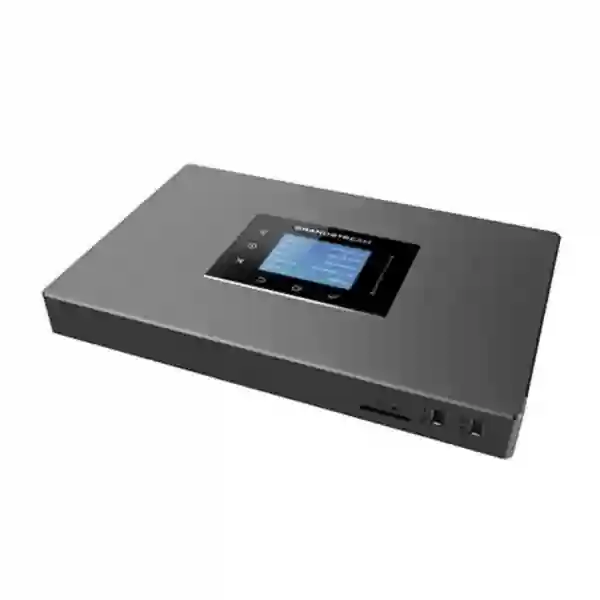
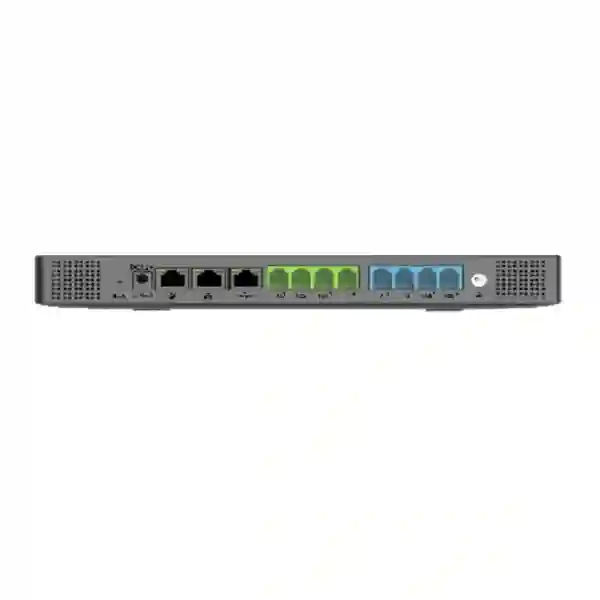
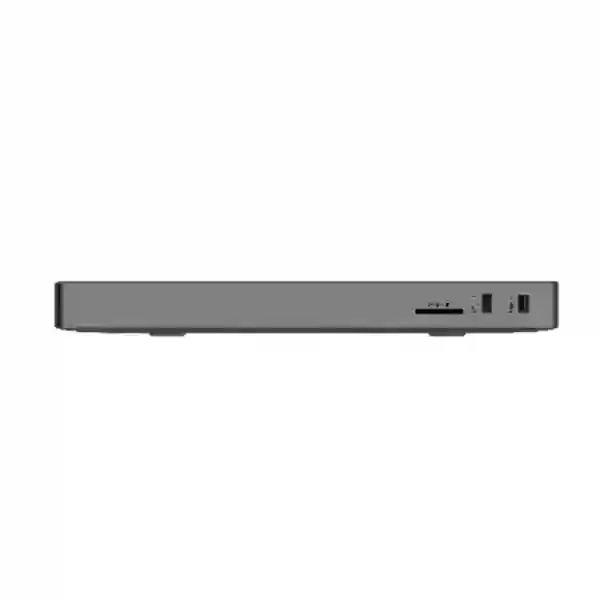
Grandstream positions the UCM6304A in the UCM6300 Audio Series. Published manufacturer documentation lists up to 1,000 users and 150 concurrent calls for this model, with up to 120 concurrent SRTP calls. It provides four FXS ports for analog endpoints and four FXO ports for PSTN line connectivity, with lifeline capability noted in Grandstream documentation. The appliance has three self-adaptive Gigabit network ports that can operate in switched, routed or dual-card modes and support PoE+. Two USB 3.0 ports and an SD-card interface are provided for peripheral and storage-related functions. A 320×240 touch display is used on the UCM6304A.
| Maximum SIP users | 1,000 | Concurrent calls | 150 |
| FXS / FXO | 4 / 4 | Network | 3 × Gigabit Ethernet with PoE+ |
| Audio meetings | Up to 7 rooms / 120 participants, per current series documentation | Mounting | Desktop or wall mount |
| Dimensions | 270 × 175 × 36 mm | Power adapter | 12 V DC, 2 A output |
The UCM6304A also supports common enterprise voice and network functions such as SIP, SRTP, TLS, HTTPS, SSH, IPv6, LDAP and QoS mechanisms. Grandstream’s ZeroConfig framework can simplify provisioning of compatible Grandstream SIP endpoints, while the Wave application extends communication to desktop, web and mobile users. GDMS provides centralized cloud-based device management. API capabilities can support third-party platform and application integration, but any proposed CRM, PMS or business-software integration should be validated against the exact software release and project requirements before purchase.
Deployment, integration and buying guidance
A successful IP PBX project starts with call flows rather than hardware. List main numbers, departments, receptionist behavior, office hours, overflow rules, after-hours destinations, queues, voicemail expectations, recording requirements and emergency-calling arrangements. Then map the design to extensions, SIP trunks, FXO lines, FXS devices, remote workers and branch offices. For an office using IP phones, the LAN should be reviewed for PoE capacity, VLAN segmentation, DHCP behavior, Quality of Service, uplink congestion and UPS coverage. Voice quality depends on the complete path between endpoint, switch, firewall, internet connection and carrier; buying a capable PBX cannot compensate for an unstable network.
For related planning, review FourTeck Tanzania’s integrated IT and telecom solutions, technology services, and product shop. Customers can also coordinate cross-border requirements through FourTeck Uganda and FourTeck Kenya. These links are useful when a PBX project includes IP phones, PoE switching, Wi-Fi, firewall policy, structured cabling or branch deployments rather than only the PBX appliance.
Grandstream UCM6304A Tanzania
For organizations evaluating the Grandstream UCM6304A in Tanzania, the strongest starting point is capacity planning. The model supports up to 1,000 users and 150 concurrent calls, which means buyers should estimate both total registered extensions and the highest likely number of simultaneous conversations. A business with hundreds of extensions may still have modest call concurrency, while a contact-heavy operation can reach peak call levels quickly. Reception, sales, customer service, branch calling, conference usage and automated outbound or inbound workflows should therefore be considered separately before sizing.
Tanzania deployments can combine SIP trunks with the UCM6304A’s four FXO interfaces where analog PSTN connectivity remains part of the migration plan. Its four FXS interfaces can also help retain selected analog devices such as fax machines or legacy handsets when technically appropriate. The best transition plan depends on the services available from the chosen telecom provider and on whether existing numbers, analog lines or SIP services will be retained. Carrier interoperability should always be confirmed before final configuration because authentication, codecs, DTMF behavior and inbound-number presentation can differ between services.
Network preparation is equally important. Put business voice on a planned VLAN, verify switch PoE budgets for phones, define QoS consistently, and protect core network equipment with suitable UPS capacity. Remote extensions should be designed with security and firewall policy in mind rather than exposed casually to the public internet. Wave and Grandstream remote-connect options can support mobility, but user permissions, passwords, firmware policy and access methods should be documented. For a quotation, provide FourTeck with user count, phone count, branch count, existing carrier details, analog-line requirements, desired call flows and whether installation, configuration, training or ongoing support is needed. That information allows the UCM6304A to be evaluated as part of a complete Tanzania business-communications design rather than as an isolated appliance.
Grandstream UCM6304A Dar es Salaam
Dar es Salaam businesses often need a PBX to connect reception, departments, warehouses, sales teams and remote staff through one managed numbering plan. The Grandstream UCM6304A is suitable for organizations that want an on-premise audio communications appliance with room to scale. Its capacity of up to 1,000 users and 150 simultaneous calls can support a broad range of offices, provided the final design stays within the manufacturer’s limits and the expected call profile is measured realistically. Hotels, distributors, professional firms, logistics operations, retail headquarters, service companies and multi-floor offices can use the same core PBX functions differently, so extension templates and call routing should reflect each role.
A Dar es Salaam deployment should begin with connectivity and power review. If SIP trunks will carry external calls, confirm internet stability, firewall behavior and carrier requirements. If existing PSTN lines must remain during migration, the four FXO ports provide a path for analog trunk integration, while four FXS ports can support selected analog endpoints. For IP desk phones, managed PoE switching simplifies power distribution and allows voice VLAN separation. Where network closets serve several floors, uplink capacity, rack organization and UPS runtime deserve as much attention as the PBX itself.
Operationally, define how incoming calls should behave before configuration begins. A main number may ring reception, enter an IVR, go directly to a queue or follow time-based routing. Departments may need different voicemail, recording and overflow policies. Remote managers may use Wave, while front-desk users may require feature-rich IP phones and programmable keys. A deployment checklist should also include admin-role separation, configuration backup, firmware maintenance, extension naming, emergency-calling arrangements and user training. When requesting a Dar es Salaam quote, include the expected number of extensions, simultaneous-call estimate, phone models, carrier details, branches and support scope so the solution can be sized around real business traffic instead of just the maximum headline capacity.
Grandstream UCM6304A Mwanza
For Mwanza organizations considering a centralized phone platform, the UCM6304A can be planned as the call-control core for IP phones, analog lines, remote users and branch communications. The appliance supports up to 1,000 SIP users and 150 concurrent calls, giving businesses room to organize departments and extensions without immediately moving to a larger model. The correct fit should still be decided from real traffic. A company with many administrative extensions may use relatively few concurrent channels, while a customer-service, reservations or sales operation can create much higher peaks during busy periods.
Connectivity choices in Mwanza should be evaluated before porting numbers or committing to a trunk architecture. The UCM6304A supports SIP-based telephony and provides four FXO ports for analog PSTN connections plus four FXS ports for analog endpoints. Businesses replacing an older PBX can therefore stage migration instead of changing every endpoint and line at once, subject to carrier compatibility and the condition of existing cabling. A network audit should identify whether current switches provide sufficient PoE, whether voice and data can be separated with VLANs, and whether internet and WAN links can sustain the expected voice traffic without excessive latency, jitter or packet loss.
The PBX can also support standardized call handling across teams: IVR menus, ring groups, queues, voicemail and time conditions can make incoming calls more predictable. Remote staff can be incorporated through secure methods and Wave where the deployment design supports it. For businesses with another branch elsewhere in Tanzania, a consistent dial plan and documented extension ranges simplify administration. Procurement should include more than the appliance: identify desk-phone requirements, headsets, PoE switches, UPS protection, rack or mounting needs, SIP services, installation labor and training. A complete Mwanza project brief should state current pain points, user roles, expected growth and support expectations so the final configuration is practical to operate after handover.
Grandstream UCM6304A Arusha
Arusha businesses in hospitality, tourism, professional services, education, NGOs and multi-site operations may need a communications system that makes internal calling and customer call handling easier to manage. The Grandstream UCM6304A provides an appliance-based platform for voice, instant messaging, audio conferencing and mobility. With up to 1,000 users and 150 concurrent calls, it can support a substantial extension estate, but project sizing should be based on how many people actually talk at the same time, how many external channels are needed and whether conferences or call queues generate additional peaks.
In hospitality or guest-service environments, incoming numbers may need to route through reception or reservations before reaching departments. Professional offices may prefer direct inward dialing, personal voicemail and mobility. NGOs or project teams may value remote connectivity and standardized extension numbering across sites. The UCM6304A’s four FXO ports can preserve selected analog lines during a migration, and four FXS ports can connect appropriate legacy analog devices. SIP trunks may provide the primary external calling path, but carrier compatibility, number presentation, failover strategy and emergency-calling arrangements should be verified as part of commissioning.
The local LAN should be treated as part of the voice platform. Managed PoE switching, VLANs, QoS, stable uplinks and UPS-backed network equipment help keep desk phones and the PBX available. If guest Wi-Fi, CCTV and office data share the same switching infrastructure, traffic separation and capacity planning become even more important. Remote administration should use secure methods, strong credentials and current firmware, while backups should be stored according to the organization’s recovery plan. Arusha buyers requesting a quote should specify site layout, number of users, phone types, analog devices, carrier links, branch connectivity and required call features. That allows the UCM6304A to be assessed as a business system with defined workflows rather than simply purchased on specification alone.
Grandstream UCM6304A Dodoma
Organizations in Dodoma evaluating the Grandstream UCM6304A may be planning a new office, replacing an analog PBX, standardizing several departments or improving remote-user communication. The UCM6304A provides an Audio Series IP PBX with a maximum of 1,000 users and 150 concurrent calls. Those limits give the platform useful headroom for many medium-size deployments, yet a proper design should still calculate extension count, peak simultaneous calls, trunks, queues, conference demand and expected growth over the planned service life.
Government-facing suppliers, associations, education organizations, professional offices and service businesses can each use call routing differently. A structured dial plan can assign ranges to departments, while IVR, queues, ring groups and office-hour rules direct incoming callers to the right destination. The four FXO interfaces support analog trunk connectivity where it remains necessary, while four FXS interfaces can support selected analog endpoints. If a business moves to SIP trunks, the network edge must be configured carefully so the PBX is not unnecessarily exposed and so voice traffic can traverse the firewall reliably.
For a new Dodoma deployment, specify IP phones by role rather than choosing one model for every desk. Reception may need more programmable keys; managers may want mobility or headset options; common areas may need simpler endpoints. Switch PoE capacity, VLAN configuration, QoS and UPS runtime should be matched to the endpoint count. Remote extensions and Wave users need a secure access design, while administrators need documented backups and change-control practices. During procurement, ask for a bill of materials that distinguishes the PBX, phones, switches, licenses or remote services where applicable, installation, configuration and training. A clear scope prevents assumptions about what is included and gives the organization a repeatable basis for comparing quotations and planning future expansion.
Grandstream UCM6304A UAE
For UAE businesses, the Grandstream UCM6304A can serve as an on-premise audio IP PBX for offices that want centralized extension management, SIP connectivity, analog migration and remote-user functions. It supports up to 1,000 users and 150 concurrent calls, four FXO ports and four FXS ports. The platform is particularly relevant where an organization wants to retain control of its PBX appliance while integrating desk phones, mobile users, queues, IVR, voicemail and audio meetings. The final system design should nevertheless comply with the services, carrier rules and telecom requirements applicable to the specific UAE deployment.
UAE environments often have dense office networks and multiple services sharing the same switching core. Voice should therefore be considered in the LAN design from the outset: managed PoE switches, a dedicated voice VLAN, QoS and resilient uplinks can reduce avoidable call-quality problems. If the PBX serves several offices, inter-site WAN design and firewall policy should be documented. If SIP trunks are used, exact interoperability settings must be obtained from the chosen provider. Analog FXO interfaces may assist with legacy-line transition where such services are available and appropriate.
Procurement teams should compare the UCM6304A against the actual requirement rather than simply buying the highest model within budget. Count users, peak calls and meeting participants; list phone types and analog devices; identify required recording, queue and reporting functions; and decide how remote users will connect. High-availability expectations, backup procedures and support response should be part of the commercial discussion. Organizations coordinating projects between Tanzania and the UAE can also use the wider FourTeck network for regional technology planning, while validating local service availability before commitment. A detailed quotation request should state site location, user count, carrier status, endpoint quantity, installation scope and whether training or post-deployment support is required.
Grandstream UCM6304A Uganda
Uganda businesses seeking an appliance-based business phone system can consider the Grandstream UCM6304A when the requirement is primarily voice, messaging and audio collaboration. The model supports up to 1,000 users and 150 concurrent calls and combines SIP communications with four FXO and four FXS analog interfaces. That combination is useful for organizations moving gradually from traditional lines to IP telephony because legacy connectivity can be retained where technically and commercially appropriate while new departments use IP phones and SIP services.
Sizing should begin with peak calling rather than only employee count. A headquarters with several hundred staff may need fewer simultaneous channels than a smaller sales or support operation. The design should also include conference usage, branch traffic and remote-user calls. SIP trunking can reduce dependence on physical analog lines, but service availability and exact configuration must be confirmed with the chosen carrier. Where multiple internet links exist, failover behavior should be tested because a backup connection is only useful when firewall, routing and SIP behavior remain predictable during a transition.
For the LAN, use managed switching and plan PoE power for all phones and access devices. Voice VLANs, QoS and UPS-backed switches can improve resilience and supportability. Grandstream ZeroConfig can simplify compatible endpoint provisioning, while Wave can extend access to remote users. Administrative security still matters: change default credentials, restrict management access, use secure protocols, maintain firmware and keep configuration backups. Uganda buyers should prepare a quote brief with extension count, simultaneous-call estimate, locations, existing numbers, analog devices, preferred phones, remote-user count, required IVR or queue design, installation requirements and training expectations. The FourTeck Uganda regional site can also support cross-border planning when the same organization operates in both Uganda and Tanzania.
Grandstream UCM6304A Kampala
In Kampala, the UCM6304A can fit offices that have outgrown basic telephone systems and need structured call routing, centralized extensions and easier administration. The appliance’s published capacity reaches 1,000 users and 150 concurrent calls, making it possible to consolidate many departments on one PBX while maintaining role-based call handling. Before purchase, however, calculate busy-hour usage. Reception, customer care, telesales and reservations can consume more channels than general office users, so the concurrency figure should be tested against likely peak behavior rather than average daily usage.
The four FXO and four FXS ports are valuable for migration projects in which analog lines or devices must remain temporarily or permanently. A Kampala office may pair those interfaces with SIP trunks to create a hybrid transition, provided carrier compatibility and routing rules are validated. Call flows can then be designed around main numbers, IVR menus, ring groups, queues, voicemail and time conditions. Remote or traveling staff can use Wave or other supported SIP approaches under a secure connectivity design, helping the business maintain one extension plan across desk and mobile working patterns.
Network readiness should be verified before large phone rollouts. Switches need enough PoE capacity, ports and uplink bandwidth; voice VLANs and QoS should be consistent; and firewall rules must support the selected trunk and remote-access architecture. Power resilience is also relevant because IP phones depend on switches as well as the PBX. UPS sizing should therefore include the network devices that keep the calling path alive. For a Kampala quotation, provide the number of floors or sites, users, phone roles, current carrier, analog lines, required recording or queues, remote-user count and expected future growth. A detailed scope helps distinguish appliance supply from a complete deployed telephony project and makes commercial comparisons more meaningful.
Grandstream UCM6304A Arua
Arua organizations planning IP telephony may prioritize manageable administration, branch connectivity and the ability to combine existing analog services with newer SIP-based communications. The Grandstream UCM6304A supports those transition scenarios through four FXO ports for analog trunks, four FXS ports for analog stations and a SIP-based PBX platform capable of up to 1,000 users and 150 concurrent calls. The model should be selected when its audio-focused feature set and capacity align with the organization rather than as a generic replacement for every legacy PBX.
Connectivity planning is especially important where a business relies on internet-based trunks or remote extensions. The PBX can be technically capable while calls still suffer if the WAN link is congested or unstable. A network survey should check latency, packet loss, available bandwidth, firewall behavior and whether a backup link is available. If there are multiple sites, decide whether extensions will register centrally, whether branch survivability is needed and how numbering should be organized. Documenting these choices before installation makes support easier and prevents ad-hoc changes later.
Arua businesses can also use the UCM6304A to standardize incoming call handling with IVR, ring groups, queues and voicemail. Small teams may prefer simple call distribution, while customer-facing departments may need overflow rules and recordings. Compatible Grandstream endpoints can benefit from ZeroConfig provisioning, reducing repetitive manual setup when many phones are installed. Secure passwords, firmware management, role-based administration and backups should be included in the handover process. A procurement request should list current telephone numbers, desired extension ranges, number of staff, call volumes, phone requirements, any fax or analog devices, network equipment and support expectations. That information helps determine whether the UCM6304A itself is the right fit and what additional infrastructure is necessary for a stable Arua deployment.
Grandstream UCM6304A Mbarara
For Mbarara businesses, the Grandstream UCM6304A offers a way to consolidate telephone extensions, external trunks and remote users on one managed communications platform. Its 1,000-user and 150-concurrent-call limits provide substantial capacity for a medium-size organization, but the best buying decision comes from understanding actual workloads. An office with many users may have low peak call concurrency; conversely, a smaller operation with active sales or customer-service teams may require a higher proportion of simultaneous channels. Build the sizing model around busy-hour traffic, not just employee count.
The appliance includes four FXO and four FXS ports, making it useful for hybrid migrations. Existing analog PSTN lines can potentially be retained through FXO interfaces while selected fax machines or legacy analog phones use FXS. SIP trunks can then be introduced according to carrier availability and business requirements. Before migration, test inbound and outbound routing, caller ID, DTMF, codec behavior and failover. Clear test cases make it easier to validate the system before numbers are moved or old equipment is retired.
Inside the network, PoE switches can power compatible IP phones and keep cabling tidy, but the switch power budget must match the number and class of attached devices. Separate voice with VLANs where appropriate, apply QoS consistently and protect the PBX and switching path with UPS capacity. Wave can support mobility and remote work when securely designed. For Mbarara procurement, specify whether the requirement is hardware supply only or a complete project including design, installation, configuration, phone provisioning, user training and support. Include branch locations, planned growth and preferred support model. This avoids comparing quotations that contain different scopes and helps ensure the selected UCM6304A configuration remains maintainable after deployment.
Grandstream UCM6304A Gulu
Gulu organizations upgrading business telephony can use the Grandstream UCM6304A as an on-premise audio communications core when they need more structured calling than a basic PBX provides. It supports up to 1,000 SIP users and 150 concurrent calls, with features for IVR, queues, voicemail, call routing, messaging, audio meetings and remote-user communication. The system can serve many departments, but a deployment should be designed around actual workflows. Reception, administration, operations and field teams may each need different extension permissions and call treatment.
The appliance’s four FXO interfaces allow connection of analog trunks where they are still required, and four FXS interfaces can connect selected analog devices. This can reduce disruption during migration by letting a business modernize in stages. SIP trunks can provide an IP-based external call path, but the chosen carrier’s parameters and local service conditions must be verified. For organizations with another location, branch dialing and routing can be planned centrally, while WAN and firewall policies should be tested for voice quality and resilience.
The LAN is a critical part of the solution. Managed PoE switches, properly designed VLANs, QoS and adequate uplinks make phone deployment easier to support. UPS protection should cover the PBX, switches, router or firewall and any essential carrier equipment so a brief power event does not interrupt the complete voice path. Security practices should include restricted admin access, current firmware, configuration backup and strong user credentials. Gulu buyers can improve quotation accuracy by supplying a site plan, user count, number of expected simultaneous calls, phone roles, carrier details, analog devices, remote-user requirements and desired support scope. That information also helps determine whether the UCM6304A has suitable capacity headroom for future growth rather than only meeting today’s requirement.
Grandstream UCM6304A Kenya
Kenyan organizations looking for a business IP PBX may consider the UCM6304A when they want an audio-focused on-premise platform with integrated analog connectivity and support for remote collaboration. Grandstream specifies up to 1,000 users and 150 concurrent calls for the model. Its four FXO and four FXS ports allow hybrid migration, while SIP trunks can connect the PBX to modern carrier services. The Wave application and centralized management capabilities extend the platform beyond desk phones, but exact deployment architecture should be matched to organizational policy and carrier conditions.
For offices in Nairobi or other Kenyan business centers, user count alone is not enough for sizing. Peak simultaneous calls, queue traffic, conference usage and branch calls determine real capacity. The phone estate should also be designed by job role. Reception and customer-service teams may need programmable keys and headsets, while general staff may need simpler endpoints. Network switches must provide sufficient PoE and should support voice VLANs and QoS. If a deployment spans several floors or branches, uplink bandwidth, WAN latency, firewall policy and numbering plans become part of the PBX project.
Security and operations should be defined before go-live. Use secure management protocols, change default credentials, restrict administrator access, maintain firmware and retain backups. When remote users connect, avoid unnecessary direct exposure and validate the selected secure-access approach. Procurement teams should request clear separation of appliance, phones, network equipment, licenses or remote services where required, configuration, testing, training and ongoing support. For organizations with operations in both Kenya and Tanzania, coordinated standards for extension numbering, phone models and call flows can reduce administration. The FourTeck Kenya site provides a regional point of reference, while any local availability, delivery or support terms should be confirmed in the specific quotation.
Grandstream UCM6304A Kuwait
Kuwait businesses that prefer an appliance-based PBX can assess the Grandstream UCM6304A for unified voice, messaging and audio collaboration. The platform supports up to 1,000 users and 150 simultaneous calls, includes four FXO and four FXS ports and provides three Gigabit network interfaces. It is a useful candidate for organizations that want to integrate IP phones with legacy analog connectivity while maintaining a centrally managed dial plan. Telecom service rules and carrier interoperability in Kuwait should be verified as part of the project rather than assumed from generic SIP compatibility.
A commercial office may use the UCM6304A for reception, direct extensions, queues, office-hour routing and voicemail, while a service organization might prioritize call recording, queue distribution and reports. The PBX should be sized to the busiest period and not simply the total number of employees. Where multiple sites are involved, determine whether extensions are centralized, what happens during WAN failure and how external numbers are routed. If analog lines are retained through FXO ports, document their purpose and failover behavior so the hybrid design remains understandable to future administrators.
Infrastructure preparation is equally important. IP phones depend on PoE switches, and voice traffic benefits from VLAN segmentation, QoS and stable WAN paths. UPS capacity should include the complete call chain. Remote connectivity should use secure designs, strong authentication and current firmware. Before ordering in Kuwait, create a quotation checklist with site count, user count, peak-call estimate, carrier details, extension plan, phone types, analog endpoints, recording requirements and support expectations. This makes it easier to compare the UCM6304A against larger or smaller alternatives based on objective capacity and project scope. For regional procurement involving Tanzania and Gulf offices, standardizing endpoint families and documentation can also simplify training and support across locations.
Grandstream UCM6304A Ghana
Ghanaian organizations considering a transition from traditional PBX systems to SIP-based communications can use the UCM6304A as a hybrid stepping point. The device supports up to 1,000 SIP users and 150 concurrent calls, four analog FXO trunks and four FXS analog stations. That means an organization can preserve selected legacy lines or devices while introducing IP phones, SIP trunks and centralized management. The final architecture should be based on telecom service availability, existing numbering, expected growth and the organization’s tolerance for maintaining analog and IP services in parallel.
For a headquarters or multi-department office, plan the dial plan before provisioning phones. Define extension ranges, main-number behavior, IVR options, queues, ring groups, voicemail and after-hours rules. Customer-facing teams may require different routing and recording from internal departments. If remote staff need access, Wave can extend communications beyond the desk, but security, bandwidth and user policy should be considered. Branch links should be tested for latency and packet loss, especially where calls traverse internet or VPN connections.
The underlying network should include managed switching with enough PoE capacity, a documented voice VLAN, QoS and reliable uplinks. The PBX, switch, firewall and carrier equipment should receive appropriate power protection so a short outage does not remove all calling capability. Regular firmware updates and configuration backups should be part of operations. Ghana procurement teams should request a bill of materials that includes phones, headsets, switches and UPS components where required rather than evaluating the PBX price alone. Provide user counts, concurrent-call estimates, analog requirements, trunk information and support scope to get a useful quotation. This approach helps determine whether the UCM6304A offers sufficient headroom and whether another model would better match the site’s call profile.
Grandstream UCM6304A Nigeria
Nigerian businesses with substantial extension counts can consider the Grandstream UCM6304A for on-premise voice and unified communications. Its published capacity of up to 1,000 users and 150 concurrent calls is large enough for many medium-size organizations, while the Audio Series focus avoids paying for a video-conferencing capability that may not be needed in the PBX itself. Four FXO and four FXS ports support hybrid analog migration, and SIP trunking can be introduced according to carrier compatibility and business policy.
Network and power resilience should be part of the design from day one. IP phones depend on the switching infrastructure, and SIP trunks depend on stable connectivity, so PoE budgets, VLANs, QoS, internet quality and backup power should be reviewed together. Where multiple WAN links are used, test failover behavior with active calls and new registrations. A secondary link does not automatically guarantee service continuity if addressing, firewall rules or the SIP provider’s security policy prevents calls from re-establishing correctly.
The UCM6304A can structure incoming traffic with IVR, ring groups and queues, helping reception and service teams handle calls consistently. Remote workers can use Wave under a properly secured deployment. For large phone estates, ZeroConfig support for compatible Grandstream endpoints can reduce provisioning effort and improve standardization. Procurement teams in Nigeria should document existing numbers, service providers, user count, peak concurrent calls, branch sites, recording requirements, desired phone models and support scope. They should also distinguish one-time hardware and installation costs from any recurring carrier or remote-service costs. A clear design brief allows the UCM6304A to be compared fairly with larger models and avoids overbuying capacity that the organization will not use or under-sizing a system that becomes constrained during busy periods.
Grandstream UCM6304A Seychelles
Organizations in Seychelles may use the Grandstream UCM6304A to centralize extensions for offices, hospitality operations, service businesses and distributed teams. The model supports up to 1,000 users and 150 concurrent calls, making it capable of supporting a large number of extensions even when only a fraction are active at once. The four FXO and four FXS interfaces make the system attractive for hybrid deployments where analog trunks or devices remain part of the site while IP phones and SIP services are introduced progressively.
Island and hospitality environments can place special importance on WAN reliability and operational simplicity. Before selecting SIP trunks or remote extensions, verify internet stability, carrier parameters and the business’s fallback expectations. If the PBX supports a hotel, front desk and reservations may need structured call flows, while administrative offices use direct extensions and voicemail. Where the requirement includes property-management integration, the exact PMS interface and workflow should be validated technically before procurement rather than assumed from generic API availability.
The internal LAN should support voice with managed PoE switching, clear VLAN design, QoS and adequate UPS capacity. A power plan should cover the PBX, switching, firewall/router and any essential telecom equipment. Remote management should be restricted, credentials should be protected and firmware and backups should be maintained. Seychelles buyers requesting a quote should provide property or office size, number of extensions, peak call estimate, analog lines, SIP carrier information, phone quantities, remote-user requirements and support expectations. If hardware must be coordinated regionally, confirm logistics and service terms explicitly in the quotation instead of assuming stock or delivery. This planning approach helps the UCM6304A function as a maintainable communications platform rather than becoming an isolated appliance with undocumented dependencies.
Related solution planning for UCM6304A
The PBX is only one part of the voice environment. A complete project can include compatible IP phones, headsets, managed PoE switches, firewall configuration, structured cabling, UPS protection and carrier services. FourTeck Tanzania’s broader solution pages can help buyers connect the UCM6304A to the surrounding infrastructure instead of treating voice as an isolated purchase. Review the Tanzania home portfolio, technology services and product shop for complementary categories, and use the contact page to provide a site-specific bill of requirements.
Quotation checklist
Frequently asked questions
How many users does the UCM6304A support?
Grandstream’s current UCM6300 Audio Series documentation specifies up to 1,000 users for the UCM6304A. Capacity planning should also consider its 150-concurrent-call limit and the organization’s real busy-hour traffic.
Does the UCM6304A have analog ports?
Yes. It provides four FXS ports for analog endpoints and four FXO ports for analog PSTN lines. Compatibility with the specific local line service and connected device should still be verified.
Is the UCM6304A for video conferencing?
The UCM6304A belongs to Grandstream’s Audio Series. It focuses on voice, messaging and audio/web meeting functions rather than the video-meeting capacity of the standard UCM6300 series.
Can remote users connect?
The UCM6300 ecosystem supports Wave and remote connectivity options. The final design should account for security, firewall policy, internet quality, user permissions and any service requirements associated with the chosen remote-access method.
What should I provide for a UCM6304A quote?
Provide total users, peak call estimate, phone quantities, SIP or analog carrier details, remote-user count, branch locations, desired IVR and queue behavior, recording needs, existing network equipment and whether installation, configuration and training are required.
Decision recap
Choose the Grandstream UCM6304A when you need an audio-focused, on-premise IP PBX with up to 1,000 users, 150 concurrent calls, four FXO and four FXS ports, Wave integration and strong endpoint-management options. Do not size only by employee count. Confirm busy-hour calling, carrier compatibility, network quality, remote access, phone roles and support requirements. For smaller or larger environments, compare the full UCM6300 Audio Series before finalizing the model.
Consultation panel
FourTeck can evaluate the UCM6304A as part of a broader telephony and network requirement. Share your site count, users, current phone system, carrier setup, required call flows and expansion plan. The resulting scope can include the PBX, endpoints, switching, network preparation, configuration, testing and handover where applicable.



Reviews
There are no reviews yet.