
Grandstream UCM6308A
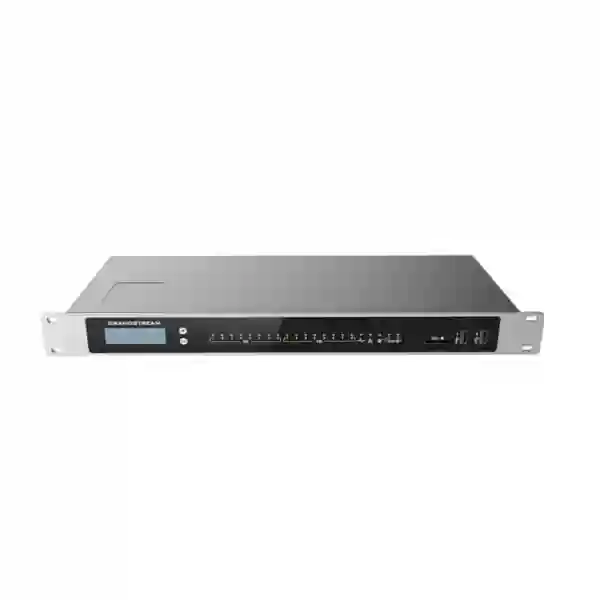
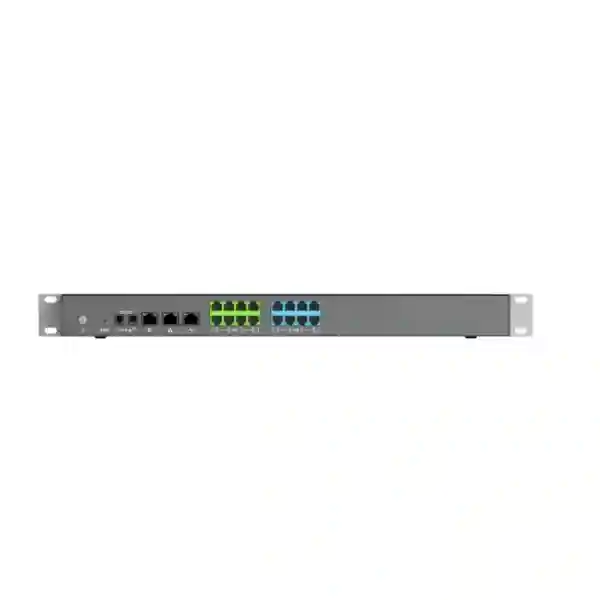
The Grandstream UCM6308A is the highest-capacity model in Grandstream’s UCM6300 Audio Series, designed for organisations that need a substantial on-premises communications core without moving every user to a separate hosted PBX subscription. It supports up to 1,500 users and up to 200 concurrent G.711 calls, provides eight FXS and eight FXO analogue ports, includes three self-adaptive Gigabit network interfaces with PoE+, and supports nine audio meeting rooms with up to 150 participants. For Tanzanian organisations planning a new IP telephony platform, replacing an ageing PABX, integrating analogue lines with SIP, or standardising telephony across departments and branches, the UCM6308A offers a scalable platform for call routing, IVR, queues, voicemail, recording, mobility, remote users and central administration.
What the Grandstream UCM6308A solves
Large telephone environments often become difficult to manage when analogue trunks, separate gateways, remote-worker tools, call queues, voicemail, recordings and extension plans are spread across unrelated systems. The UCM6308A brings those functions into one IP PBX platform. It can connect SIP endpoints and trunks while retaining eight FXO interfaces for PSTN lines and eight FXS interfaces for analogue devices. That combination is useful during migration projects because an organisation does not necessarily need to replace every analogue dependency on day one.
The platform supports common business call features such as call park, transfer, forwarding, waiting, caller ID, recording, IVR, ring groups, call queues, paging, voicemail, time conditions, DID and DOD routing, pickup groups, follow-me functions and voicemail-to-email. Grandstream also provides Wave applications for desktop, web and mobile use, allowing authorised users to communicate through the UCM environment without relying only on a desk phone. Management can be centralised further through Grandstream Device Management System compatibility, which is useful for provisioning, monitoring and troubleshooting supported Grandstream endpoints.
For organisations comparing an IP PBX purely by headline extension count, the more useful planning question is how many simultaneous calls are expected at busy hour, how many analogue interfaces are still required, whether users work remotely, whether voice recording is needed, what SIP services are available, how resilient the WAN and power environment is, and how the voice VLAN will be designed. FourTeck can help translate those requirements into a practical deployment plan rather than simply treating the PBX as a standalone appliance.
Call capacity
Up to 1,500 users, up to 200 concurrent G.711 calls and up to 150 concurrent SRTP calls provide a strong base for large voice deployments.
Analogue integration
Eight FXO and eight FXS RJ11 ports help integrate PSTN lines and analogue devices while a business transitions to SIP and IP endpoints.
Network flexibility
Three self-adaptive Gigabit ports support switched, routed or dual modes, with integrated PoE+ on the network interface architecture.
Audio meetings
Nine meeting rooms and up to 150 parties support scheduled or on-demand business audio collaboration directly through the UCM platform.
Technical specification overview
| Users | Up to 1,500 |
|---|---|
| Concurrent calls | Up to 200 G.711 calls; up to 150 concurrent SRTP calls |
| FXS / FXO | 8 FXS RJ11 / 8 FXO RJ11, with lifeline capability |
| Network interfaces | Three self-adaptive Gigabit ports, switched/routed/dual mode, PoE+ |
| Meeting capacity | 9 meeting rooms, up to 150 parties |
| Management | Web administration, Grandstream ZeroConfig for supported endpoints, GDMS-compatible cloud management workflows |
| Voice codecs | Includes Opus, G.711 A-law/U-law, G.722, G.729A/B and other supported audio codecs |
| Security | Supports SRTP, TLS, HTTPS, SSH, 802.1X and platform security controls |
| Form factor | Rack-mount or desktop; approximately 485 × 187.2 × 46.2 mm |
Useful FourTeck resources for multi-country projects
Organisations coordinating voice infrastructure across more than one market can also review FourTeck Kenya for Kenya-focused IP PBX and networking requirements, FourTeck Uganda for Uganda voice and infrastructure projects, FourTeck Ghana for Ghana business telephony and IT planning, FourTeck Nigeria for Nigeria requirements, and FourTeck UAE for UAE communication and infrastructure projects. These links are useful when procurement teams want a consistent technology approach across several countries while still discussing local connectivity, trunking and implementation conditions separately.
Grandstream UCM6308A Tanzania
For organisations searching for the Grandstream UCM6308A in Tanzania, the strongest use case is not simply a large extension count; it is the need to bring structured call handling, analogue migration, SIP connectivity, mobility and central administration into one business communications platform. A Tanzanian headquarters, university, hotel group, logistics operator, hospital, government-related institution, contact-handling team or multi-branch commercial organisation may have hundreds of users but only a portion of them calling externally at the same moment. The UCM6308A therefore needs to be sized against realistic concurrent-call demand, expected growth, trunk availability and internal communication patterns rather than the total employee count alone. Its 1,500-user ceiling and 200 concurrent G.711 call capacity provide substantial room for larger environments, while the 8 FXO and 8 FXS interfaces are especially useful where legacy PSTN circuits, analogue reception devices, fax workflows or other analogue endpoints cannot be retired immediately.
A successful Tanzania deployment should begin with a call-flow workshop. Document the main incoming numbers, reception routes, departments, queues, IVR options, opening hours, overflow destinations, after-hours treatment, emergency procedures and recording requirements. Then map users into extension groups and decide which users need desk phones, cordless devices, soft clients or mobile access. The network should be reviewed at the same time. Voice traffic benefits from a dedicated VLAN, properly configured Quality of Service, dependable switching and PoE for IP phones, clean DHCP and DNS behaviour, and firewall policies that do not interfere with SIP signalling or RTP media. Where branches depend on internet links, failover and WAN quality become part of the voice design.
Power resilience is another practical Tanzania consideration. The UCM6308A can be rack-mounted and uses redundant DC power inputs, but the overall telephone service also depends on switches, routers, firewalls, SIP gateways and internet equipment. A UPS strategy should therefore protect the complete voice path, not only the PBX. If analogue lifeline behaviour is important, the FXO/FXS pairing should be documented and tested during commissioning. Procurement teams requesting a quotation should provide the number of users, expected simultaneous calls, current telephone lines, desired SIP trunks, branch count, existing IP phones, recording needs and rack/power conditions so that the bill of materials includes the PBX plus any required endpoints, PoE switching, UPS, gateways, cabling and implementation services.
Grandstream UCM6308A Dar es Salaam
Dar es Salaam organisations often operate with the most complex combination of headquarters users, customer-facing teams, distributed departments, internet connectivity and legacy telephone lines in Tanzania. For a business replacing an older PABX, the Grandstream UCM6308A can act as a migration platform rather than forcing an all-at-once cutover. Eight FXO ports provide direct connectivity for supported analogue PSTN lines, while eight FXS ports can retain selected analogue devices. At the same time, SIP trunks and SIP endpoints can be introduced for departments that are ready to move. This staged approach can reduce operational disruption in offices where reception, sales, finance, customer service or security desks cannot tolerate a long telephone outage during migration.
Dar es Salaam headquarters environments should pay close attention to LAN design. The UCM6308A is capable of supporting a large user base, but call quality depends on the network carrying the voice. Managed PoE switches, dedicated voice VLANs, QoS policies, clean cabling and documented switch ports make the platform easier to operate. High-density office buildings may also have several floors or wiring closets; in that case, uplink capacity and redundancy between access switches and the core network matter. If employees use Wave on laptops or smartphones, wireless coverage, internet stability and firewall traversal need to be considered alongside desk-phone deployment. Recording capacity and retention policy should be planned according to business need rather than enabled indiscriminately for every extension.
For a Dar es Salaam quotation, it is useful to separate the project into the PBX core, handsets, trunk connectivity, network readiness, implementation and ongoing administration. List the reception requirement, number of departments, queue agents, simultaneous-call estimate, existing DIDs, analogue lines, branch connections and remote users. Also note any CRM, hotel PMS or third-party workflow that may require API integration. The UCM6308A provides a full API capability, but successful integration still requires validation against the target application. FourTeck can use these details to recommend a deployment structure that is operationally realistic, avoids unnecessary endpoint purchases and leaves room for future branches or additional users.
Grandstream UCM6308A Mwanza
Mwanza businesses considering the Grandstream UCM6308A may be supporting a main office, healthcare facility, distribution operation, hospitality property, education campus or a regional branch network where telephony needs to remain manageable even as departments grow. The UCM6308A suits projects where the organisation wants local call control and a clear extension plan rather than a collection of independent phone lines. IVR menus can route callers by department, call queues can organise customer-facing teams, voicemail and time conditions can handle unanswered or after-hours calls, and internal extension calling can reduce the need to use public telephone networks for communication within the organisation.
A Mwanza deployment should be planned around connectivity diversity. Some organisations may have good primary internet service but less predictable backup connectivity, while others may still rely heavily on analogue trunks for business continuity. The UCM6308A’s mix of SIP support and eight FXO ports provides design flexibility, but trunk strategy should be decided before installation. If SIP trunks are used, confirm provider credentials, DID ranges, codec expectations, NAT requirements and failover procedures. If analogue lines remain in service, label and test every FXO circuit. For inter-branch calls, site-to-site VPN or secure connectivity should be designed in coordination with the firewall so that voice signalling and RTP paths are stable and protected.
Power, rack conditions and support access are also practical. The PBX is a rack-mount class appliance, so it should be installed in a controlled communications area with suitable ventilation, structured patching and UPS protection. The same UPS plan should cover the switch ports powering IP phones where continuity matters. Administrators should keep configuration backups, document extension ranges and trunk settings, and maintain a change log when new departments or routes are added. For procurement, provide current user count, forecast growth, peak simultaneous calls, number of analogue lines, desired handset types and whether remote/mobile users are required. That information produces a more useful Mwanza solution than selecting a PBX solely because its maximum user figure appears large.
Grandstream UCM6308A Arusha
Arusha has a broad mix of tourism, hospitality, NGOs, professional services, education, logistics and regional administration, all of which can create very different telephone workflows. The Grandstream UCM6308A is especially relevant where one communications platform must support reception, reservations or booking teams, management, back-office users, branch extensions and remote staff. In hospitality environments, analogue devices may remain in selected locations while administration and front-office teams migrate to SIP phones. In an NGO or regional office, the priority may instead be extension mobility, scheduled call routing, recorded lines for specific functions and reliable communication between local and remote users.
Before deploying the UCM6308A in Arusha, define which workflows are genuinely business critical. A reception queue may need overflow to a second group after a defined waiting time. A reservations team may need queue announcements and call recording. Managers may need Wave access when travelling. Security or operations teams may need paging or ring groups. Mapping these workflows first prevents the PBX menu structure from becoming difficult to understand. The model supports a wide range of call features, but useful configuration is more important than enabling every possible feature. Roles and permissions should also be separated so that ordinary users cannot alter system-level settings.
Network readiness remains central. If a property or campus has several buildings, confirm whether voice traffic crosses copper, fibre or wireless links between those locations, and check latency, packet loss and redundancy. PoE budgets should be calculated for IP phones and other powered endpoints. For remote users, secure access should be configured using supported Grandstream remote-connectivity methods and appropriate security controls rather than exposing management interfaces directly to the public internet. Arusha buyers preparing a quote should identify the number of rooms, departments or desks needing extensions, the number of public lines, existing handset inventory, any hotel or CRM integration requirement, and expected call recording volume. This allows the UCM6308A to be positioned as part of a complete communications design instead of an isolated rack appliance.
Grandstream UCM6308A Dodoma
Dodoma organisations may require structured telephony for administrative offices, public-facing institutions, education facilities, professional services, construction programmes and growing commercial operations. The Grandstream UCM6308A provides the scale for a centralised extension environment while giving IT teams control over call routing, user accounts, queues, IVR menus, time conditions and reporting from an on-premises platform. Its 1,500-user capacity can suit a large single-site deployment or provide room for multiple logical departments and branches, but the more important sizing figure is the expected busy-hour concurrent call load. A project with many extensions but relatively low external call concurrency may fit comfortably, whereas a heavy contact-centre environment should model peak calls and recording requirements carefully.
For government-related or institutional deployments in Dodoma, administrative control and documentation deserve particular attention. Extension numbering should follow a clear scheme by department or building, administrator access should use strong credentials and limited roles, backups should be stored securely, and any recorded calls should follow organisational policy. The UCM6308A supports secure protocols such as SRTP, TLS, HTTPS and SSH, but the surrounding network must also be configured correctly. Management interfaces should sit on controlled network segments, voice endpoints can be placed on a voice VLAN, and firewall rules should be restricted to required traffic.
If analogue services are being retained, the eight FXO and eight FXS ports can simplify transition planning. Confirm the electrical and signalling compatibility of existing PSTN services, test caller ID behaviour and document lifeline expectations before commissioning. If SIP trunks are preferred, coordinate with the service provider on authentication, DID routing and failover. Dodoma procurement teams should include UPS capacity, rack space, PoE switches, handsets, patching and implementation labour in the project scope. The final solution should also account for staff training, administrator handover and a documented recovery procedure so the organisation can restore service efficiently after configuration changes or hardware replacement.
Grandstream UCM6308A UAE
For UAE businesses, the Grandstream UCM6308A is often evaluated as a high-capacity on-premises IP PBX for corporate headquarters, hospitality, retail groups, warehouses, education environments and organisations that want to combine SIP telephony with selected analogue services. The platform’s 1,500-user capability and 200 concurrent G.711 call ceiling make it appropriate for sizeable voice environments, while the eight FXO and eight FXS ports can be useful during migration from older PABX systems. Companies should not assume that every public telephone service will connect in the same way, however. SIP trunking and operator requirements must be confirmed with the selected UAE telecom provider before final design.
A UAE rollout frequently involves multiple offices or departments, so dial-plan consistency matters. Extension ranges can be grouped by location, department or function, and inbound DIDs can route directly to teams or users while still offering central reception and IVR handling. If branches are connected over VPN or private WAN services, voice quality should be validated under load. QoS can prioritise RTP traffic, but it cannot repair an undersized internet circuit or unstable WAN. Remote employees can use Wave and supported remote-connectivity options, although access security, endpoint policy and user offboarding should be part of the operating procedure.
UAE buyers comparing the UCM6308A with cloud PBX platforms should consider ownership model, control, existing analogue assets, internal IT capability and disaster-recovery expectations. An on-premises PBX gives the organisation direct control of the appliance and configuration, but it also means the business must manage backups, firmware, power, rack environment and operational continuity. For multinational organisations with Tanzania and UAE sites, standardising on the same Grandstream ecosystem may simplify endpoint provisioning and administrator familiarity while still allowing each country’s trunk provider and dial plan to remain separate. The FourTeck UAE resource linked above can support discussions specific to UAE infrastructure and telephony planning.
Grandstream UCM6308A Uganda
Uganda organisations looking at the Grandstream UCM6308A may be planning a large Kampala headquarters, a distributed NGO network, education campuses, healthcare facilities, hospitality operations, financial-service branches or logistics sites that need a unified extension environment. The platform gives IT administrators a central place to define users, trunks, queues, IVR menus, recordings and route policies. Because the UCM6308A includes analogue interfaces as well as SIP capability, it can support a phased migration where legacy lines or analogue devices remain temporarily while new IP phones and SIP services are introduced.
Regional connectivity should influence the design. A head office may have strong fibre connectivity while remote branches rely on different internet services. Instead of assuming every site can maintain the same voice path, planners should classify branches by bandwidth, latency, reliability and fallback options. For critical sites, local survivability or alternative public calling methods may be needed. VPN design, DNS, NAT and firewall rules should be tested with the actual SIP and Wave traffic. Voice VLANs and QoS are valuable within each LAN, but WAN quality remains the limiting factor for inter-site calls.
Uganda procurement teams should also consider administrator access and ongoing support. A PBX serving hundreds of users needs formal change control: extension additions, route changes, firmware updates and trunk modifications should be documented. Configuration backups should be taken before major changes, and account permissions should follow least-privilege principles. The UCM6308A supports GDMS-compatible management and zero-touch provisioning for supported Grandstream devices, which can help when many endpoints are deployed. Buyers can use FourTeck Uganda for country-specific discussions, while the Tanzania page remains useful for organisations coordinating similar deployments across East African offices.
Grandstream UCM6308A Kampala
Kampala is a common location for large offices and regional headquarters, making the Grandstream UCM6308A relevant where telephone systems need structured routing for reception, sales, service desks, finance, management and branch communications. A Kampala office may have hundreds of staff but different calling profiles: some users need only internal extensions, others spend much of the day on external calls, and a smaller group may work remotely or travel. The UCM6308A can accommodate those roles within a single platform, but concurrent-call planning should be based on actual usage patterns rather than one call per user.
For a contact-handling operation, queue design is important. Define agent groups, overflow logic, announcements, time schedules and reporting expectations before configuration begins. For ordinary corporate offices, simpler ring groups or direct DID routing may be more appropriate and easier to support. Reception users may need IP phones with programmable keys or expansion modules, while standard staff can use more economical SIP phones. Wave can give mobile or laptop-based users access to their UCM account, reducing dependence on a physical handset for every role.
Kampala infrastructure planning should include sufficient PoE switch budget, voice VLANs, DHCP options where required, firewall rules, UPS coverage and rack organisation. The UCM6308A has redundant DC power inputs, but resilience is achieved only when upstream network devices are also protected. If analogue PSTN lines are retained, test each FXO channel and document the corresponding inbound number. If SIP trunks are used, test inbound and outbound routing, caller ID, codec negotiation and failover before migration day. A good Kampala handover should include an extension list, dial plan, trunk map, admin credentials process, backup file and a short operating guide for reception and IT staff.
Grandstream UCM6308A Arua
In Arua, the Grandstream UCM6308A can be attractive for institutions, NGOs, healthcare operations, education sites, regional offices and businesses that want a centrally managed telephone system with capacity well beyond a small-office PBX. The primary design challenge is often not the maximum number of extensions but the relationship between local connectivity, branch requirements and business continuity. Where internet links are less consistent, organisations should decide which calling functions must remain available locally during a WAN outage and which remote services can tolerate interruption.
The UCM6308A’s eight FXO and eight FXS ports can support analogue integration when this provides a useful backup or migration path. However, analogue line quality, local service characteristics and caller ID support should be tested rather than assumed. SIP trunking can provide flexible DID routing and centralised services when connectivity is stable, while internal extensions continue to provide local communication across the LAN. For sites with multiple buildings, structured cabling or fibre uplinks, managed switching and clear VLAN design help keep voice traffic predictable.
Arua deployments should emphasise remote manageability and documentation because support staff may not always be physically on site. GDMS compatibility and Grandstream provisioning tools can simplify supported endpoint management, but administrators still need secure access policies and configuration backups. Keep a spare plan for critical handsets and power adapters, label patch-panel ports and maintain a current extension directory. When requesting a quotation, include expected user count, number of departments, public telephone lines, branch connectivity, backup power duration and whether remote users are required. This information allows the PBX and surrounding network to be sized for the real operating environment rather than only for theoretical capacity.
Grandstream UCM6308A Mbarara
Mbarara organisations can use the Grandstream UCM6308A when business growth has outpaced a basic key telephone system or small PBX. A larger campus, hospital, hotel, university facility, manufacturer, regional distributor or multi-department office may need central reception, extension-to-extension calling, call queues, voicemail, recordings and mobility without maintaining several disconnected systems. The UCM6308A supports these functions while leaving room for substantial user growth, which can be helpful when an organisation expects to add departments or connect additional branches over time.
Migration should be phased around operational risk. First inventory current numbers, analogue lines, extensions, handsets, cabling and critical call paths. Identify which telephone numbers must remain reachable throughout the cutover and decide whether to port them to SIP, keep them on FXO lines or use a temporary mixed arrangement. Then build and test the new dial plan, IVR and department routes before moving all users. The UCM6308A’s mix of analogue and IP interfaces supports this hybrid transition, but the exact cutover method depends on the telecom services available to the organisation.
Mbarara sites should also assess environmental conditions around the rack. Ventilation, dust control, UPS runtime and cable management influence long-term reliability. IP phones require dependable PoE switching and may share network outlets with computers, so switch configuration should be standardised and documented. Remote users need secure connectivity and a support process for lost or replaced devices. For procurement, separate one-time hardware from configuration, installation, training and future support requirements. This makes it easier to compare proposals fairly and ensures the PBX is delivered as an operational communications system rather than only as a boxed product.
Grandstream UCM6308A Gulu
Gulu customers considering the Grandstream UCM6308A may be supporting large institutions, NGOs, education operations, healthcare sites, hotels or regional enterprises that need a durable central voice platform. The system can provide a unified numbering plan across departments, reduce dependence on separate public lines for internal communication and give reception or service teams better control over incoming calls. Features such as IVR, queues, ring groups, voicemail, call recording and time-based routes can improve how calls are handled, but each should be configured according to a defined business process.
Connectivity planning is particularly important when Gulu forms part of a wider multi-site organisation. If calls between branches traverse the internet, test real latency and packet-loss conditions before relying on centralised voice for critical operations. A backup route may use PSTN or an alternative internet connection depending on the organisation’s risk profile. Within the site, use managed switching and voice VLANs to separate phones from general user traffic and apply QoS consistently. Ensure the DHCP, DNS and NTP services used by endpoints are reliable, because these seemingly small dependencies can affect registration and user experience.
Operational continuity should include both power and administration. A UPS should protect the PBX, PoE switches, router and firewall. Configuration backups should be copied away from the appliance, and administrator accounts should be controlled carefully. If the organisation uses Wave for remote staff, maintain a joiner/mover/leaver process so old accounts are disabled promptly. A Gulu quotation should therefore include more than the UCM6308A itself: handsets, headsets, PoE switching, UPS capacity, cabling remediation, secure remote access and training may all be part of the final solution. Good documentation makes future expansion into additional branches easier and reduces troubleshooting time.
Grandstream UCM6308A Kenya
Kenyan organisations often compare the Grandstream UCM6308A for corporate offices, hotels, schools, hospitals, county or institutional environments, logistics businesses and multi-branch companies. The device sits at the upper end of the UCM6300 Audio Series and is well suited to projects where a 1,500-user ceiling and 200 concurrent G.711 calls provide the necessary scale without moving to a carrier-hosted architecture. Eight FXO and eight FXS ports can reduce the need for separate analogue gateways in projects that retain some PSTN lines or analogue devices.
Kenya has a mature SIP and IP networking environment, but each provider and enterprise setup still needs validation. Confirm SIP trunk credentials, number ranges, caller ID format, codec support and emergency-calling procedures. Multi-site organisations should define whether each branch registers directly to the central UCM, uses a local gateway or maintains local survivability. Network design should include VLAN segmentation, QoS, secure VPN paths where appropriate and monitoring of WAN quality. For larger offices, use structured switch stacks and UPS-backed PoE rather than scattered unmanaged switches.
Procurement teams can also compare endpoint roles. Receptionists may need high-button-count IP phones, general users may require basic SIP handsets, roaming staff may benefit from Wi-Fi or DECT devices, and remote employees can use Wave. The PBX’s user capacity does not dictate that every user requires the same device. FourTeck Kenya can support country-specific planning, while multinational customers can align extension standards and operational procedures with Tanzania and Uganda deployments. A Kenya quote should include users, concurrent calls, line/trunk count, branches, endpoint mix, recording requirements, integrations and support expectations so the solution remains scalable and easy to manage.
Grandstream UCM6308A Kuwait
Kuwait businesses can use the Grandstream UCM6308A as an on-premises communications platform where large user numbers, internal control and integration flexibility are priorities. Corporate offices, trading businesses, hospitality properties, warehouses, schools and service organisations may need a PBX that manages extensions, queues, IVR, voicemail, recording and branch connectivity while still accommodating legacy analogue services. The UCM6308A’s eight FXO and eight FXS ports help bridge old and new telephony, while SIP support provides a path toward more flexible trunking and IP endpoints.
The planning process should begin with the telecom service rather than assuming a generic SIP configuration. Confirm the Kuwait carrier or SIP provider requirements, number presentation rules, firewall expectations and failover options. If the organisation has multiple premises, decide whether all extensions terminate on one central PBX or whether each site requires local survivability. For a centralised design, WAN quality, VPN capacity and DNS reliability are critical. For a local design, extension ranges and routing rules should still be standardised so users can communicate predictably between sites.
Physical installation should also be treated as enterprise infrastructure. The UCM6308A is rack-mount capable, so place it in a suitable communications rack with documented patching, UPS-backed power and controlled access. Protect the management interface, use secure protocols, back up the configuration and maintain a firmware-management process. Organisations with Tanzania, UAE or Kuwait operations can keep a consistent Grandstream endpoint strategy while adapting trunk providers and dial plans per country. The verified FourTeck Kuwait site can be used for wider Kuwait IT and VoIP planning, while this product page focuses on the UCM6308A’s role as the telephony core.
Grandstream UCM6308A Ghana
Ghana organisations evaluating the Grandstream UCM6308A may be looking to replace traditional PABX equipment, consolidate branch calling or support larger customer-service and administrative teams. The UCM6308A provides sufficient headroom for many enterprise environments, with up to 1,500 users and 200 simultaneous G.711 calls. Its analogue interfaces are useful for businesses that still depend on PSTN services or analogue endpoints, while SIP support enables gradual migration toward IP trunks and modern desk phones.
A Ghana project should map call behaviour before hardware is purchased. Estimate peak external calls, identify departments requiring queues, decide which lines require recording and list any compliance or retention rules that affect stored audio. Then design inbound DID routing, IVR levels, business-hours schedules and overflow rules. For outbound calling, define which groups can use which trunks and whether international or premium routes require restrictions. These controls help the PBX support policy rather than simply connect calls.
The supporting network should be voice-ready, with managed switches, adequate PoE, QoS and segmented VLANs. Remote branches and home users need secure connectivity and tested internet quality. Because the UCM6308A can be centrally administered, configuration discipline becomes important as the deployment grows. Backups, naming standards and documentation should be part of the project from day one. FourTeck Ghana can support Ghana-specific enquiries, and organisations operating in both Ghana and Tanzania can use a common UCM operational model while keeping local telephone services separate. Procurement should include endpoint mix, UPS, rack space, cabling and implementation, not only the PBX appliance price.
Grandstream UCM6308A Nigeria
Nigeria’s large commercial market includes organisations with very different telephony needs, from professional offices and schools to hotels, distribution groups, hospitals and multi-branch enterprises. The Grandstream UCM6308A is relevant where those environments require central call control and substantial extension capacity without relying completely on a public cloud PBX. Up to 1,500 users and 200 concurrent G.711 calls provide scale for many enterprise projects, while the eight FXO and eight FXS ports support coexistence with analogue services during migration.
Connectivity resilience deserves special planning in Nigeria. A centralised IP PBX can be highly effective when branch links are stable, but voice quality is sensitive to packet loss, jitter and latency. Multi-WAN firewalls, diverse internet links and site-to-site VPN design may be part of the broader communications architecture. Within each office, managed PoE switches and voice VLANs help keep endpoints organised. If multiple branches use one UCM, extension numbering and emergency procedures should remain simple enough for users to understand even during network disruptions.
Power continuity should cover the entire voice chain. Protect the UCM6308A, network switches, router, firewall and internet termination equipment with appropriate UPS capacity. For locations where generator transitions are common, test how all devices behave during transfer and recovery. Administrators should maintain secure backups and a written trunk map. Nigeria procurement teams should also separate hardware cost from implementation, migration, user training and ongoing support. FourTeck Nigeria can support local project discussion, while regional companies can align the platform with similar deployments in Ghana, Kenya, Uganda and Tanzania. This approach gives IT teams a repeatable communication standard while respecting the different carrier environments in each country.
Grandstream UCM6308A Seychelles
Seychelles businesses and institutions may have smaller total populations than large mainland markets, but hospitality, resorts, public services, financial organisations and distributed operations can still require sophisticated telephony. The Grandstream UCM6308A is a suitable option when a customer needs a high-capacity central PBX, substantial room for growth, analogue line integration and support for multiple departments or properties. In resort and hospitality projects, reception, reservations, back office, administration, security and operational teams can all use one managed extension environment, while selected analogue devices remain connected where necessary.
Island connectivity makes resilience planning especially important. If external SIP calling or remote branches depend on internet links, the organisation should assess provider diversity and fallback options. Local extension calling should remain well understood even when an external circuit fails. Where analogue PSTN is available and operationally useful, the UCM6308A’s FXO ports can provide an additional integration path. For properties with several buildings, the LAN design may include fibre backbones, managed PoE switches and carefully segmented VLANs to keep phones, guest Wi-Fi, cameras and business systems separated.
Support planning should account for geographic logistics. Keep configuration backups, document every extension and trunk, maintain a small stock of critical endpoint spares and ensure administrators can reach the system securely when remote assistance is required. If the site uses Wave for managers or mobile employees, user lifecycle controls and device security should be included in the policy. A Seychelles quotation should specify the number of rooms or users, departments, trunk type, analogue requirements, remote sites and desired retention for recordings. This makes it possible to determine whether the UCM6308A is appropriately sized and what supporting equipment is needed for a dependable deployment.
Compatibility, integration and deployment guidance
The UCM6308A uses SIP-based telephony and is designed to work particularly smoothly with Grandstream endpoints through ZeroConfig provisioning. Third-party SIP phones may also be usable when they follow compatible SIP standards, but specific features, BLF behaviour, provisioning and firmware interoperability should be tested. The platform exposes APIs for integration scenarios such as CRM or property-management applications; however, API availability is not the same as guaranteed compatibility with every third-party product. For business-critical integrations, define the required workflow, obtain the third-party API documentation and perform a proof of concept before committing to a full rollout.
For remote working, Wave provides desktop, web and mobile options that can extend UCM communication beyond the desk phone. Security should remain part of the design: use supported encrypted protocols, protect administrative interfaces, enable only required services and avoid unnecessary public exposure. If RemoteConnect or other cloud-assisted functions are used, confirm any account, plan or feature requirements current at the time of deployment. Product capabilities and service conditions can evolve through firmware and platform updates, so implementation should reference the current Grandstream documentation rather than an old configuration guide.
Quotation checklist for Grandstream UCM6308A
Frequently asked questions
How many users does the Grandstream UCM6308A support?
The UCM6308A supports up to 1,500 users. User count should still be considered together with concurrent calls, endpoint mix, recording requirements and expected growth.
How many simultaneous calls can it handle?
Grandstream specifies up to 200 concurrent G.711 calls and up to 150 concurrent SRTP calls for the UCM6308A. Actual deployment planning should account for codecs, recording, trunk limits and network conditions.
Does the UCM6308A support analogue lines?
Yes. It includes eight FXO RJ11 ports for supported PSTN lines and eight FXS RJ11 ports for analogue endpoints. The FXS/FXO design also includes lifeline capability in power-outage scenarios when configured and cabled appropriately.
Can users work remotely?
Yes. Grandstream Wave supports desktop, web and mobile communication with UCM6300 Audio Series systems. Remote connectivity should be implemented with current Grandstream-supported methods and appropriate security controls.
Does it support audio conferencing?
Yes. The UCM6308A supports up to nine audio meeting rooms and up to 150 parties across the meeting environment.
Is it suitable for hotels, hospitals, schools and multi-branch companies?
It can be suitable where capacity, call routing, analogue integration and SIP requirements match the organisation’s needs. Hospitality or CRM integrations should be validated against the specific third-party system before deployment.
Decision recap
Choose the Grandstream UCM6308A when your project needs a large Audio Series IP PBX with up to 1,500 users, up to 200 concurrent G.711 calls, eight FXO ports, eight FXS ports, nine audio meeting rooms, strong call-control features and an ecosystem that supports desk phones, Wave users and GDMS-compatible management. It is particularly useful for organisations that want to retain on-premises control while modernising from analogue or older PABX environments.
Before buying, validate trunk services, user count, peak call concurrency, recording requirements, branch connectivity, remote-worker design, endpoint types, UPS capacity and network readiness. Correct sizing and implementation determine the quality of the final system far more than simply choosing the largest model.
Plan a UCM6308A deployment with FourTeck Tanzania
Share your user count, current telephone lines, branch locations, required IP phones, queue or IVR workflow, recording needs and existing network details. FourTeck can use that information to structure a quotation and deployment plan around the PBX, endpoints, PoE switching, cabling, UPS and migration work required for your environment.



Reviews
There are no reviews yet.