

Grandstream mobility • voice • scanning
Grandstream WP856 Tanzania
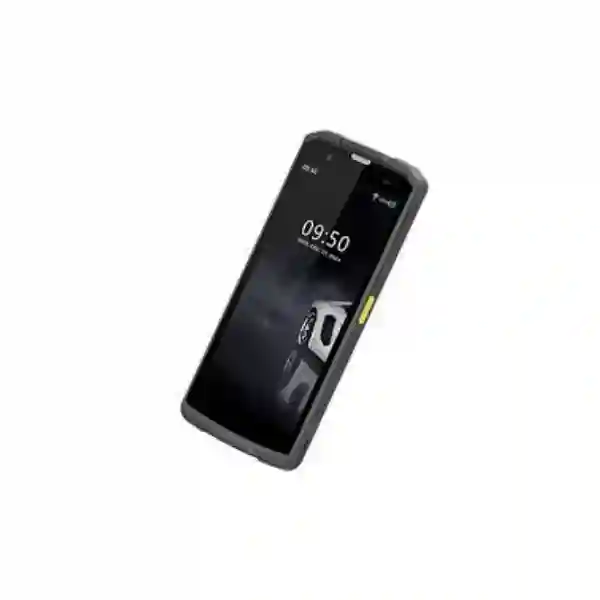
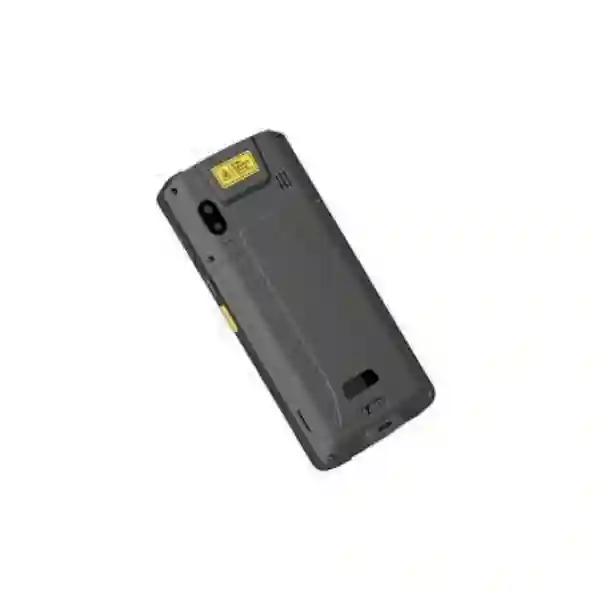
The Grandstream WP856 is a Wi-Fi smart IP phone built for mobile business users who need more than a traditional cordless handset. It combines SIP telephony, Android 13, Google Mobile Services, dual-band Wi-Fi 6, a 1D/2D barcode scanner, NFC and a rugged IP65-rated body in one portable device. For organizations in Tanzania evaluating a handheld for warehouses, retail floors, healthcare environments, logistics operations, building security or enterprise mobility, the WP856 can reduce the number of separate devices a worker carries while keeping voice communication and operational apps in the same workflow.
What the Grandstream WP856 is designed to solve
A conventional desk IP phone works well for stationary employees, but it does not fit teams that move continuously between aisles, patient areas, loading bays, shop floors, stock rooms or security checkpoints. The WP856 addresses that gap by bringing SIP calling and mobile computing into a rugged Wi-Fi handset. A warehouse associate can receive an internal call, scan a barcode and access an Android business application without returning to a desk. A retail worker can communicate with colleagues and use a supported inventory or workflow app from the same handheld. A security team can use voice communication while retaining access to approved Android tools and enterprise Wi-Fi.
The device is not a cellular smartphone replacement by default; it is primarily a Wi-Fi smart IP phone. That distinction matters during procurement. Organizations should evaluate wireless coverage, roaming behavior, SIP platform compatibility, application requirements, device management and charging workflows before ordering at scale. In most business environments, successful deployment depends as much on the Wi-Fi design and operational workflow as on the handset itself.
Integrated scanning
The built-in scanner supports 1D and 2D barcode workflows, allowing the device to participate in inventory, logistics, retail and operational data-capture processes.
Business voice
Support for up to six SIP accounts and six lines provides flexibility for extensions, departments and multi-account use where the selected SIP platform supports the required features.
Android application access
Android 13 with Google Mobile Services gives organizations access to Google Play and compatible Android applications, while custom apps can be evaluated for specific workflows.
Rugged mobility
The IP65-rated enclosure, 1.5-meter drop-safe design and Corning glass are intended for demanding mobile work environments where consumer handsets may be more vulnerable.
Verified Grandstream WP856 technical highlights
| Operating system | Android 13, Google Mobile Services certified |
| SIP capability | Up to 6 SIP accounts and 6 lines |
| Wireless | Dual-band Wi-Fi 6, IEEE 802.11a/b/g/n/ac/ax, 2.4 GHz and 5 GHz |
| Bluetooth | Bluetooth 5.2 with BLE |
| Display | 5.5-inch HD multi-touch capacitive touchscreen |
| Scanner | Integrated 1D and 2D barcode scanner |
| NFC | Supported |
| Battery | 5000 mAh rechargeable battery; up to 20 hours talk time and 200 hours standby under vendor-rated conditions |
| Durability | IP65-rated waterproof and dustproof; drop-safe from up to 1.5 meters |
| Management | Grandstream Device Management System (GDMS) support |
Deployment and integration guidance
The WP856 performs best when the wireless network is treated as part of the voice system. Voice traffic is sensitive to latency, packet loss and roaming interruptions, while scanner and Android application workflows may add data demand. Before deployment, organizations should review access-point placement, 5 GHz coverage, channel planning, VLAN design, authentication, QoS policy and roaming behavior. Large warehouses and multi-floor buildings should avoid assuming that a signal-strength reading alone proves voice readiness. A proper site survey and real-world roaming test with the target handset are more useful.
SIP registration should be validated against the chosen IP PBX or hosted platform. Administrators should confirm extension provisioning, codecs, dial plan behavior, voicemail access, transfer and conference features, security settings and any certificate or firewall requirements. The device supports common SIP and secure voice-related protocols, but actual interoperability should still be tested with the specific platform and firmware combination intended for production.
For Android applications, procurement teams should identify whether the workflow requires Google Play applications, a custom application, ERP integration, inventory software, a browser-based system or scanner-specific configuration. Grandstream publishes guidance for barcode scanning and examples involving ERP workflows, which can help technical teams plan proof-of-concept testing before a broad rollout.
Related FourTeck resources
For voice-system planning in Tanzania, review the FourTeck Tanzania services overview, which explains how IP telephony, Wi-Fi, switching and supporting infrastructure are coordinated. Buyers can also use the Tanzania technology shop to consider IP phones, IP PBX hardware, wireless access points and network infrastructure as connected requirements.
Organizations with regional operations can also explore FourTeck Uganda, FourTeck Kenya, FourTeck Africa, FourTeck UAE and FourTeck global technology solutions for broader regional coordination.
Grandstream WP856 Tanzania
For organizations in Tanzania, the Grandstream WP856 is most relevant where communication and operational data capture happen away from desks. Warehouses, distributors, retailers, hospitals, clinics, hospitality operations, industrial facilities and security teams can all have staff who move between work zones while still needing immediate access to colleagues and business applications. The WP856 combines a SIP voice endpoint with Android 13, Wi-Fi 6, NFC and barcode scanning, which can simplify the device mix for selected roles. Instead of issuing a cordless phone plus a separate scanner or consumer handset, a business can evaluate whether one rugged device can cover several daily tasks.
A Tanzania deployment should begin with the site rather than with the handset quantity. Buildings differ in floor layout, wall materials, racking density, ceiling height, interference and internet architecture. A logistics warehouse in an industrial area may require carefully placed access points along aisles, while a healthcare facility may need dependable roaming between wards and controlled staff areas. Retail environments may have dense customer Wi-Fi and many competing devices. Because the WP856 depends on Wi-Fi, voice reliability will reflect the quality of the wireless design. Organizations should therefore include Wi-Fi coverage, roaming and network segmentation in the procurement discussion.
For voice, buyers should identify the IP PBX or hosted SIP service that will register the phones. The WP856 supports up to six SIP accounts and six lines, but practical configuration depends on the PBX, extensions, call routing and user role. A warehouse supervisor may need one extension and group calling, while a team leader may need additional line appearances or accounts. If the organization uses a Grandstream UCM platform or another SIP-based system, a pilot should confirm the exact call features required.
When requesting a quotation in Tanzania, include the required quantity, intended workflow, existing PBX, Wi-Fi platform, charging expectations, scanner use case, Android application requirements and any accessories. This gives the supplier enough information to distinguish between a simple handset sale and a complete mobility deployment that may require Wi-Fi, switching, VLAN, PBX or application integration work.
Grandstream WP856 Dar es Salaam
In Dar es Salaam, the WP856 can be considered by organizations operating warehouses, distribution centers, retail outlets, healthcare facilities, hotels, corporate campuses and security-intensive sites. The city’s concentration of commercial activity creates many environments where staff move between receiving areas, shelves, loading points, offices and customer-facing zones. A handheld that supports SIP calling and barcode scanning can help unify communication with task execution, especially where users already depend on Wi-Fi-based operational systems.
The most important planning question is whether the existing wireless network is designed for real-time voice roaming. A network that works acceptably for laptops may still have coverage gaps that become obvious on a moving voice call. Large buildings, reinforced walls, lifts, shelving and warehouse stock can affect signal propagation. The WP856 supports dual-band Wi-Fi 6 and fast-roaming capabilities, but those capabilities need compatible access points and a sensible radio design. Businesses in Dar es Salaam planning dozens of devices should conduct walk tests through the actual paths employees use during a shift.
Barcode workflows also deserve early validation. The WP856 has a built-in 1D/2D scanner, yet every inventory or ERP application handles scanning differently. Some systems accept scanner data like keyboard input; others use dedicated SDK or application integrations. Before standardizing the device, test the exact barcodes used by the business, the scanning distance, screen workflow, data validation and any offline behavior. For retail, confirm whether the application is intended for stock checks, receiving, price verification or order processing. For logistics, confirm whether scans relate to picking, packing, dispatch or proof-of-movement workflows.
A useful Dar es Salaam quotation should therefore include more than the handset model. Ask for clarity on device quantity, charging method, compatible accessories, provisioning method, PBX integration, Wi-Fi readiness and whether implementation assistance is required. This helps procurement compare offers on the complete operating requirement rather than only the unit price.
Grandstream WP856 Mwanza
Organizations in Mwanza evaluating the Grandstream WP856 may be focused on distribution, hospitality, healthcare, retail, transport-related operations, warehousing or multi-building business sites. The device is especially relevant where employees cannot remain at a fixed desk but still need immediate contact with supervisors, reception, dispatch or other departments. Its combination of SIP telephony, Android access and barcode scanning can support workflows in which communication and data capture happen at the same point of work.
For a Mwanza site, one practical consideration is how reliably the local network covers operational spaces. Offices may already have Wi-Fi, but storage rooms, loading bays, corridors and outdoor transition points can have weaker coverage. The WP856 is Wi-Fi based, so a project should identify all areas where calls or scanning will occur. If users move between buildings or across wide compounds, the design may need additional access points, outdoor coverage or a reconsideration of whether Wi-Fi-only voice meets the mobility requirement. This evaluation should be completed before placing a large device order.
Battery planning is also operational rather than purely technical. Grandstream rates the 5000 mAh battery for up to 20 hours of talk time and up to 200 hours standby, but real results vary with screen use, scanning, applications, Wi-Fi conditions and call volume. Businesses running long shifts should define where devices are charged, whether units are shared between shifts and who is responsible for checking charge levels. A rugged device still needs a disciplined charging process if it is expected to remain available throughout a working day.
When sourcing the WP856 for Mwanza, include the expected user count, current PBX, Wi-Fi brand, site layout and application requirements in the request. This allows the proposal to address compatibility and deployment, not just the physical handset. It also gives IT teams a clearer path for pilot testing, user training and future expansion.
Grandstream WP856 Arusha
In Arusha, the Grandstream WP856 can suit mobile teams in hospitality, healthcare, warehousing, retail, institutional facilities and large business properties where staff need reliable internal calling while moving through the site. Hospitality is one example: engineering, housekeeping, security and operations teams often work across guest areas, back-of-house spaces, stores and service corridors. A Wi-Fi smart IP phone can keep those employees connected to a SIP-based phone system without tying them to a desk extension.
The barcode scanner expands the device beyond voice. Hotels and institutions may use barcodes for asset checks, stock control, maintenance inventory or internal logistics. Healthcare and retail environments may have their own inventory and identification workflows. The WP856 can participate in these processes when the target Android application or web application is compatible with the scanner and device software. Procurement should avoid assuming that every application works automatically; a short proof of concept with real data is more valuable than a paper specification alone.
Arusha sites may also include mixed indoor and outdoor operational areas. The IP65 rating offers protection against dust and water exposure within the limits of the rating, and the device is rated drop-safe up to 1.5 meters. These characteristics make it more suitable than a typical office handset for active work environments, but they do not remove the need for sensible handling, charging and device-management policies. Protective accessories and spare-device strategy can be considered for teams with high utilization.
From a network perspective, Wi-Fi 6 support can be valuable in busy properties with many wireless clients, but handset performance still depends on access-point placement, backhaul, interference and authentication. Before deployment in Arusha, map the staff movement paths, identify dead zones, verify PBX registration across roaming events and test calls during busy periods. A well-planned network is what turns the WP856 from an attractive handheld into a dependable operational tool.
Grandstream WP856 Dodoma
The Grandstream WP856 offers organizations in Dodoma a mobile SIP handset option for campuses, offices, healthcare environments, warehouses, retail stores and support operations where staff need to move while staying reachable. Its Android interface can be familiar to users accustomed to smartphones, while the built-in scanner, NFC and business voice capabilities make it different from a standard consumer device. For institutions that want controlled internal communication and access to approved applications over enterprise Wi-Fi, the WP856 can be evaluated as part of a broader communications strategy.
A key procurement decision in Dodoma is whether users need Wi-Fi mobility within a defined property or true wide-area mobile connectivity. The WP856 is optimized around Wi-Fi, so it is strongest when employees operate inside a managed wireless environment. If a role spends much of the day beyond organizational Wi-Fi coverage, a different device category may be more appropriate. Clear role definitions prevent overbuying or choosing a handset that does not match the communication pattern.
For institutional and enterprise use, management and provisioning are important. Grandstream Device Management System support can help administrators provision, monitor and maintain supported Grandstream endpoints. The organization should define ownership of device configuration, firmware updates, SIP credentials, Wi-Fi profiles and application permissions. Shared devices may require different account and security policies from personally assigned handsets. If Google services or third-party applications are used, IT should also decide how accounts are managed and how access is removed when a device changes hands.
A Dodoma quotation should include the intended quantity and the desired level of deployment assistance. For small orders, the requirement may simply be compatible handsets. For larger rollouts, the project can include Wi-Fi assessment, PBX configuration, provisioning templates, user groups, security policy, scanner testing, charging locations and documentation. Those elements have more impact on day-to-day success than the product specification alone.
Grandstream WP856 UAE
For UAE organizations, the WP856 can fit warehouses, logistics hubs, retail operations, healthcare facilities, hotels, commercial campuses and industrial environments that already rely heavily on managed Wi-Fi. In these settings, a mobile worker may need to communicate with supervisors, scan inventory, access an ERP or task application and receive alerts without carrying several separate devices. The WP856 brings these functions together in a rugged Android-based Wi-Fi smart IP phone.
Large UAE warehouses and distribution centers should pay particular attention to radio design around metal racks, cold-storage areas, loading bays and high ceilings. Wi-Fi 6 capability does not eliminate physical propagation challenges. A project team should review access-point density, antenna patterns, channel reuse, roaming parameters and the 5 GHz coverage available along worker routes. Testing should happen during normal operating conditions because forklifts, stock movement and busy client density can alter the radio environment.
The device’s barcode scanner and Android platform can be useful for ERP, warehouse management or inventory applications, but integration should be proven before procurement. Grandstream provides scanner documentation and examples of ERP-related integrations, while organizations may also use their own Android applications. The right validation process includes the exact barcode symbologies used, application response, network latency, user login method and whether scanning continues smoothly after a Wi-Fi roam.
UAE buyers often compare products on specification and price, but a better comparison includes deployment effort and management. Ask whether the proposal includes provisioning, PBX setup, Wi-Fi testing, application configuration, accessories and support scope. For regional technology planning, businesses can also review FourTeck UAE resources for voice, networking and enterprise infrastructure alongside the Tanzania project requirements.
Grandstream WP856 Uganda
The Grandstream WP856 can support Ugandan organizations that need portable business calling and operational data access within managed Wi-Fi environments. Warehouses, retail chains, healthcare organizations, hotels, educational campuses, security teams and service operations can all have staff who work away from desks. In those roles, a device that combines SIP voice, barcode scanning, NFC and Android apps can reduce workflow interruptions and make it easier for users to act on information at the location where work is happening.
Before deployment in Uganda, define the coverage boundary. The handset depends on Wi-Fi, so planners should identify whether workers stay within one building, move between nearby buildings or operate across a broader outdoor site. Access points should be positioned for continuous coverage along those paths, and roaming should be tested while a live call is in progress. The PBX and network should also be configured so that voice traffic receives appropriate priority without compromising security segmentation.
Organizations with multiple branches should consider how devices will be provisioned and supported. Standardized SIP templates, naming conventions, Wi-Fi profiles and application policies can simplify administration. Grandstream Device Management System support may be useful where a business already manages Grandstream endpoints. If a different PBX or device-management approach is used, test that the provisioning workflow matches the organization’s support model.
When requesting WP856 pricing for Uganda, provide the quantity, intended use case, PBX platform, Wi-Fi environment, scanner application and charging requirements. This lets the supplier propose the correct scope and helps procurement avoid comparing a bare handset quote with a package that includes integration or deployment services. Regional buyers can also use FourTeck Uganda for country-specific technology coordination.
Grandstream WP856 Kampala
In Kampala, the WP856 is relevant to businesses with busy indoor operations such as retail stores, medical facilities, warehouses, hotels, office campuses and service organizations. Staff in these environments may move between customer areas, stock rooms, reception points and operational zones while still needing immediate communication. A Wi-Fi SIP device can keep users on the enterprise voice system rather than relying on personal mobile numbers for every internal conversation.
Kampala deployments should assess network congestion and building structure. Dense wireless usage, neighboring networks, concrete walls and multi-floor layouts can affect real-time voice. The WP856 supports dual-band Wi-Fi 6, but good results depend on a properly engineered wireless network. Organizations should measure signal quality at work locations, verify roaming between access points and check whether the wired network and internet path can support concurrent calls and business applications.
For retail or distribution, the barcode scanner can add substantial operational value when it is integrated with the existing system. A pilot can test stock lookup, receiving, picking or asset-tracking workflows. Because the device runs Android 13 and has Google Mobile Services, compatible applications can be installed through normal Android channels, subject to company policy. IT should decide whether users can install apps themselves or whether application control will be centralized.
A Kampala buyer should also consider the complete ownership workflow: enrollment, user assignment, passwords, charging, cleaning, damaged-device replacement, firmware updates and decommissioning. These details are often more important in shared-device environments than in conventional desk-phone deployments. Including them in the original plan makes it easier to scale from a small test group to a larger operational fleet.
Grandstream WP856 Arua
Organizations in Arua may consider the Grandstream WP856 when they need a rugged handheld for internal communication, stock handling, healthcare support, hospitality operations, security or institutional mobility. The device’s core advantage is consolidation: a single unit can provide SIP calling, Android app access, barcode scanning and NFC within a Wi-Fi environment. That can simplify the user experience for roles where workers repeatedly switch between communication and data-entry tasks.
For Arua projects, infrastructure readiness is the first checkpoint. If Wi-Fi coverage is currently designed only for offices, the network may not reach stores, loading areas, corridors or outdoor workspaces where the phone would actually be used. Extending coverage should be planned with the same care as selecting the handset. Access points need reliable power and backhaul, and voice traffic should be separated and prioritized appropriately. If power stability is a concern, the supporting network infrastructure may also need UPS protection to keep communications available during short interruptions.
The IP65 rating and drop-safe design can make the WP856 suitable for tougher work areas, but organizations should still define a handling policy. Shared units should have assigned charging locations, cleaning procedures and a way to report damage. If scanners are used heavily, test the barcode types and labels found in the real environment, including worn, small or reflective labels. A scanner that works perfectly on a demonstration barcode may behave differently with operational labels.
When requesting a quotation for Arua, describe the workflow rather than simply asking for a handset price. Include whether the user needs voice only, voice plus scanning, specific Android apps, integration with a PBX or centralized management. This information makes it easier to identify whether the WP856 is the right model and what supporting work should be included in the project.
Grandstream WP856 Mbarara
The Grandstream WP856 can be evaluated in Mbarara for warehousing, retail, healthcare, hospitality, campus and security operations that require mobile access to voice and business data. The device is particularly interesting for teams that need to scan items or assets while remaining connected to an IP PBX. By combining those functions, organizations can design workflows where a worker receives an instruction, verifies an item and updates a system without changing devices.
Wireless design is central to the decision. The WP856’s Wi-Fi 6 support is valuable, but a handset cannot compensate for missing coverage or an overloaded network. In a warehouse, metal shelving and stock density can create reflections and dead zones. In a hospital or hotel, rooms and corridors can create rapid signal changes. A site survey should therefore test both coverage and roaming. Voice calls should remain stable as the user follows the same route taken during normal work.
Mbarara buyers should also check the application and identity model. If multiple employees share devices, the organization may need a simple login process for business applications while keeping SIP credentials and Wi-Fi profiles controlled by IT. If devices are permanently assigned, policies can be more personalized. NFC support may enable additional workflows where compatible applications and tags are in use, but it should be treated as an integration capability rather than an automatic business solution.
For quotation preparation, list the number of users per shift, the expected number of shared or assigned handsets, charging arrangements, PBX type, Wi-Fi platform, scanner requirements and application names. A clear requirement helps distinguish the cost of hardware from the cost of deployment, testing and support. It also gives decision-makers a better basis for evaluating whether the WP856 will reduce complexity compared with separate phones and scanning devices.
Grandstream WP856 Gulu
In Gulu, the Grandstream WP856 can support organizations that want a portable, business-managed alternative to desk phones for users working across stores, medical facilities, hospitality properties, warehouses, institutions and security operations. The handset combines Android application access with SIP calling and rugged design, giving IT teams a platform that can be adapted to several role-based workflows instead of being limited to voice.
The first design decision is whether the site has sufficient Wi-Fi coverage for voice. Workers may move into storage areas, stairwells, service corridors or outside transition zones that were not priorities when the original wireless network was installed. Those are often the places where cordless communication becomes most valuable. Testing the WP856 through these routes can identify coverage gaps before devices are rolled out to the full team.
The built-in 1D/2D scanner can support inventory, asset, ticket or logistics applications when software compatibility is confirmed. A practical pilot should include the actual labels used by the organization and the full sequence of steps the employee performs. Measure not only whether a barcode scans, but also whether the application records the correct data, whether the user can recover from errors and whether the workflow remains simple enough for daily use.
For Gulu procurement, include support requirements in the initial discussion. Organizations may need help with SIP configuration, Wi-Fi optimization, app setup, device enrollment or user training. Other buyers may already have internal IT skills and only require hardware supply. Defining that boundary early keeps the quotation clear and prevents implementation assumptions. The result should be a deployment plan tailored to the site, rather than a generic handheld purchase.
Grandstream WP856 Kenya
Kenyan enterprises with warehouse, retail, healthcare, hospitality, logistics and campus environments can use the WP856 as a convergence device for mobile voice and operational applications. Its six-account SIP capability provides flexibility for business telephony, while the Android 13 platform, barcode scanner and NFC support create room for application-driven workflows. This is especially useful where employees already depend on Wi-Fi coverage and need to interact with stock, assets, orders or internal communications while moving.
In larger Kenyan deployments, the network should be assessed for capacity as well as coverage. A site may have strong signal strength but poor performance when many clients share the same access point. Voice calls, scanning applications and background Android traffic can all compete for airtime. Wi-Fi 6 can improve efficiency when supported by the infrastructure, but channel planning, access-point placement, wired uplink capacity and RF interference remain important. Testing should include peak working periods rather than only quiet times.
Organizations integrating the WP856 with ERP, warehouse management or retail systems should involve application owners early. The scanner is a hardware capability, while the business value comes from how captured data flows into the application. Define the expected barcode types, validation rules, user authentication, offline behavior and error handling. If custom Android software is involved, schedule application testing before ordering a large fleet.
A Kenya quotation should therefore combine hardware details with operational assumptions. State the number of devices, PBX platform, Wi-Fi design, application use, charging needs, accessories and desired implementation scope. For regional coordination, FourTeck Kenya can complement Tanzania-focused planning where an organization operates in both countries and wants consistent product standards across sites.
Grandstream WP856 Kuwait
The WP856 can suit Kuwait businesses that operate high-mobility indoor environments such as warehouses, retail facilities, healthcare sites, hospitality properties and enterprise campuses. Its rugged IP65 enclosure and integrated scanner make it particularly relevant where a conventional office phone would not match the work pattern. Employees can remain connected to a SIP-based phone system while using approved Android applications for operational tasks.
Warehouse and industrial users should review the physical and wireless environment in detail. Large storage spaces can have strong line-of-sight sections and difficult RF shadows created by shelving or equipment. A practical rollout should map employee movement, identify handover points between access points and test voice continuity with the WP856 itself. Because the device supports Wi-Fi 6 and fast roaming, it can take advantage of a well-designed network, but the surrounding infrastructure must be configured to support those features effectively.
Kuwait organizations may also value centralized endpoint administration. The WP856 supports Grandstream Device Management System, which can assist with provisioning and monitoring. Before relying on any management platform, IT should define who owns credentials, how firmware is approved, how devices are grouped and how changes are tested. Shared Android devices should have clear policies for application access, user data and replacement.
When comparing suppliers, separate the device cost from the project scope. One quotation may include only the handset, while another may include configuration, PBX integration, Wi-Fi testing, application setup or support. A good request for quotation should specify all required services so procurement can compare like with like. This is especially important for a multifunction device such as the WP856, where deployment quality can determine whether its scanner, voice and Android capabilities deliver real operational value.
Grandstream WP856 Ghana
For organizations in Ghana, the Grandstream WP856 can be considered for warehouse, distribution, healthcare, retail, hospitality and institutional environments that need mobile communication inside managed Wi-Fi coverage. Its SIP support allows the handset to behave as part of a business phone system, while the integrated scanner and Android platform extend it into operational workflows. This can be useful when employees move continuously and need to communicate without interrupting a scanning, stock or service task.
A Ghana deployment should start with a pilot group representing the real users. Technical teams can register the devices to the intended PBX, install required applications, configure Wi-Fi, and test scanning against actual labels. Users should then operate the devices during normal work and report on call quality, scan success, screen usability, battery performance and handling comfort. This approach reveals practical issues that are difficult to predict from specifications alone.
For sites with intermittent power conditions, supporting infrastructure should also be considered. The handset has its own battery, but the Wi-Fi access points, network switches, firewall and PBX may depend on mains power. UPS protection for the network can preserve connectivity during short interruptions and may be important for environments where voice continuity matters. Charging locations and spare-device processes should also be planned for multi-shift operations.
When requesting WP856 pricing for Ghana, include quantities and specify whether the requirement is a simple product supply or an integrated deployment. If the organization needs Wi-Fi assessment, PBX configuration, scanner application testing or device-management setup, those items should be listed explicitly. That makes the quotation easier to evaluate and reduces the chance of discovering missing services after the hardware arrives.
Grandstream WP856 Nigeria
Nigeria has many large commercial environments where mobile employees need both communication and operational data access, making the Grandstream WP856 relevant to warehouses, logistics companies, retailers, hospitals, hotels, manufacturing operations and multi-building enterprises. The handset brings together SIP calling, Android 13, Wi-Fi 6, barcode scanning and NFC in a rugged form factor, which can simplify device standardization for selected front-line roles.
Large Nigerian sites should pay careful attention to wireless capacity, redundancy and power. A voice device is only as dependable as the network that carries the call. Access points need appropriate coverage and backhaul, switches need sufficient capacity, and power protection may be necessary for critical communication areas. If the organization operates several buildings, IT should evaluate whether the Wi-Fi design supports seamless movement or whether users will experience breaks when leaving one coverage zone for another.
The WP856 can be attractive for warehouse management and inventory use, but integration should be approached methodically. The built-in scanner supports 1D and 2D barcodes, while the Android environment can host compatible business apps. A pilot should test barcode symbologies, label quality, network response, user login, application permissions and data synchronization. If the application is business-critical, confirm how updates are distributed and how a device is recovered after reset or replacement.
A Nigerian procurement team should request a solution statement that identifies what is included: handsets, accessories, charging, provisioning, PBX integration, Wi-Fi review, applications and support. This protects against comparing incomplete offers and helps the organization build a realistic total cost of ownership. The objective is not simply to buy a rugged phone, but to establish a repeatable mobile communication and scanning workflow that can be supported at scale.
Grandstream WP856 Seychelles
In Seychelles, the WP856 can fit hospitality, healthcare, retail, institutional and operational environments where staff move throughout a property and need consistent internal communication. Resorts, hotels and service facilities may have teams spread across guest areas, service corridors, stores and maintenance zones. A Wi-Fi smart IP phone allows those users to remain reachable through the business PBX while also accessing Android applications relevant to operations.
Property layout is a major consideration. Hospitality sites can include multiple buildings, outdoor walkways, reinforced service areas and landscaped spaces that create very different wireless conditions. The WP856 is designed for Wi-Fi connectivity, so planners should define exactly where the device must work and test those areas. If a user frequently moves beyond Wi-Fi coverage, the organization should decide whether the workflow can tolerate that boundary or whether a different connectivity approach is necessary.
The IP65 rating can be useful in active environments where dust or incidental water exposure is possible, but it should not be treated as permission for careless handling. Device management should include charging, cleaning, storage, damage reporting and user responsibility. Barcode scanning may also support inventory or asset-management workflows in hospitality stores, maintenance departments or retail operations if the application is compatible.
For Seychelles procurement, the quotation should capture both the communication requirement and the site constraints. Include device quantity, PBX details, Wi-Fi architecture, expected movement areas, application needs, scanner use, accessories and support. A small pilot at the actual property is especially useful because it validates wireless behavior and user workflow before a larger commitment. This is a practical way to ensure that the WP856 is being selected for measurable operational reasons rather than only for its feature list.
How to choose and size a WP856 deployment
1. Define worker roles
Identify who needs voice only, who needs scanning, who needs Android applications and whether devices are shared or individually assigned.
2. Validate Wi-Fi
Check coverage, roaming, client density, 5 GHz availability, VLAN design and QoS across the actual routes users travel.
3. Confirm SIP integration
Test registration, inbound and outbound calling, transfers, voicemail, conference behavior and any PBX-specific features needed by users.
4. Test applications
Install the exact Android or ERP application and verify barcode workflows, authentication, data synchronization and error handling.
Quotation checklist for Grandstream WP856
Include the following details when asking for a commercial proposal: required quantity; country and delivery destination; whether devices are shared or assigned; SIP/IP PBX platform; number of extensions or accounts; existing Wi-Fi brand and access-point model where known; site size and mobility areas; barcode use case and barcode types; Android applications; NFC use if applicable; charging pattern; required accessories; desired provisioning method; implementation support; user training; and ongoing support expectations.
Also ask the supplier to state what is included with the handset, what optional accessories are priced separately, what warranty terms apply to the offered unit, and whether any software, cloud service or PBX licenses are required for the intended deployment. Prices, stock and lead times can change, so these should be confirmed in the current quotation rather than assumed from older listings.
Frequently asked questions
Does the Grandstream WP856 use cellular service?
The WP856 is positioned as a Wi-Fi smart IP phone. Its primary business calling model uses Wi-Fi and SIP. Organizations should evaluate it as a managed wireless endpoint rather than assuming it replaces a cellular phone in areas outside Wi-Fi coverage.
How many SIP accounts does the WP856 support?
Grandstream specifies support for up to six SIP accounts and six lines. The practical configuration and features available depend on the PBX or hosted SIP platform used by the organization.
Can the WP856 scan QR codes and barcodes?
The integrated scanner supports 1D and 2D barcode scanning. Compatibility with a specific business workflow depends on the target application and barcode formats used, so a pilot with real labels is recommended.
Is the WP856 suitable for warehouses?
Yes, warehouses are one of the use cases Grandstream identifies. The rugged IP65 design, barcode scanner, Wi-Fi 6 and SIP capability are relevant to warehouse mobility. A successful deployment still requires reliable Wi-Fi coverage and testing around racks, loading areas and worker routes.
Can Android apps be installed?
The WP856 runs Android 13, is certified with Google Mobile Services and supports access to Google Play. Organizations can also evaluate custom Android applications, subject to compatibility, security and device-management policy.
What should be tested before a large rollout?
Test SIP interoperability, Wi-Fi roaming, call quality, barcode scanning, application behavior, battery use, charging process, device management and user handling. A representative pilot can reveal issues before dozens or hundreds of units are deployed.
Decision recap
Choose the Grandstream WP856 when mobile workers need SIP calling and operational data access on a rugged Wi-Fi device, especially when barcode scanning and Android applications are part of the same workflow. Its strongest use cases are inside well-designed enterprise Wi-Fi environments where roaming, application integration and centralized administration can be controlled.
Do not select it only because the specification looks advanced. Confirm Wi-Fi coverage, PBX compatibility, app integration, scanner behavior, charging and management. A short pilot using real users and real workflows is the safest path to a scalable deployment.
Talk to FourTeck about the WP856
Share your device quantity, location, PBX platform, Wi-Fi environment and scanning or Android application requirements. FourTeck can use those details to prepare a more relevant quotation and identify any network, telephony or deployment dependencies that should be considered alongside the handsets.




Reviews
There are no reviews yet.