
HANWHA VISION · NETWORK AUDIO · TANZANIA PRODUCT ENQUIRY
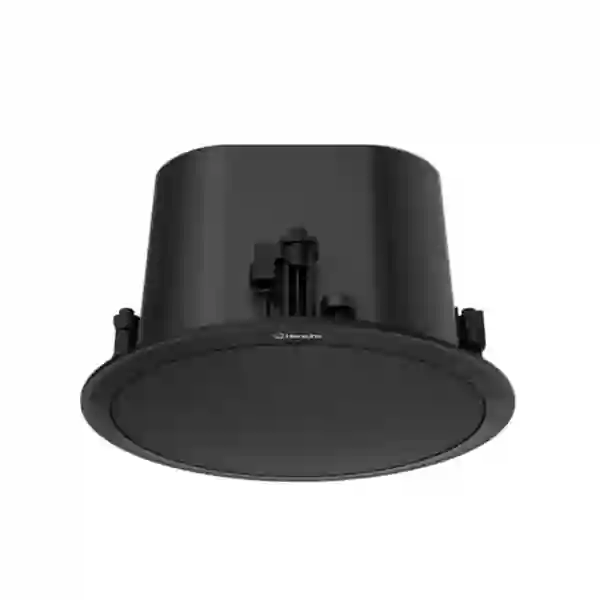
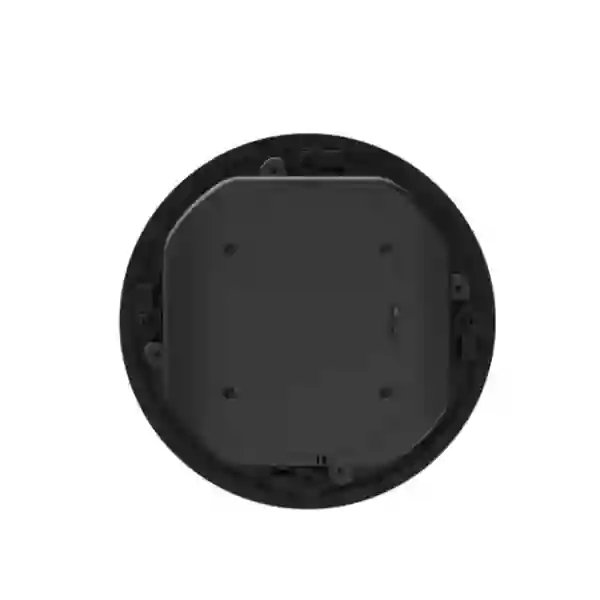
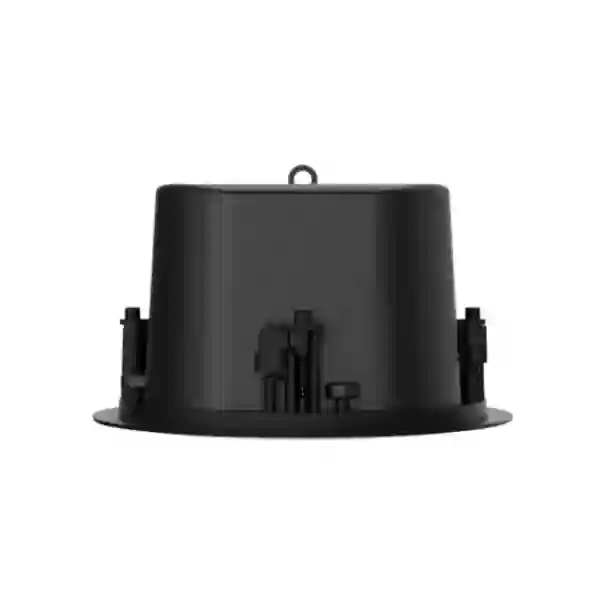
Hanwha SPA-C110B Black IP Ceiling Speaker
A network-connected ceiling audio endpoint for indoor announcements, SIP paging and background music, with a built-in 10 W amplifier and flexible PoE or PoE+ power. Plan the room acoustics, network, zones and regional supply before purchasing.
At a glance: what you should verify
Rated maximum SPL: 96 dB with PoE or 100 dB with PoE+. Actual intelligibility depends on the room.
Approximate body dimensions Ø269 × 156.5 mm; confirm cut-out and support with the installation guide.
SIP, SUNAPI, ONVIF Profile S and zone controls require project-specific validation.
Confirm the Tanzania quotation, exact model, delivery and warranty terms before ordering.
Manufacturer-published technical specifications
| Model | SPA-C110B |
|---|---|
| Brand | Hanwha Vision |
| Product type | IP ceiling speaker; black variant |
| Amplifier | Built-in 10 W Class D |
| Maximum SPL | 96 dB on PoE; 100 dB on PoE+ |
| Sensitivity | 90 dB at 1 W |
| Acoustic frequency range | 120 Hz–20 kHz (-10 dB) |
| Speaker arrangement | Two-way; 8-inch LF and 2-inch HF drivers |
| Network | 10/100 Base-T Ethernet |
| Power options | IEEE 802.3at Type 1 Class 3 PoE; Type 2 Class 4 PoE+ |
| Onboard memory | 1 GB internal; microSD SDHC up to 32 GB (manufacturer-listed support) |
| Integration | SIP, SUNAPI HTTP API, ONVIF Profile S |
| Dry contacts | One contact input; one normally-open output |
| Operating limits | -20°C to +50°C; 10–85% RH non-condensing |
| Approximate dimensions | Ø269 × 156.5 mm high |
| Approximate weight | 2.7 kg |
| IP ingress rating | Not specified; do not assume outdoor/weather resistance |
Specifications are based on Hanwha Vision’s manufacturer catalogue and support information consulted in November 2026. Confirm the installation manual and the exact locally supplied revision before deployment.
What this speaker solves
Public-address decisions often begin with a simple question: can an announcement be heard in the right area without deploying a separate analogue amplifier and a second audio cabling system? The Hanwha SPA-C110B addresses that need for suitably designed indoor locations. It is a network endpoint with its own amplifier, intended for installations where audio messages can be managed over an IP network rather than distributed only through conventional loudspeaker wiring. That distinction matters when a building needs scheduled content, paging or audio linked to other systems.
Use it for clearly defined communication tasks: informing people about a change in service, paging a department, presenting background music at suitable levels, or delivering an operational alert that is triggered by an authorised system. The unit supports features such as scheduling and SIP that can simplify a network-audio design. It should not be described as a standalone, fully certified life-safety evacuation system; such an application requires separate design, approval, supervision and compliance checks.
The right purchase decision depends less on a single loudness number and more on room geometry, ambient sound, mounting conditions, network design and the way messages will be created and routed. A quiet office and a noisy service area may need different speaker counts or placements even when using the same model. Begin with the required listening locations, who will initiate announcements and how often messages must reach each zone. Those facts create a more dependable specification than ordering a number of speakers from floor area alone.
Who should consider the SPA-C110B
This is relevant to facilities teams, IT managers, security integrators, electrical contractors and project buyers selecting an indoor network speaker. It suits a project where the ceiling can accommodate the stated form factor, where Ethernet can reach each proposed speaker position, and where the organisation wants IP-based control of music, paging or announcements. Existing IP-audio or SIP planning can make the choice especially relevant, provided the proposed endpoint and controller versions are tested together.
Consider an office reception where a desk operator needs to page a meeting area, a retail interior with timed service announcements, or a warehouse administration zone requiring targeted staff instructions. Those are potential deployment scenarios, not promises that any one device will cover an entire room. Determine whether the content needs to be live speech, pre-recorded audio, text-to-speech or a combination. Check whether a dedicated microphone station, software interface or SIP extension will be needed to originate the audio.
The SPA-C110B is less suitable when the brief explicitly calls for a weather-rated outdoor loudspeaker, an unobtrusive surface-mounted cabinet on a solid wall, or an independently documented emergency voice-alarm compliance package. It is also worth reconsidering if the ceiling has no safe fixing location or network access. Compare mounting styles and required environmental protection first; then evaluate audio and management features. A technically capable speaker is still the wrong component when its installation method conflicts with the building.
Understanding the 10 W amplifier
Hanwha lists a built-in 10 W Class D amplifier. That means the network speaker includes its own amplification rather than depending on an external central power amplifier for every audio output. For project design, this simplifies one part of the wiring concept but does not eliminate the need for a correctly powered Ethernet port, safe cable pathway or suitable control system. It also does not mean the loudspeaker will consume exactly 10 W from the network under every operating condition.
Class D describes the amplifier technology; it is not a substitute for assessing the acoustic result. How far an announcement carries depends on the reproduced signal, ambient noise, reflected sound, speaker angle, mounting height and listener position. A higher maximum output can help provide headroom, but continuous use at the highest possible level is not automatically desirable. Speech intelligibility and acceptable volume in adjacent areas usually matter more than an impressive peak specification.
Ask the installer to establish a comfortable reference level using the content that will actually be broadcast. Test ordinary speech, important alert phrases and background music separately. Do not assume settings optimised for music will make a low-level spoken instruction intelligible. If the building includes classrooms, hospitality spaces or visitor-facing areas, review sound spill, local comfort and nuisance issues as part of commissioning. The amplifier specification is a useful starting point, not the final acoustic design.
PoE versus PoE+ and what changes
The SPA-C110B supports PoE and PoE+, allowing network cabling to carry data and supply power from a compatible source. Hanwha identifies IEEE 802.3 Type 1 Class 3 and Type 2 Class 4 support. For a suitable ceiling, this can avoid a separate local power outlet at each speaker. It does not remove the need to verify switch budgets, cable installation quality, port configuration and the upstream power arrangements supporting the network cabinet.
Power mode affects the published maximum acoustic output. The manufacturer specifies 96 dB maximum SPL using PoE and 100 dB using PoE+. The 100 dB headline is therefore not a safe assumption for every ordinary PoE switch port. Confirm the actual power negotiation and the intended volume requirement during testing. Even with PoE+, no fixed listening distance or coverage area can be guaranteed from SPL alone because the room and installation geometry also determine the result.
For multi-speaker deployments, total PoE budget can be an early constraint. List the number of speakers per switch, other devices sharing the switch, expected uplink capacity and the chosen power class. Check the manufacturer’s current power specifications and your switch vendor’s available budget before finalising quantities. If paging must continue during a power interruption, consider an appropriately designed backup arrangement for the switches, controllers, network core and message source—not simply a backup supply for one speaker.
What the audio specifications actually mean
The speaker is described as a two-way design using an 8-inch low-frequency driver and a 2-inch high-frequency driver, with 90 dB sensitivity at one watt. Hanwha publishes an acoustic frequency range of 120 Hz to 20 kHz at -10 dB. These figures help an engineer compare the unit with other audio endpoints but should not be mistaken for a prediction of speech quality in a specific room. Measurements depend on defined test conditions and are not the same as an on-site intelligibility test.
Some product listings also show 20 Hz to 20 kHz, but the manufacturer identifies this separately for the line-output frequency response. Buyers should distinguish the electronic line-output specification from the loudspeaker’s stated acoustic range of 120 Hz to 20 kHz. This is important when comparing background-music performance or evaluating lower-frequency content. The product can be useful for both announcements and music without being described as a dedicated high-bass music system.
Hanwha provides coverage information of 90 degrees at 1 kHz and 60 degrees at 4 kHz. Dispersion changes with frequency; it is not one constant angle for all speech and music. A ceiling plan must take these variations, the room height and audience locations into account. High ceilings, hard reflective finishes and noise from equipment can alter the result significantly. For critical instructions, request an acoustic layout and on-site demonstration instead of relying solely on the single maximum SPL figure.
Planning ceiling placement and speaker quantity
A successful installation starts with a reflected ceiling plan showing the exact position and construction of each proposed mounting point. The SPA-C110B’s listed dimensions are approximately 269 mm in diameter and 156.5 mm in height, and its stated weight is about 2.7 kg. These product-envelope values are useful for feasibility checks, but they do not establish the cutting-hole diameter, fixing detail or allowable ceiling load. Use the current installation instructions for those details.
Ceiling type matters. A removable grid tile, suspended plasterboard ceiling and concrete soffit are not interchangeable. A qualified installer should establish the permitted fixing method, available cavity depth, structure supporting the weight and an appropriate means to restrain the device. Check the route for the data cable, separation from services and access for future maintenance. Fire barriers, air-handling spaces, sprinklers and other building features may impose additional installation rules that should be assessed by the project team.
Speaker quantity should be derived from listening areas rather than visual symmetry alone. Draw the primary positions where people stand or sit, note background noise and decide whether some areas need exclusion from broadcasts. A single central speaker may create excessively high volume directly below it while leaving distant corners unclear. Multiple correctly positioned endpoints can sometimes provide a more even level. Treat that as a design consideration requiring acoustic assessment, not a fixed rule that applies to all rooms.
Plenum-rated construction and environmental limits
The manufacturer identifies the SPA-C110B as plenum rated for in-ceiling use and provides product documentation relevant to this construction. That can be valuable where a building includes air-handling ceiling spaces, but it is not permission to disregard the project’s local fire and electrical rules. Confirm that the exact construction, mounting arrangement, cabling and supporting accessories satisfy the actual building specification. A certification listed for one jurisdiction is not automatically an approval for another.
Hanwha lists an operating temperature range of -20°C to +50°C and relative humidity of 10 to 85 percent without condensation. These are equipment specifications, not evidence that the device is suitable for every tropical setting. A ceiling cavity can become hotter than the occupied room; roofs, lighting, air-handling units and equipment may change its conditions. Inspect the location and ensure operating limits are met in the expected worst case. Provide adequate clearance in accordance with manufacturer guidance.
No ingress-protection code is stated in the reviewed manufacturer specification. Do not treat the speaker as rainproof, washdown-safe or weather-sealed. If the project includes open walkways, exterior loading points, exposed eaves or very dusty or damp areas, select an appropriately rated alternative after checking the use environment. The black finish affects appearance, not environmental resistance. Confirm whether the exact colour and part number ordered correspond to the required ceiling speaker model.
Ethernet, addressing and network preparation
The SPA-C110B uses 10/100 Base-T Ethernet and supports protocols including IPv4, HTTP, DNS, DHCP, NTP, TCP and UDP. The practical implication is that its installation needs more than a live cable: it needs appropriate addressing, device discovery, connectivity to authorised management points and reliable timing where scheduled events are used. Decide whether addresses will be assigned by DHCP with reservations or through an approved static-address plan. Document the final settings so that a future maintainer can identify each speaker.
Network teams should review segregation, multicast policy, switch-port settings and the expected flow of audio. A speaker on the same physical Ethernet infrastructure as cameras, phones or office devices should not automatically have unrestricted access to those systems. Put the endpoints in an approved network segment, apply required firewall controls and document which servers or controllers must communicate with them. Coordinate device naming and zone identifiers before installation to reduce configuration confusion.
If multicast audio or large zone counts are planned, check switch features, routing behaviour and the actual path from audio source to each endpoint. Multicast needs deliberate network engineering; it is not a guarantee that streams will reach every VLAN or remote location merely because the speaker supports it. For sites linked across locations, validate latency, jitter, packet loss and available bandwidth. A clear test plan can distinguish an audio device fault from a network path or policy issue.
SIP paging and telephone-system integration
The product supports SIP, making it relevant where an organisation wants selected announcements to be initiated from a compatible telephone or SIP client. Hanwha’s product documentation references testing with clients such as Grandstream, Yealink, Cisco and MicroSIP, and with the Asterisk PBX platform. These references indicate integration possibilities, not universal plug-and-play compatibility with every device version, hosted telephone service or PBX configuration in the market.
Before committing to a design, clarify whether the intended workflow is direct calling of one speaker, group paging, scheduled content, one-way announcements, or return audio. Confirm how SIP identities and credentials are assigned, whether the controller supports the needed call routing, and how permission to page is restricted. The documented codecs include PCMU, PCMA and Speex variants, with DTMF via RFC 2833. Compare these options with the chosen PBX and voice network rather than assuming any codec or dialling mode will work.
Run a proof-of-concept that starts with the exact handset or software client the customer uses. Make a call, select the target announcement zone, measure setup time and assess the audible result. Check what happens during concurrent sessions, busy conditions and network interruptions. Where two-way communication is essential, verify the return-audio path and any required microphone hardware in the actual deployment. Describing the platform as supporting two-way audio is not evidence that this ceiling speaker alone supplies a complete intercom station.
Using SUNAPI and ONVIF in an integrated site
Hanwha specifies a SUNAPI HTTP API and ONVIF Profile S under system integration. Those interfaces may be relevant to security and facilities projects that want audio actions associated with other networked devices. They do not establish that every video-management system can automatically discover, configure and control every speaker feature. A published standard or API identifies an integration path; the exact commands and events available to the target controller still need to be checked.
Start by defining a single useful workflow. For example, an authorised operator might want to deliver a verbal instruction after noticing an issue on a camera feed, or an event rule might request a pre-recorded announcement for a specific indoor area. The ability to construct that workflow depends on the software platform, event mapping, operator privileges and currently supported integration method. Test the full sequence, including time stamps, acknowledgements and how repeated triggers are handled.
Never describe an integrated CCTV audio deployment as automatically compliant with privacy or security rules. Audio announcements should have clear operational purpose; recording or monitoring conversations brings separate legal and policy considerations. Make system boundaries visible in the project documentation so installers know which applications can initiate messages. The simplest dependable integration is often a small, validated set of actions rather than enabling every available command without an operational owner.
Groups, zones and multi-source control
The manufacturer’s specification lists sizeable software-defined limits, including up to 256 zones using multicast, 20 zones using unicast and 255 groups. It also describes up to 48 multicast sources, divided between audio and microphone channels, with a stated simultaneous broadcast limit. These are manufacturer-reported capabilities under particular design conditions; they should not be interpreted as a guarantee that any arbitrary network topology or management application can achieve the headline values.
Zones should mirror how people use the building. A front-of-house area may need different messages from loading operations, administration rooms or a training space. Some events may need a local announcement while other messages should reach multiple areas at once. Create a zone schedule showing each speaker, its normal audio programme, permitted callers and the events that should override routine content. Use readable zone names that remain understandable during a busy shift or an incident.
A complex building benefits from documented priority behaviour. What happens when music is playing and a live page arrives? Can a scheduled announcement interrupt a receptionist’s message? What happens when an operator addresses a group spanning two physical floors? Those are operational policy questions, not specifications answered by a zone-count number. Demonstrate the intended priority and recovery sequence with the proposed controllers. Keep the first deployment simple enough for local staff to operate consistently.
Background music and scheduled announcements
Hanwha lists background music and a scheduler among the SPA-C110B’s features. These capabilities can serve environments where music is appropriate in a public area, or where recurring messages need to be delivered at defined times. They do not mean the device provides licensed music content or that an organisation may use recordings without permission. The project owner remains responsible for choosing appropriate material, levels, licensing arrangements and operating rules.
For schedules, prepare a content register describing the exact announcement, its start time, relevant zone and person authorised to change it. Review local working hours and how the system will handle public holidays, shift patterns and changes to normal building use. Accurate network time becomes important when several endpoints coordinate messages. If the central management platform is unavailable, document which functions are expected to continue and test those assumptions under controlled conditions.
Background music requires different acceptance criteria from urgent speech. Set normal programme levels for comfort, review speaker balance across adjacent spaces and check whether a live page should automatically take precedence. Some applications may require no music at all in private offices, examination rooms or other sensitive areas. Include a manual override that authorised staff understand. A speaker can support more than one audio application, but the project succeeds when those applications have clear rules that fit actual daily operations.
Onboard and removable audio storage
The unit has 1 GB of internal memory according to Hanwha and provides a microSD slot with manufacturer-listed SDHC support up to 32 GB. This offers potential flexibility for handling audio assets, depending on firmware features and how the system is configured. Storage capacity should not be used as a shortcut for calculating the number of announcements or hours of music without knowing the supported formats, encoding settings and management behaviour.
Before installation, decide whether each speaker will need locally stored messages, centrally delivered streams or both. Local assets can make routine message management practical, but they create version-control questions when many devices are involved. A consistent naming convention and approval process helps ensure all speakers use the current safety wording, correct department names and appropriate language. A stale recording can be a bigger operational problem than a small difference in audio quality.
If removable storage is used, select compatible cards according to the current manufacturer guidance and confirm the formatting and maintenance procedure. Protect the files and configuration against unauthorised changes. Build an inventory indicating which devices contain which approved versions of critical announcements, and define how updates are deployed and checked. Storage is a useful component of the system; content governance remains a human and organisational responsibility.
Text-to-speech: strengths and language checks
The SPA-C110B lists text-to-speech among its capabilities. Hanwha’s published language list includes US and UK English, German, French, Spanish and Russian. That can support certain scripted messages without making a new studio recording for every small wording change. Text-to-speech quality, voice options and the steps needed to activate a feature may depend on the deployed firmware and management software, so test them rather than assuming every control is available in the planned configuration.
For a Tanzania project, language selection needs deliberate attention. English may work for some office or hospitality messages, but an audience may require Swahili or another language for everyday comprehension. The reviewed manufacturer language list does not establish built-in Swahili text-to-speech support. If Swahili announcements are important, evaluate approved pre-recorded audio or another verified source rather than claiming that the device can synthesise the language directly.
Write important messages for the people who will hear them, not merely for an automated voice engine. Avoid ambiguous abbreviations, very long sentences and unfamiliar building terminology. Test the spoken result in the real acoustic environment, especially for names, directions, numbers and emergency-related wording. Establish an approval process for content and translation. A voice feature makes message delivery more flexible, but no synthesiser can replace an intelligibility review and accurate instructions.
Dry contacts and event-driven messages
The manufacturer documents one dry-contact input and one normally-open dry-contact output. Such interfaces can help connect the speaker with an appropriate local event or control workflow when the electrical characteristics and permitted use are confirmed. They are not a general-purpose promise that any alarm, relay circuit or third-party device can be connected safely without further design. Review voltage, current, isolation and wiring requirements in the exact manufacturer installation guide.
Before specifying an event, describe what the contact represents, which device provides it, and who should receive the resulting audio message. For a routine operational application, an authorised input might initiate a notification in a defined zone. For more consequential alarms, require a documented system design and confirmation that the audio arrangement is approved for that purpose. The speaker’s contact feature must not replace a required certified fire-alarm or emergency warning installation.
Commission each event path separately. Verify the signal in normal conditions, confirm the announced wording, check the target zone and observe how the system resets. Test an accidental or repeated input so that one faulty sensor does not produce an endless disruptive message. Record the installed wiring and control logic for maintenance. A small number of well-tested event rules is easier to troubleshoot than a broad collection of triggers whose ownership and priority have never been agreed.
Built-in status checks and maintenance signals
Hanwha lists connection verification, built-in logging and a speaker-test function with a graphic level meter. These features are useful for routine operational checks because they provide more information than the fact that a device has power. However, a network connection or successful software status indicator does not prove that every listener can hear a message properly at every location. Physical acoustic tests remain essential when verifying a newly installed or modified system.
Agree on a periodic maintenance routine covering device reachability, firmware version, time synchronisation, permitted configuration changes and performance in the actual zone. Make a simple record of each installed model, serial number where appropriate, IP address, switch port, ceiling location and responsible contact. The location register can greatly reduce investigation time when a unit reports a fault. Plan access arrangements carefully if speakers are mounted above occupied rooms or sensitive equipment.
Test the full announcement chain rather than only pinging the speaker. Start from the normal operator interface, route a harmless test message, confirm it plays in the intended zone and ensure routine audio resumes as designed. The organisation should also have a practical response when a failed test is detected: who receives the fault, who can isolate a problematic speaker, and when an engineer must attend. Manufacturer monitoring functions are tools that support, rather than replace, a maintenance process.
Cybersecurity and operational ownership
An IP speaker is a networked device and should be managed as part of the organisation’s normal security estate. Before first use, establish the supported firmware release, remove default credentials where applicable, assign unique administrative access and restrict who may modify announcements or paging rules. These are general deployment practices, not a representation that any particular certification, encrypted protocol or security function is present unless verified for the exact firmware.
Place management access behind appropriate network controls, provide only the communication paths required by the chosen application and keep a record of configuration backups. If a third-party PBX, surveillance system or automation platform can issue audio, decide which account authorises that connection. A compromised paging endpoint could cause disruptive or misleading messages even if it has no camera attached. Operational security should therefore cover both the device settings and the content that can be played.
Keep firmware management under change control. First check current release documentation, then evaluate the update on a test speaker if the deployment is business-critical. Plan how scheduled audio and SIP settings will be preserved and how the system will be checked afterwards. Do not promise automatic compatibility with older controllers after every update. Clear roles among IT, facilities, security and the integrator make routine changes safer than leaving all settings with one unrecorded administrative account.
Planning for Tanzania buildings and projects
Buyers preparing a deployment in Tanzania should confirm the exact requirements of their site before asking for a firm solution price. Differences in ceiling systems, power backup, network cabinet locations and building use can materially change installation effort. Assess the actual indoor operating environment, including potential heat in roof spaces and the possibility of condensation. The manufacturer operating limits apply regardless of the country, and a plenum-rated construction should not be mistaken for an outdoor or waterproof rating.
If communications infrastructure or power supply is intermittent, consider the whole service path. An IP speaker needs the relevant network, switch and control source to work. A power cut affecting the access switch, controller or PBX may interrupt otherwise functional speakers. Ask the project team to identify which messages must remain available during such events and what properly designed backup infrastructure would be required. Avoid relying on unverified assumptions about local internet, telecom providers or cloud hosting.
Before purchasing, verify whether the exact black SPA-C110B variant is offered for the intended region and project, what documentation the receiving team will need and which integrator will perform testing. Local price, stock, lead time, import requirements, delivery coverage and warranty terms must come from a specific confirmed quotation. This page makes no commitment about any of them. A structured project enquiry describing quantity, location type, network design and required audio functions is the best next step.
Example uses: office, retail and visitor areas
In a multi-room office, a network ceiling speaker can support a reception announcement or targeted internal page if the communication policy permits it. The main design issue is not maximum volume; it is the ability to make speech intelligible to intended listeners without disturbing concentration in adjacent rooms. Identify desks, corridors and meeting spaces separately, and decide where announcements should be muted or limited. Test paging from the real handset or operator console before staff are expected to use it.
In a retail interior, the same type of endpoint could be used for service announcements, approved background music and routine closing messages. Establish permissions for the content and determine whether separate departments need their own zones. Acoustics can vary as shelves, products and crowds change. A speaker facing a hard reflective ceiling and open shop floor may behave differently from one near soft furnishings. Site commissioning should consider a representative busy operating period where feasible.
In a hotel reception or similar visitor-facing area, message tone and comfort matter as much as technology. Background music should remain at an appropriate level, with live information taking precedence only under agreed rules. A clear set of announcement templates can reduce confusion when staff change shifts. This is a possible application rather than confirmation that FourTeck supplies installation to any named property, or that the SPA-C110B alone meets all hospitality sound requirements.
Example uses: education, healthcare administration and industry
Education sites may need administrative paging between selected corridors or shared rooms, but different locations have different expectations for quiet and accessibility. A classroom block should not be treated acoustically like a sports hall. Define when staff may initiate announcements and whether groups should exclude examinations or other activities. Any evacuation-specific application requires its own competent design and compliance review rather than an assumption that a standard IP speaker qualifies as an emergency voice alarm.
Healthcare administration and waiting environments often need carefully worded, understandable information without disclosing private details. A network paging endpoint may be considered for routine queuing or service instructions where policy allows. Test the audience language, volume, background noise and confidentiality implications. Do not assume audio monitoring or recording is appropriate. The speaker’s features do not decide the organisation’s privacy obligations, and specialist medical or life-safety systems may have separate requirements.
In industrial administration rooms or protected indoor sections of a logistics facility, a ceiling-mounted IP speaker can help communicate with staff when the environmental and acoustic conditions suit it. Machinery noise, hearing protection, reverberation and heat may make ordinary ceiling audio insufficient for certain production areas. Do not infer that one 100 dB speaker will overcome every industrial noise profile. Map real listening conditions and compare alternative horns or specialist equipment for spaces that need different projection or ingress protection.
Comparing this model with other speaker formats
Ceiling speakers are useful when a room has a suitable cavity, when a distributed overhead sound field is desired, and when the appearance should remain relatively integrated with the ceiling. Wall-mounted units can be more practical where there is no cavity or structural approval for an overhead installation. Pendant speakers may offer a different positioning approach in open-ceiling interiors. Horn speakers are often considered for areas needing directional projection, but the exact model and environment determine suitability.
The SPA-C110B should also be compared with the white SPA-C110W only after confirming that the customer’s aesthetic requirement and supply conditions justify the colour choice. The B variant is identified by Hanwha as black. The broader Hanwha IP-audio family includes other ceiling, wall, pendant and horn formats. Those families are not automatically interchangeable: verify their mounting method, acoustic output, protection and control capabilities independently instead of transferring every SPA-C110B specification to other models.
Before selecting an alternative, produce a short decision matrix: mounting surface, noise level, desired coverage, aesthetic preference, ingress exposure, maximum necessary output, controller compatibility and ease of maintenance. That list prevents choosing solely by wattage or by whether a particular shape looks familiar. If the project already uses an analogue 70/100 V distributed-audio system, evaluate the architectural tradeoffs before replacing equipment. Network audio can be powerful, but a conversion still needs a clear operational and financial reason.
What the quotation should include
An effective enquiry begins with a description of the task rather than only a model number. Provide the approximate number of occupied areas, typical ceiling height, the presence of ceiling cavities and the intended audio functions. State whether the speakers will receive power from existing PoE/PoE+ switches and whether a SIP PBX, audio controller or VMS is already installed. Include the proposed device quantity if known, while making clear whether it is an estimate or a confirmed acoustic design.
Ask that the eventual bill of materials distinguish speakers from infrastructure. The project may also need a switch with adequate power budget, correctly specified network cable, mounting accessories described in the installation instructions, a paging source, management software or licensing, backup power and professional commissioning. The manufacturer’s supplied-items list must be checked for the exact product. Do not assume that every component named in a concept drawing is included with a single speaker purchase.
Clarify the expected acceptance tests before ordering. Useful examples include a live page from the real operator device, scheduled announcement playback, group selection, interruption and resumption of music, verification of speaker power mode, network fault visibility and safe physical mounting. Request explicit confirmation for Tanzania availability, commercial terms and warranty coverage. If any of those matters are not yet known, record them as open items rather than treating a preliminary product description as a binding project quotation.
A practical commissioning checklist
Begin with physical checks. Confirm the exact installed model and colour, compare the mounting with the current installation guide, inspect the mechanical restraint and cable routing, and verify that the installation location is not exposed to unsuitable moisture or heat. Check that the device does not interfere with ceiling services. Record the equipment identifier, installation position, switch port and any accessories used. A well-documented installation is easier to support after staff or contractors change.
Next, validate network and control behaviour. Check negotiated PoE or PoE+ operation, addressing, time synchronisation, authorised management access, correct group membership and reachability to the approved controller. If SIP is used, complete a call from the specified handset or softphone. If the project uses multicast, verify that each required zone receives its stream and that undesired zones remain quiet. Test simultaneous or overlapping events where this is part of the agreed operational workflow.
Finish with a listening and handover assessment. Play an approved spoken test message, check intelligibility at representative listener positions and set comfortable levels for routine material. Demonstrate that authorised users know how to start, cancel and route messages. Confirm the documented response to faults or power interruptions. Give the owner a configuration register, instructions for routine testing and a change-control contact. Commissioning is complete when both the technical behaviour and the day-to-day operating procedure have been accepted.
Managing the system after handover
An IP audio installation is not a one-time equipment purchase. Over time, rooms change use, departments move and network policies evolve. Review zones when layouts change and recheck audio levels after material alterations to partitions, shelving or ambient machinery. Treat a new message template as a controlled change, especially when the text tells listeners to move or take action. Keep an accessible register of approved content, owners and review dates.
IT should know which switches carry the speakers, where configuration backups are held and how firmware updates are authorised. Facilities should know the speaker locations and physical access method. Operators should know how to page only the areas for which they are responsible. These responsibilities may be combined in a small organisation, but they still need to be assigned. A maintenance plan should include both technical health checks and an actual sound test.
If an important message fails, investigate the complete chain: source device, SIP or application settings, permissions, network segment, switch power, zone mapping, speaker configuration and finally physical audio output. That sequence avoids replacing a healthy ceiling speaker when the true issue is an upstream service or changed switch policy. Retain test evidence and a simple incident log. Reliable daily use comes from consistent operations and clear ownership as much as from the hardware itself.
Frequently asked questions
Is the Hanwha SPA-C110B a camera or a speaker?
It is an IP ceiling speaker, not a CCTV camera. It provides network-connected audio functions for indoor paging, announcements and compatible integrations. It can be considered within a broader security system, but it does not replace a camera or recorder.
What is the difference between PoE and PoE+ for this product?
Both can power the unit through compatible Ethernet equipment. Hanwha publishes a maximum sound-pressure figure of 96 dB on PoE and 100 dB on PoE+. Confirm the switch’s actual available power, negotiated mode and acceptable acoustic performance during commissioning; do not assume a PoE port provides the PoE+ maximum.
Does the speaker need a separate amplifier?
The SPA-C110B has a built-in 10 W Class D amplifier. This avoids a separate central amplifier for its own speaker output, although a complete installation may still need network switches, power backup, paging or music sources, management equipment and licensed software depending on the architecture.
Can I connect it to an existing SIP telephone system?
SIP is a manufacturer-listed feature, and Hanwha describes testing with several SIP clients and Asterisk. This does not guarantee automatic compatibility with your exact PBX or hosted service. Confirm codecs, credentials, call routing, group paging, any required controller and supported firmware using a proof-of-concept.
Can the SPA-C110B be used outdoors?
The reviewed specifications do not give the product an ingress-protection rating. It should not be treated as waterproof or weatherproof. For exterior or exposed locations, choose a product specifically documented for those conditions and have the installation environment evaluated before ordering.
Does it support Swahili text-to-speech?
The reviewed manufacturer list includes English, German, French, Spanish and Russian, but does not establish built-in Swahili synthesis. For a Swahili message requirement, consider approved pre-recorded audio or a separately verified compatible solution, then test playback and intelligibility at the intended site.
How many speakers do I need for my building?
There is no credible universal answer based only on floor area. Speaker count depends on ceiling height, floor layout, noise, acoustic reflections, dispersal angles, target listening positions and required zoning. Ask for an appropriate design and representative listening test before finalising the quantity.
Can the unit play background music and announcements?
Hanwha lists background music, scheduling and paging-related interfaces. The system designer must determine how sources are provided and what takes priority when music and a live page overlap. Music rights and content permissions remain the responsibility of the organisation operating the system.
What does plenum rated mean for a buyer?
The manufacturer describes the model as plenum rated for in-ceiling use, which is relevant to certain air-handling spaces. It does not itself establish compliance with a particular Tanzanian building project. Check the exact mounting instructions, ceiling construction, cables and applicable local requirements with competent professionals.
Can one speaker belong to multiple announcement zones?
Hanwha publishes group and zone-control capabilities, including multicast and unicast limits. Whether a particular group arrangement works depends on configuration, controller features and network design. Define the required overlap and priority behaviour, then prove it on the selected system.
Is there any local storage for audio files?
Yes. Hanwha lists 1 GB internal memory and a microSD option, with SDHC support up to 32 GB in its published specification. Supported file types, update procedures and scheduling behaviour should be checked with current firmware documentation. The presence of memory alone does not guarantee a particular offline operating mode.
Can it be connected to a fire alarm or evacuation system?
A dry-contact interface and network APIs can support event-driven functions, but this is not evidence of approval as a required emergency voice-alarm component. Life-safety use must be separately assessed against the complete system design and the applicable authority and standard requirements. Do not substitute this product for a certified system without approval.
Does the speaker include a microphone for two-way conversations?
Hanwha describes two-way audio capability, but the reviewed public specification does not establish an integrated microphone on the SPA-C110B. If a return-audio path is required, confirm the necessary external equipment, software and actual operation before purchase.
Is the black version available in Tanzania now?
A current local stock position, selling price, delivery time and warranty arrangement were not independently verified. The black model is identified as SPA-C110B in manufacturer materials, but region-specific sale and project supply must be confirmed through a current quotation before an order is made.
What should I send when requesting a quote?
Supply the model number, intended quantity or room plan, ceiling type, likely mounting height, available network and PoE/PoE+ infrastructure, SIP or VMS environment, and the desired functions such as paging, music, scheduling or event messages. Describe any environmental constraints and the acceptance tests needed.
Request a project-specific SPA-C110B quote
Send the intended speaker quantity, room or ceiling details, required zones, existing PoE/PoE+ network design and any SIP or security integration requirements. Ask for confirmation of the exact black model’s availability for Tanzania, the current commercial terms and any supporting equipment needed. A reliable proposal should be based on the installation and operating requirements, not only the speaker’s maximum sound level.
Contact FourTeck Tanzania to request a verified quotation and technical suitability review.




Reviews
There are no reviews yet.