
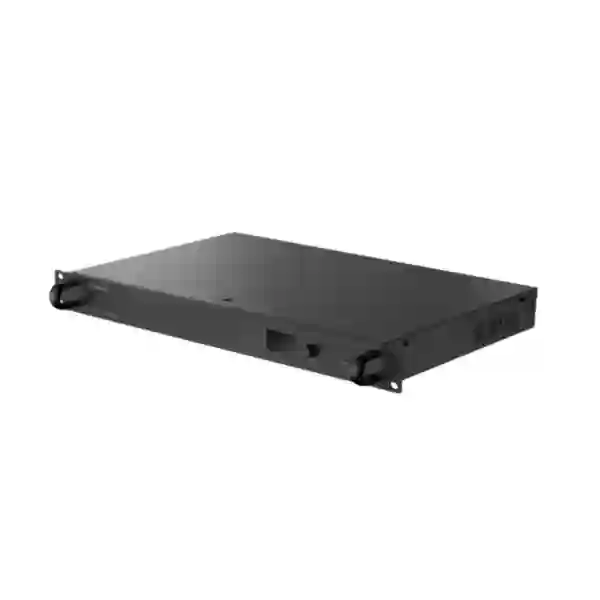
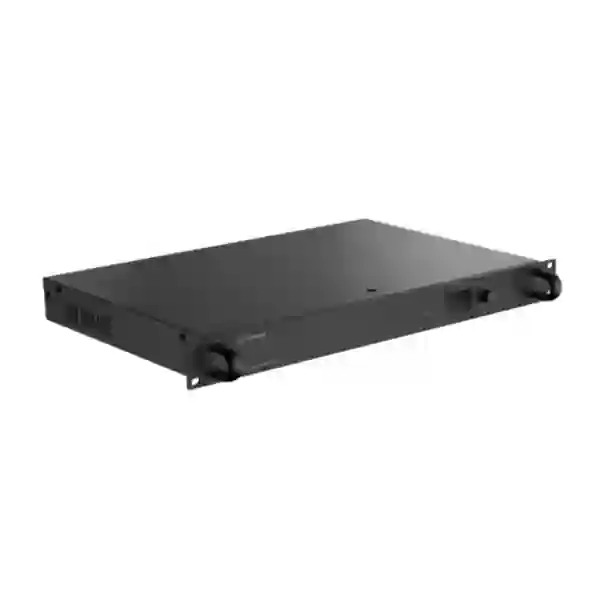
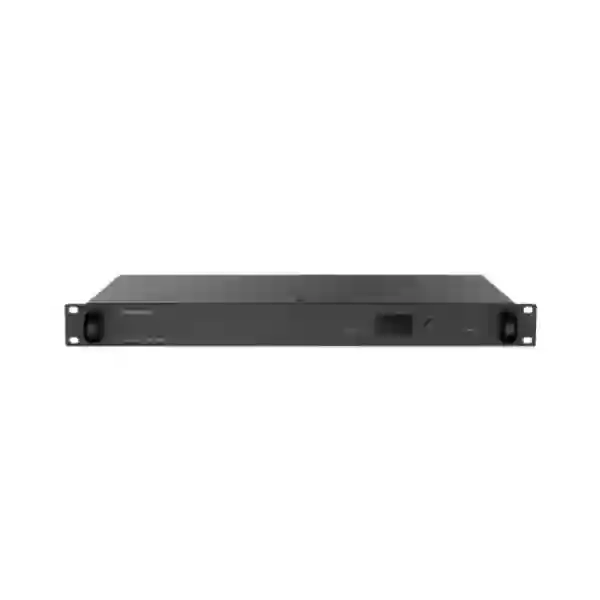
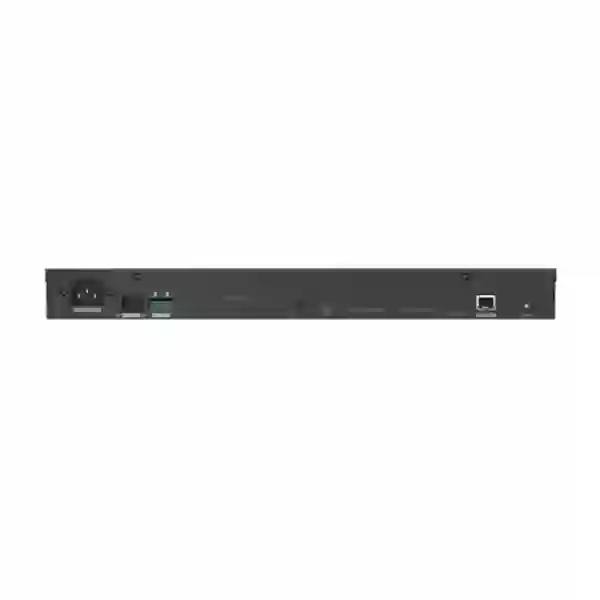
Hanwha SPA-S1000 IP Audio Server for Large Public Address Systems
Plan centralized announcements and network audio across a larger site with a dedicated controller rated for systems of up to 512 speakers. For Tanzania projects, the right starting point is a verified zone plan, a compatible speaker and source list, and a network design that supports the required routes.
A practical starting point for a large-site audio project
If you need announcements to reach different buildings, departments or public spaces without manually changing every loudspeaker, the SPA-S1000 is an audio-server option worth evaluating. It organizes compatible network audio endpoints, supports scheduled and event-based playback, and provides detailed zone and group control. Buyers should compare it with smaller controller-mode designs before specifying hardware. In a warehouse, campus, retail complex or production facility, the useful questions are which zones must hear which messages, who can start them and what happens if a source or connection fails.
This guide explains published product capabilities, the distinction between speakers and a controller, sizing limits, network dependencies, language constraints and the checks to make before asking for a quote in Tanzania. It does not claim that a local product listing has stock or that this server alone supplies a complete or certified emergency system.
SPA-S1000 specifications at a glance
The following figures are drawn from current Hanwha Vision product information. Configuration-dependent capacities should always be checked against the complete installed system and current firmware documentation.
| Feature | Published specification or planning note |
|---|---|
| Product category | Dedicated IP audio server / broadcast controller |
| Manufacturer / model | Hanwha Vision / SPA-S1000 |
| System expansion | Up to 512 speakers |
| Controller-sizing guidance | Primarily for installations above 256 speakers |
| Multicast sources | Up to 48: 24 audio channels and 24 microphone channels |
| Simultaneous audio broadcasts | Up to 15 audio channels, per current manufacturer listing |
| Zone and group limits | Up to 512 multicast zones, 20 unicast zones, 255 groups |
| Networking | 10/100 Base-T; IPv4 and other manufacturer-listed protocols |
| Integration API | SUNAPI (HTTP API) |
| Text-to-speech languages | English (US and UK), German, French, Spanish, Russian |
| Operating environment | -10 to +40°C; 10–85% relative humidity, non-condensing |
| Monitoring | Connection verification and built-in system logs |
What the Hanwha SPA-S1000 does
The Hanwha SPA-S1000 IP audio server is a dedicated controller for a network public address system. It coordinates compatible Hanwha IP audio products, the sources that supply sound, and the zones that should receive each announcement. Rather than purchasing a separate standalone amplifier for every announcement route, a site planner can design a network of suitable speakers and audio modules, then manage broadcast behavior centrally. The actual sound still comes from the endpoints installed in the building or grounds; the SPA-S1000 should not be mistaken for a speaker, paging microphone, or conventional audio power amplifier.
The system is intended for organized broadcasting: an operator may need to address a whole site, reach one department, play scheduled audio in selected areas, or manage background music alongside operational messages. The server provides controller functionality and facilitates scheduled or event-based audio playback, text-to-speech and system supervision. What those functions deliver in practice depends on the selected endpoints, audio sources, configuration and network design. Ask for a system plan rather than assuming the controller alone supplies a complete public address solution.
When a dedicated audio server makes sense
Hanwha states that the dedicated SPA-S1000 server is needed for large installations with more than 256 speakers, while smaller installations may use an IP audio speaker or module in controller mode. This distinction matters when preparing a budget in Tanzania. A small building with a handful of announcements might not need a dedicated server; a campus with several hundred endpoints, many user groups and complicated broadcast patterns should evaluate one. The 256-speaker guidance is a product-planning threshold, not a promise that every network above it will operate correctly without engineering checks.
Begin with the current speaker count, then estimate the endpoints required after planned renovations and new buildings. Consider how often operators will address different zones and whether multiple audio sources will be active. A dedicated controller may simplify administration on larger systems, but it does not automatically provide redundancy, emergency certification, unlimited simultaneous programs or cross-vendor compatibility. For a new project, request a bill of materials covering the server, compatible speakers, microphones, modules, switching, power backup and commissioning.
Understanding the 512-speaker scale
The manufacturer’s current product information lists system expansion to as many as 512 speakers. This makes the SPA-S1000 relevant when a public address design must extend across many rooms, departments, production areas or buildings. However, the number 512 is an upper product specification, not a suggested design target for every project. Capacity planning also needs to account for network topology, multicast behavior, how many sources are active, and what the installers expect the controller to monitor.
An organization with 300 proposed endpoints, for example, should not focus only on the numerical margin below 512. Its design team should determine whether some locations need independent messages, whether groups overlap, which users can initiate broadcasts, and what happens during a link failure. Those details change the implementation. For a potential future expansion, document spare network ports, switching capacity, device addressing and the final zone naming convention. Build a design with practical headroom rather than treating the published limit as a guarantee of smooth operation in any configuration.
Audio sources, simultaneous channels and control
Hanwha describes multi-source dynamic public-address control with up to 48 multicast sources, made up of 24 audio channels and 24 microphone channels. The current manufacturer page separately specifies that up to 15 audio channels can be broadcast simultaneously. Those figures measure different things: the ability to register or organize sources is not identical to the number of simultaneous broadcasts. A buyer should therefore present a list of real operating scenarios before selecting how many microphones, music feeds or pre-recorded messages to include.
Imagine a retail complex with background music in several wings, a logistics area receiving a recorded dispatch message, and an operator making a live announcement elsewhere. The system designer must determine which audio has priority and how each requested route is configured. A live microphone or software interface may be part of the wider solution rather than an accessory included with the server. Confirm the exact source devices, routing limits, user permissions and behavior when two announcements target the same zone.
Zone management: multicast, unicast and groups
The published specifications identify up to 512 multicast zones, up to 20 unicast zones and up to 255 groups. A zone represents an addressable broadcast destination, while a group can make it convenient to address several defined destinations together. Multicast and unicast are network delivery methods, not marketing labels for different speaker types. They have operational consequences: an IT team must understand whether its switches and routed network can carry the intended streams to the right listeners.
Create a zone map that reflects how people actually use the property. A factory might require production lines, loading bays, offices and a staff dining area; a school may need separate classroom blocks, communal areas and administration. Group names should support natural tasks, such as calling an entire department without selecting every device. Test boundary cases, including buildings with different access restrictions or announcements that must never be heard in a certain area. Published numerical limits do not replace this practical commissioning work.
Why multicast network design matters
Many large-scale IP audio systems use multicast to distribute the same sound to several endpoints without creating a separate source stream for every listener. In principle, this can make widespread announcements more efficient. The tradeoff is that networking equipment must be configured to handle traffic appropriately. Poorly managed multicast, VLAN boundaries or routing can create irregular audio coverage, unnecessary network traffic or difficult faults that look like speaker problems.
Before deployment, ask the network administrator to review switch capabilities, multicast controls, IP addressing, segmentation, quality-of-service policies and any necessary routing between buildings. The exact settings should follow the supported Hanwha architecture and the customer’s network standards. Do not simply connect hundreds of speakers to an arbitrary office LAN and assume that audio traffic will work. During testing, play distinct announcements in neighboring zones, verify that excluded areas remain silent, and observe performance while the rest of the business network is busy.
Scheduled announcements and event-based playback
The SPA-S1000 supports scheduled and event-based audio playback, which is useful when organizations repeat announcements at predictable times or need a configured event to initiate an audio action. A schedule can support shift change reminders, routine operational messages or time-based notices. Event-driven behavior may be valuable when a verified supported source or integration causes a particular preset to run. The exact event sources and supported integrations must be established during system design, not assumed from a broad statement about event support.
A sensible deployment begins by writing down who owns each announcement, when it should sound, and who can change it. Set rules for weekends, holidays, site-specific hours and unexpected closures. Also identify which messages require an operator’s approval and how to stop an incorrect scheduled broadcast. For sites with sensitive operations, test the schedule against a controlled time reference and create a procedure for regular review. These steps turn a technically available scheduler into a reliable day-to-day communication tool.
Background music without losing operational clarity
Background music can be useful in public-facing environments, hospitality settings or selected staff areas, but it should be planned separately from essential spoken announcements. The manufacturer lists background music, or BGM, among the supported audio functions. That does not establish music licensing rights, music-provider compatibility or a guarantee that every endpoint can play a different soundtrack. Those matters belong in the buyer’s source and licensing checks.
Define where music is appropriate, where silence is preferred, and which announcements need to interrupt other audio. Record the desired volume levels for different types of space, then verify speech intelligibility on-site rather than relying on a central setting alone. A noisy loading dock and a quiet reception area have very different acoustic needs. If the project includes background music, include the approved music source and the persons responsible for volume, schedules and content changes in the final operating documentation.
Text-to-speech and Tanzania language planning
Text-to-speech can turn a typed message into spoken audio, reducing the effort required for some repeatable announcements. Hanwha lists US and UK English, German, French, Spanish and Russian for SPA-S1000 text-to-speech. Swahili is not listed among those supported languages in the reviewed manufacturer specifications. Buyers in Tanzania who need Kiswahili announcements should not assume built-in Swahili TTS or make it an acceptance condition without obtaining an explicit technical confirmation.
For multilingual sites, one practical option to evaluate is the use of approved pre-recorded messages through a compatible audio source or supported playback workflow. Such files can be checked by local staff for pronunciation, clarity and accuracy before deployment. That is a planning possibility rather than a guarantee about every file type or endpoint. Decide whether announcements need English, Kiswahili or both, who will translate them, and how urgently they must be changed. Language suitability should be agreed at the demonstration stage, before procurement.
Compatible speakers, microphones and audio modules
The SPA-S1000 belongs in a broader Hanwha IP audio ecosystem rather than functioning in isolation. Depending on the site, an engineer may select ceiling speakers for rooms, horn-style speakers for high-noise areas, pendant speakers for open ceilings, paging microphones for operators, and audio modules for suitable existing analog equipment. Those examples describe potential system roles; a complete and current compatibility check is still required for the exact model and firmware combinations under consideration.
Do not treat every Ethernet-equipped speaker as automatically supported. Verify the endpoint’s controller mode, audio input and output functions, network protocols, power needs and environmental rating. For analog speaker reuse, check that any selected audio module matches the existing speaker impedance, power rating and wiring conditions. A server purchase does not eliminate the need for the correct endpoint hardware. Ask for the proposed endpoints in the quotation so that coverage, configuration effort and equipment costs are visible before the project begins.
Controller mode and avoiding conflicts
Hanwha’s product guidance explains that smaller IP audio installations can use a compatible speaker or module as their controller instead of installing the SPA-S1000. That flexibility creates an important commissioning responsibility. The user manual warns against running conflicting controller-mode products in the same broadcast system; the controller architecture must be chosen deliberately. An installer migrating from a speaker-controller design to the dedicated server should plan the change rather than leaving both paths active.
Before switching over, export or document the existing device list, source assignments, groups and scheduled operations as supported by the installed software. Confirm who has administrative authority and how endpoints will be associated with the new controller. After the change, test one live broadcast, one scheduled broadcast and one event scenario in each representative zone. Keep a rollback plan for complex facilities. This process protects day-to-day operations and reduces confusion when several technically capable devices appear on the same network.
Ethernet, protocols and integration boundaries
The current Hanwha product specifications list a 10/100 Base-T Ethernet interface and protocols including IPv4, HTTP, SIP, mDNS, DNS, NTP, TCP, UDP, DHCP, ARP and ICMP. The manufacturer also documents a SUNAPI HTTP application programming interface. These are useful starting points for integration discussions, but protocol presence is not the same as a commitment that a particular telephone system, security platform or third-party application will work without customization.
An integration review should specify the required action and the evidence for support. Does the customer want an operator to select a zone from a workstation, a verified event to start a message, or a live feed from a compatible microphone? Each objective may involve different software and devices. Request an interface test in a staging environment where possible. Document network ports, authentication, event mapping and expected failure behavior according to official integration guidance. Avoid describing the server as universally interoperable simply because a familiar protocol appears in a feature list.
Security and access management
Public address controls may carry sensitive operational messages and should not be managed as anonymous devices on an open network. The SPA-S1000 offers system integration and access to controller functions, making administrative security part of the deployment. Work with the organization’s IT policy to establish permitted users, strong unique credentials, network segmentation, monitored changes and a defined process for updating firmware. Review the exact security capabilities in the current firmware and official documentation before claiming a specific encryption or authentication feature.
Consider the practical risk of an unauthorized broadcast, accidental changes to a scheduled message, or a retired employee retaining administrative access. Separate daily operation from system configuration where the supported role model permits it. Limit exposure to untrusted networks and maintain a register of authorized administrators. During acceptance testing, verify how device logs can assist in investigating changes or connection problems. These steps support responsible operation, but the equipment should not be promoted as a complete cybersecurity solution by itself.
Time synchronization and dependable scheduling
Reliable schedules depend on reliable clocks. Hanwha’s user documentation discusses time settings and synchronization, including considerations for networks without external Internet access. In a disconnected facility, clocks can drift over time, which may cause announcements to play at unexpected moments. A large campus with several audio products should therefore establish a consistent time source and check that all relevant devices use the planned time settings.
For Tanzanian deployments, the project team should configure the site’s actual time zone and documented scheduling preferences. Verify time behavior during power restoration, firmware updates and network interruptions. A factory with precisely timed breaks or a college with class-change announcements should test the actual playback time, not merely confirm that a schedule entry exists. Assign ownership for reviewing the time source, especially on restricted networks. Where a separate time server is needed, treat it as an identified supporting component in the system design.
Status information, logs and troubleshooting
The SPA-S1000 includes connection verification and built-in system logging, according to Hanwha. The manufacturer also describes a status-indicator LCD and a mode-selection dial for monitoring. These features can help an administrator investigate the state of a central controller or identify devices requiring attention. They do not prove that every audio path is automatically tested for speech intelligibility, or that the system provides a certified fault-monitoring service for safety-critical operations.
Create a simple operating checklist covering controller reachability, endpoint registration, source availability, zone membership, scheduled events and known network faults. Agree how administrators will review logs, who receives reports and when physical testing is necessary. A network status indicator cannot tell a listener whether an announcement is loud enough in a crowded workshop. Include periodic listening tests from representative locations, document the results and correct endpoint or acoustic problems. Monitoring information is valuable when paired with a maintenance process.
Site conditions, equipment location and power
Hanwha lists an operating temperature range of minus 10 to plus 40 degrees Celsius and 10 to 85 percent relative humidity without condensation for the SPA-S1000. Its published IP code is not specified as a weatherproof protection rating. For a Tanzania project, the server should therefore be planned for an appropriate protected equipment location, with attention to ventilation, dust, moisture, stable power and the surrounding network cabinet. Do not assume it can be mounted outdoors or in an exposed plant room.
Check physical access, cable management, servicing clearance and whether the proposed room stays within equipment limits during hot weather or a power interruption. Review the server’s exact power input requirements in the chosen regional installation documentation and include an appropriate protected power arrangement. Ask separately about power for IP speakers and other endpoint devices, which may have different requirements. If continuous operation is important, the customer should evaluate backup power for the whole audio path, including network switches and endpoints, not just the central server.
Multiple buildings and geographically dispersed zones
A large site often has a mixture of close indoor areas, remote workshops, upper floors and separate buildings. The SPA-S1000’s network-based architecture can be relevant to this kind of distributed public-address planning, but the physical distance between locations does not disappear because audio is carried over IP. Every network segment must still meet connectivity, bandwidth, delay and traffic-control requirements for the supported design.
Before approving a multi-building plan, draw the intended routes from audio sources through the network to the listener locations. Mark fiber or copper connections, cabinet power supplies, the responsible network team and any vulnerable single points of failure. The customer should decide whether all buildings belong in one operating schedule or require independently managed groups. Test ordinary and priority announcements at remote endpoints under realistic network load. Avoid promising successful control across the public Internet, cellular links or isolated branch networks without a supported architecture and a site-specific engineering assessment.
Designing intelligible announcements
A successful public address deployment is not measured only by how many endpoints appear online. People must understand the message in their actual working conditions. A horn-style speaker may be appropriate in one noisy location, whereas a ceiling or pendant speaker may better fit other spaces; the specific model should be selected based on a coverage and acoustic assessment. The SPA-S1000 coordinates the broadcasts but cannot compensate for badly located speakers or an unsuitable audio chain.
Ask the project designer to identify ambient noise, ceiling height, listener movement, reverberation, outdoor exposure and the required language for each zone. Test a representative sample of the planned announcements in real conditions, especially where hearing protection or machinery noise may be present. Use realistic voice samples rather than relying only on a test tone. Document volume limits and the process for adjusting them after occupancy changes. The objective is clear communication with minimal disturbance to adjacent areas.
Sector examples to evaluate in Tanzania
For a manufacturing operation, one useful design conversation may concern shift changes, staff area messages, loading instructions and separate announcements in production lines. For a school or training campus, the questions may instead involve classroom blocks, administration, scheduled sessions and who can initiate a live message. A retail or hospitality property might combine background music in approved areas with targeted operational announcements. A warehouse could require separate communications for picking aisles and dispatch facilities.
These are possible use cases, not claims about existing FourTeck installations or guaranteed industry-specific functions. Each environment has its own staffing model, acoustics, network design and safety requirements. Ask managers to write down five announcements that really happen, where each should be heard, and how frequently staff change the desired audience. That exercise usually exposes more useful purchase criteria than selecting equipment only by advertised maximum capacity. The SPA-S1000 should be evaluated against the site’s actual workflows and current Hanwha compatibility documentation.
Existing analog audio and phased modernization
Some organizations already own conventional speakers, amplifiers and cabling. A move to IP audio does not always mean replacing every piece of hardware immediately, but reuse depends on compatible network audio modules and a careful assessment of the installed equipment. A dedicated controller and an IP audio module perform different roles. The controller organizes network broadcasts; the right module may provide a bridge for an otherwise suitable analog audio path.
Request an inventory showing the number of existing speaker circuits, cable condition, amplifier specifications, audio source connections and areas with poor coverage. Decide which parts are retained, upgraded or replaced, and test the sound after the proposed integration. Do not assume that any analog speaker can be attached directly to the SPA-S1000. A phased project can be practical if each stage has a clear operational boundary and supported controller configuration. Include both current and future endpoint counts when assessing whether the dedicated server is justified.
Comparing the SPA-S1000 with a speaker-controller design
The first comparison is often not with another large server but with Hanwha’s smaller-system option. If the installation will remain well under 256 speakers, a compatible IP speaker or audio module may provide controller functionality without adding the SPA-S1000. For a larger estate or a project expecting growth beyond that threshold, the dedicated server becomes a more relevant option. This manufacturer guidance can prevent a buyer from paying for a controller before its scale or operating requirements justify one.
However, the selection is not solely arithmetic. Review operational complexity, source routing, migration, fault management and the intended support arrangement. A tiny system with very unusual integrations may still need detailed technical investigation, while a fairly large but simple installation may have different demands. Document the design decision in the project proposal, including the installed endpoint count and assumptions about future changes. Ask the supplier to show how each option meets the same list of required announcements before comparing the total equipment and implementation cost.
How to specify a request for quotation
A useful quote request should describe the project instead of naming only the controller. Provide the number of buildings, approximate number of speakers, indoor and outdoor environments, desired zones, audio sources, broadcast schedules, preferred operator locations, network restrictions and any existing equipment to be retained. State whether announcements are for convenience, daily operations or a regulated life-safety requirement, because those categories may call for very different solutions and validations.
Ask for a configuration review covering exact endpoint models, controller suitability, network dependencies, audio sources, backup power and commissioning. Request that the proposal identify any license, subscription, integration, cabling or support costs only after they have been confirmed for the actual offer. Product price, stock, delivery, warranty and service eligibility should be established in the supplier’s current quotation; none is assumed here. A comparable bill of materials makes it much easier to evaluate alternatives and identify missing dependencies before ordering.
Commissioning and acceptance checklist
Installation should finish with evidence that the agreed workflows function. Start with a record of every endpoint and its network address, physical position, assigned zone, power source and firmware version. Then test broadcasts from each planned source, confirm group membership and check scheduled playback at the designated local time. Verify that a message intended for one zone does not play in unrelated zones. Document the chosen controller architecture so that a future administrator knows which device owns system control.
Acceptance tests should also cover practical failure conditions: an endpoint becomes unavailable, a network link is interrupted, a device restarts, a microphone is disconnected, or a scheduled announcement must be cancelled. The appropriate expected results depend on the approved design and should never be invented as guaranteed product behavior. Record operator training, credential handover, configuration backups where supported, and a plan for future changes. The final handover should let the customer operate and maintain the system without relying on undocumented installer knowledge.
Common purchasing mistakes to avoid
One mistake is treating the SPA-S1000 as a standalone powered loudspeaker or amplifier; it is an audio server and requires an appropriate surrounding IP audio system. Another is using the 512-speaker claim as the only capacity decision, without discussing zones, streams, routes or switching. A third is assuming that support for English text-to-speech automatically includes Kiswahili, although the manufacturer’s reviewed language list does not say that.
Other preventable errors include using incompatible endpoints, leaving multiple controller-mode devices in conflict, forgetting protected power for remote switches, and purchasing equipment before the customer has decided where announcements must be heard. A high-quality quote should distinguish confirmed product specifications from site-design assumptions. It should also state which functions will be demonstrated during acceptance. If the project has regulated emergency alerting requirements, obtain a separate assessment against the applicable standards instead of presenting ordinary public address capabilities as automatic safety-system certification.
Operations, updates and long-term ownership
The day after commissioning, somebody must own the audio system. Assign a responsible administrator for adding users, managing group definitions, reviewing schedules and coordinating changes with the network team. Keep the endpoint inventory and the latest approved operating procedure available to authorized personnel. Where scheduled announcements or prerecorded messages have a business owner, include a routine for reviewing their wording and removing outdated content.
Firmware updates should follow current Hanwha guidance and the customer’s change-management process. Record the installed version and preserve any supported backup before a planned change. Test representative functions after updating, especially source routing, scheduled broadcasts and integration points. Keep a record of faults and their resolution, distinguishing controller problems from speaker, switch, power or source issues. These practical controls help sustain an IP audio deployment over time, while avoiding unsupported promises about automatic maintenance or long-term manufacturer support terms.
A buying decision centered on the application
The clearest reason to consider the Hanwha SPA-S1000 IP audio server is a properly designed, large-scale Hanwha network audio installation needing centralized broadcast control. The scale, multicast groups, scheduling, supported audio functions and integration API are meaningful when they solve actual communication requirements. They do not remove the need for speakers, qualified system design, operator procedures and tested networking. An existing smaller installation may be better served by a compatible controller-mode endpoint.
Before requesting a final Tanzania quotation, prepare the endpoint count, zone map, announcement scenarios and desired languages. Identify the local network owner and any conditions affecting power, equipment temperature or maintenance access. The next step is a configuration and compatibility discussion using the exact proposed equipment list. Confirm current availability and commercial terms separately, because published global specifications do not establish a particular local listing’s price, stock, warranty or delivery arrangements.
Suggested project decision path
- Describe the announcement scenarios, target audience and required languages.
- Count current and future IP speakers and decide whether dedicated-server scale is justified.
- Draft zones, groups, source routes, scheduling and operator permissions.
- Validate exact Hanwha endpoint models, firmware and network requirements.
- Plan protected controller placement, source equipment and full-path power continuity.
- Commission with real speech, varied network load and documented acceptance tests.
A workable proposal should show the endpoint bill of materials, the controller choice, the approved announcement routes and the testing plan. Clarify any unverified integration, commercial or regulatory requirement before treating it as included.
Frequently asked questions about SPA-S1000
What is the SPA-S1000?
It is a Hanwha Vision IP audio server that acts as a dedicated controller for a compatible network public address installation. It coordinates audio sources, speakers, zones and certain scheduled or event-based broadcasts. It is not a loudspeaker or a standalone amplifier. A complete solution requires suitable endpoints, network equipment, audio sources and configuration.
How many speakers can the SPA-S1000 support?
Hanwha lists system expansion up to 512 speakers. The practical installation must still be designed around source requirements, multicast or unicast distribution, switching, endpoint compatibility and network capacity. Treat 512 as the manufacturer’s listed product limit, not proof that an untested network will perform reliably at maximum size.
Do I need this server for fewer than 256 speakers?
Not necessarily. Hanwha states that smaller installations can use a compatible IP audio speaker or module in controller mode, and describes the SPA-S1000 as needed for large installations above 256 speakers. Review the exact design, planned growth and firmware compatibility before choosing a controller.
Does it provide built-in Kiswahili text-to-speech?
Kiswahili or Swahili is not listed among the supported text-to-speech languages on the reviewed Hanwha specification. English in US and UK variants, German, French, Spanish and Russian are listed. If Kiswahili speech is essential, request a demonstration of a supported prerecorded-message or other verified workflow.
What is the difference between a zone and a group?
A zone is a configured destination for broadcasts, while a group provides a convenient way to address selected destinations together. The SPA-S1000 lists up to 512 multicast zones, 20 unicast zones and 255 groups. The actual organization should be based on site workflows rather than arbitrary names.
Can it play background music and announcements?
The manufacturer lists background music and scheduled or event-based playback among the supported functions. Plan how operational announcements and music should interact, choose approved sources and test the configured behavior. Music licensing, audio files and source compatibility must be established separately.
Can it work with any SIP or IP speaker?
Do not assume universal compatibility. The presence of SIP and other network protocols on a specification does not establish that every third-party speaker, microphone or application is supported. Check the exact endpoint models, software versions and documented integration features before purchase.
Can it connect to existing analog speakers?
A suitable IP audio module may be part of an upgrade path for existing analog audio hardware, depending on the equipment and supported configuration. The SPA-S1000 itself is the controller, not a direct substitute for amplifier outputs. Have the existing speakers, impedance, wiring and available modules reviewed.
What network interface does it use?
The current Hanwha product page lists 10/100 Base-T Ethernet. Network engineers should also consider IP addressing, multicast handling, switching and any required network separation. Interface speed alone is not enough to validate a large audio design. Confirm the installed documentation for the exact unit and firmware.
Is it suitable for an outdoor cabinet?
The manufacturer lists an operating environment of minus 10 to plus 40 degrees Celsius and 10 to 85 percent relative humidity without condensation. Its product page does not provide a weatherproof IP enclosure rating. Plan a protected installation and confirm enclosure suitability, ventilation and power conditions for the specific location.
Does the SPA-S1000 automatically form a certified emergency warning system?
No such conclusion should be drawn from a general IP public address feature list. Any life-safety or legally regulated requirement needs a separate engineering and compliance review covering the complete installed system, the applicable rules and all relevant equipment. Do not infer certification or guaranteed emergency performance from the audio server alone.
What details should I provide for a Tanzania quotation?
Provide your current and planned speaker count, building layout, zone map, required audio sources, announcement languages, scheduled activities, network environment, existing hardware and power constraints. Request an itemized compatible-system proposal and verify price, availability, delivery and warranty through the actual supplier quote rather than relying on unsupported assumptions.
Request an SPA-S1000 system configuration review
Share the number of speakers, site layout, zone requirements, live and recorded announcement sources, language preferences and network constraints. Ask for an itemized compatibility review and a current Tanzania quotation for the exact required equipment. The controller should be specified as part of the complete audio system.
Contact FourTeck Tanzania through its verified enquiry channel to discuss your project requirements.




Reviews
There are no reviews yet.