
Industrial video surveillance · Tanzania technical buyer guide
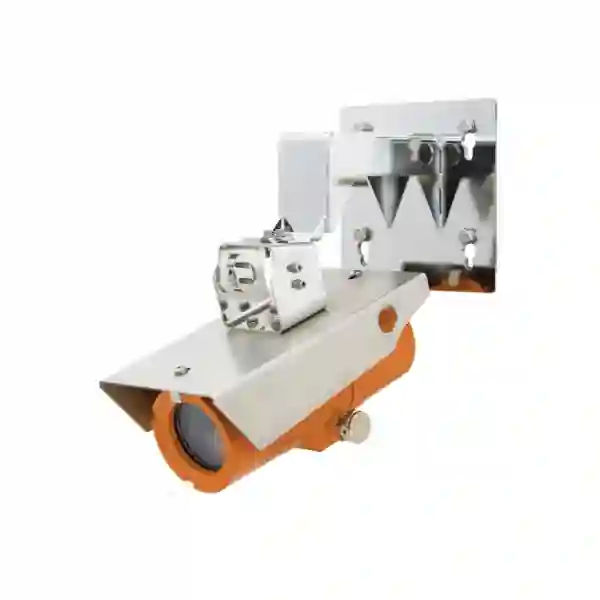
Hanwha TNO-P9073EPT1-Z 4K Explosion-Protected AI Camera
Industrial operators evaluating a camera for a hazardous location need more than a sharp picture. The camera housing, certification markings, lens selection, power supply, network design and installation method must all match the conditions of the specific site. The Hanwha TNO-P9073EPT1-Z is an 8MP, 4K, explosion-protected fixed network camera with a 3.9–10mm varifocal i-CS lens, built-in AI object analytics and an industrial enclosure. It was intended for appropriately classified environments where an ordinary commercial camera may not be suitable.
Verified feature snapshot
Ratings, installation permissions and feature support depend on the exact product documentation, firmware and site conditions. Do not interpret the summary as an installation approval.
Choosing a camera for a hazardous industrial site
Begin with the operating hazard, not the camera resolution. An engineering team should establish whether flammable gas, vapour, combustible dust or another identified hazard can be present, and determine the site’s applicable area classification. The required protection level follows that assessment. Only then does it make sense to compare the Hanwha camera’s marking against the job specification. This order helps avoid buying an attractive CCTV product whose enclosure is unsuitable for the installation point. It also makes procurement approval simpler because the safety rationale, viewing objective and selected equipment can be recorded together.
The TNO-P9073EPT1-Z is a fixed-view network surveillance device. It is useful when a chosen scene must be monitored continuously rather than when an operator expects the camera body to pan around a large area. A varifocal lens helps set the intended view during commissioning, but it does not turn the unit into a mechanical pan-tilt-zoom system. Distinguish that difference early in the design review. Consider the distance to the object, the width of the scene, the need for identification versus general awareness and the location from which power and data will safely reach the installation.
Lifecycle status and procurement implications
Discontinued is a manufacturer lifecycle status, not a statement that every installed unit has stopped working. Sites may continue using an existing camera where it remains serviceable, supported as appropriate and safe for the classified location. However, a new procurement decision should not assume that replacement parts, firmware, special accessories or future supply will remain available indefinitely. Ask for current lifecycle documentation and a supported maintenance route. Where a tender names the older part number, document whether substitution is permitted, who approves it and which technical differences need to be resolved.
Hanwha Vision explicitly points to TNO-P9082EPT1-Z as the replacement. That is a useful starting point, not proof of universal drop-in compatibility. The newer camera’s published lens and power details differ, and a site may need a fresh survey for field of view, heater-related supply needs and installation accessories. A responsible quote should distinguish a legacy-unit inquiry from a proposed replacement configuration. Confirm the exact model on the offer, the certification applicable to that delivered configuration and whether any mounting, junction, cabling or recording-system changes are included.
What explosion-protected construction means
An explosion-protected camera is engineered so its certified enclosure and installation method address specified explosive-atmosphere hazards. The term does not mean the camera prevents a process explosion, detects a gas leak or eliminates the need for an engineered plant safety system. It also does not mean all hazardous areas are interchangeable. Gas and dust classifications, temperature limits, installation methods and certified cable entries matter. The camera is one component within a broader site design, and the complete installation must follow the relevant assessment and the manufacturer instructions for that enclosure.
The manufacturer identifies the TNO-P9073EPT1-Z with hazardous-location classifications including Class I, II and III Division 1 groups B, C, D, E, F and G, alongside cFMus, ATEX and IECEx-related markings specified in its product literature. Engineers should read the complete current certificate and marking rather than relying on an abbreviated retailer description. Verify the designated gas or dust group, ambient-temperature suitability, equipment protection level, enclosure entry method and any installation conditions. A certified camera fitted with an unsuitable cable gland or incorrectly installed accessory can create a serious compliance problem.
Interpreting ratings without overclaiming approval
On a hazardous-site project, certification is a technical compatibility question that needs documentary evidence. The abbreviations cFMus, ATEX and IECEx indicate assessment frameworks and marking families, but the exact meaning depends on the certificate and the marked product. A division classification should not be casually translated into a particular zone classification without professional review. Ask the project’s electrical or hazardous-area specialist to check whether the camera’s precise marking addresses the documented hazardous substances, temperature class and local installation standard. Keep the approval documents with the site equipment register.
Neither the manufacturer’s international certifications nor this product description establishes any specific Tanzanian product registration or project approval. Where a project has additional regulator, insurer, client or plant requirements, the responsible parties must verify them. For procurement, request the model-specific data sheet, certificate copies where applicable, installation instructions and enclosure drawings. Review any conditions related to grounding, cable entries or maintenance. These checks are particularly important when equipment is imported for a refinery, processing facility or other site with formal permit-to-work and management-of-change procedures.
4K imaging: what 8MP provides
The camera’s stated image resolution is 3840 × 2160 pixels, commonly described as 4K or approximately eight megapixels. The extra image detail can be useful when a scene contains equipment labels, access points or activity at several distances, provided the lens and camera placement create enough pixels on the subject. Resolution alone cannot guarantee identification. Image quality will also depend on lighting, subject movement, environmental contamination, compression settings and recording quality. Define the scene task before finalising the viewing distance and the target image detail.
An operational monitoring scene may only need to show whether a gate is open or a person has entered a restricted walkway. A forensic scene might require much greater detail for later review. These are different design objectives even when the same 4K sensor is used. Ask the installer to prepare sample views or a field-of-view calculation for the actual mounting height and distance. Assess the darkest and brightest expected times of day, the likely direction of movement and whether reflections from piping or wet metalwork will interfere with the picture.
Varifocal lens and fixed camera coverage
Hanwha specifies a 3.9–10mm f/1.5 varifocal i-CS lens for the discontinued model. The lens range gives installers a way to frame a wider area or a tighter view during setup, within the limitations of the sensor and lens. Its purpose is not continuous mechanical tracking of a moving person across a large plant. Decide whether the task is to cover one machine line, watch a doorway, observe a tank access ladder or follow activity over a broad yard. Different tasks may call for multiple fixed views rather than one camera stretched beyond its practical field of view.
Planning a view should include a clear sketch showing the mounting location, direction, expected subject distance and obstacles. Consider railings, cable trays, moving vehicles, stacked materials and equipment that may block the scene in normal operation. If the site contains tall structures, examine what is visible from the proposed mounting elevation and how technicians will access the housing for cleaning. Lens settings are part of commissioning records: saving the intended frame helps future maintenance staff detect accidental changes. Record the final view before signing off the project.
Backlighting, day-night operation and stabilisation
The manufacturer’s published features include day-and-night operation with an infrared-cut filter, 120dB wide dynamic range and digital image stabilisation supported by a built-in gyro sensor. Wide dynamic range can help when one view contains strongly illuminated and shaded regions, such as an open loading-bay door seen from a covered structure. Stabilisation is intended to reduce some visible effects of camera vibration; it cannot compensate for an insecure mounting or severe mechanical movement. These capabilities improve the available imaging tools, but each site still needs a realistic lighting and vibration assessment.
Outdoor industrial environments produce changing conditions. Floodlights can create glare, vehicles may shine headlights into the lens, and early-morning or night shifts can alter what the camera must record. Test the scene under the actual operating conditions wherever possible. The camera’s day-night functions do not imply that an infrared illuminator is included, and lighting should never be assumed sufficient merely because the sensor offers low-light modes. Where additional lighting is necessary, its own suitability for the area classification must also be checked by the project team.
Wisenet AI analytics and their limits
Hanwha lists license-free Wisenet AI functions for this model, including object detection, BestShot and metadata. In practical terms, these features can help a security operator organise events and distinguish certain objects within video, subject to configuration and the scene. They are not a replacement for a dedicated safety instrumented system, certified gas detection or a trained plant operator. Detection performance changes with angle, lighting, occlusion, scene complexity and object size. A system designer should confirm which exact analytic rules the intended firmware and recording platform support.
Use analytics to answer a defined workflow question, such as whether video can assist an investigation of a restricted walkway or make it easier to find a relevant vehicle event in recorded footage. Decide who receives events, who reviews them and what action is permitted. A camera-generated event should not automatically be treated as verified evidence of misconduct or danger. Plan a commissioning test with realistic traffic, personnel and environmental conditions, then tune settings and document expected false alerts. Keep operational safety alarms distinct from convenience analytics used by a video surveillance team.
Video compression and bandwidth planning
The published feature set supports H.265, H.264 and MJPEG codecs, multiple video streams and WiseStreamII. These options provide choices for balancing image quality, recording size and compatibility with the rest of the system. A more efficient codec can reduce the data needed for certain scenes, but the actual saving depends on movement, noise, lighting and stream configuration. Do not promise a fixed percentage reduction without testing. Confirm whether the video management system, network video recorder and remote viewing clients support the selected profile and the camera’s firmware version.
Industrial networks often carry operationally important traffic alongside security video. Forecast camera bandwidth using realistic frame rate, resolution, bitrate and number of simultaneous streams, and allow room for unusual movement or poor-lighting conditions. If the network path is constrained, consider where recording occurs and which lower-bandwidth view is suitable for operators. Plan for continuous video versus event-based retention rather than assuming both consume the same resources. A documented bandwidth budget is especially valuable where a remote site relies on wireless backhaul or a shared inter-building connection.
On-camera storage and recording continuity
The TNO-P9073EPT1-Z is documented with two SD memory slots supporting up to 512GB combined. That figure describes the manufacturer’s stated total memory capacity; it is not a promise of a particular number of recording days. Footage retention depends on bitrate, resolution, recording schedule, event frequency and whether the installation uses edge storage or a central recorder. Confirm supported card specifications, placement requirements and the applicable firmware instructions before purchase. Maintenance staff also need a plan for reviewing storage health and replacing failed media under the approved maintenance process.
Edge storage can be valuable in a design where there is a risk of temporary network interruption, but it should not be treated as a substitute for an engineered retention and evidence-management policy. Define who may export footage, how time synchronisation is maintained, whether recordings must be duplicated and how an incident file is protected. If the central recorder loses contact, determine whether the chosen system will recover or reconcile missed footage; this capability depends on system compatibility and configuration. Test the full workflow with the intended recorder before operational acceptance.
Physical enclosure and mounting design
Hanwha describes a powder-coated aluminium housing for the discontinued model. The enclosure, sunshield, grounding provision and attachment method all affect installation planning. Outdoor exposure may involve rain, dust, salt-laden air, heat and accidental impact, but no single material claim guarantees long-term suitability at every industrial site. Inspect the manufacturer’s current dimensional drawings and environmental ratings for the exact assembly. Account for safe access, the load carried by the support structure and whether the camera can be aimed without disturbing other equipment or violating hazardous-area procedures.
The manufacturer identifies a general mount and protective accessories supplied with this camera in its product literature, while F2XX-WM and F2XX-PM are listed as compatible wall and pole mount options. The mount selected for a project should be checked against the site structure and the approved configuration. Do not infer that a bracket is included simply because it is shown in a catalogue. A procurement schedule should list the camera, required brackets, retention provisions, cable-entry parts and any specialised installation materials as separate checked line items, with installation responsibility clearly assigned.
Environmental conditions and maintenance access
Industrial site cameras may be exposed to vibration, grime, chemical vapour and intense weather. The exact environmental specification is model-specific, so the installer should verify the manufacturer’s latest approved data sheet rather than borrowing a rating from another explosion-proof camera. A unit that fits the area’s hazard classification may still be poorly positioned for routine cleaning or servicing. Survey access routes, lifting equipment needs, working-at-height precautions and maintenance isolation requirements. The practical cost of an installation depends partly on whether technicians can inspect it safely once it is in use.
Create an inspection plan appropriate to the certified enclosure and the site’s operating procedures. It may cover lens visibility, corrosion, loose supports, cable condition, enclosure integrity, grounding and recorded image quality. Any work involving opening, repairing or modifying an explosion-protected enclosure requires the right personnel and approved procedure. Avoid field improvisations such as drilling additional holes, changing entry components or adding accessories without checking certification implications. If the equipment is near process machinery, coordinate maintenance with operations so that inspection does not introduce an avoidable safety risk.
Power over Ethernet and site electrical planning
The TNO-P9073EPT1-Z is identified by Hanwha with PoE+ power. That is helpful when designing a network camera installation because power and communication can be planned together, but it does not exempt the project from hazardous-area wiring requirements. Check the exact power budget, approved connection method, cabling, surge protection and permissible network equipment arrangement in the relevant manuals. Do not assume that an ordinary indoor PoE switch, cable connector or adapter may be installed inside a classified area. A qualified electrical designer should decide where network and power devices can safely be located.
At a dispersed plant, an apparently simple camera point may require a significant cable route back to a communications cabinet. Survey conduit paths, earthing arrangements, lightning exposure, mechanical protection and cable transitions. Verify that the available power budget covers the chosen camera configuration under the conditions specified by the manufacturer. Also distinguish the discontinued camera’s requirements from those of the named replacement: Hanwha describes the TNO-P9082EPT1-Z with a higher total power requirement when its heater is included. A direct electrical swap therefore needs deliberate review rather than assumption.
Network architecture for industrial video
Select the network path with reliability and fault isolation in mind. Camera traffic should be carried through a managed design with suitable switching capacity, access controls and monitoring. Separation between surveillance equipment and critical process networks can help limit unnecessary exposure, subject to the organisation’s cybersecurity architecture. Plan IP addressing, device naming, time synchronisation and logging before commissioning. A drawing showing each camera, switch, recorder and network boundary helps maintenance teams troubleshoot faults without guessing which plant systems may be affected by a change.
Remote viewing needs particular care. Determine whether the customer actually requires it, which roles are authorised and how access will be secured. Do not expose an industrial network camera directly to the public internet merely to simplify smartphone viewing. Use the organisation’s approved remote-access method and update policy. Where a site has intermittent connectivity, clarify whether local operators can still view or record footage. Record how network outages will be detected and escalated. These decisions are often more important to effective security operations than marginal differences between two cameras’ headline resolutions.
Recorder, software and integration checks
A high-resolution IP camera becomes useful within a wider system only when its video and events reach the intended users reliably. Verify interoperability with the selected network video recorder or video management software, including stream selection, event handling, time stamps and user permissions. Compatibility is not established merely because two products use common video formats. Some advanced analytics functions, metadata searches or playback features may require model-specific support. Ask the integrator to demonstrate the exact workflow the customer expects rather than treating a general protocol statement as proof of all features.
For an existing site, start with an inventory of its recorder software versions, storage system, operator workstations and existing camera licenses. Check whether the proposed replacement model is supported and whether new licenses or updates are needed. Define how alerts will appear, who receives them and whether the system must export evidence in a prescribed format. If multiple facilities share a security control room, consider how naming conventions and camera groups affect operator response. A tested integration plan reduces the risk of discovering a mismatch only after equipment has been installed in a difficult location.
Cybersecurity and lifecycle maintenance
Industrial surveillance assets should be managed as networked computing devices, not passive optical equipment. Assign an equipment owner who maintains configuration records and controls administrator access. Use strong unique credentials and the supported secure communications options, keeping configuration changes auditable. Follow the manufacturer’s current support guidance for firmware, vulnerabilities and security settings. Because this model is discontinued, verify whether updates and technical support remain available for the installed version rather than assuming an indefinite lifecycle. Record any residual risk with the customer’s security team.
Plan updates carefully in operational environments. A camera reboot or configuration change may temporarily reduce surveillance coverage, so maintenance windows and rollback expectations matter. Back up settings where supported, document the approved baseline and recheck image framing, recording and analytics after changes. Restrict physical and network access to authorised personnel. Where vendor support has ended or critical updates are no longer available, a replacement strategy may be more appropriate than simply accepting a permanent gap. Align those choices with the site’s wider asset-management and cybersecurity policies.
Tanzania project context
For a Tanzania-based facility, the relevant question is whether the proposed equipment and installation design satisfy the project’s actual industrial conditions and documented requirements. A coastal plant, inland processing site and remote utility installation may face very different environmental and communication challenges. Do not select a product based on a generic claim of suitability across the country. Request the site classification, climatic exposure, network constraints, desired recording period and maintenance arrangements. That information makes it possible to prepare a meaningful technical comparison rather than an unsupported national availability claim.
Commercial questions should be handled separately from technical suitability. The model has been discontinued, so any offer for a remaining unit, service replacement or alternative needs current confirmation. This page makes no representation about stock in Tanzania, import lead time, customs treatment, official distributor status, installation coverage or local product approval. Ask for a written offer identifying the exact part number, included accessories, applicable documentation and any support terms. For regulated or highly controlled facilities, involve the client’s engineering, safety, procurement and security stakeholders before approving procurement.
Typical industrial monitoring scenarios
A refinery or fuel-handling facility may need fixed video coverage of a controlled access route, loading interface or maintenance area. A processing plant may want to observe a machine perimeter without placing a conventional camera in an unsuitable hazardous location. A storage or chemical-handling operation may need visual context for security incidents, while a utility or energy facility may need to document access to selected equipment. These are illustrations of possible use cases, not declarations that this camera is approved for every part of any such facility.
Each use case needs an explicit viewing objective and hazard-area review. For loading operations, decide whether the important subjects are vehicle arrival, personnel movement or the condition of a transfer point. For machine areas, consider whether moving parts will create occlusion or vibration. For access monitoring, determine the required image detail and whether backlighting is likely. Place cameras only after checking safe cable routes, structure and maintenance access. Video monitoring should complement—not replace—site controls, emergency procedures, process sensors and other dedicated safety measures.
How to evaluate an existing installation
If the TNO-P9073EPT1-Z is already installed, begin with its configuration and current performance. Confirm the model label, firmware version, enclosure condition, certificate records, network address, recorder integration and current camera view. Ask site operators whether the image still supports the intended security tasks. Record recurring faults, storage errors, dropped streams or alert quality issues. An inspection should be performed using approved hazardous-area maintenance procedures. This evidence helps distinguish a repairable configuration problem from a larger reason to replace the camera.
Before replacing a functioning installed unit, compare the cost and risk of continued operation against the lifecycle and support position. Consider spare parts, available firmware, planned plant shutdowns, scene quality and any change in area classification since installation. If the camera is being replaced, preserve the baseline view and document the reason for the change. A new product may not replicate the old lens coverage exactly, and power requirements can change. Recommission the entire system—including recording, analytics and operator access—rather than assuming that physical replacement completes the project.
Comparing the named replacement model
Hanwha identifies the TNO-P9082EPT1-Z as the successor to the discontinued model. Its published overview describes a 4K AI explosion-protected fixed camera with a 5.9–13.3mm motorised varifocal lens. That lens description is not the same as the older 3.9–10mm lens, so framing should be recalculated. The replacement information also distinguishes PoE+ camera power from a total requirement that includes its heater. These differences matter when reviewing switch capacity, the electrical plan and the ability to cover a previously commissioned scene from the same mounting point.
A replacement decision should include a side-by-side signed assessment of the hazardous-area marking, temperature range, field of view, mounting geometry, cable entry, power design, recorder support and analytics requirements. The successor designation is helpful because it identifies the manufacturer’s preferred direction, but it is not a blanket certification of compatibility with every earlier site installation. Review the current documents for the exact replacement revision. Where a project specification still names TNO-P9073EPT1-Z, obtain a documented substitution decision before ordering a different unit.
Procurement and technical submittal checklist
A strong technical inquiry should state the site, application, classified area, expected camera quantity, viewing distances and desired coverage. Include the project’s standard for equipment approval and the relevant ambient and environmental conditions. Provide the intended recording platform, network topology, storage retention policy and power arrangement. Ask the supplier to identify whether the response proposes a discontinued legacy unit, a supported successor or a different engineered alternative. This prevents a quotation from appearing comparable when it actually excludes critical accessories or integration work.
Request documentary evidence that the proposed configuration meets the technical brief: manufacturer data, certificate and marking details, installation instructions, environmental ratings and mounting drawings. Ask for an itemised bill of materials with the specific camera model, required mounts, cable-related components and any licensed software. Clarify responsibility for design verification, installation, testing, commissioning and maintenance. Confirm commercial terms independently instead of inferring them from an international catalogue. For the discontinued camera, explicitly request availability and support confirmation, and ask whether the successor is the recommended procurement option.
Commissioning, acceptance and handover
Commissioning should demonstrate that the installation is safe, the picture meets the agreed purpose and the networked video workflow behaves as specified. The qualified installation team should verify approved mounting, grounding, cable entries and enclosure condition against the required documentation. The surveillance team should then inspect the live and recorded view, day-night transitions, clock synchronisation, stream stability and retention configuration. If analytics are part of the project, test them with representative movement and document their observed performance. Acceptance should be based on a checklist, not merely on the appearance of a live image.
At handover, keep the equipment identity, certificates, installation records, camera orientation, firmware, network settings and approved access roles together. Include a maintenance and incident-evidence procedure, along with the contact route for technical issues where one is contractually confirmed. Explain to operators which camera events are advisory and which site actions require independent verification. For future upgrades, preserve the original field-of-view objective so that a successor model can be assessed fairly. Good handover documentation makes a long-lived industrial video system easier and safer to operate.
Frequently asked questions
Is the Hanwha TNO-P9073EPT1-Z still a current model?
No. Hanwha Vision lists it as discontinued and identifies TNO-P9082EPT1-Z as the replacement. That is a manufacturer lifecycle statement, not a confirmed report of inventory held by any particular seller. For a new purchase, request a supported successor proposal and confirm the exact configuration and availability in writing.
What resolution does the earlier model offer?
Its published maximum image resolution is 3840 × 2160, normally referred to as 4K or 8MP. The practical detail available for an investigation depends on lens framing, the subject distance, lighting and the recording settings. Specify the image task before deciding whether resolution alone is sufficient.
Does explosion-proof mean the camera works anywhere there is hazardous material?
No. The approved installation depends on the exact hazardous-area classification, substance group, environmental conditions, enclosure marking and installation method. A competent specialist must review the relevant certificates and site rules. The term does not mean the camera detects a release or replaces a process safety system.
Can this camera pan and zoom to follow a moving target?
This product is described as a fixed camera with a 3.9–10mm varifocal lens. Adjusting the lens during setup helps establish a useful field of view; it is not the same as a mechanically steerable PTZ camera. Large areas or moving subjects may require several camera positions or a different certified solution.
Does the camera have AI-based event features?
Hanwha lists Wisenet AI object detection, BestShot and metadata in the published feature set. Exact event rules and integration options should be confirmed for the installed firmware and video management system. These analytics support security workflows and do not constitute independently verified life-safety detection.
What network and storage planning is needed?
The manufacturer lists H.265, H.264, MJPEG, multiple streaming and two SD slots with up to 512GB combined capacity. Confirm codec support, bitrate, recorder compatibility, memory-card requirements and retention policy. There is no universal recording-days figure; actual footage duration changes with stream settings and activity.
Which mounting accessories are relevant?
Hanwha identifies compatible F2XX-WM wall and F2XX-PM pole mounts and also documents general mounting and protective accessories. Compatibility should be confirmed for the selected camera assembly and project structure. Ask for an itemised accessory schedule rather than assuming every bracket or cable component is included.
Can the replacement be installed with the same PoE configuration?
Do not assume a direct swap. Hanwha describes a different lens on TNO-P9082EPT1-Z and distinguishes power for the camera from total power when its heater is used. The project engineer should recheck power provision, field of view, hazardous-area details, mounting and network integration before approving replacement.
Is there a confirmed Tanzania price or delivery time?
No local price, stock position or delivery commitment has been verified for this listing. A commercial quotation should identify whether the offer concerns legacy inventory or the successor model, plus all required components and the applicable delivery and support terms. Avoid relying on overseas retailer prices for a Tanzania project.
What should be sent for a useful technical quotation?
Supply the target site classification, required quantity, viewing purpose, mounting conditions, approximate distances, expected lighting, network and recorder details and preferred deployment schedule. Mention whether the request is for support of an existing TNO-P9073EPT1-Z or procurement of a current alternative. Ask for certification and compatibility evidence with the response.
Request a project-specific camera review
Tell FourTeck what the camera must observe, the classified-area requirements, the existing recording system and whether the inquiry concerns an installed legacy unit or a new procurement. Ask for a documented assessment of the Hanwha Vision TNO-P9073EPT1-Z and its manufacturer-named successor TNO-P9082EPT1-Z, including an itemised proposal where available. This is a quotation inquiry, not a promise of stock or a statement of installation approval.
Next step: Request a technical specification review and written quotation.




Reviews
There are no reviews yet.