
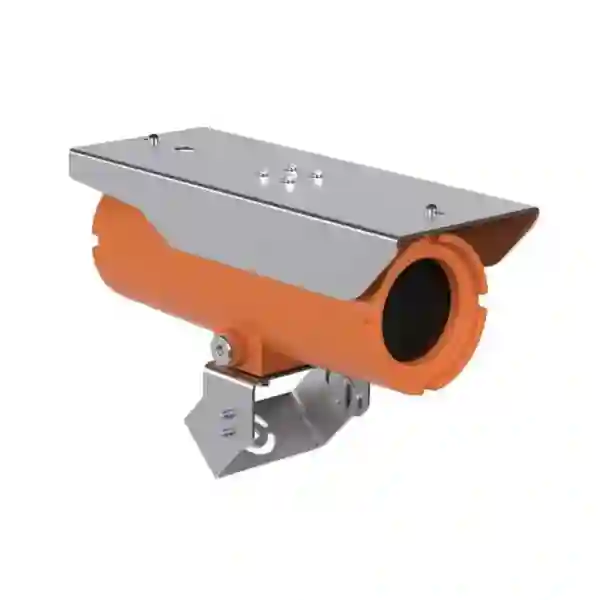
Hanwha TNO-P9082EPT1-Z 4K Explosion-Proof AI Camera
Need a fixed high-resolution surveillance view in a classified industrial location? The Hanwha TNO-P9082EPT1-Z combines 8MP AI imaging, adjustable motorized optics and a purpose-built explosion-proof housing. First verify the hazardous-area classification and the complete approved installation, then design the image coverage, power and recording system around the job it needs to perform.
Key technical specifications at a glance
| Product model | TNO-P9082EPT1-Z |
|---|---|
| Manufacturer | Hanwha Vision |
| Camera type | Fixed 8MP (4K) AI network camera, explosion-proof enclosure |
| Imaging platform | PNB-A9082 |
| Maximum headline video | 8MP at up to 30 fps |
| Lens | 5.9–13.3 mm motorized varifocal, approximately 2.25× |
| Horizontal field of view | Approximately 109°–49° |
| Environmental protection | IP66; Type 4X |
| Operating range | −50°C to +55°C (published) |
| Power | PoE+ for camera only; 90 W total with heater |
| Wiper | Not integrated |
| Hazardous-location documentation | cFMus; ATEX and IECEx references — full marking must be verified |
| Product identifier | Manufacturer model number shown above; Tanzania listing SKU not provided |
Specifications are a selection aid. Confirm the current Hanwha Vision datasheet, exact certificate conditions, installation guide and chosen accessory set for the final project design.
Six checks before specifying the camera
1 · Classify
Check the exact gas or dust classification and compare it with complete camera markings.
2 · Compose
Measure target distances, obstacles, lighting and the fixed-view field of coverage.
3 · Engineer
Confirm certified mounting, approved entries, earthing, PoE design and heated power needs.
4 · Integrate
Test recording, alert rules, security access and video management compatibility.
5 · Maintain
Define safe cleaning, inspection, firmware handling and document retention.
6 · Quote
Request a complete written scope rather than assuming stock, installation or pricing.
Designed for a hazardous location, not just an outdoor wall
The Hanwha TNO-P9082EPT1-Z is a fixed-position 4K network camera housed for specified potentially explosive atmospheres. It is intended for projects where ordinary outdoor surveillance equipment may be unsuitable because of the classified environment. Its buyer value begins with the enclosure and certification scope, then extends to high-resolution video and AI-assisted observation. A purchaser should establish the hazardous-area designation before deciding that any explosion-proof camera is acceptable.
Industrial safety teams, engineering consultants, system integrators and procurement departments often participate in the same decision. The safety team defines the hazardous classification; the engineer assesses mounting, cable entry, earthing and power; the security team defines what must be visible; and purchasing confirms the exact variant and documentation. Aligning these decisions early prevents a technically impressive camera from being proposed for a location where its marking, lens coverage or installation arrangement is not suitable.
For a Tanzania-based industrial project, begin with the site’s own hazardous-area assessment, environmental exposure and operational requirements. Ask for the current manufacturer datasheet, applicable certificates and installation instructions for the exact TNO-P9082EPT1-Z model. Neither the word explosion-proof nor an IP rating is a substitute for that verification. The correct purchase is a complete, approved installation design rather than simply a camera with an impressive specification sheet.
What this fixed 4K AI camera actually provides
Hanwha Vision identifies this model as an AI 4K explosion-proof fixed camera incorporating the PNB-A9082 camera platform. The published headline resolution is 8MP at up to 30 frames per second. This creates useful detail for viewing equipment approaches, vehicle movement, defined access points and nearby industrial activities when lighting, distance, lens setting and recorded stream configuration support the intended objective.
The camera has a 5.9–13.3 mm motorized varifocal lens with approximately 2.25-times optical adjustment. Hanwha specifies a horizontal field of view changing from about 109 degrees at the wide end to 49 degrees at the narrower end. That adjustment helps an installer trade a broad overview for a tighter composition without treating the unit as a moving PTZ camera. After commissioning it remains a fixed-view surveillance device.
AI-supported functions described in Hanwha product material include object-focused analytics and image enhancement. Such capabilities can help an operator review relevant activity, but they do not replace operator judgment, safety instrumentation or purpose-designed detection systems. Before quoting, distinguish the available camera feature set from the rules that will actually be configured, validated and maintained in the selected recording or monitoring environment.
Specification overview for technical comparison
Compare this exact model with project requirements rather than relying on a category description such as industrial CCTV. The following headline values are drawn from Hanwha Vision product information and should be reconciled with the latest official datasheet and certification package at the time of procurement.
An 8MP imaging system is useful only if the selected scene can supply adequate subject detail. Likewise, wide-angle coverage is beneficial for situational awareness but may be insufficient for recognition at long range. Treat the published temperature range and protection ratings as component specifications that still depend on approved accessories, installation practices and environmental limits.
Begin with the hazardous-area classification
The manufacturer’s product information identifies cFMus coverage for Class I, II and III Division 1 groups as stated in its documentation, alongside ATEX and IECEx references for Zone 1/21 and IIB+H2. These frameworks use different classification and marking conventions. A buyer should request the exact certificates and full product marking, then compare every relevant condition with the location’s area classification, substance group and permitted surface-temperature requirements.
A Zone 1 gas location and a Zone 21 dust location cannot be evaluated solely by noticing that both numbers appear in product literature. Likewise, an enclosure marked for one gas subgroup must not be assumed suitable for every combustible gas or dust. The engineer responsible for hazardous-area selection should check the complete certificate schedule and any special conditions of use. These checks are more important than a marketing headline.
Installation accessories, threaded entries, glands, seals, plugs, cable protection and earth bonding can affect the integrity of a certified assembly. A compliant camera body does not automatically confer compliance on an improvised mounting or connection method. Ask the contractor to document which parts are supplied by Hanwha, which are project-selected, and how the completed installation will be inspected. Obtain approval from the responsible safety and electrical professionals before commissioning.
Understand what explosion-proof means in practice
Explosion-proof equipment is engineered and assessed for defined hazardous operating conditions. It should not be interpreted as equipment that prevents every explosion, survives every external blast or makes an unsafe process safe. Hazardous-area equipment selection is one part of a wider risk-control system that includes process design, ventilation, gas detection, work procedures and emergency response.
The camera can contribute visual information about an area, but its imaging and analytics do not measure gas concentration or certify that a workspace is safe to enter. Do not use video analytics as a replacement for mandatory alarms, interlocks, intrinsically safe instruments or personal protective equipment. If a project specification calls for these functions, they require separate devices and engineering review.
Where the location involves flammable vapours, fine combustible dust or other hazardous substances, the engineering team should document the relevant hazardous classification before selecting this or another camera. This makes the procurement record auditable and keeps the meaning of the manufacturer marking separate from assumptions about the industrial process. It also supports a more accurate scope of work for installation, maintenance and future replacement.
4K resolution: detail, bandwidth and evidence quality
The camera’s 8MP maximum output can present more scene detail than a lower-resolution image at a comparable field of view. That may assist security personnel when reviewing an industrial entrance, machinery corridor or defined operating area. However, resolution alone does not determine whether a face, registration marking, sign or machine status will be readable at a specific distance. Lens choice, perspective, movement, weather and illumination all influence the usable result.
A high-resolution continuous stream also creates storage and network design obligations. Confirm the required retention period, number of cameras, codec settings, frame rate, image quality and expected activity profile with the video management team. Calculate expected traffic with conservative allowances instead of assuming that compression delivers the same file size in every scene. Rain, changing lighting and busy industrial backgrounds may affect actual data rates.
For critical recording, verify how the system handles lost network connectivity, power interruptions and recorder maintenance. A camera with edge-storage capability is not automatically a complete resilient recording system. Define which incidents must be preserved, who can retrieve them, how clocks are synchronized and how files will be exported. The right objective is usable and trustworthy footage, not simply the highest number in a resolution comparison.
Lens selection and realistic scene coverage
The motorized varifocal lens permits framing adjustments across the specified focal range. At the wide setting, the roughly 109-degree horizontal angle can include more equipment or movement paths; at the narrower setting, the approximately 49-degree view concentrates pixels within a smaller scene. A pre-installation camera view drawing should show the chosen position, viewing direction, obstacles, target distance and the intended field of view.
Choose the final lens setting according to the question the operator needs the image to answer. An overview camera might help establish the sequence of vehicle movements, while an access-control viewpoint may need more pixels on a smaller zone. Trying to do both with one fixed camera can create compromise. Consider whether another viewpoint is needed rather than relying on digital enlargement after a distant event.
Motorized lens adjustment should not be confused with continuous pan, tilt or zoom surveillance. If personnel must actively follow a moving subject around corners or across a wide perimeter, a fixed camera may not meet that workflow. Discuss potential blind spots, mounting height, glare, signage, structures, dust accumulation and night lighting during the site survey. Validate the final perspective with actual footage before acceptance.
AI analytics are tools that need commissioning
Hanwha’s documented AI capabilities include detection of selected object classes, virtual-line and virtual-area rules, and other analytics and business-intelligence functions described for the camera platform. These can support workflows such as reviewing person or vehicle activity in a defined region. Availability of a particular event, attribute or integration should be checked against the current firmware and the chosen video management system before it becomes a contractual requirement.
Analytics performance depends on scene geometry, image quality, target size, occlusion and configuration. Moving machinery, reflective clothing, rain, dust, shadows or crowded areas may cause nuisance events or missed detections. A competent commissioning plan includes representative daytime and nighttime tests, adjustment of detection areas, review of alert sensitivity and confirmation that the operator receives the right notification.
An alert is evidence for human review, not a certified safety instruction. For operational use, record who owns the analytic rule, who receives the alarm, what action is expected and how the system will be checked after environmental or scene changes. This makes an AI-enabled camera more useful than merely switching on every available feature and overwhelming a control room with notifications.
Low-light operation and the limits of visual imaging
Manufacturer-derived specifications describe low-light colour and monochrome sensitivity, but those values are measured under specified laboratory exposure conditions. A value on paper should not be interpreted as a guarantee of identification in an unlit industrial yard. Real scenes may include backlighting, fast motion, moving vehicles, flare from lamps and dark surfaces that reduce usable image detail.
The TNO-P9082EPT1-Z is a visible-light network camera, not a thermal measurement instrument. It should not be purchased to detect heat signatures through smoke or to provide calibrated temperature readings. If the project brief includes heat monitoring, process hot-spot detection or thermal perimeter observation, specify and evaluate an appropriate thermal or radiometric solution separately.
Before installation, assess how the site is illuminated during the full operating cycle. Consider approved lighting arrangements, camera orientation, lens cleanliness and realistic shutter or noise settings. Record sample images under the hardest expected conditions, not just in daylight. In hazardous areas, even a proposed light fitting or accessory requires its own suitability review. An excellent sensor cannot compensate for an unplanned scene.
Power planning: the camera-only and heated cases
Hanwha Vision distinguishes the camera-only PoE+ requirement from a maximum 90 W total requirement when the heater is included. This difference should appear clearly in the bill of materials and network power budget. Do not specify a generic low-power PoE port and assume that it will support all operating modes. Check the latest wiring and power instructions for the exact unit and intended heater configuration.
For every camera position, verify the power sourcing equipment, supported power delivery mode, cable type, length, connector arrangement, voltage drop and start-up behaviour. Account for other devices that may share the same network cabinet and for any redundancy or uninterrupted power arrangements. A power budget with no reserve can create intermittent problems that appear only during restart or unusual environmental conditions.
The published operating range reaches from minus 50 to plus 55 degrees Celsius, although the site may never experience the low end. The heater still affects engineering and procurement decisions if a deployment depends on it. Obtain written confirmation of the selected power design rather than assuming that PoE+ and a 90 W heated load are interchangeable descriptions of one operating case.
IP66, Type 4X and exposure conditions
The manufacturer describes the enclosure as IP66 and Type 4X. These are useful indicators for exposure to dust and water and for the types of environmental protection addressed by those respective systems. They do not establish immunity to every chemical, cleaning method, salt atmosphere, abrasive material, mechanical impact or maintenance practice. Confirm the expected conditions against the full enclosure specifications.
Industrial environments in Tanzania may involve rain, windblown dust, washdown activities, chemical handling or coastal exposure, depending on the actual facility. Those are design scenarios to assess, not assumptions about any individual customer’s site. The survey should identify corrosive agents, cleaning chemicals, vibration, spray direction and the frequency of lens contamination so that the chosen location and upkeep plan fit the exposure.
Hanwha lists no built-in wiper for this model. If the viewing window is frequently affected by deposits or splashes, visibility may decline even though the enclosure itself remains protected. Plan a safe cleaning procedure and realistic access route. Do not add an unapproved cleaning accessory or modify the certified housing. The camera’s long-term performance depends on preserving both the image path and the certified mechanical assembly.
Mounting strategy and structural considerations
Start the mounting design with the viewing objective, then check whether the selected structure can support the camera and its approved mounting system. A pole, wall or industrial steelwork location may introduce vibration, maintenance restrictions or unexpected viewing obstructions. Hanwha lists dedicated F2XX-family mounting accessories, including pole and wall options, but the exact bracket and compatible hardware should be confirmed from the current accessory documentation.
An engineering drawing should document the mounting position, orientation, access platform, cable route, protective measures and any required secondary retention provisions. Avoid drilling into a certified enclosure or modifying a structural component without the manufacturer’s explicit approval. Where vibration is expected, assess fixation methods and revisit whether the site affords a stable image under normal machinery operation.
Maintenance access matters as much as installation access. A high camera location can create costly shutdowns whenever the viewing window needs cleaning or the unit requires inspection. Ask the operations team about access permits, isolation procedures and the period during which the area can be safely worked on. A more serviceable position that still meets imaging objectives may be preferable to a technically possible but difficult mounting point.
Cable entries, earthing and installation integrity
Explosion-protected equipment relies on more than a sealed body. The approved cable entry arrangement, correct gland type, unused-entry treatment, earth bonding and permitted wiring method are part of the installation concept. The site engineer should obtain the detailed installation guide and certificate conditions before deciding on cable specification, entry accessories and connection procedures.
Protect network and power cabling against foreseeable mechanical damage, heat, chemical exposure and traffic. Document bends, joints, containment, junction locations and isolation points. Do not substitute a convenient indoor-style connector or unverified adaptor inside a hazardous location. Where a connection must cross between classified and non-classified areas, include the boundary requirements in the engineered solution.
Testing should establish that network communication, grounding continuity, environmental sealing and any required safety inspections have been completed. The installation record should identify part numbers, serial numbers, cable routes and inspection results. Such documentation helps operations teams investigate later faults without repeatedly opening certified equipment. Maintenance and any repair of the hazardous-area assembly should follow the manufacturer’s requirements and applicable site rules.
Network architecture for industrial video
A 4K IP camera joins a wider network rather than operating in isolation. Establish where the video streams travel, which recorder or video management system receives them, how operators authenticate and what happens if a switch or link becomes unavailable. The design should account for cabling distance, bandwidth, equipment location and resilience without assuming that every industrial site has stable high-capacity connectivity.
Where long distances or exposed routes are involved, engineers may choose suitable industrial networking infrastructure and protected equipment locations. Confirm that every device installed in a classified area is appropriate for that area; a compliant camera does not automatically make adjacent network hardware suitable. Keep the video transport arrangement aligned with the site’s cybersecurity segmentation and operational technology policies.
During acceptance testing, evaluate the actual camera stream under expected scene activity. Confirm time synchronization, recording continuity, alert transmission and remote access rules. Provide a network diagram and an inventory of the final configuration. These measures help the customer distinguish a reliable managed surveillance installation from a standalone camera that merely displays a picture during initial setup.
Recording, retention and practical storage planning
The camera platform documentation refers to two SD memory slots for edge storage, but compatibility, capacity, recording behaviour and failover configuration should be checked against the current manufacturer specifications. Local media can help with some network interruptions, yet it should not be represented as guaranteed uninterrupted evidence capture. Storage cards are consumable components and require an appropriate maintenance and replacement strategy.
For a full recording design, first define what is useful to retain: continuous video, event-triggered clips, audit logs or a combination. Then define the retention duration, the number of streams and authorized access requirements. Calculate storage using the selected codec, frame rate, resolution, target quality and assumed scene activity. Verify the calculation with a sample period whenever possible.
An industrial incident investigation may require footage from more than one camera along with a synchronized event timeline. Consider how the recorder stores metadata, how footage is exported, whether original files remain available and who is responsible for the evidence chain. Record the final policy in the project handover. These decisions are not properties of the camera alone, but they determine whether its images deliver operational value.
Cybersecurity and access control
Network cameras can become entry points into an otherwise well-managed environment if credentials, firmware and access rules are neglected. Hanwha product material identifies device-certificate and secure-element capabilities for this camera family. Those features are useful inputs to a security design but do not eliminate the need for secure configuration, lifecycle management and well-defined administrative responsibility.
Before deployment, determine how passwords and certificates are provisioned, where firmware updates are sourced and who may change camera settings. Segment surveillance traffic appropriately, restrict unnecessary services and create a documented process for revoking access when personnel or contractors leave a project. Test that account permissions match operational roles rather than providing every viewer with administrative privileges.
Plan security reviews after major network changes and at defined maintenance intervals. Check time settings, audit data, approved integrations and configuration backups. A hardened camera can still be undermined by an exposed management interface or uncontrolled remote access to the recorder. Security procurement should therefore evaluate the complete video ecosystem, not just a checklist of features printed on the camera datasheet.
Video management software and integration checks
Hanwha network cameras may be evaluated with recording and video management platforms that support the relevant protocols and camera features. However, actual integration should be confirmed for this exact model, firmware revision, required resolution and analytics functions. A system that displays a live stream may not support every event type, metadata field, audio function or recording mode.
Create an integration schedule describing the required operators’ views, playback controls, alert routing, account management, video exports and monitoring tools. Ask the VMS provider or integrator to demonstrate the critical workflow before procurement is finalized. Record any licenses, server capacity requirements or software dependencies that the selected system introduces; these are not automatically included with the camera.
Where the facility already has a recorder or software platform, consider a controlled proof of concept. Validate how many 4K streams the platform can decode, how analytics display at the client and what happens under a failed connection. Avoid promising universal compatibility based only on a protocol logo. The outcome sought is a functioning operator experience, not merely a successful device-discovery screen.
Industrial use case: process-area observation
In a classified processing area, the primary requirement may be watching personnel access, vehicle movement, maintenance activity or a selected point in the workflow. The fixed camera can be positioned to provide contextual visual information without needing a PTZ operator. The useful field of view and the approved mounting location should be chosen together, with the site’s hazardous-area drawings guiding equipment selection.
Do not present the camera as a substitute for process instrumentation, emergency shutdown functions or a certified detection network. If a facility wants alerts for a particular behaviour, specify that the analytic function must be tested for the scene and understood as an observation aid. Make it clear where a human operator must review and respond.
The handover should include sample images from normal production, shift changes and the most challenging lighting conditions. This helps management confirm that the system answers real operational questions. A quotation should also separate camera hardware from mounting, infrastructure, engineering checks, recording equipment, configuration and commissioning work, so the buyer understands the complete proposed solution.
Industrial use case: access roads and loading areas
Some industrial facilities need a fixed view of a classified loading interface or controlled vehicle approach. At wider focal settings, the TNO-P9082EPT1-Z can frame more of a movement area; at narrower settings it can concentrate detail closer to a specific lane or gate. Evaluate the scene geometry before deciding whether one viewpoint meets all monitoring goals.
Vehicle speed, headlights, dust, shadows and obstructions influence image usability. The published 4K resolution does not by itself guarantee that a distant plate or driver can be identified. If plate recognition or another regulated identification outcome is required, define a measurable acceptance criterion and establish whether a dedicated solution is needed.
Operationally, agree on the purpose of each alert and recording. Staff should know whether they are observing arrivals, investigating a safety event or checking adherence to an access procedure. The camera will be most valuable when the scene and monitoring workflow are chosen for a clear decision, not when broad analytics are enabled without a defined response.
Industrial use case: equipment corridors and restricted routes
A fixed view along an equipment corridor can help document movement through a narrow zone or observe the approach to a restricted asset. The motorized varifocal lens can refine the composition after mounting, but the camera cannot automatically see behind pipework, tanks, walls or other structures. A site survey should mark those obstructions and the areas where a person could remain hidden.
An analytics rule covering an access boundary should be tested with realistic paths through the image. Personnel can enter at different speeds or under different lighting, and industrial vehicles may obscure people behind them. Define acceptable performance with the end user and retain a manual monitoring or procedural fallback where required.
Before approving the location, assess whether routine maintenance or cleaning can occur safely. A camera placed over a difficult-to-access operating asset may be troublesome to service even if it covers the desired route. Consider the full lifetime of the installation: inspection access, future process modifications, cable protection and compatibility with planned changes to the surrounding site.
Industrial use case: facilities with dust, moisture or washdown
The enclosure ratings make this model a candidate for evaluation in industrial settings involving environmental exposure, subject to the certified hazardous-area classification and chemical compatibility. IP66 describes a defined ingress-protection performance, not universal permission for any washdown pressure, cleaning fluid or exposure period. The relevant site conditions must still be checked in the manufacturer’s documentation.
Where deposits can accumulate on the viewing window, plan visibility checks and safe routine cleaning. The lack of an integrated wiper should be a deliberate purchase consideration, especially when the scene must remain usable during wet or dusty operations. Avoid assuming that the heater removes dirt or functions as a cleaning system; its role and permitted operating configuration are separate questions.
A practical specification can state how frequently the image will be checked, what constitutes an unacceptable obstruction and who is authorized to clean the window. These simple operating details can determine whether a theoretically suitable industrial camera remains useful after several months of operation. Include any access, permit or shutdown requirements in the overall lifecycle cost.
Comparing this model with an ordinary outdoor IP camera
A conventional weather-resistant IP camera may offer similar headline resolution or analytics at a different cost, but it should not be treated as interchangeable with equipment approved for a specified hazardous atmosphere. The decisive difference is not simply robustness; it is the suitability of the complete equipment marking and installation for the defined risk classification.
If the proposed location is not hazardous, an alternative outdoor camera might be the more appropriate design choice. The buyer should not pay for a specialized enclosure solely because the site is industrial. Conversely, where hazardous-area suitability is mandatory, a standard camera’s IP rating does not answer the certification question. Ask the project engineer to make this distinction explicit.
Also compare the total installation scope. A hazardous-area camera may require specialized accessories, engineering reviews, safe work arrangements and additional documentation. The correct comparison includes equipment, site preparation, power, network infrastructure, recording, commissioning, inspection and ongoing service. A single camera price tells only part of that story, particularly for difficult-to-access industrial locations.
Comparing fixed cameras, PTZ and thermal alternatives
This product suits a defined fixed field of view. A PTZ solution may be appropriate if an operator must change direction and actively follow activity over a much broader area, although the hazardous-area rating and integration requirements still need independent verification. A multi-camera fixed design may provide better simultaneous coverage than one steerable viewpoint, depending on the operational brief.
A thermal camera serves a different primary purpose. It can be evaluated when visible-light conditions are inadequate or when thermal contrast is the desired sensing mechanism. Thermal imaging and radiometric temperature measurement are themselves different functions; do not assume either from an explosion-proof camera model name. The TNO-P9082EPT1-Z should be specified as an optical 4K camera, not as a heat-measurement device.
Choosing between these technologies starts with the outcome: continuous overview, identification detail, human-operated tracking, low-visibility observation or process temperature monitoring. The engineer can then calculate suitable viewing angles, image detail and device quantity before checking certification and power. This sequence avoids the common mistake of selecting an attractive feature list first and trying to fit the actual monitoring requirement around it.
Procurement checklist for Tanzania projects
A complete enquiry should name the exact Hanwha Vision TNO-P9082EPT1-Z model and include the intended location, process environment, hazard classification, field-of-view drawing and desired recording outcome. It should state whether the camera is exposed to rain, chemicals, vibration or persistent window contamination. Providing these details allows the specification to be reviewed against real constraints.
Ask for the current manufacturer datasheet, installation manual, certificate documents and accessory compatibility information. Request confirmation of the selected power method, whether heater operation is required, the proposed network and recorder integration, the mounting arrangement and any special cable entry components. Identify who is responsible for detailed design, statutory or site approvals, commissioning and documentation.
For commercial evaluation, ask FourTeck Tanzania to confirm the applicable quotation scope and any relevant supply terms. No price, inventory position, delivery time, warranty period, installation coverage or local certification is asserted on this page. Those details should be stated explicitly in a written offer for the specific project. It is safer to compare complete documented proposals than to assume that every supplier includes the same engineering or support services.
Before you request a quotation
Prepare a short summary of what the camera must observe and why the location needs hazardous-area equipment. Include any existing site classification drawings and specify whether the proposed mounting location falls inside or outside the classified boundary. The business requirement might be an overview of an equipment corridor, a defined access route or evidence recording around a selected operation.
Share approximate camera-to-target distance, camera mounting height, obstacles, available lighting and expected weather exposure. If a particular event must be visible, describe the level of detail needed instead of relying on broad terms such as high definition. Mention whether video will be watched live, reviewed later or processed by a monitoring application.
Finally, identify the site’s power and network infrastructure, planned retention period and maintenance restrictions. If information is not yet available, mark it for engineering confirmation rather than guessing. This approach allows the quotation to specify the camera and surrounding installation requirements responsibly. It also makes it easier to distinguish optional functionality from safety-critical conditions that must be resolved before work begins.
Installation and commissioning acceptance
A careful acceptance process begins before the enclosure is energized. Confirm receipt of the correct model and revision, verify documentation against the site’s hazardous classification and inspect the approved mounting and connection arrangements. The responsible engineer should confirm that required inspections, grounding measures, environmental protections and work permits have been addressed according to project rules.
Then verify the operational camera function. Adjust the focal length for the agreed field of view; check focus, image orientation, scene obstructions, night conditions and recording resolution. Review the power system under expected operating modes and check that the camera remains connected through normal network and recorder events. If analytics are requested, test the agreed detection scenarios rather than relying on factory settings.
Conclude with a documented handover that contains camera identifiers, network information under controlled access, maintenance instructions, approved drawings and sample evidence exports. Record any known limitations, such as blind spots or conditions that reduce image quality. The acceptance criteria should correspond to the buyer’s operational problem and the site’s safety procedures, not simply a checklist saying that the picture appeared.
Maintenance, inspection and change management
An explosion-protected installation must retain its integrity over time. Establish who may inspect or service the camera, how the area will be made safe for permitted work and which manufacturer procedures govern the enclosure. Unauthorized modification, unsuitable replacement parts or unapproved cable-entry changes can invalidate the assumptions on which the original equipment selection was made.
The routine plan may include visual inspection, checking the viewing window, reviewing recorded image quality, verifying alert delivery and assessing the condition of accessible mounting and cable protection. Maintenance frequency should be based on site conditions and the applicable inspection program rather than an arbitrary promise. Keep inspection results and any repair decisions with the asset record.
When industrial machinery, lighting, traffic patterns or security objectives change, revisit the camera view and configured analytics. A device that was correctly commissioned can become less useful if a new pipe route blocks its view or a relocated light causes glare. Treat configuration changes as controlled work and preserve a record of who approved them, particularly where the camera supports incident investigation.
Long-term operating costs and upgrade planning
The purchasing decision should consider more than the cost of the camera housing. Possible project elements include certified installation components, brackets, access equipment, network cabling, compatible power equipment, video recording capacity, software integration, commissioning and periodic hazardous-area inspections. Costs differ between sites, and no allowance should be assumed without a written scope.
A four-kilometre cable route, a difficult elevated mounting location and a short straightforward plant-room connection are different projects even when they use the same camera model. Site information determines labour, networking and maintenance requirements. Where the camera location is subject to frequent cleaning or access constraints, the service approach may influence the lifetime cost as much as the original hardware selection.
For future changes, record the model and manufacturer documentation revision alongside the installed firmware, accessories and supported software. Before replacing or moving the camera, confirm that the new location remains compatible with its hazardous-area marking and environmental conditions. Good asset records protect the initial investment and reduce the risk of substituting a visually similar but technically unsuitable device.
How FourTeck Tanzania can assess an enquiry
To request product information or a project quotation, provide the exact model name and the key site facts described above. FourTeck Tanzania can then be asked to clarify what is included in the proposed supply and what additional engineering confirmation is required. This page does not assert that the product is in local stock, that any particular installation service is available, or that a quotation will be delivered within a guaranteed period.
Where specifications remain uncertain, request a technical review of the relevant manufacturer documents before a purchase decision. Ask for an itemized description covering the camera, accessories, powering arrangement and any additional scope explicitly included in the offer. This makes vendor comparisons fairer and reduces ambiguity about commissioning and long-term responsibilities.
The strongest next step is a site-specific enquiry rather than an order based on resolution alone. Share the hazard classification, intended viewpoint and integration requirements, then obtain a documented answer on suitability and the complete proposed configuration. Any required approval should be obtained from the responsible qualified professionals for that particular industrial location.
Frequently asked questions
Is the TNO-P9082EPT1-Z a thermal camera?
No. It is an 8MP visible-light network camera in an explosion-proof enclosure. Thermal imaging and temperature measurement require different equipment and should be specified separately if needed.
What resolution and frame rate does it support?
Hanwha lists 8MP or 4K video at up to 30 frames per second for the camera platform. Actual recorded settings depend on configuration, codec, available network and recorder resources.
What is the lens range?
The published motorized varifocal lens range is 5.9–13.3 mm, with approximately 109 to 49 degrees horizontal field of view. This changes framing but does not make the device a pan-tilt camera.
Can I install it in any explosive atmosphere?
No. Match the full current certificate and equipment marking to the site’s hazardous-area classification, substance group, temperature requirements, approved accessories and conditions of use. Qualified site professionals should authorize the final installation.
Does IP66 alone make a camera explosion-proof?
No. IP66 addresses specified dust and water ingress protection. Hazardous-atmosphere suitability depends on separate equipment approvals and the complete certified installation design.
How much power is required?
Hanwha distinguishes PoE+ camera-only use from a 90 W total maximum when the heater is included. Specify the exact intended mode and verify the power source, cabling and installation guide before procurement.
Does it have a window wiper?
Hanwha’s headline specification says no wiper. If dust, splashing or deposits regularly obstruct the window, plan an approved safe cleaning and inspection process.
Can AI analytics replace industrial safety detectors?
No. Visual analytics can support observation and review, but should not replace certified gas detection, fire systems, process interlocks, emergency controls or human safety procedures.
Does it work with an existing NVR or VMS?
Compatibility must be checked for the exact camera, firmware, resolution, recording features and analytics requirements. A basic video connection does not guarantee support for every advanced function.
Is it suitable for Tanzania?
It may be considered for a Tanzania project when the specific site classification, environmental conditions, applicable requirements and complete installation design are confirmed. No local regulatory approval or service availability is implied by this page.
Can I get a Tanzanian shilling price or immediate delivery?
Request a current project-specific written quote. This page does not publish an unverified TZS price, stock status, delivery commitment or warranty duration.
What information should accompany a quote request?
Provide the exact model, hazardous-area classification, site conditions, mounting location, target distance, scene objectives, power and network details, recording requirements and any requested installation scope.
Request a site-specific Hanwha camera quotation
Ask FourTeck Tanzania to review your intended TNO-P9082EPT1-Z requirement. Share the hazardous-area classification, drawing, required viewpoint, environment, recording system and power arrangements. Request current product documentation and a written proposal identifying included equipment and any engineering questions that remain unresolved.
Next step: Request a technical and commercial quotation for the exact model and your specific site. Final suitability, applicable approvals and installation details require verification before purchase or deployment.




Reviews
There are no reviews yet.