
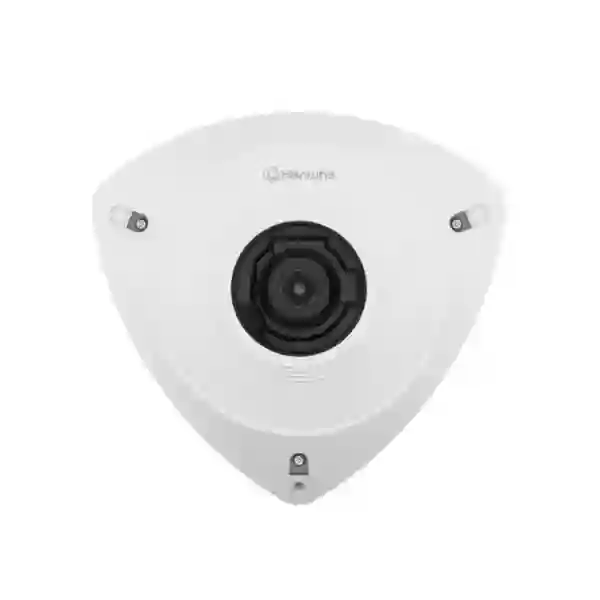
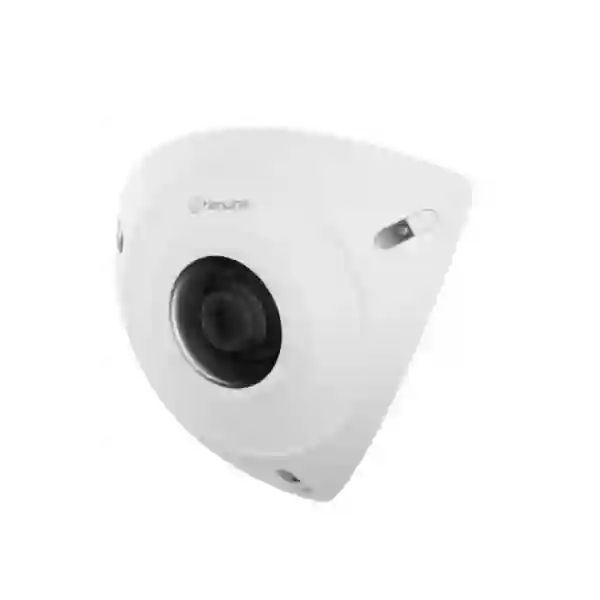
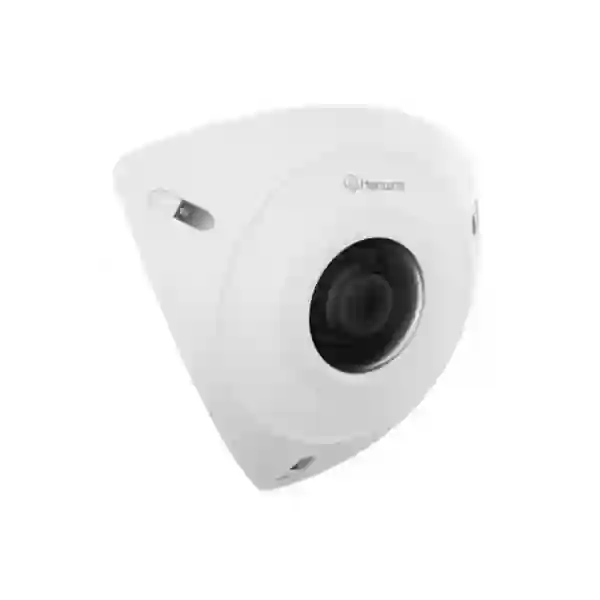
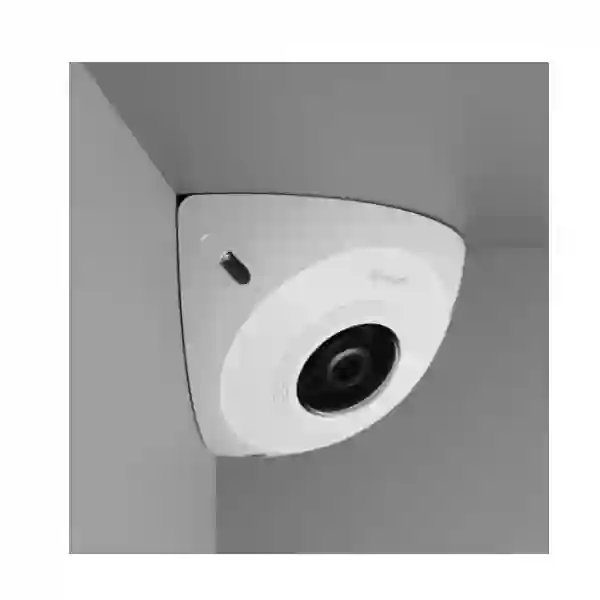
Hanwha TNV-8011C 5MP Anti-Ligature Corner-Mount Camera
Considering the Hanwha TNV-8011C for a Tanzania facility? Evaluate its specialist physical design, wide viewing angle, recording capability and installation requirements before ordering. A reliable result begins with a room-level safety assessment and a clear description of the image that staff need to see.
Who should evaluate this camera?
Facility managers, institutional buyers and security integrators who need a wide-view camera in a potentially higher-risk room can use this guide to identify the verified capabilities and practical trade-offs. The product is not designed to guarantee occupant safety, identify every person at any distance or solve every surveillance requirement. A suitable installation requires the correct hardware, an approved mounting method and trained operational staff.
For Tanzania procurement, check the exact model, room geometry, power and recording infrastructure, accessories and formal acceptance criteria. Commercial details such as local stock, price, delivery and warranty must be established in a separate written quotation. No particular local service area or stock position is asserted by this page.
Manufacturer-published specifications
| Model | Hanwha Vision TNV-8011C |
|---|---|
| Type | 5MP anti-ligature corner-mount network camera |
| Image | 2592 × 1944; 1/2.8-inch CMOS |
| Lens | Fixed 2.3mm, F2.3 |
| Field of view | 131° horizontal / 93.4° vertical / 174° diagonal |
| Frame rate | Up to 30fps at 60Hz or 25fps at 50Hz, H.265/H.264 |
| Low-light reference | Colour 0.1 lux / B&W 0.02 lux under stated conditions |
| WDR | 120dB |
| Compression | H.265, H.264, MJPEG |
| Storage slot | One microSD/SDHC/SDXC slot, up to 128GB |
| Events | Motion, tampering, defocus, audio, line and area events |
| Network | RJ-45 10/100BASE-T |
| Power | IEEE 802.3af PoE Class 2; 4.6W typical; 6.49W max |
| Protection | IP66, IP6K9K, IK10 |
| Operating conditions | -10°C to +55°C; 0–95% relative humidity non-condensing |
| Dimensions and weight | 170 × 165 × 78.8mm; about 830g |
Manufacturer specifications may be revised. Confirm current model documents, planned configuration and regional availability before ordering.
Purpose and correct application
The Hanwha TNV-8011C is a 5 megapixel corner-mounted network camera with an anti-ligature housing. It is designed for facilities where a conventional projecting camera can be inappropriate. Hanwha Vision identifies correctional and behavioral healthcare facilities among the relevant environments. The distinguishing feature is not just image resolution but the combination of specialist physical design and a wide-angle fixed lens. It should be selected only after the responsible facilities team confirms that this type of installation matches the room’s risk assessment and observation needs.
For a Tanzania project, the right buying decision begins with a floor plan, a description of the room’s purpose and a statement of what staff must see. A camera that works well in a compact observation room may be unsuitable in a larger area where distant identification matters. Specify the recording system, lighting conditions, available power, maintenance rules and acceptance procedure before approving a purchase. The camera is one component of a complete security and operational process, not a substitute for staff oversight or a facility’s safeguarding arrangements.
Anti-ligature design and room safety
An anti-ligature design aims to reduce exposed shapes that could create unwanted attachment points. A corner-mounted form can be preferable to an ordinary dome on a projecting bracket in certain higher-risk rooms. That description is not a claim that any installation is completely hazard-free or impossible to damage. Corner geometry, ceiling finishes, fixings, cabling, adjacent fittings and service openings can all change the safety outcome. The room must be assessed as a whole rather than relying on a product label.
Ask the safety and facilities teams to authorize the proposed mounting method and examine the finished installation. Check the height and reachability of the camera, the structural material beneath its fixings, how wiring will be concealed and how a technician can service it without introducing new hazards. Where clinical observation or custody supervision is involved, organizational procedures should determine staff responsibilities. A specialist camera can support those procedures, but it cannot take over decisions about occupant welfare, supervision frequency or safe room design.
What 5 megapixels actually deliver
Hanwha specifies a maximum image size of 2592 by 1944 pixels from a 1/2.8-inch CMOS imaging device. That level of resolution can provide useful scene information, but the pixels are distributed across a very broad image. A small subject on the far side of a room may occupy relatively few pixels. It is therefore misleading to equate the 5MP specification with assured facial identification, recognition of small objects or usable evidence at every distance and angle.
Determine what the facility wants to achieve: confirming room activity, observing movement, checking a doorway or examining a specific position. Review actual recorded clips for that task rather than relying only on a high-quality live preview. Lighting, motion blur, bitrate, screen size, viewing angle and the subject’s distance all influence the result. If critical detail is too small, consider supplementary coverage or another lens type, where the room’s safety policy permits it. Digital enlargement can make an image bigger but cannot reconstruct detail that was never recorded.
The wide fixed lens
The built-in lens has a 2.3mm fixed focal length with an F2.3 maximum aperture. Its published angular view is 131 degrees horizontally, 93.4 degrees vertically and 174 degrees diagonally. This suits broad scene awareness but does not establish unobstructed coverage of every part of a room. Partitions, furniture, people close to the camera, open doors and fixtures can block important areas. The position of the camera relative to the room geometry is as important as the headline angle.
Because the lens is fixed, the installer cannot use optical zoom to narrow the view after mounting. Plan camera placement on a scale drawing and mark areas that must remain visible. Include common furniture arrangements and ordinary occupancy conditions in the assessment. Trial footage should show the actual far corner, entrance and any critical observation zones. Where a room layout changes over time, keep an agreed process for checking the view again rather than assuming the original commissioning image remains representative.
DORI and the limits of distance claims
The published DORI reference distances are about 23.6m for detection, 9.4m for observation, 4.7m for recognition and 2.4m for identification, using the stated EN 62676-4 pixel-density method. These categories serve different purposes. Detection is not identification, and the farthest number is not a promise that a person can be recognized clearly at that distance. Actual results also depend on lighting, image processing, motion, perspective and the amount of the person visible.
Use these distances as a starting point for an installation study, not a guarantee. Decide which observation level matters for each position in the room, then test representative activity at those positions. Check the nearest practical point as well as the farthest one. A subject can be partly occluded even when nominally inside the field of view. Record the acceptance criteria and sample footage, ideally with both live and stored video, so the buyer and installer agree on exactly what acceptable performance means.
Low-light sensitivity and illumination
Hanwha lists minimum illumination of 0.1 lux in colour and 0.02 lux in black and white at F2.3 under the stated exposure condition. These laboratory-style figures are useful for comparison but do not promise crisp moving images in a poorly lit room. A camera can gather more light with longer exposure while making motion look blurred. Strong noise reduction can also affect fine detail. The real test is whether the intended activity stays visible under the room’s actual nighttime lighting.
Automatic day/night operation is supported, but the reviewed specifications do not establish a built-in infrared illumination range. Do not assume the device provides its own light in complete darkness. If a space must remain dark, plan an appropriate and safe illumination method with the responsible facility team. Test glare, reflections and shadows from any proposed light. Include conditions near doors and windows as well as the room centre, and document the final settings used to obtain the accepted picture.
Wide dynamic range and changing light
The model supports 120dB wide dynamic range, which can help when bright and dark elements appear together in one frame. For example, a sunlit doorway may sit alongside a shaded interior. WDR processing can improve visibility across this contrast, but the practical result depends on camera placement and the severity of the lighting problem. The presence of WDR does not remove the need to study the room’s direction of light and reflective surfaces.
During commissioning, review representative daytime and evening conditions, including someone entering through the bright portion of the scene. Check that the person’s outline and relevant activity remain useful rather than becoming a dark silhouette. Compare WDR with exposure, shutter and noise reduction settings because settings optimised for a still room can compromise moving subjects. Maintain a record of the approved image profile. If windows, curtains or lighting fittings are changed later, repeat the relevant image-quality tests.
Image orientation and controls
The camera supports auto day/night, digital image stabilization, backlight compensation, digital noise reduction, defog, lens distortion correction and image rotation. A hallway-view option allows 90- or 270-degree orientation. These controls give an integrator ways to adapt a camera feed, but not all of them should be enabled automatically. The desired result is an image that serves the monitoring task, not simply one that appears bright or smooth when no one is moving.
If hallway view is chosen, verify that live monitors, the recorder and exported clips display the intended orientation. Make sure the recorded picture retains the required scene edges and privacy masks. Check that changes to the main stream do not unintentionally degrade a secondary stream used by operators. Record a controlled configuration baseline for later maintenance. Image adjustments should be retested after major lighting or layout changes, especially in rooms where losing sight of a critical position would create an operational problem.
Frame rate and video formats
The published video codecs are H.265, H.264 and MJPEG. Hanwha lists up to 30 frames per second in 60Hz mode or 25 frames per second in 50Hz mode for H.265 and H.264, with a lower MJPEG maximum on its technical table. The actual recording frame rate must also be supported by the chosen VMS or NVR. A camera capability should not be mistaken for confirmation that an existing recorder can receive, store and play every supported setting.
Define the stream configuration as part of procurement: resolution, codec, frame rate, bitrate control, number of streams and the required retention period. Check the live view used by operators separately from the recording profile. For event review, the ability to find a time, play smoothly and export correctly can matter more than a maximum specification on paper. Test all of these functions in the proposed system, including simultaneous feeds from multiple cameras where the facility requires them.
WiseStream II and storage planning
WiseStream II is listed as a smart-codec feature. It can help manage bitrate according to suitable video content and settings, but storage savings are not fixed across all scenes. A quiet room, a crowded room and a dim noisy room will produce different results. Avoid promising a standard percentage reduction or basing a retention calculation on a best-case result. Storage should be sized from measured or conservatively estimated stream characteristics.
Account for all cameras, continuous and event recording, configured frame rates, retained evidence and usable disk capacity after system overhead. Verify the recorder’s actual behaviour when storage fills and how its retention or overwrite policy operates. Consider whether footage needs to remain accessible during a network interruption. A reliable storage plan includes not only capacity but also playback, export, access control, clock accuracy and an agreed way to preserve an incident record when routine retention would otherwise delete it.
The microSD slot and edge recording
A single microSD, microSDHC or microSDXC slot is provided, supporting a card up to 128GB. The slot is a feature, not evidence that storage media is supplied with the camera. Local recording can play a role in a wider design, but card capacity may be limited for continuous high-resolution recording. Card endurance, environmental conditions, record frequency and handling procedures affect the practical usefulness of this option.
Decide whether the central recorder, local card or another approved destination is the primary evidence record. Test how the system behaves if the network becomes unavailable and what happens when connectivity returns. Verify whether the chosen configuration supports the required retrieval workflow rather than assuming seamless recovery. Secure access to stored media, review the retention policy and confirm that timestamps remain consistent. Institutions should document who may remove media or export video and how that action is recorded.
Event detection and operator response
Supported analytics include motion, defocus, tampering, audio detection, virtual line crossing, direction and virtual-area intrusion or enter/exit events. These are configurable event functions, not a published guarantee of detecting self-harm, medical emergencies, prohibited behaviour or individual identity. A scene can generate false alarms from reflections, shadows or routine movement, while real activity can be missed through occlusion or poor configuration. The safety case must not depend on one event rule operating perfectly.
Define a response process for each alert before turning it on: which events should be detected, who receives them, how the operator checks the situation and when escalation is appropriate. Tune the event area and sensitivity using real room examples. Review alert volume after deployment to prevent notification fatigue. Where a higher-risk space is involved, retain the appropriate human supervision and room procedures. Event analytics can support staff attention, but they are not a replacement for professional judgment.
Audio input and appropriate use
The camera lists a selectable microphone-level or line-level audio input and a line-level output. This should not be interpreted as evidence that a microphone or speaker is supplied or built into the housing. Audio-related event features need the applicable hardware and configuration. An integrator should verify the interface and any required accessories instead of promising a ready-to-use two-way communication system based only on the listed ports.
Before recording or analysing sound, the organization must decide whether doing so is necessary and lawful for the specific space. Sensitive rooms may require particular notices, access restrictions, retention limits and procedures for protecting private information. Leave the audio function disabled if the approved use case does not require it. The technical ability to connect a microphone is not authorization to record conversations. Document the final operating decision and include it in any later change-control process.
PoE switching and the network
The device uses a wired RJ-45 10/100BASE-T Ethernet interface with IEEE 802.3af Class 2 Power over Ethernet. The manufacturer lists 4.6W typical consumption and 6.49W maximum. A compatible PoE switch and adequate cable installation are therefore important. Budget power for the total number of cameras and other connected devices rather than assuming the small consumption of one unit proves that the complete installation has sufficient headroom.
Consider power continuity for the PoE switch, network infrastructure and recording equipment. If the camera remains powered but the recorder is offline, the required observation function may still fail. Plan network segmentation and camera addressing according to the facility’s IT rules. Route cabling so that exposed connections do not compromise the specialist room mounting. Test network loss and restoration under controlled conditions and record the resulting effect on alerts and footage. This is not described in the verified specifications as a wireless camera.
Access control and cybersecurity
Hanwha lists HTTPS, SRTP, encrypted firmware, IEEE 802.1X support, certificate-based device identification, digest authentication, IP-based access restrictions, logging and supported SD-card partition encryption using AES-256. These can support a secure architecture, but the presence of security functions is not itself a guarantee that a device is securely deployed. Default configurations, passwords, network exposure, outdated firmware and unmanaged user accounts can introduce unnecessary risks.
Before handover, assign unique credentials, implement least-privilege accounts, restrict administrative access and use protected management channels. Create a device inventory with installed firmware and configuration responsibility. Decide who may review logs and who approves upgrades or remote maintenance. Test new firmware compatibility in a controlled process where possible, especially if the VMS has sensitive integration requirements. The lifecycle plan should cover staff changes, incident investigation, configuration backups and responsible decommissioning when the camera is eventually replaced.
Ingress and impact ratings
The model is published with IP66, IP6K9K and IK10 ratings. These classifications address specified environmental ingress, high-pressure water-jet exposure and impact resistance under recognised test methods. They are useful for evaluating a durable housing in demanding facilities. However, they are not a promise that the camera tolerates every detergent, washdown practice, temperature, impact event or modification. The complete mounting arrangement must preserve the intended seals and protection level.
Review cleaning and maintenance routines against the manufacturer’s instructions. Do not improvise drilling, cable holes or mount modifications that could compromise the housing. Inspect for damage and water ingress during service. The stated operating range is minus 10 to plus 55 degrees Celsius, with relative humidity up to 95 percent non-condensing. A hot or wet Tanzania installation still requires a location-specific assessment because a numerical rating cannot account for all conditions or demonstrate suitability for every room.
Physical size, materials and fixing
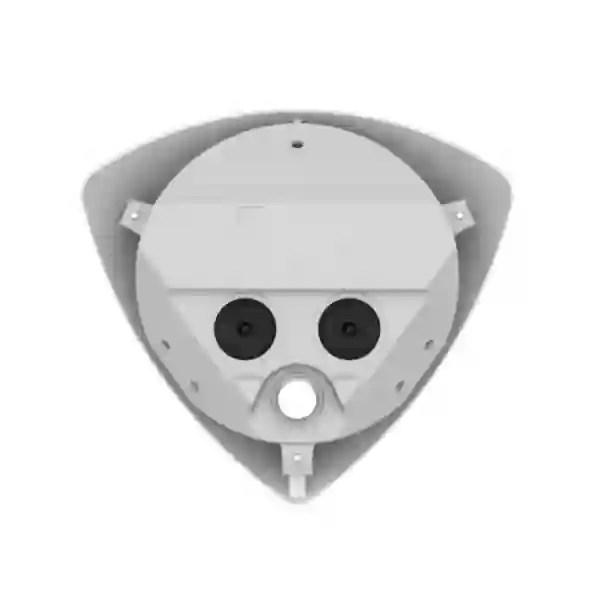
The published dimensions are 170mm wide, 165mm high and 78.8mm deep, with an approximate weight of 830g. The housing is aluminium and the standard finish is white. These dimensions help with a preliminary room drawing but do not guarantee compatibility with a particular wall and ceiling junction. A neat-looking location may have weak plaster, uneven surfaces, hidden services or a surface profile that requires more detailed mounting planning.
Use the current model installation guide and approved accessories to develop a fixing method. Confirm the substrate, load support, clearances, cable path, accessible seams and maintenance requirements. Avoid improvised brackets in a space where the anti-ligature objective matters. After installation, check that covers fit correctly, the lens view is not obstructed and no unintended exposed hardware has been introduced. The responsible facility team should inspect and accept the completed assembly, not just the installer.
Room survey before procurement
Start with a measured floor plan showing doors, windows, ceiling height, beds, partitions, furniture and other obstacles. Mark the essential observation zones and any areas subject to privacy restrictions. Identify what happens when occupants move close to the camera or when a door stays open. Consider how routine rearrangement may change the picture. An empty architectural drawing can give a false sense of complete coverage when a furnished and occupied room behaves differently.
Next, define the evidence requirement for each zone: detect, observe, recognize or identify. The camera’s DORI figures provide a starting framework, but acceptance should be based on actual footage. Include moving subjects and both ordinary and reduced lighting. Check corners, doorway transitions and potential obstructions. Retain the agreed drawing and sample frames as project records. This work can prevent selecting a fixed wide-angle lens when a different approach would serve the operational purpose better.
Tanzania deployment considerations
A Tanzanian institutional project should account for local room conditions, ambient heat, dust, humidity, cleaning procedures and reliability of the electrical supply. Consider whether infrastructure between the camera and recorder remains stable during the outages or maintenance periods relevant to the site. A PoE camera can simplify wiring, but backup-power arrangements and an operational recovery process may still be needed. Site-specific conditions should be measured rather than assumed from the region alone.
Commercial details require separate confirmation: exact model, authorized purchasing channel as applicable, accessory list, price, tax treatment, stock, delivery, warranty, technical assistance and installation scope. This page does not establish a Tanzania stock position, local certification, office, installation coverage or TZS price. The purchaser should also verify any privacy, procurement and sector requirements with qualified local personnel. Avoid adopting international seller descriptions as proof of local commercial promises.
Recorder and software integration
The camera supports common IP video formats and protocols along with Hanwha SUNAPI and Open Platform interfaces. These capabilities do not by themselves prove that every third-party NVR or VMS supports the camera’s entire feature set. A basic live stream may work while event notifications, audio functions, time synchronisation or playback tools behave differently. Obtain model-level compatibility information for the exact software version and planned recording functions.
Test camera discovery, credential handling, live quality, stored footage, event mapping and evidence export. If operators use multiple monitors, verify which stream each application opens and whether the intended resolution is maintained. Check that permissions separate ordinary viewing from configuration and download functions. The human workflow matters: staff should be able to identify a camera, locate the right time period and take approved action without confusion. An integrated system is successful only when it supports those tasks reliably.
Commissioning and acceptance tests
A commissioning checklist should include the mounted housing, concealed or protected cable path, network port, PoE power supply, current configuration, video quality and time synchronization. Confirm the actual viewing zones with the room in its usual layout. Check the expected picture in light and low light. Review recorded footage rather than signing off solely from a live preview. Make sure any authorised privacy mask and audio setting is documented and functions as intended.
Where operationally safe, simulate a controlled network or power interruption and verify the system’s response and recovery. Test access for an authorised user and ensure accounts without permission cannot perform restricted actions. Verify the required retention configuration and export workflow. Any event rules should be demonstrated using representative conditions and agreed response procedures. The client should accept documented results, with identified exceptions and corrective actions, rather than relying on an informal statement that the camera is online.
Monitoring, cleaning and maintenance
Plan inspections for dirt, lens obstruction, changed framing, impact damage, loose fixings and signs of compromised sealing. A camera may report normal network status even when a moved item or dirty lens has made part of the scene difficult to see. Periodic image checks should therefore complement network health monitoring. After redecorating, furniture changes or revised room use, confirm that the originally approved viewing zones remain visible.
Keep firmware, service and configuration records under change control. Identify the team responsible for investigating alarms, replacing faulty components and preserving relevant footage. Test that staff know how to report a blocked view or repeated false alarm. Where cleaning procedures are frequent, ensure they follow approved methods. A dependable deployment comes from repeated operational verification, not merely from rugged housing ratings or an initial successful commissioning test.
Comparison with a conventional dome
A conventional dome or bullet camera may be appropriate for ordinary corridors, entrances and outdoor perimeters where an anti-ligature housing is not necessary. A different focal length may provide more useful detail at distance or fit an existing mounting position better. The TNV-8011C is differentiated by its specialist corner form and exceptionally broad fixed view. That makes it worth shortlisting for selected room types, but it does not make it the best CCTV choice in every scenario.
Compare options using the facility’s actual risk assessment, distance to subjects, lighting, observation goals, cleaning routine, installation practicality and recording software. The most relevant camera is the one that meets those requirements with a documented acceptance test. If the room needs zoomed identification far away, a fixed 2.3mm wide-angle camera may not meet the target alone. If the room does not require an anti-ligature design, ask whether a conventional camera configuration would be more appropriate and economical.
Choosing the complete bill of materials
A sound purchasing request should specify the camera model and quantity, mounting accessories, PoE switches, cable routes, any required power backup, recording infrastructure, storage capacity, licensing, configuration work and training. Audio accessories, if allowed, should be listed explicitly. A microSD card should not be assumed to be included. State the expected retention period and the exact evidence or observation task so that system components can be sized around the intended result.
Ask the supplier to separate hardware from installation, commissioning and ongoing support. The quotation should identify commercial assumptions, applicable taxes, warranty conditions, delivery expectations and what happens if the site survey reveals a mounting problem. Obtain confirmation for the exact model number rather than accepting a similar-looking product. An institutional project benefits from a documented handover package with drawings, configuration records, test results and maintenance responsibilities.
Final selection guidance
Shortlist this product where a verified anti-ligature corner-mount requirement meets a need for a wide 5MP network video image. Its 120dB WDR, configurable event functions, H.265/H.264 compression, PoE power and robust housing specifications are useful supporting capabilities. The lens is fixed, so important distant detail must be evaluated carefully. The published DORI figures, low-light data and ingress ratings help frame questions, but should never replace a room-specific trial and safety review.
Before committing, ask for a documented field-of-view plan, lighting assessment, recorder compatibility check, storage estimate and approved installation detail. Define how success will be measured and who will sign off. Confirm Tanzania pricing, availability and service terms separately because they are not verified in this description. The right next step is a project-specific technical review and quotation for the exact TNV-8011C configuration, with accessories and supporting systems identified.
Quotation readiness checklist
- Approved room risk assessment and mounting details
- Field-of-view drawing and required observation distances
- Representative day and low-light video acceptance test
- Recording, retention, network and PoE power design
- Written scope for hardware, accessories, commercial terms and support
Buyer FAQs
What is the Hanwha TNV-8011C?
It is a 5MP anti-ligature corner-mount network camera designed for specialist settings including correctional and behavioral healthcare environments. It is a camera component, not a complete security or safeguarding system. The room’s purpose, facility rules and required observation detail determine whether it is suitable.
What is the lens and viewing angle?
It has a fixed 2.3mm F2.3 lens with a published view of 131 degrees horizontally, 93.4 degrees vertically and 174 degrees diagonally. This is very wide coverage but may reduce detail at distance. Furniture, partitions and room geometry can create occluded areas even inside the nominal viewing angle.
Does it have optical zoom?
The published model uses a fixed lens rather than a variable optical zoom lens. Digital zoom can magnify a recorded region but cannot recreate missing detail. Where distant recognition or identification matters, use a field-of-view trial and consider a different or additional camera if necessary.
Will it record in complete darkness?
The published low-light figures are 0.1 lux in colour and 0.02 lux in black and white under specified conditions. An integrated infrared illumination range is not established by the reviewed specifications. Test the actual lighting environment and agree a safe illumination approach where additional light is required.
Can it store footage on a card?
The camera supports one microSD, microSDHC or microSDXC card up to 128GB. This does not mean a card is included or that the slot alone meets institutional retention needs. Confirm recording quality, duration, card endurance, handling rules and central backup or recording arrangements.
Does it support audio?
It lists a selectable microphone or line-level input and a line-level output, but this is not proof that a microphone or speaker is built in. Any use of audio should be expressly authorized under the relevant organizational policies and legal requirements, and tested with the actual accessories selected.
What does anti-ligature mean?
The form factor is intended to reduce certain attachment opportunities compared with more exposed mounting arrangements in higher-risk rooms. It does not eliminate all hazards. Fixings, cabling, room geometry and the full installation should be reviewed and approved by the responsible safety personnel.
Which power source is needed?
The camera is powered over a wired Ethernet connection using IEEE 802.3af PoE, Class 2. Its published typical consumption is 4.6W and maximum is 6.49W. Confirm PoE switch capacity, cabling standards and backup power needs for the whole system.
Does it work with every recorder?
Compatibility depends on the specific VMS or NVR and software version. H.265/H.264 support and documented network interfaces do not guarantee that every analytics event, stream or export function works on any recorder. Verify the full required feature set before buying.
How do the IP and IK ratings help?
IP66, IP6K9K and IK10 describe tested resistance under particular ingress, washdown and impact conditions. These ratings do not permit arbitrary cleaning chemicals, unauthorized modifications or unsuitable installation methods. Use the current manufacturer guidance for cleaning and mounting.
Can the analytics identify a medical emergency?
The documented event functions include motion, audio detection, tampering, defocus, line crossing and area events. They do not establish reliable medical diagnosis, self-harm detection or identification of intent. Appropriate trained supervision and formal response procedures remain essential.
Is the camera in stock in Tanzania?
This content does not verify local stock, a TZS price, delivery time or warranty. Request a current quotation for the exact model and specify installation conditions, required accessories and recorder compatibility. Confirm the commercial terms with the selected supplier.
Request a Tanzania project-specific quotation
Provide the model TNV-8011C, room dimensions, the required viewing zones, lighting conditions, approved mounting requirements, recorder details, desired retention period and any audio policy. Ask for a clearly itemized quote covering camera hardware, accessories, installation, integration, commercial conditions and support. Do not transmit sensitive occupant details through an unverified channel.
Ask FourTeck Tanzania to review the proposed configuration.




Reviews
There are no reviews yet.