
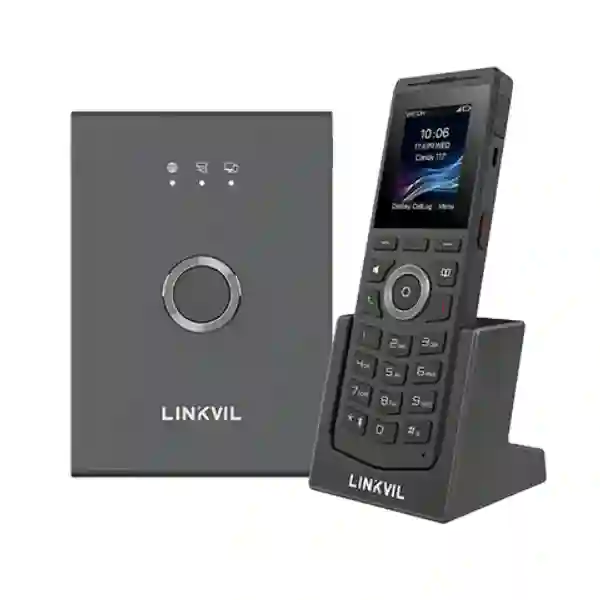
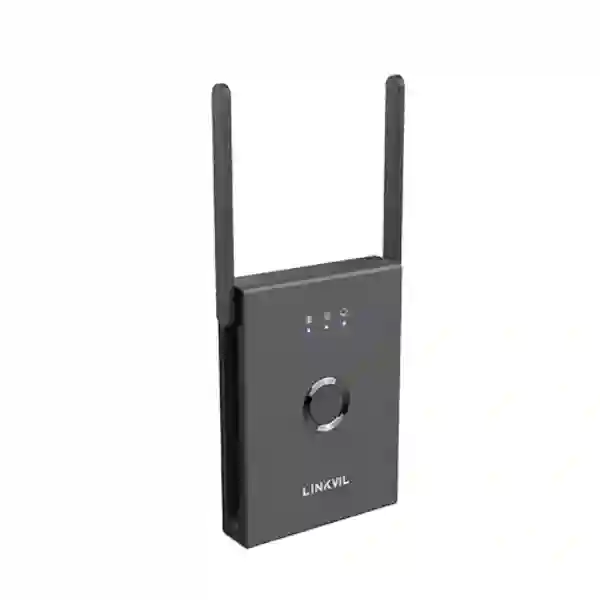
LINKVIL cordless multi-cell communication
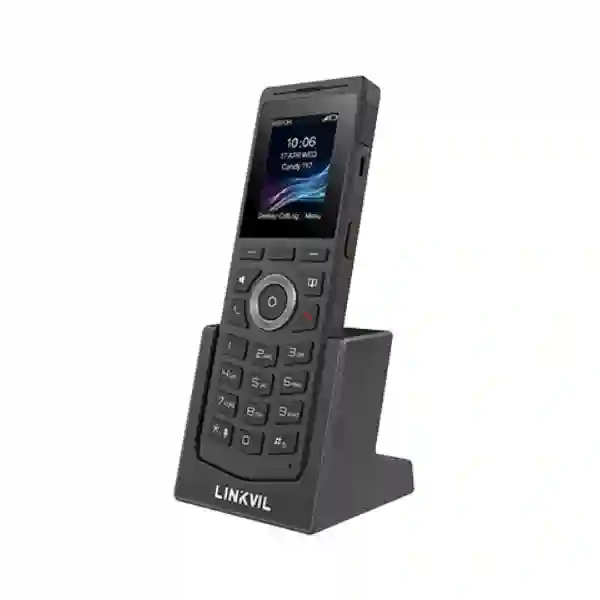
LINKVIL W610H Multi-Cell DECT Handset
The LINKVIL W610H is a mobile business voice handset for organizations that need staff to communicate while moving through offices, hotels, warehouses, retail areas, campuses and operational sites. Although buyers may search for it as a “multi-cell DECT handset,” the manufacturer positions the W610H as a cordless multi-cell IPCT terminal that uses 802.11ah and works with the LINKVIL W710H system. That distinction matters when planning compatibility, coverage, base-station placement and procurement. FourTeck Tanzania can help customers assess the W610H as part of a complete SIP telephony and network design rather than treating the handset as an isolated purchase.
What is the LINKVIL W610H?
The LINKVIL W610H is a portable cordless voice endpoint designed to connect through the LINKVIL W710H multi-cell platform. It is intended for users who cannot remain at a desk but still need a dedicated business calling device with SIP-oriented features, physical keys and predictable voice handling. The handset supports four SIP lines, an internal extension, caller ID, call waiting, call forwarding, three-way conferencing, voicemail indication, do-not-disturb, speed dial, intercom, emergency calling and other familiar business telephony functions. Its 2-inch 240×320 colour display keeps menus and call information readable without turning the device into an oversized smartphone-style terminal.
Mobility is central to the design. The manufacturer specifies seamless roaming and switching between compatible base stations, allowing properly designed multi-cell deployments to extend voice coverage across larger facilities. At system level, LINKVIL states that a deployment can use one W710H manager with up to 20 base stations and as many as 300 W610H handsets, while each base station can handle up to 30 handsets and 16 simultaneous calls. The overall system is rated for up to 200 simultaneous calls. These are platform limits rather than a promise that every site should be built to the maximum; practical sizing should account for building materials, traffic concentration, coverage overlap, uplink capacity and the number of users likely to call at the same time.
For teams that rely on headsets, the W610H supports Bluetooth 5.0 and a standard 3.5 mm headset connection. It also includes incoming-call vibration, a belt clip, a configurable push-to-talk key and 16 customizable DSS keys. The removable 1900mAh rechargeable lithium battery is specified for up to eight hours of talk time and up to 160 hours of standby. A desktop charging base and USB Type-C charging interface support routine daily charging. These features make the W610H especially relevant for supervisors, floor staff, hospitality teams, warehouse personnel, security operations and other roles that combine movement with frequent voice communication.
Mobile voice coverage
Designed for roaming between compatible LINKVIL base stations so users can stay on the business voice system while walking through a properly planned site.
Clear calling
HD voice, acoustic echo cancellation, packet-loss concealment, adaptive jitter handling and noise-processing functions are intended to improve intelligibility in day-to-day calling.
Headset flexibility
Bluetooth 5.0 and a 3.5 mm headset jack give users options for hands-free calling without forcing one headset connection method.
Shift-friendly controls
Vibration alerts, a belt clip, configurable DSS keys and a push-to-talk button can support fast access to frequently used contacts and functions.
Verified LINKVIL W610H specifications
| Display | 2.0-inch 240×320 colour display |
| Voice lines | 4 SIP lines and 1 internal extension |
| Wireless system protocol | 802.11ah within the LINKVIL cordless multi-cell platform |
| Security | WPA2-PSK; SIP media/network features include RTP/RTCP/SRTP and HTTPS support |
| Headset support | Bluetooth 5.0 and 3.5 mm standard headset jack |
| Battery | 1900mAh rechargeable lithium battery; up to 8 hours talk time and 160 hours standby |
| Programmable controls | 16 custom DSS keys and one configurable PTT key |
| Contacts and logs | Up to 1,000 local contacts, remote XML/LDAP phonebook up to 1,000 entries, and 600 call logs |
| Charging | Desktop charging base; Type-C interface; DC input 5V/2A |
| Physical size | 156 × 53 × 17.7 mm; approximately 145 g |
| Operating environment | -10°C to +45°C operating temperature; 10–95% working humidity |
System range and radio frequency are region-specific. The manufacturer lists different operating bands and stated ranges for America and EU variants. Confirm the correct regional hardware, country setting and matching W710H configuration before procurement or deployment.
Planning the W610H with the W710H multi-cell system
A W610H purchasing decision should start with the intended system, not the handset quantity alone. The handset is designed around the LINKVIL W710H architecture. A multi-cell project normally needs a manager role, strategically positioned base stations and a coverage plan that allows users to roam without losing service. Radio coverage is influenced by reinforced concrete, shelving, metal partitions, lift shafts, machinery, room density, outdoor boundaries and the height at which base stations are mounted. A warehouse with long aisles behaves differently from a hotel with many enclosed rooms, and an office tower behaves differently from a low-rise campus.
Call capacity should be planned separately from coverage. A site may have adequate radio signal everywhere but still need additional base capacity if many users make calls at the same time. Conversely, a lightly used facility may need several base stations simply to cover distant areas. For this reason, the strongest design begins with floor plans, headcount, expected simultaneous calls, areas where calls are most critical and any zones where users commonly move while speaking. The same exercise should include SIP server or IP PBX requirements, VLANs, QoS, firewall rules, DNS, NTP and internet dependency where the chosen telephony platform requires external connectivity.
For broader infrastructure planning, customers can review FourTeck Tanzania business technology solutions, explore FourTeck Tanzania integration and support services, or browse the FourTeck Tanzania technology shop. For organizations standardizing voice endpoints across multiple markets, the FourTeck IP phone specialist site provides a wider telephony context, while FourTeck Uganda is relevant to East African multi-country procurement planning.
Who should consider the LINKVIL W610H?
Hotels and hospitality
For duty managers, housekeeping supervisors, maintenance teams and guest-service staff who move between floors and operational areas.
Warehouses and logistics
For supervisors and coordinators who need a voice extension while moving between receiving, storage, picking and dispatch zones.
Retail and shopping sites
For floor managers, security, customer-service teams and operations staff who cannot remain beside a desk phone.
Offices and campuses
For facilities, IT, security and mobile staff who need access to the business voice system across multiple rooms or buildings.
LINKVIL W610H Multi-Cell DECT Handset Tanzania
For buyers in Tanzania, the LINKVIL W610H is most relevant where a conventional desk phone restricts movement and a personal mobile phone is not the preferred operational tool. Hotels, warehouses, retail sites, industrial facilities, schools, clinics, office compounds and multi-floor buildings often have teams that need to remain reachable while moving. A dedicated cordless business handset can help keep communications on the organization’s managed SIP environment, with extension dialing and business call functions available from a purpose-built endpoint. The W610H adds features such as vibration alerts, Bluetooth headset support, programmable DSS keys and a configurable push-to-talk button that can suit teams working away from desks.
Procurement in Tanzania should begin by confirming that the project is for the LINKVIL W710H multi-cell architecture and that the correct regional hardware is selected. This is important because the manufacturer publishes region-specific radio frequency bands and coverage figures. The W610H and base system should use matching country or region settings, and the radio design should be assessed against the actual building. A stated maximum range is never a substitute for a site-aware coverage plan. Concrete walls, metal shelving, plant rooms, lifts and long corridors can change how many base stations are appropriate.
Tanzanian customers should also plan the IP side of the deployment. The W710H system connects into the network and voice platform, so SIP server requirements, VLAN strategy, firewall policy, QoS and power protection all contribute to reliability. If voice is business critical, consider how the switch, router, firewall and upstream internet or SIP service will behave during congestion or power interruptions. It may be sensible to include UPS-backed network equipment and to document handset assignments, extension numbers, base locations and firmware versions.
When requesting a quotation, provide the number of handsets, approximate floor area, building type, number of floors, expected simultaneous calls, current PBX or SIP service, and whether the deployment is new or an expansion. That information helps distinguish a simple handset order from a complete multi-cell design. FourTeck can then frame the W610H within a broader business voice and network requirement without making assumptions about stock, delivery dates or final compatibility before the technical scope is known.
LINKVIL W610H Multi-Cell DECT Handset Dar es Salaam
Dar es Salaam organizations frequently operate in mixed environments: head offices with several departments, hotels with guest and service areas, retail locations, warehouses near transport corridors, clinics, schools and commercial compounds. In these settings, users may need to move between reception, stock rooms, offices, service corridors and loading areas while remaining accessible on the company voice system. The LINKVIL W610H can be considered when a fixed SIP desk phone does not provide enough mobility and the organization wants a dedicated handset rather than relying entirely on personal smartphones.
A Dar es Salaam deployment should be scoped around building layout. High-rise offices may need different base positioning from a large single-storey warehouse. Concrete cores, lift shafts and dense partitions can interrupt radio paths, while open halls may allow broader coverage. Because the LINKVIL platform supports multi-cell roaming, the design objective is not simply to make each base station cover the largest possible area. It is to create usable overlap so calls can continue as people move. Base capacity should also reflect call concentration; a busy hotel operations team may generate more simultaneous traffic around shift changes than a general office with the same number of handsets.
Network quality is equally important in Dar es Salaam sites that use hosted PBX or cloud SIP services. A cordless handset can have strong local radio coverage while call quality is still affected by WAN congestion, packet loss, incorrect QoS or firewall configuration. For business-critical voice, assess the LAN, switches, uplinks and internet path together. The W610H supports RTP/RTCP/SRTP and standard network services such as DHCP, SNTP and HTTP/HTTPS, but the end-to-end system still depends on correct configuration of the surrounding infrastructure.
A practical quotation request should list the site address or general area, floor count, approximate square metres, number of mobile users, current PBX brand, desired extension count and whether Bluetooth headsets or spare charging arrangements are needed. This makes it easier to estimate handset quantities and identify whether the request also needs W710H base stations, switching, UPS protection or configuration services. It also reduces the risk of ordering handsets without the system components required to operate them.
LINKVIL W610H Multi-Cell DECT Handset Mwanza
In Mwanza, the W610H can fit organizations that have staff moving across operational areas where desk-bound communication is inconvenient. Examples include hospitality properties, distribution businesses, workshops, healthcare environments, educational campuses and multi-building offices. Instead of handing every mobile employee a consumer phone, a dedicated cordless business handset can keep internal calling tied to extensions and established call flows. Supervisors can use the programmable DSS keys for frequently contacted teams, while vibration alerts can be useful in environments where audible ringing may be missed.
The most important buying question is whether the whole LINKVIL system has been planned. The W610H is not intended to operate as an independent Wi-Fi smartphone-style endpoint; it pairs with the compatible W710H cordless multi-cell platform. Before purchasing multiple handsets, map the areas where users must maintain service and identify difficult radio zones. Storage racking, workshops, thick walls, stairwells and detached buildings can require additional planning. If several buildings are involved, the wired network path and inter-building links should also be reviewed, because reliable backhaul is part of the overall voice experience.
For Mwanza businesses with limited on-site IT resources, documentation can be as important as hardware. Record which handset belongs to which user or department, its extension, the base stations serving each zone, firmware versions, IP addressing conventions and PBX provisioning details. This speeds troubleshooting and makes future expansion easier. It also helps when replacement handsets are introduced or teams are reorganized. Battery management should be considered for long shifts: the published battery rating is up to eight hours of talk time or 160 hours standby, but real-world endurance varies with usage patterns and radio conditions.
When asking for a Mwanza quotation, include handset quantity, expected calling patterns, floor plans if available, existing network information and details of the SIP or PBX platform. If the site is still being built or renovated, planning before cabling and switch placement is finalized can make the multi-cell design cleaner. A coordinated voice-and-network approach avoids discovering after installation that the preferred base-station position lacks power, data connectivity or suitable mounting.
LINKVIL W610H Multi-Cell DECT Handset Arusha
Arusha has many hospitality, tourism, office, education and service environments where staff mobility matters. A hotel or lodge operation may have employees moving between reception, housekeeping, maintenance, security and back-of-house spaces. A business campus may have facilities staff and supervisors circulating between buildings. The LINKVIL W610H provides a dedicated mobile voice endpoint with a belt clip, vibration alert, Bluetooth 5.0, 3.5 mm headset support and programmable controls, making it practical for roles that involve frequent movement and quick communication.
Hospitality deployments deserve careful coverage planning because guest rooms, corridors, service areas, staircases and outdoor transitions can create complex radio conditions. The manufacturer’s multi-cell design supports roaming between bases, but successful roaming depends on deployment quality. Base stations should be positioned to provide the required coverage and overlap without assuming that an advertised maximum range will apply inside every property. Thick masonry, metal doors, plant rooms and structural cores can reduce usable range. A site survey or at least a detailed floor-plan review is valuable before the final bill of materials is fixed.
Arusha buyers should also consider workflow, not only radio reach. Which teams should be able to call each other directly? Do supervisors need quick-dial keys? Is push-to-talk useful for a specific group? Should incoming calls vibrate in quieter areas? Are Bluetooth headsets appropriate for front-of-house users, or would wired headsets be easier to standardize? These choices influence provisioning and user training. The W610H supports four SIP lines and common call functions, but those capabilities should be matched with the PBX features actually configured for each role.
For procurement, provide the number of planned users, operating hours, building layout, current telephone system and the expected mix of internal and external calling. If the property has multiple internet links, existing VLANs or centralized IT management, mention these during design. A good proposal should separate the handset quantity from the required base infrastructure, network preparation and configuration work so the customer can understand what is needed for a functional system rather than simply comparing unit prices.
LINKVIL W610H Multi-Cell DECT Handset Dodoma
Organizations in Dodoma may consider the LINKVIL W610H for administrative buildings, educational institutions, hospitality sites, healthcare facilities, warehouses and other workplaces where employees need to remain on the business telephone system while away from their desks. A dedicated cordless handset can give facilities teams, supervisors, security staff and mobile managers a consistent extension identity instead of routing operational calls through personal mobile numbers. The W610H combines physical controls with a colour screen and supports features such as call forwarding, waiting, three-way conferencing, voicemail indication and programmable shortcuts.
For new offices or facilities in Dodoma, it is useful to coordinate the cordless voice design with the LAN from the beginning. The W710H platform still depends on network connectivity, so switch ports, VLAN policy, IP addressing, DNS, time synchronization and PBX reachability should be documented. If a site uses UPS-backed switching and network equipment, include the voice platform in the power-resilience plan. Handsets have their own batteries, but a charged handset cannot place calls if the base infrastructure, switch or upstream voice service is unavailable.
Coverage planning should follow real movement routes. Identify reception areas, offices, corridors, stairwells, storage rooms, security posts and external work zones where calls must continue. Multi-cell systems are strongest when base locations are chosen around these paths rather than placed simply where cabling is easiest. The LINKVIL system publishes region-specific range figures, but real performance is shaped by construction and interference conditions. Confirm the correct regional model and settings, then validate coverage during deployment before declaring the system complete.
A Dodoma request for quotation should therefore include the handset count, number of concurrent callers, site plans where possible, PBX or SIP platform, and whether the project needs installation, provisioning or user training. Buyers should also state whether spare batteries, chargers, headsets or belt clips are operationally important. Clear requirements help produce a more useful bill of materials and prevent the common mistake of focusing only on the handset while overlooking the multi-cell system it depends on.
LINKVIL W610H Multi-Cell DECT Handset UAE
In the UAE, the LINKVIL W610H can support hotels, warehouses, retail environments, commercial offices, logistics facilities and operational campuses that need mobile staff to stay connected to a SIP-based business voice platform. Large properties often combine open halls, enclosed rooms, service corridors and outdoor transitions, making multi-cell planning more relevant than a single wireless handset approach. The W610H’s roaming capability, Bluetooth 5.0 headset support, programmable DSS keys, vibration alerts and push-to-talk control can be useful where supervisors and operational teams need quick, dedicated voice access throughout a site.
UAE procurement teams should pay particular attention to the regional model and radio settings. LINKVIL publishes region-specific frequency bands and range figures, and the handset and base country or region settings must correspond. The correct selection should be confirmed before ordering rather than relying on an imported model intended for another market. This is also important for regulatory and support considerations. Where a project is spread across several emirates or facilities, standardizing the same approved hardware revision, firmware baseline and provisioning method can make ongoing management easier.
From a network perspective, voice quality still depends on the IP path behind the cordless system. Warehouses may have long fiber uplinks or multiple switch cabinets, while hotels can have segmented networks with many VLANs. Confirm that the W710H system can reach the intended SIP server, that QoS and firewall policy are appropriate, and that network resilience matches the importance of voice service. If the site uses a cloud PBX, internet redundancy may matter as much as radio coverage. If it uses an on-premises PBX, local switching and server availability become more central.
For a UAE quotation, specify whether the request is handset-only expansion or a complete W710H/W610H deployment. Include quantity, building type, floor plans, simultaneous-call estimate and PBX details. For multi-country organizations operating in both the UAE and East Africa, use the same documentation framework across locations: handset naming, extensions, base IDs, VLANs, firmware and support contacts. This creates operational consistency without assuming that every country or building needs the same radio design.
LINKVIL W610H Multi-Cell DECT Handset Uganda
Ugandan businesses evaluating the LINKVIL W610H should view it as part of a cordless multi-cell communication system for mobile employees rather than as a simple replacement for a desk telephone. The handset is especially relevant to hospitality, warehousing, education, healthcare, retail, security operations and larger offices where staff frequently move between rooms or operational zones. Its dedicated controls, vibration alert, headset options and business call features can help separate work communication from personal mobile usage and keep users attached to the organization’s SIP numbering plan.
Coverage design should account for the physical environment. A Kampala office tower, a regional warehouse and a campus-style site can require very different base layouts even if the handset count is similar. The W710H multi-cell platform can scale across multiple bases, but the correct quantity should be based on both radio coverage and simultaneous-call load. The manufacturer states a maximum of 30 handsets and 16 simultaneous calls per base, while larger systems can scale further through multiple bases. Those published capacities are design ceilings, not a recommendation to load every deployment to the maximum.
Uganda deployments should also confirm PBX interoperability and provisioning procedures before roll-out. The W610H supports standard SIP-oriented call functions and network protocols, but every PBX has its own provisioning templates, supported feature set and firmware expectations. A small pilot can be valuable when integrating with an existing platform, especially if the business depends on specific functions such as attended transfer, call recording triggers, directory integration or emergency dialing. Documenting test results reduces surprises when dozens of handsets are added.
For procurement, include the number of locations, handset quantity per site, expected call concurrency, current PBX, and whether the project will share standards with operations in Tanzania, Kenya or the UAE. Multi-country IT teams benefit from standardized naming and configuration templates, while still allowing each site to use the correct regional hardware and coverage layout. This approach makes the W610H easier to support over time and turns the initial purchase into a manageable communication platform rather than a collection of individual devices.
LINKVIL W610H Multi-Cell DECT Handset Kampala
Kampala buyers often need mobile voice coverage in busy commercial properties where teams are distributed across offices, stores, clinics, hotels, warehouses or mixed-use premises. The LINKVIL W610H provides a dedicated cordless endpoint for these situations and can be assigned to individual users or operational roles. Front-of-house supervisors may prefer Bluetooth headsets, maintenance staff may value the belt clip and vibration alert, and team leads may use programmable DSS keys for frequently called extensions. The handset’s physical keypad can also be easier to operate quickly than a general-purpose smartphone in repetitive work settings.
Before deployment, Kampala organizations should identify where calls originate and where users move during calls. A dense building may have strong coverage in corridors but weak service inside certain rooms because of wall construction. Warehouses may have changing radio conditions as metal shelving and inventory alter propagation. The value of a multi-cell system is the ability to position several bases strategically, but this requires a layout plan and testing. The aim should be consistent operational coverage rather than chasing a single headline range figure.
The surrounding LAN should be checked at the same time. Voice needs low latency, controlled packet loss and stable routing. If an IP PBX or SIP service already exists, confirm extension licensing, provisioning, codec expectations and any firewall rules before the handsets are commissioned. The W610H supports HD voice and network mechanisms for handling jitter and packet loss, but endpoint features cannot compensate for a severely congested or unstable WAN. QoS, switch configuration and internet resilience should therefore be part of the project conversation.
When requesting pricing in Kampala, specify the number of handsets, whether W710H bases are already installed, building dimensions, current voice platform and any special accessories required. If the deployment will expand later, mention the expected future headcount so base placement and system capacity can allow sensible growth. A well-scoped quotation should distinguish handsets, base infrastructure, network preparation, configuration and optional services, giving procurement teams a clearer basis for evaluation than a simple per-unit price.
LINKVIL W610H Multi-Cell DECT Handset Arua
For organizations in Arua, the LINKVIL W610H can be considered where reliable internal communication is needed across a workplace and employees regularly leave their desks. Clinics, schools, hospitality properties, warehouses, NGO operations, service facilities and administrative sites can all have mobile roles that benefit from a dedicated extension handset. The W610H is compact, approximately 145 grams, and supports a belt clip, making it suitable for carrying during a shift. Vibration alerts can help users notice calls in noisier or public areas without relying exclusively on ring volume.
In locations where technical support may not be continuously on site, simplicity and documentation become important. The cordless system should be configured with clear handset names, extension assignments and base identifiers. Keep a record of firmware versions and backup the relevant system configuration. The W610H supports network time synchronization, local and remote phonebooks, call logs and common SIP call features, but users still benefit from a concise operating guide covering transfer, hold, voicemail and charging routines. A small amount of training can reduce unnecessary support calls.
Coverage must be designed around the actual premises. If the site has detached buildings, large outdoor spaces or thick walls, discuss those conditions before selecting base quantities. The manufacturer publishes different range figures by regional model, but real coverage should be validated after installation. Power planning is also relevant. The handset battery keeps the portable unit running, while base stations, switches, routers and PBX equipment still need stable power. Where continuity matters, consider whether the network layer should be protected by appropriately sized UPS systems.
An Arua quotation request should therefore include both technical and operational details: handset count, number of buildings, approximate distances, call concurrency, PBX platform, network topology and operating hours. If procurement is coordinated from Kampala or another regional office, maintain the same asset-naming and support process across sites. That makes it easier to track devices, arrange replacements and expand the system later without losing visibility into which handset and base belong to each location.
LINKVIL W610H Multi-Cell DECT Handset Mbarara
Mbarara businesses with mobile operational teams can use the W610H concept to extend business voice beyond fixed desks. Hospitality, healthcare, distribution, education and commercial facilities may have supervisors, security staff, technicians or service personnel who need an extension while moving. The W610H offers a dedicated handset interface with four SIP lines, caller identification, forwarding, call waiting, conference functions, voicemail indication and quick-dial capabilities, giving mobile staff access to core telephony functions without requiring a full desktop device.
System planning should start with user roles. Some employees may need a handset all day, while others only require one shared device for a shift or department. Shared-device deployments need a clear charging and handover process so batteries are maintained and the next user knows which extension is assigned. The published 1900mAh battery supports up to eight hours of talk time or 160 hours standby under manufacturer conditions, but organizations with intensive calling should plan charging cycles based on actual usage rather than headline figures alone.
Radio design in Mbarara should account for the building’s construction and work areas. A hotel with many rooms may need more bases for penetration and roaming overlap than an open warehouse of a similar floor area. Conversely, warehouses with tall metal racks can create reflections and shadow zones. During commissioning, test live calls along the routes users actually walk. Confirm handover between bases, call quality in difficult corners and operation in places where staff are expected to answer calls, not merely in central corridors.
For procurement, provide current PBX information, the desired number of extensions, simultaneous-call expectations, floor layouts and whether the project needs network changes. The W610H’s value depends on the system around it. Good switching, voice VLAN design, QoS, reliable PBX reachability and documented configuration all contribute to a stable experience. A quotation that includes these requirements gives decision-makers a more realistic picture of project scope and future support needs.
LINKVIL W610H Multi-Cell DECT Handset Gulu
In Gulu, the LINKVIL W610H can serve organizations that want mobile extensions for staff working across campuses, hospitality properties, healthcare facilities, warehouses or administrative sites. Rather than moving back to a desk to answer an internal extension, a user can carry a dedicated handset and remain part of the business calling environment. For security teams or operations groups, the configurable push-to-talk key can provide a fast calling shortcut, while DSS keys can be programmed for frequently used contacts or functions according to the organization’s configuration.
A successful Gulu deployment should be based on service areas and traffic rather than only device count. Mark the zones where coverage is mandatory, such as reception, stores, corridors, wards, loading areas, security posts or management offices. Then consider how many users may be in each zone and how many could call simultaneously. The LINKVIL system can scale across multiple bases, but base density may be driven by call capacity in one project and by radio reach in another. Those two constraints should be evaluated independently.
Infrastructure resilience can also affect the practical value of the handset. If the site’s PBX is cloud-hosted, internet interruptions may prevent external or extension calling even while local radio remains active. If the PBX is on premises, switching and server power become more important. Organizations should identify what level of calling continuity they require, then align UPS, internet backup and network design accordingly. The handset’s battery is useful for mobility, but end-to-end availability depends on every layer in the voice path.
When asking for a W610H quotation for Gulu, include the intended use case, handset quantity, number of bases if known, existing network equipment and PBX details. If the project is being managed from another city, request consistent labeling and documentation so remote support teams can understand the installation. That discipline is particularly useful for organizations with branches across Uganda, because it allows equipment to be compared, expanded and supported through a repeatable standard while preserving site-specific radio planning.
LINKVIL W610H Multi-Cell DECT Handset Kenya
Kenyan organizations evaluating the LINKVIL W610H may be looking for mobile enterprise voice in hotels, warehouses, retail operations, campuses, hospitals, office complexes and logistics facilities. The handset is designed for the W710H multi-cell system and gives users a physical business phone that can move with them. Its HD voice capabilities, Bluetooth 5.0, 3.5 mm headset port, vibration alerts and programmable controls are useful in environments where staff need to answer and place calls while walking between operational areas.
For larger Kenyan facilities, system sizing should consider both the published platform capacities and the realities of the building. LINKVIL states that the overall system can scale to 300 handsets and 200 simultaneous calls with up to 20 base stations, while a single base supports up to 30 handsets and 16 simultaneous calls. These numbers show the architecture’s potential, but a deployment should not be designed by dividing handset count by maximum base capacity. Coverage overlap, high-traffic areas, floor separation and radio obstacles can require a different layout.
PBX compatibility should be validated as part of the Kenyan procurement process. The W610H supports SIP call functions, but organizations often depend on platform-specific provisioning, directories, call recording, queues or emergency policies. A controlled pilot helps confirm the features that matter before broad roll-out. If a company operates several branches, create a standard handset template but keep radio design site-specific. This balances manageability with the fact that buildings differ in construction and user density.
When seeking pricing, describe whether the order is a complete system or additional handsets for an existing W710H deployment. Include the number of sites, users, simultaneous calls, PBX platform and any required accessories. Multi-country customers operating in Kenya and Tanzania can also align extension naming, firmware policy and support documentation so IT teams can manage both environments consistently. The objective should be a supportable communications platform with clear architecture, not simply the lowest handset price.
LINKVIL W610H Multi-Cell DECT Handset Kuwait
In Kuwait, the LINKVIL W610H can be considered for hospitality, retail, warehousing, office campuses and service environments where employees need a dedicated business handset away from their desks. The device’s compact format and belt clip suit mobile roles, while Bluetooth and wired headset options give users flexibility for hands-free work. For managers and operational teams, programmable DSS keys and a configurable push-to-talk button can shorten access to frequently contacted extensions or functions when the PBX and provisioning design supports those workflows.
Regional model selection is particularly important. The W610H platform uses region-specific radio bands, and the handset and W710H base system should be configured for the appropriate country or region. Procurement teams should confirm the intended market variant before shipment rather than assuming every W610H is interchangeable. This protects the project from avoidable compatibility and regulatory problems and makes future replacement easier because spare units can be sourced to the same standard.
Kuwait facilities can also present demanding indoor radio conditions, including concrete structures, service areas, lift cores and large commercial interiors. Multi-cell design should therefore be based on floor plans and practical testing. The goal is continuous usable service along staff movement routes, not simply signal at static test points. Where call traffic is concentrated in one department, verify that base capacity is adequate in addition to coverage. Network switches, VLANs and PBX connectivity should be checked at the same time.
For quotations, buyers should state how many W610H handsets are required, whether a W710H system is already present, the type of building, the number of floors and the PBX platform. If the project spans several branches, request a standardized configuration and asset list. This makes handset replacement, firmware management and troubleshooting more predictable and gives procurement teams a clear record of what has been deployed at each site.
LINKVIL W610H Multi-Cell DECT Handset Ghana
Ghanaian enterprises looking for mobile SIP telephony can consider the LINKVIL W610H for environments where staff need to move but still require a managed business extension. Hotels, logistics companies, warehouses, clinics, schools, retail operations and corporate facilities may find a dedicated handset easier to control than a mix of personal mobile devices. The W610H supports business call features, local and remote phonebooks, call logs, Bluetooth 5.0 and a standard 3.5 mm headset connection, giving organizations several ways to adapt the handset to user roles.
A Ghana deployment should begin with a system-level requirement. Determine which zones need coverage, how many employees will carry handsets and how many simultaneous calls are expected during peak periods. The W710H architecture can support multiple base stations and hundreds of handsets at system scale, but the practical design should remain conservative and site-specific. Radio obstacles, room density and user movement can all change the correct base count. If there are outdoor transitions or separate buildings, those should be identified early rather than discovered during installation.
The network and PBX are equally important. Confirm SIP account structure, extension licensing and directory requirements. If the organization uses call queues or departmental routing, decide which handset users should receive which calls. If it uses call recording or compliance functions, validate those workflows with the intended PBX before large-scale deployment. Endpoint capability and platform support are related but not identical, so a test plan is useful for projects with specialized requirements.
For Ghana procurement, request a bill of materials that clearly separates W610H handsets, W710H base components, charging accessories, headsets if required and implementation services. Provide floor plans and current network details where possible. If the customer has branches in Nigeria or East Africa, consider using the same documentation and naming standards across countries. This makes support easier while still allowing each site to use the correct regional radio variant and its own coverage design.
LINKVIL W610H Multi-Cell DECT Handset Nigeria
Nigeria’s larger commercial environments can benefit from a cordless multi-cell voice design where workers need an extension across a broad facility. Warehouses, hotels, retail complexes, hospitals, schools, industrial sites and corporate campuses often combine high user counts with significant movement. The LINKVIL W610H is designed for this kind of mobile communication when paired with the W710H system. Its display and physical keypad keep core telephony straightforward, while Bluetooth, vibration alerts and programmable controls can support different operational roles.
For Nigerian projects, capacity planning may become as important as coverage. A large warehouse may have relatively open radio space but many supervisors and floor staff. A hotel may have numerous rooms and corridors but lower simultaneous-call volume. LINKVIL’s system capacities provide a useful ceiling for planning, but real deployments should account for redundancy, growth and peak traffic rather than sizing to the absolute maximum. It can be better to maintain capacity headroom than to build a system that becomes constrained during busy periods.
Power and network resilience should also be discussed. Handsets can continue running on battery during a power event, but base stations, switches, routers and PBX systems require power. Where voice continuity is critical, assess UPS coverage and the availability of alternate internet paths for cloud-based services. For on-premises PBX deployments, consider server and switch redundancy according to business requirements. QoS and VLAN design can help keep voice traffic predictable when the same network also carries large data transfers, cameras or guest Wi-Fi.
A Nigeria quotation request should specify site type, floor area, number of users, expected simultaneous calls, existing PBX and any expansion plans. Also identify whether the customer needs installation, configuration, testing and handover documentation. For nationwide organizations, create a repeatable deployment template that covers handset naming, extension structure, firmware baseline and support procedures. The radio plan can then be adapted to each facility while the operational standard remains consistent across branches.
LINKVIL W610H Multi-Cell DECT Handset Seychelles
In Seychelles, hospitality is an obvious use case for the LINKVIL W610H, but the handset can also serve offices, healthcare environments, retail operations and service facilities. Hotels and resorts may need mobile communication for housekeeping supervisors, engineering teams, security, front-office support and duty managers who move continually between guest and back-of-house areas. A dedicated cordless extension can keep operational calling on the business voice platform and can be easier to administer than distributing personal mobile numbers.
Resort and island properties may present distinctive coverage challenges, including separate buildings, landscaped areas, service corridors and a mix of indoor and outdoor spaces. A multi-cell design should therefore begin with a map of staff movement and communication-critical zones. The LINKVIL platform can provide roaming between bases, but the practical number and placement of base stations must reflect actual construction and distances. Where buildings are linked by fiber or point-to-point networking, that backhaul should be considered alongside the radio layout.
Seychelles procurement also benefits from careful spare planning because replacement logistics can be more significant than in a major mainland city. Organizations may choose to keep a reasonable quantity of compatible spare handsets, batteries or charging accessories according to operational importance, but quantities should be based on business needs rather than assumed failure rates. Firmware versions, regional model details and device assignments should be documented so a spare can be introduced without uncertainty about compatibility or configuration.
When requesting a quotation, describe the property layout, number of buildings, handset count, PBX platform and whether coverage is required in outdoor service areas. Confirm the correct regional W610H/W710H variant before ordering. If the business operates hotels or offices in multiple countries, a shared provisioning and documentation standard can simplify central support while each site keeps its own coverage plan. This creates a practical balance between regional standardization and the physical realities of each property.
Compatibility, configuration and buying guidance
The W610H should be purchased with compatibility in mind. It is specifically associated with the LINKVIL W710H cordless multi-cell platform. The handset supports SIP-oriented features, but an organization should still confirm that its chosen IP PBX or hosted service supports the desired provisioning method and calling functions. Do not assume that every feature available in the handset will be exposed identically by every PBX. For existing installations, record the current firmware and configuration before adding new devices. For new projects, test a representative call flow before full deployment.
Country and region configuration also matters. LINKVIL documents region-specific frequency bands, and the handset and base settings need to correspond. Select the correct regional hardware for the destination market and verify local regulatory suitability through the proper supplier channel. This is one reason buyers should avoid comparing quotations by model number alone: two offers may refer to different regional variants, accessory bundles or system components.
Finally, evaluate the complete cost of deployment. A handset-only price does not include the planning that may be needed for W710H bases, network ports, PoE or power requirements, switch configuration, PBX setup, testing, documentation, headsets, spare batteries or ongoing support. A well-structured quotation should make these elements visible so procurement teams can compare like with like and avoid a low initial price that later requires unplanned additions.
Quotation checklist for LINKVIL W610H projects
State how many users need W610H handsets now and how many may be added later.
Provide floor plans, building count, floor count and areas where uninterrupted voice coverage is required.
Confirm whether compatible bases are already installed or the project requires a complete multi-cell system.
List the on-premises or hosted PBX/SIP service, extension licensing and any must-have call features.
Estimate how many mobile users may be on simultaneous calls during the busiest period.
Identify headset, charger, battery, installation, configuration, testing, training and documentation needs.
Frequently asked questions
Is the LINKVIL W610H a DECT phone?
Buyers often search for the W610H as a multi-cell DECT handset because it serves a similar cordless business-voice role. Technically, LINKVIL describes the W610H as a cordless multi-cell IPCT handset using 802.11ah and pairing with the W710H system. Procurement and compatibility decisions should follow the manufacturer’s IPCT/W710H specifications rather than assuming conventional DECT interoperability.
Can the W610H work by itself?
The handset is designed to operate with the LINKVIL W710H cordless multi-cell system. If you are adding W610H units to an existing environment, confirm that compatible W710H infrastructure and correct regional settings are already in place.
How many handsets can a LINKVIL multi-cell system support?
LINKVIL states that the overall system can scale up to 300 W610H handsets with up to 20 base stations and up to 200 simultaneous calls. Each base is specified for up to 30 handsets and 16 simultaneous calls. Real deployments should be sized with headroom and site-specific coverage testing rather than using maximum capacities as a default design target.
What is the W610H battery life?
The manufacturer specifies a 1900mAh rechargeable lithium battery with up to eight hours of talk time and up to 160 hours of standby. Actual operating time depends on call volume, radio conditions, settings and battery age.
Does the W610H support Bluetooth headsets?
Yes. LINKVIL lists Bluetooth 5.0 support, and the handset also provides a standard 3.5 mm headset jack for wired headsets.
Can staff roam between base stations during a call?
Seamless roaming and switching are core features of the multi-cell system. Successful handover depends on correct base placement, coverage overlap and system configuration, so roaming should be tested along real movement routes during commissioning.
What information is needed for an accurate quote?
Provide handset quantity, building layout, number of floors, required coverage zones, current PBX or SIP service, expected simultaneous calls, whether W710H bases already exist, and any needs for headsets, installation, configuration or training.
Decision recap
Choose the LINKVIL W610H when your organization needs a dedicated mobile SIP-oriented handset that works within the LINKVIL W710H multi-cell architecture. Its strengths include roaming, compact physical design, HD voice features, Bluetooth and wired headset support, vibration alerts, programmable DSS keys, PTT access and a replaceable 1900mAh battery. It is particularly suitable for users who move through a site but still need a managed business extension.
Do not choose it solely because a search result labels it “DECT” or because a headline range figure appears sufficient. Confirm the correct regional model, W710H compatibility, PBX requirements, radio coverage plan and network readiness first. The right result comes from matching the handset to the complete voice architecture.
Plan your LINKVIL W610H deployment with FourTeck Tanzania
For a useful commercial proposal, share the number of mobile users, the site layout, your current PBX or SIP platform and whether you already have W710H infrastructure. FourTeck can use that information to discuss handset requirements, base-station planning, network dependencies and related implementation needs. Final availability, pricing, lead time and project scope should be confirmed at quotation stage.



Reviews
There are no reviews yet.