
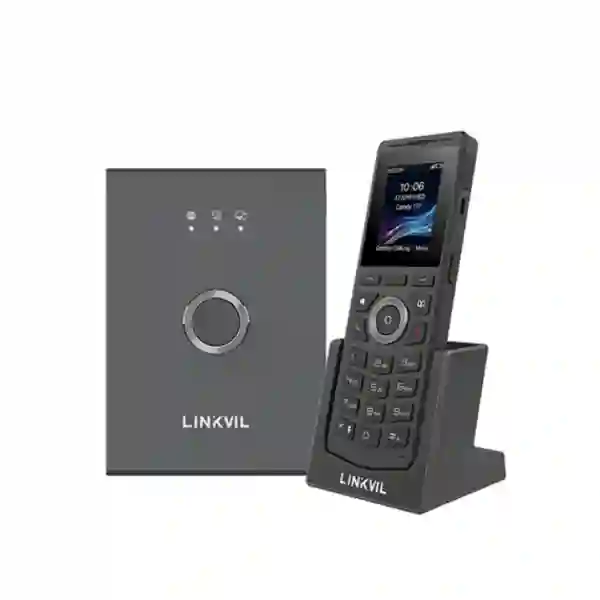
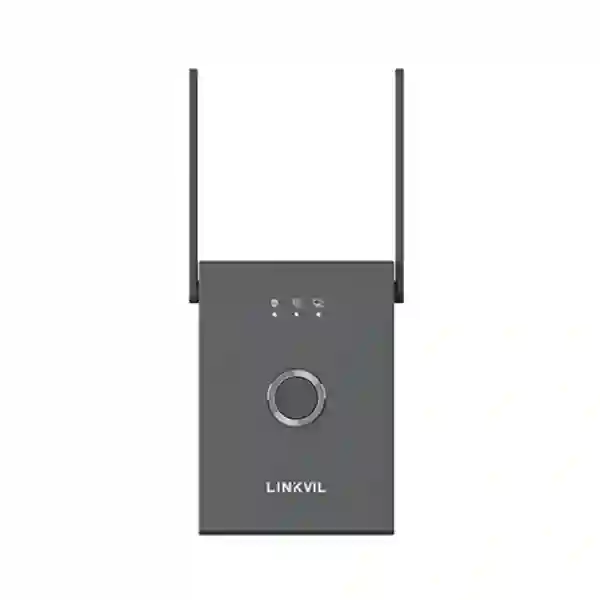
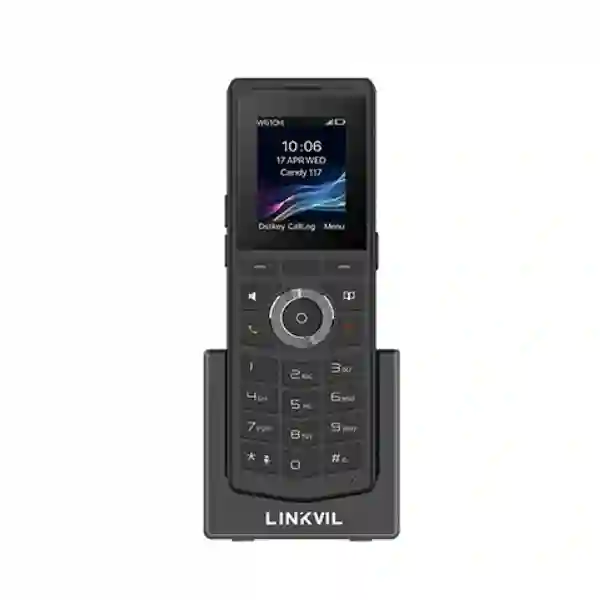
LINKVIL W710H Multi-Cell DECT Base Station
The LINKVIL W710H is the control and radio foundation for a scalable cordless multi-cell voice environment built for organizations whose staff need to move through offices, hotels, warehouses, retail spaces, campuses and operational facilities without treating every room as a separate phone zone. According to Fanvil’s official LINKVIL documentation, the W710H can work as a Manager or Base and supports both single-cell and multi-cell operation. A full multi-cell system can use one W710H manager with up to 20 base stations, up to 300 compatible terminals and up to 200 simultaneous calls. For smaller sites, single-cell mode can support up to 30 terminals and 16 concurrent calls. FourTeck Tanzania can help customers turn those platform capabilities into a practical deployment plan by reviewing coverage zones, LAN readiness, SIP requirements, power, mounting positions, user density and expansion expectations before procurement.
Verified system capacity
Fanvil publishes multi-cell capacity of up to 20 bases, 300 terminals and 200 simultaneous calls, with each base supporting up to 30 handsets and up to 16 simultaneous calls. These are platform limits, not a substitute for site design: actual placement should still account for walls, shelving, machinery, floor transitions and user movement.
Roaming for mobile teams
The system is designed for seamless roaming and switching between base stations. That makes the W710H relevant to organizations where employees move while remaining reachable, such as hospitality teams, warehouse supervisors, maintenance personnel, retail managers and staff covering multiple departments or floors.
SIP and management
The official platform supports up to 20 SIP servers and 300 SIP accounts, along with centralized configuration, firmware, contacts and call-record management for connected endpoints. Before deployment, confirm PBX interoperability, numbering, call flows, VLAN policy and provisioning method.
What the LINKVIL W710H solves
Conventional single-base cordless systems are often easy to deploy but can become restrictive when a business expands across large floor areas or multiple operational zones. Installing unrelated cordless islands can create inconsistent extension behavior, separate administration and dead zones between areas. The W710H is designed for a coordinated architecture in which multiple radio cells function as one managed communications environment. That architecture is valuable when users need mobility but the organization still wants SIP-based business calling, centralized account management and controlled growth.
The design decision should begin with movement and call-load patterns rather than with a simple device count. A warehouse may need fewer users but broad radio coverage around racks and loading zones. A hotel may need many mobile staff and predictable roaming across floors. A multi-storey office may require carefully placed bases near stairwells, corridors and department boundaries. FourTeck can help prepare a bill of materials and deployment concept from those operational realities rather than assuming the maximum published range will be achieved in every building.
| Area | Officially published capability | Planning implication |
|---|---|---|
| Operating roles | Manager or Base | Choose topology before provisioning and mounting. |
| Multi-cell scale | Up to 20 bases, 300 terminals, 200 simultaneous calls | Suitable for phased deployments where growth is expected. |
| Per-base capacity | Up to 30 handsets and 16 simultaneous calls | Busy departments may require density planning even when radio coverage is strong. |
| SIP | Up to 20 SIP servers and 300 SIP accounts | Confirm PBX, SIP trunk and extension design before rollout. |
| Security | SRTP, TLS and HTTP/HTTPS-related management support documented by vendor | Use secure provisioning, credentials and network segmentation appropriate to policy. |
Deployment, integration and buying guidance
A successful W710H project is a voice-and-network project, not only a hardware purchase. Start by documenting how many mobile users need handsets, where they spend time, where calls are busiest and whether calls must continue while users move between zones. Then review the wired network that will connect base stations: Ethernet availability, switch capacity, VLANs, addressing, PoE or local power requirements, firewall policy and access to the chosen SIP platform. For broader infrastructure planning, FourTeck Tanzania’s integrated IT and telecom overview explains how voice fits with switching, security and wireless services, while the services page outlines design, installation, configuration and support activities.
Do not size only from the theoretical maximum signal distance. The official Fanvil documentation lists region-dependent ranges, and local construction can reduce practical coverage. Concrete cores, metal shelving, elevator shafts, storage racks, plant equipment and dense walls can all affect radio propagation. A site survey or staged placement test is therefore more useful than simply spacing bases by a fixed number of metres. In addition, administrators must choose the correct country or region setting because supported operating frequencies differ by region.
For related infrastructure, explore the FourTeck Tanzania technology shop for complementary network and communications products, and use the Tanzania contact page to request a quotation built around handset quantity, base count, PBX environment and installation scope. Customers with broader regional projects may also use FourTeck Uganda, FourTeck Kenya, FourTeck UAE, FourTeck Ghana and FourTeck Nigeria when a deployment spans several markets.
LINKVIL W710H Multi-Cell DECT Base Station Tanzania
For Tanzanian organizations, the LINKVIL W710H is most relevant when cordless business voice needs to extend beyond a small office without turning into a collection of isolated base stations. Hotels, logistics operations, distribution centers, campuses, healthcare support teams, retail facilities and large offices can all have staff who move constantly while still needing to receive internal and external calls. A multi-cell architecture gives the project a defined path for coverage and capacity growth. The key is to begin with the building and workflow. Identify entrances, service corridors, offices, stores, yards, loading areas and staff-only spaces where voice communication matters, then place and test bases to create overlapping coverage for roaming. Published maximum range figures should be treated as design references, not promises for every site.
Procurement in Tanzania should also account for the complete voice environment. Confirm the compatible LINKVIL handsets required, the SIP or IP-PBX platform, extension plan, switch ports, power approach, VLAN policy and internet or WAN dependencies. If the organization already operates a PBX, document its vendor, firmware level, SIP registration method and security requirements before ordering. If the PBX will also be replaced, the W710H can be assessed as part of a broader communications refresh so call routing, reception workflows, mobile users and branch connectivity are designed together. FourTeck Tanzania’s home page includes guidance on IP PBX and VoIP communication planning and business IP phone deployment, which are directly related to a W710H project.
Before requesting a quote, prepare the number of users, expected simultaneous calls, floor plans if available, approximate dimensions, wall materials, existing network switch models, PBX details and growth expectations. This makes it easier to estimate whether a single-cell configuration is sufficient or a multi-cell design is justified. It also helps separate hardware quantity from installation and configuration services, producing a clearer procurement comparison.
LINKVIL W710H Multi-Cell DECT Base Station Dar es Salaam
Dar es Salaam buyers commonly need communications systems that can support busy commercial sites with mixed office, warehouse, hospitality and customer-facing areas. The W710H can fit this requirement when mobility matters more than a desk phone at every workstation. In a hotel, housekeeping, engineering, security and duty managers may move between floors and service zones. In a warehouse or importer facility, supervisors may cross receiving, storage and dispatch areas. In an office campus, IT and facilities personnel may need extensions while moving between buildings or departments. The multi-cell design allows coverage to be expanded with additional bases while maintaining centralized management.
For a Dar es Salaam deployment, physical construction should be considered early. Concrete structures, metal shelving, plant rooms, lifts and large open yards create very different radio conditions. A base that covers a large open space may perform very differently through reinforced walls. Rather than buying the maximum number of bases immediately, a sensible project can combine a floor-plan review with staged testing. The goal is to create intentional overlap where users move between cells while also ensuring each busy zone has enough call capacity. Each W710H base has a published limit of up to 30 handsets and 16 simultaneous calls, so high-density areas need capacity analysis in addition to coverage analysis.
Network readiness is equally important. Voice traffic benefits from organized switching, appropriate VLAN design and stable connections to the SIP platform. For customers reviewing the LAN at the same time, FourTeck Tanzania’s network switching and LAN infrastructure guidance explains why PoE budgets, uplinks, VLANs and documentation matter. When requesting a Dar es Salaam quotation, include user count, building type, operating hours, PBX details, required handsets and whether installation, configuration, testing and handover documentation are expected.
LINKVIL W710H Multi-Cell DECT Base Station Mwanza
In Mwanza, the W710H can serve organizations that need cordless voice across business premises where workers are not tied to desks. Distribution businesses, hospitality properties, healthcare support facilities, educational sites and multi-department offices can benefit from a planned multi-cell system when employees need consistent extension access while moving. The important purchasing question is not simply how many handsets are required today, but how those users move and whether the site is likely to expand. A single-cell deployment may be enough for a compact facility, while multi-cell mode provides a path to broader coverage and higher aggregate capacity.
A Mwanza project should map operational zones before equipment quantities are fixed. Warehouses need attention to rack aisles and loading doors. Hotels need service areas as well as guest-facing corridors. Multi-floor offices should consider stairs, lift lobbies and transition points where roaming is most likely to occur. Outdoor coverage may also matter for yards or adjacent buildings, but the published regional maximum range should not replace practical testing because construction materials and interference alter performance. The W710H’s ability to work as Manager or Base gives designers flexibility to build the topology around these conditions.
For procurement, list the existing PBX or hosted voice platform, SIP credentials model, extension count, switch availability and security policy. Decide whether centralized firmware and endpoint configuration will be part of IT operations. If the existing LAN is undocumented, a voice deployment is also an opportunity to label switch ports, document VLANs and identify UPS-backed network components. FourTeck can quote equipment separately from engineering services so Mwanza customers can compare hardware-only requirements with a more complete deployment that includes installation, configuration, testing and administrator handover.
LINKVIL W710H Multi-Cell DECT Base Station Arusha
Arusha has a mix of hospitality, tourism-support, institutional and commercial environments where mobile staff can benefit from cordless business telephony. The W710H is particularly relevant when a site has multiple operational zones and users must remain reachable while moving. For hotels and lodges, communication requirements often include reception, housekeeping, engineering, security and management. For offices and institutions, facilities and technical teams may move across departments or separate buildings. A multi-cell design can provide a more coherent communications layer than deploying unrelated cordless systems in each area.
Planning should begin with user roles and call flows. Reception may need to transfer calls to mobile staff; maintenance teams may need internal extensions; managers may need external calling through the existing SIP platform. The system can support large numbers of SIP accounts, but those accounts still need a clear numbering and permission model. Determine which handsets need external calling, which users should receive hunt-group calls and what should happen after hours. These decisions influence PBX configuration more than the radio layer itself.
Coverage planning in Arusha should be based on the specific site. Properties with thick masonry, landscaped outdoor areas or separated buildings can require a different base layout from an open-plan office. Confirm cable routes and power options before final mounting. If the project also includes wireless data services, keep Wi-Fi planning distinct from the LINKVIL cordless voice design even though both depend on the LAN. FourTeck Tanzania’s business Wi-Fi planning section is useful for understanding that distinction. A quotation request should include a floor plan where possible, estimated users per zone and expected future expansion.
LINKVIL W710H Multi-Cell DECT Base Station Dodoma
Organizations in Dodoma considering the LINKVIL W710H should evaluate it as a mobility layer for business voice, particularly where teams work across administrative, institutional, hospitality or service-oriented premises. The platform’s scalable architecture allows a project to start smaller and expand as coverage or user requirements increase. That is useful where an organization is opening new floors, adding departments or consolidating communications under a single SIP-based voice system. The objective should be consistent calling behavior across the site rather than simply extending radio distance.
A procurement plan should distinguish user capacity from concurrent call capacity. Not every registered handset will be on a call at the same time, but departments such as reception, support or operations may experience concentrated busy periods. Fanvil publishes up to 16 simultaneous calls per base and up to 200 across a full multi-cell system. Those figures provide upper limits for design, but the actual topology should account for where calls happen. A base covering a quiet corridor is not equivalent to one serving a busy operations zone. Coverage overlap for roaming must also be maintained.
For Dodoma projects, collect information about existing network switches, available Ethernet runs, rack locations, UPS capacity, PBX platform and security policies. If new cabling is needed, it is better to plan base positions and cable paths together than to mount devices wherever ports happen to exist. FourTeck Tanzania’s integrated service approach can combine communications with LAN and structured infrastructure planning. Customers can use the quotation and contact page to share user counts, floor plans, existing telephony details and required project scope.
LINKVIL W710H Multi-Cell DECT Base Station UAE
For UAE organizations, the LINKVIL W710H offers a structured way to provide cordless SIP communications across environments such as offices, hotels, warehouses, retail operations and mixed-use facilities. The platform supports manager/base roles, multi-cell scaling and seamless roaming, making it suitable for sites where mobile staff need to stay on the same communications system as desk-based users. Buyers should confirm the correct regional model and country settings before deployment because operating frequency bands are region-dependent.
The UAE market often includes large, modern premises with dense Wi-Fi, extensive structured cabling and centralized IT operations. That does not remove the need for radio planning. Warehouses with metal racking, hotels with reinforced cores and multi-level parking areas can create coverage challenges. The W710H design should therefore be based on site geometry, user movement and call density rather than simply applying the maximum published outdoor range. Overlapping radio cells are especially important wherever users are expected to continue calls while walking between areas.
Integration planning should document the SIP platform, extension numbering, codec and security requirements, VLAN design, DHCP or static addressing strategy and endpoint provisioning process. For multi-country organizations, configuration standards should also specify naming conventions and firmware policy so regional sites remain manageable. FourTeck’s UAE presence at FourTeck UAE can support broader regional procurement discussions, while Tanzania-based requirements can remain coordinated through FourTeck Tanzania. A quote request should clearly separate hardware quantity, compatible handsets, installation, commissioning and ongoing support expectations.
LINKVIL W710H Multi-Cell DECT Base Station Uganda
Ugandan businesses evaluating the W710H can use it to create a scalable cordless SIP environment for staff who need mobility across a site. Hotels, education campuses, logistics companies, healthcare support operations and offices with multiple floors are typical examples of where a coordinated multi-cell system can be more useful than isolated cordless phones. The platform can scale to 20 bases and 300 terminals in multi-cell mode, which gives organizations room to design for present needs while preserving an expansion path.
The practical design process should begin with an RF and workflow map. Mark where users work, where calls are busiest, where they move between areas and which zones are critical. Then identify Ethernet and power availability for base stations. Coverage testing should be performed after initial placement, especially around thick walls, large metal structures and building transitions. A clear acceptance test can include successful registration, inbound and outbound calls, roaming through key routes, transfer behavior, audio quality and recovery after network interruption.
Organizations operating across Uganda and Tanzania can also benefit from a consistent extension and configuration standard. A shared numbering plan, administrator documentation and centralized firmware policy reduce support complexity when multiple sites use similar hardware. For Uganda-focused procurement and regional coordination, visit FourTeck Uganda. When preparing a request, include current PBX details, handset quantities, site dimensions, desired roaming zones and whether the requirement covers supply only or a complete installation and commissioning service.
LINKVIL W710H Multi-Cell DECT Base Station Kampala
Kampala organizations often operate from multi-floor offices, hotels, retail complexes and busy commercial facilities where mobile teams need reliable internal communication. The W710H can be a strong fit when a standard single cordless base cannot provide the required combination of coverage and capacity. By coordinating multiple cells under one manager, the system allows organizations to extend service across larger areas while preserving roaming behavior for compatible handsets.
The most useful pre-sales exercise is to separate coverage problems from capacity problems. A floor may have excellent signal but still need another base if too many simultaneous calls are expected in that area. Conversely, a lightly used corridor may need a strategically placed base simply to preserve roaming between two busy departments. Published system limits help establish the ceiling, but the design should be based on actual traffic. Reception, customer service and operational teams often generate a different call profile from maintenance or security users.
Kampala deployments should also evaluate switch connectivity, VLANs and secure management access. The W710H supports centralized management capabilities, so administrators should define who can access the management interface, how credentials are stored and how firmware updates are handled. Where a PBX serves multiple branches, confirm WAN behavior and failover expectations before deployment. A detailed quotation should list manager/base quantities, handset quantities, cabling or switch changes, installation, configuration, user testing and documentation so costs can be compared on equal scope.
LINKVIL W710H Multi-Cell DECT Base Station Arua
For organizations in Arua, the W710H can be considered where staff mobility and centralized voice management are priorities, particularly for hotels, institutional facilities, distribution operations, clinics and expanding offices. Smaller sites may be able to use single-cell operation, while businesses with separated departments or larger compounds can design a multi-cell topology. The advantage of starting with a scalable architecture is that future expansion can be planned rather than requiring a complete replacement of an isolated cordless system.
Arua procurement should account for infrastructure conditions as carefully as device specifications. Check whether network switches have enough ports, whether base locations have reliable Ethernet and power, and whether critical communications equipment is protected by UPS. If internet connectivity is used to reach a hosted SIP platform, understand how a WAN outage affects calling and whether any local calling functions must remain available. These operational questions can be more important than headline range numbers.
For sites with limited documentation, use the W710H project to create a simple network and telephony record: base locations, IP addresses, switch ports, VLAN IDs, administrator access, SIP server settings, handset assignments and firmware versions. This improves future troubleshooting and makes expansion easier. When requesting a quotation, specify whether the business wants hardware only, remote configuration assistance or onsite implementation. Regional procurement can be coordinated with FourTeck Uganda while cross-border requirements can be aligned with the Tanzania team for a common technical standard.
LINKVIL W710H Multi-Cell DECT Base Station Mbarara
Mbarara businesses can use the LINKVIL W710H where teams need cordless SIP extensions across operational spaces that exceed the practical coverage of a small single-base solution. Hospitality properties, warehouses, healthcare support sites, retail operations and offices with dispersed departments are examples. The system’s ability to scale through multiple base stations is useful when an organization expects growth or has distinct areas that need continuous roaming.
Good design begins with a count of mobile users and an estimate of simultaneous calling by zone. If many handsets are concentrated around reception, operations or customer service, capacity may determine base placement. If users are spread widely but call infrequently, coverage may be the main driver. Both factors should be captured in the bill of materials. The W710H’s published limits of up to 30 handsets and 16 simultaneous calls per base provide useful boundaries, while the full multi-cell platform increases overall system capacity.
Network and power resilience should also be discussed. A cordless handset can remain charged, but calls still depend on the base stations, Ethernet switching and PBX path. Where voice is operationally important, consider UPS protection for network equipment, documented switch ports and an agreed recovery process. A FourTeck quotation for Mbarara can therefore include more than device pricing: it can identify cabling, switch upgrades, configuration, testing and administrator handover as separate items. That approach helps the customer decide which services are necessary and avoids hidden assumptions during installation.
LINKVIL W710H Multi-Cell DECT Base Station Gulu
Gulu organizations looking for a business-grade cordless voice system can evaluate the W710H when they need roaming between work areas, centralized administration and a path to larger deployments. Institutions, hospitality sites, service organizations and logistics operations can benefit from assigning mobile staff SIP extensions without requiring a desk phone in every location. The system architecture is especially useful when users cross departments or buildings during normal work.
The design should account for physical layout and operational priorities. Identify areas where a dropped call would be most disruptive, such as reception-to-service routes, loading operations or security patrol paths, and ensure planned cell overlap there. Test doors, stairwells and transitions between indoor and outdoor areas rather than checking signal only at desks. If the site is expected to expand, reserve switch capacity and cable paths for additional bases so the future phase does not require redesigning the network.
PBX integration should be validated before full rollout. Confirm how accounts are registered, which call features are needed, whether internal extensions should operate during internet interruptions and how voicemail, hunt groups or queues are configured. Administrators should also establish a firmware and backup routine. For purchasing, provide FourTeck with the proposed number of handsets, expected simultaneous calls, building description and required services. A detailed scope enables a quote that distinguishes base hardware, compatible terminals, network work and professional services rather than presenting one undifferentiated figure.
LINKVIL W710H Multi-Cell DECT Base Station Kenya
Kenyan enterprises can deploy the LINKVIL W710H as part of a SIP-based mobility strategy where conventional desk phones do not match the way staff work. Large offices, warehouses, hospitality environments and campuses often need users to carry a handset while moving between areas. A coordinated multi-cell design allows this mobility while keeping extensions under the same voice system and management framework.
A Kenya project should evaluate both current and planned user counts. Because the platform can scale substantially, it may be tempting to oversize from day one. A better approach is to establish the manager role, deploy enough bases for initial coverage and capacity, and preserve documented expansion points. Site survey results, cabling routes and switch-port reservations can make later growth straightforward. The design should also verify regional operating settings so the correct frequency configuration is used.
Customers with branches in Nairobi, Mombasa or other Kenyan locations can standardize naming, extension ranges and management procedures across sites. That makes central support easier, especially when the same PBX platform is used. For Kenya-specific procurement and complementary communications infrastructure, visit FourTeck Kenya. A cross-border organization can then maintain consistent technical standards between Kenya and Tanzania while adapting base placement to each building. Quote requests should include handset quantities, floor plans, PBX details, switch information, installation expectations and any requirement for testing or training.
LINKVIL W710H Multi-Cell DECT Base Station Kuwait
In Kuwait, the W710H can support businesses that require cordless SIP communications across offices, hotels, warehouses, retail sites and service facilities. The key benefit of a multi-cell approach is that user mobility and system growth can be managed within one architecture rather than by adding disconnected cordless systems. Organizations should ensure the correct region setting and hardware variant are used because the vendor documents different operating bands by country or region.
Building characteristics can have a major impact on deployment. Reinforced structures, service cores, metal storage systems and basement areas can reduce practical radio reach. Coverage testing should therefore include the routes people actually walk during calls. In hospitality, that may mean guest-floor service corridors and back-of-house areas. In warehousing, it may mean aisles, loading bays and offices. The design should also consider call density, because a busy operational zone may reach concurrent-call limits before it reaches handset registration limits.
Kuwait buyers should document PBX and network requirements before purchase: SIP server, extension count, security settings, VLAN policy, switch connections and management access. If the site relies heavily on voice, include UPS-backed network components and recovery procedures. A well-prepared request for quotation should distinguish the W710H manager/base units, compatible handsets, mounting and cabling, configuration, testing and support. This creates a procurement scope that can be compared accurately and avoids assuming that hardware supply alone includes engineering services.
LINKVIL W710H Multi-Cell DECT Base Station Ghana
Ghanaian organizations can consider the W710H for business environments where staff move across large premises but still need dependable SIP extension access. Hospitality, logistics, institutional campuses and service organizations can use multi-cell deployment to create broader coverage and roaming than a small cordless system can normally provide. The platform’s scale supports phased growth, which can be useful for companies that plan to add users or expand facilities over time.
A site plan should show operational zones, expected user counts and the paths staff take during calls. Radio coverage should be validated around concrete walls, storage areas, stairs and transitions between buildings. The published signal range is valuable for understanding the technology’s potential, but it is not a substitute for onsite verification. Capacity should be reviewed separately so busy areas have enough simultaneous-call headroom. Where several departments use different hunt groups or call queues, PBX configuration must also be aligned with handset deployment.
For Ghana-focused procurement, FourTeck Ghana can support regional requirements, while organizations operating in both Ghana and Tanzania can standardize technical documentation and administration. Before quoting, provide the voice platform, number of compatible handsets, expected base count, site dimensions, network switch details and whether installation or testing is required. This lets the proposal address the complete deployment instead of listing hardware without the context needed to make it work reliably.
LINKVIL W710H Multi-Cell DECT Base Station Nigeria
Nigerian enterprises with large offices, hospitality sites, warehouses, campuses or multi-zone service operations can use the LINKVIL W710H to extend SIP calling to mobile staff. A multi-cell system is most valuable when people regularly move across coverage areas and need consistent extension identity and call continuity. The W710H supports centralized management and substantial system scale, making it suitable for both current deployments and planned growth.
Network resilience deserves special attention in voice projects. Base stations depend on wired connectivity to the communications environment, so switch design, power backup and WAN architecture can affect service availability. If the SIP platform is cloud-hosted, document how internet outages are handled. If the PBX is on premises, ensure routing, firewall and VLAN policies are clearly defined. Organizations should also keep configuration backups and a record of device roles, IP addresses, switch ports and firmware versions.
For Nigeria-specific purchasing, FourTeck Nigeria can coordinate local-market requirements while multinational customers can maintain common standards across African sites. A useful RFQ includes number of users, expected concurrent calls, floor plans, critical roaming routes, existing PBX details, required handsets and whether professional installation is expected. This information helps determine whether the project should begin as a single-cell system or whether multi-cell design is justified immediately, and it gives the buyer a clearer basis for comparing proposals.
LINKVIL W710H Multi-Cell DECT Base Station Seychelles
In Seychelles, hospitality and service-oriented organizations may find the W710H especially useful where teams need cordless voice across guest areas, back-of-house zones, offices, stores and maintenance spaces. Resorts and larger properties often have dispersed operations, so the design should focus on where staff actually move and where uninterrupted calls matter. The W710H multi-cell architecture provides a framework for extending coverage while keeping compatible terminals on a centrally managed system.
Property layout can be more important than raw size. Separate buildings, landscaped paths, reinforced service structures and changes in elevation can influence radio performance. Outdoor maximum-range figures should therefore be treated cautiously; real coverage should be checked onsite and base locations chosen around reliable overlap. If the property has remote villas or detached operational buildings, the network path to each base also needs consideration, including cabling, switching and protected power.
Hospitality buyers should map call flows before configuration. Reception may transfer calls to housekeeping or engineering, while security and duty management may need group ringing or priority access. These features are typically handled through the SIP/PBX environment, so the handset and base project should be coordinated with the telephony platform. A procurement brief for Seychelles should identify the number of mobile users, operational zones, PBX details, existing LAN, required installation and support expectations. This allows the W710H to be evaluated as part of a complete communications workflow rather than as an isolated radio device.
Related FourTeck Tanzania resources
A W710H deployment touches several infrastructure areas. Review FourTeck Tanzania’s integrated technology portfolio for the overall design approach; browse the technology shop for complementary voice and network products; consult implementation and support services when installation is required; use the IP PBX and VoIP guidance to plan SIP call handling; see the IP phone guidance for endpoint planning; review switching and LAN considerations for base connectivity; and consult wireless infrastructure planning when the same site also needs business Wi-Fi. These links are useful because a reliable cordless voice system depends on the PBX, LAN, power and administration around it.
Frequently asked questions
How many W710H base stations can a multi-cell system support?
Fanvil publishes support for one W710H manager with up to 20 base stations in a multi-cell system. The system can scale to up to 300 compatible terminals and up to 200 simultaneous calls. Actual quantity should be designed from coverage and call density rather than automatically using the maximum.
Can the W710H work as a single-cell system?
Yes. Fanvil documents both single-cell and multi-cell modes. In single-cell mode, the manager can support up to 30 terminals and 16 simultaneous calls, making it suitable for smaller sites that may not require multiple radio cells.
Does it support roaming between bases?
Yes. Seamless roaming and switching between base stations is a core published feature of the LINKVIL cordless multi-cell system. Correct base placement and overlapping coverage remain important to achieve dependable real-world roaming.
What information is needed for a quotation?
Provide the number of mobile users, expected simultaneous calls, building type or floor plan, existing PBX or SIP service, network switch details, desired coverage areas and whether installation, configuration, testing and training are required. This allows the quotation to reflect the complete project scope.
Quotation checklist
Prepare handset quantity, target base locations, simultaneous-call estimate, floor plans, PBX/SIP platform, switch and VLAN details, cabling availability, power/UPS requirements, installation scope, testing criteria and growth expectations. A complete checklist shortens design cycles and reduces procurement ambiguity.
Decision recap
Choose the W710H when you need a centrally managed cordless communications architecture with room to expand, especially where staff move across a larger site. Choose the number and placement of bases from real coverage and call-density requirements, then validate PBX, LAN, regional frequency settings and endpoint compatibility before rollout.
Consult FourTeck Tanzania
FourTeck can help translate your building layout and user requirements into a practical LINKVIL W710H design. Share the number of users, site layout, current telephony platform, network details and required services. The response can then focus on the correct base-station quantity, compatible endpoints, integration work and implementation scope instead of offering a generic device-only estimate.



Reviews
There are no reviews yet.