
Yealink SIP-T53W Tanzania
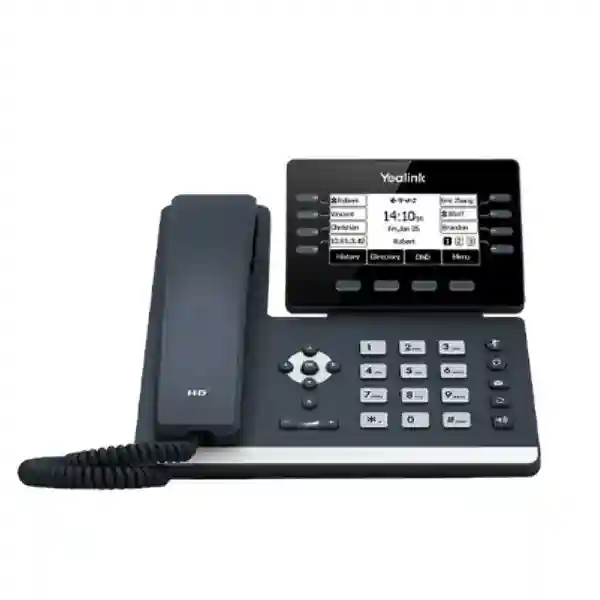
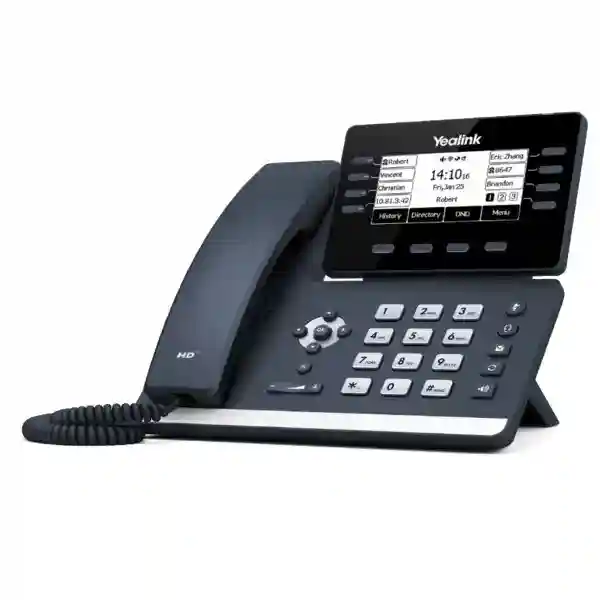
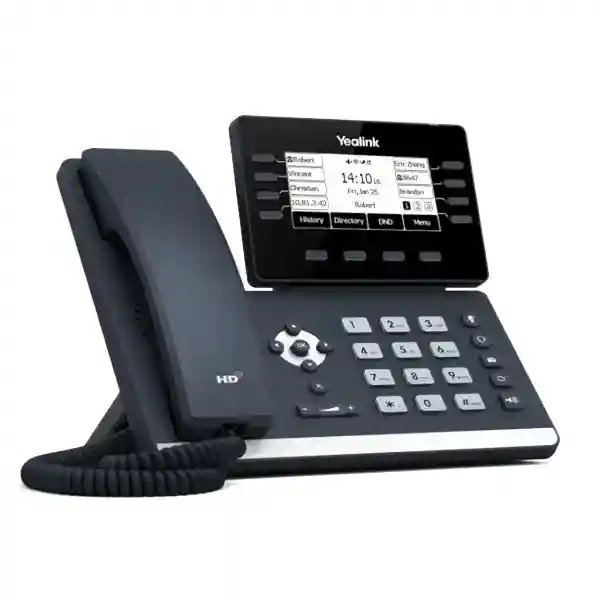
The Yealink SIP-T53W is a business-class SIP desk phone built for professionals who need a practical combination of wired networking, wireless flexibility, expandable call handling and centralized management. Its adjustable 3.7-inch 360 × 160 graphical display, up to 12 VoIP accounts, eight line keys, dual-port Gigabit Ethernet and IEEE 802.3af Power over Ethernet make it suitable for structured office deployments. Built-in Bluetooth 4.2 and dual-band 2.4 GHz/5 GHz Wi-Fi help organizations support headsets and more flexible placement, while the USB 2.0 port can be used for compatible wired or wireless USB headsets, USB call recording and Yealink EXP50 expansion modules. For Tanzanian organizations planning an IP telephony refresh, the value of the SIP-T53W is not only the handset itself; the quality of the final deployment depends on SIP platform compatibility, voice VLAN design, PoE switching, internet stability, security policy, provisioning and user-role mapping.
Why the Yealink SIP-T53W fits modern business telephony
A business desk phone must do more than place and receive calls. In a real office it becomes part of a larger communication system that includes the IP PBX or hosted SIP platform, switches, DHCP, DNS, VLANs, QoS, firewall policies, headsets and user workflows. The SIP-T53W is designed around that environment. It supports core business telephony functions including hold, mute, transfer, call waiting, forwarding, speed dial, voicemail, call pickup, Busy Lamp Field and five-way conferencing. It also supports SIP v1 and SIP v2, SRTP for voice protection, TLS, HTTPS management, 802.1X, IPv6, VLAN discovery methods and auto-provisioning options that are useful for standardized deployments.
For organizations comparing entry and mid-range IP phones, the SIP-T53W stands out because wireless features are integrated rather than dependent on separate Wi-Fi and Bluetooth dongles. That can simplify desktop planning for users who need Bluetooth headsets or offices where Ethernet is not available at every desired phone position. Wired Gigabit Ethernet and PoE remain the preferred approach for predictable voice quality and power management in many corporate environments, but the built-in wireless options provide valuable flexibility. Buyers should confirm compatibility with their PBX, SIP service, headset requirements and provisioning method before ordering a large fleet.
Clear business audio
Yealink HD voice, full-duplex speakerphone, Acoustic Shield and Smart Noise Filtering are designed to improve speech clarity in normal office environments. Correct LAN and WAN quality still matters because packet loss, congestion and jitter can degrade even a capable endpoint.
Flexible connectivity
Dual-port Gigabit Ethernet allows the phone to sit between the access switch and a nearby PC where appropriate. Built-in Wi-Fi and Bluetooth support wireless network placement, Bluetooth headsets and mobile contact synchronization.
Expandable call handling
The USB 2.0 port supports compatible headset use, USB recording and up to three Yealink EXP50 expansion modules. That makes the platform useful for reception, administrative and supervisory roles needing more programmable keys.
Verified Yealink SIP-T53W specifications
| Display | 3.7-inch 360 × 160 graphical LCD with backlight; adjustable screen |
| VoIP accounts | Up to 12 |
| Line keys | 8 line keys with LED; programmable across three pages |
| Ethernet | Dual-port Gigabit Ethernet |
| Power | IEEE 802.3af PoE, class 2; optional external AC adapter |
| Wireless | Built-in Bluetooth 4.2 and dual-band 2.4 GHz/5 GHz Wi-Fi |
| USB | 1 × USB 2.0 for compatible headsets, USB recording and EXP50 expansion |
| Conference | Up to 5-way conferencing |
| Phonebook | Local phonebook up to 1,000 entries; XML/LDAP remote phonebook support |
| Security and network | SRTP, TLS, HTTPS, 802.1X, IPv6, VLAN/QoS, OpenVPN and supported provisioning mechanisms |
PBX, network and deployment planning
The SIP-T53W should be evaluated as an endpoint in a complete voice architecture. Before a rollout, confirm SIP registration parameters, codecs, voicemail integration, BLF behavior, transfer methods, conferencing expectations, directory requirements and the provisioning workflow used by the selected PBX or hosted service. For larger deployments, automatic provisioning can reduce manual configuration and help keep firmware, line assignments and feature keys consistent.
On the network side, a dedicated voice VLAN can separate phone traffic from general data traffic, while QoS can help prioritize delay-sensitive voice packets where congestion exists. PoE-capable access switches can reduce dependence on individual power adapters and simplify UPS protection because the switch and PBX infrastructure can be backed up centrally. The Tanzania FourTeck portfolio also covers IP PBX, business IP phones, managed switching, Wi-Fi, structured cabling and integrated IT infrastructure, which are directly related to a complete SIP-T53W deployment.
Yealink SIP-T53W Tanzania
For businesses in Tanzania, the Yealink SIP-T53W is a practical option when the requirement is a professional desk phone that supports standard SIP environments while giving users more connectivity than a basic entry-level handset. Procurement teams may be replacing analogue extensions, refreshing an older IP phone fleet, opening a new office or standardizing phones across several branches. In each case, the buying decision should start with the existing or planned PBX platform. The phone supports up to 12 VoIP accounts and a broad set of business call features, but the exact user experience depends on how those features are implemented by the PBX, SIP trunk and provisioning profile.
Tanzanian office environments can differ significantly in network design, power stability, internet quality and building layout. Where structured Ethernet cabling and PoE switching are available, a wired connection is usually the most predictable deployment path because the phone receives both network connectivity and power through the access layer. Where cabling constraints exist, the built-in dual-band Wi-Fi can offer useful flexibility, although wireless voice should still be planned around signal coverage, channel use and traffic load. Bluetooth 4.2 can support compatible wireless headsets for managers, reception staff and service teams who need mobility around a desk.
The SIP-T53W is also relevant for organizations that want a consistent device standard across departments. General users may need only a few extensions and transfer keys, while reception or supervisory users may benefit from BLF keys or EXP50 expansion modules. Central provisioning can reduce the amount of manual setup required across many phones. When requesting a quotation, provide the expected phone quantity, PBX make or hosted voice service, PoE switch availability, headset requirement, need for expansion modules and whether installation or configuration is required. This allows the bill of materials to reflect the complete voice environment rather than only the handset. For broader regional projects, FourTeck’s Africa technology solutions network can support discussion of cross-border standards without assuming identical conditions in every country.
Yealink SIP-T53W Dar es Salaam
Dar es Salaam organizations commonly operate in office towers, mixed commercial buildings, retail locations, hospitality properties, logistics environments and multi-floor corporate sites. In these settings, an IP phone rollout should be coordinated with the LAN rather than treated as a collection of independent handsets. The SIP-T53W’s dual-port Gigabit Ethernet is useful at desks where a phone and computer share a network position, provided the switching and VLAN design are configured correctly. PoE can simplify deployment because the phone can be powered by the network switch, reducing desktop power adapters and making centralized UPS protection easier to plan.
For call-heavy teams in Dar es Salaam, headset selection and programmable keys often matter as much as the phone’s display. Built-in Bluetooth 4.2 can support compatible Bluetooth headsets, and the USB port supports compatible wired or wireless USB headset use. Front desk, sales, customer service and administrative teams can use BLF, transfer, hold, pickup and voicemail functions where supported by the PBX. Organizations that need greater visibility of extensions can add compatible EXP50 expansion modules. Because the SIP-T53W supports up to 12 VoIP accounts, it can also suit users who manage more than one line identity or departmental extension.
A Dar es Salaam quotation should include details about internet connectivity, the SIP trunk or cloud PBX, current switches, cabling category, number of desks and any branch connectivity. If the business operates from several floors or buildings, voice VLANs, QoS and switch uplinks should be reviewed before deployment. Wi-Fi can be useful where Ethernet is difficult to reach, but radio coverage and congestion must be checked because consistent voice depends on low packet loss and delay. FourTeck Tanzania’s broader focus on telephony, switching and cabling makes it possible to frame the phone as part of a complete communications design rather than a standalone purchase.
Yealink SIP-T53W Mwanza
Businesses in Mwanza may be planning IP telephony for commercial offices, distribution operations, professional services, hospitality sites, healthcare environments or growing branch networks. In these situations, the SIP-T53W can provide a standardized desktop endpoint with enough capacity for typical professional users while remaining expandable for more demanding roles. Its 3.7-inch adjustable display provides clear access to line information and menus, while eight line keys and programmable functions can support commonly used extensions, speed dials and call-control features.
The network is a central part of a successful rollout. A business moving from analogue phones should verify that switches support the required number of PoE endpoints and that the PoE budget is sufficient for the complete device count. Voice traffic can be separated in a VLAN, and QoS policies can help preserve call quality when the same links carry file transfers, cloud applications, video meetings and internet browsing. For sites where Ethernet runs are limited, built-in dual-band Wi-Fi creates an alternative connection method, but coverage and interference should be checked before relying on wireless connectivity for many simultaneous phones.
Mwanza customers should also consider how phones will be configured and maintained after installation. Manual setup may be acceptable for a small office, while larger deployments benefit from templated provisioning, documented extension plans and consistent key layouts. IT teams should define user groups such as reception, management, accounts, sales and general staff because each may need different line keys, headset options or call permissions. When seeking pricing, the most useful request identifies quantity, PBX or SIP service, whether PoE is available, whether a power adapter is required, headset preferences, deployment support and desired call features. This prevents gaps between the phone purchase and the operating environment needed for reliable service.
Yealink SIP-T53W Arusha
Arusha businesses often combine local operations with national or international communication, making dependable voice endpoints important for offices, hospitality businesses, travel companies, NGOs, education and professional services. The Yealink SIP-T53W suits organizations that need a conventional business desk phone with built-in Wi-Fi and Bluetooth alongside wired Gigabit Ethernet. This gives IT teams several deployment choices while maintaining a consistent user interface and SIP feature set across the workforce.
For an office connected to a cloud PBX, the main planning questions include internet stability, firewall configuration, SIP signaling, NAT handling, codec policy and call quality under peak traffic. For an on-premises PBX, the design also includes LAN segmentation, server availability, backup power and branch connectivity. The phone supports SIP, SRTP, TLS and common provisioning methods, but secure deployment requires correct configuration on both the endpoint and the communications platform. Strong administrator credentials, appropriate HTTPS access, current supported firmware and controlled network permissions should form part of the rollout standard.
Arusha organizations with front desks or high call volumes may use compatible headsets to improve comfort during long calls. The USB port and Bluetooth capability create options for supported headset types, while EXP50 expansion modules can extend programmable key capacity for users monitoring many extensions. For buyers, it is useful to separate hardware cost from the wider project: phones, PoE switching, cabling, PBX licensing, SIP trunking, installation and support may all be different line items. A well-structured quotation therefore starts with the number of users, call-flow requirements, expected concurrent calls, existing network equipment and future growth. This approach makes it easier to compare solutions on actual deployment readiness instead of comparing handset prices alone.
Yealink SIP-T53W Dodoma
Organizations in Dodoma looking for a business IP phone can use the Yealink SIP-T53W as part of a structured SIP telephony deployment for administrative offices, institutions, professional services and multi-department environments. The phone offers up to 12 VoIP accounts, five-way conferencing, programmable line keys, HD audio functions and a local directory of up to 1,000 entries. These capabilities are useful when users need more than basic dial-and-answer functionality but do not require a large touchscreen endpoint.
A key procurement consideration is whether the organization already has an IP PBX, hosted PBX or SIP trunk provider. The handset itself does not replace the call-control platform. It must register to a compatible service, and business features such as BLF, voicemail, recording and directory integration depend on the PBX configuration. Before ordering a fleet, a test unit can be valuable for validating registration, codec behavior, transfer methods, voicemail keys, directory synchronization and remote provisioning. This is especially important when migrating from an existing vendor or from a mixed phone environment.
Dodoma deployments should also include network and power planning. PoE simplifies endpoint power and makes it possible to protect phones through a central UPS-backed switch. Voice VLANs help separate phones logically from computers and guest devices. Where wireless connectivity is chosen, dual-band Wi-Fi can improve placement flexibility, but access-point coverage and traffic conditions remain important. Procurement teams should request a bill of materials that identifies any optional power adapters, headsets, expansion modules, switch upgrades or cabling work. The most reliable purchasing decision is one that confirms the complete communication path from handset to PBX, network, SIP provider and external callers.
Yealink SIP-T53W UAE
For businesses operating in the UAE, the Yealink SIP-T53W can fit branch offices, corporate departments, reception teams and standardized multi-site telephony environments. The device combines Gigabit Ethernet and PoE with integrated wireless options, which is useful for companies that maintain a common phone standard across different office layouts. In a new office fit-out, wired PoE remains a strong default because it gives predictable network performance and centralized power, while built-in Wi-Fi can provide flexibility for locations where a network outlet is not immediately available.
Cross-border organizations with operations in Tanzania and the UAE should focus on consistent configuration rather than assuming each site will use the same telecom provider. The SIP-T53W can be provisioned with common corporate settings while SIP trunks, numbering plans and emergency calling requirements remain specific to the chosen service and local environment. IT teams can standardize display labels, BLF keys, headset profiles, VLAN policy and security settings, then adapt account credentials and routing for each location. This reduces user training and support complexity across branches.
For UAE projects that involve a wider unified communications or networking requirement, the FourTeck UAE technology solutions site provides a regional reference for related infrastructure and business communication needs. Buyers should confirm phone quantity, PBX compatibility, provisioning method, switch PoE capacity, headset model and whether expansion modules are required. They should also verify licensing or cloud-service fees separately because endpoint hardware and calling-service subscriptions are different parts of the solution. A technical quotation that lists these dependencies is more useful than a handset-only offer because it helps avoid missing components during rollout.
Yealink SIP-T53W Uganda
The Yealink SIP-T53W is relevant to Ugandan organizations modernizing office telephony, building new branch infrastructure or standardizing SIP phones across departments. Its combination of wired Gigabit networking, PoE, integrated Bluetooth, dual-band Wi-Fi and support for up to 12 VoIP accounts gives businesses flexibility in how users connect and manage calls. General office users can use standard call-control functions, while supervisors and reception users can use programmable keys or compatible EXP50 modules where the PBX supports monitored extensions.
Uganda deployments should begin with the voice platform. A hosted PBX may reduce on-site call-control hardware, while an on-premises PBX may be preferred for organizations that need local control or specific integration. In either design, SIP trunk quality, internet resilience, DNS, firewall configuration and network segmentation are important. The SIP-T53W supports security mechanisms such as SRTP and TLS, but security depends on how the complete platform is configured. Endpoint passwords, provisioning access and management interfaces should be controlled carefully.
Organizations with offices in both Uganda and Tanzania can benefit from standardizing handset models and provisioning templates while maintaining local telecom settings at each site. This can simplify training, spares and user moves. FourTeck’s Uganda technology solutions presence is a useful regional reference for related communication and infrastructure requirements. When requesting a quote, provide quantities by site, PBX details, switch models, PoE availability, headset needs, installation scope and any requirement for remote extensions. These details help determine whether the phones can be deployed directly or whether supporting network work should be included.
Yealink SIP-T53W Kampala
Kampala businesses with customer-facing teams, professional offices and growing support departments often need desk phones that balance usability with manageable deployment. The SIP-T53W provides a traditional keypad and adjustable graphical screen rather than a large touchscreen, which can suit users who primarily need reliable calling, transfers, voicemail, conferencing and monitored extensions. Built-in Bluetooth can support compatible headsets for users who spend long periods on calls, while Wi-Fi provides an alternative connectivity option when an Ethernet outlet is not practical.
For a Kampala office, the LAN should be reviewed before installing a large number of phones. Managed PoE switches can power endpoints and support VLAN separation. Voice VLANs help organize traffic and simplify policy, while QoS can be useful when calls share links with cloud applications, backups or video. If phones and computers share the phone’s dual-port Gigabit connection, switchport profiles and VLAN tagging should be configured correctly so each device receives the intended network access. A documented template is valuable for troubleshooting and future expansion.
Procurement teams should also consider user roles. Reception staff may need many BLF keys and perhaps an EXP50 module, whereas individual office users may need only a few line appearances. Managers may value Bluetooth headsets and directory access. IT staff may prioritize auto-provisioning and centralized configuration. A useful quotation therefore maps models and accessories to users rather than automatically assigning identical hardware to every desk. Confirm whether power adapters are required, because PoE environments may not need them. Also verify PBX compatibility, expected SIP accounts and headset interoperability before bulk purchasing.
Yealink SIP-T53W Arua
For organizations in Arua, a dependable IP telephony project may need to place greater emphasis on infrastructure readiness, remote support and resilience. The Yealink SIP-T53W can serve as a standardized SIP endpoint for offices and branches, but successful operation depends on network connectivity, the chosen PBX and stable power for the switching and internet equipment. PoE is useful because phones can receive power from centrally managed switches, allowing the network rack to be protected with UPS capacity instead of relying only on individual desk adapters.
Where a site has limited structured cabling, the phone’s dual-band Wi-Fi can offer flexibility. However, business voice over Wi-Fi should not be planned only by checking whether a signal is visible. Coverage, channel overlap, interference, access-point capacity and the path back to the internet or PBX all influence call quality. A wired connection remains preferable where practical. If a branch connects to a centralized PBX over VPN or WAN links, latency and packet loss should be tested before a large rollout.
Arua buyers can improve procurement accuracy by documenting the branch environment before requesting pricing. Useful details include user count, extension count, internet provider, router or firewall, switch model, PoE capability, cabling availability and whether phones will connect to a local or remote PBX. Organizations should also consider support procedures for password resets, phone replacement, firmware updates and changes to line keys. Standardized provisioning can make remote administration easier. The SIP-T53W’s support for web and automatic provisioning methods allows an IT team to manage configuration more systematically than configuring every endpoint independently.
Yealink SIP-T53W Mbarara
Mbarara businesses evaluating IP telephony may include commercial offices, healthcare providers, education institutions, hospitality operations and branch-based companies. The SIP-T53W can fit these environments when users need a professional SIP desk phone with more line capacity and connectivity than a basic single-purpose endpoint. The adjustable screen, programmable keys, HD audio features and multiple SIP accounts support everyday business communication without requiring a complex touchscreen interface.
The first design question is how calls will be controlled. A compatible IP PBX or hosted voice service must provide extensions, external routing and features such as voicemail or queues. The phone then becomes the user interface to that system. For call-center-like workflows, buyers should confirm whether the selected PBX supports the needed queue, recording and supervisor functions on the handset. For general office use, common needs are transfer, hold, pickup, BLF and voicemail access. Testing these functions before fleet rollout is a good procurement practice.
Network readiness is equally important. PoE switching can simplify installation and power continuity. VLAN and QoS planning can keep voice organized and reduce the effect of congestion. Built-in Wi-Fi is useful where wired ports are not available, but a site survey may be appropriate if many phones will use wireless connectivity. Headset users should confirm exact accessory compatibility before ordering. A quotation request should therefore include not only handset quantity but also PBX type, PoE status, headset preference, expansion-module need and deployment services. This produces a more complete and comparable proposal for the entire telephony requirement.
Yealink SIP-T53W Gulu
Organizations in Gulu can use the Yealink SIP-T53W for structured office telephony where SIP extensions, call transfers, voicemail, conferencing and department line management are required. The handset’s up-to-12-account capacity provides room for users with several identities or lines, while eight illuminated line keys can be configured for frequently used functions. The LCD is adjustable, which can improve viewing at desks with different seating positions and lighting conditions.
For a branch office, telephony reliability depends on more than the endpoint. If the PBX is hosted remotely, internet resilience and firewall configuration become important. If the PBX is on premises, local power, switching, backup and maintenance must be considered. PoE is valuable because it centralizes endpoint power through the switch. If both the switch and internet equipment are protected by UPS, short interruptions may have less impact on calling. The exact resilience outcome depends on the complete network and service design.
Gulu procurement teams should define how phones will be supported after installation. A small environment may use manual configuration, but larger or geographically distributed fleets benefit from consistent provisioning and documented extension assignments. IT administrators should maintain records of MAC addresses, extension numbers, user names, switch ports and locations. This makes replacement and troubleshooting easier. Buyers should also decide whether users need Bluetooth headsets, USB headsets or expansion modules, because these accessories affect both cost and deployment. Requesting a complete bill of materials avoids discovering after delivery that essential supporting items were omitted.
Yealink SIP-T53W Kenya
Kenyan organizations comparing the Yealink SIP-T53W with other business IP phones should focus on functionality, interoperability and deployment cost rather than only the headline handset price. The T53W provides up to 12 SIP accounts, built-in Bluetooth 4.2, integrated dual-band Wi-Fi, Gigabit Ethernet, PoE and USB expansion. Those capabilities make it suitable for professional office users who want a non-touch business phone that can still support wireless headsets, flexible network placement and expansion modules.
In Nairobi and other Kenyan business centers, many IP telephony deployments connect to cloud PBX services, SIP trunks or on-premises platforms. The handset must be tested against the specific environment because supported PBX features can vary. IT teams should verify registration, caller ID, transfer, hold, conferencing, BLF, voicemail, directory integration and any recording workflow. For large fleets, provisioning support can reduce manual configuration and help ensure consistent firmware and security settings. The phone’s dual-port Gigabit Ethernet can also reduce the number of separate switch ports needed at a desk in some layouts, although network design should account for VLANs and device segmentation.
FourTeck’s Kenya technology solutions site can support regional projects where organizations maintain offices in both Kenya and Tanzania. A cross-border standard can use the same handset model and user template while each country retains its own telecom service, numbering and local support arrangements. Buyers should request pricing that clearly distinguishes phone hardware, optional power adapters, headsets, PBX licenses, SIP service, network equipment and installation. This makes vendor comparisons clearer and reduces the risk of selecting a lower handset price that excludes essential deployment components.
Yealink SIP-T53W Kuwait
The Yealink SIP-T53W can support office telephony requirements in Kuwait for organizations that want a standardized SIP endpoint with wired and wireless connectivity. The phone’s Gigabit ports and PoE suit structured corporate LANs, while Bluetooth and Wi-Fi can be useful for headset users or desks where network cabling flexibility is important. Up to 12 SIP accounts provide enough capacity for many professional user roles, including staff who handle more than one line identity.
Businesses operating across Kuwait, the UAE and East Africa may benefit from standardizing endpoints while allowing the PBX and carrier components to differ by site. Configuration templates can define key layouts, security settings, directory sources and user experience. Local SIP credentials and dial plans can then be applied according to each location. This type of standardization makes training easier and can simplify spare-device planning, but it should not replace compatibility testing with the actual voice platform.
For a Kuwait procurement request, specify the deployment size, PBX model or cloud service, PoE availability, headset requirements and whether any users require EXP50 expansion. Confirm whether power adapters are needed because PoE installations may not require individual adapters. If phones will be connected by Wi-Fi, verify wireless coverage and security policies. If the organization has a high number of simultaneous calls, assess internet or WAN capacity and SIP trunk sizing separately from the handset purchase. These steps help ensure that the selected phones can be integrated into a voice solution that performs predictably rather than being purchased as isolated hardware.
Yealink SIP-T53W Ghana
Ghanaian organizations planning office voice systems can consider the Yealink SIP-T53W where they need a professional desk phone with multiple SIP accounts, Gigabit networking, PoE and built-in wireless features. It is particularly useful for businesses moving toward centralized IP telephony because it supports automatic provisioning methods and common enterprise network functions. The phone can therefore be part of a standardized rollout across departments rather than configured differently at every desk.
For offices in Accra or branch locations, call quality depends on the path between the handset and the PBX. If the service is cloud-hosted, the organization should evaluate internet stability, router performance, firewall rules and QoS. If the PBX is located at the office, local network segmentation and backup power become more prominent. PoE switches can simplify endpoint power and reduce adapter clutter. The SIP-T53W also supports wired and wireless headset approaches, which can be useful for reception, sales and service users who need hands-free operation.
Procurement should begin with a clear user-role matrix. Basic users may need standard calling and voicemail, managers may need Bluetooth headsets and several SIP identities, while reception teams may need many monitored extensions and an EXP50 module. Mapping requirements before ordering avoids overbuying accessories for every employee while still equipping high-use roles correctly. A complete request for quotation should include quantities, locations, current PBX, SIP provider, switch infrastructure, cabling, headset preference and required installation services. Organizations with several countries can also standardize naming, key layouts and provisioning while keeping local telecom requirements separate.
Yealink SIP-T53W Nigeria
For Nigerian businesses, the Yealink SIP-T53W can fit corporate offices, professional firms, customer-facing teams and branch environments requiring a capable SIP desk phone. Its support for up to 12 accounts, five-way conferencing, Gigabit Ethernet, PoE, dual-band Wi-Fi and Bluetooth gives IT departments flexibility when assigning devices to different business roles. The phone’s traditional interface can also make adoption straightforward for users transitioning from older digital or analogue systems.
Large Nigerian cities and multi-site businesses may have complex connectivity environments, so voice deployment should include WAN resilience and network segmentation. A phone can only perform as well as the route to the PBX or SIP provider. Packet loss, jitter, overloaded firewalls and congested uplinks can reduce call quality. IT teams should use managed switches, voice VLANs and QoS where appropriate and should ensure that power protection covers critical switching and internet equipment. Built-in Wi-Fi provides flexibility, but wired Ethernet remains the preferred connection when consistent cabling is available.
When comparing quotes, buyers should distinguish hardware from recurring services and project work. The SIP-T53W is an endpoint; it does not by itself include a SIP trunk, hosted PBX subscription or external telephone numbers. Those services should be priced separately. Accessories such as power adapters, headsets and expansion modules should also be listed explicitly. Before bulk deployment, organizations should validate their key workflows on a test unit, including transfer, BLF, voicemail, directory access, call pickup and provisioning. This reduces integration surprises and provides a proven configuration template for the remaining phones.
Yealink SIP-T53W Seychelles
Businesses in Seychelles may deploy IP telephony across hotels, offices, service companies, retail operations and multi-building properties where reliable communications are important. The Yealink SIP-T53W offers a useful balance of wired Ethernet, PoE and built-in wireless connectivity. For sites with structured cabling, PoE can centralize power and simplify device installation. In areas where extending Ethernet is difficult, dual-band Wi-Fi provides another connection option, although wireless coverage and capacity should be verified before relying on it for business-critical calls.
Hospitality and distributed-property environments can have more complex network segmentation than a simple office. Guest Wi-Fi, staff devices, IP cameras, payment systems and voice endpoints may share the same physical switching platform but should not automatically share the same logical network. Voice VLANs and firewall policy can keep the telephony environment organized. If the PBX is hosted in the cloud or at another site, internet resilience and failover strategy should be considered. The phone supports secure signaling and media technologies, but the complete system must be configured correctly for those protections to be effective.
Seychelles buyers should also consider spare-unit and support planning because replacement logistics can influence downtime. Standardizing a model and maintaining documented provisioning can make a spare phone easier to activate. For users with high call volume, compatible Bluetooth or USB headsets may improve ergonomics. Reception functions may require monitored keys or an EXP50 module. A useful quotation request therefore covers not just the number of phones but the communications architecture, accessory list, provisioning scope, network readiness and support expectations. This makes the purchase decision more operationally complete.
Who should choose the SIP-T53W?
Managers and professionals
Suitable for users who need multiple SIP identities, Bluetooth headset support, Wi-Fi flexibility and a professional desk-phone interface without requiring a touchscreen.
Reception and administration
Programmable keys, BLF support and optional EXP50 expansion can support call handling workflows where staff monitor and transfer calls across departments.
Multi-site IT teams
Provisioning and common network/security features can support standardized phone fleets across offices, provided each PBX and carrier environment is validated.
Quotation checklist
For an accurate Yealink SIP-T53W quotation, provide the number of users and phones, office or branch locations, current or planned PBX platform, SIP trunk or hosted voice service, switch model and PoE capacity, cabling availability, expected use of Wi-Fi, headset requirements, expansion-module requirements, directory or LDAP needs, call recording expectations, installation scope and required support. Also identify high-call-volume users, reception positions and any departments that need BLF or multiple SIP accounts. If the phones will be deployed across multiple countries, note the sites separately so each telecom environment can be reviewed while keeping endpoint standards consistent.
Related FourTeck solutions
A SIP-T53W deployment often depends on more than phones. Relevant supporting areas include IP PBX and SIP call control, managed PoE switches, voice VLAN configuration, Wi-Fi design, structured cabling, firewall policy, UPS-backed network racks and compatible headsets. FourTeck’s broader business technology portfolio can be referenced for multi-country technology planning, while the Tanzania site focuses on local project requirements and integration discussions. The goal is to ensure that endpoint selection, switching, connectivity and call control are treated as one communications system.
Frequently asked questions about Yealink SIP-T53W
Does the Yealink SIP-T53W have built-in Wi-Fi?
Yes. The SIP-T53W includes built-in dual-band 2.4 GHz and 5 GHz Wi-Fi. Wireless connectivity can help with placement flexibility, but business voice still depends on good access-point coverage, low interference and adequate network capacity.
Does the SIP-T53W support Bluetooth headsets?
Yes. It includes built-in Bluetooth 4.2 for compatible Bluetooth headsets and can also synchronize mobile contacts. Buyers should confirm headset compatibility for the exact accessory they plan to use.
How many SIP accounts does the Yealink SIP-T53W support?
The phone supports up to 12 VoIP accounts. The number actually configured depends on the user’s PBX or hosted voice service and the organization’s line design.
Can the SIP-T53W be powered by PoE?
Yes. It supports IEEE 802.3af PoE, class 2. In a PoE deployment, confirm switch capacity and total PoE budget. An external Yealink AC adapter is optional for environments that are not providing PoE.
Can I add expansion keys to the Yealink SIP-T53W?
Yes. The USB port supports compatible Yealink EXP50 expansion modules, with up to three modules supported according to Yealink documentation. This is useful for reception and high-call-volume roles that monitor many extensions.
Will the SIP-T53W work with any IP PBX?
It is a standards-based SIP phone, but compatibility should always be confirmed with the actual PBX or hosted service. Registration may work while advanced functions such as BLF, directories, recording or provisioning require platform-specific configuration.
Is the SIP-T53W suitable for reception?
It can be suitable for reception and administrative roles, particularly when used with programmable keys and optional EXP50 expansion modules. The right choice depends on how many extensions must be monitored and how heavy the call volume is.
What information is needed for a Tanzania quote?
Provide quantity, PBX or hosted voice platform, SIP provider if known, PoE switch availability, cabling status, headset requirements, expansion-module needs and whether installation, provisioning or network configuration is required. This helps create a complete rather than handset-only quotation.
Decision recap
Choose the Yealink SIP-T53W when you need a professional SIP desk phone with multiple accounts, Gigabit Ethernet, PoE, integrated Bluetooth and Wi-Fi, USB expansion and centralized provisioning support. It is particularly attractive for offices that want a consistent device standard across general staff, managers and selected reception roles without moving to a large touchscreen handset.
Before purchasing at scale, validate the phone with the target PBX, confirm PoE and VLAN readiness, check headset and expansion-module compatibility and define the provisioning process. This turns a hardware purchase into a supportable communication deployment.
Talk to FourTeck about your SIP-T53W requirement
For a Tanzania project, share the number of phones, user roles, PBX platform, network environment and accessory requirements. FourTeck can use those details to discuss the endpoint requirement alongside related voice, PoE switching, cabling and network integration needs. The objective is to build a quotation around the actual deployment rather than assume every office needs the same configuration.




Reviews
There are no reviews yet.