
YEALINK BUSINESS DECT • TANZANIA
Yealink W74P DECT Phone System
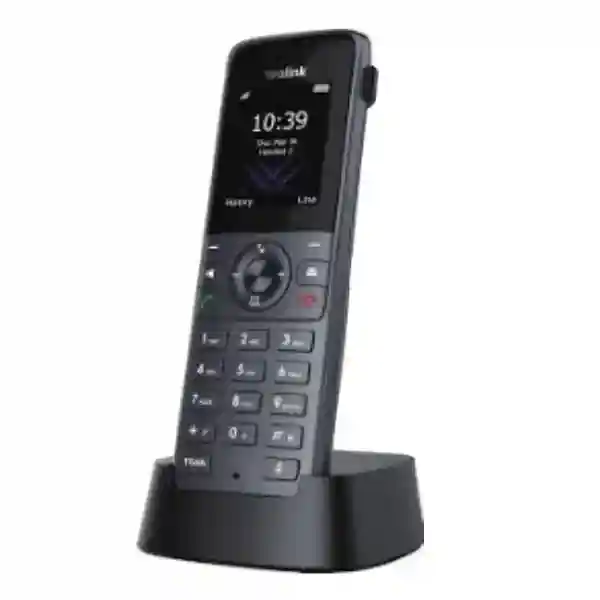
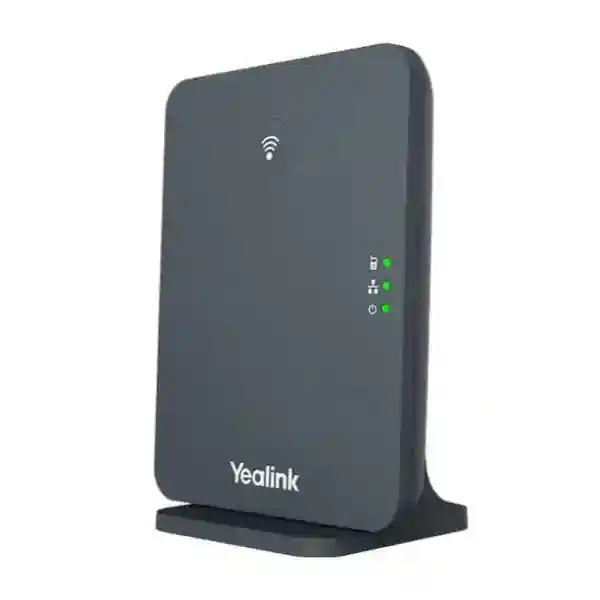
The Yealink W74P is a professional SIP cordless phone system built for small and medium-sized organisations that need staff to remain reachable while moving away from a fixed desk. The package combines the Yealink W70B DECT IP base station with a W74H handset and is designed around business mobility, centralized SIP calling and practical expansion. Yealink specifies support for up to 10 W74H handsets, up to 10 SIP accounts and up to 20 simultaneous calls on one W70B base. Optional RT30 repeaters can extend radio coverage where the building layout requires it. For Tanzanian offices, clinics, hotels, warehouses, retail operations and service businesses, the key buying question is not simply whether the phone is cordless; it is whether the DECT coverage, PBX compatibility, network, PoE, extension plan and handset count have been designed together.
One W70B base can register up to ten Yealink W74H DECT handsets, allowing a compact system to grow with teams and shared work areas.
The platform supports up to twenty simultaneous calls, with up to two simultaneous calls per handset, subject to PBX and service configuration.
DECT operation, Bluetooth 5.1, vibration alerts and a 3.5 mm headset jack support users who need to move while staying connected.
The W70B has a 10/100M Ethernet interface and supports IEEE 802.3af Class 1 Power over Ethernet, simplifying suitable deployments.
What the Yealink W74P solves
Fixed desk phones work well for employees who remain at one workstation, but many business roles require movement. Reception supervisors walk between counters, warehouse teams move through aisles, hotel staff cross service areas, clinic personnel circulate between rooms, and managers often move between offices. A DECT IP system gives these users a dedicated business handset tied into the organisation’s SIP environment without relying on a personal mobile number. The W74P addresses this need with a W70B base connected to the IP network and W74H handsets that communicate wirelessly with the base.
The practical advantage is controlled business telephony with mobility. The extension, caller ID, voicemail indication, call transfer, hold, three-way conferencing, DND, speed dial, forwarding and other SIP calling functions remain part of a managed phone system. Because one base can support multiple handsets, a business can plan a shared DECT cell for a defined area rather than installing a wired phone at every point where staff might need to answer calls. The result can be cleaner deployment, but radio coverage still needs to be surveyed realistically. Yealink’s stated range figures are up to 50 metres indoors and 300 metres outdoors in ideal conditions; walls, shelving, reinforced structures and interference can reduce real-world reach.
Verified Yealink W74P specifications
| Package | W70B base station + W74H handset, charger and supplied accessories |
| Handsets / SIP accounts | Up to 10 W74H handsets and up to 10 SIP accounts |
| Calls | Up to 20 simultaneous calls; up to 2 simultaneous calls per handset |
| Repeater support | Up to 6 RT30 repeaters per base station |
| Range | Up to 50 m indoors and 300 m outdoors in ideal conditions |
| Display | 1.8-inch 128 × 160 TFT colour screen |
| Connectivity | Bluetooth 5.1, 3.5 mm headset jack, 10/100M Ethernet on base |
| Power | IEEE 802.3af PoE Class 1 on W70B; AC adapter also specified |
| Battery | Up to 24 hours talk time and up to 320 hours standby in ideal conditions |
| Audio | Full-duplex speakerphone, hearing-aid compatibility, noise reduction; G.722 and other supported codecs |
| Security / management | TLS, SRTP, HTTPS, OpenVPN, secure configuration options; browser, phone and auto-provisioning management |
Specifications above are based on current Yealink documentation. Frequency variants and compatibility must be confirmed for the deployment market and PBX environment before ordering. Yealink also states that its DECT implementation is not compatible with third-party DECT base stations or handsets, so handset/base expansion should be planned within the supported Yealink DECT ecosystem.
PBX, network and deployment planning
The W74P is a SIP endpoint system, so the broader voice architecture matters. Before purchase, confirm the PBX or hosted SIP platform, number of extensions, registration method, inbound and outbound call flow, voicemail requirements, codec preferences, network addressing, VLAN design and any firewall or NAT considerations. The W70B supports DHCP or static IP assignment, VLANs, LLDP, STUN, TCP, UDP and TLS, giving administrators common tools for enterprise voice deployment. Centralised provisioning through TFTP, FTP, HTTP, HTTPS and Yealink RPS can be useful when several devices are being staged or standardised.
For network planning, the base needs an Ethernet connection to the LAN and can be powered through PoE when a suitable switch is available. This is particularly convenient for wall or central-area placement because only one network cable may be required. If the switch is UPS-backed, the base can remain powered during short mains interruptions, although the PBX, router, firewall and upstream communications path also need power for calls to continue. Voice VLANs and Quality of Service may be appropriate in mixed-use networks, especially where data transfers, surveillance traffic or guest Wi-Fi compete for capacity.
Coverage is a radio-design issue rather than a catalogue number. Start with the furthest walking route, not the straight-line room dimension. Concrete walls, metal racks, elevator cores, warehouse shelving, equipment rooms and multiple floors can change DECT propagation. If a single W70B cell is insufficient, RT30 repeaters may help in supported scenarios, while larger facilities may be better served by a Yealink multi-cell architecture. FourTeck can help customers decide whether a W74P single-cell deployment is the right fit or whether a multi-cell design should be considered before equipment is purchased.
Related FourTeck Tanzania resources
For broader voice-system planning, review the FourTeck Tanzania services overview, which explains how IP PBX, IP phones, switching, Wi-Fi and supporting infrastructure can be designed together. Buyers comparing multiple hardware categories can use the FourTeck Tanzania technology shop to frame compatibility, capacity and lifecycle questions before quotation.
The FourTeck Tanzania home page provides an overview of IP telephony, networking, cybersecurity and workplace technology that may sit around a DECT deployment. Procurement teams that want to understand the organisation can read About FourTeck Tanzania. For a bill of materials, coverage discussion or PBX compatibility review, use the verified FourTeck Tanzania contact page.
These are the currently verified distinct same-domain pages most directly useful to a W74P buyer. Rather than invent product-category URLs that may not exist, the page uses these validated destinations and supplements them with verified regional FourTeck websites where cross-border procurement or branch standardisation is relevant.
Yealink W74P Tanzania
Businesses evaluating the Yealink W74P in Tanzania are usually trying to solve a practical mobility problem rather than replace a conventional desk phone one-for-one. A receptionist may need to leave the desk but continue answering the main line, a warehouse supervisor may need an extension while moving between storage areas, a clinic may need staff reachable across treatment and administration spaces, or a hospitality team may need cordless extensions for service coordination. The W74P suits these cases when a single DECT cell, potentially assisted by approved repeaters, can cover the required working area and when the organisation’s PBX supports the required SIP features.
For Tanzania deployments, start the quotation with the number of mobile users and simultaneous calls rather than the number of rooms. One W70B base can register up to ten W74H handsets, so the starter package does not imply that every additional user needs another base. The base capacity, call concurrency and radio coverage should be considered independently. A site may need only four handsets but still require coverage planning because of thick walls or multiple floors. Another site may have all users in one open office but need eight handsets because several staff members must carry their own extension. Understanding these distinctions keeps the bill of materials accurate.
The network should also be checked before deployment. The W70B connects by Ethernet and supports PoE, which can simplify installation when an existing managed switch has available PoE capacity. If voice shares the same switching infrastructure as computers, cameras and access points, a voice VLAN and traffic-priority policy may improve manageability. Stable internet is relevant for cloud PBX or internet SIP services, while an on-premises PBX can keep some internal calling local even when external connectivity is unavailable, depending on configuration. For businesses with several branches, standardising handset profiles, extension naming and provisioning can simplify ongoing administration.
FourTeck Tanzania can help buyers translate these requirements into a quotation: W74P starter systems, additional W74H handsets, supported repeaters where justified, PoE switching, IP PBX requirements and related cabling. Current price, stock, lead time, warranty and exact regional frequency variant should be confirmed at quotation stage rather than assumed from another market. The objective is a system that fits the building, call pattern and support model, not merely a cordless handset that happens to register to SIP.
Yealink W74P DECT Phone System Dar es Salaam
In Dar es Salaam, the Yealink W74P is particularly relevant to offices and service environments where teams work across reception areas, showrooms, clinics, hospitality spaces, retail floors and mixed office-operational layouts. The city’s commercial buildings vary widely: some are modern open-plan offices with structured Ethernet and PoE switching, while others are adapted properties where running a new cable to every user position is inconvenient. A DECT system can reduce the need for a fixed phone outlet at each mobile user’s location, provided the W70B base can be positioned where Ethernet and radio coverage requirements meet.
A Dar es Salaam buyer should map movement patterns before deciding quantity. If one receptionist covers a front desk and nearby meeting rooms, one handset may be enough. A clinic with several departments may need multiple W74H handsets registered to one base, with extensions or shared call appearances configured according to workflow. A small hotel or serviced office may need staff to answer calls while away from the desk, but thick masonry, reinforced concrete and lifts can weaken DECT coverage. The official indoor range is measured in ideal conditions, so a walk test and floor-plan review are more useful than assuming a fixed radius in every building.
Power and network design also deserve attention. A PoE-powered W70B can be mounted in a more radio-friendly location without requiring a nearby power socket, assuming the switch and cabling support PoE. In an environment where power interruptions are a concern, placing the switch, router and PBX on suitable UPS protection can help maintain communications through brief disturbances. The handset itself has a rechargeable battery and Yealink specifies long talk and standby time under ideal conditions, but charging practices should still be aligned with shift patterns for staff who are continuously mobile.
For procurement in Dar es Salaam, include the existing PBX model or hosted-voice platform, required extensions, handset count, expected concurrent calls, floor layout and the distance users need to roam. If Bluetooth headsets are planned, confirm the chosen headset model as part of the deployment. If coverage extends beyond what one single-cell system can reliably support, review repeater or multi-cell alternatives before ordering. This approach gives businesses a better basis for comparing quotations than price alone and reduces the likelihood of adding coverage hardware after users have already experienced dead zones.
Yealink W74P DECT Phone System Mwanza
Organisations considering the Yealink W74P in Mwanza may include logistics offices, distributors, clinics, schools, hospitality businesses, retail operations and professional firms where employees need an extension away from a desk. The system can be attractive where the voice network is already IP-based because the W70B connects directly to Ethernet and registers SIP accounts with the organisation’s PBX or service platform. Users then carry W74H handsets while retaining business call functions such as hold, transfer, call forwarding, voicemail indication and conference calling instead of shifting business calls to personal mobile numbers.
Coverage planning should reflect the real site. Warehouses and trading premises around Mwanza can contain metal shelving, stock, partition walls and outdoor loading areas that change radio behaviour. A W74P base in a back office may not provide the same coverage as a base mounted centrally with a clear path to the areas where staff move. Optional RT30 repeaters can extend supported deployments, but repeaters should be added as a result of a coverage requirement, not automatically. For larger or multi-building sites, a multi-cell design may be technically more appropriate than trying to stretch one base beyond its intended role.
The W74H’s vibration feature is useful for noisier working areas because the user can receive a tactile alert in addition to the ringtone. Bluetooth 5.1 and the 3.5 mm headset connection provide headset options for users who need hands-free operation, subject to compatibility. Noise-reduction features can help voice clarity, but they do not replace sensible acoustic planning in extremely noisy environments. Procurement teams should identify whether calls are mainly internal, customer-facing, queue-based or linked to a reception function because that determines how extensions and ring groups should be configured.
A Mwanza quotation request should specify the number of staff, number of handsets, PBX or SIP provider, expected call concurrency, building type, coverage zones and network switching available at the intended base location. For branch standardisation, document extension numbering and provisioning so future handsets can be added consistently. Where the project includes network upgrades, the same review can consider managed PoE switching, VLANs, cabling and UPS protection. FourTeck Tanzania can use these details to help determine whether the W74P is suitably sized and which supporting components belong in the bill of materials.
Yealink W74P DECT Phone System Arusha
The Yealink W74P can fit Arusha businesses that combine customer-facing service with mobile staff, including hospitality operations, tour and travel offices, clinics, education sites, retail premises and multi-room professional workplaces. A cordless SIP handset is valuable when employees need to answer a business extension while walking between a reception desk, back office, service counter or nearby operational area. Because the W74P is a managed DECT system rather than a consumer cordless phone, it can sit inside an IP telephony design with multiple SIP accounts, several handsets and centralised provisioning.
Hospitality and tourism-related workplaces may be particularly interested in extension mobility, but the building layout should guide the design. Guest areas, kitchens, service corridors, outdoor terraces and separate blocks can create different radio conditions. The official Yealink range figures are useful as ideal-condition references, not guarantees for every property. A base placed near the IT rack may be technically convenient yet poorly positioned for DECT coverage. Since the W70B supports PoE, a structured-cabling run can allow the base to be installed in a more central radio location while drawing power from the network switch.
Staff workflow should determine handset allocation. Shared handsets can work for duty roles if charging, user responsibility and extension behaviour are clearly defined. Individually assigned handsets may be better when staff need personal extensions, call histories or consistent availability. The W74P supports a local phonebook stored in the base as well as remote directory options, which can help teams access shared contacts when integrated appropriately. For teams that work in noisy service environments, vibration alerts and headset connectivity may add practical value.
Arusha buyers should send the number of users, PBX type, floor plan, required coverage zones, existing Ethernet and PoE availability, expected simultaneous calls, and any need for headsets or repeater expansion when requesting a quotation. If the project is part of a new office fit-out, coordinate voice cabling with Wi-Fi, CCTV and data infrastructure so network outlets and switch capacity are planned once. This avoids the common situation where the phone system is selected after the rack and switching have already been sized without allowance for PoE endpoints and voice traffic.
Yealink W74P DECT Phone System Dodoma
For organisations in Dodoma, the Yealink W74P offers a structured way to provide cordless business extensions in offices, administrative environments, clinics, education facilities, hospitality properties and service organisations. The W70B base integrates with a SIP voice environment, while W74H handsets let staff move through the supported DECT coverage area. This can be useful for supervisors, administrators, service coordinators and other employees who are frequently away from a fixed desk but still need access to the organisation’s telephone system.
A well-designed deployment starts with call flow. Decide whether each handset has its own extension, whether several handsets ring for one department, whether reception transfers calls to mobile staff, and what should happen when no one answers. The W74P supports common call-handling functions such as transfer, hold, forwarding, DND, speed dial and three-way conferencing, but the actual behaviour also depends on the connected PBX. Recording requirements, call queues and IVR functions are typically PBX-side decisions and should be included in the broader telephony design rather than assumed to be handset functions.
Network readiness is equally important. The base supports PoE and a 10/100M Ethernet interface, making it straightforward to connect to a managed switch. Where a voice VLAN is used, switching and DHCP settings should be coordinated with the PBX deployment. For hosted SIP, the internet path, firewall and DNS availability influence service quality. For local PBX systems, internal extension calls may stay on site, but external connectivity still depends on the trunk arrangement. UPS protection for the switch, router and PBX can add resilience during short power disturbances.
When requesting a Yealink W74P quotation in Dodoma, provide the number of cordless users, number of SIP extensions, building layout, intended roaming areas and any existing voice platform. If the planned use includes multiple floors, separated buildings or large compounds, identify those constraints early so coverage can be assessed before purchase. FourTeck Tanzania can then help separate the handset requirement from the radio-coverage requirement and recommend a bill of materials that considers W74P starter systems, additional W74H handsets, supported repeater options, PoE networking and PBX integration.
Yealink W74P DECT Phone System UAE
In the UAE, the Yealink W74P fits office, retail, clinic, warehouse, hospitality and service environments where staff need a portable SIP extension within a defined workplace. Buyers should distinguish between a single-cell W74P deployment and larger multi-cell DECT requirements. A compact Dubai or Abu Dhabi office with mobile reception or operations staff may be well suited to one W70B base, while a large warehouse, hotel or multi-floor facility may require a more extensive architecture. The handset count alone does not determine this choice; radio coverage and roaming expectations are equally important.
The W74P supports up to ten W74H handsets and twenty simultaneous calls per base, which provides useful capacity for small and medium business teams. Built-in Bluetooth 5.1, vibration, a 3.5 mm headset jack and quick-charging capability address mobile working. Yealink states that a ten-minute charge can provide up to two hours of talk time under its published conditions, which can be useful for busy shifts where a handset was not fully charged. Even so, operational teams should establish charging routines and keep cradles in accessible locations.
UAE procurement often involves standardisation across branches or regional offices. If the same PBX platform is used in multiple countries, a standard handset profile and provisioning template can reduce configuration effort. Frequency variants and local regulatory suitability must still be checked for each destination rather than moving hardware between markets without verification. Businesses coordinating UAE and East African offices can also review FourTeck UAE for broader telecom and IT requirements and use the Tanzania site for local project planning.
For a UAE quotation, provide the exact quantity, site type, PBX platform, required extension mapping and whether installation, configuration or only hardware supply is expected. Do not assume stock, delivery time or warranty from an online listing; these should be confirmed in the specific commercial offer. If the system will later be exported or standardised across regional branches, document the target markets, because DECT frequency bands and applicable approvals can differ. A technically correct quote should therefore identify the model, market variant, accessories and deployment scope clearly.
Yealink W74P DECT Phone System Uganda
Ugandan businesses can use the Yealink W74P where staff need to move through an office, shop, clinic, hospitality property or operational site while retaining access to a SIP extension. The system’s one-base, multi-handset design is useful for teams that want more mobility without creating a separate cellular subscription for every role. Each deployment should still begin with PBX compatibility and coverage planning. The W70B registers SIP accounts and provides the DECT radio cell, while the W74H handsets are the user endpoints.
A common procurement mistake is to multiply complete W74P starter kits by the number of users. Because a single W70B can register up to ten W74H handsets, many small offices need one base plus additional handsets rather than a base for every person. The correct ratio depends on user count, call concurrency and physical coverage. In a compact Kampala office the base may cover all users, while a spread-out site in another region may need coverage extension or a different DECT architecture even with fewer handsets.
Network infrastructure is part of the voice solution. PoE can power the W70B through its Ethernet connection when the switch supports IEEE 802.3af, reducing local power dependencies at the base location. Voice VLANs, QoS and managed switching can help organise business traffic. For cloud PBX systems, reliable internet and sensible firewall configuration are essential. For multi-branch environments, using consistent extension numbering, device naming and provisioning templates can simplify support. The W74P also supports encrypted signaling and media mechanisms such as TLS and SRTP when properly configured with compatible services.
Businesses working across Tanzania and Uganda can review the FourTeck Uganda technology site for local IP PBX, VoIP and networking context. When requesting a W74P quotation, include the target city, building layout, user count, handset quantity, PBX type and whether extra coverage is expected. Current availability, pricing, warranty, lead time and regional frequency variant should be confirmed in the final offer rather than inferred from another country’s listing.
Yealink W74P DECT Phone System Kampala
Kampala has a wide mix of commercial offices, clinics, retail outlets, service companies, hospitality businesses and distribution operations where mobile extensions can be more practical than fixed desk phones for selected staff. The Yealink W74P can serve this need when the workplace fits a single-cell DECT design. A receptionist, floor supervisor or service coordinator can carry a W74H handset, receive calls to a business extension, transfer callers and access common call features without remaining beside a desk.
The design should separate user capacity from coverage. The W70B can support up to ten W74H handsets and up to twenty concurrent calls, but that does not mean it will cover every part of every building. Multi-floor premises, dense concrete, lifts and metal structures can reduce signal. A base should therefore be placed with both network access and radio coverage in mind. PoE is useful here because it can allow the base to be mounted away from a convenient wall socket, provided structured cabling reaches the chosen location.
For call handling, identify whether mobile users need individual extensions, shared department numbers or ring-group membership. If a clinic wants several nurses to receive one number, the PBX configuration will differ from an office where each manager has a personal extension. If a retail floor needs only incoming transfers from reception, the call flow is simpler. These requirements should be written before provisioning so handset labels, directories and extension assignments remain consistent. The W74P’s support for local and remote phonebook methods can also help shared contact management where the PBX or directory platform supports it.
Kampala buyers should send a floor plan or at least a description of the longest walking route, the number of users, the existing PBX and the available switching infrastructure. If the business also operates in Tanzania, using a common handset model can simplify user training, but region-specific radio compliance and frequency variants must still be confirmed. A quotation should clearly separate hardware, additional handsets, repeaters if required, PBX licensing or services, configuration and installation so procurement can compare like-for-like offers.
Yealink W74P DECT Phone System Arua
For businesses and institutions in Arua, the Yealink W74P can provide cordless SIP telephony for staff who move between administration rooms, reception areas, stores, service counters or nearby operational spaces. The system is best approached as part of a complete voice solution: the W70B base links the DECT handsets to the IP network, while the PBX or SIP service controls extensions, routing, voicemail and broader call-flow logic. This separation is important when planning support because a handset problem, radio problem, network problem and PBX problem require different troubleshooting steps.
Where infrastructure is being built or upgraded, base placement can be planned alongside structured cabling. A PoE switch can power the W70B over the same Ethernet cable used for data, which reduces the need for a local adapter at the mounting point. The network rack, switch, router and PBX should have appropriate power protection if voice availability is important during brief power disturbances. The handset itself remains battery-powered, but external calls still depend on the upstream voice service and network equipment staying available.
Radio coverage must be tested against the actual building. The W74P’s published indoor and outdoor distances are ideal-condition figures and should not be interpreted as guarantees through walls or across separated structures. If staff need to walk between buildings or far outdoor areas, describe that use case before purchase. Optional repeaters may help in some layouts, but a multi-cell system can be a better engineering choice for larger or more complex sites. The correct decision should be based on movement paths and continuity expectations rather than adding hardware after installation.
Arua procurement requests should include handset count, expected simultaneous calls, PBX model or hosted service, coverage zones, existing network equipment and the intended base location. If exact pricing is required, request a current quotation because market price, freight, tax treatment, stock and warranty terms can change. By providing the deployment details first, the buyer can receive a more useful comparison that includes the correct base-to-handset ratio, network dependencies and any coverage accessories rather than only a headline unit price.
Yealink W74P DECT Phone System Mbarara
The Yealink W74P can support Mbarara organisations that need mobile business extensions across offices, clinics, hospitality properties, retail premises and operational areas. Instead of assigning a fixed phone to a desk that a user frequently leaves, a W74H handset lets that employee continue receiving and placing SIP calls while moving inside the supported DECT coverage zone. For businesses already using IP PBX, the W74P can be incorporated as another endpoint class alongside desk phones and conference devices.
Sizing starts with three numbers: mobile users, concurrent calls and coverage area. A single W70B supports up to ten handsets and up to twenty simultaneous calls, with up to two simultaneous calls per handset. These capacities may exceed the needs of a small office, but radio coverage can still be the limiting factor. A long building, separate wing or dense construction can create dead spots. Placing the base centrally and using Ethernet/PoE can often improve deployment flexibility. Optional repeaters should be considered only after understanding the route users actually walk.
User experience is also influenced by headset and alerting requirements. The W74H includes vibration alerts, Bluetooth 5.1 and a 3.5 mm headset jack. This may benefit supervisors or staff who work in environments where a ringtone could be missed or where hands-free calling is useful. The 1.8-inch colour display and backlit keypad provide a compact handset interface, while the phone system can deliver caller ID, directories, voicemail indication and standard call functions. Exact feature behaviour depends on the SIP platform and provisioning.
Mbarara buyers should identify whether they need hardware only or a complete telephony project. A complete scope may include IP PBX configuration, extension creation, SIP trunk integration, PoE switching, VLAN configuration, base placement, handset registration, testing and user handover. If several sites are involved, create a simple standard for handset names, extension ranges and configuration templates. This makes future support easier and prevents each branch from becoming a separate undocumented installation. Current commercial terms should be confirmed through a project quotation.
Yealink W74P DECT Phone System Gulu
In Gulu, the Yealink W74P can be considered for organisations that need business voice mobility without moving every call to a personal mobile phone. A W74H handset can be carried by an administrator, duty manager, service coordinator or supervisor while remaining registered to the organisation’s SIP system through the W70B base. This keeps calls within the business telephony environment and can make internal transfers and extension dialing more consistent for customers and staff.
The W74P is especially effective when deployed into a well-prepared network. The W70B’s PoE support allows one Ethernet cable to provide connectivity and power from a compatible switch. A managed switch can also support VLAN separation for voice, while the network administrator can use DHCP or static addressing according to policy. If the PBX is hosted, internet quality and firewall configuration become part of call reliability. If the PBX is on premises, its local network and trunk path should be reviewed separately.
DECT coverage should be validated before committing to the final quantity of bases or repeaters. Published range values are measured under ideal conditions and can change significantly in real buildings. A compact single-floor office may need only the base included in the W74P kit, while a facility with several blocks may need a different design. If users must roam continuously across a large property, asking about a multi-cell Yealink solution at the beginning is better than assuming a single-cell W74P can be expanded indefinitely.
For a Gulu quotation, include the type of organisation, handset quantity, number of expected concurrent calls, PBX model or provider, network switch details, coverage zones and whether a site survey or configuration support is required. Businesses operating across Uganda can maintain consistent handset types and provisioning practices, but each location should still be checked for physical coverage. Commercial details such as price, delivery, stock and warranty should be confirmed in the quote so purchasing decisions are based on the actual project rather than assumptions from unrelated online offers.
Yealink W74P DECT Phone System Kenya
Kenyan organisations looking for the Yealink W74P are commonly comparing business cordless phones for offices, hospitality, clinics, warehouses and retail sites. The product is attractive because one W70B base can serve multiple W74H handsets, allowing users to remain on the organisation’s SIP extension plan while moving around the workplace. For procurement, the starter bundle should be understood clearly: a W74P includes the base and one handset, while additional mobile users can often be added with extra compatible handsets rather than complete kits.
The key planning variables are the PBX, radio coverage and call load. Up to ten SIP accounts and twenty simultaneous calls are supported by the base, but actual service depends on the connected platform and network. Coverage is influenced by building structure. Nairobi offices with glass partitions, reinforced cores and multiple floors can behave differently from warehouses with metal racks or smaller branch offices. A floor plan, proposed base position and intended walking routes provide much better sizing information than an advertised range figure alone.
The W74P also supports modern business features that can matter in active environments: Bluetooth 5.1 for compatible headsets, vibration alerts, a wired headset jack, noise reduction and quick charging. These are useful for staff who spend long periods on calls or work away from quiet desks. Administrators benefit from auto-provisioning options and over-the-air handset updates, helping standardise configurations when several units are deployed. The security toolkit includes TLS, SRTP and HTTPS support, although the complete security outcome depends on PBX and network configuration.
For Kenya-specific IT and telecom projects, customers can also review FourTeck Kenya for IP PBX, VoIP and enterprise networking context. A cross-border organisation operating in Kenya and Tanzania may benefit from standard device profiles and user training while keeping local procurement, radio suitability and service terms explicit. Request current pricing and availability with the exact quantity and destination, because online prices from independent resellers are not a substitute for a project-specific commercial offer.
Yealink W74P DECT Phone System Kuwait
For businesses in Kuwait, the Yealink W74P is a compact DECT SIP system for mobile staff in offices, retail sites, clinics, hospitality environments and smaller operational facilities. The bundle combines a W70B base with a W74H handset, and one base can register up to ten compatible handsets. This allows a business to start with a small cordless requirement and expand user count without adding a separate base for every person, provided the same DECT cell covers the required workspace.
Because Kuwait deployments may involve offices with reinforced construction, enclosed service areas and multiple zones, coverage should be assessed rather than assumed. The base’s official ideal-condition range is a starting reference only. Where the signal must cross heavy walls or serve a long corridor, optional RT30 repeaters may be considered, while larger environments should be assessed for multi-cell DECT. The decision should account for roaming expectations: users who only need coverage around a reception area have a different requirement from a warehouse team moving continuously across a large footprint.
The network side is straightforward but important. A managed PoE switch can connect and power the W70B, and voice VLANs or QoS may be appropriate if the LAN carries many other services. SIP account details, codecs, NAT traversal and encryption settings should be matched to the PBX or provider. If the device is centrally provisioned, Yealink’s supported provisioning mechanisms can help apply templates consistently. Headset use should be specified early so Bluetooth or wired accessory requirements can be included in the quotation.
Kuwait buyers should confirm the correct regional product variant and local regulatory suitability before purchase. If the project is part of a regional rollout, avoid assuming that hardware purchased for one country can simply be redeployed to another without checking DECT frequency requirements. A useful quote should list the W74P systems, extra W74H handsets, repeater or multi-cell needs, PBX scope, network dependencies and any installation or configuration services. This creates a transparent basis for procurement and future support.
Yealink W74P DECT Phone System Ghana
Ghanaian organisations considering the Yealink W74P can use it to provide cordless business extensions for staff who need to move through an office, clinic, shop, hotel or operational site. The handset remains connected to a SIP PBX through the W70B DECT base, giving the organisation more control over extension numbering and call routing than using personal mobile phones for every task. This is especially useful where incoming customer calls need to be transferred from a central number to mobile employees inside the premises.
One W70B can register up to ten W74H handsets, so buyer requirements should be expressed as users and coverage zones rather than simply complete kits. The base supports up to twenty simultaneous calls, but smaller businesses may use far less capacity. Coverage should be assessed against the building structure. A central base location with Ethernet and PoE can help maximise reach, while thick walls, metal structures and multiple floors may require additional design. Supported RT30 repeaters can extend some deployments, though multi-cell systems should be considered for larger footprints.
For daily use, vibration can help staff notice calls in busy surroundings, while Bluetooth 5.1 and a 3.5 mm jack provide headset options. Yealink lists long battery life and quick charging under ideal conditions, which supports shift-based work when charging discipline is maintained. Centralised provisioning can reduce repetitive configuration for larger deployments. Security features such as TLS, SRTP and HTTPS should be enabled in coordination with the PBX and service provider rather than treated as automatic guarantees of secure calling.
When requesting a Ghana quotation, include the destination, PBX platform, handset quantity, site dimensions, expected roaming areas, switch/PoE availability and whether installation or configuration is required. If the organisation has branches elsewhere in Africa, standardising the W74H user experience can simplify training, but every country still needs its correct radio variant and commercial terms. Pricing, tax, stock, freight and warranty should be confirmed in the actual quotation, not copied from third-party listings in another market.
Yealink W74P DECT Phone System Nigeria
In Nigeria, the Yealink W74P can serve small and medium businesses that need reliable internal mobility for SIP calling. Corporate offices, clinics, retail operations, warehouses, hospitality sites and service businesses may all have roles where a fixed desk phone is restrictive. The W74H gives those users a portable extension while the W70B keeps the handset within the organisation’s managed IP telephony environment. Call transfer, forwarding, hold, conference and directory functions can then follow the business’s PBX configuration.
The system is scalable within its single-cell limits: up to ten W74H handsets, ten SIP accounts and twenty simultaneous calls per base. However, a buyer in Lagos, Abuja or another Nigerian city should not equate capacity with physical reach. Large offices, warehouses and concrete structures can constrain DECT coverage. Base positioning is therefore important. Because the W70B supports PoE, it can be installed at a suitable network point without requiring an electrical outlet directly beside it, as long as the network switch has the necessary PoE capability.
Power resilience should be considered as a complete chain. Keeping the handset charged is only one part of availability. The base, switch, router, PBX and connectivity service all need to remain operational for calls to work. Where businesses already deploy UPS or backup power for core IT, voice equipment can be included in the power plan. Network segmentation and QoS can also help separate voice endpoints from other traffic. For internet-based SIP, firewall and NAT configuration should be documented to avoid intermittent registration or audio issues.
Nigeria procurement teams should request a detailed bill of materials that distinguishes starter kits, extra handsets, coverage accessories, PBX licensing, installation and network work. If the business is part of a regional group, FourTeck Africa can provide a broader regional technology context while the Tanzania page supports East African planning. The correct frequency variant, local suitability, stock status, price, warranty and lead time should all be confirmed for the specific Nigerian order before purchase.
Yealink W74P DECT Phone System Seychelles
The Yealink W74P is relevant to Seychelles businesses where staff need cordless SIP extensions across hospitality properties, offices, clinics, retail areas and service operations. Hotels, villas and guest-service businesses can benefit from staff mobility, but island hospitality layouts often include separate blocks, reinforced service areas and outdoor paths that should be evaluated carefully. A single W70B base may suit a compact office or reception zone, while a broader property could require repeaters or a more capable multi-cell architecture.
Planning should begin with the zones where users actually need to answer calls. A manager moving between a reception and adjacent offices has a simpler requirement than housekeeping or maintenance staff covering several floors or buildings. The W74P’s official range figures represent ideal conditions and should not be treated as a promise across all structures. Where coverage continuity is operationally important, a site assessment or staged test is preferable to purchasing multiple handsets before validating the radio design.
For business users, the W74H’s vibration alerts, Bluetooth 5.1, headset jack and long published battery runtime can support mobile shifts. The base supports multiple SIP accounts and call concurrency, while the PBX can provide IVR, queues, reception routing and other business functions. If the property uses a hosted voice platform, reliable internet and appropriate firewall configuration are part of the solution. A local or on-premises PBX may change the dependency model, but trunk connectivity and power still need to be considered.
A Seychelles quotation request should specify the property type, number of handsets, main coverage zones, PBX platform, network topology and whether PoE is available at potential base locations. Because freight and regional supply can affect commercial terms, current availability and delivery should be confirmed specifically for the destination. The correct DECT variant and regulatory suitability should also be verified. This is especially important for regional organisations that procure equipment centrally and then distribute it to branches in different countries.
Choosing between W74P, repeaters and multi-cell DECT
The W74P is best understood as a high-capacity single-cell DECT system for small and medium environments. If up to ten handsets are enough and the required roaming area can be covered by one base, it offers a simple architecture. An RT30 repeater can be appropriate when the base almost covers the full area but a specific zone needs extension. A multi-cell platform becomes more attractive when a facility is large, spans multiple floors or buildings, or requires broader seamless roaming. Buying extra repeaters without understanding the radio layout can create complexity without delivering the expected user experience.
A useful decision process asks five questions: How many users need cordless handsets? How many calls can occur at once? What physical route must each user cover? Does the PBX support the intended Yealink deployment? What network and power infrastructure is available at the best base locations? If the answers show that one W70B can serve the users and the coverage zone, W74P is a logical fit. If coverage is the main challenge, radio architecture should be solved before finalising handset quantities.
Regional FourTeck resources for multi-country buyers
Multi-country organisations can use the verified FourTeck network to coordinate related requirements. FourTeck Kenya covers business communications and networking in Kenya, while FourTeck Uganda provides local IP PBX, VoIP and infrastructure context for Ugandan projects. FourTeck UAE is relevant for UAE IT and telecom requirements.
For broader specialist research, FourTeck’s IP phone specialist site focuses on business IP telephony, while FourTeck Africa supports regional technology planning. These links are intended for related procurement context; the exact W74P commercial offer should still be requested for the destination country and verified for regional frequency, availability and scope.
Frequently asked questions about the Yealink W74P
How many handsets can the Yealink W74P support?
The W70B base supplied with the W74P supports registration of up to ten Yealink W74H DECT handsets. A deployment can therefore use one starter kit and add compatible handsets as needed, subject to coverage and call-capacity planning.
How many simultaneous calls are supported?
Yealink specifies up to twenty simultaneous calls on the W74P system and up to two simultaneous calls per handset. The PBX, SIP accounts and service configuration must also support the intended call load.
What is the DECT range?
Yealink publishes up to 50 metres indoors and 300 metres outdoors in ideal conditions. Real range depends on walls, floors, metal, shelving, equipment and other site factors, so coverage should be validated for the actual building.
Can the W74P use PoE?
Yes. The W70B base supports IEEE 802.3af Class 1 Power over Ethernet. A compatible PoE switch can therefore supply network connectivity and power over one Ethernet cable.
Does the W74H support Bluetooth headsets?
The W74H includes Bluetooth 5.1 and also has a 3.5 mm headset jack. Check the intended headset model for compatibility before procurement.
Can I use third-party DECT handsets with the W70B?
Yealink states that its DECT technology is not compatible with third-party DECT devices such as bases and handsets. Expansion should therefore be planned with supported Yealink DECT endpoints.
When should I use an RT30 repeater?
A repeater can be considered when a W70B deployment needs supported coverage extension. The W74P supports up to six RT30 repeaters per base, but larger or more complex sites may be better served by a multi-cell system.
What should I provide for a W74P quotation?
Provide the destination, number of users, desired handset quantity, PBX or SIP platform, coverage area, floor plan or longest walking route, current network switch details, PoE availability and any installation, configuration or headset requirements.
Quotation checklist
To receive a useful Yealink W74P quotation, send enough information for the system to be sized rather than requesting only a unit price. Include: destination country and city; number of cordless users; existing or planned PBX; number of SIP extensions; estimated simultaneous calls; floor count and building type; areas where users must remain reachable; existing Ethernet and PoE switching; need for headsets; need for repeaters or wider roaming; installation and configuration scope; and whether the project is a single site or a multi-branch standardisation.
The resulting quotation should clearly identify the W74P starter package, extra W74H handsets, RT30 repeaters if required, any PBX licences or services, network hardware, installation, configuration and support scope. It should also state current commercial terms such as price, lead time and warranty rather than relying on assumptions from a different region.
Decision recap
Choose the Yealink W74P when your business needs cordless SIP extensions for a small or medium coverage area, expects no more than ten W74H handsets on one W70B base and values business features such as Bluetooth, vibration, PoE, centralized provisioning and optional repeater support. Do not choose it purely because the published range appears large enough on paper. Building materials and movement paths determine whether a single-cell system will perform as expected.
For Tanzania projects, FourTeck can help review handset quantity, PBX compatibility, call flow, PoE switching and coverage before the order is finalised. For larger sites, the most valuable recommendation may be to move from a W74P single-cell plan to a multi-cell Yealink DECT architecture rather than overextending one base.
Talk to FourTeck about your Yealink W74P project
Share your PBX platform, user count, floor plan and roaming requirement. FourTeck Tanzania can help you determine whether one W74P base is enough, how many W74H handsets belong in the project, whether RT30 repeaters are justified, and what network or PoE requirements should be included. This creates a clearer purchasing decision and a more supportable deployment.




Reviews
There are no reviews yet.