
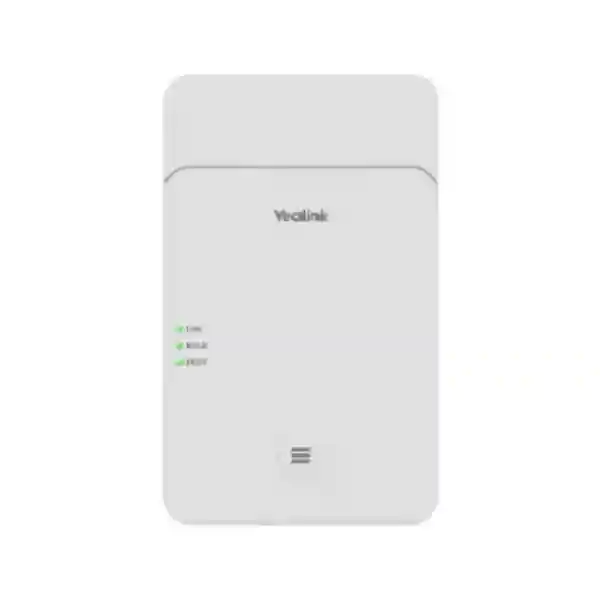
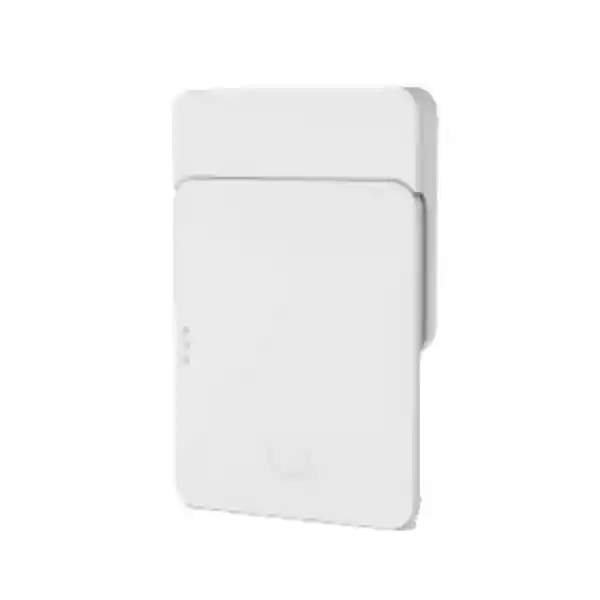
Yealink W75 Mini DECT Multi-Cell System Tanzania
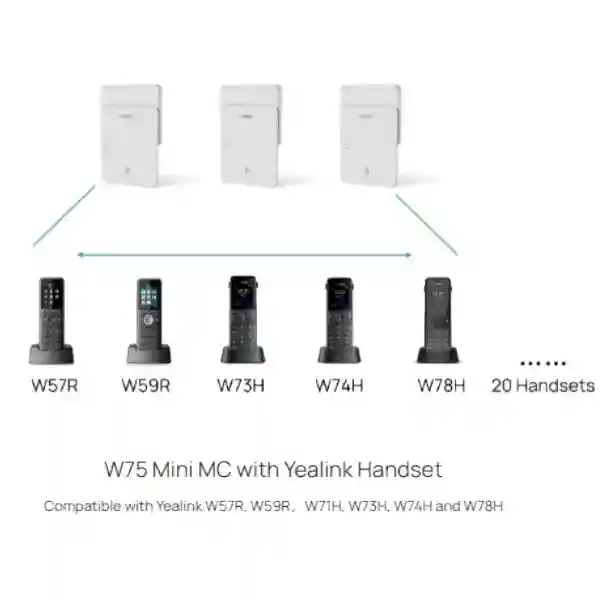
The Yealink W75 Mini DECT Multi-Cell System is designed for organisations that have outgrown the coverage limits of a single cordless base but do not need a large enterprise-scale DECT platform. The system combines the Yealink W75DM DECT Manager with a W75B base station and can scale to as many as three base stations, 20 compatible handsets, 20 SIP accounts and 20 simultaneous calls. That makes it a practical fit for multi-room offices, clinics, hotels, schools, warehouses, retail floors, service centres and branch sites where people need to keep talking while moving between work zones. FourTeck Tanzania can help buyers translate a floor plan, user count, call pattern and PBX environment into a more useful purchasing discussion before equipment is ordered.
Up to three base stations for a compact multi-cell deployment.
Up to 20 compatible handsets and 20 SIP accounts.
Up to 20 simultaneous calls across the system.
IEEE 802.3af Class 3 Power over Ethernet support simplifies placement.
What the Yealink W75 solves
A single DECT base can be enough for a small office, but corridors, concrete walls, separate work areas and larger floor plates can create weak-signal zones. The W75 Mini MC gives a business a controlled way to extend cordless coverage across several cells while preserving user mobility. Yealink specifies seamless roaming and handover, which means a compatible handset can move between base coverage areas without forcing the user to treat every zone as a separate phone system. This is valuable for receptionists, supervisors, clinical staff, warehouse teams, hospitality staff, school administrators and mobile support personnel who spend significant time away from a fixed desk.
The platform is intentionally smaller than Yealink’s W80 and W90 multi-cell families. Official comparison information places W75 at three bases and 20 handsets, while W80 and W90 are intended for substantially larger deployments. This makes W75 attractive when the requirement is more than single-cell but still modest enough that an enterprise-scale architecture would be unnecessary. Choosing the correct family early can avoid both under-sizing and over-buying.
Verified Yealink W75 capabilities
Roaming and handover
DECT synchronization supports seamless movement between coverage zones, helping active calls continue while a handset user moves through the premises.
Voice and call features
The system supports wideband G.722 audio, call hold, transfer, three-way conference, call waiting, DND, forwarding, voicemail indication and other everyday SIP telephony functions.
Directory options
Supported contact sources include local phonebook, remote phonebook, LDAP, XML phonebook and Xsi directory capabilities, depending on the connected environment.
Network and security
Official specifications include SIP, VLAN, 802.1x, LLDP, static or DHCP addressing, UDP/TCP/TLS, HTTPS, SRTP, digest authentication and encrypted configuration support.
Handset compatibility and buying decisions
Yealink lists compatibility with W56H, W57R, W59R, W71H, W73H, W74H and W78H handsets. The handset choice should follow the job role rather than price alone. Office users may prioritise comfort and straightforward call handling, while users in industrial, healthcare, service or high-movement environments may need a more rugged or specialised handset. A quotation request should therefore identify how many users need cordless extensions, where they move, whether headsets are required, and whether any existing Yealink DECT handsets need to be retained.
Yealink states a nominal DECT radio coverage of up to 50 metres indoors and up to 300 metres outdoors in ideal conditions, but real coverage varies with wall materials, metal shelving, floor layout, interference and installation position. A professional design should not simply multiply a theoretical range by the number of bases. Base placement, overlap between cells and actual walking paths matter because handover quality depends on users crossing zones with adequate signal continuity.
Deployment planning before purchase
A useful W75 proposal starts with the building rather than the model number. Count the expected cordless users, estimate peak concurrent calls, identify where those users walk during calls and mark the rooms or operational zones that must stay covered. Then review the LAN. Each base needs suitable Ethernet connectivity and power, either through PoE or an appropriate power arrangement. VLAN design, DHCP or static addressing, firewall rules, SIP routing, QoS and PBX credentials should be confirmed before commissioning. Organisations using a hosted PBX should check that the provider supports the intended SIP registration method and directory features. Organisations using an on-premises IP PBX should confirm extension licensing, codecs, dial plan, voicemail and any SBC or NAT traversal requirements.
The W75 can be configured through the DECT Manager web portal and supports Yealink auto-provisioning mechanisms. For multi-site organisations, consistent templates can reduce configuration drift, but every site should still be tested for radio coverage, call handover and network quality. A commissioning checklist should include inbound and outbound calls, transfer, hold, voicemail, directory access, emergency dialing policy, roaming, handover and a walk test across the boundaries between cells.
FourTeck regional resources
FourTeck Africa — regional procurement context for organisations planning projects across African markets.
FourTeck Uganda — IP PBX, VoIP and networking support context for Uganda-based requirements.
FourTeck Kenya — regional IT and communications planning for Kenya-based business sites.
FourTeck UAE — integrated IT and telecom project discussions for UAE requirements.
Yealink W75 Mini DECT Multi-Cell System Tanzania
For a Tanzania business, the Yealink W75 is most useful when cordless calling must follow employees beyond a single office or reception zone. A head office may have reception, finance, meeting rooms, management offices, stores and technical areas spread across a floor or building. A hotel may need staff to move between front desk, back office and service areas. A clinic may need calls to reach nurses or administrators as they move between consultation rooms. A warehouse may need supervisors to remain contactable while walking between receiving, shelving and dispatch. In each of these environments, the design question is not simply how many handsets are required. The more important question is whether the three-base and 20-device ceiling matches the physical layout and expected growth. If it does, W75 can provide a compact middle ground between a single-cell bundle and a larger multi-cell platform.
Tanzania buyers should prepare a clear requirement before requesting a quotation. Start with the exact number of cordless users today and the number expected over the next two or three years. Add the approximate number of simultaneous external and internal calls during busy periods. Identify the PBX or cloud telephony platform already in use, the available SIP trunk or extension arrangement and whether existing Yealink handsets must be reused. Provide a simple floor plan if possible, marking concrete walls, staircases, lifts, server rooms and metal shelving because these can influence radio behaviour. Also confirm where Ethernet and PoE switching are available. This information lets a supplier discuss whether one, two or three bases are sensible and where base positioning should be tested.
Procurement planning in Tanzania should also separate system components from user devices. The W75 Mini MC package is the multi-cell core, while compatible handsets must be selected for the job. A receptionist may need a different device profile from a warehouse supervisor or maintenance technician. Ask for the quotation to list the W75 system, additional bases if needed, handset models and quantities, PoE requirements, PBX or SIP configuration scope, any site survey or installation work, and post-deployment support as separate lines. That structure makes competing quotations easier to compare and reduces the chance of discovering missing accessories after purchase.
For organisations connecting multiple Tanzania branches, standardising on a common handset family and provisioning approach can simplify training and administration. The W75 supports centralized web management and auto-provisioning mechanisms, which can help IT teams maintain repeatable configurations. However, each site still needs its own coverage validation and network checks. A Dar es Salaam office, an Arusha hospitality property and a Mwanza warehouse can have very different radio conditions even when the same W75 model is deployed. Treat the product specification as the capacity boundary and the site survey as the method for turning that capacity into reliable day-to-day performance.
Yealink W75 Mini DECT Multi-Cell System Dar es Salaam
Dar es Salaam organisations often combine customer-facing areas, administration, meeting spaces and operational rooms inside the same premises. In that environment, a cordless IP phone system can reduce the need for staff to return to a fixed desk whenever a call arrives. The Yealink W75 is especially relevant to offices, clinics, small hotels, logistics businesses, showrooms, education sites and service companies whose users move between rooms but still need to keep a business extension with them. Its three-base limit keeps the architecture relatively simple, while the 20-handset and 20-simultaneous-call capacity gives a clear planning envelope for small and medium business teams.
A Dar es Salaam deployment should begin with a walk-path map. Mark where users start calls, where they typically move and where calls must not drop. Reception-to-meeting-room movement, front-office-to-stock-room movement, or clinic-desk-to-consultation-room movement may each cross walls that attenuate DECT signals differently. Yealink’s published indoor range is an ideal reference, not a guaranteed room count. Buildings with reinforced concrete, lift shafts, dense shelving or equipment rooms may require different base placement from an open-plan office. During installation, base locations should be selected for overlap, not only maximum distance. The objective is to give the handset enough signal from the next cell before it leaves the current one.
Network preparation is equally important. The W75 supports PoE, so managed PoE switching can simplify power and reduce the number of wall adapters. Business networks that already separate voice traffic by VLAN should confirm tagging, LLDP behaviour and QoS settings. If a hosted PBX is used, check the provider’s supported SIP authentication, transport security, directory integration and NAT requirements. If the company uses an on-premises PBX, confirm extension licenses, dial plans and voicemail policies. A good commissioning test should include internal dialing, PSTN or SIP-trunk calls, transfers, call forwarding, voicemail indication and a live call carried across each planned handover boundary.
When requesting a Yealink W75 quotation in Dar es Salaam, include quantity, handset preferences, current PBX model or cloud provider, number of floors, estimated floor area and any existing PoE switches. Also state whether installation, configuration, training or only product supply is needed. This allows the commercial proposal to match the real scope rather than simply pricing one part number. Buyers comparing W75 with Yealink W70B should focus on mobility: W70B is a single-cell platform, whereas W75 exists specifically to extend coverage across multiple synchronized cells. Buyers comparing with W80 or W90 should focus on scale; those systems are designed for much larger base and handset counts.
Yealink W75 Mini DECT Multi-Cell System Mwanza
In Mwanza, the W75 can suit growing organisations that operate from premises where employees move between reception, administration, stock, workshop and customer service areas. The value of a mini multi-cell system is not just wireless calling; it is the ability to maintain one extension identity while moving through connected work zones. This can help businesses where staff are frequently away from desktop phones but still need predictable call handling. Logistics operators, health facilities, hospitality businesses, educational institutions, retail operations and professional offices can all evaluate the W75 when a single DECT base no longer reaches the complete working area.
Sizing should remain disciplined. W75 supports up to three bases, 20 handsets and 20 simultaneous calls, so it is not intended to be stretched into a campus-scale system. A Mwanza buyer with several large buildings or a very high extension count should compare larger Yealink multi-cell platforms before purchase. Conversely, a smaller site that needs only a handful of cordless users inside one compact area may find that a single-cell system is simpler. The W75 becomes compelling in the middle: enough users and movement to need roaming, but not enough scale to justify enterprise architecture.
For a practical coverage plan, provide the installer with a floor drawing and note wall construction, stairwells, outdoor transitions and storage areas. If the premises contains metal racks or machinery, radio behaviour can differ considerably from a normal office. Placement at the edge of the intended area can reduce usable overlap; placement that creates overlapping cells generally supports smoother handover. After mounting, the team should perform a real walk test with an active call. The test should follow actual staff routes rather than only measuring signal from one static position.
Mwanza procurement teams should also confirm integration details before equipment arrives. List the SIP platform, current voice VLAN, IP addressing policy, PoE availability, internet connectivity and any security controls between the voice network and hosted PBX. If LDAP or remote phonebooks are required, specify the directory source and test method. If employees need rugged handsets, identify the appropriate compatible Yealink model rather than assuming every handset fits every job. Finally, ask the supplier to define what the quotation includes: hardware only, PBX configuration, base placement, cabling, PoE switching, user setup, training and support. A transparent bill of materials makes budget approval easier and reduces deployment surprises.
Yealink W75 Mini DECT Multi-Cell System Arusha
Arusha has a broad mix of hospitality, tourism, professional services, education, healthcare and trading businesses, and many of these environments have staff who work away from fixed desks. The Yealink W75 can be evaluated for reception areas, guest service offices, administration zones, stores, clinics, schools and service departments where a single cordless base does not cover the complete workspace. Its mini multi-cell design can connect up to three bases and support up to 20 compatible handsets, giving small and medium organisations a defined way to expand DECT coverage without moving immediately to a much larger system.
Hospitality and guest-service environments should pay particular attention to movement patterns. A user may answer a call at reception and continue walking toward a back office or service area. The handover experience depends on correctly overlapping coverage cells, so bases should not be placed purely according to visible distance. Thick walls, decorative stone, service corridors and stairwells can change the radio path. A site survey or staged installation is therefore more useful than assuming published maximum range will apply everywhere. For multi-floor sites, test vertical coverage as well as horizontal coverage because a base on one floor may interact differently with the floor above or below.
Arusha buyers should also plan handset roles. A standard office cordless handset may be sufficient for administrative users, while staff working in tougher environments may benefit from a rugged compatible model. The W75 works with several Yealink DECT handsets, including W56H, W57R, W59R, W71H, W73H, W74H and W78H. Choosing from this ecosystem allows the same multi-cell infrastructure to serve different worker profiles, but compatibility should still be checked against the intended firmware and feature set before rollout.
A well-prepared quotation request should include the expected number of users, base count estimate, handset types, current PBX, SIP trunk or hosted voice provider, PoE switch information and whether remote directories are required. If the business operates seasonal peaks, include the maximum concurrent call demand rather than only the average. W75 supports 20 simultaneous calls system-wide, which is generous for many small teams but still a finite capacity. The deployment should be commissioned with roaming tests, call transfers, voicemail, directory access and emergency dialing policy. This combination of capacity planning, radio testing and SIP integration is more important to a successful Arusha installation than purchasing the hardware alone.
Yealink W75 Mini DECT Multi-Cell System Dodoma
For businesses and institutions in Dodoma, the Yealink W75 offers a structured option for cordless SIP communication across several connected indoor zones. It can be considered by administrative offices, training centres, clinics, professional firms, hospitality sites and service operations that need staff to move while keeping their extensions available. Because the W75 supports seamless roaming and handover, it is suited to workflows where a person may answer in one area and continue a conversation while walking to another. The system’s stated ceiling of three bases and 20 handsets makes it straightforward to judge whether the model is an appropriate fit before detailed design begins.
Dodoma procurement teams should first classify the project as single-cell, mini multi-cell or larger multi-cell. If users remain within a small office, a single base may be enough. If the premises has several corridors or departments but remains within the 20-user and three-base scale, W75 can provide the mobility layer. If there are many buildings, large grounds or significantly more cordless users, a larger system should be compared. This simple classification prevents a business from choosing W75 only because it appears attractive on a feature list when the real requirement exceeds its design envelope.
The network side should be documented early. Confirm where Ethernet ports are available, whether PoE is enabled, how voice VLANs are configured and whether the IP PBX is local or hosted. The W75 supports SIP, VLAN tagging, 802.1x, LLDP, TLS and SRTP, but these capabilities still need to align with the customer’s environment. If a hosted service is involved, firewall and NAT rules can affect registration and media. If an on-premises PBX is involved, extension licensing and dial-plan rules can affect user provisioning. Directory features such as LDAP or remote phonebook should also be included in acceptance testing when they are important to staff.
For a Dodoma quotation, buyers can improve accuracy by providing a room list, floor plan, handset count, expected concurrent calls, preferred handset models and support expectations. Ask for clear separation between core W75 hardware, extra base stations, handsets, PoE switching or cabling, configuration and ongoing support. Also define whether training is required for end users or only for the administrator. This makes total project cost easier to understand and gives procurement reviewers a better basis for comparing proposals. The result should be a deployment planned around coverage, capacity and integration rather than a generic equipment purchase.
Yealink W75 Mini DECT Multi-Cell System UAE
UAE organisations looking for a compact cordless SIP solution can consider the Yealink W75 where employees move across multiple rooms or departments but total scale remains below larger multi-cell platforms. Typical use cases include offices, clinics, hospitality operations, retail back offices, training centres and light industrial or warehouse environments. The W75 provides up to three bases, 20 handsets and 20 simultaneous calls, making capacity planning relatively simple. A buyer can compare these limits directly against current headcount and expected expansion rather than relying on vague terms such as small or medium business.
UAE projects often involve mature structured cabling and managed PoE networks, which can work well with the W75’s IEEE 802.3af support. The installation team should still confirm switch port availability, voice VLAN policy, LLDP, QoS and security controls. If the business uses a cloud PBX, Teams-integrated telephony gateway, SIP provider or on-premises IP PBX, the exact SIP architecture should be documented. W75 is a SIP DECT system rather than a standalone public telephone service, so trunks, extensions and dial-plan functions depend on the connected telephony platform.
Coverage planning in UAE offices should consider partition materials, glass, reinforced walls, plant rooms and equipment areas. Published DECT range is measured under ideal conditions and should not be converted directly into a guaranteed floor area. Three bases can create useful overlapping cells, but where they are mounted matters. A live handover test should be performed along real movement paths such as reception to meeting rooms, warehouse aisle to dispatch desk, or clinic reception to treatment areas. Where outdoor or semi-outdoor movement is part of the use case, environmental exposure and mounting conditions should also be reviewed even though Yealink publishes an ideal outdoor range figure.
A UAE quotation request should identify the W75 system quantity, number of additional W75B bases, chosen handsets, PBX or hosted provider, number of SIP accounts, PoE readiness and required configuration scope. Buyers should ask whether the proposal includes delivery only, preconfiguration, on-site installation, radio survey, PBX integration and user training. If the business expects to exceed 20 handsets or needs many more than three base locations, compare W80 or W90 before purchase. The objective is to choose the smallest architecture that comfortably meets coverage and growth requirements without creating an early replacement cycle.
Yealink W75 Mini DECT Multi-Cell System Uganda
Uganda businesses can use the Yealink W75 as a mobility layer for SIP telephony when a single cordless base does not cover all operational areas. The system is relevant to multi-room offices, clinics, hotels, schools, warehouses, retail operations and service centres where employees need to answer and continue calls while moving. With up to three base stations, 20 handsets and 20 simultaneous calls, it offers a manageable capacity point for organisations that need more coverage than a single-cell design but do not require a large enterprise deployment.
Before ordering, an Uganda buyer should determine whether the site will use one, two or three active base locations. This cannot be decided from user count alone. A compact two-floor building with heavy concrete may need a different design from a larger open-plan office. Storage racks, walls, stairs and outdoor passages all influence coverage. The best planning document is a simple floor plan with user walking routes, Ethernet points and areas where calls must remain stable. The installer can use that information to choose preliminary base positions and then verify them with live testing.
The telephony platform must also be part of the discussion. W75 supports standard SIP protocols and a broad set of codecs and security mechanisms, but successful registration depends on the PBX or hosted service. Procurement teams should provide the PBX brand and model, cloud provider, extension plan, trunk arrangement and any NAT or SBC details. If the company uses directory services, state whether LDAP, XML or remote phonebook access is expected. If multiple branches are being standardised, define a common naming, extension and provisioning policy so users have a consistent experience.
When comparing suppliers in Uganda, look beyond the base hardware price. A complete proposal may need compatible handsets, extra bases, PoE switching, cabling, configuration, site survey, testing and post-install support. Ask for each item to be listed clearly. Also consider future scale. If the organisation is likely to exceed 20 cordless users or three bases soon, buying W75 may create an avoidable migration. If the requirement remains comfortably inside those limits, W75 can be a cost-conscious way to add multi-cell roaming without the complexity of a larger platform.
Yealink W75 Mini DECT Multi-Cell System Kampala
Kampala offices and commercial sites often have mixed working patterns: some employees remain at desks, while others move between reception, meeting rooms, stores, clinics, service desks or operational areas. The Yealink W75 allows the mobile group to keep SIP extensions on compatible DECT handsets while moving across up to three synchronized base cells. That makes it a useful option for organisations that want to preserve the convenience of cordless calling without depending on a single base station whose signal may not reach the full premises.
A Kampala design should distinguish coverage problems from capacity problems. Coverage asks whether the DECT signal reaches the required areas with sufficient overlap for handover. Capacity asks whether the number of handsets and concurrent calls stays within system limits. W75 supports up to 20 handsets and 20 simultaneous calls, so a team with 18 users may fit numerically, but the site can still be unsuitable if it needs more than three base locations. Conversely, a site may need three bases for radio reasons even if only eight people use handsets. Both dimensions should be evaluated separately.
Infrastructure readiness can significantly affect deployment quality. Verify PoE ports, structured cabling, VLAN configuration and internet reliability before scheduling installation. If the PBX is hosted outside the site, voice traffic depends on WAN quality and firewall behaviour as well as the DECT layer. If the PBX is local, confirm that extensions, codecs and security settings match the W75 configuration. Yealink supports centralized web management and multiple provisioning methods, which can help an administrator maintain settings after deployment, but backup, password and firmware practices should be part of normal IT governance.
Kampala buyers should ask for a quotation that matches actual user roles. Standard office staff, security personnel, warehouse users and technicians may need different handset designs. Compatible Yealink choices include W56H, W57R, W59R, W71H, W73H, W74H and W78H, but the selection should consider durability, comfort and features. Request a documented commissioning test covering roaming, handover, inbound and outbound calls, transfers, voicemail, directories and any essential call groups. This gives the business a clear acceptance standard instead of assuming successful registration means the whole system is ready.
Yealink W75 Mini DECT Multi-Cell System Arua
For organisations in Arua, a mini multi-cell DECT platform can be valuable when day-to-day work is distributed across reception, administration, stores, service areas and other connected rooms. The Yealink W75 gives these environments a way to extend cordless SIP telephony beyond a single radio cell while keeping the architecture small. The system supports up to three base stations and 20 compatible handsets, so it is most appropriate for compact multi-zone sites rather than large campuses. This clear scale boundary helps buyers decide early whether W75 is the right family.
An Arua buyer should begin by listing users and locations. Which employees need cordless phones? Where do they spend most of the day? Which paths do they follow while speaking? Are there staircases, heavy walls, storage racks or outdoor transitions on those routes? These questions reveal where coverage overlap is important. Published range figures are useful for context but should not replace testing. Radio conditions are site-specific, and even a relatively small building can contain dead spots if materials or equipment block the signal.
The LAN and PBX should be documented just as carefully. W75 bases connect by Ethernet and support PoE, so the project may need PoE-capable switch ports in the selected mounting locations. If cabling is absent, that requirement should be known before installation day. SIP details should include registrar or PBX address, extension plan, authentication, preferred transport, codecs, voicemail and directory requirements. Businesses using hosted telephony should also consider WAN resilience because a perfectly designed DECT network cannot compensate for unstable internet connectivity to a cloud PBX.
When requesting pricing in Arua, ask for a complete bill of materials and scope statement. Include the W75 Mini MC core, extra base stations, handset models and quantities, power or PoE components, cabling where needed, configuration, testing and any support period. If the buyer already owns compatible Yealink handsets, provide exact models and firmware details for verification. If future growth might exceed 20 users, discuss a larger multi-cell system before committing. A well-scoped W75 project is one where user count, call capacity, physical coverage and network integration all fit comfortably inside the platform’s published capabilities.
Yealink W75 Mini DECT Multi-Cell System Mbarara
Mbarara businesses considering cordless VoIP should look at the Yealink W75 when staff need to move between several work areas while retaining a single business extension. A clinic may need administrative and nursing staff to move between rooms. A hotel may need front-office and service staff to remain contactable away from reception. A warehouse or distributor may need supervisors to move between office and stock zones. In these cases, a mini multi-cell system can provide better continuity than separate independent cordless bases because the cells are designed for roaming and handover.
The W75 capacity of three bases, 20 handsets and 20 simultaneous calls should be treated as a design boundary, not merely a headline. Count current users, peak concurrent calls and expected growth. If the business has 12 mobile users today but plans to double headcount soon, the lifecycle decision may favour a larger system even if W75 works initially. If the organisation expects stable headcount and mainly needs additional radio coverage, W75 may offer a cleaner and simpler fit than enterprise-scale DECT infrastructure.
Base placement needs real-world validation. Indoor range can be reduced by building materials, furniture, shelving and machinery. Each intended walking route should be tested while a call is active. The tester should cross the expected cell boundaries slowly and at normal walking speed, checking audio continuity and handset behaviour. If a problem is found, moving a base or adjusting the layout can be more effective than adding equipment blindly. The design should also ensure every base has reliable Ethernet and appropriate power.
For Mbarara procurement, prepare the PBX information and handset profile along with the floor plan. W75 supports multiple Yealink handset models, so select based on user role and environment. Confirm SIP extensions, voice VLAN, DHCP or static addressing, firewall rules, codec preferences and directory needs. Ask the supplier to explain installation scope and post-install responsibility. Is the customer expected to register extensions, or will the supplier do it? Who will test handover? Will administrator credentials and configuration backups be documented? Clear answers to these questions make the project easier to support after the initial installation and reduce dependence on informal troubleshooting.
Yealink W75 Mini DECT Multi-Cell System Gulu
In Gulu, the Yealink W75 can be considered by organisations that need dependable internal mobility for voice users across several rooms or departments. The system’s role is specific: extend SIP-based DECT coverage across up to three cells while supporting a maximum of 20 handsets and 20 simultaneous calls. This is a useful profile for small and medium offices, hospitality properties, medical facilities, schools, stores and logistics operations that have outgrown a single cordless base but remain well below the scale of a large enterprise campus.
The most important pre-purchase task is to understand the building. A user count does not show where signal barriers exist. Draw the rooms, corridors, stairs and operational areas where handsets will be used. Mark where Ethernet ports and PoE switches are located. If there are separate buildings or large outdoor gaps, note them because W75 may not be the appropriate architecture for disconnected areas. The objective is to create overlapping indoor cells that support smooth roaming, not to chase the longest possible distance from each base.
Gulu organisations should also assess their underlying VoIP readiness. DECT handles the wireless link between handset and base, but calls still depend on the LAN, PBX and SIP connectivity. Congested switches, poorly configured VLANs or unreliable internet can cause call problems that are unrelated to DECT coverage. Before rollout, confirm network latency and stability, switch capacity, PoE power budget, IP addressing and voice prioritisation. Then confirm PBX registration, codec and security settings. TLS and SRTP support can contribute to a secure design where the connected PBX supports compatible configuration.
A strong quotation for Gulu should include user quantity, handset models, base count, PBX details, PoE readiness and installation scope. If the customer has a mix of office and tougher operational users, a mixed handset strategy may make sense. Ask the supplier to identify which models are included and why. During acceptance, test both functionality and mobility: call transfer, hold, voicemail, inbound and outbound routing, directory access and roaming across each cell transition. This protects the buyer from a situation where hardware is delivered successfully but the mobility requirement that justified W75 was never validated.
Yealink W75 Mini DECT Multi-Cell System Kenya
Kenya organisations can consider the Yealink W75 for sites that sit between simple single-cell cordless telephony and large-scale enterprise DECT. Its support for up to three base stations, 20 handsets and 20 simultaneous calls is well suited to branch offices, clinics, hotels, education sites, retail back offices and distribution facilities where employees move through several connected areas. The system allows compatible Yealink handsets to roam and hand over between cells, helping staff stay reachable without carrying a desk phone solution into every room.
For procurement teams, comparison should focus on scale and operating pattern. A Yealink W70B-based single-cell solution may be enough when all users remain close to one base. W75 becomes relevant when physical coverage needs more than one synchronized cell. W80 or W90 should be considered when the project requires many more bases, users or simultaneous calls. This step matters because radio coverage and user capacity grow in different ways. A site may have only 10 users but still need multiple cells, while another may have many users concentrated in a compact area.
A Kenya deployment should include a coverage walk-through before final mounting. Concrete walls, glass, lifts, metal racks and multi-floor layouts can all affect DECT propagation. Installers should aim for overlapping cells and then test handover using a live call across actual movement routes. Network checks should cover PoE, Ethernet, VLAN, DHCP or static IP addressing, QoS and firewall policies. If the voice service is cloud-hosted, WAN resilience and NAT handling should also be reviewed because the cordless layer only solves local radio mobility.
When asking for Yealink W75 pricing in Kenya, send the intended site location, user count, handset quantities, PBX or provider information and whether the requirement is product supply or a complete deployment. Include any existing Yealink handsets that may need to be reused. Ask for each component and service to be itemised so purchasing teams can see the difference between hardware, configuration and installation. If the project is part of a regional standardisation effort, use the same numbering, handset profiles and provisioning policies across branches where practical, while still performing a separate coverage survey for every site.
Yealink W75 Mini DECT Multi-Cell System Kuwait
Kuwait businesses that need cordless SIP mobility across several rooms can evaluate the Yealink W75 as a compact multi-cell option. It is designed for organisations that need more than one DECT coverage area but do not need the scale of Yealink’s larger systems. With support for up to three base stations, 20 handsets and 20 simultaneous calls, the W75 creates a clear operational envelope for offices, clinics, hospitality sites, retail operations, training centres and warehouse environments.
The first design question is radio layout. Published indoor and outdoor range figures are ideal values, while actual performance depends on partitions, concrete, metal, furniture, equipment and mounting height. A Kuwait office with glass partitions can behave differently from a stock area with dense shelving. The installer should identify user movement routes and arrange overlapping cells so the handset can hand over before the original base signal becomes too weak. Validation should be done with a live call, not only with a registration screen.
The second design question is network integration. W75 uses Ethernet and supports PoE, VLAN, LLDP, 802.1x and SIP security options. The business should confirm that the selected switch ports can supply the required PoE and that the voice VLAN policy is consistent across base locations. PBX integration should cover SIP account provisioning, codecs, DTMF, dial plan, voicemail and any directory services. In hosted environments, firewall and NAT settings should be reviewed. In on-premises environments, extension licensing and PBX capacity should be checked as part of the same project.
A Kuwait quotation should separate the multi-cell core from handsets and services. The W75 Mini MC includes the manager/base components defined by Yealink, while additional bases and compatible handsets are selected according to the design. Buyers should identify whether users need standard office handsets or rugged models for operational areas. Ask the supplier to document the bill of materials, configuration scope, installation responsibilities, testing procedure and support boundaries. If the user count or building coverage is likely to grow beyond the W75 platform, compare W80 or W90 during the planning stage rather than waiting for capacity to become a constraint after deployment.
Yealink W75 Mini DECT Multi-Cell System Ghana
For Ghana businesses, the Yealink W75 offers a practical route to multi-zone cordless SIP communication where employees need to move between departments while retaining business extensions. It can support up to three base stations, 20 compatible handsets and 20 simultaneous calls, so it is aimed at compact multi-cell requirements rather than large estates. Offices, healthcare sites, hospitality businesses, schools, retailers and warehouses can consider W75 when one DECT base no longer covers the full working area.
A Ghana deployment should start with a physical and operational survey. Count the cordless users, but also note where they are likely to walk while speaking. A warehouse supervisor may move through aisles and loading areas; a clinic administrator may move between reception and consultation rooms; a hotel employee may move between front desk and service areas. These routes define the handover requirement. Wall types, metal structures and equipment can reduce usable range, so base locations should be validated in the actual building.
Next, check the voice network. W75 is designed to connect to a VoIP PBX using SIP. The project therefore needs PBX extensions, a stable LAN and appropriate IP configuration. PoE support can simplify installation, but the switch power budget and cabling must be available at the chosen base positions. If the business uses a cloud PBX, WAN quality is part of voice quality. If the company uses a local PBX, local capacity and trunk routing should be checked. Directory features such as LDAP, XML or remote phonebooks can be included where the connected platform supports them.
Procurement teams in Ghana should request a complete scope rather than a one-line product price. Identify the W75 system, extra bases, handset models and quantities, PoE or cabling needs, PBX configuration, testing and support. If the business expects to add many users, ask the supplier to compare W75 with larger Yealink multi-cell families. The right outcome is not the system with the biggest specification; it is the system whose radio coverage, user capacity and management model fit the organisation over its intended service life. A disciplined quotation process helps make that fit visible before budget approval.
Yealink W75 Mini DECT Multi-Cell System Nigeria
Nigeria organisations with mobile voice users can consider the Yealink W75 when they need more dependable cordless coverage than a single base can provide. It is particularly suitable for multi-room offices, hotels, clinics, retail operations, education sites and warehouses where staff need to answer calls away from a fixed workstation. The W75 supports up to three base stations, 20 handsets and 20 simultaneous calls, allowing procurement teams to compare the platform directly against their extension plan and building layout.
For a Nigerian site, power and network planning deserve the same attention as radio coverage. W75 supports IEEE 802.3af PoE, which can centralise power through the network switch when the switching environment is appropriately designed. If power resilience is important, the PoE switch and network equipment should be included in the UPS strategy; powering the base alone is not enough if the PBX, router or switch becomes unavailable. Cloud PBX users should also consider internet resilience and failover because the system depends on end-to-end IP connectivity for external calling.
Radio planning should be based on the real building. Offices with reinforced walls, warehouses with racks and mixed indoor/outdoor service areas can produce different signal behaviour. Use a floor plan to identify preliminary base positions and then confirm them through testing. The goal is sufficient overlap for seamless handover along normal user paths. A system that provides strong signal in every room but poor overlap between cells can still deliver an unsatisfactory mobility experience, so roaming tests must be part of acceptance.
When requesting Yealink W75 pricing in Nigeria, include the number of users, current PBX or hosted service, base count estimate, handset profiles and support expectations. If certain employees work in demanding environments, select compatible handset models appropriate to those conditions rather than buying one model for everyone. Ask for the supplier’s scope to distinguish supply, preconfiguration, on-site installation, PBX integration, radio testing and training. If the organisation is part of a group with multiple branches, a standard configuration template can help administration, but each branch should still receive its own coverage assessment. W75 is strongest when deployed as a carefully sized communications system, not simply as a collection of cordless devices.
Yealink W75 Mini DECT Multi-Cell System Seychelles
Businesses in Seychelles can evaluate the Yealink W75 for hospitality, office, clinic, retail and service environments where staff need cordless SIP mobility across several indoor areas. The system is compact enough for smaller organisations but offers multi-cell functionality that a single DECT base cannot provide. Up to three base stations, 20 handsets and 20 simultaneous calls make it suitable for properties where users move between reception, administration and operational spaces while staying on the same business extension.
Hospitality sites should map the exact zones where staff must remain reachable. Guest-facing areas, back offices, service corridors and storerooms may have very different construction and signal conditions. The W75’s ideal range figures should therefore be treated as reference values only. A live survey and handover test is the safest way to establish whether one, two or three base locations can cover the needed areas. If the property spans multiple detached buildings or wide outdoor spaces, the project may require a different architecture and should be assessed before purchase.
Seychelles buyers should also plan for network and power resilience. Each base needs Ethernet and suitable power, and PoE can simplify deployment where managed switching is available. The PBX or hosted voice platform must be stable and correctly configured for SIP accounts, codecs, dial plans and security. In a hotel or customer-facing business, call continuity may be operationally important, so UPS protection for switches, routers and PBX equipment can be considered as part of the broader telephony design rather than focusing only on the DECT components.
A well-structured quotation should identify the number of bases, handsets, extensions and required services. If the customer wants directory integration, state the current contact source. If users have different job profiles, choose handset types accordingly. Ask whether installation includes base placement, SIP configuration, call testing and roaming verification. Also define who will manage firmware, backups and user changes after handover. Because island logistics can affect project planning, it is useful for buyers to confirm model quantities and accessories carefully before ordering, without assuming stock or delivery lead times until the supplier has issued a current quotation. The aim is to minimise missing components and ensure that the delivered system matches the planned deployment.
Frequently asked questions
How many base stations does the Yealink W75 support?
The W75 Mini Multi-Cell system supports up to three base stations. If the required site needs more cells, compare a larger Yealink multi-cell platform rather than trying to exceed the published W75 limit.
How many handsets and simultaneous calls are supported?
Yealink specifies up to 20 compatible handsets, 20 SIP accounts and 20 simultaneous calls across the W75 system.
Which Yealink handsets work with W75?
Current Yealink documentation lists W56H, W57R, W59R, W71H, W73H, W74H and W78H among supported handset models. Compatibility should be confirmed against the current firmware and required feature set during procurement.
Does W75 support roaming and handover?
Yes. Seamless roaming and handover are core W75 multi-cell capabilities. Actual user experience still depends on correct base placement and sufficient coverage overlap.
Can W75 be powered with PoE?
Yes. Yealink lists IEEE 802.3af Class 3 Power over Ethernet support. Verify switch PoE capacity and cabling before installation.
Is the W75 suitable for a large campus?
Usually not when the campus requires more than three bases or 20 handsets. W75 is a mini multi-cell system. Larger Yealink W80 or W90 platforms may be more appropriate when scale exceeds W75 limits.
Quotation checklist
For a more accurate Yealink W75 quotation, provide: the number of cordless users, expected peak simultaneous calls, number of floors and approximate site size, a simple floor plan, current PBX or hosted voice provider, SIP extension quantity, existing compatible Yealink handsets, preferred handset types, PoE switch availability, voice VLAN details, directory requirements, installation location, and whether you need supply only, preconfiguration, on-site installation, testing, user training or ongoing support. This information helps distinguish a product request from a complete mobility solution and reduces the risk of missing bases, handsets or network prerequisites.
Decision recap
Choose the Yealink W75 when your organisation needs multi-cell DECT roaming, no more than three base stations, no more than 20 compatible handsets and a maximum of 20 simultaneous calls. Consider a single-cell Yealink system when one base covers the entire premises and user mobility is limited. Consider W80 or W90 when the site, user count or growth plan is beyond W75 capacity. Before purchase, validate radio coverage, PoE and Ethernet availability, SIP/PBX compatibility and handset roles. The right design combines the product’s published capacity with the actual building and call workflow.
Consult FourTeck Tanzania about Yealink W75
Use your project details to request a tailored discussion: handset count, building layout, PBX platform, coverage zones, PoE readiness and expected growth. FourTeck Tanzania can use that information to help frame a quotation and product-selection conversation. Pricing, availability, delivery arrangements, installation scope and support should be confirmed in the current commercial offer rather than assumed from generic product information.


Reviews
There are no reviews yet.