
Yealink W79P Pro DECT Phone System
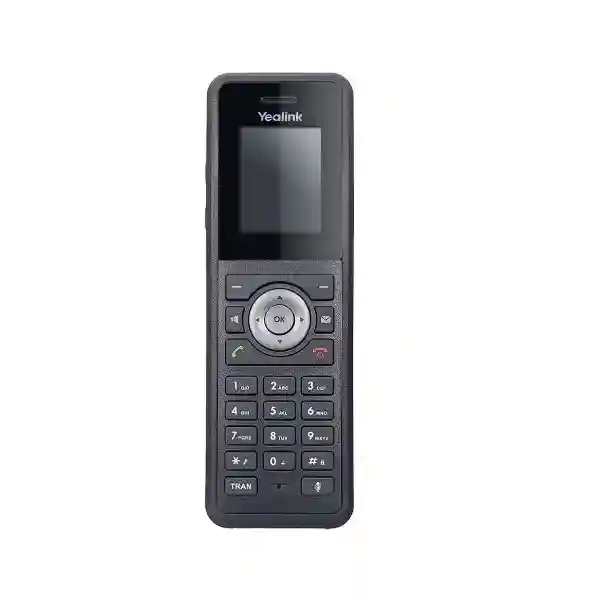
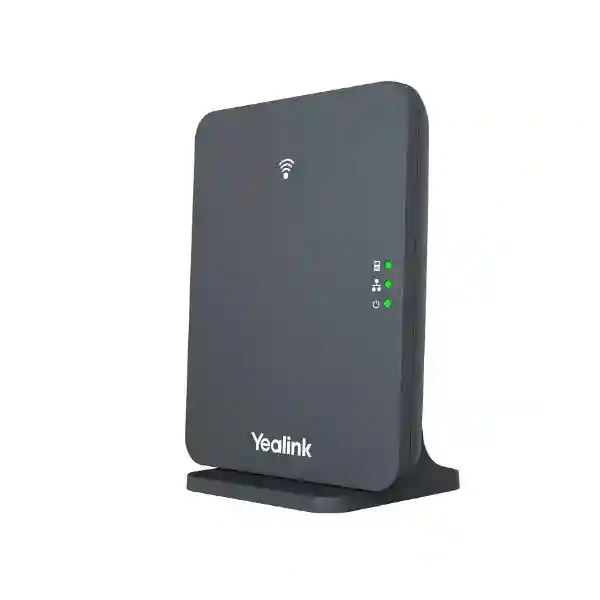
The Yealink W79P Pro is a professional ruggedized DECT IP phone system built around the W70B base station and W59R Pro handset. It is designed for teams that need mobility, dependable SIP calling, strong handset protection and practical safety functions in environments such as warehouses, manufacturing floors, maintenance areas, workshops, hospitality back-of-house operations and logistics sites. Yealink specifies support for up to 10 SIP accounts, up to 10 registered handsets and up to 20 simultaneous calls, creating room for a small or medium operational team to grow without immediately replacing the DECT core.
For Tanzania buyers, the value is not simply that the phone is cordless. The W59R Pro handset is IP67 rated, drop-resistant up to 2 metres, equipped with Bluetooth 5.2, a 2.4-inch 240 × 320 colour screen, vibration alerting, flexible noise reduction and configurable safety alarms. The result is a communication endpoint intended for people who move through operational spaces rather than remain at a desk all day.
W79P Pro = W70B DECT IP base + W59R Pro rugged handset.
Best suited to mobile staff who need SIP calling in tougher workplace conditions.
Ask FourTeck to check PBX compatibility, DECT coverage, repeaters, PoE, quantity and provisioning before ordering.
What makes the Yealink W79P Pro different?
The W79P Pro is positioned above ordinary office cordless phones because it combines SIP telephony with a rugged handset intended for challenging environments. The W59R Pro carries an IP67 ingress-protection rating, is designed to resist dust and water exposure within the limits of that rating, and is specified by Yealink as drop-resistant up to 2 metres. Its antimicrobial, scratch-resistant and disinfectant-resistant design is useful where handsets are shared, cleaned frequently or carried through operational areas. These characteristics make the system relevant to industrial, logistics, hospitality, healthcare-support, facilities and field-service style workflows where a consumer cordless phone would be a poor fit.
Rugged handset
IP67-rated W59R Pro handset, with dust and water resistance within the published rating and protection designed for tougher workplace handling.
Scalable single-cell base
The W70B can register up to 10 compatible Yealink DECT handsets, support up to 10 SIP accounts and process up to 20 simultaneous calls.
Worker safety functions
Push-button, no-movement, man-down and running alarm functions can support defined workplace safety procedures when correctly configured.
Modern headset support
Built-in Bluetooth 5.2 allows compatible Bluetooth headsets, while the handset also supports vibration alerts for noisy environments.
Verified W79P Pro technical highlights
| System composition | W70B DECT IP base station + W59R Pro rugged DECT handset |
| SIP accounts | Up to 10 |
| Registered handsets | Up to 10 compatible Yealink DECT handsets |
| Simultaneous calls | Up to 20 system-wide; up to 2 per handset |
| Handset display | 2.4-inch, 240 × 320 TFT colour display |
| Protection | IP67 handset; Yealink also specifies resistance to drops up to 2 metres |
| Bluetooth | Bluetooth 5.2 on W59R Pro |
| Battery endurance | Up to 28 hours talk time and up to 320 hours standby time in ideal conditions |
| DECT range | Up to 50 m indoors and 300 m outdoors in ideal conditions |
| Audio | HD audio, full-duplex speakerphone, FNR noise reduction, HAC support |
| Safety alarms | Push-button, no-movement, man-down and running alarms |
Published range and battery figures are laboratory or ideal-condition figures, so practical results depend on building materials, radio conditions, call patterns, Bluetooth use, coverage design and other environmental factors. For projects with multiple floors, long corridors, metal shelving, machinery or separated operational zones, a proper DECT coverage review is more useful than relying only on maximum range figures.
Compatibility, PBX integration and deployment planning
The W79P Pro is a SIP-based DECT system, so it should be treated as part of the business voice architecture rather than as a stand-alone consumer telephone. Before procurement, the PBX or hosted voice platform should be checked for SIP registration requirements, supported codecs, security expectations, dial plan, voicemail, caller ID, transfer behaviour and any provisioning profile needed. Yealink supports common SIP functions and remote provisioning workflows, but the exact behaviour available to users can depend on the call-control platform.
The W70B base uses Ethernet and supports Power over Ethernet, which can simplify installation when a suitable PoE switch is already available. However, PoE budget, VLAN design, DHCP, DNS, firewall policy and Quality of Service should still be reviewed. A DECT system can provide excellent mobility while the actual voice traffic still depends on the wired IP network and upstream PBX or SIP service. In other words, radio coverage and IP voice quality are separate design questions and both need to be right.
For broader voice planning, FourTeck Tanzania’s business technology overview explains how IP telephony connects with switching, security, cabling and support. Buyers can also use the FourTeck Tanzania technology shop guidance to review product-selection factors such as compatibility, capacity, infrastructure and lifecycle. For organizations needing design, configuration or integration help, the FourTeck Tanzania services page outlines broader telecom, networking and lifecycle support. A specialist FourTeck IP phone resource is also available for customers comparing Yealink and other business VoIP endpoints.
Where the W79P Pro fits best
Warehouses and logistics
Supervisors, pick-pack teams, loading-bay staff and stock-control users can move around without being tied to a desk phone. Vibration and noise reduction are useful where background noise makes ordinary alerting less effective.
Manufacturing and workshops
Rugged protection and safety alarms can support communication in production or maintenance environments, subject to appropriate site procedures and risk assessment.
Hospitality operations
Engineering, housekeeping, security and facilities teams can use cordless handsets while working across back-of-house spaces, service areas and operational zones.
Facilities and maintenance
Mobile technicians can remain reachable while moving between plant rooms, stores, corridors and service areas, reducing dependence on personal mobile numbers for internal operational calls.
Yealink W79P Pro Tanzania
Organizations searching for the Yealink W79P Pro in Tanzania are typically looking for more than a cordless handset. They need a practical way for warehouse, production, security, hospitality, maintenance or operations staff to stay reachable while moving through the workplace. The W79P Pro addresses that requirement by combining the W70B SIP DECT base with the W59R Pro rugged handset. Its IP67 rating, 2-metre drop resistance, vibration alerting, Bluetooth 5.2 and worker-safety alarm functions make it particularly relevant where a standard desk phone or fragile consumer cordless device would not suit the environment.
For a Tanzania deployment, begin by mapping the actual work zones: offices, stores, workshops, receiving areas, loading bays, production areas, corridors, outdoor transition spaces and any rooms with thick walls or metal structures. Yealink publishes a maximum DECT range of up to 50 metres indoors and 300 metres outdoors in ideal conditions, but real sites can be very different. Warehouses with high racking, reinforced walls or machinery may need careful base positioning or repeaters. The W70B supports up to six RT30 repeaters, so an installer can extend coverage when the single-cell design remains appropriate. For very large or multi-building projects, a Yealink multi-cell architecture may be a better design than stretching one base beyond its intended role.
The network side matters equally. The W70B connects by Ethernet and supports PoE, which is useful when the network switch is already designed to power IP endpoints. Voice VLANs, DHCP, firewall rules, DNS and Quality of Service should be validated together with SIP account information. Businesses should also identify who will use the phones, how many simultaneous calls are realistic, whether Bluetooth headsets are required and whether alarm functions will be integrated into a defined response process. Safety alarms are useful tools, but they do not replace workplace safety procedures, monitoring responsibility or emergency planning.
When requesting a Tanzania quotation, provide the number of handsets, PBX or hosted SIP platform, site type, approximate floor area, building layout and any known difficult coverage zones. This gives FourTeck a better basis for checking whether one W79P Pro system is enough, whether additional W59R Pro handsets are required, whether repeaters should be considered and whether switching or cabling changes are needed. The goal is a complete communication solution that fits the operational environment instead of a box-only purchase.
Yealink W79P Pro DECT Phone System Dar es Salaam
In Dar es Salaam, the Yealink W79P Pro is a strong fit for businesses operating warehouses, distribution centres, workshops, hotels, large retail back rooms, manufacturing facilities and technical service environments where employees need to move while remaining connected to the company phone system. A cordless SIP extension allows operational staff to answer or transfer business calls without relying on personal mobile phones, while the rugged W59R Pro handset is designed for conditions where dust, moisture, frequent handling and occasional drops are realistic concerns.
A Dar es Salaam deployment should be planned from the building outward. A compact office-and-store environment may be covered by one well-positioned W70B base, while a large warehouse with metal racks, partitioned rooms or loading areas can create radio shadows. The published ideal-condition indoor range is not a guarantee for every floor plan. Base placement should therefore avoid hidden corners, enclosed cabinets and areas surrounded by dense metalwork. Where coverage is marginal, RT30 repeaters can extend the single-cell system, but their placement should be based on measured coverage rather than guesswork. If multiple floors or buildings must support continuous roaming, a Yealink multi-cell design can be more appropriate.
Many Dar es Salaam organizations already use managed Ethernet switching for phones, cameras and Wi-Fi. The W70B can use PoE, making installation cleaner when a suitable PoE switch port is available. IT teams should still confirm VLAN membership, switch-port configuration, DHCP, DNS, firewall policy, SIP registration and upstream internet or trunk quality. If the same LAN carries CCTV, user data, guest Wi-Fi and voice, segmentation and Quality of Service can help prevent avoidable call-quality problems during heavy traffic periods.
Procurement teams should specify whether the requirement is for one starter system or a wider handset rollout. The base can register up to 10 compatible Yealink DECT handsets and supports up to 20 simultaneous calls, but call patterns, PBX limitations and user roles should be reviewed. Include headset requirements, alarm-function needs, charging locations and expected shift patterns in the quotation request. For hotels or facilities teams, it can also be useful to identify which staff need handsets by role rather than simply ordering one device for every employee. This creates a clearer bill of materials and helps avoid unnecessary hardware.
Yealink W79P Pro DECT Phone System Mwanza
Businesses in Mwanza may consider the Yealink W79P Pro when staff need reliable internal voice mobility across warehouses, hospitality properties, workshops, stores, service areas or operational compounds. The system is especially relevant where employees move continuously between work zones and a fixed desk handset would interrupt the workflow. The W59R Pro provides a rugged interface with IP67 protection, a colour screen, Bluetooth 5.2 and vibration alerts, while the W70B connects the cordless handset environment to a SIP-based business phone system.
For Mwanza projects, coverage planning should consider the physical construction of the site. Thick walls, metal doors, storage racks, machinery and floor separation can reduce DECT coverage even when the theoretical distance seems short. A useful planning exercise is to mark the normal route of each user: reception to warehouse, workshop to parts store, housekeeping floor to service area, or security post to operations room. The base should be positioned to serve real movement patterns. If the requirement extends into detached buildings or distant sections of a compound, additional radio design may be necessary rather than assuming one base will cover everything.
Power and network resilience also deserve attention. The W70B supports PoE, which allows a UPS-backed PoE switch to keep the base powered during short electrical interruptions if the broader PBX and network are also protected. That does not guarantee end-to-end calling during every outage, because the SIP server, internet link, router and upstream provider may have separate dependencies, but coordinated power design improves resilience compared with powering devices independently without a plan. Cable quality, switch configuration and network documentation are equally important for maintainability.
When seeking a Mwanza quotation, buyers should provide the exact model name, quantity of W59R Pro handsets, existing PBX platform and site information. If the business currently has analog extensions, clarify whether an IP PBX migration is part of the project. If it already uses SIP phones, provide the PBX make, model or hosted service. This helps determine whether the W79P Pro will be deployed as a simple extension group, a mobile operational subsystem or part of a larger voice upgrade.
Yealink W79P Pro DECT Phone System Arusha
Arusha has a diverse business environment that includes hospitality, tourism support, logistics, education, offices, workshops and service facilities. The Yealink W79P Pro can suit these organizations when the requirement is rugged cordless SIP communication rather than ordinary desk telephony. Hotel engineering teams, security staff, maintenance personnel, stores teams and supervisors can carry a W59R Pro while moving through operational areas, allowing calls to remain on the company voice system with standard transfer, hold, voicemail and extension functions supported by the connected PBX.
For hospitality environments in particular, handset allocation should follow workflow. A property may not need every employee to carry a DECT device. Instead, handsets can be assigned to engineering, duty management, security, housekeeping supervision and stores. The vibration alarm is useful in noisy service areas, while Bluetooth headset support can help staff who need hands-free communication. Safety alarms such as man-down or no-movement can also be configured where a documented response process exists, but buyers should treat these features as part of a broader safety system rather than a substitute for emergency procedures.
Arusha sites can also vary significantly in layout. A lodge-style property with multiple structures presents a different radio problem from a warehouse or single office block. The W70B is a single-cell base, so the business should verify whether a single-cell design matches the coverage requirement. Up to six RT30 repeaters can extend coverage, while Yealink multi-cell systems are available for larger roaming environments. An early site review can prevent the common mistake of buying extra handsets before confirming that the radio design can support all areas where those handsets will be used.
For purchasing, include the number of users, intended operational roles, desired coverage areas, PBX platform, available PoE switching and whether the site has structured cabling at the preferred base location. If call recording, queues, ring groups or specific extension features are required, list them as well. These functions may be controlled mainly by the PBX, and compatibility should be checked before finalizing the handset deployment. A precise requirement makes it easier to quote the correct quantity of bases, handsets, repeaters and supporting network components.
Yealink W79P Pro DECT Phone System Dodoma
The Yealink W79P Pro can support organizations in Dodoma that need mobile business telephony for facilities, warehouses, public-facing operations, technical teams, education campuses, hospitality environments or distributed office support. Because the system uses SIP, the handset behaves as part of an IP telephony platform rather than as an isolated radio. Users can receive internal and external calls according to the connected PBX configuration while moving through the building within the available DECT coverage area.
A practical Dodoma deployment should start with user roles and traffic. The W70B can register up to 10 handsets and support up to 20 simultaneous calls, but not every organization needs the maximum. A maintenance team may have five users with modest call traffic, while a busy operational service environment may need more active calls and different ring groups. Matching handset quantity and SIP accounts to actual workflows helps control cost while preserving expansion headroom. Administrators should also define extension numbering, incoming call routing, voicemail rules and after-hours behaviour before rollout.
The radio environment must then be tested. Published DECT distance figures assume ideal conditions. Reinforced concrete, server rooms, dense storage areas, metal partitions and external structures can reduce usable range. For that reason, base placement should aim for a central, elevated and network-accessible location where practical. Repeaters can be considered where the site remains suitable for a single-cell design. If users must roam continuously across several buildings or large separated areas, the project should evaluate a multi-cell alternative instead of overextending the W70B.
Procurement in Dodoma should also account for infrastructure. The W70B’s PoE support is helpful if the network switch can supply it, and UPS-backed switching can improve local continuity. Ask for compatibility checking if the PBX is hosted, cloud-managed or supplied by another vendor. Include any requirement for Bluetooth headsets, alarm functions, remote provisioning, LDAP or shared directories. With these details, the product can be evaluated as part of a complete business communication design rather than simply as a rugged cordless handset.
Yealink W79P Pro DECT Phone System UAE
For UAE businesses, the Yealink W79P Pro addresses mobile voice requirements in warehouses, logistics centres, hospitality operations, industrial facilities, workshops and service environments. The combination of W70B base and W59R Pro handset gives organizations a SIP-based cordless endpoint with rugged protection, Bluetooth 5.2, vibration alerting, safety alarms and centralized provisioning options. This is useful when internal communication must remain part of the company PBX while users move away from fixed desks.
Warehousing and logistics projects in the UAE should pay particular attention to radio planning. High-bay shelving and dense stored goods can affect signal behaviour, while large facilities may exceed the practical reach of a single W70B. The published maximum range provides a planning reference only. A site survey or staged test is advisable when coverage is mission-critical. RT30 repeaters can extend the single-cell system, and multi-cell Yealink platforms should be considered for larger campuses or buildings that require seamless roaming across multiple coverage zones.
The SIP integration process should confirm PBX compatibility, account provisioning, voice VLAN, PoE, QoS and firewall rules. In a multi-site organization, standardizing handset profiles, naming conventions and provisioning templates can make support simpler. Yealink RPS and remote provisioning methods can reduce manual configuration, although the chosen PBX or device-management process should be tested with the exact deployment. Security settings such as TLS and SRTP should be aligned with the call platform rather than enabled in isolation without confirming support.
UAE procurement teams should request the exact W79P Pro rather than the older W79P, because the Pro model uses the W59R Pro handset and includes updated features such as the 2.4-inch display and Bluetooth 5.2. A quotation request should therefore state the full model, quantity, PBX platform, coverage requirement and whether repeaters or additional handsets are needed. This avoids confusion with older stock or legacy specifications and makes technical comparison more accurate.
Yealink W79P Pro DECT Phone System Uganda
Uganda organizations looking for the Yealink W79P Pro are often trying to solve a mobility problem inside the workplace. They may have staff moving between a store, workshop, loading area, office, hospitality floor or service zone while still needing access to internal extensions and customer calls. The W79P Pro provides that mobility through DECT while preserving SIP connectivity to a business PBX. The rugged W59R Pro handset makes the system particularly suitable for operational users rather than only administrative desks.
The system can register up to 10 handsets on one W70B base, which is useful for small and medium teams. However, the number of handsets should not be confused with radio coverage. A base may support the device count but still require repeaters or a different architecture if users work across a large compound. Buyers should map operating zones and identify where calls must remain active. Metal structures, concrete walls and long distances can reduce range compared with ideal-condition specifications. For large premises, evaluate whether a Yealink multi-cell design is more appropriate.
Network readiness matters as well. A PoE switch can power the W70B and simplify cabling, but the switch port still needs the correct VLAN and network policy. If the PBX is hosted over the internet, WAN stability becomes part of the call-quality equation. If the PBX is on-premises, local switching, routing and backup power become especially important. Voice traffic should be planned alongside CCTV, Wi-Fi and normal data loads so busy periods do not create avoidable packet loss or latency.
For Uganda projects, specify whether the requirement is for new installation, expansion or replacement. Include the existing PBX model or service, desired handset count, site size, major building materials, headset requirements and whether worker-safety alarms will be used. This information helps turn a product request into a practical deployment plan. Regional buyers can also compare broader FourTeck voice offerings through the specialist IP phone resource linked earlier, while Tanzania-based enquiries can use the dedicated contact channel at the end of this page.
Yealink W79P Pro DECT Phone System Kampala
Kampala businesses with active warehouses, hotels, workshops, retail back-office operations, service centres or facilities teams can use the Yealink W79P Pro to keep mobile staff connected to a SIP phone system. Instead of asking staff to carry desk phones between locations or use personal mobile numbers for every internal issue, the DECT handset provides a managed extension within the configured coverage area. This makes call transfer, internal dialing and team reachability easier to standardize.
The W59R Pro is designed for more demanding handling than a typical office handset. Its IP67 rating, drop resistance, vibration alerting and Bluetooth support are useful where phones are carried continuously during shifts. For noisy work areas, vibration plus flexible noise reduction can improve usability. The handset also includes occupational-safety alarm functions that can be configured for push-button, no-movement, man-down and running events. Organizations should assign responsibility for receiving and responding to those alarms; a feature is only useful when the operational process behind it is clear.
Coverage testing is essential in Kampala premises that combine offices and warehouses or extend across several floors. The W70B is a single-cell base, and its ideal-condition range should not be interpreted as guaranteed through every wall or storage area. Positioning the base near the centre of the operational zone can help, but repeaters may still be needed. Up to six RT30 repeaters are supported. Where the building is large enough to require multiple independent coverage cells, a W80, W90 or other Yealink multi-cell architecture may be more suitable.
Before ordering, confirm the SIP platform, number of extensions, simultaneous-call demand and power/network arrangement. If PoE is available, the W70B can be powered from the switch. If not, plan adapter placement carefully. For organizations working across multiple branches, consistent provisioning and handset naming can reduce support complexity. A well-documented rollout should record which handset belongs to which role, its extension, charger location, alarm configuration and associated coverage zone.
Yealink W79P Pro DECT Phone System Arua
For organizations in Arua, the Yealink W79P Pro can provide a structured alternative to ad hoc mobile calling inside operational facilities. A logistics business, hotel, workshop, warehouse, campus or service organization may have staff who are rarely seated at a desk but still need to receive internal calls, transfer customer enquiries or coordinate with reception and management. By connecting the W70B base to a SIP PBX, the W59R Pro handset becomes a mobile extension within the site rather than a separate mobile-phone service.
The rugged handset design is especially relevant where equipment is exposed to dust, humid conditions, frequent handling or occasional drops. IP67 does not mean indestructible, but it provides a much stronger protection profile than a typical office cordless phone. The handset’s Bluetooth 5.2 support can help users who require hands-free communication, while vibration alerts improve call awareness in noisy spaces. The colour screen and illuminated keypad support day-to-day usability for staff who need directory, call history and extension functions.
Arua deployments should pay close attention to infrastructure consistency. If a site has limited structured cabling, the best base location may not yet have Ethernet. Running the right cable to a central location can be more effective than placing the base near the network cabinet simply because that is convenient. Where PoE is available, a single Ethernet cable can carry both data and power to the base. Where power interruptions are a concern, connect critical networking equipment to suitable UPS protection and understand which upstream services must remain available for calls to continue.
For quotation planning, provide a simple site sketch if available, approximate distances, walls or buildings that separate work areas, user count and existing phone-system information. State whether the purpose is internal operational calling, customer-facing calls, safety coordination or a combination. These details help determine whether one W79P Pro starter system is enough, how many additional W59R Pro handsets are required and whether repeaters or a larger DECT topology should be considered.
Yealink W79P Pro DECT Phone System Mbarara
The Yealink W79P Pro is relevant to Mbarara businesses that need dependable business voice while staff are moving through operational spaces. Warehouses, hospitality properties, service workshops, education facilities and growing companies can use the system to extend SIP-based voice away from fixed desks. Users carry the W59R Pro handset, while the W70B base connects that mobility to the PBX. This allows internal extensions, incoming business calls and common call-control features to follow the user within the designed DECT coverage area.
Because the W70B supports up to 10 handsets and 20 simultaneous calls, the system offers practical capacity for small and medium teams. Still, buyers should size by workflow. A busy customer-service support team may generate more concurrent calls than a maintenance team of the same size. Likewise, shift handover may mean some handsets are shared rather than assigned permanently. Charging locations, spare battery procedures and handset labeling should therefore be part of the operating plan, especially where devices are passed between users.
For coverage, avoid relying only on distance. DECT performance changes with walls, shelving, equipment and building layout. A single W70B may cover a straightforward office or moderate warehouse well, while a divided site may need repeaters. If users must roam across several floors or structures, evaluate a multi-cell option. The best design is the one that gives predictable call continuity where staff actually work, not the one that maximizes theoretical range on paper.
Mbarara procurement requests should include the PBX or SIP service in use, desired number of extensions, approximate simultaneous-call requirement, site layout and network readiness. Ask whether the available switch supports PoE and whether voice uses a dedicated VLAN. If the phone system is new, include requirements for IVR, reception, call queues, voicemail and branch connectivity. This makes it easier to determine whether the W79P Pro is one endpoint component within a larger IP PBX project.
Yealink W79P Pro DECT Phone System Gulu
Organizations in Gulu can use the Yealink W79P Pro when communication needs extend beyond desks into stores, maintenance zones, warehouses, hospitality operations or service compounds. A rugged DECT handset is particularly useful for team leaders and operational staff who need to answer business calls while walking through the site. The W59R Pro is IP67 rated and designed for demanding workplace use, while the W70B provides SIP connectivity to the organization’s PBX or hosted voice platform.
In practical terms, planning starts with three questions: who needs a handset, where will they carry it and what calls must they handle? A security user may mainly receive internal alerts, a warehouse supervisor may coordinate with reception and dispatch, while a maintenance technician may need to receive external supplier calls. These different roles can be placed in ring groups or extension plans on the PBX. The W79P Pro supplies the mobile endpoint; the PBX determines much of the call routing and business logic.
The DECT radio design should be validated for the site. One base supports the handset count but cannot overcome every physical obstacle. Buildings with separated wings, metal roofing, reinforced walls or long outdoor distances may need repeaters or a multi-cell solution. A staged deployment can be sensible: install the base at the planned location, test calls along actual user routes, record weak spots and then add radio infrastructure only where justified. This is more reliable than purchasing repeaters blindly.
For Gulu quotations, identify whether the organization already has Ethernet at the proposed base location. If the network switch supports PoE, installation can be simplified. Confirm internet reliability if using cloud PBX, and consider UPS protection for the switch, router and any local PBX hardware. Include the expected number of handsets, use of Bluetooth headsets, safety alarm requirements and any integration with directories or provisioning tools. A complete request enables a more accurate bill of materials and support plan.
Yealink W79P Pro DECT Phone System Kenya
Kenyan businesses operating warehouses, distribution facilities, hotels, factories, workshops and service environments can use the Yealink W79P Pro as a rugged mobile extension of their SIP communication system. The W59R Pro is built for mobility and tougher handling, while the W70B links cordless users to the business voice network. This can reduce dependence on personal mobiles for internal operational calls and make extension dialing, transfers and reception workflows easier to manage.
For larger Kenyan sites, DECT architecture is the primary design question. One W70B can support up to 10 handsets and 20 simultaneous calls, but physical coverage may become the limiting factor before capacity does. Warehouses with high racking and manufacturing environments with machinery can produce unpredictable radio conditions. Repeaters can extend a single-cell network, while Yealink multi-cell systems are more appropriate where multiple radio cells are required for seamless roaming across larger facilities. Buyers should therefore describe the site rather than only the handset quantity.
Integration with an existing IP PBX should confirm SIP credentials, codec support, transfer behaviour, voicemail and security settings. The W70B supports Ethernet and PoE, allowing it to fit into managed network designs. Where voice, cameras, Wi-Fi and business applications share the same infrastructure, VLANs and traffic management should be reviewed to keep voice quality consistent. Remote provisioning can also be valuable for companies with multiple branches because standardized configuration reduces manual setup and makes replacement easier.
Kenya procurement teams should clearly distinguish W79P Pro from the older W79P. The Pro package uses the newer W59R Pro handset with a 2.4-inch display, Bluetooth 5.2 and updated rugged/safety features. When comparing suppliers, verify the exact bundle, included components, regional frequency version, warranty terms, accessories and lead time rather than comparing model names loosely. That level of specification avoids receiving an older handset when the project was designed around Pro features.
Yealink W79P Pro DECT Phone System Kuwait
The Yealink W79P Pro is suitable for Kuwait businesses that need mobile SIP communication in logistics, warehousing, hospitality, industrial support, maintenance or service environments. It combines the W70B base station with the W59R Pro rugged handset, providing a cordless business extension with IP67 protection, Bluetooth 5.2, vibration, safety alarms and noise-reduction features. This makes the system useful where staff regularly move through operational areas rather than remain at fixed workstations.
Kuwait deployments should account for both indoor and semi-industrial conditions. Warehouses with dense metal shelving and facilities with separated service corridors can reduce DECT range. The published 50-metre indoor and 300-metre outdoor ranges are ideal-condition figures, so an RF assessment or practical coverage test is recommended for critical projects. Repeaters can extend the W70B system, but very large facilities should compare a Yealink multi-cell design where multiple base stations can provide broader roaming coverage.
On the IP side, the W70B should be connected to a stable LAN with suitable QoS, addressing and security. PoE can reduce the need for a separate power outlet at the base location. If the organization uses a hosted PBX, check WAN redundancy and firewall/NAT requirements. If the PBX is on-site, confirm local server availability, backup power and extension licensing. The phone hardware alone cannot compensate for an unstable voice platform, so infrastructure readiness should be part of the procurement process.
When requesting pricing in Kuwait, state the exact Pro model, quantity of W59R Pro handsets, PBX platform, coverage requirement and whether Bluetooth headsets or repeaters are needed. Organizations with multiple sites should also ask about consistent provisioning templates. The objective is to make each handset part of a repeatable voice standard, with documented extension assignments, firmware management, directory settings and alarm policies that can be maintained over time.
Yealink W79P Pro DECT Phone System Ghana
Ghana businesses that need rugged cordless communication for warehouses, logistics, industrial support, hospitality or facilities management can consider the Yealink W79P Pro as a SIP-connected mobility solution. The W59R Pro handset gives users a robust device with IP67 protection, a colour screen, Bluetooth 5.2, vibration alerts and worker-safety alarm functions, while the W70B base provides connection to the enterprise voice network.
A Ghana project should begin with the operational map rather than simply the floor area. Two sites with the same dimensions can behave very differently if one has open space and the other has thick walls, racking or machinery. Identify the routes where users must remain reachable and test coverage there. If a single base cannot provide stable service, RT30 repeaters can extend the W70B environment. If continuous roaming across multiple buildings is required, a multi-cell Yealink system may provide a cleaner long-term architecture.
The SIP platform should be reviewed before rollout. Confirm registration method, extension count, codec preferences, voicemail, transfer, ring-group behaviour and any TLS/SRTP requirements. The W70B supports PoE, so organizations with managed PoE switching can centralize power and potentially place network hardware on UPS protection. Voice VLAN and Quality of Service can be useful where business data, Wi-Fi and surveillance traffic share the LAN. Remote provisioning should also be considered where several bases or handsets will be managed over time.
For Ghana procurement, verify that the quote refers to W79P Pro and not the older W79P. Ask for the complete package contents, region-appropriate DECT version, accessories and warranty conditions. If the project is expansion of an existing Yealink environment, provide the installed base and handset models so compatibility can be checked. For new deployments, include expected future growth; choosing a system with enough account and handset capacity now can reduce disruption when additional operational staff need extensions later.
Yealink W79P Pro DECT Phone System Nigeria
In Nigeria, the Yealink W79P Pro is appropriate for organizations that require rugged wireless SIP communication in busy operational settings. Distribution centres, factories, hotels, workshops, service operations and facilities teams can benefit from a handset that stays connected to the business PBX while users move through the site. The W59R Pro is IP67 rated and designed for harsher handling than an ordinary office phone, while the W70B supports a scalable set of cordless extensions.
Large Nigerian facilities should assess DECT coverage carefully. The W70B can register up to 10 handsets, but its radio cell must still reach all relevant work zones. Dense warehouses, production machinery, stair cores and reinforced structures can shorten range. The correct approach is to test the intended base location and add repeaters only where needed. If users must roam across very large or multi-floor environments, compare a multi-cell Yealink system instead. Capacity and coverage should be sized independently because one can become a constraint before the other.
Power planning is also important. PoE can make the base easier to protect because the switch can be connected to centralized UPS power, but end-to-end voice continuity still depends on the router, PBX, internet link or SIP trunk. Network administrators should define voice VLANs, QoS and firewall policies consistently. In branch networks, standardized provisioning templates make it easier to deploy the same calling experience at several locations and reduce configuration mistakes.
Nigeria buyers should ask for a clear bill of materials that separates the W79P Pro starter bundle, extra W59R Pro handsets, repeaters, PoE/network components and any PBX licenses or services. This avoids comparing incomplete quotations. If safety alarms will be used, document who receives alarms and what response is expected. If Bluetooth headsets are planned, confirm compatible models and charging arrangements. The best deployment is one where device capability, radio coverage, network design and operational procedures all match.
Yealink W79P Pro DECT Phone System Seychelles
The Yealink W79P Pro can be useful for Seychelles hospitality, facilities, logistics, technical services and business operations that need mobile SIP communication within a defined property or site. Resort engineering teams, security users, housekeeping supervisors and maintenance personnel often move through service areas where desk phones are impractical. A W59R Pro handset allows these users to remain part of the company extension plan while moving within DECT coverage.
Island and resort environments can present unusual layout challenges. Guest buildings, back-of-house corridors, plant rooms and separated service structures may not fall neatly within one radio cell. Because the W70B is a single-cell base, a site should verify whether repeaters are enough or whether a multi-cell system is more suitable. Outdoor ideal-condition range figures are not a substitute for testing across real walls and structures, particularly where operational areas are dispersed around a property.
The rugged properties of the W59R Pro are valuable in hospitality and maintenance workflows. IP67 protection, 2-metre drop resistance, vibration alerts and Bluetooth support can reduce the fragility associated with standard office cordless phones. Safety alarms may support lone-worker procedures where the property has a defined monitoring and response process. The antibacterial and disinfectant-resistant design is also useful for shared devices that are cleaned between shifts, although cleaning should follow Yealink guidance.
Seychelles procurement should include site details because shipping a starter kit without understanding coverage can create delays if repeaters or extra infrastructure are later required. Provide a basic property map, number of users, PBX platform, Ethernet availability and key zones that must have service. If the property uses centralized IT standards across several locations, include provisioning and firmware-management requirements. A complete quotation should cover the communication system as deployed, not just the handset package.
Buying and sizing guidance for the W79P Pro
1. Count mobile users
List the people who genuinely need cordless access by job role and shift. The starter system includes the base and one rugged handset; extra users require additional compatible handsets.
2. Map coverage
Mark where each role works and where calls must stay active. Treat published range as a reference, then validate difficult areas such as metal racks, plant rooms and separate buildings.
3. Confirm SIP platform
Share the PBX make, model, cloud service or SIP provider so registration, features and security can be checked before deployment.
4. Check network readiness
Review PoE, voice VLAN, DHCP, DNS, firewall, QoS and UPS requirements. DECT solves cordless mobility, but SIP calls still depend on the IP network.
W79P Pro versus ordinary office DECT phones
The biggest difference is the intended environment. A standard office DECT handset is typically designed for desks, meeting rooms and general indoor mobility. The W59R Pro is designed for demanding workplaces where shock, dust, water exposure, noisy areas and safety requirements are more relevant. Buyers should not choose the W79P Pro simply because it is the highest-sounding model. If employees work mainly at desks in a clean office, a lighter Yealink DECT handset may be more economical and comfortable. The W79P Pro earns its value when the rugged and safety features address a real operational need.
The system is also different from Wi-Fi calling. DECT uses its own radio environment for handset connectivity, while the base station connects to the IP network for SIP. This can simplify voice mobility in environments where business Wi-Fi is busy or where voice roaming is better handled with a dedicated DECT design. However, very large campuses may still require a multi-cell DECT architecture. The correct decision depends on coverage, user density, number of concurrent calls, building layout and management preference.
Quotation checklist
For a faster and more accurate quotation, provide the information below. It helps distinguish a simple product sale from a project that needs coverage, network or PBX design.
Frequently asked questions
What is included in the Yealink W79P Pro system?
The W79P Pro is built around the W70B DECT IP base station and W59R Pro rugged handset. Package contents can vary by regional bundle, so a quotation should confirm exactly what is included, including power accessories and charger components.
How many handsets can the W70B support?
Yealink specifies support for up to 10 compatible DECT handsets, up to 10 SIP accounts and up to 20 simultaneous calls. Each handset can support up to two simultaneous calls.
Is the W59R Pro waterproof?
The handset is IP67 rated, which indicates strong dust protection and temporary water-immersion resistance within the conditions of the rating. It should still be used and maintained according to Yealink guidance rather than treated as indestructible.
Can the W79P Pro work with a cloud PBX?
It is a SIP DECT system, so it can work with compatible SIP platforms. Compatibility, provisioning method, codecs, security settings and feature behaviour should be confirmed with the specific cloud PBX or hosted provider before rollout.
Does it support Bluetooth headsets?
Yes. The W59R Pro includes Bluetooth 5.2 support for compatible Bluetooth headsets, which can be useful for mobile users who need hands-free communication.
How far does the DECT signal reach?
Yealink lists up to 50 metres indoors and 300 metres outdoors in ideal conditions. Real coverage varies with walls, metal structures, shelving, interference, base placement and site layout, so practical testing is recommended.
Can repeaters be used?
Yes. The W70B supports up to six RT30 repeaters. Repeaters can extend a single-cell deployment, but very large sites should compare a multi-cell DECT architecture rather than relying on excessive repeater chaining.
What safety alarms are available?
The W59R Pro supports push-button, no-movement, man-down and running alarms. Organizations should configure these functions as part of a defined monitoring and response process.
Decision recap
Choose the Yealink W79P Pro when your organization needs rugged cordless SIP communication for mobile staff and the IP67 protection, Bluetooth, vibration alerts and safety functions solve real workplace problems. It is especially compelling for warehouses, logistics, manufacturing, facilities and hospitality operations where a conventional office handset is not ideal.
Before ordering, verify the exact Pro bundle, PBX compatibility, handset quantity, simultaneous-call demand, DECT coverage, PoE, network readiness and whether repeaters or a multi-cell design are required. For Tanzania buyers, FourTeck can help convert those requirements into a practical bill of materials and quotation.
Consultation and related FourTeck resources
A rugged DECT project often touches several parts of the IT environment: SIP call control, network switches, PoE, cabling, VLANs, firewall rules, UPS protection and user provisioning. FourTeck Tanzania can help buyers review the wider requirement instead of evaluating the handset alone. Use the linked Tanzania home, shop and services resources above for broader infrastructure guidance, or review the FourTeck IP phone resource when comparing endpoint categories and brands.
To request a quotation or compatibility review, use the verified FourTeck Tanzania contact page. Include the exact product name, quantity, PBX platform, site type and coverage requirement so the discussion can start with useful technical context.



Reviews
There are no reviews yet.