
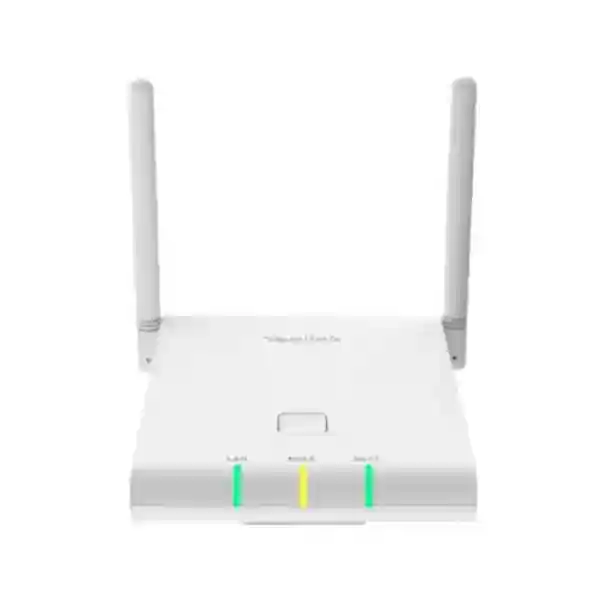
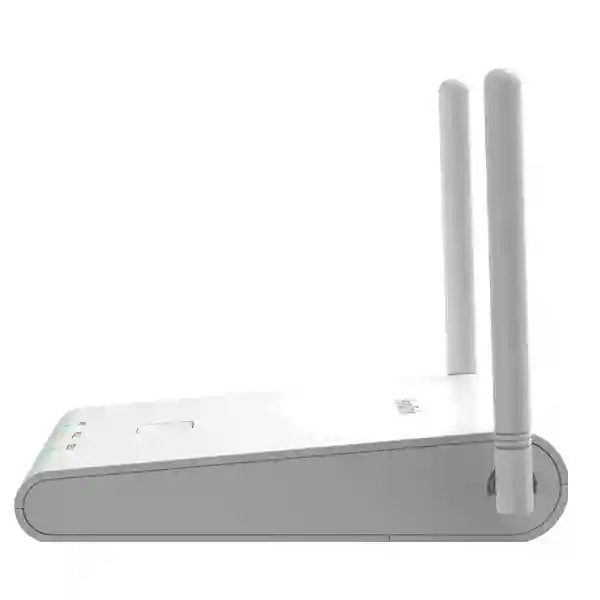
Yealink W90 DECT Multi-Cell System
The Yealink W90 DECT Multi-Cell System is designed for organizations that need business-grade cordless voice across a larger building, multiple floors or a complex operational site. Instead of depending on a single DECT base, the W90 architecture uses a W90DM DECT Manager with one or more W90B base stations so compatible Yealink cordless users can move through the covered area while the system supports roaming and active-call handover. For Tanzania buyers, that makes the platform especially relevant when warehouse staff, hotel teams, healthcare personnel, retail supervisors, facilities teams or office users need to remain reachable while moving away from a desk.
What the Yealink W90 system is designed to solve
A normal desk phone works well when the user stays at a workstation. A single-cell cordless system adds mobility but can become limiting when a building is large, walls are dense, several floors must be covered or many people need to make calls at the same time. The W90 addresses that gap with a coordinated multi-cell architecture. Yealink specifies a standard W90 multi-cell system for up to one W90DM, 60 W90B base stations, 250 handsets, 250 SIP accounts and 250 simultaneous calls. Yealink also documents an optional Virtual Integrator Manager architecture for substantially larger deployments, but that should be designed separately rather than assumed for every project.
The design value is not simply the headline capacity. Base stations must be placed so coverage overlaps appropriately, synchronization remains stable and traffic density is supported where calls actually occur. Yealink supports both over-the-air and LAN synchronization. This gives designers options in buildings where radio conditions make air synchronization difficult. External antennas on W90B can also assist coverage planning, while published DECT range figures of up to 50 metres indoors and 300 metres outdoors are ideal-condition references rather than guaranteed site results. Walls, steel, shelving, machinery, floor slabs, interference and user density can materially change practical coverage.
Seamless mobility
The multi-cell design supports roaming while idle and handover between synchronized bases during a call, helping mobile employees remain connected as they move between coverage zones.
Scalable capacity
A standard W90 system can scale to 60 base stations and 250 handsets, making it suitable for larger sites when base placement and call density are engineered correctly.
Central management
The W90DM provides centralized account configuration, base management and deployment functions, reducing the operational burden of treating each radio cell as an independent system.
Voice-ready network integration
PoE, SIP, VLAN, security and directory functions let the W90 fit into a properly designed business VoIP network rather than requiring an isolated communications infrastructure.
Verified W90 technical highlights
| System architecture | W90DM DECT Manager plus W90B base stations; Virtual Integrator Manager is optional for larger architectures |
| Standard W90 scale | Up to 60 bases, 250 handsets, 250 SIP accounts and 250 simultaneous calls |
| Calls per base | Up to 8 narrowband calls or 4 active wideband handsets per base depending on codec and system design |
| Synchronization | Air and LAN synchronization supported |
| Mobility | Roaming across the system and handover within synchronized groups |
| Network | 10/100M Ethernet, PoE, static/DHCP addressing, VLAN support and common SIP transport methods |
| Security | DECT encryption plus documented support for TLS, SRTP, HTTPS and secure configuration mechanisms |
| Directories | Local, remote, XML and LDAP directory options, with XSI directory/call-log capabilities where applicable |
| Published radio reference | Up to 50 m indoors and 300 m outdoors under suitable conditions; real buildings require survey-based validation |
Compatible Yealink endpoints and integration planning
Current Yealink support material lists compatibility across a broad group of Yealink handsets and devices, including W56H, W59R, W57R, W71H, W73H, W74H, W78H, WH62, WH63, CP930W, CP935W and DD Phone variants, with specific Virtual Integrator Manager limitations applying to some combinations. Older datasheets show a shorter compatibility list, so a quotation should confirm the exact handset model and firmware intended for the project rather than relying on an old brochure. Yealink also states that its DECT ecosystem is not designed for third-party DECT base or handset interoperability, which makes endpoint planning an important procurement step.
The W90 connects into an IP PBX or SIP provider environment. Before purchase, confirm SIP platform compatibility, extension count, codec policy, VLAN design, DHCP and DNS, firewall rules, provisioning approach and how directories will be integrated. FourTeck Tanzania’s business technology overview explains how voice, networking and security dependencies should be treated as one architecture. The Tanzania technology shop is useful when a W90 project also needs switches, phones, UPS, firewall or supporting infrastructure, while the technology services page provides context for design, installation and lifecycle requirements.
Deployment and site-survey guidance
A multi-cell DECT project should be planned from floor plans, user movement and expected simultaneous call density. Start by marking the areas where calls must work, then identify walls, lift cores, metal racking, cold-room structures, machinery, outdoor transitions and other obstacles that can affect radio propagation. A warehouse aisle may behave differently from an open office, and a hotel corridor may require different placement from guest rooms. Yealink’s deployment guidance uses measurement values such as RSSI and frame quality to validate candidate positions. The correct base count is therefore the number required to provide dependable coverage and capacity, not a simple formula based on square metres.
W90B uses PoE, so the access switch must provide adequate ports, power budget and VLAN support. Cabling locations should be chosen before bases are mounted. Where the voice environment shares switching with wireless access points, cameras or other PoE endpoints, calculate total PoE draw and protect the network rack appropriately. For adjacent network planning, FourTeck Tanzania’s Cisco Meraki CW9162I-MR network access page illustrates how PoE and uplink capacity affect connected endpoints, while the Cisco Meraki CW9164I-MR page provides another example of planning powered access devices as part of a managed LAN. These are not substitutes for W90 DECT; they are useful references for the shared switching and cabling layer that business voice depends on.
Buying checklist for a Yealink W90 quotation
Coverage: floor plans, indoor/outdoor areas, stairways, warehouses, corridors and locations where active-call handover is essential.
Users: handset quantity, job roles, rugged handset needs, conference devices and expected future growth.
Call traffic: approximate simultaneous calls in busy zones, not only the total number of registered handsets.
Voice platform: IP PBX or hosted SIP platform, extension plan, trunks, codecs, directories and provisioning requirements.
LAN readiness: available PoE ports, VLANs, cabling routes, DHCP, DNS, QoS and UPS-backed switching.
Implementation: site survey expectations, mounting access, configuration responsibility, testing, documentation and support scope.
Yealink W90 DECT Multi-Cell System Tanzania
Organizations evaluating the Yealink W90 DECT Multi-Cell System in Tanzania should begin with mobility and coverage, not with a base-station quantity. The W90 is most useful when employees must move through a site and still remain reachable on a business extension. Warehouses, hotels, hospitals, campuses, retail operations, factories, offices and logistics facilities can all have this requirement, but they create different radio and call-density conditions. A Tanzania deployment should therefore document where users walk during calls, which areas are mission-critical, where calls are concentrated, and whether outdoor transitions or separate buildings are included. This information determines where base stations should be considered and whether radio or LAN synchronization is the better design choice.
The network layer should be reviewed at the same time. W90B bases rely on Ethernet and can use PoE, so the project needs correctly placed network points, enough switch ports and a suitable PoE budget. Voice traffic should normally be coordinated with VLAN, DHCP, QoS, firewall and SIP platform requirements. If the customer is replacing an older phone system, extension numbering, trunks, reception call flow and directory integration should be mapped before deployment. For new sites, cabling and rack planning should reserve capacity for future bases rather than forcing expensive rework after occupancy.
Procurement teams in Tanzania should ask for the exact W90DM, W90B and handset quantities to be listed separately, along with any required power accessories, mounting items and implementation scope. Confirm the current compatible handset list and firmware at quotation time because Yealink has expanded endpoint support over the W90 lifecycle. Published indoor and outdoor distance figures should be treated as planning references, not guaranteed site coverage. A survey is especially valuable in buildings with thick masonry, multiple floors, metal storage, plant equipment or long corridors.
FourTeck Tanzania can frame the W90 within a complete voice-ready infrastructure conversation. The FourTeck Tanzania approach page explains the emphasis on compatibility and lifecycle planning, and the verified Tanzania contact page can be used to submit floor plans, handset counts, PBX details and quotation requirements. The objective is a W90 deployment that matches real user movement, call density and site conditions rather than one based only on catalog maximums.
Yealink W90 DECT Multi-Cell System Dar es Salaam
Dar es Salaam organizations often operate in multi-floor commercial buildings, logistics facilities, hospitality properties, private healthcare environments, retail sites and large offices where staff mobility is part of normal work. In these locations, W90 planning should distinguish between simple coverage and busy call zones. A corridor may need signal continuity but only a few active calls, while a reception, warehouse dispatch area, nursing station or operational floor can concentrate many users. Base placement should reflect both needs. Thick concrete, lift shafts, service cores and metal partitions can change radio behavior substantially, which is why copying a Wi-Fi access-point map or spacing bases evenly is not a reliable design method.
For a headquarters or call-intensive operation in Dar es Salaam, define the number of registered handsets and the expected simultaneous calls per area. Yealink’s standard W90 architecture can reach 250 handsets and 250 simultaneous calls across the system, but a single base has its own radio-call capacity. That means the base count may need to increase in high-traffic zones even when radio coverage appears adequate. The project should also identify users who need rugged handsets, conference devices or headset-style mobility and confirm that the selected models are on the current W90 compatibility list.
The wired network becomes part of voice quality. Each base requires a suitable Ethernet path and the PoE design should include spare budget. If the existing LAN is heavily used by cameras, access points, file transfers and cloud applications, voice VLAN and QoS policies should be checked before rollout. UPS protection for switches and the PBX or internet edge may also matter when short power interruptions would otherwise drop the entire cordless system. SIP trunk and IP PBX settings should be tested with the planned codec, directory and security configuration rather than assumed from a basic registration test.
A useful Dar es Salaam quotation request includes floor plans, approximate dimensions, wall and shelving information, handset roles, number of simultaneous calls, existing switch models, available PoE ports, PBX platform, SIP provider, extension plan and whether installation or survey support is required. This creates a clearer bill of materials and reduces the risk of underestimating bases, network ports or handset types.
Yealink W90 DECT Multi-Cell System Mwanza
Mwanza businesses considering the Yealink W90 can benefit from a multi-cell design when staff move across offices, warehouses, healthcare spaces, hospitality properties, retail environments or multi-building operations. The first design question should be whether users need active-call handover throughout the site or simply cordless service in separate zones. Handover depends on synchronized base stations and adequate overlap, while isolated coverage islands may be acceptable for areas where users do not move during calls. Defining that behavior early helps determine both base placement and synchronization strategy.
Sites with warehousing or industrial activity deserve additional attention because metal shelving, stored goods, machinery and large doors can change radio conditions as the environment changes. A base position that looks ideal on a plan may not provide the best path through loaded aisles. Yealink supports deployment measurements and its W90 design provides external antennas, but a practical survey remains the strongest way to verify performance before the final installation. Published outdoor range is useful as an engineering reference only; line of sight, weather exposure, building transitions and the need to mount equipment safely still matter.
Mwanza branch environments may also depend on a central PBX or hosted SIP platform located elsewhere. In that case, review WAN stability, firewall/NAT behavior, latency, DNS and failover policy together with the DECT design. A strong local radio signal cannot compensate for an unstable upstream voice path. If the business has several Tanzania branches, standardizing handset models, firmware practice, VLANs, extension naming and base documentation can make future support easier. Keep local differences where site geometry requires them, but avoid unnecessary variation in the voice configuration.
Before requesting pricing, provide the number of mobile users, building or warehouse layout, current PBX, desired handset models, call peaks and the switching environment. Ask that W90DM, W90B bases and handsets be itemized so procurement understands the architecture. If future expansion is likely, identify the next growth stage now and reserve switch ports, cabling pathways and mounting locations accordingly.
Yealink W90 DECT Multi-Cell System Arusha
Arusha has hospitality, tourism, professional services, education, healthcare and operational environments where mobile voice can be more practical than fixed desk extensions. A hotel is a useful example: front office, housekeeping, maintenance, security and supervisors may all need to move through different zones, yet their call patterns are not identical. Guest-room corridors may be coverage-led, while service areas, reception and back-of-house operations can generate denser call activity. W90 planning should map these workflows instead of assuming the same base spacing across the entire property.
Hospitality and campus-style sites may include several building materials and outdoor connectors. Reinforced walls, stair cores and separated wings can make radio propagation uneven. Yealink’s support for air and LAN synchronization is useful because the designer can choose an approach that suits the physical topology. LAN synchronization can be particularly valuable where radio synchronization paths are difficult, provided the underlying network is correctly configured. The goal is not maximum base count; it is enough synchronized coverage and call capacity to support the people who depend on the system.
Endpoint selection should also match roles. A standard office user may need a conventional DECT handset, while staff in more demanding conditions may need a rugged model from Yealink’s supported range. Conference spaces might use compatible conference devices where appropriate. The exact compatibility matrix and firmware should be confirmed at the time of quotation, especially if an organization already owns older Yealink handsets and plans to reuse them. Reuse can be valuable, but only when each model is supported by the intended W90 architecture.
For Arusha procurement, send a site map or floor plan, expected users by department, key movement routes, PBX or hosted voice information, switch and PoE details, and any areas where a dropped call would be especially disruptive. If the organization also needs Wi-Fi, CCTV or access control, coordinate cabling and PoE planning so the network rack is sized as a shared infrastructure platform rather than as several independent projects.
Yealink W90 DECT Multi-Cell System Dodoma
Dodoma organizations, institutions, offices and multi-department facilities can use the Yealink W90 where users need to stay connected while moving between rooms, floors or operational areas. In institutional environments, the design should begin with user roles and call priorities. Administrative users may spend most of the day at fixed work areas, while facilities, security, technical, clinical or supervisory staff may require broader mobility. Assigning cordless extensions to the people who benefit most can reduce unnecessary handset counts while still improving reachability.
A structured W90 design separates three questions: where signal must be present, where handover must work during an active call, and where many calls can occur at the same time. These questions produce different engineering requirements. A low-traffic corridor may need overlap for handover, while a busy service desk may need more radio call capacity. Yealink documents up to 60 bases and 250 handsets in one standard W90 system, but those totals do not remove the need to size each local zone correctly. Base synchronization status should be monitored and documented after installation so administrators can identify changes or faults.
Dodoma projects should also review network resilience. The W90 depends on the LAN, PBX or SIP platform and usually the PoE switching layer. Voice endpoints should be given a clear network policy, and the switch should have enough power budget for all bases plus any other PoE devices. If the phone service uses cloud SIP, the internet link and firewall become part of the call path. If it uses a local IP PBX, server or appliance power and backup strategy should be included in the continuity plan.
A quotation request should specify the building layout, users, simultaneous calls, PBX platform, extension plan, handset preferences, existing cabling and PoE switch capacity. It should also state whether the requirement includes survey, installation, configuration, testing and documentation. Clear scope makes it easier for management and procurement to compare proposals on complete system value rather than hardware price alone.
Yealink W90 DECT Multi-Cell System UAE
UAE organizations evaluating the W90 often operate dense offices, warehouses, hospitality facilities, healthcare environments and multi-site businesses where voice mobility must coexist with sophisticated LAN, Wi-Fi and security infrastructure. A W90 rollout should therefore be coordinated with existing enterprise standards. If the organization already has common VLAN numbering, PoE switch models, SIP trunks and monitoring procedures, the DECT system should fit those standards rather than create a separate exception. This is especially important for companies that want to replicate a proven design across UAE and East African operations.
Large warehouse and logistics environments can create demanding radio conditions. Tall metal racking, loading bays, fire doors and changing inventory affect propagation. A survey should validate both coverage and synchronization paths, and call density should be considered in dispatch or operational zones. In offices and hotels, multi-floor handover may depend on placement near stairways, cores or transition areas while still avoiding interference and unnecessary overlap. LAN synchronization can provide an alternative when over-the-air synchronization is difficult, but the LAN itself must be stable and correctly configured.
Regional procurement should confirm the intended DECT frequency variant and regulatory suitability for the deployment country. Equipment should not be moved between markets on the assumption that every radio variant is interchangeable. The exact W90B, W90DM and handset versions should be verified for the UAE project. Companies can review FourTeck UAE technology solutions for related regional infrastructure context, while keeping the actual quotation aligned to the project scope and current model availability.
For a useful UAE quotation, document site type, floors, mobile users, high-call zones, existing PBX or UC environment, SIP trunks, PoE switches, voice VLANs and any cross-border standardization requirements. If the same company operates in Tanzania, use consistent naming, handset profiles and configuration governance where possible, but validate each site independently because building construction and radio regulations differ.
Yealink W90 DECT Multi-Cell System Uganda
Uganda organizations can consider the Yealink W90 for business environments where one cordless base does not provide adequate mobility or capacity. The platform is relevant to offices, hotels, warehouses, health facilities, education sites, retail operations and organizations with operational staff who move through a building during calls. A national or multi-branch deployment should begin with a standard design framework—approved handset models, VLAN approach, PBX configuration, firmware process and documentation—while still allowing the number and placement of bases to vary by building.
Coverage should be validated for the real environment. Reinforced walls, storage racks and separated buildings can make nominal range figures misleading. Handover needs overlap between synchronized cells, and high-call zones may need capacity beyond what one base can provide. If branches are supported remotely from Kampala or another central IT location, accurate base naming, switch-port mapping and floor-plan documentation becomes especially valuable. The W90DM centralizes configuration for the multi-cell system, but administrators still benefit from disciplined records and change control.
Voice platform integration is another key question. The system can register SIP accounts to a compatible PBX or service, but the firewall, NAT behavior, codec policy, DNS and WAN stability can all influence the user experience. For remote branches, consider what happens when the WAN fails and whether the business requires local calling continuity or alternative communications. UPS protection for core switching and the voice platform can help preserve service through short power disturbances when correctly sized.
Uganda buyers can use FourTeck Uganda technology resources for regional context. A quotation request should include the number of sites, each floor plan, handset count, expected busy-hour calls, current PBX, switch models, PoE availability and whether a deployment survey is required. This allows the W90 design to be matched to actual operational needs rather than simply quoting the maximum system size.
Yealink W90 DECT Multi-Cell System Kampala
Kampala can act as a headquarters or service hub for organizations with branches across Uganda, making centralized voice standards particularly useful. A W90 system at a Kampala head office may support executives, facilities teams, warehouse staff, technical departments, healthcare users or hospitality personnel who need to move without losing access to their extension. The design should map peak movement routes and call zones. Meeting areas and private offices may require modest call density, while operations, reception or warehouse zones can need more simultaneous radio channels.
Multi-floor buildings require attention to vertical as well as horizontal coverage. Concrete slabs, lift shafts and stair cores can block or reflect radio signals, so a base directly above another on a plan does not automatically create a reliable handover path. Survey measurements should guide the final mounting positions. Where over-the-air synchronization is difficult, LAN synchronization can provide flexibility, but switch configuration and timing paths must remain stable. Each base should be connected through documented cabling and, when powered by PoE, included in the total switch power budget.
For headquarters operations, directory integration can be valuable. The W90 supports multiple phonebook mechanisms, including LDAP and XML options, so organizations may be able to give mobile users easier access to corporate contacts when the PBX and directory design supports it. Security should also be part of deployment: use appropriate SIP transport and media protection where supported, secure administration credentials, controlled network access and normal firmware management practices. Avoid exposing management interfaces directly to untrusted networks.
A Kampala quotation should state whether the project is standalone or part of a wider branch standard. Provide the current PBX or hosted SIP provider, extension count, handsets to be reused, required new handsets, floor plans, busy call areas, voice VLAN, switch ports and PoE budget. If future Ugandan branches will adopt the same platform, ask for a scalable configuration and documentation template that can be repeated without assuming every site needs the same base count.
Yealink W90 DECT Multi-Cell System Arua
Arua sites may need a cordless business voice solution that can be administered with limited local technical intervention. The Yealink W90 can support that model when the physical deployment is engineered carefully and the configuration is documented for remote support. Branch offices, institutions, healthcare facilities, hospitality sites and operational businesses can use multi-cell DECT to give staff mobility without placing a fixed desk phone at every working position. The most important first step is to identify which staff truly move while calling and which areas must maintain uninterrupted coverage.
Remote-support environments benefit from simplicity. Base stations should be named logically by building and zone, switch ports should be documented, and handset assignments should follow a consistent convention. If the W90 system uses a central PBX over a WAN connection, the branch’s internet or private network path becomes a critical dependency. Test SIP registration, voice quality and firewall behavior under normal and busy conditions, and define what users should do if connectivity to the central voice platform is interrupted.
Physical resilience matters as much as software configuration. PoE switching can simplify base power, but it concentrates dependency on the switch and its power source. A properly sized UPS can support short interruptions when business requirements justify it. Cabling should be protected and labeled, particularly when bases are mounted in corridors, warehouses or service areas. Avoid locating a base only because a cable point is convenient; radio coverage and synchronization measurements should drive the position, with cabling then adapted to support that placement.
For Arua procurement, provide expected users, building dimensions, floor count, difficult coverage areas, existing PBX, WAN connection, switch model and PoE capacity. If rugged handsets or conference devices are required, identify those roles so compatibility can be checked. Ask for testing and documentation in the deployment scope, because a well-recorded installation is easier for a central IT team to support than an undocumented collection of radios.
Yealink W90 DECT Multi-Cell System Mbarara
Mbarara organizations evaluating W90 should consider both user mobility and the way the local site connects to the wider business. A branch office may have only a moderate handset count but still require multi-cell coverage because users move between reception, stores, offices and service areas. A healthcare or education facility may have larger movement patterns and more walls. A warehouse may have fewer rooms but more radio obstacles. These differences mean the right base quantity is determined by survey and traffic planning, not by headcount alone.
Call capacity should be mapped to busy zones. Yealink documents up to eight narrowband calls per W90B under supported conditions, while wideband call capacity per base is lower. If many users can call simultaneously in one operational area, the design may need additional base capacity even if one base provides adequate signal strength. Conversely, some quiet areas need overlapping cells primarily for roaming and handover. Understanding the distinction prevents both under-sizing and unnecessary hardware.
Mbarara deployments that use a centrally hosted PBX should include WAN and firewall checks in acceptance testing. Voice quality depends on the entire path, including the handset-to-base radio link, local LAN, gateway, WAN and SIP platform. DNS, VLAN and DHCP settings should be documented, and administrators should control access to the W90 management interface. If the business already operates Yealink handsets, list each model and firmware version before assuming reuse. Current W90 support material has evolved over time, so compatibility should be verified against the present system software.
A useful quotation includes site layout, mobile users, existing handsets, expected simultaneous calls, PBX details, SIP provider where relevant, PoE switches, spare ports and implementation scope. If expansion is likely, include the expected user and building growth over the next few years so the initial W90DM, switch and cabling design can accommodate realistic changes without premature replacement.
Yealink W90 DECT Multi-Cell System Gulu
Gulu businesses and institutions may choose multi-cell DECT when mobile employees need a dependable extension across more than one room or working zone. The W90 is particularly useful when the organization wants business-call functions and SIP integration but does not want staff to rely on personal mobile phones for internal communication. The design can provide cordless reach while keeping extension numbering, call routing and PBX policies within the business telephony environment.
Start with a movement study. Identify where people begin calls, where they walk during calls and where they frequently stop. Mark walls, shelves, courtyards, stairways and separate structures that could affect coverage. A survey can then test candidate base locations. Yealink’s support documentation makes synchronization fundamental to successful handover, so base relationships should be validated rather than inferred from visual proximity. After installation, record base IDs, IP addresses, switch ports and synchronization status for troubleshooting.
For a branch that depends on remote IT support, network preparation is important. Use managed switching where practical, create clear voice VLAN policy, ensure PoE budget is adequate and keep the PBX/SIP path stable. Where internet-based voice is used, monitor the WAN for latency, loss and outages that can affect calls even when the DECT radio network is healthy. If the site shares a small UPS among the router, firewall, switch and PBX, calculate realistic runtime rather than assuming the label capacity is sufficient.
Gulu procurement teams should request separate quantities for W90DM, W90B and handsets, and should identify mounting, power and survey needs. Include any requirement to integrate contacts, voicemail or call groups with the existing PBX. If the same organization has sites in Kampala, Arua or Mbarara, consistent configuration templates can simplify support, but each location still needs its own coverage and capacity validation because the physical environment determines the radio design.
Yealink W90 DECT Multi-Cell System Kenya
Kenya businesses can use the Yealink W90 as part of a multi-site voice standard where cordless mobility is required in offices, hotels, warehouses, clinics, retail facilities and operational campuses. For organizations with locations in Kenya and Tanzania, a common Yealink architecture can simplify handset training, configuration standards and support processes. However, each country and site should still be validated for the correct radio variant, local regulations and building conditions. Standardization should reduce unnecessary differences, not replace proper design.
Nairobi and other large commercial environments can combine dense office floors with warehouses or service facilities, creating very different call patterns within one project. A standard office may be mainly coverage-driven, while a logistics or customer-service zone can create higher simultaneous call traffic. Because each W90B has finite call capacity, traffic planning should be done alongside radio coverage. A base that reaches an area is not automatically sufficient if many users there are active at the same time.
The LAN infrastructure should support the voice system with stable Ethernet, adequate PoE, VLAN segmentation and an appropriate path to the PBX or SIP service. If the organization uses several branches, document extension ranges, naming, device configuration and administrative access consistently. Central IT teams should also plan firmware management and backups. A change that affects one branch can then be evaluated before it is applied throughout the region.
Kenya buyers can review FourTeck Kenya technology solutions for regional procurement context. When requesting a W90 quotation, include user count, site maps, high-call zones, existing Yealink handsets, PBX platform, switching, PoE and any cross-border standardization requirement. Clarify whether the scope is hardware only or includes survey, installation, configuration, testing and documentation so proposals can be compared fairly.
Yealink W90 DECT Multi-Cell System Kuwait
Kuwait organizations evaluating the Yealink W90 should treat it as a complete mobility system rather than as a collection of individual cordless bases. Offices, hospitality properties, logistics facilities and healthcare environments can all benefit from multi-cell DECT when staff need to move during calls. The design should define which areas require seamless handover, how many users may call simultaneously and whether the property contains structural features that can disrupt radio propagation. Thick concrete, service cores and metal equipment can affect coverage even when floor dimensions appear modest.
Radio compliance should be confirmed for the specific Kuwait deployment. DECT frequency variants differ by region, so procurement teams should verify the exact hardware version before ordering through an international supply chain. The selected Yealink handset models and firmware should also be checked against current W90 support information. If the business already uses Yealink devices from another country, do not assume they can be moved into a Kuwait system without validation.
The voice network should be designed with the same care as the radio layer. W90B bases can use PoE, which simplifies local power but requires enough switch capacity. A voice VLAN, QoS policies, secure SIP configuration, DNS and DHCP should be documented. Where the PBX is hosted, internet resilience and firewall behavior influence call quality. Where it is local, the PBX appliance or server, switching and power protection become part of the continuity design. Hotels and warehouses should also plan access for maintenance so bases can be inspected or replaced without unsafe work.
A quotation should include floor plans, user roles, busy-hour call estimates, PBX platform, existing switch models, PoE budget, handset types and project scope. For regional companies, compare these inputs with Tanzania or UAE sites to decide which standards can be shared and which must remain country-specific. The goal is repeatable administration with site-specific radio engineering.
Yealink W90 DECT Multi-Cell System Ghana
Ghana organizations can consider the W90 for larger cordless IP telephony requirements where staff need to move across a building or operational site. A multi-cell system is most valuable when the business wants one managed voice environment rather than several isolated cordless bases. Warehouses, hotels, healthcare facilities, retail operations and campuses can benefit from coordinated roaming and handover, but each setting should be surveyed because the radio environment and call density differ significantly.
Planning should distinguish total registered users from concurrent call demand. A site may have many handsets but relatively few simultaneous calls, while a smaller operations team could generate dense traffic during shift changes or busy periods. Base stations must provide both signal and radio channels where those calls occur. Yealink’s scale limits define the system ceiling, but they do not replace per-zone engineering. Base synchronization and overlap should be validated after installation and periodically reviewed if the physical environment changes.
For distributed organizations, central PBX administration can make the W90 easier to standardize. Define extension naming, handset profiles, directory settings and security consistently, while documenting local network differences. W90 bases depend on switching and PoE, so each site should verify available ports, total power budget and UPS strategy. Hosted voice also depends on the WAN and firewall; test quality during peak network usage, not only during an idle commissioning window.
Ghana procurement teams can consult FourTeck Ghana technology resources for related regional context. A W90 quotation request should list W90DM and W90B requirements, proposed handset models, floor plans, PBX details, LAN readiness, deployment services and future growth. If the buyer manages sites in multiple African countries, ask for a standardized documentation pack so each installation can be supported with the same naming and troubleshooting approach while preserving local design decisions.
Yealink W90 DECT Multi-Cell System Nigeria
Nigeria enterprises, hospitality groups, logistics operations, healthcare facilities and multi-site businesses can use the Yealink W90 when cordless staff communication must scale beyond a single base. Large facilities should treat radio planning and call traffic as separate but connected tasks. A warehouse with long aisles may need bases for coverage continuity, while a hotel back-office area or operations center may need additional capacity because many calls happen in a smaller zone. The correct design is therefore driven by floor plan, materials, user movement and busy-hour calling rather than a fixed base-per-area ratio.
Network design is equally important. Each W90B is an IP-connected device and can use PoE, so managed switching, VLANs, switch power and cabling are part of the solution. For hosted PBX deployments, monitor internet quality, NAT and firewall behavior. For on-premises PBX, ensure that the server or appliance, trunks and network have enough resilience for business requirements. Voice security should follow the platform’s supported TLS/SRTP options and normal access-control practices. Administration should be restricted to trusted networks and credentials managed carefully.
A large Nigerian organization may want to standardize W90 across multiple facilities. That can reduce training and spares complexity, but base counts should not be copied blindly. Create a standard commissioning template that records W90DM settings, base IDs, IP addresses, switch ports, synchronization relationships, handset profiles and test results. Local surveys can then populate the template with site-specific data. This is more scalable than relying on undocumented installer knowledge.
Nigeria buyers can review FourTeck Nigeria technology resources for regional infrastructure context. A quotation should include the number of facilities, site layouts, user roles, expected simultaneous calls, PBX or SIP platform, required handsets, PoE switching and implementation scope. If the organization expects significant future expansion, ask whether a standard W90 architecture remains sufficient or whether Yealink’s larger VIM-based topology should be evaluated separately.
Yealink W90 DECT Multi-Cell System Seychelles
Seychelles hospitality, resort, healthcare, office and service environments may value the W90 because employees often need mobility across corridors, guest areas, service spaces, administration zones and outdoor transitions. Resort-style properties can be particularly challenging because buildings may be separated, pathways may be exposed and construction materials vary. The design should determine whether the requirement is continuous handover between all areas or reliable cordless service within defined zones. Attempting to force one radio plan across separated buildings can create unnecessary complexity.
Environmental conditions should influence installation. Outdoor-range figures in Yealink documentation represent ideal radio conditions, but base equipment still needs appropriate indoor or protected mounting according to product requirements, safe cabling and suitable network access. When coverage must extend toward semi-outdoor service areas, test the real path rather than assuming line-of-sight range. Buildings with reinforced walls, kitchens, plant rooms or metal service infrastructure may require different placement from guest corridors and offices.
For island operations, maintainability is important. Standardize handset models where possible, keep spare strategy and firmware records, and document every base location and switch port. A technician should be able to understand the system from drawings and configuration records without rediscovering the radio topology. PoE switching can simplify power distribution, while UPS-backed network equipment may help continuity during short interruptions when business requirements justify it. Hosted SIP systems also need reliable internet paths and firewall settings appropriate to voice traffic.
A Seychelles quotation request should include property maps, buildings to be covered, user roles, simultaneous call estimates, existing PBX/SIP service, LAN topology, PoE availability and any areas exposed to difficult environmental conditions. Confirm the radio variant and handset compatibility for the local deployment. If the customer operates properties in East Africa or the UAE as well, use common configuration and documentation standards where practical but survey each property independently.
Related FourTeck Tanzania resources
A W90 project depends on more than DECT radios. The FourTeck Tanzania home page explains the broader approach to integrated voice, networking and security. The business technology shop covers related product categories, while technology services provides context for planning, deployment and lifecycle work. Learn about the company’s project approach on About FourTeck Tanzania, and use the contact page for quotation requirements. For examples of managed PoE network endpoints that may share the same switching infrastructure, see the Cisco Meraki CW9162I-MR Tanzania and Cisco Meraki CW9163E-MR Tanzania product pages. These resources are useful for the surrounding LAN design, while the W90 remains the dedicated cordless voice system.
Frequently asked questions
How many handsets can the Yealink W90 support?
A standard W90 multi-cell system supports up to 250 handsets, 250 SIP accounts and 250 simultaneous calls with up to 60 base stations. Larger VIM-based architectures have higher published limits and should be designed separately.
Do I need a W90DM?
Yes. The W90DM is the DECT Manager for a standard W90 multi-cell deployment and manages base synchronization, account configuration and centralized deployment. W90B units provide the radio cells.
Can W90B use PoE?
Yes. Yealink documents PoE support, making it possible to power bases from a suitable Ethernet switch. The switch still needs adequate port count and total PoE budget.
Can users move between W90 bases during a call?
The W90 is designed for seamless handover between synchronized base stations. Correct overlap and synchronization are essential, so base placement should be validated during deployment.
How far does a W90B cover?
Yealink publishes reference coverage up to 50 metres indoors and 300 metres outdoors under favorable conditions. Real range varies with walls, steel, shelving, interference, mounting and site geometry, so a survey is recommended for larger or complex sites.
Can I reuse existing Yealink DECT handsets?
Possibly. Current Yealink W90 material lists several compatible models, but older datasheets show different lists. Confirm the exact handset and firmware version against current W90 support documentation before planning reuse.
What should I send for a quotation?
Provide floor plans or dimensions, handset count, user roles, expected simultaneous calls, PBX/SIP platform, existing switches, PoE capacity, difficult coverage areas, current Yealink handsets and whether you need survey, installation, configuration or support.
Decision recap
Choose the Yealink W90 when the requirement is business cordless mobility across a larger site, with centralized management, multi-cell roaming and handover, SIP integration and room to scale. Do not select the final base count from range figures alone. Validate coverage, call density, synchronization, handset compatibility and the LAN first.
Consultation panel
For a more accurate recommendation, prepare your floor plan, user count, current PBX, handset models, switch and PoE details, and the areas where staff must stay connected while moving. FourTeck can use those inputs to frame a practical W90 bill of materials and deployment discussion without assuming stock, delivery timing or site coverage before validation.




Reviews
There are no reviews yet.