
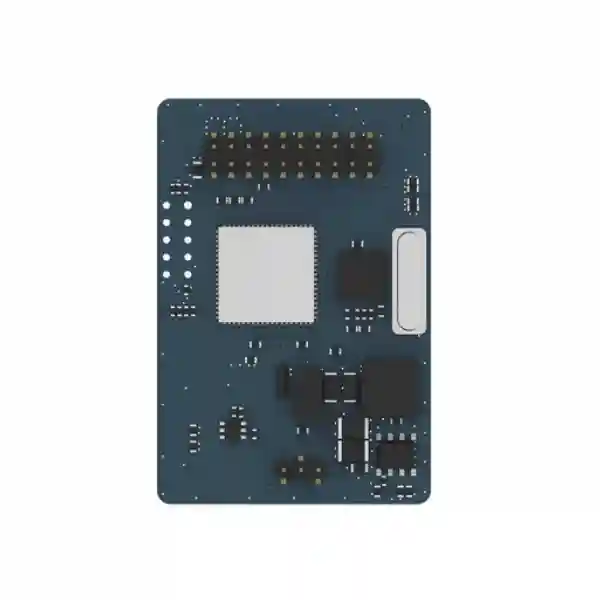
Yeastar 3G Module
The Yeastar 3G Module is a modular cellular telephony interface designed to add a single 3G/WCDMA voice channel to compatible Yeastar PBX platforms. Installed in a supported module slot and used with a suitable SIM card, it allows the PBX to connect directly to a cellular network for inbound and outbound voice routing where the chosen carrier, frequency bands and local 3G service remain compatible.
For procurement in Tanzania and other markets, the most important step is not simply finding a module with the right name. Buyers should confirm the Yeastar PBX model and hardware generation, the available module or EX08 slot, the correct UC15 regional variant, the mobile operator’s supported bands, the SIM service type, and whether 3G voice service is still operational in the intended location. FourTeck can help structure these checks before a quotation is finalized.
Yeastar documentation identifies the 3G module as a one-channel voice option. UC15-A, UC15-E and UC15-T variants use different WCDMA/GSM band combinations.
Compatibility must be checked against the target Yeastar appliance and the local carrier before purchase.
What the Yeastar 3G Module does
A cellular trunk lets a PBX send and receive calls through a mobile network rather than relying only on a fixed PSTN, ISDN or SIP service. In Yeastar’s P-Series administrator documentation, a GSM/3G/4G LTE trunk is described as a direct connection between the PBX and a cellular network provider using a relevant installed module and a SIM card that operates on supported frequencies. For the Yeastar 3G Module specifically, the official P-Series product material lists one channel for voice calls. This makes the module a focused interface choice: it is not a multi-channel cellular gateway and it should not be assumed to provide several simultaneous mobile calls.
A one-channel design can be useful when a business has a clear requirement for a single cellular path. Examples include a reception or branch that needs calls routed through a mobile SIM, an organization that wants a cellular route available alongside other trunks, or a deployment where mobile-to-mobile calling is commercially useful. The exact benefit depends on the carrier tariff, regulatory environment, PBX call routing and business call pattern. Those conditions should be evaluated before treating a cellular module as a cost-saving measure.
The module should also be considered in the wider telephony design. A PBX may simultaneously use SIP trunks, analog lines, BRI/PRI interfaces and cellular trunks. Call routing can then be designed around business rules, availability, number presentation and operator policy. FourTeck Tanzania’s IP PBX and telephony service guidance emphasizes defining extensions, reception requirements, queues, branches and existing trunk types before choosing hardware. That same planning discipline is important when adding cellular connectivity.
Verified technical facts and compatibility checkpoints
One cellular voice channel
Yeastar’s current P-Series appliance material lists the 3G Module as providing one channel for voice calls. Capacity planning should therefore assume one active mobile call per module unless the exact target platform documentation states otherwise.
UC15 regional variants
Yeastar lists UC15-A, UC15-E and UC15-T variants. Their supported WCDMA and GSM bands differ, so a regionally incorrect module may not register reliably even if it fits physically in the PBX.
PBX hardware matters
Current Yeastar installation guides identify the 3G Module among optional telephony modules for models including P520, P550, P560 and P570. P560/P570 use expansion-board arrangements for added interfaces. Older S-Series documentation also supports 3G modules on multiple models.
SIM and band verification
A SIM card must work on frequencies supported by the installed module. Carrier 3G availability, voice support, SIM provisioning, roaming conditions and network retirement plans should be confirmed before procurement.
Frequency variants: why the exact module version matters
| Variant | WCDMA bands | GSM fallback bands listed by Yeastar | Procurement implication |
|---|---|---|---|
| UC15-A | 850 / 1900 MHz | 850 / 900 / 1800 / 1900 MHz | Typically associated with American-region band plans; do not assume suitability elsewhere. |
| UC15-E | 900 / 2100 MHz | 900 / 1800 MHz | Often the variant considered for regions using these WCDMA frequencies, but carrier verification remains mandatory. |
| UC15-T | 850 / 2100 MHz | 850 / 900 / 1800 / 1900 MHz | A separate regional combination; order only after matching the operator’s service bands. |
These are radio-support facts, not a guarantee that any specific carrier will accept the module today. Network operators can refarm spectrum, retire legacy services, restrict voice features or require SIM profiles that change the practical outcome. A current carrier check is therefore part of responsible purchasing.
Important lifecycle and 3G-network consideration
A 3G module is inherently dependent on continued 3G service. Around the world, mobile operators have been reallocating older 2G and 3G spectrum to newer technologies. That makes network-lifecycle verification more important than it was when 3G modules were first introduced. A product listing alone cannot confirm that a specific carrier in Tanzania, Uganda, Kenya, the UAE or another market will still provide the required 3G voice service for the intended deployment term.
When a project is new rather than an expansion of an installed estate, buyers should compare the 3G option with Yeastar’s newer 4G LTE module choices and with external cellular gateways. The better option depends on PBX compatibility, desired call capacity, supported local bands, VoLTE requirements, data requirements, SMS use and the operator’s network roadmap. FourTeck can help prepare this comparison without assuming that the older module is automatically the right choice.
Deployment and configuration planning
1. Confirm the PBX chassis
Record the exact Yeastar model and hardware version. P520 and P550 accept optional modules directly in supported onboard slots; P560 and P570 use the EX08 expansion board for telephony modules. S-Series models have their own slot limits and model-specific arrangements. Physical fit should be confirmed from the installation guide for the exact appliance.
2. Match the radio bands
Identify the operator and current cellular bands at the site. Match those bands against UC15-A, UC15-E or UC15-T. Do not select a variant solely from the country name because operators within the same country can use different spectrum and may have different retirement schedules.
3. Define the call-routing role
Decide whether the cellular trunk is primary, secondary, least-cost, inbound-only, outbound-only or part of a failover strategy. Then align outbound patterns, caller identification behavior, inbound destinations, office-hour rules and permissions with the organization’s call policy.
4. Plan physical installation
Yeastar installation instructions require powering down and opening compatible appliances, inserting the module in the appropriate slot, fitting a SIM where relevant, closing the chassis and attaching the antenna. Installation should follow the exact model guide and normal anti-static and power-safety practices.
Who should consider the Yeastar 3G Module?
The strongest use case is normally an organization that already has a compatible Yeastar appliance and a defined need for a single cellular voice trunk. In that situation, the module can preserve the existing PBX architecture while adding a mobile-network path without introducing a separate gateway appliance. This can be particularly attractive where rack space, simplicity or centralized PBX management matters.
It can also suit branches that receive or originate calls through a mobile number, organizations that want a mobile trunk for selected destinations, or deployments in which fixed-line availability is limited. However, a 3G module should not be treated as a universal substitute for SIP trunks or modern LTE/VoLTE solutions. Capacity is only one channel, and the solution depends on network availability at the site.
Organizations starting a new PBX project should compare cellular module options against their wider voice architecture. FourTeck Tanzania’s IP Phones & IP PBX category guidance highlights the need to align phone-system hardware with user roles, trunk requirements and network conditions. The same principle applies here: choose the module because it solves a specific trunk requirement, not because cellular connectivity sounds more flexible in isolation.
Yeastar 3G Module Tanzania
Businesses evaluating the Yeastar 3G Module in Tanzania should begin with two parallel checks: PBX compatibility and mobile-network viability. The module can add a single WCDMA voice channel to a compatible Yeastar appliance, but that capability is useful only when the target cellular operator still provides suitable service on the radio bands supported by the installed UC15 variant. For Tanzania procurement, an IT manager should therefore record the exact PBX model, its hardware generation, currently installed expansion modules, the desired mobile operator and the site where the system will run. Those details allow the procurement conversation to move from a generic request for a “Yeastar 3G card” to a verifiable hardware requirement.
A Tanzania deployment may use the cellular trunk for selected outbound calls, an inbound mobile number, a secondary route or a specialized branch requirement. The PBX configuration should reflect that role. For example, outbound routing can limit which extensions use the mobile trunk, while inbound routing can send the SIM number to reception, a ring group or another destination. The business should also decide what happens when the cellular trunk is busy, unavailable or out of coverage, because a one-channel module cannot carry a second simultaneous mobile call.
Network planning should also include power stability, antenna placement and administrative access to the PBX. A cellular module can reduce dependence on a fixed voice circuit for a specific route, but it does not remove the need for a stable PBX environment. UPS protection, documented configuration and sensible call routing make the system easier to maintain. If the PBX also uses SIP trunks, the data network, firewall and internet path remain important.
For organizations comparing voice options across Tanzania, FourTeck can assess the module alongside SIP trunks, analog interfaces and newer LTE alternatives. Review the FourTeck Tanzania telephony and infrastructure services for the broader design context, and use the verified contact channel to provide the PBX model, module quantity, operator preference and deployment city when requesting a quotation.
Yeastar 3G Module Dar es Salaam
For a Dar es Salaam office, hotel, retail operation, logistics company or professional-services firm, the practical question is how the cellular trunk fits into day-to-day call handling. A busy reception might already use a SIP trunk for most external calls but retain a mobile route for selected destinations or a separate published mobile number. A smaller branch may want one cellular channel integrated into the main PBX so calls can be transferred internally rather than answered on a standalone handset. The Yeastar 3G Module can support that type of design when the local operator and module variant are compatible.
Dar es Salaam deployments should pay attention to indoor signal conditions. Dense construction, interior equipment rooms and metal racks can weaken cellular reception. Antenna positioning therefore matters, especially if the PBX is installed in a rack away from windows or exterior walls. The goal is not simply to see a signal indicator during installation but to maintain stable service during normal business hours. If the site has marginal 3G coverage, a different network operator, antenna arrangement or a newer cellular technology may be more appropriate.
Procurement teams should also separate hardware compatibility from tariff planning. A SIM may register successfully but still be unsuitable for PBX calling because of plan restrictions, caller-ID behavior, fair-use rules or corporate policy. Confirming these items with the mobile provider avoids treating a consumer-style SIM plan as a guaranteed business trunk service. For multi-branch companies, document which SIM, module variant and routing rules are used at each location so support teams can troubleshoot efficiently.
When asking FourTeck for a Dar es Salaam quotation, include the exact Yeastar model, whether an EX08 expansion board is already installed if relevant, the number of cellular channels required, the preferred operator and whether the request is for a new PBX project or an upgrade. The FourTeck Tanzania contact page also recommends sharing extension counts, existing trunks and branch requirements for telephony enquiries.
Yeastar 3G Module Mwanza
Organizations in Mwanza considering a Yeastar 3G Module often benefit from treating cellular voice as one component in a resilient communications plan. A branch connected to a headquarters may already depend on internet-based SIP calling; adding a cellular trunk can create another route for selected calls, but it should not be described as automatic failover until the routing logic has been deliberately configured and tested. The PBX administrator needs to define when the mobile trunk should be used, which extensions have permission to use it and where inbound SIM calls should terminate.
The one-channel nature of the module is especially important for Mwanza buyers assessing capacity. If several staff members routinely need simultaneous cellular calls, one module may become a bottleneck. Depending on the compatible Yeastar platform, additional modules may be possible, but slot limits and hardware support vary by model. A larger requirement can also make an external multi-channel cellular gateway worth comparing. Capacity should therefore be derived from real call concurrency rather than employee count alone.
Carrier coverage and 3G service continuity must be checked at the actual Mwanza site. It is not sufficient to know that a carrier operates nationally. Building location, indoor signal, local spectrum use and network modernization can affect whether a UC15-based module remains practical. If a project has a long expected service life, procurement should also compare 4G/VoLTE options so that the business is not locked into a radio technology nearing retirement.
For a structured request, provide FourTeck with the PBX model, existing module inventory, intended SIM operator, simultaneous cellular-call requirement and the business reason for the mobile trunk. That information allows a technically meaningful quotation instead of an assumption-based parts order. If the wider branch also needs switching, Wi‑Fi or firewall work, the FourTeck Tanzania integrated solution portfolio can help connect voice requirements with the supporting infrastructure.
Yeastar 3G Module Arusha
Arusha businesses in hospitality, tourism, professional services, education and multi-site operations may have communication requirements that mix fixed and mobile calling. A Yeastar 3G Module can be considered where a compatible PBX needs one WCDMA-based cellular voice channel, but the intended workflow should be described before the component is purchased. A hotel, for example, may want a mobile route for management or a dedicated inbound number, while an office could reserve the cellular path for specific call patterns. Those are different configurations even though the hardware is the same.
Physical installation should take account of the equipment-room environment. Yeastar’s installation guides place cellular modules inside the PBX or supported expansion hardware, with the SIM and antenna forming part of the installation. If the PBX is mounted in a rack in an interior room, antenna placement can influence registration and call stability. Power quality also matters because the cellular trunk is only useful while the PBX is running; placing the PBX, network switch and related equipment on correctly sized UPS protection can improve continuity during short interruptions.
For long-term planning in Arusha, ask the mobile operator about the future of 3G service in the area. Network roadmaps can differ by operator and may change over time. The fact that a UC15-E variant supports 900/2100 MHz WCDMA, for example, does not by itself confirm that a Tanzanian operator will continue serving those bands for the full lifecycle of the PBX. This is why FourTeck recommends verifying the network before treating the module as a future-proof purchase.
Buyers should send the PBX model, number of required channels, current trunks, desired routing behavior and carrier preference with the enquiry. This makes it possible to determine whether the Yeastar 3G Module is the best fit or whether another telephony interface would provide a more sustainable result. The FourTeck Tanzania shop-category guide can also help place the request within the broader IP phone and PBX environment.
Yeastar 3G Module Dodoma
In Dodoma, a Yeastar 3G Module may be evaluated for offices, institutions and branches that need to bring a mobile voice line into a compatible Yeastar PBX. The key design benefit is centralized call handling: rather than leaving the SIM in an individual mobile phone, the cellular number can participate in PBX routing so authorized users can receive or place calls according to defined rules. That can make a mobile route more manageable for a team, provided the one-channel limit suits the calling pattern.
A procurement checklist should begin with the exact appliance. Current Yeastar documentation supports 3G telephony modules across several P-Series models, but module placement differs. P520 and P550 have onboard module slots, while P560 and P570 use EX08 expansion hardware for telephony modules. Older S-Series appliances have another set of capacities and slot rules. An order that ignores these distinctions can result in a module that is electrically relevant but impossible to install in the available chassis arrangement.
The second checkpoint is the carrier. Confirm the operator’s 3G voice availability in Dodoma, the frequencies in use at the deployment site, SIM eligibility and any plan restrictions. Because network modernization is ongoing globally, ask not only whether 3G works today but whether the operator has announced a migration plan that would affect the expected service period. For new long-life projects, a 4G/VoLTE comparison is prudent.
FourTeck can help assemble this information into a product request. Include the PBX model, existing modules, desired mobile operator, channel quantity, target call flow and any requirement for fallback to another trunk. If the telephony upgrade is part of a larger network project, FourTeck Tanzania’s network and business communications services can be considered together so voice VLANs, switching and firewall policies are not overlooked.
Yeastar 3G Module UAE
UAE buyers considering a Yeastar 3G Module should make network-lifecycle verification the first step. Cellular networks in mature markets evolve quickly, and a WCDMA module designed around 3G service may not be the preferred technology for a new deployment where operators have already shifted substantial voice traffic toward LTE and VoLTE. The module can still be relevant for an installed Yeastar estate when the exact carrier and band combination remains supported, but that suitability must be established from current operator information rather than assumed from older compatibility lists.
If the module is being used to extend an existing PBX, identify the appliance model and hardware generation before ordering. Yeastar’s present P-Series documentation continues to list 3G modules among optional telephony interfaces, but installation differs by model. A P520 or P550 can accept modules in onboard slots, while P560 and P570 can require EX08 expansion capacity. Businesses upgrading older S-Series systems should verify the exact slot limitations in the corresponding installation guide.
The call-routing design should also reflect UAE business requirements. A single cellular channel may suit a dedicated route or limited mobile-number integration, but it may not support a busy sales team or contact center. For higher concurrency, compare multiple supported modules or a purpose-built cellular gateway. Also examine caller-ID behavior, SIM plan terms and whether the operator permits the intended business usage.
FourTeck’s regional network can support a cross-market procurement discussion. For UAE infrastructure and IP telephony context, visit FourTeck UAE IT and telecom solutions. For organizations standardizing Yeastar systems across Tanzania and the UAE, document module variants, routing policies and carrier dependencies separately in each country because a radio configuration suitable in one market should not be copied blindly into another.
Yeastar 3G Module Uganda
Ugandan organizations looking at the Yeastar 3G Module should focus on the relationship between local mobile coverage and PBX call strategy. A compatible module can bring one cellular voice channel directly into the Yeastar call-routing environment, which can be useful for branches that want a mobile number handled by reception, teams that need a selected mobile route or sites that want an additional communications path alongside SIP services. The correct business case depends on calling volume and operator conditions.
Compatibility is two-dimensional. The PBX must physically and logically support the module, and the module variant must match the carrier’s available bands. Yeastar lists UC15-A, UC15-E and UC15-T frequency combinations, so a generic “3G module” order is incomplete without knowing which variant is needed. Uganda buyers should verify WCDMA service with the operator at the actual site and confirm that the service is expected to remain available for the required deployment period.
A one-channel trunk also requires realistic call-concurrency planning. If the organization expects only occasional mobile calls, a single channel may be appropriate. If several extensions need simultaneous cellular calls, a larger gateway or additional module capacity may be necessary, subject to the PBX model. During configuration, outbound permissions can prevent every extension from using the cellular route, while alternate routes can handle calls if the channel is busy or unavailable.
Organizations operating between Tanzania and Uganda can coordinate standards without assuming identical carrier behavior. FourTeck Uganda presents IP PBX and VoIP solutions for Ugandan businesses, while the Tanzania team can support the Tanzania portion of a multi-country requirement. A good quotation request should state the PBX model, city, desired operator, channel count and whether the project is an expansion or new installation.
Yeastar 3G Module Kampala
Kampala businesses often have access to several telephony options, so the Yeastar 3G Module should be chosen for a specific operational reason rather than as a default trunk. A company may want a SIM-based number integrated with its reception queue, a route for calls to particular mobile destinations or a secondary voice path that is independent of the primary SIP provider. Each purpose leads to different PBX configuration rules even though the same cellular module is used.
Radio conditions in a Kampala office can vary significantly by building. A PBX installed deep inside an equipment room may receive a weaker signal than a mobile handset used near a window. Because the module relies on an external antenna connection, the installation should include a signal check under normal operating conditions. A stable cellular path is more important than simply achieving network registration during commissioning.
Technology lifecycle also deserves attention. If the project is expected to operate for several years, compare the 3G module with 4G LTE/VoLTE-compatible options and external gateways. This is especially important if the operator has announced spectrum refarming or a 3G retirement plan. The existing PBX’s module support, budget and call-routing needs will influence whether staying with 3G is sensible for an installed system.
For a Kampala requirement, prepare the Yeastar model, installed expansion board details, preferred mobile operator, desired SIM number behavior and maximum simultaneous cellular calls. FourTeck Uganda’s communications portfolio provides a regional point of reference for PBX and VoIP projects. Where a Tanzanian parent company manages both countries, use a common documentation template but verify bands and carrier support independently for Kampala.
Yeastar 3G Module Arua
For a branch or institution in Arua, the Yeastar 3G Module can be considered when cellular voice is available and there is value in bringing a SIM-based line under PBX control. This can make it easier to route inbound mobile calls to a receptionist or group of extensions and to let authorized users originate selected calls through the cellular network. The solution remains limited to a single simultaneous cellular voice channel per module, so actual call patterns should guide sizing.
The most important local technical check is service availability at the precise site. National coverage maps do not replace a deployment test. Before buying the module, confirm which operator provides dependable 3G voice service in the building, identify the relevant frequencies and determine whether the service is expected to remain active. If the operator is moving away from 3G, the project should consider a newer cellular path even if an older module appears inexpensive.
PBX hardware should be checked at the same time. If a branch already owns a Yeastar appliance, photograph or record the model label and note any installed telephony modules. On expandable models, available slots may already be occupied by FXS, FXO or BRI interfaces. A complete parts list might therefore require an expansion board rather than only the 3G module. This is why remote procurement should include chassis information before shipment.
For organizations operating multiple Ugandan branches, standardize configuration documents even if each site uses different carrier technology. Record SIM numbers, module variants, outbound route patterns and fallback behavior. FourTeck Uganda can provide the regional solution context, while FourTeck Tanzania can coordinate parallel requirements for Tanzanian sites so procurement teams maintain consistent PBX design principles across borders.
Yeastar 3G Module Mbarara
Mbarara organizations evaluating a cellular PBX route should decide first whether they need a single shared mobile channel or a broader cellular gateway. The Yeastar 3G Module is appropriate only where one concurrent WCDMA voice call meets the operational requirement and the installed PBX supports the relevant module configuration. A business with frequent simultaneous mobile calls will need a different capacity plan, even if staff count is modest.
The mobile operator should be selected based on service at the actual premises, not only brand preference. Check indoor signal, 3G voice support, frequencies and current network roadmap. For sites that depend heavily on mobile connectivity, test how quickly service recovers after a network interruption and decide how the PBX should route calls if the cellular trunk is unavailable. Alternative SIP or fixed-line trunks can provide a fallback path when configured appropriately.
Installation planning should include the antenna and equipment-room conditions. A PBX mounted in a steel rack in an internal room can have different reception from a handheld phone used elsewhere in the building. Also protect the PBX and network equipment with appropriate power infrastructure. A cellular trunk may diversify the service provider path, but it cannot protect communications if the PBX itself loses power.
A useful quotation request for Mbarara contains the exact Yeastar appliance model, current module inventory, preferred operator, required channel count and business purpose. If the module is being added to support a wider branch rollout, include extension numbers, IP phone requirements and existing SIP services as well. FourTeck Uganda’s IP PBX solution information can be used alongside FourTeck Tanzania for organizations purchasing across both markets.
Yeastar 3G Module Gulu
In Gulu, the Yeastar 3G Module can serve a defined cellular-trunk requirement for a compatible Yeastar PBX, particularly where an organization wants a mobile number integrated with office call handling. Incoming calls can be directed into the PBX workflow, and outbound routes can be restricted to selected users or destinations. This provides more administrative control than passing a shared mobile phone around a team, but the single-channel limit must be respected.
Because 3G network availability is the critical dependency, verify the intended Ugandan operator in the actual Gulu location. The UC15 module family uses different regional WCDMA bands, and matching a published frequency does not guarantee long-term service. Operators can change spectrum use, and a SIM plan may have restrictions that affect PBX usage. Procurement should therefore include an operator confirmation step as well as a hardware compatibility check.
For existing PBXs, confirm the available telephony slot before ordering. On models using EX08 expansion boards, slot capacity may already be allocated to analog or BRI modules. On smaller systems, onboard slots are limited. A complete upgrade assessment should list all current modules and planned additions so the PBX is not overcommitted. If the system is nearing capacity overall, replacing or redesigning the platform may be more economical than adding another legacy interface.
Organizations with Gulu and Tanzania branches can benefit from standardized documentation: the same fields for model, firmware, module type, SIM, operator, route name and fallback path make cross-site support easier. FourTeck Uganda offers a regional route for Ugandan PBX requirements, while FourTeck Tanzania remains the relevant contact for Tanzanian deployments and multi-country coordination.
Yeastar 3G Module Kenya
Kenyan businesses searching for a Yeastar 3G Module should verify whether the requirement is for maintaining an existing Yeastar deployment or designing a new cellular trunk. For an installed S-Series or compatible P-Series appliance, the module may offer a straightforward way to add one WCDMA voice channel if the correct variant and local network remain supported. For a new deployment, however, it is sensible to compare current 4G/VoLTE alternatives because long-term network availability may be more important than reusing a familiar 3G design.
The carrier choice should be based on the deployment location and intended business use. Check 3G voice service, frequency support, SIM plan rules and indoor signal quality. If the module is intended as a fallback for SIP calling, test the routing behavior rather than assuming backup is automatic. The PBX must have explicit outbound routes and priorities that determine how calls move to the cellular trunk during an outage or for selected destinations.
Capacity planning is equally important. One module represents one cellular voice channel. A company with several concurrent mobile calls may need multiple supported modules or a dedicated gateway. The compatible PBX model sets the upper limit on how many modules can be installed. Buyers should therefore submit the appliance model and existing module list before requesting a quantity.
For Kenya-specific IT and communications planning, FourTeck Kenya covers IP PBX, VoIP phones and unified communications. Organizations operating in both Kenya and Tanzania can standardize call-flow design and documentation while still selecting country-specific SIMs and radio variants. A cross-border standard should define what the cellular trunk is for, how it fails over and who is authorized to use it, rather than simply specifying the same physical module everywhere.
Yeastar 3G Module Kuwait
In Kuwait, a Yeastar 3G Module request should trigger an immediate check of current operator support because network modernization can make legacy 3G hardware unsuitable for a new project. The module itself is designed for WCDMA cellular voice integration and can provide one channel on a compatible Yeastar PBX, but technical compatibility must include the radio network, not just the PBX slot. An installed system that has historically used 3G may have different considerations from a new deployment starting today.
If the requirement is to preserve an existing mobile trunk, identify the UC15 variant already in service and confirm the operator’s roadmap. If the requirement is new, compare 4G LTE/VoLTE modules or external cellular gateways where appropriate. The best replacement should be judged by voice compatibility, available bands, SIM support, call capacity and integration with the existing Yeastar call-routing design.
PBX chassis capacity also matters. A P560 or P570 deployment can use EX08 expansion hardware for telephony modules, while smaller models have different onboard slot limits. If analog, BRI or other cellular interfaces are already installed, the available slot count may constrain the upgrade. A parts quotation should therefore be based on the current hardware inventory.
FourTeck’s regional network can help buyers keep country-specific requirements separate while maintaining a common communications standard. FourTeck Kuwait covers IT and VoIP solution requirements in Kuwait. For a Tanzania-headquartered organization with a Kuwait branch, document local carrier support and module choice independently, then apply shared PBX policies such as route naming, permissions and fallback logic where the platforms allow it.
Yeastar 3G Module Ghana
Ghanaian organizations considering the Yeastar 3G Module should first establish whether a one-channel WCDMA trunk meets the required call volume. The module is most suitable when the business wants to integrate a single mobile path into a compatible PBX for controlled inbound or outbound calling. A larger call center or high-volume sales team will generally need more cellular capacity than one channel can provide, even if the module itself is supported by the appliance.
The next step is to verify carrier conditions at the site. Confirm the active 3G bands, voice service and SIM plan terms with the chosen network. Since Yeastar’s UC15 family includes multiple regional variants, the procurement request should name the appropriate module variant only after the carrier frequencies are confirmed. Avoid using an overseas reseller listing as the sole basis for local compatibility because those pages can describe region-specific models.
A well-designed PBX configuration also defines what the cellular trunk does when it is busy or unavailable. With one channel, a second call must use another route or fail according to the configured dial plan. If the mobile route is intended for specific departments, permissions should limit usage accordingly. These rules help control cost and make call behavior predictable for users.
For Ghana-specific business technology requirements, FourTeck Ghana provides a regional point of contact. Multi-country customers can use the same procurement checklist across Ghana and Tanzania: PBX model, current modules, required channels, preferred operator, site address, intended routing role and expected service life. That checklist makes it easier to decide whether 3G remains appropriate or whether an LTE/VoLTE alternative is preferable.
Yeastar 3G Module Nigeria
Nigeria is a large and varied telecom market, so a Yeastar 3G Module should be assessed at the exact deployment location rather than assumed compatible nationwide. The module can provide one WCDMA voice channel on compatible Yeastar PBX hardware. That is useful for a defined mobile-trunk requirement, but the business should test signal conditions and verify the selected operator’s 3G voice availability, frequencies and service roadmap before purchasing.
For a company with multiple Nigerian branches, the module may not be equally suitable at every site. One location might have strong 3G service and modest calling needs; another may have moved predominantly to LTE. A standard PBX design can therefore specify the functional requirement—such as “one cellular fallback voice path”—without forcing the same radio technology everywhere. The local implementation can then use the supported option that best matches the carrier environment.
Capacity and routing should be documented. One cellular channel can handle one active call. If that path is busy, the PBX needs an alternative route or users need to understand the limitation. For outbound use, route patterns can send only selected number ranges through the SIM. For inbound use, the mobile number can be directed to reception or another destination. The preferred configuration depends on the business workflow.
For Nigeria-related procurement, FourTeck Nigeria provides regional IT and communications context. Companies also operating in Tanzania can align documentation and PBX administration across both countries while confirming local carrier compatibility independently. Include the exact Yeastar model, module variant if known, operator, city and required channel quantity in the enquiry so the parts recommendation can be validated.
Yeastar 3G Module Seychelles
Seychelles buyers considering a Yeastar 3G Module should place particular emphasis on carrier confirmation and long-term network support. Island markets can have a smaller number of operators and technology choices, so the suitability of a WCDMA module depends heavily on the exact services available from the local network. The Yeastar module can add one cellular voice channel to a compatible PBX, but the correct UC15 frequency variant and current operator support must be confirmed before ordering.
Hospitality properties, offices and multi-site businesses may want a mobile route integrated with their phone system for selected inbound or outbound calls. In a hotel, for example, the trunk could be assigned to a defined administrative call flow rather than guest-room concurrency. In a small office, it could provide a shared mobile number that rings reception. These scenarios fit the one-channel nature of the module better than high-volume contact-center usage.
Because replacement logistics can matter on island deployments, lifecycle planning is important. A module that depends on an aging 3G service should be evaluated against alternatives before the project is finalized. Ask the operator about 3G continuity, and compare Yeastar 4G/VoLTE options or external gateways if the PBX and local network support them. Keeping a configuration backup and documenting the SIM, routing rules and module type also simplifies support.
For a Seychelles enquiry routed through FourTeck, provide the exact Yeastar appliance model, current telephony interfaces, preferred operator, required call flow and expected service duration. If the organization manages systems in Tanzania as well, maintain a shared PBX documentation standard while allowing each country to use the cellular technology that best matches its operator landscape. This avoids treating a regional deployment as though every market has identical spectrum and lifecycle conditions.
Related FourTeck Tanzania resources
The Yeastar 3G Module is only one component in a working phone system. For wider planning, the FourTeck Tanzania technology shop guide explains the relationship between IP phones, PBX hardware, network switches, firewalls and supporting infrastructure. This is useful when a cellular-trunk request is part of a larger office rollout.
The FourTeck Tanzania services page covers IP PBX project inputs such as extension count, user roles, existing telephone lines, queues and branch connectivity. These details help determine whether one 3G channel is sufficient and how it should be integrated.
For broader network context, the FourTeck Tanzania home page describes integrated networking, switching, firewall and UPS considerations that can affect voice-system reliability. The FourTeck Tanzania company page provides background on the regional technology offering.
For enquiries, the verified FourTeck Tanzania contact page lists the information that makes a telephony request easier to assess, including extension requirements, existing trunks and deployment context. Only these verified same-domain pages are linked here; no unverified Yeastar product URL has been invented.
Buying guide: information to confirm before requesting a quote
PBX model and hardware
Provide the exact Yeastar model, hardware revision if known, firmware version and current telephony modules. For P560/P570, confirm whether an EX08 board is installed and has a free slot.
Mobile operator and bands
Name the intended carrier and deployment city. Verify current 3G voice service and radio bands. Do not rely on a historical carrier list for a network that may have been modernized.
Call concurrency
State the maximum simultaneous cellular calls expected. A single 3G module provides one voice channel; larger requirements need additional capacity or another architecture.
Routing objective
Describe whether the mobile trunk is primary, backup, inbound, outbound, department-specific or intended for selected destinations. This determines the configuration and alternative route strategy.
Frequently asked questions
How many calls can the Yeastar 3G Module handle at once?
Yeastar’s current P-Series product information lists the 3G Module as one channel for voice calls. Plan on one simultaneous cellular call per module and verify total supported module capacity for the exact PBX model.
Which Yeastar PBX models support 3G modules?
Current Yeastar installation documentation lists 3G modules as options for P520, P550, P560 and P570, with P560/P570 using expansion-board arrangements for telephony modules. S-Series documentation also lists 3G support on models such as S20, S50, S100, S300 and S412 variants. Always check the exact hardware-version guide.
What frequencies does the Yeastar 3G Module support?
Yeastar identifies UC15-A with WCDMA 850/1900 MHz, UC15-E with WCDMA 900/2100 MHz and UC15-T with WCDMA 850/2100 MHz. Their GSM fallback bands also differ. The correct variant depends on the carrier and region.
Will any SIM card work?
No blanket guarantee should be made. The SIM must be provisioned for a compatible service, and the operator must provide the relevant cellular voice service on frequencies supported by the module. Plan restrictions and network retirement can also affect suitability.
Can the module be used as a backup trunk?
It can participate in a routing strategy where the cellular trunk is used when another route is unavailable, but backup behavior must be explicitly configured and tested in the PBX. The module does not automatically create failover simply by being installed.
Should a new project still use 3G?
That depends on the country, operator, PBX compatibility and expected system lifetime. Because 3G networks are being retired in many markets, compare newer 4G/VoLTE solutions before committing to a new long-life deployment.
What should I send for a quotation?
Send the exact Yeastar PBX model, existing modules, required quantity, preferred mobile operator, deployment city, maximum simultaneous cellular calls and the intended routing role. This information allows the hardware and network assumptions to be checked before supply.
Quotation checklist
Decision recap
Choose the Yeastar 3G Module when you have a compatible Yeastar appliance, a verified carrier and frequency match, a genuine need for one WCDMA cellular voice channel and a service-life expectation that is consistent with the operator’s 3G roadmap. Do not choose it simply because the PBX has an empty slot.
For a new project, compare 3G with current 4G/VoLTE cellular options, SIP trunks and external gateways. The correct solution is the one that meets call capacity, network availability, lifecycle and administrative requirements with the least avoidable complexity.
Consult FourTeck about PBX and cellular-trunk fit
FourTeck can review the Yeastar chassis, required channel count and local mobile-network assumptions before the purchase is finalized. If the 3G module is not the best long-term fit, the same review can compare newer Yeastar cellular modules or other trunk designs without forcing an outdated interface into a new system.
For the fastest assessment, provide the PBX model, installed modules, operator, city, desired call routing and quantity. This avoids delays caused by incomplete compatibility information and produces a more useful quotation.




Reviews
There are no reviews yet.