
Yeastar GSM Module
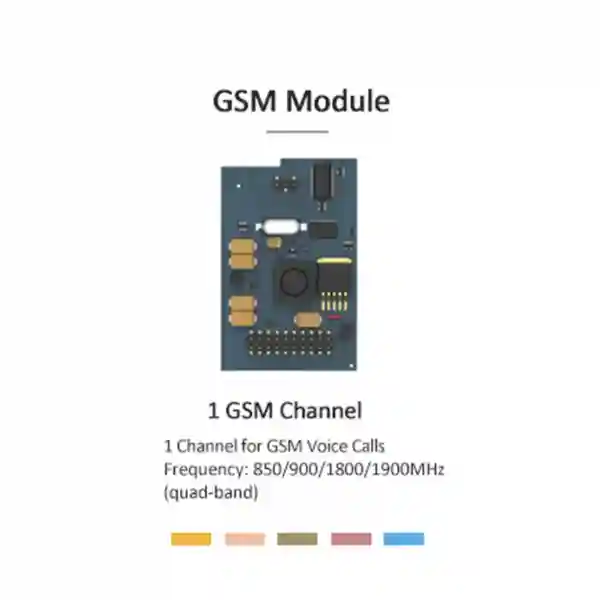
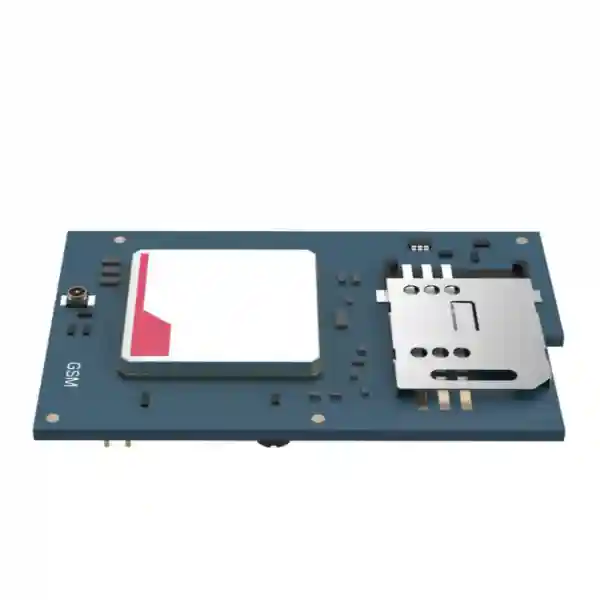
The Yeastar GSM Module is a legacy plug-in telephony module designed to provide one GSM voice channel for compatible Yeastar PBX systems. It allows an installed SIM card and cellular connection to be used as a PBX trunk for inbound and outbound voice routing. The module supports quad-band GSM frequencies of 850, 900, 1800 and 1900 MHz. Because Yeastar lists the GSM Module as end-of-life effective 31 December 2025 and names the 4G LTE Module as the migration path, a current procurement decision should begin with compatibility and lifecycle checks rather than with the assumption that 2G GSM is the right long-term choice.
What it does
It adds a cellular voice trunk to a supported Yeastar PBX. Once the module, SIM card and antenna are installed and the trunk registers to an available supported cellular network, PBX routing can send outbound calls through the GSM channel and can direct inbound mobile-network calls to configured PBX destinations.
Compatibility matters
Yeastar documentation lists GSM modules among optional telephony interfaces for several S-Series and P-Series appliance models, but the exact slot, expansion-board requirement and supported quantity vary by PBX. Procurement should therefore be tied to the installed PBX model, hardware revision and intended replacement strategy.
Plan the migration
The most important current buying consideration is lifecycle. Yeastar’s published end-of-life policy places the GSM Module at 31 December 2025 and points to the 4G LTE Module as its migration path. Organisations maintaining legacy deployments should compare continuity needs with cellular-network evolution before ordering spares.
Yeastar GSM Module overview and verified technical facts
Yeastar’s telephony-module documentation identifies the GSM Module as a one-channel cellular voice interface. Its published GSM frequency coverage is 850/900/1800/1900 MHz, commonly described as quad-band GSM. The practical purpose is straightforward: a supported Yeastar PBX can use the module and an installed SIM card as a cellular trunk. Yeastar support documentation explains that module registration involves the PBX communicating with the GSM module, the module interacting with the SIM, and the cellular network accepting registration when the selected network and bands are compatible.
For call handling, the GSM trunk becomes part of the PBX routing plan. Inbound routing determines where calls arriving through the SIM-based cellular trunk should go, such as an extension, ring group, IVR or other supported destination. Outbound routing determines which calls should be sent through the GSM channel. This makes the module useful in legacy designs where a business wants a mobile-network path integrated into the office telephone system instead of using a standalone handset.
However, a GSM module should not be evaluated in isolation. Its usefulness depends on whether the local mobile operator still provides the required 2G service in the deployment area, whether the SIM and service plan permit the intended voice use, whether signal quality is adequate at the PBX location, and whether the PBX hardware supports the module. Because these conditions vary by network and country, FourTeck recommends confirming them during quotation rather than assuming that quad-band radio support alone guarantees successful deployment.
Compatibility, installation and deployment checks
| Check | Why it matters | Procurement action |
|---|---|---|
| PBX model and revision | Supported module types, slot positions and expansion requirements differ across Yeastar appliances. | Provide the exact Yeastar PBX model and, where possible, hardware revision. |
| Cellular service | The legacy GSM module depends on compatible 2G service and usable signal. | Confirm the operator, location and current service availability before purchase. |
| SIM requirements | The trunk needs a SIM that can register and place or receive the intended calls. | Check service plan, PIN requirements and operator policy. |
| Routing design | The module provides the channel; the PBX still needs inbound and outbound routing rules. | Define which calls should use GSM and where inbound calls should terminate. |
| Lifecycle | Yeastar lists the GSM Module as EOL from 31 December 2025. | Compare legacy replacement needs with the current 4G LTE migration option. |
Lifecycle note: GSM Module versus 4G LTE Module
Yeastar’s end-of-life policy states that the GSM Module reached end of life on 31 December 2025 and identifies the 4G LTE Module as the migration path. That does not automatically mean every installed GSM module stops working on that date; it means the product has reached Yeastar’s EOL milestone and should be treated as legacy technology. The local operator’s network policy is a separate issue and can affect whether a GSM deployment continues to register and carry voice traffic.
For a repair or like-for-like replacement in an established Yeastar system, the legacy module may still be part of a maintenance discussion where compatible stock can legally and practically be sourced. For new deployments, procurement teams should examine the supported 4G LTE module, PBX hardware compatibility, operator support and the intended voice/data use before choosing a cellular interface. This page therefore presents the GSM Module accurately as a legacy component rather than implying it is Yeastar’s preferred current cellular module.
Yeastar GSM Module Tanzania
Businesses evaluating a Yeastar GSM Module in Tanzania should begin with the installed PBX and the cellular network available at the actual site. The module is designed to provide one GSM voice channel, so it is best understood as a specific trunk interface rather than as a complete PBX or multi-channel GSM gateway. In a legacy Yeastar deployment, that single channel may be used for a dedicated mobile-network route, a fallback calling path, a remote-site voice requirement or an established call-routing policy that the organisation wishes to maintain. Because Yeastar has declared the module end-of-life from 31 December 2025, the key Tanzania procurement question is whether the requirement is maintaining an existing system or designing a new one.
For existing systems, share the exact Yeastar PBX model, current module type, number of cellular channels in use, SIM operator, site location and the reason for replacement. This allows compatibility to be checked without assuming that any Yeastar GSM board fits every appliance. For a new requirement, also explain why cellular voice is preferred over SIP trunks or other telephony options. A mobile-network trunk can be useful where it fits the operating model, but the long-term suitability depends on network availability, tariffs, operator policy, signal quality and the PBX platform.
Tanzania deployments can vary significantly between a central office, a branch, a hospitality property, a warehouse, a project site or a remote operating location. Signal conditions inside equipment rooms may differ from outdoor coverage, and metal racks or building structure can affect antenna placement. The PBX should also be installed with dependable power and network infrastructure so that the cellular trunk is not treated as a substitute for overall system resilience.
FourTeck can help buyers compare the legacy GSM requirement with current Yeastar cellular options and broader business telephony and IT solutions in Tanzania. For product sourcing, use the FourTeck Tanzania technology shop as a starting point for IP PBX and related business communication requirements. A quotation request should include the PBX model, required quantity, current cellular operator and whether the goal is repair, expansion or migration.
Yeastar GSM Module Dar es Salaam
For organisations in Dar es Salaam, a Yeastar GSM Module request is most likely to arise from an existing PBX installation that already depends on a SIM-based cellular trunk. The practical first step is to document what the current channel does. It may be assigned to outbound mobile calls, a specific department, a fallback route or incoming calls to a published mobile number. Knowing the function avoids replacing hardware without understanding the service that depends on it.
Dar es Salaam offices often have access to multiple fixed and mobile connectivity choices, which makes it worthwhile to compare the GSM trunk with alternatives before purchasing a legacy module. If the organisation already has SIP connectivity, a new cellular module may not be necessary for every call path. If cellular voice remains a business requirement, Yeastar’s current 4G LTE migration option should be evaluated alongside the existing GSM design. The correct decision depends on PBX compatibility, the available module slot, operator support and whether the existing call-routing logic must be preserved.
Physical deployment also matters. PBX equipment is often mounted in a rack or communications room where cellular signal can be weaker than at the office perimeter. Before blaming a module for intermittent registration, administrators should check antenna connection, SIM status, operator selection, PIN configuration and signal conditions. Yeastar support documentation shows that registration relies on communication among the PBX, module, SIM and cellular network, so faults can originate at more than one layer.
For procurement teams in Dar es Salaam, provide the exact Yeastar appliance model, firmware context, current module model if known, SIM operator and desired call flow. Also state whether the request is for a direct replacement or for a new cellular trunk. This information makes the quotation more useful and reduces the risk of ordering an EOL component when a supported migration would be a better long-term choice.
Yeastar GSM Module Mwanza
A Yeastar GSM Module requirement in Mwanza can be linked to branch offices, distribution operations, hospitality sites, professional services or other organisations that use Yeastar PBX equipment and want mobile-network calling integrated into the office telephone system. The module’s role is specific: one GSM voice channel, using a SIM and supported GSM frequencies. It is not a general internet modem and should not be selected simply because a location uses mobile connectivity.
When a Mwanza site is already operating a GSM trunk successfully, a replacement decision should focus on continuity. Record the PBX model, the slot in use, current routing rules, the operator, the number associated with the SIM and any business process that depends on incoming or outgoing GSM calls. If the module is being added for the first time, the design conversation should be broader. Determine how many simultaneous cellular calls are actually required, because one GSM module provides one GSM channel. A business expecting multiple concurrent mobile calls may need a different architecture.
Cellular coverage should be verified at the equipment location, not assumed from normal smartphone use elsewhere in the building. A rack room may be internal, shielded by concrete or metal, or positioned away from windows. Antenna installation, cable condition and stable power affect reliability. Administrators should also decide what happens when the cellular trunk is unavailable: for example, whether outbound routing should use another trunk or whether callers should hear a controlled failure message.
Because the Yeastar GSM Module is now an EOL product, Mwanza buyers should treat any quotation as part of a lifecycle decision. If the business expects the PBX to remain in service for several years, compare the cost and operational risk of legacy spares with migration to Yeastar’s 4G LTE option or another current trunk strategy. This helps avoid solving today’s fault with hardware that creates another support issue later.
Yeastar GSM Module Arusha
Arusha organisations using Yeastar telephony may encounter GSM-module requirements in hotels, tour operations, offices, schools, clinics, NGOs, logistics businesses and branch environments. In these settings the attraction of a cellular trunk is often operational flexibility: a SIM-based voice path can be integrated into the same PBX routing used by extensions, IVR menus and ring groups. The Yeastar GSM Module provides one such channel, subject to PBX and network compatibility.
The most valuable planning step is to map the call journey before selecting hardware. If customers call a mobile number, where should the call ring? Should it go to reception, a booking team, a queue or an after-hours destination? For outbound calls, which users should be allowed to use the cellular channel, and when should another trunk be preferred? Clear routing rules can make a single GSM channel useful, while poorly defined routing can create busy-channel problems or unpredictable costs.
Arusha sites should also examine the age of the PBX. Yeastar documentation covers GSM modules across legacy S-Series and certain P-Series appliance contexts, but supported installation methods vary. Some systems accept modules directly, while larger expandable models can use expansion boards. The quotation should therefore include a photograph of the PBX model label or the exact model and hardware information when available. This is especially important where equipment has been in service for years and documentation may no longer be easy to locate.
Since Yeastar’s GSM Module reached EOL on 31 December 2025, a new purchase in Arusha should be justified by an existing-system requirement rather than by habit. For a fresh deployment, compare a current 4G LTE module, SIP trunking and other supported telephony choices. The right choice is the one that meets the business call-flow requirement while remaining supportable as mobile networks and PBX platforms evolve.
Yeastar GSM Module Dodoma
In Dodoma, organisations considering a Yeastar GSM Module may be maintaining a PBX that connects office extensions to the mobile network through a dedicated SIM. This can be useful for a legacy workflow where a mobile number is integrated into reception or where outbound mobile calls are routed through a cellular channel. The module itself is deliberately simple in scope: one GSM voice channel and quad-band GSM support. The surrounding PBX configuration determines how that channel is used.
Before procurement, determine whether the requirement is caused by a failed module, a need for another channel, poor network registration or a broader telephony change. Replacing hardware will not fix every GSM-trunk issue. Yeastar’s support material identifies configuration areas such as SIM PIN, carrier selection and routing, while real deployments also depend on antenna connection and cellular signal. If registration problems started after operator changes or service migration, confirm network availability before ordering replacement hardware.
For government, education, professional-services and branch-office environments, documentation is particularly important. Record the SIM ownership, responsible department, call-routing policy, module slot, PBX model and fallback procedure. This protects continuity when staff change and makes troubleshooting more systematic. It also helps procurement compare a legacy replacement with a planned migration, because the business requirement remains clear even if the technology changes.
The Yeastar GSM Module’s EOL status means Dodoma buyers should request a lifecycle-aware quotation. Where a direct replacement is unavoidable, compatibility must be confirmed precisely. Where there is flexibility, compare Yeastar’s 4G LTE migration path and modern trunk options. The objective should be to preserve reliable business calling, not simply to duplicate an old bill of materials without checking whether the mobile-network environment has moved on.
Yeastar GSM Module UAE
For UAE buyers, the Yeastar GSM Module should be treated as a legacy cellular interface rather than a default choice for a new PBX. The module offers one GSM voice channel on 850/900/1800/1900 MHz, but Yeastar has formally listed it as end-of-life from 31 December 2025 and points users toward the 4G LTE Module. This makes lifecycle and operator compatibility central to any purchasing decision.
A UAE business that already has a Yeastar appliance with a working GSM trunk may still need a replacement component to maintain an established call flow. In that situation, provide the PBX model, current module details, quantity and service requirement before requesting a quote. For a new installation, compare the 4G LTE module and SIP-based alternatives first. Cellular regulations, operator service policies and SIM use conditions can change independently of the PBX vendor, so a radio module should never be assumed to work solely because its frequencies appear compatible.
The operational design should address capacity as well. One GSM module provides one channel, so only one call can occupy that channel at a time. Reception-heavy or contact-centre environments can exceed that capacity quickly. If multiple simultaneous cellular calls are required, the project may need several supported cellular channels or a different gateway architecture. Routing rules should also prevent unnecessary use of cellular channels when another trunk is more appropriate.
For UAE telephony projects, the FourTeck UAE IT and telecom site provides regional context for IP PBX, VoIP and infrastructure requirements. When evaluating a Yeastar GSM replacement, include the business reason for cellular calling and the expected remaining life of the PBX. This allows the decision to balance immediate continuity with a supportable migration path.
Yeastar GSM Module Uganda
Uganda businesses using Yeastar PBX equipment may use GSM trunks to connect office call routing with mobile networks, especially where an existing SIM-based number is part of customer communication or where the cellular network is integrated into a branch telephony design. The Yeastar GSM Module provides one GSM voice channel, so it fits narrowly defined cellular-trunk needs rather than high-concurrency calling.
For an existing Uganda deployment, the correct replacement process begins with identification. Confirm the PBX model, current module type, number of active cellular trunks, operator and any SIM PIN or carrier-selection configuration. Also document whether inbound callers reach an IVR, extension or group and how outbound calls choose the GSM route. These details make it possible to reproduce the intended service after hardware work without guessing.
For a new project, it is important to acknowledge the product lifecycle. Yeastar marks the GSM Module EOL as of 31 December 2025 and recommends the 4G LTE Module as the migration path. A modern Uganda deployment should therefore check current cellular service, module compatibility and future network direction before committing to 2G hardware. The cost of a legacy component is only one part of the decision; continuity, available spares and operator support also matter.
FourTeck’s Uganda IT solutions site covers IP PBX, VoIP and related business technology requirements. For a Yeastar cellular-trunk quotation, share whether the requirement is maintenance, expansion or migration. Where multiple sites are involved, standardising the trunk strategy and documenting routing can reduce support complexity across branches.
Yeastar GSM Module Kampala
In Kampala, a Yeastar GSM Module request commonly makes sense as part of an existing PBX environment that already routes calls through a SIM-based cellular trunk. The module provides one channel, so it is suitable for a targeted mobile-network path rather than a large pool of concurrent calls. Businesses should first identify what the current GSM trunk accomplishes and how critical it is to customer-facing or internal communication.
A useful audit includes the PBX model, module slot, SIM operator, signal status, incoming destination, outbound route priority and fallback behaviour. If users report failed calls, intermittent registration or low audio reliability, do not assume the board is defective. Registration depends on the PBX, module, SIM and cellular network working together. Checking SIM status, antenna connection, operator selection and signal quality can prevent unnecessary replacement.
Kampala buyers should also consider traffic patterns. If the single GSM channel is frequently busy, adding another legacy module may not be the best response, especially given the product’s EOL status. The business may need a larger cellular gateway, a supported 4G LTE module arrangement or SIP trunk capacity instead. The right solution depends on simultaneous calls and routing objectives rather than on the number of employees alone.
For procurement, distinguish clearly between a spare part for a known compatible system and a new deployment proposal. Yeastar’s EOL policy means that legacy GSM hardware should be purchased with awareness of future replacement. By documenting call flow and capacity now, Kampala organisations can migrate later without losing the business logic that the old GSM trunk provided.
Yeastar GSM Module Arua
Arua businesses or project sites may consider cellular integration when fixed telephony options are limited or when a mobile-number call path is operationally useful. In a compatible Yeastar PBX, the GSM Module can provide a single voice channel that is controlled through normal PBX routing. This can keep a mobile network connection inside a central call-flow structure instead of relying on an independent handset that is difficult to monitor or share among staff.
At the same time, the location-specific network environment matters more than the product label. The module uses legacy GSM bands, and successful operation depends on the chosen operator still providing suitable service where the PBX and antenna are installed. A smartphone showing coverage does not prove that a particular 2G service is available in exactly the same way. Signal and network mode should be verified before procurement, especially for remote or semi-remote facilities.
Arua deployments also benefit from resilience planning. If the GSM channel is being used because it is expected to provide an alternative to another trunk, define what happens when either service fails. The PBX can be configured with call-routing priorities, but those rules need to match the organisation’s operational needs. Consider power backup for the PBX and network equipment as well, because a cellular trunk offers little benefit if the phone system itself is unavailable during a power interruption.
Because the Yeastar GSM Module has reached EOL, an Arua quotation should compare immediate compatibility with future support. For a maintained legacy system, a compatible spare may solve a short-term requirement. For a fresh design, Yeastar’s 4G LTE migration path or another current voice solution may offer a more sustainable approach. Share the exact PBX model and site requirement so the choice can be evaluated correctly.
Yeastar GSM Module Mbarara
For Mbarara organisations, the Yeastar GSM Module can appear in maintenance plans for branch PBX installations that use a SIM-based voice trunk. The module’s one-channel design makes it appropriate where call volume is modest or where the cellular route has a specialised purpose. Examples include a dedicated outbound route, a mobile-number inbound path or a secondary trunk, provided the PBX routing and local operator conditions support the intended use.
Procurement should begin by checking the current hardware rather than ordering by name alone. Yeastar PBX models differ in the number and placement of module slots, and larger appliances can use expansion hardware. A buyer should therefore provide the exact PBX model and describe any modules already installed. If a system is near capacity, a replacement decision may also need to consider whether there is a free supported slot for expansion.
The business should also review how much traffic the GSM channel carries. If one call at a time was sufficient when the PBX was installed but users now encounter frequent busy conditions, the real requirement has changed. Simply replacing the same module restores the old capacity; it does not solve growth. Comparing call concurrency, route priorities and alternative trunks can reveal whether an architecture update is more appropriate.
Yeastar’s published EOL date for the GSM Module is 31 December 2025, so Mbarara customers should ask for a lifecycle-aware recommendation. A like-for-like spare may be reasonable for continuity, but new designs should examine the 4G LTE migration path. The quotation should include current operator details, call-flow requirements and the expected remaining life of the PBX so that the purchase fits both immediate needs and future supportability.
Yeastar GSM Module Gulu
Gulu offices, institutions and project locations using Yeastar may have legacy cellular trunks that connect a PBX to a mobile operator through a dedicated SIM. The Yeastar GSM Module can provide that function with one GSM voice channel. It becomes part of the PBX call-routing environment, which means users can place or receive calls according to rules configured by the administrator instead of handling the SIM in a separate mobile handset.
The main purchasing risk is assuming that a legacy module is interchangeable across all Yeastar systems and network conditions. Compatibility must be verified against the PBX model, while cellular operation depends on the local operator and signal. In an established site, collect the existing configuration before removing faulty hardware. Record SIM details, carrier selection, routing rules and any special dial patterns so the restored trunk behaves as expected after replacement.
For sites where cellular voice is considered a resilience measure, test the full failover scenario. If primary telephony depends on internet connectivity, verify whether the PBX, switches and phones remain powered when the primary service fails. A GSM trunk cannot provide continuity if users cannot reach the PBX or if the entire communications rack loses power. UPS planning and documented routing are therefore part of a useful solution.
Gulu buyers should also account for Yeastar’s EOL announcement. The GSM Module passed its EOL milestone at the end of 2025, and Yeastar identifies a 4G LTE migration option. For a short-term repair, a compatible legacy part may still be requested. For a new or expanding system, current technology should be considered first. A detailed quotation request should explain the business objective, not only the desired part number.
Yeastar GSM Module Kenya
Kenya buyers searching for a Yeastar GSM Module will find legacy stock and reseller listings in the market, but procurement should be guided by Yeastar’s own lifecycle information. The manufacturer lists the GSM Module as end-of-life from 31 December 2025 and recommends the 4G LTE Module as the migration path. Therefore, the first question is whether the purchase is intended to maintain an existing compatible PBX or to create a new cellular trunk.
For a maintenance replacement, identify the Yeastar appliance model, current module and operator. The module provides one GSM voice channel and supports 850/900/1800/1900 MHz GSM. That frequency range does not replace the need to confirm live operator service at the site. A legacy module can only register where a compatible cellular network remains available and the SIM is permitted to use the required service.
Kenya businesses with multiple branches should also decide whether cellular trunks are being standardised or used only at selected locations. A clear standard can simplify support: define when mobile trunks are used, which PBX models are approved, how SIMs are managed and which route takes priority. For growing environments, consider whether a single channel per module provides enough concurrency. A branch receiving frequent customer calls may need a different design than a low-volume remote office.
The FourTeck Kenya site covers IP PBX, VoIP and enterprise networking requirements for Kenyan businesses. When requesting a Yeastar GSM quotation, include whether a current 4G cellular option is acceptable. This allows the recommendation to address both immediate compatibility and future lifecycle instead of treating old and new cellular modules as equivalent.
Yeastar GSM Module Kuwait
In Kuwait, a Yeastar GSM Module should mainly be considered when supporting an existing Yeastar PBX that was designed around a 2G GSM cellular trunk. The module provides one voice channel and uses quad-band GSM frequencies. For modern new installations, the product’s EOL status changes the buying logic: Yeastar has designated 31 December 2025 as the end-of-life date and identifies its 4G LTE Module as the migration path.
A procurement team should therefore separate two scenarios. The first is a legacy spare, where the goal is to restore a known configuration with minimal change. The second is a new cellular requirement, where the business wants mobile-network integration but is not tied to old hardware. The first scenario demands exact compatibility matching. The second calls for solution design and should compare current modules, cellular gateway options and SIP connectivity.
Kuwait deployments should also validate operator service and SIM policy. Cellular networks evolve, and a module that supports a frequency band is not automatically supported by every operator service plan. Confirm whether the intended SIM can register for the required voice service and whether the PBX site has adequate signal. If the PBX is located in a shielded communications room, antenna placement may influence reliability.
When requesting a quote, include the PBX model, number of required cellular channels, current trunk configuration and expected system lifetime. If the business is retaining the PBX only temporarily, a compatible spare may fit the objective. If the system is expected to remain strategic, consider migrating to the supported current path while planning routing and user behaviour carefully. This approach reduces the risk of investing in a dead-end component.
Yeastar GSM Module Ghana
Ghana businesses using Yeastar systems may encounter a GSM Module in branch telephony, office communication or older installations that route calls through a mobile SIM. The module gives the PBX one GSM voice channel. Its benefit is centralised routing: the cellular line can participate in PBX inbound and outbound routes rather than remaining isolated in a mobile handset.
Before replacing or adding the module, check whether the business genuinely needs one cellular channel or a broader mobile gateway. Concurrency is an important sizing factor. A single module cannot carry several simultaneous calls on its one channel. Organisations with high inbound traffic, sales teams or multiple departments should map call volume and peak periods before deciding on the hardware arrangement.
Ghana procurement teams should also confirm local cellular compatibility. The Yeastar GSM Module supports 850/900/1800/1900 MHz GSM, but successful operation depends on the operator continuing to provide appropriate service in the deployment location. Network evolution can make legacy 2G equipment less attractive even when the PBX itself remains functional. This is why Yeastar’s EOL status and 4G LTE migration path should be part of the purchasing conversation.
For multi-site businesses, document which branches use cellular trunks and why. A branch may use GSM because of local telecom conditions while another uses SIP. The goal is not to force identical hardware everywhere but to create consistent routing policy, support documentation and procurement standards. If a legacy Yeastar module is needed in Ghana, provide the exact PBX model, current operator, quantity and call-flow objective so the quotation can distinguish a compatible maintenance part from a recommended migration.
Yeastar GSM Module Nigeria
Nigeria has a large and varied mobile-communications environment, which makes cellular integration attractive for some business telephony systems. In a supported Yeastar PBX, the legacy GSM Module can provide one SIM-based GSM voice channel. It can be incorporated into call routing so that selected outbound calls use the mobile network and inbound calls on the SIM can reach PBX destinations.
The key word is legacy. Yeastar has published an EOL date of 31 December 2025 for the GSM Module and points to the 4G LTE Module as the migration path. Nigerian organisations planning a new deployment should therefore avoid treating the old GSM board as the automatic choice simply because it is familiar or appears in reseller listings. Current operator support, PBX hardware and long-term serviceability should drive the decision.
For existing deployments, troubleshooting should precede replacement. A failed GSM trunk can be caused by SIM issues, carrier selection, registration, signal, antenna connection, routing or the module itself. Record the PBX logs and status where possible, test the SIM appropriately and verify network conditions. If the module truly needs replacement, match it to the exact Yeastar appliance and slot configuration.
Businesses with several Nigerian locations should also decide how SIM-based telephony is governed. SIM ownership, recharge or billing responsibility, route permissions and security should be documented. When a replacement or migration is needed, this governance information helps preserve the business process while technology changes. For a quotation, specify whether the objective is restoring one existing GSM channel, adding capacity or migrating to a supported cellular solution.
Yeastar GSM Module Seychelles
Seychelles organisations considering Yeastar cellular telephony should evaluate the GSM Module carefully because the product is now EOL. The module provides one GSM voice channel for compatible Yeastar PBX systems and supports 850/900/1800/1900 MHz GSM. In an older installation, it may still be relevant as a replacement component where the operator, SIM and PBX remain compatible. For a new system, current cellular and SIP options deserve priority.
Island and multi-site operating environments can make resilience important, but resilience should be designed across the full communications chain. A cellular trunk can be useful as an alternative path only when the PBX, network switches, phones and power infrastructure remain available. If an outage removes power from the entire communications rack, the presence of a SIM-based trunk alone does not maintain service. UPS capacity and failover routing therefore belong in the same discussion.
Signal verification is also site-specific. A PBX installed deep inside a building may not experience the same coverage as users with mobile phones near windows or outdoors. Antenna installation and operator availability should be checked before hardware is ordered. Where a current Yeastar 4G LTE module is being considered, ensure that both the PBX model and local operator support are reviewed rather than assuming universal compatibility.
For Seychelles procurement, the quotation should state the exact Yeastar PBX, existing cellular module if any, number of required channels, operator, location and business objective. If the need is a temporary spare for an existing system, that context matters. If the organisation is investing for several years, the lifecycle risk of an EOL GSM module is more significant. A documented comparison helps the buyer choose continuity without creating unnecessary future replacement work.
Where the Yeastar GSM Module fits in a business phone system
The module sits between the PBX and the cellular network. An extension user places a call, the PBX applies its outbound routing rules, and the selected GSM trunk carries the call through the mobile network. For incoming calls, the cellular network reaches the SIM and module, the PBX receives the trunk call, and inbound routing determines the destination. This architecture allows a business to keep extension numbering, reception logic and call handling inside the PBX even when a call enters or leaves through a mobile-network channel.
This can be useful for a legacy branch where a mobile number is well known to customers, for a controlled outbound route to mobile destinations, or for a site where cellular voice was deliberately incorporated into the telephony design. It should not be assumed to provide internet failover, because the legacy GSM Module is documented as a voice channel rather than a general broadband service. Where cellular data or current mobile technology is required, Yeastar’s 4G LTE options should be evaluated separately.
A complete solution also needs IP phones or other extensions, LAN connectivity, suitable switches where required, a stable PBX platform and documented routing. FourTeck’s Tanzania IT and telecom services can provide a broader context for planning integration, configuration and supporting infrastructure around an IP PBX requirement.
Buying guidance: when a legacy GSM replacement can make sense
Reasonable legacy-replacement case
A known compatible Yeastar PBX is still operational, a GSM module has failed, the local cellular service remains compatible, and the business needs to restore the existing call flow while a broader migration is planned. In this case exact hardware matching and a clear expected service horizon are important.
Strong reason to evaluate migration
The business is building a new PBX, expanding cellular capacity, expecting several years of support, or operating where 2G service is uncertain. In these situations, Yeastar’s 4G LTE migration path and other current trunk options should be reviewed before an EOL GSM module is purchased.
Quotation checklist
To prepare an accurate Yeastar GSM Module quotation or migration recommendation, include the information below. This prevents avoidable compatibility assumptions and gives the sales and technical team enough context to distinguish a spare-part request from a broader PBX upgrade.
Frequently asked questions
How many GSM channels does the Yeastar GSM Module provide?
Yeastar documents the GSM Module as providing one GSM voice channel. One module therefore supports one call on that cellular channel at a time. If the requirement involves several simultaneous mobile-network calls, channel capacity should be reviewed before choosing the architecture.
Which GSM frequency bands are supported?
Yeastar publishes 850, 900, 1800 and 1900 MHz for the GSM Module. These bands are commonly described as quad-band GSM. Actual service still depends on the local operator and network available at the deployment site.
Is the Yeastar GSM Module still current?
No. Yeastar’s published end-of-life policy lists the GSM Module with an EOL date of 31 December 2025 and identifies the 4G LTE Module as the migration path. Existing installations may continue to operate where compatible, but new procurement should account for the EOL status.
Can the GSM Module receive inbound calls?
Yes, when the cellular trunk is registered and the PBX is configured appropriately, inbound calls arriving through the SIM-based trunk can be routed by the PBX. The final destination depends on the configured inbound route.
Can it make outbound calls?
Yes. Yeastar support documentation describes outbound routing through GSM trunks. The administrator defines which dial patterns, users or routes are permitted to use the cellular channel.
Will a GSM Module work in every Yeastar PBX?
No. Compatibility, module slots and expansion requirements vary by Yeastar model and hardware design. Always identify the exact PBX before ordering. Some models accept modules directly while larger expandable systems can require an expansion board.
Why can a GSM trunk fail to register?
Possible causes include SIM PIN issues, carrier selection, lack of compatible cellular service, poor signal, antenna problems, SIM status or hardware faults. Registration depends on the PBX, module, SIM and network, so troubleshooting should examine the complete path.
Should a new installation use the GSM Module or 4G LTE Module?
Because Yeastar has declared the GSM Module EOL and lists the 4G LTE Module as the migration path, a new installation should normally evaluate the current 4G option first. The final choice must still match the PBX model, operator support and intended voice/data use.
Decision recap
Choose a Yeastar GSM Module only after confirming the exact PBX, the local GSM service and the reason for maintaining legacy hardware. The verified product facts are simple: one GSM voice channel and 850/900/1800/1900 MHz GSM support. The more important 2026 fact is lifecycle: Yeastar lists the module as EOL from 31 December 2025 and identifies the 4G LTE Module as the migration path.
For organisations maintaining a known compatible system, a spare-part discussion can still be appropriate. For new projects, capacity expansions and long-term deployments, compare supported current cellular modules and other telephony trunks before placing an order. That approach protects compatibility today while reducing the risk of another forced migration tomorrow.
Consult FourTeck about Yeastar PBX cellular integration
FourTeck can review a Yeastar GSM Module requirement as part of the wider PBX environment. Share your appliance model, current module, SIM operator, channel requirement and whether you are repairing an existing system or planning a migration. Where the GSM module is no longer the best fit, the conversation can shift to a supported Yeastar 4G LTE option or another trunk architecture without losing sight of the call-flow requirement that the legacy module originally solved.
For regional projects, FourTeck’s network can help align business communication requirements across Tanzania, Kenya, Uganda and the UAE. Standardising how PBX models, cellular trunks, routing rules and support records are documented can make multi-country telephony easier to maintain.




Reviews
There are no reviews yet.