
Yeastar Room Comfort Sensor Tanzania
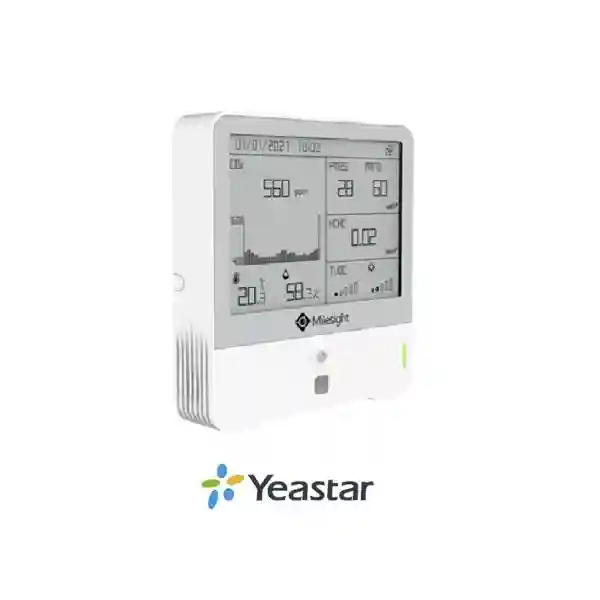
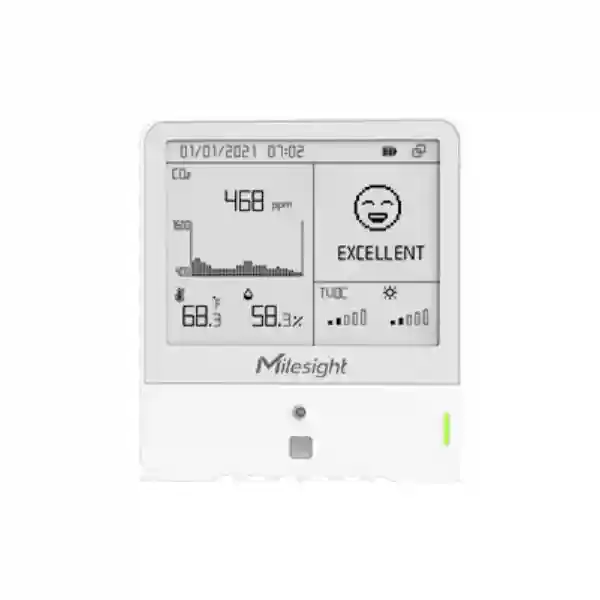
The Yeastar Room Comfort Sensor, identified in Yeastar documentation as the AM307, is a compact indoor environmental monitoring sensor built for organizations that want clearer visibility into meeting-room comfort and air-quality conditions. Instead of relying on subjective impressions such as whether a room “feels stuffy,” the sensor measures temperature, relative humidity, ambient light, carbon-dioxide concentration and total volatile organic compounds. The readings are presented on a 4.2-inch black-and-white E-ink screen, giving room users an immediate view of conditions while also supporting data synchronization into a compatible Yeastar Workplace deployment over LoRaWAN.
For businesses in Tanzania, the practical value is not just the collection of environmental readings. It is the ability to add measurable context to how meeting rooms, boardrooms, training areas and shared collaboration spaces are used. A room that is heavily occupied for long periods can accumulate CO₂, while temperature and humidity may vary because of air-conditioning cycles, room orientation or occupancy density. The Room Comfort Sensor helps facility, IT and workplace teams observe these conditions more consistently and use the information as part of broader workplace-management decisions.
Temperature, humidity, light, CO₂ and TVOC are monitored by one room-focused device.
The 4.2-inch display presents the most important room-condition information without requiring a separate dashboard for every glance.
The sensor supports LoRaWAN communication for compatible Yeastar Workplace integrations and room-data synchronization.
What the Yeastar Room Comfort Sensor Measures
Yeastar’s published specifications list a temperature measurement range of -40°C to 85°C with ±1°C accuracy and 0.1°C resolution. Relative humidity is specified from 0% to 100% RH with ±3% accuracy and 0.5% RH resolution. Ambient light is measured across 0 to 60,000 lux and represented as six levels. TVOC is shown using an indoor-air-quality index from 0 to 500, while CO₂ is measured from 400 to 5,000 ppm with a stated accuracy of ±(30 ppm, 3% of reading) and 1 ppm resolution. These values make the unit useful for observing patterns in meeting environments rather than treating comfort as a single-variable temperature question.
The room display interface is designed to make readings understandable for ordinary users. Yeastar documents three screen modes and visual air-quality indications. Depending on the selected mode, users can see date and time, CO₂, temperature, humidity, TVOC and light. The sensor also provides traffic-light status indication and emoticon-style comfort cues. For procurement teams, this matters because the device serves both as a data source for a managed workplace system and as a visible room-level information point.
| Function | Verified capability | Planning relevance |
|---|---|---|
| Temperature | -40°C to 85°C measurement range | Supports room-comfort and HVAC observation. |
| Humidity | 0% to 100% RH measurement range | Helps identify dry or humid room conditions. |
| CO₂ | 400 to 5,000 ppm | Useful for observing ventilation-related room conditions. |
| TVOC | IAQ index 0 to 500 | Adds another indoor-air-quality indicator. |
| Light | 0 to 60,000 lux, represented in six levels | Provides context for room lighting conditions. |
Yeastar Workplace Integration and Deployment
The Room Comfort Sensor is intended to work within the Yeastar Workplace ecosystem. Yeastar states that the sensor can synchronize detected environmental data to the Yeastar Workplace web portal and Yeastar Room Display through a LoRaWAN network. Registration documentation lists the Yeastar Workplace Pro Plan as a requirement and identifies compatible deployment paths through the UG65 LoRaWAN gateway or supported Yeastar Room Display hardware. This means buyers should evaluate the sensor as part of a complete room-management design rather than as an isolated Wi-Fi accessory.
Power can be provided by four ER14505 Li-SOCl2 batteries or through a USB Type-C port. Yeastar publishes an approximate battery life of around three years at a ten-minute interval, subject to actual deployment conditions and configuration. Installation is designed for a flat surface using screws or 3M tape. Yeastar advises positioning the unit away from strong heat or cold sources and away from locations with rapidly changing airflow such as windows, vents, fans and air conditioners. The guidance also recommends mounting at least 1.5 metres above the floor, helping the sensor capture a more representative indoor reading.
Before ordering, confirm whether the planned Yeastar Workplace environment already includes the required plan, compatible LoRaWAN path and room resources. A successful deployment depends on system-level compatibility, not only the sensor hardware.
Where the Room Comfort Sensor Fits
The strongest use cases are rooms where people gather for structured periods and where environmental conditions can affect concentration, comfort or the perceived quality of the workplace. Examples include executive boardrooms, customer meeting rooms, training spaces, shared conference rooms, project rooms, innovation labs, hybrid-work collaboration areas and premium office suites. The device can also be relevant where facilities teams want environmental data alongside room-booking and utilization workflows.
The sensor is not a substitute for professional indoor-air-quality engineering, a building-management system or calibrated compliance instrumentation where formal certification is required. Its role is to give workplace teams room-level visibility that can be monitored within a Yeastar-oriented collaboration environment. Used correctly, the readings can help teams notice recurring patterns, such as higher CO₂ during densely booked periods, uneven comfort between rooms or lighting conditions that may need attention.
Yeastar Room Comfort Sensor Tanzania
Organizations searching for a Yeastar Room Comfort Sensor in Tanzania are often trying to improve the visibility and manageability of modern meeting spaces rather than simply add another standalone sensor. In Tanzanian offices, meeting areas may serve multiple departments, customers and hybrid-work teams during a single day. That pattern makes environmental consistency important. A space that works well early in the morning can become warmer, more humid or more CO₂-heavy later as occupancy changes. The AM307 gives workplace teams a simple way to observe these variables at room level and to present key readings directly to users through the E-ink display.
For Tanzania deployments, the planning process should begin with the room portfolio. Identify which spaces justify active environmental monitoring, which rooms already use Yeastar Workplace, and whether the required LoRaWAN path is available. A few high-value rooms may need only a limited deployment, while a multi-floor office can require a structured sensor plan with consistent placement, naming and room association. Because Yeastar requires the Workplace Pro Plan for room-comfort sensor registration, licensing should be reviewed before quantities are finalized. If batteries are preferred, maintenance teams should also plan a simple replacement schedule, even though Yeastar publishes an approximate three-year battery life under a ten-minute reporting interval.
FourTeck can help Tanzania buyers translate these technical requirements into a quotation checklist that includes sensor quantity, compatible room-management components, power preference and intended installation locations. Buyers can also review broader technology options on FourTeck Tanzania, compare regional enterprise technology sourcing through FourTeck Africa, or consult the FourTeck global technology portfolio when a multi-country project needs a common procurement approach.
Yeastar Room Comfort Sensor Dar es Salaam
Dar es Salaam offices frequently combine client-facing meeting rooms, executive areas, training rooms and flexible collaboration spaces. In these environments, room conditions can shift quickly as people move through the building and air-conditioning responds to occupancy. The Yeastar Room Comfort Sensor AM307 can give facilities and IT teams a room-level view of CO₂, temperature, humidity, light and TVOC without requiring users to open a dashboard every time they want to understand the current environment. Its E-ink display makes the data visible where decisions are made: inside the room.
A Dar es Salaam deployment should focus on consistency. Sensors should be mounted in comparable positions across rooms, away from direct airflow from air-conditioners or open windows, because rapidly changing air currents can make a local reading less representative. The published guidance recommends mounting at least 1.5 metres above floor level. Teams should also decide whether to use batteries or Type-C power. Battery power can reduce cabling in finished meeting rooms, while Type-C may be preferred where permanent power is convenient and maintenance teams want to reduce battery servicing.
For a quotation, Dar es Salaam buyers should provide the number of rooms, whether Yeastar Workplace is already deployed, whether a compatible LoRaWAN gateway or supported Room Display is present, and whether the goal is only room-level visibility or broader workplace analytics. This information allows the solution to be scoped around actual room-management requirements rather than just a sensor count. When a business also operates in other East African markets, procurement can be aligned with FourTeck Kenya and FourTeck Uganda for a more consistent regional technology framework.
Yeastar Room Comfort Sensor Mwanza
For businesses in Mwanza, the Yeastar Room Comfort Sensor can be considered wherever shared meeting rooms are important to daily operations and room comfort needs to be observed more systematically. Banks, professional services firms, education organizations, healthcare administration teams, hospitality back offices and growing corporate branches can all benefit from knowing how meeting-room conditions change throughout the day. The AM307 combines five measurements in one device and communicates through LoRaWAN to a compatible Yeastar Workplace environment, keeping room-condition monitoring aligned with the wider workplace-management platform.
Mwanza procurement teams should avoid selecting the device only from its screen appearance. The important questions are whether the required Workplace plan is in place, whether each monitored room is correctly represented in the Yeastar system, and which compatible gateway path will carry sensor data. Where multiple rooms are involved, create a room schedule showing floor, room name, approximate occupancy, mounting surface and power method. This simple exercise helps reduce installation ambiguity and supports accurate quantity planning.
Environmental monitoring also works best when users understand what the display means. The sensor provides status indications for room conditions, but organizations should still define internal procedures for responding to persistent high-CO₂ or uncomfortable temperature readings. The device supplies visibility; operational action may involve ventilation, HVAC review, occupancy changes or facilities inspection. FourTeck can support the technology-selection and procurement side by helping buyers confirm compatibility and assemble a bill of materials based on the intended Yeastar Workplace design.
Yeastar Room Comfort Sensor Arusha
Arusha organizations often host meetings involving local teams, international partners, customers, training groups and project staff. In such environments, a comfortable meeting space contributes to a professional visitor experience as well as productive internal collaboration. The Yeastar Room Comfort Sensor AM307 helps make room conditions visible by measuring temperature, humidity, ambient light, CO₂ and TVOC and displaying key information on its E-ink screen. When integrated with Yeastar Workplace, the device can also contribute room data to the broader management environment.
A sensible Arusha deployment starts by identifying rooms where environmental visibility matters most. High-occupancy training rooms may deserve priority because CO₂ can rise as sessions continue. Boardrooms may be prioritized because they host senior stakeholders and guests. Flexible meeting rooms may be useful candidates where usage patterns vary across the day. For each room, confirm a suitable wall position away from direct heating, cooling and strong airflow. If the room is frequently reconfigured, choose a mounting position that remains representative even when furniture layouts change.
Because the AM307 is designed as part of a connected workplace system, Arusha buyers should verify the surrounding architecture before ordering. Confirm Yeastar Workplace Pro licensing, compatible gateway availability, room-display compatibility where applicable, and the expected number of sensors. This avoids a common procurement problem: buying end devices without the system components needed to register and transport their data. FourTeck can help prepare a room-by-room requirement list so the quotation reflects the complete deployment rather than just individual hardware.
Yeastar Room Comfort Sensor Dodoma
In Dodoma, the Yeastar Room Comfort Sensor can support public-sector offices, corporate branches, project offices, consultancies, educational institutions and organizations managing formal meeting environments. The sensor is particularly relevant where facilities teams want measurable room-condition information without installing separate devices for temperature, humidity, CO₂, light and TVOC. The consolidated display gives people inside the room immediate awareness, while compatible LoRaWAN integration allows the readings to participate in a wider Yeastar Workplace design.
Deployment planning should consider room size, occupancy pattern and ventilation behavior. The sensor is not a ventilation controller, so the goal is to place it where it can observe representative conditions and avoid direct exposure to airflow or temperature sources. Teams should document intended wall positions and choose between battery or Type-C power based on room finish, maintenance policy and access to power. The E-ink screen operates within its own published environmental limits, so extreme installation conditions should be avoided even though the sensing ranges themselves are broader.
For procurement, Dodoma buyers can improve quotation accuracy by listing the number of rooms, preferred power method, existing Yeastar Workplace subscription, available LoRaWAN infrastructure and any Room Displays already installed. If the project is part of a larger office-modernization initiative, the sensor can be scoped alongside room booking, displays and other workplace-management components. FourTeck can then help align product selection with the target architecture and avoid purchasing components that do not match the intended Yeastar ecosystem.
Yeastar Room Comfort Sensor UAE
For UAE offices, where climate-controlled indoor environments and high-specification meeting spaces are common, the Yeastar Room Comfort Sensor AM307 can add practical room-level environmental visibility to a Yeastar Workplace deployment. Its combined CO₂, TVOC, temperature, humidity and light monitoring allows facilities and workplace teams to observe conditions that may influence comfort during long meetings or densely scheduled collaboration periods. The E-ink screen offers immediate local information, while LoRaWAN connectivity supports integration with the wider workplace-management system.
UAE projects often involve multiple meeting rooms, premium fit-outs and structured IT standards. Buyers should therefore treat sensor deployment as part of a coordinated room-technology design. Confirm mounting positions before final fit-out, decide whether battery operation or Type-C power better suits each room, and verify that the required Yeastar Workplace Pro Plan and compatible gateway path are available. Avoid placing the sensor directly beneath air-conditioning diffusers or near doors with strong airflow, because those locations may not represent the broader room environment.
Organizations coordinating Tanzania and UAE offices may find value in using a common room-monitoring approach across both environments, especially when workplace standards are centrally managed. For UAE-focused technology sourcing, buyers can review FourTeck UAE for broader regional support while maintaining a consistent Yeastar Workplace architecture across sites.
Yeastar Room Comfort Sensor Uganda
Uganda-based organizations can use the Yeastar Room Comfort Sensor as part of a structured approach to meeting-room management where environmental conditions matter to user experience. Instead of purchasing separate room instruments, the AM307 combines the most relevant comfort indicators into one wall-mounted unit and displays the readings locally. Its LoRaWAN connectivity is designed for compatible Yeastar Workplace environments, helping organizations keep room environmental data within the same broader system used for meeting-space management.
A multi-office Uganda project should define a standard deployment template. That template can specify sensor mounting height, room naming, power method, gateway relationship and commissioning steps. Consistency simplifies support and makes data easier to interpret across sites. Buyers should also confirm that the Workplace Pro Plan requirement is accounted for in the system design. If the existing deployment uses room displays, check hardware compatibility before assuming the display can serve as the supported gateway path for the sensor.
FourTeck Uganda can support regional coordination through FourTeck Uganda technology sourcing, while Tanzania deployments can remain aligned through FourTeck Tanzania. This is useful for organizations with shared IT policies across East Africa that want the same Yeastar Workplace concepts and procurement documentation used in more than one country.
Yeastar Room Comfort Sensor Kampala
Kampala offices often operate busy meeting calendars, with boardrooms, customer rooms and training spaces used continuously across the day. The Yeastar Room Comfort Sensor gives workplace teams a way to see whether room conditions are changing as usage increases. CO₂ can provide context about ventilation, temperature and humidity show thermal comfort trends, TVOC adds another indoor-air-quality signal, and light monitoring helps users understand the room’s illumination level. The combined display makes these measurements easier to interpret at the point of use.
For Kampala installations, start with rooms that have the greatest business impact. High-value meeting rooms, leadership areas, training rooms and spaces with recurrent comfort complaints are logical first candidates. Document each room and select a mounting point away from windows, fans, air-conditioning vents and heat sources. If batteries are used, include battery replacement in the facility-maintenance plan rather than treating the sensor as maintenance free. If Type-C power is preferred, ensure cable routing does not compromise the room finish.
The AM307 should be purchased as part of a verified Yeastar Workplace design. Kampala buyers should therefore confirm the Pro Plan, available LoRaWAN path and room-resource configuration before finalizing quantities. A well-prepared quotation request will list room count, existing Yeastar components, preferred power method and whether the project is new or an expansion of an existing Workplace environment.
Yeastar Room Comfort Sensor Arua
In Arua, the Yeastar Room Comfort Sensor can suit branch offices, institutional meeting rooms, training centers and organizations that want a more measurable view of shared indoor spaces. Its value is strongest when the environmental readings are part of a clear operational workflow. A facilities team can review recurring room-condition patterns, while users in the room can see core information directly on the E-ink screen without needing a separate monitoring application.
Because regional offices may have smaller IT teams, simplicity of deployment matters. Define the sensor location, power source and network path before installation. The sensor communicates over LoRaWAN rather than ordinary Wi-Fi, so the project must include compatible infrastructure. Yeastar’s registration guidance references the UG65 gateway or supported Yeastar Room Display hardware and requires the Workplace Pro Plan. These dependencies should be included in the bill of materials and licensing review.
Arua buyers can also consider a phased approach. Begin with the most frequently used rooms, review how the information supports workplace decisions, and then expand to additional rooms if the use case proves valuable. This avoids over-specifying the first phase while still creating a repeatable framework for future growth.
Yeastar Room Comfort Sensor Mbarara
Mbarara organizations evaluating the Yeastar Room Comfort Sensor should focus on how environmental visibility supports the day-to-day use of meeting rooms. A modern workplace may already know when a room is booked, yet still lack a simple view of whether the space is becoming uncomfortable during long sessions. The AM307 adds this environmental layer by monitoring temperature, humidity, CO₂, TVOC and light and presenting readings on a low-power E-ink screen.
For successful deployment, avoid treating every room as identical. A small two-person room, a large training room and a boardroom may have different occupancy patterns and ventilation behavior. Prioritize locations where the data is likely to change decisions or prompt facilities action. Placement should remain away from direct airflow and thermal sources, and the recommended mounting height should be followed. Where battery operation is used, keep a simple asset register so maintenance teams know installation dates and can plan replacement proactively.
Before requesting a quote, confirm whether the organization already uses Yeastar Workplace and whether the required Pro Plan and LoRaWAN connectivity are available. The more complete this information is, the easier it is to scope the correct sensor quantity and associated components.
Yeastar Room Comfort Sensor Gulu
For Gulu branches and institutions, the Yeastar Room Comfort Sensor provides a compact way to monitor several environmental variables that affect meeting-room experience. Rather than relying on a thermostat reading alone, the AM307 combines temperature with humidity, CO₂, TVOC and light. This broader view can help organizations distinguish a room that is simply warm from one that may also have ventilation or air-quality concerns during sustained occupancy.
Gulu projects can benefit from standardized installation documentation, especially when central IT supports remote sites. Record the sensor serial number, room assignment, mounting location, power method and associated gateway path during commissioning. This makes later troubleshooting and expansion easier. The sensor’s LoRaWAN design is well suited to system-level planning, but buyers should confirm compatibility rather than assume it will connect directly to ordinary wireless infrastructure.
Where room monitoring is new, begin with the spaces that host the longest or most important meetings. The goal is to generate useful information, not simply install more devices. A measured pilot can help the organization establish thresholds, internal response procedures and procurement standards before extending the solution to a larger room portfolio.
Yeastar Room Comfort Sensor Kenya
Kenya-based enterprises frequently manage mixed workplace portfolios containing large corporate offices, smaller branches, customer-facing meeting rooms and hybrid-work spaces. The Yeastar Room Comfort Sensor can be integrated into a common Yeastar Workplace framework so environmental visibility follows the same room-management standards across locations. The local E-ink screen supports immediate awareness, while the underlying sensor data can be synchronized through the supported LoRaWAN architecture.
For organizations operating in both Kenya and Tanzania, a standardized room technology blueprint can reduce complexity. Use the same naming conventions, installation heights, power policy and commissioning checklist wherever practical. Then adapt quantities and room priorities to each office rather than using a one-size-fits-all count. Procurement teams should confirm the Yeastar Workplace Pro Plan and compatible gateway path in every site, because system readiness may differ between countries or branches.
Kenya sourcing can be coordinated through FourTeck Kenya, supporting companies that want a related procurement approach across East Africa. This can be especially useful for regional organizations standardizing meeting-room technology while keeping country-level projects manageable.
Yeastar Room Comfort Sensor Kuwait
Kuwait offices often depend heavily on controlled indoor environments, making continuous awareness of room conditions relevant for modern meeting spaces. The Yeastar Room Comfort Sensor AM307 provides a single device for monitoring temperature, humidity, light, CO₂ and TVOC, allowing users and facilities teams to see a broader picture than temperature alone can provide. The E-ink display is suitable for persistent room-level visibility, while LoRaWAN supports compatible Yeastar Workplace integration.
Installation planning should pay particular attention to air-conditioning. A sensor placed directly beneath a supply vent may not represent the environment experienced across the room. Choose a stable wall position, follow the recommended mounting height and keep the device away from heat sources or rapidly changing airflow. Where large offices use many sensors, a room-by-room deployment schedule should identify each device, its gateway relationship and the intended power method.
For Kuwait technology procurement, organizations can review FourTeck Kuwait while keeping the technical design aligned with the Yeastar Workplace requirements used in Tanzania or other regional offices. The essential procurement step remains confirming Pro Plan licensing and compatible LoRaWAN infrastructure before ordering the sensor fleet.
Yeastar Room Comfort Sensor Ghana
Ghana organizations can use the Yeastar Room Comfort Sensor to make workplace comfort more measurable in meeting rooms, training areas and shared collaboration spaces. In busy rooms, environmental conditions can shift during the day as occupancy, air-conditioning and ventilation change. By combining five measurements, the AM307 gives teams a richer picture of the indoor environment than a simple thermostat or humidity display.
The device is best evaluated as part of a complete Yeastar Workplace solution. Procurement teams should confirm the Pro Plan and supported LoRaWAN pathway, then determine the number of rooms that genuinely benefit from monitoring. If a site already has room displays or workplace booking functions, compatibility should be checked at hardware and system level rather than assumed from product family names alone.
Organizations with regional procurement responsibilities can coordinate Ghana requirements through FourTeck Ghana. A consistent requirements document covering sensor quantity, power preference, room types, mounting rules and gateway dependencies helps reduce variation between sites and makes future support easier.
Yeastar Room Comfort Sensor Nigeria
Nigeria enterprises managing large offices or multiple sites can use the Yeastar Room Comfort Sensor as part of a broader workplace-management standard. The AM307 offers room-level measurement of CO₂, TVOC, temperature, humidity and light, helping facilities and IT teams create a more data-informed picture of meeting conditions. The E-ink display allows individual room users to see current information, while system integration supports centralized visibility where the wider Yeastar Workplace architecture is in place.
Large Nigerian deployments should be designed around repeatability. Define standard mounting guidance, record sensor-to-room associations, and document the LoRaWAN network path for each floor or site. Where battery power is used, a maintenance register should be created from the beginning. Where Type-C power is preferred, include electrical and cable-routing requirements in the meeting-room design. These practical details often determine whether a sensor project remains easy to manage after installation.
For Nigeria sourcing, businesses can consult FourTeck Nigeria while coordinating Tanzanian or other African offices through their respective regional sites. This supports a common solution framework without making unsupported assumptions about local stock or identical infrastructure at every location.
Yeastar Room Comfort Sensor Seychelles
In Seychelles, where hospitality, professional services, government and international organizations may operate premium meeting environments, the Yeastar Room Comfort Sensor can support a more structured approach to room comfort. The AM307 gives users immediate access to core environmental readings and can feed those readings into the Yeastar Workplace ecosystem through a supported LoRaWAN design. This makes it relevant where organizations want both visible room information and centralized workplace-management context.
Because island deployments can involve careful procurement and maintenance planning, buyers should scope the complete system before placing orders. Confirm sensor quantity, room names, mounting locations, preferred power method, Workplace Pro licensing and the compatible gateway path. If the device will be battery powered, plan replacement logistics as part of normal facilities maintenance. If Type-C power is used, confirm outlet availability and cable management so the installation remains neat.
A small property may begin with a few high-priority boardrooms or conference spaces, while a larger organization can standardize monitoring across many rooms. In either case, the strongest outcome comes from using the data in a defined operational process rather than treating the sensor as a decorative display. FourTeck can support the product-selection and quotation process based on the intended Yeastar Workplace architecture.
Buying and Sizing Guidance
The basic sizing rule is one sensor per monitored room, but the procurement decision should not stop there. Count only the rooms where environmental visibility supports an actual operational goal. Create a room inventory showing room name, capacity, typical meeting duration, ventilation type, existing Yeastar components and proposed power method. Then confirm the number of LoRaWAN gateways or compatible Room Displays needed for the deployment architecture. Large sites should validate wireless coverage before assuming every sensor will communicate reliably from its intended location.
If the project is an expansion of an existing Yeastar Workplace system, check the current plan and hardware versions first. If it is a new project, design the room-management architecture before finalizing sensor quantities. This sequence prevents hardware from being purchased before the supporting platform and gateway requirements are understood.
Quotation Checklist
List every room to be monitored and its intended capacity.
State whether Yeastar Workplace and Room Displays are already installed.
Confirm compatible gateway availability or include it in solution planning.
Choose battery operation or Type-C power based on room design and maintenance policy.
Frequently Asked Questions
What does the Yeastar Room Comfort Sensor measure?
It measures temperature, relative humidity, ambient light, carbon-dioxide concentration and TVOC. Key readings can be shown on its 4.2-inch black-and-white E-ink screen.
Does it connect over Wi-Fi?
The published Yeastar specification lists LoRaWAN as the data-transmission protocol. A compatible LoRaWAN path should therefore be part of deployment planning.
Does the sensor require Yeastar Workplace?
Yeastar documents the device as a Yeastar Workplace sensor, and its registration guidance specifies the Workplace Pro Plan. Confirm the required subscription and supported gateway components before purchase.
How is the sensor powered?
Yeastar lists two power methods: four ER14505 Li-SOCl2 batteries or USB Type-C power. The published battery-life estimate is around three years at a ten-minute interval, with actual life depending on deployment conditions.
Where should it be installed?
Yeastar recommends a flat mounting surface, at least 1.5 metres above the floor, and away from direct heat, cold sources and rapidly changing airflow such as windows, vents, fans and air conditioners.
Decision Recap
Choose the Yeastar Room Comfort Sensor when you need a room-focused environmental monitor that fits into the Yeastar Workplace ecosystem and provides visible information for users in the room. It is especially relevant for meeting spaces where CO₂, TVOC, temperature, humidity and light data can help facilities teams understand recurring comfort patterns. Before ordering, verify Workplace Pro licensing, the supported LoRaWAN architecture, room count, mounting positions and the preferred power method.
Plan Your Yeastar Room Comfort Sensor Deployment
Share your room count, existing Yeastar Workplace setup, preferred power method and target locations. FourTeck Tanzania can help structure the product and compatibility requirements for a quotation.



Reviews
There are no reviews yet.