
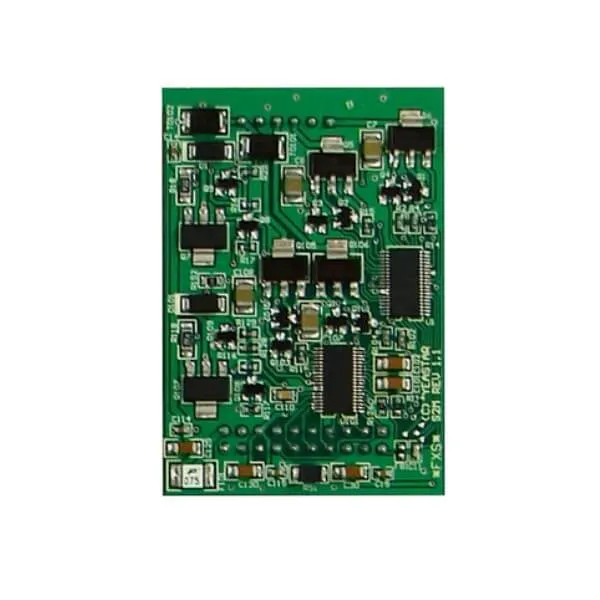
Business Telephony Expansion
Yeastar S2 FXS Module
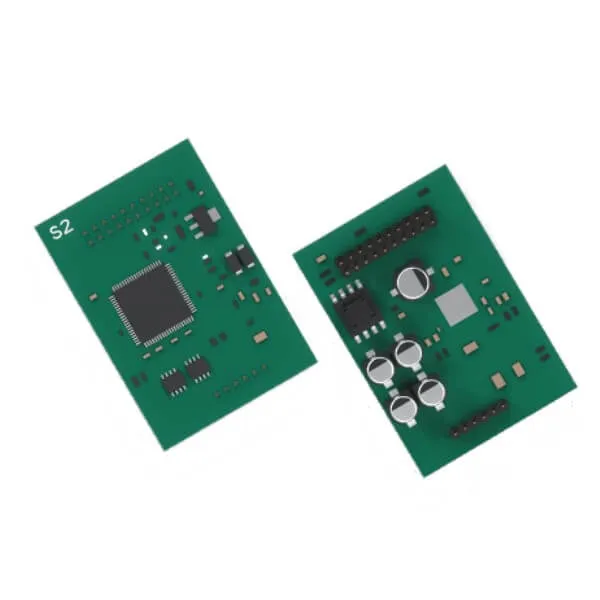
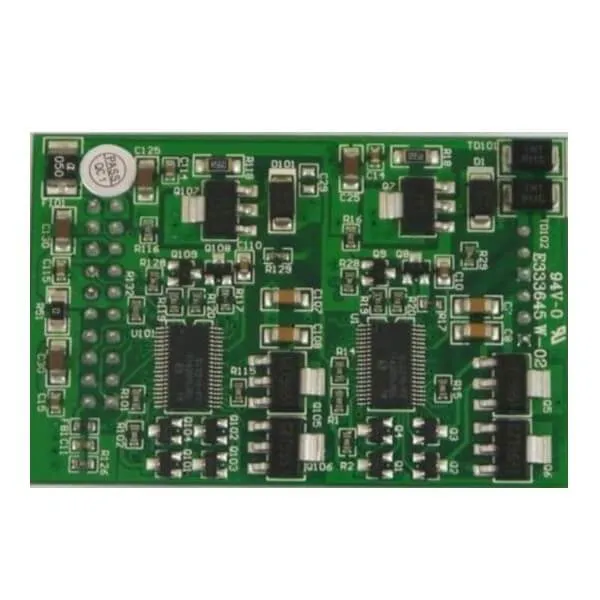
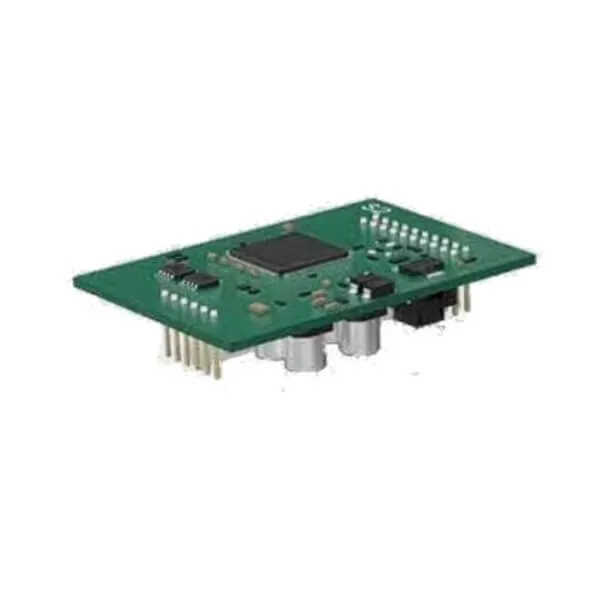
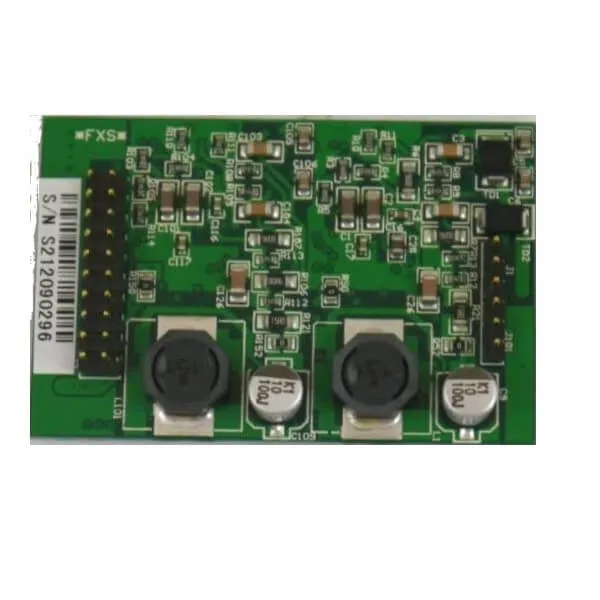
The Yeastar S2 FXS Module is a two-port FXS telephony module designed to add analog extension connectivity to compatible Yeastar PBX platforms. It gives organizations a straightforward way to retain analog telephones or fax machines while modernizing the wider voice environment around SIP, IP phones, centralized call routing, and business communications workflows.
Use the two FXS interfaces for analog telephones or supported analog fax workflows on a compatible Yeastar PBX deployment.
What the Yeastar S2 FXS Module does
The S2 is best understood as an analog-extension interface for a Yeastar phone system. An FXS interface supplies the station-side connection used by an analog endpoint. In practical business terms, this means the module can bring traditional desk telephones or fax devices into a PBX environment that may otherwise be centered on IP extensions and SIP connectivity. Yeastar identifies the S2 as a two-FXS-port module for connecting two analog telephones, and its S-Series documentation also describes using an installed S2 module when creating FXS extensions or attaching fax machines.
That makes the S2 particularly useful where a complete replacement of analog endpoints is unnecessary, uneconomical, or operationally disruptive. A reception back office may have one simple analog handset that remains perfectly adequate. A finance or administration team may still depend on a fax machine for a specific workflow. A hotel, clinic, school, warehouse, guard post, workshop, or remote branch may have an installed analog device that only needs a reliable PBX extension. Instead of replacing every endpoint at once, an organization can preserve those devices while adopting a more flexible voice architecture around them.
The module should always be selected against the exact Yeastar PBX model, available module slots, expansion-board requirements, and planned interface count. Compatibility can differ by PBX family and hardware layout, so procurement should start with the host model and current configuration rather than with the module alone.
Two analog extensions
Add two FXS station interfaces for analog telephone endpoints in a compatible Yeastar PBX configuration.
Fax continuity
Yeastar documentation supports connecting a fax machine through an FXS port when the PBX and trunk configuration are prepared for fax operation.
Hybrid migration
Keep selected analog devices in service while moving other users toward SIP trunks, IP phones, softphones, or unified communications.
Modular planning
Choose only the physical telephony interfaces the project actually needs, helping avoid unnecessary analog ports.
Verified technical facts and deployment guidance
| Item | Verified information | Buyer implication |
|---|---|---|
| Module type | S2 telephony module | Confirm the host PBX supports the module and has the required slot arrangement. |
| Interfaces | 2 FXS ports | Suitable when the requirement is two analog station connections. |
| Endpoint use | Analog telephones; Yeastar also documents fax-machine use on FXS ports | Useful for retaining legacy endpoint workflows during IP telephony modernization. |
| Configuration | FXS extensions are created and assigned to FXS ports in the PBX | The physical module installation must be followed by correct PBX extension and routing setup. |
Where the S2 fits in a business phone-system project
A two-port analog module is a small component, but it can remove a major migration obstacle. Many businesses want the management advantages of IP telephony while still depending on one or two analog endpoints. The right solution is not always to replace those devices immediately. The S2 lets planners treat analog continuity as one requirement within a broader PBX design. The rest of the organization can use IP phones, SIP extensions, mobile clients, or other digital workflows while the selected analog endpoints remain connected as FXS extensions.
For a new deployment, the purchasing team should count exactly how many analog station ports are needed, identify which devices will use them, document the host Yeastar PBX model, and check whether the planned PBX already includes fixed analog interfaces. The project should also consider whether future analog demand is likely to grow. Two FXS ports can be ideal for a compact requirement; a much larger analog estate may call for a different architecture such as a dedicated FXS gateway rather than installing many small modules.
For solution design help, the FourTeck Tanzania technology overview explains the wider voice, networking, security, and infrastructure approach, while the FourTeck Tanzania services page is useful when the module forms part of a larger installation, configuration, or upgrade project.
Yeastar S2 FXS Module Tanzania
For organizations in Tanzania, the Yeastar S2 FXS Module is most relevant when a PBX modernization project still includes a small number of analog telephones or fax devices. The purchasing question is therefore not simply whether the module has two FXS ports; it is whether those two ports solve a clearly identified station-side requirement in the complete communications design. A Tanzanian office moving to SIP trunks may want to keep an analog handset in a reception support area. A clinic may have a simple analog extension in a records room. A school may have older handsets in administrative spaces. A branch may retain a fax workflow while adopting IP phones for most users. These are the kinds of scenarios where an S2 can reduce unnecessary endpoint replacement.
Procurement should begin by recording the exact Yeastar PBX model, current hardware modules, free slots, number of analog endpoints, existing telephone cabling, and the desired call-routing behavior. If a fax machine is involved, the design should also include the trunk technology and fax settings rather than assuming that physical FXS connectivity alone guarantees end-to-end fax reliability. Yeastar documentation describes fax use through FXS extensions, including specific considerations when a SIP trunk is involved. For voice calls, planners should map the analog extensions into the same numbering plan, permissions, inbound routes, and outbound policies used by the rest of the PBX.
Tanzania deployments also benefit from reviewing network and power dependencies around the PBX. The S2 itself is part of the telephony hardware, but the business phone system may rely on routers, firewalls, switches, SIP connectivity, UPS protection, and structured cabling. A stable analog extension is only one link in that chain. When a customer is replacing an older PBX, documenting the old extension numbers and analog line destinations before cutover can prevent confusion. Where the existing analog cabling is reused, labeling each pair and testing the endpoint before migration saves troubleshooting time.
FourTeck Tanzania can be approached for product sourcing discussions, compatibility checks, and complete PBX planning without assuming stock or delivery until a quotation is confirmed. Buyers can also review the FourTeck Tanzania shop for related business technology and the Tanzania contact page when preparing a quote request. A useful request should include the PBX model, number of S2 modules needed, target endpoints, and whether installation or configuration support is required.
Yeastar S2 FXS Module Dar es Salaam
In Dar es Salaam, the S2 can be a practical component for offices, retail operations, logistics companies, professional services firms, hotels, clinics, educational organizations, and branch operations that are updating their phone systems without replacing every analog endpoint. Dense business environments often have layered communications infrastructure built over many years. A company may already use SIP trunks and IP phones in one department while another room still has a basic analog handset. The S2 allows a compatible Yeastar PBX to bridge that small analog requirement into the managed extension plan.
A good Dar es Salaam deployment starts with the physical path. Identify where the PBX is installed, where the analog device is located, and whether existing copper extension cabling can be reused safely. If the analog phone is several rooms away, trace and label the cable from the telecommunications cabinet to the wall outlet before commissioning. This is particularly useful in older offices where unlabeled pairs may have been moved between previous PBX systems. Once the physical connection is verified, the FXS port should be assigned to the correct extension in the Yeastar administration interface and tested for dial tone, inbound calls, outbound calls, caller-ID behavior where applicable, and the intended call permissions.
Businesses using the S2 for fax should treat fax as an end-to-end service test. A successful local FXS connection does not by itself prove that remote fax transmission will work across a specific trunk. The trunk settings, route, codec path, and any T.38-related configuration should be reviewed according to the Yeastar documentation and service-provider capability. For critical fax workflows, test both sending and receiving with the real destinations the business uses rather than relying on one internal test.
When requesting a Dar es Salaam quotation, include the Yeastar chassis model, module-slot status, quantity of analog phones or fax machines, existing SIP or PSTN connectivity, and whether a technician is expected to install and configure the module. This makes the quotation more useful than a bare request for an S2 price. It also helps determine whether the S2 is the right interface choice or whether a larger FXS gateway would better fit a site with many analog endpoints.
Yeastar S2 FXS Module Mwanza
Mwanza organizations considering the Yeastar S2 FXS Module often need a simple way to preserve analog functionality while improving the control and scalability of their phone system. Businesses near industrial, commercial, hospitality, healthcare, and education environments may have a mix of newer IP endpoints and older analog equipment. The two FXS ports on the S2 are well suited to a defined requirement such as an administrative analog phone, a gatehouse handset, a service counter phone, or a fax machine that still supports a business process.
The planning process should separate endpoint need from trunk need. An FXS port is for the station side, meaning the connected analog phone or fax device behaves as an extension. It is not the same as an FXO interface used for an analog PSTN line. Confusing these two roles is a common purchasing mistake. A Mwanza customer who says “we need two analog lines” should clarify whether those are two analog telephones inside the building or two incoming telephone-company circuits. The S2 addresses the first case. If the requirement is analog trunks, a different module or gateway category is needed.
Site reliability should also be considered. The Yeastar PBX, router, switches, and any SIP connection may benefit from appropriately sized UPS protection where short power interruptions would otherwise interrupt communications. If the analog extension is required for a security desk or operational area, decide what should happen during internet or trunk outages and whether another route or fallback method is available. The S2 preserves the analog endpoint, but availability still depends on the host PBX and the broader call path.
For procurement, provide the exact Yeastar PBX model and a simple diagram of how the analog endpoints are expected to connect. Mention whether the project is a new installation, a migration from an older PBX, or an expansion of an existing Yeastar system. That context helps validate module compatibility, slot capacity, extension configuration, and whether additional hardware is needed. It also supports cleaner installation documentation and easier future expansion if the Mwanza site later adds more users or moves additional extensions to IP phones.
Yeastar S2 FXS Module Arusha
Arusha has a broad mix of hospitality, tourism, professional, education, logistics, nonprofit, and administrative organizations, many of which operate communications environments that blend old and new technologies. The Yeastar S2 FXS Module is useful when that blend includes a compatible Yeastar PBX and a small number of analog station devices. Rather than treating an analog telephone as a reason to maintain an entire legacy PBX, the S2 can make the endpoint part of a modern extension plan.
Hospitality and guest-service environments illustrate the importance of careful scoping. A property may have a few analog devices in back-office, service, or common areas even if front-office staff use IP phones. Two FXS ports can solve that focused need. However, a property with dozens of analog guest-room phones is a different design problem and may require an FXS gateway or another architecture with much higher port density. The S2 should therefore be chosen when its two-port scale matches the actual requirement, not simply because it is an available analog module.
Installation should include physical labeling and logical documentation. Each FXS port should map to a named extension, user or location. The extension should be tested for the required inbound route, internal dialing, outbound permissions, transfer behavior, and any emergency or after-hours policy that the business has defined. For a fax endpoint, sending and receiving tests should be completed through the intended trunk. If the Arusha site has multiple buildings or dispersed rooms, the analog copper route should be inspected to avoid connecting through unknown splitters, damaged joints, or legacy PBX hardware left in the path.
A quote request is stronger when it lists the PBX model, existing modules, required number of FXS ports, intended analog devices, and whether the system uses SIP trunks or another external connection. Include any expansion plans as well. If two analog ports are sufficient today but four or eight may be needed soon, it is worth reviewing the expansion approach before ordering. That planning helps prevent a small current requirement from creating an awkward future hardware layout.
Yeastar S2 FXS Module Dodoma
For organizations in Dodoma, the Yeastar S2 FXS Module can support measured migration from analog telephony toward a more centrally managed IP PBX environment. Administrative offices, education providers, healthcare facilities, professional organizations, and growing businesses may have a small number of analog endpoints that remain useful even as the wider phone system changes. The S2 provides two FXS connections that can be assigned as PBX extensions, making it appropriate for well-defined analog station requirements.
A structured migration plan should identify which users truly need analog devices and which would benefit from IP endpoints. Analog phones can be simple and familiar, but IP phones may offer better visibility, programmable keys, directory access, or centralized provisioning for users who handle many calls. The S2 is therefore most valuable when used selectively. It can preserve a dependable existing handset in a low-feature location while higher-activity users move to richer SIP endpoints. This avoids an all-or-nothing migration decision.
Dodoma buyers should also confirm the source and destination of every call path. If an analog extension must receive a public number, the PBX inbound route needs to direct the call correctly. If it must make outbound calls, the extension must be included in the appropriate outbound route and permissions. If it is used only for internal communication, the configuration can remain more restricted. These details matter for security and operational control. A fax machine requires additional attention because fax success depends on the whole route, not only on the local FXS hardware.
Before purchase, prepare an inventory containing the Yeastar PBX model, firmware family, occupied and free hardware slots, existing telephony modules, and the number and type of analog endpoints. Include a note on future growth and whether the site has remote branches that may be connected later. This allows the S2 to be evaluated as one element of a complete communications plan rather than as a stand-alone accessory. For broader infrastructure planning, FourTeck Tanzania’s service and business technology pages provide context for integrating telephony with switching, routing, cabling, and power protection.
Yeastar S2 FXS Module UAE
In the UAE, organizations frequently operate mixed communications estates created by office moves, phased upgrades, mergers, and different departmental requirements. The Yeastar S2 FXS Module is a focused way to keep two analog station endpoints connected to a compatible Yeastar PBX while the rest of the environment uses SIP trunks, IP phones, mobile clients, or other unified communications tools. That can be valuable for a fax machine, utility handset, reception back-office phone, warehouse desk, or another simple endpoint that does not justify replacement.
Because UAE projects often have tightly managed racks and structured cabling, the module should be planned together with available PBX slots and existing expansion hardware. The host PBX model is essential information. A two-port module may be an elegant choice for a small requirement, while a larger number of analog endpoints can make an external FXS gateway more practical. Buyers should count both immediate and expected future analog stations before choosing the architecture. The aim is to avoid consuming multiple hardware slots for a requirement that will expand beyond the module’s natural scale.
Operational policies should be documented during configuration. Decide whether each analog extension can dial internationally, whether it needs access to specific trunks, whether it should ring after hours, and whether incoming DIDs should terminate directly on it or through an IVR or reception group. If a fax machine is attached, verify the SIP provider’s fax support and test transmission to real external destinations. The Yeastar PBX configuration should then be backed up after successful commissioning.
For UAE-specific infrastructure and communications projects, the FourTeck UAE site provides regional solution context. A procurement request should still specify the exact Yeastar model, required S2 quantity, endpoint type, site location, and whether installation or remote configuration is needed. Price, lead time, warranty terms, and availability should be confirmed in the formal quotation rather than assumed from generic online listings.
Yeastar S2 FXS Module Uganda
Ugandan businesses can use the Yeastar S2 FXS Module to preserve a pair of analog station devices while centralizing communications on a compatible Yeastar PBX. This is relevant for companies that are transitioning gradually from traditional telephone systems, opening new branches, or standardizing multiple sites without discarding every existing phone immediately. The two FXS ports provide a defined bridge between analog endpoint needs and an IP-oriented PBX environment.
A national or multi-branch organization should create a repeatable hardware standard. For example, branches that need only one or two analog devices could use an S2 where supported, while larger analog-heavy sites use a gateway architecture. This avoids ad-hoc purchasing and makes spare planning simpler. The PBX configuration template can also define extension ranges, outbound permissions, caller-ID settings, office hours, and emergency routing consistently. The S2 does not dictate those policies; it simply provides the physical analog station interface that the PBX can assign to an extension.
Uganda deployments may span offices with very different internet and power conditions. If the PBX relies on SIP trunks, review connectivity and failover expectations. Protecting the PBX, router, and network edge with suitable power backup can improve resilience during short interruptions. For analog endpoint cabling, use clear labeling and avoid undocumented joins. If an extension is mission-sensitive, include it in the acceptance test and document how calls should behave if the primary external trunk is unavailable.
FourTeck’s Uganda technology solutions site provides related regional context. When requesting a quotation, list the Yeastar PBX model, existing modules, number of S2 units required, analog endpoint types, and installation scope. This lets the supplier validate the requested hardware against the actual system and prevents the common error of purchasing an FXS module when the real requirement is an FXO trunk connection.
Yeastar S2 FXS Module Kampala
Kampala businesses often operate rapidly evolving offices where telephony changes alongside internet, network, and workspace upgrades. The Yeastar S2 FXS Module can solve a narrow but important requirement inside that change: keeping two analog station devices connected as extensions on a compatible Yeastar PBX. This can reduce project disruption when a company wants new IP phones for most staff but still has a fax machine, simple handset, or legacy endpoint that remains operationally necessary.
The decision should start with a port map. List every voice endpoint in the office and classify it as IP, analog station, analog trunk, or other. Then map the analog station count against existing FXS ports on the PBX and available expansion slots. An S2 adds two FXS interfaces, so it is efficient when the gap is small. If the map shows a much larger analog requirement, a higher-density gateway may reduce hardware complexity. This simple planning exercise can prevent wrong-module orders and gives the installer a clear cutover plan.
In Kampala office migrations, pay special attention to existing wall cabling. Legacy PBX installations may have extension pairs running through intermediate blocks or old cabinets. Before connecting a new FXS port, identify the correct pair, remove obsolete active equipment from the path, label both ends, and test the connected device. After configuration, verify internal dialing, external calling, incoming route behavior, transfer handling, voicemail or ring-group participation where relevant, and after-hours routing. Fax devices should be tested across the actual external trunk path.
A complete request for pricing should identify the PBX model, location, required quantity, intended endpoint devices, and whether the customer expects supply only or full installation and programming. It is also useful to mention planned office growth so the final design reserves enough capacity. The S2 is inexpensive in complexity when it precisely matches the requirement; its greatest value comes from avoiding unnecessary replacement while keeping the wider PBX design orderly and supportable.
Yeastar S2 FXS Module Arua
For an Arua office or branch, the Yeastar S2 FXS Module can be a practical choice when two analog endpoints need to remain available within a modern Yeastar PBX environment. Smaller and remote branches often value simple hardware that is easy to understand and document. An existing analog desk phone, service counter handset, or fax machine can continue as an FXS extension while staff who need richer functions use IP phones or software clients. This reduces the need to redesign every endpoint at the same time.
Remote-site planning should focus on supportability. Record the module slot used, the FXS port number, the extension number, the physical room or desk, and the cable route. Keep a configuration backup after commissioning. If troubleshooting is later required, this documentation lets remote support staff determine whether a fault is likely to be the analog device, cabling, FXS port, PBX configuration, or external trunk. Yeastar support guidance for FXS issues similarly points toward systematic swapping and isolation of ports, devices, and module positions.
Connectivity resilience may also be important. The analog phone remains physically connected to the PBX, but external calling through SIP still depends on the upstream network and service. Organizations should therefore define what level of continuity is required and whether backup internet, alternate trunks, or other contingency arrangements are appropriate. The S2 should not be mistaken for an independent analog telephone service; it is an extension interface inside the PBX.
For procurement, avoid ordering solely from a module name found in a price list. Provide the exact PBX model and, where possible, a photograph or inventory of currently installed expansion modules. State whether the endpoint is a phone or fax machine and whether the analog cable is already present. That information helps verify the design before equipment is shipped to the site. It also reduces the chance that an installation visit is delayed by discovering an unavailable slot, wrong interface type, or undocumented cabling condition.
Yeastar S2 FXS Module Mbarara
Mbarara organizations can use the Yeastar S2 FXS Module where a compatible Yeastar PBX needs a limited number of analog station interfaces. The module is especially useful during staged upgrades. A business may prefer to replace high-use desk phones with IP models first while retaining basic analog phones in storerooms, service counters, guard areas, or administration spaces. Two FXS ports create that bridge without forcing a full endpoint replacement project.
The module also supports a clearer budgeting conversation. Instead of comparing only device prices, the buyer can separate endpoint cost, PBX interface cost, installation, cabling, trunk service, and ongoing support. This is useful because a low-cost analog handset may still depend on correct cabling and PBX configuration, while an IP phone may require switch capacity, PoE, and network configuration. Choosing the best endpoint type is therefore a system decision rather than a single-product decision.
For fax use, confirm that fax remains a real business requirement and identify the destinations involved. Some organizations keep a fax machine because one partner or regulator still uses it. In that case, keeping the existing device through an FXS port may be efficient. Test the actual send-and-receive workflow after installation, especially if the PBX routes calls through SIP. Do not assume that an internal dial tone proves end-to-end fax compatibility.
Mbarara purchasers should submit the host PBX model, analog endpoint count, extension numbering plan, trunk type, and desired commissioning scope with the quote request. If the system is part of a multi-branch rollout, include the other branches as well so a consistent module and configuration standard can be created. Standardization improves troubleshooting, replacement planning, and documentation. Where future analog growth is expected, review whether the S2 remains the right scale or whether a higher-density FXS gateway would be a better long-term choice.
Yeastar S2 FXS Module Gulu
In Gulu, the Yeastar S2 FXS Module is a sensible option for organizations that want to integrate one or two analog telephones or a fax workflow into a compatible Yeastar PBX without preserving a complete legacy phone system. This can suit branch offices, education environments, clinics, service businesses, administrative facilities, and other sites where the voice requirement is modest but reliable extension management still matters.
A well-scoped installation should document the purpose of each FXS port. One port might serve a fixed analog telephone in a reception support area, while the second supports a fax machine. Another deployment might use both ports for basic handsets in low-traffic locations. Assigning a clear role to every port makes dial-plan configuration easier and avoids later confusion. Each extension can then receive appropriate call permissions, inbound routing, caller-ID behavior, and after-hours treatment based on business need.
For sites that rely on remote technical assistance, simple documentation becomes part of reliability. Label the physical ports and cables, record the extension numbers, save the PBX configuration, and note the connected endpoint model. If a no-dial-tone issue appears, an on-site staff member can help isolate the problem by testing another handset or port while remote support reviews the PBX status. This is more efficient than troubleshooting an undocumented installation.
Before ordering for Gulu, confirm whether the requirement is truly FXS. An internal analog phone or fax machine needs FXS; an analog telephone-company line uses an FXO-type interface. This distinction should be explicit in the quotation request. Provide the PBX model, number of endpoints, location details, and whether the project includes configuration or cabling work. The result should be a small, well-documented component in a larger communications design rather than a stand-alone accessory purchased without compatibility checks.
Yeastar S2 FXS Module Kenya
Kenyan organizations evaluating the Yeastar S2 FXS Module are typically looking for a way to add two analog station interfaces to a compatible Yeastar PBX. The module can be useful in Nairobi head offices, branch networks, hospitality sites, clinics, schools, warehouses, and professional environments where most users may already be moving toward IP phones but one or two analog endpoints remain necessary. It allows the migration plan to be selective rather than forcing immediate replacement of every device.
Competitive listings in Kenya commonly position the S2 around dual FXS connectivity and analog phone or fax use, which aligns with Yeastar’s official functional description. Buyers should, however, rely on the Yeastar PBX compatibility matrix and the exact host-system configuration rather than on reseller summaries alone. Product families evolve, expansion-board rules differ, and available slots can be consumed by other telephony modules. A procurement checklist should therefore include PBX model, existing modules, expansion board status, firmware family, and required FXS port count.
Large Kenyan deployments should consider whether two-port modules remain efficient at scale. If the requirement is just two analog endpoints, the S2 is naturally aligned. If the project includes many analog hotel rooms, apartment intercom handsets, legacy office extensions, or widespread fax devices, a dedicated multi-port FXS gateway may simplify installation and support. The buyer should compare port density, physical rack design, maintenance, and future expansion rather than looking only at the unit price of one module.
Regional information is available through the FourTeck Kenya site. A quote request should state the installation city, Yeastar chassis model, required module quantity, endpoint type, and any installation or configuration requirements. Where the module will be used for fax, include the trunk type and service provider information so the project team can plan proper testing. Confirm current pricing, availability, warranty, and delivery terms in the formal quotation rather than assuming details from third-party listings.
Yeastar S2 FXS Module Kuwait
Kuwait businesses can use the Yeastar S2 FXS Module when a compatible Yeastar PBX needs to accommodate two analog station devices within a broader IP communications environment. This is relevant for offices that are modernizing gradually, businesses retaining a fax machine, service areas that need a simple handset, or branch locations where replacing a basic analog phone would add little operational value.
The key design question is interface role. FXS ports connect analog endpoints, whereas analog external lines require FXO interfaces. Procurement teams should make this distinction before requesting pricing. A statement such as “two analog phones in the warehouse need extensions on our Yeastar PBX” points to an FXS requirement. A statement such as “two analog PSTN lines from the carrier must connect to the PBX” points to a different interface. Correct terminology avoids delays and wrong hardware orders.
For an office tower or managed facility, cabling should be reviewed carefully. If analog pairs pass through structured cabling panels, record the patching from PBX to endpoint. If the handset is in a distant area, test line quality and confirm that no abandoned legacy equipment remains connected. After the S2 is installed and recognized by the PBX, create the FXS extension, assign the correct port, and test internal and external calling under the actual routing policies.
Kuwait procurement often involves formal bills of materials and approval chains, so the quote request should be specific: Yeastar model, S2 quantity, endpoint purpose, installation site, and required services. If the analog endpoint is a fax machine, mention the carrier or SIP trunk and whether fax over IP must be validated. Confirm warranty, lead time, delivery, and support terms in writing. The module should be purchased as part of an understood PBX configuration rather than treated as a generic accessory that will fit every Yeastar deployment.
Yeastar S2 FXS Module Ghana
Ghanaian businesses may choose the Yeastar S2 FXS Module when they need to retain two analog endpoints while using a compatible Yeastar PBX as the core communications platform. A small analog requirement can exist even in an otherwise modern office: a fax machine in administration, a basic phone at a security desk, an older handset in a service area, or a legacy device that has not yet been replaced. The S2 provides a defined way to accommodate those endpoints without building the whole system around analog telephony.
During design, count the analog station ports separately from SIP users and external trunks. This helps the project team choose the correct PBX and hardware modules. Two FXS ports are a good fit for two endpoints; a larger analog requirement should trigger a broader architecture review. The goal is a maintainable system where each physical interface has a purpose and future growth is not constrained by an accidental shortage of module slots.
Configuration should follow the business call flow. An analog extension may need to ring from a public number, join a ring group, make local calls only, or access specific outbound routes. Those policies are controlled by the PBX, not by the S2 hardware itself. If a fax machine is connected, test the service across the real trunk path. For voice endpoints, confirm dial tone, internal extension calling, external dialing, inbound routing, and transfer behavior as part of acceptance.
For related regional technology solutions, see the FourTeck Ghana site. When asking for a Ghana quotation, include the PBX model, location, quantity, existing module inventory, and intended analog devices. If the system is new, include expected user count and trunk type so the S2 can be evaluated within the full design. Pricing, stock, warranty, and delivery should be confirmed at quotation stage because these commercial terms can change independently of the product’s technical function.
Yeastar S2 FXS Module Nigeria
Nigerian organizations can use the Yeastar S2 FXS Module as a targeted analog-extension solution inside a compatible Yeastar PBX. It is especially useful for companies adopting IP telephony in stages, because it allows two traditional analog phones or a fax-related workflow to remain available while the wider workforce moves to SIP endpoints. This can reduce replacement costs and operational disruption when the existing analog device still performs its role well.
For larger Nigerian offices and multi-site organizations, a standardization plan is important. Define which PBX models are approved, which modules are used for FXS and FXO needs, and how extension numbering is allocated. An S2 can then be a standard two-port option rather than an ad-hoc purchase. This also simplifies spares and technical documentation. Where a site needs many analog stations, consider a dedicated FXS gateway so the design does not consume numerous PBX module slots.
Power and connectivity planning should reflect the role of the phone system. The analog endpoint may be simple, but calls still depend on the PBX and whichever external trunk is configured. UPS protection for the PBX and network edge can improve continuity during short interruptions. If SIP trunks are used, network stability, firewall configuration, QoS, and service-provider compatibility may affect call quality. The S2 handles the analog station interface; it does not replace the need for a well-designed communications network.
The FourTeck Nigeria site offers regional solution context. For a quotation, provide the exact Yeastar PBX, number of S2 modules, analog endpoint details, branch location, and expected installation support. State clearly whether the requirement is for analog phones or analog carrier lines. This distinction helps ensure the right hardware category is selected. Current price, availability, lead time, warranty, and shipping arrangements should be confirmed in the supplier quotation.
Yeastar S2 FXS Module Seychelles
In Seychelles, the Yeastar S2 FXS Module can be useful for hospitality properties, offices, service organizations, administration sites, and other businesses that need two analog station interfaces on a compatible Yeastar PBX. Island deployments often place extra value on careful upfront compatibility checks because an incorrect hardware order can create avoidable logistics and project delays. The S2 should therefore be specified from the PBX model outward, not selected only from its product name.
Hospitality sites should pay particular attention to scale. Two FXS ports may be ideal for a small number of service phones, back-office handsets, or a fax device. They are not automatically the best answer for a large hotel with many analog guest-room extensions. In high-port-count environments, a dedicated FXS gateway or another architecture can provide cleaner density and maintenance. The module is strongest when the requirement is genuinely small and the PBX has an appropriate slot available.
Remote support readiness is also valuable. Label the module slot, FXS ports, extension numbers, and destination rooms. Keep the PBX configuration backed up and maintain a simple network diagram. If an analog device stops working, this information helps staff distinguish a handset fault from a cabling issue, port problem, module issue, or routing problem. Yeastar’s support material recommends structured isolation steps for FXS troubleshooting, which is easier when the installation is well documented.
A Seychelles quotation request should include the Yeastar PBX model, hardware inventory, number and type of analog devices, site location, and whether installation is local or remote-assisted. For fax use, add the external trunk details and specify that end-to-end fax testing is required. For voice use, include any special routing or after-hours behavior. Confirm commercial details such as current stock, lead time, warranty, freight, and applicable support in the written quotation instead of assuming that regional terms are identical to another market.
Compatibility and sizing: when two FXS ports are enough
The S2 should be selected because a project specifically needs two additional analog station ports. That is its clearest decision rule. Start with the endpoint list and count every analog telephone or fax device that must connect directly to the PBX. Then subtract any usable FXS ports already present in the system. If the remaining requirement is two, an S2 may be a natural fit provided the host PBX and expansion layout support it. If the requirement is one, an S2 can still be appropriate where a second analog port may be useful. If the requirement is many more than two, evaluate the cumulative slot usage and compare the design with an external FXS gateway.
Also distinguish FXS from FXO. FXS is for station devices such as analog phones and fax machines; FXO is used to connect analog PSTN lines to the PBX. Yeastar offers different telephony modules for these roles. Clear interface terminology prevents expensive ordering errors and makes technical quotations easier to compare.
Installation and configuration checklist
Before installation
Confirm the exact Yeastar PBX model, supported telephony-module layout, free slot or required expansion board, existing FXS count, planned endpoint count, analog cable path, trunk type, and whether fax operation is required.
During configuration
Create or edit the relevant extension, select the FXS type and assigned FXS port, configure caller identification and permissions as required, and place the extension into the correct inbound and outbound call flow.
After installation
Test dial tone, internal calls, outbound calls, inbound routes, transfers, after-hours behavior, and fax transmission when applicable. Label cables and ports, save the PBX configuration, and record the final extension mapping.
Related FourTeck Tanzania resources
A module purchase is more useful when it is considered inside the full communications environment. The About FourTeck Tanzania page gives company context, while the services portfolio is relevant for customers planning installation, configuration, documentation, or wider infrastructure work. The Tanzania shop can be used to explore related business technology categories. For broader solution planning, the FourTeck Tanzania home and solutions overview covers IP PBX, IP phones, networking, switches, cabling, UPS, and related infrastructure that can affect a successful telephony project.
Quotation checklist for Yeastar S2 FXS Module
Include these details for an accurate quote:
Exact Yeastar PBX model; number of S2 modules required; current installed modules; available expansion slots if known; number of analog phones; number of fax machines; external trunk type; office or branch location; whether existing analog cabling will be reused; whether installation and PBX configuration are required; whether the deployment is new, replacement, or expansion; and whether more analog endpoints are expected in the next phase. If compatibility is uncertain, provide the PBX model label and current hardware inventory before purchase.
Frequently asked questions
How many analog devices can the Yeastar S2 connect?
The S2 provides two FXS ports. Yeastar positions it for adding two analog telephone connections, and its FXS documentation also supports analog fax-machine use when the PBX and call path are configured appropriately.
Is the S2 for analog phones or analog PSTN lines?
The S2 is an FXS station module for analog endpoints. Analog PSTN lines require an FXO-type interface, so buyers should clearly distinguish station ports from trunk ports before ordering.
Can I use a fax machine with the S2?
Yeastar documents connecting a fax machine to an FXS port when an S2 or compatible FXS module is installed. Fax reliability also depends on the configured trunk and end-to-end fax settings, so the completed deployment should be tested with real external fax destinations.
Will the S2 fit every Yeastar PBX?
No assumption should be made that a telephony module fits every Yeastar system or every hardware configuration. Confirm the exact PBX model, supported module types, expansion-board requirements, and free slots before purchase.
Do I need configuration after installing the module?
Yes. The PBX must recognize the hardware, and the FXS port needs to be assigned to the intended extension. Call permissions, inbound routes, outbound routes, caller-ID behavior, and any fax settings should be configured and tested.
What information should I send for a quotation?
Send the Yeastar PBX model, quantity required, existing module inventory, number and type of analog devices, location, external trunk type, and whether installation or configuration support is needed. This allows compatibility to be checked before commercial terms are confirmed.
Decision recap
Choose the Yeastar S2 FXS Module when the requirement is specifically two analog station interfaces on a compatible Yeastar PBX. It is well suited to retaining analog telephones or a fax device during a VoIP transition, supporting a small legacy endpoint requirement, or adding analog functionality to a modular PBX design.
Before ordering, verify the host PBX model, module-slot availability, expansion-board requirements, endpoint count, and whether the request is FXS or FXO. For fax, validate the whole trunk path. For multi-site projects, standardize the module, extension, labeling, and test process so future support remains simple.
Consultation and quote preparation
For a Yeastar S2 FXS Module quotation in Tanzania, send FourTeck the PBX model, quantity, intended analog devices, and deployment scope. If you are unsure whether you need FXS, FXO, or a higher-density gateway, describe the current phone system and what you want to connect. The team can then evaluate the requirement within the wider IP PBX, network, cabling, and power design.
Use the verified FourTeck Tanzania contact page to request pricing, compatibility guidance, or installation support. Commercial terms such as availability, warranty, lead time, and delivery should be confirmed in the quotation.




Reviews
There are no reviews yet.