
Analog-to-VoIP migration for one endpoint
Yeastar TA100 Analog Telephone Adapter
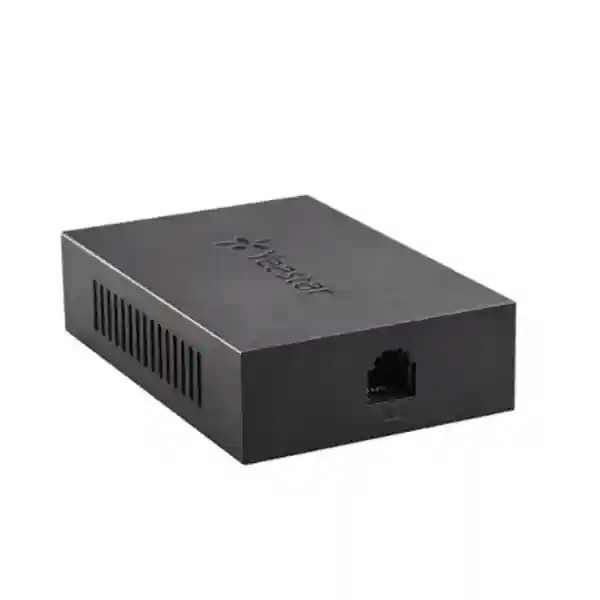
The Yeastar TA100 is a compact analog telephone adapter built for a straightforward job: connect one existing analog telephone or fax device to an IP-based voice environment. Yeastar specifies one RJ11 FXS port, one 10/100 Mbps Ethernet interface and one Micro USB power port, with SIP support and web-based configuration. For organisations moving gradually from legacy telephony to VoIP, the TA100 can preserve a useful analog endpoint while allowing it to participate in a modern SIP-based communications design.
What the Yeastar TA100 does
An analog telephone adapter sits between an analog endpoint and an IP voice network. On the device side, the TA100 presents an FXS port for an analog telephone or compatible fax device. On the network side, it uses Ethernet and SIP to register the analog endpoint into a VoIP environment. This makes the TA100 useful when a business wants the operational benefits of SIP telephony without immediately replacing every analog device. The practical value is not only the adapter itself; successful deployment depends on correct SIP credentials, PBX reachability, network addressing, codec selection, dial-plan alignment, security settings and fax expectations where a fax machine is involved.
Yeastar positions the TA100 and TA200 as compact adapters for residential and small-business scenarios. The TA100 is the single-FXS model, while the TA200 provides two FXS ports. The TA100 is therefore best suited to a requirement involving one analog endpoint at a desk, reception position, branch, service counter, security post, small office or other location where replacing the analog device is unnecessary or inconvenient. For larger groups of analog extensions, a multi-port FXS gateway may be a better fit than deploying many individual adapters.
Verified Yeastar TA100 technical highlights
Interfaces
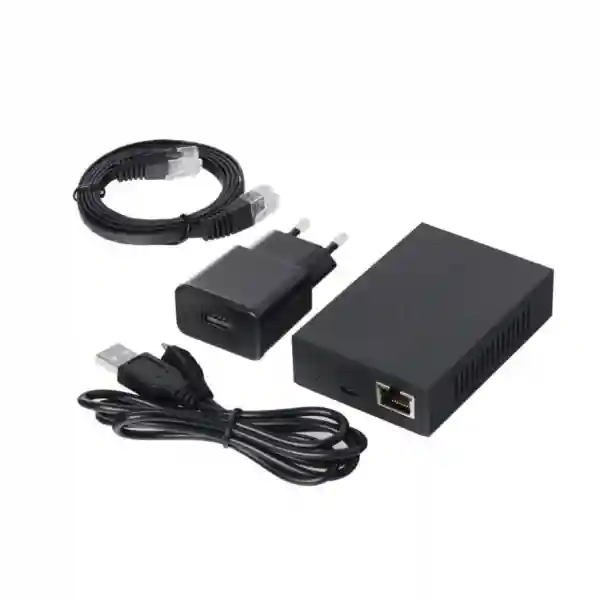
One RJ11 FXS port for an analog endpoint, one 10/100 Mbps LAN Ethernet port and one Micro USB port for power.
SIP and transport
SIP based on RFC3261 with UDP, TCP, TLS and SRTP support listed by Yeastar for the TA100/TA200 platform.
Voice processing
G.711 A-law/µ-law and G.729A/B codecs, dynamic jitter buffering and ITU-T G.168 line echo cancellation are specified.
Management
Web-based configuration plus FTP, TFTP and HTTP auto-provisioning support help administrators configure and maintain the adapter.
Network functions
Official documentation lists DHCP client, static IP, PPPoE, VLAN and NAT traversal options including static NAT and STUN.
Compact hardware
The documented enclosure size is 85 × 58 × 24 mm and the unit uses 5V DC power through the Micro USB interface.
Where the TA100 fits in a business voice design
The TA100 is most useful when one analog device still has a valid operational role. Examples include a familiar desk telephone that users want to retain, a fax endpoint that must remain available during a wider IP PBX transition, a branch device that needs to register to a central SIP platform, or a temporary migration stage while the rest of the site moves to native IP handsets. Yeastar documentation also provides a defined integration path for registering a TA100/TA200 FXS port as an extension on supported Yeastar P-Series environments.
It is important to distinguish an FXS adapter from an FXO gateway. The TA100 supplies an analog station interface for a phone or fax; it is not intended to connect a PSTN analog trunk directly into a PBX. Buyers who need to bring one or more analogue carrier lines into an IP PBX should specify that requirement separately so the correct FXO gateway family can be selected.
Deployment checklist before ordering
Identify whether the connected device is a telephone or fax machine and verify the signalling, dialing and fax method expected by the surrounding system.
Prepare the extension number, authentication name, password, SIP server address and transport policy required by the PBX or SIP platform.
Confirm Ethernet availability, DHCP or static addressing, VLAN requirements, firewall rules, routing and the quality of the WAN path if the PBX is remote.
The adapter uses USB power, but continuity also depends on the switch, router, firewall, PBX and internet connection. UPS protection may matter for critical calling.
Related FourTeck Tanzania resources
A TA100 deployment is usually part of a wider voice and network design. Review the FourTeck Tanzania technology portfolio for the broader IT, telecom, networking and security context. Buyers can use the FourTeck Tanzania shop to explore business technology categories and purchasing guidance, including IP phones and IP PBX requirements.
For planning around installation, network preparation and lifecycle support, see the FourTeck Tanzania services page. Procurement teams that want to understand the business and regional approach can review the About FourTeck Tanzania page. When the PBX, SIP credentials, endpoint type and quantity are known, use the FourTeck Tanzania contact page to request a quotation or technical discussion.
Only these distinct relevant Tanzania-domain pages were used because they could be verified. Rather than fabricating additional internal product URLs, the page keeps the internal-link set limited to confirmed destinations.
Yeastar TA100 Analog Telephone Adapter Tanzania
For organisations in Tanzania, the Yeastar TA100 is a practical device when the communications plan calls for retaining one analog endpoint while the surrounding system moves toward SIP and IP networking. That requirement appears in many forms: a small office may have a dependable analog phone it does not need to replace; an existing fax machine may still be part of a finance or administration process; a branch may need one analog extension connected back to a central IP PBX; or a temporary project office may need a compact adapter rather than a full handset refresh. The TA100 addresses that narrow requirement with one FXS port, Ethernet connectivity and SIP support, so the purchase decision should begin with the endpoint and PBX rather than with the adapter in isolation.
A good Tanzania deployment starts by confirming the IP PBX or SIP service that will provide the extension. The network administrator should know the SIP registrar or PBX address, extension credentials, supported transport, preferred codecs and any voice VLAN or Quality of Service policy. If the device will operate across an internet connection, firewall and NAT behaviour also matter. The TA100 supports common network options and secure SIP media transports listed by Yeastar, but the surrounding network still determines whether packets reach the PBX consistently and whether voice quality remains stable during periods of heavy data use.
For procurement, the key sizing question is simple: do you need one analog station port or several? If one phone or fax must be preserved, the TA100 is directly aligned with the requirement. If two analog endpoints are required at the same location, the TA200 may consolidate the need. If an office has many analog extensions, a higher-port FXS gateway can reduce the number of individual devices and simplify management. FourTeck can help map the number of analog devices, PBX platform, network topology and expansion plan before a quotation is finalised.
Tanzania projects also benefit from considering power continuity and network resilience. An analog telephone attached to an ATA is no longer independent of the data network: the adapter, Ethernet path, router or firewall, PBX and possibly the internet service must all remain available. Where calling is operationally important, UPS protection for the relevant network equipment and clear documentation of voice settings can make support easier. For broader regional projects, FourTeck’s Africa technology solutions site can provide additional regional context while Tanzania remains the primary project market.
Yeastar TA100 Analog Telephone Adapter Dar es Salaam
Dar es Salaam businesses often operate in environments where older telephony and newer IP infrastructure coexist. An organisation may have already adopted an IP PBX for main office users while keeping a small number of analog devices in reception areas, administrative rooms, service desks or back-office locations. The Yeastar TA100 is relevant when the requirement is exactly one analog endpoint and the organisation wants that endpoint to register as a SIP extension rather than remain on a separate legacy phone system. Its compact desktop form factor is also useful where equipment space is limited and only a small conversion point is needed.
In a Dar es Salaam office, the network design should be checked before deployment. The Ethernet segment carrying voice may also serve computers, printers, Wi-Fi access points and cameras. If large file transfers, backups or surveillance traffic can consume bandwidth, administrators should review VLAN and QoS policies so the TA100’s SIP and RTP traffic is not treated as an afterthought. The adapter itself supports VLAN capabilities, but good voice performance still depends on a well-configured LAN, appropriate switch uplinks and stable routing to the PBX. If the PBX is hosted outside the site, the reliability and latency of the WAN connection become part of the call-quality discussion.
For a fax use case, procurement teams should state that requirement explicitly. Fax over IP can be more sensitive than ordinary voice and may depend on PBX, carrier and codec settings. Yeastar documentation lists fax support features on the TA100/TA200 family, but successful operation should be validated with the actual SIP platform and service provider rather than assumed from the adapter specification alone. This is particularly important when the fax process is tied to finance, logistics, healthcare, legal or administrative workflows where reliability matters more than convenience.
A quotation request for Dar es Salaam should therefore include the number of TA100 units, the analog device type, PBX platform, SIP service, site network details and whether configuration assistance is required. FourTeck can align the ATA with related IP PBX, switching, cabling and power considerations instead of treating it as an isolated accessory. That approach helps the organisation know in advance what must be ready at the desk, network cabinet and PBX before the adapter is installed.
Yeastar TA100 Analog Telephone Adapter Mwanza
In Mwanza, the TA100 can be valuable for branch offices and operational sites that need to retain a single analog telephone while centralising voice services on an IP PBX. A business with headquarters elsewhere may want extension-to-extension calling between locations, standard numbering and consistent call policies without purchasing a full legacy PBX at every branch. In that scenario, the TA100 can register its FXS port to a reachable SIP platform and let one analog device operate as part of the wider voice system. The device’s purpose is focused, which makes requirements gathering straightforward when the buyer clearly identifies the existing phone, the central PBX and the network path between them.
For a branch deployment, WAN reliability deserves special attention. If the PBX is located in Dar es Salaam, another Tanzanian city or a cloud environment, calls from the analog phone depend on network reachability. A stable internet circuit, correct firewall policy, consistent DNS or IP addressing and an appropriate NAT design can be more important to user experience than the ATA itself. Organisations using multiple links or cellular backup should also consider how SIP sessions behave during failover. Documenting the TA100’s IP address, extension credentials, PBX destination and network port can reduce troubleshooting time later.
Mwanza procurement may also involve a mix of sites: offices, lodges, warehouses, educational facilities, healthcare locations or service operations. The TA100 should be selected only where one analog endpoint genuinely needs preservation. New workstations that do not depend on analog equipment may be better served by native SIP phones, while larger analog groups may suit multi-port gateways. This distinction keeps the voice architecture simpler and avoids deploying adapters where a direct IP endpoint would be easier to manage.
When requesting a Mwanza quotation, specify the endpoint type, whether the PBX is local or remote, the expected call pattern, available Ethernet connection and power arrangement. If the site will depend on the adapter for critical calling, include UPS and internet resilience in the broader design conversation. The goal is a reliable extension, not simply a device purchase, and that means the LAN, WAN, PBX and analog endpoint should be considered together.
Yeastar TA100 Analog Telephone Adapter Arusha
Arusha businesses in hospitality, tourism, professional services, education and branch operations may encounter a practical mix of analog and IP telephony. A complete handset replacement is not always necessary when only one legacy device needs to remain active. The Yeastar TA100 gives that device a path into SIP by providing a single FXS interface on one side and Ethernet on the other. This can be useful for a back-office phone, service desk, gatehouse, administration point or fax endpoint that must continue operating while the rest of the communications platform uses IP phones and software clients.
Hospitality and customer-facing sites should pay particular attention to call-flow design. Even if the TA100 connects only one device, the PBX may need rules for reception transfer, after-hours routing, hunt groups or emergency contact procedures. Those behaviours are controlled mainly by the PBX, so procurement should not assume that the ATA itself provides the complete business phone feature set. The TA100’s role is endpoint conversion and SIP participation. A clear call-flow diagram helps determine whether one FXS port is enough and how calls should reach the analog station.
Network segmentation can also be useful. Where an Arusha site carries guest Wi-Fi, staff traffic, CCTV and voice on the same infrastructure, a managed switch and firewall can separate traffic logically and reduce accidental interference. The TA100 supports VLAN features according to Yeastar documentation, but VLAN deployment requires corresponding configuration on the switch and upstream network. Likewise, secure transports such as TLS and SRTP should be enabled only when the PBX and overall deployment support matching settings and certificates or security policies.
For buyers, the most effective request includes the number of analog devices, exact intended use, PBX brand and version, SIP extension details, network topology and any remote-site conditions. If the requirement will grow beyond one analog endpoint, it is worth comparing the TA100 with two-port or multi-port alternatives before ordering. That up-front check can avoid a fragmented design where several small adapters are purchased when a consolidated gateway would be easier to manage.
Yeastar TA100 Analog Telephone Adapter Dodoma
For offices and institutions in Dodoma, the Yeastar TA100 suits a specific transition requirement: keeping one analog phone or fax connected while the communications backbone moves to SIP. This can support phased migration, where departments are upgraded at different times, or small remote locations that need a single extension from a central PBX. Because the TA100 is an endpoint adapter rather than a complete PBX, it should be treated as part of the larger voice architecture. The central system still controls extension policies, call routing and organisational features, while the adapter converts the analog station into a SIP-connected endpoint.
Government-related, institutional and professional environments often value documentation and repeatability. A TA100 rollout can be standardised by recording the device name, site, IP address method, VLAN, extension number, SIP server, transport, codec policy and administrator access procedure. If several branches use the same design, a consistent naming and provisioning method can simplify future support. Yeastar provides web-based configuration and auto-provisioning mechanisms, so administrators can plan around repeatable settings rather than configuring every unit from memory.
Power and network continuity should be part of the design. A traditional analog handset connected directly to an old PBX may behave differently during outages than a handset connected through an IP network. With the TA100, availability depends on the adapter and the rest of the IP path. If voice is business-critical, UPS-backed networking and a defined internet or PBX recovery plan can be valuable. The required level of resilience should be based on the business impact of losing that extension, not on the low power consumption or small size of the adapter.
When requesting a quotation in Dodoma, provide the device quantity, endpoint type, existing PBX details and whether the deployment is a new installation, migration or branch extension. This information allows the adapter to be evaluated against native IP phone alternatives, the two-port TA200 and larger FXS gateways. The right choice is the one that keeps management simple while meeting the actual number of analog connections required.
Yeastar TA100 Analog Telephone Adapter UAE
In the UAE, the Yeastar TA100 can support branch-standardisation projects for organisations that operate across the Gulf and East Africa. A business may have a modern SIP platform in Dubai or Abu Dhabi but still need to preserve one analog telephone or fax at a specific desk, store, workshop, security point or remote branch. The TA100 provides a compact single-port FXS bridge, helping the analog endpoint participate in the SIP environment without forcing an immediate replacement. This is particularly useful when the analog device itself is operationally familiar, embedded in a process or temporarily retained during a staged migration.
Cross-border voice design should be handled carefully. SIP registration, numbering, carrier services and regulatory requirements can differ by market, so the adapter should not be treated as a way to bypass local telecommunications obligations. Instead, it should be deployed as a standards-based endpoint under an approved PBX and service arrangement. Network teams should also assess latency between branches, VPN design, firewall policy and how voice is prioritised when traffic crosses shared WAN links. The TA100 supports TLS, SRTP and OpenVPN features in its documented platform, but the security architecture should be selected according to the PBX and corporate policy.
For organisations sourcing across regions, consistency can reduce support complexity. Using the same extension naming, VLAN conventions, security settings and documentation format across UAE and Tanzania sites gives administrators a predictable operating model. At the same time, local ISP behaviour and site infrastructure should still be tested rather than assumed identical. For UAE-specific project coordination, buyers can review FourTeck UAE technology solutions while using the Tanzania site for Tanzanian requirements.
A UAE quotation request should state whether the TA100 will register to a local PBX, a central corporate PBX or another approved SIP platform. Include the analog endpoint type, site network, remote-access requirements and expected growth. If more than one analog port is likely, compare the TA100 with higher-port alternatives before standardising the design.
Yeastar TA100 Analog Telephone Adapter Uganda
Ugandan organisations planning VoIP migration can use the Yeastar TA100 where a single analog telephone or fax must remain connected to a SIP-based phone system. The device is especially relevant in mixed environments, where headquarters, branches or field locations have different generations of telephony equipment. Rather than maintaining a complete analog PBX for one endpoint, the TA100 can present that endpoint as a SIP extension through the existing Ethernet network. This allows the migration to proceed gradually while reducing disruption to a user or business process that still depends on analog hardware.
The first technical check is PBX compatibility and reachability. Yeastar publishes integration guidance for its own P-Series environments, and standard SIP support can allow interoperability with other SIP systems, but administrators should confirm the exact PBX version, authentication method, codec policy and transport requirements. A successful lab test before a wider rollout is useful when the organisation relies on a third-party PBX or cloud voice service. For fax, testing is even more important because results can depend on the complete path, including PBX and carrier support.
Uganda projects may also include offices connected by VPNs, SD-WAN or ordinary internet services. The TA100 itself is small, but voice quality depends on the WAN path. Jitter, packet loss and latency can affect calls, so QoS policy and bandwidth management should be reviewed wherever voice shares connectivity with cloud applications, CCTV uploads or large data transfers. The adapter supports voice-processing features such as dynamic jitter buffering and echo cancellation, yet those functions are not a substitute for a stable network.
For regional procurement and Uganda-specific project needs, organisations can also consult FourTeck Uganda. A clear request should include quantity, city, analog device type, PBX details, network arrangement and whether configuration support is required. That information makes it easier to confirm whether the one-port TA100 is appropriate or whether a larger FXS gateway will deliver a cleaner architecture.
Yeastar TA100 Analog Telephone Adapter Kampala
Kampala has a dense mix of corporate offices, service businesses, education, healthcare, hospitality and retail operations where IP telephony often needs to coexist with established analog devices. The Yeastar TA100 is a precise fit when one such analog endpoint needs to remain. Instead of running a separate analog phone system for a single device, the ATA converts the station interface into SIP and uses the local Ethernet network to reach the PBX. This is useful for staged upgrades, temporary migration arrangements and specialised endpoints that a business does not want to replace immediately.
In multi-floor or multi-department sites, the physical placement of the adapter matters. The TA100 requires Ethernet access and USB power near the analog endpoint, or appropriate cabling between the device and the network point. Installers should avoid treating the ATA as a floating accessory with undocumented connections. Label the network port, extension number and analog endpoint, and record the administrator access details. This small amount of documentation can save time when the desk moves, the PBX is upgraded or the network team changes VLANs later.
Security should also be addressed at the PBX and network level. SIP endpoints should use strong authentication credentials, and management access should be limited to trusted networks where possible. If TLS or SRTP is selected, confirm end-to-end support rather than enabling mismatched settings. Firmware maintenance should be included in the lifecycle plan, especially because voice adapters can remain installed for years after users stop thinking of them as active network devices. Yeastar continues to publish TA100/TA200 firmware resources, which reinforces the need for controlled update practices.
Kampala buyers can improve quotation accuracy by stating whether the TA100 is for voice or fax, whether the PBX is on-site or remote and whether the existing switch supports the intended voice VLAN. If the requirement covers multiple analog devices across the same premises, a consolidated gateway should also be evaluated. The decision should be based on management simplicity and port count, not merely the lowest unit price.
Yeastar TA100 Analog Telephone Adapter Arua
For an Arua branch or remote operational site, the main value of the Yeastar TA100 is that it can extend a central SIP telephone system to one analog endpoint without requiring a separate local PBX. This can simplify branch communications when a business wants common extension numbering and central call policies across locations. The design is particularly attractive when the branch has only one analog device that must remain, because the TA100 provides exactly one FXS port and avoids over-sizing the local gateway.
Remote locations place greater emphasis on connectivity. If the PBX is hosted in Kampala, Tanzania, the UAE or a cloud platform, the ATA’s calls depend on the WAN path. Before deployment, verify whether the branch internet service provides stable latency, whether NAT and firewall rules allow the required SIP traffic and whether a VPN is used. When connections can fluctuate, it is important to set user expectations and determine whether an alternative calling method is required during an outage. The adapter can process voice effectively, but it cannot compensate for a completely unavailable upstream connection.
Remote support is easier when the installation is documented from day one. Record the site contact, device MAC address, IP addressing method, PBX hostname, extension, VLAN and power source. Where remote management is enabled, restrict access appropriately and avoid exposing administrative interfaces unnecessarily to the public internet. A consistent template for all branch adapters makes it easier for an IT team to troubleshoot calls without needing to reconstruct the original setup.
Arua procurement should also account for growth. If a branch may later add several analog devices, buying a one-port ATA today may create a cluster of adapters tomorrow. In that case, it can be more efficient to evaluate a multi-port FXS gateway or transition new users directly to SIP phones. For a stable one-device requirement, however, the TA100 remains a simple and compact option that can fit into a broader IP telephony standard.
Yeastar TA100 Analog Telephone Adapter Mbarara
Mbarara businesses considering a phased move to VoIP may not need to replace every analog endpoint at once. The Yeastar TA100 supports a controlled migration by connecting one analog telephone or fax device to a SIP-capable IP network. This can help a branch preserve a familiar device while the rest of the organisation adopts IP phones, softphones or unified communications. Because the TA100 has a single FXS interface, it is easy to map the product to a specific endpoint and calculate whether the deployment should remain one-to-one or move to a larger gateway.
The installation should be planned around the network closet and desk connection. The adapter uses 10/100 Ethernet, so it does not require a high-speed port for voice traffic, but reliable connectivity is more important than raw bandwidth. The switch configuration should permit access to the PBX, and voice VLAN settings must match the organisation’s design. If the local network uses DHCP, the adapter can obtain an address automatically; if static addressing is preferred, the allocation should be recorded to avoid conflicts. DNS, default gateway and time settings can also affect manageability in some environments.
For offices with intermittent power or important after-hours calling, resilience should be discussed during procurement. The TA100 itself can be powered through USB, but continuity requires more than keeping the adapter powered. The switch or router, firewall, PBX and WAN link may also need backup power. A compact UPS design can be considered when the extension has operational importance. Conversely, for a non-critical desk phone, the organisation may accept that calling stops during a site power outage.
When requesting the TA100 for Mbarara, provide the PBX platform, extension type, analog device, network connection and intended call flow. This enables a practical compatibility review and avoids assumptions. If the organisation plans to add more analog ports or replace the device with a native SIP phone soon, the procurement decision can be adjusted before installation rather than after additional equipment has been purchased.
Yeastar TA100 Analog Telephone Adapter Gulu
In Gulu, the Yeastar TA100 can support small offices, branches, service points and institutions that require one analog endpoint within a broader VoIP design. The use case should be clearly defined: the TA100 is not a phone system by itself, and it does not replace the PBX. It provides the analog FXS interface, translates the endpoint into the SIP environment and relies on the PBX for extension features and call routing. That distinction is useful for buyers because it clarifies what must already exist or be included elsewhere in the project.
Where the PBX is remote, network assessment should include more than a speed test. Voice quality can be affected by jitter, packet loss, congestion and unstable routing even when headline internet bandwidth appears sufficient. Businesses should consider how voice traffic competes with video meetings, cloud backups and other real-time applications. Managed switching, QoS and sensible firewall policies can help maintain a predictable path. If a VPN is used between branch and headquarters, the voice design should account for tunnel overhead and failover behaviour.
The TA100’s web interface and provisioning features can support repeatable administration, which is helpful when several branch sites use the same product. A standard template can define SIP server, transport, codec priority, dialing rules, VLAN and security settings. However, credentials should remain unique where possible and should not be copied insecurely between locations. Backup of known-good configuration and basic labelling can make replacement easier if a unit ever needs to be swapped.
For Gulu buyers, a practical quotation request should include quantity, whether the endpoint is voice or fax, PBX location, network topology, expected uptime and any future port growth. A one-port ATA is efficient when the requirement remains one port. If the branch plan is expanding, a two-port or multi-port FXS gateway can be evaluated at the same time. Procurement should select the architecture that will still be manageable after the next phase of growth.
Yeastar TA100 Analog Telephone Adapter Kenya
Kenya has an active market for SIP telephony, IP PBX systems and analog-to-VoIP gateways, and the Yeastar TA100 is commonly positioned as a single-port FXS adapter for businesses that want to connect an existing analog phone or fax to an IP network. For organisations operating in both Tanzania and Kenya, the model can support a consistent branch standard when the requirement is limited to one analog endpoint per site. Consistency can make procurement, spares, configuration and troubleshooting easier, provided each location still receives a network and PBX compatibility check.
A Kenya deployment should follow the same technical discipline as a Tanzania project: confirm the PBX or SIP service first, then validate extension credentials, LAN addressing, firewall policy and any voice VLAN. If the device will connect to a remote corporate PBX, test the WAN path under normal business load rather than only during an idle period. Voice quality is affected by delay and packet behaviour, so a stable 10/100 Ethernet connection at the ATA does not guarantee good end-to-end calling if the uplink is congested or unstable.
Buyers should also compare the TA100 with other port-count options. A single TA100 is sensible for one device. Two analog devices in the same location may make the TA200 more economical and easier to manage. Larger clusters can justify a multi-port FXS gateway. This simple sizing exercise prevents a project from accumulating many individual adapters that each require power, Ethernet and administration. For a distributed organisation with one special analog endpoint per branch, on the other hand, the one-port model can remain a clean standard.
Kenya-specific buyers can review FourTeck Kenya for regional technology requirements. Procurement teams coordinating Kenya and Tanzania should document where each TA100 will register, how extensions are numbered and who owns the PBX and network configuration. That governance helps prevent branch devices from becoming unmanaged exceptions over time.
Yeastar TA100 Analog Telephone Adapter Kuwait
In Kuwait, the Yeastar TA100 can be used when a SIP-based business phone system needs to accommodate one analog station. This may be a legacy telephone, fax endpoint or a device kept during a phased communications upgrade. The adapter allows organisations to preserve that endpoint while standardising the surrounding architecture around Ethernet and SIP. For companies with Gulf and African operations, the TA100 can also form part of a consistent branch template where a single analog port is needed at selected sites.
Telecommunications services and regulatory requirements must be respected in each market, so the TA100 should be deployed within approved corporate and carrier arrangements. It is an endpoint adapter, not a substitute for service-provider compliance or a method to circumvent telecom controls. Administrators should confirm the PBX platform, SIP server, firewall requirements and whether secure transport is supported end to end. If the PBX is reached over a corporate VPN, the tunnel design should be tested for latency and failover behaviour.
Environmental and rack considerations are usually modest because the TA100 is a small desktop device, but support processes still matter. Record where the unit is installed, what analog device it serves, which extension is registered and how it obtains an IP address. Where multiple offices use the model, standardised naming and configuration backups can reduce support effort. Firmware should be managed through an IT process rather than updated casually during business hours, especially if the endpoint supports a critical workflow.
For Kuwait procurement, buyers can consult FourTeck Kuwait for local technology context. When coordinating with a Tanzania deployment, confirm that both sites use compatible SIP policies but allow for market-specific carrier and network conditions. A quotation request should include quantity, analog endpoint type, PBX details, location and expected growth so the one-port TA100 can be compared with larger gateway options where appropriate.
Yeastar TA100 Analog Telephone Adapter Ghana
Ghanaian businesses adopting IP telephony may still have individual analog devices that are useful, familiar or linked to an established process. The Yeastar TA100 offers a focused way to retain one such device by connecting it to a SIP-enabled PBX through Ethernet. This can support migration without forcing all endpoints to change on the same day. The business should first decide whether the analog device is truly worth retaining; if the requirement is a standard desk phone with no legacy dependency, a native SIP handset may be operationally simpler.
Where the analog endpoint must remain, technical preparation includes extension creation, authentication credentials, PBX address, network addressing and dial-plan testing. The TA100 supports common SIP and IP networking functions, but those features should be configured to fit the organisation’s security policy. A default or weak extension password can create unnecessary risk, and exposing the management interface to the public internet should be avoided. Central IT teams can make support easier by placing voice devices on a managed VLAN and restricting administrative access to trusted networks.
For multi-site businesses, the TA100 can be deployed as part of a repeatable branch design. A small office might use one adapter for an analog phone while all other users connect through IP phones or soft clients. Standard documentation should record extension numbers, device identifiers, site contacts and PBX registration status. If the branch needs more analog ports later, the architecture should be reviewed rather than simply adding adapters indefinitely. Consolidated FXS gateways can become more practical as port count grows.
Ghana-specific technology needs can be coordinated through FourTeck Ghana, while Tanzania projects remain anchored on the Tanzania site. For a quotation, provide the number of units, city, analog device type, PBX or SIP platform and any installation or configuration requirement. This allows the product to be assessed in context and reduces the risk of ordering an adapter that does not match the existing voice environment.
Yeastar TA100 Analog Telephone Adapter Nigeria
Nigeria’s large and diverse business environment creates many situations where IP telephony is introduced gradually across offices, branches and operational sites. The Yeastar TA100 fits the narrow requirement of converting one analog station to SIP. A business can therefore keep an analog telephone or fax device active while the central communications platform moves to an IP PBX. This can be useful during staged migration, when a particular endpoint is difficult to replace immediately or when a remote site needs only one analog extension.
Network resilience can be a major design consideration. If the TA100 registers to a remote PBX, calls depend on local power, Ethernet, routing and WAN connectivity. Businesses should determine the acceptable outage level for the connected endpoint and decide whether UPS protection, dual internet links or another fallback mechanism is justified. The adapter’s compact hardware and voice-processing features help at the endpoint, but end-to-end availability remains a property of the whole network and PBX path.
Security and lifecycle management should be included from the beginning. Use strong SIP credentials, restrict management access, keep configuration records and monitor firmware advisories. If the organisation uses TLS or SRTP, validate compatibility with the PBX and surrounding security infrastructure. Branch teams should avoid arbitrary local changes that could make troubleshooting inconsistent across sites. A centrally approved template is more scalable when several TA100 units are deployed across different locations.
Nigeria-focused procurement can reference FourTeck Nigeria for regional technology requirements. When coordinating projects between Nigeria and Tanzania, document the PBX ownership, extension plan and support responsibilities in each market. The TA100 should be selected when one analog port is the sustained requirement; where multiple ports are expected, a larger gateway can reduce the number of devices and simplify management.
Yeastar TA100 Analog Telephone Adapter Seychelles
In Seychelles, small offices, hospitality businesses and distributed service locations may benefit from a compact analog-to-SIP bridge when one existing analog device must remain part of a modern phone system. The Yeastar TA100 provides one FXS port and can therefore be positioned precisely for a single telephone or fax endpoint. In a hotel or guest-service environment, for example, the requirement might involve preserving a back-office analog phone while front-desk and administrative users migrate to IP handsets. In a small office, it may simply allow a trusted analog device to participate in the new PBX without requiring an immediate replacement.
Island and remote-site connectivity makes network planning especially important. If the PBX is hosted off-site, the quality and availability of the internet path will affect calling. Businesses should consider latency, failover arrangements and whether voice traffic receives priority when shared links are busy. The adapter supports common SIP transports and network features, but it cannot make an unavailable circuit carry calls. For operationally important extensions, a defined fallback process can be as important as the primary configuration.
Maintenance planning should also be practical. Because the TA100 is small and can disappear behind a desk or inside a cabinet, label it clearly and record the connection. Document the analog endpoint, Ethernet port, IP address method, SIP extension and power source. If staff changes or the site is renovated later, this information helps prevent the adapter from being disconnected accidentally. A spare strategy may also be appropriate for remote locations where replacement logistics could take longer than in a major city.
For Seychelles procurement, provide the site type, quantity, analog device, PBX platform and network details before ordering. If the deployment is part of a regional standard with Tanzania, Uganda, Kenya or the Gulf, reuse the same documentation principles while validating local connectivity and carrier conditions separately. The TA100 is most effective when it solves a deliberate one-port requirement rather than being used as a default choice for every voice endpoint.
Compatibility and integration guidance
Yeastar documents a direct integration method for connecting TA100/TA200 FXS gateways to supported Yeastar P-Series PBX environments by creating an extension on the PBX and registering the FXS port using the corresponding SIP credentials. In other SIP environments, the TA100’s standards-based approach can support interoperability, but buyers should validate the exact PBX version and required features. Do not assume that every optional service or vendor-specific feature will behave identically across all platforms.
For fax, confirm whether the surrounding path uses T.38 or pass-through and test with the actual carrier and PBX. For voice, confirm codec policy, DTMF method and caller-ID behaviour. For remote branches, confirm NAT, VPN and firewall design. These checks turn a basic hardware purchase into a predictable deployment.
Quotation checklist for the Yeastar TA100
Quantity: How many analog endpoints need conversion?
Endpoint: Is each connection for a telephone or fax device?
PBX: What is the IP PBX or SIP platform, software version and deployment location?
Network: Will the adapter use DHCP or static IP, and is a voice VLAN required?
Remote access: Is the PBX on-site, across a VPN or reached through the public internet?
Growth: Will the site remain at one analog port, or should TA200/multi-port FXS alternatives be considered?
Frequently asked questions
How many analog devices can the Yeastar TA100 connect?
The TA100 has one RJ11 FXS port, so it is intended for one analog endpoint. Buyers needing two analog station ports can evaluate the TA200, while larger analogue deployments may be better served by multi-port FXS gateways.
Does the TA100 work with SIP?
Yes. Yeastar specifies SIP based on RFC3261 and lists UDP, TCP, TLS and SRTP transport/security options for the TA100/TA200 platform.
Can the TA100 be used with a fax machine?
The TA100/TA200 documentation includes fax support. Successful fax-over-IP operation should still be validated with the actual PBX, SIP service and carrier path because fax behaviour can depend on more than the adapter.
Is the TA100 an FXO gateway for connecting PSTN lines?
No. The TA100 provides an FXS station port for an analog phone or fax. If the requirement is to connect an analog carrier/PSTN line into an IP PBX, an FXO gateway should be selected instead.
How is the Yeastar TA100 powered?
Yeastar specifies a Micro USB power interface and 5V DC power. Overall calling resilience still depends on the powered state of the connected network and PBX infrastructure.
What should I provide when asking FourTeck for a quote?
Provide the quantity, city or country, analog endpoint type, PBX/SIP platform, whether the PBX is local or remote, network requirements and whether installation or configuration support is needed.
Decision recap
Choose the Yeastar TA100 when the requirement is one analog phone or fax that must connect to a SIP-based voice system through Ethernet. Its compact format, one FXS port, web administration and SIP support make it suitable for phased migration and branch-extension scenarios. Choose a higher-port gateway when multiple analog endpoints are located together, and consider a native IP phone when there is no reason to preserve the analog device.
The most important buying step is compatibility validation. Confirm the PBX, SIP credentials, network policy, fax expectations, power resilience and growth plan before ordering. This keeps the adapter aligned with the overall voice architecture rather than turning it into an isolated workaround.
Consult FourTeck on your TA100 deployment
Share your PBX model, analog device, site location, quantity and network arrangement. FourTeck can help frame the requirement, compare one-port and multi-port options, and identify the IP PBX, switching, cabling or power dependencies that should be addressed before installation.
For multi-market technology planning, related FourTeck regional sites include FourTeck UAE, FourTeck Kenya, FourTeck Uganda, FourTeck Ghana and FourTeck Nigeria.



Reviews
There are no reviews yet.