
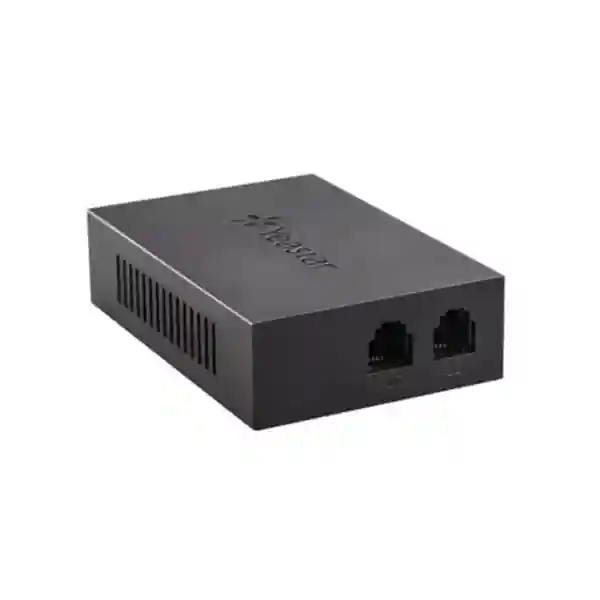
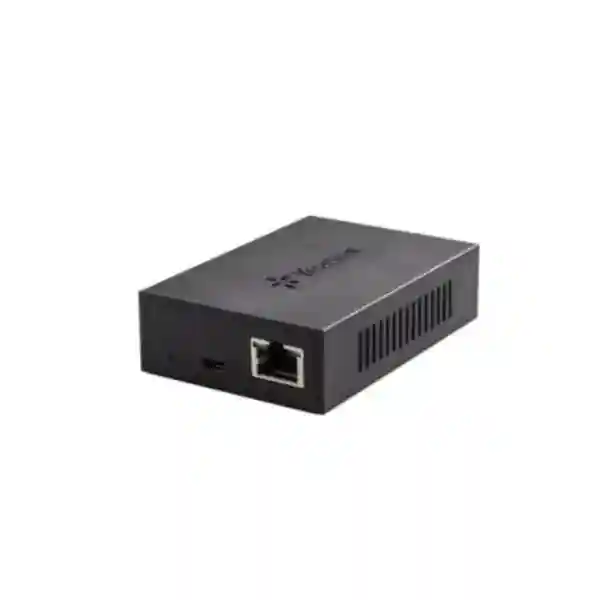
Yeastar TA200 Analog Telephone Adapter
The Yeastar TA200 is a compact two-FXS-port analog telephone adapter for organizations that want to keep useful analog phones or compatible analog endpoints while moving calling onto a SIP-based IP network. It gives two analog devices a practical path into an IP-PBX environment without forcing an immediate replacement of every endpoint. For offices, branches, reception areas, small businesses, hospitality sites and other environments with a limited number of legacy analog devices, the TA200 can be a focused bridge between familiar telephony hardware and modern VoIP infrastructure.
For Tanzania buyers, the important decision is not only whether an adapter has two phone ports. The PBX platform, SIP credentials, LAN addressing, VLAN policy, voice quality, power arrangement, dial plan and the actual type of analog device all affect whether the deployment is successful. FourTeck Tanzania can help turn those variables into a clear bill of materials and deployment plan.
TA200 provides 2 RJ11 FXS ports, one 10/100 Mbps LAN interface and Micro USB power. It supports SIP RFC3261, UDP/TCP/TLS/SRTP, G.711 and G.729A/B, VLAN/QoS, web management, backup/restore, logs and Yeastar auto provisioning.
What the Yeastar TA200 solves
Many organizations still have analog devices that remain useful even after the core phone system has moved to IP. A small office may have two dependable analog desk phones, a reception area may need a straightforward handset, or a branch may need to retain an existing analog endpoint while standardizing the rest of the business on SIP. The TA200 addresses that narrow but common requirement: it exposes two FXS interfaces that allow analog endpoints to operate as extensions in a compatible SIP environment.
This approach can preserve investment in working equipment and reduce disruption during a staged migration. Instead of replacing every analog device on day one, an organization can connect selected endpoints to the IP network while continuing to benefit from PBX features such as internal extension dialing, call routing and other supported functions. Yeastar documents the TA200 for connecting analog phones to IP-PBX systems and also provides integration guidance for its own P-Series and S-Series environments.
The adapter is intentionally small: Yeastar lists dimensions of 85 × 58 × 24 mm and desktop mounting. Its DC 5V 1A power requirement and Micro USB interface support compact placement. In a business deployment, however, physical simplicity should not obscure network planning. The Ethernet path, DHCP or static addressing, VLAN configuration, firewall policy, SIP registration and codec selection should all be documented so the device can be supported later.
2 × FXS
Two RJ11 FXS ports let the TA200 serve two analog telephony endpoints. For buyers, this makes it most suitable where the analog requirement is small and clearly defined.
SIP connectivity
SIP RFC3261 support and UDP, TCP, TLS and SRTP transport options give the adapter the protocol foundation expected for integration with modern IP telephony platforms.
Compact management
A web interface, system logs, packet capture, backup and restore, voice-menu basics and firmware upgrade options help administrators configure and troubleshoot the unit.
Voice-network controls
VLAN tagging, DiffServ/ToS QoS, dynamic jitter buffering and G.168 echo cancellation are relevant when voice quality must be protected on a shared business network.
Yeastar TA200 verified technical specifications
| Interface | 2 × RJ11 FXS ports; 1 × 10/100 Mbps LAN; 1 × Micro USB port |
|---|---|
| Protocol | SIP (RFC3261) |
| Transport | UDP, TCP, TLS, SRTP |
| Voice codecs | G.711 a-law/u-law, G.729A/B |
| Voice processing | ITU-T G.168 LEC echo cancellation; dynamic jitter buffer |
| DTMF | RFC2833, SIP Info, In-band |
| QoS / VLAN | DiffServ, ToS, 802.1P/Q VLAN tagging |
| Network | DHCP, OpenVPN, PPPoE, Static Route, VLAN |
| Network services | FTP, TFTP, HTTP, HTTPS, SSH |
| FXS signaling | Loop Start, Kewl Start |
| Caller ID | BELL202, ETSI (V23), NTT (V23-Japan), DTMF-based CID |
| Disconnect methods | Busy Tone, Polarity Reversal |
| Power | DC 5V 1A |
| Dimensions | 85 × 58 × 24 mm |
| Environment | Operating: 0°C to 40°C; storage: -20°C to 65°C; humidity: 10–90% non-condensing |
Specification values above are based on Yeastar’s published TA100/TA200 product information. Compatibility, fax behavior and individual telephony features should be checked against the intended PBX, service provider, analog endpoint and firmware before procurement.
Compatibility, integration and deployment guidance
Yeastar lists interoperability with Asterisk, Lync Server and FreePBX, and its documentation shows how TA100/TA200 gateways can be registered to Yeastar PBX platforms. That does not mean every SIP deployment is identical. Before ordering, the buyer should confirm how many analog endpoints are required, whether each endpoint behaves like a normal analog telephone, which SIP account will be assigned to each FXS port, what dial plan applies and whether the PBX expects any special registration or NAT behavior.
Network readiness matters because voice traffic is sensitive to delay, loss and jitter. If the TA200 is placed on a business LAN with data users, cameras and cloud applications, a voice VLAN and suitable QoS policy may improve predictability. The adapter supports 802.1P/Q VLAN tagging as well as DiffServ and ToS. These features are only useful when the surrounding switch, router and firewall are configured coherently. A VLAN tag configured only on the TA200 does not automatically create a working end-to-end voice segment.
Administrators should also decide whether the unit will use DHCP or a known static arrangement. Yeastar’s installation guide describes DHCP-based discovery and a voice menu for checking the acquired address. For supportability, record the MAC address, assigned IP, FXS-port mapping, SIP extension numbers, firmware version, PBX address, dial plan and any VLAN information. That small documentation set can save substantial time during a later network change.
Security should be treated as part of the voice design. TLS and SRTP are supported transport options, but whether they can be used depends on the PBX and the complete configuration. The device also offers an IP blocklist and attack-alert related functions. Avoid exposing management unnecessarily to the public internet; use controlled network access and secure administrative credentials according to the organization’s policy.
Who should consider the TA200?
The TA200 fits buyers who need exactly one or two analog ports and want those endpoints to participate in a SIP-based telephony environment. It can be useful for a small office retaining two analog phones, a branch migration where only a couple of legacy endpoints remain, a reception or service area that does not need a new IP handset, or a staged PBX upgrade. If the requirement is four, eight, sixteen or more analog extensions, a larger FXS gateway is generally the more organized path because it consolidates ports, power, management and cabling. The correct choice therefore starts with port count and future growth, not only the purchase price of one adapter.
Regional procurement and deployment guidance
Yeastar TA200 Analog Telephone Adapter Tanzania
For organizations sourcing the Yeastar TA200 in Tanzania, the best starting point is a precise statement of the analog requirement. The TA200 offers two FXS ports, so a buyer should identify the two actual endpoints that will be connected and confirm why they need to remain analog. This may be part of an office migration to SIP, a branch standardization project, or a small deployment where replacing existing phones adds cost without delivering a meaningful operational benefit. Defining the endpoints first helps determine whether the TA200 is sufficient or whether a larger FXS gateway would produce a cleaner design.
Tanzania deployments can vary widely in connectivity, switch infrastructure and power conditions. Before installation, confirm whether the adapter will be connected to a managed LAN, whether a voice VLAN is available, how SIP signaling is routed to the PBX and whether local firewall rules permit the required traffic. The TA200 supports VLAN tagging and QoS, but these features should be coordinated with the broader network. If the site uses a UPS for switches, routers and PBX equipment, include the adapter’s power source in the resilience plan so analog extensions do not disappear while the rest of the voice network remains online.
Procurement teams should ask for a quotation that identifies the exact TA200 model, quantity, included accessories, power arrangement and whether configuration or installation assistance is required. Avoid assuming that a low-port-count adapter needs no planning. SIP credentials, extension numbering, caller ID behavior, DTMF mode and dial plan can affect day-to-day calling. If the organization already runs Yeastar, Asterisk or FreePBX, share the PBX model and software version so compatibility can be reviewed.
FourTeck Tanzania’s business technology shop provides a useful purchasing context for IP phones and IP-PBX related equipment, while the technology services page explains the wider planning, installation and support approach. For a TA200 request, provide the number of analog devices, PBX platform, site count and preferred deployment schedule so the quotation reflects the real project rather than only a product code.
Yeastar TA200 Analog Telephone Adapter Dar es Salaam
Dar es Salaam organizations often operate dense office environments where voice, data, CCTV, Wi-Fi and cloud applications share the same network. In that setting, a TA200 can be a simple endpoint device, but its call quality still depends on the infrastructure around it. A small business may want to retain analog phones while adopting an IP-PBX, or an established office may have only two remaining analog endpoints after a wider migration. In both cases, the TA200’s two FXS ports keep the project focused without requiring a larger gateway chassis.
Before deployment, map the adapter to the switch port and voice design. If the office has managed switching, determine whether voice is isolated in a VLAN and whether the TA200 should receive its address from DHCP or use a documented static assignment. If the PBX is hosted elsewhere, check the internet path, firewall policy and any NAT requirements. TLS and SRTP support may be relevant for secure deployments when the PBX environment supports them, but encryption should be tested end to end rather than enabled in isolation.
For reception desks, finance rooms, small service counters or legacy handsets that users already understand, preserving the analog endpoint can reduce retraining. For high-call-volume desks, however, an IP phone may provide a better user experience through programmable keys, visual presence information and direct access to PBX features. The buying decision should therefore distinguish between “must remain analog” and “could be replaced by IP.” That prevents an adapter from being used where a purpose-built SIP phone is operationally better.
When requesting a Dar es Salaam quotation, include site address details only in the commercial request, along with the PBX make, number of analog ports required, switch environment, preferred extension numbers and whether remote configuration is expected. That information allows the supplier to discuss compatibility and project scope without making unsupported assumptions about stock, delivery or service coverage.
Yeastar TA200 Analog Telephone Adapter Mwanza
In Mwanza, the TA200 can suit branch offices, trading businesses, professional firms, clinics, education sites and other organizations that need to connect a very small number of analog endpoints to an IP-based phone system. The most useful procurement question is whether the requirement will remain at two ports. If a site is likely to add several analog rooms or lines later, a higher-density gateway may reduce the number of individual adapters and power connections that must be managed.
For a two-port requirement, deployment preparation should focus on network and power consistency. The adapter uses one 10/100 Ethernet port and DC 5V 1A power through its Micro USB arrangement. Place it where Ethernet, power and the analog phone cables can be organized cleanly. Avoid unlabelled extension leads and undocumented switch connections. A simple label identifying “FXS 1,” “FXS 2,” the extension numbers and the network port can make future troubleshooting much easier for local staff.
If the TA200 connects to a centralized PBX located at another site, assess the WAN path. Voice performance can be affected by congestion and packet loss even when ordinary web browsing appears normal. QoS policies may help, but only when applied across the appropriate devices. If connectivity is unreliable, the project should also define what happens when the WAN fails and whether local calling, mobile fallback or another continuity method is needed. The TA200 itself does not replace wider business-continuity planning.
A good Mwanza procurement request should state whether the adapter is for analog phones, another compatible analog endpoint, or a migration test. It should also list the target PBX, desired security method and any existing voice VLAN. This creates a technical record that can be compared against Yeastar documentation before deployment and gives decision makers clearer visibility into whether the TA200 is the right port density for the site.
Yeastar TA200 Analog Telephone Adapter Arusha
Arusha businesses in hospitality, tours, professional services, offices and multi-building environments may encounter analog devices during a transition to IP telephony. The Yeastar TA200 is useful where that requirement is limited to two FXS connections. A hotel or lodge should first count all analog room, back-office and service-area endpoints rather than assume one small adapter will cover the project. If only two devices need retention, the TA200 can be appropriately sized; if dozens of analog extensions remain, a larger gateway architecture is likely to be easier to manage.
For smaller offices, the main advantage is controlled migration. The business can keep a familiar analog device while using the IP-PBX for extension numbering and call routing. Administrators should still test caller ID, DTMF behavior and call transfer functions with the actual PBX and endpoint. Analog telephony behavior can vary by regional settings and connected device, so acceptance testing should include inbound and outbound calls, hold, transfer, voicemail indication where required and any application-specific tones.
Arusha sites that rely on shared internet links for both cloud applications and SIP traffic should assess peak utilization. A short call-quality test during a quiet period does not prove performance during busy hours. Where managed switches and routers are available, create consistent QoS policies and avoid connecting critical voice equipment through temporary consumer network devices. Document the switch port, VLAN, IP addressing and PBX registration details so the deployment remains supportable after staff changes.
When requesting pricing, specify whether the project needs supply only or also assistance with PBX registration and testing. Also indicate the model of the existing phone system and whether the TA200 is replacing another ATA. That context helps avoid a quotation that is technically correct as a product purchase but incomplete as a migration plan.
Yeastar TA200 Analog Telephone Adapter Dodoma
For government-related offices, professional organizations, education sites, SMEs and branch operations in Dodoma, the TA200 can provide a practical bridge when exactly one or two analog endpoints must be integrated into a SIP phone system. Buyers should evaluate this as an infrastructure component rather than a stand-alone consumer adapter. The device will participate in the organization’s IP addressing, firewall and voice policies, so it should be commissioned with the same documentation discipline applied to switches and PBX equipment.
A useful pre-purchase checklist includes the analog device type, PBX platform, extension credentials, preferred DTMF method, caller-ID expectations and local network configuration. Yeastar supports RFC2833, SIP Info and in-band DTMF, giving administrators options when integrating with different systems. The correct setting should be based on the PBX and service environment rather than chosen arbitrarily. The same is true for transport security: TLS and SRTP are available, but both ends must be configured compatibly.
Power resilience deserves attention in sites where telephony is operationally important. Because the adapter is powered separately from the LAN, a switch remaining online during a power disturbance does not guarantee the analog endpoint will remain available. If the voice system is intended to ride through short interruptions, plan UPS-backed power for the PBX, router, switch and TA200 power source. Record that arrangement in the site documentation so later maintenance does not bypass it.
For procurement, ask for the exact Yeastar TA200, not a generic “two-port ATA,” and request confirmation of the supplied package contents at quotation time. Also describe any requirement for remote management, configuration backup and firmware alignment. Those details make the purchase easier to hand over from procurement to IT and reduce uncertainty during installation.
Yeastar TA200 Analog Telephone Adapter UAE
For UAE organizations with offices in Dubai, Abu Dhabi, Sharjah or other emirates, the TA200 can be useful in branch standardization projects where a small number of analog devices need to coexist with an IP-PBX. Companies operating across Tanzania and the UAE can simplify support by documenting a repeatable TA200 configuration template: firmware baseline, SIP registration method, VLAN ID, addressing convention, extension naming and backup procedure. Standardization reduces the risk of each branch becoming a one-off configuration.
The device supports two FXS ports and is therefore best treated as a low-density edge adapter. In a UAE headquarters with dozens of analog endpoints, consolidating them on a larger gateway may be more efficient. In a small satellite office, security desk or legacy equipment corner, the TA200 can be appropriately sized. Procurement teams should compare the total operational footprint—adapter count, power supplies, Ethernet ports and management effort—not only unit cost.
Where SIP traffic crosses public or private WAN links, align firewall and security requirements with the central PBX team. TLS and SRTP can form part of a secure design when supported end to end. Remote administration should be restricted according to corporate policy, and configuration backups should be stored with the site documentation. If the PBX supports centralized provisioning, confirm whether the desired method is supported for the specific deployment topology.
Customers coordinating technology between Tanzania and the Gulf can also review FourTeck’s wider IT and telecom solutions. The practical goal is not to duplicate an identical hardware count across countries; it is to use compatible architecture and documentation so a TA200 deployed in one branch can be understood by the same IT team supporting another.
Yeastar TA200 Analog Telephone Adapter Uganda
Uganda buyers evaluating the TA200 should start with branch topology and port count. A small office that needs two analog extensions is an excellent example of the adapter’s intended scale. A distributed organization with two analog endpoints at each of several branches may also find the model useful, provided each site has reliable IP connectivity to the PBX and a clear configuration standard. If the analog endpoints are concentrated at one location, a larger FXS gateway may reduce device sprawl.
A cross-border organization operating in Uganda and Tanzania can gain value from using the same SIP extension conventions and deployment documentation. Record the TA200’s IP address, firmware, FXS port-to-extension mapping, PBX hostname, transport method and dial plan. These records make remote troubleshooting more systematic and reduce the tendency to reset or reconfigure devices by trial and error.
Before connecting the adapter to a shared LAN, verify whether the network uses VLANs and whether the switch port will carry tagged or untagged traffic. The TA200’s support for 802.1P/Q VLAN tagging can fit managed networks, but the configuration must match the switch. For voice quality, monitor packet loss and WAN congestion, especially where the PBX is centralized in another city or country. QoS is most effective when the network path consistently recognizes and prioritizes voice traffic.
For Uganda-specific project context, buyers can review FourTeck Uganda technology and PBX solutions. A quotation request should include quantity, city, PBX platform, analog device type and whether the project requires only hardware supply or also configuration support.
Yeastar TA200 Analog Telephone Adapter Kampala
Kampala offices often have mixed estates of older analog devices and newer SIP phones. The TA200 is relevant when a company wants to retire an analog PBX or simplify branch telephony without discarding every working analog handset immediately. By assigning SIP extensions to its two FXS ports, the adapter can allow those analog devices to participate in the IP-PBX environment while the organization completes its migration on a practical schedule.
The transition should be tested from the user’s perspective. Confirm that each handset rings correctly, that caller ID displays as expected where supported, that outbound dialing follows the company numbering plan and that transfer behavior matches staff procedures. If voicemail indication or distinctive ringing matters, test those functions as well. A migration is successful when the endpoint works predictably for the user, not merely when the SIP status shows “registered.”
Kampala IT teams should also plan administrator access. Use strong credentials, limit management exposure, save a configuration backup and note the firmware version. Yeastar offers web management, packet capture and system logs, which can be valuable when diagnosing one-way audio, registration failures or dial-plan issues. Those tools are most useful when the network layout and PBX details are already documented.
If the organization expects rapid expansion, compare the cost and support effort of several TA200 units with a larger FXS gateway. A two-port adapter excels when the requirement is genuinely small; using many of them to emulate a high-density gateway can complicate power, cabling and inventory. A good quotation discussion should therefore include both current port count and the likely requirement over the next upgrade cycle.
Yeastar TA200 Analog Telephone Adapter Arua
For organizations in Arua, a low-density ATA such as the TA200 can be attractive when an office or project site needs to connect two analog phones to a centralized SIP system. The compact hardware is straightforward, but remote-site planning is important. Where IT staff are not permanently located on site, the installation should be labelled and documented so a local staff member can identify the adapter, power source, Ethernet connection and attached analog phones without dismantling the setup.
Connectivity should be assessed before the phones are commissioned. If the PBX is located elsewhere, test the WAN under realistic conditions and consider how internet outages affect business calling. The TA200 supports network features such as DHCP, static routing, VLAN and OpenVPN, but the right method depends on the broader design. Avoid adding a VPN or unusual routing solely because the feature exists; choose the simplest architecture that meets security and connectivity requirements.
Power planning can be equally important. The adapter requires DC 5V 1A. If the branch relies on UPS-backed networking, decide whether the TA200 will share protected power. If it does not, a short power event could leave the network and PBX reachable while the analog endpoints are offline. This is a small design detail with a visible operational impact, particularly for a reception or service number.
When procuring for Arua, describe the purpose of each FXS port and identify the PBX platform. Ask whether the deployment includes configuration backup, basic testing and a handover record. For remote branches, those items may have greater long-term value than a hurried installation because they give central IT a reliable baseline when future support is required.
Yeastar TA200 Analog Telephone Adapter Mbarara
Mbarara businesses considering the Yeastar TA200 should match the adapter to a clearly bounded analog requirement. A branch with two legacy handsets can use the device as a bridge into a SIP platform while keeping the existing user experience. If the organization is building a completely new office with no legacy constraint, it may be worth comparing the TA200 approach against native IP phones, because direct SIP endpoints can reduce the number of intermediary devices and power supplies.
Where the adapter is chosen, build a small acceptance test. Place and receive calls on each FXS port, test DTMF through any IVR that users frequently call, verify caller ID expectations and confirm hold or transfer procedures. If fax or another special analog application is involved, test it specifically with the actual service environment rather than assuming voice-call success proves application compatibility. The adapter’s published support provides a technical starting point, but real networks and endpoints can behave differently.
Network configuration should remain easy to support. Choose DHCP reservations or static addressing according to company policy, document the choice and back up the TA200 configuration after acceptance. If the network uses a voice VLAN, confirm tag values and switch-port configuration. If voice shares a data VLAN, monitor utilization to ensure other applications do not cause avoidable call-quality problems.
Procurement teams should request the exact model, quantity and intended use and should clarify whether any PBX licensing or SIP account work sits outside the adapter purchase. The TA200 itself does not create a complete business phone system; it is one component that relies on a PBX or SIP service and a stable IP network.
Yeastar TA200 Analog Telephone Adapter Gulu
Gulu branch offices and institutions can use the TA200 when modernization plans leave one or two analog devices that still have a practical role. A staged migration can be more manageable than a sudden replacement if users, cabling or budgets require a gradual transition. The TA200’s two FXS ports allow a small legacy pocket to remain connected while the core telephony architecture becomes SIP based.
For remote support, make the installation self-explanatory. Label the analog ports with their extension numbers, record the IP address and PBX target, and keep a secure configuration backup. If support staff later need to investigate a registration problem, they should be able to tell whether the issue is local power, Ethernet, IP addressing, DNS, firewall policy, PBX availability or the FXS endpoint. Good records shorten that diagnostic path.
Voice traffic across a WAN should be evaluated with realistic application load. Where branch internet is shared with file synchronization, cloud backup or large uploads, those activities can affect call quality. The TA200 supports QoS-related mechanisms, but the router and upstream network must handle traffic consistently. If the business depends heavily on voice, consider monitoring and continuity options beyond the adapter itself.
A Gulu quotation request should state the exact analog endpoint type and whether users need features such as voicemail indication, forwarding or transfer. It should also explain whether the PBX is local, cloud-hosted or at another branch. With that information, the supplier and IT team can assess the deployment logically rather than treating the ATA as a plug-and-play device in every possible environment.
Yeastar TA200 Analog Telephone Adapter Kenya
Kenya organizations with mixed analog and SIP telephony can use the TA200 as a small migration tool for two analog endpoints. In a branch strategy spanning Nairobi, Mombasa, Kisumu or other locations, one repeatable adapter configuration can simplify deployment if each site has a similar two-port legacy requirement. The key is to standardize settings where appropriate while allowing site-specific IP addressing, VLAN and extension numbers.
For procurement, distinguish between an endpoint-conversion project and a full PBX project. The TA200 provides FXS interfaces and SIP connectivity; it does not replace call-routing logic, SIP trunks, receptionist workflows or user provisioning that belong to the PBX. If an organization is moving from an old analog PBX, the broader project may include numbering, IVR design, call queues, trunk migration and user training. The adapter is simply the bridge for analog devices that remain.
Businesses should also review the lifecycle of those analog endpoints. If they are expected to be retired within months, a TA200 may offer a low-impact transition. If they will remain for years and are operationally important, document spares, firmware, configuration backups and replacement procedure. If the branch needs more than two ports, assess the higher-density TA range rather than accumulating separate two-port boxes.
For regional context, FourTeck Kenya covers business IT, VoIP PBX and network-security requirements. Companies operating in both Kenya and Tanzania can align telephony standards so extension naming, SIP security, VLAN conventions and support records remain understandable across borders.
Yeastar TA200 Analog Telephone Adapter Kuwait
Kuwait buyers may encounter the TA200 in small-office migration projects, remote rooms or legacy endpoint integrations where two FXS ports are sufficient. In modern office environments with structured switching and centralized IP-PBX systems, the adapter should be treated as a managed network endpoint. Assign it a predictable IP configuration, place it in the intended voice/security zone and avoid informal cabling that makes later support difficult.
A procurement review should compare the TA200 against both IP handsets and higher-density analog gateways. The adapter is most compelling when the connected analog devices have a reason to remain—cost, user familiarity, application constraints or phased migration. For a new desk where no legacy hardware exists, a native SIP phone may reduce complexity. For a site with many analog devices, a larger gateway can centralize management. Choosing correctly avoids adding unnecessary layers to the telephony architecture.
Security teams should determine whether voice signaling and media require TLS and SRTP and whether the PBX supports matching settings. Administrative access should be restricted and configuration backups stored securely. If the adapter reaches a remote PBX over a WAN, verify NAT and firewall behavior before go-live, then test inbound and outbound calls under normal network load.
For multi-country organizations, Kuwait can be included in the same telephony standards document used for Tanzania, UAE and East African branches. The value of that standard is not identical hardware everywhere; it is a consistent decision method covering port density, IP addressing, VLANs, SIP security, extension naming, testing and handover. That makes the TA200 easier to support as part of a regional voice environment.
Yeastar TA200 Analog Telephone Adapter Ghana
Ghanaian SMEs, branch offices and institutions can consider the TA200 when two analog devices must operate through a SIP phone system. The use case is strongest when the analog endpoints are known and stable. For example, an organization may retain two familiar phones while migrating the rest of the office to IP handsets. The adapter gives those endpoints access to the IP environment without forcing an immediate hardware replacement.
Implementation should include a short technical handover. Record FXS port assignments, SIP usernames, IP address, gateway, DNS, VLAN setting, PBX address and firmware. Avoid putting passwords in an openly accessible document, but make sure authorized IT staff know where credentials are managed. Save a backup after acceptance. That creates a repeatable baseline if the unit is replaced or reset later.
Where the PBX is hosted or centralized outside the local site, test call quality over the actual internet or private WAN connection. Ordinary bandwidth tests do not always reveal jitter and packet loss patterns that affect real-time audio. If the business uses large cloud uploads, CCTV remote viewing or backups, consider traffic management so voice remains usable during busy periods. The TA200’s VLAN and QoS capabilities can contribute to the design when the surrounding network supports the same policy.
Before requesting a quotation, decide whether the need is product supply, remote configuration assistance or full on-site telephony work. Also check whether any SIP trunk or PBX licensing is separate. The most accurate commercial proposal clearly separates the adapter from the services and platform components around it, preventing confusion during approval and deployment.
Yeastar TA200 Analog Telephone Adapter Nigeria
Nigeria has a wide variety of business environments, from small professional offices to distributed enterprises, and the TA200 should be matched to the specific site rather than treated as a universal gateway. Its two FXS ports are ideal for low-density analog integration. For a large office with many legacy extensions, using several small adapters may create unnecessary power and management overhead, so a higher-port-count gateway should be compared during design.
Where the TA200 is appropriate, resilience planning is important. If voice continuity matters during power events, include the adapter, network switch, router and PBX path in the UPS strategy. If the PBX is hosted remotely, consider internet redundancy at the business level. The adapter can support SIP securely with TLS/SRTP options, but it cannot compensate for a failed access circuit or unpowered local network.
Operationally, keep the configuration simple. Use a documented IP scheme, choose the correct DTMF mode for the PBX, verify caller ID requirements and test common user actions. If the organization uses IVR services, banking systems or other tone-sensitive applications, DTMF testing is especially important. After commissioning, store a configuration backup and note the firmware version so future updates can be managed deliberately.
For a regional company connecting Nigerian and Tanzanian offices, the same architecture template can define how small analog requirements are handled. A branch can use the TA200 where two ports are enough while a larger office uses a higher-density gateway. The consistency comes from common SIP security, documentation and support standards, not from forcing one hardware model into every location.
Yeastar TA200 Analog Telephone Adapter Seychelles
Seychelles organizations in hospitality, professional services, administration and distributed island operations may use the TA200 for small analog integration tasks. In hospitality especially, it is important to count the analog endpoint population before choosing the device. Two ports can be ideal for a back-office or limited legacy requirement, but a property with many analog room phones needs a higher-density gateway architecture and a more detailed telephony migration plan.
For a compact deployment, place the adapter in a controlled location with reliable Ethernet and power. Document the connected phone numbers and PBX extensions. If the site has managed switching, use the organization’s voice VLAN and QoS standards. If the PBX is remote, verify the WAN path and the firewall rules required for SIP and media. Avoid exposing the web management interface to the public internet unless there is a clearly designed and secured management method.
Because remote or island logistics can make emergency replacement inconvenient, configuration backup and spare planning may deserve more attention than the low cost of the adapter suggests. A replacement unit is much easier to commission when the IP settings, firmware, SIP extensions and FXS behavior have already been recorded. For business-critical endpoints, include a simple test procedure that local staff can perform after network or power maintenance.
When requesting a Seychelles quotation, identify the analog device type, quantity of TA200 units, PBX platform and whether the site is part of a multi-location system. This allows the supplier to evaluate whether two-port adapters are operationally sensible or whether consolidation would reduce support complexity over the life of the installation.
Related FourTeck resources
Tanzania technology portfolio
Explore how IP telephony fits alongside switching, Wi-Fi, security and other business infrastructure.
East Africa regional planning
Useful for organizations that need consistent PBX and branch-network standards across multiple countries.
Uganda branch requirements
Review regional PBX, networking and IT solution context for Uganda deployments.
Kenya branch requirements
Coordinate hardware selection and telephony standards for organizations operating in Kenya and Tanzania.
Quotation checklist for Yeastar TA200
A precise quotation request speeds up model validation and prevents missing dependencies. Include the following information where known:
Yeastar TA200 FAQs
How many analog phones can the Yeastar TA200 connect?
The TA200 provides two RJ11 FXS ports, so it is designed for up to two analog telephony endpoints. If a project needs more analog ports, compare a higher-density FXS gateway rather than assuming several TA200 units are the best architecture.
Does the TA200 support SIP?
Yes. Yeastar specifies SIP RFC3261. The adapter supports UDP, TCP, TLS and SRTP transport options. The exact transport and security settings must match the intended PBX or SIP service.
Can the TA200 work with Asterisk or FreePBX?
Yeastar lists interoperability with Asterisk and FreePBX. Deployment should still be tested with the specific software version, network design and required telephony features before production use.
What codecs does the TA200 support?
Yeastar’s current product specification lists G.711 a-law/u-law and G.729A/B voice codecs. Codec selection should align with the PBX, available bandwidth and call-quality requirements.
Does the TA200 support VLAN and QoS?
Yes. The published specifications include 802.1P/Q VLAN tagging, DiffServ and ToS. These settings should be coordinated with managed switches, routers and firewalls so the entire voice path uses a consistent policy.
How is the TA200 powered?
The published power requirement is DC 5V 1A and the unit includes a Micro USB power interface. For business continuity, consider whether its power source should be protected by the same UPS strategy as the switch, router and PBX.
Is the TA200 a replacement for an IP PBX?
No. It is an analog telephone adapter that connects analog endpoints to a SIP environment. Call routing, trunks, IVR, extension policies and broader unified-communications functions are handled by the PBX or service platform.
What should I confirm before ordering a TA200 in Tanzania?
Confirm that two FXS ports are sufficient, identify the analog devices, provide the PBX platform and version, note the network and VLAN design, decide whether configuration services are needed and clarify any special requirements such as DTMF behavior, secure SIP transport or remote-site connectivity.
Decision recap
Choose the Yeastar TA200 when the requirement is specifically to connect up to two analog telephony endpoints to a SIP-based phone system and the surrounding network can provide stable Ethernet, correct IP addressing and appropriate PBX access. Its compact form, web management, VLAN/QoS support and standard SIP capabilities make it practical for a small legacy footprint. Do not choose it solely because it is inexpensive; choose it because two FXS ports match the real deployment.
For larger analog estates, compare higher-density FXS gateways. For completely new desks with no legacy constraint, compare native IP phones. For multi-site companies, standardize documentation and security settings so every adapter is easy to understand and support. A well-planned TA200 deployment is small, deliberate and documented.
Discuss your Yeastar TA200 requirement
Share the number of analog endpoints, your PBX platform, site location, network environment and whether you need supply only or configuration assistance. FourTeck Tanzania can use that information to help define a suitable quotation and identify any related IP-PBX, network or deployment requirements.




Reviews
There are no reviews yet.