
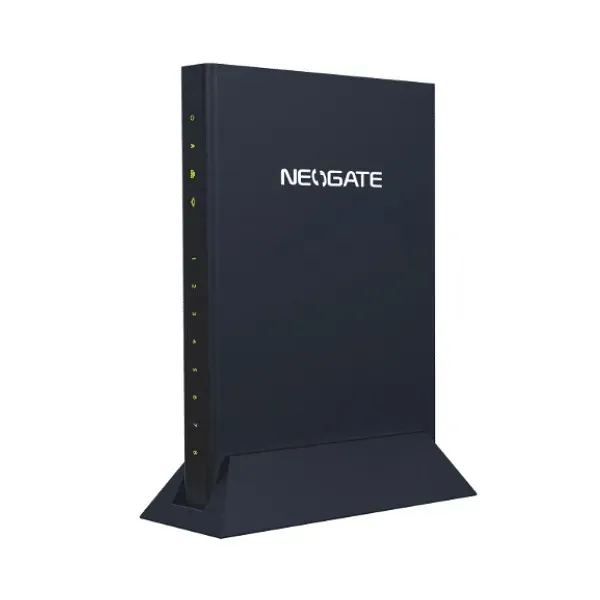
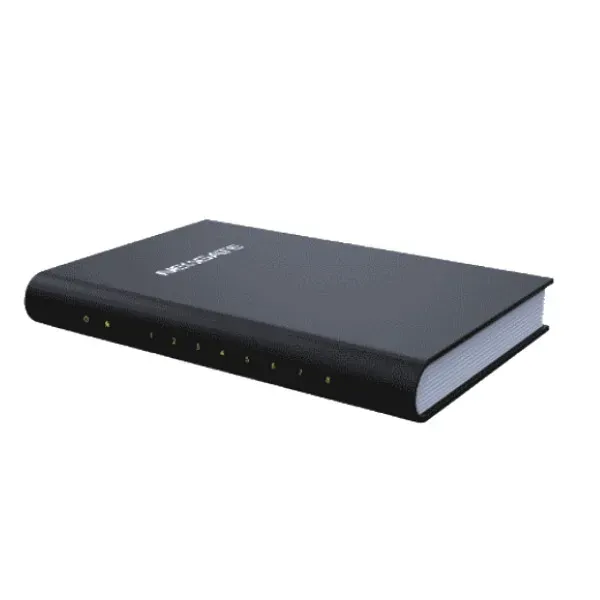
Yeastar TA810 FXO VoIP Gateway Tanzania
The Yeastar TA810 FXO VoIP Gateway gives organizations a structured way to connect as many as eight analog PSTN lines to an IP-based phone system without abandoning useful legacy telephony infrastructure. For Tanzanian businesses moving from conventional analog trunks to SIP-based communications, the TA810 can act as the bridge between existing telephone lines and an IP PBX, hosted PBX, call platform or compatible SIP environment. It is especially relevant when a business wants to modernize gradually: analog lines can continue to serve inbound and outbound calling while internal telephony, extensions and routing are moved toward an IP architecture.
What the Yeastar TA810 does
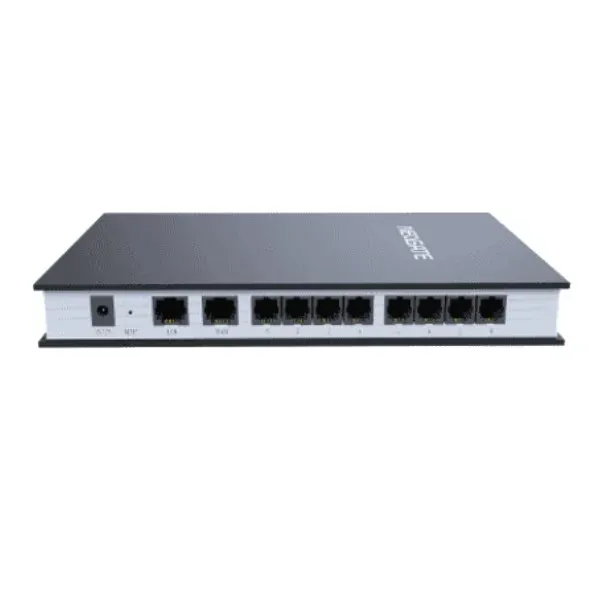
The TA810 is an FXO gateway. In practical terms, its eight FXO interfaces accept analog telephone lines and present those lines to an IP telephony environment through VoIP trunks. That makes the gateway useful when an organization already has PSTN services it wants to keep, but it also wants the routing, extension management and flexibility of a modern IP PBX. Yeastar positions the TA FXO family for connecting analog telephone lines or PABX extension interfaces to VoIP networks, and the TA810 is the eight-port member of that family.
The gateway supports SIP based on RFC 3261 as well as IAX2. Supported transport options include UDP, TCP, TLS and SRTP. Voice codecs published by Yeastar for the series include G.711 a-law/u-law, G.722, G.723, G.726, G.729A, GSM and ADPCM. Voice-processing functions include ITU-T G.168 line echo cancellation, dynamic jitter buffering, voice activity detection, comfort noise generation and packet-loss concealment. DTMF can be carried using RFC2833, SIP INFO or in-band signaling. For analog-line environments, the TA810 also offers programmable AC impedance, caller-ID detection, answer detection and hangup detection, which are important considerations when adapting different PSTN lines to an IP system.
Preserve PSTN investment
Keep useful analog lines in service while migrating internal calling, extensions and routing toward SIP-based communications.
Flexible routing
Route traffic between IP trunks and selected FXO ports or port groups, supporting inbound and outbound PSTN call scenarios.
Operational visibility
Use web management, call detail records, system logs, packet capture and other diagnostics for configuration and troubleshooting.
Security-aware transport
TLS and SRTP are supported alongside firewall, attack alert and IP blocklist functions for more controlled VoIP deployment.
Verified Yeastar TA810 technical specifications
| FXO interfaces | 8 × RJ11 FXO ports |
| LAN | 1 × 10/100 Mbps Ethernet |
| VoIP protocols | SIP (RFC3261), IAX2 |
| Transport | UDP, TCP, TLS, SRTP |
| Codecs | G.711 a-law/u-law, G.722, G.723, G.726, G.729A, GSM, ADPCM |
| DTMF | RFC2833, SIP INFO, in-band |
| Fax | T.30 |
| QoS | DiffServ, ToS, 802.1P/Q VLAN tagging |
| Network functions | DHCP, DDNS, OpenVPN, PPPoE, static route, VLAN |
| Management protocols | FTP, TFTP, HTTP, HTTPS, SSH |
| Caller ID | BELL202, ETSI V23, NTT V23-Japan, DTMF-based CID |
| Operating range | 0°C to 40°C |
| Storage range | -20°C to 65°C |
| Humidity | 10–90% non-condensing |
| Mounting | Desktop or wall mount |
PBX compatibility and integration planning
Yeastar documents TA FXO gateway integrations for its own P-Series Cloud Edition and legacy Cloud PBX platforms, and publishes application notes for FreePBX, Cisco Unified Communications Manager and other SIP environments. The key procurement question is therefore not simply whether a PBX supports SIP, but how the required trunk registration, routing, caller ID, dial patterns, NAT behavior and analog-line signaling will be handled in the specific deployment. For a new project, document the number of live analog lines, the PBX platform and version, inbound destinations, outbound dialing rules, caller-ID expectations and failover requirements before configuration begins.
The TA810 can map incoming FXO traffic toward an IP trunk and map IP-originated calls toward an FXO port or port group. This makes it appropriate for offices that want to centralize call control while retaining local PSTN lines. For cloud-hosted PBX deployments, firewall rules, public-address behavior, SIP security and route design should be reviewed carefully. Where several branches are involved, the gateway can also form part of a wider VoIP design, but bandwidth, latency, WAN security and operational responsibility need to be considered rather than treating the gateway as a standalone plug-and-play appliance.
Related FourTeck resources
For broader regional procurement and deployment discussions, review FourTeck Tanzania for local technology solutions, FourTeck Uganda for Uganda-focused requirements, FourTeck Kenya for Kenya projects, FourTeck UAE for UAE sourcing discussions, and FourTeck IP Phone solutions when the gateway forms part of a wider SIP endpoint rollout. These links are useful for planning the surrounding PBX, endpoint and multi-country deployment context rather than viewing an FXO gateway in isolation.
Yeastar TA810 FXO VoIP Gateway Tanzania
In Tanzania, the Yeastar TA810 is particularly relevant for organizations that still depend on analog PSTN lines but want the flexibility of SIP-based call control. A common migration challenge is that a business may have working copper lines, known published telephone numbers and established inbound calling habits while also wanting to introduce IP phones, centralized routing, remote extensions or a modern PBX. Replacing every element at once can create operational risk. The TA810 allows up to eight analog lines to be brought into an IP telephony design so the transition can be phased. Buyers should begin by counting how many PSTN lines are actively used, how many simultaneous calls are expected, and whether all lines require inbound and outbound access. Eight physical FXO ports make the model suitable where the requirement fits within that capacity.
For Tanzanian deployments, analog-line behavior should be tested during commissioning rather than assumed. Caller-ID presentation, disconnect supervision, busy-tone detection and answer detection can vary by service and PBX configuration. Yeastar provides programmable AC impedance and multiple caller-ID methods, which gives an integrator useful tools, but these still need to be matched to the actual telephone service. A sensible acceptance test includes inbound caller ID, outbound presentation where provided by the carrier, call clearing, unanswered calls, busy conditions, transfer behavior and recovery after network or power interruption.
Procurement teams should also plan the IP side carefully. The TA810 uses a 10/100 Mbps Ethernet interface and supports SIP/IAX2, VLAN, QoS, OpenVPN, static routing and common management protocols. Confirm where it will sit in the LAN, whether voice traffic uses a dedicated VLAN, how the PBX will reach the gateway, and who is responsible for updates and backups. Yeastar continues to publish TA410/TA810 firmware, so firmware maintenance should form part of the operational plan. Before requesting a quotation, provide the PBX brand/version, the number of PSTN lines, site location, existing network design and desired inbound/outbound call flow. That information helps determine whether the TA810 fits the project cleanly or whether a different port count or architecture is more appropriate.
Yeastar TA810 FXO VoIP Gateway Dar es Salaam
Dar es Salaam organizations often operate busy customer-facing telephone environments where published landline numbers remain useful even as the internal communications platform moves toward IP. The TA810 can serve as the boundary between those analog PSTN lines and a SIP PBX, allowing reception teams, sales desks, support groups or administrative extensions to handle calls through centralized IP routing. Its eight FXO ports are useful when several external analog lines need to be presented to one PBX without installing a separate gateway for each line. For offices upgrading from a legacy PABX, the gateway can support a staged project in which the public telephone services remain stable while internal extensions and routing are modernized.
A Dar es Salaam project should map business-hours routing, after-hours destinations and departmental call flows before installation. For example, incoming lines can be directed through the PBX to an IVR, operator group or specific destination, while outgoing users can be assigned routes toward selected PSTN lines. The exact design depends on the PBX and the organization’s numbering rules. Yeastar’s documented routing model includes port-to-IP and IP-to-port logic, which is flexible, but the finished solution depends on disciplined PBX and gateway configuration. Security is equally important: use strong credentials, restrict management access and prefer encrypted transport where compatible with the broader system.
For procurement, avoid treating the TA810 as just an eight-port box. Ask whether the existing analog lines need caller-ID detection, whether fax usage is involved, whether the PBX is on-premises or cloud-hosted, and whether branch connectivity is part of the scope. The TA FXO line supports T.30 fax rather than T.38 on this FXO family, so fax expectations should be discussed explicitly. Also consider power protection for the gateway and network equipment because continuity depends on the whole voice path, not the gateway alone. A quote request that includes PBX type, line count, switch/VLAN details and intended call routing will produce a much more accurate deployment recommendation.
Yeastar TA810 FXO VoIP Gateway Mwanza
For Mwanza businesses, the TA810 can be a useful migration tool when existing PSTN connectivity still carries important customer, supplier or operational calls. Rather than forcing a complete telephony replacement, an IP PBX can use the gateway as an interface to as many as eight analog lines. This approach can suit hotels, distributors, healthcare facilities, education organizations, professional offices and multi-department businesses that want modern extension management while retaining established telephone services. The main design task is to determine how each physical line should behave: shared outbound pool, dedicated inbound number, departmental route or fallback path.
Network readiness matters even though PSTN enters on analog ports. The gateway’s IP traffic still travels through the LAN, so switch configuration, voice VLAN policy, addressing, routing and PBX reachability must be stable. Yeastar supports DiffServ, ToS and 802.1P/Q VLAN tagging, which can help integrate voice traffic into a managed network. Where the PBX is remote or hosted, WAN conditions and security become part of the calling experience. Packet loss, latency or poorly controlled NAT can affect voice quality and signaling, so test the full call path rather than only verifying that the trunk registers.
Mwanza buyers should also plan for supportability. The web interface provides access to port/trunk status, call records, logs and diagnostic functions such as packet capture. These tools are valuable when troubleshooting intermittent analog or SIP issues, but good documentation is just as important. Record which PSTN number is connected to each FXO port, the route associated with each port group, PBX trunk details and backup configuration. When requesting a TA810 quotation, state whether the project is a new IP PBX build, an expansion of an existing PBX or a migration from a legacy PABX. This helps size the gateway correctly and avoids purchasing eight ports when the long-term requirement is significantly smaller or larger.
Yeastar TA810 FXO VoIP Gateway Arusha
Arusha organizations in tourism, hospitality, travel services, NGOs, education and professional services may have established analog telephone numbers that remain important to customers and partners. The Yeastar TA810 helps integrate those lines with IP telephony by converting calls between the PSTN interfaces and the organization’s VoIP environment. With eight FXO ports, the gateway is best considered when several analog trunks are in active use and the business wants centralized routing without discarding those lines. It can also help simplify transition planning because the public-facing telephone services and the internal extension system do not have to be replaced at exactly the same time.
For service-oriented organizations, inbound call handling is usually the first design priority. Determine which numbers should reach reception, reservations, accounts, support or other destinations. The PBX can provide IVR and group behavior while the TA810 supplies access to the PSTN lines. Outbound routing should also be explicit: some users may require access to all analog lines, while others may use SIP trunks or a restricted PSTN group. The gateway’s routing and trunk functions support flexible designs, but clear dial plans make the system easier to operate and troubleshoot.
Physical and environmental planning should not be overlooked. Yeastar specifies a 0°C to 40°C operating range and 10–90% non-condensing humidity. The TA810 supports desktop or wall mounting, so installation can be adapted to a communications room or protected office location, but cabling should be labelled and access controlled. Use surge protection and suitable power backup according to the site’s wider infrastructure policy. For projects involving remote PBX hosting, verify encryption compatibility and firewall rules in advance. A complete Arusha quotation request should include the number of analog circuits, expected concurrent calls, PBX platform, site topology, desired caller-ID behavior and whether remote administration is required.
Yeastar TA810 FXO VoIP Gateway Dodoma
In Dodoma, the Yeastar TA810 can support government-facing organizations, offices, institutions, service companies and enterprises that need to retain analog telephone lines while introducing an IP PBX. The main value is interoperability between two generations of telephony: analog PSTN on one side and SIP-based call control on the other. Eight FXO ports provide capacity for multiple lines in one compact gateway, reducing the need for several small analog adapters. This can simplify rack or communications-room planning even though the device itself is designed for desktop or wall mounting.
A well-designed Dodoma deployment should start with a line inventory. Identify telephone numbers, carriers, line purpose, current call volume and whether any lines are reserved for alarms, fax or special services. Not every analog circuit should automatically be moved through a VoIP gateway; compatibility and operational requirements need to be checked. For ordinary voice PSTN lines, configure each FXO interface and test disconnect signaling, busy tone, caller ID and answer detection. Yeastar’s programmable AC impedance and detection features provide useful tuning options if line characteristics require adjustment.
On the IP side, document the PBX and network addressing model. The TA810 supports SIP/IAX2, static routes, VLAN, QoS, DDNS, PPPoE and OpenVPN, but only the features relevant to the approved architecture should be enabled. Limit management access, use HTTPS where practical, maintain configuration backups and keep firmware under change control. If the PBX is cloud-based, ensure that the path between the site and PBX is reliable enough for signaling and media. When preparing procurement documents, specify eight-port FXO capacity only if it matches the actual requirement; otherwise compare the four-port TA410 or higher-capacity options before purchase.
Yeastar TA810 FXO VoIP Gateway UAE
For UAE projects, the Yeastar TA810 is relevant where analog PSTN services or legacy PBX interfaces need to be retained while the organization standardizes on SIP telephony. Offices may encounter this requirement during PBX upgrades, branch consolidations or phased cloud migrations. The gateway offers eight FXO ports, allowing several analog lines to appear as VoIP resources to the PBX. Because the UAE market includes a wide variety of enterprise PBX platforms and hosted communications services, buyers should confirm interoperability at the configuration level rather than relying only on the presence of SIP support.
Secure deployment is important when integrating a gateway with remote or cloud systems. TA810 supports TLS and SRTP along with firewall, attack alerts and IP blocklist functions. These features can contribute to a stronger design, but security still depends on network segmentation, credentials, software maintenance and PBX configuration. If internet traversal is required, avoid exposing management services broadly. Use firewall restrictions, VPN design or other approved controls and test failover behavior before production cutover.
UAE procurement teams should prepare a clear bill of requirements: number of PSTN circuits, PBX model/version, whether inbound DID mapping is needed, expected simultaneous calls, fax requirements and branch connectivity. Power, cabling and rack-room standards should be incorporated into the project scope even though the TA810 itself is compact. For related UAE planning, the FourTeck UAE technology portal can provide broader infrastructure context. The goal should be a documented analog-to-IP migration plan that preserves required legacy connectivity without making the gateway a permanent substitute for wider telephony modernization where newer services are available.
Yeastar TA810 FXO VoIP Gateway Uganda
Ugandan businesses considering a Yeastar TA810 typically have one of two requirements: add PSTN capacity to an IP PBX or migrate gradually from a conventional PBX toward VoIP. The gateway’s eight FXO ports make both scenarios possible when the number of analog circuits fits within that limit. Existing public telephone numbers can continue to terminate on analog lines while the IP PBX controls extensions, ring groups, IVRs and user permissions. This can reduce migration disruption because customer-facing numbers do not necessarily need to change at the same moment as the internal communications platform.
Before deployment, each line should be tested for caller-ID format and disconnect behavior. The TA810 supports multiple caller-ID methods and busy-tone or polarity-reversal disconnect approaches, but the correct configuration depends on the service. For outbound calling, PBX dial patterns and gateway port groups should be designed so users receive predictable routing. For inbound calls, routes should send each line or group to a defined PBX destination. Logging and call records can help validate the design and diagnose failed calls after launch.
Where Uganda deployments involve branch offices, remember that the TA810 is only one element of the end-to-end voice path. WAN quality, router configuration, PBX security, VLAN policy and power continuity can all affect service. The gateway offers QoS-related functions and OpenVPN support, but an integrator should align them with the organization’s wider network standards. For Uganda-specific regional discussions, FourTeck Uganda is a relevant starting point. A quotation request should state the installation city, PBX platform, analog line count and whether the gateway is intended for primary calling, backup PSTN access or a mixed migration design.
Yeastar TA810 FXO VoIP Gateway Kampala
Kampala businesses with busy front desks, customer support teams, professional offices or established PSTN numbers can use the TA810 as a controlled bridge into a SIP telephony environment. Its eight FXO ports let a single appliance terminate several analog lines, after which the PBX can apply modern call routing. This is useful when the business wants IP phones, remote extensions or centralized administration but cannot immediately replace all external analog services. A phased deployment can reduce operational disruption and make it easier to test call flows department by department.
For Kampala installations, create an acceptance test that covers every active FXO port. Place inbound calls, verify caller-ID detection, confirm the correct PBX destination, test transfer and hold behavior, then make outbound calls through the expected route. Check whether unanswered calls release correctly and whether the port becomes available after the remote party hangs up. These details matter because analog signaling does not behave exactly like a pure SIP trunk. The gateway’s answer/hangup detection and programmable impedance functions are designed to help accommodate analog line characteristics.
Administrators should also plan backup and change control. Export the gateway configuration after commissioning, record port assignments and keep PBX route documentation with the network inventory. Where remote administration is required, restrict it to trusted management paths and maintain firmware responsibly. The TA810 supports HTTPS and SSH among its network-management protocols, but access controls still need to be enforced upstream. Kampala procurement teams should request the gateway together with any required PBX configuration, installation, patching, UPS and support scope rather than assuming the appliance alone completes the solution.
Yeastar TA810 FXO VoIP Gateway Arua
In Arua, the TA810 can help organizations modernize voice systems without abandoning analog telephone access that is still operational and familiar to customers. By presenting up to eight PSTN lines to a VoIP PBX, the gateway allows internal extensions to use centralized IP call control while external analog connectivity remains available. This approach can suit institutions, trading businesses, hotels, offices and service providers that need a practical transition path rather than a complete replacement project.
A project should first determine whether the site truly needs eight ports. Count live circuits and expected simultaneous calls, then leave sensible capacity for growth if justified. If the requirement is only a few analog lines, a smaller FXO model may be more economical; if it exceeds eight, a larger gateway may simplify expansion. The key is to size from actual traffic and business continuity needs. Once capacity is chosen, define inbound destinations and outbound line selection so users experience consistent dialing behavior.
Because branch and regional deployments may depend on shared WAN links, voice quality should be verified under realistic network conditions. QoS and VLAN capabilities can help prioritize voice within the LAN, but they cannot compensate for unreliable connectivity end to end. Test calls at busy periods, review packet behavior if problems occur and use the gateway’s logging and packet-capture tools to isolate issues. Where the PBX is off-site, secure the signaling path appropriately. A strong Arua quote request should therefore describe not only the gateway quantity but also network connectivity, PBX location, line characteristics and desired support responsibility.
Yeastar TA810 FXO VoIP Gateway Mbarara
Mbarara organizations can use the Yeastar TA810 when analog landlines remain part of daily operations but the business wants a more manageable IP-based telephone platform. The eight FXO ports provide a straightforward way to connect several PSTN circuits to an IP PBX, which can then distribute calls to extensions, groups, IVRs or other approved destinations. This can be useful for healthcare, education, retail, hospitality and administrative environments where existing telephone numbers are well known and replacing them immediately is undesirable.
The best deployment plans separate analog-line commissioning from PBX call-flow testing. First confirm each PSTN line independently, then connect it to the mapped FXO port and configure signaling characteristics. After that, verify SIP trunk status and PBX routing. This staged method makes troubleshooting easier because an installer can determine whether a problem originates from the telephone line, FXO port, IP network or PBX. Yeastar’s web interface, system logs and call detail records support this diagnostic process.
Long-term maintenance should include configuration backups, firmware reviews and periodic checks of trunk status. If the gateway is part of a business-continuity plan, test the intended fallback scenario regularly rather than assuming it will work during an outage. The TA810 itself still depends on power and on the network path to the PBX, so UPS and network resilience are important. Mbarara buyers can improve quotation accuracy by providing an equipment list, PBX software version, PSTN circuit count, user count and target call flows together with any requirement for installation or remote support.
Yeastar TA810 FXO VoIP Gateway Gulu
For Gulu offices and institutions, the TA810 is a practical option when a telephony modernization project must coexist with analog PSTN infrastructure. Rather than replacing established lines at once, the gateway converts their traffic for use with a SIP-based PBX. With eight FXO interfaces, it can consolidate multiple lines into one managed gateway and help a business standardize internal calling on IP extensions. This is especially valuable where public contact numbers have been in use for years and changing them could affect customers or partners.
Planning should focus on reliability and clarity. Label every telephone circuit, associate it with the correct gateway port, document its PBX route and keep a simple diagram of the voice path. If a line has a dedicated purpose, preserve that mapping instead of automatically pooling every port. For shared outbound access, define hunting or routing rules according to business policy. Caller ID, answer detection and hangup detection should be tested because analog line behavior can differ between services.
The IP network also needs a stable foundation. Use fixed addressing or an approved reservation strategy, separate voice traffic logically where the network standard requires it and protect administrative interfaces. The gateway’s HTTPS, SSH, VLAN, QoS and OpenVPN features provide deployment options, but unnecessary services should remain disabled. For Gulu projects connecting to a PBX across a WAN, measure actual call quality and monitor during peak usage. Procurement teams should request a solution scope that covers configuration and testing, not just supply, if they do not already have staff experienced with FXO-to-SIP integration.
Yeastar TA810 FXO VoIP Gateway Kenya
Kenyan businesses can deploy the Yeastar TA810 to integrate traditional PSTN circuits with a modern IP PBX while protecting the value of existing public telephone numbers. The gateway’s eight FXO ports are useful for SMEs, multi-department offices and branch sites that need several analog trunks but do not require a large digital gateway. It can also form part of a migration plan in which SIP trunks are introduced gradually while PSTN remains available for selected numbers or fallback routes.
When comparing supplier quotations in Kenya, look beyond price and verify the scope. Confirm whether configuration, PBX integration, line testing, installation, patching, user acceptance and post-installation support are included. The TA810 supports major SIP functions, voice codecs, QoS and common network services, but successful operation depends on how those capabilities are configured against the actual PBX and analog service. Ask the supplier to document the final trunk and routing configuration so future support work is not dependent on guesswork.
A Kenyan project may also involve multiple offices, so consider whether the PSTN lines should remain local to each site or be centralized through an IP network. Local lines can preserve familiar geographic calling patterns, while centralized PBX control can simplify extension management. The right design depends on network resilience and business continuity. For Kenya-focused infrastructure discussions, see FourTeck Kenya. Include the PBX brand, current trunk types, number of analog lines and intended migration timeline when requesting a TA810 quote.
Yeastar TA810 FXO VoIP Gateway Kuwait
In Kuwait, the Yeastar TA810 can be considered for offices that need to connect analog PSTN services or analog PBX interfaces to SIP telephony. Its eight FXO ports give the PBX access to multiple external lines through one compact appliance, which can simplify migration from legacy systems. This is useful where the organization wants to retain existing analog services for business continuity, inbound customer access or a staged transition while deploying IP phones and centralized call routing internally.
Technical validation should cover both line signaling and SIP behavior. The TA810 supports BELL202, ETSI V23, NTT V23-Japan and DTMF-based caller ID, plus busy-tone and polarity-reversal disconnect methods. An installer should select and test the settings that match the actual service instead of relying on a generic profile. The PBX trunk should then be validated for registration, codec negotiation, inbound destination and outbound dial patterns. For hosted PBX designs, review firewall and encryption requirements before deployment.
Kuwait procurement teams should also check lifecycle support, software maintenance and configuration ownership. Yeastar continues to publish firmware for the TA410/TA810 family, which supports an ongoing maintenance approach. Store configuration backups, note the installed firmware and schedule controlled updates according to organizational policy. If the project includes multiple branches, document which PSTN numbers terminate at each site. Clear documentation makes fault isolation much faster when an analog line, gateway route or PBX trunk later develops a problem.
Yeastar TA810 FXO VoIP Gateway Ghana
For Ghanaian businesses, the Yeastar TA810 offers a way to preserve analog telephone services while adopting IP PBX capabilities. Eight FXO ports can connect several PSTN lines to a SIP environment, allowing the PBX to provide extensions, call groups, IVR logic and centralized routing. This is useful where existing landline numbers still generate important inbound calls and the organization wants to avoid the disruption of replacing those services during a communications upgrade.
Capacity planning should be based on concurrent call demand rather than simply the number of published telephone numbers. Each active analog line occupies an FXO interface, so map current and expected traffic before purchase. If eight ports provide too much or too little capacity, compare other gateway sizes. Once the correct model is selected, group lines according to business use and define outbound route priorities. This can make call behavior predictable and ensure important lines are not consumed by inappropriate traffic.
For Ghana deployments using a remotely hosted PBX, network quality is part of the voice system. The gateway supports QoS marking, VLANs and secure transport options, but the WAN still needs adequate stability. Run voice tests over the actual production path and monitor the system after cutover. From an administration perspective, use HTTPS where possible, restrict access and maintain backups. For broader regional technology resources, FourTeck Ghana can support country-specific planning discussions. A complete request for quotation should include analog line count, PBX type, installation city and any configuration or support requirement.
Yeastar TA810 FXO VoIP Gateway Nigeria
Nigeria has a wide range of business communications environments, and the TA810 fits a specific requirement: bridging up to eight analog PSTN lines into a VoIP or IP PBX system. It can be valuable where an organization has established analog lines, legacy PBX connections or a requirement for PSTN fallback while modernizing internal communications. Rather than changing every trunk and endpoint in a single project, the gateway permits a phased transition in which the IP PBX and analog public network continue to interoperate.
The practical deployment question is how calls should move between the two sides. Incoming analog calls need to be mapped from FXO ports or groups toward the correct PBX destination. Outgoing IP calls need a route back toward the appropriate PSTN port group. Dial patterns, permissions and caller-ID behavior should be tested with real calls. Yeastar’s gateway management tools provide status, records, logs and packet capture, helping engineers distinguish signaling problems from routing or network problems.
Power and network continuity are important for Nigerian installations because the analog line alone does not keep the IP call path operational. Protect the gateway, switch, router and PBX infrastructure according to the site’s business-continuity standard. If the PBX is remote, redundant connectivity may be justified for critical environments. For Nigeria-specific sourcing discussions, refer to FourTeck Nigeria. Provide line inventory, PBX information, expected call volume and the desired support model when requesting pricing so the solution can be scoped beyond the hardware itself.
Yeastar TA810 FXO VoIP Gateway Seychelles
Seychelles businesses in hospitality, tourism, professional services and administration may need to retain familiar analog telephone services while modernizing internal communications. The Yeastar TA810 can connect up to eight analog PSTN lines to an IP-based phone system, allowing the business to centralize extension management without necessarily changing public telephone numbers. For hotels or service businesses, this can help preserve customer contact continuity while the internal PBX environment is upgraded.
Because island operations may place extra emphasis on continuity and remote support, design the deployment so administrators can diagnose issues clearly. Label physical lines and ports, document route mappings, back up the gateway and maintain an agreed support path. Yeastar provides system logs, call records and packet capture tools that can help troubleshoot PSTN or SIP problems. However, remote management should always be secured with appropriate network controls rather than exposing administrative interfaces unnecessarily.
For a cloud PBX deployment, test the full WAN path and consider what happens if internet connectivity is unavailable. The FXO gateway can preserve access to analog lines only when the rest of the intended call path remains operational, so local resilience requirements may influence the PBX design. Check the operating environment as well: Yeastar specifies 0°C to 40°C and non-condensing humidity within the published range. When requesting a Seychelles quotation, include site details, PBX location, line count, routing expectations and whether installation, remote configuration or user acceptance testing is required.
How to choose the TA810 for your project
Choose by port count
TA810 provides eight FXO ports. Verify the number of active analog lines and concurrent calls. If your need is materially different, compare other TA FXO gateway sizes.
Choose by PBX architecture
Confirm whether the PBX is local, branch-based or hosted. Registration, NAT, security and routing requirements differ across architectures.
Choose by operational requirement
Decide whether PSTN is the primary trunk, a migration bridge or a backup path. The operational purpose affects routing, resilience and testing.
Quotation checklist
To obtain a useful Yeastar TA810 quotation and deployment recommendation, provide the following project details:
✓ Number of active analog PSTN lines and telephone numbers
✓ PBX brand, model, software version and whether it is on-premises or hosted
✓ Number of users and approximate simultaneous-call requirement
✓ Required inbound destinations such as receptionist, IVR or ring groups
✓ Outbound dialing rules and any dedicated-line requirements
✓ Caller-ID and fax requirements
✓ Site network details including VLAN, firewall and WAN design
✓ Installation city and whether physical installation is required
✓ Power backup and business-continuity expectations
✓ Requirement for configuration, testing, documentation and ongoing support
Frequently asked questions
How many PSTN lines can the Yeastar TA810 connect?
The TA810 has eight RJ11 FXO ports, so it can interface with up to eight appropriate analog lines or PABX extension interfaces, subject to the actual telephony design.
Does the TA810 work with SIP?
Yes. Yeastar lists SIP RFC3261 and IAX2 support. SIP transport options include UDP, TCP and TLS, with SRTP also supported for media security.
Can the TA810 connect to a cloud PBX?
Yes, provided the cloud PBX and network design support the required SIP integration. Yeastar publishes specific integration guidance for its P-Series Cloud Edition. Firewall, NAT, security and routing should be validated for the chosen hosted PBX.
Does the TA810 support T.38 fax?
Yeastar’s current TA FXO specifications list T.30 fax for this family and explicitly distinguish TA FXO gateways from models that support T.38. Fax requirements should therefore be checked carefully before purchase.
Can the TA810 be wall mounted?
Yes. Yeastar lists desktop and wall-mount installation for the TA410/TA810 class.
What should I check before ordering?
Confirm FXO port count, PBX compatibility, analog line behavior, caller-ID expectations, inbound and outbound routing, network security, power resilience and whether installation/configuration services are required.
Decision recap
Choose the Yeastar TA810 when your project needs up to eight FXO interfaces to bring analog PSTN lines into a SIP/IAX2 telephony environment and when a controlled legacy-to-IP migration is preferable to immediate replacement. Its value is strongest when port capacity, PBX routing, line characteristics and network design are verified before purchase. For Tanzania, use the gateway as part of a documented telephony architecture that covers the analog lines, IP PBX, LAN/WAN, security, power and support responsibilities together.
Consult FourTeck Tanzania about the TA810
For a quotation, share your PBX platform, number of analog lines, installation location and target call flow. This allows the discussion to focus on whether the TA810’s eight FXO ports and supported routing features match the real deployment requirement, including integration, configuration and related IP telephony needs.



Reviews
There are no reviews yet.