
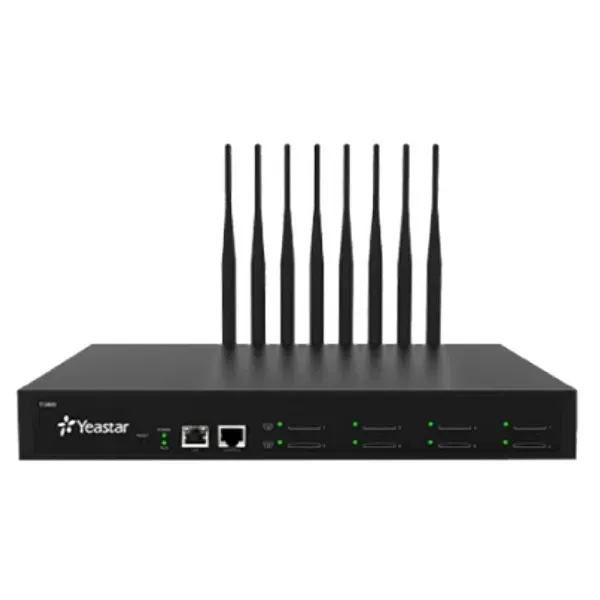
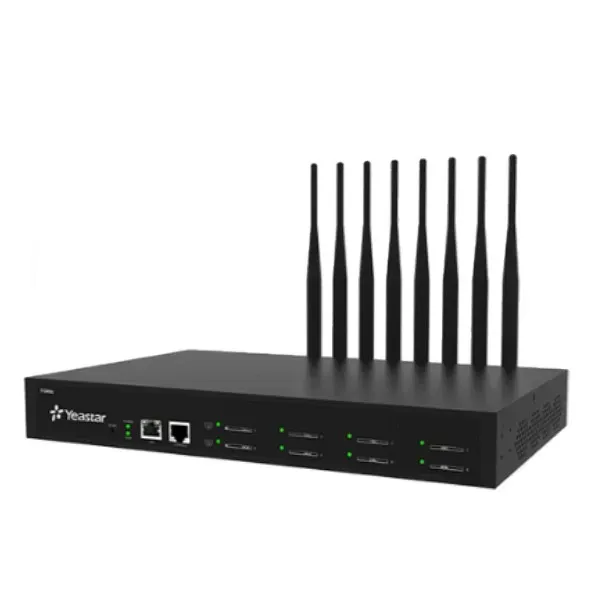
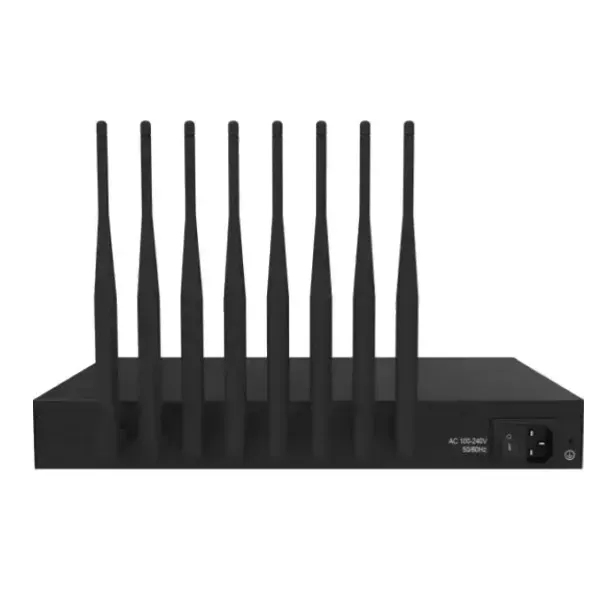
Yeastar TG800 VoIP 4G Gateway
The Yeastar TG800 is built for organizations that need to connect compatible mobile voice services with an IP-based phone system. Its eight mobile channels can be used for inbound and outbound calling between supported 3G/4G networks and VoIP, while administrators retain routing, trunk, SMS and network-management control from a web interface. For buyers in Tanzania, the practical value is the ability to add mobile trunks to an existing PBX, create route diversity, support mobile-number calling strategies and integrate cellular voice with SIP-based communications without treating the mobile network as a separate standalone system.
Choose TG800 when you need up to eight mobile channels and can confirm the correct module, SIM, frequency bands, operator support and PBX integration method for the intended deployment.
TG800 is the eight-port model in the TG family, suitable for organizations needing more capacity than two- or four-channel gateways.
The gateway supports common VoIP signaling options and can interconnect with compatible IP PBX, softswitch and SIP environments.
TCP, UDP, TLS and SRTP are listed for the TG platform, helping administrators align transport choices with the wider voice architecture.
The platform includes SMS functions, inbound and outbound routing rules, trunk grouping, call records and operational management features.
What the Yeastar TG800 does
A mobile VoIP gateway sits between cellular voice services and an IP telephony environment. In a TG800 deployment, compatible SIM-based mobile channels can be presented to a PBX or softswitch so users can place calls from desk phones or soft clients through mobile trunks, while calls arriving on mobile numbers can be routed into the business phone system. This makes the gateway relevant to companies that handle a meaningful volume of mobile-destination calling, want cellular paths available alongside SIP or fixed-line services, or need mobile numbers integrated into a structured reception and call-routing workflow.
Official Yeastar information lists TG800 with eight mobile ports, two 10/100 Mbps Ethernet interfaces, SIP and IAX2 support, UDP/TCP/TLS/SRTP transport choices, multiple voice codecs, DTMF options, NAT traversal, VLAN, QoS, static routing, firewall functions, OpenVPN, call detail records, call routing rules, trunk groups, SMS sending and receiving, bulk SMS features, USSD/SMS API capabilities and web-based management. The vendor also documents VoLTE operation when an LTE module is installed, a 4G SIM is inserted and the gateway is deployed in a suitable 4G environment.
The phrase “4G gateway” should therefore be understood carefully: LTE capability depends on the exact module and supported bands, and operator compatibility should be checked before procurement. FourTeck recommends confirming the mobile operator, intended SIM plan, voice technology, band support, PBX type, call volume and routing objective before finalizing a TG800 quotation.
Verified technical overview
| Mobile channels | 8 |
| VoIP protocols | SIP, IAX2 |
| Transport | UDP, TCP, TLS, SRTP |
| Ethernet | 2 × 10/100 Mbps interfaces |
| Voice codecs | G.711 A-law/µ-law, G.726, G.729A, GSM, ADPCM, Speex |
| DTMF | RFC2833, SIP INFO, in-band |
| Network functions | DHCP, DDNS, firewall, OpenVPN, static IP, QoS, static route, VLAN |
| Management-related functions | Web configuration, logs, packet capture, firmware upgrade, backup/restore |
| Mobile compatibility | Depends on installed module, supported bands, SIM and operator; verify before purchase |
Where TG800 fits in a business phone system
Mobile trunking
Route selected outbound calls through compatible mobile channels while keeping extension dialing, user permissions and PBX call handling centralized.
Inbound mobile numbers
Present calls arriving on mobile numbers to reception, ring groups, queues or other PBX destinations according to the configured routing plan.
Route diversity
Use cellular voice as an additional path in architectures where resilience or alternative routing is operationally useful, subject to network availability and configuration.
Related FourTeck resources
A TG800 deployment normally touches more than one device. Review the FourTeck Tanzania technology portfolio for the wider voice, network and infrastructure context; browse the Tanzania business technology shop when building a bill of materials; use the IT and deployment services page for project-support scope; consult FourTeck Uganda for Uganda-focused requirements; and visit FourTeck Kenya for Kenya-focused business technology planning. These links are useful when the gateway is part of a multi-site phone, LAN, firewall, cabling or regional procurement project.
Yeastar TG800 VoIP 4G Gateway Tanzania
For Tanzania organizations, the TG800 is most relevant when cellular calling needs to become part of a managed IP telephony environment rather than remain distributed across individual mobile handsets. A company may have a reception team, customer-service group, sales desk, dispatch operation or branch network that places frequent calls to mobile destinations. By integrating compatible SIM channels into the PBX, the business can keep user dialing inside its extension system while applying gateway and PBX routing rules centrally. That can simplify how calls are presented to users and how administrators supervise trunks, provided the mobile operator, SIM plan and intended usage are appropriate for gateway deployment.
Tanzania procurement should begin with network compatibility, not just the model name. The TG800 can be fitted with different mobile module types, and Yeastar states that 4G LTE band support depends on the module. Before a quotation is confirmed, buyers should identify the target operator or operators, verify SIM voice capability, confirm whether VoLTE is required, check supported LTE bands, and confirm that the intended call behavior complies with operator terms. It is also useful to define how many simultaneous mobile calls are expected during busy periods. Eight physical mobile channels provide a clear capacity boundary, but channel allocation, routing policy and practical concurrency should be planned around the business workload.
The IP side also deserves attention. The gateway should be connected to a stable LAN with appropriate addressing, VLAN and security policy. If it will communicate with an on-premises PBX, the design should define the SIP trunk relationship, codecs, DTMF method, inbound routes and outbound route patterns. If a remote or cloud PBX is involved, firewall, NAT, VPN and security requirements become more important. FourTeck can help assemble the requirement, confirm the TG800 variant, map the cellular and VoIP interfaces, and prepare a quotation covering the gateway plus any required network switching, UPS protection, cabling or IP telephony components.
Yeastar TG800 VoIP 4G Gateway Dar es Salaam
Businesses in Dar es Salaam often operate in environments where mobile calling, IP telephony, internet connectivity and branch communications overlap. A TG800 project can be useful for head offices, contact desks, logistics teams, hospitality operations, service companies and other organizations that want up to eight compatible cellular voice channels integrated with a PBX. The design goal should be specific: for example, presenting multiple mobile numbers to one reception workflow, routing selected outbound destinations through mobile trunks, or adding a cellular path beside other telephony services. Defining that objective first prevents the gateway from becoming an isolated appliance with no clear call-flow policy.
For a Dar es Salaam deployment, site readiness matters. The TG800 should be installed where the cellular signal is suitable for the chosen operator and where antenna placement, rack space, ventilation, power and Ethernet connectivity are practical. The local LAN should provide stable access to the PBX or SIP environment, and administrators should decide whether voice traffic will reside on a dedicated VLAN. If the gateway is placed behind a firewall, the security policy should permit only the traffic needed for management and VoIP operation. Remote administration should be controlled rather than exposed casually to the public internet.
Procurement teams should share the exact PBX brand and model, expected simultaneous calls, preferred operators, SIM quantities, desired inbound number behavior, outbound route policy, SMS requirements and any resilience objective. Where VoLTE is planned, the selected TG800 module, 4G SIM and operator service must all support the intended configuration. A complete quotation may also need a managed switch, firewall policy work, UPS backup or IP phones. FourTeck can use these details to align the gateway specification with the actual Dar es Salaam telephony environment instead of treating TG800 as a generic eight-channel box.
Yeastar TG800 VoIP 4G Gateway Mwanza
In Mwanza, the TG800 can serve organizations that need a structured link between mobile networks and office telephony. The strongest use case is not simply “adding SIM cards”; it is creating controlled mobile trunks that the PBX can use for selected inbound and outbound call flows. A business with field teams, suppliers, customers or distributed operations may prefer staff to continue dialing from desk phones or approved soft clients while the PBX and gateway determine which route is used. This keeps extension management, user behavior and call routing closer to the company’s existing communications process.
A Mwanza installation should be planned around signal conditions at the actual premises. Cellular performance can vary by building, room, antenna position and operator, so the gateway location should be chosen after practical signal checks rather than simply placed wherever rack space is available. If external or splitter antenna arrangements are considered, installers should follow the vendor’s supported hardware and maintain clean cable routing. On the IP side, administrators should reserve appropriate addressing, document the two Ethernet interfaces if both are used, configure secure management access and establish reliable reachability to the PBX.
Before ordering, buyers should confirm whether all eight channels are required immediately or whether the organization is selecting TG800 for growth. They should also confirm the exact mobile module type, supported bands, operator compatibility, SIM voice service, call concurrency, codec expectations, DTMF requirements and any SMS workflow. If inbound calls need to reach different departments, the routing map should be documented in advance. If outbound routes will vary by destination, prefix or user group, those rules should be designed at both gateway and PBX layers. FourTeck can help turn this information into a practical Mwanza deployment and quotation plan.
Yeastar TG800 VoIP 4G Gateway Arusha
Arusha organizations in tourism, professional services, education, administration, retail and other sectors may need business calls to move efficiently between IP extensions and mobile networks. The Yeastar TG800 provides an eight-channel platform for that bridge when the installed modules and SIM services match the intended operators. A well-designed deployment can let a receptionist receive calls arriving on mobile numbers inside the PBX, allow departments to use mobile trunks for defined destinations, or give a site an additional communications route alongside its existing telephony services.
For Arusha buyers, the decision should include operational ownership. Someone needs to manage SIMs, monitor balances or plans where relevant, maintain routing rules, review call records, apply firmware responsibly and keep configuration backups. The TG platform provides tools that support these tasks, including web management, call detail records, logs, backup/restore and network diagnostics. Those features are most useful when the gateway is treated as managed network equipment with documentation, access control and change procedures rather than as a plug-and-forget appliance.
The site network should be checked before installation. Voice quality depends on the IP path between gateway and PBX as well as the mobile radio path, so LAN congestion, firewall behavior, codec choices and NAT design can all affect results. Where the PBX is remote, secure connectivity such as VPN may be appropriate depending on the architecture. For quotation preparation, provide FourTeck with the PBX platform, site topology, operator preference, SIM count, desired routes, SMS needs, expected call volume and any power-backup requirement. This allows the Arusha project to be scoped as a complete telephony integration rather than a standalone hardware purchase.
Yeastar TG800 VoIP 4G Gateway Dodoma
For offices and institutions in Dodoma, a TG800 can be considered when mobile voice connectivity needs to be integrated into a centralized IP PBX. Eight mobile channels make the model relevant to environments that may need several simultaneous cellular calls, multiple SIM identities or route choices. Typical planning questions include whether mobile numbers should ring reception or departments, whether users need to place outbound calls through selected SIMs, and whether cellular service is intended as the primary mobile route, a supplementary trunk or part of a continuity plan.
The correct TG800 version must be matched to the local operator environment. Yeastar indicates that LTE band support depends on module type, so buyers should not assume universal 4G compatibility from the product name alone. Confirm the exact module, SIM technology, voice service and desired operator before purchase. If VoLTE is expected, confirm that the module is LTE-capable, the SIM is 4G-enabled and the network provides compatible service in the deployment location. This validation is especially important for procurement teams that need a documented technical basis before approving equipment.
Dodoma deployments should also include network and power planning. The gateway needs a dependable Ethernet path to the PBX, stable power and appropriate security controls. A UPS can be considered where continuity during brief power disturbances is important. Administrators should document IP addresses, SIP trunks, inbound and outbound routes, DTMF handling, codecs, SIM assignments and contact details for operational support. FourTeck can help review these requirements, identify related switching or firewall dependencies, and prepare a business quotation that reflects the complete environment rather than only the gateway chassis.
Yeastar TG800 VoIP 4G Gateway UAE
Organizations evaluating the TG800 for the UAE often have different requirements from a basic office gateway purchase. Multi-branch companies may want mobile trunks connected to a central PBX, service desks may need inbound mobile numbers routed into queues, and regional businesses may need a standardized gateway design across several sites. The TG800 provides eight mobile channels and SIP-based integration, but the exact suitability depends on local operator services, regulatory requirements, SIM terms and the selected hardware module. These factors should be checked before any deployment is approved.
In a UAE architecture, security and network segmentation are especially important when the PBX is hosted in another location or cloud environment. The TG800 supports network functions including VLAN, QoS, firewall features, static routing and OpenVPN, while TLS and SRTP are available among the VoIP transport options. The appropriate combination depends on the PBX and enterprise security policy. Administrators should avoid exposing management services unnecessarily and should restrict traffic to known systems wherever possible.
Procurement documentation should specify the target operator, mobile technology, expected number of simultaneous calls, SMS requirements, SIP trunk relationship, codecs, DTMF mode, network topology, remote-management policy and support ownership. If the gateway forms part of a broader communications platform, include IP phones, switches, firewall interfaces, cabling and UPS requirements in the same design review. FourTeck can coordinate regional requirements through its wider network, while buyers should independently confirm any operator-specific or regulatory conditions that apply to cellular gateway use in the UAE before implementation.
Yeastar TG800 VoIP 4G Gateway Uganda
For Uganda businesses, the TG800 can connect compatible mobile voice services to an IP phone system so cellular and VoIP calling can be managed through one routing framework. The eight-channel capacity is relevant to companies that expect multiple concurrent mobile calls or want several SIM-based routes available to departments. Examples can include customer-contact teams, distributed operations, logistics, sales organizations and branch environments where calls to mobile destinations form a significant part of daily communication.
The technical design should start by confirming the mobile network requirements. LTE support varies by the installed module, and operator compatibility should be checked against the exact frequency bands and service type. SIM plans also need to be appropriate for gateway usage. On the IP side, the gateway can communicate through SIP or IAX2, with a range of codecs and transport options. The PBX configuration should define which calls are allowed to use the cellular trunks, how inbound numbers are mapped, and what happens if a channel is busy or unavailable.
For procurement, it helps to provide a simple call-flow document: list each SIM or operator, the intended inbound destination, outbound rules, user groups and fallback behavior. Add the PBX model, network addressing plan, firewall location and any VPN requirement. Power resilience should also be considered for sites where brief outages could interrupt voice service. FourTeck Uganda and FourTeck Tanzania can support regional project discussions, but final deployment should be based on verified local operator compatibility and a clearly documented gateway-to-PBX integration plan.
Yeastar TG800 VoIP 4G Gateway Kampala
Kampala offices often combine fixed internet, SIP services, mobile communications and branch connectivity. A Yeastar TG800 can become the cellular edge of that environment by presenting up to eight compatible mobile channels to the PBX. Rather than giving each employee a separate handset for business mobile calls, the company can define routes centrally and let authorized extensions use the gateway. Incoming calls to selected SIM numbers can likewise be delivered to reception, teams or IVR destinations when the PBX design supports the required workflow.
Busy Kampala sites should pay attention to simultaneous-call demand and channel utilization. Eight channels do not automatically mean that every use case will perform well without planning; administrators should estimate peak call concurrency, assign SIMs intelligently and decide how the gateway responds when a preferred route is occupied. The platform’s trunk grouping, incoming and outgoing routing rules, call-status information and call detail records can support operational control. SMS capabilities may also be relevant where business workflows legitimately use text messaging.
Network integration should include a stable Ethernet connection, sensible VLAN placement, QoS where needed and restricted management access. If the PBX is hosted remotely, latency, NAT, firewall rules and secure connectivity should be reviewed before rollout. For a Kampala quotation, include the intended operators, module/band requirement, number of SIMs, PBX platform, call routes, expected concurrency, SMS use and any supporting switch or UPS needs. This gives FourTeck enough information to size the project accurately and identify compatibility questions before equipment is committed.
Yeastar TG800 VoIP 4G Gateway Arua
In Arua, a TG800 deployment can be useful where organizations need mobile-network calling connected to a managed business PBX, particularly when operations extend beyond a single office. Branch coordination, field-service communications, customer support and supplier contact can all create substantial mobile calling demand. The gateway allows compatible cellular channels to be integrated into VoIP call flows, reducing the need for staff to switch between separate phone systems for different destinations.
The physical site should be assessed carefully because cellular quality is location-dependent. Before final installation, check signal conditions for the chosen operator in the intended equipment area and consider antenna placement within the vendor-supported design. The gateway should have reliable power, protected network access and a documented connection to the PBX. Where communications continuity is important, include a UPS and consider how calls should fail over if a particular mobile channel or operator is unavailable.
Arua buyers should also verify LTE module and band compatibility rather than assuming all TG800 units are identical. Define whether VoLTE is needed, which SIMs will be installed, what numbers users dial, how inbound calls are distributed and whether SMS features are required. Administrators can then configure the gateway’s routing, trunk groups, security and monitoring tools around that plan. FourTeck can help prepare the design and quotation, including related LAN, firewall, cabling or IP-phone requirements, while keeping operator-specific assumptions subject to final verification.
Yeastar TG800 VoIP 4G Gateway Mbarara
Mbarara organizations considering the Yeastar TG800 should begin by identifying the business problem the gateway must solve. If staff make many calls to mobile networks, if multiple business mobile numbers need to feed into one PBX, or if a branch requires a cellular voice path alongside other trunks, the TG800 may fit. Its eight mobile channels give administrators room to separate operators, departments or call purposes, but the actual configuration should follow call demand rather than filling ports without a routing strategy.
Good deployment practice includes labeling each SIM and channel, documenting which routes use it, recording the associated number and operator, and maintaining configuration backups. The TG series provides management and diagnostic functions such as logs, packet capture, call detail records and status information. These tools help troubleshooting only when the network and call plan are also documented. For example, if a user reports one-way audio or failed DTMF, the support team should know the SIP peer, codec policy, firewall path and exact mobile channel involved.
For Mbarara procurement, confirm module type, supported radio bands, operator compatibility, SIM voice service, PBX platform, network connectivity and expected peak calls. If the organization plans VoLTE, all prerequisites should be validated. If the gateway is part of a branch-wide upgrade, check switch capacity, VLANs, firewall rules, IP phones and backup power at the same time. FourTeck can use these details to produce a more accurate quotation and implementation scope, avoiding the common mistake of purchasing a gateway before confirming how it will connect to the existing telephone system.
Yeastar TG800 VoIP 4G Gateway Gulu
The Yeastar TG800 can support Gulu businesses that want cellular voice integrated with an IP PBX rather than managed as a collection of individual mobile devices. Eight channels can serve several simultaneous calls, multiple SIM identities or a combination of operators, depending on the selected hardware and service plans. A practical deployment might route outbound mobile destinations through the gateway while keeping other calls on SIP trunks, or use mobile numbers as inbound contact points that terminate at a central reception or call group.
Planning should account for both radio and IP conditions. Cellular coverage at the installation point needs to be adequate, and the installed TG800 module must support the intended bands and service. On the LAN, the device needs stable Ethernet connectivity to the PBX, appropriate QoS where congestion is possible, and firewall rules that are narrow enough to maintain security. Management access should be limited to administrators, and configuration files should be backed up after major changes.
Gulu organizations should provide a clear requirement set before requesting a quote: operator preference, SIM count, desired call routes, PBX details, site topology, concurrent-call estimate, SMS use, remote-access needs and power-backup expectations. This allows the gateway, switch, firewall and PBX settings to be considered together. FourTeck can assist with the integration plan and related hardware selection, while the final cellular design should always be validated against current operator compatibility and the exact TG800 module supplied.
Yeastar TG800 VoIP 4G Gateway Kenya
Kenya-based companies can use the TG800 as an eight-channel cellular gateway when mobile voice must integrate with SIP-based business communications. The model can be relevant to enterprises with mobile-heavy calling patterns, customer-contact operations, branch networks and organizations that want selected mobile numbers to terminate inside an IP PBX. Central integration can make it easier to apply call routing, extension permissions and operational controls than relying on separate handsets for every SIM.
Compatibility remains the first technical checkpoint. Yeastar specifies that LTE bands depend on the module, so buyers should identify the target Kenyan operator, SIM service and required voice technology before finalizing the unit. The PBX side should also be confirmed: SIP peer details, codecs, DTMF, inbound routes, outbound patterns and failover logic should be agreed before deployment. If the PBX is remote from the gateway, the design should include firewall, NAT and secure-connectivity considerations.
A Kenya quotation should also capture site infrastructure. Confirm rack or shelf location, power, UPS needs, Ethernet switching, VLANs and administrative access. If several branches will use the same design, standardize naming, IP plans, SIM-channel assignments and backup procedures so support remains manageable. FourTeck Kenya can support locally focused technology discussions, while regional projects can be coordinated with the Tanzania team. The best outcome comes from treating the TG800 as one component of a documented voice architecture with verified operator and module compatibility.
Yeastar TG800 VoIP 4G Gateway Kuwait
For Kuwait deployments, the TG800 should be evaluated as an enterprise communications component that bridges compatible mobile channels to a PBX. Organizations may want cellular trunks for specific outbound destinations, inbound mobile numbers for service teams, or a secondary voice path within a broader telephony strategy. The eight-channel model gives more capacity than smaller TG gateways, but actual suitability depends on approved operator usage, local regulations, SIM terms, radio compatibility and the business’s expected call concurrency.
Technical integration should define how the TG800 communicates with the IP PBX and how the network protects that traffic. TLS and SRTP support are available within the platform, along with VLAN, firewall, QoS, static routing and OpenVPN features. Not every deployment needs every function; security should be designed according to the PBX location, enterprise firewall architecture and administrative policy. Remote management should be restricted, monitored and documented.
Before procurement, prepare the operator list, exact module/band requirement, SIM quantity, PBX model, SIP addressing, inbound destinations, outbound route rules, SMS requirement and expected peak calls. Include any rack, switching, cabling and UPS needs in the same bill of materials. FourTeck’s regional network can assist with solution planning, but organizations should verify regulatory and operator conditions for cellular gateway use in Kuwait before deployment. This approach keeps the quotation technically grounded and avoids assumptions based only on the TG800 product family name.
Yeastar TG800 VoIP 4G Gateway Ghana
Ghanaian organizations evaluating the TG800 may be looking for a way to integrate several mobile voice channels into a unified communications environment. The gateway can connect compatible cellular service with an IP PBX so employees continue to use business extensions while routing selected calls through mobile trunks. Inbound mobile numbers can also be mapped to PBX destinations, making the product useful where customers already recognize mobile contact numbers but the business wants more structured handling behind them.
Deployment quality depends on validation of the exact mobile module and network. Yeastar states that LTE band support varies by module type, which means the operator, frequency support and SIM service need confirmation before purchase. Signal quality should be checked at the proposed installation point, and antenna arrangements should follow supported hardware practices. The LAN connection should be stable, with sensible VLAN and firewall controls, and the PBX should have documented SIP routes and failover behavior.
For procurement teams in Ghana, provide the number of required channels, operator mix, PBX details, expected concurrency, inbound call destinations, outbound dialing policy, SMS needs and any continuity objectives. This lets the solution be assessed in terms of capacity and operational workflow rather than simply comparing gateway prices. If the voice project also needs switches, firewall changes, UPS protection or IP phones, include these dependencies early. FourTeck Ghana and the Tanzania team can support regional project planning while keeping operator-specific claims subject to verification.
Yeastar TG800 VoIP 4G Gateway Nigeria
Nigeria’s large mobile-communications environment can make a multi-channel cellular gateway attractive to businesses that already operate an IP PBX. The TG800 provides eight mobile channels that can be integrated with VoIP routing, enabling authorized users to make calls through selected mobile trunks and allowing mobile-number calls to enter the organization’s call-flow logic. Contact centers, sales operations, field-service businesses and multi-site companies may consider this architecture when mobile-destination calling is a meaningful part of their traffic.
Because operator networks and frequency allocations matter, the exact TG800 module must be checked against the intended Nigerian carrier. Buyers should also verify SIM terms and the availability of the voice technology they plan to use. VoLTE operation requires an LTE module, a suitable 4G SIM and compatible network conditions. On the VoIP side, administrators should configure SIP peers, codecs, DTMF, routes and security deliberately, with firewall access restricted to trusted systems.
Large or distributed Nigerian deployments benefit from standardization. Use consistent channel labels, SIM records, IP addressing, backup schedules and route naming across sites. Monitor call records and gateway status, and keep firmware management under change control. For a quotation, provide expected concurrent calls, number of SIMs, operator choices, PBX platform, SMS requirements, branch count and supporting infrastructure. FourTeck Nigeria and FourTeck Tanzania can coordinate regional business technology requirements, while final suitability remains dependent on verified operator, regulatory and module compatibility.
Yeastar TG800 VoIP 4G Gateway Seychelles
In Seychelles, the TG800 can be useful for hospitality groups, service companies, offices and multi-site organizations that need cellular calling integrated into a central IP phone system. The eight-channel design allows several compatible mobile trunks to be available to the PBX, making it possible to route calls according to department, destination, operator or availability. Incoming mobile calls can also be delivered to structured business destinations such as reception or service teams rather than relying on separate handsets.
Island deployments should give particular attention to service availability, operator compatibility and site resilience. The selected TG800 module must support the required network bands and voice service. Signal strength should be checked at the equipment location, while the IP network should provide reliable connectivity between gateway and PBX. If the business depends on voice continuity, include UPS capacity for the gateway, switch and any local PBX or firewall equipment that must remain online together.
For a Seychelles quotation, document the operator, SIM count, expected simultaneous calls, required inbound destinations, outbound rules, PBX type, SMS use and any remote-management needs. If the PBX is hosted elsewhere, review latency, NAT, security and VPN requirements as part of the architecture. FourTeck can help frame these technical questions and identify supporting network components, but the gateway should only be ordered after module and operator compatibility are validated for the intended site.
Installation and configuration planning
A reliable TG800 deployment is created through preparation. Start by inventorying the eight mobile channels, recording the SIM number, operator and intended purpose for each. Decide whether channels will be grouped, dedicated to departments or selected by outbound route. Then define the IP addressing and SIP relationship between the gateway and PBX. Yeastar provides guidance for connecting TG gateways to its own PBX platforms through SIP trunking, and the broader product positioning emphasizes interoperability with IP-based phone systems. For non-Yeastar PBX platforms, confirm the supported SIP behavior with the system vendor or integrator.
Security configuration should follow the surrounding network policy. Change default credentials, restrict administrator access, avoid unnecessary internet exposure, use firewall rules that limit management and signaling sources, and choose secure transport methods when the PBX and design support them. Back up the configuration after commissioning. Where remote support is necessary, a controlled VPN or management path is preferable to broadly exposing the web interface.
Call testing should cover inbound and outbound routes, caller ID behavior, DTMF, audio in both directions, busy-channel handling, failover logic and any SMS workflow. Test each SIM channel individually before relying on trunk groups. Record the final routing and channel map in the handover document so future support teams can diagnose problems without reverse-engineering the setup.
Buying guide: information to include in your quotation request
List intended operators, SIM type, 3G/4G requirement, VoLTE requirement and any known band information.
Provide PBX brand, model, version, on-premises or hosted location, and existing SIP trunk architecture.
Explain inbound destinations, outbound route rules, expected simultaneous calls and whether fallback routing is needed.
Describe VLANs, firewall, remote PBX connectivity, switch availability, addressing and security requirements.
Confirm rack or shelf location, power, UPS, cellular signal conditions and antenna placement constraints.
State whether SMS sending, receiving, bulk messaging or API-based workflows are part of the requirement.
Frequently asked questions
How many mobile channels does the Yeastar TG800 have?
TG800 is the eight-channel model in Yeastar’s TG gateway family. Each deployment still needs the correct mobile modules, SIMs, operator support and routing configuration.
Does TG800 support 4G LTE and VoLTE?
Yeastar documents 4G LTE capability for compatible TG models, with supported bands depending on module type. Its user guide states that VoLTE can be enabled when an LTE module is installed, a 4G SIM is used and the gateway operates in a suitable 4G environment.
Can TG800 connect to an IP PBX?
Yes. The platform is designed to bridge mobile networks and VoIP systems and supports SIP and IAX2. Exact interoperability, routing and security settings should be confirmed for the target PBX.
Can it send and receive SMS?
The TG platform includes SMS sending and receiving, an SMS center, bulk SMS functions and API-related capabilities. Confirm the intended workflow and operator service before deployment.
What should I verify before buying a TG800 in Tanzania?
Confirm the exact mobile module, supported bands, target operator, SIM voice service, VoLTE requirement, PBX compatibility, number of simultaneous calls, network topology, power requirements and desired routing behavior.
Decision recap
Choose the Yeastar TG800 when your organization needs up to eight compatible cellular voice channels connected to an IP-based phone system and wants routing, management and messaging functions in a dedicated gateway. It is particularly suitable when the business already understands its mobile operators, PBX platform and call-flow requirements.
Do not finalize the purchase on channel count alone. The decisive checks are module and band compatibility, operator/SIM suitability, VoLTE prerequisites where needed, PBX integration, network security, expected concurrency and site conditions.
Talk to FourTeck about your TG800 requirement
Share your country and city, mobile operator, number of SIM channels, PBX platform, expected simultaneous calls, inbound and outbound routing goals, SMS requirements and site network details. FourTeck can use that information to prepare a more accurate product and integration quotation for the Yeastar TG800 VoIP 4G Gateway.



Reviews
There are no reviews yet.