
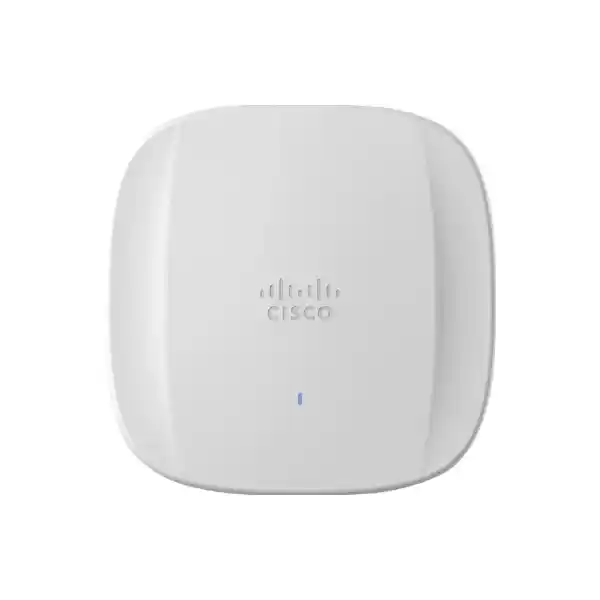
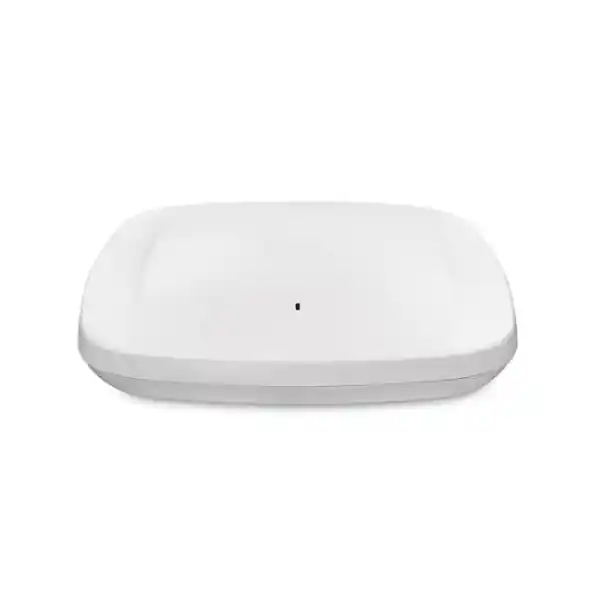
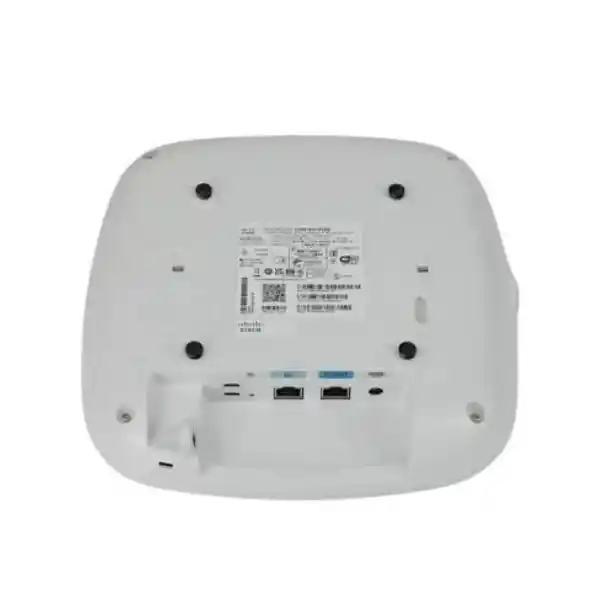
Cisco Meraki CW9164I-MR Tanzania
Cisco Meraki CW9164I-MR is the Meraki cloud-managed version of the Cisco Catalyst 9164I platform, designed for demanding indoor wireless environments that need Wi-Fi 6E, tri-band operation, integrated antennas, multigigabit Ethernet and centralized visibility through the Meraki Dashboard. For Tanzanian organizations planning office refreshes, new branches, campus upgrades or multi-site standardization, the CW9164I-MR can provide a practical step from legacy 2.4 GHz and 5 GHz WLANs toward a 6 GHz-capable architecture, subject to local regulatory support and compatible client devices.
Model: CW9164I-MR
Wireless: Wi-Fi 6E / 802.11ax
Bands: 2.4 GHz, 5 GHz, 6 GHz
Uplink: 2.5G multigigabit Ethernet
Management: Meraki Dashboard
What is the Cisco Meraki CW9164I-MR?
The Cisco Meraki CW9164I-MR is an indoor, cloud-managed Wi-Fi 6E access point using the Cisco Catalyst 9164 hardware platform with the Meraki management persona. Cisco positions the 9164 family for organizations that want modern 802.11ax performance and a path between cloud and controller-based operational models. The -MR ordering option is specifically intended for Meraki cloud management, where configuration, monitoring, RF visibility, client analytics and policy administration are performed from the Meraki Dashboard. This is useful for businesses with multiple floors or branches because IT teams can manage the WLAN from a common interface rather than treating each access point as an isolated device.
The hardware is tri-band. It supports the established 2.4 GHz and 5 GHz bands plus the 6 GHz spectrum used by Wi-Fi 6E where that spectrum is permitted by the applicable country regulations. The platform uses 2×2:2 MU-MIMO on 2.4 GHz and 4×4:4 MU-MIMO on 5 GHz and 6 GHz, enabling a total of ten spatial streams across the three client-serving radios. Cisco’s Meraki family documentation lists an aggregate frame rate of up to 7.49 Gbps for the CW9164, while the wired side provides one 2.5G multigigabit Ethernet interface. These headline figures are useful for comparison, but real WLAN throughput still depends on channel width, RF conditions, client capability, contention, cabling, switching, security policy and upstream internet or application performance.
The product is therefore best evaluated as part of a complete wireless architecture. A successful deployment should confirm PoE capacity, switch uplink speed, VLAN design, guest access requirements, authentication, floor plan, wall materials, user density, roaming expectations and the percentage of client devices that can actually use 6 GHz. FourTeck Tanzania can help buyers frame those questions before a quotation so the access point count and supporting infrastructure are selected around the site rather than around a single specification number.
Wi-Fi 6E tri-band radio
Runs 2.4 GHz, 5 GHz and 6 GHz radios, allowing compatible Wi-Fi 6E clients to use the newer 6 GHz band where regulations permit.
Meraki cloud operations
Centralized Dashboard management helps teams provision, monitor and troubleshoot wireless networks across multiple access points and sites.
2.5G wired uplink
A 2.5G multigigabit Ethernet interface helps reduce the chance that a 1G access-layer connection becomes the immediate wired bottleneck.
Enterprise security foundation
Cisco documents WPA2, WPA3, 802.1X options, Secure Boot, image signing and Trust Anchor capabilities for the Catalyst 9164 platform.
Verified Cisco Meraki CW9164I-MR technical highlights
| Specification | CW9164I-MR detail |
|---|---|
| Product type | Indoor Wi-Fi 6E access point with integrated antennas |
| Management persona | Meraki cloud-managed version using Meraki Dashboard |
| Radio bands | 2.4 GHz, 5 GHz and 6 GHz, subject to country regulations |
| Spatial streams | 2×2:2 on 2.4 GHz; 4×4:4 on 5 GHz; 4×4:4 on 6 GHz |
| Aggregate frame rate | Up to 7.49 Gbps in Cisco Meraki family documentation |
| Ethernet | One 2.5G multigigabit interface |
| Power | 802.3at PoE+ or 802.3bt/UPoE; full feature operation depends on negotiated power. Cisco documents 30 W maximum under 802.3bt and 25 W under 802.3at. |
| Dimensions | 241.3 mm x 241.3 mm x 56.9 mm |
| Weight | Approximately 1.60 kg |
| Operating environment | 0°C to 50°C; 10% to 90% noncondensing humidity |
| Wireless security | WPA2-Personal, WPA2-Enterprise with 802.1X, WPA3-Personal, WPA3-Enterprise and Enhanced Open are documented for the platform |
| License | Meraki access point license required for Meraki cloud operation |
Country-specific radio rules matter. Cisco states that the 6 GHz radio can be disabled in locations where 6 GHz operation is not permitted or not yet supported in software. Procurement teams should therefore validate the intended country, regulatory approval and current Cisco compliance information before assuming that every advertised band will operate identically in every market.
How CW9164I-MR improves a modern business WLAN
Wi-Fi 6E is valuable because it adds access to the 6 GHz band rather than merely increasing a speed number on the same crowded spectrum. In environments with a growing population of compatible laptops, phones and collaboration devices, 6 GHz can provide additional clean channel options. That can help an RF design separate newer capable clients from older 2.4 GHz and 5 GHz devices. The practical result can be more predictable capacity and less contention when the WLAN is carefully designed. Older clients still need 2.4 GHz or 5 GHz service, so a migration plan should treat Wi-Fi 6E as an additional layer, not an automatic replacement for every legacy band.
The CW9164I-MR also supports modern 802.11ax mechanisms such as uplink and downlink OFDMA, MU-MIMO, BSS coloring, Target Wake Time, beamforming and up to 160 MHz channel widths. These features are designed to use airtime more efficiently, especially when many devices share the wireless medium. Whether a specific client benefits depends on its radio capability and driver support. A 4×4 access point does not turn a 2×2 client into a 4×4 client, and a 160 MHz channel is not always the best choice in a dense deployment. Channel width should be balanced against available spectrum, neighboring networks and desired reuse.
Meraki Dashboard can reduce operational friction by providing one place to view access points, clients, network health and configuration. For distributed organizations, this matters as much as raw RF performance. IT teams can apply standards across sites, monitor problems remotely and reduce the need for local administration at every branch. The strongest benefit comes when naming, VLANs, SSIDs, authentication, firmware policies and alerting are standardized before rollout.
Licensing, power and deployment planning
CW9164I-MR buyers should budget the access point and the Meraki licensing requirement together. Cisco Meraki documentation states that a Meraki access point license is required. The correct term and subscription model should be confirmed at quotation time because licensing options can change and because organizations may already operate under an existing Meraki agreement. Procurement teams should record the renewal owner, renewal date, organization access and administrator roles as part of the purchase rather than leaving licensing as an afterthought.
Power should also be checked early. Cisco documents full tri-band radio operation with a 2.5G link under 802.3at PoE+, although USB is not available in that power mode, while 802.3bt provides the highest documented power budget and USB availability. Legacy 802.3af does not provide normal radio operation in Cisco’s power table. The switch therefore needs both sufficient per-port power negotiation and enough total PoE budget for the number of access points being installed. LLDP or CDP should be available for correct negotiation. If an existing switch is only 1G, the AP can still be physically connected in many designs, but the network team should consider whether upgrading to multigigabit switching is appropriate to fully exploit the access point’s wired capability.
Cabling should be assessed for multigigabit operation, especially in older buildings where cable category, termination quality, patch panels or excessive distance may create errors. AP placement should follow a site survey or at least a floor-plan-based RF design. Ceiling height, concrete walls, glass, metal shelving, machinery, elevator shafts, meeting rooms, high-density spaces and neighboring WLANs all change the effective cell size. A wireless design that works in an open office may not translate to a warehouse, hotel or multi-storey property without adjustment.
Best-fit use cases
Corporate offices
For offices using cloud applications, voice, video conferencing and high-density meeting spaces, the CW9164I-MR offers a scalable way to introduce 6 GHz while retaining support for older client bands.
Education
Classrooms, labs and staff areas can benefit from centralized cloud operations, but capacity planning should consider simultaneous classes, device counts and application patterns rather than floor area alone.
Hospitality
Hotels and conference venues can separate guest and operational traffic while using Dashboard visibility to manage many access points. Room construction and corridors make predictive design and validation especially important.
Retail and branches
Cloud management can simplify repeated branch deployments where staff Wi-Fi, guest access, POS devices and operational systems need consistent policy with limited on-site IT resources.
Selection guidance: CW9162, CW9164 or a higher-capacity model?
Cisco’s Wi-Fi 6E portfolio includes multiple indoor models. CW9162 is positioned as a general-purpose option for smaller sites, while CW9164 provides a step up with 4×4 radios on 5 GHz and 6 GHz and is described by Cisco as a high-performance Wi-Fi 6E option. CW9166 and related high-end models target more demanding or higher-density environments with different radio and uplink capabilities. This does not mean the most expensive model is automatically correct. A site with moderate user density but difficult wall construction may need more access points for coverage, while a dense open environment may benefit from higher-capacity radios and more careful channel reuse. The right comparison combines RF design, client capabilities, PoE, switch ports, uplinks, licensing and lifecycle cost.
For customers already using Meraki switching and security appliances, the CW9164I-MR can fit into a broader cloud-managed architecture. If a buyer is building a complete Meraki stack, related Tanzania pages for Cisco Meraki MX security and SD-WAN, Cisco Meraki MX67 branch security, Cisco Meraki MX75 cloud-managed security and Cisco Meraki MX85 for larger branch requirements provide context on how wireless can sit behind a centrally managed security edge. For deployment planning and lifecycle support, review FourTeck Tanzania technology services.
Cisco Meraki CW9164I-MR Tanzania
Organizations searching for Cisco Meraki CW9164I-MR in Tanzania are often planning more than a simple access-point replacement. They may be refreshing an office WLAN, opening branches, improving meeting-room connectivity, supporting cloud-first applications or standardizing Wi-Fi across several locations. In those projects, the key question is whether the CW9164I-MR fits the site’s radio, switching and operational requirements. Its Wi-Fi 6E capability can be valuable where compatible client devices are becoming common, while the 2.4 GHz and 5 GHz radios preserve connectivity for older endpoints. Meraki cloud management can also reduce the operational burden for organizations that do not want a separate wireless controller at every location.
For Tanzania deployments, a quotation should state the number of access points, intended sites, approximate concurrent users, floor plans, ceiling heights, critical applications and existing switch models. Those details influence whether the existing LAN can provide the required PoE and 2.5G uplink, whether cabling should be tested or upgraded, and how many APs are needed. The number of access points should not be calculated from a generic square-meter figure alone. Concrete walls, metal roofs, shelving, glass partitions and high-density meeting areas can substantially change RF behavior. A predictive survey followed by on-site validation is preferable for business-critical WLANs.
The 6 GHz band also requires regulatory attention. Cisco’s documentation explicitly notes that 6 GHz operation is country dependent. A product advertised as Wi-Fi 6E should therefore be checked against current Tanzania approval and software support before procurement decisions assume 6 GHz availability. This is especially important for projects copied from another country’s bill of materials. Regulatory settings, allowed channels and transmit power can differ across markets.
From an operations perspective, Tanzania businesses with branch offices can use Meraki Dashboard to maintain consistent SSIDs, security policy and monitoring across locations. Guest Wi-Fi can be separated from corporate resources, while employee networks can use enterprise authentication where appropriate. Voice, video and business applications should be considered in QoS and capacity planning. A well-designed deployment gives IT administrators a clearer view of wireless health while providing users with a network that feels predictable rather than merely fast in ideal conditions.
Cisco Meraki CW9164I-MR Dar es Salaam
Dar es Salaam has a wide range of office types, from professional-services floors and headquarters to hotels, logistics sites, retail operations, educational environments and multi-tenant commercial buildings. A CW9164I-MR deployment in the city should therefore start with the building and user profile, not with a fixed AP count. A modern corporate floor may have dozens of Wi-Fi laptops, mobile phones, collaboration devices and meeting rooms active simultaneously. A warehouse may have fewer users but more challenging propagation because of racks, goods and metal structures. Hospitality properties may need both room coverage and dense public-area capacity. Each case leads to a different radio plan.
The access layer should be reviewed alongside wireless. If a Dar es Salaam office already has older 1G PoE switches, the network team should check both power and uplink requirements before assuming they are an ideal long-term match for a 2.5G-capable Wi-Fi 6E access point. Some sites may choose to keep existing switching during a phased migration, while others may upgrade to multigigabit PoE+ or 802.3bt switching to remove potential bottlenecks and preserve room for future wireless growth. Cabling certification can be worthwhile where existing copper quality is uncertain.
Internet connectivity also affects user experience. A high-performance WLAN cannot compensate for an undersized or unstable WAN connection. Businesses relying on Microsoft 365, Google Workspace, cloud ERP, hosted voice or video conferencing should evaluate internet capacity and failover along with WLAN design. Guest traffic may need bandwidth limits or separate policy so customer usage does not interfere with business-critical applications. In mixed-use offices, VLAN segmentation can separate staff, guest, IoT and security devices.
For procurement, a Dar es Salaam buyer should request an itemized proposal showing CW9164I-MR quantities, Meraki license requirements, mounting accessories, power method, switching dependencies, installation scope and configuration assumptions. That makes competing quotations easier to compare. It also prevents a low hardware-only price from hiding the ongoing licensing or infrastructure components required for an operational deployment.
Cisco Meraki CW9164I-MR Mwanza
Mwanza organizations evaluating the Cisco Meraki CW9164I-MR may be supporting branch offices, healthcare environments, education, hospitality, trading businesses or distributed operations where central IT teams need visibility without being physically present at every site. Cloud management is useful in this model because the access points can be monitored from a shared Dashboard organization. Administrators can see clients, RF conditions and network status remotely, which can shorten troubleshooting compared with isolated standalone access points that provide little centralized information.
A Mwanza branch should be surveyed for coverage and capacity independently from the head office. Reusing the exact AP spacing from a different building can produce poor results because wall materials, ceiling height and floor layout change propagation. Conference rooms, reception areas and training spaces can produce short bursts of high client density even when the total employee count is modest. The design should therefore identify peak occupancy and application use, not only the average number of users during the day.
For sites that connect back to a central data center or Dar es Salaam headquarters, local Wi-Fi performance must also be aligned with WAN design. If critical applications traverse a VPN, the user experience depends on both the WLAN and the inter-site link. It may be sensible to prioritize business applications, use local internet breakout for cloud services or provide backup connectivity depending on operational requirements. Meraki access points can fit into that architecture, but the firewall and WAN policies determine how traffic leaves the site.
Before ordering CW9164I-MR for Mwanza, provide the number of floors, expected users, existing switches, available PoE budget, cable category and the list of critical wireless applications. If the organization already has Meraki equipment, include the current Dashboard organization and license model in the planning discussion. Standardized SSIDs and VLANs can help multi-site support, but RF settings should still be tuned to local conditions rather than copied blindly from another location.
Cisco Meraki CW9164I-MR Arusha
Arusha buyers frequently operate in hospitality, tourism, education, professional services and regional business environments where wireless reliability affects both employees and guests. The CW9164I-MR can be attractive for these projects because it combines modern Wi-Fi 6E radio capability with centralized cloud operations. However, hospitality and guest-heavy sites place different demands on a WLAN from a conventional office. Rooms, corridors, concrete walls, outdoor-adjacent spaces and public areas all create varied RF conditions, while guest device counts can rise sharply during events or peak occupancy.
A hotel or conference venue should separate coverage planning from capacity planning. A signal may reach a room but still perform poorly if too many users share one radio. Ballrooms and meeting venues may need more AP capacity during events than surrounding corridors require. Conversely, guest rooms can be difficult because walls attenuate 5 GHz and 6 GHz more than open space. The RF plan may therefore use different AP density and channel strategies in public spaces versus accommodation areas. Site validation is important before final acceptance.
Cloud management helps an Arusha property or branch support team see client experience and access-point status without logging into each unit. Guest SSIDs can be separated from staff systems and operational devices. Where payment terminals, property-management systems, cameras or voice devices share the same wired infrastructure, segmentation should extend through the switch and firewall rather than stopping at the SSID. This creates clearer security boundaries and simplifies troubleshooting.
Procurement should include the required Meraki license, PoE method, switching, mounting and any survey or installation work. Buyers should also confirm which devices in the user population support Wi-Fi 6E. 6 GHz is most useful when client devices can use it and when country regulations allow it. A phased approach may therefore focus first on high-density or premium areas while older devices continue using 5 GHz and 2.4 GHz.
Cisco Meraki CW9164I-MR Dodoma
Dodoma institutions, offices and growing organizations can use the Cisco Meraki CW9164I-MR where centralized WLAN operations and modern client support are priorities. Government-facing offices, professional environments, education facilities and branch locations often need predictable wireless access for cloud applications, collaboration and everyday business systems. The CW9164I-MR’s tri-band architecture provides a migration path for newer Wi-Fi 6E devices while preserving service for established 2.4 GHz and 5 GHz clients.
For a Dodoma deployment, the starting point should be an inventory of users and spaces. Open-plan offices can support larger wireless cells than dense concrete buildings, while boardrooms and training rooms may need additional capacity because many devices become active at once. If staff rely on video meetings, softphones or remote desktop applications, consistent latency and roaming may matter more than maximum speed in a single location. AP placement should therefore be chosen to support movement through the building and to reduce co-channel interference.
Power and resilience also deserve attention. A cloud-managed access point still depends on local switching, cabling and electricity. If network switches are protected by UPS systems, the WLAN can continue through short power interruptions when upstream internet equipment is similarly protected. PoE simplifies ceiling installation by avoiding local AC adapters, but the switch must supply sufficient power on every required port and enough aggregate budget for all APs.
Organizations requesting a quotation in Dodoma should describe whether the site is standalone or part of a wider Meraki deployment. Existing Meraki Dashboard ownership, administrator access, licenses, switches and security appliances can affect the rollout process. If the WLAN will serve contractors or public guests, policy should define internet-only access and prevent unnecessary reachability to internal systems. These design details create more value than simply replacing an older AP one-for-one without reviewing how the site has changed.
Cisco Meraki CW9164I-MR UAE
Organizations operating between Tanzania and the UAE may prefer a consistent Meraki wireless architecture across regional offices. CW9164I-MR can support that strategy by giving administrators a common cloud management experience while allowing each site to have its own RF design. A Dubai or Abu Dhabi office may have higher internet bandwidth, denser meeting spaces or a larger proportion of newer 6 GHz-capable endpoints than another regional site. Standardization should therefore focus on policy, naming and operational process while still allowing AP quantity, channels and transmit power to match local conditions.
UAE deployments often have access to multigigabit switching and high-speed internet services, which makes the CW9164I-MR’s 2.5G Ethernet interface particularly relevant. Even so, the network should not be overbuilt without evidence. The wired access layer, WAN edge and application path all need to support the traffic generated by users. Meraki Dashboard can help operations teams monitor both local and remote sites, but consistent ownership of the organization, MFA for administrators and documented access rights should be part of governance.
Regional procurement teams should avoid assuming that a wireless configuration approved in one country can be copied unchanged into another. Regulatory settings govern available channels and power, particularly in 6 GHz. Cisco country and regulatory guidance should be checked for each deployment location. The same model name may operate with different channel availability according to local rules and software support.
For multinational rollouts, quotation documents should separate hardware, licenses, local installation, switching dependencies and site-survey scope. This makes budgeting clearer and avoids mixing one-time and recurring costs. A standardized Meraki WLAN can deliver strong operational consistency across Tanzania and UAE sites, but the business value comes from disciplined design and management rather than simply buying the same AP everywhere.
Cisco Meraki CW9164I-MR Uganda
Ugandan organizations with headquarters-and-branch networks can use CW9164I-MR as part of a cloud-managed wireless standard. The main operational attraction is centralized visibility: IT staff can monitor sites, review wireless health and maintain configuration without needing a dedicated wireless controller at each location. This can be useful for organizations with locations spread across different cities where local technical resources vary.
A Uganda rollout should begin with a common design framework covering SSID names, VLANs, authentication, guest access, firmware policy and administrator permissions. Each site can then be surveyed separately for RF requirements. A Kampala office may need more capacity than a small branch, while a warehouse or hospitality location may need different AP placement because of physical obstacles. This approach allows operational standardization without forcing identical radio settings everywhere.
6 GHz capability should be treated carefully. The CW9164I-MR hardware supports Wi-Fi 6E, but actual 6 GHz operation is subject to national regulations and current Cisco support. The procurement process should verify approval before counting on 6 GHz channels. Even where 6 GHz is available, many existing endpoints will remain on 5 GHz or 2.4 GHz, so the network must continue to be designed for a mixed client population.
The access switch should provide adequate PoE and, where performance requirements justify it, multigigabit connectivity. WAN reliability, firewall policy and branch connectivity remain separate design layers. A high-performing access point cannot resolve packet loss on an upstream circuit. For businesses using cloud applications or voice and video, WLAN and WAN monitoring should be considered together when troubleshooting user experience.
Cisco Meraki CW9164I-MR Kampala
Kampala can serve as a headquarters or IT hub for organizations managing multiple Ugandan locations, which makes centralized Meraki wireless management relevant. A head office typically has more varied traffic than a small branch: meeting rooms, executive areas, general offices, visitor spaces, training facilities and high concentrations of mobile devices can all share the same WLAN. The CW9164I-MR’s 4×4 capability on 5 GHz and 6 GHz can provide a strong platform for these environments when channel planning and client distribution are handled correctly.
High density should not be confused with maximum transmit power. In dense office designs, excessively large cells can increase contention and make roaming less predictable. The RF plan may intentionally use lower transmit power and more carefully placed APs to create balanced cells. 6 GHz adds spectrum but has different propagation characteristics from lower bands, so walls and distance still matter. A survey should confirm coverage after installation rather than relying only on theoretical planning.
Kampala organizations using Meraki firewalls and switches can build consistent VLAN and security policy across the stack. Staff, guest, voice and IoT traffic may have separate roles. The Dashboard provides a common operational view, but secure administration remains essential: organizations should define ownership, use MFA, limit administrator roles and document changes. Cloud management simplifies access to operational data; it does not eliminate the need for governance.
A quotation should include expected AP quantity, licenses, power source, switch ports and installation dependencies. For sites with existing 1G switching, buyers can assess whether immediate multigigabit upgrades are necessary or whether a phased migration is more appropriate. The answer depends on traffic demand, user density and lifecycle plans rather than on marketing speed alone.
Cisco Meraki CW9164I-MR Arua
Arua branch deployments often benefit from equipment that can be monitored by a central IT team. CW9164I-MR fits that operational model because Meraki Dashboard provides remote visibility and configuration. For a business with headquarters elsewhere, this can reduce the need for frequent travel for routine WLAN administration. Local staff can focus on physical checks while central administrators review access-point status, clients and configuration.
The branch design should still be simple and resilient. Wireless service depends on the local switch, PoE, cabling and internet path. If the building uses older cabling, a pre-installation check can identify damaged runs or terminations that may affect multigigabit negotiation. APs should be placed around actual work areas, meeting rooms and customer spaces rather than mounted at convenient cable points that happen to be available.
For businesses with limited WAN capacity, traffic policy can be as important as Wi-Fi speed. Guest traffic, large software updates or video streaming may consume internet bandwidth that business applications need. Wireless segmentation combined with firewall policy can help keep critical traffic separated. The access point itself provides the radio connection; upstream security and QoS controls determine how that traffic is handled after it leaves the WLAN.
Arua procurement teams should confirm licensing and regulatory support for the intended country. They should also define who will own the Meraki organization and who can make configuration changes. If the site is part of a multi-branch rollout, a template for SSIDs and VLANs can make support easier, but local RF validation is still required. The goal is a branch WLAN that is easy to operate remotely without sacrificing site-specific design quality.
Cisco Meraki CW9164I-MR Mbarara
Mbarara businesses considering CW9164I-MR may include education, healthcare, retail, hospitality and regional offices. These environments often mix staff devices with guest or specialized endpoints. A cloud-managed access point can help create consistent SSIDs and visibility while allowing policy to separate user groups. The value of Wi-Fi 6E will vary according to the client population, so a device inventory is useful before buying a large quantity on the assumption that every user can use 6 GHz.
In education, lecture spaces can produce high simultaneous device counts at predictable times. Healthcare environments may have clinical and administrative devices with different security requirements. Retail may combine POS systems, staff handhelds, guest Wi-Fi and inventory devices. Hospitality may face changing guest demand. In each case, CW9164I-MR provides the radio platform, but the WLAN design must define which SSID each device uses, what authentication applies and which VLAN or firewall policies control access.
Switch capacity should include both PoE and uplink bandwidth. If several high-performance APs share an older switch with limited uplinks, the switch can become the constraint. Similarly, poor WAN connectivity can make Wi-Fi appear slow even when the local radio link is healthy. Monitoring should therefore look end to end from client to access point, switch, firewall and destination service.
For Mbarara quotations, include the floor plan, wall construction, switch model, number of users and expected growth. Where future expansion is likely, allowing spare switch ports and PoE budget can reduce later replacement costs. Licensing should be planned for the intended lifecycle, and administrators should have a renewal process so a cloud-managed network does not encounter avoidable subscription issues.
Cisco Meraki CW9164I-MR Gulu
Gulu organizations can use the Cisco Meraki CW9164I-MR where modern indoor wireless performance and remote administration are priorities. A centrally managed WLAN is particularly useful when the site is supervised by an IT team located in another city. Dashboard visibility can help administrators distinguish between an access-point issue, a client issue and a broader network problem before dispatching staff.
A Gulu site may not need the same AP count as a larger urban headquarters, but it can still benefit from the CW9164I-MR’s radio capabilities if users rely on collaboration, cloud applications or a growing number of Wi-Fi devices. The design should avoid oversizing. Too many access points placed too closely can create interference and unnecessary cost. Capacity and coverage need to be balanced against the actual building layout and occupancy.
Where connectivity options are constrained, IT teams should focus on resilience and traffic prioritization. Business-critical applications should remain usable when the WAN is congested. Guest Wi-Fi can be isolated and limited according to policy. If a secondary internet connection is available through the firewall, failover can protect business continuity, but the WLAN itself must remain powered through the same event. UPS protection for switches and WAN equipment is therefore part of the practical design.
Before ordering for Gulu, verify regulatory support, the Meraki license requirement and the existing switch’s PoE capabilities. If the organization plans to deploy more branches later, standard naming and documentation can reduce support effort. A site record should include AP locations, switch ports, cable IDs, VLANs and administrator ownership so expansion and troubleshooting remain straightforward.
Cisco Meraki CW9164I-MR Kenya
Kenyan enterprises, education institutions, hospitality operators and multi-branch businesses may consider CW9164I-MR when they want Wi-Fi 6E plus centralized cloud management. For organizations with operations in both Kenya and Tanzania, using the same Meraki platform can simplify support because administrators work from a common Dashboard experience. The configuration architecture can be standardized across countries, while site-specific RF settings and regulatory parameters remain local.
Kenya sites with dense office populations should map client capability before relying on 6 GHz. Newer business laptops and premium mobile devices may support Wi-Fi 6E, while older equipment will remain on 5 GHz or 2.4 GHz. Band steering can help compatible devices use newer spectrum, but the WLAN still needs sufficient capacity on all enabled bands. 6 GHz does not eliminate the need for careful 5 GHz channel planning.
The 2.5G Ethernet uplink can pair well with multigigabit access switching where higher aggregate wireless traffic is expected. PoE must also be checked at both the port and total switch budget. For campuses or multi-floor buildings, uplinks between access and core switches should be sized to avoid moving the bottleneck farther upstream. A well-performing WLAN is an end-to-end network design, not a single device purchase.
Regional procurement teams should request country-specific regulatory confirmation and current licensing details. If hardware is being sourced centrally for several markets, do not assume one approval profile covers every destination. Installation, mounting, cabling and site survey scope should also be separated in the bill of materials so each office has a clear deployment plan rather than only a box shipment.
Cisco Meraki CW9164I-MR Kuwait
Kuwait organizations considering Cisco Meraki CW9164I-MR can use it for cloud-managed Wi-Fi 6E in offices, hospitality, retail and distributed enterprise environments. Modern buildings may have high concentrations of smartphones, business laptops and collaboration devices, making capacity planning more important than simple coverage. CW9164I-MR offers a strong radio platform, but the final user experience depends on client support, channel strategy, wired backhaul and internet performance.
High-bandwidth internet services make multigigabit access switching relevant, particularly in dense environments. The 2.5G port can help prevent the access point from being constrained by a traditional 1G link when traffic demand is high. The network design should also review aggregate uplinks from access switches toward the core or firewall. Multiple high-performance APs can collectively generate substantial traffic even when no single user reaches the headline wireless rate.
Indoor environmental conditions should meet Cisco’s operating specifications. Access points should not be placed where heat, dust or enclosure conditions exceed the intended indoor deployment environment. In large facilities, ceiling height and building materials affect antenna patterns and signal levels. A survey and post-installation validation provide stronger assurance than assuming that equal spacing will create equal coverage.
For Kuwait procurement, verify local 6 GHz rules and Cisco regulatory support. Cloud licensing, administrator ownership and lifecycle planning should be recorded with the hardware purchase. Multinational companies can keep common SSID and security policy standards while allowing each office to follow its local regulatory and RF design requirements.
Cisco Meraki CW9164I-MR Ghana
Ghana businesses evaluating CW9164I-MR may be replacing older standalone wireless, expanding a branch network or moving toward centralized Meraki operations. A cloud-managed platform is especially useful for organizations with several offices because administrators can view the WLAN from one management plane. This makes it easier to maintain configuration standards, identify offline devices and compare site health without deploying an on-premises wireless controller at every location.
Wi-Fi 6E should be introduced with a realistic understanding of client mix. If most devices currently support only Wi-Fi 5 or Wi-Fi 6 on 5 GHz, 6 GHz will initially serve a smaller subset. That is not a reason to avoid a Wi-Fi 6E AP if the organization is planning a multi-year lifecycle, but it means capacity must remain strong on established bands. Device refresh cycles can gradually increase the proportion of 6 GHz-capable clients.
For offices using cloud collaboration and voice, roaming and RF consistency matter. Access points should be placed so clients can move between cells without long periods at weak signal levels. Excessive power can keep clients attached to distant APs, while insufficient overlap can create dead zones. A survey can guide transmit power and channel decisions after installation.
A Ghana quotation should identify power method, switch ports, license term, mounting and regulatory verification. Where APs are part of a complete network refresh, switch PoE budgets, firewall capacity and internet connectivity should be reviewed in the same design. This prevents the wireless upgrade from exposing bottlenecks that simply move to another layer.
Cisco Meraki CW9164I-MR Nigeria
Nigeria offers a wide range of enterprise wireless requirements, from large corporate offices and banks to education, retail, hospitality and distributed branch networks. CW9164I-MR can be considered where organizations want Wi-Fi 6E hardware with Meraki cloud management. The strongest design approach is to group sites by profile rather than specifying one fixed AP count everywhere. A headquarters floor, retail branch and warehouse may all use the same AP family but require very different quantities, placement and RF settings.
Branch standardization can simplify operational support. SSIDs, VLAN IDs, authentication rules and naming conventions can be defined consistently, while the Dashboard gives administrators visibility across locations. However, local internet links and power resilience vary, so the broader network architecture should account for site conditions. UPS-backed switching and WAN equipment can preserve WLAN availability during short local outages. Where dual internet links are used, firewall policy determines failover and traffic path selection.
For dense offices, the 5 GHz and 6 GHz 4×4 radios can provide strong capacity when used with appropriate channel planning. The network team should avoid using excessively wide channels everywhere simply to advertise higher peak speeds. In dense environments, narrower channels can create more reusable cells and better overall capacity. The optimal strategy depends on spectrum availability, neighboring WLANs and client capabilities.
Nigeria buyers should confirm 6 GHz regulatory support and current Meraki licensing before ordering. If equipment will be deployed across several states or facilities, a standardized survey template and acceptance test can improve consistency. Procurement documents should include hardware, licenses, accessories and installation dependencies so bids are compared on the same scope.
Cisco Meraki CW9164I-MR Seychelles
Seychelles hospitality, resort, professional-services and business environments can have distinctive wireless requirements because properties may combine guest rooms, public spaces, back-office areas and outdoor-adjacent zones. The CW9164I-MR is an indoor access point, so it should be used only where the environment matches Cisco’s indoor operating specifications. Outdoor or exposed areas should use hardware designed for those conditions rather than extending an indoor AP beyond its intended deployment.
Guest experience can depend heavily on Wi-Fi reliability, especially in hospitality. A room that shows strong signal but shares too much airtime with neighboring users can still feel slow. Capacity and coverage should therefore be modeled separately. Building materials and room partitions can attenuate 5 GHz and 6 GHz signals, which may result in denser AP placement than an open office. Public areas can experience concentrated demand when many guests gather at the same time.
Meraki cloud management can help administrators oversee multiple buildings or properties from one interface. Guest traffic should be isolated from property-management systems, staff devices, cameras and other operational technology. If the organization already uses Meraki security or switching, common Dashboard visibility can simplify troubleshooting across the network stack.
For Seychelles procurement, check local approval for 6 GHz, license requirements, PoE switching and environmental suitability. Salt air and humidity in coastal locations make correct indoor placement and protected cabling especially important even when the AP itself is mounted inside. A complete deployment plan should include mounting, cable routes, switch capacity and post-installation verification rather than focusing solely on the access-point model.
Quotation checklist for Cisco Meraki CW9164I-MR
✓ Number of floors and floor plans
✓ Approximate concurrent users
✓ Existing AP count and model
✓ Cable category and condition
✓ Internet and WAN speeds
✓ Required SSIDs and VLANs
✓ Authentication / 802.1X needs
✓ Meraki organization ownership
✓ Desired license term
✓ Roaming requirements
✓ Mounting constraints
✓ Growth over the next 3–5 years
Providing these details improves the quality of the recommendation. It allows the quotation to distinguish between hardware, licenses, switching, cabling, installation and design services rather than presenting the access point as a standalone item with hidden dependencies.
Frequently asked questions
Does CW9164I-MR support Wi-Fi 6E?
Yes. Cisco documents the CW9164 as a Wi-Fi 6E tri-band access point operating across 2.4 GHz, 5 GHz and 6 GHz. Actual 6 GHz operation depends on country-specific regulatory approval and software support.
What is the difference between CW9164I-MR and CW9164I regulatory-domain SKUs?
CW9164I-MR is ordered for the Meraki management persona and is cloud managed through Meraki Dashboard. Cisco also offers Catalyst regulatory-domain variants intended for Catalyst management. Exact migration and licensing requirements should be validated against current Cisco documentation before changing management modes.
Does the CW9164I-MR need a Meraki license?
Yes. Cisco Meraki documentation states that a Meraki access point license is required for Meraki cloud operation. The correct license model and subscription term should be included in the quotation.
What PoE is required?
Cisco documents operation with 802.3at PoE+ and 802.3bt/UPoE. Under 802.3at, the radios and 2.5G link are supported but USB is not available. 802.3bt provides the higher documented power budget. Existing switches should be checked for both per-port capability and total PoE budget.
Does it need a 2.5G switch port?
The AP includes a 2.5G multigigabit Ethernet interface. A 2.5G-capable access switch helps use that wired capability, but the final switch choice should be based on real traffic demand, PoE and lifecycle plans. An older 1G design can become a bottleneck in higher-throughput environments.
How many users can one CW9164I-MR handle?
A reliable design should not use one fixed user-count rule. Capacity depends on application demand, client radio capability, channel width, RF interference, airtime utilization and the quality targets for voice, video and data. A survey and capacity plan are better than a universal number.
Can the CW9164I-MR be used outdoors?
It is an indoor access point. Outdoor or exposed environments should use access points specifically rated for those conditions.
What security standards are supported?
Cisco documents WPA2-Personal, WPA2-Enterprise with 802.1X, WPA3-Personal, WPA3-Enterprise and Enhanced Open on the platform, along with multiple EAP authentication types. The correct enterprise authentication design depends on the organization’s identity and RADIUS infrastructure.
Decision recap
Cisco Meraki CW9164I-MR is a strong fit when an organization wants an indoor Wi-Fi 6E access point with cloud management, tri-band radios, 4×4 capacity on 5 GHz and 6 GHz, a 2.5G uplink and a mature enterprise networking platform. It is especially relevant for offices and distributed businesses that value centralized operational visibility and plan to keep their wireless infrastructure through a period of growing 6 GHz client adoption.
The buying decision should include more than the AP itself. Confirm regulatory approval, Meraki licensing, PoE, switching, cabling, floor plans, client types, security design and future growth. For higher-density sites, RF survey work and post-installation validation can be more important than simply choosing a higher model. For multi-site deployments, standard configuration and clear Dashboard ownership improve operational consistency.
Plan your CW9164I-MR deployment with FourTeck Tanzania
Share your site layout, user count, existing switches, current Wi-Fi problems and desired license term. FourTeck can use those inputs to help structure a quotation around the access points and the infrastructure they depend on. This is the fastest way to identify whether CW9164I-MR is the right model, whether another Cisco Meraki AP is more appropriate, and what supporting PoE, cabling or security changes should be considered before installation.


Reviews
There are no reviews yet.