
CISCO WI‑FI 7 • WALL-PLATE ACCESS POINT • TANZANIA
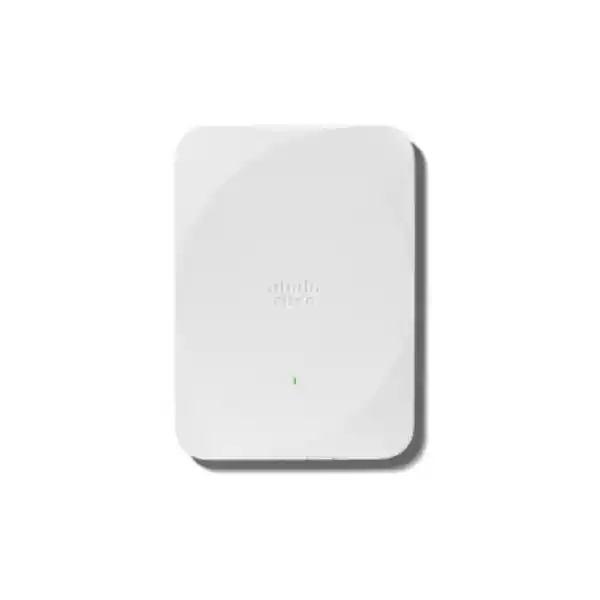
Cisco Meraki CW9172H
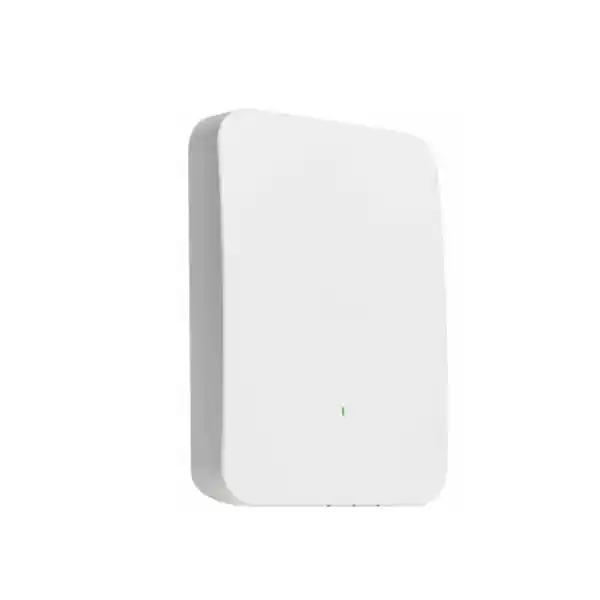
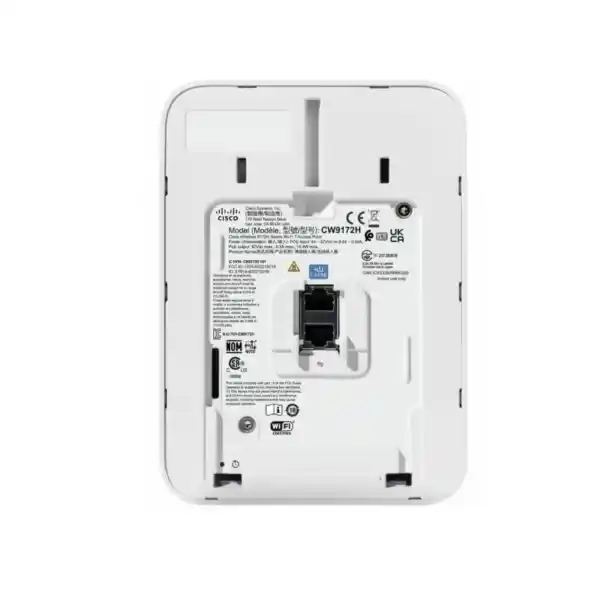
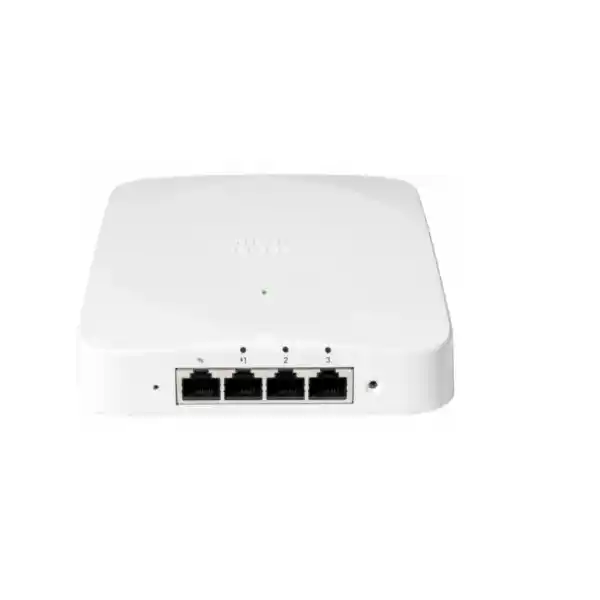
The Cisco Meraki CW9172H is a compact enterprise Wi‑Fi 7 wall-plate access point built for rooms, branches, hospitality spaces, education, healthcare, retail and other moderate-density environments that benefit from both high-performance wireless and convenient wired connectivity at the edge.
Cisco Meraki CW9172H overview
Cisco positions the CW9172H as an indoor wall-plate access point in the Wireless 9172 family. The design is especially useful where wireless coverage and local Ethernet access need to meet at the same point, such as hotel rooms, serviced apartments, student accommodation, clinic rooms, retail spaces, meeting areas, small branches and distributed offices. Instead of treating the access point only as a ceiling-mounted radio, the wall-plate format creates a practical service point close to users and wired endpoints.
The platform provides tri-band, tri-concurrent 802.11be Wi‑Fi 7 operation across 2.4 GHz, 5 GHz and 6 GHz using integrated omnidirectional antennas. Cisco documents 2×2:2 operation on the three client-serving bands, with a dedicated auxiliary scanning radio for RF visibility and optimization. It also includes an IoT radio supporting Bluetooth Low Energy and related smart-device use cases. For modern client environments, this combination is designed to improve spectrum flexibility while preserving connectivity for a mixed population of newer and older wireless devices.
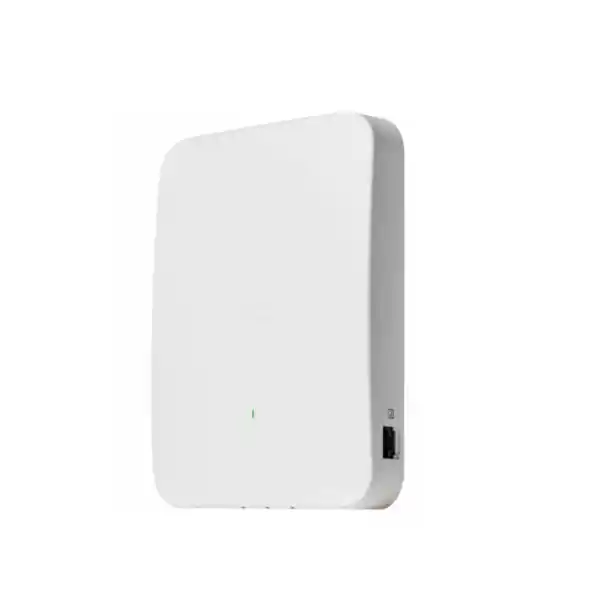
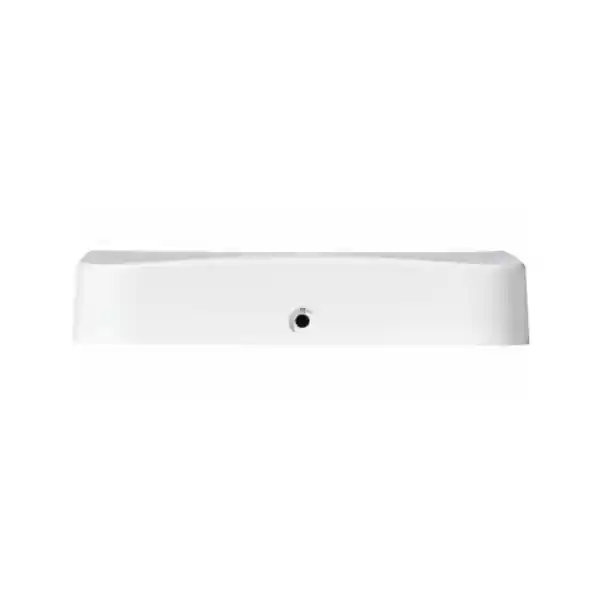
For wired connectivity, the CW9172H includes one 100/1000/2.5G BASE‑T uplink and three 100/1000 BASE‑T LAN access ports. One of the LAN ports can provide 802.3af PoE output when the access point itself receives suitable 802.3bt power. A pass-through RJ45 port is also provided. This makes the unit useful in locations where a room may need Wi‑Fi plus local Ethernet for a phone, workstation, TV, point-of-sale device or other endpoint.
Key verified features
Wi‑Fi 7 tri-band radio design
Client-serving radios operate across 2.4 GHz, 5 GHz and 6 GHz, supporting the 802.11be generation while retaining interoperability with supported earlier Wi‑Fi clients.
Wall-plate form factor
The CW9172H is designed for indoor wall mounting, making it well suited to room-by-room deployments and distributed spaces where local wired access is also useful.
2.5 GbE uplink
A multigigabit 2.5 GbE uplink helps prevent the wired connection from becoming an unnecessary bottleneck as wireless capabilities increase.
Three LAN ports
Three 1 GbE LAN access ports provide direct wired connectivity, including one port capable of PoE output when upstream power conditions support it.
Cloud or controller deployment
The access point can be used in supported Meraki cloud-managed deployments or with supported Cisco Catalyst wireless controller infrastructure.
IoT and RF visibility
Dedicated radios support continuous RF monitoring and IoT connectivity functions without relying entirely on the client-serving radios.
Power, switching and cabling considerations
Cisco documentation states that the CW9172H can accept PoE through its 2.5 GbE uplink and reaches full operation with an 802.3bt Class 5 power source. It can operate under lower PoE levels with restrictions. Because power mode can change radio behavior and the availability of downstream PoE, procurement should include a review of the switch model, per-port capability and the total PoE budget rather than assuming any PoE switch will deliver the same result.
Cabling should also be considered alongside Wi‑Fi performance. Cisco recommends Cat 6/6A cabling for the CW9172 family where higher multigigabit operation is expected. Existing Cat 5e may still support multigigabit speeds under suitable conditions, but cable quality, length, termination and the actual switch interface should be verified. For a new deployment, designing the access layer, power budget and cabling together is more reliable than selecting the AP first and trying to adapt the infrastructure afterward.
Technical specification summary
| Product type | Indoor wall-plate Wi‑Fi 7 access point |
| Wireless bands | 2.4 GHz, 5 GHz and 6 GHz client-serving radios |
| Wi‑Fi generation | 802.11be / Wi‑Fi 7 |
| Radio configuration | 2×2:2 on 2.4 GHz, 5 GHz and 6 GHz, plus dedicated scanning radio |
| Uplink | 1 × 100/1000/2.5G BASE‑T RJ45 |
| LAN ports | 3 × 100/1000 BASE‑T RJ45, one supporting 802.3af PoE output under supported power conditions |
| Additional wired port | RJ45 pass-through port |
| Power | PoE; full operation documented with 802.3bt Class 5 |
| Management options | Meraki cloud-based deployment or supported Cisco Catalyst controller deployment |
| Licensing | Cisco Networking Subscription; Wireless Essentials or Wireless Advantage according to Cisco licensing documentation |
Where the CW9172H fits best
The CW9172H is not simply a faster replacement for every existing access point. Its strongest fit is where the wall-plate architecture solves both wireless and wired edge needs. In a hotel room, for example, a wall-mounted access point can provide Wi‑Fi to guest devices while the integrated LAN ports serve an IPTV device, desk phone or other room endpoint. In student housing, it can provide predictable per-room placement and wired connectivity for devices that perform better over Ethernet. In a clinic, branch office or retail location, the same design can reduce the number of separate edge devices required at the user location.
For open offices or large halls, ceiling-mounted models may sometimes be more natural. The correct choice should therefore follow a coverage and capacity design. FourTeck can help compare the CW9172H with ceiling-mount alternatives, review client density, wall materials, uplink design, switch PoE, 6 GHz requirements and licensing before a quotation is finalized.
Meraki cloud management and Cisco Catalyst flexibility
A notable characteristic of Cisco’s current Wi‑Fi 7 portfolio is management flexibility. The CW9172H is designed to participate in supported Meraki cloud-native deployments as well as supported Cisco Catalyst controller environments. This can matter for organizations that are standardizing on Meraki operations, for enterprises with existing Catalyst wireless infrastructure, or for groups that want a common hardware platform while selecting the management architecture that best matches operational policy.
For Meraki deployments, the cloud dashboard model can centralize monitoring and configuration across sites. For Catalyst deployments, the CW9172H is supported with Cisco Catalyst 9800 Series wireless controllers on the appropriate software release. The choice is not only technical: it affects licensing, operational processes, administrator skills, integration, troubleshooting workflows and change control. Procurement teams should therefore confirm the intended management platform before ordering.
Cisco also documents global-use behavior for this generation of access points. Regulatory availability remains country-specific, so a buyer should confirm the current country approval and allowed spectrum before planning 6 GHz operation. The presence of a 6 GHz radio in the hardware does not mean every channel or power level is permitted in every jurisdiction.
Cisco Meraki CW9172H Tanzania
For organizations evaluating Cisco Meraki CW9172H in Tanzania, the most important starting point is the deployment environment rather than the headline Wi‑Fi speed. Tanzania projects can range from hospitality rooms and education campuses to clinics, retail branches, offices and distributed enterprise sites. A wall-plate access point is particularly attractive where each room or defined user area needs a local wireless cell and one or more wired endpoints. In these environments, the three integrated Gigabit LAN ports can reduce the need for a separate compact switch at the room edge, while the 2.5 GbE uplink gives the access point a more capable path back to the access switch.
A Tanzania quotation should account for the complete access-layer design. This includes the quantity of CW9172H units, the switch ports that will power them, the total PoE budget, whether full 802.3bt power is available, cable category and condition, VLAN design, DHCP and DNS services, firewall policies, internet capacity and the intended management platform. If the design uses the PoE-out LAN port, the downstream endpoint’s power requirements must also be included in the calculation. This prevents a common mistake where the access point itself is selected correctly but the switch cannot provide the operating mode expected by the wireless design.
Wireless planning should consider room construction, client mix and spectrum policy. Concrete walls can create much stronger attenuation than lightweight partitions, while densely populated meeting or training rooms may need more capacity than corridors or lightly used offices. The 6 GHz band can be valuable for capable clients, but local regulatory support and client-device compatibility should be verified. Older 2.4 GHz and 5 GHz devices may remain part of the environment, so SSID and security planning should support the actual endpoint population rather than only the newest devices.
FourTeck Tanzania can connect product selection to the wider network requirement through its business technology shop and network and wireless services. The shop provides procurement guidance across access points, switching and infrastructure, while the services page explains how Wi‑Fi capacity, PoE and wired backhaul should be planned together. For a CW9172H project, this integrated view is useful because wireless performance depends directly on switching, cabling, power, security and upstream connectivity.
Cisco Meraki CW9172H Dar es Salaam
In Dar es Salaam, the CW9172H can be a strong fit for business locations that combine high wireless expectations with a room-based or branch-based layout. Hotels, serviced apartments, professional offices, clinics, training facilities and retail sites often need predictable coverage in individual spaces rather than a single radio attempting to serve through multiple walls. A wall-plate architecture allows access points to be placed closer to users, which can improve the design’s ability to manage attenuation and reduce dependence on very high transmit power. It also creates a convenient local Ethernet point for devices that benefit from wired connectivity.
Dar es Salaam deployments should be designed around both client density and site construction. Modern office towers may have glass, metal and reinforced structures that change radio behavior, while older buildings may include thick masonry walls. Hospitality properties can have repeating room layouts but also complex corridors, elevators, service areas and common spaces. A practical survey or predictive design can help determine whether the CW9172H should be used in every room, selected rooms, or combined with ceiling-mounted access points in lobbies, restaurants, conference spaces and open areas.
Power and uplink planning remain central. Where full CW9172H functionality is required, the access switch should support the necessary 802.3bt power and provide enough budget across all active ports. A large hotel floor with many wall-plate access points can consume substantial PoE capacity even if each unit is individually within the switch’s per-port rating. Designers should therefore review total switch power, redundancy, UPS capacity and cooling in the communications room. The 2.5 GbE uplink should also be matched with suitable switch interfaces where the design aims to take full advantage of multigigabit backhaul.
For procurement, a Dar es Salaam buyer should specify the intended management mode, required license tier, quantity, mounting conditions, PoE source and expected wired endpoints. Providing these inputs at quotation stage helps separate the access point hardware from the surrounding items that may be required for a complete deployment, such as PoE-capable switching, cabling upgrades, patching, UPS protection and network configuration.
Cisco Meraki CW9172H Mwanza
Organizations considering the Cisco Meraki CW9172H in Mwanza can use the wall-plate form factor to modernize Wi‑Fi in branch offices, accommodation properties, education spaces, healthcare sites and retail environments where room-by-room service is more practical than broad coverage from a small number of ceiling radios. The key advantage is architectural: users can receive a nearby Wi‑Fi 7 radio while selected wired devices connect directly to the same unit, simplifying the final few meters of the access network.
For an existing site, the first technical question is whether the current structured cabling and PoE switching can support the upgrade. A legacy 1 GbE PoE switch may power some access point configurations but may not provide the full operating mode or multigigabit uplink capability expected from a new Wi‑Fi 7 design. Before purchasing access points in quantity, the project should check cable category, switch power class, total PoE budget, uplink capacity, UPS support and available rack ports. This assessment is often more valuable than comparing theoretical wireless speeds because it identifies the infrastructure that can limit real performance.
Mwanza sites with multiple buildings or floors should also consider how wireless management and security will scale. Meraki cloud management may be attractive for a distributed organization that wants centralized visibility, while organizations with established Catalyst environments may prefer controller-based operations. In either case, SSID design, authentication, guest access, VLAN mapping and firewall policy should be documented before installation. Separate networks for staff, visitors and operational devices can make security clearer and troubleshooting easier.
A useful request for quotation should include a floor plan if available, approximate user count, device types, existing switch models, internet bandwidth, current Wi‑Fi pain points and the number of wired devices expected at each wall-plate position. These details allow the product choice to be evaluated as a system rather than as an isolated access point purchase.
Cisco Meraki CW9172H Arusha
In Arusha, the Cisco Meraki CW9172H may be especially relevant to hospitality, tourism-related facilities, offices, clinics, training centers and educational environments that need reliable wireless service across many rooms or defined zones. The wall-plate design enables a more localized approach to Wi‑Fi, which can be useful in buildings where masonry, room separation and corridor layouts make ceiling-only placement difficult. The integrated Ethernet ports also support the common requirement to connect fixed devices in the same room without installing a separate edge switch.
Hospitality projects should distinguish guest-room needs from common-area needs. A CW9172H can be a logical room access point, while restaurants, lobbies, conference spaces and outdoor areas may require different access point types, mounting positions or radio capacity. Guest traffic should normally be isolated from internal operational systems, and staff devices may need different authentication and resource access. Where TVs, phones or other room devices use the LAN ports, those interfaces should be mapped to the correct VLANs and security policies so convenience does not weaken segmentation.
For new properties, planners can specify Cat 6 or Cat 6A cabling and suitable multigigabit PoE switching from the beginning. For upgrades, the existing cable plant should be tested before assuming it can support the intended uplink rate and power conditions. The communications room also needs adequate switch power capacity and UPS protection if wireless availability is important during brief mains interruptions. In larger properties, aggregation uplinks should be sized for the combined traffic generated by many access points rather than the peak of a single unit.
Arusha buyers can improve quotation accuracy by identifying the number of rooms, common areas, expected devices per room, target management platform, existing network equipment and any requirement for wired room endpoints. With that information, the CW9172H can be evaluated as part of a complete property network instead of being specified solely from a product datasheet.
Cisco Meraki CW9172H Dodoma
For Dodoma organizations, the Cisco Meraki CW9172H provides a modern option for indoor Wi‑Fi 7 where users are distributed across rooms, offices or branch spaces and where local wired connectivity is still required. Government-adjacent offices, professional services, educational facilities, healthcare sites, hospitality properties and growing enterprises can all have mixed endpoint requirements: laptops and phones depend on wireless, while desk phones, printers, TVs or specialized equipment may still benefit from Ethernet.
A good Dodoma deployment should begin with network readiness. The CW9172H can support a 2.5 GbE uplink, so the access switch should be checked for multigigabit interfaces where that capability is desired. Full AP operation also depends on appropriate PoE power. When many units are installed, the switch’s total PoE budget becomes as important as the rating of any single port. Cable runs, patch panels and terminations should be checked because a high-specification access point cannot compensate for a weak physical layer.
Security design should also be settled early. Staff, guest and IoT or operational traffic may require different SSIDs, authentication methods and VLANs. If the organization has multiple sites, consistent templates can make deployment and troubleshooting easier. Meraki cloud management can centralize operations for distributed sites, while organizations with existing Cisco Catalyst controller architecture can evaluate controller-based deployment. The correct path depends on the network’s current standards, licensing model and administrator workflow.
When requesting pricing for CW9172H in Dodoma, buyers should provide the required quantity, intended room or area placement, current switch models, cable category, expected license type and whether installation or configuration assistance is needed. This produces a more meaningful quotation and helps identify dependencies before equipment arrives on site.
Cisco Meraki CW9172H UAE
The Cisco Meraki CW9172H is relevant to UAE hospitality, residential-style accommodation, retail, clinics, education and distributed office environments where a Wi‑Fi 7 wall-plate access point can combine strong room-level wireless with wired edge ports. In new buildings and major refurbishments, the access point can be planned together with Cat 6/6A cabling, multigigabit PoE switching and centralized management so the wired infrastructure is aligned with the wireless generation from the beginning.
UAE deployments often include high device counts and demanding applications, so designers should not equate Wi‑Fi 7 with automatic improvement. The usable result depends on client capabilities, channel planning, interference, 6 GHz regulatory rules, access point placement, switch uplinks and internet connectivity. Hospitality environments can also have highly repetitive room layouts but intense demand in conference halls and restaurants. This often favors a mixed design in which wall-plate access points handle guestrooms while other access point form factors serve large shared spaces.
For customers with operations in the Emirates, FourTeck’s UAE IT infrastructure and networking site provides a regional path for broader networking, security and infrastructure requirements. A CW9172H project may involve PoE switching, structured cabling, firewall segmentation and ongoing configuration, so coordinating the access point with the wider network stack can reduce compatibility gaps.
Before ordering, confirm the intended Cisco management platform, license tier, current country regulatory approval, switch power class, total PoE budget and any downstream PoE requirement. For room deployments, document which LAN port will serve which device and how each port maps to VLAN and security policy. This level of preparation makes large rollouts more consistent and easier to troubleshoot.
Cisco Meraki CW9172H Uganda
For organizations evaluating the Cisco Meraki CW9172H in Uganda, the product’s wall-plate architecture is useful where Wi‑Fi needs to be brought close to users while preserving wired connections in individual rooms, workspaces or branches. Typical planning scenarios can include hotels, schools, clinics, retail outlets, offices and distributed service locations. Because the access point combines tri-band Wi‑Fi 7 with three Gigabit LAN interfaces, it can serve as a compact edge node rather than only a radio.
Uganda deployments should first validate the switching layer. Full functionality depends on the correct PoE source, and many older switches may not provide 802.3bt Class 5 on every port. The project should calculate total switch PoE load for all installed access points and any endpoint powered from the AP’s PoE-out port. Where multigigabit backhaul is desired, compatible 2.5 GbE switch interfaces and suitable cabling are also required. These infrastructure checks can determine whether a wireless upgrade is straightforward or whether switching and cabling should be upgraded at the same time.
For multi-site organizations, management choice is another important factor. Meraki cloud deployment can provide a common operational interface across branches, while Cisco Catalyst controller environments can use the same access point model under supported software. Buyers should decide this before procurement because subscription and onboarding workflows are tied to the management architecture. Local 6 GHz rules and client support should also be verified during design.
FourTeck customers with Uganda requirements can also reference the FourTeck Uganda technology site for related IT and networking context. For a quotation, include site count, room or area count, existing switch models, cabling standard, internet capacity and the required management platform.
Cisco Meraki CW9172H Kampala
In Kampala, the Cisco Meraki CW9172H can support high-quality indoor wireless projects in hotels, serviced residences, healthcare facilities, education environments, retail branches and offices. The wall-plate format is particularly useful where each room or zone needs predictable wireless service and a small number of wired connections. Deploying the radio closer to users can help overcome the attenuation caused by walls and partitions, while local Ethernet ports can connect fixed equipment without creating a separate desktop switching layer.
A Kampala site survey should look beyond coverage. Busy offices and hospitality venues can have concentrated demand during meetings, events and peak occupancy periods. Capacity planning should consider the number of active clients, application mix, channel reuse and the percentage of endpoints capable of using 5 GHz or 6 GHz. Older devices may remain on 2.4 GHz, so the RF design should prevent legacy traffic from dominating airtime where possible. Wired uplink capacity should also be sufficient for the aggregate traffic generated by many rooms or floors.
Power is another practical constraint. A switch with PoE+ does not necessarily deliver the same CW9172H feature set as a switch capable of the documented 802.3bt Class 5 mode. If the project expects the access point to power a downstream device, switch budget must include both AP consumption and that PoE-out requirement. For larger deployments, UPS sizing and switch redundancy may matter because a single access switch can affect wireless service to many rooms at once.
Procurement teams should request a bill of materials that distinguishes access points, subscriptions, mounting accessories, switching, cabling and services. This makes it easier to compare quotations and prevents a low hardware-only figure from hiding required infrastructure items.
Cisco Meraki CW9172H Arua
For businesses and institutions in Arua, the Cisco Meraki CW9172H can be considered when a new or upgraded wireless network needs enterprise management, Wi‑Fi 7 capability and local Ethernet connectivity in a compact wall-mounted format. This can be practical in branches, accommodation properties, education facilities, clinics and offices where users are distributed through multiple rooms and where existing devices still need wired ports.
The best deployment may not be the one with the greatest number of access points. A proper plan should account for room layout, wall materials, expected user count, interference, application demand and available wired infrastructure. In a small branch, a few well-positioned units may be enough. In a multi-room property, repeatable placement may make operations simpler. Where large open spaces exist, the CW9172H can be combined with other access point designs rather than forced into every area.
Infrastructure readiness is especially important for a technology refresh. The CW9172H’s 2.5 GbE uplink and PoE requirements may expose limitations in older switches or cabling. Before ordering, confirm whether the switch supports the required power mode, whether its total PoE budget is sufficient, and whether cabling has been tested. If a downstream LAN port will power an endpoint, include that additional load. A stable wireless deployment begins with a stable wired and power foundation.
For Arua procurement, provide the number of rooms or service areas, approximate users, existing network diagram if available, current switch model and intended management platform. These details help determine whether CW9172H is the right fit and whether any switching or cabling changes should be included in the project scope.
Cisco Meraki CW9172H Mbarara
The Cisco Meraki CW9172H in Mbarara is a candidate for organizations that need modern indoor Wi‑Fi with a strong room or branch orientation. Hospitality, education, clinics, professional offices and retail environments may benefit from a wall-mounted access point that supplies tri-band wireless and wired Ethernet from the same location. This can simplify room-edge design while providing a path to Wi‑Fi 7 for compatible devices.
When upgrading from older Wi‑Fi, it is useful to separate coverage complaints from capacity and infrastructure issues. A weak signal may be solved by placement, but slow performance can also result from too many clients on a radio, congested channels, limited switch uplinks, poor cabling, DHCP delays or internet bottlenecks. The CW9172H can improve the wireless platform, but it should be introduced as part of a measured network upgrade rather than assumed to fix every symptom by itself.
The access point can be managed through Meraki cloud-based architecture or supported Cisco Catalyst infrastructure, giving organizations flexibility to align the hardware with existing operational standards. That management choice affects subscriptions, onboarding, configuration and monitoring. For a small organization without a current enterprise wireless platform, the cloud-managed path may simplify centralized visibility. For a larger organization already using Catalyst controllers, compatibility with the existing software and design should be verified.
A Mbarara quotation should identify access point quantity, switch and PoE readiness, cable type, management mode, license tier and installation scope. If room devices need wired access, list those devices as well so VLANs, PoE-out needs and port assignments can be designed before installation.
Cisco Meraki CW9172H Gulu
For Gulu sites, the Cisco Meraki CW9172H can provide a practical balance of Wi‑Fi 7 performance, centralized management and local Ethernet for branch offices, learning environments, healthcare locations, accommodation properties and other indoor spaces. The wall-plate form factor can be easier to integrate into room-level deployments than a conventional ceiling access point, especially where a data outlet already exists near the desired mounting position.
Designers should verify whether the existing cabling path supports the desired multigigabit uplink and whether the switch can supply suitable power. In greenfield projects, specifying Cat 6 or better and 802.3bt-capable access switching can create a clean foundation. In existing buildings, testing cable runs and reviewing PoE switch capabilities before procurement helps avoid surprises. Where power reliability is a concern, UPS support for the network switches can be important because access point availability depends on the switch rather than a local power adapter.
Wireless security should be tied to user categories. Staff devices, visitors and operational endpoints do not always need the same access. A structured SSID and VLAN plan can restrict guest users to internet access, keep internal resources on protected segments and place IoT devices into networks with only the connectivity they require. This approach is easier to implement consistently when the wireless and switching designs are planned together.
Organizations in Gulu requesting a CW9172H quotation should include the number of sites and rooms, expected client density, existing network equipment and preferred management approach. If the project has future expansion plans, include them so switch capacity, subscriptions and addressing can be sized with growth in mind rather than only the first installation phase.
Cisco Meraki CW9172H Kenya
In Kenya, the Cisco Meraki CW9172H can be evaluated for hospitality, healthcare, education, retail and distributed enterprise networks that want Wi‑Fi 7 in a room-friendly wall-plate format. The platform is particularly relevant when each location also needs local wired ports, because the integrated LAN interfaces can connect room equipment while the wireless radios serve mobile users.
Kenya deployments should be planned according to building layout and client demand. Hotels and student housing may benefit from repeatable room placement, while office and retail environments may use the wall-plate model only in selected zones. High-density common spaces may require a different access point design or additional capacity. The wired network should provide appropriate PoE and, where required, 2.5 GbE uplinks. At scale, the access switch’s aggregate PoE budget and uplink capacity become key sizing variables.
Organizations operating across Kenya and Tanzania may value a consistent management platform across sites. Meraki cloud management can centralize wireless operations, while Catalyst-based organizations can deploy the same hardware within supported controller architectures. In either case, licensing and regulatory settings should be confirmed before rollout. FourTeck’s Kenya IT solutions site provides regional context for networking and infrastructure requirements that may accompany the access point purchase.
For an accurate Kenya quotation, list access point count, room or floor layout, current switch models, PoE capability, cable category, user count and preferred management model. This information helps identify whether the CW9172H is being deployed into a ready access layer or whether switching and cabling upgrades should form part of the same project.
Cisco Meraki CW9172H Kuwait
The Cisco Meraki CW9172H can suit Kuwait organizations requiring high-performance indoor wireless with room-level wired connectivity. Hotels, clinics, education facilities, offices and residential-style business environments can use the wall-plate format to position Wi‑Fi closer to occupants while connecting fixed endpoints through the integrated Gigabit LAN ports. This can reduce room-edge hardware and create a consistent deployment pattern across many similar spaces.
A Kuwait design should carefully account for dense client populations and the mix of wireless generations. Wi‑Fi 7 features are most valuable to compatible endpoints, while many environments will continue to contain Wi‑Fi 6, Wi‑Fi 5 and 2.4 GHz IoT devices. Channel planning and band steering should therefore be based on actual clients. The 6 GHz capability should also be configured according to current local regulatory rules and allowed channel operation.
Power and switching are equally important. The CW9172H reaches full documented operation with 802.3bt Class 5 input, and one LAN port can provide PoE output under supported conditions. Large room deployments should therefore use access switches with adequate per-port power and aggregate budget. Where the access point’s 2.5 GbE uplink is required, switch ports and cabling must support the target rate. In many projects, the correct bill of materials is a combined wireless-and-switching design rather than access points alone.
Kuwait procurement teams should also confirm whether the deployment will use Meraki cloud management or Cisco Catalyst controllers, because the management platform determines licensing and operational processes. Include subscription requirements, mounting, cabling and configuration in the quote scope to avoid incomplete comparisons between suppliers.
Cisco Meraki CW9172H Ghana
For Ghana, the Cisco Meraki CW9172H offers a modern Wi‑Fi 7 wall-plate platform for distributed indoor environments such as hotels, offices, schools, clinics and retail spaces. The unit’s integrated Ethernet ports make it attractive where a room or workspace contains fixed devices that should remain wired. Instead of installing an access point plus a separate small switch, the CW9172H can consolidate those functions at the edge when its port count and power behavior match the use case.
Planning should begin with site infrastructure. The 2.5 GbE uplink can benefit from multigigabit access switching, and full operation requires the documented PoE mode. Existing switches should be checked for both per-port capabilities and total power budget. Cable quality also matters, particularly in older buildings where runs may have uncertain termination or category. A pre-installation test can identify physical-layer issues before access points are commissioned.
For multi-site organizations, centralized configuration can improve consistency. A common SSID, authentication and VLAN policy can be applied across branches while local internet and security requirements are handled appropriately. Guest traffic, staff devices and IoT endpoints should be segmented according to risk and business need. Cloud management may simplify visibility for dispersed sites, while Catalyst controller deployments can fit enterprises that already operate Cisco wireless infrastructure.
Ghana buyers should request a quotation that clearly separates hardware, subscription, switching requirements, cabling, installation and configuration. This makes it easier to evaluate total deployment cost and avoids the assumption that purchasing the access point alone completes the wireless upgrade.
Cisco Meraki CW9172H Nigeria
The Cisco Meraki CW9172H can be considered in Nigeria for enterprise branches, hospitality, healthcare, education, retail and other indoor environments that need Wi‑Fi 7 and integrated room-level Ethernet. The access point’s wall-plate form factor is most compelling when the network design benefits from placing radios close to users and from serving fixed equipment directly at the same location. It can therefore be part of a structured modernization strategy rather than simply a speed upgrade.
Large Nigerian deployments should pay close attention to operational consistency. Hundreds of room or branch access points require standardized naming, switch-port configuration, VLAN mapping, firmware policy and monitoring. A cloud-managed architecture can centralize these tasks, while Cisco Catalyst controller environments can support organizations with established enterprise wireless operations. The selected path should be defined during design because licensing, onboarding and troubleshooting procedures differ.
Infrastructure sizing is critical. Full CW9172H operation depends on suitable PoE, and downstream PoE use adds to the requirement. The 2.5 GbE uplink also needs compatible switching and good cabling. At scale, aggregation links and internet capacity should be designed for the combined traffic generated by many access points and users. A high-capacity wireless edge can reveal bottlenecks deeper in the network if switching, routing or security platforms are undersized.
Nigeria procurement should include a clear quantity and site schedule, management mode, subscription tier, switch models, cabling standard and support expectations. If the project spans multiple cities or branches, a pilot deployment can validate RF behavior, power, onboarding and configuration templates before a wider rollout.
Cisco Meraki CW9172H Seychelles
In Seychelles, the Cisco Meraki CW9172H is particularly relevant to hospitality and accommodation environments, as well as offices and service businesses that need reliable indoor Wi‑Fi across separate rooms. The wall-plate design can support a room-centric architecture in which each access point provides tri-band wireless and local Ethernet without requiring a separate switch in the guest or work area. This can simplify cabling and make endpoint placement more predictable.
Hospitality networks should differentiate guestrooms from shared spaces. Guest rooms may benefit from CW9172H placement, while restaurants, lobbies, pools, conference facilities and outdoor areas can require different radio designs and environmental ratings. Guest Wi‑Fi should be isolated from hotel operational systems, and wired room ports should be assigned carefully so devices such as TVs or phones connect only to the network resources they need. Central management can make these policies easier to maintain across a property.
Because island deployments can place a premium on careful planning, the bill of materials should include critical dependencies from the outset. Verify PoE switch capacity, spare ports, cable standard, patching, UPS support, licenses and mounting accessories. Where full access point functionality is required, ensure the upstream switch provides the documented power class. If the 2.5 GbE uplink is part of the design, confirm the switch and cabling support it end to end.
Seychelles buyers should also confirm current regulatory approval and permitted 6 GHz operation before final configuration. A wireless design that documents channel policy, SSIDs, security, switch ports and management settings will be easier to support than an installation that relies on default behavior and undocumented room-by-room changes.
Compatibility, integration and migration planning
A CW9172H migration should begin with a map of the existing wireless and wired environment. Record access point locations, switch models, controller or cloud platform, VLANs, SSIDs, authentication methods, DHCP scopes, firewall rules and cabling. This information helps determine which elements can remain unchanged and which need modernization. It also avoids a common deployment problem: installing new APs before the controller, switch software or subscription model is ready.
Client compatibility should be considered by generation. Wi‑Fi 7 clients can use newer capabilities, while earlier 802.11ax and 802.11ac clients remain important in most organizations. Legacy 2.4 GHz devices may require special attention because they can be sensitive to security settings or band changes. Pilot testing representative business devices is useful when a site includes specialized scanners, handheld terminals, medical equipment or older IoT endpoints.
On the wired side, confirm that switch firmware supports the desired PoE and multigigabit features, and verify that LLDP or CDP power negotiation is enabled where required. If downstream PoE from the access point will be used, document the endpoint’s power need and ensure upstream power is sufficient. For structured cabling, testing existing runs before a large rollout can identify marginal links that may work at 1 GbE but fail at higher rates.
Buying and quotation checklist
State the number of rooms, offices or zones and whether each location needs a dedicated wall-plate AP.
Confirm Meraki cloud or supported Cisco Catalyst controller deployment before ordering.
Confirm the appropriate Cisco Networking Subscription tier and term for the intended management architecture.
Check per-port power class and total switch PoE budget, especially if PoE-out will be used.
Verify 2.5 GbE switch support where required and confirm cable category, quality and test results.
Document VLANs, DHCP, DNS, authentication, firewall policy and guest-network requirements.
Related FourTeck resources
For access point procurement in Tanzania, the FourTeck Tanzania technology shop explains how wireless products should be selected together with compatible switching, cabling and infrastructure. For implementation planning, the FourTeck Tanzania services page covers wireless design, managed switching, security and related project dependencies.
Organizations with cross-border requirements can use the FourTeck Kenya site and FourTeck Uganda site for regional technology context. UAE requirements can be coordinated through FourTeck UAE, which covers enterprise networking, cybersecurity and IT infrastructure.
Frequently asked questions
Is the Cisco Meraki CW9172H a Wi‑Fi 7 access point?
Yes. Cisco specifies the CW9172H as an 802.11be Wi‑Fi 7 wall-plate access point with client-serving radios on 2.4 GHz, 5 GHz and 6 GHz.
Can the CW9172H be managed in Meraki Dashboard?
Yes. Cisco documents support for Meraki cloud-based deployment. The hardware also supports defined Cisco Catalyst controller deployments, so the intended management architecture should be confirmed before procurement.
Does the CW9172H have Ethernet ports for room devices?
Yes. It has three 100/1000 BASE‑T LAN ports in addition to its 2.5 GbE uplink. One LAN port can provide 802.3af PoE output when the access point is powered with suitable upstream 802.3bt power.
What PoE does the CW9172H need?
Cisco documents full operation with 802.3bt Class 5 power. Lower PoE modes can result in reduced operation, so switch power class and aggregate PoE budget should be checked before purchase.
Does the CW9172H require a license?
Cisco’s current 9172 Series data sheet states that Cisco Wi‑Fi 7 access points require a Cisco Networking Subscription, with Wireless Essentials or Wireless Advantage options. Confirm the correct subscription and term for the selected deployment.
Is the CW9172H suitable for hotels?
It is well aligned with room-based hospitality designs because it is wall-mounted and provides both Wi‑Fi and local LAN ports. Common areas may still require other AP placements or models, so a complete property design should be based on coverage and capacity.
Can existing Cat 5e cabling be used?
Whether existing cabling is suitable depends on cable quality, length, termination and target uplink rate. Cisco recommends Cat 6/6A for CW9172 deployments when higher multigigabit performance is expected. Existing runs should be tested rather than assumed.
Can every country use the 6 GHz radio in the same way?
No. Regulatory approvals and permitted 6 GHz channels or power levels vary by country. Current Cisco regulatory information and local rules should be checked before planning or enabling 6 GHz service.
Decision recap
Choose the Cisco Meraki CW9172H when the project benefits from an indoor wall-plate access point, tri-band Wi‑Fi 7, a 2.5 GbE uplink and integrated LAN ports. It is particularly compelling for room-oriented environments where wireless and wired access should be delivered from one compact edge device. Do not choose it only because it is Wi‑Fi 7; validate management architecture, subscriptions, PoE, cabling, switch capacity, regulatory requirements and room layout first.
For Tanzania projects, FourTeck can help translate the product specification into a practical bill of materials that includes access points, compatible switching, cabling, licensing and deployment requirements. That approach gives procurement teams a clearer basis for comparing options and reduces the chance of missing a dependency that delays installation.
Consultation panel
For a useful Cisco Meraki CW9172H quotation, share the site location, number of rooms or coverage zones, approximate users, current switch models, available PoE, cable type, internet bandwidth, preferred Meraki or Catalyst management mode and any wired devices expected at each access point. A floor plan is helpful for larger or multi-room projects.
FourTeck can then help assess whether the CW9172H is the correct model, whether a mixed access point design would be better, and which switching, licensing or cabling items should be included with the request.




Reviews
There are no reviews yet.