
FOURTECK TANZANIA · INDUSTRIAL NETWORK SECURITY
A controlled boundary for copper-connected industrial networks
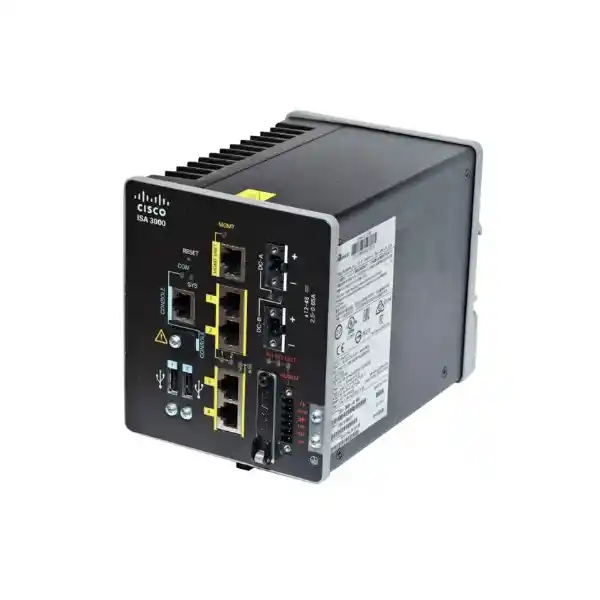
Assess the Cisco ISA-3000-4C Industrial Firewall for a defined OT segmentation requirement. Confirm the software version, required traffic, power arrangement and cabinet conditions before selecting the configuration.
Next step: request a configuration-specific quotation with your network diagram and installation requirements.
Configuration at a glance
- Data interfaces
- Four copper 10/100/1000BASE-T ports
- Management
- Dedicated management Ethernet port
- Fibre interfaces on 4C
- No native SFP fibre data ports
- Software order distinction
- ASA: ISA-3000-4C-K9 · Threat Defense: ISA-3000-4C-FTD
- Power planning
- Dual DC inputs; confirm supply accessories
- Bypass consideration
- Programmable copper pairs; normal protection does not apply in bypass
Start with the industrial boundary you need to control
Choose this appliance around a defined operational requirement: which systems must communicate, which connections should be restricted, and what the process must do when a security device becomes unavailable. The four-copper-port ISA3000 is a candidate for an industrial cabinet where Ethernet links cross a meaningful trust boundary. A useful buying discussion begins with the process and the network drawing, rather than assuming that every industrial site needs the same firewall configuration.
For a Tanzania deployment, bring the operations owner, control-system integrator and network team into that discussion. A production supervisor may prioritise continuity of monitoring, while a security administrator may need stronger restrictions on engineering access. Record both requirements and agree how they will be tested. This makes it possible to assess the appliance against a practical acceptance standard and to identify any additional equipment or services before a purchase is approved.
Request a configuration-specific quotation from FourTeck Tanzania. Include the complete hardware identifier, intended software, management approach and installation environment. Treat stock, price, delivery, subscription entitlement and support eligibility as quotation items that require confirmation for the actual equipment being offered.
Confirm the complete model and software identity
The name ISA-3000-4C identifies the four-copper-port variant, but it does not by itself settle the software order. Cisco's ordering table distinguishes ISA-3000-4C-K9, associated with ASA, from ISA-3000-4C-FTD, associated with Threat Defense. Confirm the complete identifier on the quotation and the unit supplied. Do not approve a substitution merely because both descriptions contain the same family name or the same number of Ethernet ports.
For an existing site, provide the current software version and management method alongside the hardware information. Ask whether the proposed work is a like-for-like replacement, a software change or a new security design. Each has a different preparation burden. A replacement should preserve documented requirements; a software change should include policy and management review; a new design should establish traffic ownership and acceptance criteria from the beginning.
If a supplier proposes a different orderable version, ask for a written explanation of the effect on deployment, licensing and administration. Keep the agreed identifier in the bill of materials, equipment register and handover record. This avoids a situation in which procurement approves one configuration while the commissioning team prepares for another.
Read the physical interfaces correctly
Cisco documents four 10/100/1000BASE-T data ports on the copper variant, plus a dedicated management Ethernet port. The four-copper version has no native SFP fibre data ports. If the installation drawing requires a direct fibre connection, resolve that mismatch before ordering. A separate network component may change the cabinet space, power requirement and number of devices that need maintenance.
Label each proposed data connection with its peer device, cable reference and operational role. A port schedule should explain where the traffic comes from and where it should go. Avoid assigning interfaces only with informal names such as “plant side” when several plant networks exist. Clear labels help an engineer reconnect the correct cable during an approved replacement and help an operator understand which process may be affected by a fault.
Treat the management connection as an administrative design decision. Specify which authorised workstations or management systems may reach it and how an engineer will obtain access during commissioning. Also agree a local recovery method before restricting remote administration. Good isolation is useful only when the support team can still recover the device through a controlled, documented path.
Build a traffic matrix before the rule set
For each required flow, record the source, destination, direction, service, process purpose and approving owner. Include supervisory monitoring, engineering access, data collection and the infrastructure services actually used by the site. Identify periodic activities as well as continuous traffic: a weekly export or an infrequent maintenance session can be missed if discovery covers only a short, quiet operating period.
Separate an observed connection from an approved requirement. Existing traffic may include obsolete monitoring stations, temporary vendor access or discovery tools that no longer serve a production purpose. Ask the process owner to confirm what should remain. The resulting matrix should be understandable without reading firewall syntax, so operations staff can review a proposed restriction before it is implemented.
Use that matrix to write acceptance tests in both directions. For an approved connection, define what successful application behaviour looks like. For a prohibited connection, define a safe way to demonstrate that the boundary enforces the restriction. Keep disruptive probes away from live controllers unless the equipment owner and the commissioning procedure explicitly permit them.
Plan around zones, ownership and real dependencies
A useful segmentation design follows operational responsibilities. Consider whether engineering workstations, supervisory servers, control cells and external maintenance access belong to different trust zones. These are planning examples, not a claim that the four physical ports automatically create a particular architecture. Agree the required boundaries first, then confirm how the chosen software and interface design will implement them.
Look for alternative paths that could bypass the intended boundary. A second network interface on a workstation, an unmanaged temporary switch or a maintenance link may connect networks outside the planned firewall path. Document the complete forwarding arrangement so the project does not create a well-configured appliance beside an uncontrolled parallel route.
Give every exception an owner and a reason. When a temporary rule is required for commissioning, attach an expiry or review condition and identify who can approve its removal. This keeps the final configuration aligned with the actual process. A small, explainable policy is easier to maintain than a larger collection of permissions whose original purpose has been lost.
Match industrial inspection to the exact requirement
Cisco's industrial protocol documentation distinguishes application detection from command and payload inspection. Its published examples include Modbus, DNP3 and CIP, with different inspection detail available for different protocols. These distinctions matter when a requirement says “industrial protocol support”: identifying an application is a different task from evaluating a specific operation inside that application's traffic.
Write down the precise control you want. A requirement might be to identify a protocol, restrict communication to approved peers or assess whether particular maintenance operations can be recognised. Ask for validation against the selected software, release, licence and traffic sample. Do not infer that every industrial command, vendor extension or encrypted conversation can be inspected simply because a related protocol appears in a family document.
Where deeper controls are proposed, use representative traffic and equipment in an agreed test environment. Have the control-system owner confirm whether normal reads, writes, diagnostics and recovery procedures still work. Record unsupported or untested cases explicitly. That gives the buyer a usable statement of scope rather than a broad feature label that cannot be checked during handover.
Choose management and licensing as part of the purchase
Decide who will administer the device and where policy changes will be made. Cisco's current Threat Defense compatibility guidance lists ISA3000 combinations for Management Center and Device Manager; the supported pairing depends on the release and management arrangement. Confirm the exact combination for the project instead of selecting a manager version independently of the appliance software.
Ask the quotation to identify hardware, management requirements, feature entitlements, subscription duration and support separately where applicable. A hardware description alone does not establish which optional security functions are available. Equally, a requested function should be translated into a supported configuration before a licence is selected. Keep the technical requirement beside the commercial line item so both can be reviewed together.
For restricted or disconnected environments, describe the permitted administrative and update connectivity before purchase. Ask how registration, entitlement verification and maintenance will be handled under the applicable Cisco process. Do not leave that question until the appliance is installed inside a network that cannot reach the systems required by the agreed licensing or operating workflow.
Understand hardware bypass before enabling it
Cisco documents programmable copper-port bypass for the 1/1–1/2 and 1/3–1/4 interface pairs. Depending on configuration, this can provide a direct traffic path during power loss and defined startup conditions. While traffic is passing through hardware bypass, the normal firewall, VPN and IPS functions do not protect that path. Confirm behaviour for the exact software and event being tested.
Make the bypass decision with the process owner and security owner together. One boundary may need communications to continue during a device outage; another may require communication to stop. Describe the consequence of each choice in process terms, including who must respond and how the system returns to its approved operating state. Bypass should be an intentional engineering decision with a written rationale.
During commissioning, include controlled loss-of-power and restoration tests where the operating procedure permits them. Observe the application, the adjacent links and the administrative indication of the device state. Record whether traffic resumes automatically or requires intervention under the selected configuration. A green application screen alone is insufficient evidence that the intended protection has returned.
Keep continuity objectives separate and measurable
Discuss continuity as a set of failure cases. Loss of one supply, complete cabinet power failure, a damaged cable, a software restart and an unavailable management system are different events. For each, specify the required process outcome, the acceptable interruption and the recovery owner. This prevents one feature from being treated as a universal answer to every availability problem.
If a redundant design is required, have the complete topology and software entitlement validated. Include the neighbouring switches, power sources and management paths in the assessment. Two devices sharing a single vulnerable dependency may still leave the production system exposed to that dependency. Conversely, adding equipment without a clear recovery objective can increase maintenance effort without meeting a useful operational requirement.
Define the evidence expected at acceptance: application recovery time, alarm visibility, restored inspection state and an accurate event record. Test within an approved maintenance window and preserve a way to return to the previous arrangement. The goal is a demonstrated recovery procedure that site staff can repeat, with responsibilities and escalation clearly assigned.
Assess the cabinet rather than the room
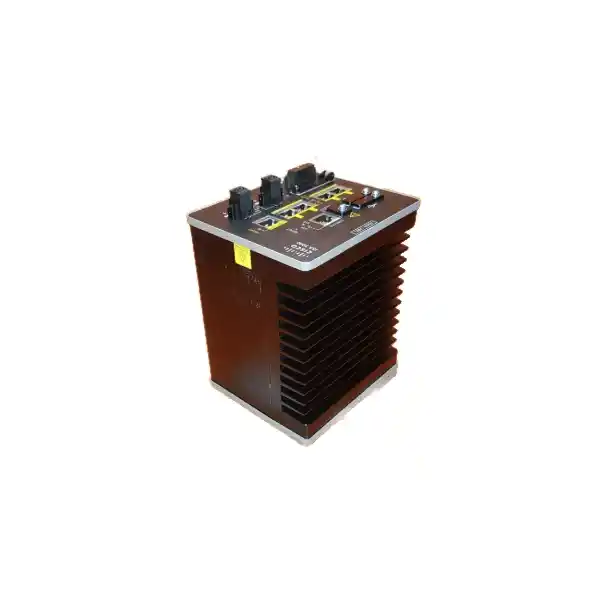
The ISA3000 is a fanless industrial appliance suited to DIN-rail installation. Its environmental limits still depend on the installation conditions. Cisco's hardware specifications list −40°C to 60°C at zero airflow, −40°C to 70°C at 40 LFM, and −34°C to 75°C at 200 LFM. Do not use the highest figure as an unconditional operating rating.
Measure or assess conditions where the appliance will sit, especially after other cabinet equipment has warmed up. Record enclosure ventilation, nearby heat sources, cable congestion, dust exposure and the possibility of condensation. A site described as air-conditioned may still contain a tightly packed cabinet whose internal conditions differ substantially from the surrounding workspace.
Have the installer check the applicable mounting and clearance instructions, grounding and enclosure suitability. Cisco lists IP30 for the appliance; that does not establish protection against outdoor weather, water jets or every industrial contaminant. If the location requires additional protection, specify the enclosure and thermal design as part of the project rather than assuming the firewall housing provides it.
Specify a suitable DC power arrangement
Cisco lists a maximum operating input range of 9.6–60 VDC and 24 W power consumption. The hardware provides dual DC inputs. Select the supply arrangement through the installation design, including source suitability, protection, grounding and the actual equipment included in the offer. Do not assume that an AC supply accessory is included simply because a listing describes a complete firewall.
Provide the cabinet's available DC voltage and describe whether separate sources are required. Ask the installer to identify which other devices share each source and which failures the proposed arrangement is intended to tolerate. Where a backup supply is planned, include the adjacent equipment needed to carry the process traffic; powering only one component may not preserve the required application path.
Include power-state observation in the handover procedure. Site staff should know how to recognise a missing input, who receives an alarm and when an investigation is required. Keep electrical work within the qualified installer's scope and follow the applicable manufacturer instructions and local installation requirements. A quotation should make the division between appliance supply and electrical installation clear.
Size for the traffic and inspection you will use
A Gigabit Ethernet interface speed is a link characteristic, not a promise that every security workload will run at that rate. Build the sizing discussion around measured traffic, bursts, concurrent activity and the controls intended for use. Include expected growth and the effect of maintenance activities that may transfer larger files than ordinary supervisory communication.
Ask which performance figures apply to the proposed software and enabled feature set, and what test conditions produced them. Where inspection or encrypted traffic is material to the design, make that explicit in the requirement. Avoid comparing two appliances using figures measured with different security functions or packet profiles and then treating the numbers as directly interchangeable.
Set acceptance thresholds around process needs. For example, identify which supervisory views must remain responsive during a planned engineering file transfer and what monitoring will reveal an overloaded path. Use an agreed traffic profile for validation. If the requirement exceeds the candidate configuration's demonstrated capacity, revisit the design before installation rather than relying on an unspecified throughput headline.
Place vendor maintenance behind an approved access process
If third-party engineers require access, begin with identity, authorisation and session scope. Define which people may connect, which systems they need, what activities are permitted and who approves the maintenance window. Ask the designer to validate the complete remote-access architecture and any software or licensing dependencies; the appliance name alone does not define a ready-to-use access service.
Separate access to the firewall's own administration from access through the firewall to industrial systems. A vendor maintaining a controller should not automatically receive permission to alter boundary policy. Where a controlled intermediary or other access component is proposed, include it in the drawing and the test plan so the full path can be assessed.
Plan how access will end. Revoke temporary permissions, confirm the change record and check that the normal process still operates after maintenance. Keep an operational contact available during the session and agree what to do if the connection fails halfway through a task. These process decisions help turn a technical connection into a manageable maintenance arrangement.
Make monitoring actionable for the site team
Define which events require action and who is responsible for them. A useful monitoring plan distinguishes expected policy blocks, unavailable management, power issues and an unexpected loss of application communication. Avoid asking operators to review every event without a priority system; important conditions can become difficult to identify in a stream of routine messages.
Agree the time source, event destination, retention requirement and access permissions for the chosen configuration. If a central logging platform is involved, confirm the supported integration and test that a meaningful event reaches the intended reviewer. Include enough context to relate the event to the port schedule, traffic matrix and process asset without exposing sensitive operational information unnecessarily.
Create a short response guide for common conditions. It should identify the first checks, the escalation contact and the circumstances in which a configuration change requires approval. Keep a current network drawing available to authorised staff. Monitoring becomes more useful when an event leads to a defined action and the person receiving it has the information needed to act.
Prepare a commissioning sequence with clear hold points
Start with an agreed baseline: equipment identity, software, management access, configuration backup and the existing process state. Review the traffic matrix and acceptance tests with the relevant owners. Identify the point at which the project can safely proceed and the conditions that require it to pause. The maintenance window should include time for application validation, not just cabling and device startup.
Stage the work so that a failed test has a clear meaning. Confirm physical connections and administrative reachability before assessing application permissions. Test ordinary operation, required maintenance flows and the agreed blocked cases. Where deeper inspection is proposed, introduce it through the approved validation process rather than assuming a default policy is suitable for every controller and operational procedure.
Keep the rollback instructions concrete. State which cables, settings and previous equipment are needed, who can authorise rollback and how the restored process will be checked. Record any deviations from the original plan before handover. A completed installation should leave the customer with a tested operating arrangement and a documented path for recovery.
Use application acceptance, not just link lights
A connected Ethernet link shows only part of the installation state. Ask the application owner to demonstrate the functions that matter: supervisory updates, approved engineering actions, required data exports and recovery after an agreed interruption. Use the actual operational workflow where possible so that acceptance reflects the process the site will run after the commissioning team leaves.
Define both positive and negative evidence. A permitted flow should reach the correct destination and perform the approved task. A restricted flow should be blocked in the agreed manner without disrupting unrelated operation. Record the tested source and destination, the observed result and any remaining limitation. Avoid describing an untested feature as accepted merely because the configuration contains a relevant rule.
Schedule unresolved tests explicitly if they cannot be completed during the first window. State the temporary operating condition and who owns the remaining decision. This is particularly important where a seasonal process or infrequent vendor activity cannot be reproduced immediately. An honest acceptance record is more useful than an unconditional sign-off that hides a gap in validation.
Check hardware revision, software support and maintenance history
For existing or previously deployed equipment, ask for the product identifier, serial number, hardware revision and software version. Cisco field notice FN64250 identifies an issue affecting certain early ISA-3000-4C-K9 revisions and identifies V04 as the fixed revision for that issue. Applicability must be checked against the exact unit; this is not a statement that every appliance in the family is affected.
Review current field notices and security guidance against the proposed release before commissioning. Software lifecycle notices should be read for their specific version and scope; they should not be used by themselves to infer the lifecycle of the complete hardware family. Ask for an upgrade and maintenance plan that reflects the actual starting version, management arrangement and support entitlement.
For a replacement project, establish how backups, licences and support records will be handled before removing the existing device. Document who owns the relevant accounts and who is authorised to request assistance. If any entitlement or hardware condition remains unresolved, record it in the quotation and project plan so the buyer can make an informed purchase decision.
Example requirements for industrial buyers in Tanzania
For a production cell, a useful starting requirement is to separate engineering access from routine supervisory communication. The buyer should identify the exact approved stations and operations, then ask whether the proposed configuration can enforce and demonstrate that boundary. The value lies in a clearly tested restriction, with an agreed maintenance procedure for the exceptions the process genuinely needs.
For a utilities or remote monitoring project, begin with the required supervisory path, local recovery capability and communications-loss behaviour. Assess the protocols, power arrangement and administrative reachability for the actual location. These are example planning questions, not a claim of project-specific certification, guaranteed compatibility or local service coverage.
For an equipment integrator supplying a cabinet, include the firewall identity and configuration responsibilities in the wider bill of materials. State whether the customer or integrator will own policy, credentials, updates and acceptance testing after delivery. For every Tanzania project, confirm the installation location and commercial scope directly; do not assume a particular office, delivery schedule or on-site response arrangement from the product family name.
Compare the candidate against alternatives by requirement
Keep this four-copper-port version on the shortlist when its interface arrangement and assessed industrial installation fit the project. If direct fibre data interfaces are required, Cisco's separate 2C2F variant is a different candidate to evaluate. Compare complete configurations, including media, software and maintenance responsibilities, rather than treating the two hardware descriptions as interchangeable.
If the requirement is primarily a larger enterprise boundary, a different interface count or a substantially different performance profile, ask the designer to compare an appropriate platform. Industrial packaging is only one selection criterion. The chosen solution should also satisfy capacity, security functions, administration and operational recovery, with the trade-offs visible to the buyer.
Use a comparison sheet with the same columns for every candidate: required interfaces, validated software, inspection scope, cabinet suitability, power, management, support and total quoted scope. Mark each requirement as confirmed, conditional or unresolved. That approach makes a product comparison more useful than a feature list whose entries have different meanings on different platforms.
Keep a usable handover pack beside the equipment record
Request the final port schedule, approved traffic matrix, software inventory and configuration backup as separate handover items. The record should identify the agreed bypass behaviour for each relevant copper pair and the method used to confirm that normal protection has returned after a recovery test. Store credentials and sensitive configuration exports through the customer's approved secure process rather than placing them in an unrestricted project document.
Name the person responsible for keeping these records current after a change. An appliance replacement, policy adjustment or software upgrade should trigger a review of the affected documents and acceptance results. This gives the next engineer a reliable starting point and gives the process owner evidence that the installed boundary still reflects the requirement originally approved.
What to include in your quotation request
Send a simple network diagram, the proposed appliance location and the systems that must communicate across it. Include the available DC supply, cabinet conditions, cable media and the expected administrative access. If the project replaces an existing ISA3000, add its complete product identifier, hardware revision, software version and management method. Share sensitive configuration information only through an agreed secure channel.
List the security outcomes you require and the operational constraints the installation must respect. Identify permitted downtime, the process owner, any restrictions on discovery traffic and the acceptance tests that matter. Ask for the quotation to distinguish equipment, software entitlements, accessories, installation, commissioning, documentation and continuing support, so the commercial scope can be checked against the engineering requirement.
Request written confirmation of the exact items offered, condition of supply, price, availability, delivery and applicable support terms. No price, stock position or warranty entitlement is established by this page. The next step is a quotation aligned to your configuration and site requirements, with unresolved points clearly identified before the order is placed.
Buyer questions
Is ISA-3000-4C the complete ordering code?
No. Confirm the full identifier and software. Cisco distinguishes the ASA-associated ISA-3000-4C-K9 and Threat Defense-associated ISA-3000-4C-FTD. Ask the quotation to state which is being supplied and what software and entitlements are included.
Does this variant have fibre ports?
The four-copper variant has four copper data interfaces and no native SFP fibre data ports. If fibre is required, have the complete media design reviewed and compare the separately identified 2C2F variant where appropriate.
Does bypass keep the traffic protected?
Traffic using the direct hardware bypass path does not receive the normal firewall protection. Decide the acceptable failure behaviour with operations and security owners, configure it deliberately and test the approved power-loss and recovery scenarios.
Are industrial inspection features included automatically?
Confirm the required function against the chosen software, release and entitlement. Protocol identification and command inspection are different requirements. Request validation for the actual protocol operation rather than relying on a general industrial-security description.
Can it be installed in any outdoor cabinet?
Assess the enclosure, temperature, airflow, moisture exposure, power and grounding against the installation requirements. The appliance rating alone does not establish that a proposed outdoor or contaminated location is suitable.
How should an existing unit be assessed before reuse?
Record its full hardware identity, revision, software, management configuration and entitlement. Review applicable Cisco field notices, prepare a backup and agree an upgrade or replacement plan before connecting it to the intended production boundary.
What is the Tanzania price and delivery time?
Request a current quotation for the exact configuration and location. Price, stock, delivery, installation scope and support terms require confirmation; they should not be inferred from this technical product description.
Request an industrial firewall configuration review
Ask FourTeck Tanzania for a quotation that names the full hardware identifier, software, entitlements, power accessories and agreed deployment scope. Provide the boundary diagram, cabinet conditions and acceptance requirements so the proposed configuration can be assessed against your operational needs.




Reviews
There are no reviews yet.