
FortiGate 3501F (FG-3501F)
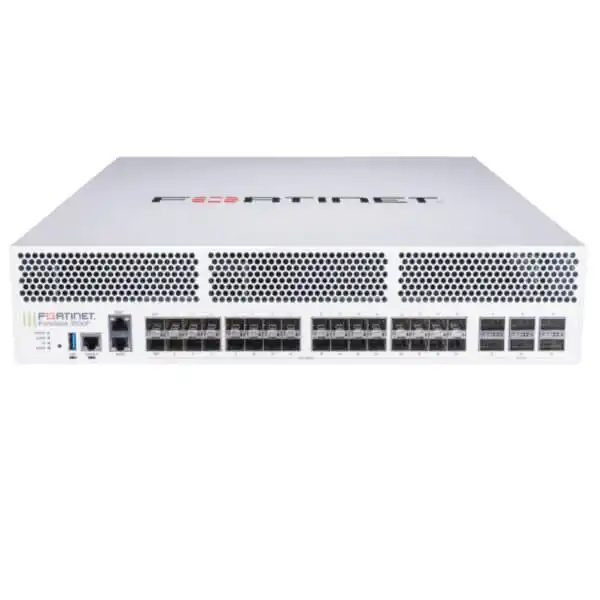
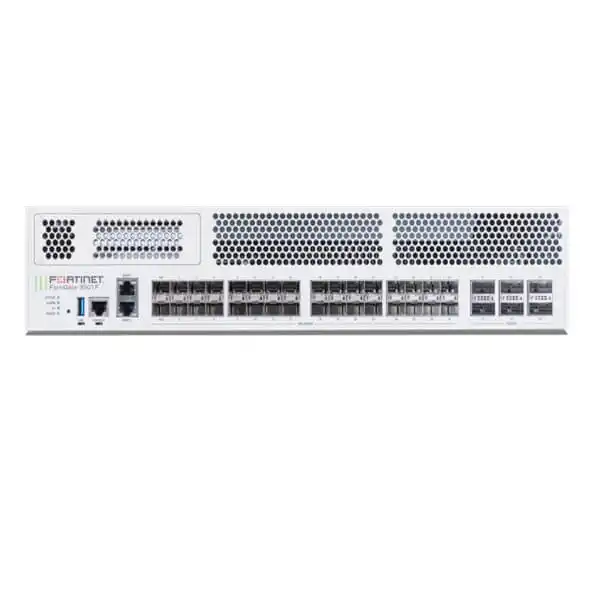
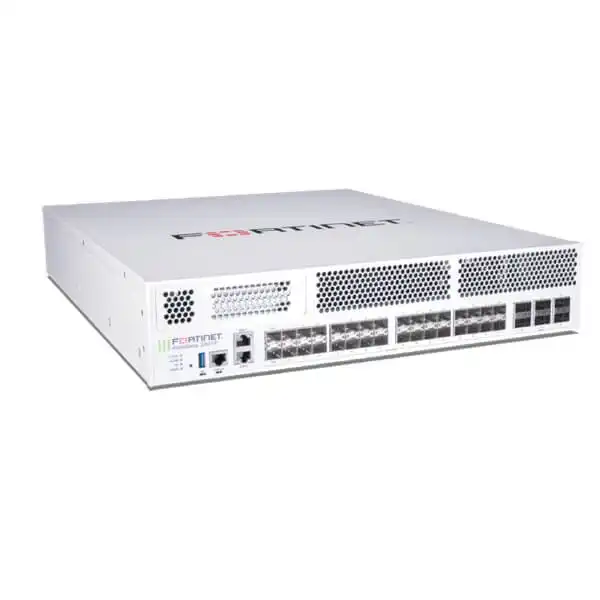
FortiGate 3501F is a high-performance next-generation firewall for organizations that need dense high-speed interfaces, accelerated security processing, resilient enterprise connectivity and local storage for demanding security operations. Fortinet specifies six hardware-accelerated 100GE/40GE QSFP28 slots, thirty-two hardware-accelerated 25GE/10GE SFP28 slots, two 10GE RJ45 management ports, NP7 and CP9 acceleration, onboard SSD storage and dual AC power supplies. That combination positions the FG-3501F for large data centers, headquarters, service-provider environments, large campuses and security architectures where firewalling, segmentation, VPN, intrusion prevention and high-volume traffic inspection must coexist.
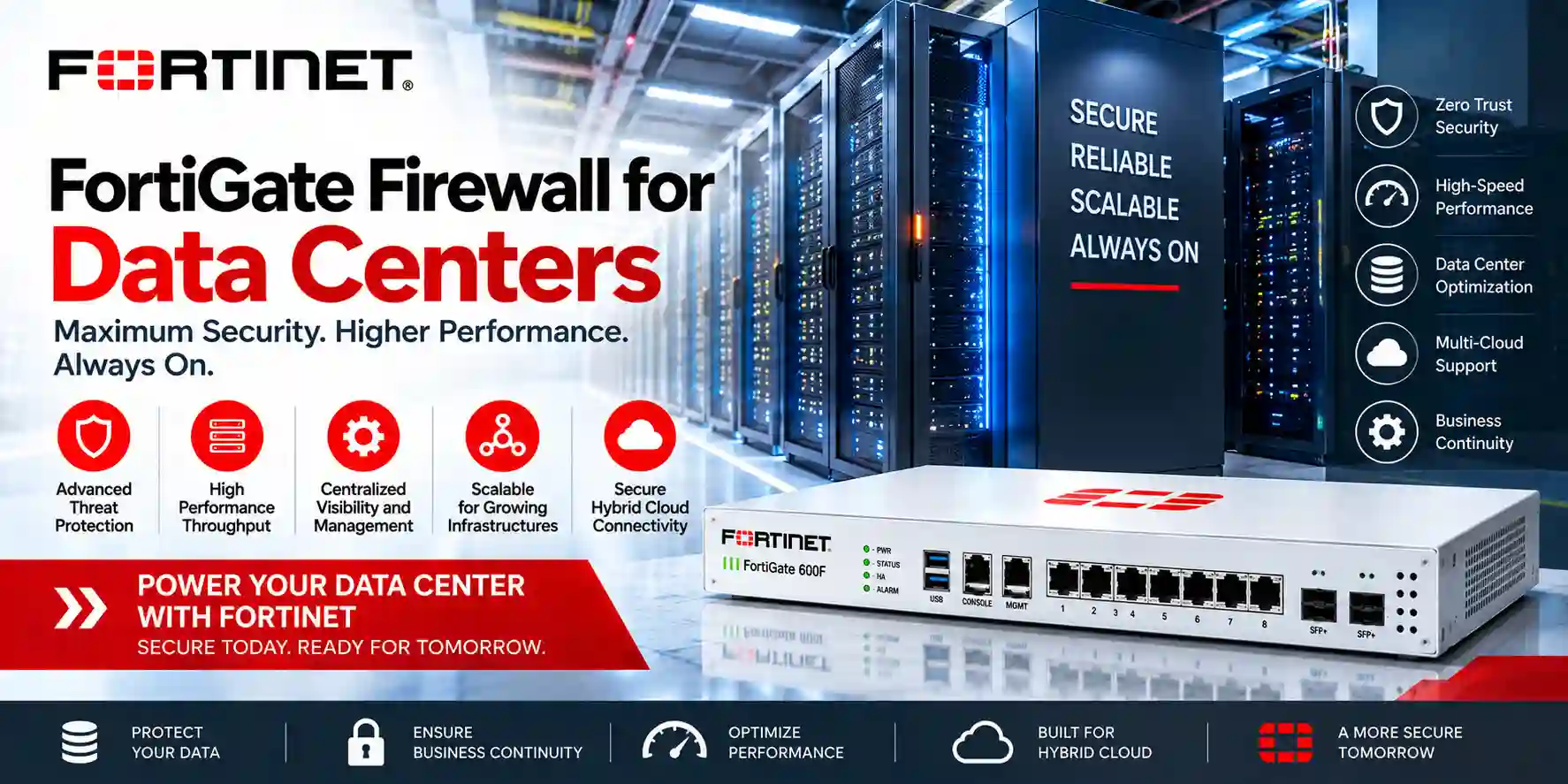
FortiGate 3501F overview and verified hardware
The FG-3501F belongs to Fortinet’s FortiGate 3500F Series and adds onboard storage to the platform. The official Fortinet ordering information identifies the appliance with six 100GE/40GE QSFP28 slots, thirty-two 25GE/10GE SFP28 slots, two 10GE RJ45 management ports, NP7 and CP9 hardware acceleration, two onboard SSDs and two AC power supplies. Fortinet’s hardware-acceleration documentation further explains that the 3500F/3501F architecture uses three NP7 processors connected through an integrated switch fabric, allowing supported traffic between data interfaces to be offloaded for purpose-built processing.
For procurement teams, those specifications should be translated into a deployment requirement rather than treated as a checklist. A large interface count matters when a firewall sits between core switching, internet edges, data-center zones, WAN circuits and high-speed server networks. Storage can be valuable where the chosen FortiOS design uses local logging or functions that benefit from onboard disks. Redundant power supplies support resilient rack designs, but power feeds, UPS capacity, cooling, transceivers, fiber types and rack depth still need to be planned as part of the project.
6 × 100GE/40GE QSFP28 plus 32 × 25GE/10GE SFP28-class data interfaces support dense high-bandwidth network designs.
NP7 network processors and CP9 content processors are designed to accelerate supported networking and security workloads.
FG-3501F includes onboard SSD storage, distinguishing it from the base FG-3500F in the series.
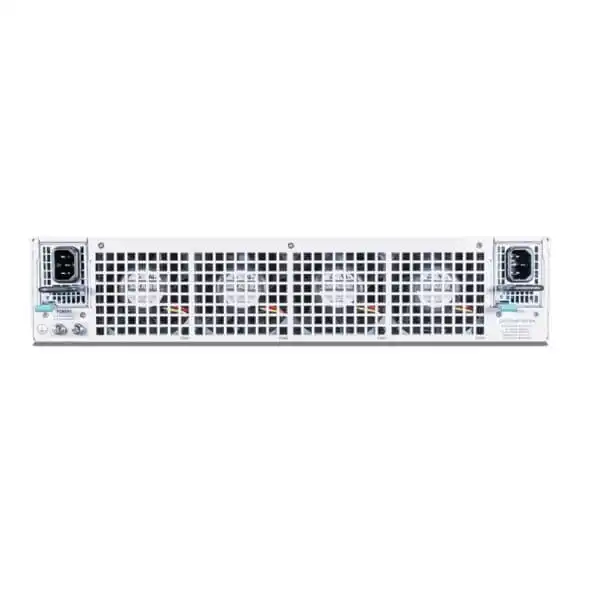
Dual hot-swappable AC power supplies support 1+1 power redundancy when the surrounding power design is properly engineered.
Where the FG-3501F fits
This is not normally a branch-office firewall selected only from user count. The FG-3501F is better evaluated as part of a high-throughput security architecture. Typical design discussions include north-south internet security, east-west segmentation, data-center edge protection, large-campus aggregation, high-capacity IPsec VPN, Secure SD-WAN, multiple virtual domains, high availability and integration with centralized Fortinet management, analytics or broader Security Fabric components. The final suitability depends on the traffic profile, enabled security services, encrypted-traffic inspection, session behavior, routing design and resilience target.
Buyers should therefore provide real traffic measurements where possible. Internet circuit speed alone is insufficient. Include peak traffic, internal routed traffic that will cross the firewall, expected VPN load, application mix, number of security zones, interface speeds, current session counts, future capacity plans and the FortiGuard security services that will be enabled. This makes the sizing exercise defensible and reduces the risk of purchasing an appliance that is either unnecessarily large or constrained once inspection features are activated.
Technical planning for FG-3501F deployment
| Planning area | Verified / practical consideration |
|---|---|
| Data interfaces | 6 × 100GE/40GE QSFP28 and 32 × 25GE/10GE SFP28-class slots; validate optics, breakout needs, fiber plant and peer-device compatibility. |
| Management | Two dedicated 10GE RJ45 management ports are listed in current Fortinet ordering information. |
| Acceleration | NP7 and CP9 acceleration; Fortinet documentation describes three NP7 processors connected through an integrated switch fabric. |
| Storage | Onboard SSD storage is included on FG-3501F; confirm intended logging/feature design and retention requirements. |
| Rack and power | 2RU-class appliance with redundant AC supplies; confirm rack depth, airflow, UPS, dual power paths and environmental conditions. |
| Subscriptions | FortiCare and FortiGuard service selection should be quoted according to required protection, support term and operational model rather than assumed from hardware alone. |
FortiGate 3501F Tanzania
Organizations evaluating FortiGate 3501F in Tanzania are usually dealing with requirements that extend beyond basic internet firewalling. A large enterprise may need to secure high-capacity internet circuits, connect data-center VLANs, terminate site-to-site VPNs, segment server and user networks, enforce application policy and retain useful security telemetry. The FG-3501F should therefore be approached as an infrastructure project with clear traffic, security and availability objectives. In Tanzania, that can include headquarters networks, financial and institutional environments, large hospitality or education campuses, logistics operations, service providers and organizations running private or hybrid data-center infrastructure.
A useful Tanzania sizing exercise starts with current and planned WAN capacity, core-switch uplink speeds and the volume of traffic that will actually cross the firewall. If the design includes encrypted traffic inspection, IPS, application control, web security or other FortiGuard services, procurement should compare performance in the relevant security profile rather than relying only on headline firewall throughput. The interface plan also deserves attention. The FG-3501F provides high-density 25GE/10GE and 100GE/40GE connectivity, but transceivers, fiber type, patching and switch-side optics must match. These supporting components should appear in the bill of materials instead of being discovered during installation.
Resilience is another major Tanzania procurement topic. Dual power supplies are useful only when the rack has an appropriate power design, ideally with independent protected feeds where the site supports them. UPS runtime, generator transition, cooling and rack airflow should be considered for critical deployments. High availability may also require a second firewall, matching subscriptions, dedicated HA links and a network topology that avoids introducing a new single point of failure around the firewall pair. Organizations with multiple Tanzanian branches should decide whether the FG-3501F will act as a central hub, a data-center security gateway or one component in a broader SD-WAN architecture.
FourTeck’s Tanzania technology solutions page explains how firewall, switching, servers, Wi-Fi and other infrastructure should be planned together. Buyers can also review the Tanzania IT services scope and business technology shop when preparing related requirements. For an FG-3501F quotation, include required subscription term, desired FortiCare level, interface optics, rack location, high-availability requirement, migration scope and whether existing FortiGate policies or VPNs must be transferred. That information turns a product enquiry into a practical deployment discussion.
FortiGate 3501F Dar es Salaam
For FortiGate 3501F projects in Dar es Salaam, the most common fit is a high-capacity enterprise or data-center environment rather than a small office. Organizations with headquarters, colocation footprints, large server rooms, regional hubs or multiple internet providers may need a firewall that can sit between fast switching fabrics and multiple security zones without forcing every connection down to low-speed interfaces. The FG-3501F’s 100GE/40GE and 25GE/10GE interface density can be useful in such designs, particularly when the core and aggregation network already operates at high bandwidth.
Dar es Salaam buyers should map the physical and logical network before ordering. List every ISP handoff, core switch, data-center fabric, DMZ, server zone, user network, guest environment, management network and partner connection that may terminate on or route through the firewall. Identify which links need 10GE, 25GE, 40GE or 100GE connectivity and whether the peer device uses single-mode or multimode fiber. Confirm supported transceivers and cable standards. A firewall appliance can have the right port type but still be impossible to connect on installation day if the optics and fiber plant were not included in the design.
Operational continuity also matters in a major commercial center where business systems may be expected to remain available around the clock. Plan dual power paths, UPS protection, rack cooling, configuration backup, monitoring and high availability where required. If two FG-3501F appliances will operate as a cluster, review switch redundancy and upstream routing so that a single switch failure does not defeat the firewall redundancy. For internet-facing applications, document public addressing, NAT, inbound publishing, DNS dependencies and certificate requirements before migration. For branch connectivity, document IPsec peers, routing and failover behavior.
Dar es Salaam procurement teams can use the verified FourTeck Tanzania contact page to submit a requirement with user counts, bandwidth, network diagrams and desired security services. A detailed request should state whether the project is a new deployment or replacement, identify the current firewall model, list subscriptions that must be renewed or replaced, and specify the maintenance window available for cutover. This allows the quotation and implementation plan to address licensing, optics, migration and support rather than treating FG-3501F as an isolated hardware purchase.
FortiGate 3501F Mwanza
A FortiGate 3501F requirement in Mwanza should be justified by traffic scale, network role and future growth. Large industrial, institutional, logistics, financial, education or multi-site operations may centralize applications and branch connectivity at a primary site, making the firewall a critical junction between internet, private WAN, server and user networks. In that scenario, the FG-3501F can provide the high-speed physical connectivity and accelerated security platform needed for a consolidated security edge, while FortiOS supplies routing, segmentation, VPN and security-policy functions.
For Mwanza deployments, WAN resilience may be as important as raw firewall performance. Document every available primary and backup circuit, expected bandwidth, public IP allocation and handoff type. If links from different providers are used, decide whether the design needs simple failover, load distribution or application-aware SD-WAN policies. The firewall can participate in a resilient WAN architecture, but the correct outcome depends on circuit diversity, routing and realistic SLA monitoring. A second internet link that follows the same physical path may not provide the resilience expected from a truly diverse service.
Power and environmental planning should be completed before installation. A high-end 2RU security appliance belongs in a properly ventilated rack with stable power and suitable UPS protection. Where generator backup is used, verify the transition behavior and runtime required for networking equipment. High availability should be considered when the business impact of a single firewall outage is unacceptable. The design should also reserve rack space, switch ports and cabling for the HA peer and should document how management access remains available during an upstream failure.
Mwanza buyers should prepare a concise technical schedule for quotation: required FG-3501F quantity, FortiGuard/FortiCare term, high-availability requirement, optic types, expected VPN peers, peak traffic, security services, rack/power details and desired migration support. If the site also needs switching, Wi-Fi, server connectivity or structured cabling, those dependencies should be scoped with the firewall. The wider FourTeck Africa infrastructure portfolio provides regional context for integrated network projects, while the Tanzania channel remains the appropriate starting point for local project discovery and quotation preparation.
FortiGate 3501F Arusha
FortiGate 3501F deployments in Arusha can be relevant to large hospitality groups, institutions, regional headquarters, campuses and organizations that aggregate multiple sites or high-volume digital services. The appliance should be selected because the architecture needs its high-speed connectivity and security capacity, not simply because it is a larger model. A structured assessment should establish the number of protected zones, internet bandwidth, inter-VLAN traffic, data-center flows, VPN requirements, remote sites and the inspection features that will be enabled.
Hospitality and campus environments illustrate why segmentation matters. Guest networks, staff systems, building or operational devices, surveillance infrastructure, voice systems and servers do not necessarily require unrestricted communication with one another. A FortiGate can enforce policy between defined zones, but the network must first be designed with appropriate VLANs, routing and switch configuration. For a very large environment, the FG-3501F’s dense high-speed ports can connect to redundant core switches or aggregation layers while leaving capacity for future expansion.
Arusha projects should also plan remote administration carefully. Management interfaces should be placed on controlled networks, administrative access should use strong authentication and change procedures should include configuration backups. Logging requirements need to be defined: decide what events are operationally useful, where logs will be retained and whether centralized FortiAnalyzer or another approved logging architecture is required. The FG-3501F includes onboard storage, but retention expectations and analytics requirements should determine the final logging design rather than assuming local disks alone meet every operational or compliance need.
When requesting a quotation in Arusha, state whether the requirement includes installation, configuration, migration, HA, VPN setup, SD-WAN, security policy review or subscription renewal. Include current topology diagrams if available. The verified FourTeck Tanzania contact information lists Arusha among its office contacts, and the contact and enquiry page provides a practical route for submitting the project. Providing technical context early helps separate mandatory components from optional services and makes the final bill of materials easier for procurement and IT teams to review.
FortiGate 3501F Dodoma
For organizations considering FortiGate 3501F in Dodoma, procurement discipline and documentation can be particularly important where projects involve institutional, public-sector, education or large enterprise networks. A high-end firewall specification should connect every requested feature to a measurable requirement. The bill of materials should distinguish the FG-3501F appliance, security subscriptions, support term, transceivers, rack accessories and any professional services. This prevents a tender or internal approval from treating all firewall quotations as equivalent when the licensing and implementation scope may differ significantly.
Technical teams should document current and target topology. Record ISP connections, routed networks, VLANs, server segments, DMZ services, remote-access users, site-to-site VPNs, dynamic-routing protocols, NAT rules and critical applications. For a replacement project, export or document the existing policy set and identify obsolete rules before migration. Moving every old rule without review can carry years of unnecessary access into the new platform. A controlled migration should map business services to new policies, define test cases and include a rollback plan for the cutover window.
The FG-3501F’s high-speed interfaces make physical design a separate workstream. Confirm whether the network needs 10GE, 25GE, 40GE or 100GE links and specify supported optics for each connection. Where redundant core switches are used, plan how links are distributed across them. Where HA is required, define heartbeat connections, management access and upstream/downstream failure behavior. Dual AC power supplies should be connected according to the site’s resilient power design, and rack cooling should account for the complete equipment load rather than only the firewall.
Dodoma buyers can improve quotation quality by including an acceptance checklist: internet access, application publishing, VPN connectivity, routing convergence, HA failover, logging, administrator access and policy verification. The FourTeck Tanzania services overview describes integrated planning, configuration, testing and documentation across business infrastructure. For the FG-3501F, that integrated approach is useful because the firewall depends directly on switching, WAN, server, power and operational processes. A well-documented project gives the customer a maintainable security platform rather than only a powered-on appliance.
FortiGate 3501F UAE
Organizations sourcing FortiGate 3501F in the UAE may be building data-center, headquarters, managed-service or multi-country security architectures where high-speed interfaces and centralized policy are essential. The same core sizing principles apply: determine inspected traffic, VPN demand, session profile, interface requirements, segmentation and growth. The FG-3501F should be compared against the architecture rather than purchased from a single maximum-throughput figure. Fortinet’s current product information places the model among high-performance FortiGate options and identifies its purpose-built acceleration and onboard storage.
UAE deployments often involve dense fiber connectivity and high-capacity switching. Before quoting optics, document every peer device and link standard. QSFP28 and SFP28 slots provide flexibility, but optic compatibility, fiber mode, wavelength, connector type and breakout design must be validated. For colocation deployments, confirm rack-unit allocation, available power feeds, remote-hands procedures and cross-connect lead times. For an enterprise data center, confirm core-switch redundancy and maintenance processes. These details can affect the installation schedule more than the firewall configuration itself.
Licensing should be matched to the security outcome. Buyers may need FortiCare support plus a FortiGuard bundle aligned to IPS, malware protection, application control, web/DNS filtering or other services. Subscription names and inclusions can evolve, so the quotation should identify the exact current SKU, term and service level rather than relying on an old bundle description. Organizations with existing Fortinet estates should also consider centralized management and logging architecture, administrator roles and how configuration standards will be applied across sites.
For UAE-specific Fortinet enquiries, FourTeck maintains a dedicated Fortinet UAE security site covering FortiGate, licensing, VPN, SD-WAN and related security requirements. The broader FourTeck UAE technology site can support integrated infrastructure discussions. Multi-country customers can use a common technical standard while still checking local availability, implementation arrangements and subscription requirements for each market. This is especially useful when a Tanzania deployment must align with a UAE headquarters security policy.
FortiGate 3501F Uganda
A FortiGate 3501F project in Uganda is most appropriate where a large organization needs a central security platform for high-bandwidth internet, private WAN, data-center networks or many remote locations. The procurement team should define whether the appliance is intended as an internet edge, data-center segmentation firewall, VPN concentrator, SD-WAN hub or combination of these roles. Each role changes the traffic profile and therefore the sizing evidence required. Internal east-west traffic can be much larger than the public internet circuit, particularly where server and user networks are segmented through the firewall.
Ugandan organizations with multiple branches should document WAN topology before selecting the final architecture. Site-to-site IPsec, dynamic routing and Secure SD-WAN can be combined in different ways, but branch addressing must be organized and overlapping subnets should be identified early. If the central FG-3501F will terminate many tunnels, include expected tunnel count, aggregate encrypted bandwidth and failover behavior. If branches use multiple ISPs, define performance thresholds and application priorities rather than treating SD-WAN as automatic optimization without policy design.
At the physical layer, validate rack, power and fiber. The FG-3501F provides high-speed optical interfaces suitable for enterprise switching, but every link needs matching transceivers and cable plant. Redundant power supplies should connect to an appropriate protected power design. High availability may require two appliances and redundant upstream/downstream connections. Monitoring should cover not only device health but also interface errors, VPN state, resource use, security events and configuration changes so operations teams can distinguish connectivity faults from security incidents.
The FourTeck Uganda site provides a regional channel for IT and networking requirements, while the Tanzania site can coordinate requirements originating from Tanzania-based procurement teams. For a Uganda FG-3501F request, provide the deployment city, existing firewall, WAN links, security services, subscription term, HA requirement and whether onsite implementation or remote configuration is expected. Regional coordination works best when the technical standard is common but logistics and service scope are confirmed separately for each location.
FortiGate 3501F Kampala
Kampala-based enterprises evaluating FG-3501F may be consolidating security for headquarters, data centers, financial applications, regional branches or cloud-connected workloads. Start by mapping the business services that cannot tolerate disruption. Identify internet-facing systems, ERP or database traffic, remote access, branch applications, voice/video dependencies and management networks. The firewall policy should reflect these services and should not be built from an undifferentiated list of IP addresses. Application ownership and change approval become increasingly important as the network grows.
Capacity planning should use peak and inspected traffic rather than average utilization. A link that averages modest bandwidth may experience short periods of very high demand, and security inspection can change effective throughput. Encrypted applications are now common, so the organization should decide which traffic will be inspected and how certificates, privacy requirements and exceptions will be managed. Fortinet publishes different performance metrics for different test profiles; procurement teams should use the metric closest to the intended enabled features and leave reasonable growth headroom.
Kampala deployments should also consider operational ownership. Decide who can change firewall policy, who reviews logs, how administrator access is authenticated, how configuration backups are protected and how firmware upgrades are tested. If the organization operates 24×7, define maintenance windows and HA behavior. A second firewall can reduce appliance-level downtime, but resilient switching, power and WAN connectivity are also necessary. The runbook should include how to verify cluster health and how to access the devices if normal management paths fail.
For procurement, request an itemized quotation showing hardware, current subscription bundle, FortiCare term, optics, accessories and professional services. Avoid comparing only the appliance line price if competing quotations include different security terms. FourTeck Uganda can be referenced for the broader local technology context, while the dedicated Fortinet regional resources can help customers understand licensing and deployment categories. A complete Kampala request should include network diagrams and the desired project outcome so the FG-3501F can be assessed against actual requirements rather than model reputation alone.
FortiGate 3501F Arua
For an FG-3501F requirement associated with Arua, the first question should be where the appliance will sit in the wider network. A high-end firewall may be located at a central data center serving remote operational sites rather than physically deployed at every branch. If Arua is one endpoint in a larger enterprise network, the design should determine whether local traffic exits directly to the internet, backhauls to a central hub, or uses SD-WAN policy to choose between paths. That decision influences tunnel sizing, latency, bandwidth and failure behavior.
Connectivity diversity deserves careful attention. A resilient firewall cannot compensate for a single upstream path if every WAN service shares the same physical dependency. Document available circuits and how they enter the site. For critical applications, define what happens when the primary circuit fails: which applications must continue, what backup bandwidth is available and whether the secondary link can support encrypted tunnels and business traffic simultaneously. SD-WAN health checks should measure meaningful application reachability rather than only the status of a local gateway.
If the FG-3501F is deployed at a central hub that serves Arua and other locations, branch addressing and routing should be standardized. Unique subnets simplify VPN and route design. Security zones should separate branch, server, management and internet-facing traffic according to business need. Logging should make it possible to trace traffic from a remote site through the central policy. For troubleshooting, document tunnel names, peer addresses, route preferences and failover rules. This operational documentation can be more valuable than adding unnecessary complexity to the configuration.
Arua procurement requests should state whether the requirement is for a local appliance, a centralized hub supporting Arua, or a broader Uganda rollout. Include expected bandwidth, number of sites, critical applications, available WAN services and desired support scope. Where a regional standard spans Tanzania and Uganda, use consistent naming, policy principles and configuration documentation while validating each site’s local connectivity and power conditions. This approach makes a sophisticated FG-3501F deployment easier to operate across distributed locations and reduces dependence on undocumented site-specific fixes.
FortiGate 3501F Mbarara
FortiGate 3501F projects serving Mbarara can support organizations that need centralized security for multiple facilities, large campuses, enterprise applications or regional branch networks. Because the model is designed for high-capacity environments, its selection should follow a workload assessment. Count the security zones and interfaces, estimate peak routed traffic, identify VPN and SD-WAN roles, and list the FortiGuard inspection services that will run. Where traffic between internal networks passes through the firewall, include that east-west volume instead of sizing only from the internet connection.
Network design should make deliberate use of the FG-3501F’s interface capacity. High-speed ports can connect redundant core switches, server aggregation, WAN edge devices or data-center fabrics, but a clean topology is preferable to using many ports without a clear role. Document link aggregation, VLAN trunks, routed interfaces and failure domains. Confirm optics before procurement. If the surrounding switches cannot support the required link speeds, the firewall’s port density will not solve the bottleneck and the wider network may need upgrading.
Security policy should also be designed for maintainability. Group services and objects using clear naming, keep administrative access separate from normal user traffic, review unused rules and log important decisions. For VPN, use consistent tunnel naming and document encryption settings and peer ownership. For remote administration, apply strong authentication and restrict source networks. If centralized FortiManager or FortiAnalyzer is part of the architecture, define connectivity and licensing at the same time as the appliance purchase so management and logging are available from the start.
For Mbarara quotation preparation, include whether the deployment is greenfield or migration, whether a second unit is required for HA, and which existing configurations must be preserved. State the desired support term and any required implementation milestones. Customers managing sites across East Africa can coordinate technical standards through FourTeck’s regional sites while using local project details for final logistics. This keeps the firewall configuration consistent enough for centralized operations without assuming every city has identical connectivity, power or support conditions.
FortiGate 3501F Gulu
An FG-3501F solution connected with Gulu should be evaluated in the context of enterprise topology. For a distributed organization, the appliance may function as a central security hub that protects applications and aggregates encrypted branch connections. In other cases, a large local campus or infrastructure site may justify high-speed firewalling on location. The correct placement depends on where applications live, how internet traffic exits, the capacity of WAN links and the security boundaries the organization wants to enforce.
A branch-heavy architecture benefits from disciplined IP planning. Overlapping subnets complicate VPNs, routing and troubleshooting. Establish unique address ranges, define branch route advertisement and document which services are reachable between locations. If internet breakout is centralized, calculate the combined bandwidth of branches and consider the effect of a hub outage. If breakout is local, define consistent security profiles and management standards so branches do not drift into different configurations over time. Secure SD-WAN can help steer traffic, but policy objectives and health checks still need to be designed.
For a physical FG-3501F installation, prepare rack space, power and cooling before equipment arrival. High-speed optical links require correct transceivers and fiber. If HA is used, the second unit needs equivalent connectivity and protected power. Configuration backups and recovery procedures should be documented. Where onsite access may be limited, out-of-band or dedicated management planning becomes valuable because it can provide a path to diagnose failures without depending on the production network that is being repaired.
Gulu buyers should ask for a quotation that clearly separates hardware from subscriptions and services. Include deployment scope, branch count, expected VPN traffic, security features and desired project support. Do not assume availability or delivery timing until confirmed for the specific order. For multi-site organizations, a common template for interface naming, VPNs, firewall rules and documentation can simplify operations across Gulu, Kampala and other locations. The FG-3501F is most useful when this operational model is defined alongside the appliance rather than after deployment.
FortiGate 3501F Kenya
Kenyan organizations considering FortiGate 3501F may be planning high-capacity enterprise edges, data-center segmentation, regional VPN hubs or security consolidation. The model’s dense 25GE/10GE and 100GE/40GE connectivity makes it relevant where modern core switches and server fabrics operate above traditional 1GE/10GE access speeds. Before procurement, identify every high-speed connection and the security zone it represents. A diagram showing core, internet edge, server networks, WAN and management is more useful for sizing than a simple user count.
Security inspection requirements should be explicit. IPS, application control, malware protection, web/DNS security and encrypted traffic inspection can change the performance profile. Fortinet publishes metrics for different security workloads, so the project should use the relevant metric and include growth headroom. If the appliance will also terminate IPsec tunnels for branches or partners, include aggregate VPN throughput and route scale. Where dynamic routing is used, document convergence expectations and interaction with upstream routers.
Operational integration is equally important. Define FortiCare and FortiGuard subscriptions, centralized management, logging, administrator authentication and backup procedures. If the organization already uses FortiGate at branches, a consistent object and policy naming scheme can make centralized management easier. If replacing another firewall vendor, do not blindly convert every rule. Use migration as an opportunity to remove obsolete objects, validate NAT and document application owners. A staged cutover and rollback plan should be agreed before the maintenance window.
The FourTeck Kenya site includes firewall security and enterprise networking within its business technology scope. Multi-country organizations can align Kenya and Tanzania deployments around a common security standard while requesting market-specific quotations and implementation arrangements. For an FG-3501F Kenya request, include desired subscription term, HA requirement, optics, rack/power information, WAN details and migration scope. This creates a comparable bill of materials and helps technical reviewers understand what is included beyond the appliance itself.
FortiGate 3501F Kuwait
FortiGate 3501F in Kuwait is relevant to organizations building high-throughput security at enterprise headquarters, data centers, large campuses or regional network hubs. The procurement process should start from traffic flows and security controls. Determine which networks must be isolated, which applications are published externally, how many VPNs are required, and whether the firewall will carry both north-south and east-west traffic. The high-speed interface density is valuable only when the surrounding network and fiber infrastructure can use it effectively.
Data-center deployments should verify transceiver and switch compatibility early. Map each QSFP28 or SFP28-class connection to its peer device, speed and optic type. For redundant designs, identify which links land on separate switches and how routing or link aggregation behaves during a failure. If the FG-3501F is deployed as an HA pair, power and switching should be redundant enough to preserve the intended availability. Maintenance access should remain possible during partial network outages.
Kuwait buyers should also treat subscriptions as part of the security architecture. The exact FortiGuard and FortiCare services should be selected from current Fortinet offerings based on the required protections and support response. The term should align with procurement and lifecycle plans. Logging architecture should be sized according to event volume and retention, with centralized analytics considered where operations teams need long-term search, reporting or cross-device visibility. Onboard storage is useful, but it does not eliminate the need to define retention and monitoring requirements.
A complete quotation request should list hardware quantity, HA, subscription term, optics, professional services, migration and training or documentation needs. Regional organizations can standardize configuration principles across Kuwait, UAE and East Africa while validating local logistics and service scope separately. FourTeck’s regional network includes a Kuwait channel, and the Fortinet-focused UAE site can provide additional product-family context. Avoid assuming price, stock or delivery dates from another market; request current project-specific commercial information for the final procurement decision.
FortiGate 3501F Ghana
For Ghana, the FortiGate 3501F is best considered for large networks that need a high-capacity security edge or data-center firewall. Enterprises with multiple branches, centralized applications or significant VPN traffic should model the combined workload before choosing the appliance. Include internet traffic, private WAN, internal segmentation and backup or replication flows that may traverse the firewall. A design that ignores east-west traffic can underestimate the real demand even when the public internet circuit appears modest.
The network interface plan should be prepared alongside the firewall bill of materials. FG-3501F provides high-speed optical slots, so confirm whether the core and WAN equipment use 10GE, 25GE, 40GE or 100GE. Identify fiber type and optic requirements. Where the firewall sits between redundant switches, decide whether routing, LACP or separate routed links will provide the desired failure behavior. The design should be understandable to the operations team and documented for future changes.
Security services should follow the organization’s risk and application profile. IPS and application control may be important at the internet edge; segmentation policies may be central to data-center protection; VPN and SD-WAN may dominate a branch hub. Encrypted traffic inspection requires policy and certificate planning. Central logging and management can improve visibility across multiple FortiGate appliances. Whatever functions are chosen, administrators should establish change control, backups, role-based access and periodic policy review so the firewall remains manageable over its lifecycle.
FourTeck’s Ghana IT solutions site covers firewalls, servers, networking and integrated business infrastructure. For an FG-3501F Ghana quotation, include deployment location, current firewall, bandwidth, VPN count, desired FortiGuard/FortiCare term, HA, optics and migration scope. If the project is part of a multi-country standard, document common configuration principles but keep country-specific procurement, availability and onsite requirements separate. That combination supports consistency without making unsupported assumptions about local delivery or service conditions.
FortiGate 3501F Nigeria
Nigeria-based FG-3501F projects may involve large enterprise networks, data centers, financial services, energy operations, service providers or multi-site organizations requiring substantial security throughput. The firewall should be sized from actual architecture: internet and private links, server traffic, remote access, site-to-site VPN, inspection features and session behavior. For a large organization, user count is only one variable and may be less important than application traffic and data-center flows.
Resilience planning should cover more than the appliance. Dual power supplies support redundant power feeds, but the rack needs protected circuits and adequate UPS or generator integration. HA can reduce firewall hardware downtime, but upstream switches, routers and WAN services should also be redundant where the business requires continuous service. Network teams should test failover behavior before production handover and should document what alerts indicate a degraded cluster or failed path.
For migration, create an inventory of policies, objects, NAT, VPNs and routing from the current platform. Assign an owner to each critical application and define test cases. Avoid carrying obsolete rules into the new firewall merely because they exist. Security policy cleanup can reduce risk and simplify operations. If centralized management or analytics is planned, include it in the project from the beginning so device onboarding, administrator roles and logging are established before the cutover rather than added later under pressure.
The FourTeck Nigeria site provides regional IT and cybersecurity context. A useful FG-3501F request should state the city, deployment role, current topology, bandwidth, HA requirement, optics, subscription term and required professional services. Organizations operating in both Nigeria and Tanzania can use a common architecture template while confirming procurement and implementation separately. This helps central IT teams maintain consistent security intent across markets without assuming that connectivity, logistics or onsite arrangements are identical.
FortiGate 3501F Seychelles
A FortiGate 3501F requirement in Seychelles is likely to be associated with a substantial enterprise, hospitality group, government or service-provider environment, or with a regional data-center design serving multiple sites. Because the appliance is a high-capacity platform, the project should validate whether the required throughput, interface density and security workload justify this model. For distributed island operations, WAN topology and application placement can be especially important to the security design: some services may be centralized while others need local internet access or resilient tunnels.
Start by documenting circuits, branch locations, server workloads and critical cloud services. If multiple WAN paths are available, define failover and application-routing goals. If the firewall is a central VPN hub, estimate aggregate encrypted traffic and ensure the backup path can carry essential workloads during an outage. For hospitality or public-facing environments, segmentation between guest, staff, payment, building, voice and surveillance networks can reduce unnecessary exposure. The firewall policy should be paired with VLAN and switching design so those boundaries are technically enforceable.
Hardware logistics should be planned carefully. Confirm rack dimensions, protected power, cooling, optics and spare components appropriate to the project. A high-availability pair may be justified where replacement lead time or downtime impact is significant, but HA must be designed with redundant switching and power. Configuration backups, documented recovery procedures and remote management controls help reduce dependence on emergency onsite intervention. Subscription renewal dates should be tracked so security services and support do not lapse unexpectedly.
For a Seychelles quotation, provide the exact site, required quantity, deployment role, WAN details, FortiGuard/FortiCare term, optics and migration requirements. If the organization is headquartered elsewhere, include the global security standard and any centralized management requirements. FourTeck’s Africa regional channel can provide broader infrastructure context while the Tanzania team can coordinate enquiries originating from Tanzanian procurement operations. Commercial availability, delivery, warranty and onsite scope should always be confirmed for the specific order rather than inferred from another country’s project.
Compatibility, licensing and integration guidance
FortiGate 3501F can form part of a broader Fortinet architecture, but compatibility must be checked against the actual software release, management platform and connected devices. Existing FortiManager or FortiAnalyzer deployments should be reviewed for supported versions and capacity before adding the appliance. FortiSwitch, FortiAP, FortiClient and other Security Fabric components may be integrated depending on design, but a product page should not substitute for a version-specific compatibility check. The same applies to routing protocols, transceivers and third-party authentication or monitoring systems.
Licensing is a commercial and operational decision. Hardware alone provides the platform, while FortiCare and FortiGuard subscriptions determine support and access to selected security services. Request current bundle information for the exact term being purchased. Compare quotations by exact SKU and included services, not by marketing bundle name alone. Renewal planning should begin before expiry so the organization has time to review coverage, budget and any architecture changes.
Related FourTeck resources for an FG-3501F project
Integrated Tanzania IT, networking, firewall, server and infrastructure planning for projects where the FG-3501F must connect with the wider environment.
Tanzania technology shopBrowse business technology categories that may form part of the surrounding switching, compute and infrastructure requirement.
Tanzania servicesReview solution design, installation, configuration, testing, documentation and lifecycle support context for integrated deployments.
Contact FourTeck TanzaniaSubmit bandwidth, topology, subscription, HA and migration details to start an FG-3501F quotation discussion.
For regional coordination, use Fortinet UAE for Fortinet-focused regional information, FourTeck Kenya for Kenyan projects, FourTeck Uganda for Ugandan requirements, FourTeck Ghana for Ghana infrastructure and FourTeck Africa for wider regional IT infrastructure context. These links support multi-country project planning; product availability and commercial terms should still be confirmed for each order.
FortiGate 3501F quotation checklist
FortiGate 3501F FAQ
What is the difference between FortiGate 3500F and 3501F?
Fortinet’s ordering information identifies both models with the same major high-speed interface layout and NP7/CP9 acceleration, while FG-3501F includes onboard SSD storage. Confirm current datasheet specifications and ordering SKUs at quotation time.
Is FG-3501F suitable for a data center?
It is designed for high-performance environments and offers dense high-speed interfaces, but suitability depends on inspected traffic, session behavior, security services, topology, HA and growth. Size from the intended workload rather than product class alone.
Does FortiGate 3501F support 100GE connectivity?
Yes. Fortinet lists six hardware-accelerated 100GE/40GE QSFP28 slots. Optics and connected-device compatibility must be validated for the exact deployment.
Should I buy two FG-3501F appliances?
Two units may be appropriate when the availability requirement calls for firewall HA. The complete design should also address redundant power, switching and WAN paths. A second appliance alone does not remove every single point of failure.
Which FortiGuard license should I choose?
Choose current FortiGuard services according to the protections required, such as IPS, malware, application and web/DNS security, and pair them with the appropriate FortiCare support level. Request an itemized current quotation because bundle names and inclusions can change.
What information is needed for an FG-3501F price quotation?
Provide country and site, quantity, subscription term, HA requirement, interface/optic needs, migration scope and required professional services. For technical sizing, add peak traffic, VPN requirements, security services and a topology diagram.
Decision recap: evaluate the complete security architecture
FortiGate 3501F is a high-capacity Fortinet NGFW with dense 100GE/40GE and 25GE/10GE connectivity, purpose-built NP7/CP9 acceleration, onboard SSD storage and redundant power. Its strongest fit is a demanding enterprise, campus, data-center or regional hub design where the network can use that capacity and where security services, VPN, segmentation and resilience are engineered as a complete system.
Before purchase, validate workload, subscriptions, optics, rack/power, HA, logging and migration. A clear technical schedule makes pricing easier to compare and gives implementation teams a better starting point. FourTeck Tanzania can use those details to discuss the FG-3501F alongside switching, WAN, servers and other dependencies.
Consult FourTeck about FortiGate 3501F
Send your network diagram, internet and WAN bandwidth, current firewall model, security-service requirements, VPN count, HA preference, interface speeds and required subscription term. For replacement projects, include the preferred maintenance window and any policies, NAT rules or tunnels that must be migrated. For new projects, include the core-switch design and server/data-center zones. FourTeck can then frame the discussion around an implementable bill of materials rather than an isolated appliance model.



Reviews
There are no reviews yet.