
Enterprise Advanced Threat Analysis • Fortinet Security Fabric
FortiSandbox FSA-3000G Tanzania
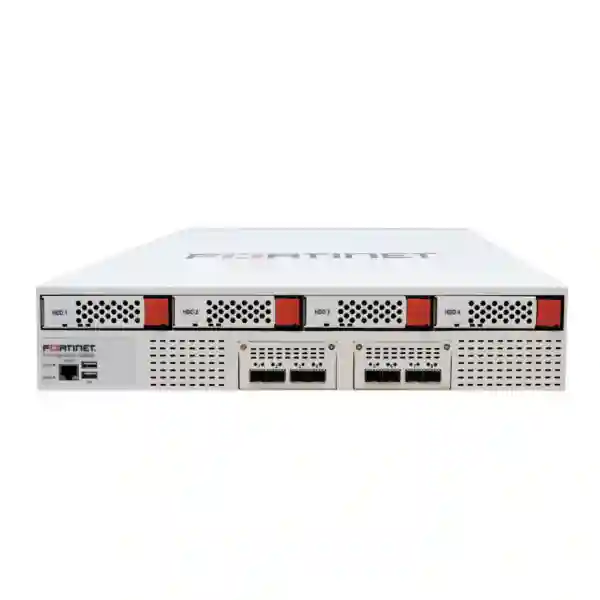
FortiSandbox FSA-3000G is a high-capacity on-premises sandboxing appliance designed for organizations that need fast, scalable analysis of suspicious files and URLs. Fortinet positions the 3000G as its fastest and most advanced FortiSandbox hardware appliance, aimed at demanding environments such as large enterprises, financial institutions, cloud storage providers and security operations teams. It combines static and dynamic analysis, advanced AI and machine learning, FortiGuard threat intelligence and Security Fabric integration to help identify emerging malware, ransomware and zero-day threats before suspicious content can move freely through the environment.
Fortinet-rated effective sandboxing throughput under its documented test methodology.
Expandable local VM capacity for diverse execution environments and analysis scale.
High-speed network connectivity for enterprise and data-center deployment designs.
Resilient local storage with hot-swappable drives on the appliance platform.
What FortiSandbox FSA-3000G does
Traditional malware controls are strongest when a threat is already known. Sophisticated attacks can instead use new files, evasive behavior, malicious documents, scripts, embedded content or previously unseen delivery techniques. FortiSandbox adds a dedicated analysis layer. Suspicious objects can be examined using multiple techniques, including static inspection and controlled dynamic execution, so security teams gain additional evidence before deciding how content should be handled. This makes the platform relevant where email, web applications, file-transfer services, endpoints and network gateways generate large numbers of objects that may require deeper inspection.
The FSA-3000G is not a replacement for every security control. It is designed to work as part of a layered architecture. Fortinet documents integrations with FortiGate, FortiMail, FortiWeb, FortiNDR, FortiEDR, FortiProxy, FortiSIEM, FortiADC, FortiClient and FortiSOAR. For organizations already using the Fortinet Security Fabric, this can create a practical workflow in which suspicious content is submitted for analysis, verdicts and intelligence are shared, and connected controls can use that information for prevention, investigation and response.
Verified FortiSandbox FSA-3000G specifications
| Area | FSA-3000G |
|---|---|
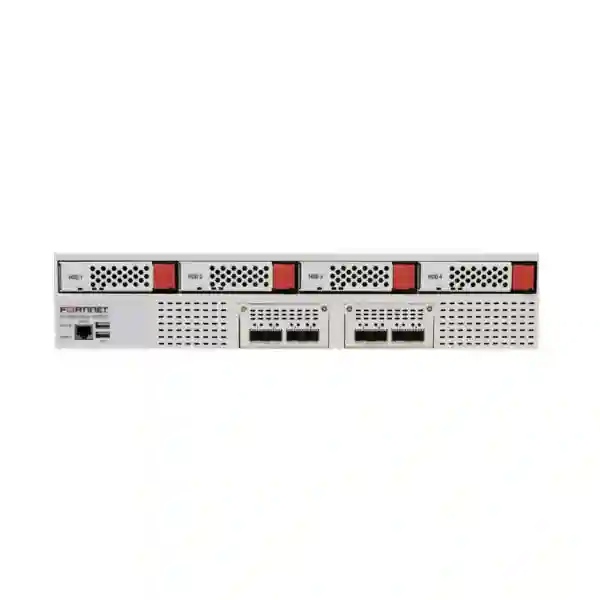
| Form factor | 2RU appliance |
| Network interfaces | 8 x 10 GE SFP+ slots |
| Storage | 4 x 2 TB RAID-10, hot swappable |
| Local VM capacity | 8–150 |
| Cloud VM expansion | 1–200, subject to licensing and supported configuration |
| Effective sandboxing throughput | 160,000 files/hour |
| Static analysis throughput | 320,000 files/hour |
| Dynamic analysis throughput | 5,700 files/hour in the current Fortinet datasheet test context |
| FortiMail throughput | 1,600,000 emails/hour |
| Sniffer mode | 9.6 Gbps |
| Power | 2 x 100–240V AC, redundant and hot swappable |
| Operating temperature | 0°C to 40°C |
Performance figures are vendor test results and should be treated as sizing references, not guaranteed production rates. Actual performance depends on file mix, analysis policy, enabled features, VM configuration, traffic patterns and software release.
Advanced AI, malware analysis and SOC workflows
FortiSandbox uses a combination of purpose-built machine learning, static analysis, dynamic analysis and threat intelligence. For a SOC, the practical value is not simply that a file is labelled malicious or clean. Analysts need context: what the object attempted to execute, what indicators were observed, whether behavior resembles a known campaign, and whether related controls have seen the same indicators. Fortinet’s current platform messaging emphasizes faster verdicts, expanded attack-chain visibility and richer threat context. In a mature deployment, sandbox findings should feed investigation and response processes rather than remain isolated in a separate console.
Organizations considering FSA-3000G should therefore plan the surrounding workflow. Identify which systems will submit files, which file types and sources matter most, how verdicts will be consumed, who reviews high-risk detections, how alerts enter the SOC process and what action connected controls should take. A high-capacity appliance delivers the most value when submission policy, escalation, logging and incident handling are defined before production rollout.
Integration and deployment planning
The FSA-3000G can fit into architectures involving email security, firewalls, web application protection, endpoint controls and security operations platforms. Before procurement, document the current Fortinet estate, firmware versions, expected submission sources, network zones, management interfaces, DNS and routing dependencies, log destinations and administrative access model. Where high availability is required, validate the supported FortiSandbox release, licensing and topology before finalizing the bill of materials.
Physical planning matters as well. The appliance is a 2RU rack system with front-to-back airflow and redundant power. Confirm rack depth, cooling, power feeds, UPS capacity, SFP+ optics and fiber type. Fortinet lists supported 10GbE SR and LR transceiver options in its ordering guidance. Procurement teams should not assume that every optic, subscription or expansion license is included with the base appliance. The quote should identify hardware, FortiCare, sandbox/AI subscriptions, VM licensing, accessories, transceivers and implementation services separately.
Related Fourteck Tanzania infrastructure
A sandbox appliance is only one part of the security architecture. Review Fourteck Tanzania’s integrated IT and cybersecurity overview for the broader environment, the Tanzania technology shop for available product categories, and the Tanzania quotation and project contact page when preparing requirements. FortiSandbox projects commonly depend on correctly sized firewalls, switching, servers or storage, rack infrastructure and operational support; these are all part of the integrated infrastructure scope described on the Tanzania site.
For regional projects, Fourteck’s network includes Fourteck Kenya, Fourteck Uganda, Fourteck UAE, Fourteck Kuwait, Fourteck Ghana and Fourteck Nigeria. These links are useful when a security program spans multiple countries and procurement or deployment coordination must account for regional sites.
FortiSandbox FSA-3000G Tanzania
Tanzania organizations evaluating FortiSandbox FSA-3000G are usually addressing a higher-order security requirement than basic perimeter filtering. The model is suited to environments where suspicious documents, executables, URLs, email attachments and uploaded files arrive at a volume that justifies dedicated enterprise sandbox capacity. Banks, telecom environments, large government or education networks, service providers, data centers, major enterprises and security operations teams may need to analyze content locally while retaining control over architecture and workflows. The 3000G’s scale—up to 150 local VMs and vendor-rated effective sandboxing throughput of 160,000 files per hour—makes sizing discussions materially different from those for smaller FortiSandbox models.
For a Tanzania deployment, begin with traffic and workflow discovery rather than a hardware-only request. Document email volumes, file-transfer platforms, web applications that accept uploads, FortiGate and FortiMail estate, endpoint security, SOC tooling, daily suspicious-object volume and peak periods. Identify whether the appliance will serve one data center or multiple business units and branches. Network design should cover 10GbE connectivity, management isolation, routing, DNS, logging and secure administrator access. Rack space, cooling and redundant power paths should be checked because this is a 2RU enterprise appliance rather than a branch device.
Quotation preparation should include the exact FSA-3000G hardware, required FortiCare and FortiGuard sandbox subscriptions, Universal VM expansion if needed, operating-system VM licensing, optics and implementation scope. Buyers should also define retention, reporting and incident-response expectations. Fourteck Tanzania can use these inputs to prepare a more meaningful solution discussion without making assumptions about stock, delivery time or license scope. For projects connecting multiple Tanzania sites, include WAN topology and security-control inventory so sandbox intelligence can be used consistently across the environment.
FortiSandbox FSA-3000G Dar es Salaam
Dar es Salaam enterprises often operate the country’s busiest corporate, financial, logistics, telecom and data-service environments, making high-volume threat analysis a relevant requirement for selected organizations. FSA-3000G can be considered where a central security team receives suspicious files from email gateways, firewalls, web-facing applications, file repositories or other Fortinet controls and needs on-premises analysis capacity. The buying question is not simply whether the appliance is powerful; it is whether the organization has enough submission volume, integration points and operational maturity to use that capacity effectively.
A Dar es Salaam project should map the data-center environment first. Confirm rack dimensions and available 2RU space, dual power feeds, UPS and cooling, 10GbE switching, compatible SFP+ optics, management VLANs and routes between submitting devices and FortiSandbox. If the organization has FortiMail protecting corporate email or FortiGate controlling internet and data-center traffic, document software versions and expected integration paths. For web portals that accept documents, assess whether FortiWeb or application workflows will submit suspicious content. SOC teams should define alert ownership, escalation and how sandbox verdicts enter SIEM or response workflows.
Procurement teams in Dar es Salaam should request a line-item quotation that separates the appliance, subscriptions, VM entitlements, optics, installation and support. This avoids treating FSA-3000G as a single-box purchase when its value depends on software rights and integration. Share expected file volumes, email load, number of users, current Fortinet products and growth assumptions with Fourteck before final sizing. Where business continuity requires a clustered or resilient design, include that requirement from the start so architecture and licensing can be checked against current Fortinet documentation.
FortiSandbox FSA-3000G Mwanza
Mwanza organizations considering enterprise sandboxing may include regional headquarters, financial operations, healthcare networks, mining-related businesses, logistics companies, education institutions and organizations with distributed branches around the Lake Zone. In these environments, a central sandbox can provide deeper analysis for suspicious content that passes through security gateways or reaches business applications. FSA-3000G is most appropriate when the requirement is large enough to justify a high-capacity appliance and when security teams have a clear plan for submitting and acting on suspicious files.
Connectivity between Mwanza sites and a central security location deserves careful attention. If branch firewalls or email systems will submit objects across WAN links, document bandwidth, latency, routing and failure behavior. Decide whether the sandbox will sit in Mwanza, in another Tanzania data center or in a regional SOC. Local placement can support control and predictable internal connectivity, while centralized placement may simplify operations; the correct design depends on data flows, governance and existing infrastructure. Avoid choosing location solely from user count because file submission patterns can differ significantly from ordinary internet traffic.
For quotation planning, include current FortiGate, FortiMail, FortiWeb, FortiClient or SOC products, software versions and anticipated integrations. Also specify rack and power conditions, 10GbE interfaces and required optics. The FSA-3000G’s scale should be matched to realistic analysis demand, not only future ambition. Fourteck can help structure the product and licensing discussion, while final performance expectations should remain aligned with Fortinet’s documented test methodology and the customer’s actual file mix, analysis policies and VM configuration.
FortiSandbox FSA-3000G Arusha
Arusha has a distinctive mix of international organizations, hospitality groups, education, professional services, regional institutions and businesses handling sensitive documents and cross-border communications. For larger environments, FortiSandbox FSA-3000G can add an advanced analysis layer for suspicious attachments, downloads and uploaded content. The strongest use case is a centralized security architecture in which multiple controls can submit objects and consume verdicts, rather than deploying the appliance as an isolated security product.
Arusha buyers should define data sensitivity and workflow requirements early. Organizations handling confidential reports, financial documents, contracts or externally supplied files may prefer on-premises analysis for governance or architectural reasons. Document how email is protected, where web traffic is inspected, whether public applications accept file uploads and how endpoints are monitored. From there, identify which systems will integrate with FortiSandbox and what response should follow a malicious verdict. The 3000G supports high analysis capacity, but operational processes determine whether that capacity translates into faster containment.
Infrastructure planning should cover 2RU rack space, front-to-back airflow, redundant power, UPS capacity, 10GbE SFP+ connectivity, management segmentation and log collection. If the organization operates sites outside Arusha, include branch connectivity and central logging in the design. Procurement should list hardware, subscriptions, VM requirements and accessories explicitly. A complete request to Fourteck should also state desired implementation services, integration testing, documentation and administrator handover. This produces a clearer quotation than asking only for an FSA-3000G price without the surrounding security architecture.
FortiSandbox FSA-3000G Dodoma
Dodoma organizations may evaluate FSA-3000G for centralized security operations, large institutional networks, government-related environments, education, financial services and enterprises that exchange substantial volumes of documents. Advanced sandboxing is useful when conventional signature-based controls need an additional behavior-analysis layer for unknown or evasive threats. The 3000G is designed for enterprise-scale workloads, so the procurement process should confirm both technical demand and operational readiness.
Start by identifying submission sources. Email attachments may arrive through FortiMail, network objects through FortiGate, web uploads through application-security controls, and endpoint or SOC workflows through other Fortinet integrations. Define which sources are in scope and estimate normal and peak submission volumes. For organizations connecting multiple offices to Dodoma, determine whether branches submit directly or whether objects pass through centralized gateways. WAN architecture, DNS, routing and management access should be documented before implementation.
Physical deployment requires appropriate rack depth, cooling and power. The appliance uses redundant hot-swappable power supplies and 8 x 10 GE SFP+ slots, so optics and upstream switching must be planned. Licensing is equally important: current Fortinet ordering guidance separates hardware from subscription and VM expansion choices. A procurement specification should therefore include the required analysis features, local VM target, support level, transceivers and deployment services. Fourteck Tanzania can discuss these requirements through its verified contact channel and help turn the technical scope into a quotation-ready bill of materials.
FortiSandbox FSA-3000G UAE
UAE enterprises, financial institutions, cloud providers and large service organizations often operate high-throughput digital environments where suspicious files arrive through email, web portals, customer uploads and collaboration systems. Fortinet specifically positions FortiSandbox 3000G for large enterprises, financial institutions and cloud storage providers that require speed, scale and on-premises document analysis. For a UAE deployment, the appliance can become a central analysis service connected to FortiGate, FortiMail, FortiWeb and security operations tools.
Data-center planning should begin with the security architecture rather than the appliance specification alone. Identify where suspicious content originates, which controls will submit it, how verdicts are distributed and whether remediation is automated or analyst-driven. High-volume environments should validate expected files per hour and peak bursts against Fortinet’s test assumptions. If multiple data centers or cloud-connected environments are involved, define routing, latency, resilience and whether one or more appliances are required. High availability requirements must be checked against the current FortiSandbox release and licensing model.
Procurement teams should request hardware, Advanced AI or Sandbox Threat Intelligence subscriptions as applicable, FortiCare, Universal VM expansion, supported optics and professional services as separate lines. UAE buyers can use Fourteck’s regional network for coordinated requirements, but availability and delivery should be confirmed at quotation time rather than assumed. For regulated or sensitive workloads, include governance, data handling and operational logging requirements in the design so the final solution supports both technical detection and the organization’s security process.
FortiSandbox FSA-3000G Uganda
Uganda enterprises with centralized data centers, large email estates, financial systems or security operations requirements can consider FSA-3000G when deeper analysis of unknown files is needed at substantial scale. A regional organization may also use a central sandbox to support multiple branches, provided network and security architecture are designed for reliable submission and verdict distribution. The platform’s value increases when it is integrated with existing Fortinet controls instead of operating as a standalone inspection island.
Uganda procurement should begin by documenting the current firewall, email, web and endpoint stack. If FortiGate devices protect branch or data-center traffic, identify which traffic flows generate sandbox submissions. If FortiMail is used, estimate attachment volume and peak mail periods. If a SOC uses FortiSIEM or FortiSOAR, define how sandbox events will be correlated and escalated. This planning helps determine whether the FSA-3000G’s enterprise capacity is justified or whether a smaller FortiSandbox model could meet the requirement.
Infrastructure teams should validate rack space, cooling, dual power, UPS, 10GbE switching and SFP+ optics. Licensing and VM expansion must be included in the bill of materials. Fourteck Uganda and the wider Fourteck network can be referenced for regional coordination, while the exact commercial offer should be confirmed for the project. For multi-country organizations connecting Uganda and Tanzania, standardize submission policy, incident severity, logging and administrator roles so sandbox intelligence is interpreted consistently across the security program.
FortiSandbox FSA-3000G Kampala
Kampala is a natural location for centralized enterprise IT and security operations in Uganda. Large banks, telecom-related businesses, service providers, NGOs, education networks and multi-branch enterprises may handle significant volumes of external documents and internet-facing content. FSA-3000G is relevant where these workflows create a need for advanced behavior analysis beyond conventional gateway scanning. Its 2RU hardware format and high VM capacity make it a data-center security platform rather than a branch appliance.
A Kampala deployment should document the path from submission to response. For example, FortiMail may send suspicious attachments for analysis; FortiGate may use sandbox intelligence in broader threat prevention; FortiWeb may protect applications that receive uploads; and SOC systems may consume events for investigation. Security architects should define what happens after a malicious verdict, including blocking, quarantine, incident creation, endpoint investigation and threat hunting. Without this workflow, high analysis throughput alone does not produce a complete security outcome.
Before requesting a quote, provide user scale, email volumes, expected file submissions, existing Fortinet products, software versions, data-center connectivity and required support term. Confirm whether the project needs only the base eight Universal VMs or expansion toward the supported local maximum. Include optics and redundant infrastructure requirements. Where Kampala is serving branches elsewhere in Uganda, include WAN connectivity and peak traffic considerations. This enables a more accurate design and avoids buying capacity or licenses that do not match the actual operating model.
FortiSandbox FSA-3000G Arua
Arua deployments are more likely to form part of a distributed organization than a very large standalone data center. For enterprises, NGOs, regional institutions or service organizations operating from Arua, the key design question is whether suspicious content should be analyzed locally or submitted to a centralized FortiSandbox platform elsewhere. FSA-3000G is a high-capacity enterprise appliance, so centralization often deserves consideration when the local workload alone does not require its scale.
If Arua users are protected by a central security stack, document WAN reliability and how submitting systems behave during connectivity interruptions. Branch FortiGate appliances, email gateways and endpoints should continue to enforce appropriate controls even if the sandbox path is temporarily unavailable. Where sensitive documents or local data-handling requirements influence architecture, security teams should decide which objects may leave the site and whether a local or national data-center deployment is preferable. These are governance and design decisions rather than simple hardware features.
For organizations that genuinely require an FSA-3000G in Arua, plan rack, power, cooling and 10GbE connectivity as carefully as in a major data center. Include support subscriptions, VM licensing and optics in procurement. A multi-site project should also standardize policies and reporting so an alert from Arua is handled consistently with Kampala or other branches. Fourteck’s Uganda presence can support the commercial discussion, while exact availability, implementation scope and delivery timing should be confirmed through the quotation process.
FortiSandbox FSA-3000G Mbarara
Mbarara businesses with regional operations, healthcare networks, education, financial services or distributed enterprise infrastructure may need stronger controls for suspicious documents and files. FSA-3000G should be considered when the organization has enterprise-scale analysis demand or when Mbarara is part of a broader centralized security architecture. The platform can complement firewall, email and endpoint controls by providing deeper static and dynamic analysis for content that requires additional scrutiny.
Sizing should focus on submissions rather than ordinary internet bandwidth. Estimate how many suspicious files arrive through email, web downloads, uploads and internal workflows, and identify peak periods. If Mbarara sites submit to a central appliance in Kampala or another data center, confirm WAN paths and security policy. If the appliance is local, verify 2RU rack capacity, airflow, redundant power, UPS and compatible 10GbE switching. Management access should be segmented and restricted to authorized security administrators.
The purchasing specification should state the exact FSA-3000G appliance, subscription tier, support term, required local VM count and accessories. Fortinet’s ordering model includes separate expansion and subscription components, so buyers should avoid assuming the base hardware includes every desired analysis environment. For organizations expanding across western Uganda, use consistent integration templates, naming, logging and incident workflows. This improves operational value and makes future branch onboarding more predictable.
FortiSandbox FSA-3000G Gulu
Gulu organizations can approach enterprise sandboxing as part of a layered cyber-defense program, particularly where users exchange many external documents or where regional systems connect to a larger national network. FSA-3000G offers substantial capacity, but a good design first asks where analysis should occur and how findings will influence security controls. For many distributed environments, a centrally hosted sandbox serving Gulu and other locations can be more operationally efficient than placing high-capacity hardware at every branch.
Security teams should map email, firewall, web application and endpoint flows. Determine which systems can submit suspicious objects, how long submissions may take over WAN links and what happens if the central sandbox cannot be reached. Local controls should retain sensible protection policies rather than depending entirely on one remote service. Where the organization has a SOC, sandbox events should be integrated into triage and incident response so analysts can correlate detections with endpoint, firewall and identity activity.
If FSA-3000G will be installed in Gulu, treat the site as enterprise data-center infrastructure: confirm rack depth, cooling, redundant power and 10GbE connectivity, and protect management access. Procurement should include FortiCare, required sandbox/AI subscriptions, VM licensing and optics. Fourteck can help discuss the commercial scope through its regional network, but stock and delivery should be confirmed for the specific project. A clear architecture document will also help future support teams understand why the sandbox is deployed and how connected controls use its verdicts.
FortiSandbox FSA-3000G Kenya
Kenya has large financial, telecom, cloud, technology and enterprise environments where high-volume file analysis can be a realistic SOC requirement. FSA-3000G is designed for precisely this class of deployment. Organizations in Nairobi or other major centers can use it as an on-premises advanced analysis layer connected to Fortinet gateways, email security, web application security and SOC tools. The appliance’s scale is particularly relevant when a central platform serves multiple business units or regional sites.
Before choosing the 3000G, establish the analysis workload. Count expected submissions, file types, email attachment volumes and web-upload workflows. Review whether dynamic analysis is required for most objects or whether pre-filtering and static analysis will reduce the dynamic workload. Confirm the number of local VMs required and whether cloud VM expansion is part of the design. For sensitive environments, document which files may be analyzed outside the appliance and which must remain on premises.
Data-center requirements include 2RU rack space, front-to-back cooling, redundant AC power and 10GbE SFP+ connectivity. Procurement should separate hardware, support, subscriptions, VM licenses, optics and professional services. Fourteck Kenya provides a regional route for product and security discussions, while the final design should be validated against current Fortinet documentation. For East African organizations spanning Kenya, Tanzania and Uganda, a common sandbox policy and SOC workflow can help teams share threat intelligence consistently without creating separate operating models for every country.
FortiSandbox FSA-3000G Kuwait
Kuwait enterprises in finance, energy, government-related services, telecom and large commercial sectors may require on-premises advanced malware analysis for sensitive or high-volume environments. FortiSandbox FSA-3000G provides a high-capacity platform for examining suspicious files and URLs and can integrate with Fortinet Security Fabric products. Its enterprise positioning makes it suitable for centralized SOC and data-center designs where analysis performance, control and scalability are important.
The design process should identify all submission channels and required response actions. Email attachments, web downloads, file uploads and endpoint detections can represent different risk profiles and volumes. Security teams should define priorities and determine how sandbox verdicts will influence blocking, quarantine or investigation. If the organization operates multiple data centers, decide whether one appliance, a resilient pair or distributed analysis is appropriate. High-availability architecture should be validated with the current FortiSandbox release and ordering guidance.
Physical and commercial planning should cover rack, cooling, redundant power, SFP+ optics, support and subscription terms. Fortinet’s ordering guide shows dedicated accessory and license items for the 3000G, so a complete quote should not be reduced to the base appliance SKU. Fourteck Kuwait can support regional procurement discussions, while availability and commercial terms should be confirmed for the requested configuration. Organizations with Gulf and African sites can also use consistent integration and SOC procedures to make threat findings easier to compare and act on across the group.
FortiSandbox FSA-3000G Ghana
Ghana enterprises with large email systems, financial operations, service-provider platforms or centralized security teams can consider FSA-3000G where suspicious-file analysis requires enterprise capacity. A sandbox is especially valuable when attackers use new or evasive files that may not yet be fully covered by conventional signatures. By combining multiple analysis methods and FortiGuard intelligence, FortiSandbox can add context to suspicious content and feed connected Fortinet controls and SOC processes.
For a Ghana deployment, define the business workflows that generate risk. Financial institutions may prioritize email attachments and document exchange; cloud and hosting providers may focus on uploaded files; large enterprises may combine web, email and endpoint submissions. Each workflow has different volumes and response requirements. Security architects should estimate peak submissions and determine which content needs dynamic execution. This makes it easier to choose VM capacity and avoid sizing from user count alone.
The 3000G requires enterprise data-center preparation, including rack space, cooling, redundant power and 10GbE interfaces. Management networks and administrative roles should be controlled carefully. Procurement should include support and subscription rights, VM expansion and optics where required. Fourteck Ghana can be used for regional coordination, while exact availability and services should be confirmed in the project quotation. For organizations linking Ghana with other African operations, standardized logging, incident severity and threat-sharing processes can make a central sandbox more valuable than separate uncoordinated deployments.
FortiSandbox FSA-3000G Nigeria
Nigeria’s large financial, telecom, energy, technology and enterprise sectors can generate the scale of digital content that makes high-capacity sandboxing relevant. FortiSandbox FSA-3000G is intended for demanding enterprise environments and can process substantial volumes of suspicious files while integrating with the wider Fortinet Security Fabric. For a major SOC, the platform can act as a dedicated analysis service supporting gateways, email security, web applications and response workflows.
Nigeria deployments should be sized from real telemetry where possible. Review daily and peak attachment counts, web and file-transfer submissions, current malware events and the proportion of content likely to require dynamic analysis. If the organization serves many branches, determine whether submissions traverse private WAN, SD-WAN or internet paths and how failures are handled. Where data residency or internal governance matters, document which content must remain on premises and how analyst access is audited.
Infrastructure teams should plan 2RU rack space, front-to-back airflow, dual power, UPS and 10GbE connectivity. Security teams should plan integrations, alert ownership and response. Procurement teams should plan hardware, support, subscriptions, VM entitlements and accessories. Treating these as one coordinated project reduces the risk of installing powerful hardware without the licenses or processes needed to use it effectively. Fourteck Nigeria provides a regional business-technology channel, while all stock, pricing and delivery details should be confirmed against the final bill of materials.
FortiSandbox FSA-3000G Seychelles
Seychelles organizations may have smaller local user populations than major regional markets, but selected financial, government, hospitality, telecom and service-provider environments can still handle sensitive external content and require advanced threat analysis. The main question is whether FSA-3000G’s enterprise capacity is appropriate locally or whether the organization should use a smaller appliance, virtual option or centrally hosted regional architecture. Sizing should be based on security workload and governance rather than country size.
For organizations with strict control requirements, an on-premises sandbox can keep analysis within a defined infrastructure boundary. Document email, web and file-transfer workflows, identify integrations with FortiGate, FortiMail or other Fortinet products, and estimate suspicious-object volumes. If the organization operates regional offices, consider whether Seychelles should submit to a larger central platform or host the analysis service itself. Connectivity resilience and the sensitivity of submitted files are key design inputs.
If FSA-3000G is selected, verify rack depth, 2RU capacity, cooling, dual power and 10GbE optics. Procurement should explicitly include subscriptions and VM licensing because the appliance’s analysis environments are part of the overall solution. Implementation should include management hardening, integration testing, logging and administrator documentation. For a regional group, common policies and response procedures help ensure that a malicious verdict in Seychelles is treated consistently with detections from Tanzania, Kenya, Uganda or other connected operations.
Quotation checklist for FortiSandbox FSA-3000G
A useful quotation request should include the appliance quantity, required support term, preferred sandbox subscription, target local VM count, Fortinet products that will integrate with the sandbox, estimated daily and peak file submissions, email volume, web-upload workflows, number of sites, high-availability requirement, rack and power environment, 10GbE optics, installation location, implementation services, documentation and administrator training. Also state whether the project is new, an expansion or a migration from an older FortiSandbox platform.
Do not assume that public reseller prices reflect Tanzania landed cost, current stock, support entitlement or the correct subscription. Enterprise security appliances are normally quoted against an exact bill of materials. Fourteck can use the checklist above to clarify the requirement before commercial pricing is prepared.
FortiSandbox FSA-3000G FAQs
What is FortiSandbox FSA-3000G?
It is Fortinet’s high-capacity FortiSandbox hardware appliance for enterprise advanced threat analysis. It uses static and dynamic analysis, AI/ML and threat intelligence to examine suspicious files and URLs and can integrate with Fortinet Security Fabric products.
How many local VMs can FSA-3000G support?
Fortinet’s current datasheet lists a local VM capacity range of 8 to 150. Expansion depends on the supported software release and appropriate licensing.
Does FSA-3000G integrate with FortiGate and FortiMail?
Yes. Fortinet documents Security Fabric integrations including FortiGate and FortiMail, along with FortiWeb, FortiNDR, FortiEDR, FortiProxy, FortiSIEM, FortiADC, FortiClient and FortiSOAR.
Is the FSA-3000G suitable for a small office?
It is designed as an enterprise-scale appliance. Smaller organizations should size FortiSandbox according to actual submission volume, integrations and operational requirements rather than selecting the largest model automatically.
What should be included in an FSA-3000G quote?
Confirm hardware, FortiCare, sandbox or Advanced AI subscriptions, Universal VM requirements, operating-system VM licenses where applicable, supported SFP+ optics, implementation services and any high-availability requirement.
Decision recap
FortiSandbox FSA-3000G is a strong fit when an organization needs enterprise-scale, on-premises advanced threat analysis and has enough file, email or application-submission volume to justify a high-capacity appliance. Its value is highest when it is integrated into a broader Fortinet security architecture and supported by clear SOC processes. Before purchase, validate workload, integrations, VM capacity, subscription scope, high availability, rack and power, optics and incident-response workflow. For Tanzania requirements, use Fourteck’s verified contact page to share the exact environment and request a quotation aligned with the intended deployment.



Reviews
There are no reviews yet.