
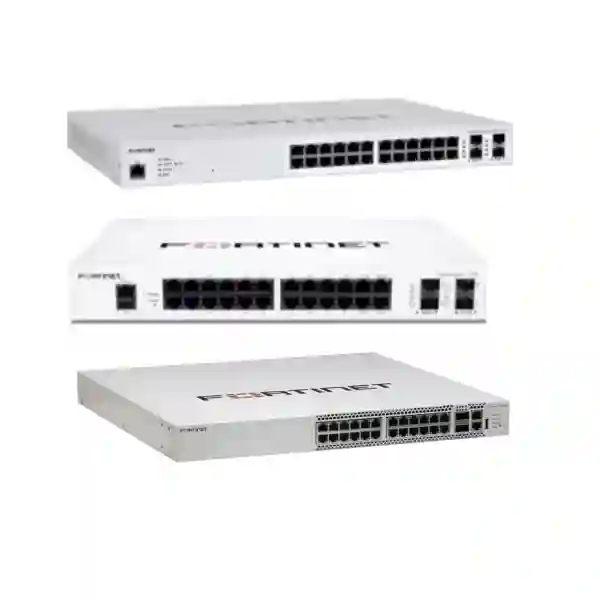
FortiSwitch 300 Series Tanzania
FortiSwitch 300 Series is designed for organizations building secure, manageable campus and enterprise Ethernet networks. Rather than treating switching as an isolated layer, Fortinet supports converged networking and security through FortiLink and FortiOS, while also providing standalone and cloud-oriented management choices across the FortiSwitch portfolio. For Tanzanian organizations planning office, campus, hospitality, education, healthcare, government, branch or multi-building networks, the practical buying decision starts with port density, endpoint mix, uplink requirements, PoE demand, resilience, management architecture and compatibility with the intended FortiGate and FortiOS environment.
Secure campus switching
Fortinet positions its campus switching family around security, performance and manageability. FortiLink can extend Fortinet Security Fabric controls to the Ethernet access layer, helping administrators combine switching visibility and policy operations with their wider Fortinet architecture.
Management flexibility
FortiSwitch platforms can operate in standalone mode or be managed through supported Fortinet management approaches. A design should be validated against the exact switch model, FortiGate platform, FortiOS release and topology before procurement.
Procurement by requirement
The 300 Series name covers a family rather than one universal specification. Buyers should request an exact model recommendation based on copper and fiber ports, access speed, uplink capacity, PoE needs, redundancy and growth targets instead of assuming every model has identical hardware.
FortiSwitch 300 Series overview
A modern campus switch has to do more than forward Ethernet frames. Organizations need consistent segmentation, endpoint visibility, controlled onboarding, reliable connectivity for users and devices, and an operational model that does not create unnecessary management silos. Fortinet describes FortiSwitch as part of its secure networking architecture, with FortiLink enabling integration between FortiGate and FortiSwitch. This approach can simplify discovery, provisioning and policy assignment where the selected products and software versions support the intended design.
For procurement teams, the most important point is to match the exact FortiSwitch model to the physical and logical network. Count current endpoints, identify expected growth, separate ordinary data ports from PoE-powered devices, document fiber runs, determine required uplink speeds, and identify resilience requirements. Wireless access points, IP phones, cameras, access-control devices, servers, printers, user workstations and IoT systems can create very different port and power profiles. A quotation should therefore be based on an endpoint schedule rather than only a desired switch quantity.
Key planning areas
Map access-port count, link speed, fiber requirements and uplink capacity to present and future traffic.
List every powered endpoint and calculate the required power budget using the exact device requirements and selected switch model.
Validate FortiGate, FortiOS and FortiSwitch compatibility, topology and management expectations before deployment.
Plan VLANs and access policies for staff, guests, voice, wireless, cameras, IoT, servers and operational systems.
FortiSwitch 300 Series Tanzania
Organizations searching for FortiSwitch 300 Series in Tanzania commonly need a campus-class switching design that can support business growth without making network operations unnecessarily fragmented. A useful starting point is a site-by-site inventory covering users, access points, IP phones, CCTV cameras, printers, servers, building systems and other wired devices. From there, the switching design can identify access-port density, fiber uplinks, PoE requirements, redundancy and the management model. For customers already using FortiGate, FortiLink may provide a particularly relevant path because Fortinet supports integrated management and security policy workflows across compatible platforms.
Tanzania deployments can range from a single headquarters to distributed facilities connected by WAN or SD-WAN. The switch selection should account for local cabling conditions, rack capacity, available power, UPS strategy, fiber distances and expansion plans. A business adding Wi-Fi, IP telephony or surveillance should avoid sizing only for today’s workstation count. The quotation should document powered-device demand, spare-port policy and expected uplink utilization so that the selected model can be evaluated against the real environment.
FourTeck can help structure a procurement request around the exact FortiSwitch model rather than treating the 300 Series as one specification. Customers should provide topology information, required port quantities, copper/fiber media, desired uplink speeds, PoE device counts and the FortiGate model where integration is planned. This reduces ambiguity and makes compatibility validation more useful before ordering.
FortiSwitch 300 Series Dar es Salaam
For businesses in Dar es Salaam, FortiSwitch 300 Series planning is often relevant to headquarters, commercial offices, hotels, education campuses, healthcare facilities, logistics operations and multi-floor buildings where the access network carries a mixture of user, wireless, voice, surveillance and IoT traffic. Dense endpoint environments benefit from disciplined port planning and clear segmentation. Before selecting a switch, document every floor or communications room, expected endpoint counts, fiber backbone links, uplink requirements and the number of PoE-powered devices.
A campus design should also consider failure domains. Instead of concentrating all requirements into a single undifferentiated switch plan, determine which users and services must remain available during maintenance or component failure. Where FortiGate and FortiSwitch are being integrated, validate the supported FortiLink topology and software compatibility for the proposed equipment. Network access controls, VLAN design and device onboarding should be planned together so the switching layer supports the organization’s security policy rather than becoming a separate operational island.
When requesting a Dar es Salaam quotation, include rack location, cabling type, fiber interfaces, PoE endpoints, existing firewall details and expansion expectations. That information allows the proposed FortiSwitch model and accessories to be checked against actual deployment needs instead of relying on a generic series-level description.
FortiSwitch 300 Series Mwanza
Mwanza organizations evaluating FortiSwitch 300 Series may be modernizing an existing LAN, adding wireless coverage, expanding surveillance, consolidating branch operations or building a new office network. The correct design begins with the application and endpoint profile. User PCs may require ordinary access connectivity, while wireless access points and cameras can add PoE demand and higher aggregate traffic. Fiber may be required between buildings or communications rooms, making uplink and transceiver planning part of the switch decision.
For distributed organizations, operational simplicity can be as important as raw port count. Fortinet’s switching architecture supports centralized approaches that can reduce the number of separate management workflows when compatible FortiGate and FortiSwitch platforms are used. However, buyers should validate the exact software and hardware combination before procurement. A network refresh is also a good opportunity to review VLAN structure, guest access, voice networks, camera isolation and administrative access controls.
A Mwanza procurement brief should state the number of switches by site, required access ports, desired spare capacity, fiber distances, uplink targets, PoE device inventory, rack constraints and current Fortinet equipment. This creates a clearer basis for model selection and quotation.
FortiSwitch 300 Series Arusha
Arusha businesses and institutions can use a FortiSwitch 300 Series evaluation to plan secure wired access across offices, hospitality properties, campuses and multi-building environments. Hospitality and guest-facing networks, for example, often combine staff systems, guest Wi-Fi, IP phones, cameras and operational devices. These should not automatically share the same network policy. A well-planned switching layer supports logical segmentation while providing the physical connectivity required by each endpoint category.
PoE deserves particular attention where access points, phones or cameras are numerous. Procurement teams should calculate the real powered-device requirement and compare it with the exact model’s supported PoE capabilities rather than assuming all members of a series provide the same budget. Uplink design is similarly important: traffic from multiple access switches can converge quickly, so fiber and uplink capacity should be sized from expected aggregate demand and future growth.
For Fortinet environments, the proposed FortiLink and FortiOS architecture should be documented before deployment. A quotation request for Arusha should include endpoint counts, network diagrams where available, existing FortiGate details, desired redundancy and any planned wireless or surveillance expansion.
FortiSwitch 300 Series Dodoma
Dodoma customers assessing FortiSwitch 300 Series may include public-sector organizations, institutions, enterprises and growing offices that need a structured access network with centralized visibility. Procurement should begin with requirements rather than a model number alone. Count wired users, wireless access points, IP phones, cameras and specialized devices; then map those endpoints to access switches and uplinks. This helps determine whether the design needs additional port density, PoE capacity or fiber connectivity.
Security planning should accompany switching design. Separate administrative, user, guest, voice, camera and IoT traffic where appropriate, define who can connect to each segment and determine how network access policies will be managed. Fortinet documents FortiLink as a way to integrate compatible FortiSwitch devices with FortiGate, supporting visibility and centralized workflows. Compatibility should be checked against the exact products and software versions in the proposed bill of materials.
For a Dodoma quotation, provide current topology, desired switch locations, rack and power information, cable types, fiber distances, endpoint quantities and expected growth. These details support a more defensible selection and reduce the risk of under-sizing.
FortiSwitch 300 Series UAE
UAE organizations evaluating FortiSwitch 300 Series typically need enterprise switching that can fit into a wider security and campus architecture. Multi-floor offices, hospitality sites, education environments, warehouses and distributed branches can generate diverse requirements for access ports, PoE, fiber uplinks and segmentation. Buyers should define the network role of each switch, identify downstream endpoint types and determine the required connection to aggregation or core infrastructure.
Where Fortinet security infrastructure is already deployed, FortiLink integration may simplify management by bringing compatible switching into FortiOS workflows. This should still be treated as an architecture decision: confirm FortiGate capacity, FortiOS compatibility, topology and operational responsibilities. Standalone or alternative Fortinet management methods may be more appropriate in some designs.
UAE procurement requests should include exact port requirements, PoE load, uplink media, transceiver needs, redundancy targets and existing Fortinet products. For related regional information, visit FourTeck UAE technology solutions and Fortinet-focused UAE resources.
FortiSwitch 300 Series Uganda
Uganda customers can evaluate FortiSwitch 300 Series for secure campus and enterprise access networks where centralized operations, segmentation and scalable Ethernet connectivity are priorities. Start by separating requirements for ordinary users, wireless infrastructure, voice, cameras, servers and IoT devices. This reveals not only the number of ports required but also PoE demand and expected traffic concentration at uplinks.
Organizations with multiple Ugandan sites should standardize design rules where practical: VLAN naming, management access, uplink conventions, spare capacity and monitoring procedures. FortiLink can be relevant when compatible FortiGate and FortiSwitch platforms form part of the same architecture, but model and version compatibility should always be validated. A standardized approach can make future additions easier to document and support.
A procurement request should include the existing firewall environment, switch quantities, endpoint schedule, fiber requirements and growth horizon. Customers can also review FourTeck Uganda solutions for regional context.
FortiSwitch 300 Series Kampala
Kampala offices, campuses and commercial facilities often need switching that can handle mixed wired and wireless access while keeping operational management consistent. A FortiSwitch 300 Series project should identify how many access ports are needed in each communications room, which devices require PoE, how traffic reaches the core or firewall and whether redundant paths are required. The resulting topology should be reviewed before choosing exact models.
Security segmentation is another key requirement. Staff, guests, phones, cameras and IoT systems can have different trust levels and access needs. Fortinet’s secure networking approach is designed to combine networking and security operations, and compatible FortiSwitch devices can be managed through FortiLink with FortiGate. The design team should document policy ownership and software compatibility before rollout.
For a Kampala quotation, provide floor plans or logical diagrams when possible, along with endpoint counts, cabling details, uplink targets and existing Fortinet appliances. This information helps convert a broad series inquiry into an exact bill of materials.
FortiSwitch 300 Series Arua
Arua organizations planning network upgrades can approach FortiSwitch 300 Series selection by first documenting the services the LAN must support. A smaller site may still have demanding requirements if it includes many access points, cameras, IP phones or building devices. Port count alone is therefore insufficient; PoE demand, uplink capacity, fiber distance and resilience can materially affect model choice.
For branches connected to a central organization, consistent configuration and visibility can reduce operational complexity. If FortiGate is already used, FortiLink integration may be considered for compatible devices, allowing switching and security workflows to be coordinated. Before procurement, verify the supported topology, software versions and management approach.
Arua buyers should provide a clear endpoint schedule and expansion estimate when requesting a quotation. Including rack, UPS and cabling information can also expose infrastructure work that should be completed before switch installation.
FortiSwitch 300 Series Mbarara
Mbarara enterprises and institutions can use FortiSwitch 300 Series as part of a structured campus access strategy, particularly where wired users, wireless access points, telephony and surveillance share the same physical network infrastructure. The design should preserve logical separation between services while ensuring uplinks can carry aggregate traffic without becoming avoidable bottlenecks.
When PoE is required, list each powered endpoint and its expected demand. This is especially important for wireless and surveillance projects where the number and class of powered devices can grow. Exact switch specifications vary by model, so procurement should use the official datasheet for the proposed unit rather than a generic family assumption.
For Mbarara, a useful quotation brief includes switch locations, port quantities, fiber/copper media, PoE inventory, current FortiGate model and expected expansion. It should also state whether centralized FortiLink management is intended.
FortiSwitch 300 Series Gulu
Gulu organizations considering FortiSwitch 300 Series should focus on creating a maintainable LAN design that can accommodate current endpoints and future additions. Schools, offices, healthcare sites and commercial facilities may all have different traffic patterns, but each benefits from an accurate inventory of users, wireless access points, cameras, phones and specialized devices.
The access network should also support the organization’s security architecture. VLANs, authentication, administrative access and device visibility should be considered during design rather than after installation. Fortinet documents secure LAN capabilities and FortiLink integration for compatible FortiSwitch and FortiGate environments, helping administrators coordinate access and security controls.
A Gulu quotation should identify exact quantities and deployment constraints. If fiber connects buildings or distant racks, specify distances and interface requirements. If PoE endpoints are planned, provide counts and device types so power requirements can be assessed against the selected model.
FortiSwitch 300 Series Kenya
Kenya customers evaluating FortiSwitch 300 Series can apply the same requirement-led process across headquarters, branches, campuses and commercial facilities. Document endpoints by type, identify high-density areas, calculate PoE needs, and map access switches to aggregation or firewall connections. This produces a clearer model-selection basis than choosing solely from headline port counts.
Fortinet’s campus switching portfolio emphasizes secure networking and management integration. Where a FortiGate environment exists, FortiLink can provide integrated management for supported combinations. Buyers should verify the exact FortiSwitch model, FortiGate platform, FortiOS version and intended topology before ordering.
Kenyan organizations can review FourTeck Kenya technology solutions for regional procurement context. A quotation request should include port and PoE schedules, fiber requirements, current network equipment and future growth expectations.
FortiSwitch 300 Series Kuwait
Kuwait enterprises looking at FortiSwitch 300 Series may be refreshing campus access, expanding wireless capacity or standardizing a Fortinet-based branch architecture. Begin with physical requirements: number of ports per rack, copper versus fiber connectivity, uplink speed, PoE devices and redundancy. Then map logical requirements such as VLANs, authentication and management access.
Integrated FortiLink management can be relevant to organizations using compatible FortiGate platforms, while other Fortinet management approaches may suit different operating models. Compatibility and licensing or support requirements should be confirmed for the exact bill of materials rather than inferred from the family name.
For regional information, see FourTeck Kuwait solutions. A detailed request helps align the proposed switch and accessories with the actual campus design.
FortiSwitch 300 Series Ghana
Ghana organizations can evaluate FortiSwitch 300 Series for enterprise access networks that need structured segmentation, visibility and scalable connectivity. Offices, education sites, hospitality environments and multi-building campuses should inventory endpoints and understand where traffic aggregates. Wireless access points and cameras can increase both PoE consumption and uplink demand, making those calculations important before procurement.
If the network uses FortiGate, a FortiLink-based architecture may simplify compatible switch management and policy operations. The exact FortiOS and hardware combination must be validated. Organizations should also define resilience requirements, management access and monitoring practices as part of the design.
For Ghana regional context, visit FourTeck Ghana. Provide endpoint counts, topology, PoE requirements and fiber needs when requesting a model recommendation.
FortiSwitch 300 Series Nigeria
Nigeria deployments can range from individual enterprise sites to large distributed organizations. FortiSwitch 300 Series selection should therefore be based on each site’s role and endpoint density. A headquarters may require higher aggregation capacity and resilience, while a branch may prioritize standardized management and sufficient PoE for access points, phones and cameras.
Segmentation and access policy should be designed alongside switching. Fortinet’s secure networking model allows compatible FortiSwitch devices to integrate with FortiGate through FortiLink, providing a path toward coordinated network and security operations. Validate compatibility, topology and support requirements before finalizing procurement.
Customers can consult FourTeck Nigeria solutions. For an accurate quotation, include port schedules, PoE inventory, uplink media, current Fortinet platforms and expansion targets.
FortiSwitch 300 Series Seychelles
Seychelles organizations evaluating FortiSwitch 300 Series may need secure switching for hospitality, commercial, institutional or multi-site environments. Network design should account for the practical location of communications rooms, fiber links between buildings or floors, wireless density, surveillance systems and IP telephony. These factors influence port count, PoE requirements and uplink capacity.
Operational simplicity is important where IT resources are distributed across sites. Compatible FortiSwitch and FortiGate deployments can use FortiLink for integrated management, but the exact design should be checked against current Fortinet documentation. Buyers should also define spare capacity and replacement strategy so future expansion does not immediately force another redesign.
A Seychelles quotation request should describe the site topology, endpoint types, PoE quantities, fiber requirements and desired management architecture. This gives the supplier enough information to identify the correct model rather than relying on a generic series description.
Related FourTeck Tanzania resources
For broader security planning, explore FourTeck Tanzania technology solutions. FortiSwitch deployments are commonly designed alongside FortiGate security, wireless access, structured LAN segmentation and branch connectivity. Customers should use the Tanzania site search and product navigation to identify currently published Fortinet and networking pages relevant to their architecture; URLs should be verified before being added to procurement documentation.
Quotation checklist
For a useful FortiSwitch 300 Series quotation, provide: required switch quantity; preferred or existing model references; access-port count per location; copper and fiber requirements; uplink speed targets; PoE endpoint types and quantities; current FortiGate model and FortiOS release where known; VLAN and segmentation requirements; rack and power constraints; redundancy expectations; transceiver requirements; and expected growth over the planned service life. Where details are unknown, provide a network diagram or endpoint inventory so the requirements can be clarified before a model is selected.
Frequently asked questions
Can FortiSwitch 300 Series be managed with FortiGate?
Fortinet supports FortiLink management between compatible FortiSwitch and FortiGate platforms. The exact switch, FortiGate, FortiOS version and topology should be validated against current compatibility documentation.
How do I choose the correct 300 Series model?
Base selection on access-port count and speed, uplinks, copper/fiber media, PoE requirements, resilience, management method and expected growth. Do not assume every model in the family has the same interfaces or capacity.
What information is needed for a quotation?
Provide site count, endpoint quantities, port requirements, PoE devices, fiber links, uplink targets, existing Fortinet equipment and desired redundancy. A topology diagram is especially useful for multi-switch deployments.
Decision recap
FortiSwitch 300 Series should be evaluated as part of the complete LAN architecture, not as an isolated box purchase. Confirm exact model specifications, FortiLink compatibility, port and PoE requirements, uplinks, segmentation and growth before ordering. A requirement-led bill of materials gives procurement and technical teams a common basis for comparison and reduces avoidable design changes during deployment.
Plan your FortiSwitch deployment
Share your endpoint count, existing FortiGate environment, fiber requirements and network diagram with FourTeck to prepare a model-focused discussion and quotation request for FortiSwitch 300 Series.




Reviews
There are no reviews yet.