
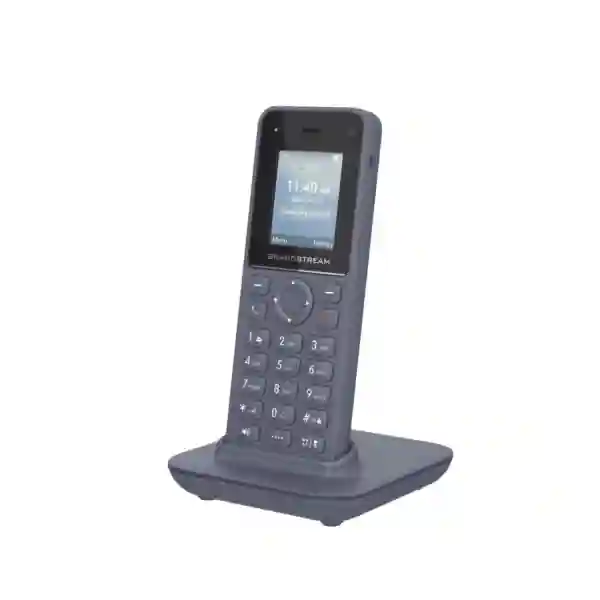
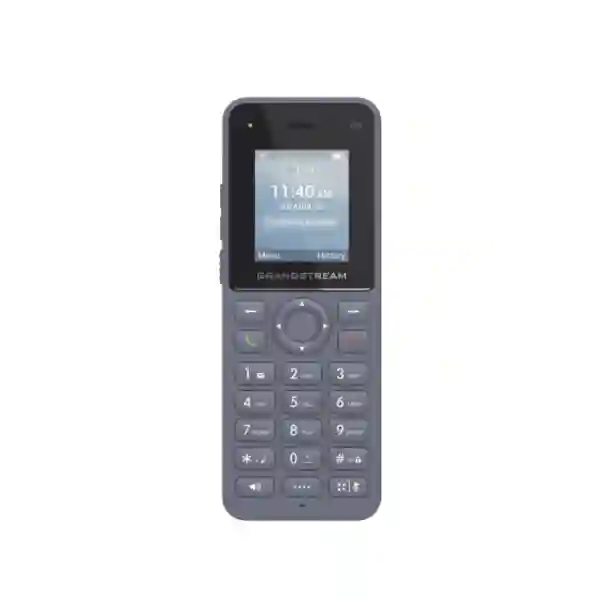
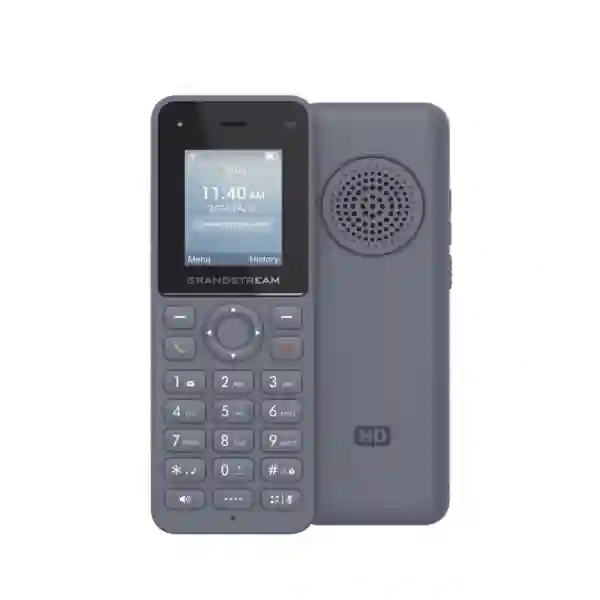
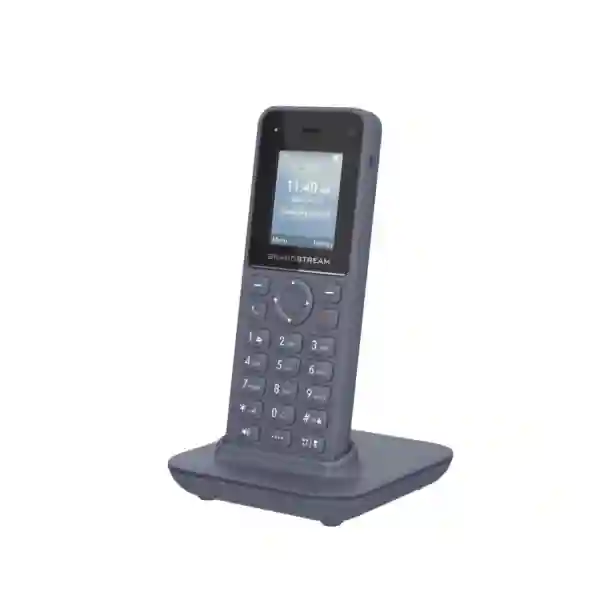
Grandstream WP816 Cordless Wi-Fi IP Phone Tanzania
The Grandstream WP816 is designed for people who need an extension that moves with them instead of staying on a desk. It combines dual-band Wi-Fi 6, SIP telephony, Bluetooth, HD voice, fast USB-C charging and enterprise roaming support in a compact handset. For Tanzanian businesses, that makes it a practical endpoint to consider for reception support, retail floors, clinics, warehouses, hospitality teams, security staff, supervisors and other roles that regularly move between work areas while still needing direct access to the company phone system.
*Grandstream states 6 hours of talk time and 120 hours of standby as laboratory data. Real battery performance depends on signal conditions, configuration, usage and battery age.
Quick answer: what is the Grandstream WP816?
The WP816 is a cordless SIP handset that connects directly to an existing Wi-Fi network rather than depending on a dedicated DECT base. Grandstream specifies integrated dual-band 802.11a/b/g/n/ac/ax Wi-Fi on 2.4GHz and 5GHz, support for 802.11k/r/v roaming, two SIP accounts and two lines, a 1.77-inch 128×160 colour display, Bluetooth 5.0, a 3.5mm headset interface, USB-C charging, push-to-talk, a proximity sensor, vibration, an accelerometer and an emergency button. It supports common voice codecs including Opus, G.722, G.711, G.729, G.726, G.723.1 and iLBC, while Grandstream’s current datasheet also lists OpenVPN and WireGuard VPN support, WPA3 enterprise and personal security, OWE, TLS, SRTP and 802.1X-related capabilities.
The key buying question is not simply whether the handset has Wi-Fi 6. Successful deployment depends on the quality of the wireless network, roaming design, PBX or hosted SIP platform, user roles, call flows and expected movement pattern. A WP816 deployed on a properly planned voice-ready WLAN can give staff an extension that follows them across coverage areas. A handset placed on congested or poorly designed Wi-Fi may still experience call quality issues. Before ordering quantities, review access-point coverage, channel planning, VLANs, QoS, authentication method, SIP compatibility and charging routines. FourTeck can discuss the handset as part of a broader voice and network requirement rather than treating it as an isolated device.
Verified Grandstream WP816 specifications
| Wireless | Dual-band Wi-Fi 6, 802.11a/b/g/n/ac/ax on 2.4GHz and 5GHz; 802.11k/r/v roaming support |
|---|---|
| SIP capacity | 2 SIP accounts, 2 lines |
| Display | 1.77-inch 128×160 colour LCD with dual-colour MWI |
| Audio | HD handset audio, dual microphones, AEC, Noise Shield and current-datasheet AI noise cancellation; Opus and other SIP voice codecs |
| Bluetooth | Integrated Bluetooth 5.0 |
| Battery | 1500mAh lithium-ion; 6 hours talk and 120 hours standby stated as laboratory data |
| Ports | USB-C charging with fast-charging support; 3.5mm CTIA headset interface |
| Security & network | WEP, WPA, WPA2, WPA3 Enterprise/Personal, OWE; TLS/SRTP, 802.1X, SCEP; OpenVPN and WireGuard listed by Grandstream |
| Provisioning | GDMS/TR-069 or AES-encrypted XML configuration files; firmware via FTP/FTPS/TFTP/HTTP/HTTPS |
| Physical | Handset 135 × 49 × 15.5mm; handset weight 82g excluding battery; charger base 85 × 85 × 25.8mm |
Why businesses choose a Wi-Fi cordless SIP handset
Mobility without a fixed desk
Users can carry the handset through Wi-Fi-covered work areas while keeping a business extension, making it relevant for supervisors, security teams, retail staff, clinic personnel and warehouse operations.
Reuse of an enterprise WLAN
Where a voice-ready Wi-Fi network already exists, the handset can operate on that infrastructure. This can simplify mobility planning, but it also makes WLAN design, roaming and QoS important parts of the phone project.
Centralized device management
Grandstream supports centralized management through GDMS. For larger deployments, consistent configuration, firmware control, naming, SIP templates and troubleshooting procedures can reduce manual administration.
Voice-focused controls
Push-to-talk, a quick-access key, soft keys, Bluetooth headset support, a 3.5mm jack, call transfer, hold, forward, call park and conferencing give the handset practical business-telephony functionality.
Deployment note: Wi-Fi quality determines voice quality
A WP816 should be evaluated as part of the WLAN, not just as a telephone. Voice is sensitive to packet loss, latency, jitter and roaming gaps. A general-purpose Wi-Fi network that feels acceptable for email may still create audible problems during live calls. For mobile voice, review RF coverage, access-point density, channel reuse, transmit power, band steering, roaming behaviour, SSIDs, security policy and QoS. Users moving through stairwells, corridors, warehouses, clinics or multi-floor offices may expose coverage gaps that stationary laptop users never notice.
If the existing environment needs improvement, start with the wider FourTeck Tanzania services portfolio, which covers networking, Wi-Fi, IP telephony and integrated infrastructure planning. Buyers comparing available technology categories can also review the FourTeck Tanzania shop before preparing a combined handset, PBX and wireless requirement.
Compatibility, PBX integration and provisioning
The WP816 is a SIP endpoint. That means buyers should confirm interoperability with the intended IP PBX, hosted voice service or SIP platform before a large rollout. Grandstream documents SIP RFC3261 support, multiple codecs, DTMF methods, server redundancy and failover, call features and downloadable phonebooks. In a Grandstream ecosystem, the handset can be paired with suitable UCM environments and managed through Grandstream tooling; in third-party SIP environments, registration settings, codec policy, transport security, feature codes and provisioning methods should be tested against the provider or PBX requirements.
For enterprise rollouts, create a pilot configuration before shipping dozens of handsets to users. Validate SIP registration, inbound and outbound calls, transfer, hold, voicemail access, caller ID, emergency dialing policy, Wi-Fi roaming, headset pairing, battery routine and firmware version. Confirm whether the organization will use personal or enterprise Wi-Fi authentication, whether voice traffic is isolated on its own VLAN, and how credentials are protected. If certificates, 802.1X, WPA3 Enterprise, SRTP or TLS are part of the security design, test them in the actual production framework rather than assuming defaults will fit.
For a broader regional reference on this exact model, see the Grandstream WP816 Africa product page. It is useful for buyers coordinating multi-country requirements while this Tanzania page focuses more deeply on local and regional procurement considerations.
Grandstream WP816 Tanzania
For organizations sourcing the Grandstream WP816 in Tanzania, the strongest use case is mobility across a managed Wi-Fi environment where staff still need access to normal business calling. A fixed desk phone works well for reception, finance and office-based staff, but many roles are not desk-bound. Retail supervisors move between counters and stock areas, security staff patrol buildings, warehouse teams move between aisles and loading points, healthcare staff change rooms, and hospitality teams work across reception, back-office and service areas. In those situations, a Wi-Fi SIP handset can reduce dependence on returning to a desk to answer or place calls. The WP816 is especially relevant where the business already operates an enterprise wireless network and wants telephony to use the same controlled infrastructure.
Procurement should begin with the system around the handset. Confirm the PBX or hosted SIP platform, number of extensions, expected concurrent calls, Wi-Fi coverage, access-point model, roaming configuration, VLANs, QoS, authentication method and charging locations. A buyer who orders handsets without checking the WLAN can discover that coverage is strong in office areas but weak in corridors, staircases, store rooms or outdoor transition zones. A short pilot with a real user walking the normal route is more valuable than a desk-only registration test. During the pilot, check call continuity while moving between access points, audio quality at the edge of coverage, battery consumption through a shift and whether Bluetooth or wired headsets are required.
For Tanzania deployments, also plan practical lifecycle details: spare charging positions, user labeling, configuration backup, firmware management, replacement batteries where appropriate, and a documented process for lost or damaged units. Grandstream’s current documentation lists a 1500mAh battery, USB-C charging, a charging base and a belt clip in the package. The phone itself is not positioned by Grandstream as a weatherproof model, so buyers needing harsh-environment protection should compare rugged alternatives rather than assuming the WP816 is suitable for rain, dust-heavy yards or high-impact field work.
FourTeck Tanzania can review the requested quantity alongside IP PBX, access point, switching and headset requirements. Availability, price, warranty route and delivery terms should be confirmed in the quotation rather than assumed from online content. The FourTeck Tanzania technology overview explains how voice, Wi-Fi, switching and security fit into a coordinated business network, which is the right planning approach for a mobile SIP deployment.
Grandstream WP816 Dar es Salaam
Businesses evaluating the Grandstream WP816 in Dar es Salaam often have a mix of office, retail, warehouse, hospitality and service environments where users move between rooms or departments. In a multi-floor office, a cordless Wi-Fi SIP phone can help facilities, IT, operations and supervisors remain reachable while away from their desks. In a retail or showroom setting, a floor manager can answer internal or external calls while assisting customers. In a warehouse or distribution environment, a supervisor can communicate without returning to a fixed extension. The WP816 is designed for this type of mobility, but the experience depends on a well-planned wireless network, particularly when a caller walks between access-point coverage areas.
A Dar es Salaam deployment should therefore include a walk-test of the actual facility. Map areas where calls must remain active, including lift lobbies, corridors, back rooms, loading areas and stairwells. Check whether 5GHz coverage is strong enough across those routes and whether 2.4GHz will be used as a fallback in some zones. Grandstream supports 802.11k/r/v roaming on the WP816, but those features work best when the access-point infrastructure and WLAN configuration are designed to support roaming correctly. Voice traffic should also be considered in the QoS policy, and guest Wi-Fi should be kept separate from business voice and internal systems.
For procurement, list the handset quantity by department, the number of SIP extensions, PBX brand and version, SSID/security method, headset requirement and whether centralized provisioning is expected. This enables a quotation to address more than the handset itself. Some deployments may need wireless optimization, managed switches, firewall policy changes or PBX configuration before the phone can perform consistently. Larger projects should define a standard handset profile so every unit receives the same Wi-Fi, SIP, firmware and security settings with only extension-specific changes.
Because the WP816 uses a rechargeable battery and charging base, user workflow matters too. Identify where handsets will be charged, whether a device is assigned to one employee or shared between shifts, and how spare devices are handled. Grandstream’s laboratory figure of 6 hours talk time should not be treated as a guaranteed shift duration under every condition; actual usage, roaming, signal strength and battery age can change runtime. A pilot remains the best way to confirm operational fit before a larger Dar es Salaam rollout.
Grandstream WP816 Mwanza
For Mwanza organizations, the Grandstream WP816 can be considered where business users need a movable SIP extension across an indoor Wi-Fi footprint. Suitable scenarios may include hotels, healthcare facilities, retail operations, education, offices, logistics points and service businesses where staff regularly leave a fixed desk. The handset’s two SIP accounts and two lines allow a user to carry business calling functions with them, while Bluetooth and a 3.5mm headset interface can support hands-free working for roles that spend significant time on calls. Push-to-talk can also be useful for teams that want fast voice coordination, subject to the way the feature is configured within the environment.
The key technical question is whether the existing Wi-Fi network is ready for real-time voice. A site may have adequate internet browsing but still suffer from roaming delays, channel congestion or dead zones. For Mwanza sites with long corridors, thick walls, multiple buildings or large storage areas, survey coverage from the perspective of a moving handset. Voice tests should be made during busy periods, not only when the network is quiet. If the site relies on several access points, confirm consistent SSID, security and VLAN policy, then test calls while crossing between cells. Grandstream’s 802.11k/r/v capabilities can support more efficient roaming when paired with compatible infrastructure and correct configuration.
Procurement teams should also verify PBX integration. Document whether the organization uses an on-premises IP PBX, a hosted SIP service or another unified communications platform. Confirm authentication credentials, transport, codecs, call routing and any provider restrictions. If remote management is required, decide whether GDMS or another approved workflow will be used and who owns the configuration. That decision affects onboarding, firmware updates and troubleshooting long after the original purchase.
When requesting a quote for WP816 units in Mwanza, include quantity, desired deployment date, user roles, PBX details, current access-point environment, charging requirements and whether configuration assistance is needed. This gives the supplier enough context to identify dependencies and avoid a handset-only quote that overlooks the network or telephony platform. Pricing, stock position, logistics and warranty terms should be confirmed at quotation stage because they can change with order size and supply route.
Grandstream WP816 Arusha
The Grandstream WP816 can fit Arusha businesses that need staff mobility without giving up the structure of a SIP telephone system. Hospitality properties, tour operators, offices, clinics, retail businesses and multi-room service environments may have employees who spend much of the day away from a desk. A portable Wi-Fi IP phone can keep those users on an extension while they move through covered areas, helping teams use internal dialing, transfer calls and participate in normal PBX workflows rather than relying only on personal mobile numbers.
In hospitality or guest-facing environments, wireless design deserves particular attention because a single building can include guest networks, staff networks, back-of-house areas and outdoor transitions. The WP816 should normally use a business SSID with controlled access rather than an open guest network. Keep SIP traffic and administrative access protected, define VLAN and firewall policies, and confirm that the access-point design provides continuous coverage along staff routes. A handset may register successfully in reception but lose quality near service corridors or staircases if coverage planning focused only on guest internet usage.
The WP816’s compact 1.77-inch screen, physical keypad and configurable controls suit users who need straightforward calling rather than a smartphone-style interface. Bluetooth 5.0 and the 3.5mm interface provide headset options, while USB-C charging can simplify everyday charging compared with older connector types. Buyers should nevertheless match the model to the role. If staff need extended battery life, a larger display, more SIP accounts or rugged weather protection, compare other models in the Grandstream WP family before standardizing on the WP816.
For an Arusha quotation, provide handset count, PBX type, current Wi-Fi platform, number of buildings or floors, expected movement area and whether centralized provisioning is required. If the requirement is part of a larger office or hospitality upgrade, include switches, access points, firewall, PBX and headsets in the same discussion. This makes it easier to assess the complete voice path instead of treating call quality as a handset-only responsibility. Confirm current commercial terms and availability in writing before project scheduling.
Grandstream WP816 Dodoma
Organizations considering the Grandstream WP816 in Dodoma can use it as a mobile SIP endpoint for staff who regularly move between offices, meeting areas, reception points, stores or operational spaces. Government-related offices, professional services, healthcare, education, retail and logistics environments may all have roles that are poorly served by a fixed telephone. The WP816 provides a physical handset experience while using the enterprise Wi-Fi network, making it attractive where the organization wants mobility without moving every call to a personal smartphone.
A good Dodoma deployment starts by confirming network readiness. Voice requires stable coverage and predictable roaming, so test the handset across the paths employees actually walk. If the organization is using older access points or a network built for light data use, it may need optimization before adding Wi-Fi voice. Review channel allocation, signal overlap, roaming settings, DHCP behaviour, VLAN design and QoS. If voice and data share the same SSID or VLAN, confirm that policies still protect call performance during busy periods. If 802.1X or WPA3 Enterprise is part of the security design, validate enrollment and authentication carefully on a pilot handset.
The PBX side matters equally. Define the extension plan, inbound call routing, voicemail, transfer behaviour and any ring groups that the mobile user must join. The WP816 supports two SIP accounts and two lines, so it is best suited to users whose call requirements fit that capacity. Grandstream’s current documentation also lists server redundancy and failover features, but the overall resilience of the service depends on the PBX, network and internet architecture. For critical operations, include power backup for switches, access points, PBX and internet equipment, because a charged handset cannot make network calls if the supporting infrastructure is offline.
When requesting procurement support in Dodoma, specify quantity, user departments, PBX brand, Wi-Fi equipment, floor plan or rough coverage description, headset needs and preferred management method. This information supports a more accurate solution discussion. Pricing, delivery timing, warranty path and configuration scope should be confirmed in the final quotation, especially for project quantities or phased rollouts.
Grandstream WP816 UAE
UAE buyers evaluating the Grandstream WP816 often operate mature IP telephony and Wi-Fi environments where the main requirement is user mobility inside offices, retail sites, warehouses, clinics, hotels or multi-floor commercial facilities. The WP816 can be attractive when a business wants a dedicated voice handset that roams across Wi-Fi rather than assigning every mobile worker a smartphone. Its two SIP accounts, Wi-Fi 6 support, Bluetooth 5.0, USB-C charging, push-to-talk and HD voice features create a straightforward cordless endpoint for roles that need dependable access to PBX calling throughout a site.
For UAE projects, confirm interoperability with the chosen PBX or hosted SIP service and any telecom-provider conditions before deployment. Many organizations use SIP platforms behind managed firewalls, VLANs and enterprise authentication. A pilot should validate registration, codec negotiation, DTMF, outbound and inbound calling, transfers, voicemail access and security settings. If the network uses WPA3 Enterprise, 802.1X, TLS or SRTP, confirm the exact credentials and certificate workflow. Grandstream’s current datasheet lists these capabilities, but implementation details remain environment-specific.
Dense buildings can create a different challenge: too many access points or poorly tuned RF can be as problematic as too little coverage. Voice roaming benefits from planned cell overlap, coordinated channels and sensible transmit power. In warehouses, high shelving and moving inventory can alter RF behaviour; in hotels, guest Wi-Fi traffic can create capacity peaks; in clinics and offices, users may cross several access points during a single call. Evaluate the handset while moving under real conditions.
Commercial buyers should request current price, availability, warranty route and delivery terms based on quantity rather than relying on a fixed online figure. If the UAE order forms part of a multi-country rollout, standardize firmware, provisioning templates, naming and support procedures across sites. FourTeck’s broader regional network can help frame the same model for Africa-based deployments while keeping each country’s logistics and network conditions separate.
Grandstream WP816 Uganda
The Grandstream WP816 is relevant to Ugandan organizations that need cordless business calling over an existing Wi-Fi network. Offices, hospitality, retail, healthcare, schools, logistics operations and security teams may all have users who move between rooms or operational zones. Instead of tying those users to a desk extension, the WP816 lets a configured SIP account travel with the handset anywhere the approved WLAN provides reliable coverage. The phone’s compact form, physical keypad, Bluetooth, push-to-talk and charging base suit users who want a dedicated communications device rather than a general-purpose smartphone.
For Uganda deployments, wireless coverage should be tested before ordering large quantities. Voice is less tolerant of gaps than web browsing, so an employee walking from reception to a store room may reveal problems that ordinary office users never report. Confirm signal quality in corridors, stairwells, back offices, warehouses and transition areas. Grandstream supports Wi-Fi 6 and 802.11k/r/v on the WP816, but seamless experience also depends on compatible access points and correct configuration. A WLAN survey or structured walk-test can help determine whether access-point repositioning, channel changes or additional coverage are needed.
PBX and SIP readiness should also be part of procurement. Identify extension count, PBX brand, SIP provider, codec policy, DTMF method and required features such as call transfer, ring groups or voicemail. If a site uses centralized management, define how configurations and firmware are controlled so handsets remain consistent over time. Battery and charging routines should be documented for shared devices, especially in shift-based operations.
For organizations coordinating Uganda-specific technology needs, the FourTeck Uganda site provides regional IT and communications context. When requesting the WP816, include quantity, city, user role, existing PBX and wireless environment so quotation and compatibility discussion can focus on the actual deployment rather than only the handset specification.
Grandstream WP816 Kampala
In Kampala, the Grandstream WP816 can serve as a mobile extension for businesses with staff moving through offices, retail floors, clinics, hotels, warehouses or service facilities. The main value is continuity of business calling across a managed Wi-Fi network: users can carry a dedicated SIP handset instead of depending on a fixed desk telephone. Two SIP accounts and two lines cover straightforward business requirements, while Bluetooth 5.0 and a 3.5mm headset interface provide options for hands-free users. The customizable push-to-talk key can support rapid team communication when configured as part of the intended workflow.
Kampala sites may range from compact offices to larger multi-floor facilities. The network design should reflect the building. Thick walls, metal shelving, lifts and crowded RF environments can all affect roaming. Before rollout, test a live call while walking the routes staff use during the day. Confirm that the handset remains on an appropriate access point, that call audio does not break during handoff and that voice remains clear during periods of high Wi-Fi use. If problems appear, adjust the WLAN rather than assuming replacement handsets will solve an infrastructure issue.
From a systems perspective, verify SIP registration against the selected PBX, then test inbound and outbound calls, transfers, hold, conference requirements and voicemail. Grandstream’s documentation includes a range of codecs and security mechanisms, but the production setting should match the PBX and provider. For large groups, use centralized provisioning where appropriate so Wi-Fi, firmware and telephony parameters remain consistent. Maintain a controlled process for changing extensions, passwords and ownership when staff move roles.
A useful quote request for Kampala includes handset quantity, PBX type, current access points, approximate coverage area, user movement pattern, headset requirement and desired deployment date. Commercial terms such as price, availability and warranty should be verified at order time. If the handset is only one part of a broader voice upgrade, include PBX, switching and wireless requirements in the same scope so the final solution can be tested end to end.
Grandstream WP816 Arua
For businesses and institutions in Arua, the Grandstream WP816 can be evaluated where teams need a dedicated cordless voice endpoint across Wi-Fi-covered indoor areas. A mobile SIP handset can be useful for operations staff, clinic teams, warehouse supervisors, hospitality personnel, school administrators or security users who cannot remain at a fixed desk. Because the WP816 uses Wi-Fi rather than a dedicated DECT radio system, it can fit sites that already have a managed WLAN and want to extend business telephony to moving users.
The most important preparation is network validation. Check whether coverage is consistent across the complete intended work area, including less obvious spaces such as storerooms, corridors, stairs and entrances. Wi-Fi signal bars alone do not prove voice readiness; a better test is a live call made while walking through the site during normal traffic conditions. Grandstream supports Wi-Fi 6 and roaming-related 802.11k/r/v standards, but access points must also be configured appropriately. If the network has only one access point covering a wide area, signal strength may fall too low for reliable calling at the edges.
Power and charging are practical considerations for Arua operations that use shared devices. The handset includes a charging base and a 1500mAh lithium-ion battery. Grandstream’s stated 6-hour talk and 120-hour standby figures are laboratory measurements, so businesses should measure real use under their call volume and Wi-Fi conditions. Shared-shift teams may need a clear charging routine or extra handsets to avoid gaps. Protect chargers and bases from areas where dust, moisture or accidental impact are likely, because the WP816 is not specified as a weatherproof rugged handset.
When requesting a quotation, provide the exact number of handsets, PBX or SIP platform, access-point environment and whether configuration support is required. If remote IT staff will manage the phones, define the management workflow before deployment. Commercial details should be confirmed in writing for the actual order quantity, destination and supply route rather than inferred from another country’s listing.
Grandstream WP816 Mbarara
The Grandstream WP816 can support Mbarara organizations that want staff to remain connected to the business phone system while moving around the workplace. Hospitals and clinics, hotels, education, retail, offices and distribution environments can all include roles where a fixed desk phone is inconvenient. A cordless Wi-Fi SIP handset lets those users carry an extension through covered zones while keeping familiar telephony functions such as hold, transfer, forward, call waiting and voicemail access through the PBX.
For a reliable result, begin with RF and network planning. Identify how many access points serve the facility, what frequency bands are available, whether SSIDs are consistent and how roaming is configured. The WP816 supports dual-band Wi-Fi 6 and 802.11k/r/v, but those features cannot compensate for a major coverage hole. Multi-building or long-corridor sites may need extra access points or different placement. Voice VLANs and QoS can help separate and prioritize traffic, while secure authentication protects the endpoint from joining inappropriate networks.
The telephony platform should be tested with a small pilot. Register one or two WP816 handsets, then verify calling, transfer, voicemail, caller ID, DTMF and any ring groups used by the intended team. If the organization expects secure SIP, confirm TLS and SRTP operation with the PBX. If remote access or VPN features are part of the design, validate them against the actual security policy and firmware rather than assuming a generic configuration will work. Keep firmware and handset templates controlled as the deployment grows.
A Mbarara procurement request should include quantity, site description, existing PBX, number of expected concurrent calls, Wi-Fi platform, headset preference and deployment timeline. Buyers should also state whether the project needs only devices or includes configuration, wireless improvement and PBX work. This distinction affects the scope more than the handset price alone. Final stock, pricing, warranty and logistics should be confirmed at quotation stage.
Grandstream WP816 Gulu
For Gulu buyers, the Grandstream WP816 is best considered as part of a business communications system rather than as a standalone wireless phone. The handset requires an appropriate SIP service or PBX and a stable Wi-Fi network. When those elements are in place, it can give mobile staff a portable extension for use inside offices, hotels, clinics, stores, campuses, warehouses and other covered facilities. The handset’s physical keypad and dedicated calling controls can be easier for task-focused users than a smartphone interface, especially where the device is intended only for work communication.
Wireless quality should be tested from end to end. Walk the site with an active call, checking room transitions, stairways, back areas and any locations where employees regularly work. If a call drops or audio becomes unstable at a specific point, investigate access-point coverage, interference, roaming configuration and network load. Wi-Fi 6 improves efficiency and the WP816 includes 802.11k/r/v roaming capabilities, but performance still depends on the surrounding WLAN. Managed access points with coordinated configuration are generally easier to tune for voice than unrelated consumer devices.
Gulu organizations with limited local IT staffing should also plan remote administration before rollout. Grandstream supports GDMS and other provisioning mechanisms, giving administrators options for managing larger groups of devices. Decide who is responsible for SIP credentials, firmware updates, Wi-Fi changes, factory resets and reassignment of handsets. Documenting these tasks is particularly important for shared phones or sites where units may move between departments.
For procurement, request the correct model name WP816 and include the needed quantity, location, PBX platform and project context. If the requirement involves Wi-Fi optimization, PoE switching, firewall rules or a new IP PBX, state that clearly so the quotation can include dependencies. Avoid assuming a fixed delivery date or stock position until the supplier confirms it for the order. Similarly, review warranty terms and supply route in the final commercial document rather than using another market’s policy as a substitute.
Grandstream WP816 Kenya
Kenyan organizations can use the Grandstream WP816 as a cordless SIP endpoint wherever staff need to move around a Wi-Fi-covered facility. Common project types include offices, healthcare, hospitality, retail, logistics, education and security operations. The handset supports two SIP accounts and two lines, dual-band Wi-Fi 6, Bluetooth 5.0, USB-C charging, a 3.5mm headset jack and configurable push-to-talk. These features make it a focused business voice device rather than a general mobile computer.
In Nairobi and other dense commercial environments, RF planning can be critical. Nearby wireless networks, high client counts and overlapping channels may affect voice more noticeably than ordinary data traffic. Run a pilot during real operating hours and verify roaming between access points. For warehouses or industrial-style buildings, test around shelving and loading areas. For hotels and campuses, separate guest connectivity from staff voice traffic and keep business credentials protected. Grandstream’s support for 802.11k/r/v can assist roaming when paired with compatible WLAN infrastructure.
From the telephony side, verify the PBX or hosted SIP provider before bulk deployment. The WP816 supports standard SIP and common codecs, but provider-specific settings, dial plans and security requirements can vary. Test call transfer, DTMF, voicemail, caller ID and any required queue or ring-group behaviour. Centralized management becomes valuable when several sites or many handsets are involved because it reduces configuration drift.
For Kenya-specific procurement context, visit FourTeck Kenya. A useful quote request should include handset quantity, destination, PBX brand, Wi-Fi platform, user role, headset requirement and whether configuration assistance is needed. Confirm current pricing, availability, warranty and logistics in the actual quotation. If the requirement spans Kenya and Tanzania, maintain a common configuration standard while treating each site’s wireless environment and supply conditions separately.
Grandstream WP816 Kuwait
The Grandstream WP816 can be a practical cordless IP phone for Kuwait businesses that already rely on enterprise Wi-Fi and SIP telephony. Offices, warehouses, clinics, hotels, retail operations and service teams may all need users to stay on a company extension while moving. The handset’s Wi-Fi 6 radio, Bluetooth 5.0, USB-C charging, physical keypad and push-to-talk capability suit dedicated communications roles where a smartphone is unnecessary or difficult to manage.
Air-conditioned indoor deployments are the natural fit, because Grandstream does not specify the WP816 as a weatherproof model. For outdoor yards, construction environments or areas exposed to dust, moisture or repeated drops, compare rugged devices instead. Inside large buildings, coverage should be verified around lifts, service corridors, warehouses and parking transitions. The WP816 can use 2.4GHz and 5GHz Wi-Fi and supports 802.11k/r/v, but seamless roaming still requires compatible access points, sensible RF design and consistent network policy.
Kuwait buyers should also check SIP and security compatibility. If the organization uses enterprise authentication, segmented voice VLANs or encrypted SIP, pilot the handset with the exact production settings. Grandstream’s current datasheet lists WPA3 Enterprise, OWE, TLS, SRTP, 802.1X, SCEP, OpenVPN and WireGuard support. Those capabilities are useful, but network teams should select only the methods that fit the approved architecture and confirm interoperability before scale deployment.
A good commercial request includes the handset count, PBX platform, number of locations, wireless network details, headset needs and rollout schedule. For shared devices, define charging and assignment policy. For enterprise quantities, standardize firmware and provisioning. Price, stock, delivery and warranty should be confirmed by quotation because they depend on current supply conditions and order route. If the project also includes PBX, access points or switching, scope these together so the voice path can be validated as one system.
Grandstream WP816 Ghana
Ghanaian businesses looking for a cordless SIP phone can consider the Grandstream WP816 when their staff move through a facility covered by managed Wi-Fi. The device is suited to offices, retail, hospitality, healthcare, logistics and security use cases where users need a dedicated business extension away from a desk. Two SIP accounts and two lines make it appropriate for straightforward calling roles, while Bluetooth and a 3.5mm jack provide headset choices. USB-C charging and the included cradle simplify daily charging.
The WLAN should be reviewed before purchase. Voice calls are continuous real-time sessions, so they can expose interference, dead zones and roaming delays more quickly than email or web browsing. Test an active call around the complete work area. If the site has multiple access points, confirm common SSID and security settings, planned channels and suitable overlap. The WP816 supports Wi-Fi 6 and 802.11k/r/v, but the infrastructure still determines whether handoffs feel seamless. Guest networks should generally remain separate from staff voice and internal business traffic.
The PBX or hosted voice platform also needs validation. Register a pilot handset and test the features employees actually use: dialing, inbound calls, caller ID, transfer, voicemail, hold, DTMF and conference requirements. If secure SIP is required, confirm TLS and SRTP settings. If centralized administration is important, establish GDMS or another permitted provisioning workflow before the fleet grows. Configuration consistency is especially important across branches.
For a Ghana quotation, state the quantity, location, user type, PBX environment, Wi-Fi platform and any accessories or configuration services required. Buyers planning branch rollouts should request a pilot first, then standardize the validated profile. Commercial terms such as current availability, delivery method and warranty should be included in the supplier’s quote. Avoid assuming that pricing or stock from another African market applies automatically to Ghana.
Grandstream WP816 Nigeria
In Nigeria, the Grandstream WP816 can support companies that need portable IP telephony across Wi-Fi-connected business spaces. Offices, hospitals, hotels, retail chains, logistics facilities, warehouses and security teams may have users who rarely remain beside a desk phone. By registering the WP816 to a suitable SIP system, those users can carry an extension through the approved wireless coverage area while retaining business call control and PBX-based routing.
Large facilities and busy urban RF environments make wireless planning important. A handset can show strong signal at one point but experience interruption during movement if access-point cells are poorly arranged. For projects in Lagos, Abuja, Port Harcourt or other cities, test the device in the actual building and at busy times. Review 2.4GHz and 5GHz coverage, channel utilization, client density, roaming, VLAN design and QoS. Grandstream’s 802.11k/r/v support can improve roaming behaviour when the WLAN is designed for it, but it does not eliminate the need for a voice-ready RF plan.
Power resilience may also matter in some business environments. The WP816 itself has a rechargeable battery, but calling still relies on access points, switches, PBX equipment and internet or SIP connectivity. Critical operations should consider UPS support for the network path. A charged handset cannot compensate for an offline access point or PBX. Likewise, shared handsets should have a defined charging routine so devices are available at the beginning of each shift.
For procurement, document the PBX, number of users, handset quantity, site type and current Wi-Fi system. If the project spans several branches, define a standard configuration, firmware baseline and naming policy. Test secure SIP and enterprise Wi-Fi authentication if required. Current price, availability, logistics and warranty should be confirmed for the exact Nigerian order. A complete quote may also include access points, switches, firewall changes, headsets or PBX configuration if the existing environment is not yet ready for wireless voice.
Grandstream WP816 Seychelles
Seychelles organizations can consider the Grandstream WP816 for indoor mobility in hotels, resorts, offices, healthcare, retail and service environments where users need a business extension while moving through Wi-Fi coverage. Hospitality is a particularly natural use case because supervisors and operational teams often work across reception, administration and back-of-house areas. A dedicated SIP handset can keep business calling separate from personal mobile phones while still allowing users to move around the property.
Island hospitality and multi-building properties should be careful about where the WP816 is used. The model is not listed by Grandstream as weatherproof, so it should not be treated as an outdoor or marine-environment handset. Keep it within appropriate indoor conditions and compare rugged alternatives for wet, dusty or high-impact areas. Wi-Fi coverage between buildings, around thick walls or through service corridors should be tested with live calls. If staff move outdoors between covered buildings, call continuity may not be guaranteed unless the WLAN has been deliberately extended to those paths.
A guest Wi-Fi network is not usually the right place for business voice. Staff handsets should use a managed business SSID with appropriate authentication, segmentation and QoS. Grandstream supports modern Wi-Fi security options and enterprise roaming features, but the network team should choose a controlled configuration that fits the property. On the PBX side, test registration, call transfer, voicemail, reception workflows and any hunt groups used by hotel or office teams.
Procurement planning should include quantity, property layout, PBX platform, access-point environment, user roles and charging locations. If devices are shared between shifts, assign responsibility for charging and inspection. For multi-property groups, standardize firmware and provisioning while testing RF conditions separately at each site. Commercial terms, international freight, availability and warranty routing should be confirmed at quotation stage because they vary with supplier and shipment method.
Who should choose the WP816, and who should compare another model?
WP816 is a strong fit when…
The user needs one or two SIP identities, operates mainly indoors, has access to well-managed Wi-Fi, values a compact handset, needs Bluetooth or a 3.5mm headset option, and can work within a 6-hour manufacturer-rated talk-time profile. It is especially sensible when the organization already has a compatible IP PBX and enterprise Wi-Fi infrastructure.
Compare alternatives when…
The user needs more SIP accounts, a larger display, substantially longer talk time, rugged waterproof construction, or an environment that cannot provide stable Wi-Fi roaming. Grandstream’s wider WP family includes higher-capacity and rugged options, so model selection should follow the user role and site rather than simply choosing the lowest-cost cordless handset.
Quotation checklist for Grandstream WP816
To receive a useful quotation and avoid delays, provide as much of the following information as possible:
- Required WP816 quantity and destination city/country.
- Existing IP PBX or hosted SIP platform and software version where known.
- Number of SIP extensions and whether any users need two accounts.
- Current wireless access-point brand/model and number of coverage areas.
- Wi-Fi authentication method, VLAN and QoS requirements where known.
- Whether Bluetooth or 3.5mm wired headsets are required.
- Whether devices are assigned to users or shared between shifts.
- Whether centralized provisioning, firmware management or staging is required.
- Target deployment date and whether the project is a pilot or full rollout.
- Any related requirements for PBX, access points, switches, firewall configuration or UPS.
Grandstream WP816 FAQ
Does the WP816 support Wi-Fi 6?
Yes. Grandstream specifies integrated dual-band 802.11a/b/g/n/ac/ax Wi-Fi on 2.4GHz and 5GHz. The handset also supports 802.11k/r/v roaming features. Actual roaming quality depends on the access-point infrastructure and WLAN configuration.
How many SIP accounts does the WP816 support?
The WP816 supports two SIP accounts and two lines. Buyers needing more accounts should compare other models in the Grandstream cordless Wi-Fi portfolio.
What is the WP816 battery life?
Grandstream lists a 1500mAh lithium-ion battery with 6 hours of talk time and 120 hours of standby, identified as laboratory data. Real runtime varies with usage, signal conditions, roaming, configuration and battery age.
Can the WP816 use a Bluetooth headset?
Yes. Grandstream specifies integrated Bluetooth 5.0, and the phone also has a 3.5mm CTIA headset interface for compatible wired headsets.
Does the WP816 work with any SIP PBX?
It uses standard SIP, but practical interoperability depends on the PBX, hosted provider, authentication, codecs, DTMF, security settings and supported features. Test the intended platform before bulk deployment.
Is the WP816 weatherproof?
No. Grandstream’s product information does not position the WP816 as weatherproof. For wet, dusty or high-impact environments, compare a rugged model designed for those conditions.
What should I send when requesting a WP816 quote?
Send the quantity, destination, PBX or SIP platform, current Wi-Fi environment, user roles, headset needs and target deployment timing. This helps the quotation address compatibility and infrastructure as well as the handset itself.
Decision recap
Choose the Grandstream WP816 when you need a compact, dedicated SIP handset for indoor mobility over a managed Wi-Fi network and two SIP accounts are enough for the user. Its Wi-Fi 6 radio, roaming support, Bluetooth, HD voice features, push-to-talk, USB-C charging and centralized management options make it a capable endpoint for business mobility. The phone is not a substitute for network design: call quality remains dependent on WLAN coverage, roaming configuration, QoS, PBX compatibility and the reliability of the supporting network path.
For procurement, validate the handset in a pilot before scaling, especially across multi-access-point sites. Confirm final pricing, stock, warranty, delivery and configuration scope in the quotation. FourTeck’s Tanzania company overview explains the broader project approach used to connect telephony, networking, security and infrastructure requirements rather than treating each device as an isolated purchase.
Plan a WP816 pilot or rollout
Send the required quantity, deployment location, PBX platform, access-point environment and user roles. FourTeck can use those details to discuss whether the WP816 fits the requirement and what supporting voice or wireless components may need to be considered. For best results, include enough information to evaluate the complete call path from handset to Wi-Fi, LAN, PBX and SIP connectivity.




Reviews
There are no reviews yet.