
Grandstream UCM6302 Tanzania
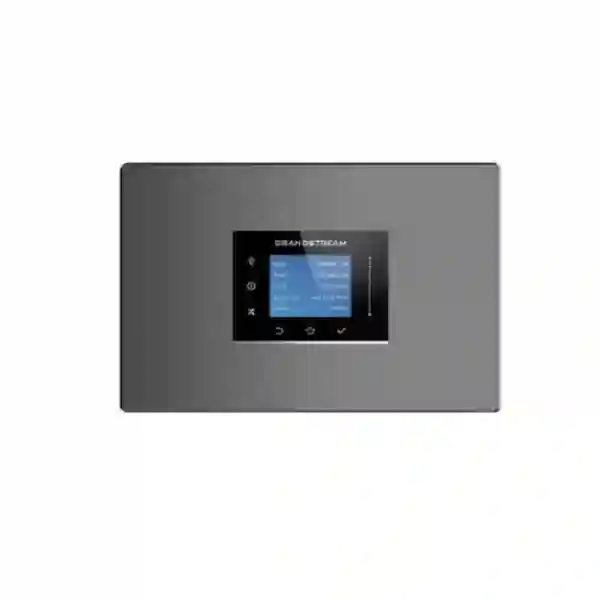
The Grandstream UCM6302 is an on-premise unified communications IP PBX for organisations that want to bring voice, video calling, conferencing, mobility and business telephony under one centrally managed platform. It is designed for environments that need room to grow without immediately moving every communication function to a hosted PBX. Grandstream specifies support for up to 1,000 users and up to 150 concurrent G.711 calls, making the UCM6302 relevant to growing offices, multi-department organisations, hospitality environments, education, professional services, healthcare administration, branch networks and other businesses that need structured call routing and collaboration.
Grandstream UCM6302 Overview
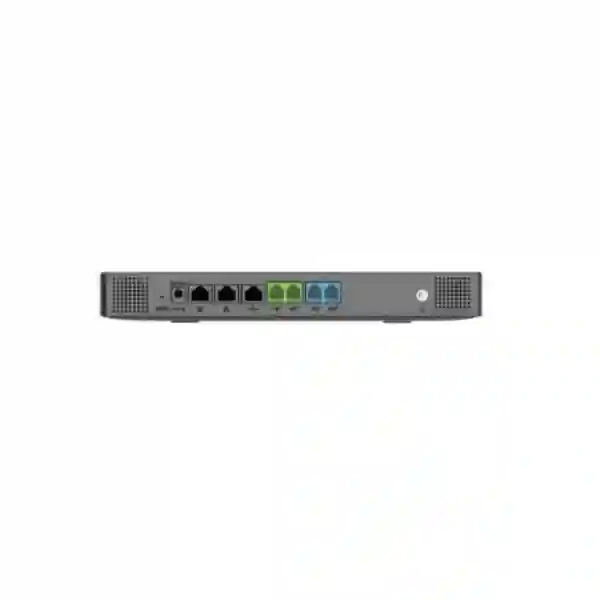
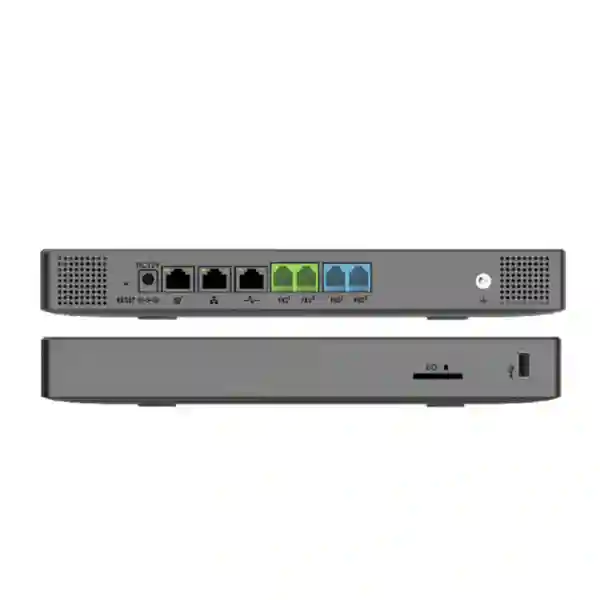
The UCM6302 sits in Grandstream’s UCM6300 family and combines traditional PBX functions with modern unified communications. For buyers replacing an older analogue PABX, it offers a migration path that can retain selected analogue lines or devices while enabling SIP trunks, IP phones, soft clients and remote access. For organisations already using VoIP, it can provide a central appliance for extension management, IVR, ring groups, queues, voicemail, recording policies, conferencing and branch communication. The appliance includes two analogue FXS ports for analogue endpoints and two FXO ports for PSTN line connectivity, helping businesses phase their migration rather than forcing an all-or-nothing cutover.
Its three self-adaptive Gigabit network interfaces can operate in switched, routed or dual-network modes and include PoE+ capability. The UCM6302 also includes one USB 2.0 port, one USB 3.0 port and an SD-card interface. Grandstream’s Wave client supports collaboration for UCM6300 users, while GDMS compatibility can assist with cloud-based device management. The platform also supports APIs for third-party integrations, which can be important where telephony must connect with CRM, property-management or other business applications. Integration scope should always be validated against the exact software, version and workflow before procurement.
Capacity planning
Size the PBX using registered users, expected simultaneous calls, conference usage, call recording, remote users and future growth rather than extension count alone.
Hybrid migration
Two FXS and two FXO ports can help bridge selected analogue devices or PSTN lines while an organisation adopts SIP endpoints and trunks.
Remote collaboration
Wave and UCM remote-access capabilities support mobile and distributed work scenarios when network design and security policies are correctly planned.
Verified UCM6302 Technical Highlights
| Area | UCM6302 | Buying relevance |
|---|---|---|
| Users | Up to 1,000 | Suitable where organisations expect substantial extension growth. |
| Concurrent calls | Up to 150 G.711 calls | Concurrent-call planning matters more than user count during busy periods. |
| Analogue interfaces | 2 FXS, 2 FXO | Useful for selected analogue phones/devices and PSTN lines. |
| Network | 3 Gigabit ports with PoE+ | Supports flexible network placement and segmentation strategies. |
| Conferencing | Up to 150 voice conference participants; up to 30 video conference participants under Grandstream’s stated conditions | Useful when meetings are part of the communication design, but bandwidth and endpoint planning remain important. |
Deployment and Integration Planning
A successful UCM6302 deployment starts with the call-flow design. Before buying, document reception requirements, departments, ring groups, queues, office hours, after-hours routing, voicemail expectations, emergency calling policies, branch connectivity and any numbers that must be retained. Map each existing PSTN or SIP service to the intended trunk strategy and confirm whether fax, door intercom, analogue devices or legacy equipment must remain. If analogue endpoints exceed the two built-in FXS ports, a suitable gateway may be required. If more than two PSTN lines must connect directly, an FXO gateway or SIP migration plan should be considered.
Network readiness is equally important. Voice quality depends on stable LAN design, bandwidth, latency, jitter, packet loss, VLAN policy, QoS and reliable internet where SIP trunks or remote users are involved. Remote extensions should be evaluated against firewall policy and security requirements, not simply enabled by default. For larger deployments, separate voice and data VLANs, managed switching, UPS power, structured cabling, backup procedures and configuration documentation can reduce operational risk. Integration projects involving CRM or PMS platforms should include a workflow review and testing stage before production use.
Grandstream UCM6302 Tanzania
For organisations in Tanzania, the Grandstream UCM6302 is most relevant when the communication requirement has moved beyond a basic small-office PBX but does not justify an oversized enterprise platform. A business may have dozens or hundreds of extensions while still needing capacity for growth, multiple departments, customer-service queues, remote staff, meeting rooms and branch offices. The UCM6302’s support for up to 1,000 users gives planners room to standardise on one system without assuming that every registered extension will be active at the same time. The 150 concurrent-call limit should therefore be compared with real busy-hour calling patterns, SIP trunk channel counts and expected conference usage.
Tanzania buyers should begin with the connectivity environment. Where SIP trunks are available, the PBX can sit at the centre of an IP telephony design using Grandstream or compatible SIP endpoints. Where existing PSTN lines must remain during migration, the two FXO ports provide a practical transition option. The two FXS ports can serve selected analogue endpoints, although larger analogue requirements should be handled through an appropriate gateway. For organisations with offices in different cities, the design should include branch numbering, inter-site connectivity, failover expectations, remote-user security and call-routing rules rather than treating each site as an isolated phone system.
Procurement teams in Tanzania should request a complete bill of materials, not just the PBX appliance. A usable solution may also require IP phones, PoE switches, network upgrades, SIP trunk services, UPS protection, racks or cabinets, analogue gateways, headsets and installation work. Ask for the selected phone models, quantities, power method, cabling assumptions, trunk configuration responsibility and post-deployment support scope to be written into the quotation. FourTeck Tanzania’s technology enquiry page is a practical starting point for submitting the extension count, site type, existing lines, branch requirements and target rollout information needed to prepare a more meaningful UCM6302 quotation.
Grandstream UCM6302 Dar es Salaam
Dar es Salaam organisations often have communication requirements shaped by larger office teams, customer-facing operations, hospitality, logistics, trading, professional services and multi-site administration. In these environments, the UCM6302 can be considered when a single receptionist-style PBX is no longer enough. The planning exercise should identify departments with high inbound traffic, the number of simultaneous external calls, whether queues are needed, how many reception or operator positions exist, and whether managers or mobile employees need secure remote access. A design with 200 registered extensions can still create heavy call concurrency if many users work in sales or support, while a 500-extension organisation with mostly internal administrative users may have very different trunk requirements.
For a Dar es Salaam deployment, pay close attention to LAN readiness and internet dependence. SIP trunking, remote extensions and cloud-connected collaboration make network quality part of the phone system. Managed switching, correct VLAN design, QoS, reliable power and UPS protection should be evaluated alongside the PBX. If the organisation is migrating from analogue lines, the two built-in FXO interfaces can support a limited number of PSTN connections during transition, while the two FXS ports can retain selected analogue devices. Larger legacy requirements should be planned with gateways rather than trying to force all analogue endpoints into the base appliance.
A quotation request should specify the number of users by department, the estimated simultaneous-call requirement, existing telephone numbers, current service provider, desired IP phone classes, branch offices and any integration with CRM or property-management software. It is also useful to state whether installation will occur in an existing rack or a new communications cabinet, whether PoE switches are already available and whether call recording or conference usage will be significant. These details help distinguish a correctly engineered deployment from a simple hardware purchase and reduce the risk of underestimating switching, power, endpoint or trunk requirements.
Grandstream UCM6302 Mwanza
Businesses evaluating the Grandstream UCM6302 in Mwanza may include regional offices, wholesalers, healthcare administration, education, service companies, hospitality and organisations coordinating operations across northern and western Tanzania. The UCM6302 can act as a central call-control platform where internal extensions, SIP trunks, analogue lines and remote users need to operate under one numbering and routing plan. The first question should not be whether 1,000 users sounds sufficient; it should be how many users will register, how many calls may occur simultaneously, how many branches connect to the system and what should happen if internet or trunk connectivity changes.
For businesses with staff travelling between sites or working remotely, Wave and remote connectivity options may reduce dependence on a desk phone for every user. However, mobility should be planned with authentication, firewall and network policy in mind. Remote access should not be treated as a substitute for basic security controls. Administrators should define extension permissions, outbound call rules, password policies and logging requirements. If the PBX will carry customer-service traffic, call queues, IVR structure, overflow destinations, voicemail handling and operating-hour rules should be documented before configuration begins.
Mwanza procurement teams should also budget for the infrastructure around the appliance. IP phones require network access and often PoE; call recording and backups require storage planning; SIP trunks require sufficient channels; and voice quality depends on consistent network performance. When requesting a UCM6302 quotation, provide the current topology, number of switches, available PoE budget, expected extension count, analogue devices, PSTN lines, desired phone models and branch requirements. A project that includes these inputs can be quoted and deployed more accurately than an order that lists only one UCM6302 appliance without explaining how it will be used.
Grandstream UCM6302 Arusha
Arusha has a diverse business mix that can include tourism, hospitality, NGOs, professional offices, logistics, education and regional administration. For these users, the Grandstream UCM6302 can provide a structured platform for reception, reservations, customer enquiries, internal extensions and remote collaboration. Hotels and travel businesses, for example, may need front-desk calling, administrative extensions, hunt groups and integration discussions around property-management workflows. NGOs and distributed organisations may place greater emphasis on branch connectivity, remote users, conferencing and policy control. The same hardware can serve different use cases, but the configuration should be designed around the actual workflow.
The appliance’s two FXO ports can assist where a small number of analogue PSTN lines need to be retained, while SIP trunks can support an IP-based external calling strategy where available. Two FXS ports can support selected analogue devices, but buyers should identify fax machines, emergency phones, lift phones or other special analogue equipment separately because compatibility and line behaviour can differ. For larger analogue estates, gateway planning is more appropriate. The three Gigabit network interfaces provide flexibility, but administrators should still decide whether the PBX belongs on a dedicated voice VLAN, how QoS will be implemented and how backups will be protected.
A strong Arusha quotation request should include room or department counts, peak call estimates, existing telephone services, remote-user needs and expected growth over several years. If the organisation serves international customers, specify time-zone routing, language prompts and after-hours procedures. If call recording is required, define who should be recorded, retention expectations and applicable internal policies. This turns the UCM6302 from a generic appliance into a communication design matched to business operations, and it gives the supplier enough information to include suitable phones, switching, accessories and implementation services.
Grandstream UCM6302 Dodoma
For organisations in Dodoma, the Grandstream UCM6302 can be relevant to administrative offices, institutions, service providers, educational environments and growing multi-department operations that need centralised communication. A modern IP PBX is particularly useful when the requirement includes more than basic extension-to-extension calling. Departments may need distinct IVR choices, reception groups, queue strategies, scheduled routing, conference facilities, remote staff and controlled outbound permissions. The UCM6302 provides capacity for up to 1,000 users, but planners should align the system with organisational policy and business continuity requirements rather than buying only on headline capacity.
If a Dodoma site has existing analogue lines, the two FXO ports can support a limited transitional arrangement while SIP services are evaluated. If analogue endpoints such as legacy phones or specialised devices must remain, the two FXS ports may be used where compatible. Larger requirements should be addressed with external gateways. For new deployments, a clean IP design with managed switches, PoE, structured cabling, UPS protection and documented VLANs can simplify administration. The PBX itself should be protected with strong credentials, controlled administrator access, current firmware practices and appropriate firewall policy.
When seeking a quotation, Dodoma buyers should describe whether the project is a replacement, greenfield deployment or expansion. Include the current extension count, target extension count, external telephone services, expected simultaneous calls, number of branches, IP phone quantities, reception requirements and any applications that may need telephony integration. If meetings and Wave usage are important, include the expected number of participants and remote users so the network and user experience can be evaluated as part of the design. This requirement-led approach makes it easier to determine whether UCM6302 is correctly sized or whether another UCM model would better fit the project.
Grandstream UCM6302 UAE
In the UAE, the UCM6302 is commonly evaluated by businesses seeking an on-premise IP PBX with substantial extension capacity, SIP trunk support and collaboration features. The platform is suitable for offices that want to combine desk phones, soft clients, remote users and conference functions without treating voice as an isolated service. When comparing quotations, buyers should separate the appliance cost from the complete deployment cost. IP phones, licences for optional services where applicable, SIP trunk channels, switching, cabling, headsets, gateways, configuration and support can materially affect the final project.
UAE deployments often include multiple branches, mobile employees and integration with CRM or hospitality systems. The UCM6302 provides APIs for third-party integration, but the existence of an API does not guarantee that every application will connect without development or middleware. Integration should therefore be scoped with the exact application name, version and required workflow. Similarly, remote access should be implemented within the organisation’s security policies. Firewalls, NAT, authentication, DNS and internet connectivity all influence remote telephony reliability.
FourTeck customers planning projects in the UAE can also review the regional Grandstream practice through FourTeck’s Grandstream UAE site. When requesting a UCM6302 quote, provide user count, concurrent-call estimate, SIP provider details, analogue line requirements, number of branches, phone models and preferred deployment timeline. This allows a supplier to assess whether the UCM6302’s 1,000-user and 150-call envelope matches the workload and whether accessories, gateways or a different model should be considered.
Grandstream UCM6302 Uganda
Ugandan organisations considering the UCM6302 may be replacing legacy PBXs, consolidating multiple small systems or building a new VoIP environment for a growing workforce. The appliance can support a mix of SIP phones, soft clients and selected analogue connections, which is useful when migration cannot happen in one step. The two FXO ports allow a limited number of PSTN lines to be retained and the two FXS ports can accommodate selected analogue devices. For larger analogue estates, external gateways should be planned so that the migration remains structured and supportable.
A multi-site Uganda deployment should start with the WAN design. Kampala headquarters and branch offices may have different internet providers, bandwidth and resilience, so call routing and remote extension behaviour should be tested against those realities. Administrators should plan numbering ranges, branch failover, security, QoS and trunk capacity centrally. If many users rely on Wave or remote access, upstream internet bandwidth and firewall configuration become especially important. The UCM6302 can provide the call-control capacity, but successful unified communications still depends on a reliable network foundation.
For regional purchasing and solution context, buyers can review FourTeck Uganda’s business communication and IT solutions. A useful quotation request should state extension count by site, simultaneous-call expectations, current telephone lines, proposed SIP trunks, phone quantities, reception and queue needs, and whether any analogue devices must remain. Buyers should also identify required installation, training, documentation and post-deployment support so the commercial comparison covers the whole project rather than only appliance pricing.
Grandstream UCM6302 Kampala
Kampala businesses frequently require phone systems that support customer service, sales teams, administration and branch connectivity at the same time. The UCM6302 can suit these environments when the organisation needs a central IP PBX capable of managing a substantial number of users while providing room for future growth. A typical design might combine receptionist phones, executive phones, standard office endpoints, conference devices and mobile Wave users. Capacity planning should include busy-hour external calls, internal traffic, conferencing and call recording rather than using total employee headcount as the only sizing figure.
Where an existing Kampala office still uses analogue services, the UCM6302 can ease migration through its built-in FXO and FXS ports. Two analogue trunks and two analogue extensions are not intended to replace a large legacy gateway, so projects with many analogue lines should include dedicated gateway hardware or an agreed SIP migration. Network planning should include PoE switching, UPS backup, VLAN configuration and quality-of-service policy. A voice system can be technically capable yet still deliver poor user experience if the LAN or internet path is congested or unstable.
Kampala buyers should ask suppliers to document the proposed topology, selected handsets, trunk assumptions, extension numbering and responsibilities for configuration. If CRM integration is required, define whether users need click-to-dial, screen pop, call logging or another specific workflow. If remote workers are involved, specify the number of users and expected connection methods. These details help determine whether the UCM6302 alone is sufficient or whether the project also needs gateways, additional switching, security changes, headsets, SBC-related planning or other supporting components.
Grandstream UCM6302 Arua
For organisations in Arua, a UCM6302 deployment may be driven by the need to improve internal calling, connect regional teams, provide a professional reception experience or reduce dependence on isolated analogue phone systems. The system’s user capacity offers room for organisations that expect growth, but the practical design should reflect current staffing, branch structure and connectivity. A smaller organisation may still select the model for expansion or conferencing needs, while a larger organisation should carefully validate concurrent-call and network requirements before standardising on it.
Connectivity planning is particularly important for distributed operations. If the Arua site connects to a central office through the public internet, VPN or other WAN service, network reliability and routing policy will shape the voice experience. Administrators should identify what should happen during an internet outage, whether local PSTN fallback is required, which calls are business critical and whether remote staff need access from mobile networks. The two FXO ports can support limited analogue trunk connectivity, which may be useful as part of a resilience or migration strategy where compatible services are available.
A complete quote should include more than the PBX appliance. Count IP phones by user type, identify reception consoles, conference-room endpoints, analogue devices, headsets, PoE ports and UPS capacity. Define whether configuration will include IVR recording, call queues, business hours, extension permissions and user training. If the system will serve multiple branches, request a numbering and routing design so new locations can be added consistently. This planning approach helps avoid fragmented expansion and makes future support easier because configuration choices are documented from the beginning.
Grandstream UCM6302 Mbarara
Businesses and institutions in Mbarara can evaluate the Grandstream UCM6302 when they need to centralise office telephony, introduce SIP-based communications or prepare for multi-site growth. The PBX can manage up to 1,000 registered users and 150 concurrent G.711 calls, but those figures should be interpreted as platform limits rather than recommended operating targets for every deployment. A practical sizing exercise considers peak calls, conference usage, recording, remote users, trunk channels and expected expansion so that the system is selected with a reasonable operational margin.
For a mixed analogue and IP environment, the two FXO and two FXS interfaces can reduce migration friction. An organisation can retain a small number of existing PSTN lines or analogue devices while moving the majority of users to SIP endpoints. Where many analogue lines or extensions remain, dedicated gateways provide a cleaner architecture. The network should be reviewed at the same time: IP telephony requires reliable switching, PoE where appropriate, VLANs, QoS and protected power. Branch and remote-user traffic also depends on WAN and internet performance.
When comparing UCM6302 proposals in Mbarara, ask each supplier to state the assumed number of phones, trunk channels, network ports, installation activities and support responsibilities. Confirm whether phone provisioning, IVR configuration, queue setup, user training and documentation are included or optional. If existing numbers must be preserved, discuss the service-provider process early. If the business expects to add branches, define an extension-numbering plan that leaves capacity for future sites. These details improve long-term manageability and make commercial offers easier to compare on an equivalent basis.
Grandstream UCM6302 Gulu
The UCM6302 can support Gulu organisations that need a modern PBX for administration, customer-facing teams, education, healthcare offices, hospitality or regional operations. Its strength is not simply the headline user count; it is the ability to bring different communication functions into one managed environment. Departments can use extension dialing, IVR, groups, queues, voicemail and conferencing under one configuration, while remote users can be included when security and connectivity are properly planned. This can simplify day-to-day administration compared with maintaining separate small systems across teams.
For sites with legacy analogue services, identify exactly what must remain. Two FXO ports can connect a limited number of PSTN lines, while two FXS ports can serve selected analogue endpoints. Fax, alarms, lift phones and other specialised analogue devices should be tested rather than assumed to behave like standard phones. If the project is greenfield, consider an all-IP endpoint strategy with managed PoE switching and structured cabling. UPS capacity should cover the PBX, network switches, routers and any other devices required to keep calls working during short power interruptions.
Gulu procurement teams should prepare a requirement sheet containing extension count, expected call concurrency, office hours, desired IVR, queues, number retention, branch links and endpoint types. For organisations with limited internal IT resources, implementation documentation and administrator training can be as important as hardware selection. Request a backup and recovery procedure, configuration handover and clearly defined support scope. These items help ensure the PBX can be maintained after installation and reduce dependence on undocumented settings known only to the original installer.
Grandstream UCM6302 Kenya
Kenyan buyers evaluating the Grandstream UCM6302 often compare it with cloud PBX services, smaller UCM models and other on-premise platforms. The decision should be based on control, user count, concurrency, branch design, connectivity, integration and internal IT capability. The UCM6302 can be attractive where an organisation prefers a locally managed appliance and wants built-in unified communications functions, while a hosted service may suit a different operational model. The right comparison should include several years of total project cost, connectivity dependence, support model and expected growth rather than focusing only on the purchase price.
For Nairobi or multi-county deployments, branch connectivity and SIP trunk architecture are usually central design questions. A central UCM6302 can support a structured extension plan across locations, but network resilience and security need attention. Remote sites may require backup internet or local fallback depending on business criticality. Call queues, conferencing and Wave usage can increase bandwidth requirements, so busy-hour traffic should be estimated before rollout. Where analogue lines must remain, the built-in FXO and FXS interfaces can help with limited migration scenarios.
FourTeck’s Kenya IT and unified communications site provides regional context for PBX and VoIP projects. A Kenya UCM6302 RFQ should specify the number and type of IP phones, SIP provider, expected simultaneous calls, branches, remote users, analogue lines, conference usage and integration requirements. Ask suppliers to separate hardware, configuration, installation, cabling and support so proposals can be compared fairly. If growth may exceed the model’s concurrency or conference envelope, consider that before standardising across multiple sites.
Grandstream UCM6302 Kuwait
Kuwait businesses may consider the UCM6302 for office telephony, multi-department call handling, customer-service queues and branch connectivity. The model’s support for 1,000 users can provide headroom for organisations with substantial extension counts, while 150 concurrent G.711 calls should be checked against trunk capacity and peak-hour demand. In environments with many external calls, concurrency can become the limiting factor before registered user count. In administrative environments, the opposite may be true, with many extensions but relatively few simultaneous calls.
Deployment design should include SIP trunk availability, emergency calling requirements, number presentation, call permissions and failover. The UCM6302’s two FXO ports can retain a limited number of analogue lines where needed, while two FXS ports can accommodate selected analogue endpoints. For larger legacy environments, use appropriate gateways rather than relying on the built-in ports alone. Remote staff and Wave users should be included in the security architecture, with careful handling of credentials, firewall access and administrator privileges.
For a Kuwait quotation, prepare a clear endpoint schedule listing executive phones, standard user phones, reception positions, conference devices and any analogue equipment. Include whether the project needs call recording, IVR voice prompts, queue announcements, CRM integration, installation and training. Buyers can also review the regional FourTeck network at FourTeck Kuwait when planning related IT and communication requirements. A detailed RFQ makes it easier to verify that the proposed hardware and services match the operational objective.
Grandstream UCM6302 Ghana
For organisations in Ghana, the Grandstream UCM6302 can be evaluated as a central IP PBX for growing teams that need structured call handling and collaboration. It is especially relevant where a company wants to combine SIP phones, soft clients, remote users and a limited amount of analogue connectivity. The 1,000-user capacity provides significant room for extension growth, while the 150-call capacity should be matched to peak business traffic. Call-centre-style departments, sales teams and reservation desks may consume concurrency much faster than administrative users, so user count alone is not enough for sizing.
A Ghana deployment should include a network-readiness assessment. Managed switches, PoE capacity, VLANs, QoS, UPS power and stable internet are fundamental to good VoIP performance. Where branches depend on a central PBX, WAN outages should be included in the business-continuity discussion. The two FXO ports can provide limited analogue trunk connectivity and may help during migration or as part of a fallback approach, subject to the available telephone service and the organisation’s design. The two FXS ports can serve selected analogue endpoints.
Regional buyers can review FourTeck Ghana’s IT product and solution coverage when coordinating communication and network requirements. For a UCM6302 quote, include extension totals, concurrent-call estimates, SIP trunk channels, branch locations, required phones, conference usage and any CRM or PMS integration. Ask whether configuration documentation, administrator training and a tested backup procedure are included. Those operational items can determine how maintainable the system remains after deployment.
Grandstream UCM6302 Nigeria
Nigeria’s large and varied business environment makes UCM6302 sizing highly use-case dependent. A Lagos professional office, Abuja administrative organisation, hospitality group or distributed branch network can all use the same platform in different ways. The model supports up to 1,000 users and 150 concurrent G.711 calls, so buyers should map the expected peak calling pattern before purchase. Organisations with high outbound sales or support activity may need more concurrency relative to their user count, while large corporate offices may register many extensions with moderate simultaneous traffic.
Power and connectivity resilience should be part of the telephony design. The PBX may be available, but calls can still fail if network switches, routers, SIP connectivity or internet access are unavailable. UPS and backup power planning should therefore include the full voice path. For multi-site operations, define whether branches connect back to one central appliance, use local systems or require fallback routing. Remote users should be secured appropriately, and administrator access should be restricted and monitored. The UCM6302’s built-in analogue ports can support limited PSTN and analogue-device requirements during transition.
A Nigeria RFQ should list sites, users, phones, trunk channels, reception positions, queues, required reports, recording expectations and integration goals. Also specify whether the supplier is expected to configure, install, test, train administrators and provide ongoing support. Buyers planning a broader regional project can use FourTeck Nigeria as a related regional resource. A requirement-led quotation reduces the chance of comparing offers that include different quantities, services or assumptions.
Grandstream UCM6302 Seychelles
In Seychelles, hospitality, tourism, professional services, public administration and distributed island operations may require a PBX that can support both traditional telephony workflows and modern collaboration. The UCM6302 is potentially suitable where the organisation wants centralised extension management, reception, IVR, call groups, conferencing and remote-user support in one appliance. Hotels and service businesses should pay particular attention to front-desk requirements, room or department numbering, after-hours routing and any intended integration with business applications. Integration compatibility must be checked against the exact application and workflow.
Because inter-site connectivity may depend heavily on internet and WAN links, resilience planning is essential. Decide which calls must continue if the main connection is interrupted, whether analogue fallback is required and how remote sites will behave. The UCM6302 includes two FXO and two FXS ports, which can help with small analogue requirements, but larger installations should use suitable gateways. Voice traffic should be prioritised appropriately on the network, and UPS protection should cover the PBX plus switching and routing equipment.
A Seychelles quotation request should identify each site, extension count, phone type, SIP or PSTN services, concurrency, conference usage, analogue equipment and desired support model. Hospitality projects should state whether guest-room telephony, front-desk operations or PMS integration is in scope. Professional offices should describe receptionist workflows, departments and remote staff. This information helps establish whether UCM6302 is the right model and what supporting components are required. Avoid relying on a generic appliance-only quote when the project depends on switching, cabling, gateway, integration or configuration work.
Related FourTeck Regional Resources
Tanzania consultation
Use the FourTeck Tanzania contact page to submit user count, sites, phone quantities, trunks and integration requirements.
Kenya projects
Review FourTeck Kenya for related IP PBX, VoIP and networking needs in Kenya.
Uganda projects
Review FourTeck Uganda for business communication and infrastructure planning in Uganda.
Ghana projects
Use FourTeck Ghana for regional product and project enquiries in Ghana.
Nigeria projects
Use FourTeck Nigeria when planning related deployments in Nigeria.
UCM6302 Buying and Quotation Checklist
A useful UCM6302 quotation starts with a clear operational requirement. Provide the current and future extension count, estimated maximum simultaneous external calls, office and branch locations, SIP trunk or PSTN provider, number of retained analogue lines, analogue endpoint requirements, IP phone quantities by user type, reception positions, call queues, IVR structure, conference usage, remote-user count, call-recording expectations, integration requirements, network readiness, PoE availability, UPS requirements, desired installation scope and target rollout sequence. Also identify who will manage the system after deployment and whether administrator training, configuration backup and documentation are required.
If you are replacing an existing PBX, include the existing model, extension numbering, telephone lines and any numbers that must be retained. If you are building a new system, define numbering before handsets are deployed. If you expect growth, leave logical ranges for departments and branches. For SIP trunks, verify channel count and caller-ID requirements. For remote users, document security and connectivity policy. For integrations, state the exact CRM, PMS or other application and the desired action, such as click-to-dial, call logging or screen-pop behaviour. These details allow technical and commercial teams to prepare a proposal that is easier to evaluate and less likely to hide essential dependencies.
Frequently Asked Questions
How many users does the Grandstream UCM6302 support?
Grandstream specifies up to 1,000 users for the UCM6302. Capacity planning should also consider the maximum concurrent-call limit, conference use, recording, remote users and the expected growth pattern.
How many concurrent calls can the UCM6302 handle?
Grandstream specifies up to 150 concurrent G.711 calls for the UCM6302. Actual design should keep operational margin and account for conference activity, encryption, network conditions and trunk capacity.
Does the UCM6302 support analogue lines and devices?
Yes. The appliance includes two FXO ports for PSTN lines and two FXS ports for analogue endpoints. Projects requiring more analogue connectivity should consider suitable external gateways.
Can UCM6302 support remote employees?
The UCM6300 ecosystem includes Wave and remote-connectivity capabilities. Remote-user deployment should still be designed around firewall policy, authentication, bandwidth and security requirements.
Is UCM6302 suitable for a multi-branch business?
It can be, provided extension capacity, concurrent calls, branch connectivity, failover, security and numbering are properly designed. Multi-site projects should be planned as one communication architecture rather than independent branch purchases.
What should I provide when asking for a UCM6302 quotation?
Provide user and phone counts, estimated simultaneous calls, site locations, existing lines, SIP trunk details, analogue devices, queue and IVR requirements, remote users, conferencing needs, integration goals, installation scope and expected growth.
Decision Recap: Is the UCM6302 the Right IP PBX?
Choose the Grandstream UCM6302 when your requirement fits its verified capacity and you want an on-premise unified communications platform with SIP telephony, analogue migration options, conferencing, Wave collaboration and central administration. Do not choose it solely because 1,000 users sounds large. Confirm concurrent-call demand, trunk channels, branch architecture, network readiness, analogue requirements and integration scope first. If your project is substantially smaller, another UCM model may be more economical; if concurrency or expansion requirements are higher, a larger model may provide a better operational margin.
Consult FourTeck Tanzania About Your UCM6302 Project
For a more useful discussion, send FourTeck Tanzania your extension count, simultaneous-call estimate, existing telephone services, sites, phone quantities, remote-user needs and any CRM, PMS, recording or conferencing requirements. The goal is to confirm model fit and build a complete requirement covering PBX, endpoints, switching, power, gateways, configuration and support rather than quoting an isolated appliance.




Reviews
There are no reviews yet.