
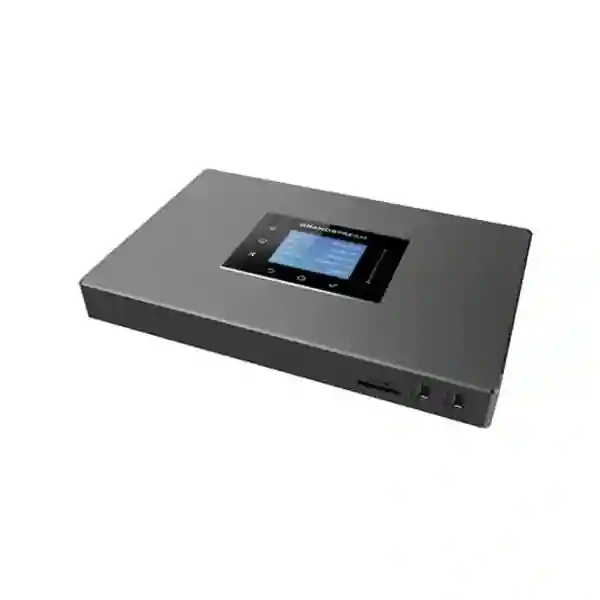
Grandstream UCM6300A Tanzania
Grandstream UCM6300A Tanzania is an audio-focused unified communications IP PBX for organizations that need a modern on-premises calling platform without paying for unused video-PBX capacity. The appliance is part of Grandstream’s UCM6300 Audio Series and is designed for up to 250 users, up to 50 concurrent G.711 calls and up to 50 simultaneous meeting participants across supported meeting rooms. It combines SIP extension management, call routing, IVR, call queues, voicemail, recording, instant messaging, audio meetings, Wave app access, remote-user connectivity and centralized endpoint provisioning in one platform.
For Tanzania businesses evaluating a new PBX, a replacement for an aging PABX or a voice platform for a new office, the UCM6300A is especially relevant when the design is moving toward SIP trunks and IP endpoints. Unlike larger members of the Audio Series, the UCM6300A does not include built-in FXS or FXO analogue ports, so analogue lines or devices should be planned through suitable gateways or alternative models when required. That distinction makes pre-sales discovery important: extension count, expected peak call load, SIP trunk availability, receptionist workflow, branch connectivity, remote users, recording needs, network readiness and power protection should be confirmed before procurement.
Official maximum user capacity for the UCM6300A model.
Maximum concurrent G.711 call capacity, with up to 50 concurrent SRTP calls.
Supports hybrid work using Grandstream’s Wave applications and UCM RemoteConnect ecosystem.
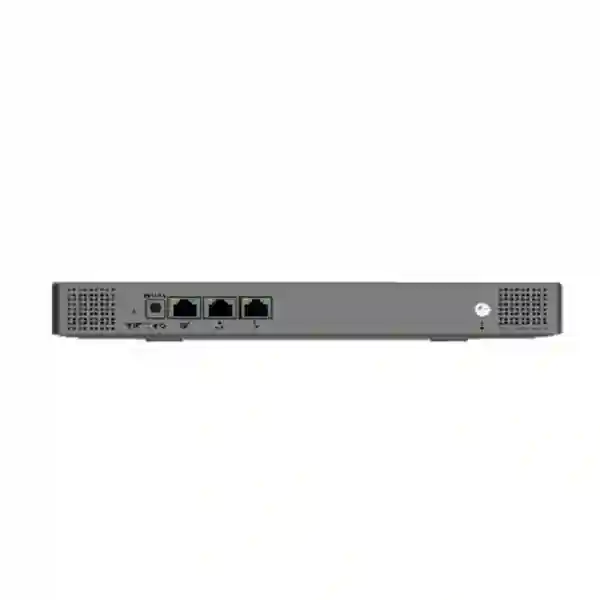
Three self-adaptive Gigabit interfaces support switched, routed or dual-mode deployment with PoE+.
What the UCM6300A is designed to solve
The UCM6300A gives small and mid-sized organizations a structured way to replace fragmented telephone arrangements with a centralized SIP communications platform. Incoming calls can be presented through auto attendants, routed by time schedule, distributed through ring groups or queues, and transferred between departments. Users can have voicemail, call forwarding, BLF, call park, paging, intercom and other business telephony features. Managers can organize extensions and policies from a central interface instead of depending on individually configured desk phones.
The platform also addresses mobility. Grandstream’s free Wave app can connect users from desktop, web, Android and iOS environments, while UCM RemoteConnect provides cloud-assisted NAT traversal for supported remote connections. This makes the PBX useful for organizations where some staff work away from the main office, where branch teams need extension-style communication, or where management wants users to retain a business identity while using mobile devices. Remote access should still be designed with appropriate credentials, network policy and security controls rather than treated as an automatic substitute for good security practice.
Verified UCM6300A specifications
| Specification | Grandstream UCM6300A |
|---|---|
| Users | Up to 250 |
| Concurrent calls | Up to 50 G.711 calls |
| Concurrent SRTP calls | Up to 50 |
| Maximum meeting capacity | Up to 50 simultaneous participants across all rooms combined; up to 3 simultaneous public rooms |
| FXS / FXO | None built in |
| Network | Three self-adaptive Gigabit ports, switched/routed/dual mode, PoE+ |
| Peripheral interfaces | 1 × USB 3.0 and 1 × SD card interface |
| Voice codecs | Opus, G.711, G.722 family, G.723.1, G.726-32, G.729A/B, iLBC, GSM; T.38 fax |
| Security / encryption | Secure boot, unique certificate, randomized default password, SRTP, TLS, HTTPS, SSH and 802.1X support |
| Management | GDMS cloud setup, management and monitoring support |
| Telephony platform | Based on Asterisk version 16 |
Key business features
Call routing and IVR
Build professional inbound call flows using multi-level IVR, time conditions, ring groups, queues, voicemail, DID/DOD routing and departmental extension plans.
Call-center functions
Multiple queues and automatic call distribution can support sales, service, reception and other teams that handle shared inbound call demand.
Grandstream Zero Config
Supported Grandstream SIP endpoints can be discovered and provisioned centrally, reducing repetitive handset setup during larger rollouts.
CRM and PMS integration
A full API is available for third-party platform and application integration, useful when telephony must connect with business workflows.
Network and deployment planning
An IP PBX performs best when the network is designed for voice. The deployment should verify PoE switching capacity for IP phones, VLAN strategy, Quality of Service, DHCP/DNS, firewall policy, SIP trunk routing, internet stability and UPS protection. The UCM6300A supports Layer 2 and Layer 3 QoS mechanisms, but end-to-end call quality still depends on switches, routers, internet links and service-provider behavior. For offices with multiple floors or branches, a voice VLAN and documented addressing plan can reduce troubleshooting time and keep telephony separate from guest or high-volume data traffic.
Analogue requirements deserve special attention because the UCM6300A has no FXS or FXO ports. If a site still has PSTN lines, analogue fax devices, lift phones, door phones or legacy handsets, the project should confirm whether a SIP migration, external gateway or a different UCM6300 Audio Series model is more appropriate. This is one of the most important purchasing checks for the UCM6300A because an otherwise suitable system can become complicated when analogue dependencies are discovered after ordering.
Related FourTeck resources
For a broader solution view, review the FourTeck Tanzania shop for available business technology categories, the Tanzania services overview for planning, deployment and lifecycle support, and the FourTeck Tanzania approach for integrated IT and telecom project guidance. Organizations coordinating regional branches can also use the FourTeck Kenya and FourTeck Uganda sites when planning related requirements in those markets.
Grandstream UCM6300A Tanzania
For organizations in Tanzania, the UCM6300A fits projects where business telephony is moving toward an IP-first architecture. Typical requirements include a central reception number, internal extension dialing, department queues, after-hours routing, call recording, voicemail, mobile users and branch connectivity. The strongest fit is an organization that can use SIP trunks and SIP endpoints without depending on built-in analogue ports. Before ordering, the buyer should define the number of users who need extensions, the peak number of simultaneous calls, the number of remote workers, whether recording is required, and whether existing telephone numbers can be presented through a compatible SIP service. These questions are more useful than purchasing only by employee count because call concurrency and trunk design determine the real operational fit.
Tanzania deployments should also account for local site conditions. Stable power is important for the PBX, switches, router and phones, so the voice platform should be included in the UPS plan rather than powered as an isolated device. Internet quality matters where SIP trunks, Wave users or remote branches depend on WAN connectivity. A site with acceptable download speed can still produce poor voice if latency, packet loss, congestion or unstable routing is present. The LAN should therefore be reviewed for managed switching, VLANs, PoE budgets and QoS. When the system serves several departments, naming conventions for extensions, ring groups and queues should be documented to simplify support.
Procurement teams in Tanzania should request a complete bill of materials rather than only the PBX appliance. A practical quote may need IP phones, PoE switches, headsets, gateway equipment where analogue connectivity remains necessary, rack accessories, patching, UPS protection and configuration services. The UCM6300A itself supports 250 users and 50 concurrent G.711 calls, but those headline figures should not be treated as a target that every installation must approach. A smaller system can still justify the model when the business values centralized management, Wave mobility, call queues, meetings and future extension growth. Buyers should also confirm current firmware, support expectations and compatibility with the intended SIP provider before final deployment.
Grandstream UCM6300A Dar es Salaam
Grandstream UCM6300A Dar es Salaam projects often involve head offices, professional firms, clinics, retail administration, logistics companies, hotels, education providers and growing SMEs that need more structure than a basic telephone exchange. In a busy reception environment, the system can organize incoming calls through IVR, ring groups and queues, helping callers reach sales, finance, support or operations without relying on a single handset. BLF, transfer, park and pickup features can make front-desk work faster when staff are trained on a consistent call flow. For managers, extension-based calling and Wave access provide mobility without forcing users to publish personal numbers.
The network design is particularly important in offices where voice shares switching and internet capacity with cloud applications, CCTV and guest Wi-Fi. Dar es Salaam businesses frequently have multiple connected services on the same LAN, so voice should be planned with appropriate VLAN separation, PoE capacity and QoS rather than simply connected to spare switch ports. If the company has several internet links, routing policy should be tested to prevent SIP registrations from failing during failover. Where remote users or branches rely on UCM RemoteConnect, firewall policy and identity controls should be reviewed alongside convenience.
A Dar es Salaam buyer should prepare a quotation brief that includes current telephone numbers, SIP trunk status, number of extensions, expected concurrent calls, receptionist requirements, queue agents, conference use, recording policy, branch locations and any analogue devices. Because the UCM6300A has no integrated FXS or FXO ports, legacy PSTN lines and analogue endpoints must be handled deliberately. External gateways may be appropriate, but in some cases another UCM6300 Audio model with analogue ports can simplify the project. Matching the architecture before purchase protects the budget and avoids an unnecessary second round of hardware ordering.
Grandstream UCM6300A Mwanza
Grandstream UCM6300A Mwanza deployments can be useful for regional offices, trading businesses, healthcare facilities, education organizations, hospitality sites and distribution operations that want one manageable communications platform. The PBX can centralize internal extensions while allowing different departments to have distinct inbound call behavior. For example, sales calls can enter a queue, administration can use a ring group, and after-hours calls can follow a separate route. This type of design gives the organization a repeatable calling process rather than relying on informal forwarding between mobile numbers.
For Mwanza sites, resilience planning should include both communications and supporting infrastructure. The UCM6300A is only one part of the voice service chain: the PoE switch powers desk phones, the router or firewall connects trunks and remote users, and the internet link may carry SIP traffic. UPS runtime should therefore be sized around the complete voice path. Where two internet links are available, failover should be tested specifically with the chosen SIP provider because an internet circuit changing public IP can affect active calls or registrations. Configuration backup and clear documentation make recovery easier after maintenance or equipment replacement.
The model supports up to 250 users and 50 concurrent calls, which is sufficient for many branch and mid-sized office scenarios, but sizing should use actual peak demand. A 150-person organization may need fewer than 30 simultaneous calls, while a customer service team with fewer staff may have higher concurrency. Procurement should also account for endpoints. Receptionists may need phones with more programmable keys, general users may need simpler SIP phones, and mobile staff may prefer Wave. A carefully matched endpoint mix can improve usability without overspending. If analogue lines or devices are still part of the Mwanza environment, note that UCM6300A has no integrated FXS/FXO interfaces and plan the necessary migration or gateway path.
Grandstream UCM6300A Arusha
Grandstream UCM6300A Arusha can suit tourism offices, hospitality administration, NGOs, professional services, education, healthcare and multi-site businesses that need reliable voice communication with mobile or distributed users. Hospitality and travel-oriented teams often handle calls from customers, partners and suppliers throughout the day, so a well-designed IVR and queue structure can reduce missed calls and provide clearer ownership. The PBX can also support voicemail-to-email, time schedules and call routing so important communication continues even when a particular desk is unattended.
For organizations operating between Arusha and other Tanzanian cities, extension plans should be designed with future branches in mind. A consistent numbering scheme, department naming convention and user profile structure can simplify later growth. Remote connectivity can allow authorized staff to use Wave or supported SIP devices away from the main office, but WAN reliability and security should be planned before promising a cloud-like user experience. The UCM6300A combines an on-premises PBX with optional cloud-assisted remote connectivity, so it can offer more local control than a fully hosted service while still supporting hybrid work patterns.
Arusha procurement decisions should compare the UCM6300A with larger Audio Series models if analogue connectivity or future call capacity may increase. The UCM6300A supports 250 users and 50 concurrent calls but includes no FXS or FXO ports. If the site relies on analogue PSTN lines, traditional fax, door phones or similar devices, the project must budget for gateways or consider a model with built-in analogue interfaces. A good quotation request should include user count, existing lines, desired DID numbers, queue agents, meeting requirements, recording retention expectations, phone quantities, switch capacity and UPS availability. Providing that information makes the proposal more accurate than asking only for a unit price.
Grandstream UCM6300A Dodoma
Grandstream UCM6300A Dodoma is relevant for administrative offices, institutions, consultancies, education, healthcare and businesses that need a centrally managed voice platform. The system can bring reception, internal extensions, departmental routing, voicemail and meetings under one configuration. Organizations that handle structured inbound inquiries can use IVR to guide callers and queues to distribute calls among available staff. This becomes especially useful where communication needs to follow a defined process instead of depending on whichever employee happens to answer a shared phone.
A Dodoma deployment should begin with call-flow mapping. Decision makers should document what happens to a call during office hours, after hours and when the primary team is busy. They should also define whether calls may be recorded, how long recordings are retained, who can retrieve voicemail and which users require external dialing restrictions. Building those policies before configuration reduces later changes and helps technical teams implement the system in a way that reflects business rules. The UCM6300A provides a broad feature set, but value comes from using the features deliberately rather than enabling everything.
The physical and network environment should be part of procurement. Voice phones may depend on PoE, so switch power budgets and UPS coverage should be checked. SIP trunks and remote-user services depend on internet stability, DNS, firewall rules and latency. A separate voice VLAN can reduce broadcast noise and improve supportability, while QoS can prioritize voice during congestion. For projects with analogue telephone lines, remember that the UCM6300A itself has no FXO or FXS ports. Buyers should either move to SIP, add the correct gateway hardware or compare a different UCM6300 Audio model. The goal is a complete working solution, not simply a PBX appliance in a box.
Grandstream UCM6300A UAE
Grandstream UCM6300A UAE projects typically target small and medium offices that want an on-premises IP PBX with mobile collaboration, centralized provisioning and room to grow. The model supports up to 250 users and 50 concurrent G.711 calls, making it suitable for many branch-office and professional-service environments. Its audio-focused positioning is important: organizations that primarily need voice, instant messaging and audio meetings can avoid buying a larger video-oriented PBX merely for features they do not plan to use. Wave access and RemoteConnect can support staff who work between office, home and customer sites.
UAE buyers should pay close attention to telecom-provider requirements when planning SIP trunks and public numbers. A technical design should confirm what the provider delivers, which firewall rules are required, how number presentation works and whether redundancy is expected. The UCM6300A includes three Gigabit interfaces and can operate in routed, switched or dual modes, but many business deployments will place the PBX behind a dedicated firewall and managed switch infrastructure. Network segmentation, QoS and security monitoring remain important regardless of the PBX’s own networking features.
Commercial comparison should include the complete voice environment: handsets, PoE switching, headsets, SIP services, remote-user requirements, gateway needs, configuration, testing and documentation. The UCM6300A contains no integrated FXO or FXS ports, which can be advantageous for IP-first sites but must be recognized where analogue circuits remain. UAE organizations with multiple regional branches may also value a standardized Grandstream architecture because extension plans, phone templates and user onboarding can follow a consistent model. Before ordering, buyers should confirm current availability, project lead time and support scope rather than assuming stock or delivery commitments from generic web listings.
Grandstream UCM6300A Uganda
Grandstream UCM6300A Uganda can help businesses move from disconnected analogue or mobile calling toward managed SIP telephony. A centralized PBX gives the organization a clear extension plan, incoming call flow, voicemail policy and visibility over how calls are handled. For businesses with offices in more than one city, the same platform can support branch communication when connectivity and routing are designed correctly. Wave can also give selected users a business extension on supported desktop and mobile devices, which is useful for managers, field staff and employees who divide time between locations.
Uganda deployment planning should consider the quality and resilience of the internet path because SIP services and remote extensions can be sensitive to packet loss and unstable routing. Voice VLANs, QoS and properly sized PoE switches help keep local calling predictable. Power backup should cover the PBX, gateway devices, switches and router together. If only the PBX has UPS power while the network switch shuts down, the telephone system will still become unavailable. A complete design therefore treats power and LAN infrastructure as part of the voice project.
The UCM6300A supports 250 users, 50 concurrent calls and up to 50 simultaneous meeting participants across all meeting rooms. Those capacities make it attractive for many SMEs, branch offices and institutions, but organizations with heavy call-center traffic should model busy-hour concurrency before selecting the appliance. The lack of built-in FXS and FXO ports is another decisive factor. Uganda sites retaining analogue lines or devices need a gateway strategy or a different model. Procurement teams should request clear scope for configuration, endpoint provisioning, trunk setup, user training, backup and documentation so the project remains supportable after handover.
Grandstream UCM6300A Kampala
Grandstream UCM6300A Kampala is well matched to urban offices where reception efficiency, sales call handling and remote work are priorities. A company can use IVR to identify the caller’s destination, queues to distribute demand across available agents and time schedules to change routing after business hours. Department extensions can remain stable even when employees move desks, and users can access selected services through Wave. This creates a more professional communication workflow than publishing different mobile numbers for every employee or relying on manual call forwarding.
Kampala offices often have dense networks carrying Wi-Fi, cloud applications, surveillance and VoIP on the same access layer. The PBX should therefore be deployed with intentional VLAN and QoS policy. Managed PoE switching can simplify desk-phone power and centralize UPS protection. If the business uses two ISPs, trunk behavior during failover should be tested rather than assumed. A SIP registration that works on the primary circuit may need time to re-establish when the public address changes. Remote users should also be tested from realistic mobile and home networks so the organization understands the user experience outside the office.
A Kampala quotation should identify whether the business needs only IP endpoints or still has analogue dependencies. UCM6300A does not provide built-in analogue telephone or PSTN interfaces, so an IP-first design is the cleanest fit. Where legacy devices must remain, the project can include SIP gateways, but those add configuration and support considerations. The system’s 250-user capacity leaves room for many growing companies, while 50 concurrent calls can support substantial call activity when correctly sized. Buyers should also define administrator roles, backup practices and firmware-management responsibility so the PBX remains maintained throughout its lifecycle.
Grandstream UCM6300A Arua
Grandstream UCM6300A Arua can be considered by branch offices, NGOs, logistics operations, healthcare providers, education institutions and businesses that want structured communications without a large enterprise PBX footprint. The appliance provides the same core call-management functions used in larger deployments: extension dialing, IVR, queues, ring groups, voicemail, recording, conferencing and user mobility. The practical benefit is that communication rules can be standardized and documented rather than depending on individual phones or ad-hoc mobile numbers.
In Arua, project resilience may be more important than headline feature count. The PBX should be supported by reliable switching, router or firewall equipment, UPS protection and documented backups. Where internet quality varies, local extension-to-extension calls can remain within the LAN, but SIP trunks, branch links and remote users depend on WAN performance. The design should therefore distinguish between functions that must work locally and functions that depend on external connectivity. Recording storage, backup retention and remote access policy should also be considered before the system goes live.
The UCM6300A is strongest in IP-first deployments because it contains no built-in analogue FXS or FXO ports. A site using analogue PSTN lines should confirm whether a gateway can provide the required interface reliably, or whether a different UCM Audio model is a better procurement choice. The system can support up to 250 users and 50 concurrent calls, but an Arua branch may use only a fraction of that capacity; the remaining headroom can support organizational growth or later consolidation. Buyers should describe existing lines, handsets, departments, call volume, branch requirements and internet topology in the RFQ so the solution can be sized as a complete working environment.
Grandstream UCM6300A Mbarara
Grandstream UCM6300A Mbarara can serve growing companies that want professional reception, internal extension calling and centralized control over voice services. Instead of managing isolated desk phones, the organization can create consistent user accounts and calling policies. Sales and service teams can receive calls through queues, while administrative groups can use ring groups. Time conditions can send calls to different destinations after hours, and voicemail can provide a controlled fallback. These features are especially valuable for organizations that need predictable caller handling as staff numbers grow.
A Mbarara installation should pay attention to endpoint selection. Not every user needs the same IP phone. Receptionists may benefit from models with more programmable keys, general staff may use standard desk phones, warehouse or mobile staff may need cordless or Wi-Fi options, and some users may rely primarily on Wave. Matching endpoints to roles can reduce cost while improving adoption. Grandstream’s Zero Config provisioning can simplify compatible Grandstream phone deployment when the LAN and DHCP environment are properly prepared.
The UCM6300A’s 250-user and 50-call limits should be checked against both current and expected three-to-five-year requirements. Peak call traffic, not employee count alone, should guide sizing. For example, a service desk may have a higher proportion of simultaneous calls than a back-office business with the same number of employees. Analogue needs should be identified early because the UCM6300A has no FXS or FXO interfaces. If the business retains analogue lines, external gateways may be required. The RFQ should therefore include extension numbers, public numbers, trunk types, existing cabling, switch capacity, power backup and expected remote-user count.
Grandstream UCM6300A Gulu
Grandstream UCM6300A Gulu provides a practical path to unified voice communications for organizations that need centralized administration but do not require a very large PBX. It supports business calling features such as transfer, park, forward, voicemail, ring groups, queues, IVR and call recording, while Wave can extend communication to supported desktop and mobile users. This combination can be useful for organizations where administrative teams remain in the office while managers or field staff work remotely.
For Gulu deployments, installation planning should include rack or desktop location, environmental conditions, UPS runtime, switch power, cabling and network segmentation. Voice service is a chain of dependencies: if the access switch loses power, the phones fail; if DNS or routing fails, SIP registration can fail; if the WAN is congested, call quality can degrade. Treating all of these as part of the PBX project creates a more reliable result. The UCM6300A supports QoS and multiple networking modes, but a properly designed LAN and firewall remain essential.
Before procurement, decision makers should confirm whether the office is fully SIP-based. The UCM6300A has no analogue FXS or FXO ports, so it is not a direct replacement for an analogue PABX when the site expects to plug old PSTN lines or analogue extensions straight into the appliance. A gateway or different model can solve that requirement, but the choice should be deliberate. The model supports up to 250 users, 50 concurrent calls and up to 50 total simultaneous meeting participants. A well-prepared quote should also include phone quantities, user classes, call flows, remote-access needs and administrator training requirements.
Grandstream UCM6300A Kenya
Grandstream UCM6300A Kenya is relevant for offices, schools, clinics, hotels, professional firms and multi-branch companies that want to standardize telephony around SIP. The system can centralize extensions and inbound call handling while providing Wave for mobile and desktop collaboration. Its 250-user capacity suits many SME and branch environments, while 50 concurrent calls offer sufficient headroom for organizations whose call traffic is substantial but not enterprise-scale. The built-in meeting functions add an audio collaboration layer without requiring a separate PBX for basic conference needs.
Kenya deployments should compare the total cost of the IP PBX architecture with hosted alternatives. An on-premises appliance gives the organization direct control of extension plans, call routes and local configuration, but it also creates responsibility for network readiness, firmware, backup and administrator access. RemoteConnect can provide cloud-assisted connectivity for supported remote users, yet the PBX itself remains part of the local infrastructure. This hybrid model can be attractive where a business wants on-site control and remote-user flexibility together.
Analogue connectivity is a key selection point because UCM6300A does not include FXS or FXO ports. Kenya sites migrating from legacy telephone lines should determine whether the service provider can deliver SIP directly or whether gateways are required. The call-flow design should include number presentation, emergency dialing policy, after-hours routing and failover behavior. Procurement should also cover PoE switching, UPS protection and endpoint selection. Larger branch networks can benefit from standardized naming, extension ranges and phone templates so that new sites are easier to support. Current stock and pricing should always be confirmed through a live quotation rather than inferred from old listings.
Grandstream UCM6300A Kuwait
Grandstream UCM6300A Kuwait suits organizations looking for an audio-focused IP PBX with modern collaboration and centralized management. The model’s capacity of up to 250 users and 50 concurrent calls makes it suitable for many offices, clinics, retailers, education sites and branch operations. Users can work with desk phones and Wave clients, while administrators can use Grandstream’s management ecosystem for provisioning, monitoring and maintenance. Call queues, IVR and time-based routing can help businesses create a consistent customer-contact workflow.
Kuwait buyers should confirm SIP trunk compatibility and telecom-provider requirements before final deployment. Trunk delivery methods, public-number presentation, firewall policy and emergency calling rules can affect the design. A PBX quotation should therefore include more than the appliance: handsets, switching, headsets, gateways, UPS, rack components and configuration may all be part of the real project cost. This is particularly important when replacing an analogue system, because the UCM6300A itself provides no FXO or FXS interfaces.
For multi-site companies, a standardized Grandstream environment can simplify endpoint provisioning and user support. The UCM6300A supports a broad set of SIP and network protocols and provides API integration for CRM or PMS workflows where required. The final integration should be validated against the actual third-party application rather than assumed from API availability alone. Organizations should also define call recording policy, administrator permissions, backup frequency and change-control responsibility. A controlled operational process can be more valuable over time than enabling every feature at installation. Live quotations should confirm product availability and service scope without assuming warehouse stock, delivery time or local engineering coverage.
Grandstream UCM6300A Ghana
Grandstream UCM6300A Ghana can provide a centralized voice platform for companies that want to replace fragmented mobile and analogue calling with managed SIP communication. The system allows businesses to build extension plans, auto attendants, ring groups, queues and voicemail while providing Wave access for selected remote or mobile users. This combination is useful for organizations with a main office and distributed teams because users can retain business extension identities across different working locations.
Ghana deployments should be sized using busy-hour calling patterns. A business with 200 employees does not automatically need 200 simultaneous calls; conversely, a smaller contact center can create high concurrency. The UCM6300A supports up to 250 users and 50 concurrent G.711 calls, so a traffic estimate should be included in the design. Call recording, meetings and remote-user behavior can also influence storage, bandwidth and operational requirements. A managed network with VLANs and QoS can help preserve call quality when voice shares infrastructure with data and Wi-Fi.
The absence of built-in FXS and FXO interfaces means analogue requirements should be identified before purchase. If a Ghana office still receives PSTN lines or uses analogue equipment, the project must decide between SIP migration, external gateways or a different Audio Series model. Endpoint provisioning should also be planned around user roles, with higher-feature phones reserved for reception and frequent call handlers where appropriate. A complete quotation should specify PBX, endpoints, trunks, network preparation, UPS, configuration, testing and documentation. This approach gives procurement teams a clearer comparison than a single-device price and reduces the risk of missing necessary components.
Grandstream UCM6300A Nigeria
Grandstream UCM6300A Nigeria is a compact unified communications platform for organizations that want business-grade call control without moving entirely to a hosted PBX. It supports up to 250 users and 50 concurrent calls and includes features such as IVR, queues, voicemail, recording, audio meetings and Wave access. For growing companies, the platform can create consistent call handling across departments while keeping user and extension management centralized. RemoteConnect can support secure remote connectivity for authorized users when configured as part of the wider network design.
Nigeria projects should give special attention to power continuity and WAN resilience. The PBX, router, firewall, PoE switches and SIP handsets operate as one service chain, so UPS planning should cover all critical components. If the business has multiple internet services, failover policy should be tested with the SIP trunk provider and remote-user methods. Bandwidth alone is not enough; latency, packet loss and jitter can have a larger effect on voice quality than nominal internet speed. Segmentation and QoS can help protect voice traffic when office networks are busy.
A migration from a legacy PABX requires an analogue-interface review because UCM6300A does not include FXS or FXO ports. Organizations with analogue carrier lines, fax devices or old handsets may need external gateways or a different UCM model. This should be resolved before purchase. A Nigeria RFQ should identify user count, peak calls, locations, SIP providers, analogue dependencies, remote users, phone models, recording requirements and support expectations. Buyers should also request a documented backup and administrator handover. Product pricing and availability should be confirmed at quotation time rather than relying on marketplace listings that may exclude shipping, customs or project services.
Grandstream UCM6300A Seychelles
Grandstream UCM6300A Seychelles can suit hospitality, professional services, tourism operators, education providers and multi-location organizations that need a manageable IP telephony platform. The system’s combination of SIP calling, IVR, queues, voicemail, meetings and Wave access can help organizations create consistent communication between reception, operations and mobile staff. For hospitality environments, structured call routing is particularly useful when front desk, reservations, administration and operational teams need clear ownership of incoming calls.
Island and multi-site deployments should place resilience high on the design agenda. The PBX can handle local extension calling on the LAN, while SIP trunks and remote users depend on external connectivity. A project should therefore distinguish critical local calling from WAN-dependent services and decide what behavior is expected if the internet link is unavailable. UPS protection, configuration backups and spare endpoint planning can reduce operational disruption. Managed switches and voice VLANs also make troubleshooting easier in networks shared with guests, business data and Wi-Fi services.
Because UCM6300A has no integrated FXS or FXO ports, Seychelles businesses with analogue telephone circuits should confirm a SIP migration or gateway strategy. Hotels and properties may also have legacy devices that require analogue signaling, so those integrations should be checked individually. The 250-user capacity can provide significant headroom for many properties and offices, but call concurrency should still be modeled around peak operational periods. A useful quotation request includes extension count, room or office phone requirements, trunk type, remote staff, queue agents, recording policy, network topology and power-backup expectations. This creates a project scope that can be validated before equipment is shipped or configured.
How to choose between UCM6300A and larger Audio Series models
Choose the UCM6300A when up to 250 users and 50 concurrent calls are sufficient and the site is primarily SIP-based. Consider higher UCM6300 Audio Series models when user capacity, concurrent call requirements, meeting capacity or built-in analogue FXS/FXO ports are needed. UCM6302A supports up to 500 users and 75 concurrent calls with 2 FXS and 2 FXO ports; UCM6304A supports up to 1000 users and 150 concurrent calls with 4 FXS and 4 FXO ports; UCM6308A supports up to 1500 users and 200 concurrent calls with 8 FXS and 8 FXO ports. The correct model is therefore a function of capacity and interface requirements, not simply budget.
Quotation checklist
Before requesting a Grandstream UCM6300A quotation, prepare: number of users and extensions; expected peak concurrent calls; public telephone numbers and SIP trunk provider; analogue lines or devices; receptionist and queue requirements; branch locations; remote users; recording policy; meeting requirements; preferred handset models; PoE switch capacity; voice VLAN readiness; firewall model; UPS runtime; integration requirements; and desired implementation scope.
Frequently asked questions
How many users does the UCM6300A support?
Grandstream specifies up to 250 users for the UCM6300A.
How many concurrent calls can it handle?
The UCM6300A supports up to 50 concurrent G.711 calls and up to 50 concurrent SRTP calls.
Does UCM6300A have FXO or FXS ports?
No. The UCM6300A has no built-in FXS or FXO ports. Analogue requirements need an external gateway or another model with integrated analogue interfaces.
Can remote staff use the PBX?
Yes. The UCM6300 Audio ecosystem supports Wave and UCM RemoteConnect for supported remote-user scenarios. Network security and internet quality should be validated for the deployment.
Does it work with Grandstream IP phones?
Yes. Grandstream lists zero-configuration provisioning of Grandstream SIP endpoints as a core UCM6300 Audio Series capability.
Can it integrate with CRM or PMS systems?
Grandstream provides an API for third-party platform and application integration, including CRM and PMS use cases. Compatibility should be confirmed with the specific application before project approval.
Decision recap
The Grandstream UCM6300A is a strong fit for organizations that want an on-premises, audio-focused SIP PBX with up to 250 users, 50 concurrent calls, Wave mobility, centralized endpoint provisioning, built-in meetings and remote-user options. Its most important limitation to understand is the absence of built-in analogue FXS/FXO ports. If the project is IP-first, that can keep the appliance compact and focused. If analogue lines remain essential, the requirement should be solved before procurement through gateways or a larger Audio Series model. A successful deployment also depends on managed networking, adequate PoE, stable internet where SIP or remote services are used, security policy, UPS protection and clear call-flow documentation.
Plan your UCM6300A deployment
Share your extension count, expected call traffic, trunk type, remote-user requirement, handset quantity and analogue-device needs. A complete scope can then be built around the PBX, phones, switching, power protection, configuration and handover rather than treating the appliance as an isolated purchase.




Reviews
There are no reviews yet.