
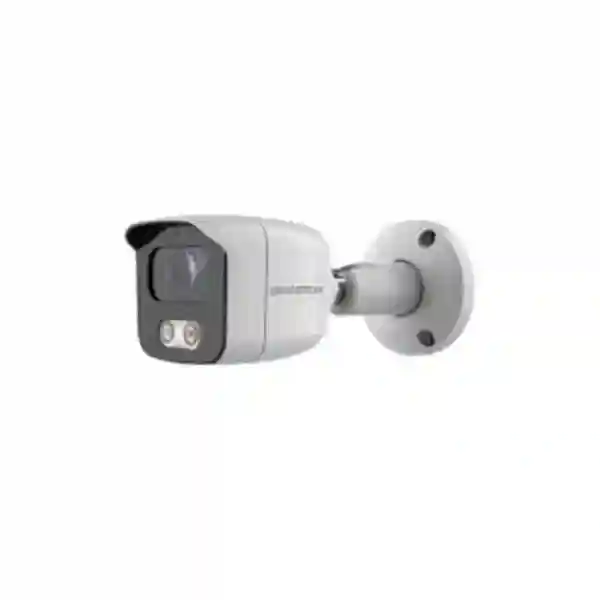
Grandstream IP Surveillance • Tanzania
Grandstream GSC3625 Tanzania
The Grandstream GSC3625 is a professional FHD infrared weatherproof varifocal and auto-focus IP box camera built for organisations that need a network-based surveillance endpoint with flexible optical adjustment, PoE connectivity, motion detection, ONVIF interoperability and SIP/VoIP integration. For businesses in Tanzania, the practical value of the GSC3625 is not limited to the camera body itself: successful deployment depends on correct lens positioning, network design, PoE capacity, recording architecture, secure remote access and a clear plan for how operators will view and respond to events.
FHD Network Video
Designed around a 2 MP Full HD imaging platform for network surveillance and operational monitoring.
Varifocal Auto-Focus
A 2.8 mm–12 mm varifocal lens with electronic auto-focus gives installers flexibility when framing entrances, yards, corridors and other monitored areas.
PoE & ONVIF
A 10/100 Ethernet interface with PoE can simplify cabling, while ONVIF Profile S support helps with compatible video-management integration.
SIP-Enabled Monitoring
Grandstream’s GSC36xx platform supports SIP/VoIP functions so video and audio workflows can be integrated with compatible endpoints and communication systems.
What is the Grandstream GSC3625?
The Grandstream GSC3625 is an FHD infrared weatherproof IP box camera from Grandstream’s GSC36xx surveillance family. Official technical material for the GSC3620/GSC3625 platform identifies the GSC3625 as a box-camera model that supports motion detection, variable focal adjustment with auto-focus, infrared operation, PoE networking and SIP/VoIP functions. The platform is intended for security and facility-management scenarios where a conventional network camera needs to work as part of a broader communications and monitoring environment.
For buyers, the GSC3625 should be evaluated as a system component rather than as an isolated camera. A security camera only delivers useful results when the scene, mounting point, focal length, lighting, recording system, network path and operator workflow are aligned. In a warehouse, the requirement may be wide situational coverage across loading activity. At an office entrance, the priority may be tighter framing. In a retail setting, administrators may need live viewing and recording without adding unnecessary network congestion. Each scenario influences how the lens is set, which stream is recorded, where the video is stored and how users are granted access.
The GSC3625 also carries an important procurement consideration: it is an older GSC36xx model, and buyers should verify current availability, lifecycle position, firmware compatibility and support requirements before standardising a new large deployment around it. FourTeck Tanzania can help customers compare an exact-model request against the operational requirement so that purchasing decisions are based on compatibility and intended use rather than model recognition alone.
Verified GSC3625 technical highlights
| Product type | FHD infrared weatherproof varifocal and auto-focus IP box camera |
| Imaging | 2 MP / 1920 × 1080 class imaging platform documented for the GSC362x family |
| Lens | 2.8 mm–12 mm varifocal with electronic auto-focus |
| Network | One RJ-45 10/100Base-T Ethernet port with PoE |
| Interoperability | ONVIF Profile S support |
| Day / night | Colour / black-and-white operation with IR-cut control |
| Detection | Motion detection supported |
| Protocols | The GSC36xx family documentation includes SIP, TCP/IP/UDP, RTP/RTCP, HTTP/HTTPS, DHCP, NTP, TLS and SRTP among supported protocols. |
Exact firmware behaviour, recorder compatibility and feature support should be validated for the specific hardware revision and software version before deployment. This is especially important when integrating an older camera model into a current VMS, SIP environment or security policy.
Why organisations choose a varifocal IP box camera
A fixed-lens camera is straightforward when the desired scene is already known and the mounting point cannot change. A varifocal camera offers more flexibility because the field of view can be adjusted during commissioning. This is valuable when installers must balance overview coverage with subject detail. On the GSC3625, the 2.8 mm–12 mm range gives project teams room to tune the scene after the physical mounting position is confirmed instead of relying entirely on a preselected fixed focal length.
This flexibility can be particularly useful in operational areas where a camera may be mounted several metres away from a doorway, gate, aisle or perimeter zone. The aim should not be maximum zoom for its own sake. The correct setting is the one that shows the required area at a useful level of detail while avoiding excessive empty space. During commissioning, the installer should test day and night conditions, account for headlights or reflective surfaces, and verify that the final view remains useful after normal environmental changes.
A box-camera form factor can also support project-specific housings, mounts or lens positioning strategies depending on the installation design. Buyers should confirm all required mounting accessories and environmental protection details as part of the quotation rather than assuming every accessory is included. That simple procurement step reduces delays after the camera reaches site.
PoE planning
PoE reduces the need for a separate nearby power socket, but the switch still needs sufficient PoE capacity for the total camera count. Design should include port count, power budget, uplink bandwidth, VLAN assignment and UPS protection for the switch if surveillance continuity matters.
Recording planning
Recording requirements should be defined by camera count, resolution, frame rate, codec, retention period and event policy. A recorder or VMS should be sized around expected traffic and storage rather than a simple camera-count label.
Secure remote access
Remote viewing should use controlled accounts, strong credentials and an appropriate secure access design. Avoid treating a camera as a public internet endpoint simply because remote viewing is required.
Grandstream GSC3625 use cases
The GSC3625 can be considered for business surveillance where flexible framing and network integration are useful. Typical environments include commercial entrances, warehouses, retail premises, hospitality properties, institutional buildings, offices, service counters, loading areas and selected outdoor monitoring positions. The correct use case depends on the visibility objective. A camera tasked with general activity monitoring has a different placement and lens requirement from one tasked with capturing a person approaching a controlled access point.
The camera’s SIP/VoIP capability is also notable for organisations already using Grandstream communications products. In a compatible design, video or audio events can participate in a broader facility-communications workflow. That does not mean every deployment should enable every integration feature. Simpler deployments can remain focused on ONVIF/VMS recording, while more integrated sites may connect surveillance with Grandstream video endpoints, intercom stations or other facility-management devices. The right architecture should match the operator’s day-to-day workflow.
For customers comparing the GSC3625 with current-generation IP cameras, consider not only headline resolution but also lifecycle, firmware, management experience, analytics needs, night performance, VMS compatibility, mounting requirements and availability of replacement units. A product that is technically compatible but difficult to source later may not be the best standard for a large new site. Conversely, an existing installation that already uses GSC36xx devices may have strong reasons to maintain model consistency if verified replacements are available.
Buying the GSC3625 in Tanzania: what to confirm before requesting a quote
A useful quotation request should include the exact model, quantity, intended mounting locations, whether the cameras are for new or existing infrastructure, PoE availability, recorder or VMS platform, required retention period and whether SIP integration is expected. If the camera will replace another model, include the current camera, housing, mount and recorder information. If it is part of a fresh surveillance design, a floor plan or simple site sketch can help determine whether the selected field of view fits the monitoring objective.
For broader technology procurement, the FourTeck Tanzania technology shop gives buyers a starting point for cameras, PoE switching, firewalls, telephony, servers and related infrastructure. Customers planning installation, integration or lifecycle support can also review FourTeck Tanzania services. These links are useful because a surveillance camera often depends on switching, storage, cabling, power protection and network-security decisions that sit outside the camera itself.
Grandstream GSC3625 Tanzania
For organisations sourcing the Grandstream GSC3625 in Tanzania, the first decision should be whether the camera still fits the intended surveillance architecture and lifecycle plan. The model combines Full HD network video, varifocal auto-focus optics, PoE, infrared support, motion detection, ONVIF interoperability and SIP-capable communications features. Those capabilities can suit businesses that want more than a basic fixed-lens camera, especially when the site requires flexible framing or integration with a network-based monitoring platform. A Tanzania deployment may involve a head office, warehouse, school, hospitality property, retail branch, industrial location or institution, and each setting places different demands on the camera.
A good Tanzania quotation should therefore start with the scene rather than the quantity alone. Identify what the operator needs to see, the distance to the subject, the expected lighting, the mounting position and whether the view must remain useful at night. From there, check PoE switch capacity, uplink bandwidth, recording storage and secure access. In multi-camera sites, video traffic should be planned intentionally so that surveillance does not compete unpredictably with business data, voice or Wi-Fi traffic. Managed switching and appropriate segmentation can improve troubleshooting and reduce unnecessary exposure between camera devices and user networks.
Because the GSC3625 is an older model, procurement teams in Tanzania should also ask about current availability and whether a newer alternative would offer a stronger lifecycle for a greenfield project. Existing Grandstream installations may favour continuity, while a completely new deployment may benefit from evaluating current products. FourTeck Tanzania can help frame that comparison around the required outcome instead of assuming that an exact model is automatically the best fit. Learn more about the company’s integrated approach on the FourTeck Tanzania about page, which explains how surveillance, networking, security and supporting infrastructure are considered together.
Grandstream GSC3625 Dar es Salaam
Businesses in Dar es Salaam evaluating the Grandstream GSC3625 may be planning surveillance for offices, retail locations, hospitality facilities, warehouses, logistics operations, commercial compounds or mixed-use buildings. In a dense business environment, the important design challenge is often not simply adding cameras but creating useful coverage while keeping the network, storage and user-access model manageable. A varifocal camera such as the GSC3625 can help where mounting points are fixed by building conditions but the required framing needs to be adjusted after installation.
For entrance monitoring, the installer may narrow the view to place more pixels on the approach area. For a loading bay or larger external zone, a wider view may be more useful for situational awareness. Night conditions should be tested at the real site because artificial lighting, vehicle headlights, reflective surfaces and shadows can affect image usability. Where several cameras feed an NVR or VMS, calculate total storage and bandwidth from the expected recording profiles instead of relying on rough assumptions. PoE switching should be checked for both available ports and total power budget, and critical switches or recorders may need UPS protection depending on the customer’s operational requirement.
Dar es Salaam customers should also consider future maintenance. Document camera names, IP addresses, switch ports, mounting positions, recording settings and administrator ownership. This makes fault isolation and later expansion much easier. If the GSC3625 is being requested to replace an existing unit, include the current firmware, VMS model and physical mounting information with the quotation request. FourTeck’s Tanzania technology solutions overview shows how CCTV, IP cameras, switching and network security can be planned as connected parts of the same site rather than independent purchases.
Grandstream GSC3625 Mwanza
In Mwanza, a Grandstream GSC3625 project may be driven by the need to supervise entrances, storage areas, retail operations, institutional facilities, commercial compounds or other business locations where network surveillance supports day-to-day security. The camera’s varifocal design gives installers flexibility when the exact field of view cannot be fixed from a desk. This matters when a real site inspection shows that the mounting point, corridor geometry, yard size or subject distance differs from early assumptions.
A Mwanza deployment should begin by defining the operational purpose of each camera. General monitoring, incident review and identification are different objectives. The lens setting, mounting height and scene width should reflect the objective. The network design should then support that camera plan. Where PoE is used, confirm that the switch can provide power to all connected cameras at once, not merely that it has enough physical ports. For multi-floor or multi-building locations, check uplink capacity and fibre requirements if the cable distances exceed normal Ethernet limits. Recording retention should be agreed in days and linked to storage capacity rather than left as an undefined expectation.
If remote monitoring is part of the requirement, security controls deserve the same attention as image quality. Use strong credentials, controlled roles and an appropriate remote-access method. Maintain firmware and configuration records so the system can be supported without guessing how it was built. For businesses with wider East African operations, a standard camera-network design can simplify support across sites. FourTeck’s regional presence can be explored through the FourTeck Africa technology site, which covers CCTV, networking, Wi-Fi and broader business infrastructure for regional requirements.
Grandstream GSC3625 Arusha
Arusha businesses considering the Grandstream GSC3625 may have surveillance needs across hospitality properties, offices, schools, tourism-related facilities, warehouses, retail sites and institutional environments. These locations can vary significantly in layout and operating hours, so camera selection should be tied to the actual viewing requirement. The GSC3625’s adjustable varifocal lens can help installers tune coverage after the final mounting point is known, which is valuable in spaces where a fixed lens might show too much empty area or too little context.
Hospitality and public-facing sites often require a careful balance between security visibility and respectful camera placement. The design should focus on entrances, circulation areas, service zones or other legitimate operational areas according to the organisation’s policy and applicable requirements. Warehouses and compounds may need different angles, longer scene depth and stronger attention to night conditions. Testing at the actual site is important because infrared performance, reflections and ambient lighting can influence the usefulness of recorded footage.
For network integration, administrators should decide whether the GSC3625 will record to an NVR, a VMS or another compatible platform, then validate ONVIF support and firmware compatibility before ordering a large quantity. SIP features may be valuable in selected Grandstream environments, but they should be enabled because they support a defined workflow, not simply because the camera offers them. Procurement should also confirm mounts, housings, power method, PoE switching and cabling. A complete request gives suppliers enough context to quote the camera as part of a functioning system rather than as an isolated device with hidden installation dependencies.
Grandstream GSC3625 Dodoma
For organisations in Dodoma, the Grandstream GSC3625 can be assessed for office, institutional, education, government-related, commercial and facility-monitoring environments that need an IP surveillance camera with flexible framing. As with any professional camera project, the purchase should be linked to a clear security objective. A procurement list stating only “camera quantity” is not enough to ensure the final system works. Each camera should have a reason for its location, an expected field of view and an agreed recording or monitoring workflow.
The GSC3625’s network design makes PoE a practical option where a compatible switch is available. That can simplify field cabling, but the switch, rack and power environment still matter. Critical surveillance switches may be placed on UPS-backed power, and ports should be labelled so technicians can identify the camera without tracing cables manually. For multi-building facilities, network topology and distance may determine whether additional switches or fibre links are needed. Recording servers or NVRs should be sized for the actual stream settings and retention period.
Dodoma buyers should also consider lifecycle risk when selecting an older camera model for a new standard. If the objective is to replace a failed unit in an established Grandstream system, matching the GSC3625 may be practical. If the objective is to design a new site with a long planned service life, compare current alternatives as well. This approach protects the organisation from making a technically correct purchase that becomes difficult to expand later. FourTeck Tanzania can help customers structure a quotation around the exact surveillance need, existing network and management platform before a model is finalised.
Grandstream GSC3625 UAE
Customers with operations in the UAE may encounter the Grandstream GSC3625 in existing surveillance environments, regional procurement lists or integrated Grandstream deployments. The same engineering principles apply: confirm the camera’s current lifecycle and availability, check the firmware level, identify the recording platform and verify that the required field of view can be achieved at the planned mounting distance. A varifocal camera is particularly useful when the site layout demands optical flexibility, but commissioning still requires on-site adjustment and validation.
In offices, warehouses, retail facilities and mixed commercial environments, network segmentation can help keep surveillance devices organised and easier to secure. PoE switches should be sized for the full camera load and appropriate uplinks. If recording crosses between network closets or buildings, bandwidth planning becomes more important. Remote access should be managed with strong authentication and suitable security controls rather than exposing camera interfaces directly. Where SIP functions are used, the communication design should be documented so camera-triggered workflows remain understandable to administrators after handover.
Multi-country organisations can benefit from standard operating principles even when device models differ by location. Common naming, VLAN structures, recording policies, password management, firmware procedures and documentation formats reduce support complexity. Buyers comparing an older GSC3625 installation in the UAE with a new Tanzania project should avoid assuming that exact model replication is always the best choice; instead, preserve the architecture and operating standards while selecting hardware with the right lifecycle for each site.
Grandstream GSC3625 Uganda
For buyers in Uganda, the Grandstream GSC3625 may be relevant to surveillance projects that need Full HD network video, adjustable optics, PoE and integration with ONVIF or Grandstream communications environments. Organisations should evaluate the model against the real use case: a camera monitoring a branch entrance needs a different lens setting and mounting approach from one covering a warehouse aisle or external loading area. Scene design should come before quantity and storage decisions.
Uganda deployments that span multiple branches can benefit from standardised camera naming, network segmentation and recorder policies. A consistent approach helps central IT teams understand which switch port, VLAN, IP address and recording group each camera belongs to. If the GSC3625 is deployed with PoE, confirm not only local switch capacity but also rack power and UPS strategy. For remote sites, bandwidth availability may influence whether live viewing or centralised recording is practical. Where local recording is used, administrators should still have a controlled method for reviewing footage and checking device health.
Businesses with projects across East Africa can compare local needs while keeping a common architecture. The FourTeck Uganda technology site covers CCTV, networking and communication solutions and can help regional teams coordinate requirements alongside Tanzania. Exact GSC3625 availability should be confirmed at the time of request, and procurement teams should remain open to a technically suitable current alternative where lifecycle or supply considerations make that the stronger business decision.
Grandstream GSC3625 Kampala
Kampala organisations looking for the Grandstream GSC3625 are often better served by framing the request around the surveillance outcome as well as the model number. Commercial properties, corporate offices, retail facilities, educational sites and warehouses can all use IP cameras, but their priorities differ. A retailer may value clear coverage of customer-facing areas and entrances. A warehouse may prioritise loading bays, aisles and perimeter activity. An office may need controlled visibility at entrances and sensitive operational areas. These requirements influence lens setting, placement and recording strategy.
The GSC3625’s varifocal optics provide useful flexibility, while PoE can streamline installation when compatible switching is already available. For an expanding Kampala network, administrators should calculate switch PoE headroom and reserve ports for future devices. Video traffic should be separated logically where appropriate, with clear firewall or routing rules governing who can reach the camera network. If a central VMS is used, verify ONVIF compatibility and test the required functions before committing to a large quantity.
Operational documentation is especially valuable in branch environments. Record camera labels, locations, viewing purpose, IP addresses, firmware versions and administrator roles. When troubleshooting occurs months later, these records save time and reduce the risk of disruptive resets. If the GSC3625 is part of a legacy system, request replacements with a clear statement of the existing platform. If the site is new, compare current Grandstream or compatible alternatives so the project has a sustainable lifecycle. The goal is a supportable security system, not simply possession of the requested model.
Grandstream GSC3625 Arua
In Arua, IP surveillance projects may need to operate in locations where network design, power continuity and remote support access deserve careful planning. The Grandstream GSC3625 can fit selected requirements where Full HD monitoring, variable focal adjustment, PoE and network integration are needed, but buyers should design the supporting infrastructure at the same time. A camera that performs well when connected directly in a test environment can still become unreliable on site if the switch, cabling, power or uplink design is weak.
For a small site, the design may involve a single PoE switch, local NVR and secure remote viewing. Larger sites may need multiple switches, fibre uplinks, central recording or segmented camera networks. Cable distances should be checked against Ethernet limits, and outdoor routes should use suitable protection. The camera’s field of view should be commissioned on site using the varifocal lens so the intended area fills the frame appropriately. Avoid leaving unnecessary sky, ceiling or wall space in the image when the operational subject is elsewhere.
Arua procurement teams should also ask how the system will be maintained. Who owns the administrator credentials? How will firmware be reviewed? Where are configuration backups recorded? What happens if the NVR or uplink fails? These questions are often more important than adding extra camera features. Where the GSC3625 is requested because an existing system already uses it, include the hardware and firmware context. Where it is a fresh project, validate current lifecycle and supply so the chosen standard can be supported over the expected project life.
Grandstream GSC3625 Mbarara
Mbarara customers considering the Grandstream GSC3625 may be planning surveillance for commercial premises, retail branches, institutional sites, hospitality operations or warehouses. The most useful starting question is what event the camera must capture. If the goal is to see movement across a broad area, a wider framing may be appropriate. If the goal is to observe a particular doorway or transaction point, the varifocal lens can be adjusted to concentrate more detail in that zone.
PoE helps simplify field installation by combining data and power over Ethernet, but the network still requires careful sizing. A PoE switch should have enough total power capacity and should not be operated at the edge of its limit if expansion is expected. Uplinks must handle combined video traffic, and the recording system must have enough storage for the requested retention period. Where multiple camera streams traverse WAN links, bandwidth constraints may require local recording with selective remote access rather than continuous central recording.
For long-term support, the camera environment should be documented and secured. Use unique credentials, avoid default passwords, restrict administrative access and maintain a change record. If SIP integration is used with Grandstream communications equipment, document the accounts and call flow so future technicians understand why the feature exists. Buyers should also verify current GSC3625 availability and compare alternatives if the model is difficult to source. The strongest purchase is the one that meets the visibility objective, integrates cleanly and remains maintainable after installation.
Grandstream GSC3625 Gulu
For a Gulu surveillance project, the Grandstream GSC3625 can be evaluated where adjustable optics and IP-based monitoring are required. Whether the location is a business office, school, warehouse, hospitality facility or institution, camera placement should be tied to the risk or operational event being monitored. More cameras do not automatically create better security if they are poorly positioned or recorded at settings that make footage difficult to use.
The GSC3625 offers a network-centric approach that can fit structured Ethernet installations. PoE reduces local power complexity, and ONVIF support can assist integration with compatible VMS platforms. Before deployment, test compatibility with the actual recorder software, especially when the camera and management platform come from different generations. Review resolution, frame rate, codec and retention settings as a complete storage model. If a site has limited bandwidth, avoid unnecessarily high live-view streams over constrained links when lower-bandwidth substreams can meet monitoring needs.
Environmental planning also matters. Outdoor or semi-exposed camera positions should be checked for cable protection, mounting stability and the actual weather exposure of the complete installation. Lighting at night should be inspected from the final camera angle. A theoretically good camera can produce disappointing footage if infrared reflects from a nearby surface or the camera points directly toward strong light sources. For Gulu buyers, a site-specific commissioning checklist gives more value than relying on specification sheets alone. Confirm lifecycle and supply before standardising the GSC3625 across a new large estate.
Grandstream GSC3625 Kenya
Kenya-based organisations considering the Grandstream GSC3625 may need consistency with an existing East African surveillance standard or may be comparing IP camera options for a new branch. In either case, the selection should account for lifecycle as well as technical features. The GSC3625 provides Full HD class imaging, adjustable varifocal optics, PoE, motion detection, IR operation, ONVIF compatibility and SIP-enabled integration, but an older model can create procurement risk if expansion is expected over several years.
A new Kenya project should therefore map the requirement first: camera purpose, viewing distance, lighting, indoor or outdoor exposure, recorder/VMS platform, retention period, network topology and remote-access workflow. Existing sites may prioritise compatibility with the current Grandstream environment; new sites may prioritise long-term supply and management. Either choice can be valid when it is made deliberately. The camera VLAN, PoE switch, uplink and recording platform should be sized together so the network remains predictable as camera count grows.
For organisations with offices in Kenya and Tanzania, common documentation can reduce support effort. Use consistent naming, IP address plans, user roles, recording policies and incident-review procedures. Hardware does not have to be identical across every branch if the operational standards are aligned. If the GSC3625 is requested for a replacement, provide the existing recorder and firmware information with the enquiry. If it is for a fresh site, request a comparison against a current supported alternative before approving the bill of materials.
Grandstream GSC3625 Kuwait
For customers in Kuwait, the Grandstream GSC3625 can be assessed as part of a network-surveillance environment where adjustable framing and standards-based integration are useful. Commercial offices, warehouses, retail environments and compounds can require very different scenes, making the varifocal lens valuable during commissioning. The installer should set the field of view based on the actual subject distance and intended monitoring purpose rather than leaving the lens at a generic position.
Network design should include PoE power, switch capacity, uplinks, recording bandwidth and secure administration. Surveillance devices should be treated as managed network endpoints, with restricted access and documented ownership. If the camera records to an ONVIF-compatible platform, test the specific functions needed by operators instead of assuming every VMS implements every feature identically. Where SIP/VoIP features are part of the workflow, configure them only after the communication path and user roles are clearly defined.
Climate and installation conditions also deserve attention. The complete mounting and housing arrangement should be appropriate for the selected location, and cabling should be protected from environmental stress. Night performance must be verified after installation because artificial lighting and reflective surfaces can change the scene significantly. As with other markets, exact GSC3625 availability should be confirmed before procurement. Existing installations may justify exact-model replacement, while new standardisation projects should compare current lifecycle options so support and future expansion remain practical.
Grandstream GSC3625 Ghana
Ghana organisations searching for the Grandstream GSC3625 may be supporting existing Grandstream surveillance infrastructure or evaluating a network camera for a new security requirement. The model’s combination of FHD video, varifocal autofocus optics, PoE, infrared operation, motion detection, ONVIF interoperability and SIP capability can be useful in business environments, but buyers should validate that its lifecycle and integration profile match the planned project.
For offices, warehouses, schools, retail properties or hospitality sites, the camera plan should start with a coverage map. Mark entrances, circulation points, perimeter zones and operational areas that genuinely require monitoring. Then select mounting points and use the varifocal range to optimise each view. Recording capacity should be calculated from the actual video settings and retention target. PoE switching should include spare capacity for growth, and network segmentation can make administration cleaner while reducing unnecessary access from general user devices.
Remote monitoring is often valuable for multi-site businesses, but it must be designed securely. Avoid simple public exposure of camera web interfaces. Use controlled access, strong credentials and an appropriate protected path. Maintain a device inventory with serial information, IP addresses, firmware versions and location names. This operational discipline matters more as the number of cameras grows. If exact GSC3625 supply is uncertain, compare compatible current alternatives before final approval. The objective is to build a surveillance environment that can be supported and expanded rather than to preserve one model number at any cost.
Grandstream GSC3625 Nigeria
In Nigeria, the Grandstream GSC3625 can be relevant to organisations that operate multi-site surveillance or already use Grandstream devices in their communications and security environment. Its adjustable lens can help standardise a camera platform across locations where mounting distances vary, while PoE and ONVIF support can simplify integration with suitable network infrastructure and video-management systems. However, standardisation decisions should include product lifecycle, not only feature compatibility.
For a branch rollout, create a repeatable design template that defines camera naming, IP addressing, VLANs, PoE switch standards, NVR/VMS configuration, retention, user roles and documentation. Each branch can then adjust lens framing and camera count according to the site while preserving the same operating model. This approach is more scalable than treating every installation as an unrelated project. Where WAN bandwidth is variable, local recording with controlled central review may be more practical than sending all video continuously to one location.
Security and maintenance should be built into the procurement process. Confirm how firmware is updated, who stores credentials, how failed devices are replaced and what information is required for troubleshooting. If the GSC3625 is being requested because of existing inventory, document the current VMS and firmware so compatibility can be checked. If the project is new, ask for current alternatives alongside the exact model request. That gives procurement teams a meaningful comparison of compatibility, lifecycle and total supportability rather than a price-only decision.
Grandstream GSC3625 Seychelles
Seychelles projects may place particular emphasis on environmental exposure, remote site support and reliable network design. The Grandstream GSC3625 can be evaluated for selected commercial, hospitality, institutional and operational locations where Full HD monitoring, varifocal adjustment and IP integration are required. The camera’s documented weatherproof design does not remove the need to plan the entire installation carefully: mounting hardware, cable entry, network equipment and surrounding infrastructure all contribute to reliability.
Hospitality and public-facing environments should define exactly which areas need monitoring and how footage will be accessed. A varifocal lens can help avoid excessive coverage outside the intended zone by allowing more precise framing. The final view should be tested during both bright and low-light conditions. Where cameras are connected through PoE switches, those switches should have adequate power headroom and be placed in protected, maintainable locations. Recorder or VMS capacity should be sized for the number of channels and desired retention rather than selected by a generic label.
Remote administration may be important for island or distributed environments, but access should be controlled and documented. Keep a current inventory of firmware, IP addresses, camera names and network locations. If the GSC3625 is difficult to source, assess a current alternative rather than allowing a single legacy model to become a bottleneck for expansion. For replacement requirements, exact matching may still make sense where compatibility and spare strategy are already established. The procurement decision should therefore balance technical fit, supply, lifecycle and future maintenance.
Compatibility, integration and deployment checklist
Confirm ONVIF compatibility and test the required live view, recording, playback and event functions with the actual platform.
Check available ports, total PoE budget, uplink capacity and UPS strategy for the switch supporting the cameras.
Validate mounting distance, required scene width, physical housing and all accessories before purchase.
Define recording resolution, frame rate, codec, retention and camera count, then size storage around those assumptions.
Use strong credentials, limited administrator access, network segmentation and secure remote access procedures.
Verify current availability, firmware status, replacement strategy and whether a newer model is preferable for a greenfield rollout.
Frequently asked questions about the Grandstream GSC3625
Is the Grandstream GSC3625 a PoE camera?
Yes. Grandstream technical documentation for the GSC3625 lists an RJ-45 10/100Base-T Ethernet interface with PoE, allowing compatible network switching to provide both connectivity and power over the Ethernet cable.
Does the GSC3625 support ONVIF?
Grandstream documentation identifies ONVIF Profile S support. For a real deployment, compatibility should still be tested with the selected NVR or VMS because implementation details and supported functions can vary between platforms and firmware versions.
What lens does the GSC3625 use?
The GSC3625 documentation lists a 2.8 mm–12 mm varifocal lens with electronic auto-focus. This allows the installer to adjust the field of view to suit the mounting distance and monitoring objective.
Can the GSC3625 work with SIP systems?
Yes. The GSC36xx platform supports SIP/VoIP functions for video and audio workflows. Use in a particular PBX, endpoint or facility-control setup should be validated against the actual firmware and integration requirement.
Is the GSC3625 suitable for a new large deployment?
It can meet technical requirements, but it is an older model. For a new large rollout, verify current lifecycle and supply, then compare current alternatives. For existing installations, exact-model replacement may still be useful if compatibility and spare strategy support that choice.
What information should I provide for a quotation?
Provide the model and quantity, site type, camera locations, indoor/outdoor requirement, approximate viewing distances, recorder or VMS platform, PoE switch information, retention requirement and whether SIP integration is needed. Photos or a simple floor plan can be useful for larger projects.
Quotation checklist for Grandstream GSC3625
Before sending a request, prepare the following information: exact quantity; new deployment or replacement; building or site type; indoor or outdoor location; approximate mounting height and distance; required coverage area; existing recorder or VMS; existing switch model and PoE capacity; network topology; retention target; remote viewing requirement; SIP integration requirement; mounting accessories; expected project timeline; and whether equivalent current models may be considered. Clear inputs allow the quotation to focus on compatibility and complete project scope instead of only the camera price.
Decision recap
Choose the Grandstream GSC3625 when its verified feature set, physical form factor and integration profile match the operational requirement and its lifecycle fits the project. Its main strengths are flexible varifocal auto-focus framing, Full HD network video, PoE, infrared operation, motion detection, ONVIF interoperability and SIP-capable integration. Do not select it only because it appears on an older bill of materials. For a new installation, compare lifecycle, availability, VMS compatibility and future expansion. For an existing GSC36xx installation, exact-model continuity may be a strong reason to retain it if supported stock is available.
Need help validating the GSC3625 for your site?
FourTeck Tanzania can help review the camera requirement together with PoE switching, recording, network segmentation, remote access and installation dependencies. Share the intended monitoring area, quantity, existing infrastructure and any compatibility constraints. The goal is to confirm that the selected camera and supporting architecture are appropriate before procurement.



Reviews
There are no reviews yet.