
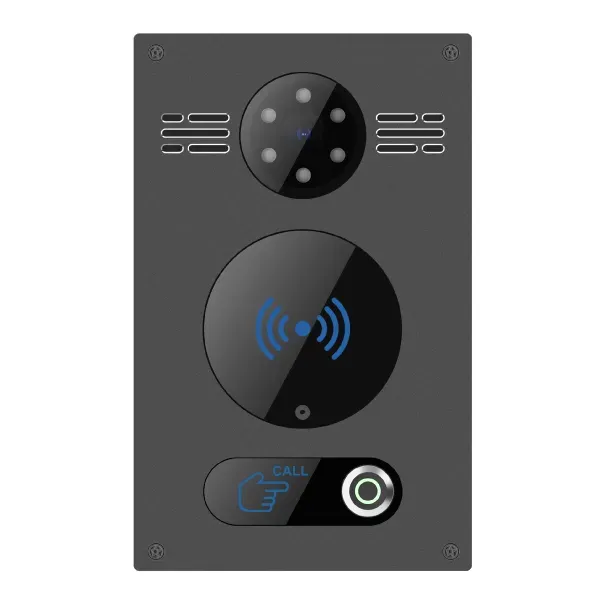
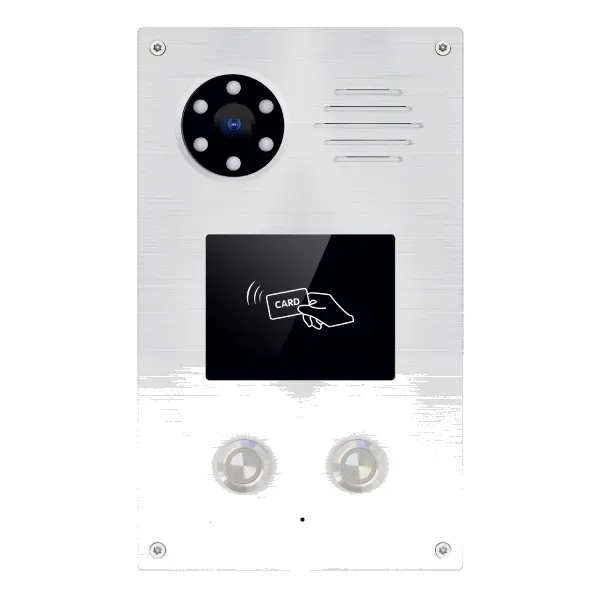
Dinstar DP85 SIP Intercom
The Dinstar DP85 is a SIP video intercom designed for controlled entrances where organizations want visitor calling, visual verification, IP-based communication and electronic-door release in one networked endpoint. Official Dinstar information for the DP85 family identifies an integrated camera, HD voice, RFID-assisted access, SIP registration, remote release through DTMF, IP65 and IK10 protection, Ethernet connectivity and centralized management options. The newer DP85-1B datasheet further documents a 4-megapixel color CMOS camera, video up to 1920 × 1080, H.264/H.265, 802.3af PoE, two relay outputs and a range of access-control interfaces. FourTeck Tanzania helps turn those device capabilities into a practical project plan by checking the door hardware, lock power, network, SIP destination, mounting location and operating workflow before quotation.
Choose the DP85 when the entrance needs SIP calling plus video and RFID-supported door access. Confirm the exact DP85 variant, lock interface, PoE design and PBX compatibility before ordering.
SIP v1/v2 support, dual SIP lines and dual SIP servers make the intercom suitable for compatible IP PBX and SIP-server environments.
The DP85 family provides an integrated camera for visitor viewing; the DP85-1B datasheet lists 4 MP imaging and up to 1080p resolution.
DTMF remote release, password and RFID-supported access can be incorporated when the electronic lock, relay wiring and site policy are correctly designed.
IP65 and IK10 ratings documented for the family support protected indoor or outdoor entrance use, subject to proper installation and site conditions.
What the Dinstar DP85 is designed to solve
Traditional doorbells separate visitor communication from the business phone system. Standalone card readers separate staff entry from visitor handling. The DP85 brings these functions closer together by acting as a networked SIP endpoint at the door. A visitor can initiate a call to a configured SIP destination, staff can communicate through two-way audio, a compatible answering device can display the camera stream, and an approved user can trigger the door release through the configured access workflow. For regular staff entry, RFID-supported variants can reduce the need to call reception every time.
That architecture is useful for offices, apartment entrances, schools, clinics, warehouses, service gates and institutional buildings where the entry point should become part of the IP communications environment rather than remain an isolated analog system. It also means the purchasing decision extends beyond the intercom itself. The network switch, PoE budget, VLAN design, SIP PBX, electronic lock, exit button, door sensor, Wiegand reader if used, and physical mounting must all be considered as one installation.
FourTeck Tanzania therefore treats the Dinstar DP85 as a project component rather than a box-only purchase. Buyers can review related business IT and telecom products in the Tanzania shop, the broader FourTeck Tanzania integration services, and request a site-aware quotation through the Tanzania contact page.
Verified DP85 technical highlights
| Area | Verified Dinstar information | Project relevance |
|---|---|---|
| Communication | SIP v1/v2, dual SIP lines, dual SIP servers, full-duplex audio | Integrates the entrance with a compatible IP PBX or SIP server. |
| Video | DP85-1B: 4 MP CMOS, H.264/H.265, up to 1920 × 1080, 80° horizontal / 60° vertical viewing angle | Supports visual visitor identification at the entry point. |
| Audio | HD voice, G.722, PCMA, PCMU, G.729, G.723 and G.726 family, echo cancellation | Provides two-way voice across compatible codec paths. |
| Access | DTMF, password and RFID card on supported DP85 variants; relay outputs and door inputs on DP85-1B | Supports remote release and credential-based entry when integrated correctly. |
| Power/network | DP85-1B: 12V DC or 802.3af PoE; 10/100 Mbps Ethernet | Simplifies cabling when a compatible PoE switch is available. |
| Security | SIP over TLS, SRTP, HTTPS management, 802.1X listed in the DP85-1B datasheet | Provides stronger signaling, media and management options when the surrounding platform supports them. |
| Protection | IP65 and IK10 family positioning; DP85-1B working temperature documented as -30°C to 65°C | Relevant to entrances exposed to dust, moisture and physical contact, with correct mounting. |
Compatibility, network and installation planning
A successful DP85 deployment begins with the answering workflow. Decide whether visitor calls should ring a reception IP phone, an indoor monitor, a security desk, a mobile softphone through the PBX, or a call group. Confirm that the chosen SIP platform supports the required registration and call features, and test video behavior where video preview is important. SIP standards improve interoperability, but a standards-based device can still behave differently across PBX versions, video codecs, NAT conditions and provisioning methods.
Next, design the physical door side. Confirm electric strike, magnetic lock or other lock type; required voltage and current; fail-safe or fail-secure behavior; fire and emergency-release requirements; relay wiring; door contact; exit button; and any external reader. The intercom should never be selected without understanding these dependencies. Security teams may also want CCTV coverage of the same entrance, but the door-station camera and a surveillance camera often serve different purposes and should not automatically be treated as interchangeable.
Finally, prepare the LAN. Use a managed PoE switch where central power is preferred, verify the PoE budget, decide the voice/security VLAN, define addressing and DHCP behavior, control access to the web interface, and document firmware and configuration backups. If the entrance is exposed to the public, mounting quality, tamper resistance, weather protection and cable routing deserve the same attention as software configuration.
Related Dinstar and FourTeck Tanzania products
Dinstar C63G Business IP Phone
A SIP desk phone option for answering entrance calls as part of a compatible PBX workflow. Review the Dinstar C63G Tanzania page.
Dinstar C64GP PoE Business IP Phone
Useful when a PoE desk endpoint is preferred for reception or security-desk call handling. See the Dinstar C64GP Tanzania page.
Dinstar DAG1000-1S ATA
Relevant where a wider voice project also needs an analog endpoint connected to SIP. Explore the DAG1000-1S Tanzania page.
Dinstar DAG1000-1S1O Hybrid Gateway
For sites mixing SIP with analog line requirements, the DAG1000-1S1O Tanzania gateway can be evaluated separately.
Dinstar DAG1000-2O FXO Gateway
Useful where legacy analog trunks need to connect into a SIP environment. See the DAG1000-2O Tanzania page.
Dinstar DAG1000-2S ATA
A two-FXS option for analog phone integration in a broader SIP deployment. Review the DAG1000-2S Tanzania page.
Buying checklist before requesting a DP85 quotation
Dinstar DP85 SIP Intercom Tanzania
For organizations searching for the Dinstar DP85 SIP Intercom in Tanzania, the most useful purchasing approach is to begin with the entrance workflow rather than with the unit alone. The DP85 is intended to connect visitor communication with an IP-based voice environment while also supporting controlled door release. A visitor can call a configured SIP destination, staff can speak to the visitor through two-way audio, and compatible endpoints can be used for visual verification. Where the chosen DP85 variant supports RFID, authorized users can enter with credentials instead of calling reception for every entry. This makes the platform relevant to offices, schools, clinics, apartment buildings, warehouses, logistics sites and institutional entrances that want one managed path for communication and access.
Tanzania projects should define the surrounding infrastructure before ordering. The DP85-1B datasheet lists 802.3af PoE and 10/100 Ethernet, which can simplify installation where a managed PoE switch is available. The switch must still have enough remaining power budget, and the cabling route to the door should be checked for distance, protection and maintainability. The electronic lock requires its own engineering review because a relay contact does not automatically mean the intercom should directly power the lock. Lock voltage, current, fail-safe or fail-secure behavior, exit devices and emergency release requirements all need to be confirmed. Network teams should also plan VLAN placement, addressing, HTTPS administration and SIP security rather than putting the public-facing door endpoint on an unmanaged flat network.
For procurement, share the exact number of doors, preferred model variant, PBX, answering endpoints, lock details, PoE availability, RFID requirement and installation environment. This information allows a quotation to include the dependencies that are commonly missed when a buyer searches only for “DP85 price Tanzania.” The FourTeck Tanzania technology portfolio also covers IP PBX, IP phones, networking and access control, which are the main solution areas surrounding a SIP intercom deployment.
Dinstar DP85 SIP Intercom Dar es Salaam
Dar es Salaam buyers may encounter a wide range of entrance-control requirements, from corporate offices and commercial buildings to logistics facilities, hospitality properties, clinics and managed residences. In these environments, the value of a SIP door intercom is that it can use the same structured IP communications approach already used by business phones and network services. The Dinstar DP85 can register to compatible SIP infrastructure, route visitor calls to designated users and participate in a documented call flow instead of relying on an isolated doorbell. This is particularly useful for reception areas, security posts and service entrances where staff need to speak with a visitor before approving access.
A Dar es Salaam deployment should account for the physical exposure of the entrance. Dinstar positions the family with IP65 and IK10 protection, but the rating does not remove the need for correct mounting, sealed cable entries and sensible placement. Direct weather exposure, wall construction, gate vibration, tampering risk and the location of the lock power supply can all affect long-term reliability. For sites with gatehouses or remote entrances, planners should also check Ethernet distance and whether fiber or an intermediate protected network cabinet is required rather than extending copper beyond practical limits.
The answering side deserves equal attention. A reception team may want the door call to ring a SIP desk phone; a security room may prefer an indoor monitor; a larger site may want simultaneous or sequential ringing across a group. Video requirements should be tested with the exact PBX and endpoint because SIP registration alone does not guarantee identical video presentation across every platform. For a useful quotation, Dar es Salaam customers should provide door count, existing PBX, network-switch model, lock specification, card-access requirement and proposed answering points. That creates a clear basis for product selection, integration and commissioning instead of treating the intercom as an independent accessory.
Dinstar DP85 SIP Intercom Mwanza
In Mwanza, the Dinstar DP85 can be considered for organizations that want to modernize controlled entry while keeping visitor communication connected to a central phone system. Warehouses, offices, educational sites, clinics, residential developments and service facilities may all have entrances where a guard or receptionist should verify a visitor before releasing the door. A SIP intercom changes the operational model by allowing that call to be delivered to an IP endpoint rather than to a dedicated analog handset. When the PBX design is documented correctly, the call can follow business rules such as time schedules, ring groups or backup destinations.
Mwanza deployments should pay close attention to network continuity and power. PoE can reduce the number of separate power adapters at the door, but the intercom still depends on the switch, upstream network and PBX. If the entrance is operationally important, the PoE switch and related network equipment may need UPS support so short power interruptions do not immediately remove the communication path. If the PBX is located at another site or in a hosted environment, WAN stability, latency, firewall rules and NAT handling become part of the access-control conversation. A door intercom cannot be more reliable than the path carrying its SIP traffic.
RFID can support staff entry while visitor calls remain available for guests, deliveries and contractors. Before using card access, define who issues cards, how lost cards are revoked and whether event records are needed elsewhere in the security system. If a separate access-control platform is already deployed, determine whether the DP85 should act only as the visitor intercom or whether its relay and reader interfaces should participate in the wider design. Mwanza buyers should request quotations with the site workflow, lock type, network topology, number of users and desired answering devices clearly stated. This prevents unnecessary accessories and helps identify any additional PoE, PBX or cabling requirements early.
Dinstar DP85 SIP Intercom Arusha
Arusha organizations in hospitality, tourism administration, education, professional services, residential management and general commerce may need an entrance device that balances visitor convenience with controlled access. The Dinstar DP85 is relevant where the site already uses, or plans to use, SIP-based communications. Instead of installing a completely separate intercom network, the entrance can become another endpoint in the voice environment. Reception or security personnel can receive the visitor call on a compatible SIP device, speak through the DP85’s two-way audio and release a connected electronic lock when policy allows.
Hospitality and guest-facing environments should design the user experience carefully. The call button needs a clear purpose, the answering destination should be staffed at the relevant hours, and after-hours behavior should be defined before commissioning. A hotel back entrance may ring security, while a reception entrance could route to front desk staff. A lodge service gate may need a different destination after normal business hours. The PBX can often provide these call-routing functions, but the exact configuration depends on the platform. The DP85’s value comes from fitting into that wider workflow rather than from one isolated hardware feature.
Physical conditions matter as well. Outdoor or semi-exposed entrances should be assessed for rain direction, sunlight, dust, tampering and mounting surface. Although the product family carries IP65 and IK10 positioning, site preparation remains essential. Network cabling should be protected, and the lock interface should be wired according to the door-hardware design. Where RFID is required, facilities teams should define credential enrollment and removal procedures. Arusha procurement teams should include site photos or drawings, number of doors, PBX details, switch model, card-access expectations and electronic-lock specifications when requesting a quote. Those details allow the intercom to be matched to the real entrance rather than purchased as a generic “video door phone.”
Dinstar DP85 SIP Intercom Dodoma
For Dodoma offices, institutions, educational facilities, administrative buildings and private organizations, the Dinstar DP85 can support structured visitor communication at controlled doors. The device belongs in projects where the organization wants the entrance to connect into an IP communications system instead of operating as a standalone analog intercom. A visitor initiates a call, the SIP platform routes that call to an approved answering point, and the receiving user can decide whether to release the electronic lock. Where RFID is part of the chosen DP85 configuration, routine staff access can be separated from the visitor workflow.
Institutional buyers often need clear documentation, and the DP85 project should be specified as a small system rather than as a single line item. The bill of materials may include the door station, PoE switch port, network cabling, lock power supply, lock or strike, exit button, door contact, indoor monitor or IP phone, and PBX license or extension where the platform requires one. Not every site will need every item, which is why the installation drawing and existing infrastructure should be reviewed before procurement. This also helps purchasing teams compare quotations fairly because one offer may include installation dependencies that another leaves out.
Security configuration should be documented during commissioning. Use strong administrator credentials, restrict management access, prefer HTTPS where practical, define VLAN and firewall policy, record the SIP account assignment and back up the final configuration. If TLS or SRTP is required, the PBX and certificates must be prepared for it. Dodoma buyers should state whether the project is a new building, a replacement of an existing intercom or an integration into an established PBX. They should also provide quantity, door type, user flow, network readiness and desired support scope. That information produces a more useful quotation than requesting the DP85 by model name alone.
Dinstar DP85 SIP Intercom UAE
UAE projects often combine structured cabling, managed PoE switching, IP PBX, CCTV and access control within one building-technology environment. The Dinstar DP85 can fit this architecture where a business or residential entrance needs SIP visitor calling, video verification and controlled release. Commercial offices, warehouses, villas, schools, clinics and service entrances may all benefit from routing door calls to an existing communications platform instead of maintaining a separate intercom system. The device’s SIP support, Ethernet connectivity and centralized management functions align well with professionally managed networks.
For UAE deployments, the exact product variant and installation environment should be checked carefully. Projects commonly expect PoE, but buyers should confirm the chosen DP85 version and switch compatibility rather than assume that every historical DP85 model has identical hardware. The DP85-1B datasheet lists 802.3af PoE and 1080p video capability, while Dinstar’s broader DP85 family page contains some older family-level specifications. Using the exact datasheet for the quoted model avoids mixing specifications from different revisions. Electronic-lock wiring, Wiegand use, exit devices and building-safety requirements should be coordinated with the access-control contractor.
Organizations managing more than one site should also standardize configuration naming, firmware, SIP accounts and administrative access. FourTeck’s UAE technology site and specialist IP phone resources provide additional regional context for business communications. A UAE quotation request should include the number of entrances, exact city/site, PBX brand, lock type, PoE-switch model, answering endpoints, RFID requirement and whether installation or configuration support is expected. This makes the proposed solution easier to compare and deploy.
Dinstar DP85 SIP Intercom Uganda
Uganda organizations looking for a Dinstar DP85 SIP Intercom may be planning office access, school entrances, apartment gates, clinic doors, warehouses or secure service points. The primary advantage of the device is its ability to participate in a SIP communication environment. A visitor call can be sent to a reception phone, guard desk or another approved endpoint, while staff can use the access-control functions defined for the selected variant. This creates a practical bridge between the communications team and the facilities/security team, but it also means both groups should agree on the workflow before installation.
For Uganda sites outside a single central office, branch connectivity deserves special attention. If the PBX is hosted elsewhere, the intercom depends on the WAN path, firewall policy and network quality. Voice and video packets should not compete blindly with large data transfers or surveillance traffic on an unmanaged connection. Managed switching, QoS where appropriate, documented VLANs and stable addressing help reduce troubleshooting later. If PoE is used, the switch power budget and backup-power strategy should be checked. If local DC power is used instead, the adapter and lock power supply require secure placement.
Uganda buyers can also review FourTeck’s Uganda IT and VoIP solutions for regional communications context. Procurement requests should identify the number of locations, door hardware, required answering devices, SIP platform and whether RFID cards are part of the operating policy. For a multi-branch organization, it may be useful to standardize one intercom configuration template and document a repeatable commissioning checklist. The result is easier to support than configuring every branch differently, especially when central IT teams are responsible for remote administration.
Dinstar DP85 SIP Intercom Kampala
Kampala businesses often operate in mixed-use environments where offices, retail spaces, apartments, schools, clinics and service facilities share a need for reliable visitor screening. The Dinstar DP85 can help place the entrance inside the organization’s SIP communications workflow. Receptionists or security teams can answer the call on compatible endpoints, use audio and video to verify the visitor and release a connected lock when approval is given. This can be simpler to manage than maintaining an independent intercom platform, especially where the organization already has an IP PBX and managed network.
Busy Kampala sites should plan the door call flow for peak conditions. If one receptionist is already handling external calls, it may be better to route the entrance to a small ring group or security extension. If the reception closes after business hours, the PBX should have a defined alternate destination rather than letting door calls fail silently. Video preview should be tested on the actual answering endpoint because SIP phones differ in how they display video. In some installations, an indoor monitor may remain the preferred visual endpoint while desk phones provide audio backup.
Installation should include network and security documentation. Record the switch port, VLAN, IP addressing method, SIP extension, relay behavior, card enrollment process and administrative credentials according to the organization’s policy. If the entrance is publicly accessible, restrict management access and avoid exposing the web interface unnecessarily. Kampala buyers should provide quantities, PBX model, PoE-switch details, cable distance, door-lock specification and desired support scope when requesting pricing. That allows the quotation to identify whether only the intercom is required or whether additional switching, cabling, phones, access hardware or configuration services should be considered.
Dinstar DP85 SIP Intercom Arua
For Arua offices, branch locations, schools, clinics, warehouses and managed residences, the Dinstar DP85 can provide a structured visitor-call endpoint when an IP network is available at the entrance. The device can register through SIP, communicate with a compatible PBX or server and support a controlled door-release workflow. This is useful for sites where the person answering the entrance may not sit directly beside the door. A receptionist, administrator or guard can handle the call from an IP endpoint and make the access decision from a more secure location.
Branch sites should avoid designing a door system that depends on an unreliable remote connection without a fallback plan. If the PBX is located in another city or country, confirm the internet path, NAT behavior and firewall configuration before rollout. Where possible, test a pilot intercom from the actual branch network rather than assuming that a successful office-lab test will behave identically across the WAN. Network documentation should include DNS, time synchronization, provisioning method and the route used for SIP signaling and media. Backup power for the PoE switch can also be important if the intercom is expected to function through short electrical interruptions.
The access-control portion should remain understandable to local operators. Define who can issue RFID cards, who can change the door-release configuration and what to do when a card is lost or a user leaves the organization. If the door is safety critical, emergency egress must follow the building’s applicable safety design and should not rely only on the intercom. Arua buyers should request the DP85 with full project details: entrance count, lock type, card count, PBX location, network connection, answering user and mounting conditions. That information makes remote planning and eventual support much more reliable.
Dinstar DP85 SIP Intercom Mbarara
Mbarara organizations may evaluate the Dinstar DP85 when upgrading from a basic doorbell, analog intercom or manually controlled entrance to a networked visitor-communication system. The device is suitable where the entrance should call into a SIP environment and where video and RFID-supported access add operational value. Offices can route visitors to reception, educational facilities can send calls to an administrative desk, warehouses can use the intercom at a loading or service gate, and residential developments can integrate it with a compatible indoor communication arrangement.
A practical design separates the communication function from the security decision. The DP85 can provide the call and relay interface, but the organization still needs a clear policy for who may release the door and under what circumstances. Card access should be administered with a current user list, while visitor release should be limited to authorized personnel. For sensitive areas, consider whether a separate access-control controller, event logging or CCTV coverage is needed in addition to the intercom. The door-station camera helps the answering user see the visitor, but it should not automatically be treated as the only surveillance camera for incident recording.
Mbarara sites should also check physical wiring early. The DP85-1B can use 802.3af PoE, simplifying the network side, but the lock and other door hardware may have separate power requirements. Confirm cable routes, surge exposure, protected network equipment and the distance back to the switch. Procurement teams should include PBX brand, switch model, lock details, door type, user quantity, RFID need and installation scope in the enquiry. These details help distinguish a simple product supply request from a complete door-communication project and reduce surprises during installation.
Dinstar DP85 SIP Intercom Gulu
In Gulu, the Dinstar DP85 can serve business and institutional sites that need a networked entry point for visitor calling and controlled door release. Instead of dedicating a separate handset to the door, the intercom can use SIP to reach selected staff on compatible endpoints. That can be valuable for offices with limited reception staffing, educational facilities with controlled entry, clinics that need visitors to call before entering certain areas, or warehouse and service entrances that are physically separated from the main administration area.
The implementation should reflect the reliability of the local site network. A single intercom may use very little bandwidth compared with other IT services, but poor cabling, unstable switching or incorrect firewall rules can still prevent calls. The switch port should be documented, PoE capability verified and network access restricted appropriately. Where the PBX resides remotely, test the full path for registration, audio, video and door-release signaling. If the door should remain functional during short outages, consider backup power not only for the intercom but also for the switch, router and PBX path that the call depends on.
Gulu buyers should define whether RFID access is required for staff or whether the intercom will be used only for visitor calls. They should also clarify whether an existing electric lock can be reused. Older locks may not match the desired fail mode or may need a dedicated power supply. Before quotation, provide the exact entrance type, mounting surface, call destination, PBX details, card requirement, network readiness and whether cabling is already present. A well-documented request helps avoid buying a device that is technically capable but mismatched to the surrounding door or communication system.
Dinstar DP85 SIP Intercom Kenya
Kenya businesses and institutions looking for the Dinstar DP85 can use it as a SIP-based entrance station in office, education, healthcare, residential, logistics and hospitality projects. The product is particularly relevant where the customer already uses an IP PBX or plans a unified communication system across several sites. Visitor calls can become regular SIP calls with defined destinations and fallback logic, while door release remains subject to the access-control design. RFID-supported variants add a separate credential path for authorized users.
Multi-site organizations should think about standardization. Using the same naming convention, firmware baseline, SIP account format, VLAN scheme and provisioning process across Nairobi, Mombasa and other branches can make support easier. The exact DP85 model should still be checked because Dinstar’s family pages and newer DP85-1B documentation describe different hardware revisions. Procurement should reference the specification sheet attached to the quoted model so that camera resolution, codec support, PoE and interfaces are not mixed across generations.
FourTeck’s Kenya business IT and VoIP site provides regional context for IP PBX, VoIP phones and network security. For a DP85 quotation, Kenyan buyers should include city, site count, number of doors, PBX platform, answering endpoints, PoE-switch model, lock details and desired installation scope. If the project crosses borders, a single technical design can be used as a starting point while still accounting for each site’s network, door hardware and operating policy. This approach is more reliable than assuming that one identical bill of materials fits every location without review.
Dinstar DP85 SIP Intercom Kuwait
Kuwait organizations can evaluate the Dinstar DP85 for controlled entrances in offices, villas, apartment buildings, clinics, schools, warehouses and service locations where SIP communication is already part of the infrastructure. The intercom allows an entrance call to be routed through a compatible IP PBX or SIP server, giving reception and security staff a familiar communications workflow. Video capability supports visual verification, while RFID and remote door-release options can be integrated where the exact model and door hardware support them.
Environmental and mounting considerations are important in Kuwait. Outdoor installations can experience heat, dust and direct sunlight, so the installation position should be selected carefully even when the device carries IP65 and IK10 protection. Cable penetrations should be sealed, the unit should be mounted securely, and the network and lock power supplies should be placed in a protected location. The DP85-1B working-temperature specification reaches 65°C, but ambient rating is only one part of site suitability; direct solar loading, enclosure conditions and installation workmanship also matter.
FourTeck’s Kuwait IT solutions portal covers VoIP, networking and business security planning that may surround an intercom project. Kuwait buyers should prepare a quotation request with exact model preference, project location, entrance count, lock type, SIP PBX, PoE switch, indoor answering device and RFID requirement. If the site has an existing access-control platform, state the controller and reader architecture so the design can determine whether the DP85 will operate independently, connect through Wiegand or relay interfaces, or be used primarily as the SIP visitor-call endpoint.
Dinstar DP85 SIP Intercom Ghana
Ghana buyers may consider the Dinstar DP85 for offices, residential developments, educational campuses, clinics, warehouses and commercial facilities that need a controlled entrance connected to an IP communications system. The device can be part of a broader SIP deployment alongside business phones and PBX services, allowing visitor calls to reach staff who already use the organization’s voice platform. This reduces the need for an isolated analog intercom path and can make multi-site administration more consistent when the network is managed centrally.
For Accra and other locations, the buyer should first define whether the project is mainly about visitor communication, staff card access, or a combination of both. If the goal is visitor communication, focus on the answering destination, video display behavior, audio quality and call routing. If staff access is equally important, add credential enrollment, card revocation, door relay and exit-button logic to the design. For higher-security applications, the intercom may need to work alongside a dedicated access controller and surveillance camera rather than replacing those systems.
FourTeck’s Ghana technology site provides regional IT and communications context. Ghana procurement teams should provide quantity, site location, PBX details, switch model, door-hardware information and installation conditions in the enquiry. They should also state whether they need only supply or broader configuration and integration support. This distinction matters because a correctly selected DP85 still requires SIP provisioning, network security, relay wiring and testing with the final answering endpoint. Including those requirements from the start creates a more accurate and comparable quotation.
Dinstar DP85 SIP Intercom Nigeria
Nigeria organizations planning controlled entrances can use the Dinstar DP85 as part of a SIP-based security and communications workflow. Corporate offices, estates, schools, clinics, warehouses, logistics facilities and hospitality sites may all need a way for visitors to call an authorized person before entry. When the DP85 is registered to a compatible SIP platform, the entrance call can be routed to reception, security or another endpoint, while RFID-supported access and relay outputs can be incorporated according to the site’s door-control design.
Larger Nigerian deployments should pay attention to power resilience and network segmentation. The intercom, PoE switch, router and PBX path all need to remain available if the door communication function is considered operationally important. Where a generator or UPS already protects network equipment, the DP85’s PoE option can simplify the backup strategy. Voice, video and security devices should also be segmented and documented rather than added casually to the same flat network. Strong administrator credentials, HTTPS management and controlled firewall access reduce unnecessary exposure.
FourTeck’s Nigeria IT services and technology site can support regional planning conversations. Nigerian buyers should include the project city, entrance count, PBX platform, lock model, network-switch details, RFID needs and answering endpoints when requesting a quote. For multi-branch deployments, a pilot installation can confirm video behavior, call routing, relay timing and access procedures before the same design is rolled out more widely. This approach helps IT and facilities teams agree on one repeatable standard instead of troubleshooting different configurations after installation.
Dinstar DP85 SIP Intercom Seychelles
Seychelles projects may include hotels, resorts, offices, villas, service buildings and managed residences where visitor communication is required at a gate, staff entrance or controlled door. The Dinstar DP85 can be useful when the property prefers an IP-based intercom that communicates through SIP rather than a separate analog door-phone system. A security or reception team can answer the entrance from a compatible endpoint, speak with the visitor and approve access according to the property’s operating policy.
Coastal environments require thoughtful installation. Although the DP85 family carries IP65 and IK10 protection, exposure to salt air, direct rain, intense sun and corrosion-prone mounting surfaces should be reviewed carefully. Where possible, provide sensible shelter, use suitable fasteners and cable glands, and keep network and lock-power equipment in protected internal enclosures. Long cable runs between gates and main buildings may also make fiber or local switching more appropriate than a simple copper run. The final design should account for lightning and surge protection according to the site environment.
Hospitality properties should plan call routing around staffing. A main gate might ring security continuously, while a service entrance could route differently by time of day. Staff RFID access can reduce unnecessary calls, but card enrollment and revocation must be administered consistently. Seychelles buyers should submit the property type, island/site, number of doors, SIP platform, lock hardware, cabling condition, PoE availability and required answering devices with their enquiry. This helps determine whether the request is a straightforward supply requirement or a more complete intercom, switching and access-control project that needs additional components and commissioning.
Dinstar DP85 FAQs
What is the Dinstar DP85 used for?
It is a SIP video door intercom for visitor calling, visual verification and controlled door access in compatible business, institutional and residential entrance systems.
Can the DP85 connect to an IP PBX?
Yes. Dinstar documents SIP v1/v2, dual SIP lines and dual SIP servers. Exact behavior should be validated with the chosen PBX version, codecs, provisioning method and video endpoint.
Does the DP85 support RFID?
RFID card access is documented for DP85 family variants, including DP85-1B. Confirm the exact quoted model and credential type before ordering.
Does it support PoE?
The DP85-1B datasheet lists 802.3af PoE class 3 as well as 12V DC power. Verify the power specification of the exact model revision being quoted.
Can the door be opened remotely?
Dinstar documents DTMF-based remote release and relay outputs. The electronic lock, power supply and safety design must be matched correctly to the intercom.
Is the DP85 suitable for outdoor use?
The family is positioned with IP65 and IK10 protection. Outdoor suitability still depends on mounting, sealing, weather exposure, temperature, cabling and local site conditions.
Decision recap
The Dinstar DP85 is a strong fit when a project needs a SIP-connected door station with video, two-way audio, RFID-supported entry and remote electronic-lock release. The most important purchasing decision is not simply whether the specification list looks suitable; it is whether the exact DP85 revision matches the PBX, answering endpoint, lock, network, PoE design and mounting environment at the site.
For Tanzania projects, FourTeck can help structure that information into a practical bill of materials. Share the model preference, quantity, city, number of doors, PBX platform, switch infrastructure, lock type, RFID need and desired support scope. For regional projects, FourTeck network resources in Uganda, Kenya, Kuwait, Ghana and Nigeria can provide country-focused context without assuming identical infrastructure in every market.
Plan the intercom as a complete entrance workflow
A useful Dinstar DP85 quotation should answer five questions: who calls, who answers, how the visitor is verified, how the door is released, and what network and power path keeps the system available. Send FourTeck those details and the team can review the product requirement in context rather than quote an isolated unit with hidden installation dependencies.




Reviews
There are no reviews yet.