
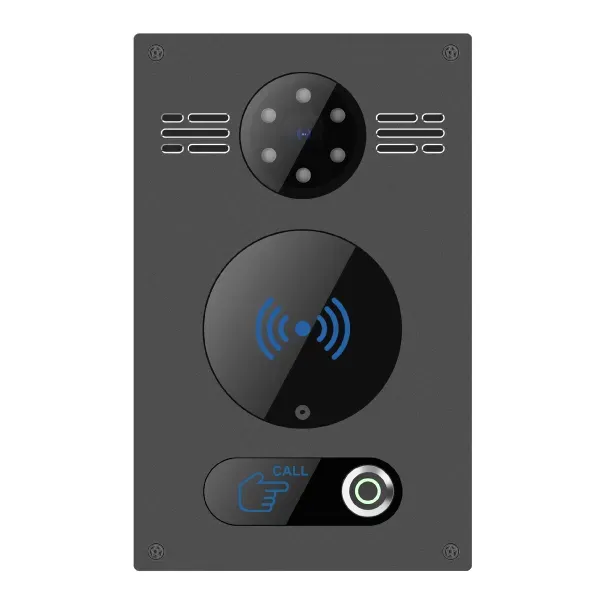
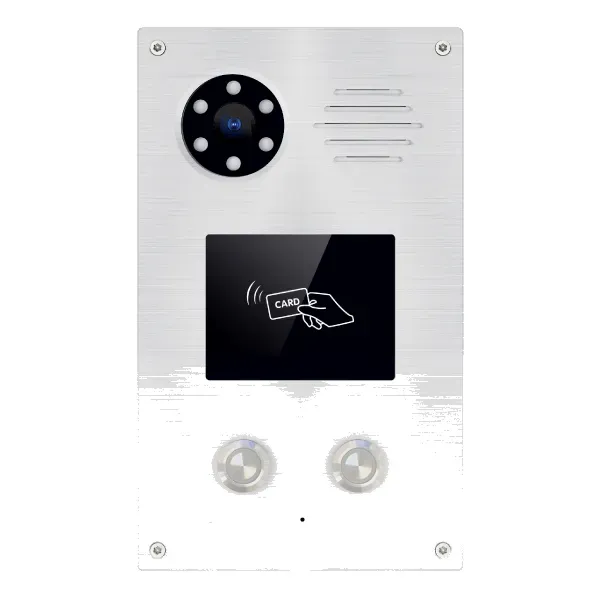
Dinstar DP85U SIP Intercom
The Dinstar DP85U SIP Intercom combines IP-based visitor calling, high-definition video, two-way voice and RFID-assisted door access in a rugged entrance device for business, institutional and residential environments. It is a practical choice when a door station must work as part of a SIP telephony platform rather than as an isolated buzzer. With support for SIP signaling, secure transport options, web management, auto provisioning and DTMF-based remote door release, the DP85U can become part of a broader communications and physical-security design.
For Tanzania deployments, the best result comes from treating the intercom as part of the complete entrance system: network switching, PoE planning where applicable, IP addressing, SIP registration, electric-lock interfaces, door-safety hardware, user permissions and ongoing configuration management all need to be considered together.
Quick answer
The DP85U is a SIP video door intercom suited to controlled entrances where users need visitor video, HD two-way audio, RFID access, SIP calling and remote unlocking from a compatible communications environment.
What the Dinstar DP85U is designed to do
A modern entrance point often needs to perform several jobs at the same time. Visitors must be able to call a receptionist or security desk, staff must be able to see and speak with the caller, approved users may need a credential for keyless entry, and the door hardware must remain under controlled electrical and network operation. The Dinstar DP85U brings those functions into a SIP-oriented intercom platform. Instead of requiring a separate proprietary handset at every answering point, the door station can be integrated into a compatible SIP architecture so calls can be routed according to the organization’s communication design.
Official Dinstar material for the DP82U/DP83U/DP85U family identifies the DP85U variant as a video-capable model with HD audio, a color CMOS camera, RFID card access, SIP support and outdoor-oriented protection characteristics. The platform also supports common VoIP administration functions such as HTTP/HTTPS management, provisioning through network services, configuration backup and logging. These functions matter in business environments because an intercom is no longer just a bell on a wall; it becomes a managed IP endpoint that must fit security, voice and network policies.
The most important buying question is therefore not simply whether the DP85U can make a call. Buyers should confirm the complete workflow: which SIP PBX or call platform will answer the entrance, who should receive calls during office hours and after hours, how the electric lock will be controlled, what credential method is required, how the network will be segmented, and how configuration will be backed up. This solution-led approach reduces deployment surprises and makes the intercom easier to operate after installation.
HD video door calling
Video capability lets authorized staff see visitors while handling the SIP intercom call, supporting more informed entry decisions than audio-only door communication.
RFID-assisted entry
The DP85U family includes RFID credential support, allowing approved users to use a card-based access workflow while visitors can still call for assistance.
SIP integration
SIP support makes the intercom relevant to businesses already operating IP PBX, SIP extensions, reception phones or other compatible voice endpoints.
Managed IP endpoint
Web management, provisioning, logging and configuration backup help administrators standardize deployment and maintain the unit as part of the wider network.
Verified DP85U technical highlights
Important: Dinstar has published multiple DP85/DP85U revisions over time. Final procurement should confirm the exact hardware revision, datasheet and included accessories before ordering or engineering the door interface.
Integration, deployment and buying guidance
The DP85U should be specified together with the devices and services around it. On the voice side, confirm that the intended IP PBX or SIP platform supports the registration and call-routing behavior required by the project. Define whether one press should call reception, a security desk, a hunt group or an after-hours destination. Determine how unanswered calls should be handled and whether multiple answering endpoints need to ring. Where encrypted SIP is required, verify certificate and platform compatibility before rollout rather than assuming that every PBX uses TLS and SRTP in the same way.
On the physical-security side, the door station does not replace the need to correctly select the lock, exit device, door contact, release method and power supply. Fire and life-safety requirements can influence how a door is allowed to lock or release, so the final door design should be reviewed by qualified installers against the specific building and applicable local requirements. For RFID use, procurement teams should also define how cards will be enrolled, issued, revoked and audited. A credential is useful only if the organization has a process for managing it.
On the network side, assign the intercom to an appropriate VLAN or security zone, use strong administrative credentials, restrict management access, and document IP addressing. If voice traffic crosses a firewall or WAN, verify NAT, SIP handling and quality-of-service behavior. The published provisioning and logging functions can simplify support, but they should be configured intentionally. Configuration backups are especially useful before firmware updates or major PBX changes.
For related infrastructure planning, FourTeck Tanzania describes integrated IP PBX, IP phone, switching and access-control solutions in Tanzania, which are the main categories that surround a SIP intercom deployment. Regional projects can also reference the established FourTeck solution sites for Uganda IT and VoIP deployments, Kenya IP PBX and network-security solutions, Africa-wide IT infrastructure planning, and Fourteck UAE integrated IT and telecom solutions.
Before requesting a quotation
For an accurate DP85U quotation and deployment discussion, prepare the number of entrance points, whether each door needs video and RFID, the lock type, the answering destination, the existing IP PBX brand/version, available network connectivity, intended power arrangement, indoor or outdoor exposure, preferred credential workflow, and whether the project includes switching, cabling, door hardware or installation support. This information allows product selection to be matched to the actual site rather than treated as a stand-alone device purchase.
Dinstar DP85U SIP Intercom Tanzania
For organizations evaluating the Dinstar DP85U SIP Intercom in Tanzania, the strongest use case is an entrance that needs to connect physical access with an existing or planned IP communications environment. Offices, apartment developments, schools, clinics, logistics facilities, warehouses, gated compounds and mixed-use sites can all benefit from a door station that does more than generate a simple chime. The DP85U can call a SIP destination, provide two-way conversation, present video to compatible endpoints and support RFID-based access for approved users. That combination helps reduce the number of separate systems that staff must operate at an entrance.
Tanzania buyers should begin with the door workflow. Decide which doors require controlled entry, which users will be granted credentials, where visitor calls should terminate, and what should happen when the primary recipient does not answer. In a head office, the call might route first to reception and then to security. In a residential or institutional environment, the destination may be a dedicated extension or control point. Where a business already runs an IP PBX, the intercom can be assessed as another SIP endpoint, but compatibility, codecs, DTMF behavior and network security should be validated before large-scale rollout.
Infrastructure planning is equally important in Tanzania, especially for sites where power quality, network segmentation or long cable routes influence reliability. The intercom network should be documented, management access should be restricted, and the lock circuit should be designed independently from assumptions about the voice platform. If the entrance is exposed to weather, mounting, cable entry and sealing must preserve the environmental protection intended by the manufacturer. Where multiple buildings or branches are involved, routing and firewall rules should be planned so intercom traffic does not create unnecessary exposure between networks.
Procurement teams should request the exact DP85U hardware revision and current manufacturer datasheet with the quotation, because published specifications have changed across revisions. They should also identify required mounting accessories, door-controller interfaces, cards and electrical hardware rather than assuming everything is included. A complete Tanzania project is therefore best scoped as intercom plus network plus SIP plus door hardware, with a clear commissioning checklist that tests calls, video, credential access, remote release, fail conditions and administrative backup before handover.
Dinstar DP85U SIP Intercom Dar es Salaam
Dar es Salaam organizations often operate in busy commercial environments where reception areas, vehicle gates, offices, residential towers, warehouses and service entrances have different access patterns. The Dinstar DP85U can be useful when those entrance points need to communicate with security or reception over the same IP infrastructure used for business communications. Rather than placing a separate analog intercom system beside an IP PBX, a SIP intercom can be integrated into extension routing so the entrance becomes part of the broader call plan.
For a Dar es Salaam office, practical design starts with traffic flow. A high-visitor reception entrance may need fast call routing and a visible answering endpoint, while a loading-bay or staff entrance may rely more heavily on RFID access. A vehicle gate may need a different mounting height, cabling path and lock/control interface from a pedestrian door. These differences should be documented before equipment is ordered. If video verification is important, confirm that the receiving endpoint or client can display the relevant video stream and that the LAN has been designed to carry it without unnecessary congestion.
Coastal conditions also make physical installation quality important. The DP85U family is published with outdoor-oriented protection ratings, but a rating does not eliminate the need for correct mounting, sealed cable entry, appropriate junction hardware and protection from poor workmanship. Outdoor Ethernet and control cabling should be routed and terminated carefully, and exposed power or door circuits should be protected according to the site design. Administrators should use strong passwords, keep management interfaces off guest networks, and retain configuration backups so replacement or recovery is straightforward.
When requesting a Dar es Salaam quotation, provide the number of doors, expected call destinations, PBX platform, network switch details, credential quantity and door-lock information. For sites with more than one branch, also indicate whether intercom calls remain local or must traverse a WAN or VPN. This allows the project to account for SIP signaling, firewall policies and failover behavior. The resulting bill of materials can then distinguish the DP85U itself from locks, power supplies, exit buttons, network switches, cabling and other components needed for a complete entrance solution.
Dinstar DP85U SIP Intercom Mwanza
In Mwanza, the Dinstar DP85U can support businesses that want a controlled entrance without separating visitor communication from the IP network. Hotels, schools, clinics, offices, financial-service locations, warehouses and managed residential properties may need staff to verify visitors, speak with them, and release a door remotely after authorization. The device’s SIP orientation makes it suitable for projects where a receptionist, guard desk or office extension already handles calls through an IP PBX or where a new unified communication design is being introduced.
Mwanza projects should pay particular attention to network reach. A door may be positioned far from the main communications rack or across a compound, and that distance affects whether copper Ethernet is appropriate or whether a building-to-building uplink, fiber segment or local switch is required. The intercom should not be connected through improvised cabling merely because the endpoint itself is compact. Reliable voice and video require a stable network path, controlled addressing and sensible segmentation. Where the unit must cross subnets or security zones, firewall rules should allow only the required SIP, media and management flows.
Credential management should also be planned from the beginning. RFID access is valuable for staff entrances, but organizations need procedures for issuing cards, removing access when employees leave and handling lost credentials. For visitor doors, remote release should be restricted to designated answering users rather than broadly available extensions. If DTMF door release is used, test the exact PBX, codec and SIP path because tone handling can differ across systems, gateways and trunks. A successful commissioning process should test normal calling, busy/no-answer routing and door-release behavior under realistic conditions.
Procurement in Mwanza is easier when the quotation identifies the complete scope. Buyers should state whether they need only the DP85U hardware or a solution that includes mounting, electric-lock interfaces, access cards, switching, cabling, SIP configuration and commissioning. They should also ask for the exact product revision and corresponding documentation. This prevents older web listings or mixed DP85/DP85U specifications from being used as the engineering basis. The objective is a supportable entrance system whose network, voice and physical-security elements are documented together.
Dinstar DP85U SIP Intercom Arusha
Arusha has a broad mix of hospitality, tour operations, offices, education, healthcare, residential developments and secure compounds, making entrance requirements highly varied. A Dinstar DP85U deployment can be useful when a site needs both visitor communication and credential-based access at the same doorway. The SIP architecture allows the door station to communicate with compatible IP telephony endpoints, while the camera and HD audio functions help staff make a more informed decision before releasing an entrance.
Hospitality and guest-facing sites should design the answering experience carefully. A visitor who presses the call button should reach a clearly responsible team, not an extension that may be unattended. Ring groups, time conditions or alternative destinations can be configured on the PBX side where supported. Staff-only entrances can use RFID credentials to reduce reliance on physical keys, but the access-control policy must define who can enroll cards and how lost cards are revoked. For higher-security doors, the DP85U should be part of a larger access design rather than the sole control decision point.
Outdoor and semi-outdoor installations in Arusha should follow the manufacturer’s mounting guidance and preserve environmental protection at cable entries. Network planners should also consider how the intercom behaves during power or LAN outages. If business requirements demand continued operation, the design may need UPS-backed switching, appropriately protected power supplies and a documented fallback process. Those requirements are site-specific and should be discussed before quotation instead of being assumed after installation.
For organizations comparing intercom options in Arusha, the DP85U is most attractive when SIP integration matters. A purely standalone access reader may be simpler when no visitor calling is needed, while a dedicated video intercom ecosystem may be appropriate when every endpoint must remain within one proprietary platform. The DP85U occupies the middle ground for organizations that want standardized IP telephony and door communication to work together. A quotation should therefore include PBX compatibility checks, required SIP account details, lock-interface information, card quantities and the final mounting environment.
Dinstar DP85U SIP Intercom Dodoma
For Dodoma offices, institutions, administrative facilities, schools and business sites, an IP-based entrance intercom can simplify how visitor calls are handled across departments. The Dinstar DP85U can register into a compatible SIP environment and direct entrance calls to a receptionist, security point or defined extension. Its integrated video and HD voice capabilities make it easier for staff to verify a person before authorizing entry, while RFID support can provide a separate convenience path for approved employees or residents.
The most effective Dodoma deployment begins with role definitions. Reception staff may need to answer normal visitors, security may handle out-of-hours calls, and facilities staff may manage credentials and door hardware. Splitting these responsibilities in the design avoids situations where every user has administrative access to the device. PBX configuration can then reflect the business process with ring groups, schedules or escalation destinations. The intercom should have a dedicated configuration record covering IP address, SIP account, management credentials, firmware, lock interface and backup date.
Physical entry hardware should be specified with equal care. Different doors require different lock types, release mechanisms and safety behavior. A glass office door, steel gate and internal restricted room are not interchangeable projects. The intercom’s door-control function is one part of the system; installers still need to engineer the lock power, exit hardware, emergency release and cable routing according to the building. Where the door station is mounted outdoors, conduit, sealing and surge considerations should also be evaluated for the site.
Organizations in Dodoma that expect future expansion should plan address space, VLANs and PBX capacity for additional intercoms rather than treating the first unit as an exception. Dinstar’s support for provisioning and centralized management functions can be valuable when several units are deployed, but standard naming and documentation remain essential. A well-prepared quotation request should list current and future door counts, PBX details, required credential numbers, network switch availability and the operational team that will administer the solution after handover.
Dinstar DP85U SIP Intercom UAE
In the UAE, the Dinstar DP85U is relevant to offices, warehouses, villas, apartment buildings, schools, clinics and commercial facilities that already use SIP telephony or want an entrance device that can integrate with a modern IP communications environment. The advantage of the SIP approach is flexibility in call routing. Rather than requiring a dedicated proprietary indoor station for every response point, the project can be designed around compatible desk phones, soft clients or PBX extensions, subject to video and feature compatibility.
UAE projects often include structured cabling, PoE switching, access control, CCTV and centralized network management in the same site. That makes coordination important. The DP85U should receive an assigned VLAN and management policy, and its door function should be integrated with the selected electric lock and safety hardware. If the unit is installed outdoors, exposure to heat, direct sun, dust and moisture should be considered in mounting location and enclosure details even though the product family carries published environmental protection ratings.
For multi-site organizations, the PBX architecture determines whether entrance calls stay within each branch or can be answered centrally. A central security desk may be attractive, but it introduces WAN dependency. If the WAN link fails, local fallback calling may be required. The same reasoning applies to cloud-hosted PBX deployments: internet and firewall design become part of door availability. Organizations should therefore define acceptable failure behavior before choosing the final call route. DTMF release must also be tested through the actual end-to-end path because gateways and providers can affect tone transport.
A UAE quotation should identify the exact DP85U revision, required RFID cards, door count, lock voltage/interface, PBX brand, network availability and installation environment. Buyers should avoid relying on marketplace specifications that may mix older DP85 information with newer DP85U revisions. The current manufacturer documentation should remain the engineering reference. Where the project extends across UAE and African branches, consistent SIP naming, credential procedures and network policy can make support significantly easier across locations.
Dinstar DP85U SIP Intercom Uganda
Uganda organizations evaluating the Dinstar DP85U can use it as part of an integrated entrance and communications design where visitor calls need to reach staff through SIP. Businesses with IP PBX systems can map an entrance call to reception, security or another extension while still using RFID credentials for regular authorized users. This combination is particularly useful at offices, educational institutions, healthcare sites, compounds and commercial premises where visitor and staff entry flows are different.
The network path is a key design element. If the door is in the same building as the PBX, a properly segmented LAN can keep communication local. If the PBX is hosted or located at another branch, the intercom may depend on internet, VPN and firewall configuration. In those cases, administrators should decide what happens if the remote connection becomes unavailable. A local guard desk or alternate extension can be part of the continuity plan where the chosen PBX supports such routing. This is more dependable than discovering after deployment that the entrance cannot call anyone during a WAN outage.
Uganda deployments should also consider power continuity. Because the intercom is a network endpoint tied to the door workflow, a small interruption to the switch or supporting power can affect communication. Critical entrances may justify UPS-backed networking and a properly engineered lock power arrangement. That does not mean the door should remain locked in every failure condition; emergency and life-safety behavior depends on door type and applicable requirements and must be handled by the access-control design.
For procurement, ask for a complete scope rather than a single model price. The DP85U itself is only one part of the system. Cards, electric lock, exit control, network switch capacity, cabling, PBX configuration and commissioning may all be required. Uganda customers with several sites can also benefit from standardized configuration templates and naming conventions. Consistency simplifies troubleshooting, especially when one support team must manage multiple door stations across Kampala and upcountry branches.
Dinstar DP85U SIP Intercom Kampala
Kampala has dense office, retail, education, hospitality and mixed-use environments where entrance communication can become a daily operational bottleneck. The Dinstar DP85U offers a way to route door calls into a compatible SIP phone system, allowing reception or security staff to answer from normal communication endpoints instead of managing a separate legacy intercom handset. Video verification and RFID access can support both visitor screening and routine employee entry from the same door station.
In multi-tenant or multi-department sites, call routing needs careful planning. One door station may need to reach a central reception, while another may serve a restricted floor or back-office entrance. The PBX can potentially differentiate destinations by SIP account and call button behavior, but the exact workflow should be verified against the chosen DP85U revision and PBX features. Organizations should also define who has permission to trigger remote door release. Broad permissions may be convenient but can weaken access discipline if users cannot confidently identify the visitor.
Kampala networks can include a mixture of managed and unmanaged switching, older cabling and new IP infrastructure. A SIP intercom should be deployed on a documented network segment rather than simply connected to the nearest spare port. Managed switching makes it easier to isolate voice/security devices, monitor ports and apply policy. If video must be viewed at multiple points, confirm bandwidth and endpoint capability. Secure web management should be limited to administrators and exposed only through trusted networks or controlled remote-access methods.
A strong Kampala request for quotation therefore includes site photos or door descriptions, the number of entry points, the existing IP PBX, preferred call destinations, network availability, required RFID quantity and details of the locking hardware. If installation is part of the requirement, buyers should specify whether conduit, civil work or long cable runs are expected. This separates the product cost from the project cost and helps avoid under-scoped quotations that omit the components required to make the intercom operational.
Dinstar DP85U SIP Intercom Arua
For organizations in Arua, the Dinstar DP85U can provide a modern alternative to isolated door buzzers where there is already an IP network or a plan to introduce SIP telephony. The intercom can place a network call to an authorized answering destination while presenting video and supporting two-way voice. RFID credentials can be used for known users, allowing the same entrance to handle routine staff access and visitor verification without requiring identical procedures for both groups.
The most important Arua design question is infrastructure readiness. Some facilities may have the PBX and main switch in a central office while the gate or entrance is physically distant. Network extension should be planned using appropriate copper, fiber or point-to-point infrastructure instead of exceeding Ethernet limits or depending on unstable improvised links. If the intercom must operate over a routed network, document the required ports and avoid placing the management interface on a broadly accessible segment. Local administration should remain available to authorized technical staff.
Power and environmental installation also deserve attention. The published DP85U family protection characteristics help with outdoor use, but the installation must still protect cable joints, door-control wiring and network equipment. If an entrance is mission-critical, consider backup power for the switch and related electronics. At the same time, emergency egress and door release must follow the building’s safety design; continuity of the intercom does not override safety requirements.
Arua buyers should compare the DP85U based on the complete operational outcome. If the main requirement is only staff card access, a simpler access-control reader may be enough. If the requirement is only visitor voice, an audio SIP intercom may reduce cost. The DP85U makes most sense when video verification, SIP calling and RFID access are all valuable at the same entrance. Quotation requests should therefore state which functions are mandatory so the supplier can confirm that the exact model and revision match the project rather than overspecifying or underspecifying the door.
Dinstar DP85U SIP Intercom Mbarara
Mbarara businesses, institutions and residential developments can use the Dinstar DP85U where entrance communication needs to become part of a managed IP environment. A visitor can use the door station to call an assigned SIP endpoint while the receiving user verifies the person through voice and video before releasing the entrance. Staff can use RFID credentials for routine entry, creating separate visitor and employee workflows around the same physical door.
For sites such as clinics, schools and office compounds, different time periods may need different call routes. During business hours, the DP85U can be associated with reception. After hours, the PBX may redirect calls to security or another designated extension if the platform supports time-based routing. This behavior should be tested before handover. It is also important to decide whether a missed door call should go to voicemail, another person or simply fail, because a conventional voicemail experience may be inappropriate for a visitor waiting physically outside a gate.
Mbarara installations should treat the network switch and door cabling as part of the security design. The intercom should not share an uncontrolled guest LAN, and management access should be restricted. Where a site has CCTV, the entrance camera and intercom video may complement each other, but the DP85U should not automatically be treated as a replacement for dedicated surveillance coverage. CCTV provides continuous recording and broader scene visibility, while the intercom is focused on communication and access at a specific entry point.
When preparing a quotation, organizations should provide existing PBX details, the number of doors, required cards, lock type, cable distance and whether installation or only equipment supply is needed. A project with one entrance and local reception is very different from a campus with multiple gates and centralized security. By describing the workflow first, buyers can obtain a more useful design and avoid unnecessary accessories. Final specifications should be confirmed against the exact manufacturer datasheet supplied with the DP85U revision being quoted.
Dinstar DP85U SIP Intercom Gulu
Gulu organizations looking to modernize controlled entrances can consider the Dinstar DP85U when SIP telephony and door access need to work together. The device can serve as an IP-based visitor call point with camera and two-way audio, while RFID capability supports routine authorized entry. This is useful for campuses, offices, warehouses, clinics, schools and compounds where a guard or receptionist must communicate with visitors before unlocking the entrance.
A Gulu deployment should define whether the intercom is expected to remain functional if the internet connection fails. When the SIP server is local, calls may stay inside the LAN. When the PBX is hosted elsewhere, visitor calling may depend on WAN connectivity. That difference affects resilience planning. Organizations can consider local backup destinations, redundant connectivity or an operational fallback process depending on the criticality of the entrance. These choices are business requirements rather than fixed properties of the DP85U.
The access side also needs disciplined administration. RFID cards should be assigned to named users or controlled groups, not distributed without records. Lost cards should be revoked promptly. Remote release permissions should be limited to staff who understand the entrance context. Device administration should use strong credentials, HTTPS where appropriate, configuration backups and a change log. These practices reduce the risk that a technically capable device becomes difficult to support because nobody knows how it was configured.
For procurement in Gulu, request a bill of materials that separates the DP85U from supporting hardware. The final solution may require a network switch, UPS, lock power supply, electric lock, door contact, exit button, cabling and mounting accessories. Some projects also need PBX licenses or additional endpoints for reception. Listing these items clearly makes quotation comparison fairer because buyers can see whether competing offers cover the same scope. The exact model revision and current Dinstar documentation should be used as the technical baseline for acceptance testing.
Dinstar DP85U SIP Intercom Kenya
Kenya businesses can use the Dinstar DP85U as part of a SIP-enabled security and communications environment where reception, security teams or office users need to handle entrance calls. The combination of video, HD voice and RFID access is especially relevant to commercial offices, schools, healthcare locations, warehouses and residential developments that want one door station to support both visitor communication and staff credential entry.
In Kenya, larger organizations may already operate IP PBX platforms across Nairobi and branch offices. The DP85U can be considered within that broader dial plan, but branch-to-branch intercom routing should be evaluated carefully. Central answering can reduce staffing requirements, yet it also creates dependence on WAN performance. A local fallback route may be more appropriate for critical gates. Network teams should document the intercom VLAN, DHCP or static addressing strategy, DNS/NTP requirements and firewall rules, then maintain a configuration record with the exact SIP credentials and firmware revision.
The physical entrance remains a separate engineering discipline. Door material, lock type, emergency release, mounting height, weather exposure and user accessibility all influence installation. The DP85U family’s environmental protection characteristics support outdoor-oriented use, but installer workmanship still determines whether cables and control circuits remain protected. Projects should include testing of the lock under power loss and emergency conditions according to applicable requirements rather than assuming one universal behavior.
Kenya procurement teams comparing models should ask whether they truly need the DP85U’s video and RFID features at every door. A mixed deployment may be more cost-effective, using video/RFID units at principal entrances and simpler audio or access-only devices elsewhere. The quotation should identify all variants clearly. It should also state whether configuration, card enrollment, PBX integration, switch setup and user training are included. Clear scope helps the organization compare offers on a like-for-like basis and plan support after commissioning.
Dinstar DP85U SIP Intercom Kuwait
The Dinstar DP85U is suitable for Kuwait organizations that want an IP door station linked with SIP telephony and credential-based access. Offices, commercial buildings, warehouses, schools and private compounds can use the unit to give visitors a clear communication path to reception or security while allowing authorized users to enter with RFID credentials. The camera and two-way audio functions add context for remote door-release decisions.
Kuwait installations should pay close attention to environmental conditions, particularly outdoor heat, sun exposure and dust. Product protection ratings do not remove the need for thoughtful placement and proper cable sealing. Where possible, shading and a professionally prepared mounting surface can reduce unnecessary exposure. Network and lock-control cabling should be protected from physical damage, and outdoor junctions should use suitable enclosures. Final temperature limits should be verified against the exact DP85U revision being supplied because manufacturer documentation has varied across generations.
From a communications perspective, the DP85U can be registered to a compatible SIP platform and configured with defined call destinations. Businesses should decide whether one entrance button reaches reception, security or a hunt group, and how after-hours routing should work. If remote unlock relies on DTMF, test the tone method end-to-end, especially when hosted PBX services, SBCs or SIP trunks are involved. Encrypted SIP signaling and SRTP should also be validated with the actual PBX rather than assumed from feature lists alone.
For quotation preparation in Kuwait, list door quantity, required credentials, PBX model, network switch availability, mounting environment and lock type. If a property contains several buildings, note whether each building has local switching and whether the intercom traffic crosses a central firewall. The resulting design may include VLANs, VPN or SBC policies depending on architecture. A complete bill of materials should clearly distinguish the DP85U from access hardware, network equipment and installation services so procurement can evaluate scope accurately.
Dinstar DP85U SIP Intercom Ghana
Ghana businesses and institutions can deploy the Dinstar DP85U where a controlled entrance needs visual visitor verification, two-way voice and integration with SIP-based communications. A reception desk can receive the entrance call as part of an IP PBX call flow, while employees or residents use RFID credentials for normal authorized entry. This approach is useful where organizations want to reduce separate systems and manage door communication through the same network principles used for business voice.
Ghana projects should first map the operational process. Determine which entrances require video, whether every door needs RFID, who answers calls, and which staff may remotely release a lock. Reception and security responsibilities can be separated by time of day or site. If a hosted PBX is used, internet resilience becomes part of entrance availability. The organization should decide whether an outage can be tolerated or whether local fallback is needed. These decisions should be made before configuration because they influence call routing and network design.
For coastal or exposed installations, weatherproofing of the complete installation is important. The device family carries published protection ratings, but cable glands, junction boxes, mounting surfaces and door-control wiring must also be installed correctly. Network teams should place the intercom on a managed security or voice VLAN, restrict web administration and keep firmware/configuration records. Logs can assist troubleshooting, especially when several intercoms are deployed across a campus or multiple branches.
Ghana buyers should ask suppliers to confirm the exact DP85U revision and current manufacturer datasheet. Web pages may contain specifications from earlier versions, so acceptance criteria should follow the supplied hardware documentation. The quotation should also state card quantities, lock interface, power arrangement, PBX configuration, cabling and commissioning responsibilities. A commissioning checklist should confirm video, audio, SIP registration, DTMF release, RFID operation, alternate call routing and backup of the final configuration before the system is handed to the customer.
Dinstar DP85U SIP Intercom Nigeria
Nigeria organizations with offices, estates, schools, warehouses, clinics and commercial facilities can use the Dinstar DP85U to link entrance communication with a SIP-based voice platform. The door station provides video and two-way audio for visitor verification and supports RFID credentials for regular users. This can be especially useful at sites where security staff already operate IP phones and need entrance calls to appear within familiar call-handling workflows.
Large Nigerian sites may have multiple gates and buildings, so a one-device design should not automatically be repeated everywhere. First classify entrances by risk and traffic. A main visitor gate may justify video, RFID and integration with central security. A staff-only internal door may need only credential access. A delivery entrance might need a different call destination and camera coverage. Matching features to each entrance can reduce project cost while preserving the stronger DP85U capability where it adds operational value.
Network resilience deserves careful attention. If SIP servers are centralized or cloud hosted, intercom calling may depend on WAN availability. Organizations should identify whether each site needs local PBX survivability or backup connectivity. Power continuity for the switch and access-control circuits should also be assessed, particularly where security operations are expected to continue through brief utility interruptions. Emergency egress must remain governed by the door-safety design, not by a desire to keep the intercom online.
For Nigeria procurement, require a clear technical schedule: exact DP85U variant, camera/video capabilities, RFID method, SIP server details, network ports, environmental location, lock interface and card quantity. Avoid vague quotations that simply say “complete intercom” without listing door hardware or installation scope. The commissioning plan should test normal calls, no-answer routing, video display, audio quality, remote release, credential access and administrative backup. Proper documentation is particularly valuable when a national organization intends to reproduce the same design across several branches.
Dinstar DP85U SIP Intercom Seychelles
In Seychelles, hotels, offices, managed residences, institutional sites and secure compounds may need an entrance solution that works with IP communications while providing a controlled path for visitors and staff. The Dinstar DP85U can support this requirement by combining SIP calling, camera-based visitor verification, HD voice and RFID-assisted entry in one door station. It is particularly useful where staff already answer calls through an IP PBX and want the entrance to become another managed endpoint rather than a separate intercom island.
Island and coastal environments increase the importance of installation quality. Even when an intercom is rated for outdoor conditions, salt air, wind-driven moisture and exposed cabling can shorten the life of an otherwise suitable system if fittings and terminations are poorly protected. The mounting position, conduit, junction boxes and cable entries should be selected with the site environment in mind. Where practical, the entrance station can be sheltered from direct exposure without compromising visitor access or camera view.
Hospitality projects should also think about who answers the door. Front desk staff may handle guest-facing entrances, while security covers service gates. A SIP PBX can support distinct routing rules, but staff training is required so door calls are recognized and handled consistently. RFID card administration may need coordination with other hotel or property systems; the DP85U should not be assumed to replace every existing credential platform. Integration boundaries should be agreed before procurement.
A Seychelles quotation should identify the exact door location, environmental exposure, PBX platform, available network path, card quantity and locking hardware. Spare-unit strategy may also be worth discussing for sites where replacement lead time matters, but stock and delivery should be confirmed at quotation time rather than assumed. Final commissioning should verify SIP registration, video display, audio clarity, credential operation and safe door release. Configuration documentation should be stored with the site’s broader network and security records for easier maintenance.
Dinstar DP85U FAQs
Is the Dinstar DP85U a video intercom?
Yes. The DP85U family is positioned by Dinstar as a SIP video intercom with an integrated camera and two-way audio. Exact camera specifications should be confirmed against the current datasheet for the supplied hardware revision.
Can the DP85U work with an IP PBX?
The DP85U supports SIP and is designed to register with compatible SIP environments. Final interoperability depends on PBX configuration, codecs, DTMF handling, security settings and the features expected from the answering endpoint.
Does the DP85U support RFID cards?
Yes. Dinstar documentation identifies RFID card access for the DP85U variant. Organizations should define card enrollment, revocation and administration procedures as part of the access-control policy.
Can a user remotely open the door?
Dinstar documents DTMF-based door access. The end-to-end DTMF method should be tested with the selected PBX, phone and any gateways or trunks used in the call path.
Is the DP85U suitable for outdoor installation?
The product family is published with IP65 and IK10 protection characteristics. Outdoor suitability still depends on correct mounting, sealed cable entries, environmental exposure and installation practices. Confirm the exact revision datasheet before final specification.
Does the DP85U support secure SIP?
Dinstar lists SIP over TLS and SRTP support. Whether those features can be used depends on the PBX, certificate configuration and the complete SIP environment.
What information is needed for a DP85U quotation?
Provide location, number of doors, PBX brand/version, call destinations, lock type, required RFID card quantity, network availability, mounting environment and whether supply only or installation/configuration is required.
Quotation checklist
Before requesting pricing, confirm: number of entrances; exact DP85U revision required; existing PBX; SIP account and call flow; receiving phone/video endpoint; RFID card quantity; electric lock type; exit method; network distance; switch/PoE availability; outdoor exposure; cabling scope; installation scope; commissioning; and documentation requirements.
Decision recap
Choose the DP85U when the entrance needs SIP calling, visual verification and RFID-based access in one networked device. Validate the exact hardware revision, PBX interoperability and door-control design before ordering. For simpler access-only or audio-only doors, compare alternative models so the project pays for features that will actually be used.
Plan a Dinstar DP85U deployment with FourTeck Tanzania
A reliable intercom project depends on more than the product model. FourTeck Tanzania can discuss the surrounding requirements such as SIP/PBX compatibility, IP phones, network switching, access-control hardware, cabling and commissioning scope. Share the site type, number of doors and existing communication platform to build a quotation around the actual entrance workflow.




Reviews
There are no reviews yet.