
Business VoIP Endpoint • Tanzania
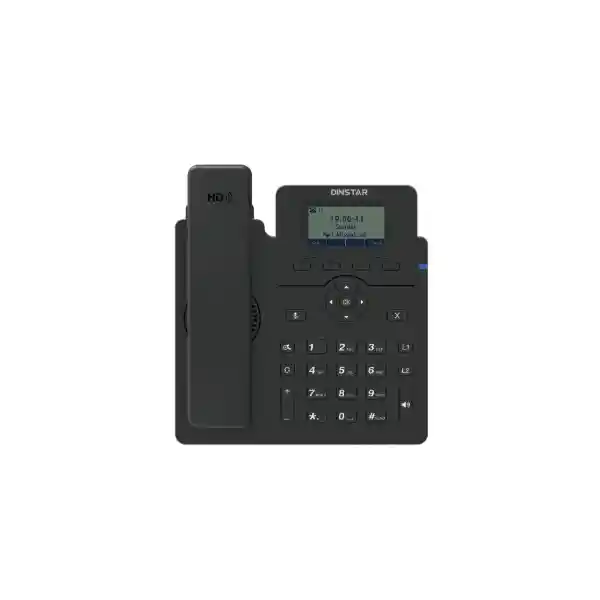
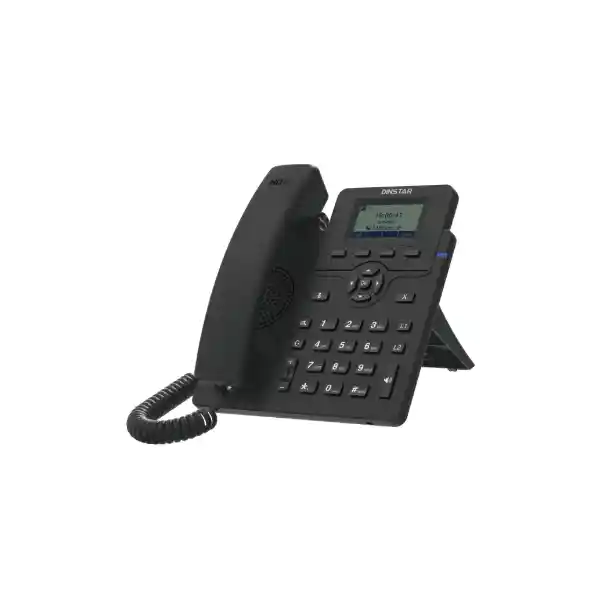
Dinstar C60S Business IP Phone
The Dinstar C60S is an entry-level SIP business phone for organizations that need clear HD voice, two SIP identities, practical call handling and simple integration with IP PBX environments. Its 132×64 graphical LCD, two line keys, five-way audio conferencing, dual 10/100 Mbps Ethernet and EHS headset support make it a practical desk endpoint for standard users, reception positions, small service teams and branch offices.
Quick answer
Choose the C60S when you need a straightforward two-account SIP phone powered by its DC adapter. If centralized Power over Ethernet is mandatory, evaluate the related C60SP PoE variant instead of assuming PoE is present on the C60S.
What the Dinstar C60S is designed to do
The C60S is intended for everyday IP telephony rather than executive-phone complexity. Dinstar positions the C60 series as an entry-level business SIP family, and the C60S specifically combines two SIP accounts with a compact graphical display, two line keys, programmable phone functions and standards-based VoIP connectivity. For a typical office employee, that means the phone can register to a compatible IP PBX, present two SIP identities, provide hold, transfer, call waiting, call forwarding, redial, mute, do-not-disturb, speed dial and other common call controls without requiring a large color touchscreen.
Audio is one of the more important reasons to consider the model. Dinstar specifies HD voice, a full-duplex speakerphone, DSP-based processing, the G.722 and OPUS-WB wideband codecs, echo cancellation, dynamic jitter handling, voice activity detection and comfort-noise generation. Those capabilities can support clearer desk and speakerphone conversations when the PBX, SIP service, network and remote endpoint also support the appropriate codec and quality settings. A phone alone cannot correct a congested or badly configured network, so voice VLANs, Quality of Service, cabling and internet stability still matter.
The model also supports five-way audio conferencing, allowing the organizer to include up to four other participants in an ad-hoc conference. This can be useful for internal coordination, supplier discussions and quick customer calls where a dedicated meeting platform is unnecessary. Two RJ45 10/100 Mbps Ethernet ports allow the phone to sit between the wall network point and a desktop computer, which can help at desks with one available data outlet. Buyers should nevertheless verify whether 100 Mbps pass-through matches the user’s data requirements, especially where desktop workflows involve large file transfers or higher-speed LAN access.
Verified Dinstar C60S technical highlights
2 SIP Accounts
Supports two SIP identities for users who need two registered lines, departmental identities or separate business call profiles.
HD Voice
Wideband G.722 and OPUS-WB support, full-duplex speakerphone, DSP, echo cancellation and jitter handling for business calling.
132×64 LCD
A compact graphical display provides line, menu, directory and call-status information without unnecessary screen complexity.
5-Way Conference
Supports a five-party audio conference for quick multi-person discussions directly from the phone.
Dual 10/100 Ethernet
Two RJ45 10/100 Mbps ports enable phone-and-PC desk connectivity where a single wall outlet is available.
EHS Headset Support
Dinstar lists EHS wireless-headset support for Plantronics, Jabra and Sennheiser; exact headset and cable compatibility should be checked.
C60S versus C60SP: the power distinction matters
The most important model-selection detail is Power over Ethernet. Dinstar’s C60 family table identifies the C60S as the non-PoE version and the C60SP as the PoE-capable counterpart. The C60S therefore relies on its 5 V DC power adapter. This distinction affects desk power, UPS planning, cable organization and resilience during power interruptions. If an organization wants phones powered centrally from an UPS-backed PoE switch, the C60SP should be evaluated. If local AC outlets and adapters are acceptable, the C60S can fit a straightforward deployment without requiring PoE access ports.
This is particularly important for procurement teams requesting a quotation: include the exact model suffix rather than writing only “C60”. The wider C60 family contains variants with different display backlighting, port counts and power methods. FourTeck can help map the exact endpoint to switch infrastructure, cabling, UPS design and user role before quantities are finalized.
IP PBX compatibility, security and management
Dinstar states that the C60S/C60SP is based on SIP and lists compatibility with Dinstar UC/IP PBX products as well as third-party platforms including 3CX, Asterisk, Yeastar, Xorcom, VoIP.ms, BroadSoft and FreeSWITCH. In a real deployment, compatibility should still be confirmed against the exact PBX version and the functions the business expects to use. Successful SIP registration does not automatically guarantee identical behavior for voicemail indication, remote directories, transfer methods, feature keys, secure signaling, provisioning profiles or call pickup. A pilot unit is often sensible before a large rollout.
Security features listed by Dinstar include SIP over TLS, SRTP, 802.1X and OpenVPN. These options are valuable only when the surrounding PBX, certificate management, network access controls and firewall policies are configured consistently. For example, enabling secure SIP signaling may require trusted certificates and matching PBX settings. 802.1X can support controlled LAN access but requires compatible switch authentication design. Security is therefore an end-to-end architecture decision rather than a feature that should be assumed to work automatically after unboxing.
Management is suited to multi-phone deployments. Dinstar documents auto provisioning through FTP, TFTP, HTTP, HTTPS and PnP, configuration through an HTTP/HTTPS web interface, SNMP, TR-069, network capture, syslog, firmware upgrade through the web interface and configuration backup/restore. These tools can reduce repetitive manual work when an administrator has a planned provisioning process. For organizations with several branches, standardized naming, extension profiles, codec settings, VLAN configuration, directories and firmware policies can make support more consistent.
Who should consider the Dinstar C60S?
Standard office users
Employees who mainly need reliable inbound and outbound calling, hold, transfer, voicemail indication and occasional speakerphone use can benefit from the uncomplicated two-account design.
Reception and service desks
Small reception points or service teams can use transfer, call waiting, speed dial, EHS headset support and five-way conferencing without moving to a high-end endpoint.
Branch offices
Standards-based SIP, centralized provisioning options and dual Ethernet ports can make the C60S suitable for repeatable branch telephony where the PBX and network are planned consistently.
Related Dinstar business phones on FourTeck Tanzania
The C60S is intentionally simple. Buyers needing more SIP identities, color displays, Gigabit Ethernet or PoE should compare adjacent Dinstar models rather than overspecifying or underspecifying the endpoint. The Dinstar C63G Business IP Phone adds six SIP accounts and Gigabit desk connectivity for users who need more line flexibility. The Dinstar C64G Business IP Phone is useful for higher-feature office roles, while the Dinstar C64GP PoE Business IP Phone suits projects where centralized PoE is part of the design. For users needing substantially more SIP capacity, compare the Dinstar C66G Business IP Phone and the Dinstar C66GP PoE Business IP Phone. Matching the endpoint to the user role, switch speed, power method, number of SIP identities and headset requirements usually produces a better deployment than buying one model for every desk.
Regional buying and deployment guidance
Dinstar C60S Business IP Phone Tanzania
For organizations buying the Dinstar C60S Business IP Phone in Tanzania, the strongest use case is a structured but uncomplicated SIP desk deployment. The phone is well suited to employees who need one or two registered SIP identities, routine transfer and hold functions, voicemail indication, speakerphone capability and occasional multi-party calling. It can fit SMEs, branch offices, reception areas, professional-service firms, educational institutions, hospitality administration, clinics, warehouses and other workplaces where dependable desk telephony matters but an executive color-screen endpoint would add cost without operational benefit. The purchasing conversation should start with the number of extensions, the PBX platform, desk cabling and how phones will be powered.
The C60S uses a DC power adapter and is not the PoE member of the C60S/C60SP pair. That detail should be considered before a business standardizes on the model across many desks. If the network team intends to keep phones online during short utility interruptions by placing a PoE switch on UPS power, the C60SP may align better with that architecture. If each workstation already has reliable AC power and adapter-based endpoints are acceptable, the C60S remains a straightforward choice. Organizations should also check whether dual 10/100 Mbps ports are appropriate for any computer connected through the phone. Users with heavier LAN throughput needs may be better served by a Gigabit endpoint.
For Tanzania deployments, voice quality depends on the full path. Managed switching, a voice VLAN where appropriate, QoS, stable SIP connectivity and a correctly configured firewall can matter more than a long list of handset features. Before quotation, provide the phone quantity, PBX brand and software version, SIP trunk or extension design, switch models, available power, headset requirement, remote directory requirement and whether centralized provisioning is planned. This allows the bill of materials to account for adapters, headsets, switching and configuration rather than treating the handset as an isolated purchase.
Dinstar C60S Business IP Phone Dar es Salaam
Dar es Salaam businesses often operate busy reception desks, sales teams, logistics functions, customer-service points and administrative departments where telephone handling remains a daily operational task. The Dinstar C60S can fit these roles when users need a compact SIP endpoint with two accounts, HD voice, call transfer, call waiting, hold, DND, speed dial, headset support and five-way conferencing. It is particularly appropriate where the priority is consistency across many ordinary desks rather than advanced executive features. A deployment can standardize the same user interface and provisioning profile while keeping the endpoint cost focused on essential calling functions.
Dense office networks in Dar es Salaam may carry business data, CCTV, Wi-Fi and VoIP simultaneously. The C60S has two 10/100 Mbps Ethernet ports, which can allow a desktop PC to connect through the phone, but that topology should be reviewed against user bandwidth needs and VLAN design. Voice traffic should not be left vulnerable to large backups, cloud synchronization or camera streams occupying the same congested path. Managed switches, QoS and deliberate segmentation can make call performance more predictable. Where a company is refreshing its LAN at the same time, it may be worth comparing Gigabit Dinstar models for desks with heavier data workloads.
Power planning should also be explicit. Because the C60S is adapter powered, every selected desk needs suitable AC access. Businesses aiming for centralized power continuity should compare the PoE C60SP or another PoE model. Headset-heavy teams should verify the exact EHS accessory and headset pairing before ordering multiple units. A practical Dar es Salaam quotation request should therefore include user count, department roles, PBX type, SIP trunk details, existing switch capability, cabling availability, desired headset models and whether configuration will be manual or centrally provisioned. Clear inputs reduce surprises at installation and make it easier to choose between C60S and related models.
Dinstar C60S Business IP Phone Mwanza
Mwanza organizations evaluating the Dinstar C60S may be replacing analog phones, expanding an existing SIP extension base or standardizing phones across departments. In all three scenarios, the phone works best when the requirement is clearly defined as a basic business endpoint rather than a high-capacity executive terminal. Two SIP accounts can support a primary extension plus a secondary identity, shared-service arrangement or separate calling profile depending on the PBX. Five-way conferencing adds a simple collaboration option, while the full-duplex speakerphone can support short hands-free discussions at a desk.
Distributed organizations should pay attention to provisioning and support. Dinstar documents FTP, TFTP, HTTP, HTTPS and PnP provisioning, along with web configuration, TR-069, SNMP, syslog, network capture and backup/restore. These capabilities can be useful when an IT team needs to configure several phones consistently or support a branch remotely. The benefit is not automatic: a provisioning template should be tested, firmware controlled and user settings documented. A pilot phone can confirm registration, transfer behavior, voicemail indication, phonebook access, time settings and any security policies before a larger rollout.
Mwanza buyers should also review the physical infrastructure around the phone. The model uses 10/100 Mbps Ethernet and local DC power. If the desk computer needs Gigabit access or the organization wants UPS-backed PoE, another model may align better. If the intended user mainly works with cloud email, routine office applications and standard voice calling, the C60S topology may be sufficient. When requesting a quotation, include the number of phones, target extension plan, PBX platform, switching model, available electrical outlets, any voice VLAN requirements, headset preferences and the support model for branch users. That information supports a deployment plan rather than a box-only purchase.
Dinstar C60S Business IP Phone Arusha
Arusha businesses in tourism administration, hospitality, education, professional services, logistics and general commercial operations may need SIP phones for reception, reservations, back-office teams and departmental communication. The Dinstar C60S provides the essential features those users commonly need: two SIP accounts, HD voice, call hold and transfer, call forwarding, voicemail indication, speed dial, speakerphone operation and support for EHS wireless headsets. For organizations where many employees simply need a reliable desk extension, the absence of a large color display can be an advantage because deployment and user training remain straightforward.
Hospitality and service environments should consider how staff actually handle calls. A reservation or front-office user may spend substantial time on the phone and could benefit from a compatible wireless headset. Dinstar lists EHS support for Plantronics, Jabra and Sennheiser, but the exact headset model, EHS cable and phone firmware should be checked before procurement. A back-office user may instead prefer the handset and occasional speakerphone. Five-way conferencing can be useful for quick coordination with management, suppliers or remote colleagues without requiring a separate conference-room system.
An Arusha deployment should also account for power resilience and network design. The C60S is adapter powered, so UPS protection of the network switch alone will not keep the phone active if the desk power fails. If centralized PoE resilience is a business requirement, compare the C60SP. The dual 10/100 ports can simplify desks with a single network cable, but bandwidth needs for the attached PC should be considered. Before quotation, buyers should specify phone quantities by user role, PBX platform, trunk arrangement, switch ports, cabling condition, headset needs, desired provisioning approach and whether remote support is required for multiple sites. These details help prevent model-selection and installation mismatches.
Dinstar C60S Business IP Phone Dodoma
Dodoma offices, institutions, service organizations and growing businesses may use the Dinstar C60S where a standards-based SIP phone is required for ordinary extensions and structured internal calling. Its two SIP accounts are appropriate for staff who do not need a large number of separate line registrations. The phone supports common business features such as transfer, hold, forwarding, call waiting, redial, DND and voicemail indication, making it a practical endpoint for administration, departmental users and reception points with moderate call volumes. Five-way conferencing can also support short coordination calls directly from the desk.
For organizations with formal IT policies, management functions deserve attention. Centralized provisioning can reduce manual configuration, and logging or network-capture functions can help during troubleshooting. Security options such as SIP over TLS and SRTP can form part of a secure voice design when the PBX and certificates are configured correctly. Where 802.1X is used on the wired network, compatibility should be validated against the access-switch policy. These are system-level considerations: buying a phone that supports a feature does not replace PBX, firewall and LAN configuration.
The C60S should also be checked against the organization’s continuity goals. Local 5 V DC power is simple, but it distributes the power dependency to every desk. If the telephony design expects a central UPS to keep endpoints available during short interruptions, the PoE C60SP may be more appropriate. Dodoma procurement teams should include exact quantities, desk locations, user types, PBX brand and version, SIP trunk requirements, switch infrastructure, preferred codecs, headset requirements and any remote directory or LDAP needs in the request. A well-scoped quotation can then distinguish between handset-only supply and a complete voice deployment involving configuration, switching, cabling, UPS and support.
Dinstar C60S Business IP Phone UAE
For UAE operations, the Dinstar C60S can serve as a standardized entry-level SIP endpoint in offices, branches, retail administration, warehouses and service environments where the user needs dependable calling rather than an advanced executive device. Multi-country organizations that also operate in Tanzania may value a repeatable endpoint profile because extension numbering, codec policy, provisioning and user training can follow similar principles across locations. The C60S supports two SIP registrations and common call-handling features, while its compact display and line keys keep daily operation simple for general staff.
UAE network environments often use structured managed switching, so the power method should be decided before standardization. The C60S does not provide PoE; the C60SP is the PoE variant. A company already using PoE access switches may prefer the SP model so phones can be powered centrally and protected by rack-mounted UPS systems. Where local adapters are acceptable, the C60S remains viable. The phone’s dual Fast Ethernet interfaces should also be matched to desktop requirements. Users moving large files, accessing high-speed local storage or requiring Gigabit pass-through may be better served by a higher Dinstar model.
Regional coordination can be supported through FourTeck UAE, which covers IT, telecom and security projects, while FourTeck’s IP phone specialist site provides additional business telephony context. For a UAE quotation, share the branch or office count, number of extensions, PBX and SIP service, VLAN and switch design, power preference, required headsets, directory integration and any need for standardized configuration across multiple countries. Those inputs help determine whether C60S, C60SP or a higher model is the most practical fit.
Dinstar C60S Business IP Phone Uganda
Ugandan businesses looking at the Dinstar C60S may be planning a first IP PBX, extending an existing VoIP environment or standardizing phones for new branches. The model fits general office users who need two SIP accounts, clear HD voice and familiar business calling functions without the extra cost or training associated with larger color-screen phones. Reception, administration, finance, sales support and small customer-service teams can all use the C60S when their call flow is moderate and the PBX handles the more advanced routing logic centrally.
Branch environments should emphasize manageable configuration. Auto provisioning, web configuration and diagnostic functions can make the endpoint easier to support remotely, but templates need to be controlled. IT teams should document extension credentials, server addresses, codec policy, time settings, VLAN parameters and firmware so that replacement units can be introduced predictably. Before a large purchase, one or two pilot phones can be registered to the production PBX and tested for inbound/outbound calling, transfer, voicemail indication, conference behavior and directory access.
The C60S is adapter powered, so Ugandan deployments with a requirement for centralized UPS-backed telephony should compare the C60SP PoE variant. The dual 10/100 Ethernet design can be useful at desks with one network drop, although computer data requirements should be checked. Organizations coordinating technology across Uganda can also refer to FourTeck Uganda IT and VoIP solutions for regional project context. A complete quotation request should list phones by role, PBX platform, SIP trunks, switch models, cabling status, power method, headsets and any need for installation or remote configuration. That information makes the purchasing decision much more accurate than specifying quantity alone.
Dinstar C60S Business IP Phone Kampala
Kampala offices can use the Dinstar C60S as a practical SIP endpoint for ordinary employee desks, reception points, back-office teams and branch-standardization projects. The phone’s two SIP accounts can support a primary extension and a second identity where required, while hold, transfer, forwarding, DND, speed dial and voicemail indication cover the functions most employees use each day. HD voice and a full-duplex speakerphone can improve conversation quality compared with basic analog endpoints when the PBX and network are also designed for wideband audio.
In larger Kampala offices, network congestion can become more significant than endpoint specifications. VoIP packets share infrastructure with cloud applications, backups, Wi-Fi, CCTV and general data traffic. A managed LAN can separate voice logically, prioritize delay-sensitive traffic and provide visibility when users report intermittent audio. Since the C60S offers 10/100 Mbps pass-through rather than Gigabit, IT teams should decide whether attaching the user’s PC through the phone is appropriate. Desks with high-bandwidth data workloads may need a separate outlet or a Gigabit phone model.
Power requirements should be included in the bill of materials. The C60S uses a 5 V adapter. This can be perfectly acceptable for many desks, but organizations aiming to keep phones alive through centralized UPS-backed PoE should specify the C60SP instead. EHS headset users should also verify the exact headset model and cable before quantity purchase. A Kampala buyer can improve quotation accuracy by providing the extension count, PBX version, switch and VLAN environment, whether phones and PCs share network drops, expected headset users, local power arrangement and any centralized provisioning requirement. This turns the discussion from “what does the handset cost?” into “what does the complete working extension require?”
Dinstar C60S Business IP Phone Arua
Arua organizations may value the Dinstar C60S for its straightforward feature set and ability to operate as part of a centrally managed SIP system. For a branch office, service point, institution or growing commercial operation, a simple two-account phone can be easier to deploy and support than a feature-heavy endpoint. Staff can use transfer, hold, forwarding, redial, mute and DND for routine calling, while the five-way conference function supports quick internal or supplier discussions. The graphical LCD provides enough information for daily call handling without requiring a large display.
Remote support is often an important branch consideration. The C60S offers web management and multiple provisioning methods, so IT administrators can build repeatable configurations rather than programming every unit differently. That process should be tested with the selected PBX and documented. A replacement phone should be able to receive the correct extension profile, time settings, directory options and security parameters with minimal ambiguity. Organizations using remote branches can also maintain a simple device register containing model, MAC address, extension, user, location, firmware and configuration status.
Power and connectivity should be checked before shipment to the site. The C60S is not PoE, so every desk requires its adapter and an appropriate power source. If centralized PoE is preferred, the C60SP is the closer fit. The dual Fast Ethernet ports can reduce cabling needs when a PC shares the connection, but the user’s data traffic should fit within that design. Arua quotation requests should include site quantity, PBX details, SIP service, switch type, cabling layout, power availability, UPS strategy and whether phones will be preconfigured before deployment. These details help determine the supporting equipment and reduce the risk of discovering missing power or network requirements only after the phones arrive.
Dinstar C60S Business IP Phone Mbarara
Mbarara businesses considering the Dinstar C60S can treat it as a dependable baseline phone for standard SIP extensions. Its feature set is most appropriate where users mainly make and receive calls, transfer customers to another extension, place calls on hold, use voicemail and occasionally conduct a small conference. Two SIP accounts give some flexibility without introducing the administrative overhead of phones designed for many line appearances. This makes the model relevant for SMEs, branch offices, clinics, education, retail administration and service businesses where telephone communication remains important.
For call-heavy users, headset workflow can influence productivity. Dinstar lists EHS support with Plantronics, Jabra and Sennheiser ecosystems, but buyers should verify the exact headset and electronic hook-switch accessory. This is particularly important if staff need to answer and end calls away from the handset. Audio quality also depends on the network. Wideband codecs can provide a better experience only when supported throughout the call path, and even a good handset can sound poor when the LAN or internet link has high delay, loss or jitter.
The C60S uses local DC power and Fast Ethernet. Mbarara projects should therefore decide whether adapters are acceptable at every desk and whether 100 Mbps pass-through meets the attached computer’s needs. If the site already has PoE switching and an UPS-backed rack, the C60SP may reduce desk power dependencies. If the site has simple switching and reliable desk outlets, the C60S can remain a practical choice. Before purchasing, provide the number of users, extension plan, PBX and trunk provider, network topology, switch capabilities, preferred power model, headset count and any remote management needs. A clear specification allows procurement to compare total deployment cost rather than handset price alone.
Dinstar C60S Business IP Phone Gulu
Gulu offices and institutions can use the Dinstar C60S for straightforward VoIP extension deployments where reliability and manageability are more important than high-end display features. A two-account endpoint is often sufficient for general users and shared-service desks, particularly when the IP PBX provides centralized IVR, queues, voicemail and routing. Staff still receive practical phone-level controls such as call waiting, forwarding, hold, transfer, speed dial, mute and DND. Five-way conferencing can support small multi-person discussions without requiring users to move to a separate collaboration application for every call.
For an organization with several sites, standardization can simplify training and support. The same handset model, firmware level, button behavior and configuration template can be repeated so users see a consistent interface. Administrators can use provisioning and web-management features to reduce configuration differences. A formal deployment sheet should record extension numbers, phone locations, MAC addresses, user names and switch ports. These simple operational controls often have more long-term value than adding features employees never use.
The physical design should still be checked carefully. C60S power comes from its DC adapter, not PoE. If the Gulu site has a PoE access switch and the project goal is centralized backup power, the C60SP should be considered. Dual 10/100 Ethernet can be convenient where the phone shares a data outlet with a computer, but Gigabit-demanding desks may require another topology. A useful quotation request includes the exact phone count, user categories, PBX platform, existing switch and router equipment, internet connectivity, cabling status, UPS arrangements, headset needs and whether devices should be preconfigured. These facts allow the solution to account for installation conditions instead of assuming every desk is identical.
Dinstar C60S Business IP Phone Kenya
Kenyan businesses can consider the Dinstar C60S as a general-purpose SIP desk phone for organizations that want a consistent entry-level endpoint across standard user roles. It supports two accounts, HD voice, five-way conferencing and familiar business calling controls without moving into the higher cost of advanced color-screen models. That balance can be useful for companies rolling out many extensions across offices, warehouses, schools, clinics or branch locations where only a subset of users needs premium handsets. Reception or call-heavy positions can be evaluated separately and assigned models with more programmable keys when required.
The main technical decision is whether Fast Ethernet and adapter power fit the existing LAN. Two 10/100 ports let a phone and PC share a structured-cabling point, but this should not be assumed appropriate for every modern desktop. Users accessing high-speed servers, large design files or other bandwidth-intensive resources may be better served by Gigabit phones or separate data ports. Likewise, the C60S uses local power. A business with PoE switching and centralized UPS may prefer the C60SP so voice endpoints participate in the same protected power architecture.
Companies managing operations in Kenya can refer to FourTeck Kenya business communication solutions for related regional planning. Before selecting quantities, define the PBX, trunk connectivity, extension count, headset users, voice VLAN policy, switch capability, power plan and support ownership. Also test the expected functions on the chosen PBX: registration is only the first step, while transfer, voicemail indication, directories, secure SIP and provisioning should be validated. This approach gives procurement teams a clearer comparison between the C60S, the PoE C60SP and Gigabit Dinstar alternatives.
Dinstar C60S Business IP Phone Kuwait
Kuwait offices evaluating the Dinstar C60S may find it useful for standard employee extensions, branch desks and service functions where two SIP identities are sufficient. The model’s call features cover the daily operations most business users expect: hold, attended or blind transfer, forwarding, call waiting, DND, speed dial, auto answer and conference calling. HD voice support can improve clarity when the network and remote endpoint support wideband codecs. The phone’s compact interface also keeps onboarding simple for staff accustomed to conventional desk phones.
In structured enterprise networks, the C60S should be evaluated carefully against power and Ethernet requirements. It is not a PoE phone; the C60SP variant provides PoE. Local adapter power may be acceptable in smaller offices, while larger deployments often prefer centralized PoE so endpoints can be protected by an UPS in the communications rack. Similarly, dual 10/100 Ethernet is suitable for many users but may be restrictive for desks that expect Gigabit throughput through the phone. Endpoint selection should therefore consider both voice needs and the computer connected downstream.
Cross-regional buyers can use FourTeck Kuwait for Kuwait-focused technology requirements while maintaining a consistent approach with Tanzania and other offices. A complete Kuwait quotation request should identify the number of extensions, PBX type, SIP trunk or carrier environment, switch and VLAN design, adapter versus PoE preference, headset users and whether secure SIP or 802.1X is required. Where many phones are involved, centralized provisioning and a pilot test can reduce deployment time and help verify feature behavior before the full order is released.
Dinstar C60S Business IP Phone Ghana
Ghanaian organizations can use the Dinstar C60S as a cost-conscious business SIP phone where most users need one or two extensions rather than a large number of registered lines. The model can support back-office users, sales administration, reception points, schools, clinics, hospitality administration and other workplaces moving toward centralized IP PBX communications. Staff receive common calling functions and a full-duplex speakerphone, while five-way conferencing gives them a simple method for involving several colleagues or external participants in a call.
For a multi-site business, the phone’s provisioning capabilities can help maintain consistent settings across branches. Standard templates should cover server addresses, extension authentication, codec priority, time zone, directories, feature keys and any VLAN or security settings. IT teams should test those templates with the chosen PBX and keep a controlled firmware policy. A disciplined rollout makes it easier to replace devices later and reduces differences between user experiences. Diagnostic functions such as network capture and syslog can also help when troubleshooting registration or audio issues.
The C60S requires local DC power and provides 10/100 Ethernet. Ghana deployments should therefore decide whether each workstation has reliable power and whether the connected PC needs more than Fast Ethernet. Organizations wanting centralized PoE should evaluate the C60SP or another PoE Dinstar model. For regional project coordination, FourTeck Ghana can support Ghana-focused discussions. Before requesting a quotation, specify phone count, user categories, PBX and SIP trunk environment, switch models, UPS plan, headset needs, cabling and whether configuration or installation assistance is required. These details help ensure the proposed solution includes the supporting infrastructure needed for a usable business extension.
Dinstar C60S Business IP Phone Nigeria
Nigerian businesses considering the Dinstar C60S can position it as an entry-level endpoint within a broader SIP and IP PBX architecture. The handset is suitable for employees whose work depends on reliable calling but not on dozens of line appearances or executive display functions. Two SIP accounts allow a modest amount of identity flexibility, and the phone supports common features such as transfer, hold, forwarding, DND, speed dial, call return and five-way audio conferencing. This can make it a sensible standardized handset for ordinary desks while supervisors, receptionists or contact-center users receive more advanced models.
Power continuity can be particularly important in voice-system design. Because the C60S uses an external 5 V adapter, protecting only the network rack with UPS power does not protect each desk phone. Where organizations want centralized power backup, the PoE C60SP should be evaluated. The same design review applies to Ethernet: dual 10/100 ports simplify cabling but may not suit a computer that needs high-speed LAN access. Matching endpoints to user profiles prevents a low-cost phone from becoming a network bottleneck at a power user’s desk.
Organizations coordinating IT across Nigeria can consult FourTeck Nigeria for regional requirements, while the Tanzania project can retain its own local design. Procurement teams should provide extension count, PBX and SIP service, site count, switch infrastructure, power strategy, expected headset users and any requirements for TLS, SRTP, 802.1X or centralized provisioning. A pilot deployment should test not only call registration but transfer behavior, inbound caller display, voicemail indication, directory functions and audio quality under normal network load. This reduces integration surprises before a larger rollout.
Dinstar C60S Business IP Phone Seychelles
Businesses in Seychelles may use the Dinstar C60S in offices, hospitality administration, service desks and branch environments that need standards-based SIP telephony with a modest feature set. The phone supports two SIP accounts, HD voice, common call controls and five-way conferencing, making it suitable for ordinary users who need dependable voice communication without a feature-heavy interface. In hospitality or tourism-related administration, simple transfer and forwarding workflows can be particularly important because callers often need to reach reservations, accounts, operations or management quickly.
For island or distributed-site operations, manageability deserves careful planning. If the PBX is centralized or cloud connected, network reliability and firewall configuration are essential. The C60S provides provisioning and diagnostic features that can help IT teams support endpoints remotely, but the organization should document configuration and maintain a tested replacement process. A branch phone that fails should be replaceable with minimal manual rebuilding. Device records, extension mapping, configuration backups and consistent firmware all improve that process.
The C60S power and network characteristics should also be reviewed before procurement. It depends on local DC power and offers dual Fast Ethernet. Sites that prefer PoE for centralized UPS resilience should consider the C60SP. Desks needing Gigabit pass-through should compare higher Dinstar models. Environmental planning should include stable power, protected network equipment and appropriate cabling, particularly where sites experience challenging power or connectivity conditions. A Seychelles quotation request should include quantity, site count, PBX details, SIP trunk or hosted voice environment, switch and router information, UPS strategy, headset requirements and whether devices should be preconfigured. These details allow procurement to compare the true deployment requirements instead of considering the handset in isolation.
Buying checklist before requesting a Dinstar C60S quotation
Separate standard users, reception, supervisors and call-heavy staff so each role receives an appropriate endpoint.
Provide the exact PBX brand, version, hosting model and any required provisioning template or feature integration.
Confirm local adapter power for C60S or choose the C60SP when PoE is a firm requirement.
Check whether 10/100 Mbps PC pass-through is sufficient for each user’s data workload.
List users requiring headsets and validate the exact EHS accessory compatibility before bulk ordering.
Document VLAN, QoS, switch ports, DHCP, DNS, firewall and internet conditions that affect SIP registration and call quality.
Dinstar C60S FAQs
Does the Dinstar C60S support PoE?
No. Dinstar’s model table distinguishes the C60S as the non-PoE variant and the C60SP as the PoE version. The C60S uses a 5 V DC adapter. Buyers requiring centralized PoE should evaluate the C60SP.
How many SIP accounts does the C60S support?
The C60S supports two SIP accounts. This is suitable for standard office users or users who need a primary and secondary SIP identity.
Can the Dinstar C60S work with 3CX or Asterisk?
Dinstar lists compatibility with 3CX, Asterisk and several other IP PBX platforms. Actual deployments should still validate the exact PBX version, provisioning, codecs, transfer behavior, voicemail indication, secure SIP and other required features.
Does the C60S have Gigabit Ethernet?
No. The C60S provides two 10/100 Mbps Ethernet ports. Users needing Gigabit pass-through should compare higher Dinstar models.
Can I use a wireless headset with the C60S?
Dinstar lists EHS wireless-headset support for Plantronics, Jabra and Sennheiser. Confirm the exact headset model, EHS cable and firmware compatibility before ordering.
Can the C60S be centrally provisioned?
Yes. Dinstar documents auto provisioning using FTP, TFTP, HTTP, HTTPS and PnP, along with web configuration and other management tools. The provisioning method should be tested with the chosen PBX and IT process.
Decision recap
Choose the Dinstar C60S when the requirement is a straightforward two-account business SIP phone with HD voice, a graphical LCD, dual Fast Ethernet, EHS headset support and standard call-handling features. Compare the C60SP when PoE is required, and compare C63/C64/C66 models when users need Gigabit Ethernet, more SIP identities or a richer interface. The correct choice depends on the user role, PBX platform, switch environment, power strategy, cabling and support model.
Consultation and quotation preparation
For a useful quotation, send the exact quantity of Dinstar C60S phones, the number of extensions, PBX platform and version, SIP trunk or hosted-voice details, switch model, whether users share a data port with the phone, power availability, headset requirements, voice VLAN needs and any installation or configuration scope. If you are unsure whether C60S or C60SP is appropriate, state whether PoE is required. If some users need more than two SIP accounts or Gigabit pass-through, identify those roles separately so a mixed-model design can be considered.




Reviews
There are no reviews yet.