
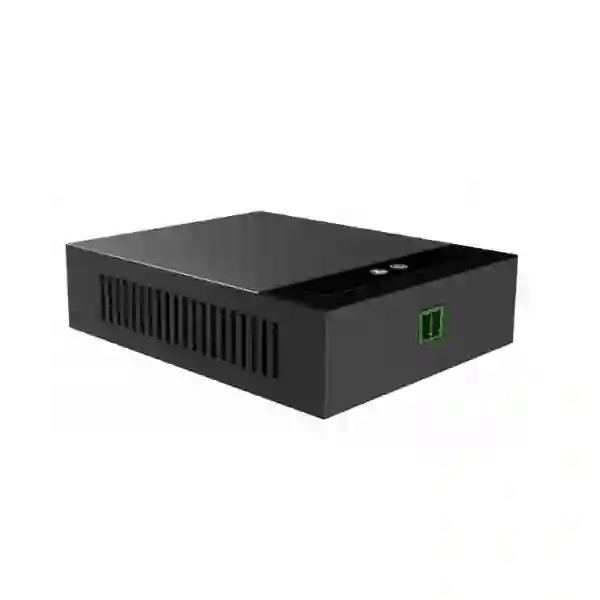
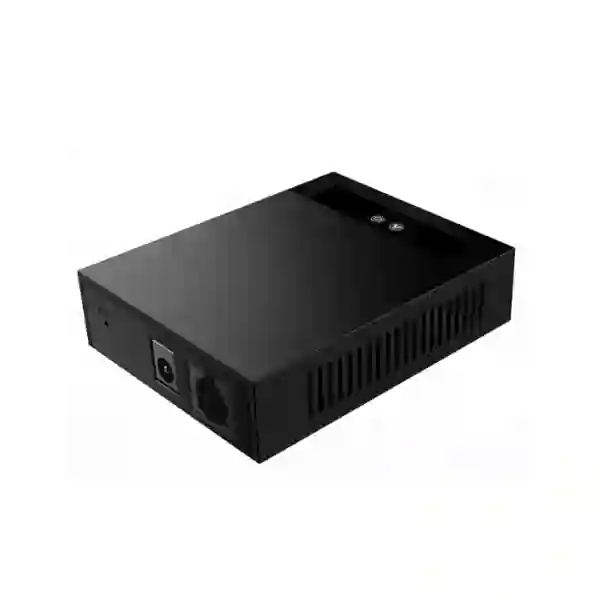

Fanvil PN1 2-Wire Converter
Fanvil PN1 is designed for projects that need to bring IP connectivity to locations where usable two-wire cabling already exists. Instead of treating every legacy cable route as something that must be removed and replaced, the PN1 creates a practical bridge between a 10/100 Ethernet connection and a two-wire link. That makes it especially relevant to renovation projects, hotel rooms, villas, communities, older offices and buildings where opening walls, lifting finishes or installing completely new horizontal cabling would add cost, disruption and time. Fanvil states that the PN1 can provide network and power over supported cabling for up to 300 metres and network-only transmission for up to 1600 metres, with actual distance depending on cable quality and interference.
Choose the PN1 when an IP endpoint must be reached through suitable existing two-wire cabling and a full Ethernet recable would be difficult. It supports standard IEEE 802.3af/at PoE output, works with Fanvil PN8 and PN24 switches, and can also be used as a paired converter arrangement with no master/slave distinction between the two PN1 units.
What the Fanvil PN1 is designed to solve
Many communication upgrades become expensive because the endpoint is easy to replace but the cable path is not. A hotel may have hundreds of rooms with existing telephone pairs hidden inside walls. A villa may have a finished interior where adding new Cat6 routes would require visible trunking or intrusive work. An older office may have a usable voice cabling topology but insufficient Ethernet outlets at the point where an IP phone, SIP intercom or another PoE-enabled device is now required. The PN1 is designed around this exact retrofit problem. It allows suitable existing two-wire infrastructure to become part of an IP deployment rather than automatically becoming redundant.
Fanvil lists the PN1 for community, hotel, villa and old-building renovation scenarios. The device provides one RJ45 Ethernet interface and one 2-wire interface. Its Ethernet side is specified for 10/100 Base-T auto-negotiation and IEEE 802.3af/at PoE+. Fanvil also states compatibility with the PN8 and PN24 2-wire switches, giving installers a way to choose between point-to-point conversion and larger multi-endpoint designs. This flexibility is important because a retrofit may start with one difficult cable run and later grow into an entire floor or building project.
The PN1 should be treated as an infrastructure component, not as a universal substitute for structured cabling. Cable condition, conductor size, joints, interference, endpoint power demand and the intended data rate all matter. The strongest deployment process is therefore to survey and test the existing line, confirm the connected endpoint, check the required distance, then decide whether the old cable should be reused or replaced. That approach avoids assuming that every legacy pair will perform identically simply because it is physically present.
Reuse existing pairs
Fanvil positions the PN1 for reuse of existing PSTN/AWG or similar suitable two-wire cabling, which can reduce the need for disruptive recabling.
PoE to the endpoint
The RJ45 side supports standard IEEE 802.3af/at PoE output, allowing compatible IP endpoints to receive power as part of the 2-wire conversion design.
Long retrofit reach
Fanvil specifies up to 300 m when network and power are supplied and up to 1600 m for network-only transmission, subject to wiring and interference.
PN8 / PN24 compatible
The converter can form part of a larger Fanvil 2-wire design with PN8 or PN24 switching where several legacy pairs need to be modernised.
Verified Fanvil PN1 technical specifications
| Item | Fanvil specification |
|---|---|
| Ethernet interface | RJ45, 10/100 Base-T, auto-negotiation, IEEE 802.3af/at PoE+ |
| 2-wire interface | 1 × 2-wire port |
| Indicators | Power indicator (red) and network indicator (green) |
| Power | 100–240 V input, maximum 80 W output in the current Fanvil datasheet |
| Transmission distance | Up to 300 m for network plus power; up to 1600 m for network only; depends on wiring and interference |
| Reference cable | CAT 5e 24 AWG, RVV 2 × 0.5, or similar |
| Operating temperature | -20°C to +50°C |
| Storage temperature | -30°C to +80°C |
| Installation | Wall-mounted / flush-mounted |
| Enclosure | ABS, gunmetal |
| Product size | 85 × 68 × 22.7 mm |
| Weight | 0.69 kg |
| Minimal package | 2 × PN1 and 1 × power adapter |
Deployment planning: what to verify before ordering
A two-wire converter project is successful when the cable plant and endpoint requirements are understood before equipment is purchased. Start by documenting the existing cable route: where each pair starts and ends, whether it passes through joints or distribution frames, whether spare pairs are available, and whether the cable shares pathways with sources of electrical interference. An old pair that worked acceptably for analog voice is not automatically guaranteed to deliver the same result for data and power. Testing a representative run is a better procurement practice than assuming all lines are equivalent.
Next identify the endpoint. The PN1 can be used with PoE-enabled IP devices, but the endpoint’s actual power requirement should still be checked against the system design. Also confirm the real traffic requirement. The PN1 Ethernet interface is 10/100 Base-T, so the purpose is retrofit connectivity rather than Gigabit access. A SIP phone, door station, intercom or many other low-bandwidth IP devices can fit comfortably within that class of link, while a high-throughput workstation or storage device may be better served by a new Ethernet or fibre run.
Finally, decide whether the project is point-to-point or multi-drop in scope. A single legacy cable path may be handled with PN1 converters, while a floor or building with many old telephone pairs may be better planned around Fanvil PN8 or PN24 switches. Preparing the pair count, endpoint list, cable lengths, endpoint PoE classes and rack location before requesting a quotation helps create an accurate bill of materials.
Related FourTeck Tanzania resources
Useful for reviewing the broader mix of IP phones, switching, networking and infrastructure products that may sit around a PN1 deployment.
Relevant when the 2-wire conversion is part of a larger cabling, switching, voice or building-renovation project.
A PoE desk endpoint reference that illustrates the type of low-bandwidth IP device businesses may need to connect in modern voice deployments.
Useful for comparing power and Ethernet requirements when selecting desk phones for a retrofit telephony project.
Provides another endpoint option when wireless access may remove the need for a wired desk connection in selected areas.
A reference for projects considering alternatives to fixed cabling at desks where cellular connectivity may be part of the design.
Shows how voice, PoE switching, structured cabling, firewalls and business networking fit together in a complete site design.
Fanvil PN1 2-Wire Converter Tanzania
For organisations in Tanzania, the Fanvil PN1 is most compelling when a building already has extensive two-wire telephone cabling and the business wants to introduce IP-based endpoints without immediately replacing every cable route. This situation can occur in hotels, residential developments, education facilities, older commercial buildings, villas and offices where the internal finishes are already complete. Pulling new Ethernet through occupied spaces can involve ceiling access, trunking, drilling, patching and work outside normal hours. A well-tested PN1 design can reduce that disruption by using suitable pairs already in place.
The first Tanzania procurement question should therefore be about the existing cable, not simply the converter price. Document cable type, approximate length, how many joints or distribution points the pair crosses and whether there are signs of corrosion, damage or electrical interference. Fanvil states transmission up to 300 metres where both network and power are carried and up to 1600 metres for network-only use, but also notes that results depend on wiring and interference. That makes a pilot run highly valuable, particularly where a project involves many floors, long corridors or decades-old telephone infrastructure.
The second question is endpoint choice. Because the PN1 provides a 10/100 Base-T Ethernet link and supports IEEE 802.3af/at PoE output, it fits devices whose traffic and power requirements sit comfortably within that design. SIP phones, intercoms and similar endpoints are common candidates. High-throughput workstations, Wi-Fi access points with heavy aggregate traffic or devices that require faster uplinks should be evaluated carefully rather than assumed suitable. A retrofit is valuable only when it preserves the right infrastructure, not when it creates a new bottleneck.
For larger Tanzanian sites, compare a pair-based PN1 approach with Fanvil PN8 or PN24 switching. A hotel with many rooms or a residential project with many risers may benefit from centralising multiple 2-wire links at a distribution location, while a one-off remote endpoint may only need a PN1 pair. FourTeck can also coordinate the surrounding network through its Tanzania IT and infrastructure services, including switching, IP telephony and cabling considerations. To prepare a useful quotation, include the site type, number of cable pairs, cable lengths, endpoint models, endpoint power requirements, rack locations and whether the existing pairs have already been tested.
Fanvil PN1 2-Wire Converter Dar es Salaam
Dar es Salaam has a wide mix of new construction and long-established commercial properties, which makes retrofit networking a practical purchasing concern. Offices, hotels, apartment buildings, hospitals, educational sites, warehouses and mixed-use properties may have legacy telephone pairs reaching locations where IP connectivity is now required. When finishes, tenancy schedules or occupied rooms make new cable installation disruptive, the Fanvil PN1 provides an engineering option that can be assessed before planning a full recable.
A Dar es Salaam deployment should begin with a route survey. Coastal humidity, older joint boxes, previous maintenance work and undocumented cable changes can all influence the condition of a legacy pair. The fact that a pair still carries analog voice does not guarantee that it is ideal for power and Ethernet conversion. Test the pair for continuity and condition, check its length, inspect any intermediate distribution frames and verify whether it runs alongside high-current electrical circuits or other interference sources. Then validate the actual IP endpoint across that same path rather than relying only on theoretical distance.
Hotels and hospitality sites are a strong use case because room-by-room recabling can affect guest operations and interior finishes. The PN1 can be considered where existing room telephone wiring is suitable and the project is moving toward IP phones, SIP intercoms or other supported PoE endpoints. In a larger hotel, however, a PN8 or PN24 architecture may be more manageable than treating every room as an isolated converter pair. The design should map distribution points, room groups and network uplinks so fault finding remains straightforward after installation.
Commercial offices in Dar es Salaam should also consider traffic expectations. The PN1 is a Fast Ethernet product, which is appropriate for many voice and control endpoints but not intended to turn legacy pairs into high-speed desktop LAN links. If an employee needs Gigabit access for large files, cloud synchronisation or local server workloads, structured Ethernet should still be preferred. The PN1 is strongest when it solves a specific reach problem for a low-bandwidth IP device. Buyers can use the FourTeck Tanzania shop to review related endpoint and network categories, then request a bill of materials based on tested cable routes rather than device count alone.
Fanvil PN1 2-Wire Converter Mwanza
Mwanza organisations evaluating the Fanvil PN1 may be modernising branch offices, hospitality properties, schools, healthcare facilities, residential buildings or administrative sites where old telephone wiring is still available. The business case is usually strongest when a new IP endpoint is needed at a location that would otherwise require substantial building work to reach with Cat5e, Cat6 or fibre. In those situations, the PN1 can preserve part of the existing physical infrastructure while allowing the connected device to join an IP network.
Planning should start by grouping cable runs. A site with one difficult extension is different from a site with dozens of rooms. For one or two endpoints, paired PN1 converters may be convenient. For a larger floor plan, Fanvil PN8 or PN24 switches may provide a cleaner centralised design. The objective is to avoid creating many undocumented point solutions that become hard to support. Each reused pair should be labelled at both ends, mapped to its endpoint, tested and recorded with approximate length and cable type.
Power strategy also matters in Mwanza. Fanvil specifies that the PN1 can deliver both network and power across the 2-wire link for up to 300 metres under supported conditions. For longer links, network-only operation may reach farther, but then endpoint power must be planned separately. Procurement teams should therefore include endpoint wattage, whether PoE is mandatory, and where AC power is available in the quotation request. This avoids buying a conversion design that reaches the endpoint but cannot power it as intended.
Operational support should be considered before the installation is finished. Because the PN1 is a simple infrastructure device rather than a complex managed switch, clear physical documentation becomes especially important. Record which converter is at the network side, which pair serves the endpoint, the connected switch port, endpoint MAC address and any PoE dependency. Although Fanvil states that there is no master-slave distinction between two PN1 converters, documenting orientation and location still makes troubleshooting easier for future technicians. Mwanza buyers can also review FourTeck’s integrated IT and telecom approach when the retrofit must coordinate with switching, VoIP, UPS or broader infrastructure changes.
Fanvil PN1 2-Wire Converter Arusha
Arusha has many hospitality, tourism, education, professional-service and administrative environments where existing buildings may have reliable telephone pairs but limited Ethernet at the exact locations now needed for IP endpoints. In a hotel or lodge administration area, for example, the network rack may be modern while guest-room or service-area cabling is older. The Fanvil PN1 can be evaluated as a bridge between these generations of infrastructure where a two-wire pair is in usable condition.
Hospitality buyers should separate the concept of “reuse” from “assume.” Reusing a cable is beneficial only after the line has been verified. A pair may pass through patch panels, junction boxes or extensions that were added over years of maintenance. Each of those points can influence signal quality. A representative pilot should therefore include the longest or most challenging routes, not only a convenient room close to the distribution point. Testing realistic endpoint operation helps establish whether the project can scale confidently.
For Arusha properties with many rooms, it is useful to prepare a floor-by-floor matrix showing existing pair counts, room numbers, current telephone use, desired IP device and distance. This makes it easier to decide where PN1 converters are appropriate and where PN8 or PN24 switching could simplify concentration of multiple lines. It also exposes places where new Ethernet is still the better solution. A mixed design is often more sensible than forcing one technology into every area of the property.
The PN1’s 10/100 interface should also guide endpoint selection. Voice devices, intercoms and similar endpoints generally have modest bandwidth needs, while video or high-performance data devices may demand more. Do not choose the PN1 merely because a physical pair exists; choose it because the endpoint requirements align with the converter’s capabilities. For a complete quotation, Arusha organisations should provide the number of rooms or endpoints, line lengths, cable type where known, switch location, endpoint models, PoE needs and whether the site requires installation, labelling and documentation. Related business telephony endpoints can be reviewed through the PoE IP phone reference on FourTeck Tanzania when planning voice-focused retrofit projects.
Fanvil PN1 2-Wire Converter Dodoma
Dodoma offices, institutions, accommodation facilities and service organisations may encounter retrofit situations where existing analog voice wiring remains in place but the communication platform is moving toward IP. The Fanvil PN1 provides a way to evaluate those old pairs as potential transport for selected IP devices. This can be especially useful where the building layout makes fresh cable installation difficult, where wall finishes should not be disturbed or where project timing favours a staged migration rather than complete rewiring.
A staged migration should define which endpoints remain analog, which become IP and how both environments coexist during the transition. If the organisation is replacing room phones, intercoms or departmental desk phones in phases, pair labelling and rack documentation become critical. Each converted endpoint should be mapped back to the two-wire distribution point and then to the Ethernet switch or PN8/PN24 infrastructure. This prevents a later maintenance team from mistaking active data pairs for unused legacy telephone lines.
Dodoma procurement teams should also ask whether the project depends on central power continuity. If the PN1 is delivering PoE to the far-end device, then the upstream converter and network equipment must be powered reliably for the endpoint to remain active. A UPS-backed rack can therefore be part of the overall design even though the converter itself is compact. For network-only links beyond the network-plus-power distance, a local power source may be needed at the endpoint. These power decisions should be defined before quantities are confirmed.
Because the PN1 is a retrofit component, the most useful quotation includes more than a model name. Include building type, endpoint count, estimated cable lengths, existing pair condition, switch model, expected network speed, PoE demand, mounting location and whether the project requires cable testing. If some users can avoid cabling entirely, a wireless endpoint such as the Dinstar C60U-W Wi-Fi IP phone may represent a different design path. Comparing wired reuse, new cabling and wireless alternatives helps Dodoma buyers choose the approach that is easiest to operate long term.
Fanvil PN1 2-Wire Converter UAE
UAE buyers often encounter the PN1 in hotel upgrades, villa projects, building renovations and legacy telephony modernisation. The device is attractive where a property already contains widespread two-wire cabling but needs to introduce IP endpoints without reopening finished interiors. Fanvil’s design allows suitable legacy pairs to carry IP connectivity, with network-plus-power operation up to 300 metres or network-only operation up to 1600 metres under the stated conditions. This can reduce recabling work in properties where disruption, access windows and interior restoration can be a major part of project cost.
The UAE market also has strong structured-cabling standards, so the PN1 should not be treated as a reason to avoid new Ethernet in greenfield projects. Its value is retrofit. If a new cable can be installed cleanly and economically, standard Ethernet remains easier to understand and supports higher speeds. If the route is difficult, occupied, heritage-sensitive or finished to a high standard, the two-wire option becomes more compelling. A good design therefore compares the cost and operational impact of both approaches rather than assuming conversion is always cheaper.
For hotel or apartment projects, centralisation is important. A PN24 or PN8 can serve multiple legacy pairs, while PN1 converters can be used where point-to-point flexibility is needed. The installer should map MDF/IDF locations, riser routes and room endpoints before deciding equipment quantities. The PN1’s Fast Ethernet interface is generally aligned with voice and control endpoints rather than high-bandwidth user access, so the device type must be part of the engineering decision.
Organisations operating in both Tanzania and the UAE can standardise testing and documentation practices even if site conditions differ. Record pair length, cable type, connected endpoint, PoE class, switch port and converter location. For UAE-specific infrastructure and telecom planning, buyers can also reference FourTeck UAE, while Tanzania projects can remain coordinated through the Tanzania site. A cross-region quotation should state which country each device is destined for, because power accessories, logistics, installation scope and support expectations may differ even when the core Fanvil model is identical.
Fanvil PN1 2-Wire Converter Uganda
Ugandan businesses and institutions can use the Fanvil PN1 as part of a measured migration from old telephone wiring to IP communications. The strongest projects are those where the existing two-wire infrastructure is physically difficult to replace but can still be tested and documented. Hotels, schools, hospitals, offices, residential compounds and branch facilities may all have pairs reaching rooms or service points where an IP phone, intercom or other modest-bandwidth PoE device is now required.
When a site spans several buildings or blocks, distance should be handled carefully. Fanvil specifies long network-only reach, but cable route quality and interference affect the real result. External or inter-building cable also raises grounding, lightning and physical-protection considerations that sit outside the converter itself. The PN1 should therefore be part of a complete link design rather than selected solely from the maximum-distance number in a datasheet. In some cases fibre or new copper will still be the safer engineering answer.
For voice projects, endpoint power and network resilience are central. A converter can provide PoE to a supported endpoint, but the upstream equipment and power adapter must remain available. If the business expects phones to stay active through short utility interruptions, the rack, switch, PN1 power source and PBX must all be considered in the UPS design. It is not enough to power only the PBX if the field converters are off.
Ugandan procurement teams can make quotations more accurate by listing endpoint type, pair length, cable condition, distribution-frame location, existing network switch, desired PoE behaviour and whether the installation is single-site or multi-branch. For local technology planning, FourTeck Uganda provides regional context for IP PBX, VoIP, structured cabling and network requirements. A Tanzania-Uganda rollout can use the same labelling template and testing checklist so support teams have a consistent method even when the buildings themselves are different.
Fanvil PN1 2-Wire Converter Kampala
Kampala has many offices, hospitality properties, schools and mixed-use buildings where telephony infrastructure has grown in stages. A modern IP PBX may already be in place at the rack while older floors still depend on telephone pairs. The Fanvil PN1 can be useful in that middle ground, converting suitable two-wire runs into links for selected IP endpoints without requiring every location to be rewired on the same day.
Dense office buildings should pay attention to cable records and electrical interference. Legacy pairs may share risers with other services, pass through older jointing points or be re-terminated multiple times. Testing should include not only connectivity but stability under real endpoint load. If the far-end device receives PoE through the PN1 design, leave the test running long enough to confirm that power and data remain stable. A one-minute link test is not a substitute for a pilot in a large rollout.
Network design also deserves attention. The PN1 presents a 10/100 Ethernet interface, so it is appropriate for applications that do not need Gigabit throughput. This aligns naturally with many SIP phones and access-control or intercom endpoints, but each product should still be checked. If a desk computer is expected to share the same path, the data requirement may exceed what the retrofit link is intended to deliver. Keeping voice/control endpoints separate from high-bandwidth user traffic can produce a cleaner architecture.
Kampala organisations requesting pricing should include the number of pairs, the number of PoE endpoints, approximate cable lengths, rack location, switch details, UPS design and desired installation scope. If the project includes phone replacement as well as cabling adaptation, evaluate endpoint models and power requirements together. FourTeck’s Uganda regional site can support the wider conversation around VoIP and networking in Uganda. For multi-country groups, documenting converter serials, endpoint MAC addresses, PBX extensions and cable-pair identifiers in one asset register can make support significantly easier.
Fanvil PN1 2-Wire Converter Arua
Arua organisations may find the Fanvil PN1 particularly useful where branch facilities or older buildings have limited structured Ethernet but retain usable telephone pairs. In such locations, the cost of dispatching a cabling team, opening walls or creating new routes can be significant relative to the number of endpoints being upgraded. A carefully tested 2-wire conversion can provide a practical way to introduce IP phones or similar devices while leaving much of the existing building fabric untouched.
Branch deployments benefit from simplicity and documentation. If only one or two legacy runs need conversion, paired PN1 units can keep the solution compact. Because Fanvil states that there is no master-slave distinction between the two converters, spare-unit handling is simpler, but technicians should still label the network-side and endpoint-side locations physically. Add the cable-pair identifier, switch port and destination device to the label so a future support visit does not depend on institutional memory.
Power continuity should be planned around the full chain. A remote endpoint powered through the PN1 depends on the upstream converter power adapter and network equipment. Where short power interruptions are common and the phone or intercom is operationally important, consider a UPS at the communications rack. If the link exceeds the practical network-plus-power distance and is used in network-only mode, the far-end endpoint needs its own appropriate power source. That distinction should be written into the bill of materials.
Arua buyers should avoid purchasing based only on the headline 1600-metre figure. That number applies to network-only transmission and is subject to wiring and interference. The actual cable should be tested, especially if it crosses outdoor areas, distribution points or unknown joints. A quotation request should identify line lengths, device types and whether field testing is required. For regional coordination, FourTeck Uganda can be used alongside the Tanzania FourTeck network where an organisation operates on both sides of the border and wants a consistent IP telephony retrofit standard.
Fanvil PN1 2-Wire Converter Mbarara
Mbarara businesses, hotels, healthcare facilities, schools and branch offices may use the Fanvil PN1 when a move to IP communication reaches locations still served only by older two-wire infrastructure. The converter’s value is not that it replaces good structured cabling, but that it provides an alternative where new cabling is difficult, slow or intrusive. A building can therefore modernise selected endpoints while preserving cable routes that are still physically serviceable.
For hotel or campus-style sites, inventory every existing pair before designing the equipment list. Some pairs may be direct home runs, others may share distribution points, and some may have been repurposed over time. The PN1 works best when the installer knows exactly what lies between the converters. Cable testing can identify unexpected resistance, open circuits or poor joints before the IP endpoint is installed. This is especially important when PoE is being carried, because power stability must be verified as well as network link status.
The decision between PN1, PN8 and PN24 should be made according to scale and topology. A few isolated endpoints favour the flexibility of PN1 pairs. A concentrated group of legacy pairs at a communications room may be cleaner with a multi-port 2-wire switch. The network uplink, PoE budget and physical mounting arrangement should be planned at the same time so the retrofit does not create a cluttered rack or unlabelled collection of adapters.
Mbarara procurement teams should send endpoint quantity, model, cable length estimates, cable type if known, distribution-point locations and target network architecture when requesting a quotation. They should also state whether the project includes PBX configuration, phone provisioning, switch changes or only physical conversion. This helps separate hardware supply from deployment services. For organisations with multiple Ugandan branches, the broader FourTeck Uganda communication and networking portfolio can help align voice and cabling standards across sites while the PN1 addresses specific difficult cable routes.
Fanvil PN1 2-Wire Converter Gulu
Gulu organisations planning communication upgrades may have a combination of new network equipment and legacy telephone wiring spread through existing premises. The Fanvil PN1 provides a focused solution for reaching selected IP devices through suitable two-wire pairs. This can support phased upgrades where the PBX, router or switch is modernised first and endpoint cabling follows only where necessary, instead of forcing a complete building recable at the same time.
A phased approach should still have an end-state design. Label converted pairs, document where converters are installed and note which endpoints remain on old cabling. If the building later receives new Ethernet, the team should know which PN1 links can be retired and which remain necessary. Without that documentation, a successful short-term retrofit can become difficult to understand after several years of changes.
The PN1’s temperature range of -20°C to +50°C provides useful operating tolerance, but equipment placement should still avoid direct weather exposure, excessive heat and poor ventilation. Fanvil specifies wall or flush mounting, and the converter should be installed where it can be accessed for inspection without being easily disturbed. Two-wire joints should be secure and clearly terminated. In a branch environment, taking installation photographs can be surprisingly valuable for remote support teams.
Gulu buyers should also consider spares. Because a two-converter arrangement has no master/slave distinction, a spare PN1 can be easier to hold and substitute during troubleshooting. For larger installations, however, spare strategy should include power adapters and any PN8 or PN24 equipment in the design. A clear quotation request should list working units plus desired spares, endpoint power demands, line lengths and support expectations. Regional requirements can be coordinated through FourTeck Uganda, while Tanzania headquarters or sister sites can follow the same documentation format for groups that operate across East Africa.
Fanvil PN1 2-Wire Converter Kenya
Kenyan businesses often operate from a mix of modern offices, renovated buildings, hotels, warehouses and multi-site branches. In retrofit projects, the Fanvil PN1 can provide a bridge between existing two-wire telephone cabling and newer IP endpoints. This is particularly valuable where the building already has cable reaching the correct room but replacing it with Ethernet would require difficult ceiling access, disruption to tenants or alteration of finished interiors.
Kenya projects should evaluate total lifecycle cost rather than only the price of new cable versus converters. New structured cabling may offer higher speed, simpler long-term maintenance and future flexibility, while a PN1 retrofit can reduce immediate civil work and installation time. The right decision depends on how long the building will be used, whether the endpoint is likely to change, the expected bandwidth and whether the cable route can be reached later. In many cases a mixed approach is best: reuse difficult legacy runs but install new Ethernet where access is easy.
For IP telephony, the PN1’s Fast Ethernet speed is generally appropriate because voice traffic is light compared with general data. However, if a phone is expected to provide pass-through network access to a user’s computer, the overall desk requirement should be checked carefully. It may be better to keep the PN1 link dedicated to the phone and provide a separate high-speed data connection. This separation also makes troubleshooting more straightforward.
Large Kenyan hospitality or residential projects should compare PN1 point links with PN8/PN24 concentration. A design workshop can map MDF/IDF points, risers, floors and endpoint groups before equipment quantities are finalised. For regional procurement and infrastructure planning, FourTeck Kenya covers business VoIP and network solutions. A quotation should specify destination city, endpoint count, pair lengths, cable condition, required PoE behaviour, switch environment and installation scope so hardware and deployment assumptions are transparent.
Fanvil PN1 2-Wire Converter Kuwait
Kuwait buyers may consider the Fanvil PN1 for hotels, villas, offices and renovation projects where existing telephone pairs are already routed through finished spaces. The converter offers a way to add IP connectivity without automatically replacing every cable, which can be particularly useful in occupied properties or premium interiors where opening walls and ceilings carries significant restoration cost.
Environmental planning remains important even though the PN1 has a specified operating range up to +50°C. Indoor communications spaces should be ventilated and protected from heat accumulation. Do not install the converter in exposed outdoor boxes simply because the ambient specification appears high. Power adapters and network equipment should also be placed according to their own environmental ratings. The most reliable deployment treats the entire link—including power, connectors and cable joints—as one system.
For Kuwait hospitality projects, the PN1 can be especially useful when existing room telephone cabling is being repurposed for IP endpoints. A pilot should test the longest room runs and any routes that pass through multiple distribution points. If the property has dozens or hundreds of rooms, central 2-wire switching may be more efficient than a collection of independent pairs. Equipment choice should be based on building topology and supportability, not only unit count.
Kuwait procurement teams should request confirmation of package contents and power requirements with every quotation, especially where equipment is being sourced for a project with a fixed installation schedule. The official Fanvil datasheet lists a minimal package of two PN1 units and a power adapter, but the commercial quotation should still state exactly what is included. For broader regional IT planning, FourTeck Kuwait can support network and business-communication requirements. Provide line lengths, endpoint models, number of rooms, rack layout and desired commissioning scope so the PN1 can be evaluated as part of the full system rather than as an isolated accessory.
Fanvil PN1 2-Wire Converter Ghana
Ghanaian organisations upgrading hotels, offices, schools, healthcare sites and residential facilities can evaluate the Fanvil PN1 when useful two-wire cable already reaches locations where IP connectivity is needed. The conversion approach can reduce installation disturbance, but it should be applied selectively. A clean, easily accessible cable route may still be better replaced with new Ethernet, while a difficult or concealed legacy path is a stronger candidate for reuse.
The most important technical step is validation of the existing pair. Cable age alone does not decide suitability; joints, conductor size, moisture exposure, accidental spurs and nearby electrical interference can all matter. Fanvil’s stated transmission distances assume suitable wiring conditions. Before a large purchase, Ghana projects should test several representative routes, including the longest and least convenient runs, using the actual target endpoint. That gives procurement a more realistic basis for quantity and architecture decisions.
Power requirements should also be included in the pilot. The PN1 supports standard PoE output and can transmit network plus power across supported cabling, but the endpoint’s demand and cable behaviour should be verified. Where network-only operation is planned over longer distances, confirm how the remote device will be powered and whether that power source is protected during outages. The value of a long data link is limited if the endpoint has no practical power arrangement.
For regional organisations operating across West and East Africa, it can be useful to standardise the survey checklist: pair ID, origin, destination, length, cable type, joints, endpoint, power need, switch port and test result. This makes support consistent even when local buildings differ. FourTeck’s broader African technology portfolio at FourTeck IT Solutions Africa can complement the Tanzania site for cross-border infrastructure discussions. Ghana buyers should include site type, endpoint count, cable condition and installation expectations in the quotation request so the PN1 recommendation reflects actual retrofit conditions.
Fanvil PN1 2-Wire Converter Nigeria
Nigeria has a large and varied building stock, so the Fanvil PN1 can fit a range of retrofit situations—from hotels and residential compounds to offices, schools and healthcare properties. The common requirement is not simply “use old cable,” but “reach an IP endpoint through a route that is costly or disruptive to recable.” When that problem exists and the two-wire pair is in good condition, the PN1 can provide an alternative path.
Power planning deserves extra attention in environments where organisations rely on generators, inverters or UPS systems. A PN1-powered endpoint remains available only if the upstream converter and network remain powered. If the IP phone or intercom is business-critical, include the converter power adapter, Ethernet switch, router/PBX and any central 2-wire switch in the backup-power calculation. A retrofit link can improve cable efficiency but does not remove the need for resilient power architecture.
Nigeria projects with multiple locations should also standardise installation practices. Use the same label format for pair ID, endpoint and switch port. Keep a simple spreadsheet or asset-management record containing model, MAC address, location, cable distance and test status. Photograph converter placement and termination points. These steps reduce support time when a technician who did not perform the original installation needs to diagnose a problem later.
The PN1 should not be selected for high-throughput LAN extension simply because it can carry Ethernet. Its 10/100 Base-T interface is much better aligned to voice, intercom and similar applications than to modern high-bandwidth desktops. Nigeria buyers should therefore state the exact endpoint model and use case in the request, not just the required distance. Cross-border groups can coordinate through FourTeck IT Solutions Africa while using Tanzania or other country sites for regional requirements. A proper quotation should separate converter hardware, cabling tests, endpoint supply, network changes and commissioning so procurement can see the complete scope.
Fanvil PN1 2-Wire Converter Seychelles
Seychelles hotels, resorts, villas and commercial properties can have a particularly strong reason to preserve existing cable routes: renovation work in finished guest areas can be disruptive, and remote or island logistics can make additional materials and return visits expensive. The Fanvil PN1 is therefore worth considering where existing two-wire telephone pairs reach rooms or service locations that now need selected IP endpoints.
At the same time, coastal and humid environments make cable condition an important part of the decision. Terminations, joints and distribution points should be inspected carefully. Corrosion or moisture ingress can undermine an otherwise convenient reuse plan. Testing should include the real endpoint under normal load and should be repeated on a sample of routes across different parts of the property. A resort with several buildings may have very different cable conditions in each block.
Operational simplicity is also valuable when on-site technical staff are limited. Converter placement should be accessible and labelled, with clear records showing which room or device each pair serves. If PN8 or PN24 equipment is used centrally, document port-to-room mapping and keep spare capacity visible. Holding one or more spare converters can reduce recovery time after a fault, but spares do not replace good cable documentation and testing.
For Seychelles hospitality projects, the quotation should describe the number of rooms, endpoint type, existing telephone-system layout, approximate pair lengths, central communications rooms, PoE needs and whether the project includes migration from analog to IP telephony. Buyers should also specify whether installation must be phased around occupancy. FourTeck’s Africa technology solutions site provides broader regional context, while the Tanzania site can support East African procurement coordination. The best result is a retrofit plan that reduces building disruption without creating hidden technical compromises.
Common Fanvil PN1 buying questions
Can the PN1 reuse existing telephone cable?
Yes, reuse of existing two-wire cabling is one of its core purposes. Fanvil specifically references PSTN/AWG or similar cable types. The existing pair should still be tested because condition, length, joints and interference affect real performance.
How far can the PN1 transmit?
Fanvil specifies up to 300 metres when both network and power are supplied, and up to 1600 metres when only network is supplied. The vendor also states that actual performance depends on wiring and interference, so a site test is recommended.
Does the PN1 provide PoE?
Yes. The current Fanvil datasheet lists IEEE 802.3af/at PoE+ on the Ethernet interface. The endpoint power requirement and cable condition should be confirmed as part of the deployment design.
Can I use the PN1 with Fanvil PN8 or PN24?
Yes. Fanvil lists compatibility with PN8 and PN24 2-wire switches for network and power supply, which supports larger retrofit projects with multiple existing pairs.
Is the PN1 suitable for Gigabit desktop networking?
No. The PN1 Ethernet interface is specified for 10/100 Base-T. It is better suited to devices such as IP phones, intercoms and other endpoints whose bandwidth requirements fit Fast Ethernet.
Do the two PN1 converters have a master and slave unit?
Fanvil states that there is no master-slave distinction between the two PN1 converters. Even so, installers should label the network-side and endpoint-side placement for easier maintenance.
What information should I provide for a quotation?
Provide the number of endpoints, endpoint models, approximate pair lengths, cable type and condition, location of distribution frames, PoE requirements, existing switch environment, whether PN8/PN24 is being considered, installation location and whether testing, installation, configuration and documentation are required.
Quotation checklist
✓ Number of PN1 links required and desired spare quantity
✓ Endpoint model and whether it requires PoE
✓ Existing two-wire cable type and approximate length
✓ Number and location of intermediate joints or frames
✓ Existing Ethernet switch and available ports
✓ Whether PN8 or PN24 should be considered
✓ UPS and power-continuity expectations
✓ Required installation, testing and documentation scope
Decision recap
The Fanvil PN1 is a specialised retrofit tool. Its main value is the ability to reuse suitable existing two-wire cabling for IP connectivity while supporting standard PoE output and integration with Fanvil PN8 or PN24 2-wire switching. It is particularly relevant to hotel, villa, community and old-building renovation scenarios where new structured cabling would be disruptive or disproportionately expensive.
The correct buying decision depends on the real cable route and endpoint. Test the existing pair, verify distance, confirm PoE demand, check that 10/100 Mbps is sufficient, and compare the total cost against installing new Ethernet. When the requirements align, PN1 can make an IP migration faster and cleaner; when they do not, new structured cabling remains the better long-term choice.
Plan the PN1 retrofit before you buy
Share your endpoint count, existing two-wire layout, estimated cable lengths and target IP devices with FourTeck. A project review can help determine whether a PN1 pair, PN8/PN24 architecture, new Ethernet cabling or a mixed approach is the most practical solution. For wider voice and infrastructure planning, review FourTeck Tanzania services and the business technology shop.




Reviews
There are no reviews yet.