
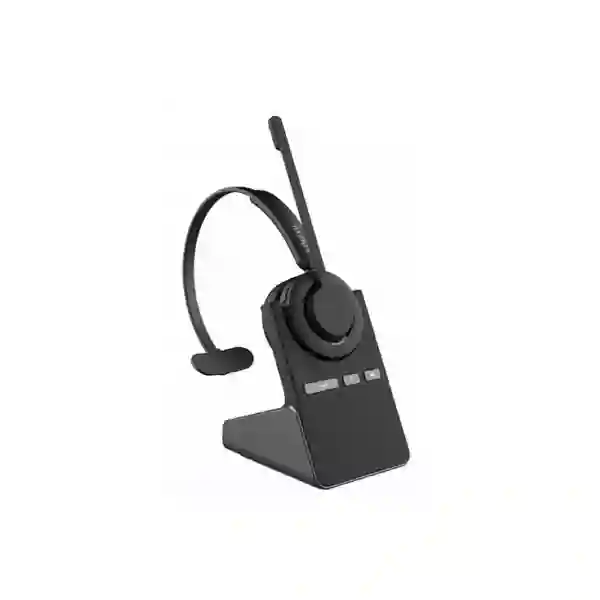
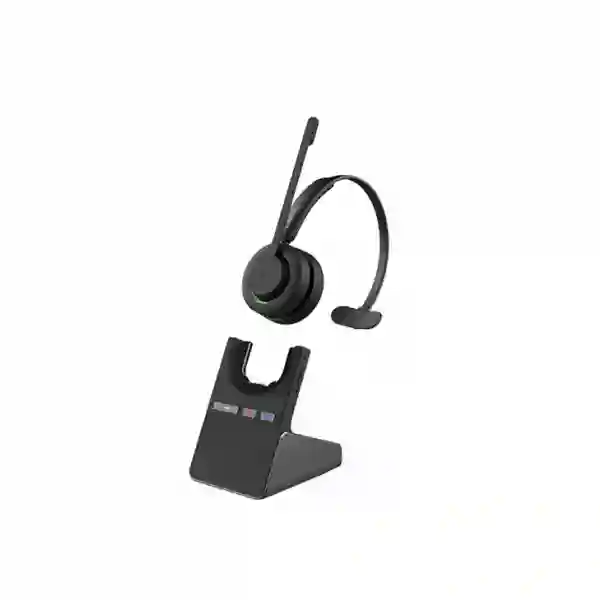
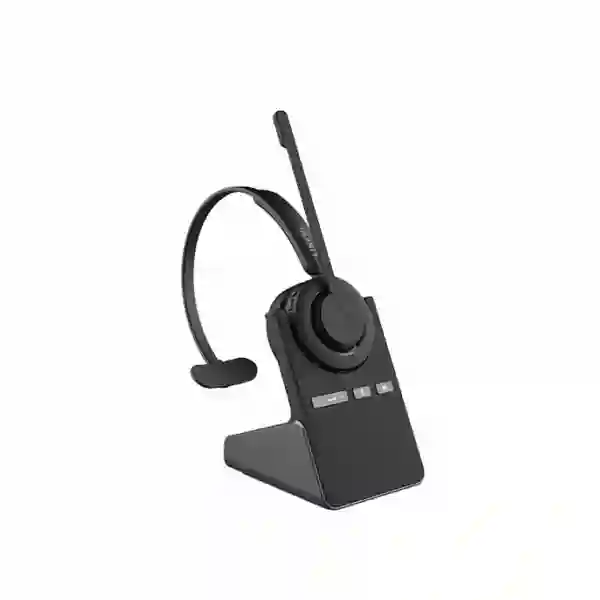
Fanvil DH301D Pro DECT Wireless Headset
The Fanvil DH301D Pro is built for people who spend a significant part of the working day on calls and need the freedom to move between a desk, nearby workspace and collaborative conversation without continually changing audio devices. Fanvil combines a lightweight DH30 headset with the DB30 multifunction DECT base, creating a system that can function as a charging dock, DECT receiver and hands-free speakerphone. It supports DECT 6.0, Bluetooth 5.3 and USB connectivity for PCs, mobile devices and compatible VoIP phones. For Tanzania buyers, the practical value is the ability to standardize a professional call-handling accessory around modern IP telephony, softphone and mobile workflows while retaining a dedicated long-range DECT path for office mobility.
Choose the DH301D Pro when users need a professional mono headset, long-range DECT mobility, Bluetooth flexibility and a desk base that can also become a speakerphone. Fanvil specifies up to 180 m DECT range and 50 m Bluetooth range in open areas; real indoor distance depends on walls, layout, interference and the connected environment.
Manufacturer-specified DECT wireless range in open-area conditions.
Modern Bluetooth support with HFP, HSP, A2DP, SPP and AVRCP profiles.
AI Environmental Noise Cancellation and voice enhancement for clearer speech.
Connection through Bluetooth, the DECT base or USB cable according to the device and workflow.
What the Fanvil DH301D Pro is designed to do
The DH301D Pro sits between a traditional desk-phone headset and a modern multi-device collaboration accessory. Fanvil’s design joins the DH30 mono headset to the DB30 DECT base. Automatic pairing between the headset and base is intended to reduce setup friction, while the base adds physical call controls, a built-in speaker and microphone, charging, and DECT reception. A user can therefore move from private headset conversation to a speakerphone-style interaction without adding another separate desktop audio device. The headset is especially relevant to reception teams, sales users, managers, support staff, hybrid workers and anyone who needs to remain reachable while moving away from the desk.
Its dual wireless approach is important. DECT is used for the dedicated long-range office connection and Fanvil specifies up to 180 metres or 590 feet in open-area testing. Bluetooth 5.3 provides a separate path for mobile devices and other Bluetooth-capable equipment, with Fanvil specifying up to 50 metres in open areas. The device can remember up to eight Bluetooth pairings and maintain two simultaneous Bluetooth connections. These are useful headline capabilities, but deployment teams should treat open-area figures as laboratory-style guidance rather than an indoor guarantee because reinforced walls, glazing, shelving, wireless congestion and building layout can reduce practical range.
The product is also designed around speech quality and workplace concentration. Fanvil lists AI Environmental Noise Cancellation, voice enhancement, full-duplex technology and EN50332 hearing protection. A 270-degree rotatable microphone boom supports left- or right-side wearing orientation, while the Busylight provides a visible indication that the user is engaged. Together, these functions address common office problems: background conversation, interruptions, desk mobility and the need to switch between computer, mobile and IP-phone communication.
Verified DH301D Pro technical specifications
| Headset microphone | 1 omnidirectional analog microphone; 100 Hz–10 kHz frequency range; -38±2 dBFS/Pa sensitivity |
| Headset speaker | 32 mm driver; 20 Hz–20 kHz frequency range; 100 Hz–8 kHz talk-mode bandwidth |
| Battery | 400 mAh lithium polymer; approximately 2-hour charging at 5 V/0.5 A |
| Talk time | Up to 10 hours in DECT mode and 21 hours in Bluetooth mode |
| Standby time | Up to 85 hours in DECT mode and 120 hours in Bluetooth mode |
| Wireless range | DECT: up to 180 m / 590 ft open area; Bluetooth: up to 50 m open area |
| Bluetooth | Version 5.3; HFP, HSP, A2DP, SPP and AVRCP; pairing list up to 8 devices; 2 simultaneous Bluetooth connections |
| DECT security | Step C authentication using DSAA2 and DSC2 128-bit encryption |
| Headset weight | 100 g |
| DB30 base weight | 232 g |
| Package contents | DH30 headset, DB30 DECT base, 5 V/2 A power adapter, 1.5 m USB cable, quick-start guide, safety information and declaration |
Specifications above are based on Fanvil’s DH301D Pro datasheet. Fanvil notes that specifications may be updated and that final shipped hardware, software and physical features should be treated as authoritative.
Business benefits beyond the specification sheet
Move without abandoning the call
Long-range DECT can be valuable for users who move to a printer, file area, adjacent office or service counter while remaining connected. The benefit is not the theoretical maximum range itself; it is reduced dependence on staying physically attached to the desk.
One desk device, several communication paths
A user may handle a VoIP call, a computer meeting and a mobile conversation during the same day. The DH301D Pro is designed to reduce device switching by combining DECT, Bluetooth and USB connectivity around one headset and base.
Private call to speaker mode
The DB30 base adds a built-in speaker and microphone. That allows a user to shift from personal headset listening to a hands-free desk conversation when a colleague needs to participate, without introducing a separate speakerphone.
Better concentration in busy spaces
AI ENC, voice enhancement and a visible Busylight are designed to address both sides of office distraction: background sound heard by remote participants and interruptions from nearby colleagues who may not realize the user is on a call.
Compatibility and integration planning
Fanvil lists the DH301D Pro as compatible with most Fanvil V and X series VoIP phones, while also publishing a dedicated compatibility list. Buyers should verify the exact phone model and required functions before ordering a large quantity. A headset may support basic audio yet require model-specific behavior for call answer, hang-up, mute synchronization or remote call control. Compatibility should therefore be checked at the exact endpoint-model level rather than assumed from brand name alone.
For computer use, define the collaboration applications the user actually relies on and whether USB, DECT base or Bluetooth will be the preferred default. For mobile-first staff, confirm whether simultaneous Bluetooth connections simplify their daily workflow. For desk-phone users, confirm the Fanvil compatibility list and decide whether the base will remain attached to the desk phone, a PC or both as allowed by the planned setup. The best installation is the one that makes the normal call path obvious to the user.
The wider voice environment matters too. Headset quality cannot compensate for overloaded internet, an incorrectly configured SIP platform or poor network Quality of Service. FourTeck Tanzania’s business technology services page explains the broader approach to integrated deployment, while the Tanzania technology shop helps buyers consider phones, PBX hardware and supporting network equipment as one procurement environment rather than isolated accessories.
Related telephony products on FourTeck Tanzania
The DH301D Pro is a headset rather than a standalone SIP extension, so customers planning new voice deployments should also review the endpoint and PBX side of the design. FourTeck Tanzania lists several business SIP phones that illustrate different desk requirements. The Dinstar C60S Business IP Phone is a straightforward non-PoE SIP endpoint for standard desks, while the Dinstar C60SP PoE Business IP Phone is relevant when centralized switch power is part of the office design.
For sites where fixed Ethernet is not the preferred access method, the Dinstar C60U-W Wi-Fi IP Phone provides a useful comparison point for wireless desk deployment. Where mobile-network connectivity is part of a voice continuity plan, the Dinstar C60U-T 4G IP Phone shows another endpoint approach. These models are not presented as DH301D Pro compatibility claims; they are related telephony references that help procurement teams think about endpoint type, power, LAN access and user role.
For a broader explanation of how FourTeck approaches telephony, networking and collaboration as connected systems, review About FourTeck Tanzania. The page explains why product compatibility, network readiness and operational workflow are evaluated together. That context is useful when a headset purchase forms part of a wider contact-centre, reception, branch-office or hybrid-working project.
Regional buying and deployment guidance
The following sections address practical procurement and deployment questions by market. They do not imply local stock, a local office, guaranteed delivery time or on-site engineering availability in any location. Confirm commercial availability, lead time and project scope during quotation.
Fanvil DH301D Pro DECT Wireless Headset Tanzania
For organizations buying the Fanvil DH301D Pro in Tanzania, the strongest case is usually a workforce that spends substantial time on voice calls but does not remain seated throughout the day. Reception teams may move between the front desk and nearby administrative area; sales staff may alternate between a desk phone, laptop meeting and mobile device; managers may need to continue a conversation while checking documents or speaking with a colleague. The DH301D Pro is designed for these mixed patterns because the headset and multifunction base combine DECT, Bluetooth and USB connectivity rather than forcing every call through a single endpoint.
Procurement should begin with compatibility. If the intended desk phone is a Fanvil V or X series model, confirm that exact model against Fanvil’s current headset compatibility list and identify which call-control functions are supported. If PCs and softphones are the primary path, define the operating system, meeting platforms and whether users will connect through the DECT base or USB. If mobile devices are important, the Bluetooth 5.3 capability, pairing list of up to eight devices and two simultaneous Bluetooth connections may reduce the need to repeatedly reconnect equipment during the day.
Office layout also matters. Fanvil’s 180 m DECT figure is an open-area specification, not an indoor promise. Concrete walls, metallic partitions, shelving, floor separation and wireless interference can reduce usable distance. A pilot unit is sensible when mobility is a critical reason for purchase. Tanzania businesses with call-heavy departments should also review power continuity for the base, charging habits, user assignment, spare-device policy and how headsets will be cleaned and shared if they are not individually allocated. Voice quality depends on the complete communications path, so SIP trunks, PBX configuration, WAN stability and LAN Quality of Service remain part of the project.
When requesting a Tanzania quotation, provide headset quantity, phone models, softphone or meeting applications, mobile-device requirements, preferred wearing arrangement and whether users need the speakerphone function of the DB30 base. FourTeck can then align the headset requirement with a wider IP telephony discussion. Buyers can also use the FourTeck Tanzania technology overview to review adjacent networking, IP phone, conferencing and infrastructure categories that may influence call quality and deployment readiness.
Fanvil DH301D Pro DECT Wireless Headset Dar es Salaam
Dar es Salaam offices often bring several communication channels into the same workspace: desk telephony, mobile calling, cloud meetings, customer service, logistics coordination and supplier communication. In that environment, a headset becomes part of employee workflow rather than a minor peripheral. The DH301D Pro suits users who need to answer a call, move away from the immediate desk and remain connected. The multifunction DB30 base is especially relevant for managers or reception users who sometimes want private headset audio and at other times need a nearby colleague to participate through the built-in speaker and microphone.
A Dar es Salaam deployment should be planned by user profile. Heavy-call users may value the dedicated DECT connection, AI Environmental Noise Cancellation, Busylight and all-day charging routine. Mobile-first employees may benefit more from Bluetooth flexibility. Staff who join browser meetings and softphone calls should have a clearly defined default audio device to avoid repeated Windows or application-level switching. Where hot-desking is used, decide whether headsets are personal while bases remain at desks, or whether entire units move with users. Hygiene, labeling and charging responsibility become operational issues when equipment is shared.
Network readiness is equally important. A premium headset does not resolve packet loss or an unstable SIP path. Offices carrying business data, surveillance traffic, Wi-Fi and voice across the same switching environment should consider VLAN design, bandwidth and Quality of Service. Teams using cloud collaboration should assess upstream internet stability as well as downstream speed. If the DH301D Pro connects to a Fanvil desk phone, verify compatibility for the exact handset rather than assuming every Fanvil phone behaves identically.
For quotation planning, Dar es Salaam customers should state the number of users, work area, expected movement radius, endpoint models, applications and whether Bluetooth-to-mobile operation is required. A small pilot can validate range through the actual building and confirm users understand the base controls. This approach is more useful than selecting purely from headline range. The product should solve a defined workflow: fewer missed calls, less desk tethering, clearer speech in busy areas and simpler switching among the communication devices staff already use.
Fanvil DH301D Pro DECT Wireless Headset Mwanza
Mwanza organizations may consider the DH301D Pro when standard desk-phone use is expanding into a broader mix of mobile, laptop and IP-based communication. The headset is well suited to branch administration, professional services, reservations, education administration, healthcare offices and distribution teams where users need to handle regular calls while moving around a contained workspace. DECT mobility can be particularly useful when a person must check stock records, consult another department or walk to a nearby counter without ending the conversation.
The main buying question is not simply whether the 180 m open-area specification sounds sufficient. Buyers should map the actual movement path. A user who walks through two reinforced walls may experience a different result from one moving through an open office. Where range is business-critical, test a unit in the actual site. Bluetooth range should be treated the same way. Fanvil lists 50 m in open-area conditions, but practical distance depends on device radios, room layout and interference. A pilot also helps confirm that the team prefers mono-headset use and finds the 270-degree microphone boom comfortable for left- or right-side wearing.
Mwanza buyers should also decide whether the DB30 speakerphone role is part of the intended workflow. In a manager’s office, quick transition from private headset audio to hands-free conversation can be useful. In an open office, speaker mode may be used less often because it can disturb neighboring desks. The same product can therefore create different value depending on workspace behavior. For call-intensive teams, the DECT talk-time rating of up to 10 hours should be considered alongside shift length and charging discipline; Bluetooth mode is rated longer, but the preferred mode should be based on connection requirements rather than battery figure alone.
When requesting pricing, specify whether the headset will connect mainly to Fanvil IP phones, computers or mobile devices. Include exact phone model names, because Fanvil directs customers to its compatibility list. State whether users depend on remote answer/hang-up behavior and whether a softphone platform is standardized. Procurement teams should also include quantity, expected rollout date and any need for pre-deployment testing so the quotation process covers the operational requirement instead of treating every headset as an identical accessory.
Fanvil DH301D Pro DECT Wireless Headset Arusha
Arusha businesses in hospitality administration, tourism services, professional offices, education and multi-department operations may use headsets for reservations, supplier calls, internal coordination and remote meetings. The DH301D Pro can fit these roles where users need hands-free conversation plus enough wireless flexibility to step away from the desk. The Busylight is useful in shared offices because it gives colleagues a visible cue that the wearer is engaged, while AI Environmental Noise Cancellation is intended to help reduce the effect of surrounding workplace noise on the person at the other end of the call.
For hospitality and service environments, it is worth separating public-facing movement from office movement. The headset is a professional office communications product; range should be tested across the specific back-office areas where staff expect to move. A quoted open-area figure should not be treated as a promise that the device will operate through every wall, stairwell or service corridor. If reliable mobility between distinct rooms is essential, validate the path before a large order and document where the base will be positioned.
Arusha procurement teams should also review device standardization. If a department already uses Fanvil V or X series VoIP phones, compare each handset against Fanvil’s compatibility information. Where employees rely on laptops and cloud meetings, define which application will own the audio device by default. Where mobiles are frequently used for supplier or guest calls, Bluetooth 5.3 can provide additional flexibility. The ability to keep two simultaneous Bluetooth connections may be useful for users who handle more than one personal or corporate Bluetooth endpoint, but the workflow should be tested rather than assumed.
A complete quotation brief should include quantities by department, IP phone models, laptop operating systems, collaboration tools, mobile-device requirements and any call-control expectations. Include shift length and whether headsets will be assigned individually. This helps determine charging routines and spare-unit planning. For organizations refreshing their telephony environment at the same time, FourTeck’s Tanzania shop and services resources can connect headset selection with IP phones, network readiness and PBX requirements, reducing the risk that a good accessory is deployed into an unsuitable voice environment.
Fanvil DH301D Pro DECT Wireless Headset Dodoma
Dodoma organizations evaluating professional voice accessories should view the DH301D Pro as part of an endpoint strategy rather than as a generic Bluetooth headset. Its main distinction is the combination of dedicated DECT operation and Bluetooth flexibility around a multifunction desk base. This can suit administrative offices, institutions, professional teams and branch operations where staff handle regular internal and external calls and need to move around the immediate work area without using a handheld phone continuously.
For institutional procurement, repeatability is important. A pilot group can validate comfort, microphone orientation, range and application behavior before a larger purchase. The headset weighs 100 g according to Fanvil’s datasheet, which supports lightweight mono use, but individual comfort preferences still vary. Users should be shown how the 270-degree boom changes side, how muting works and how to recognize Busylight status. Small elements of user orientation can have a larger effect on adoption than simply distributing new hardware.
Power and charging routines also deserve attention. Fanvil specifies a 400 mAh lithium polymer battery and approximately two-hour charge time at 5 V/0.5 A. In DECT mode, stated talk time is up to 10 hours; in Bluetooth mode, up to 21 hours. Procurement teams should compare these ratings with actual working patterns and remember that battery performance changes with age, usage and environment. The DB30 base can support a consistent charging habit when the headset is returned to the desk between calls.
Dodoma buyers should include exact phone models and software communication tools in their request. If the environment uses Fanvil V or X series phones, verify the published compatibility list. If a future phone-system replacement is planned, consider whether headset purchases should be synchronized with that project so endpoint compatibility is confirmed once rather than revisited after equipment arrives. A structured quotation can also separate headset-only supply from broader configuration or telephony work, making approval clearer for procurement and IT stakeholders.
Fanvil DH301D Pro DECT Wireless Headset UAE
UAE businesses often operate highly connected offices where users move between desk phones, Microsoft Teams or other meeting platforms, mobile calls and collaborative discussions. The DH301D Pro addresses this multi-device environment with DECT, Bluetooth 5.3 and USB connectivity. Its DB30 base adds value at executive, reception and service desks by providing charging, DECT reception and hands-free speakerphone functions in one desktop unit. Buyers comparing professional headsets should therefore evaluate the base workflow as carefully as the headset itself.
Large offices and multi-floor environments should not interpret the 180 m open-area DECT figure as guaranteed building-wide coverage. If a user needs to leave a suite, cross a corridor or move through several partition types, test the practical path. DECT remains attractive because it offers a dedicated wireless connection and resistance to typical office interference, but physical construction determines real distance. Bluetooth should likewise be treated as a flexible local-device connection, with Fanvil’s 50 m open-area rating serving as a reference rather than a universal indoor result.
For regional organizations managing offices in both Tanzania and the Gulf, standardizing user accessories can simplify training and support, provided the associated phones and applications are compatible in each location. FourTeck’s UAE technology platform can support wider UAE procurement discussions, while Tanzania requirements can remain coordinated through the Tanzania site. Standardization should cover user profile, endpoint model, headset configuration, firmware policy and spare strategy rather than simply ordering the same SKU everywhere.
A UAE quotation request should state exact phone models, softphone applications, number of headsets, office layout and whether users require mobile pairing. Buyers should also confirm DECT regulatory suitability for the supplied regional variant because Fanvil publishes different DECT frequency bands for EU and US/Canada versions. Procurement should confirm the version appropriate to the destination market instead of assuming that every geographically sourced unit is interchangeable.
Fanvil DH301D Pro DECT Wireless Headset Uganda
Organizations in Uganda looking for professional wireless voice accessories may use the DH301D Pro for customer-facing desks, branch administration, sales teams and hybrid workers who need to switch between IP telephony, computer audio and mobile communication. Its dedicated DECT base distinguishes it from a simple Bluetooth-only headset because the base creates a stable desk-centered connection, provides charging and can operate as a speakerphone. That design can be useful for employees whose normal workday blends private calls with quick group discussion.
Before procurement, document the endpoint environment. If users have Fanvil V or X series phones, check each exact model against the current Fanvil compatibility list. If staff use softphones, define the operating system and application. If mobiles are part of the workflow, decide whether users need one or two simultaneous Bluetooth connections. This requirement-led approach prevents overbuying features that are not used and reduces the risk that a required call-control behavior is discovered to be unsupported after rollout.
For multi-site organizations, supportability should be planned early. Device labeling, user assignment, spare-stock policy, charging routines and troubleshooting instructions are simple but valuable. A standardized headset can reduce variation across sites when the underlying phones are also standardized. The FourTeck Uganda platform provides a regional point of reference for related technology requirements, while cross-border teams can align procurement principles with Tanzania operations.
The practical deployment question is mobility. Fanvil specifies up to 180 m DECT range in an open area. Real offices can be very different, especially where users move through walls or between rooms. A small test deployment is appropriate when range is a deciding factor. Buyers should also consider battery expectations: up to 10 hours of DECT talk time can cover many workdays, but continuous-call users should return the headset to the base during breaks. A well-designed rollout combines the device specification with the user’s actual calling pattern.
Fanvil DH301D Pro DECT Wireless Headset Kampala
Kampala businesses with active reception, sales, support and management teams often need employees to stay available while moving around busy offices. The DH301D Pro can support that objective by using DECT for the dedicated base connection and Bluetooth 5.3 for mobile or other Bluetooth-capable devices. The mono form factor allows the wearer to retain some awareness of the surrounding office, which may be useful at reception or service desks where staff need to hear both the remote caller and nearby colleagues.
Office density should influence testing. Busy workspaces can contain Wi-Fi access points, Bluetooth devices, mobile phones and many other radios. Fanvil positions the DECT connection as stable and interference-resistant, but the correct way to verify performance is to test under normal working conditions. Building materials and desk placement can affect range more than the published open-area maximum. The base should be positioned where users actually work rather than hidden behind dense equipment or placed far from the intended movement zone.
Kampala procurement teams should also decide how the headset will integrate into employee onboarding. Users may need brief guidance on Bluetooth pairing, mute, volume, Busylight and switching between headset and base speaker modes. If the product is assigned to call-centre-like roles, consider hygiene and personal assignment rather than frequent sharing. If it is used in executive offices, the base speakerphone may have more day-to-day value. The same hardware can therefore serve different roles with different configuration priorities.
For quotation accuracy, provide quantities by role rather than only a total number. Identify which users have Fanvil IP phones, which use PCs, and which require mobile pairing. Note any expected cross-site standardization with other Uganda locations or Tanzania offices. This gives the supplier enough information to confirm compatibility, propose a pilot where appropriate and avoid treating headset procurement as a one-size-fits-all accessory order.
Fanvil DH301D Pro DECT Wireless Headset Arua
For Arua offices and branch operations, the DH301D Pro can be attractive when a small number of users carry a disproportionate share of incoming and outgoing calls. A branch manager, receptionist or customer-service employee may benefit more from a professional wireless headset than users who make only occasional calls. Prioritizing these high-call roles can improve the value of the first deployment and create a practical test group before the organization expands quantities.
The main technical advantage to validate is mobility around the branch. Fanvil states up to 180 m DECT range in open areas, but branch-office walls, shelving and electrical equipment can reduce that distance. Identify the locations where a user must remain reachable: reception to filing area, office to nearby counter, or desk to back room. Then test those paths. This creates a real acceptance criterion instead of relying on a range number that was measured under different physical conditions.
Arua buyers should also think about support simplicity. The DB30 base automatically pairs with the headset, reducing one setup step. Keeping each base with its assigned headset, labeling user equipment and maintaining the supplied power adapter and USB cable together can make troubleshooting easier. Because Fanvil includes USB audio capability, a user can still connect through a cable when a direct wired audio path is preferred, while charging and communication can be coordinated around the normal desk routine.
When obtaining a quotation, include the exact telephony platform and phone models. If Fanvil V or X series phones are involved, confirm compatibility before purchase. If the organization relies mainly on laptops, specify the collaboration or softphone software. A branch that is part of a wider Uganda network may also benefit from using the same headset policy as Kampala or other offices, provided user roles and endpoints are comparable. Standardization should make support easier, not force equipment into roles where a simpler accessory would be sufficient.
Fanvil DH301D Pro DECT Wireless Headset Mbarara
Mbarara organizations considering the DH301D Pro should identify whether their primary need is wireless movement, multi-device connectivity, clearer speech in a busy office, or the multifunction speakerphone base. Each reason affects how the product should be deployed. For example, a sales user may value Bluetooth switching between mobile and PC, while a reception user may depend more on DECT range, Busylight and compatibility with a Fanvil desk phone. Separating these user profiles leads to better allocation than purchasing the same accessory for every employee.
Battery planning is straightforward but should not be ignored. Fanvil rates the DH30 headset for up to 10 hours of DECT talk time and up to 21 hours in Bluetooth mode, with approximately two-hour charging. Teams whose users spend most of a full shift in continuous conversation should build charging behavior into breaks and end-of-day routines. A base left in a convenient desk position encourages the headset to be docked rather than forgotten in a drawer or carried away without charging.
Mbarara buyers should validate the wider communication path at the same time. If calls are made through a SIP PBX, confirm network stability and any remote-site WAN dependency. If cloud calling is used, measure the quality of the internet path during busy periods. If the office shares switching capacity with CCTV or large data transfers, voice prioritization may be required. Audio equipment can improve microphone capture and listening comfort, but it cannot remove packet loss created elsewhere in the network.
A useful quotation brief includes quantity, user roles, existing phones, PBX or softphone platform, mobile requirement and the expected movement area. If the organization operates several Uganda offices, describe whether the same configuration is desired across sites. This allows compatibility and user training to be planned consistently and makes it easier to maintain spares and support procedures. The objective is a repeatable working setup, not merely ownership of a headset with a long specification list.
Fanvil DH301D Pro DECT Wireless Headset Gulu
Gulu businesses and institutions can consider the Fanvil DH301D Pro for roles where hands-free communication improves productivity. Instead of asking whether every desk needs a professional wireless headset, identify employees who frequently transfer calls, move around the office during conversations, participate in computer meetings or switch between mobile and desk communication. Those roles are most likely to benefit from the product’s combination of DECT, Bluetooth and USB connectivity.
The AI Environmental Noise Cancellation and voice enhancement features are relevant in shared workspaces, but buyers should have realistic expectations. Noise cancellation can reduce unwanted background sound presented to the far end; it does not make a very noisy room acoustically silent for the wearer. If a work area is consistently loud, desk placement and room acoustics still matter. The Busylight also works best when colleagues understand what the indicator means, so simple user orientation can increase its practical value.
For branch deployment, inspect both power and data dependencies. The DB30 base requires power, while the overall call experience may depend on an IP phone, laptop or network service. If the organization already protects network switches and PBX equipment with UPS power, consider whether desk audio equipment also needs continuity or whether short outages can be handled through mobile fallback. This type of operational planning is more valuable than assuming every accessory needs the same resilience level.
When preparing a Gulu quotation request, list the exact Fanvil phone model if the headset will connect to a desk phone, because compatibility varies by model. For laptop users, specify the primary meeting and softphone applications. For mobile users, identify whether dual simultaneous Bluetooth connections are genuinely useful. Include the number of staff, expected call duration and whether the base speakerphone function will be used. These details help match product capability to real communication behavior and support a more predictable rollout.
Fanvil DH301D Pro DECT Wireless Headset Kenya
Kenya organizations comparing professional wireless headsets can position the DH301D Pro as a multi-device business accessory rather than a consumer Bluetooth headset. The dedicated DECT base, long open-area range rating, automatic base pairing and speakerphone capability are designed for office workflows. Bluetooth 5.3 adds flexibility for mobile and computer devices, while USB provides another connection path. This combination suits teams that want one headset family to cover several working styles without purchasing separate desk-phone and mobile headsets.
For Nairobi or other dense office environments, practical range testing remains important. The product may deliver excellent movement within an open office yet perform differently across reinforced partitions or separate floors. A pilot should verify the movement path that matters to the user. It should also test how quickly staff can change audio sources, whether the base buttons match their normal call behavior and whether the mono wearing style is appropriate for concentration and situational awareness.
Companies operating across East Africa can benefit from standardizing accessories when the same telephony architecture is used in multiple countries. FourTeck’s Kenya technology site offers a related regional reference, while Tanzania deployments can be coordinated through the Tanzania platform. The key is to standardize documented configurations rather than only model numbers: phone compatibility, preferred connection mode, user instructions, charging routine and spare-device policy should travel with the hardware standard.
Kenya procurement teams should request the correct regional variant and confirm DECT suitability for the destination. Include exact endpoint models, user quantities, collaboration software and the expected rollout schedule. If the organization is upgrading its IP phones at the same time, evaluate the headset and phone compatibility together. That prevents a situation where new phones arrive with a different control interface or headset support profile than the accessory order assumed.
Fanvil DH301D Pro DECT Wireless Headset Kuwait
Kuwait buyers may evaluate the DH301D Pro for call-heavy office roles, executive desks, support teams and hybrid-working environments where employees use both business phones and cloud collaboration. The product’s multifunction base can reduce desktop clutter by combining charging, DECT reception and speakerphone functions. For an executive or manager, that can make it easier to shift from private headset audio to a quick hands-free discussion. For a service team, the greater value may be staying connected while moving around a work zone.
Wireless planning should consider office construction. Fanvil’s stated DECT and Bluetooth ranges are measured in open areas, so walls, glass, metal furniture and other radios can change results. If employees need to move between rooms, define those rooms during evaluation. If mobility is only required around one open floor, the test should reflect that. A targeted range test is faster and more meaningful than trying to prove the theoretical maximum distance.
Regional procurement also needs version control. Fanvil publishes different DECT frequency bands for EU and US/Canada variants. Buyers should obtain the version appropriate to Kuwait and any other deployment destination, rather than moving units among regions without confirming regulatory and technical suitability. This becomes especially important for organizations with procurement hubs that purchase equipment centrally for several countries.
The FourTeck Kuwait site provides a regional reference for related business technology requirements. A quotation request should identify headset quantity, destination, phone models, softphone tools, mobile pairing needs and whether the DB30 speaker mode will be used. If the same organization also operates in Tanzania, a documented headset standard can simplify training and support, but each market’s radio requirements and local procurement conditions should still be confirmed independently.
Fanvil DH301D Pro DECT Wireless Headset Ghana
Ghana organizations planning modern voice workstations can consider the DH301D Pro where staff need consistent calling across IP phones, computers and mobiles. The headset is particularly relevant to roles that spend enough time on calls for comfort, mobility and call control to influence productivity. A user who only makes a few short calls may not need the same equipment as a receptionist or account manager who remains on voice communication for hours each day.
The product’s 100 g headset weight, rotatable microphone boom and mono format are designed for professional wear, but organizations should still collect user feedback during a pilot. Headset comfort is personal, and a technically suitable device can still face low adoption if users prefer a different wearing style. A pilot also gives IT staff a chance to document pairing, firmware, mute, volume and call-control procedures before a broader rollout.
Where Ghana and Tanzania operations share technology standards, procurement teams can reduce complexity by aligning on the same endpoint and accessory families when compatibility allows. FourTeck’s Ghana technology platform provides a relevant regional reference. Standardization can simplify spare management and user training, but it should not override differences in local endpoint models, radio requirements or communication platforms.
A Ghana quotation should include the intended use of DECT versus Bluetooth. If long desk-range mobility is the main requirement, the DECT base and physical layout deserve the most attention. If users mainly switch between mobile and laptop audio, Bluetooth behavior may matter more. If Fanvil desk phones are involved, specify exact V or X series models so compatibility can be checked. By defining the real workflow first, buyers can decide whether the DH301D Pro’s multifunction base and dual wireless architecture justify its place in the user profile.
Fanvil DH301D Pro DECT Wireless Headset Nigeria
Nigeria businesses with customer service, sales, support and multi-site administration can use professional wireless headsets to reduce the friction of moving between communication devices. The DH301D Pro is well suited to users who combine IP telephony with laptop meetings and mobile calls. Its DB30 base offers a dedicated home position on the desk, making charging and DECT connection part of a predictable routine while also providing a speakerphone option for short collaborative conversations.
For busy offices, the AI ENC and Busylight features should be evaluated together. The first addresses unwanted environmental sound transmitted through the microphone, while the second provides a visible call-status cue to people nearby. Neither replaces good office acoustics or workplace etiquette, but together they can reduce two common causes of disrupted communication. For call-intensive users, microphone positioning and user training should be included in onboarding so voice enhancement features are supported by correct physical use.
Nigeria organizations with branches in other markets may seek a common communications standard. FourTeck’s Nigeria technology site provides a regional reference, and the broader FourTeck Africa platform can be useful when requirements span several countries. For standardization, maintain a record of phone models, headset connection mode, user groups and approved accessories so procurement does not rely on memory.
The quotation process should identify quantity, city or destination, endpoint model, software platform, mobile requirement and desired rollout timing. Buyers should confirm the appropriate DECT variant for the destination market and should test practical wireless range in the real building if mobility is a key reason for purchase. If a contact-centre-scale rollout is contemplated, start with a representative pilot group so the organization can measure comfort, call clarity, range and operational behavior before committing to larger quantities.
Fanvil DH301D Pro DECT Wireless Headset Seychelles
Seychelles businesses in hospitality, travel services, professional administration and multi-property operations may require wireless headsets for reservations, reception support, procurement and management roles. The DH301D Pro can fit these environments when the user needs to stay connected while moving around an office or back-of-house work area. Its mono design preserves some awareness of the surrounding environment, which may be valuable where staff need to respond to nearby colleagues while also handling a remote caller.
For hospitality-related work, distinguish office mobility from site-wide communications. The DH301D Pro is an office DECT headset with an open-area range specification, not a substitute for a building-wide radio or cordless-telephony system. A reservations manager moving between adjacent office areas may benefit greatly, while a user expecting seamless communication across multiple floors or distant facilities should first validate the actual path and consider whether a different communications architecture is required.
Procurement teams should also think about island logistics and spares without making assumptions about stock or delivery. If the headset becomes important to a specific service role, maintaining an agreed spare strategy may be more practical than waiting until a failure occurs. The decision depends on user criticality, procurement lead time and whether alternative wired or mobile audio devices are available as temporary fallback. These are operational planning questions rather than product specifications.
A Seychelles quotation request should include the destination, number of users, exact Fanvil desk-phone models where applicable, laptop collaboration tools and mobile pairing needs. Ask for confirmation of the correct regional DECT variant. If a larger voice upgrade is being planned at the same time, coordinate the headset purchase with phone and PBX selection. This ensures the accessory choice remains compatible with the communication platform and prevents procurement from solving one part of the workflow while creating a new integration issue elsewhere.
Fanvil DH301D Pro DECT Wireless Headset – multi-country procurement perspective
Organizations operating across Tanzania, Kenya, Uganda, the UAE, Kuwait, Ghana, Nigeria and Seychelles can simplify support by defining a headset standard, but they should standardize the complete configuration rather than the product name alone. Record the approved Fanvil phone models, PC software, preferred connection method, mobile pairing policy, user role, charging routine and spare allocation. This turns the DH301D Pro from an isolated purchase into a repeatable workplace standard that IT teams can document and support.
Cross-border procurement must also respect regional radio versions and supply conditions. Fanvil’s datasheet distinguishes DECT frequency bands by region, so the appropriate variant should be confirmed for each destination. Do not assume units bought for one country can simply be redeployed to another. Commercial availability, lead times and warranty channels should also be confirmed at the quotation stage because they are not fixed technical characteristics of the headset.
A sensible regional rollout starts with a pilot in one representative office, followed by controlled expansion once the organization has confirmed call-control behavior, audio quality, range and user acceptance. Branches with different phone systems may require separate validation even when the headset model remains the same. This is especially important if one office uses Fanvil desk phones while another relies primarily on PC softphones or mobile devices.
FourTeck’s regional network can help procurement teams keep the technology conversation connected across markets. Use the Tanzania site for Tanzania requirements and the relevant regional FourTeck platform for other destinations. The goal is not to force identical local processes, but to maintain a common technical baseline and clear documentation so support teams know how the headset is expected to operate wherever it is deployed.
Fanvil DH301D Pro quotation checklist
A useful quotation request gives enough information to verify compatibility and scope. Before contacting sales, prepare the items below. This reduces back-and-forth and helps distinguish a headset-only requirement from a wider telephony or collaboration project.
Frequently asked questions
What is the Fanvil DH301D Pro?
It is a LINKVIL professional DECT wireless headset system consisting of the DH30 headset and DB30 multifunction base. The base acts as a charging dock and DECT receiver and includes a speaker and microphone for hands-free use.
Does the DH301D Pro support Bluetooth?
Yes. Fanvil specifies Bluetooth 5.3 with HFP, HSP, A2DP, SPP and AVRCP profiles, a pairing list of up to eight devices and two simultaneous Bluetooth connections.
How far can the Fanvil DH301D Pro work from its base?
Fanvil specifies a DECT wireless range of up to 180 metres or 590 feet in open-area conditions. Indoor range can be shorter because walls, floors, metal structures and interference affect radio performance, so critical movement paths should be tested on site.
What is the battery life?
The published rating is up to 10 hours of DECT talk time and 21 hours of Bluetooth talk time, with approximately two hours charging. Standby is listed at up to 85 hours in DECT mode and 120 hours in Bluetooth mode.
Does it work with Fanvil IP phones?
Fanvil states compatibility with most Fanvil V and X series VoIP phones, but compatibility varies by phone model. Check the current Fanvil compatibility list for the exact handset and functions required.
Can the base be used as a speakerphone?
Yes. Fanvil describes the DB30 base as including a built-in speaker and microphone, allowing users to switch between private headset mode and hands-free speaker mode.
Does the headset have noise cancellation?
Yes. The published feature set includes AI Environmental Noise Cancellation and voice enhancement. These functions help reduce transmitted background noise but do not replace good room acoustics or network quality.
What should I provide when asking for a quote?
Provide quantity, destination, exact phone model, laptop or softphone platform, mobile pairing needs, expected movement area and whether the DB30 base speakerphone will be used. These details help confirm suitability before procurement.
Decision recap
The Fanvil DH301D Pro is most compelling when the user genuinely benefits from three things at once: dedicated DECT mobility, Bluetooth flexibility and a multifunction desktop base. Its published specifications support serious office use, including a 100 g headset, 400 mAh battery, up to 10 hours DECT talk time, up to 21 hours Bluetooth talk time, 180 m open-area DECT range, AI ENC, voice enhancement, Busylight and secure DECT authentication/encryption.
The final buying decision should still be based on compatibility and workflow. Confirm the exact Fanvil phone model, check softphone behavior, test practical indoor range if mobility is critical and identify which staff roles justify a professional wireless headset. That process is more reliable than selecting solely by range or battery headline.
Talk to FourTeck about your headset and telephony requirement
FourTeck Tanzania can help you structure a DH301D Pro requirement around user roles, endpoint compatibility and the wider voice environment. Share your phone models, number of users, softphone applications and expected movement area. For a broader view of the company’s technology approach, visit FourTeck Tanzania, explore technology services, or browse the business technology shop. For regional technology needs, FourTeck also maintains dedicated platforms for the UAE, Kenya, Uganda, Kuwait, Ghana and Nigeria.


Reviews
There are no reviews yet.