
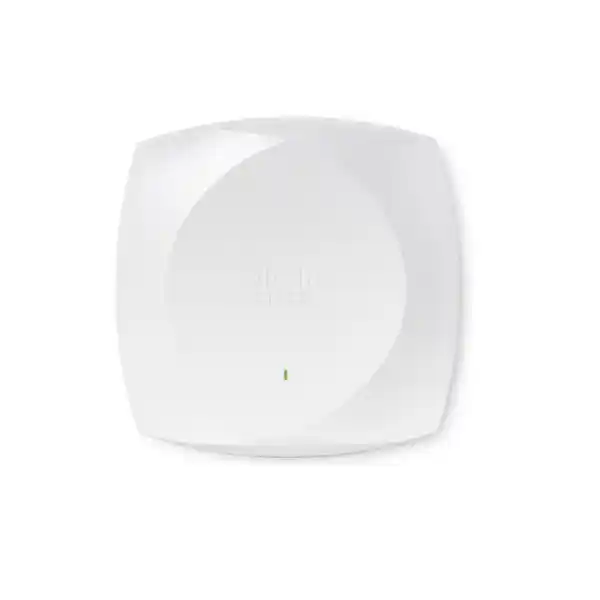
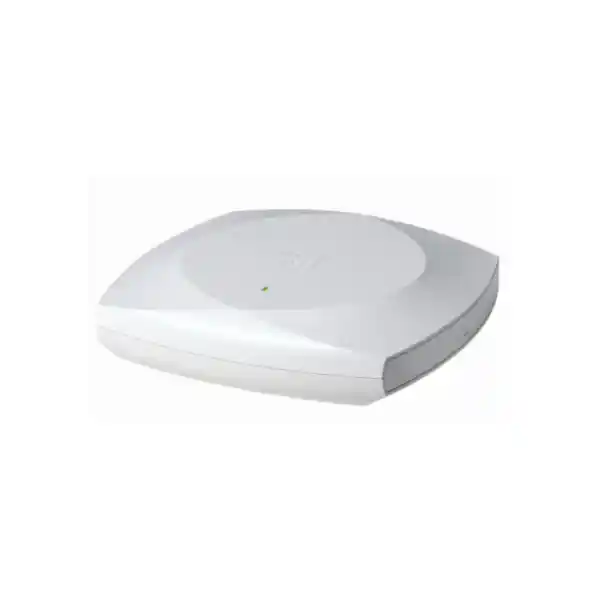
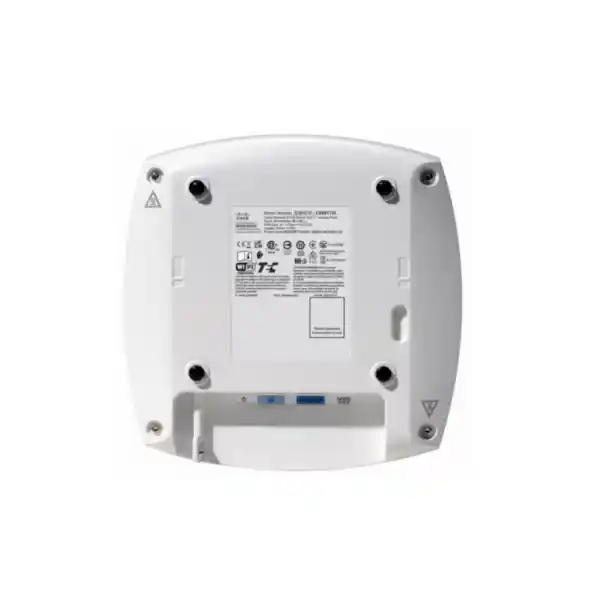
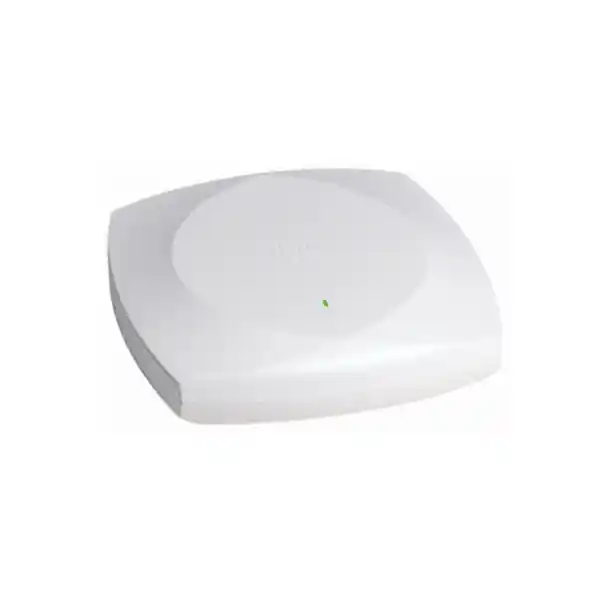
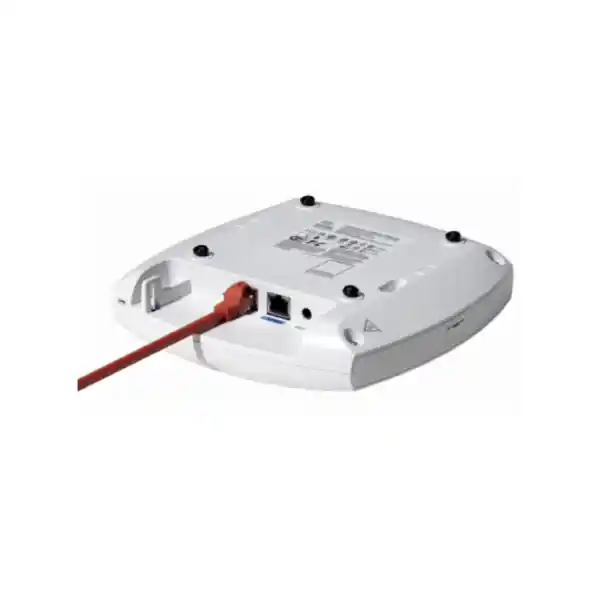
Cisco Meraki CW9172I
The Cisco Meraki CW9172I is an enterprise indoor Wi-Fi 7 access point built for organizations that want modern wireless performance, centralized cloud operations and a practical migration path for branch, retail, healthcare, hospitality and office networks. Cisco positions the CW9172I for moderate-density environments and equips it with flexible radio operation across 2.4 GHz, 5 GHz and 6 GHz, a 2.5 Gbps multigigabit Ethernet uplink, integrated omnidirectional antennas, dedicated scanning capabilities and IoT support. For buyers in Tanzania, the key purchasing decision is not simply the access point itself: a successful rollout also depends on site survey findings, PoE budget, switch uplinks, licensing, VLAN design, security policy, internet capacity, mounting and the mix of client devices expected over the next several years.
Best suited to indoor business spaces that need managed Wi-Fi 7, predictable roaming, policy control and scalable monitoring without turning every access point into a standalone configuration task.
Cisco Meraki CW9172I overview
The CW9172I combines next-generation 802.11be wireless with the operational model associated with Meraki cloud-managed networks. In its tri-band mode, the access point can serve 2.4 GHz, 5 GHz and 6 GHz clients, using 2×2:2 spatial streams per band. Cisco also documents a dual-band mode where the 2.4 GHz radio remains 2×2:2 while the 5 GHz radio can operate as 4×4:4. This flexibility is useful when a deployment cannot use 6 GHz or when the design benefits from concentrating more radio capability in 5 GHz. Cisco states a maximum aggregate frame rate of up to 9 Gbps in tri-band operation, but real-world user throughput depends on client capabilities, channel width, RF conditions, backhaul, interference, application behavior and network design.
The access point includes a single 100M/1G/2.5G multigigabit Ethernet uplink, so switching should be planned with both data rate and power delivery in mind. Cisco documentation also identifies dedicated scanning and IoT functions, including Bluetooth Low Energy support, while Meraki Dashboard provides the centralized management environment for cloud-managed deployments. For organizations replacing older Wi-Fi 5 or Wi-Fi 6 access points, the CW9172I can be considered as part of a broader refresh that also checks cabling quality, PoE capability, switch uplinks, firewall policy and WAN capacity.
FourTeck Tanzania’s broader business IT and networking portfolio is relevant when the wireless project also involves switching, firewalls, structured cabling, VoIP, CCTV or branch connectivity. For organizations comparing wireless options, the FourTeck Tanzania technology shop provides a useful starting point for related procurement discussions, while FourTeck Tanzania services covers the wider deployment and support context.
Verified product highlights
Wi-Fi 7 radio platform
Supports 802.11be with tri-band 2.4/5/6 GHz operation or a dual-band 2.4/5 GHz mode with a 4×4:4 5 GHz configuration.
2.5 GbE uplink
A multigigabit RJ-45 uplink helps reduce the chance that the wired edge becomes an immediate bottleneck for modern wireless capacity.
Dedicated scanning
Cisco documents a dedicated scan/auxiliary radio used for RF visibility, security monitoring and wireless optimization functions.
IoT readiness
Integrated BLE and IoT capabilities support beaconing, scanning and selected smart-space use cases without requiring the client-serving radios to do every task.
Technical specifications and procurement points
| Item | CW9172I detail |
|---|---|
| Form factor | Indoor access point with integrated omnidirectional antennas |
| Wireless generation | Wi-Fi 7 / IEEE 802.11be, with backward support for earlier listed Wi-Fi standards |
| Radio modes | Tri-band 2.4/5/6 GHz 2×2:2 or dual-band 2.4 GHz 2×2:2 + 5 GHz 4×4:4 |
| Maximum aggregate frame rate | Up to 9 Gbps in documented tri-band configuration |
| Wired uplink | 1 x 100M/1G/2.5G multigigabit Ethernet |
| USB | USB 2.0 host interface; power planning varies by deployment mode |
| Management | Meraki Dashboard for cloud-managed deployments; Cisco also documents unified hardware support for Catalyst-managed deployment modes |
| Licensing | A compatible Cisco/Meraki subscription or access-point license is required according to the selected management model |
Power is a design item rather than an afterthought. Cisco documentation shows that radio capability, link speed and USB availability can vary with PoE source. A quotation should therefore identify the intended PoE standard, switch model, cable category and whether injectors or adapters are required. The best bill of materials is the one that treats access point, power, switch uplink, subscription and mounting as one system.
Where the CW9172I fits
Cisco describes the 9172 family for environments such as regional branches, retail, healthcare clinics, student housing, boutique hospitality and other distributed business locations. That makes the CW9172I attractive for organizations that need a current-generation indoor AP without automatically moving to the highest-capacity model in the Wi-Fi 7 range. The design target should be capacity and application quality rather than a simplistic square-metre formula. Wall materials, floor layout, ceilings, shelving, neighboring networks, expected roaming, voice use, video use and device count all change the result.
A branch with 40 users may need more access points than a larger open office with 80 users if the branch has concrete partitions and many voice calls. A retail floor may need careful channel reuse and guest isolation. A clinic may prioritize predictable roaming, segmented medical or operational devices and secure guest access. A hotel or serviced workspace may have many transient client devices and strong expectations for onboarding simplicity. The CW9172I can be a capable building block in each case, but access point count and placement should come from survey and design work.
Licensing, switching and integration checklist
For a Meraki-managed CW9172I project, confirm the required subscription model and term before ordering. Also verify whether the existing switch can provide the chosen PoE level and whether its access ports support multigigabit Ethernet. Where the access layer is limited to 1 Gbps, the AP can still operate, but the wired edge may constrain peak aggregate wireless performance. Network teams should also confirm VLANs, DHCP, DNS, firewall reachability to required cloud services, authentication methods, guest policies, RADIUS or identity integrations and any branch WAN dependencies.
If the project includes branch standards across East Africa, FourTeck’s regional sites can help align related procurement discussions, including FourTeck Kenya and FourTeck Uganda. Regional standardization is useful when the objective is consistent SSIDs, VLANs, naming, monitoring and support procedures across multiple countries while still respecting each site’s regulatory and infrastructure conditions.
Cisco Meraki CW9172I Tanzania
For Tanzanian organizations evaluating the Cisco Meraki CW9172I, the most valuable starting point is a requirement map that connects users, building layout, applications, switching and internet capacity. Businesses in Tanzania increasingly depend on cloud applications, Microsoft 365, video meetings, IP telephony, ERP systems, CCTV viewing and mobile workflows, all of which place different demands on the wireless network. The CW9172I provides a Wi-Fi 7 platform with tri-band capability, but good results depend on how the AP is positioned, powered and integrated. A procurement team should collect floor plans, identify expected device density, note areas with concrete walls or shelving, list critical applications and determine whether staff require seamless roaming between rooms or floors.
The wired network deserves equal attention. The CW9172I has a 2.5 Gbps multigigabit Ethernet uplink, so organizations upgrading from older access points should verify whether existing switches and structured cabling can make practical use of that capacity. PoE capability must also be checked against the intended radio and USB use. If the current switch stack is aging, an access-point refresh can be an opportunity to standardize VLANs, improve uplink capacity and document port assignments rather than adding modern Wi-Fi onto a weak LAN foundation. Guest wireless should be isolated from business systems, and IoT or operational devices may warrant separate policy depending on risk.
Tanzania deployments can range from a single office to branch networks spread across multiple cities. Centralized Meraki management is particularly relevant where IT teams need remote visibility into wireless health, client behavior and configuration without visiting each site for routine changes. Buyers should request a quotation that clearly separates hardware, licensing, power accessories, mounting, switching dependencies and installation work. Regulatory availability of the 6 GHz band and permitted channel use must be confirmed for the actual deployment country rather than assumed from specifications published for another market. A careful design can use the CW9172I’s flexibility while keeping the rollout aligned with local conditions, existing infrastructure and future expansion.
Cisco Meraki CW9172I Dar es Salaam
Dar es Salaam is a natural market for business Wi-Fi projects because corporate offices, retail spaces, clinics, hospitality properties, logistics operations, education sites and professional services frequently operate in dense commercial environments. A CW9172I deployment in Dar es Salaam should be designed around both indoor RF conditions and the applications used by staff and visitors. In multi-tenant buildings, neighboring wireless networks can increase channel competition, making spectrum visibility and disciplined channel planning important. Concrete construction, glass partitions and changing office layouts also influence coverage, so access point placement should be based on measured or modeled conditions rather than evenly spacing devices on a drawing.
For headquarters and larger offices, the wireless project should coordinate with the switching and firewall layers. The CW9172I’s multigigabit uplink can benefit from switches that support 2.5 GbE and suitable PoE, while WAN and firewall capacity must be sufficient for cloud applications, video conferencing and guest internet traffic. IT teams should also decide how SSIDs map to VLANs, whether employee authentication uses credentials or certificates, and how guest users are isolated. Where the office already has older Wi-Fi, migration can be staged by replacing zones while maintaining consistent naming and security policy, reducing disruption during the upgrade.
Procurement teams in Dar es Salaam should ask for more than a unit price. A useful quote includes the CW9172I hardware, required Meraki or Cisco subscription, mounting components, PoE source, any multigigabit switching upgrades, cabling remediation, configuration and testing. For retail or customer-facing spaces, the design should consider peak visitor periods, payment terminals, handheld devices and staff operations. For logistics facilities, shelving and open bays can create very different RF behavior from offices. A well-scoped CW9172I project therefore begins with environment and user behavior, then converts those findings into access point quantity, placement, switch ports, licensing and rollout tasks.
Cisco Meraki CW9172I Mwanza
Organizations in Mwanza considering the CW9172I may include offices, healthcare facilities, schools, hospitality businesses, retail environments and distributed branch operations. For these customers, cloud-managed Wi-Fi can reduce the need to treat every location as an independent network. A Meraki-managed deployment allows configuration and monitoring to be centralized, which is useful when local staff are not dedicated network specialists. Before selecting access point quantities, the project team should document room layout, floor count, construction materials, user concentrations and areas where reliable roaming is important. High-priority applications such as voice, cloud ERP and collaboration should be identified early because they can influence coverage and quality targets.
Mwanza projects should also evaluate resilience beyond the radio layer. If the access points are powered from PoE switches, those switches may benefit from UPS protection so short power interruptions do not immediately drop the wireless network. Internet resilience may matter for sites that depend heavily on cloud applications; dual-WAN or failover planning at the firewall can complement a centrally managed WLAN. The CW9172I itself provides modern Wi-Fi capability, but application continuity still depends on switching, power and WAN design. Where fiber or high-speed fixed connectivity is available, the network should be checked end-to-end so the wireless upgrade is not constrained by a 1 Gbps bottleneck or oversubscribed uplink.
For procurement, organizations should confirm licensing term, renewal ownership, Dashboard administration roles and support escalation procedures. It is useful to record AP serials, names, physical locations, switch ports and cable labels during installation. That documentation turns future troubleshooting into a repeatable process instead of a search for unidentified devices. A Mwanza rollout can also be standardized with other Tanzanian branches, using consistent SSID names, segmentation rules and configuration templates while allowing radio settings and AP counts to differ by site. The goal is a WLAN that is both centrally manageable and locally appropriate to the building.
Cisco Meraki CW9172I Arusha
Arusha has a mix of hospitality, tourism, professional services, NGOs, education, healthcare and regional offices, making wireless requirements highly varied. The CW9172I can suit indoor moderate-density areas where organizations want Wi-Fi 7 capability and cloud management, but the design for a hotel lobby is different from the design for an administrative office or clinic. Hospitality environments often need reliable guest onboarding, staff networks and coverage across public areas, while offices may prioritize secure employee authentication and video collaboration. Clinics may need stronger segmentation between business users, guests and operational devices. A site survey should therefore translate business activity into RF and policy requirements.
In properties with multiple buildings, thick walls or outdoor transition areas, planners should avoid assuming an indoor CW9172I can solve every coverage requirement. The model is an indoor access point with integrated omnidirectional antennas. Outdoor areas or specialized directional coverage may require different access point types. Within indoor zones, placement should consider ceiling height, room shape, wall density and where users actually spend time. The dedicated scanning capability can support ongoing RF awareness, but sound physical design remains essential. Where 6 GHz is permitted and client devices support it, tri-band operation can provide additional spectrum; where it is not suitable, the documented dual-band mode offers another design option.
Arusha buyers should also consider operational simplicity. Cloud-managed access points are valuable when a central IT function supports several sites or when support staff need remote visibility. Configuration templates, firmware management, alerting and consistent policy can reduce differences between branches. The quotation should include the correct subscription, PoE plan, mounting and any switch upgrades. If the existing LAN has unmanaged switches or unclear cabling, those issues should be fixed as part of the project. The result should be a WLAN whose performance is not only impressive during installation testing but remains understandable and supportable after staff changes, room renovations and device growth.
Cisco Meraki CW9172I Dodoma
Dodoma organizations evaluating the Cisco Meraki CW9172I may include government-related offices, education, professional services, healthcare, NGOs, financial services and growing businesses with modern cloud application needs. In these environments, wireless design should begin with business continuity and manageability. The CW9172I provides Wi-Fi 7 capability and cloud-managed operations, but a project should define which areas are mission-critical, which users move between rooms, and which devices require stable low-latency connections. Floor plans and expected occupancy help estimate placement, while an RF survey can reveal interference or construction features that a drawing alone cannot show.
Security architecture is another important consideration. Employee, guest and operational-device traffic should not automatically share the same network. SSIDs can map to separate VLANs, and firewall policy can limit what each segment is allowed to access. Authentication requirements may differ between staff and visitors, and organizations with identity infrastructure can assess whether centralized authentication should be integrated. The CW9172I includes WPA3 capabilities in Cisco documentation, but security outcomes depend on the configuration chosen, endpoint compatibility and how credentials are managed. A migration plan should therefore balance stronger security with the capabilities of older devices still in service.
For a Dodoma procurement, licensing and lifecycle ownership should be explicit. Teams should know who owns the Meraki organization, who receives renewal notices, what term has been purchased and how access is handed over after deployment. Switching should support the AP’s power requirements and, where appropriate, its 2.5 Gbps uplink. UPS planning can help maintain network availability through short disturbances, while documented configuration backups and topology diagrams make maintenance easier. A complete quote can include survey, hardware, licenses, installation, cabling corrections, configuration and acceptance testing so the buyer can compare solutions on total project scope rather than hardware price alone.
Cisco Meraki CW9172I UAE
For UAE deployments, the CW9172I can be relevant to branch offices, retail, healthcare, hospitality and distributed enterprises that prefer cloud-managed wireless and want a current Wi-Fi 7 platform. In dense commercial areas, neighboring WLANs and high client turnover make disciplined RF planning important. The 6 GHz band can provide additional spectrum where permitted, while the CW9172I’s flexible architecture also supports a dual-band configuration with a 4×4:4 5 GHz radio. Network teams should choose the mode based on regulatory conditions, endpoint mix and coverage objectives rather than treating tri-band as automatically preferable in every room.
UAE offices often use bandwidth-intensive collaboration, cloud productivity platforms and guest access, so the wired edge should be sized appropriately. A 2.5 GbE switch port and suitable PoE budget can help preserve the value of the AP, especially as more Wi-Fi 7 client devices appear. Where the existing network is built around 1 GbE access ports, IT teams can decide whether immediate multigigabit switching is justified or whether a staged upgrade makes more economic sense. Firewall throughput, internet circuits and traffic shaping should also be reviewed because wireless improvements cannot compensate for an overloaded WAN.
Procurement in the UAE should include subscription requirements, local regulatory compliance, mounting, PoE and support responsibilities. Multi-site businesses can use Meraki Dashboard to maintain common configuration standards while still adapting RF settings to each branch. If the same organization operates in Tanzania, Kenya or Uganda, a common design language for SSIDs, VLANs, security rules and naming can reduce support complexity. The CW9172I’s unified hardware approach can be useful in standardized enterprise programs, but every country deployment should still follow its own regulatory and installation requirements before radios are enabled.
Cisco Meraki CW9172I Uganda
Ugandan businesses looking at the Cisco Meraki CW9172I can use it as part of a modern branch or campus wireless strategy where centralized visibility is a priority. Suitable environments may include offices, clinics, schools, retail stores, hotels and distributed operations. The technical decision should start with user density, application mix and building design. Wi-Fi 7 can increase efficiency and available capacity, but access point count still depends on how signals propagate through the site and how many active devices compete for airtime. A survey or predictive design should identify likely AP locations before cabling is finalized.
Cloud management can be especially useful when several Ugandan sites are administered by a central IT team. Standard SSIDs, security policy and firmware processes can be applied across locations, while branch-specific radio settings remain adjustable. Reliable internet connectivity is still important for cloud-managed operations, so WAN resilience should be considered alongside WLAN design. Where critical operations depend on connectivity, teams can evaluate failover links at the firewall, UPS protection for switches and consistent documentation. The CW9172I’s 2.5 GbE uplink also makes switch capability a procurement question rather than an assumed detail.
Licensing, ownership and renewal should be documented at the purchasing stage. Buyers should know which subscription tier and term are being quoted and how administrative access will be transferred or shared. If the organization operates in both Uganda and Tanzania, common naming, VLAN and security standards can simplify support while preserving site-specific RF design. FourTeck Uganda and FourTeck Tanzania can be used as regional reference points for connected procurement discussions, but product availability, delivery, regulatory status and project scope should always be confirmed at quotation time rather than assumed from a website listing.
Cisco Meraki CW9172I Kampala
Kampala’s commercial density can make wireless planning more demanding than a simple coverage exercise. Offices, shared buildings, hotels, clinics, universities and retail sites may be surrounded by numerous neighboring networks, so channel utilization and interference deserve attention. The CW9172I includes a dedicated scanning radio in Cisco’s design, supporting ongoing RF visibility while the client-serving radios handle users. That capability is valuable, but it works best when AP placement, transmit power and channel strategy are designed deliberately. Putting too many access points into a small area can create as many problems as installing too few.
For business offices, client experience often depends on roaming and application quality. Video meetings, Wi-Fi calling and real-time cloud applications can expose weak coverage transitions that ordinary web browsing hides. The project should identify corridors, meeting rooms and work areas where users move while connected. If guest Wi-Fi is offered, it should be isolated from internal services and sized for expected peak use. The 6 GHz band can offer useful additional spectrum for compatible clients where local regulation permits, while older devices continue to depend on 2.4 GHz or 5 GHz. This mixed-client reality should shape the design.
A Kampala CW9172I quote should include the AP, licensing, correct power method, mounting, cabling and any switch changes. Existing switches should be checked for PoE budget and multigigabit support. Network administrators should also define Dashboard roles, alert recipients and naming conventions before deployment so monitoring is useful from day one. A staged rollout can begin with a representative floor or branch, validate performance and then apply the lessons to the wider estate. This approach reduces the risk of repeating the same placement or cabling mistake across many sites.
Cisco Meraki CW9172I Arua
In Arua, the CW9172I may appeal to organizations that need centrally managed wireless at a branch, clinic, education site, hospitality property or operational office. The value of cloud management becomes clear when a remote location does not have a full-time network engineer. Central administrators can maintain configuration, monitor health and investigate many issues without immediately traveling to the branch. That operational model should still be backed by simple local procedures: label the AP and switch port, document the cable route, record the power source and maintain a clear contact path for physical checks when remote troubleshooting identifies a hardware or cabling problem.
Connectivity resilience can be as important as raw Wi-Fi speed. If internet service is variable, improving the WLAN alone may not improve cloud application experience. The project should distinguish wireless problems from WAN problems and assess whether failover connectivity is appropriate. Local power conditions should also be considered; PoE switches, firewalls and internet equipment can be protected by correctly sized UPS systems where continuity is important. The CW9172I’s modern radio capability is most useful when the rest of the branch infrastructure is stable enough to support it.
Before procurement, the organization should decide whether it needs tri-band operation and how many client devices can actually use 6 GHz. A flexible approach may prioritize strong 5 GHz service today while keeping the hardware ready for newer clients. Licensing term, renewal process and administrator ownership should be agreed at the same time as hardware purchase. For multi-branch organizations, Arua can follow the same SSID and VLAN framework as Kampala or other sites, but access point count and placement should remain site-specific. Standardization should simplify operations without pretending every building has the same RF characteristics.
Cisco Meraki CW9172I Mbarara
Mbarara businesses and institutions can consider the Cisco Meraki CW9172I when planning an indoor wireless refresh for offices, healthcare, education, hospitality or retail. A useful design begins with the number of active users and applications in each zone rather than the total number of employees on payroll. Meeting rooms can produce short periods of high density, reception areas may support many guest devices, and back-office zones may have fewer users but more critical applications. The CW9172I is aimed at moderate-density deployment, so these local concentration points should influence placement and capacity planning.
If an existing site uses older cabling and access switches, the network should be audited before the new APs arrive. The CW9172I supports a 2.5 Gbps uplink, but that benefit requires compatible switching and cabling. PoE capability also affects available functions, so power budgeting must be part of the bill of materials. Where the switch layer is already due for replacement, combining wireless and switching upgrades can reduce duplicate installation work and improve documentation. VLANs for employees, guests and devices can then be created as a coherent design rather than added piecemeal later.
Cloud management can give a central IT team visibility into the Mbarara site alongside other locations. To make that useful, administrators should establish consistent naming, alerting and ownership. Each AP should have a logical name that maps to its physical location, and Dashboard access should follow role requirements rather than shared credentials. A procurement quote should state hardware, subscription, term, mounting, power method and installation assumptions. Buyers should also confirm local regulatory support for 6 GHz operation and any country-specific requirements before enabling the corresponding radio features.
Cisco Meraki CW9172I Gulu
For Gulu deployments, the Cisco Meraki CW9172I can serve as a modern indoor access point where organizations want Wi-Fi 7 capability and centralized management without maintaining a separate local controller at every branch. Offices, clinics, schools, accommodation facilities and service organizations can benefit from this model, particularly when support is coordinated from another city. However, the access point is only one element of service quality. Project planning should include cabling, switch capacity, PoE, internet service, firewall policy and UPS protection if connectivity is operationally important.
A design should identify how many devices are active simultaneously, not just how many can connect in theory. Employee laptops and phones, guest devices, handheld scanners, tablets and IoT endpoints may all share the same physical area. Segmentation can keep these groups logically separate, and application priorities can be considered where voice or video is important. Cisco documents a dedicated scanning radio and IoT capabilities for the CW9172I, which can support visibility and smart-space use cases while preserving client radio resources. Whether those features are needed should be based on the organization’s operational plans.
For buyers in Gulu, remote manageability should be paired with local installation discipline. Mount APs securely, test cable quality, record switch ports and confirm PoE delivery. After configuration, acceptance testing should check coverage, roaming, internet access, VLAN isolation and key applications. The subscription term and renewal owner should be documented so cloud management does not become an unexpected administrative issue later. If the site is part of a wider Ugandan network, a common template can simplify support while still allowing each branch to have its own radio plan and AP count.
Cisco Meraki CW9172I Kenya
Kenyan organizations evaluating the CW9172I may be planning office upgrades, branch refreshes, retail Wi-Fi, clinics, hospitality sites or distributed enterprise networks. The access point’s Wi-Fi 7 capability is relevant where businesses want a platform that can support newer 6 GHz clients while remaining compatible with established 2.4 GHz and 5 GHz devices. In busy environments, the additional spectrum and Wi-Fi 7 features can improve design options, but the outcome still depends on channel planning, RF conditions, client behavior and wired backhaul. A survey should identify high-density areas and interference before AP quantities are finalized.
Cloud management is attractive for organizations with sites in Nairobi and other cities because a central team can maintain configuration standards and monitor health across the estate. The CW9172I’s multigigabit Ethernet uplink should be considered alongside switching. New deployments can pair it with suitable 2.5 GbE PoE ports, while brownfield sites may phase switch upgrades based on actual demand. Guest networks, branch applications and identity services should be mapped to VLAN and firewall policy. The project should also verify local regulatory rules for 6 GHz use before assuming every documented radio mode will be enabled.
For regional enterprises operating in Kenya and Tanzania, a common wireless standard can reduce support complexity. Teams can reuse SSID naming, authentication approach, VLAN IDs where appropriate, monitoring conventions and rollout checklists, while adapting AP placement and channel plans to each building. Procurement should state licensing terms, accessories, power method, switch dependencies and installation scope. Buyers seeking cross-border consistency can coordinate through FourTeck’s Kenya and Tanzania sites, but each country order should still confirm availability, regulatory status and support terms at the time of quotation.
Cisco Meraki CW9172I Kuwait
In Kuwait, the CW9172I can fit corporate offices, retail spaces, clinics, education sites and hospitality environments that need modern indoor Wi-Fi with centralized management. Dense client populations and widespread cloud application use can make capacity planning important even in spaces that appear physically small. The CW9172I’s tri-band capability provides access to 6 GHz where allowed and supported by clients, while its dual-band option can emphasize 5 GHz capacity. Network designers should base the selected mode on local regulations, endpoint mix and application requirements rather than a generic preference.
The wired network should be reviewed before installation. A 2.5 GbE uplink is useful only when switching and cabling can support it, and PoE design should account for the intended AP feature set. In environments with numerous video calls, cloud applications or guest users, internet and firewall performance may become the bottleneck after the WLAN is improved. A complete assessment should therefore check LAN, WAN and security policy together. High-availability or redundant internet design may be appropriate for operations that cannot tolerate prolonged connectivity loss.
Meraki Dashboard can simplify management across multiple branches, particularly where network teams want common policies and remote diagnostics. Administrators should define organizational ownership, roles and renewal responsibility before the handover is complete. Installation documentation should record AP names, physical locations, switch ports and cable IDs. Procurement should also confirm licensing, warranty terms from the authorized channel, regulatory approval and lead time rather than relying on assumptions from another region. The CW9172I can be a strong component in a Kuwait wireless refresh when it is purchased as part of a designed network rather than as an isolated access point.
Cisco Meraki CW9172I Ghana
Ghanaian businesses can consider the Cisco Meraki CW9172I for branch offices, retail environments, healthcare, education, hospitality and professional workplaces requiring managed indoor Wi-Fi. The model’s Wi-Fi 7 platform gives organizations a path toward newer client devices while continuing to support established wireless generations. Site conditions should guide the design: concrete walls, open-plan areas, multi-floor layouts and crowded meeting spaces all create different RF requirements. A predictive survey followed by validation can help determine AP placement before the project scales.
For distributed organizations, cloud management can reduce operational inconsistency across sites. Administrators can apply standard configuration practices and investigate many client issues remotely, but this should be supported by documented switch ports, cabling and local escalation contacts. The 2.5 GbE uplink makes multigigabit switching worth evaluating, while PoE capacity should be verified for every planned AP port. If switching is older, a phased approach can prioritize high-demand areas while creating a roadmap for broader access-layer modernization.
Wireless security and segmentation should be defined during design rather than after installation. Employee devices, visitors and IoT endpoints may require different VLANs, access rules and authentication methods. Where 6 GHz operation is planned, local regulatory availability must be confirmed. A Ghana quotation should also make licensing terms explicit, including renewal timing and administrative ownership. For companies with operations in several African markets, the CW9172I can support a standardized architecture, but each local site still needs its own coverage plan, power assessment and regulatory verification.
Cisco Meraki CW9172I Nigeria
Nigeria presents a wide variety of wireless deployment scenarios, from corporate offices and banks to retail chains, clinics, hospitality, education and industrial support locations. The CW9172I is intended for indoor moderate-density environments and can form part of a scalable branch standard. For large organizations, the biggest operational advantage may be centralized management: templates, monitoring and remote diagnostics can reduce configuration drift across many sites. Yet a standardized platform should not lead to identical AP counts everywhere. Each building has its own walls, interference profile, occupancy and application demands.
Power and WAN resilience can be critical design considerations. If access points, switches and firewalls lose power, wireless service stops regardless of radio capability. Organizations may therefore integrate UPS systems or other resilience measures into the network plan. Similarly, cloud application experience depends on internet connectivity and firewall performance. A Wi-Fi 7 refresh should be used to review the full path from user device to switch, security gateway and WAN. The CW9172I’s 2.5 GbE uplink is particularly relevant where high-capacity fiber and modern switching are already present or planned.
Security should include more than a password shared across staff. Depending on policy and existing systems, organizations can assess stronger authentication, role separation, guest isolation and dedicated segments for operational devices. Meraki management offers centralized visibility, while the AP’s scanning and IoT radios provide additional platform capabilities. A Nigeria procurement should confirm the exact subscription, regulatory status, accessories, PoE source and implementation responsibilities. Regional enterprises can align naming and policy across Nigeria and East African branches, creating a common support model while preserving local RF and compliance decisions.
Cisco Meraki CW9172I Seychelles
Seychelles deployments may include resorts, hotels, professional offices, healthcare, education and public-facing service environments where wireless experience is highly visible to users. The CW9172I can serve indoor moderate-density areas and offers cloud management that is useful when technical support is coordinated remotely. Hospitality environments require particular care because guest expectations are high and device turnover is constant. Lobby spaces, meeting areas, restaurants and rooms can have different usage patterns, so AP placement and capacity should be planned by zone rather than using one coverage assumption for the entire property.
The model’s tri-band architecture can provide additional design flexibility for compatible 6 GHz clients where local regulation permits. At the same time, many guest and operational devices will continue to use 2.4 GHz or 5 GHz, so those bands remain important. Concrete walls, decorative materials and room layouts can affect signal strength. Indoor access points should not be assumed to cover outdoor pool, garden or walkway areas; those spaces may need dedicated outdoor wireless products designed for environmental exposure. The CW9172I should therefore be used where its indoor form factor matches the location.
Island deployments also benefit from careful spares, support and lifecycle planning. Procurement should confirm license term, renewal ownership, mounting, PoE, switch compatibility and any replacement strategy appropriate to the site. Remote monitoring can help identify client or RF issues, but clear local documentation remains essential for physical checks. Acceptance testing should include guest onboarding, staff access, roaming, internet performance and segmentation. A well-designed Seychelles rollout can use the CW9172I as a modern platform while ensuring that power, WAN connectivity, environmental suitability and operational processes are all addressed together.
Buying guidance: how to size a CW9172I project
Start with user behavior. Count active devices during normal and peak periods, then identify applications that are sensitive to latency or packet loss. Next, map physical constraints: walls, floors, ceiling heights, shelving, meeting rooms and public spaces. Determine where roaming matters and where capacity hotspots occur. With these inputs, a wireless design can estimate AP positions and channel reuse. Do not rely only on maximum client-count figures from a datasheet; usable capacity is shaped by airtime demand, client radio capability and application traffic.
Then check the wired edge. For each AP port, verify PoE type, total switch PoE budget, link speed and cable quality. Identify whether access switches have 2.5 GbE capability and whether uplinks from access to distribution can carry the expected aggregate traffic. Review firewall and internet capacity, especially if many users depend on cloud applications. Confirm DHCP scope sizes, DNS reliability, VLAN design and authentication services. Finally, document subscription term, renewal ownership, Dashboard organization ownership and administrator roles.
For a quotation, provide the number of sites, floor plans where available, approximate users per site, existing switch models, firewall model, internet speeds, guest requirements, authentication preference and target rollout dates. This allows the bill of materials to distinguish between AP hardware, licenses, power accessories, switches, cabling, installation and professional services. The result is easier to compare than a hardware-only price that leaves essential components undefined.
Frequently asked questions
Is the Cisco Meraki CW9172I a Wi-Fi 7 access point?
Yes. Cisco documents the CW9172I as an 802.11be Wi-Fi 7 indoor access point with flexible operation across 2.4 GHz, 5 GHz and 6 GHz.
Does the CW9172I require a license?
Yes. Cisco documentation states that a compatible Cisco subscription or Meraki access point license is required, depending on the chosen management model. The exact tier and term should be confirmed when quoting.
Can the CW9172I use 6 GHz?
The hardware supports 6 GHz as part of its tri-band mode. Actual use depends on country-specific regulatory approval, allowed channels and compatible client devices.
Does it support 2.5 Gigabit Ethernet?
Yes. Cisco lists one 100M/1G/2.5G multigigabit Ethernet uplink. A compatible switch port and cabling are required to make use of 2.5 GbE.
Is CW9172I suitable for outdoor installation?
No. It is an indoor access point. Outdoor areas should use equipment specifically designed and rated for outdoor exposure.
How many CW9172I access points do I need?
There is no reliable universal answer based only on floor area. Quantity depends on walls, interference, users, applications, roaming, ceiling height and desired signal levels. A predictive design or site survey is the preferred method.
Can it work with older Wi-Fi devices?
Cisco lists support for earlier IEEE Wi-Fi standards alongside 802.11be, so mixed-generation client environments can be supported. Feature availability still depends on the client device and band.
What should I include in a CW9172I quotation request?
Include quantity, sites, floor plans if available, approximate users, existing switch models, PoE capability, internet speed, guest requirements, authentication preferences and desired license term. This helps produce a complete bill of materials.
Quotation checklist
Decision recap
Choose the Cisco Meraki CW9172I when your project calls for a modern indoor Wi-Fi 7 access point aimed at moderate-density environments, centralized Meraki management, flexible tri-band or dual-band radio operation, dedicated scanning and IoT capability, and a 2.5 GbE wired uplink. It is particularly relevant for organizations refreshing branch offices, retail, healthcare, hospitality and other distributed business locations.
Do not choose it only because “Wi-Fi 7” appears on the datasheet. Confirm that the model matches the density and coverage target, verify regulatory support for intended bands, size PoE and switching correctly, select the required subscription and design segmentation before installation. Those steps are what turn capable hardware into a reliable business WLAN.
Plan your Cisco Meraki CW9172I deployment
FourTeck Tanzania can help turn a product request into a structured wireless bill of materials by reviewing the site, switching, PoE, licensing, VLAN, guest access and rollout requirements. Share the number of sites, approximate users, existing network details and floor plans where available so the quotation can address the complete deployment rather than only the access point hardware.



Reviews
There are no reviews yet.