
Cisco Meraki CW9174I Tanzania
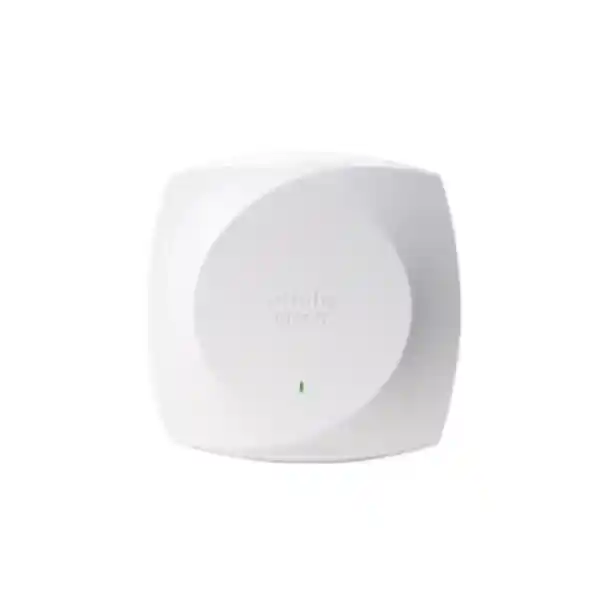
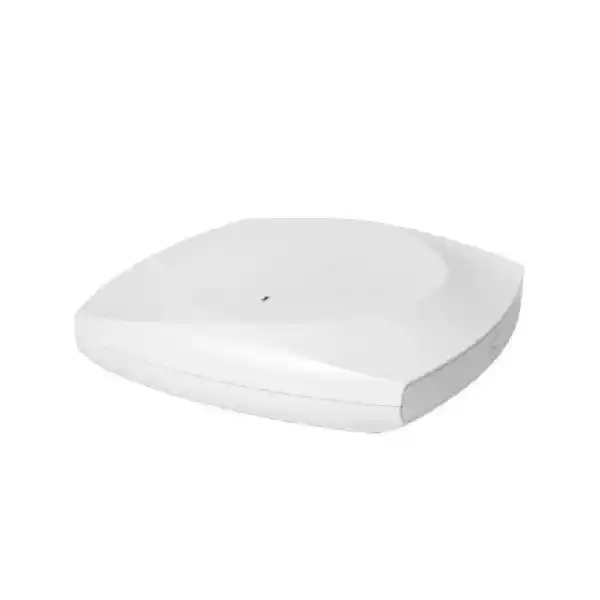
The Cisco Meraki CW9174I is an enterprise-class indoor Wi‑Fi 7 access point designed for moderate- to high-density wireless environments. Cisco positions the CW9174I as a global-use access point with integrated omnidirectional antennas, support for Meraki cloud management and Cisco Catalyst controller-based architectures, a 5 Gbps multigigabit Ethernet uplink, USB connectivity, integrated Bluetooth Low Energy and IoT capabilities, and a dedicated scanning radio. For organizations in Tanzania planning new offices, campus upgrades, hospitality networks, education environments, healthcare facilities, branch rollouts or higher-capacity wireless refreshes, the CW9174I offers a strong migration path toward 802.11be while preserving management flexibility.
A successful Wi‑Fi 7 project is not only an access-point purchase. It also depends on wired uplink capacity, PoE design, switch selection, structured cabling, RF planning, VLANs, firewall policy, internet capacity, compatible client devices, regulatory availability of 6 GHz and the correct Cisco Networking Subscription. FourTeck Tanzania can help buyers turn the CW9174I model choice into a practical bill of materials and deployment plan.
What is the Cisco Meraki CW9174I?
CW9174I is the internal-antenna model in Cisco’s Wireless 9174 Series. Cisco documents it as an indoor Wi‑Fi 7 access point with integrated omnidirectional antennas. In tri-band operation, Cisco specifies 2×2:2 on 2.4 GHz together with 4×4:4 on 5 GHz and 4×4:4 on 6 GHz, while a dual-band configuration can use 4×4:4 on 2.4 GHz and 4×4:4 on 5 GHz when 6 GHz is disabled. Wi‑Fi 7 capabilities include 4096-QAM, multi-link operation, preamble puncturing, OFDMA and support for channel widths up to 320 MHz in 6 GHz, subject to client, regulatory and deployment conditions.
The model is particularly relevant where an organization wants a modern enterprise access point without committing permanently to one management architecture. Cisco’s global-use design allows the same hardware family to operate with the Meraki cloud platform or with supported Cisco Catalyst wireless controller environments. This gives IT teams a way to standardize hardware while selecting the operating model that best matches their skills, existing network, governance requirements and branch strategy.
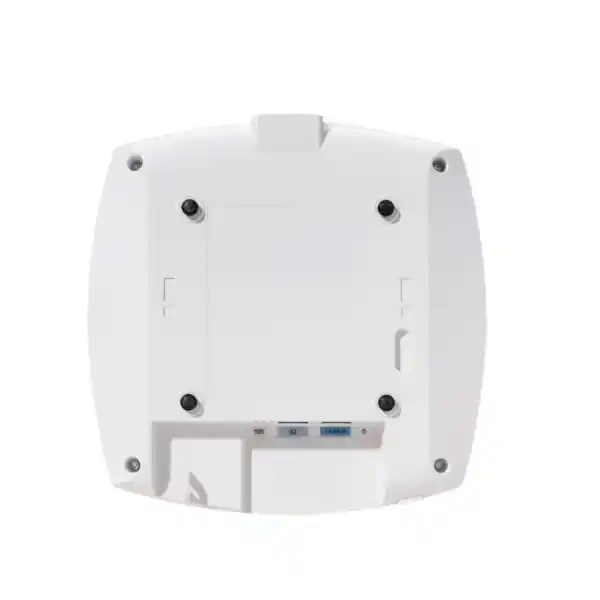
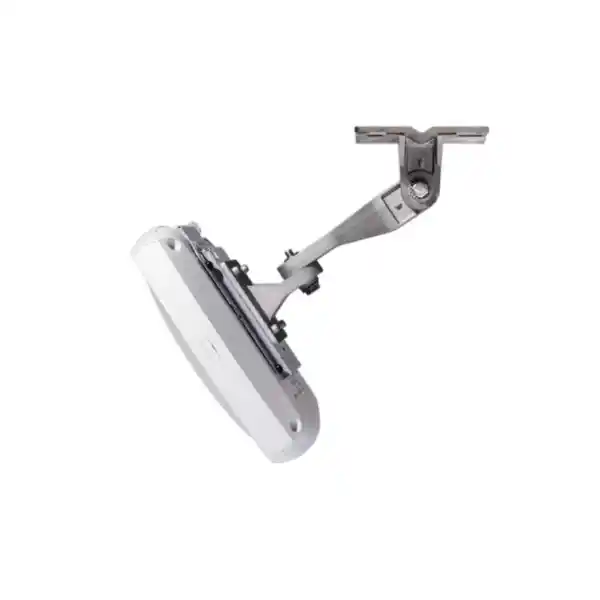
Before ordering, buyers should confirm the intended software mode, required subscription, power method, switch uplink capability, local regulatory support and mounting requirements. The access point is only one component in an enterprise WLAN; the design quality of the switching, cabling, addressing, security and RF plan determines whether the final user experience matches the potential of the hardware.
Wi‑Fi 7 radio capability
Designed around 802.11be with high-order modulation, wider channels, multi-link operation and advanced OFDMA features. Real throughput depends on spectrum, client capability, interference, channel planning and wired uplinks.
Integrated antennas
The CW9174I uses internal omnidirectional antennas, making it suitable for conventional indoor ceiling deployments where broad area coverage is preferred over specialized external antenna patterns.
Flexible management
Cisco supports Meraki cloud-based management and supported Catalyst controller-based environments. This helps organizations align deployment with cloud-first operations or existing Cisco enterprise wireless architecture.
IoT and scanning
Integrated BLE and IoT functions plus a dedicated scanning radio can support location, telemetry and RF visibility use cases when combined with the appropriate Cisco platform and applications.
Cisco Meraki CW9174I technical planning points
| Product type | Indoor enterprise Wi‑Fi 7 access point with internal omnidirectional antennas. |
| Wireless standard | 802.11be Wi‑Fi 7 with backward interoperability for supported earlier Wi‑Fi client standards. |
| Radio modes | Tri-band 2.4/5/6 GHz where 6 GHz is permitted, or dual-band operation using 2.4 and 5 GHz. |
| Spatial streams | Up to 10 spatial streams in tri-band mode: 2×2:2 on 2.4 GHz, 4×4:4 on 5 GHz and 4×4:4 on 6 GHz; alternative dual-band configuration supports 4×4:4 on 2.4 and 5 GHz. |
| Wired uplink | 5 Gbps multigigabit Ethernet. Switch port capability and PoE budget should be checked as part of design. |
| Management | Meraki cloud-based stack or supported Cisco Catalyst wireless controller architecture, depending on software mode and licensing. |
| Licensing | Cisco Networking Subscription required, with Cisco Wireless Essentials or Wireless Advantage options documented by Cisco. |
| Minimum software references | Cisco documents IOS XE 17.18.2 or later and Meraki MR 32.1.5 or later for the 9174 Series; final compatibility should be confirmed for the intended deployment. |
Deployment, switching and licensing guidance
A CW9174I deployment should begin with the building and user requirement rather than a simple access-point count. Floor area, wall construction, meeting rooms, client density, voice and video applications, roaming expectations, guest access, IoT devices and 6 GHz client adoption all influence the design. For an office with many video calls and modern laptops, capacity and channel reuse may be more important than maximum coverage distance. In a warehouse or mixed-material building, shelving, height and obstructions can change RF behavior substantially.
The 5 Gbps Ethernet interface means the wired network should be reviewed for multigigabit support. Connecting a Wi‑Fi 7 AP to a legacy 1 Gbps switch may still provide connectivity, but it can create a wired bottleneck and reduce the practical benefit of the new radio platform. PoE power availability, switch uplinks, fiber backbones and firewall throughput are therefore part of the same design conversation. For sites using multiple SSIDs, VLAN tagging and routing policy should be planned before AP rollout so employee, guest, voice and operational traffic are separated intentionally.
Licensing deserves equal attention. Cisco states that the Wi‑Fi 7 9174 Series requires a Cisco Networking Subscription, with Wireless Essentials and Wireless Advantage tiers. Procurement teams should therefore request hardware and subscription information together. A quotation should also state the expected management mode, subscription term, mounting needs, switch compatibility and any required implementation services so the total project scope is visible before purchase.
Useful FourTeck Tanzania resources
For broader project context, review FourTeck Tanzania integrated IT solutions to understand how Wi‑Fi connects with switching, firewalls, servers, cameras and business communications. The FourTeck Tanzania services page is useful when the requirement includes planning, installation, configuration or lifecycle support.
Buyers comparing infrastructure can also use the FourTeck Tanzania shop for product discovery and the About FourTeck Tanzania page for company context. These links help place the CW9174I within a complete network rather than treating it as an isolated wireless component.
Cisco Meraki CW9174I Tanzania
Organizations searching for Cisco Meraki CW9174I in Tanzania are typically planning a wireless refresh where capacity, manageability and long-term client compatibility matter more than basic coverage alone. The model is relevant to corporate offices, campuses, universities, private schools, clinics, hotels, retail environments, technology companies and multi-floor workplaces that expect increasing use of cloud applications, collaboration platforms and modern Wi‑Fi 6E or Wi‑Fi 7 client devices. In Tanzania, the business case for CW9174I should be evaluated against the existing LAN: a high-capacity access point performs best when connected to multigigabit switching, correctly sized PoE, structured cabling and a firewall that can carry the expected traffic without becoming the new bottleneck.
A Tanzania quotation should identify how many sites and floors are involved, approximate concurrent client count, whether the WLAN will serve staff, guests and IoT devices, and whether the customer prefers Meraki cloud operations or a Cisco Catalyst controller approach. It is also important to confirm whether 6 GHz operation is permitted and appropriate for the exact deployment at the time of installation. Regulatory conditions can change, and Cisco maintains country-specific compliance guidance, so 6 GHz capability should never be assumed solely because the hardware supports it.
For branches distributed across Tanzania, standardization can be more valuable than raw radio speed. Using a repeatable access-point family, SSID design, VLAN pattern, naming standard and monitoring workflow can simplify support. Head-office sites may need higher-density planning, while smaller branches can use fewer APs but still benefit from centralized policy and common documentation. Where existing Cisco switches, identity services or Meraki security appliances are present, the design can be assessed for integration instead of replacing infrastructure unnecessarily.
When requesting a Cisco Meraki CW9174I Tanzania quote, include the quantity, site type, floor plan if available, existing switch models, internet bandwidth, preferred management platform, subscription term and installation expectations. This information allows the bill of materials to cover not only the APs but also licenses, switching, power, cabling and implementation tasks needed for a dependable result.
Cisco Meraki CW9174I Dar es Salaam
Dar es Salaam businesses often combine dense office floors, meeting rooms, reception areas, warehouses and customer-facing spaces within one wireless environment. For buyers evaluating Cisco Meraki CW9174I in Dar es Salaam, the first design question should therefore be capacity by area rather than a single building-wide user total. A boardroom with simultaneous video meetings can place different demands on Wi‑Fi than a storage area with handheld terminals, while a shared coworking floor may need more careful channel planning and guest isolation. The CW9174I’s Wi‑Fi 7 capabilities can support demanding environments, but actual performance depends on AP placement, client capability and the wired network behind it.
Many Dar es Salaam offices already operate mixed generations of laptops, phones, scanners and IoT devices. A Wi‑Fi 7 upgrade does not require every client to be replaced immediately, because the platform interoperates with supported earlier Wi‑Fi generations. This allows a staged modernization strategy: deploy the WLAN infrastructure first, then let endpoint refresh cycles gradually increase the share of newer clients. At the same time, the network team should review whether old 1 Gbps switch ports, insufficient PoE budgets or congested uplinks would prevent the new APs from delivering their intended value.
For multi-tenant offices, hotels, retail groups or corporate headquarters, Meraki cloud management may be attractive because it centralizes monitoring and policy. Organizations with existing Catalyst 9800 controller architecture may instead prefer to retain controller-based operations. The CW9174I’s platform flexibility gives procurement teams room to align hardware with an existing operational model. The decision should include subscription cost, administrator skills, required integrations and long-term network standards rather than being made only on interface preference.
A Dar es Salaam site survey or floor-plan review should identify high-density rooms, thick walls, lift cores, outdoor spillover and areas where roaming quality matters. The final quotation can then include appropriate AP quantities, licenses, multigigabit switches, cabling upgrades and configuration services. Customers can use the verified FourTeck Tanzania contact page to provide model quantity, building details and current infrastructure for a more useful proposal.
Cisco Meraki CW9174I Mwanza
For Cisco Meraki CW9174I buyers in Mwanza, wireless planning can involve a wide range of business premises including professional offices, education facilities, healthcare environments, hospitality properties, retail spaces and operational sites. The most important step is to separate coverage requirements from capacity requirements. A signal may reach a room while still delivering poor user experience if many devices are competing for airtime, if the wired uplink is congested, or if the AP is mounted where obstructions distort the RF pattern. Wi‑Fi 7 hardware should therefore be deployed as part of a measured WLAN design rather than simply replacing older APs one-for-one.
The CW9174I uses internal omnidirectional antennas, which is well suited to conventional indoor ceiling coverage. In spaces with unusual geometry, tall shelving or directional coverage needs, however, the internal-antenna model should be compared with alternatives before ordering. The goal is not to force one hardware model into every zone. A consistent controller or cloud-management architecture can still support different AP types when the physical environment requires it.
Mwanza organizations operating several buildings or branches should also plan the wired underlay. Multigigabit access switching can better match the CW9174I’s 5 Gbps interface than older 1 Gbps switch ports, and uplinks between access and core layers should be reviewed for aggregate wireless traffic. PoE capacity is equally important because an AP rollout can fail operationally if the switch power budget is treated as an afterthought. Where guest, staff and device networks share the same AP infrastructure, VLAN segmentation and firewall policy should be documented before implementation.
A useful procurement request for Mwanza should list site address or city area, number of floors, estimated users and devices, current AP and switch models, internet bandwidth, preferred management platform and expected subscription term. This lets the CW9174I quotation include the supporting items needed for deployment and reduces the risk of discovering missing licenses, unsuitable switching or cabling limitations after the hardware arrives.
Cisco Meraki CW9174I Arusha
Cisco Meraki CW9174I deployments in Arusha can be particularly relevant to hospitality, tourism-linked businesses, corporate offices, conference facilities, education and professional services that depend on stable guest and employee connectivity. In hospitality and event environments, wireless demand can change sharply throughout the day as visitors gather in lobbies, meeting halls or dining areas. That makes user density and roaming behavior more important than a simple square-meter estimate. The CW9174I provides modern Wi‑Fi 7 radio capability, but effective design still requires sensible AP placement, channel reuse, transmit-power planning and a wired network capable of carrying the resulting traffic.
Guest networks deserve special attention. A business may want visitors to have straightforward internet access while preventing any reachability to internal systems. Employee SSIDs may need authentication and access to business applications, while IoT devices may require tightly limited network permissions. These requirements can share the same access-point hardware when SSIDs, VLANs and firewall policies are configured correctly. In a hotel or conference venue, captive-portal and guest policy requirements should be clarified before finalizing the management approach.
Arusha customers with multiple sites can consider the Meraki cloud management option for centralized visibility, especially where the IT team needs to monitor branches remotely. Customers with an established Cisco Catalyst wireless architecture can evaluate controller-based deployment instead. Because CW9174I supports both supported operating models, the purchasing conversation can focus on governance, licensing, support processes and integration rather than choosing hardware solely because of a management brand.
For an Arusha quote, share floor plans if possible and mark guest-heavy areas, conference rooms, offices, outdoor edges and any known dead zones. Include switch models and PoE availability because the 5 Gbps multigigabit interface is most valuable when the LAN can support it. A complete design may involve APs, subscriptions, switching, VLANs, firewall rules, cabling, mounting and post-installation validation rather than hardware alone.
Cisco Meraki CW9174I Dodoma
Organizations looking for Cisco Meraki CW9174I in Dodoma may include government-related offices, institutions, universities, healthcare facilities, NGOs, professional services and growing enterprises that need predictable wireless performance and centralized administration. A Wi‑Fi 7 migration can be useful when an existing WLAN is reaching capacity, when older APs cannot keep up with modern client density, or when an organization wants a hardware platform that can remain relevant as newer laptops and mobile devices arrive. The CW9174I should nevertheless be sized according to real usage patterns rather than purchased solely because it is the newest standard.
Security architecture is a key part of the Dodoma deployment discussion. Wireless users often need different access rights depending on role. Employees may require access to internal applications, visitors may need internet-only connectivity, and operational or IoT devices may need only a small set of approved destinations. Designing SSIDs, VLANs and firewall rules together reduces the chance of a flat wireless network where every device can reach unnecessary resources. Where identity services are already deployed, compatibility and policy objectives should be documented during design.
The choice between Meraki cloud management and Catalyst controller management should reflect the organization’s operational model. A centralized IT team managing multiple locations may value cloud-based monitoring, templates and visibility. An environment already standardized on Cisco Catalyst controllers may prioritize continuity with existing procedures. Subscription tier and term should be selected based on required features and support expectations, and the quotation should clearly separate hardware, licensing and services.
Dodoma customers should also review power and switching. A high-performance AP needs suitable PoE and a capable Ethernet path, and network cabinets should have appropriate UPS protection where continuity is important. By including these details in the procurement stage, the organization can avoid receiving access points that are technically advanced but constrained by old switches, weak uplinks or incomplete power planning.
Cisco Meraki CW9174I UAE
For organizations sourcing Cisco Meraki CW9174I in the UAE, the model fits enterprise wireless projects where high client density, cloud applications, collaboration traffic and multi-site administration are central considerations. Offices in commercial towers, hospitality sites, schools, healthcare facilities, warehouses and retail chains may all have very different RF characteristics, so the design should start with floor plans and user behavior. Wi‑Fi 7 features such as wider channels and multi-link operation can provide substantial capability, but only when compatible spectrum, clients and network infrastructure are available.
The UAE market often includes customers with mixed Cisco estates across branches or countries. The CW9174I’s ability to operate in supported Meraki or Catalyst environments can help standardize procurement while preserving operational flexibility. A group may use Meraki cloud management for distributed branches and retain Catalyst controller architecture in a large campus, but any such mixed approach should be planned carefully around software compatibility, subscriptions, naming, policy and support ownership.
Multigigabit switching is especially relevant in a Wi‑Fi 7 project. If an AP is connected through a lower-speed access layer, the radio platform may be capable of more aggregate throughput than the wired port can deliver. UAE buyers should therefore compare the AP purchase with switch-port speed, PoE budget, switch uplink capacity, firewall throughput and cabling category. This infrastructure review can reveal whether the project is a straightforward AP refresh or a wider access-network modernization.
For regional organizations connecting UAE and East African offices, a common WLAN design standard can reduce support complexity. Define consistent SSID purposes, security methods, VLAN mappings, device naming and documentation, while adapting channel plans and regulatory settings for each country. FourTeck’s broader regional network at FourTeck UAE can provide context for UAE-focused technology requirements while the Tanzania team handles Tanzania project discussions.
Cisco Meraki CW9174I Uganda
Businesses evaluating Cisco Meraki CW9174I in Uganda should treat the device as part of an end-to-end network design that spans access points, PoE switches, uplinks, firewall policy, internet service and subscriptions. Corporate offices, schools, clinics, hotels and distributed branch networks may all benefit from a modern enterprise WLAN, but the correct AP quantity depends on floor shape, construction materials, client density and application behavior. Wi‑Fi 7 can improve capacity and efficiency, yet radio planning remains necessary because simply installing more APs does not automatically produce a better network.
For organizations with operations in both Uganda and Tanzania, using the same AP family can simplify spares, documentation and administrator training. The actual configuration may differ by site, especially where country regulations or building conditions affect 6 GHz use and channel availability. A standard should therefore define the architecture and operational principles without assuming identical RF settings in every location.
The CW9174I’s 5 Gbps multigigabit Ethernet interface should prompt a review of switch capability. Access switches need adequate port speed and PoE, and larger deployments should consider aggregate uplink load from many APs. If a branch currently uses older 1 Gbps switching, the project may be staged: upgrade switching in high-demand areas first, then expand as endpoint adoption and traffic grow. This approach can protect investment without requiring every network component to be replaced at the same time.
Uganda buyers should request hardware, subscription and implementation details together. The quotation should identify the intended management mode, subscription tier, term, AP count, mounting, switching and any survey or configuration services. For Uganda-specific context, the approved regional site FourTeck Uganda can complement a cross-border procurement or standardization discussion.
Cisco Meraki CW9174I Kampala
Kampala has many office, hospitality, education, retail and professional environments where wireless networks carry far more than web browsing. Video meetings, cloud storage, ERP access, VoIP applications, guest internet and mobile devices can all compete for airtime. A Cisco Meraki CW9174I deployment in Kampala should therefore consider traffic mix and peak concurrency. The Wi‑Fi 7 radio platform provides a strong technical foundation, but the network will still be limited by interference, client capabilities, internet capacity and the speed of the wired path behind each AP.
In multi-floor buildings, access-point placement should account for both horizontal and vertical signal propagation. An AP directly above another floor may interfere even when the floor plan looks well spaced. Stairwells, lift shafts, reinforced walls and dense office partitions can also change coverage. Predictive planning followed by practical validation is more reliable than installing APs at equal distances without considering the building.
For Kampala organizations with several branches, Meraki cloud management can provide a centralized operational model, while Catalyst controller deployment may align better with an existing Cisco campus architecture. Whichever approach is selected, licensing should be ordered with the APs and recorded as part of lifecycle planning. IT teams should know when subscriptions renew, which sites are covered and who owns administrative credentials and configuration backups.
A Kampala quotation request should include current switch models, AP quantities or floor areas, estimated user count, guest Wi‑Fi needs, current WLAN pain points and management preference. If the purpose is to replace an older Cisco or third-party WLAN, provide the existing AP locations and controller details where possible. This helps determine whether existing cabling and mounting positions can be reused or whether the Wi‑Fi 7 design requires physical changes.
Cisco Meraki CW9174I Arua
For Cisco Meraki CW9174I projects in Arua, reliability and manageability may be more important than chasing maximum benchmark speeds. Branch offices, institutions, NGOs, healthcare sites and education environments often need wireless infrastructure that can be monitored consistently and supported without constant on-site intervention. A cloud-managed deployment can be attractive for distributed operations, while organizations with established Cisco controller architecture can retain their preferred operating model where supported.
Power and connectivity conditions should be assessed during design. Access points, switches and upstream network equipment form one service chain; if a switch loses power or an internet circuit is unstable, the AP cannot solve the resulting outage. UPS planning for network racks, clean patching, documented PoE budgets and realistic WAN expectations therefore contribute directly to the wireless user experience. In sites with backup internet links, firewall and routing design should also be considered so wireless users can benefit from failover.
The internal omnidirectional antennas of the CW9174I are suited to many normal indoor areas, but RF behavior can vary significantly in buildings with thick walls, metal roofing structures or long corridors. A smaller number of high-power APs is not always the answer; carefully placed APs at appropriate transmit power can improve roaming and reduce co-channel interference. Where high density is concentrated in one room, capacity may require more localized coverage rather than broad signal reach.
Arua buyers can make procurement more accurate by sharing a simple building sketch, number of rooms, user count, current switch and firewall details, internet speed and any known dead zones. The quotation can then address the complete requirement, including Cisco subscription licensing, rather than treating the CW9174I as a standalone box. This is especially useful for organizations that need the same WLAN design replicated later in additional Ugandan locations.
Cisco Meraki CW9174I Mbarara
Mbarara organizations considering Cisco Meraki CW9174I may be upgrading from older Wi‑Fi 5 or Wi‑Fi 6 access points, expanding into a new building, or standardizing wireless infrastructure across branches. The upgrade decision should be based on business outcomes: more reliable video collaboration, better performance in crowded areas, improved visibility, stronger segmentation or a platform that can support newer clients over a longer lifecycle. Wi‑Fi 7 is a means to those outcomes rather than the objective by itself.
A useful first step is to map client types. Some users may have modern Wi‑Fi 7 laptops, while others will continue using Wi‑Fi 6, Wi‑Fi 5 or specialized devices. The CW9174I can coexist with supported earlier-generation clients, allowing the network to modernize before every endpoint does. However, features associated with Wi‑Fi 7 provide the most benefit when both access point and client support them, so expectations should be set realistically during procurement.
The wired network should then be checked. A 5 Gbps multigigabit AP interface can require access switches with corresponding multigigabit capability if the goal is to remove wired bottlenecks. Switch PoE budget, uplink speed and rack power are just as important. Cabling quality should also be validated because older or poorly terminated runs may not perform reliably at higher Ethernet rates.
For Mbarara branches managed by a central IT team, consistent naming and templates can simplify troubleshooting. Document each AP location, switch port, VLAN mapping and subscription. When a support issue occurs, the remote team should be able to identify whether it is RF-related, switch-related, WAN-related or policy-related without starting from zero. A well-documented CW9174I rollout therefore creates operational value beyond its radio specifications.
Cisco Meraki CW9174I Gulu
Cisco Meraki CW9174I deployments in Gulu can support institutions, offices, healthcare facilities, education, hospitality and distributed organizations that need a contemporary WLAN with centralized management options. The model’s internal antennas simplify conventional indoor installations, but planning should still identify where users gather, where walls or structures attenuate signal and where business-critical applications depend on low latency. A floor plan and a realistic estimate of concurrent devices are usually more useful than an overall employee count.
In environments where IT resources are centralized in another city, management visibility becomes important. The Meraki operating mode can support cloud-based administration, while Catalyst environments can use the Cisco controller path. The appropriate choice depends on the customer’s existing architecture and operational preferences. It is best to avoid selecting management mode late in the project because licensing, software version, configuration workflow and administrator training can all be affected.
Gulu projects should also consider network resilience. Where internet connectivity is essential for cloud applications, the firewall and WAN design may need redundancy. Wireless availability is not the same as application availability; users can remain connected to an AP while internet or DNS services are down. Monitoring should therefore cover AP health, switching, DHCP, gateway reachability and WAN performance. This broader view helps support teams diagnose the actual cause of complaints.
When requesting pricing, provide the expected number of APs or site size, switch models, PoE availability, management preference and Cisco subscription term. If the site will expand, mention planned buildings or user growth so the controller, cloud dashboard organization and switching design can scale cleanly. This approach supports a WLAN that can be extended without repeatedly redesigning the basic architecture.
Cisco Meraki CW9174I Kenya
For Cisco Meraki CW9174I projects in Kenya, enterprises may be comparing Wi‑Fi 7 with existing Wi‑Fi 6/6E infrastructure, deciding whether to refresh high-density areas first, or standardizing new branches on a single hardware family. The 9174I is positioned for moderate- to high-density indoor deployments and includes integrated omnidirectional antennas, making it suitable for many office and campus spaces. The strongest design starts with application demand, user density, roaming and wired infrastructure rather than replacing every old AP with the same quantity of new units.
Organizations operating in Nairobi and other Kenyan cities often have distributed offices and cloud-heavy workflows. Centralized visibility can simplify branch operations, but administrators should still create a documented standard for SSIDs, VLANs, naming, security policy and firmware management. If Meraki cloud management is selected, organization and network structure should be planned from the beginning. If Catalyst controllers are already part of the network, software and compatibility requirements should be confirmed before deployment.
The 5 Gbps Ethernet interface can justify multigigabit access switching where wireless demand is high. It is also wise to inspect fiber uplinks, switch stacking or redundancy, firewall throughput and internet bandwidth because these can become limiting factors as WLAN capacity increases. A Wi‑Fi 7 project is therefore a useful opportunity to identify hidden bottlenecks in the LAN rather than focusing only on radio performance.
For companies coordinating Kenya and Tanzania procurement, common hardware and policy standards can make support easier across borders while local regulatory configuration remains country-specific. The approved regional resource FourTeck Kenya can be used for Kenya-focused enquiries, while the Tanzania site remains the primary source for Tanzania requirements.
Cisco Meraki CW9174I Kuwait
Organizations sourcing Cisco Meraki CW9174I in Kuwait may be planning wireless upgrades in corporate offices, hospitality properties, education, healthcare, retail or multi-site businesses. High client density and cloud application usage can make Wi‑Fi capacity a strategic infrastructure decision. The CW9174I’s Wi‑Fi 7 platform, internal antennas and multigigabit Ethernet connection provide a modern foundation, but the final experience depends on an RF design suited to the building and a LAN that can carry the traffic generated by the wireless layer.
Dense indoor areas should be designed for capacity, not only signal strength. Meeting rooms and training spaces can generate bursts of simultaneous video traffic, while reception and guest areas may have rapidly changing client populations. Channel reuse, AP placement and transmit power should be planned to reduce contention. Wider Wi‑Fi 7 channels can improve peak capability but consume more spectrum, so channel width should be chosen based on the real RF environment rather than always selecting the maximum.
Kuwait buyers should also include subscription licensing in total cost planning. Cisco states that 9174 Series APs require Cisco Networking Subscription licensing. Hardware price alone is therefore not the complete procurement figure. A well-formed request for quotation should ask for the AP hardware, appropriate Essentials or Advantage subscription, term, mounting items if required, switching and any configuration or installation services.
Regional companies can benefit from a consistent WLAN architecture across Kuwait, UAE, Tanzania and other markets, but radio settings and compliance requirements must remain local. For Kuwait-focused procurement context, the approved FourTeck Kuwait site can support region-specific discussions while maintaining a common technology standard across the group.
Cisco Meraki CW9174I Ghana
Cisco Meraki CW9174I buyers in Ghana may be modernizing enterprise offices, hospitality facilities, campuses, retail networks or branch locations where dependable wireless access is essential to daily operations. The access point can support a transition toward Wi‑Fi 7 while continuing to serve supported earlier-generation clients. This makes it practical for organizations whose endpoint fleet will be refreshed gradually rather than all at once.
The physical environment should guide AP placement. Concrete walls, glass, open atriums, shelving and floor-to-floor propagation can all change how a WLAN behaves. An internal-antenna AP such as CW9174I is appropriate for many standard indoor spaces, but some specialized areas may need different antenna patterns or placement. A design should therefore avoid assuming that one AP model or spacing rule is suitable for every zone in the same building.
Network capacity beyond the AP is another important consideration. The 5 Gbps Ethernet uplink can benefit from multigigabit switching, but the switch must also provide sufficient PoE and upstream bandwidth. VLANs should be designed for staff, guests and devices, while firewall rules control which networks can communicate. DHCP, DNS and internet capacity need to scale with the client population because failures in these services are often perceived by users as Wi‑Fi problems.
For multi-country organizations with Ghana and Tanzania operations, standard hardware, subscription tracking and configuration documentation can simplify support. A central team can define common principles while adapting RF settings and regulatory choices by country. Ghana-specific enquiries can also use the approved FourTeck Ghana resource for local market context.
Cisco Meraki CW9174I Nigeria
In Nigeria, Cisco Meraki CW9174I can be relevant to large offices, financial and professional services, education, healthcare, hospitality, technology companies, retail chains and multi-branch enterprises that need scalable wireless infrastructure. Dense user populations and cloud-heavy applications can place significant demand on a WLAN, making radio capacity, wired uplinks and centralized monitoring important. A Wi‑Fi 7 AP can add headroom, but a balanced design is still necessary to prevent switch, firewall or WAN constraints from limiting performance.
For large Nigerian deployments, a pilot can be useful before broad rollout. Testing a representative office area allows the IT team to validate coverage, roaming, switch compatibility, PoE behavior, client interoperability and management workflows. Results can then inform AP density and configuration standards for the remaining sites. This is often more reliable than committing to a large quantity based only on a theoretical coverage estimate.
Subscription licensing should be included in budget planning from the start. The selected Cisco Networking Subscription tier and term should match operational requirements and procurement policy. IT teams should also track renewal dates, firmware strategy and administrative ownership so the WLAN remains supportable after installation. Where Meraki cloud operations are selected, account governance and administrator roles are part of the security design.
Nigeria-based groups with East African branches can standardize the CW9174I family where it fits while keeping regulatory and RF settings specific to each country. This reduces spares complexity and can make network documentation more consistent. For Nigeria-specific commercial context, the approved FourTeck Nigeria site provides an additional regional path for enquiries.
Cisco Meraki CW9174I Seychelles
Cisco Meraki CW9174I deployments in Seychelles may be especially relevant to hospitality, resorts, professional offices, education and distributed business environments where guest experience and remote manageability are important. Indoor Wi‑Fi design in hospitality spaces must balance guest-room coverage, shared-area capacity, staff networks and operational devices. A high-performance access point is useful, but it should be placed according to the building layout and expected client behavior rather than using a single distance rule.
Hotels and resorts often separate guest, staff and operational traffic. Those networks can share the same AP infrastructure while using different SSIDs, VLANs and firewall policies. Guest users may need internet-only access, while staff devices require controlled access to internal applications. IoT systems may need tightly limited communication. Planning these policies before deployment is more efficient than trying to retrofit segmentation after users are already connected.
Remote visibility can be particularly valuable where specialist IT staff are not permanently based at every property. Meraki cloud management can support centralized monitoring and configuration, while organizations with an existing Cisco controller estate can evaluate Catalyst mode. Either way, the design should include subscriptions, administrator roles, alerting and documentation. Network racks should also have suitable UPS protection and orderly cabling because AP availability depends on the power and switching layer.
For a Seychelles quotation, provide the number of buildings, floors, rooms or guest areas, expected peak occupancy, current switch models, internet links and management preference. If the project includes multiple properties, describe whether the same wireless standard should be replicated across them. This helps shape a scalable bill of materials that covers APs, licenses, switching, configuration and support considerations rather than focusing on unit price alone.
How to decide whether CW9174I is the right access point
Choose CW9174I when you need a current enterprise Wi‑Fi 7 platform for indoor areas, internal omnidirectional antennas match the coverage requirement, and the environment can benefit from flexible Meraki or Catalyst management. It is especially attractive where client density is moderate to high, where newer Wi‑Fi clients are expected over the lifecycle of the network, or where the organization wants a global-use hardware family for multiple sites.
Do not choose it only because the model number is newer. If the site has directional coverage needs, extreme environmental conditions, low user density or switching that cannot support the planned design, another access-point model or a broader network upgrade may be more appropriate. The best choice comes from matching the AP to coverage, capacity, management, licensing and lifecycle requirements.
A practical design compares the cost of the AP and subscription with supporting switching, cabling and implementation. It should also account for the expected useful life of the network, endpoint refresh schedules and future bandwidth requirements. This total-system approach prevents a premium access point from being constrained by infrastructure that was never designed for it.
Cisco Meraki CW9174I FAQs
Is Cisco CW9174I a Wi‑Fi 7 access point?
Yes. Cisco documents the CW9174I as an indoor 802.11be Wi‑Fi 7 access point with integrated omnidirectional antennas and tri-band capability where 6 GHz operation is supported and permitted.
Can CW9174I be managed with Meraki Dashboard?
Cisco documents support for Meraki cloud management as well as supported Cisco Catalyst controller-based environments. The intended operating mode, software version and license should be confirmed before deployment.
Does CW9174I require a license?
Cisco states that Wi‑Fi 7 access points in the 9174 Series require a Cisco Networking Subscription, with Wireless Essentials or Wireless Advantage license options. The suitable tier and term depend on the management and feature requirements.
Does CW9174I have internal antennas?
Yes. CW9174I is the internal omnidirectional antenna model. Cisco also offers CW9174E for deployments that need an external antenna connector.
What switch should be used with CW9174I?
The AP includes a 5 Gbps multigigabit Ethernet interface, so buyers should evaluate multigigabit switch ports, PoE capacity and uplink bandwidth. The exact switch choice depends on AP count, power requirements, redundancy, VLAN design and the rest of the network.
Can older Wi‑Fi clients connect?
Cisco documents interoperability with supported earlier client standards. Older clients will not gain features they do not support, but organizations can still upgrade the WLAN before every endpoint has moved to Wi‑Fi 7.
What information is needed for a CW9174I quotation?
Provide quantity, site location, floor plan or approximate area, user and device count, current switches, PoE availability, internet speed, existing wireless platform, preferred Meraki or Catalyst management mode, subscription term and whether installation or configuration is required.
Quotation checklist
Include the exact model CW9174I, required quantity, deployment city, number of floors, approximate client count and high-density rooms.
List existing switch models, available PoE, uplink speeds, firewall platform and internet bandwidth.
State management preference, subscription tier or term if known, installation scope, survey requirement and expected rollout schedule.
Decision recap
CW9174I is best viewed as a Wi‑Fi 7 platform for enterprise indoor networks that need strong capacity, internal antennas and flexible Cisco management.
Its 5 Gbps uplink, licensing and RF capabilities should be evaluated together with switching, PoE, cabling, firewall and regulatory requirements.
A complete quote should cover the system, not only the access-point unit price.
Consult FourTeck Tanzania about Cisco CW9174I
If you already know the required quantity, send the model, quantity and destination. If you are still sizing the WLAN, share the floor plan, user density, existing switches and current wireless challenges. FourTeck can use those details to structure a more meaningful discussion around AP quantity, licenses, switching, segmentation and deployment.
For a broader network refresh, include related requirements such as multigigabit switching, firewall capacity, structured cabling, UPS protection and branch connectivity. Coordinating these components reduces the risk of a new Wi‑Fi platform being limited by legacy infrastructure.




Reviews
There are no reviews yet.