
Cloud-managed 5G cellular WAN
Cisco Meraki MG52E Tanzania
Cisco Meraki MG52E is a 5G Standalone and Non-Standalone Sub-6 cellular gateway built for organizations that want high-capacity wireless WAN, resilient branch connectivity and centralized cloud operations. It converts cellular service into Ethernet WAN connectivity for Meraki or non-Meraki routers, firewalls and switching platforms, allowing businesses to use 5G as a primary uplink, backup path, SD-WAN transport or high-availability connectivity option.
What is the Cisco Meraki MG52E?
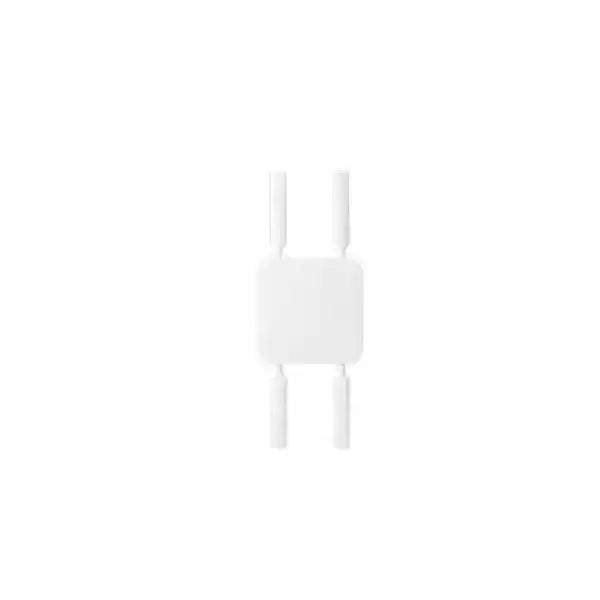
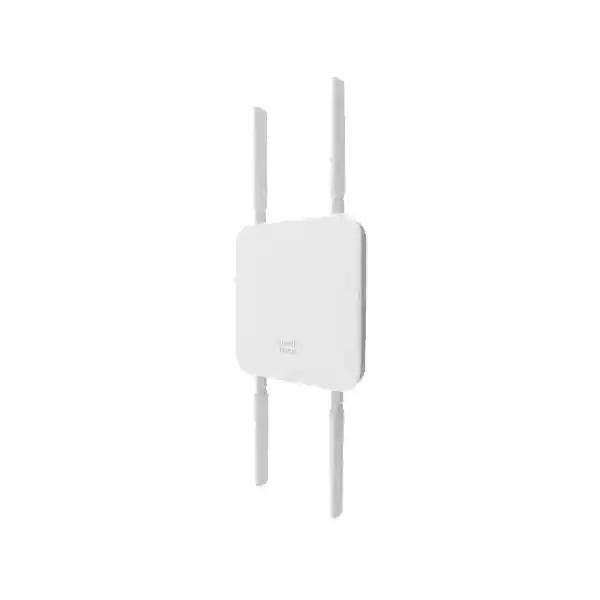
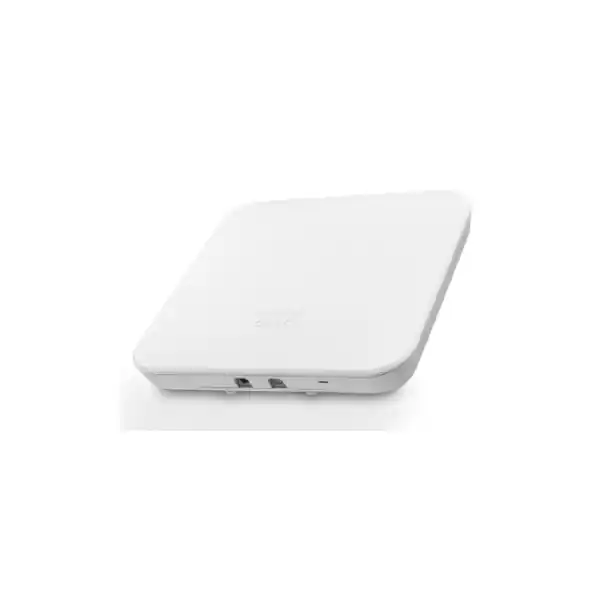
The MG52E is the external-antenna version of Cisco Meraki’s MG52 generation of cloud-managed cellular gateways. Cisco documents it as a 5G SA/NSA Sub-6 and LTE CAT20 platform with a single cellular modem, two nano-SIM slots, one cloud-managed eSIM profile, two multigigabit Ethernet interfaces and support for official Meraki dipole or directional patch antennas. The external antenna design makes the MG52E particularly useful when the best cellular signal is not located where the firewall, router or network rack sits. The gateway can be positioned where signal quality is stronger and then present an Ethernet handoff to the downstream network device.
That architecture solves a common branch-network problem: cellular reception and network-equipment placement are not always the same thing. A firewall may need to remain inside a secure rack, while the strongest 5G signal may be near a window, exterior wall, elevated mounting point or another location. Because the MG52E can be powered by PoE+ or DC and supports wall, ceiling and pole mounting, designers gain more freedom to place the cellular radio for better radio conditions without relocating the entire edge stack.
For buyers in Tanzania, the correct purchasing decision should include more than the gateway itself. Confirm the intended carrier, frequency support, local regulatory requirements, antenna approach, mounting environment, PoE or DC power method, downstream router or firewall, required Meraki Enterprise license term, expected data usage and whether the unit is being deployed as primary WAN, failover or part of an SD-WAN architecture. Cellular performance always depends on real carrier conditions and signal quality, so headline modem capability should be treated as platform capacity rather than a guaranteed site speed.
Primary wireless WAN
Use 5G connectivity where fixed-line service is unavailable, slow to provision or operationally unsuitable. The Ethernet handoff lets the cellular gateway work with many routing and security platforms.
Failover resilience
Connect the MG52E as a secondary WAN path so branches can keep critical cloud, VPN and operational traffic moving when the primary wired circuit fails.
Signal-aware placement
External antennas and flexible mounting allow the radio to be positioned for stronger signal while the firewall or router remains in the network rack.
Cisco Meraki MG52E verified technical specifications
| Specification | MG52E details |
|---|---|
| Cellular platform | 5G SA/NSA Sub-6 with LTE CAT20 capability |
| Maximum wireless data rate | Up to 2 Gbps / 300 Mbps passthrough; up to 1.5 Gbps / 300 Mbps NAT, subject to network conditions |
| Ethernet interfaces | Two 2.5 GbE RJ45 interfaces: one dedicated LAN and one convertible LAN/WAN |
| SIM support | Two physical nano-SIM slots plus one cloud-managed eSIM |
| Antennas | External official Cisco Meraki dipole antennas; optional supported patch antenna pair |
| Power | PoE+ / 802.3at or supported DC power |
| Maximum power load | 16 W maximum in Cisco technical specifications |
| Environmental rating | IP67 |
| Dimensions | 173 × 173 × 36.5 mm |
| Weight | 717 g without accessories |
| Management | Cisco Meraki Dashboard with cloud management, monitoring, firmware scheduling, alerts, diagnostics and API support |
The figures above describe the platform rather than guaranteed real-world throughput. Actual speed and availability depend on carrier coverage, spectrum, congestion, signal quality, antenna placement, plan limits and other site conditions. Carrier and country compatibility should be checked for the exact deployment before purchase.
Licensing, management and deployment planning
Cisco Meraki MG52E operates within the Meraki cloud-management model. Cisco lists Enterprise license options in one-, three-, five-, seven- and ten-year terms for the MG52 family. Procurement teams should plan the hardware and license together, document which Meraki organization will own the device, identify administrator roles and assign renewal responsibility. A cellular gateway may be physically installed correctly but still create avoidable administrative friction if claiming, licensing and Dashboard ownership are left until the last moment.
The Meraki Dashboard provides centralized device configuration, monitoring, firmware control, alerts and remote diagnostics. Cisco documents tools including ping, traceroute, cable testing, remote packet capture and event logging. For multi-site organisations, these capabilities can reduce the number of routine tasks that require a technician to travel to a branch. However, cloud management does not remove the need for sound network design: APN configuration, firewall policy, downstream routing, VLANs, DNS, VPN design and application failover behaviour must still be planned according to the business requirement.
Antenna choice is especially important for the MG52E. Cisco supplies supported dipole antennas and documents an optional directional patch antenna. Dipoles are general-purpose omnidirectional choices, while a patch antenna is intended for scenarios where the direction of the serving tower is known and a directional installation can materially improve reception. Cisco specifically warns against unsupported third-party antennas on the MG52E’s sensing RP-SMA connectors. Use the supported antenna family and follow mounting guidance rather than treating the connectors as generic antenna ports.
Related Cisco Meraki and networking pages on FourTeck Tanzania
Wi-Fi 6E access point for organizations building a wider cloud-managed Meraki branch network.
Cisco Meraki CW9163E-MR
External-antenna outdoor wireless option relevant to distributed and challenging RF environments.
Cisco Meraki CW9164I-MR
Indoor Wi-Fi 6E access point to consider when cellular WAN feeds a cloud-managed branch LAN.
Cisco Meraki CW9166I-MR
Higher-capacity Meraki-managed wireless for branches and sites requiring broader WLAN planning.
FourTeck Tanzania Shop
Browse adjacent networking, firewall, switching, Wi-Fi and infrastructure requirements.
FourTeck Tanzania Services
Plan installation, integration, network design and lifecycle support around the MG52E deployment.
Contact FourTeck Tanzania
Share quantity, deployment city, carrier, license term and topology details for a more useful quotation.
Cisco Meraki MG52E Tanzania
Organizations evaluating Cisco Meraki MG52E in Tanzania are usually trying to solve one of four connectivity problems: establish primary internet service where fixed connectivity is difficult, create a secondary WAN path for business continuity, improve cellular signal placement compared with an integrated router, or standardize cloud-managed branch connectivity across multiple sites. The MG52E is particularly relevant when the cellular gateway needs to be physically separated from the firewall or router because the strongest signal is closer to a window, exterior wall, rooftop route or elevated mounting position. Its Ethernet handoff makes this separation straightforward, while supported external antennas create more placement flexibility than a fully internal-antenna cellular appliance.
A Tanzania deployment should begin with carrier validation at the actual site. 5G availability shown on a coverage map does not guarantee the same indoor signal strength, uplink quality or congestion profile at every building. The project team should check expected carriers, SIM or eSIM strategy, APN requirements, available spectrum and whether the chosen radio bands are appropriate for local service. Where the gateway is a backup WAN, test failover behaviour with the downstream firewall or SD-WAN appliance rather than assuming that simply connecting Ethernet creates the desired resilience. Business applications may maintain long-lived sessions, VPN tunnels or public-IP dependencies that require specific routing and health-check policies.
Power and mounting are also important in Tanzania projects. PoE+ can simplify placement because a single Ethernet cable can carry both network and power to the MG52E, but the switch or injector must provide the supported standard and adequate power. If the gateway is installed in a hot, dusty or exposed location, the IP67 enclosure rating is useful, yet cable glands, mounting hardware, grounding, surge protection and the broader installation still need professional attention. Environmental rating does not make an installation immune to poor cable routing or lightning-related risk.
For quotation, provide the deployment city, quantity, preferred carrier or carriers, whether 5G is intended as primary or backup WAN, downstream firewall/router model, required Meraki license term, PoE availability, antenna placement constraints and any requirement for failover testing. This information helps align the hardware, license and deployment method instead of treating the MG52E as a standalone box.
Cisco Meraki MG52E Dar es Salaam
Dar es Salaam businesses often operate in connectivity-intensive environments such as corporate offices, retail locations, hospitality properties, logistics facilities, warehouses, financial branches, project offices and multi-tenant commercial buildings. In these settings, the MG52E can be assessed as a wireless WAN option for resilience or rapid branch activation. The important design question is not simply whether 5G exists in the city, but whether the target building has stable signal at the installation point and whether cellular service can sustain the applications that remain important during a wired-service outage.
Dense urban construction can create significant variation in radio conditions between floors, rooms and sides of a building. An equipment rack in an internal server room may have weak reception even when a nearby window has a much stronger signal. That is where the MG52E’s external antennas and independent placement can be operationally useful. Mounting the gateway closer to a favorable signal location, then running Ethernet back to the security appliance, can be more effective than forcing cellular radios to remain inside a metal rack. For directional patch antenna use, tower direction and installation geometry should be validated rather than guessed.
Dar es Salaam head offices may also manage branches across Tanzania. Meraki Dashboard can provide a common operational view of MG devices, firmware, alerts and diagnostics across these sites, but branch design still needs standardization. Define naming conventions, Dashboard network ownership, SIM policy, APNs, monitoring thresholds, license renewal responsibility and the expected routing state during normal and failover operation. Where an MX security appliance is downstream, WAN health and SD-WAN policy should be tested with real business traffic.
A strong Dar es Salaam quotation request should include site type, number of branches, expected traffic, primary ISP architecture, desired resilience objective, carrier options, indoor/outdoor mounting constraints, cable distance and license term. If the MG52E is part of a wider refresh, also include switching, firewall, Wi-Fi and UPS details so the project can be evaluated as one network rather than several independent products.
Cisco Meraki MG52E Mwanza
Mwanza organizations considering the MG52E may include regional offices, hospitality operations, healthcare sites, education facilities, retail branches, transport businesses and distributed enterprises that need an alternative to relying on one fixed WAN service. The gateway can act as a primary cellular handoff where that makes operational sense or as a backup path for continuity. For branch deployments, the cloud-managed model is valuable because administrators can monitor device health and troubleshoot many issues without needing a specialist permanently located at every site.
Before choosing a mounting position in Mwanza, perform practical signal checks for the intended carrier. Building structure, glass type, roofing material, surrounding terrain and interior placement can all influence reception. The MG52E’s PoE+ support can make it easier to move the radio away from the rack and closer to a stronger-signal location while maintaining an Ethernet handoff to the router or firewall. External dipole antennas are a general-purpose option, while Cisco’s supported patch antenna is more specialized and should be aimed according to validated tower direction.
For businesses using the gateway as backup WAN, determine which applications should continue during failover. Email, SaaS, payment systems, voice, CCTV viewing, ERP traffic and VPN links can have very different bandwidth profiles. Backup does not always mean reproducing the full capacity of the primary circuit. A well-designed policy can prioritize critical traffic and restrict nonessential transfers during a cellular event. That decision belongs in the router, firewall or SD-WAN design rather than in the radio alone.
Mwanza procurement teams should also account for licensing, SIM ownership, data-plan responsibility, Dashboard administration and testing procedures. Include the existing edge appliance model and whether the MG52E will connect to a dedicated WAN port, shared HA pair or switch. Documenting these details before ordering reduces commissioning delays and makes later support easier.
Cisco Meraki MG52E Arusha
Arusha has a diverse mix of hospitality, tourism, professional services, education, NGO, logistics and commercial operations, many of which depend heavily on cloud applications and internet-based communication. For these environments, the MG52E can provide an additional WAN path that is physically and commercially different from the primary fixed circuit. This diversity matters because resilience is stronger when the backup path does not depend on the same last-mile medium as the primary service.
Hospitality and guest-facing sites should treat cellular failover as part of a broader service-continuity plan. During a primary outage, the business may need to preserve reservation systems, payment processing, front-desk services, staff communications and selected guest internet rather than every high-bandwidth workload. A downstream firewall or SD-WAN appliance can enforce traffic priorities and route policies so the cellular link is used intentionally. The MG52E supplies the 5G/LTE Ethernet handoff; business policy determines which traffic gets precedence.
Arusha deployments may also involve physically spread properties or branch sites. Positioning is therefore crucial. External antennas give installers more control over RF placement, but unsupported antennas should not be substituted. Cisco documents specific MG52E dipole and patch accessories and warns that non-Meraki antennas are not supported. The gateway’s IP67 rating helps in demanding environments, yet installers still need suitable cable protection, mounting, power and surge considerations.
For an Arusha quotation, provide the type of property, critical applications, number of sites, carrier preference, current primary connection, router/firewall model, preferred license term and proposed gateway location. If branch connectivity is centrally managed, include Meraki organization details and whether the deployment will integrate with MX SD-WAN. That context helps create a practical bill of materials and commissioning plan rather than only supplying hardware.
Cisco Meraki MG52E Dodoma
Dodoma organizations evaluating Cisco Meraki MG52E may be planning connectivity for government-related offices, enterprises, education facilities, institutions, branch operations and newly commissioned sites where dependable internet access is essential. Cellular WAN can be valuable during the period before a fixed circuit is ready, as a permanent secondary path or as the primary service for a location where cellular economics and coverage are more suitable than alternative last-mile options.
For new-site activation, the MG52E can reduce dependence on the lead time of a wired circuit, but it should still be engineered. Confirm carrier signal quality at the site, expected data consumption, public/private IP requirements, APN configuration and whether the applications can operate normally through carrier-grade NAT if that is how the service is delivered. VPN and inbound-service requirements deserve particular attention because cellular addressing can differ from a conventional business broadband connection.
The MG52E’s dual physical SIM slots and cloud-managed eSIM create multiple service-profile options, but the radio is not a substitute for carrier planning. SIM failover behaviour, active/passive service use, data caps and contractual limits should be documented. If the downstream network uses Meraki MX, the team can incorporate cellular connectivity into SD-WAN or HA designs; if it uses another vendor, Ethernet and IP-based interoperability allows the MG52E to act as a cellular handoff, subject to correct routing and health-check configuration.
Dodoma procurement should include the gateway license, supported antenna accessories where required, PoE or DC power choice and installation materials. A useful request for quotation should state whether the project is a temporary activation, permanent primary WAN, failover link or multi-site standard. Include quantity, carrier, site type, current firewall/router and preferred license duration to reduce ambiguity.
Cisco Meraki MG52E UAE
UAE organizations use cellular gateways in branch retail, temporary sites, construction offices, logistics facilities, resilient enterprise networks and rapid-deployment environments where business services cannot wait for fixed connectivity. The MG52E can fit these architectures by turning 5G/LTE service into a multigigabit Ethernet WAN handoff that can feed Meraki MX or other routing and security platforms. For procurement and project coordination in the UAE, buyers can also review FourTeck UAE technology solutions for related infrastructure and regional requirements.
The UAE’s high-density commercial buildings, warehouses and industrial sites can still create difficult RF conditions. Exterior walls, coated glazing, basements and internal equipment rooms may reduce cellular signal even when outdoor coverage is strong. External antennas allow the radio system to be placed more deliberately, but installation should use Cisco-supported antenna accessories. A directional patch antenna should be used only when tower direction and mounting geometry have been validated. Omnidirectional dipoles remain the more general-purpose choice.
For multi-branch UAE deployments, Dashboard governance becomes a major operational topic. Define organization ownership, administrator access, templates, alerts, firmware windows, SIM/eSIM policy and device naming before rolling out dozens of gateways. Where cellular is backup connectivity, test failover with the same SaaS, voice, VPN and payment workflows that users depend on. A link that appears healthy in a dashboard can still expose application-level issues if public IP addressing, VPN negotiation or DNS behaviour changes during failover.
Commercial planning should include hardware, license term, supported antenna options, power method, mounting accessories and carrier service. Do not assume that a gateway certified for one carrier or regulatory domain is automatically appropriate for another. Confirm the exact SKU, regional approvals and local carrier support before shipment and activation.
Cisco Meraki MG52E Uganda
Uganda businesses evaluating the MG52E often need branch resilience, primary cellular connectivity for selected locations or a manageable way to support distributed sites from a central IT team. The gateway’s cloud-managed architecture and Ethernet handoff make it adaptable to both Meraki and mixed-vendor environments. Buyers coordinating Uganda deployments can review FourTeck Uganda for related regional technology requirements while using the Tanzania page as technical procurement guidance.
Uganda deployments should validate 5G and LTE conditions per site rather than treating country-level coverage as a guarantee. A branch in a dense urban area can have different RF conditions from a regional facility, warehouse or roadside operation. Because the MG52E can be mounted away from the router and powered over Ethernet, installers can test several locations and select the position with the best practical signal while keeping the security appliance in the rack. External antenna flexibility is a major reason to choose the E variant over an internal-antenna model.
Business continuity policy matters as much as radio signal. If the MG52E is backup WAN, define which traffic should remain available and how long the data plan can sustain that load. Large cloud backups, software updates and video streams may consume substantial data during a prolonged outage. A downstream firewall or SD-WAN solution can prioritize ERP, payment, voice or operational traffic while limiting noncritical transfers. This keeps the backup design aligned with business risk rather than simply maximizing throughput.
For Uganda quotations, document the location, carrier, quantity, primary or secondary WAN role, existing edge device, license term, antenna needs and mounting environment. Also clarify whether the project requires standardized configurations across multiple cities. That information makes it easier to build a consistent rollout and support model.
Cisco Meraki MG52E Kampala
Kampala is a strong fit for cellular WAN use cases such as corporate branch resilience, retail connectivity, professional offices, hospitality, finance, education and rapidly activated project sites. The MG52E can provide a dedicated 5G/LTE Ethernet handoff to an existing firewall or router without forcing the cellular modem to share the same physical location as the rest of the network edge. In multi-floor or heavily partitioned buildings, this separation can materially improve signal-placement options.
An urban deployment should include a simple RF placement survey. Test signal quality in the proposed rack room and compare it with candidate positions near windows or other elevated locations. If PoE+ is available, a network cable can simplify the installation path. However, switch PoE capability, cable length, grounding, surge protection and environmental exposure remain part of the engineering work. The IP67 rating protects the enclosure against demanding conditions, but it does not remove the need for professional installation.
Kampala organizations with many branches should establish a repeatable Dashboard standard. Use consistent device names, network tags, alert destinations, firmware schedules and administrator permissions. Record carrier, SIM ICCID, APN, contract owner and data-plan details for every site. This operational documentation becomes especially valuable when troubleshooting a branch remotely. The MG52E’s cloud diagnostics can show cellular information and support network tests, but teams still need accurate service records to distinguish hardware, carrier and downstream-network problems.
When requesting a Kampala quote, state whether the requirement is new-site primary WAN, backup WAN or an SD-WAN transport. Add the downstream firewall/router model, expected critical traffic, preferred carrier, license term and antenna approach. For a multi-branch rollout, include the number of locations and whether configurations should be standardized.
Cisco Meraki MG52E Arua
Arua deployments can make cellular WAN particularly relevant when organizations need branch connectivity without depending entirely on one fixed last-mile service. Offices, NGOs, healthcare operations, education sites, logistics facilities and commercial branches may use the MG52E as a primary connectivity option where suitable or as a secondary link that improves resilience. The correct decision depends on the actual carrier signal, data plan and business application requirements at the site.
Remote manageability is a practical advantage when specialist network staff are not permanently present. Once correctly claimed and licensed, the MG52E can be monitored through Meraki Dashboard, allowing central teams to review status, receive alerts and use remote diagnostic tools. This can reduce unnecessary travel for routine checks. It does not eliminate the need for a local installation plan: the gateway still needs secure mounting, suitable power, correctly connected supported antennas and an Ethernet path to the downstream network.
For Arua, signal testing should be completed with the intended carrier before finalizing the mounting point. If the server room has weak reception, the external-antenna model offers flexibility to move the radio closer to a better-signal position. Directional antennas can help in some cases, but they require correct orientation and should not be selected by default. The standard Cisco-supported dipole antennas are the more general choice where the serving tower direction or propagation pattern is uncertain.
Procurement should include lifecycle planning. Record the license expiry date, SIM owner, data-plan renewal, Dashboard administrator and support escalation path. If the gateway is for failover, schedule periodic tests so the organisation knows that routing, VPN and critical applications still work when the primary circuit is intentionally disconnected. A backup path that is never tested can fail at the exact moment it is needed.
Cisco Meraki MG52E Mbarara
Mbarara businesses may use the Cisco Meraki MG52E to strengthen connectivity for branch offices, retail, education, hospitality, healthcare, agriculture-related operations and distributed commercial sites. A cellular gateway is especially useful when internet availability is operationally important but installing a second wired circuit would be difficult, slow or insufficiently diverse. The MG52E can provide a separate cellular route while maintaining a familiar Ethernet WAN interface for the network edge.
Site surveys should focus on usable signal rather than city-level assumptions. Measure carrier performance where the gateway can realistically be mounted, consider the building structure and identify whether external antenna placement offers an advantage. The MG52E’s PoE+ capability can help move the unit away from the rack without adding a nearby AC socket, but the upstream PoE source must be correctly specified. For exposed installations, proper cable sealing and mechanical mounting remain essential.
If Mbarara is part of a wider branch network, use a standard deployment template. Define which Ethernet port is used, addressing method, downstream WAN configuration, APN, carrier profile, health-check target, failover threshold and application priorities. Consistency simplifies support because engineers can compare a problem site with a known working configuration elsewhere. Meraki Dashboard can centralize monitoring, but consistent branch architecture is what turns visibility into efficient operations.
When building the bill of materials, include the correct license term and any supported antenna accessory required by the site. Avoid buying an antenna based only on connector appearance because Cisco does not support arbitrary third-party antennas on this platform. A quotation request should include the gateway role, carrier, quantity, mounting location, downstream network device and required support or installation scope.
Cisco Meraki MG52E Gulu
Gulu organizations can evaluate the MG52E where reliable WAN connectivity is needed for branches, institutions, NGOs, healthcare, education, logistics and commercial operations. Cellular service can provide either the main internet path or an independent backup to fixed connectivity. The gateway’s 5G SA/NSA and LTE capability gives the radio a broad technology base, but site-specific service quality remains dependent on the mobile network and available bands.
A useful Gulu design begins with business impact. List the applications that must continue if the primary ISP fails, estimate their bandwidth needs and determine whether cellular data costs can sustain the expected outage duration. Critical cloud applications, finance systems, messaging and VPN traffic may deserve priority, while bulk downloads, guest streaming or large backups can be restricted during failover. The MG52E provides the transport; the downstream firewall or SD-WAN policy enforces the business priority.
Installation teams should choose the gateway location based on signal measurements and secure mounting rather than convenience alone. External antennas can improve placement flexibility, and PoE+ can simplify power delivery. If a directional patch antenna is considered, validate where the serving tower is located and confirm that the mounting structure can hold the antenna securely. Use Cisco-supported MG antenna accessories to avoid compatibility and performance problems.
For ongoing operations, assign ownership for the Meraki license, SIM plan, Dashboard administration and carrier support account. Keep these records with the site documentation. During periodic maintenance, test failover, confirm firmware status and review data consumption. This turns the MG52E from an emergency device into a managed part of the branch network lifecycle.
Cisco Meraki MG52E Kenya
Kenya enterprises, branch networks, retail groups, hospitality operators and distributed businesses can use the MG52E for 5G fixed wireless access, resilient backup WAN and fast site activation. Organizations coordinating regional projects can also review FourTeck Kenya for country-specific procurement and solution planning. A regional standard can help IT teams deploy the same operational model across Kenya and Tanzania while still validating carrier and regulatory details separately for each country.
The external-antenna architecture is particularly useful in offices where the network rack is not located near the best cellular signal. Instead of relocating the firewall, the MG52E can sit at a more favourable radio location and present Ethernet back to the edge. For sites with difficult indoor reception, supported directional patch antennas can be evaluated, but their benefit depends on correct tower direction and installation. The standard dipole antennas remain more flexible when signal arrives from varying directions.
Kenya multi-site deployments should emphasize operational consistency. Define Dashboard organisation structure, network naming, firmware policy, alerting, SIM/eSIM assignment, APN configuration, license term and renewal dates. If the MG52E is connected to a Meraki MX appliance, document whether it acts as WAN1, WAN2 or another approved topology. For non-Meraki edge appliances, confirm Ethernet addressing and health-check behaviour. In every case, test application continuity rather than only link status.
A procurement request should specify the exact deployment county or city, quantity, carrier, current WAN topology, edge appliance model, antenna environment and license duration. For larger rollouts, include staging and naming requirements so devices can be prepared consistently before shipment to individual branches.
Cisco Meraki MG52E Kuwait
Kuwait deployments can use the MG52E for branch resilience, temporary offices, retail, logistics, remote facilities and business continuity where a cellular path provides useful diversity from fixed connectivity. For wider regional coordination, buyers can review FourTeck Kuwait alongside this technical guide. The main purchasing question is whether the MG52E’s 5G/LTE radio and supported bands align with the intended carrier and regulatory requirements for the exact device variant.
Environmental conditions deserve careful design. Although Cisco specifies an IP67 enclosure and broad operating-temperature capability, outdoor or semi-outdoor installations in Kuwait should still consider direct sun exposure, enclosure placement, cable protection, dust, heat around mounting surfaces and power infrastructure. IP67 describes ingress protection, not complete environmental engineering. Where possible, choose a location that balances strong signal with sensible thermal and physical protection.
Cellular service can also be used as a rapid-turn-up connection while waiting for fixed WAN delivery. In that role, data consumption and application policy should be monitored from the beginning because a temporary link may end up carrying full office traffic. If the MG52E later becomes the backup path, adjust routing and QoS policies accordingly. The same hardware can serve different operational roles, but each role should be deliberately configured.
For Kuwait procurement, confirm device regulatory domain, carrier support, license term, power method, antennas and mounting hardware before order. Do not rely on a model name alone when importing equipment across regions. The quotation should include the actual site use case and carrier so compatibility can be checked against current Cisco and operator information.
Cisco Meraki MG52E Ghana
Ghana organizations can use the MG52E to add wireless WAN resilience to offices, retail, hospitality, logistics, finance, education and distributed branch operations. Regional buyers can also consult FourTeck Ghana for adjacent country-specific technology requirements. The product is most valuable when its physical flexibility and cloud management solve an operational problem, not simply because 5G appears on the specifications sheet.
For branches, cloud management can simplify visibility across several cities, while dual SIM and eSIM options create flexibility in carrier planning. However, these features still require policy decisions: which carrier is primary, when should failover occur, who owns the data contracts, how much data is available and how will the downstream router detect a degraded link? These questions should be resolved before installation so the gateway behaves predictably during an outage.
Signal placement is equally important. Test the intended carrier at several positions inside or around the building and use the external antennas to locate the radio where reception is stronger. If the site needs a directional patch antenna, use the Cisco-supported accessory and orient it based on actual RF conditions. Avoid unsupported antennas even if they physically fit the connector. Cisco’s sensing connector design and antenna certification mean compatibility is more specific than a generic RP-SMA connection might suggest.
A Ghana quotation should state whether the MG52E is for primary FWA, backup WAN, temporary activation or SD-WAN, along with the downstream edge model and desired license term. Multi-site projects should include a branch list, carrier strategy and standard naming convention. This gives procurement, installation and support teams a shared deployment plan.
Cisco Meraki MG52E Nigeria
Nigeria’s large geography and diverse branch environments make cellular WAN attractive for many organizations. The MG52E can be used for rapid site activation, backup connectivity, SD-WAN transport and primary wireless internet where the carrier service meets the business requirement. Regional procurement teams can also use FourTeck Nigeria for country-specific project coordination and related networking requirements.
For Nigerian multi-branch networks, standardization is often more valuable than maximizing every individual site. Create a repeatable template that defines the MG52E mounting method, PoE source, Ethernet handoff, Dashboard configuration, SIM/eSIM policy, APN, primary/backup role, health checks and alert destinations. Then allow controlled exceptions for sites with different carrier or signal conditions. This approach gives the support team a known baseline while preserving the flexibility required across different regions.
Data-plan design deserves special attention when cellular is used for failover. A large office may move significant traffic within minutes of a primary WAN outage. Cloud backups, operating-system updates, CCTV remote viewing and video meetings can quickly consume data. Use the downstream security or SD-WAN platform to prioritize business-critical applications. If the cellular link is the primary WAN, monitor longer-term consumption and actual throughput patterns before assuming the site can support future growth without changes.
Nigeria procurement should verify regional SKU, carrier compatibility, license and supported accessories. If equipment will be staged centrally and deployed nationwide, label each unit, SIM and Dashboard network before shipment. Include serial, site code, carrier and support ownership in the asset register. Good logistics and documentation are as important as the radio technology in large rollouts.
Cisco Meraki MG52E Seychelles
Seychelles deployments can benefit from the MG52E where businesses, hospitality properties, professional offices and distributed sites need a resilient alternative WAN path or a flexible cellular connection for specific operational locations. On island environments, the value of an independent wireless route can be significant when a business wants another connectivity option beyond its primary fixed service. The correct architecture still depends on actual mobile coverage, capacity and carrier policies at each site.
Hospitality properties should decide in advance what the cellular link is expected to protect. Reservation systems, front-desk operations, payment services, staff communications and essential cloud applications may take priority over unrestricted guest streaming during a fixed-line outage. A firewall or SD-WAN appliance can enforce those priorities. The MG52E itself remains the cellular transport and Ethernet handoff, so application-aware policy belongs downstream.
Physical placement should balance signal with environmental protection. The MG52E is IP67-rated and can be mounted on a wall, ceiling or pole, but coastal conditions still demand careful attention to mounting hardware, cable entry, corrosion exposure, power and surge protection. Cisco-supported external dipoles provide general coverage, while the supported patch antenna can be considered where directional placement is justified. Third-party antennas should not be substituted simply because a connector appears compatible.
For Seychelles procurement, include island/site location, carrier, intended WAN role, quantity, edge appliance model, installation environment and license term. If the organization manages properties across several countries, use a consistent Dashboard naming and documentation standard while validating carrier and regulatory requirements separately for each jurisdiction.
How to choose between MG52 and MG52E
The central difference is antenna architecture. MG52 uses internal antennas, while MG52E provides supported external antennas. Choose MG52 when the device can be installed where internal antennas already receive suitable signal and a compact all-in-one form is preferred. Choose MG52E when antenna placement flexibility is important, the equipment rack has poor reception, directional antenna use may be required or the cellular gateway needs to be mounted in a different RF location from the network edge.
Both models share the same general 5G SA/NSA Sub-6 platform, dual physical SIM plus eSIM capability, two 2.5GbE interfaces and Meraki cloud-management model. The correct selection should therefore be based on RF deployment conditions rather than assuming the E version is universally faster. Signal quality, supported antenna placement and site design determine whether the external-antenna configuration provides practical value.
Cisco Meraki MG52E quotation checklist
State whether the MG52E will be primary WAN, backup WAN, temporary activation, SD-WAN transport or a high-availability uplink.
Provide country, city, site type and intended mobile operator so compatibility and RF planning can be assessed.
Identify the Meraki MX, firewall, router or other edge platform that will receive the MG52E Ethernet handoff.
Choose the required Meraki Enterprise license duration and record renewal ownership in the procurement plan.
Explain whether the gateway is indoor, outdoor or semi-outdoor, how far it is from the rack and whether patch antenna evaluation is needed.
Confirm PoE+ availability, cable route, surge considerations and whether a supported DC power option is preferable.
Frequently asked questions
Does Cisco Meraki MG52E support 5G Standalone?
Yes. Cisco documents the MG52E as a 5G SA/NSA Sub-6 platform with LTE CAT20 capability. Actual service mode depends on the carrier network, coverage, bands and device configuration.
What is the difference between MG52 and MG52E?
MG52 uses internal antennas. MG52E uses supported external antennas and can use Cisco Meraki dipole or compatible patch antenna accessories. The E model is intended for installations that need greater antenna-placement flexibility.
Can MG52E work with non-Meraki firewalls or routers?
Yes. Cisco states that MG52/E is compatible with Meraki and non-Meraki security appliances, routers and switches by using Ethernet and IP-based protocols. The downstream device still needs to be configured correctly for addressing, health checks, routing and failover.
Does the MG52E require a Meraki license?
Cisco lists MG52 Enterprise license and support terms of one, three, five, seven and ten years. Include the appropriate license in the procurement plan and assign responsibility for Dashboard ownership and renewal.
Can the MG52E be powered by PoE?
Yes. Cisco specifies PoE+ / 802.3at support as well as supported DC power. Confirm that the switch or injector can provide the required power at the intended cable distance.
Can I use third-party antennas?
Cisco states that non-Meraki antennas are not supported on the MG52E and warns they may damage the unit or degrade performance. Use supported Cisco Meraki antenna accessories.
Is MG52E suitable for backup internet?
Yes. Cisco documents secondary WAN failover as a core MG52/E use case. The downstream firewall or router should be configured and tested so health checks, routing, VPNs and application policies behave correctly during failover.
What information should I provide for a Tanzania quotation?
Provide quantity, city, preferred carrier, primary or backup role, downstream firewall/router model, license term, proposed installation environment, PoE availability and any antenna constraints. For multi-site projects, include a branch list and rollout requirements.
Decision recap
Cisco Meraki MG52E is a strong fit when a business needs cloud-managed 5G cellular WAN with external antenna flexibility, two 2.5GbE interfaces, dual physical SIM plus eSIM options, IP67 protection and centralized Meraki operations. Its most important advantage is not merely modem speed; it is the ability to place the cellular gateway where RF conditions are favorable while handing connectivity to the wider network over Ethernet.
Before ordering, verify carrier compatibility, regional approvals, signal conditions, supported antenna choice, license duration, power, mounting and downstream routing. For cross-border projects, also review FourTeck Africa for wider regional technology coordination. A well-planned MG52E deployment should be treated as part of the WAN architecture, not as an isolated cellular modem.
Plan your Cisco Meraki MG52E deployment
FourTeck Tanzania can help evaluate the MG52E requirement alongside switching, firewall, Wi-Fi, structured cabling and branch-connectivity needs. Share your quantity, deployment cities, carrier plan, existing edge hardware, license preference and whether the cellular link is primary or secondary. The goal is to prepare a quotation that includes the components and design decisions needed for a workable deployment rather than only a product line item.



Reviews
There are no reviews yet.