
Cisco Meraki CW9166I-MR Tanzania
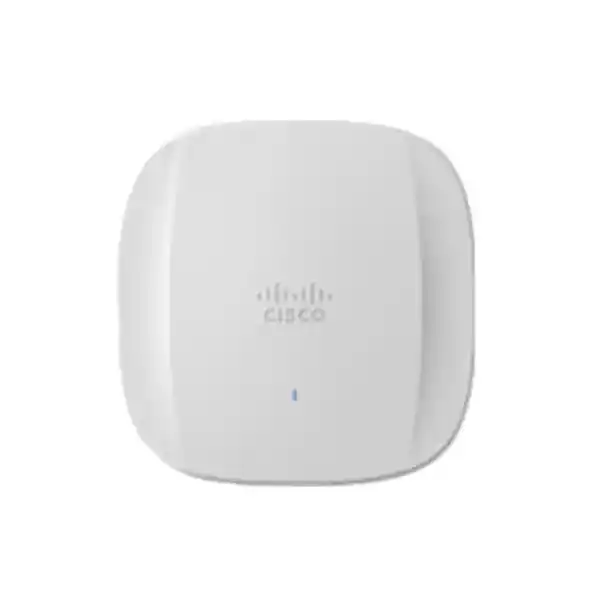
Cisco Meraki CW9166I-MR is the Meraki-managed configuration of the Cisco Catalyst 9166I enterprise indoor access point. It is designed for high-density wireless environments that need Wi‑Fi 6E across the 2.4 GHz, 5 GHz and 6 GHz bands, 4×4:4 MU‑MIMO radio capability, cloud-based administration and a multigigabit wired uplink. For organisations in Tanzania, the purchasing decision should include more than the access point itself: client capability, radio design, switch uplink speed, PoE delivery, VLANs, authentication, licensing and the quality of the site survey all influence the result.
FourTeck Tanzania can help buyers prepare a requirement-led quotation for the CW9166I-MR without making assumptions about stock, price or deployment conditions. A useful request includes the number of sites, floor plans, expected concurrent users, application mix, switching platform, available PoE standard, internet capacity, guest-network requirements, authentication method and desired Meraki license term.
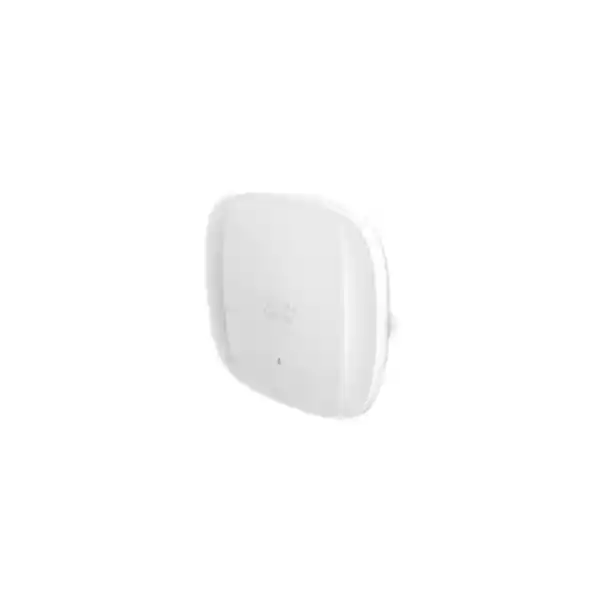
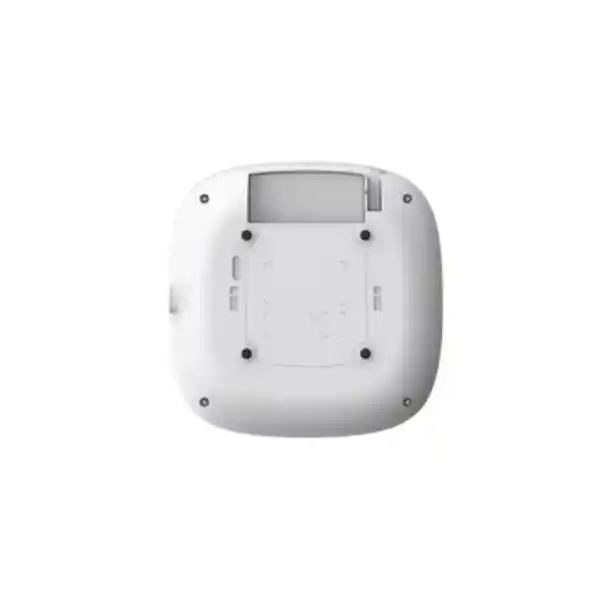
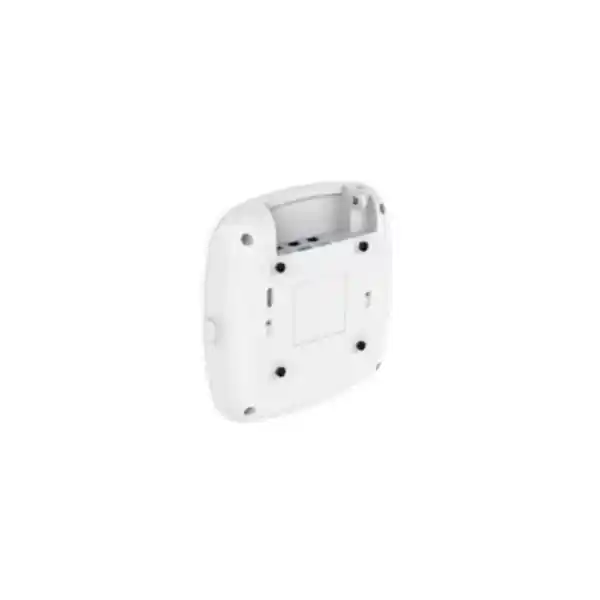
The CW9166I-MR is a cloud-managed Wi‑Fi 6E indoor access point with internal omnidirectional antennas, tri-band 4×4:4 MU‑MIMO, a 100/1000/2.5G/5G Ethernet interface, Meraki Dashboard management and PoE support. A compatible Meraki wireless license is required for operation.
What the Cisco Meraki CW9166I-MR solves
High-density Wi‑Fi
The platform is built for demanding indoor environments where many users and modern Wi‑Fi clients share the same area. Tri-band Wi‑Fi 6E adds the 6 GHz band for compatible devices, while 4×4:4 MU‑MIMO and OFDMA capabilities help increase radio efficiency.
Central cloud operations
Meraki Dashboard gives administrators a central place to configure networks, view clients, monitor application usage, manage firmware and troubleshoot wireless performance across one or many sites without maintaining a local wireless controller for Meraki operation.
RF and security visibility
A dedicated scanning function supports RF analysis and wireless security monitoring. Meraki features such as Air Marshal, application-aware traffic controls and network-wide visibility can help administrators manage interference, rogue activity and user experience.
Verified CW9166I-MR technical highlights
| Product identity | Cisco Catalyst 9166I with Meraki cloud-managed persona, model CW9166I-MR |
| Wireless generation | Wi‑Fi 6E / IEEE 802.11ax with support for 2.4 GHz, 5 GHz and 6 GHz operation where locally permitted |
| Radio capability | 4×4:4 MU‑MIMO radio capability across the primary bands, with dedicated RF/security scanning functions and Bluetooth Low Energy/IoT radio |
| Aggregate frame rate | Up to approximately 7.8 Gbps aggregate tri-radio frame rate under vendor-defined conditions |
| Ethernet | 1 × 100/1000/2.5G/5G BASE‑T RJ45 interface |
| Power | PoE supporting IEEE 802.3at and 802.3bt; LLDP should be enabled for proper power negotiation |
| USB | USB 2.0 connector; Cisco documentation notes USB is disabled when powered by 802.3at PoE+ |
| Environment | Indoor operation; official installation guidance lists 0°C to 50°C operating temperature and 10–90% non-condensing humidity |
| Management | Cisco Meraki Dashboard cloud management for the CW9166I-MR persona |
| Licensing | A Meraki access-point license is required; confirm current license tier and term during procurement |
Published wireless rates are physical-layer or aggregate vendor figures, not guaranteed application throughput. Real performance depends on client capabilities, channel width, interference, regulatory domain, RF design, uplink capacity, power mode and network congestion.
Licensing, PoE and switching considerations
The CW9166I-MR should be purchased as part of a complete wireless design, not as an isolated ceiling device. Meraki cloud-managed access points require an appropriate Meraki license. Procurement teams should state the required license term on the quotation and record the renewal date as part of lifecycle management. License selection should be confirmed against current Cisco ordering guidance because available tiers, included functionality and commercial terms can change.
Power is another important design point. Cisco documents 802.3at and 802.3bt PoE support and recommends LLDP so the access point and switch can negotiate power correctly. If a site expects to use the full capability of the access point, confirm the exact switch model, per-port PoE standard and total switch PoE budget. A switch may advertise PoE on every port while still lacking enough total wattage to power all attached access points, cameras and phones simultaneously.
The 5 GbE multigigabit Ethernet interface also deserves attention. Connecting a high-performance Wi‑Fi 6E access point to a legacy 1 GbE access port can create a wired bottleneck. A suitable access switch may therefore need multigigabit copper ports, sufficient PoE power, VLAN support and uplinks sized for traffic from multiple access points. Review the FourTeck Tanzania business technology shop for related networking categories, and compare the AP requirement with the FourTeck Tanzania services page when configuration, installation, documentation or wireless planning is part of the scope.
Compatibility and integration checklist
Identify the proportion of Wi‑Fi 6E-capable laptops, phones and tablets. Older 2.4 GHz and 5 GHz clients can still connect, but they will not benefit from 6 GHz capability.
Confirm 802.3at or 802.3bt support, LLDP, available switch power budget and whether injectors are needed for any location.
Verify multigigabit access ports and suitable uplinks. Do not assume a high wireless headline rate can be realized through a constrained wired path.
Define employee, guest, voice, IoT and operational networks, then map SSIDs and access policies to the correct VLANs and firewall rules.
Decide whether users will use WPA2/WPA3, 802.1X, directory-backed access, guest portals or other approved methods before deployment.
Confirm current Cisco country and regulatory guidance for the deployment market, especially where 6 GHz availability or permitted channel use is relevant.
Related FourTeck Tanzania resources
The CW9166I-MR usually sits inside a wider network design. The FourTeck Tanzania technology solutions overview explains how wireless, switching, security, cabling and business applications depend on one another. The FourTeck Tanzania company overview provides additional context on the integrated IT, telecom and security approach used for projects.
For a Meraki-based branch or campus, a cloud-managed security appliance can complement the wireless layer. The Cisco Meraki MX67 Tanzania page covers a small-branch security and SD-WAN appliance; the Cisco Meraki MX75 Tanzania page is relevant when a larger branch profile is needed; and the Cisco Meraki MX85 Tanzania page provides another step for higher-capacity security and SD-WAN requirements. For smaller branch designs that combine integrated wireless at the edge, review Cisco Meraki MX68W Tanzania. These products do not replace dedicated CW9166I-MR access points, but they illustrate how Meraki switching, security and wireless decisions can be coordinated around one management model.
For project-specific pricing or a bill of materials, the FourTeck Tanzania contact page is the verified quotation route. Provide the exact CW9166I-MR quantity, license term, floor plan, switch models, PoE capability, user density, target SSIDs, authentication method and installation location so the request can be evaluated without guesswork.
Cisco Meraki CW9166I-MR Tanzania
For businesses evaluating Cisco Meraki CW9166I-MR in Tanzania, the strongest use case is a modern indoor wireless environment where coverage quality, high client density and centralized management matter more than simply purchasing the least expensive access point. Corporate offices, universities, healthcare facilities, hotels, conference venues, professional-services firms and multi-branch organisations can all have areas where many users expect stable access to cloud applications, collaboration tools, voice, video and internal systems at the same time. The CW9166I-MR provides a technical platform for this type of design, but the outcome depends on how the radio plan, PoE switching and wired network are engineered around it.
A Tanzania quotation should begin with the floor plan and expected client population. Identify high-density meeting areas, open offices, classrooms, public spaces and any rooms with dense walls or reflective surfaces. Then document which devices are actually Wi‑Fi 6E capable. The 6 GHz band can create valuable additional capacity for compatible clients, but a network still needs 2.4 GHz and 5 GHz planning for older endpoints, IoT devices and equipment that cannot use 6 GHz. Channel width should be selected according to local regulatory availability and RF conditions rather than set to the widest possible value everywhere.
Network readiness is equally important. Verify whether the access switches provide multigigabit Ethernet and the required PoE. Review total switch power budget across all connected APs, cameras and phones. Map staff, guest and operational SSIDs to intentional VLANs and security policies. If the wireless network carries voice or real-time collaboration, review QoS from the client edge through switching, firewall and internet service. Meraki Dashboard can simplify visibility and policy, but cloud management does not remove the need for a sound LAN design.
For procurement in Tanzania, request the hardware and Meraki licensing together and confirm whether mounting, PoE injectors, switch upgrades, cabling, configuration and wireless survey services are inside or outside the quotation. FourTeck can help turn these inputs into a cleaner bill of materials. This avoids the common mistake of receiving access points before discovering that the existing switches lack the right power, port speed or VLAN capability.
Cisco Meraki CW9166I-MR Dar es Salaam
Dar es Salaam organisations often operate in office buildings, hospitality properties, logistics facilities, education campuses and multi-tenant spaces where wireless demand changes significantly from one area to another. A reception or corridor may need basic coverage, while a training room, boardroom, auditorium or open-plan office can produce a much higher concentration of active users. The CW9166I-MR is relevant where the wireless design needs additional capacity, centralized control and support for modern Wi‑Fi 6E clients, but access-point quantity should be determined through radio planning rather than a fixed square-metre formula.
For a Dar es Salaam deployment, start by identifying where users spend time and what applications they run. Video meetings, cloud productivity, file synchronization, guest access, voice over Wi‑Fi and line-of-business applications generate different patterns. A high-density room may require more careful channel reuse and lower transmit power than a low-density area. Building materials, glass partitions, elevators, metal shelving and adjacent wireless networks can all affect the RF environment. A survey or predictive design gives the project a stronger foundation than simply placing an AP at the centre of every room.
The wired network should be assessed at the same time. CW9166I-MR provides a multigigabit Ethernet interface, so the access switch and uplink architecture should be checked for 2.5G/5G capability where the design expects to use it. PoE allocation matters when several high-performance APs share the same switch with cameras or phones. If existing Cat5e/Cat6/Cat6A cabling is being reused, verify condition, length and certification instead of assuming every run will sustain the intended multigigabit link.
Procurement teams in Dar es Salaam should include the Meraki license term, AP quantity, mounting conditions, switch models, floor plan and desired SSID/security structure in the quotation request. If guest Wi‑Fi is required, define isolation, captive-portal and bandwidth expectations. If several branches will share a Meraki architecture, align naming conventions and administrator roles from the beginning. A structured plan produces a wireless network that can be supported remotely rather than a collection of access points configured independently.
Cisco Meraki CW9166I-MR Mwanza
In Mwanza, the Cisco Meraki CW9166I-MR can be considered for organisations that need enterprise wireless in offices, hotels, education facilities, healthcare environments, retail operations or distributed branch locations. The cloud-managed approach is particularly useful when local IT staff are limited and a central administrator needs visibility into client health, access-point status and application usage from another city. That operational model can reduce the need for every troubleshooting task to begin with a physical visit, provided the underlying internet, LAN and power infrastructure are stable.
A Mwanza wireless design should separate coverage from capacity. An AP may provide a visible signal across a large area while still having insufficient airtime for many active users. Meeting rooms, reception areas and classrooms often create short periods of dense demand that are not obvious from average user counts. Identify peak occupancy, device count per person and application types, then plan AP placement and channel use accordingly. Where 6 GHz clients are expected, confirm country-specific regulatory availability and remember that higher frequencies generally have different propagation characteristics through walls than lower bands.
Power resilience is also relevant to remote operations. An access point cannot deliver reliable cloud-managed Wi‑Fi if its upstream switch, firewall or internet equipment is unstable. Consider how network devices are protected by UPS capacity and whether critical switches have enough backup time to ride through short interruptions. The PoE switch must support the access point’s power needs and have sufficient aggregate budget. Where the existing switch is limited to 1 GbE, decide whether the project accepts that backhaul constraint or whether a multigigabit switch upgrade is justified.
For a Mwanza quotation, share whether the project is a new deployment or replacement of an older wireless platform. Include the current AP count, switch model, VLANs, authentication method, primary internet link, required guest access and any locations where coverage is currently poor. FourTeck can then frame the CW9166I-MR requirement around actual site needs instead of relying on headline wireless speed alone.
Cisco Meraki CW9166I-MR Arusha
Arusha businesses in hospitality, tourism, professional services, education and corporate operations can have wireless requirements that combine employee connectivity with high expectations from guests and visitors. The CW9166I-MR fits high-performance indoor environments where administrators want Meraki cloud management and the additional spectrum opportunity of Wi‑Fi 6E. A hotel lobby, conference area and back office, for example, may all be part of one property but should not automatically use the same radio settings or access policy.
Guest Wi‑Fi should be planned as a separate service from business Wi‑Fi. Define whether guests receive internet-only access, what bandwidth limits are appropriate, whether a captive portal is needed and how guest traffic is isolated from internal systems. Staff devices may use WPA2/WPA3 enterprise authentication, while specialised operational equipment may have different capabilities. SSID design should remain manageable; creating too many SSIDs can add management overhead and consume airtime. A smaller number of well-defined networks is usually easier to secure and troubleshoot.
For conference and hospitality environments, plan for transient density. A hall that is empty most of the day may suddenly host hundreds of active devices. Placement, channel reuse, minimum data rates, client steering and capacity design can matter more than the nominal coverage radius of an AP. The 5 GbE uplink capability is useful only when the switch and broader LAN can carry the resulting traffic. Confirm PoE power, multigigabit ports, switch uplink capacity and internet bandwidth before expecting the access layer to solve a bottleneck elsewhere in the network.
An Arusha procurement request should therefore include expected guest and staff concurrency, floor plans, conference-space capacity, existing switch models, cabling condition and license term. If the project replaces another wireless system, document current SSIDs, VLANs and authentication before migration. A staged cutover can preserve business continuity while new APs are adopted into Meraki Dashboard and validated area by area.
Cisco Meraki CW9166I-MR Dodoma
Dodoma organisations such as government-adjacent offices, associations, NGOs, education institutions, professional firms and corporate branches may need a wireless platform that can be managed consistently even when the central IT team is located elsewhere. CW9166I-MR can support that model by using Meraki Dashboard for centralized configuration and monitoring. The value is strongest when the wireless architecture is standardised across locations with documented SSIDs, VLAN mappings, administrator roles and naming conventions.
Before selecting AP quantities in Dodoma, determine whether the project is primarily a coverage problem, a capacity problem or both. A site can have strong signal and poor user experience if too many devices compete for the same airtime or if the wired uplink is congested. Review floor layout, wall materials, user density and application demand. Identify critical spaces such as meeting rooms, training halls and executive areas where reliable collaboration or presentation traffic is required. If voice over Wi‑Fi is important, roaming and RF consistency need additional attention.
Security policy should be defined before deployment. Separate employee, guest and infrastructure traffic using VLANs and appropriate firewall controls. Decide whether 802.1X or another enterprise authentication method will be used and confirm supporting identity services. Meraki security and analytics features can provide useful visibility, but administrator access to the Dashboard should itself be governed with strong authentication, least-privilege roles and documented ownership.
For a Dodoma quotation, include switch and firewall details as well as the wireless requirement. If the current switch cannot provide the required PoE or multigigabit connectivity, include the switch upgrade in the project plan rather than discovering it during installation. State the desired Meraki license term and whether site survey, mounting, cabling, configuration and post-installation validation are required. This produces a clearer procurement record and helps compare quotations on like-for-like scope.
Cisco Meraki CW9166I-MR UAE
For organisations operating in both Tanzania and the UAE, the CW9166I-MR can support a common Meraki wireless management model across regional offices, provided each site is designed for its own regulatory environment, user density and building conditions. The benefit of standardisation is operational rather than purely technical: administrator workflows, dashboard organisation, alerting, SSID templates and documentation can follow consistent principles even when the number of access points differs between countries.
A UAE deployment should still be sized independently. High-rise offices, large meeting rooms, hospitality venues and dense commercial environments can have significant co-channel interference and neighbouring networks. 6 GHz can provide additional spectrum for compatible devices, but channel availability and permitted operation must follow the current Cisco and local regulatory guidance. A professional survey helps distinguish between a lack of signal and contention caused by too many nearby radios or clients.
Cross-region IT teams should also align lifecycle management. Meraki licenses, dashboard administrator roles, firmware policies and asset records should be tracked centrally where practical. Procurement teams may choose common license terms or renewal windows to simplify administration, while still allowing local purchasing processes to differ. If the UAE site has faster internet or denser wireless traffic than the Tanzania site, do not force identical switching or AP counts solely for consistency.
For UAE technology requirements, FourTeck UAE provides regional IT infrastructure context. For Tanzania requirements, use the Tanzania quotation process so site details remain tied to the correct deployment. When preparing a combined regional bill of materials, specify each location separately with AP quantity, switch capability, PoE standard, license term and installation scope. A common architecture should simplify operations while still respecting the practical differences between buildings, internet services and country-specific radio rules.
Cisco Meraki CW9166I-MR Uganda
In Uganda, the Cisco Meraki CW9166I-MR is relevant to businesses and institutions that want enterprise indoor wireless with centralized cloud management, especially where several locations are supervised by one IT team. A regional company operating between Tanzania and Uganda can use consistent Meraki Dashboard organisation, SSID policy and monitoring practices to reduce operational variation. Standardisation is most useful when it is based on shared design rules rather than copying the exact same AP count into every building.
Uganda sites should be assessed for wired backhaul, PoE and RF conditions before procurement. If access switches provide only 1 GbE and limited PoE, the CW9166I-MR will still connect but the infrastructure may constrain the value of its higher-capacity radio platform. Where multigigabit switches are available, verify total uplink bandwidth to the core and firewall so several APs do not simply move congestion deeper into the LAN. Cabling quality and certification are also important when using higher copper Ethernet rates.
For wireless policy, decide which clients belong on staff, guest, voice or operational networks. Legacy 2.4 GHz devices may need different treatment from modern laptops using 5 GHz or 6 GHz. Avoid creating excessive SSIDs for every department; VLAN and identity policy can often provide segmentation without multiplying beacon overhead. If branch internet is variable, remember that Meraki cloud management requires connectivity for full remote visibility, but local forwarding behaviour should still be designed so temporary WAN issues do not create avoidable LAN disruption.
For Uganda procurement and related infrastructure, see FourTeck Uganda. A quotation request should state the CW9166I-MR quantity, license term, city, building type, user density and existing switch models. Where the project spans Tanzania and Uganda, include separate site schedules so the same wireless standards can be applied without ignoring local infrastructure and coverage differences.
Cisco Meraki CW9166I-MR Kampala
Kampala offices, schools, healthcare facilities, hotels and commercial properties can create dense wireless environments where many neighbouring networks compete for airtime. CW9166I-MR can provide a high-performance foundation with Wi‑Fi 6E and cloud management, but the radio plan should be tuned to the actual building. Simply adding more access points can make performance worse if channel reuse, transmit power and AP placement are not coordinated.
A Kampala design should identify peak occupancy by area. Boardrooms, training rooms and event spaces can need more capacity than corridors or private offices. If many users carry both laptops and phones, device count may be much higher than headcount. Add wireless printers, scanners, tablets and IoT devices to the inventory as well. Then distinguish which endpoints can use 6 GHz. This helps set realistic expectations for how quickly the new band will relieve congestion on 5 GHz.
The access point’s 5 GbE interface and PoE requirements bring the switching layer into the discussion. Verify whether existing switches offer mGig ports, the correct PoE standard and enough total power for every AP. If not, compare the cost of a switch refresh with the benefit expected from the wireless upgrade. For larger sites, check aggregation and core uplinks so a cluster of fast access points does not converge onto an undersized trunk. Firewall throughput and internet service should also match the expected cloud and guest traffic.
When requesting CW9166I-MR for Kampala, include a floor plan, AP quantity estimate, peak user count, desired SSIDs, guest-network policy, authentication method and license term. If the project includes installation, state ceiling type and mounting constraints. A validation survey after installation should confirm coverage, channel use, roaming and client experience so the deployment can be tuned from measured results rather than left at generic defaults.
Cisco Meraki CW9166I-MR Arua
For a business, NGO, education site or branch office in Arua, centralized cloud management can be particularly valuable when specialist network staff are not permanently based at the location. The CW9166I-MR allows administrators to view device status, connected clients and wireless conditions through Meraki Dashboard, which can make remote diagnosis more practical. This does not eliminate the need for good local cabling, switching and power; it simply gives the central team better operational visibility.
Arua deployments should be realistic about scale. The CW9166I-MR is a high-performance access point, so it makes sense where the site needs its capacity, 6 GHz support or Meraki feature set. A small low-density office may not require the same radio platform as a training facility or guest environment. Procurement should therefore compare the business requirement with the capabilities rather than choosing the top model solely because it has the highest headline specification.
Power and connectivity resilience also deserve attention. If a site has short power interruptions, protect the PoE switch and upstream network equipment with appropriately sized UPS systems. An AP that remains powered while the router or firewall shuts down does not preserve useful connectivity, so resilience planning should cover the full chain. If cloud monitoring is expected to help remote teams, ensure the internet path and DNS are reliable enough for Dashboard communication. Document switch ports, AP names, IP addressing and cabling so local support can identify the correct device quickly when physical intervention is required.
For an Arua quotation, include the number of rooms or areas, expected users, existing switch model, PoE budget, internet topology and any guest or staff network separation. State whether cabling and mounting are already available. Where one organisation manages sites in Arua, Kampala and Tanzania, use a common documentation template but retain separate floor plans and radio settings. This balances operational consistency with site-specific wireless engineering.
Cisco Meraki CW9166I-MR Mbarara
Mbarara organisations can use the CW9166I-MR where enterprise Wi‑Fi needs to support a mix of business applications, guest access and centrally managed branch operations. Cloud administration is useful for distributed organisations because policies and firmware can be managed consistently while local teams focus on physical infrastructure and user support. The high-performance radio platform is most valuable when the site also has switching, cabling and internet capacity capable of supporting it.
Before procurement, categorise spaces by density and importance. Administrative offices may have predictable usage, while lecture rooms, conference areas or hospitality spaces can create sudden peaks. If business-critical applications use wireless, identify their latency and reliability needs. Roaming between APs should be tested for mobile users, but placing APs too close together can create interference. A predictive design followed by on-site validation is more dependable than estimating coverage by distance alone.
The move to Wi‑Fi 6E should also include a client-readiness review. Some devices support Wi‑Fi 6 but not 6E, and many embedded devices still use 2.4 GHz. The network must therefore support several generations at once. Where 6 GHz is available and supported by clients, it can provide additional capacity, but the AP placement should account for its propagation characteristics. Security settings should balance modern standards with the compatibility needs of approved legacy devices rather than weakening the entire network for one old endpoint.
A Mbarara bill of materials should include the required Meraki license, mounting hardware and any PoE injectors or switch upgrades. Confirm whether the site needs new structured cabling or only an AP replacement. If there are multiple branches, include naming and template standards in the implementation plan. Clear documentation allows remote teams to identify AP location, switch port, VLAN and power source when troubleshooting without relying on local memory.
Cisco Meraki CW9166I-MR Gulu
Gulu branches and institutions considering CW9166I-MR should evaluate the operational value of Meraki cloud management alongside the hardware specification. A central IT team can use Dashboard to monitor networks, review client connectivity and maintain consistent settings across geographically distributed sites. This is useful for organisations whose technical staff travel between locations, but the success of the model still depends on reliable local switching, power and internet access.
Start with a simple site inventory: floor plan, wall types, ceiling height, number of users, number of devices, existing AP locations and switch models. Add the applications that matter most, such as cloud productivity, remote desktop, video conferencing, voice or education platforms. This information helps determine whether the project is trying to fix weak coverage, congestion, roaming issues or all three. Different problems require different changes; replacing an old AP with a more powerful one will not fix an overloaded internet circuit or poorly placed switch.
Where several CW9166I-MR units are installed, the access layer should be sized as a system. Total PoE consumption, switch mGig port count and uplink bandwidth should be checked for the whole floor or building. VLANs for staff, guests and devices should be documented, and firewall rules should restrict access according to business need. If guest traffic is significant, apply suitable bandwidth management so public usage does not compete unfairly with critical applications.
For a Gulu procurement request, include the Meraki license term and whether remote configuration, site survey or physical installation are required. If power continuity is important, define UPS requirements for the switch and edge devices as part of the same project. A well-prepared quotation will therefore list more than AP quantity: it should identify the dependencies that make the wireless service usable and supportable after installation.
Cisco Meraki CW9166I-MR Kenya
Kenya-based organisations with regional operations can use the CW9166I-MR as part of a common Meraki wireless standard shared with Tanzania and other branches. Cloud management can simplify visibility across sites, while common SSID naming, administrator roles and monitoring practices reduce operational variation. The hardware quantity and RF settings, however, should remain site-specific because a Nairobi office, warehouse, hotel or campus will have different density, construction and interference conditions.
For a Kenya design, map the wired and wireless layers together. A 5 GbE AP interface is valuable only when the switch port can negotiate an appropriate multigigabit rate and provide sufficient PoE. Check access-switch uplinks and core capacity as well. If dozens of high-performance APs feed a single constrained uplink, user experience can still suffer. Firewall and internet throughput should be considered in the same way, especially for cloud-heavy workplaces and guest environments.
The 6 GHz capability should be treated as part of a transition strategy rather than an assumption that every device can use it. Identify Wi‑Fi 6E-capable endpoints and plan 5 GHz capacity for the rest. For voice and mobility, validate roaming across the areas where users move. For high-density event or training spaces, use capacity planning and controlled channel reuse rather than simply increasing transmit power. Meraki analytics can help refine the network after deployment, but they are most useful when the initial design is documented.
For Kenya-related IT infrastructure, see FourTeck Kenya. For a regional procurement exercise, create a separate schedule for each Kenyan site with AP count, license term, switch readiness and installation scope. This allows group procurement to standardize the platform while preserving the engineering decisions required by each building.
Cisco Meraki CW9166I-MR Kuwait
Organisations evaluating Cisco Meraki CW9166I-MR in Kuwait may be looking for enterprise Wi‑Fi 6E, centralized management and high-density indoor performance for offices, education facilities, hospitality venues or corporate campuses. The access point can support a modern wireless architecture, but procurement should confirm current country-specific regulatory requirements and permitted 6 GHz operation before treating every advertised radio feature as available in every deployment condition.
Indoor environmental planning is also important. Access points are designed for conditioned indoor spaces, while equipment rooms and ceiling voids can experience different temperatures than occupied areas. Confirm mounting location, airflow, cabling and access for maintenance. The official operating range should be respected, and APs should not be treated as outdoor equipment simply because they are mounted near an entrance or exposed ceiling. Where outdoor coverage is required, select an outdoor-rated product designed for that environment.
From a network perspective, assess PoE and multigigabit switching before purchase. Where existing access switches are due for refresh, a Wi‑Fi 6E project can be a sensible time to introduce mGig ports and sufficient PoE budget. Where switches are newer but limited to 1 GbE, document that constraint and decide whether it is acceptable for the intended workload. Also check switch uplinks, firewall capacity and internet bandwidth so the wireless layer is not upgraded in isolation.
A Kuwait quotation request should include user density, floor plans, current wireless platform, switch models and desired Meraki licensing term. For multi-country companies, keep the Dashboard structure and documentation consistent with Tanzania or other regional sites, but do not copy radio settings without validation. Country rules, neighbouring RF conditions and building layout can differ materially, so each site should be commissioned against its own measured environment.
Cisco Meraki CW9166I-MR Ghana
For organisations in Ghana, CW9166I-MR can be considered when the wireless requirement calls for Wi‑Fi 6E capability, high-density operation and Meraki cloud management. Corporate offices, universities, healthcare sites, hotels and distributed enterprises may benefit from centralized administration, especially when the same IT team supports several locations. Procurement should still verify current regulatory approval and country-specific radio settings through Cisco guidance as part of deployment planning.
A Ghana wireless project should begin by defining performance objectives in business terms. Identify how many users must be served in each area, whether applications are latency-sensitive, what guest demand is expected and which spaces experience short periods of heavy use. Then map those needs to AP placement, channel planning and wired capacity. This avoids the common mistake of selecting AP quantity solely from building size. A large low-density floor can need fewer APs than a smaller training room with many simultaneous users.
Security and segmentation should be designed before rollout. Employees, guests and IoT devices may need separate networks and access policies. If 802.1X is used, confirm identity-service reachability and certificate or credential processes. If guest portals are used, determine whether bandwidth limits and usage terms are required. Meraki Dashboard can centralize these policies, but administrator permissions and account security should be managed carefully because the cloud portal becomes an important control plane for the network.
For Ghana technology requirements, see FourTeck Ghana. A CW9166I-MR quotation should list the exact quantity, license term, switch and PoE capability, floor plan and whether survey or installation services are required. If Ghana and Tanzania sites are managed together, standardize naming, documentation and Dashboard organisation while allowing each site to retain its own RF and infrastructure design.
Cisco Meraki CW9166I-MR Nigeria
Nigeria deployments of Cisco Meraki CW9166I-MR can suit enterprises that need scalable indoor Wi‑Fi with central management across offices, branches, campuses or hospitality locations. In larger cities and dense commercial environments, neighbouring wireless networks can create significant interference, so a high-performance access point should be combined with deliberate RF planning. The Meraki cloud platform provides useful visibility, but it cannot compensate for poor physical placement or overloaded wired infrastructure.
For a multi-floor Nigerian office, treat each floor as part of one RF design rather than an independent project. Signals can propagate vertically through atriums, stairwells and lightweight floors, causing unexpected channel overlap. Predictive modelling can provide a starting point, followed by on-site validation. High-density rooms should be planned by active-device count and application demand. If 6 GHz clients are being introduced, verify current local regulatory availability and maintain sufficient 5 GHz capacity for the installed base of older devices.
Power resilience and switching capacity should be part of the same bill of materials. High-performance APs need dependable PoE from managed switches, and the switches themselves may need UPS support where brief outages would interrupt critical operations. Check total PoE budget, not only per-port capability. Where mGig access ports are used, verify Cat6/Cat6A cabling where appropriate and inspect older cabling before relying on higher rates. Aggregation uplinks and firewall capacity must also carry the combined load of multiple APs.
For Nigeria-specific IT context, see FourTeck Nigeria. A strong quotation request should include AP count, site type, user density, license term, switch models, PoE budget and required services. Regional groups can then compare Nigeria and Tanzania projects using the same architecture checklist while preserving the local engineering details that determine real wireless performance.
Cisco Meraki CW9166I-MR Seychelles
Seychelles organisations in hospitality, tourism, professional services and corporate environments may require wireless networks that serve both internal users and guests while maintaining clear segmentation. The CW9166I-MR is an indoor enterprise access point, so it can suit reception areas, offices, conference rooms, restaurants or other conditioned internal spaces where Wi‑Fi 6E and Meraki cloud management are appropriate. Outdoor, poolside or exposed environments should be addressed with equipment specifically rated for those conditions rather than using an indoor AP outside its design envelope.
Hospitality environments often combine uneven density with high expectations. Guest rooms need coverage, conference spaces need capacity, and staff operations may depend on wireless tablets or phones. A site survey should therefore separate guest-facing and operational requirements. Construction materials, long corridors, reinforced walls and reflective surfaces can influence propagation. The 6 GHz band can offer useful capacity for compatible clients, but it generally requires careful placement because higher-frequency signals can be more easily attenuated by building materials.
Network design should include guest isolation, bandwidth management and secure staff access. Where property-management or payment systems use the network, place them in controlled segments rather than sharing unrestricted guest connectivity. Check switch PoE and port speed at every AP location. Resort properties with several buildings may also need fiber or other backbone connectivity between equipment rooms; the AP uplink is only one part of the path from client to internet or server.
For a Seychelles procurement brief, state whether the requirement is a single building or multi-building property, number of guest rooms or users, conference capacity, existing switch models, backbone links and desired license term. Confirm current regulatory requirements before final radio configuration. A well-scoped project can use Meraki Dashboard to centralize visibility while maintaining separate SSIDs and policies for guests, staff and operational devices.
Buying guidance: when does CW9166I-MR make sense?
Choose CW9166I-MR when the requirement genuinely benefits from its high-density Wi‑Fi 6E radio platform, cloud management and multigigabit uplink. It is particularly relevant where many modern clients share the same space, where the organisation already uses Meraki operations, or where centralized visibility across multiple sites is valuable. A lower-tier access point may be more economical for small low-density locations, while another model may be more appropriate for directional coverage or outdoor environments.
The best comparison is not only AP versus AP. Compare the complete deployment: access point, license, switch port speed, PoE budget, cabling, mounting, survey, configuration, firewall and internet capacity. An apparently cheaper AP can become expensive if it requires unplanned infrastructure changes, while a more capable AP can be wasted if the existing LAN constrains it. Procurement and network engineering should therefore review the same bill of materials before purchase approval.
Cisco Meraki CW9166I-MR FAQ
Is CW9166I-MR Wi‑Fi 6E?
Yes. Cisco positions the CW9166I-MR as a Wi‑Fi 6E enterprise indoor access point supporting the 2.4 GHz, 5 GHz and 6 GHz bands, subject to country-specific regulatory rules and compatible client devices.
Does CW9166I-MR require a Meraki license?
Yes. Cisco Meraki documentation states that a Meraki access-point license is required. Confirm the current license tier, term and commercial model at quotation time.
What Ethernet speed does the CW9166I-MR support?
The AP provides one 100/1000/2.5G/5G BASE‑T Ethernet interface. A multigigabit switch port is recommended where the design aims to avoid a 1 GbE wired bottleneck.
Can the CW9166I-MR use PoE?
Yes. Cisco documents support for 802.3at and 802.3bt PoE. LLDP should be enabled for proper power negotiation, and the switch must have enough per-port and total PoE budget.
Will all devices use 6 GHz?
No. Only compatible Wi‑Fi 6E or later devices can use the 6 GHz band. The network still needs good 2.4 GHz and 5 GHz design for older clients and many IoT devices.
How many CW9166I-MR access points are needed?
There is no reliable universal quantity based only on square metres. AP count depends on floor plan, walls, user density, client types, application demand, interference and required roaming. A predictive design and on-site validation are preferable.
Can CW9166I-MR be used outdoors?
It is an indoor access point. Outdoor or exposed installations should use equipment designed and rated for the environmental conditions of that location.
What should I provide for a quotation?
Provide quantity, deployment country and city, floor plans, expected users, existing switch models, PoE capability, internet bandwidth, current wireless platform, required SSIDs, authentication method, guest-access requirements and desired Meraki license term.
Quotation checklist
Decision recap
Cisco Meraki CW9166I-MR is a strong fit for organisations that need high-density, cloud-managed indoor Wi‑Fi 6E and have the switching and power infrastructure to support it. Its technical strengths include tri-band operation, 4×4:4 MU‑MIMO, multigigabit Ethernet, centralized Meraki management and dedicated RF/security monitoring capabilities. The purchase should include appropriate Meraki licensing and should be validated against local regulatory operation.
For Tanzania and regional deployments, the most important planning questions are practical: how many users are active in each space, which clients support 6 GHz, whether the switch can provide the required PoE and mGig backhaul, how SSIDs map to VLANs and security policies, and whether the wired core and internet service can carry the resulting traffic. Answer those questions first, then finalize access-point quantity and licensing.
Plan your CW9166I-MR deployment with FourTeck Tanzania
Share your floor plan, AP quantity estimate, user density, current switches, PoE capability and desired Meraki license term. FourTeck can help structure the product, licensing and deployment requirements into a quotation that is easier for both IT and procurement teams to review.



Reviews
There are no reviews yet.