
Cloud-managed access switching for Tanzania and regional networks
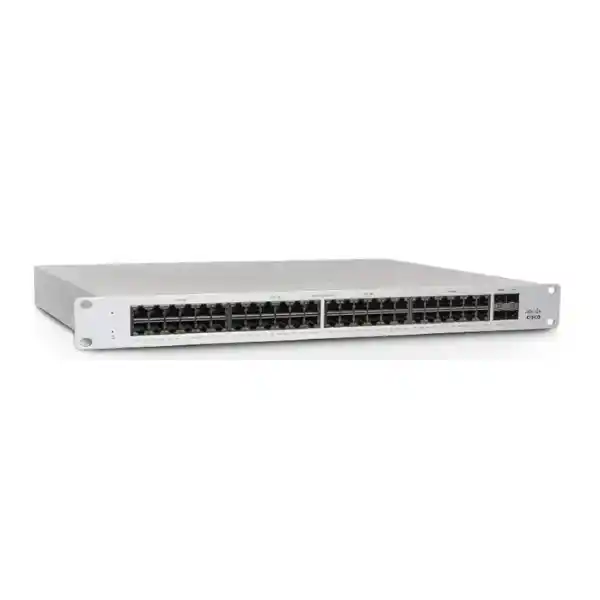
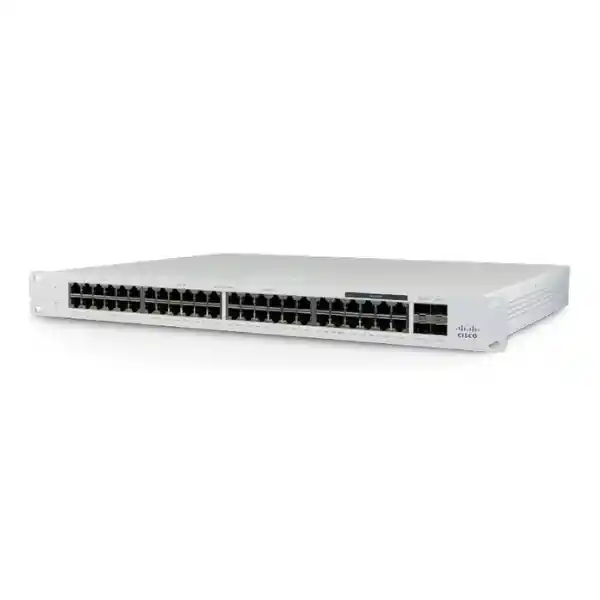
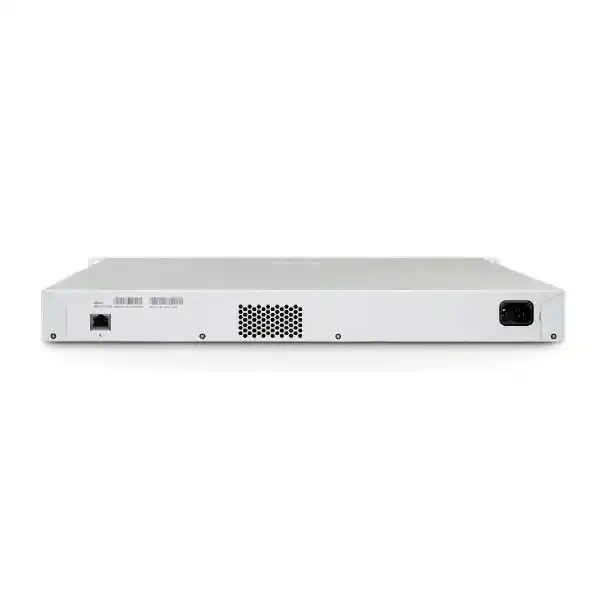
Cisco Meraki MS130-48X
Cisco Meraki MS130-48X is the multigigabit, high-PoE member of the full-size MS130 access-switch family. It is designed for branch and campus environments that need many wired endpoints, modern Wi-Fi access points, IP phones, cameras and other powered devices while keeping day-to-day administration centralized in the Meraki Dashboard. The model combines forty 1 GbE copper ports with eight 2.5 GbE multigigabit copper ports, four 10 GbE SFP+ uplinks and a 740 W PoE+ power budget. For organizations in Tanzania, the practical value is not only port count. The MS130-48X gives network teams a way to build a cloud-managed access layer with faster edge connectivity for newer wireless infrastructure, remote troubleshooting tools and a consistent operating model across multiple offices.
High-density access
Forty-eight copper access ports support dense office, education, hospitality, retail and branch deployments without forcing every endpoint onto a premium-speed interface.
Multigigabit edge
Eight 2.5 GbE ports are useful for newer access points and other devices that can exceed a single-gigabit wired connection, helping prevent the access port from becoming the first bottleneck.
10G uplinks
Four 10 GbE SFP+ uplinks create more headroom toward distribution, core or server-side infrastructure where multiple high-demand edge devices aggregate their traffic.
Cloud operations
Meraki Dashboard management supports centralized configuration, monitoring, firmware administration and remote troubleshooting for one site or many sites.
What the Cisco Meraki MS130-48X solves
A modern access switch has to do more than connect desktop computers. Wireless access points, cameras, phones, room systems and IoT equipment can all depend on the same wiring closet. Newer Wi-Fi platforms may require 2.5 GbE at the edge, and powered devices can create a large cumulative PoE demand. The MS130-48X addresses these requirements with mixed-speed access ports and a substantial 740 W PoE budget while maintaining the operational simplicity associated with Meraki cloud management.
The model is particularly relevant where an organization wants to upgrade the wireless edge without replacing every copper port with multigigabit connectivity. Standard 1 GbE ports can serve conventional endpoints while the eight 2.5 GbE ports are reserved for higher-throughput devices. Four 10G SFP+ uplinks then provide a faster path upstream. This combination can be more practical than buying unnecessary premium bandwidth on every port.
For procurement teams, the important point is to buy the switch as part of a system rather than as a standalone box. Confirm the number and power draw of PoE devices, cable category and condition, optic type, uplink design, Meraki licensing model, rack space, environmental conditions, WAN architecture and the expected growth of the site. FourTeck Tanzania can use that information to help frame a quotation and deployment plan.
Cisco Meraki MS130-48X verified specifications
Specifications should be validated against the current Cisco Meraki documentation and the exact ordered part number before procurement. Licensing, optics and implementation scope should be quoted separately where applicable.
Cloud management, troubleshooting and lifecycle planning
The operational reason many organizations choose Meraki is centralized management. The switch can be pre-provisioned, monitored and administered through the Meraki Dashboard, reducing dependence on repetitive local command-line work. Network teams can view switch status, ports and connected clients, apply configuration consistently and use remote troubleshooting functions such as cable testing, port cycling and device reboot workflows. This is valuable for distributed organizations where a central IT team supports branches in several cities or countries.
Cloud management does not remove the need for sound network engineering. VLAN design, spanning-tree behavior, uplink resilience, loop prevention, address management and security policy still need to be planned. It does, however, make configuration standards easier to repeat. A company can define naming conventions, port profiles, VLAN assignments and monitoring expectations before new branches go live. That approach reduces drift between sites and makes handover documentation more meaningful.
Licensing is a procurement requirement, not an afterthought. Meraki switching uses licensed cloud management, and the appropriate term and licensing mode should be confirmed before order. Procurement teams should decide who owns the Meraki organization, which administrators require access, how renewal dates are tracked and how licensing responsibility fits the asset lifecycle. A technically correct switch can still create an operational problem if licensing ownership is unclear.
PoE and multigigabit design guidance
The 740 W PoE budget is a major reason to consider the MS130-48X, but total power should be calculated rather than assumed. Build a device schedule that records every powered endpoint, its expected power requirement and its intended switch port. Include wireless access points, cameras, phones and other PoE devices. Keep enough headroom for future additions and for devices that may draw more power during startup or feature changes.
The eight 2.5 GbE ports are especially relevant for current Meraki wireless deployments. For example, the Cisco Meraki CW9162I-MR in Tanzania uses a 2.5G multigigabit uplink, making it a natural access-layer pairing when wireless capacity and client demand justify more than 1 GbE. Organizations with higher-density wireless requirements can also review the Cisco Meraki CW9164I-MR as part of the same Meraki architecture.
Cabling must support the intended link rate reliably. Existing copper should be inspected for category, termination quality, length and physical condition. Uplink optics and fiber type should be selected against distance and the upstream switch interface. Where the switch serves multiple high-throughput access points, the four 10G SFP+ ports can provide important aggregation headroom, but the distribution or core layer must also be designed to accept that traffic.
Related Meraki infrastructure and FourTeck resources
A switching project should be aligned with wireless, security, cabling and support requirements. FourTeck Tanzania’s IT and network services page provides broader context for design, installation, configuration and lifecycle support. Buyers who are building newer wireless environments can also evaluate the Cisco Meraki CW9166I-MR where higher-capacity Wi-Fi 6E requirements need to be considered alongside switching.
For multi-country organizations, procurement and architecture may extend beyond one site. FourTeck’s regional network includes FourTeck Uganda, FourTeck Kenya, FourTeck UAE, FourTeck Ghana and FourTeck Nigeria. These links are useful when a common Meraki design needs to be discussed across several operating markets while still validating local regulatory, commercial and implementation requirements independently.
Cisco Meraki MS130-48X Tanzania
Organizations searching for Cisco Meraki MS130-48X in Tanzania are commonly trying to solve one of three problems: increasing wired port density, introducing multigigabit connectivity for newer wireless infrastructure, or simplifying administration across multiple locations. The MS130-48X is well suited to these objectives because it combines a familiar 48-port access-switch footprint with eight 2.5 GbE ports and four 10G SFP+ uplinks. The 740 W PoE+ budget also gives network designers room to power access points, cameras, phones and other endpoints from the same switch, provided the actual per-device power plan is calculated carefully.
For a Tanzania deployment, the first design step should be an endpoint inventory. Count ordinary desktops and printers separately from devices that require PoE or more than 1 GbE. Identify wireless access points that can use 2.5 GbE, cameras that may need higher PoE classes, voice endpoints that require VLAN and QoS policy, and any servers or network appliances connected locally. This produces a realistic port map and prevents the eight multigigabit interfaces from being consumed by devices that gain no benefit from them.
The next step is uplink and rack planning. Four 10G SFP+ interfaces can support high-capacity connections to distribution or core infrastructure, but fiber type, optic compatibility, distance and upstream port availability must be confirmed. The switch is a 1U rack-mounted device, so cabinet depth, ventilation, power distribution and UPS capacity should be checked before installation. Its documented operating range reaches 45°C, but networking equipment should still be installed in a controlled, ventilated environment rather than treated as tolerant of poorly cooled rooms.
Tanzania buyers should also include licensing and operational ownership in the quotation request. Specify the intended Meraki license term, whether an existing Meraki organization already exists, who will own administrator credentials and whether the switch will be integrated with existing Meraki wireless or security devices. A complete request should include quantity, site city, rack details, access-point count, PoE device schedule, uplink media, desired license term and installation scope. This allows the commercial proposal to reflect the real network rather than only the hardware part number.
Cisco Meraki MS130-48X Dar es Salaam
Dar es Salaam businesses often operate in multi-floor offices, commercial buildings, warehouses, hospitality properties, retail facilities and branch headquarters where many network services converge in one communications room. In these environments, the MS130-48X can act as a dense access switch for staff devices, Wi-Fi access points, IP phones, cameras and building-connected equipment. The mixed 1 GbE and 2.5 GbE layout is useful when most endpoints remain gigabit-class but selected wireless or specialist devices need more bandwidth.
A head-office network should be designed around traffic concentration rather than port count alone. A floor with several modern access points may push much more aggregate traffic than a floor of ordinary desktop users. Camera streams can create continuous traffic, while cloud backup, video conferencing and large file movement create bursts. The four 10G SFP+ uplinks give the MS130-48X a strong path upstream, but they should terminate into a distribution layer that is sized for the same demand. Redundant uplink design, spanning-tree behavior and failure paths should be considered before production use.
PoE planning is particularly important in mixed-use buildings. Do not divide 740 W by the number of ports and assume every endpoint behaves the same. Build a power schedule based on actual device classes and expected maximum draw. Leave operational margin so that a future access point or camera expansion does not force an immediate switch replacement. UPS sizing should account for the switch and the powered endpoints it supports, because a high-PoE switch can represent a significant rack power load when fully utilized.
For a Dar es Salaam quotation, provide the number of floors, rack locations, copper and fiber backbone details, expected PoE endpoints, wireless models, existing core or firewall platform and whether the site is part of a larger multi-branch Meraki organization. This information helps determine whether a single MS130-48X, multiple access switches or a different distribution design is appropriate. A procurement decision should also document the Meraki license, optics, rack accessories and implementation tasks so the installation team receives a complete scope rather than an incomplete hardware-only bill.
Cisco Meraki MS130-48X Mwanza
Mwanza organizations planning branch expansion, office upgrades, hospitality networks, education sites or operational facilities can use the MS130-48X where a centrally managed switch reduces the need for advanced local administration. Meraki Dashboard management is especially helpful when a central IT team supports the site remotely. Configuration templates, port policies and monitoring can be coordinated from a common platform, while local staff can focus on physical checks such as power, patching and cabling when support is required.
Remote management works best when the physical installation is documented well. Label patch-panel ports, switch interfaces, uplinks and powered devices. Record which 2.5 GbE interfaces serve access points and which SFP+ ports connect upstream. Use consistent device naming and VLAN conventions. These practices make Dashboard visibility more actionable because an administrator can connect an alert or client issue to a known physical location instead of depending on guesswork.
For a Mwanza site, WAN reliability and power design should be considered alongside switching. Cloud administration depends on upstream connectivity for centralized management, while business applications may depend on internet or VPN services. UPS-backed network infrastructure can help sustain the switch, gateway and key access points through short disturbances when the UPS is correctly sized. If the site uses multiple internet circuits, the gateway or firewall architecture should handle failover while the MS130-48X continues to provide stable LAN connectivity.
A useful procurement package should include the number of users, phones, cameras and wireless access points; existing cable types; rack and UPS details; uplink distance; desired licensing term; and how the Mwanza network connects to other offices. The objective is to determine not merely whether the MS130-48X has enough ports, but whether its port mix, PoE budget and 10G uplink design match the full branch requirement. Where only a few endpoints need multigigabit access, the mixed-speed layout can be cost-effective. Where many more than eight devices require 2.5 GbE, a different switch mix should be evaluated before ordering.
Cisco Meraki MS130-48X Arusha
Arusha deployments can range from professional offices and schools to hospitality, tourism and mixed guest-and-staff environments. These sites often have a broad endpoint mix: staff computers, guest Wi-Fi, point-of-service devices, IP phones, cameras and wireless access points. The MS130-48X can consolidate many of these connections while supporting segmentation through a managed Layer 2 design and supplying power to appropriate PoE endpoints.
Hospitality and guest-facing networks need careful separation. Guest Wi-Fi should not share unrestricted access with operational systems, cameras or staff resources. VLAN design, gateway policies and wireless SSID mapping should be agreed before switch ports are configured. The eight 2.5 GbE ports can be reserved for higher-capacity access points in lobbies, conference areas or other locations where user density justifies multigigabit wired backhaul. Standard 1 GbE ports can serve phones, conventional access points, desktop endpoints and many camera models according to their actual requirements.
Physical conditions deserve equal attention. A 740 W PoE switch can contribute meaningful heat when heavily loaded, so rack ventilation and room conditions should be assessed. Cabling to outdoor or remote areas should be routed and protected appropriately, while long-distance building links may require fiber rather than copper. The 10G SFP+ uplinks are useful for high-bandwidth floor or building aggregation, but compatible optics and fiber media must be selected for the actual link distance.
For an Arusha quotation, describe the property type, user and guest profile, number of access points, phones and cameras, existing core switch, firewall, internet design and any building-to-building links. Include the expected Meraki licensing term and whether the organization already operates a Meraki Dashboard environment. This makes it possible to plan the switch as part of an integrated network instead of simply delivering hardware. If wireless density is the main reason for considering the MS130-48X, provide access-point models so the multigigabit and PoE requirements can be mapped to exact ports before deployment.
Cisco Meraki MS130-48X Dodoma
Dodoma offices, institutions and distributed organizations can use the Cisco Meraki MS130-48X as a cloud-managed access layer where centralized oversight and consistent standards are important. The model is appropriate for sites that need a full 48-port footprint but also want a subset of faster 2.5 GbE ports for current wireless infrastructure. Its four 10G SFP+ uplinks support higher-capacity connectivity toward the core, while the PoE budget can power a substantial set of endpoints when planned correctly.
Government, education and enterprise environments often benefit from strong documentation and repeatable policy. Port naming, VLAN IDs, administrative roles and network diagrams should be standardized so future changes do not depend on one technician’s memory. Meraki Dashboard can support this operational model by centralizing visibility and configuration, but organizations should still maintain their own asset records, license-renewal process and physical port maps.
Where a Dodoma site connects to branch offices, define the boundary between access switching and routing/security clearly. The MS130-48X is primarily a Layer 2 access switch; inter-VLAN policy and WAN connectivity may be handled by other network components depending on architecture. DHCP relay is supported, but buyers should not treat the model as a substitute for a full routing or firewall platform. The intended core, gateway and security design should therefore be documented before the switch is configured.
A complete quotation request should include the number of switch ports required today and over the planned lifecycle, the count and power class of PoE devices, the number of 2.5 GbE endpoints, fiber type and distance, rack and UPS information, license term and installation expectations. If the organization is standardizing several Dodoma buildings or offices, provide a site matrix so port profiles and quantities can be planned consistently while recognizing differences between locations. This approach produces a cleaner rollout and reduces the risk of discovering after installation that a site lacks enough PoE headroom, compatible optics or upstream capacity.
Cisco Meraki MS130-48X UAE
For organizations operating between Tanzania and the UAE, the MS130-48X can support a consistent Meraki access-switch standard across both markets. Centralized Dashboard management is useful when one IT team monitors several offices, because port configuration, alerts and firmware processes can follow common operational standards. Standardization can reduce troubleshooting time and make procurement easier, but each site should still be engineered around its own user density, cabling, environmental conditions and upstream architecture.
UAE offices may have high-bandwidth internet services and dense wireless deployments, making the eight 2.5 GbE ports and four 10G SFP+ uplinks particularly relevant. A premium internet circuit does not guarantee fast user experience if the access or aggregation layer becomes congested. Map high-capacity wireless access points to the multigigabit ports and confirm that the distribution layer can receive multiple 10G uplinks. Where server traffic remains local, understand its path through the switching topology so workloads do not unnecessarily traverse slower links.
PoE design should be separated from bandwidth design. A device can need modest network throughput but significant electrical power, while another may need 2.5 GbE but relatively little PoE. Create two schedules: one for port speed and one for PoE draw. This avoids using the wrong metric when planning capacity. Facilities teams should also account for rack power, cooling and UPS design, especially where the switch is expected to operate at high PoE utilization.
For cross-region procurement, keep asset ownership and licensing clear. Record which Meraki organization owns each switch, who can administer the Dashboard, the selected license term and which entity is responsible for renewal. Hardware sourced for one market should be checked for commercial, regulatory and support suitability before being deployed in another. A UAE quotation should list required quantity, optics, licensing, installation scope, connected access-point models and any need to integrate with existing Meraki security appliances or wider Cisco infrastructure.
Cisco Meraki MS130-48X Uganda
Uganda organizations evaluating the Cisco Meraki MS130-48X may be looking for a switch that can support head offices, branches, campuses and growing wireless networks under one cloud-managed operating model. The MS130-48X is particularly suitable when the network contains both ordinary gigabit endpoints and a smaller number of devices that can use 2.5 GbE. Its 740 W PoE+ budget also supports deployments where phones, cameras and access points need centralized power from the access layer.
For multi-site Uganda networks, the operational benefit comes from standardization. Define a repeatable switch template for branch types, but do not assume every branch needs the same hardware. A small office may not require forty-eight access ports, while a larger branch may need multiple switches or a more capable distribution design. Where MS130-48X is selected, pre-plan VLANs, port labels, PoE devices and uplink assignments so remote configuration reflects the physical site accurately.
WAN and internet resilience should be reviewed with the switch design. Cloud management simplifies remote operations, but users still depend on local gateway, DNS, DHCP and upstream connectivity. If the branch connects to headquarters over VPN, security policies and inter-site traffic patterns may influence uplink capacity. Camera systems may generate large local or centralized recording traffic, while wireless clients can produce unpredictable peaks. The access switch should therefore be considered as one layer in a broader network path.
For procurement in Uganda, request a quote with the exact endpoint count, PoE load, required mGig ports, fiber/uplink needs, Meraki license term and installation or configuration scope. When the switch is part of a wider East African standard, document which design elements are mandatory and which can vary by country or building. That makes regional support easier without turning a common standard into an inflexible one-size-fits-all design.
Cisco Meraki MS130-48X Kampala
Kampala head offices and larger branch environments can benefit from the MS130-48X where wireless growth, PoE density and centralized management are converging requirements. In many modern offices, the wired desktop is no longer the largest source of switch demand. Access points, cameras, phones, room devices and other infrastructure endpoints may consume more power and create more sustained traffic. The MS130-48X provides a useful combination of ordinary gigabit access, eight 2.5 GbE ports and fast SFP+ uplinks for this mixed environment.
If Kampala acts as a regional hub, the local network may also carry traffic from branch VPNs, cloud applications, collaboration platforms and central services. Access-layer design should therefore include the upstream path. Four 10G uplinks can provide strong aggregation capability, but core switching, firewalls and internet circuits must be sized accordingly. Network teams should know which traffic remains local, which crosses the WAN and which requires policy enforcement at the gateway.
For Wi-Fi projects, reserve the multigigabit interfaces for access points that can actually use them. Meraki Dashboard makes it straightforward to monitor and administer compatible Meraki devices centrally, but physical placement and RF design still determine wireless quality. Switch capacity should be aligned with access-point quantity and client demand rather than selected solely because the model offers 2.5 GbE ports. The cabling path to each AP should be verified before deployment.
Kampala procurement teams should request a bill of materials that separates hardware, Meraki licensing, optics or DACs, rack accessories, implementation services and any required support. Include current switch and firewall models if this is an upgrade, because migration can affect VLANs, spanning tree, IP addressing and cutover planning. A phased replacement strategy may be appropriate for live offices where downtime must be minimized. The final design should show how the MS130-48X fits the network rather than treating it as an isolated replacement for an older 48-port switch.
Cisco Meraki MS130-48X Arua
For Arua offices and distributed operational sites, cloud-managed switching can reduce the amount of specialist configuration that must be performed locally. The MS130-48X allows a central team to manage a high-density access switch through the Meraki Dashboard while local support focuses on power, cabling, patching and device replacement. This model can be valuable when a site has many endpoints but limited local network-engineering resources.
Arua deployments should place particular emphasis on resilience and documentation. The switch itself is only one component of continuity. Confirm reliable power, appropriate UPS capacity, gateway availability and the site’s upstream internet or WAN design. If cloud applications are critical, consider how connectivity failures will affect users and what failover is available at the firewall or router layer. Label patching clearly so remote administrators can guide onsite staff through physical checks without ambiguity.
The 740 W PoE budget can support a meaningful number of cameras, phones and access points, but exact power must be calculated from the endpoint specification. Sites with surveillance should identify whether cameras record locally or send streams across a WAN, since that decision can change traffic patterns dramatically. Wireless access points that support 2.5 GbE can be connected to the switch’s eight mGig interfaces, while ordinary endpoints remain on 1 GbE ports.
When requesting an Arua quotation, provide endpoint counts, expected PoE draw, access-point models, camera topology, uplink requirements, existing rack and UPS information and the Meraki license preference. If remote deployment assistance is required, define what is expected before shipment: pre-configuration, documentation, port schedules, installation guidance or post-deployment validation. Clear scope is especially important for distributed sites because many delays come from missing optics, patch leads, rack hardware or licensing details rather than from the switch itself.
Cisco Meraki MS130-48X Mbarara
Mbarara businesses, institutions and branch operations considering the MS130-48X should start by determining whether their requirement is primarily port density, PoE power, wireless backhaul speed or centralized administration. The switch can address all four, but the correct design depends on how they combine. A site with many standard desktops may value forty 1 GbE ports, while an expanding wireless network may value the eight 2.5 GbE interfaces. A camera-heavy site may be more concerned with the 740 W PoE budget.
For operational clarity, divide endpoints into logical groups. Staff devices, voice, wireless infrastructure, cameras and management interfaces should be documented separately. This supports VLAN design and simplifies troubleshooting. Where the gateway enforces inter-VLAN security policy, confirm that the switch configuration and firewall rules are aligned. DHCP relay can support centralized addressing designs, but routing and security roles should be clearly assigned to the appropriate network devices.
Fiber uplink design also matters for sites with separate buildings or communications rooms. The MS130-48X provides 10G SFP+ uplinks, but link length and fiber type determine which optic is suitable. Avoid selecting optics only by connector appearance. Check the upstream port, fiber strand, wavelength and distance. Where copper uplinks are proposed instead, verify that the architecture and distances remain suitable for the intended speed.
A Mbarara procurement request should include the physical topology as well as the device list. State whether the switch serves one floor, one building or an aggregation point for several areas. Include number of users, access points, phones and cameras; expected growth; rack conditions; internet/WAN architecture; and licensing term. This gives engineers enough context to decide whether the MS130-48X is the right access switch and whether additional distribution, security or power equipment is required.
Cisco Meraki MS130-48X Gulu
Gulu organizations can use the MS130-48X for cloud-managed access switching where a central IT team needs visibility without maintaining specialist staff at every site. The hardware profile is strong for mixed enterprise endpoints: forty gigabit ports, eight multigigabit ports, four 10G SFP+ uplinks and a high PoE budget. The operational advantage becomes more significant when the organization already uses Meraki products and can manage switching within the same Dashboard environment.
For branch-style deployment, preparation before shipment is valuable. Define the hostname, management addressing approach, VLAN list, port roles and uplinks. Maintain a simple diagram showing how the switch connects to the gateway, access points, cameras and other infrastructure. If local staff will patch devices, provide a port schedule that uses clear labels rather than technical abbreviations only. This turns centralized management into a practical support process instead of a remote screen with no connection to the physical rack.
Power should be engineered at both switch and site level. The PoE budget determines how many powered endpoints the switch can support, while the building power and UPS determine whether those devices remain available during disturbances. A heavily loaded PoE switch can require substantially more UPS capacity than an ordinary data-only switch. Calculate expected load rather than reusing a UPS specification from an older low-power network.
For a Gulu quote, list all PoE device types and quantities, the number of 2.5 GbE endpoints, required uplink media, license term, rack environment and support expectations. If the site is being added to an existing Meraki organization, provide the naming and network standards that should be followed. If it is the first Meraki deployment, decide early who will own the cloud organization and credentials. These governance details matter throughout the lifecycle and should be established alongside the hardware purchase.
Cisco Meraki MS130-48X Kenya
Kenya businesses evaluating the Cisco Meraki MS130-48X may be planning high-density office switching, multigigabit wireless upgrades or standardized branch infrastructure across East Africa. The model is a strong access-layer option where most wired endpoints remain at 1 GbE but selected access points or other devices need 2.5 GbE. Four 10G uplinks then provide a faster route toward distribution or core switching, reducing the risk that multiple edge devices funnel into a single low-speed uplink.
For Nairobi headquarters or multi-floor offices, switch selection should be based on floor-by-floor endpoint and traffic estimates. Count ports, but also calculate PoE and classify traffic. Wireless, video and voice can create very different operational patterns. High-density wireless areas may need several multigigabit ports on one switch, while a surveillance-heavy floor may consume more PoE than bandwidth. Separating these dimensions helps determine whether one MS130-48X per closet is appropriate or whether the access layer should use a different mix of models.
Organizations with sites in both Kenya and Tanzania can benefit from common Meraki standards. Consistent VLAN numbering, port profiles, firmware policy, administrator roles and monitoring conventions simplify support across borders. However, procurement, warranty, regulatory and implementation requirements should be verified for each country. Hardware should not be moved between markets on the assumption that all commercial and support conditions are identical.
A Kenya quotation should specify hardware quantity, licensing term, uplink optics, access-point models, PoE endpoint inventory and installation requirements. If the switch is replacing legacy equipment, include the existing VLANs, spanning-tree design and uplink topology so cutover risks can be identified. The aim is a controlled migration in which critical phones, wireless networks, cameras and user ports return to service in a predictable sequence with the new Dashboard-managed environment documented from day one.
Cisco Meraki MS130-48X Kuwait
Kuwait organizations considering the MS130-48X can use the platform for modern access switching where cloud operations, high PoE capacity and multigigabit wireless connectivity are important. The switch offers enough conventional gigabit ports for general enterprise use while reserving eight faster copper interfaces for equipment that can use 2.5 GbE. This balanced port mix is useful in offices that are modernizing Wi-Fi faster than their desktop estate.
Environmental and rack design should be treated seriously in warm climates. Cisco documents an operating range up to 45°C for the MS130 family, but that is not a reason to operate the switch in a poorly ventilated or uncontrolled room. High PoE utilization adds heat, and a rack may also contain firewalls, servers, UPS systems and other switches. Cooling, airflow and power distribution should therefore be checked as part of implementation.
Where organizations operate between Kuwait, the UAE and East Africa, Meraki Dashboard can support a common management model. Central teams can monitor sites without using different local management methods for each branch. Standardization should include naming, VLAN policy, authentication strategy, administrator access and firmware-management practice. Local variations should still be documented where building design, security policy or connectivity requires them.
For Kuwait procurement, request a complete solution rather than only the MS130-48X part number. Include the Meraki license term, required SFP+ optics or DACs, power and rack accessories, number of PoE devices and intended multigigabit endpoints. If the project includes new wireless access points, provide their models and planned quantity so the switch’s PoE and mGig capacity can be checked directly. If several switches are required, document uplink and aggregation topology before purchase so fiber counts and upstream interfaces are not overlooked.
Cisco Meraki MS130-48X Ghana
Ghana enterprises, education environments, hospitality sites and distributed branches can consider the MS130-48X where access switching needs to support both high PoE density and cloud-based administration. The model’s mixed gigabit and 2.5 GbE interfaces allow organizations to serve current mainstream endpoints without giving up faster wired backhaul for newer wireless access points. Four 10G SFP+ ports provide room for higher-capacity uplinks as local traffic grows.
Accra headquarters and larger facilities should plan the switch around services rather than devices alone. A camera port carries sustained video, a phone depends on predictable latency, an access point aggregates many wireless clients and a desktop may generate bursty file or cloud traffic. VLAN and QoS policy should reflect these differences. Meraki cloud management makes centralized configuration easier, but the design intent still has to be defined by the network team.
For organizations standardizing infrastructure across Ghana and other African markets, documentation is the multiplier. Use common naming conventions, port-profile rules and license tracking. Maintain a drawing of each site, not only a Dashboard inventory. This is especially important where remote troubleshooting is expected; central engineers need to know exactly what a switch port represents physically and which local circuit or rack it belongs to.
A Ghana quotation should include endpoint counts, expected PoE consumption, 2.5 GbE device requirements, fiber uplink distances, rack power and cooling details, license duration and support expectations. Procurement teams should also identify future expansion: additional access points, camera growth, more floors or a second building can all change the switch and uplink plan. Building that growth picture before purchase helps determine whether the MS130-48X offers enough headroom for the intended lifecycle.
Cisco Meraki MS130-48X Nigeria
Nigeria organizations with large offices, distributed branches and cloud-managed network strategies can use the MS130-48X as a high-density access platform. The switch is particularly relevant when a network combines conventional wired users with newer wireless infrastructure, IP telephony and surveillance. Its forty standard gigabit ports handle mainstream endpoints, while eight 2.5 GbE ports give selected devices additional bandwidth. A 740 W PoE budget helps reduce the need for separate power adapters where compatible PoE devices are used.
For Lagos or other high-density commercial environments, traffic planning should account for peak periods. Collaboration, cloud applications, backups and wireless client traffic can converge on uplinks quickly. The four 10G SFP+ interfaces allow strong upstream capacity, but the core and firewall must also be able to process that traffic. A bottleneck simply moves if only the access switch is upgraded. Review the end-to-end path from user to local server, internet or branch VPN.
Power resilience can be a major operational concern. The switch can supply many PoE endpoints, which means those endpoints depend on the same rack power path. UPS sizing, generator transition behavior and power-distribution design should be calculated for expected load. A network that remains logically well designed can still fail operationally if the power architecture cannot support the switch and attached devices during interruptions.
For Nigeria procurement, provide a detailed device and power schedule, required license term, number of mGig endpoints, uplink distances, optic requirements and existing network architecture. If several branches are involved, group them into site types and identify where MS130-48X is genuinely required versus smaller models. This avoids overspending on small branches while still giving larger sites enough port, PoE and uplink capacity. Central Dashboard management can then apply common operational standards across the selected switch estate.
Cisco Meraki MS130-48X Seychelles
Seychelles organizations in hospitality, professional services, government, education and distributed operations may value the MS130-48X for its combination of cloud management, PoE and multigigabit access. Island environments can make centralized administration attractive because network teams may support several properties or facilities without having a specialist engineer at each location. Meraki Dashboard provides a common interface for configuration and monitoring, while local installation remains focused on reliable physical infrastructure.
Hospitality networks should separate guest connectivity from operational systems such as property applications, cameras, voice and staff devices. Managed switching and VLAN design are central to this separation. The eight 2.5 GbE ports can support high-capacity wireless access points in busy guest areas, while the remaining gigabit interfaces connect ordinary wired endpoints. The 740 W PoE budget can power many devices, but exact draw should be calculated before deployment.
Remote or distributed sites should also pay close attention to spares and dependencies. A switch deployment may require optics, patch leads, rack hardware, UPS capacity and licensing. If any of these are omitted, a physically delivered switch may still be unusable. Keeping a standard branch kit and clear documentation can reduce delays when equipment needs to be installed, replaced or expanded.
For a Seychelles quotation, provide site type, number of rooms or users, access-point and camera count, existing rack and core details, uplink medium, internet architecture and expected license term. If multiple properties are involved, include a site matrix so switch quantities and templates can be planned consistently. Where a high-density wireless refresh is driving the project, verify that the chosen access points, cabling and upstream network can use the MS130-48X’s multigigabit and 10G capabilities rather than treating those features as isolated specifications.
Selection and sizing checklist
Document every current endpoint and planned growth. Reserve the eight multigigabit ports for devices that benefit from 2.5 GbE.
Add expected maximum power draw for access points, cameras, phones and other powered devices, then retain reasonable headroom.
Match SFP+ optics, fiber and upstream interfaces to distance, topology and required capacity.
Choose the appropriate Meraki licensing term and define Dashboard organization ownership and renewal responsibility.
Verify 1U space, ventilation, power distribution, UPS capacity, patching and cable management.
Record VLANs, port roles, existing uplinks and cutover sequence before replacing a live access switch.
Cisco Meraki MS130-48X FAQs
How many ports does the MS130-48X have?
It provides forty 1 GbE RJ45 ports and eight multigigabit RJ45 ports that support up to 2.5 GbE, for a total of forty-eight copper access ports. It also includes four 10 GbE SFP+ uplinks and a dedicated management interface.
Does the Cisco Meraki MS130-48X support PoE?
Yes. Cisco documents 802.3at PoE+ capability and a 740 W switch PoE budget for the MS130-48X. Actual endpoint planning should be based on the power required by each connected device.
Is the MS130-48X a Layer 3 switch?
The MS130 family is positioned primarily as Layer 2 access switching. It supports functions including DHCP relay and DHCP snooping, but organizations needing broader Layer 3 routing should design the routing role around the appropriate core, distribution or gateway platform.
Does the MS130-48X require a Meraki license?
Meraki switching is managed through the licensed Meraki cloud model. The correct license type and term should be included in procurement and validated against the current Cisco Meraki licensing options for the ordered switch.
Why would I choose MS130-48X instead of a standard gigabit 48-port switch?
The main reasons are its eight 2.5 GbE ports, four 10G SFP+ uplinks, large PoE budget and Meraki cloud management. These capabilities are useful for organizations introducing newer wireless access points, powering many edge devices or standardizing remote network operations.
What information should I send for a quotation?
Provide quantity, deployment city, current network diagram if available, number and type of PoE endpoints, count of devices needing 2.5 GbE, uplink media and distance, license term, rack and UPS details, existing Meraki organization information and whether configuration or installation services are required.
Quotation checklist for Cisco Meraki MS130-48X
A strong quotation request reduces delays and prevents missing components. Include the exact MS130-48X quantity, Meraki license duration, required optics or DACs, expected PoE endpoint list, number of access points that require 2.5 GbE, rack location, UPS details, fiber type and distance, existing core/firewall models, VLAN requirements and implementation scope. For replacement projects, include the current switch configuration or at least a port/VLAN schedule so migration can be planned.
For multi-site rollouts, provide a simple matrix listing each location and its endpoint count, PoE load, mGig demand and uplink architecture. This helps determine where the MS130-48X is the correct standard and where a smaller or different model is more appropriate.
Decision recap
Choose the Cisco Meraki MS130-48X when you need a cloud-managed 48-port access switch with a strong mix of standard gigabit ports and multigigabit edge connectivity, substantial PoE+ capacity and 10G fiber uplinks. It is particularly suitable for branch and campus networks modernizing Wi-Fi while continuing to support a large installed base of 1 GbE endpoints.
Do not choose it only because the specification is higher than an existing switch. Validate whether you truly need eight 2.5 GbE interfaces, how much PoE the site will use, whether the core can accept 10G uplinks and whether the Meraki licensing and cloud-management model fit your operational approach. Correct sizing creates more value than simply selecting the most capable access switch in a family.
Plan the switch around your real network
Share your user count, access-point models, phones, cameras, rack information, uplink requirements and preferred Meraki license term. FourTeck Tanzania can use those details to help frame the MS130-48X as part of a complete access-layer design rather than treating it as a hardware-only purchase. This is especially useful for new offices, Wi-Fi upgrades, multi-floor deployments and organizations standardizing Meraki infrastructure across several branches.


Reviews
There are no reviews yet.