
Cisco Meraki MS130-8P Tanzania
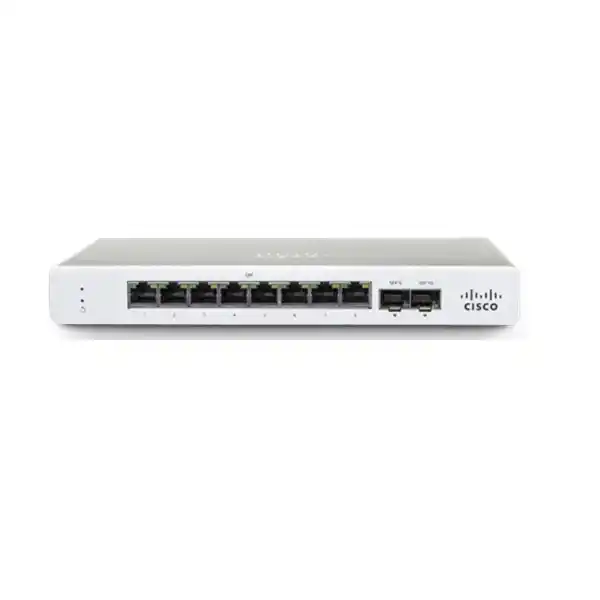
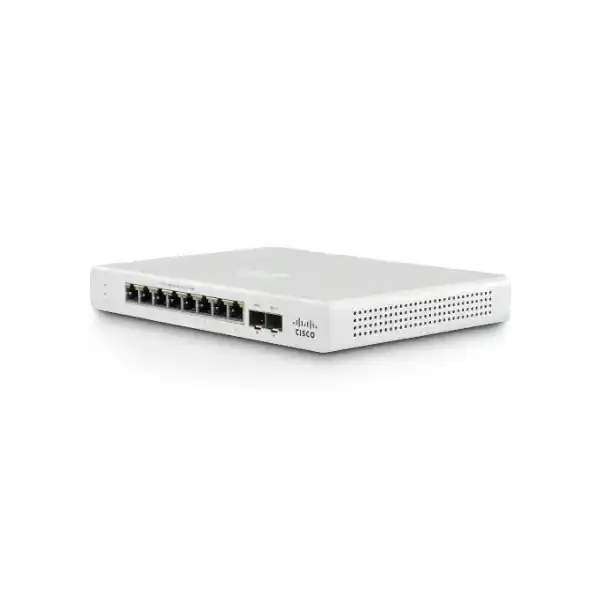
The Cisco Meraki MS130-8P is a compact cloud-managed Layer 2 access switch built for organizations that need reliable Gigabit connectivity, centralized administration and Power over Ethernet for edge devices without adding a large rack-mounted platform. For Tanzania buyers, the model is especially relevant to branch offices, retail locations, clinics, schools, professional firms, hospitality sites, surveillance networks and distributed businesses that want an eight-port access switch with a practical 120W PoE+ budget and simple remote management through the Meraki Dashboard. The hardware combines eight 10/100/1000 Mbps RJ45 access ports with two 1Gb SFP uplink interfaces. Its fanless design and small desktop or wall-mount form factor make it suitable for locations where space and acoustic noise matter.
Cisco Meraki MS130-8P Overview
Cisco positions the MS130 family as Layer 2 access switching for branch and campus environments, with several port-density and uplink options. The MS130-8P is the compact PoE+ member for deployments that do not need 24 or 48 access ports. It provides eight Gigabit Ethernet copper ports and two 1Gb SFP uplinks, a total PoE switch budget of 120W, up to 30W per powered port under IEEE 802.3at PoE+, a 20Gbps switching capacity, external power supply, fanless operation, and desktop or integrated wall-mount installation. This combination makes the model well suited to a small network edge where one switch may power wireless access points, IP phones, cameras or other compatible powered devices while carrying ordinary wired client traffic.
The operational difference between a Meraki switch and a conventional locally managed switch is the cloud-management workflow. The device is claimed into a Meraki organization, assigned to a Dashboard network, connected to an uplink and then configured centrally. Administrators can apply VLAN and port settings, monitor clients and traffic, review logs, schedule firmware updates, run remote packet captures, manage PoE on individual ports and use troubleshooting tools without being physically present at the switch. This is valuable for businesses with several branches or locations where local IT coverage is limited.
A Meraki license is part of the purchasing decision. The hardware should therefore not be evaluated only by switch price. Procurement teams should include the correct license term, supported SFP modules if fiber uplinks are required, the appropriate regional power cord, any upstream firewall or router design, and the number and power draw of PoE devices. FourTeck can use these inputs to prepare a cleaner request for quotation and reduce the chance of ordering a switch that is technically correct but incomplete for the intended deployment.
Cloud Operations
Central Dashboard administration helps IT teams standardize switch configurations, monitor ports and perform troubleshooting across distributed sites.
PoE+ Access
The 120W PoE+ budget supports practical edge deployments such as access points, voice endpoints and compatible surveillance devices while reducing separate power adapters.
Compact Format
Fanless operation and desktop or wall mounting help the MS130-8P fit reception areas, branch cabinets, counters and small wiring spaces where larger switches are impractical.
Verified Technical Specifications
| Access ports | 8 × 10/100/1000 Mbps RJ45 |
| Uplinks | 2 × 1Gb SFP |
| PoE | IEEE 802.3at PoE+, up to 30W per supported port |
| Total PoE budget | 120W |
| Switching capacity | 20Gbps |
| Management | Cisco Meraki Dashboard cloud management |
| Layer | Layer 2 access switching |
| Mounting | Desktop / integrated wall mount |
| Cooling | Fanless |
| Dimensions | 2.8 × 22.2 × 15 cm |
| Weight | 0.88 kg |
| Operating temperature | 0°C to 45°C |
Key Business Benefits
The strongest reason to choose the MS130-8P is not simply its eight ports. The model is valuable where organizations want a repeatable operational model for small sites. A network administrator can pre-plan VLAN assignments, voice and video QoS, 802.1X access policies, DHCP snooping, port schedules and PoE settings in the Meraki Dashboard. When the switch is installed and obtains internet connectivity, it can check in and receive its cloud configuration. That reduces the amount of command-line work needed onsite and helps organizations maintain more consistent configurations across branches.
Remote visibility is another advantage. Dashboard tools can show switch status, port usage and powered-device information. PoE consumption can be monitored, helping administrators understand whether the 120W budget is approaching its practical limit. Remote packet capture, cable testing and device-reboot options can shorten troubleshooting workflows when a location is far from the central IT team. These capabilities do not remove the need for good cabling, power protection or network design, but they can make day-to-day support more efficient.
The two SFP interfaces offer a useful uplink option for small locations that need fiber connectivity or an optical connection back to another network segment. Buyers should confirm the fiber type, distance, connector plan and supported Cisco Meraki transceiver before ordering. For copper-only sites, the SFP ports can remain unused. The correct design depends on the branch layout rather than on filling every interface.
Licensing, Accessories and Procurement Planning
Cisco Meraki switching uses subscription licensing, and license term selection should be included in the procurement discussion from the beginning. Cisco publishes co-termination license options for MS130 compact switches in multiple terms. Organizations should align the chosen term with their budgeting cycle, planned network lifecycle and existing Meraki organization if one already exists. A buyer replacing a non-Meraki switch should also consider whether the organization is prepared for cloud-managed operations and whether internet access for Dashboard communication is available at each site.
The MS130-8P uses an external power adapter, and the correct region-specific power cord should be confirmed. Cisco also lists supported 1Gb SFP modules including short-range multimode, long-range single-mode and copper SFP options. Accessories should be selected by the physical network design, not by assumption. A fiber uplink across a building, for example, needs the correct transceiver type at both ends and a suitable fiber path. A copper SFP may serve a different purpose. FourTeck can help turn the site requirement into a bill-of-materials discussion before quotation.
For procurement teams, it is useful to provide the number of switches, number and type of PoE devices, expected uplink method, license term preference, installation city, required accessories and any existing Meraki organization details. This makes model confirmation and quotation preparation more precise. Current price, stock, lead time and warranty terms should always be confirmed in the formal quotation rather than inferred from a web page.
Cisco Meraki MS130-8P Tanzania
For organizations in Tanzania, the Cisco Meraki MS130-8P fits a common network requirement: a small managed edge switch that can serve a limited number of users and connected devices while still giving the central IT team enterprise-style visibility. In a branch office, the eight Gigabit ports may connect a mix of computers, printers, access points, IP phones, cameras or local infrastructure. The 120W PoE+ budget can simplify installation for powered devices, but it should be calculated from the actual power requirements of each endpoint rather than divided equally by eight. A typical design exercise should list every powered device, its maximum draw, and whether any future expansion is expected.
Tanzania businesses with operations across several cities can benefit from the centralized nature of the Meraki platform. Instead of maintaining completely separate local configurations, administrators can use the Dashboard to view sites, update settings and troubleshoot remotely. That is particularly useful when technical staff are concentrated in one main office while branches are spread across Dar es Salaam, Mwanza, Arusha, Dodoma or other regions. The cloud model also makes consistency important: naming, VLAN structure, port templates, security settings and change procedures should be documented before rollout.
Power quality and physical installation deserve equal attention. Compact switches are often placed under desks, behind counters or in small cabinets, but the unit still needs ventilation, secure mounting, clean cabling and stable power. A UPS may be appropriate when the switch powers phones, access points or cameras that should remain available during short power disturbances. If fiber uplinks are planned, the correct SFP type and optical path must be reviewed. If the uplink is copper, port allocation and upstream device capacity should be checked.
Tanzania buyers searching for Cisco Meraki MS130-8P price should request a quote that includes hardware, license duration, required power accessories, SFP modules where relevant and any deployment assistance. This produces a more meaningful procurement comparison than hardware-only pricing. FourTeck can also help buyers review broader business IT requirements through the FourTeck Tanzania technology platform, while regional projects can draw on the wider FourTeck Africa network.
Cisco Meraki MS130-8P Dar es Salaam
Dar es Salaam organizations often operate from offices, retail premises, hotels, clinics, warehouses and professional-service locations where network equipment must fit into modest communication spaces. The MS130-8P can be a strong fit for a small branch or departmental edge because it delivers managed Gigabit access in a compact fanless enclosure. A reception area, finance department, POS environment, satellite office or small surveillance segment may need only a handful of wired endpoints, yet still benefit from VLAN control, 802.1X authentication, DHCP snooping and centralized monitoring. The model lets an IT team retain those management capabilities without moving immediately to a 24-port chassis.
For a Dar es Salaam deployment, procurement should start with the endpoint list. Determine how many devices need wired data only and how many need PoE. Wi-Fi access points, IP phones and some cameras may draw power from the switch, so the total requirement must stay within the available 120W budget. If a branch has seven powered endpoints today and expects more devices next year, a larger model might be a better long-term decision. Conversely, an office with three access points, two phones and a few wired users may value the MS130-8P precisely because it avoids excessive unused capacity.
Uplink planning is also important in dense urban business environments. The two SFP ports can support fiber links where there is a suitable optical path to an upstream switch or building backbone. The copper ports can be used for ordinary LAN access, while the SFP uplink separates the access edge from the backbone design. Before buying optics, confirm the fiber type, distance and supported transceiver. If the site uses only copper uplinks, there is no requirement to add SFP modules simply because slots are available.
Businesses in Dar es Salaam evaluating a Meraki deployment should also consider how the switch will interact with the firewall, WAN router and wireless network. Meraki Dashboard management becomes most valuable when the switch is treated as part of a documented network architecture rather than an isolated box. Requesting a quote with the site diagram, port plan, PoE endpoints and license term helps FourTeck discuss the correct bill of materials and identify whether the MS130-8P or another MS130 model is the stronger fit.
Cisco Meraki MS130-8P Mwanza
For Mwanza businesses, the MS130-8P can serve as a manageable edge platform for small offices, education facilities, clinics, retail branches, hospitality sites and administrative locations that need cloud visibility without a high port count. The compact format is useful where there is no dedicated server room and the switch must live in a wall-mounted cabinet, secure office space or counter-side communications area. Fanless operation reduces acoustic concerns, but the site should still provide secure placement, airflow, suitable temperature conditions and clean cable management.
A practical Mwanza deployment may use the switch to support several functional zones. For example, ports can be separated into VLANs for staff, voice, wireless infrastructure, surveillance or guest-support systems depending on the wider network design. The Meraki platform allows central administrators to configure and monitor ports remotely, helping reduce reliance on local command-line changes. This is valuable when the main network team is based elsewhere and needs visibility into branch conditions without traveling for every configuration adjustment.
PoE planning should remain conservative. The MS130-8P offers 120W total PoE+ capacity with up to 30W on a supported port, but the design should account for the actual rated requirements of access points, cameras and phones. Some endpoints may consume much less than their maximum class while others may approach it under load. Administrators can monitor consumption through the Meraki Dashboard, but initial procurement should still be based on documented endpoint requirements and reasonable headroom.
Mwanza buyers should include connectivity details when requesting pricing: whether the upstream link is copper or fiber, whether an existing Meraki organization is available, which license period is preferred, and whether any supported SFP modules or power accessories are required. If the branch will expand significantly, comparing the eight-port model with higher-density MS130 options may avoid an early replacement. FourTeck can use this planning information to support model selection and quotation preparation without assuming stock or delivery timing until the request is formally checked.
Cisco Meraki MS130-8P Arusha
Arusha has a diverse mix of tourism, hospitality, professional services, education, NGOs, retail and administrative organizations. Many of these environments have small network zones that need reliable switching for users, phones, wireless access points and cameras. The Cisco Meraki MS130-8P can fit these edge requirements when eight access ports are enough and centralized cloud management is desirable. Its compact fanless design is particularly useful in guest-facing or office areas where a noisy rack switch would be inconvenient.
Hospitality and tourism sites should plan network segmentation carefully. Guest Wi-Fi, staff systems, payment-related devices, back-office workstations and surveillance should not simply share an unmanaged flat LAN. The MS130-8P supports Layer 2 features that can participate in a segmented architecture, while the wider security policy is enforced through the rest of the network. The switch is not a replacement for a firewall, but it can provide controlled access ports and VLAN separation at the edge. Central Dashboard visibility can also help an IT team monitor a remote property or branch.
The 120W PoE+ budget is often useful for access points and cameras. In a small property office or guest-services zone, the switch may power two or three wireless access points, a handful of phones and perhaps a camera, depending on each device’s requirement. Buyers should verify the exact power draw rather than assume every PoE endpoint is equal. If a Wi-Fi refresh involves higher-power access points or multiple cameras, the budget should be recalculated before the switch model is finalized.
For Arusha procurement, it is useful to provide a simple port schedule with endpoint type, VLAN purpose and PoE need for each proposed port. Add the expected uplink method and license term. If fiber will connect buildings or floors, include the fiber specification so the correct SFP option can be discussed. This level of planning helps avoid common purchasing gaps such as missing optics, insufficient PoE headroom or a license term that does not align with the organization’s lifecycle plan.
Cisco Meraki MS130-8P Dodoma
Dodoma offices, institutions, service organizations and project teams can use the MS130-8P as a compact managed access switch where the network edge needs cloud administration and PoE without high port density. A small department or branch may need only a few wired computers, a wireless access point, IP phones and surveillance devices. The MS130-8P provides the switching and power platform for that pattern while retaining centralized configuration and remote troubleshooting capabilities through the Meraki Dashboard.
For public-sector, education or project environments, configuration consistency can matter as much as raw bandwidth. A centrally managed switch allows an organization to create a repeatable port design across sites rather than relying on ad hoc local changes. VLAN tagging, authentication, DHCP-snooping controls, QoS and port-specific PoE settings can be planned centrally. This helps technical teams document their standard and can make future branch additions easier to manage, provided licensing and internet connectivity for Dashboard communication are maintained.
Physical resilience should also be part of the Dodoma design. The compact device needs appropriate environmental conditions, secure mounting and stable power. If phones or wireless access points depend on the switch, a UPS can help preserve network continuity during brief power interruptions, but the UPS itself must be sized for the switch and connected endpoints. If the site has a communications cabinet, cable labeling and patch-panel organization will make troubleshooting easier than placing the switch among loose cables.
A complete quotation request should specify switch quantity, license duration, PoE endpoint count, uplink method, any SFP requirements, desired power accessories and deployment location. Buyers comparing the MS130-8P against larger switches should focus on current port utilization, growth headroom and PoE demand. If eight ports are likely to be exhausted quickly, a 24-port platform may be more economical over the deployment lifecycle. If the site is deliberately small, the compact model can keep the design efficient and manageable.
Cisco Meraki MS130-8P UAE
Organizations with operations spanning Tanzania and the UAE may prefer a common cloud-managed switching platform so policies, monitoring and operational procedures remain familiar across countries. The MS130-8P can serve small UAE branches, retail units, offices and service locations where eight Gigabit access ports and a 120W PoE+ budget are sufficient. Meraki Dashboard management can give a regional network team one administrative approach across distributed sites, reducing the need to maintain different switch-management methods for every branch.
The UAE deployment decision should still be site-specific. A small office with a few users, phones and access points may fit the compact model, while a larger workplace with dense Wi-Fi, many cameras or extensive wired desktops may need a higher-density switch. Fiber uplinks are common in enterprise buildings, so the two 1Gb SFP ports can be useful, but the correct transceiver and building fiber specification must be confirmed. Buyers should also verify power accessories and licensing as part of the complete bill of materials.
For cross-border procurement, standardization is often valuable. Using consistent model families can simplify documentation, spare planning, training and Dashboard templates. However, standardization should not override capacity requirements. A UAE site with higher user density or stronger uplink needs may be better served by another MS130 model. The decision should be based on port count, PoE demand, uplink bandwidth, physical space, redundancy expectations and growth.
FourTeck customers coordinating UAE and East African projects can reference the FourTeck UAE technology site for GCC-side requirements while using the Tanzania platform for local project discussion. A single requirement sheet covering all sites can improve procurement accuracy by separating what should be standardized from what needs to vary by region, power environment, license term or building infrastructure.
Cisco Meraki MS130-8P Uganda
Uganda organizations evaluating Cisco Meraki switching may use the MS130-8P for branch offices, clinics, education sites, service locations, retail operations and compact enterprise edges. The model is useful when cloud visibility and PoE are required but the site does not justify a large port count. Eight Gigabit RJ45 ports provide client access, while two 1Gb SFP interfaces support fiber or other approved SFP-based uplinks. The 120W PoE+ budget supports powered endpoints within the switch’s documented limits.
A multi-city Uganda deployment can benefit from centralized Dashboard management. IT teams can apply common standards to branches, view switch status remotely and use troubleshooting features before dispatching onsite support. This is particularly relevant when offices are spread across Kampala and regional centers. A standard template can define voice VLANs, staff access, wireless access-point ports, surveillance segments and management conventions, reducing configuration drift as the network grows.
The physical design should include suitable power protection, secure mounting and appropriate cabling. In locations where phones or Wi-Fi depend on PoE, power interruptions at the switch affect multiple downstream devices at once, so UPS planning may be important. The switch’s fanless design is advantageous for quiet offices, but it should not be enclosed in a space that exceeds the supported operating range.
Uganda buyers can coordinate regional requirements through the FourTeck Uganda technology site. When requesting an MS130-8P quote, include the number of locations, per-site switch quantity, license period, uplink type and list of powered devices. This gives the procurement discussion enough detail to confirm whether one standard configuration works across all branches or whether some sites require different port density or PoE capacity.
Cisco Meraki MS130-8P Kampala
Kampala businesses often need to support offices, retail stores, healthcare locations, professional firms and branch facilities with a mixture of wired and wireless endpoints. The MS130-8P is appropriate when the access layer is intentionally small but still needs managed-switch features. An eight-port design can power and connect wireless access points, IP phones and compatible cameras while carrying wired workstation traffic, provided the total PoE allocation and port count are carefully planned.
In a Kampala branch, central management can reduce the number of issues that require an onsite configuration visit. Administrators can review port status, adjust VLAN settings, monitor PoE and use Meraki troubleshooting tools remotely. This supports businesses whose network specialists may be based at headquarters or shared across multiple locations. The value increases when branch configurations are standardized and documented, because central teams can compare expected port roles with actual behavior.
Dense Wi-Fi or surveillance projects require special attention to power and port consumption. An eight-port switch can become constrained quickly if every endpoint is PoE and the site is expanding. Before ordering, map the current devices and expected 12- to 36-month growth. If the branch may add several access points or cameras, moving to a larger switch at the outset may be a better lifecycle choice. If the site is stable and deliberately compact, the MS130-8P can offer a clean balance of functionality and size.
Kampala procurement teams should also ask for the correct Meraki license term and any required SFP optics in the same quotation. Hardware, cloud management and accessories form one solution. A quote that excludes licensing or assumes the wrong fiber module can create delays later. Clear requirements also allow support teams to plan the claiming and Dashboard onboarding process before installation day.
Cisco Meraki MS130-8P Arua
Arua offices and regional project sites may value the MS130-8P for a different reason: it enables a centrally managed network edge even when the local site has only a small number of users. Remote branch infrastructure often benefits from equipment that can be monitored and configured from a central team. Once the switch has internet connectivity and is associated with the correct Meraki organization and network, Dashboard tools allow administrators to review and manage it without relying entirely on local technical staff.
For an Arua site, the most important design questions are usually practical. How many endpoints require Ethernet? Which devices need PoE? Is the upstream connection copper or fiber? Does the site have a suitable UPS? Is there secure mounting and organized structured cabling? How much growth is expected? The MS130-8P addresses the switching element, but the answer to those questions determines whether it is the correct model and what accessories are required.
The 120W PoE+ budget can support access points, phones and compatible cameras, but the load should be documented. If a remote site depends heavily on PoE devices, administrators should preserve headroom rather than operate continually at the edge of the budget. Meraki Dashboard monitoring can help track consumption after deployment. Port naming and labeling are also important: a centrally managed switch is easier to troubleshoot when the physical patch panel and Dashboard port descriptions use a consistent naming scheme.
When requesting a quotation for Arua, provide the endpoint schedule and preferred license term. If the organization already uses Meraki at other locations, share the intended Dashboard organization strategy with the deployment team. If this is the first Meraki installation, include time for account, organization and network preparation so the switch can be claimed and configured in an orderly manner before the final cutover.
Cisco Meraki MS130-8P Mbarara
Mbarara businesses, education organizations, healthcare facilities and branch operations can use the MS130-8P where a small access layer needs the same management discipline as a larger enterprise network. The compact switch can sit at the edge of a segmented LAN, connecting user devices and powering selected infrastructure while the Meraki Dashboard provides configuration, monitoring and troubleshooting tools. This is useful for organizations that want to extend central IT standards to regional locations.
A branch network should be designed around service continuity rather than port count alone. If the switch powers the only wireless access point or several IP phones, loss of switch power affects multiple functions. A suitable UPS and power-quality plan can therefore be important. Physical security also matters in locations where the switch is mounted outside a dedicated server room. Wall mounting can save space, but the installation should still protect cables and prevent accidental disconnection.
For organizations using fiber between floors or buildings, the MS130-8P’s two 1Gb SFP interfaces provide uplink flexibility. The optics must match the fiber plant and remote equipment. If the branch requires higher-than-Gigabit uplinks or significant future growth, another MS130 model with faster SFP+ interfaces may be more appropriate. This is why a model comparison should be performed before purchase rather than selecting solely because the MS130-8P has the desired brand and PoE feature.
Mbarara procurement requests should include site growth expectations, not only today’s device count. A small office with six active ports and no expansion may be a good fit. A branch already using all eight ports on day one has little room for a printer, additional AP or camera. FourTeck can help review the requirement so buyers can decide between compact efficiency and additional capacity before quotation.
Cisco Meraki MS130-8P Gulu
Gulu organizations that operate remote or distributed facilities can use cloud-managed switching to reduce the operational gap between headquarters and regional sites. The MS130-8P provides eight Gigabit access ports, PoE+ and two SFP uplinks in a fanless compact format. That makes it suitable for a controlled number of endpoints where a full-size access switch would be excessive but unmanaged switching would limit visibility and policy control.
Central administrators can configure the switch from the Meraki Dashboard, monitor port status and use remote troubleshooting tools. This capability is most effective when combined with disciplined network documentation. Each switch should have clear device naming, port descriptions and VLAN conventions. If a local user reports that a phone or access point has failed, the central team can compare Dashboard information with the physical port plan before deciding whether an onsite visit is required.
PoE sizing is a recurring design concern. The model’s 120W budget is substantial for a compact switch, but not unlimited. A mix of lower-power phones and access points may fit comfortably, while several higher-power devices could use the budget quickly. Buyers should record the maximum PoE requirement for each endpoint and include expansion headroom. If the load profile is uncertain, review the exact device datasheets before finalizing the switch.
For Gulu projects, quotation preparation should also address licensing and power accessories. Meraki licensing is part of operation, so the selected term should align with the organization’s budgeting and renewal process. An external power adapter is used with the MS130-8P, and the appropriate regional power cord should be included. If fiber uplinks are required, specify distance and fiber type so supported optics can be selected correctly.
Cisco Meraki MS130-8P Kenya
Kenya businesses with branch offices, retail outlets, healthcare sites, schools and professional-service locations can deploy the MS130-8P as a compact cloud-managed access switch. The design is particularly appropriate where an eight-port edge is enough but IT teams still want centralized control. Eight Gigabit copper ports handle user and device connectivity, two 1Gb SFP ports provide uplink options, and the 120W PoE+ budget can power compatible access points, phones and cameras.
Organizations operating across Kenya and Tanzania may benefit from standardizing on Meraki management even if individual switch models differ by site size. A small branch may use the MS130-8P, while a larger office uses a 24-port or 48-port MS130 model. Dashboard conventions, VLAN structures and monitoring practices can remain aligned across the organization. This gives the network team a consistent operating model without forcing every site into the same physical switch size.
A Kenya procurement plan should distinguish hardware needs from service assumptions. Confirm the number of devices, exact license term, required power accessories and any SFP optics. If internet connectivity is intermittent, remember that local switching continues to depend on the configured device behavior, while cloud visibility naturally requires connectivity to the Meraki platform. Network architects should review WAN design, firewall policy and DNS/DHCP services as part of the site architecture rather than treating the switch as a complete standalone solution.
FourTeck’s Kenya business IT site supports regional technology procurement discussions. For customers coordinating East African rollouts, a shared requirement sheet for Kenya, Tanzania and Uganda can simplify comparisons. List each site, expected ports, PoE devices, uplink type, license term and growth horizon. That allows model selection to reflect real site capacity rather than copying a single switch specification across every branch.
Cisco Meraki MS130-8P Kuwait
Kuwait organizations looking for a small managed edge switch can use the MS130-8P in branch offices, retail spaces, service counters, meeting facilities and other low-density network zones. Cloud management can be particularly useful for businesses with several sites because it provides a common administrative interface and remote troubleshooting tools. The compact fanless form also suits office environments where acoustic noise and physical space matter.
The technical fit should be checked carefully. Eight 1GbE access ports are appropriate for a small endpoint count, and the 120W PoE+ budget can support a range of compatible devices. However, a site with numerous cameras or dense wireless infrastructure may be better served by a larger PoE switch. Likewise, the 1Gb SFP uplinks are suitable for many branch designs, but organizations that need faster backbone links should consider MS130 models with 10Gb SFP+ capability.
Environmental and installation planning remain important in Kuwait. The switch should be installed within its published operating range, with secure mounting and suitable airflow. Even fanless equipment generates heat, so it should not be sealed into an inappropriate enclosure. Power protection and UPS capacity should be considered where connected phones, access points or surveillance devices are operationally important.
Regional buyers can use the FourTeck Kuwait technology site for Kuwait-side project discussions. A complete RFQ should include hardware quantity, Meraki license duration, power cord requirements, SFP needs and the intended site use. That makes the quotation more useful than a bare hardware-price comparison and helps prevent accessories or licensing from being omitted during procurement.
Cisco Meraki MS130-8P Ghana
Ghana businesses, NGOs, education organizations, healthcare facilities and branch networks may choose the MS130-8P when they need a compact managed access switch with PoE and central visibility. The model is especially appropriate for a small network zone where eight wired access ports are enough but the organization does not want to lose enterprise controls such as VLAN configuration, 802.1X authentication, DHCP snooping, QoS and remote monitoring.
A typical Ghana branch could use several ports for user devices while dedicating others to an access point, IP phone, camera or printer. Because the switch supplies up to 120W of total PoE+, the design can reduce separate local power adapters. That simplification is useful, but it concentrates device power on the switch, increasing the importance of stable switch power. UPS planning and power protection should therefore be considered for sites where PoE endpoints are business-critical.
Cloud management can improve support for geographically distributed sites. A central team can view the switch through Meraki Dashboard and apply configuration changes without traveling for every task. This is most successful when the site has a documented port map and consistent VLAN design. Remote tools are not a substitute for good cabling, but they help teams identify whether an incident relates to a switch port, PoE condition or broader connectivity issue before dispatching local support.
Buyers should decide on license term, SFP requirements and growth capacity before purchase. If the branch may add many endpoints, the eight-port model should be compared with larger MS130 variants. If the site is stable and small, the MS130-8P offers a focused footprint. Regional procurement discussions can also be coordinated through the wider FourTeck network, with the Tanzania team supporting the primary Tanzania requirement and related regional sites handled according to their local project needs.
Cisco Meraki MS130-8P Nigeria
Nigeria organizations often operate complex combinations of headquarters, branches, retail locations, clinics, schools and distributed service sites. The MS130-8P is not intended to replace large access switches in dense offices, but it can be a strong edge choice for smaller branches and controlled network zones. It provides eight Gigabit copper interfaces, two 1Gb SFP uplinks, PoE+ and cloud management in a compact fanless design.
For multi-branch companies, the operational benefit is consistency. Administrators can use Meraki Dashboard to manage switch settings, monitor port status and perform remote troubleshooting across locations. This can reduce the configuration differences that arise when every site is managed independently. Standard port profiles, VLAN names and PoE policies can be documented and applied with greater discipline, especially when branches follow similar layouts.
Power design requires careful consideration. The total 120W PoE+ budget can support several endpoints, but planners should validate the maximum power draw of access points, phones and cameras. The switch itself and powered devices should be protected by an appropriately sized UPS if business continuity requires it. Where utility conditions are challenging, correct grounding, surge protection and cabinet design are also part of a responsible network installation.
Nigeria procurement teams should avoid ordering only the hardware part number without the surrounding solution details. Confirm the Meraki license term, correct power accessories, any SFP optics and the upstream network design. Organizations with larger sites should compare higher-density MS130 models. If the requirement is a compact branch switch, the MS130-8P can provide a manageable platform with enough functionality to support standardized enterprise operations at the edge.
Cisco Meraki MS130-8P Seychelles
Seychelles organizations in hospitality, professional services, retail, government-linked operations and distributed island facilities may find a compact cloud-managed switch attractive because network support can be centralized while the hardware footprint remains small. The MS130-8P provides eight Gigabit access ports, two 1Gb SFP uplinks and a 120W PoE+ budget, making it appropriate for a branch, reception zone, office or small technology room with a controlled endpoint count.
Hospitality sites in particular may use small access switches in multiple building zones. In such cases, central Dashboard management can help administrators maintain consistent configurations and monitor each switch remotely. However, the network should be designed so guest systems, staff operations, voice, surveillance and management traffic are segmented appropriately. The switch participates in that Layer 2 architecture, while broader routing and security policies are handled by the upstream network.
The compact fanless form is useful in guest-facing or quiet spaces, but environmental protection is still essential. Equipment should be installed away from moisture, excessive heat and unsecured public access. Fiber uplinks may be appropriate between areas of a property or campus, and the MS130-8P’s SFP interfaces support approved 1Gb transceivers. Fiber type and distance must be confirmed before optics are selected.
A Seychelles RFQ should specify the exact installation context, number of PoE endpoints, desired license term, uplink type and any redundancy expectations. In island environments, procurement teams may also value spare planning and standardized configurations, but spare quantities and logistics should be decided according to the organization’s own risk plan. FourTeck can review the technical requirement and prepare a quotation discussion without making unsupported assumptions about current local stock or delivery time.
Compatibility and Integration Guidance
The MS130-8P is intended to work as part of a standards-based Ethernet network. It can connect endpoints from many vendors as long as they use compatible Ethernet and PoE standards, while Meraki-specific management remains in the Dashboard. Organizations can integrate the switch into networks with existing routers, firewalls, wireless systems and upstream switching, but interoperability should be reviewed for VLAN behavior, spanning tree, authentication, uplink design and management expectations.
Cisco documentation notes that Meraki switches support 802.1Q VLAN tagging, IPv4/IPv6 ACLs, 802.1X authentication, DHCP snooping and SNMP/syslog integration. These features allow the MS130-8P to participate in a controlled enterprise edge, but they should be configured according to the network architecture. Buyers should not assume that purchasing the switch automatically creates a secure network. Security depends on proper segmentation, authentication, firewall policy, endpoint controls and administrative practices.
For wireless deployments, compare the access point’s Ethernet speed and PoE requirement with the switch port. The MS130-8P provides 1GbE access ports; if the planned wireless platform needs multigigabit Ethernet to achieve its design target, an MS130 X-model with 2.5GbE interfaces may be more suitable. The same principle applies to uplinks: if a site requires 10Gb backbone connectivity, the 1Gb SFP uplinks on the MS130-8P may not be sufficient. Selecting the smallest model that meets the actual requirements is better than choosing solely on price.
Who Should Choose the MS130-8P?
The model is a strong candidate for organizations that need fewer than eight active access ports, want PoE+ for several edge devices, value silent fanless operation, and prefer Meraki cloud management. It is also appropriate for satellite offices where remote administration is more important than advanced local command-line workflows. Typical use cases include branch Wi-Fi, small retail stores, compact clinics, professional offices, meeting suites, POS environments, reception areas and surveillance edge segments.
The MS130-8P may not be the best choice when a site expects rapid port growth, needs more than 120W total PoE, requires multigigabit access or needs 10Gb uplinks. In those cases, another member of the MS130 family may provide better capacity. Buyers should also understand the Meraki licensing model and be comfortable with cloud-based management. A traditional locally managed switch may fit a different operational preference, while Meraki is strongest when centralized visibility and repeatable remote operations are priorities.
A good buying decision therefore begins with a small design exercise: count endpoints, calculate PoE, define uplinks, identify license duration, estimate growth, confirm physical mounting and document how the site will be administered. FourTeck can use that information to compare the MS130-8P with alternatives and prepare a clearer commercial quotation.
Quotation Checklist
Frequently Asked Questions
How many Ethernet ports does Cisco Meraki MS130-8P have?
It has eight 10/100/1000 Mbps RJ45 access ports plus two 1Gb SFP uplink interfaces.
What is the PoE budget?
The MS130-8P provides a total PoE+ budget of 120W, with supported powered ports capable of up to 30W per port under IEEE 802.3at.
Does the MS130-8P require a Meraki license?
Yes. Licensing should be included in the purchasing plan. Choose the appropriate term and confirm the correct license for the compact MS130 model.
Is the MS130-8P fanless?
Yes. Cisco lists the MS130-8P as a fanless compact switch, making it suitable for quiet office environments when installed within supported environmental conditions.
Can it power Wi-Fi access points and IP phones?
It can power compatible PoE/PoE+ devices as long as each endpoint’s requirement and the combined load remain within the switch’s PoE limits. Always check the endpoint datasheets.
Can the MS130-8P use fiber uplinks?
Yes. It includes two 1Gb SFP interfaces. The SFP module must match the intended fiber type, distance and the supported Cisco Meraki accessory list.
Is it suitable for a large office?
It is designed for compact, low-density access scenarios. A large office will usually need more ports, more PoE or faster uplinks, so larger MS130 models should be compared.
How is the switch configured?
The switch is claimed into a Cisco Meraki organization, added to a Dashboard network, connected to the local network and then configured through the Meraki Dashboard.
Decision Recap
Choose the Cisco Meraki MS130-8P when you need a compact, fanless Layer 2 access switch with eight Gigabit ports, two 1Gb SFP uplinks, 120W PoE+ and cloud-based Meraki management. It is particularly suitable for branch and edge environments where remote visibility, standardized configuration and PoE support matter more than high port density.
Before ordering, confirm the Meraki license term, calculate total PoE demand, verify the uplink design, select any required SFP modules, plan the power cord and UPS requirement, and evaluate future growth. If the branch is likely to outgrow eight ports or needs multigigabit access or 10Gb uplinks, compare other MS130 models before purchase.
Consult FourTeck for Cisco Meraki MS130-8P Tanzania
For a useful quotation, share your switch quantity, deployment city, PoE device list, uplink type and preferred license term. FourTeck can use those details to discuss model fit, required accessories and regional procurement planning. Current availability, commercial pricing, delivery timing and warranty terms should be confirmed in the formal quotation.
For wider enterprise infrastructure requirements, customers can also explore FourTeck global business technology solutions and FourTeck IT services for related planning across networking, infrastructure and managed technology requirements.


Reviews
There are no reviews yet.