
CISCO MERAKI • SECURITY • SD-WAN • CLOUD MANAGEMENT
Cisco Meraki MX450 Tanzania
Cisco Meraki MX450 is a rack-mountable enterprise security and SD-WAN appliance intended for high-capacity large-branch, campus and VPN-concentrator deployments. It brings Meraki cloud management together with high-speed interfaces, site-to-site connectivity, policy enforcement, application-aware traffic handling and security services in a platform designed for distributed networks.
For a Tanzania project, MX450 should be selected from the actual traffic profile rather than from a headline specification alone. User and device count, primary and backup WAN speeds, encrypted traffic, enabled security inspection, VPN topology, interface media, rack environment and the chosen Meraki subscription all influence the final design. FourTeck Tanzania can help turn those inputs into a quotation-ready bill of materials.
Consider MX450 when the site is a major branch, campus edge, data-center security edge or VPN hub that needs significant interface density and centralized Meraki administration.
Confirm the current Cisco datasheet and license entitlement at quotation time, because software capabilities and published performance guidance can evolve.
Cisco positions MX450 for large branch, campus or VPN concentrator use, with current MX family documentation indicating support for deployments up to 10,000 users.
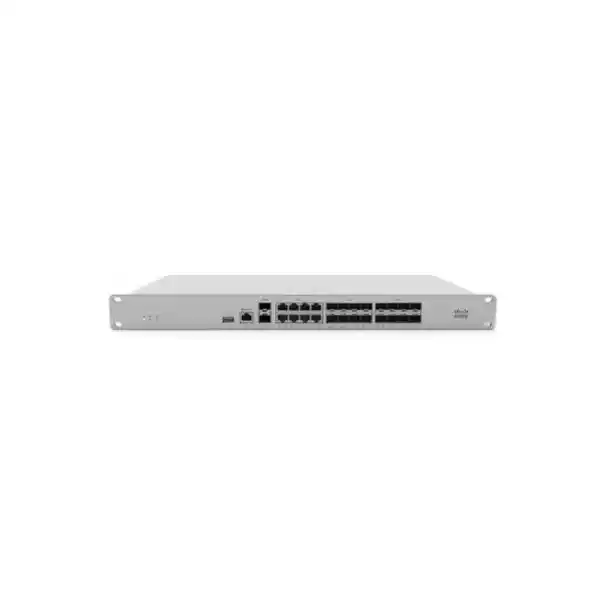
Two dedicated 10 GbE SFP+ WAN interfaces suit high-bandwidth uplinks and fiber handoffs where the carrier presentation and transceiver selection are compatible.
Eight GbE RJ45, eight GbE SFP and eight 10 GbE SFP+ fixed LAN interfaces provide flexibility for copper, fiber and high-speed aggregation links.
Meraki Dashboard centralizes configuration, monitoring, firmware workflows and multi-site visibility, reducing the need to administer every location as an isolated appliance.
What Cisco Meraki MX450 solves
Large networks rarely have only one edge-network requirement. A campus may need resilient internet access, secure separation between departments and device groups, branch VPN connectivity, traffic prioritization for voice and cloud applications, logging, remote administration and a platform that can be operated consistently across multiple sites. MX450 is designed to bring those edge functions into a cloud-managed Meraki architecture instead of forcing administrators to maintain separate management methods for every branch.
The central design advantage is operational consistency. A network team can use common policy, naming conventions, monitoring and troubleshooting methods across multiple Meraki sites. Auto VPN can simplify Meraki-to-Meraki site connectivity, while SD-WAN policy can use multiple paths more intelligently. Layer 7 firewalling and application visibility help administrators enforce traffic policies around the applications people actually use. Depending on license and software version, additional security capabilities can include intrusion prevention, malware protection and content controls.
MX450 is therefore most useful when the buyer is solving an architecture problem rather than merely replacing a router. The procurement conversation should cover WAN capacity, security inspection, VPN hub load, application flows, segmentation, failover design, licensing and the surrounding switching environment. A technically powerful appliance can still underperform operationally if the transceivers, rack cooling, IP addressing, upstream carrier handoff or downstream network design are wrong.
Verified MX450 hardware and deployment points
| Item | MX450 information | Planning relevance |
|---|---|---|
| Recommended role | Large branch, campus or VPN concentrator | Suitable for high-scale edge or hub requirements rather than a typical small office. |
| Dedicated WAN | 2 × 10 GbE SFP+ | Confirm ISP handoff type and approved optics before ordering. |
| Fixed LAN | 8 × GbE RJ45, 8 × GbE SFP, 8 × 10 GbE SFP+ | Useful for direct copper connections, fiber distribution and high-speed aggregation. |
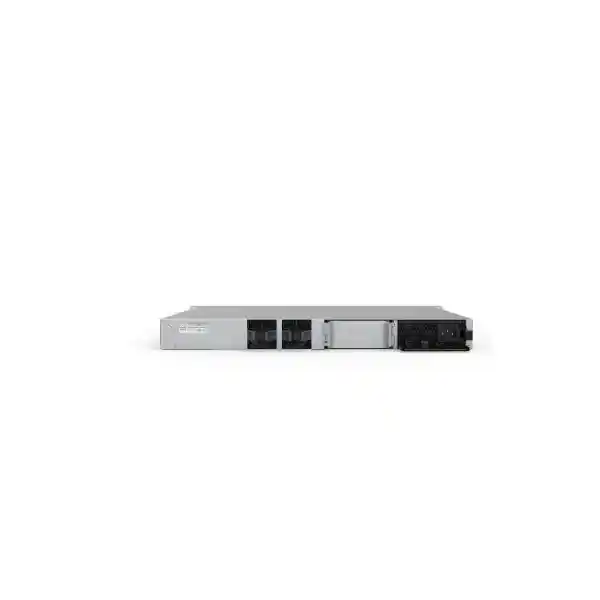
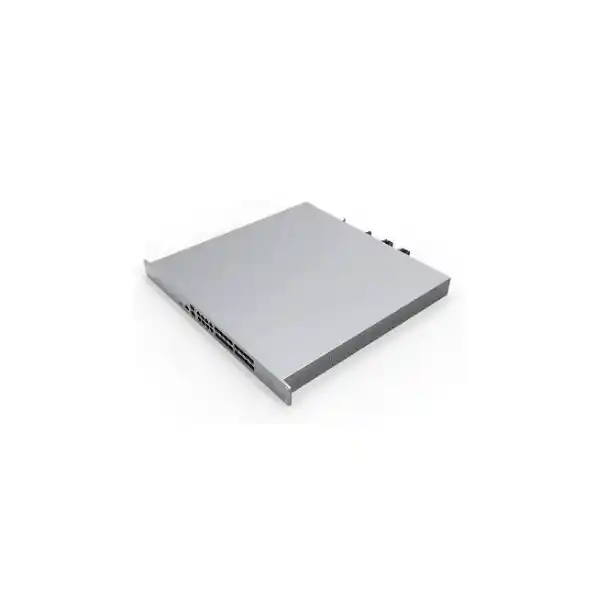
| Form factor | 1U rack mount | Reserve suitable rack depth, airflow and power infrastructure. |
| Power | Modular power supplies are documented for the platform | Evaluate power resilience, UPS sizing and spare-power strategy for critical sites. |
| Operating environment | Cisco documents a 0°C to 40°C operating range | Use a controlled rack or equipment room with unobstructed airflow. |
Performance figures have changed across Cisco overview pages and newer MX family datasheet revisions. For procurement, the safest approach is to validate the current Cisco datasheet, firmware train and license level against the intended workload at quotation time rather than relying on an older cached reseller table.
Security, SD-WAN and management capabilities
Meraki Dashboard
Dashboard provides centralized cloud administration for configuration, health visibility and operational workflows. This is valuable when IT staff manage several branches and want consistent policy without maintaining a separate on-premises management server at every location.
Firewall and segmentation
MX security policy can be used with VLAN design to separate staff, guests, servers, cameras, voice and other device groups. The objective is to permit only the traffic each group needs instead of leaving an entire site on one unrestricted network.
Auto VPN and SD-WAN
Meraki Auto VPN is built for simplified site-to-site connectivity between Meraki networks. Combined with SD-WAN policy, multiple WAN paths can be used according to application and link conditions, subject to the final topology and software capability.
Advanced security options
Cisco documents MX security services that can include intrusion detection and prevention, malware protection, content filtering and application controls. The license tier matters because not every security feature is included in every subscription option.
Cisco Meraki MX450 licensing and lifecycle planning
Meraki appliances are part of a cloud-managed subscription model, so hardware and licensing should be planned together. Cisco currently documents Enterprise, Advanced Security and Secure SD-WAN Plus license options for the MX family. Enterprise is oriented toward core firewall and SD-WAN requirements, Advanced Security adds a broader unified-threat-management feature set, and Secure SD-WAN Plus extends the package with advanced analytics and application experience functions. The appropriate tier should be matched to the business requirement rather than automatically selecting the highest or lowest option.
Procurement teams should define the required term, renewal owner and budget cycle when the appliance is first quoted. A clear license record prevents a common operational problem in distributed networks: the hardware remains installed for years while the team that purchased the subscription changes. The quotation should identify the exact appliance, license tier and term, any optics or accessories, and implementation scope as separate understandable line items.
Lifecycle planning also means checking that MX450 remains appropriate for the organization’s expected growth and Cisco’s current product guidance. A network that is already close to its target throughput or interface limits on day one leaves little room for internet upgrades, more branches or additional inspection. Conversely, buying a high-capacity platform for a small branch without a clear future role may add unnecessary cost. A sizing exercise should balance present demand, reasonable headroom and the likely architecture over the intended service life.
Deployment and integration checklist
Document carrier handoffs, public addressing, primary and backup speeds, routing expectations and whether the physical circuits are genuinely diverse.
Map uplinks, switch trunks, VLANs, routed boundaries, server connections and the required copper or fiber media.
Count Meraki sites, non-Meraki peers, cloud networks, expected encrypted traffic and any hub redundancy requirement.
List inspection, filtering, malware, IDS/IPS and segmentation requirements so licensing and realistic performance can be evaluated.
Check rack depth, side-to-side airflow guidance, UPS capacity, power feeds, cable management and optical-transceiver needs.
Define Dashboard ownership, administrator roles, MFA, change procedures, alerting, firmware policy and configuration documentation.
Related FourTeck Tanzania resources
If you are still defining the platform, start with the Cisco Meraki MX family overview, which explains how model choice changes with bandwidth, VPN scale, interfaces and lifecycle. Smaller deployments can compare the Cisco Meraki MX67, while growing branches can review the Cisco Meraki MX75 and Cisco Meraki MX85 to understand how capacity and interface requirements can move a project into a different appliance class.
For deployment planning, configuration, cabling, rack, switching and lifecycle assistance, review FourTeck Tanzania technology services. These resources help place the firewall inside a complete network design rather than treating the MX450 as an isolated purchase.
Cisco Meraki MX450 Tanzania
Organizations evaluating Cisco Meraki MX450 in Tanzania are usually planning a major edge role: a headquarters firewall, a campus gateway, a high-capacity branch, a VPN aggregation point or a standardized regional network. The first task is to translate that business role into measurable technical inputs. Count active users and devices, but also identify internet speeds, cloud traffic, inter-site traffic, VPN peers, security inspection requirements, voice and video applications, public services and the amount of growth expected during the appliance lifecycle. A site with 1,000 users running mostly local applications can create a different traffic pattern from a smaller site that backhauls several branches or processes heavy cloud and encrypted traffic.
Tanzania connectivity planning should account for the actual services available to each location. A high-capacity primary circuit can still leave the business vulnerable if there is no meaningful backup path. When dual WAN is required, confirm both logical and physical diversity. Two links purchased from different commercial providers may still share infrastructure somewhere in the path. Decide which applications must continue during failover and how much bandwidth the backup circuit can realistically provide. SD-WAN policy is most effective when the business has already ranked its applications by criticality instead of treating all traffic equally.
Procurement should include the full operating requirement: MX450 appliance, appropriate license tier and term, compatible optics, rack and power needs, implementation assumptions and the ownership model for Meraki Dashboard. A quotation is easier to evaluate when those components are separated rather than hidden in one line. FourTeck Tanzania can use the final requirement to check whether MX450 is genuinely the right class or whether another Meraki platform would achieve the same objective more economically.
Cisco Meraki MX450 Dar es Salaam
For Dar es Salaam headquarters, enterprise offices, logistics sites, hospitality groups and multi-branch organizations, MX450 can make sense where the edge appliance must handle significant WAN, security and VPN responsibilities. Many large sites no longer send only web browsing through the firewall. Microsoft 365, cloud ERP, video meetings, voice, hosted applications, backups, SaaS platforms, remote administration and branch-to-head-office traffic can all share the same perimeter. The sizing exercise should therefore use peak business behavior rather than a simple average internet-speed number.
A Dar es Salaam design should begin with a topology map. Identify carrier handoff types, public IP requirements, upstream modems or ONTs, switch uplinks, server networks, guest networks, wireless management, CCTV networks and any public-facing services. If the MX450 will connect to aggregation or core switching at 10 GbE, validate the fiber type, transceiver compatibility and patching before procurement. If copper connections will be used for some local networks, document how those ports fit into the switching design rather than assuming the firewall should directly terminate every VLAN.
Business continuity is another major factor. Dual WAN protects against some connectivity problems, but it is not the same as appliance high availability, resilient switching or protected power. Critical Dar es Salaam sites should define which failure modes matter: carrier outage, power loss, optics failure, appliance failure or upstream-switch failure. The quotation can then distinguish essential resilience from optional upgrades. This produces a clearer investment case and avoids buying redundant components that do not address the actual operational risk.
Cisco Meraki MX450 Mwanza
A Mwanza enterprise or regional hub may use MX450 where the local site carries substantial branch, cloud or security traffic and needs centralized management from another city or country. Remote manageability is especially valuable when the organization wants common configuration standards without depending on specialist engineers at every location. Meraki Dashboard can provide central visibility, while standardized VLANs, policy objects and naming make the site easier to support as part of a wider network.
The WAN design should reflect local service options and the real cost of downtime. If the Mwanza location hosts operational systems, warehouse functions, finance, voice or customer-facing applications, a backup circuit may be justified even when the primary link is generally reliable. The backup link does not need to mirror the full capacity of the primary service, but the business should identify which applications must survive and what performance is acceptable during failover. Traffic prioritization can preserve critical systems when backup bandwidth is constrained.
For quotation preparation, provide a branch diagram, current WAN speeds, planned upgrades, number of subnets, expected VPN destinations and any requirement for direct fiber connections. If the appliance will act as a hub for other Tanzanian sites, include aggregate encrypted traffic and tunnel growth rather than sizing from Mwanza local users alone. This is a common procurement mistake: the hub looks lightly loaded based on on-site headcount, while the majority of its workload is generated by remote branches. MX450 selection should account for the full role it plays in the organization.
Cisco Meraki MX450 Arusha
Arusha organizations in hospitality, tourism, education, professional services and regional operations often run mixed networks where staff systems, guest internet, payment applications, cameras, voice and cloud services coexist. MX450 can be relevant for a large property, campus or regional hub when those networks require strong separation and high-capacity WAN handling. The architecture should begin by defining trust zones rather than placing every device on one flat network. Staff, guests, servers, cameras and building systems have different access requirements and should be treated accordingly.
Hospitality and public-access environments can have variable traffic patterns. Guest streaming may consume large amounts of bandwidth while reservation systems, finance applications and staff communications need predictable service. SD-WAN and traffic policy can help protect important applications, but they cannot compensate for an undersized internet service or poorly designed wireless network. The firewall, switches, access points and WAN circuits should therefore be planned as one system. A site survey and traffic baseline can expose bottlenecks before equipment is ordered.
If Arusha is one location in a broader Meraki organization, Auto VPN can reduce the manual work of connecting sites. Addressing should still be planned carefully to avoid overlapping subnets, particularly where properties or branches were originally built independently. Document existing ranges, VLAN IDs and routing before migration. The final MX450 quotation should also identify the Meraki license, optics, rack requirements and implementation scope so the customer knows what is included and what remains dependent on local carrier or cabling work.
Cisco Meraki MX450 Dodoma
Dodoma institutions, large offices and organizations with distributed administrative sites may consider MX450 when centralized visibility and secure inter-site connectivity are priorities. A central IT team can benefit from operating the appliance through Meraki Dashboard, especially when routine policy updates, monitoring and troubleshooting should not require travel to every site. The value increases when branch standards are documented and repeated: consistent VLAN naming, IP plans, admin roles and alerting make remote support more predictable.
Availability planning should start from business impact. Identify systems that cannot tolerate extended loss of connectivity, such as cloud applications, remote desktop services, voice, databases or secure links to another office. Then determine whether the site needs a second WAN, appliance redundancy, protected power or a combination of those measures. Each protects against a different failure mode. Dual WAN alone does not solve a failed switch, power outage or rack overheating event, so resilience should be engineered as a chain.
For procurement, include the intended operating model. Who owns the Meraki organization? Which staff will have administrator privileges? Is multi-factor authentication mandatory? Who approves firmware updates and security-rule changes? These governance questions are easy to overlook when buying hardware, yet they determine how safely the cloud-managed platform operates over time. A well-designed MX450 deployment in Dodoma combines the correct appliance with clear operational responsibility, network documentation and renewal planning.
Cisco Meraki MX450 UAE
Organizations operating between Tanzania and the UAE may use MX450 as part of a common Meraki architecture for large branches, regional hubs and data-center connectivity. The benefit is not that every site must use identical hardware; it is that the sites can follow a common management, security and SD-WAN framework while choosing appliance capacity appropriate to each location. A high-bandwidth UAE office may need greater inspection and VPN performance than a smaller Tanzanian branch even when both belong to the same Dashboard organization.
Cross-region application design matters. If most workloads are SaaS, direct local internet breakout can reduce unnecessary backhaul. If internal systems are centralized, secure inter-site connectivity may remain essential. The network team should map which applications live in the UAE, Tanzania, public cloud or another data center and then decide where traffic should exit. SD-WAN policy can support that strategy, but only after routing and security boundaries are clearly defined.
Regional procurement also benefits from standardized documentation. Record appliance models, serial ownership, license terms, Dashboard administrators, VLAN standards and renewal dates across countries. This reduces confusion when staff change or different entities purchase equipment. For an MX450 quotation, confirm WAN handoff type, expected internet speeds, VPN role, security services and high-availability requirements in the UAE site rather than copying the configuration of a Tanzanian branch. Standard architecture should preserve operational consistency without ignoring site-specific capacity.
Cisco Meraki MX450 Uganda
Uganda organizations with several branches can use MX450 as a major hub, campus edge or high-capacity security appliance where centralized Meraki operations are desirable. A distributed business often wants the same security posture at every site but has different circuit speeds and device counts in each location. Meraki templates and Dashboard management can support common operational standards while allowing different MX models to be selected according to role.
When MX450 acts as a Ugandan VPN hub, sizing should include branch traffic that passes through the appliance. Count site-to-site tunnels, expected encrypted throughput, cloud connectivity and failover behavior. A hub that aggregates many remote branches may need substantially more capacity than the local headcount suggests. Decide whether branch internet traffic breaks out locally or traverses the hub, because that decision changes both bandwidth and security-processing requirements.
Procurement should also consider the surrounding infrastructure. A high-capacity firewall connected to low-speed or oversubscribed switching will not deliver the intended result. Verify core-switch interfaces, fiber uplinks, VLAN trunks, routing, rack environment and UPS capacity. If cellular is considered for backup at smaller sites, confirm the specific Meraki architecture and local carrier conditions instead of assuming MX450 itself provides integrated cellular. The quotation should clearly separate appliance, license, optics, support and implementation services.
Cisco Meraki MX450 Kampala
Kampala is a natural location for headquarters and regional hubs, which makes MX450 relevant where many branch connections or high-capacity internet services converge. The appliance should be sized for aggregate workload rather than employee count alone. If remote offices, cloud networks or data-center services terminate VPN traffic at the Kampala site, that encrypted traffic becomes part of the MX450 workload even if the users generating it are elsewhere.
A sound architecture defines whether branches use direct internet breakout or centralized backhaul. Local breakout can improve performance for SaaS services and reduce hub bandwidth, while central backhaul can simplify some inspection or access patterns. Neither approach is automatically correct. The choice depends on application location, compliance, internet quality and operational preference. Meraki SD-WAN provides tools to build the chosen design, but the business logic must be decided first.
High availability deserves a separate discussion. Two WAN links protect against some carrier issues; a redundant appliance design addresses a different failure scenario. UPS systems, core-switch redundancy, optics and rack cooling also influence end-to-end availability. Kampala procurement teams should therefore create a simple failure matrix and identify the events the business wants to survive. That makes it easier to justify each resilience component and avoids confusing redundancy with duplicated cost.
Cisco Meraki MX450 Arua
Arua deployments may more commonly use smaller branch appliances, but MX450 can still be relevant if the site is a regional hub, campus or major aggregation point. The model should not be selected merely because it is the largest option under consideration. Start by measuring the role: WAN speed, number of connected networks, branch tunnels, security services, interface requirements and growth. If those inputs are modest, a smaller Meraki platform may be more economical and simpler to operate.
Where Arua does require high-capacity infrastructure, remote management can be valuable. Dashboard visibility allows central teams to investigate uplink health, policy and network behavior without depending entirely on local technical staff. That operational advantage becomes stronger when the site follows documented naming, addressing and alerting standards. A cloud-managed appliance is not a substitute for documentation; it works best when documentation and centralized visibility reinforce one another.
Connectivity resilience should be based on the services actually available at the site. Evaluate fixed circuits, backup possibilities and the applications that must remain available during an outage. If the backup link is substantially slower, decide which traffic should be deprioritized. Procurement should also verify transceivers, rack space, power and environmental needs before shipping equipment. MX450 is a 1U rack platform and its airflow requirements should be respected in the equipment layout.
Cisco Meraki MX450 Mbarara
Mbarara organizations evaluating MX450 should frame the appliance as both a security boundary and a network-transport platform. For a large site, the perimeter must support internet access, secure branch connectivity, cloud applications, remote administration and segmentation between internal services. That mix can create very different performance demand from basic web browsing, so the design should include expected encrypted and inspected traffic rather than only the contracted ISP speed.
Application quality is another design input. Cloud ERP, voice and video can be sensitive to latency, loss and jitter even when bandwidth is technically available. An SD-WAN design can use multiple links and policy to protect important traffic, but path quality should be observed during realistic operating periods. If a backup circuit has limited capacity, application priorities should already be defined before an outage occurs.
Security segmentation can protect mixed-use sites. Staff, guests, cameras, point-of-sale devices, management systems and IoT equipment should not automatically share unrestricted access. VLANs and firewall policy can limit communication to what each group requires. When requesting a quotation, Mbarara customers should provide device classes, expected VLANs, switch topology and VPN destinations together with user count. This makes the design more precise and helps avoid discovering interface or routing constraints after installation begins.
Cisco Meraki MX450 Gulu
Gulu sites can benefit from Meraki cloud management when organizations want centralized policy and troubleshooting across geographically distributed operations. MX450 is appropriate only where the scale justifies it, such as a large campus, aggregation site or VPN hub. For a normal branch, the wider Meraki portfolio may provide a better fit. Sizing should therefore come before product confirmation, not after it.
If MX450 is selected, the site’s operational criticality should drive resilience decisions. A branch that can continue offline for a short period has different needs from a hub supporting revenue, logistics or essential services. Define maximum acceptable downtime, backup bandwidth and which applications remain active during failover. Then test the design after deployment. A backup path that exists on a diagram but has never been exercised may not behave as expected when it is actually needed.
Physical deployment also deserves attention in remote-support scenarios. Label WAN and LAN connections, document optics and patching, provide suitable UPS protection and maintain rack airflow. These details reduce troubleshooting time when a central engineer is guiding local staff. The quotation should include any required SFP or SFP+ modules and clarify whether they are Cisco-supported options. Small accessories can become project blockers when omitted from a high-capacity firewall order.
Cisco Meraki MX450 Kenya
Kenya deployments can range from high-bandwidth Nairobi offices to regional branches and data-center environments. MX450 can suit the larger end of that range where a campus, hub or significant edge requires high-speed interfaces and centralized Meraki operations. Organizations spanning Kenya and Tanzania can standardize Dashboard administration, VPN design, security objects and monitoring while still selecting different appliance capacities by site.
High-speed internet makes security-performance planning especially important. The useful question is not simply whether the appliance can forward the contracted line rate; it is whether the required security services, VPN load and application policies can operate with suitable headroom. Cisco’s published figures should be checked against the current datasheet revision and intended feature set. If internet speeds are expected to increase during the appliance lifecycle, include that forecast before finalizing the model.
Cross-border networks should also define where applications are hosted. Direct local breakout may be efficient for cloud services, while private applications may require secure site-to-site connectivity. Procurement teams should document model, license term, optics, implementation scope and Dashboard ownership for each country. A shared platform is easier to operate when administrative responsibility is clear across entities and renewal dates are tracked centrally.
Cisco Meraki MX450 Kuwait
Kuwait organizations with fast business internet services may consider MX450 for large branches, campuses or regional edge roles, but the sizing conversation should focus on inspected and encrypted traffic rather than raw access speed. Security services can change processing demand, and VPN hubs may handle traffic generated by users at many sites. A requirement document should therefore include security features, tunnel counts and application behavior in addition to the ISP contract.
Mixed networks benefit from explicit segmentation. Corporate users, guests, voice, cameras, servers and IoT devices may share the same physical infrastructure but should not necessarily share the same security policy. MX450 can participate in that architecture at the routing and policy edge, while switching and wireless equipment carry the VLAN design through the site. Coordinated implementation avoids the common problem where a firewall rule expects segmentation that does not actually exist on the LAN.
For organizations connected to Tanzania operations, common Meraki management can reduce operational variation. Even so, local carrier handoffs, application paths and compliance requirements remain site specific. The Kuwait quotation should be built from local inputs and then aligned to the group standard. This approach preserves the value of standardization without forcing a copy-and-paste design across very different network environments.
Cisco Meraki MX450 Ghana
Ghana businesses planning large distributed networks can use MX450 where a headquarters, campus or aggregation point needs Meraki security and SD-WAN at substantial scale. The platform is most compelling when the customer values centralized cloud operations across multiple sites. Policy standards, network templates and visibility can reduce configuration drift as branches are added, provided the organization maintains disciplined administrator access and change control.
Connectivity architecture should identify which traffic uses direct internet, which goes to a Ghana hub and which travels to another country or cloud environment. That map determines VPN, bandwidth and routing requirements. If the appliance is expected to serve as both a local firewall and a regional concentrator, include both workloads during sizing. A model chosen only from local employee count may underestimate the traffic created by remote sites.
Procurement should also include practical infrastructure. Confirm rack position, power feeds, cooling, fiber standards, transceivers and connection to core switching. For critical sites, consider how maintenance or appliance failure will be handled and whether redundancy is justified. License tier and subscription term should be documented alongside the hardware so lifecycle cost is visible from the start rather than discovered at renewal.
Cisco Meraki MX450 Nigeria
Nigeria organizations with large offices, campuses, retail networks or distributed branches may find MX450 appropriate where high-capacity security, SD-WAN and VPN services need to be centrally administered. The design should begin with business applications and site roles. A Lagos-style headquarters or data-center edge can place very different demands on the appliance from a smaller remote branch, even if both are managed in the same Meraki organization.
Power and connectivity resilience are important parts of the total solution. The firewall depends on stable power, working upstream carrier equipment and functioning downstream switches. UPS capacity, generator transition behavior, rack cooling and redundant links may all matter at critical sites. Redundancy should therefore be assessed end to end instead of focusing only on a second internet service.
When the Nigeria network connects to Tanzania or other regional operations, standardizing the management model can improve support. Use common naming, administrator roles, change records and renewal tracking. At the same time, retain local design flexibility for ISP handoffs, bandwidth and compliance. The quotation should clearly identify whether MX450 is acting as a local edge, VPN hub or both, because that role determines the most meaningful sizing inputs.
Cisco Meraki MX450 Seychelles
Seychelles deployments in hospitality, enterprise and multi-property operations can benefit from Meraki centralized management when sites are geographically separated and local IT staffing is limited. MX450 is relevant for larger properties, campuses or central hubs rather than automatically for every location. Smaller branches or properties may use another MX model while connecting into a common Meraki architecture.
Hospitality and guest environments require careful traffic separation. Guest wireless, staff systems, payment services, cameras, voice and building technology should be segmented according to business policy. Internet demand can be highly variable, and the design should protect operational applications during peaks. SD-WAN and traffic shaping can support this objective when multiple links are available, but bandwidth planning and wireless design remain fundamental.
For procurement, island logistics make completeness particularly important. Confirm appliance, license, correct optics, rack accessories, power requirements and any planned spares before shipment. A missing transceiver or incompatible fiber module can delay deployment disproportionately. Documentation should also capture remote-support procedures and Dashboard ownership so troubleshooting does not depend on one individual. The final design should balance central control with the practical connectivity and support conditions of each Seychelles site.
Buying guidance: is MX450 the right model?
MX450 is a high-capacity platform, so the best purchasing decision is based on role. Choose it because the site needs its scale, interfaces or hub capability—not simply because it is a premium model. A smaller Meraki appliance may be more appropriate for a branch with moderate bandwidth and few tunnels. A newer high-performance Cisco secure-router platform managed with Meraki capabilities may also be relevant for some evolving designs. The recommendation should be checked against current Cisco portfolio and lifecycle guidance at the time of quotation.
Create a sizing worksheet before requesting price. Record primary and backup WAN speeds, expected bandwidth growth, total devices, simultaneous users, VLANs, site-to-site VPN peers, client VPN requirements, security services, public services, LAN uplinks, optics and desired redundancy. Add application notes for voice, video, ERP, cloud storage and other latency- or bandwidth-sensitive systems. This information allows technical and commercial teams to compare options on the same assumptions.
Do not compare quotations only by hardware price. Check license tier and duration, transceivers, power components, implementation, migration, testing, documentation and support assumptions. A quote that appears cheaper because it omits the required subscription or optics is not truly comparable. A complete procurement record reduces surprises during deployment and simplifies future renewal.
Cisco Meraki MX450 FAQ
What is the Cisco Meraki MX450 used for?
MX450 is designed for large-branch, campus and VPN-concentrator roles where organizations need cloud-managed security, SD-WAN, high-speed interfaces and significant multi-site capacity.
Does MX450 support 10 GbE?
Yes. Cisco documents two dedicated 10 GbE SFP+ WAN interfaces and eight 10 GbE SFP+ LAN interfaces, along with GbE copper and SFP LAN ports.
Does Cisco Meraki MX450 require a license?
Meraki MX is operated under Cisco Meraki licensing. Cisco documents Enterprise, Advanced Security and Secure SD-WAN Plus options. The suitable tier depends on the required security and SD-WAN features.
Can MX450 be used as a VPN concentrator?
Yes. Cisco specifically lists VPN concentrator among the recommended MX450 use cases. The design should be sized from aggregate tunnel and encrypted-traffic requirements.
How should I size MX450 for Tanzania?
Use internet bandwidth, enabled security services, user and device count, VPN traffic, interface requirements, WAN resilience and expected growth. Validate the current Cisco datasheet and license feature set before final procurement.
What should be included in an MX450 quotation?
Include the exact appliance, Meraki license tier and term, required optics, rack and power considerations, implementation scope, migration assumptions, testing, documentation and any support requirements.
Quotation checklist
Supplying these details gives the sales and engineering team enough context to determine whether MX450 is the correct model and to build a quotation around the real deployment instead of a generic hardware request.
Decision recap
Cisco Meraki MX450 is best evaluated as a large-site security and SD-WAN platform, not as a commodity firewall. Its value comes from the combination of high-speed physical connectivity, centralized Meraki operations, VPN and SD-WAN architecture, segmentation and security services. The right purchase depends on how those capabilities map to your users, applications, branches and resilience requirements.
For a consultation, prepare your WAN speeds, site count, VPN topology, desired security functions, interface requirements and license term. FourTeck Tanzania can use that information to review the design, compare appropriate Meraki model classes and prepare a clearer procurement scope.


Reviews
There are no reviews yet.