
ENTERPRISE NETWORK SECURITY · TANZANIA
Cisco Secure Firewall 3120
Plan your firewall purchase around inspected traffic, the right connections and a manageable operating model. Request a configuration-specific proposal from FourTeck Tanzania.
Start with the traffic your organisation needs to protect
Choose the Cisco Secure Firewall 3120 in Tanzania when your enterprise needs a rack-mounted security platform and a purchasing decision based on inspected traffic, connectivity and operational requirements. This model belongs to Cisco’s midrange 3100 family. It is worth assessing for a headquarters internet edge, a branch aggregation point or a boundary protecting business applications, provided the proposed software, inspection policy and capacity assessment match your network.
Ask FourTeck Tanzania for a configuration-specific quotation covering the appliance, software choice, security subscriptions, management, accessories and any requested implementation work. Share peak traffic measurements and a simple network diagram at the start. Those inputs make the recommendation more useful than a quote based only on your internet subscription speed or total employee count.
The purchase should answer three questions: can the proposed configuration inspect the traffic you actually carry, can it connect to your existing switching and WAN equipment, and can your team operate it through changes and incidents? The guidance below helps you prepare those answers before committing to a bill of materials. Price, supply status, support entitlement and delivery arrangements need confirmation in the quotation.
Verified performance: compare the right operating mode
Cisco publishes separate results for Firewall Threat Defense and ASA. They describe different tests and capabilities, so a larger headline number should not be treated as the capacity of every security policy. Use the table as a reference for model selection, then validate the intended feature combination against representative traffic.
A quoted throughput figure is not a guaranteed application experience. Packet sizes, protocol mix, enabled inspection and software release affect performance. Your design should also consider latency during busy periods, bursts of new connections and the additional work required by encrypted traffic. Leave growth capacity based on measured demand and your expansion plans rather than applying an unexplained universal percentage.
| Cisco test or hardware attribute | Secure Firewall 3120 reference |
|---|---|
| Threat Defense: firewall + application visibility and control + IPS, 1024-byte traffic | 21 Gbps |
| Threat Defense: concurrent sessions with application visibility and control | 4 million |
| Threat Defense: new connections per second with application visibility and control | 170,000 |
| ASA: stateful inspection, ideal 1500-byte UDP test | 22 Gbps |
| ASA: stateful inspection, multiprotocol test | 17 Gbps |
Sizing the appliance for a real workload
Measure the busiest useful period
Collect a traffic baseline that includes business peaks, scheduled transfers and the applications that matter most. A daily average can hide an overloaded period when backups, video meetings and file synchronisation coincide. Record both current utilisation and projects that will add load, such as a new branch, a hosted application migration or a larger remote workforce.
Separate internet access from traffic between internal networks. If both cross the proposed firewall, both belong in the assessment. Identify where application traffic enters and leaves, and whether return traffic follows the same security boundary. This exposes topology issues before a high-capacity appliance is selected to solve a routing problem.
Use acceptance criteria that your team can test
Define acceptable application response times, loss behaviour and operational visibility before commissioning. A meaningful test includes normal work, a busy period and the intended security policy. Record the software release and enabled functions alongside the result so later changes can be compared fairly.
For example, a business moving a large data transfer through the firewall should identify its busiest transfer window and required completion time. That requirement is more actionable than asking for the highest advertised throughput. Have the proposed configuration reviewed if the assessment leaves little room for a foreseeable increase in inspected traffic.
Choose Threat Defense or ASA before ordering
The platform can run either Cisco Firewall Threat Defense or ASA software. Make that an explicit design decision. The two options have different policy and management approaches; an existing ASA configuration should not be assumed to become an equivalent Threat Defense deployment simply because the replacement hardware carries the same vendor name.
For a Threat Defense project, map the requirement for application-aware access control and licensed inspection functions to the proposed configuration. For an ASA project, document the existing firewall and VPN requirements and verify their support in the selected release. Keep software selection, licence selection and management selection together in the proposal so the hardware quotation does not leave the operating model unresolved.
A useful replacement workshop begins with the rules that protect live applications. Identify which rules remain necessary, which are temporary exceptions and which no longer have an owner. Translate the intended business access into the target policy model, then test it. Carrying every historical exception into a new appliance can preserve the weaknesses and troubleshooting burden of the old deployment.
If your team is changing management tools as well as hardware, include time for administrator familiarisation and handover. The ability to review events, identify a matching rule and recover from a failed change has practical value throughout the appliance’s service life.
Interfaces, optics and rack connectivity
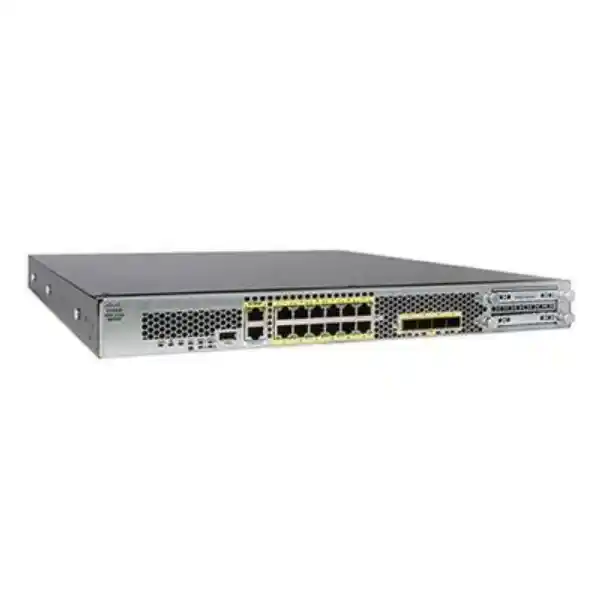
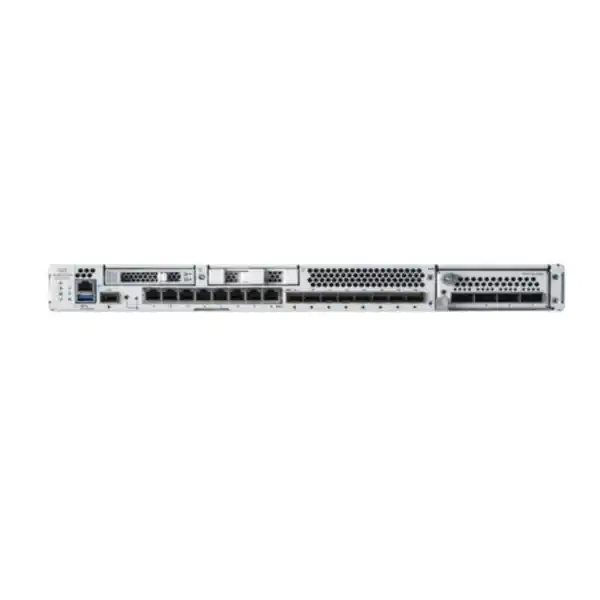
The 3120 provides eight 10/100/1000BASE-T RJ-45 data ports and eight fixed 1/10 Gigabit SFP/SFP+ data ports. Cisco documents an optional eight-port 1/10 Gigabit SFP+ network module. A separate management interface supports administration. Confirm module, transceiver and software compatibility for the exact order; the features available across the wider 3100 family do not all apply to this model.
Create a port schedule showing each required connection, its speed, medium, peer device and role. Include outside links, internal switching, application segments and any links reserved for resilience. This helps prevent a design that appears to have enough total interfaces but lacks the right connection type where it is needed.
Optical connectivity needs a complete path assessment. Match the supported transceiver to the fibre type, distance and connector arrangement, and check the peer switch at the same time. State whether optics, patch leads and network modules are included in the quotation. A chassis line item alone does not describe every component needed to bring a fibre connection into service.
For capacity planning, distinguish the speed of one interface from the appliance’s overall processing ability. Several fast links can converge on the same inspection resources. Review the traffic paths and expected simultaneous use rather than assuming that adding ports creates an equal increase in usable security throughput.
Translate the security requirement into subscriptions
Cisco’s Threat Defense getting-started documentation lists Essentials as required and identifies additional licences for IPS, Malware Defense, URL Filtering and Cisco Secure Client, among other capabilities. Do not assume that every function described for the platform is included with an appliance purchase. Ask for the selected entitlements and subscription terms to be stated individually.
Cisco’s ordering guidance distinguishes Threat/IPS, malware and URL-filtering subscriptions, and identifies Threat/IPS as a prerequisite for malware or URL-filtering features. Review the current order with the intended software and management option. Bundle names and commercial terms should be verified against the actual proposal rather than inferred from a generic product description.
Build a short requirements matrix. For each desired control, record the business purpose, the entitlement required, the term being purchased and who will own renewal. This makes it easier to distinguish essential protection from optional additions and reduces ambiguity when two quotations use different bundle descriptions.
Include management licensing, remote-access requirements and support coverage in the cost review where applicable. A lower initial hardware figure may leave separate recurring or operational costs unresolved. Compare complete configurations over your planned ownership period, using confirmed commercial figures and an agreed scope rather than assumed savings.
Before acceptance, ask the implementation team to demonstrate that the purchased entitlements are assigned correctly and that the intended functions can be used. Keep account administration and renewal responsibility documented so future changes do not depend on one person’s access or recollection.
Encrypted traffic needs its own inspection plan
Encryption protects business communications, but deciding which traffic to decrypt requires a separate policy discussion. Identify what visibility your organisation needs, which managed devices can participate and which applications require exceptions. Record the purpose and owner of each exception so the policy remains understandable when applications change.
Cisco’s decryption guidance explains that certificate re-signing requires client trust and that certificate-pinned applications can reject substituted certificates. Test browser access and native applications separately. A successful browser test does not prove that every application using the same service will work with the same decryption policy.
Introduce decryption through a controlled pilot with a representative user group. Measure application response, connection failures and appliance utilisation before expanding the scope. Retain a clear way to isolate an affected application while the issue is investigated, and make the help desk aware of the changes that users may notice.
Treat certificate management as an ongoing responsibility. Assign ownership for certificate distribution, validity checks and application exceptions. Review the capacity assessment when the proportion of decrypted traffic changes substantially. Encrypted inspection should have a defined operational owner and a measurable purpose instead of being enabled broadly with no plan to maintain it.
Keep management practical for the people operating it
Cisco provides Management Center and Device Manager workflows for supported Threat Defense deployments. Choose the management approach before commissioning and verify the required features for the selected release. A central policy environment may suit multiple firewalls, while a supported local-management workflow may fit a different operational scope.
Prepare an administration model that reflects your organisation. Decide who may view events, who may change policy and who approves changes affecting critical applications. Keep access recovery and account handover documented. An appliance becomes harder to support when shared accounts or undocumented dependencies prevent the team from identifying who changed a rule.
Separate management reachability from ordinary user access wherever your architecture permits. Define the paths administrators will use during normal operation and during an outage. Test those paths before cutover, including the access needed when the primary internet connection or a key switch is unavailable.
Set useful reporting expectations early. Ask which events the operations team needs daily, which conditions require an alert and who investigates them. A large volume of unreviewed data adds little value. Use the commissioning stage to agree a practical view of health, denied business traffic and changes that need follow-up.
High availability and clustering solve different requirements
For a Threat Defense active/standby design, Cisco requires matching devices and compatible hardware, software and licensing conditions. One device normally forwards traffic while its peer is available for failover. Plan the failover and state connections, matching interfaces and the surrounding network as part of the design.
State the business recovery objective in concrete terms. Which applications need to recover, what interruption is acceptable and how will success be observed? Test the agreed failure cases with application owners. A redundant appliance arrangement does not by itself protect against a shared upstream switch, a single power path or an application hosted elsewhere.
Clustering groups multiple supported firewalls into one logical system and introduces requirements for control links and surrounding traffic distribution. Feature support and scale depend on software and deployment mode. Treat clustering as a separate architecture decision, with a review of the functions you intend to use.
Do not assume that buying a second chassis automatically doubles the capacity available to an active/standby deployment. Start with whether the objective is continuity, greater aggregate processing capacity or both. That distinction affects equipment quantity, links, testing and operating procedures.
Ask for a written failure test plan before installation. It should identify each event to simulate, the expected traffic path, the observations to record and the steps to restore the normal arrangement. Keep the completed results with the network documentation for later maintenance.
Where this model may fit in a Tanzania enterprise
Headquarters internet edge
Assess the platform where staff and business systems share a security boundary to internet services. The useful inputs are concurrent demand, required inspection and the network’s recovery objectives. Include hosted applications and scheduled transfers in the review, even when users do not describe them as part of ordinary browsing.
A hub connecting multiple business sites
For branch aggregation, list every site, address range and application path. Identify overlapping networks before designing connectivity. Include the headquarters services branches rely on and the capacity needed when several sites transfer data together. Confirm the proposed VPN design and licences separately instead of assuming that a firewall performance figure defines the complete WAN solution.
A boundary around business applications
A server or application segment may need explicit control over which users and systems can reach it. Begin with the application dependencies and approved access paths. If your design needs higher-speed connectivity or different scale, compare a suitable alternative before fixing the specification around this chassis.
A planned replacement for an ageing firewall
Use the refresh to validate configuration ownership, management access and support requirements. Include a rollback arrangement and a controlled change window. The product can be evaluated for these scenarios, but final suitability follows the traffic assessment and supported feature review for the exact deployment.
Power, cooling and physical readiness
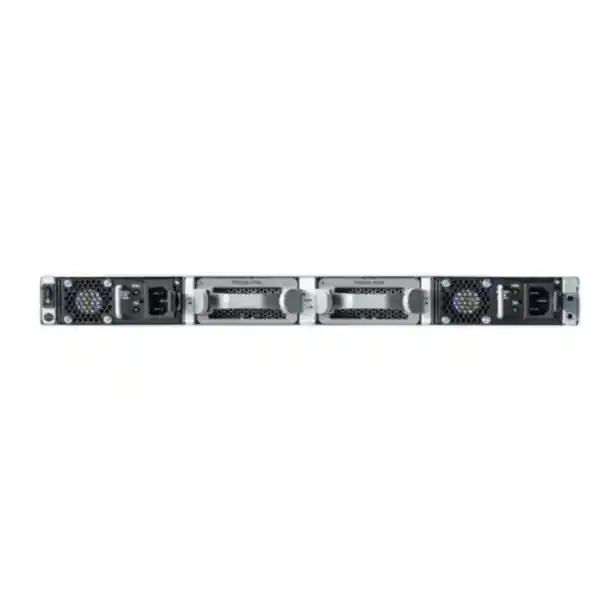
Cisco specifies a 1RU chassis with dimensions of approximately 4.4 × 43.3 × 50.8 cm and front-to-rear airflow. Standard operating temperature is 0–40°C. AC input is 100–240 V at 50–60 Hz. Confirm the ordered power-supply arrangement; a second power supply is an option for this model, not a presumed inclusion.
Check usable rack depth with cables fitted and reserve access for installation and maintenance. Verify the mounting hardware included in the order and the support needed for the chosen rack. A rack-unit calculation alone does not establish that the appliance and its cables will fit comfortably.
Assess the whole power path: outlets, distribution, UPS capacity and any separate feeds requested for resilience. Have electrical suitability checked for the installation. State the required power cords and plug arrangements in the order rather than assuming that a regional accessory is included.
Cooling should remain adequate during normal occupancy and planned maintenance. Keep airflow paths clear and consider how the surrounding equipment affects intake conditions. Record the physical installation details in the handover so a later rack change does not inadvertently obstruct access or airflow.
These are site-readiness checks for a business deployment in Tanzania; they are not claims about a particular building or electricity service. Confirm local installation conditions and any site-specific requirements before scheduling the cutover.
A migration plan that protects business access
1. Inventory the current boundary
Collect the running configuration, interface assignments, address objects, routes, translations and application dependencies through your approved administrative process. Identify externally reachable services and any remote sites or users that depend on the existing firewall. Ask application owners to confirm the flows that must work after the change.
2. Build and review the target policy
Convert the approved access requirement into the selected software’s policy structure. Give rules a purpose and an owner, and review temporary exceptions before transferring them. Confirm how management, name resolution, time synchronisation and event delivery will work in the new topology.
3. Test before moving production traffic
Prepare representative tests for the applications and connectivity in scope. Check allowed traffic and deliberately denied traffic. Validate the intended inspection functions with an approved, controlled test method. Record results and unresolved issues so the cutover decision is based on evidence.
4. Cut over with a usable rollback
Define who is responsible for the change, who can approve rollback and how the prior path will be restored if acceptance fails. Agree the time available for troubleshooting before that decision. Keep the old configuration and physical cabling plan available until the new arrangement is accepted.
5. Review after normal business resumes
Observe a full business cycle after deployment, including scheduled jobs that may not run during the change window. Resolve application-specific issues through documented changes. Update the diagram, port schedule and operating notes to match what was actually installed.
Turn the quotation into a complete bill of materials
Request a proposal that separates the appliance from subscriptions, management, optics, network modules, power options and services. For a resilient design, identify the components required for each unit and the additional connections between them. Ask the supplier to mark anything the customer must provide.
The quote should identify the exact Cisco ordering configuration and what is included in the box or bundle. The model name describes the platform, while an orderable configuration describes the commercial package. Do not substitute a manufacturer identifier for a seller’s listing SKU; ask for the confirmed identifier on the actual quote.
If implementation is requested, define its deliverables. Examples include a reviewed design, approved configuration, agreed testing, a diagram and administrator handover. State which changes to adjacent switches, WAN equipment or applications are included. This makes responsibilities clear when work spans several suppliers or internal teams.
Ask for the subscription start arrangements, renewal responsibilities and applicable support terms in writing. Confirm supply status, lead time, local charges and any price validity period directly with the supplier. The product description does not establish a live TZS price, local stock position or delivery commitment.
For the technical comparison, keep a common requirements sheet across all proposals. Compare the same inspection scope, interface needs, resilience objective and management responsibility. This produces a more useful purchasing decision than comparing chassis prices while essential components differ between offers.
Compare capacity and connectivity before selecting an alternative
Within a firewall family, a higher model number does not automatically mean a better fit for every network. Start with the functions and physical connections the organisation needs, then check the capacity under those conditions. An appliance with unused headline capacity can still be an awkward choice if the operational model does not suit your team.
Cisco positions the 3110 and 3120 for midsize enterprises and the larger 3130 and 3140 for higher-performance enterprise requirements. Use that family positioning as a starting point. A detailed recommendation should still explain why the selected platform meets your own traffic, growth and availability objectives.
Request an alternative if the 3120 assessment has unresolved interface, inspection or scaling constraints. Ask the proposer to show which requirement drives the change. Conversely, if a smaller configuration meets the measured workload and planned growth, review the overall cost and operating implications rather than purchasing excess hardware without a defined reason.
For broader architecture planning, see the Tanzania site’s Cisco data center firewall solutions. For a deployment scope covering policy, NAT, VPN and handover, review Cisco firewall installation and configuration. Confirm the services and responsibilities needed for your own project in the quotation.
Operate the firewall beyond the installation date
Assign an owner for routine health review and configuration changes. Keep a record of the installed release, enabled subscriptions, critical interfaces and application exceptions. Review changes against a named business requirement so the policy remains understandable as staff and applications change.
Plan software maintenance around compatibility and the organisation’s change process. Check Cisco guidance for the installed release, relevant advisories and the management environment before making an upgrade decision. Test the selected change and retain recovery information appropriate to the deployment.
Define where configuration backups and operational documents are held and who can access them during an incident. Include the information needed to identify the device and obtain support through the purchased entitlement. Protect credentials and confidential configuration details through your organisation’s approved handling process.
Review capacity after significant changes such as additional branches, broader inspection, application migrations or a larger remote workforce. Compare similar busy periods and record what changed. A periodic review helps the team explain emerging constraints before they become a recurring business disruption.
Frequently asked buying questions
Is this the same product as the whole Secure Firewall 3100 Series?
No. The 3120 is one model within that family. Family documentation can describe interfaces, modules and scaling options that vary between models or software releases. Confirm every important requirement against the 3120 and the configuration being ordered. When reviewing a quotation, ask the supplier to identify the exact appliance, software image and accessories rather than relying on a general series brochure. This is particularly useful where a design includes optional connectivity or an expansion plan.
Should I select it using the number of employees?
Employee count is useful background, but it is not a complete sizing method. Two organisations with the same headcount can have very different application traffic, inspection requirements and connection patterns. Provide peak traffic measurements, branch connectivity, remote-access demand and planned growth. Include automated systems and scheduled transfers that continue outside office hours. The recommendation should explain how the proposed configuration meets those requirements and what assumptions still need to be tested before deployment.
Does one throughput figure cover IPS, VPN and decryption together?
No. Published performance measurements describe particular test conditions. They should not be combined into a promise that every listed function will deliver its separate benchmark simultaneously. Ask for sizing against your intended policy and traffic mix, including encrypted sessions and VPN use where relevant. If capacity is business-critical, agree a representative validation method and acceptance criteria before purchase. Record which features are enabled during the assessment so the result remains useful when the configuration changes.
Are security subscriptions and management included?
That depends on the exact commercial package. Have the quotation list the software, security entitlements, management option, subscription term and any separate support coverage. Ask for unclear bundle descriptions to be expanded into the functions you require. Keep renewal ownership and relevant account administration documented. This lets the purchasing team compare complete proposals and helps the technical team verify the purchased configuration during handover, rather than discovering after installation that an intended function was outside the agreed scope.
Can I reuse existing fibre transceivers and cables?
Possibly, but reuse needs a compatibility check. Record the existing optic identifiers, fibre type, connector, distance and peer equipment, then have those details reviewed against Cisco’s support information for the proposed port, module and software. Do the same for any direct-attach cable under consideration. Include the result in the port schedule and state which items will be reused. This avoids making the cutover depend on a component whose physical fit has been mistaken for confirmed compatibility.
Will an additional power supply provide full network resilience?
An additional supply addresses only part of the power arrangement. The design should also consider the feeds supplying it, power distribution, UPS coverage and the dependencies around the firewall. A shared switch or WAN connection can remain a single point of failure even when appliance power is redundant. Define the failures the business needs to withstand and assess each path. Ask for those cases to be tested where practical, with the results recorded against the agreed recovery objective.
Can a high-availability pair use any two Cisco firewalls?
A pair should be designed around Cisco’s matching platform and configuration requirements for the selected software. Do not assume that two different models can be paired simply because they belong to the same family. Ask for both units and their interface arrangements to be identified in the bill of materials. Include failover connections, configuration checks and an application recovery test in the implementation scope. A complete design explains how the surrounding network will behave when the active unit changes.
Will encrypted inspection work with every business application?
Do not assume universal compatibility. The pilot should cover managed endpoints, browser sessions, native applications and business-critical services. Review certificate trust and application exceptions before expanding the policy. Ask application owners to confirm expected behaviour and provide a way for the help desk to recognise a decryption-related incident. Keep exceptions specific and reviewable. Successful inspection is a maintained policy outcome, so the organisation needs ownership for certificates, changes and the applications that cannot follow the standard approach.
Can an existing ASA installation be moved without reviewing its rules?
A replacement project should review the intended access and dependencies even when the organisation keeps the same software approach. Identify public services, address translation, remote access and inter-site connections before planning the move. If the target software changes, account for the differences in policy and management workflows. Use approved application tests and a rollback arrangement. The objective is to preserve required business access while producing a configuration that the operating team can understand, maintain and troubleshoot.
What should be tested before the product is accepted?
Agree tests covering required applications, intended restrictions, management access, event delivery and the purchased inspection functions. Include WAN or appliance failure cases where resilience is in scope. Run scheduled business processes that may not be active during a short installation window, or arrange their validation after cutover. Each test should have an owner, an expected result and a recorded outcome. Resolve exceptions explicitly so acceptance does not depend on the vague observation that ordinary internet browsing appears to work.
Is the firewall enough to secure the whole organisation?
A firewall is one control at a defined network boundary. Your wider design should consider endpoint protection, administrator access, identity controls, backups, application security and incident response according to the organisation’s requirements. Document which traffic the appliance can actually see and which paths sit elsewhere. This helps the team make realistic claims about the deployment and prioritise other work. The most useful proposal explains the boundary being protected and the responsibilities that remain with surrounding systems and processes.
What information is needed for a Tanzania quotation?
Provide the required quantity, software preference if known, a network diagram, traffic baseline, interface requirements and resilience objective. Add the intended inspection functions, management approach, branch connections and remote-access requirement. Identify existing equipment you hope to reuse and whether installation or migration assistance is requested. Avoid sending passwords, private keys or confidential configuration exports through a public enquiry. Ask FourTeck Tanzania to confirm the appropriate channel for sensitive design information and to return a clearly itemised proposal.
Request a Cisco 3120 configuration and quotation
Share your traffic baseline, interface schedule, required inspection functions and availability objective with FourTeck Tanzania. Ask for an itemised proposal covering the hardware, selected software, subscriptions, management, accessories and any implementation work.
Before approving the order, confirm the exact configuration, commercial terms and acceptance plan. If important sizing inputs are still missing, identify them in the proposal and resolve them before treating the design as final. This gives procurement and IT a shared basis for comparing the offer and preparing the installation.
Next step: request a configuration-specific quotation from FourTeck Tanzania.


Reviews
There are no reviews yet.