
CISCO 4200 SERIES · TANZANIA PRODUCT GUIDE
Cisco Secure Firewall 4225 for Tanzania data centres
Evaluate a data centre firewall around the security policy it must enforce, the applications it must keep available and the team that will operate it. The 4225 brings Cisco’s enterprise firewall platform into a compact modular appliance. Request a configuration-led quotation from FourTeck Tanzania covering the software, management, subscriptions, connectivity and implementation scope your network requires.
Decide whether this appliance fits your network
The Cisco Secure Firewall 4225 is a candidate for organisations evaluating a substantial data centre security boundary, a consolidated enterprise internet edge, or protection between important server networks. Cisco positions this model for data centres within its 4200 Series. The useful purchasing question is whether the complete design can enforce your required security policy at peak load while remaining practical for your operations team.
Start with a short statement of the business requirement. Identify the applications that must remain available, the networks that need separation, the traffic that requires inspection, and the consequences of losing connectivity. A requirement such as protecting public applications while separating database access gives the design a clearer purpose than simply requesting a large firewall.
For a Tanzania deployment, the quotation should connect the selected appliance to your actual switching infrastructure, internet circuits, power arrangement, management environment and support expectations. These items vary by site; the country name alone does not establish technical suitability. Request a configuration review before treating an appliance price as a complete project budget.
A smaller deployment with modest traffic and straightforward administration should compare other options before committing to this class of equipment. A heavily consolidated environment should examine remaining capacity during failure as carefully as normal operating capacity. Choose a model around measured needs and an agreed growth allowance, rather than the largest headline number.
Published performance: understand the test before using the number
Cisco’s 4200 Series datasheet lists the following figures for the 4225. They describe different tests and software environments, so they should remain separate in a sizing discussion.
| Metric and software | Published figure | Test context |
|---|---|---|
| Threat Defense: FW + AVC + IPS | 80 Gbps | 1024-byte traffic benchmark |
| Threat Defense: TLS hardware decryption | 30 Gbps | 50% TLS 1.2; AES256-SHA; RSA 2048-bit keys |
| Threat Defense: IPsec VPN | 80 Gbps | 1024-byte TCP with Fastpath |
| Threat Defense: concurrent sessions with AVC | 30 million | Published maximum |
| Threat Defense: new connections with AVC | 600,000 per second | Published maximum |
| ASA: stateful firewall | 95 Gbps | 1500-byte UDP, ideal test conditions |
| ASA: multiprotocol firewall | 85 Gbps | Separate multiprotocol traffic test |
The figures are useful for initial comparison, but they are not a promise that every feature can run simultaneously at its individual maximum. Packet sizes, application mix, enabled services and software releases affect results. Ask for sizing against your intended policy and representative traffic, including encrypted applications and connection bursts.
Two sites carrying the same average bandwidth can place different demands on a firewall. One might transfer a few large files, while another handles many short sessions from users, applications and automated services. Your assessment should therefore record traffic peaks, session behaviour and the direction of important flows alongside total throughput.
Agree on the acceptance criteria before the purchase. Specify which security functions will be enabled during testing, which applications will be used, how latency will be observed, and what constitutes an acceptable result. A repeatable test is more informative than a demonstration conducted with a simpler policy than the one you intend to operate.
Choose Threat Defense or ASA as an architectural decision
The platform supports Cisco Secure Firewall Threat Defense and Cisco Secure ASA software. Treat the software choice as a decision about policy, operations and migration requirements. The appliance name does not by itself identify the software image, subscription bundle or management arrangement that will appear in a quotation.
Threat Defense should be evaluated when the requirement includes an integrated next-generation security policy and the associated inspection subscriptions. An ASA proposal should be assessed against the precise ASA functions, operational practices and compatibility requirements of the project. Do not assume that a policy or feature described for one environment applies identically to the other.
Ask the supplier to identify the image and the intended software release in the bill of materials or implementation scope. Request an explanation of how the selected management approach, existing administrators and change process will work together. This prevents a procurement comparison from treating differently configured offers as equivalent.
Where an older firewall is being replaced, separate the requirement to preserve business connectivity from the desire to redesign security policy. A staged project can establish the necessary forwarding behaviour first and introduce additional controls through an agreed sequence. The migration plan should make that sequence explicit, with application owners available to verify each material change.
Interfaces and optics: purchase a complete connection plan
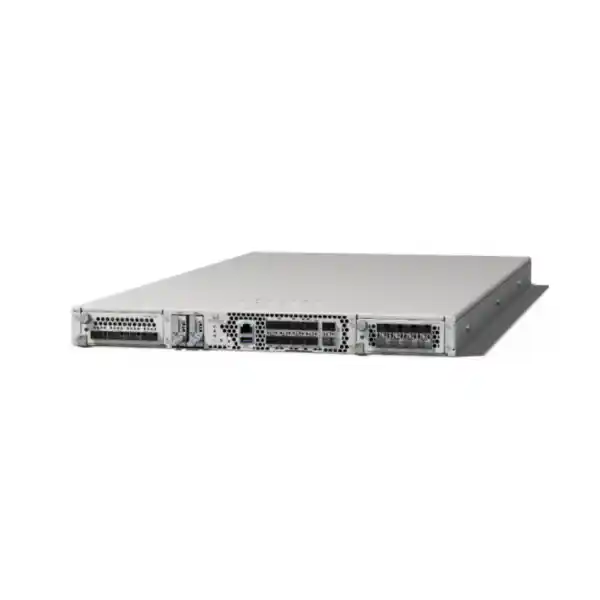
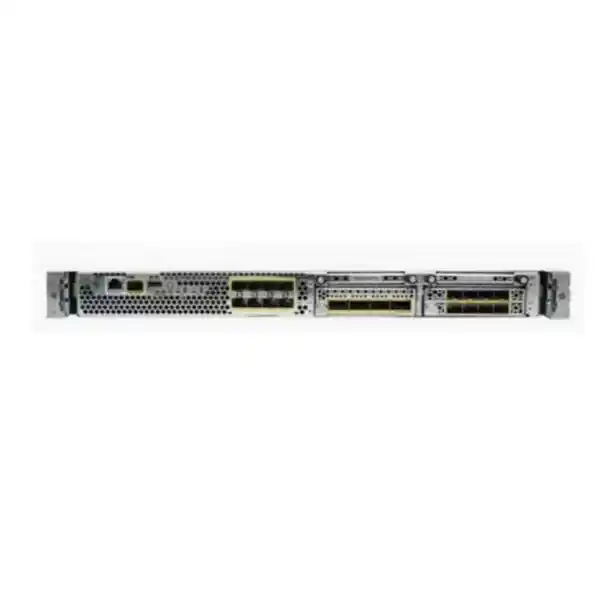
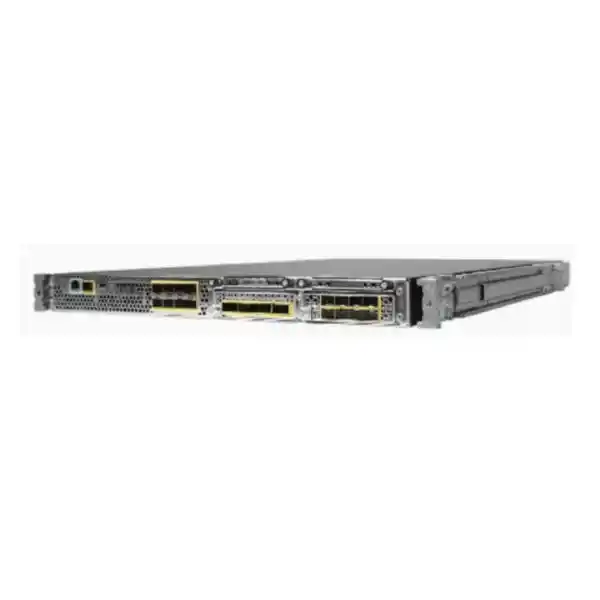
Cisco’s hardware guide identifies eight fixed 1/10/25-Gbps SFP28 network ports, two 1/10/25-Gbps SFP28 management ports and two network-module slots. These physical resources provide a starting point for the design; the transceivers, modules, cables and supported operating combinations must be selected for the exact deployment.
Create a port schedule before requesting the final quotation. For each connection, record its purpose, peer device, required speed, media type, fibre characteristics, connector and expected cable distance. Include the management connections and any interfaces reserved for resilience. This makes missing accessories visible before equipment reaches the site.
Check both ends of every optical connection. A matching speed label is only one part of compatibility. The proposed optic must suit the firewall port, the switch port, the available fibre and the selected software. Ask for explicit confirmation of supported components rather than relying on an assumption that an existing transceiver can be reused.
Keep interface capacity separate from inspection capacity. An uplink can negotiate at a particular line rate without establishing that every workload will be inspected at that rate. Likewise, unused module slots do not remove a processing limit. The connection plan and the performance assessment should support the same traffic design.
Label spare capacity with a purpose. Reserve ports for a documented expansion or recovery need, and identify whether that expansion would also require new subscriptions, cabling or switches. A clear expansion plan is easier to budget than an unspecified promise of future flexibility.
Size the policy around actual application behaviour
Build a traffic inventory that distinguishes user internet access, public services, internal application flows, backup transfers and inter-site communication. Record when each workload is busiest and whether workloads overlap. A backup window that now runs outside office hours may become a daytime load as the organisation expands.
For each important application, ask who connects, which systems respond, what dependencies exist and whether the traffic crosses the proposed firewall boundary. Include DNS, identity services, time synchronisation and monitoring. An application can appear healthy in a basic connectivity test while failing when one of these dependencies is restricted.
Use observations from an appropriate operating period rather than a single quiet snapshot. If the existing network cannot provide reliable measurements, state that uncertainty in the sizing exercise and agree how to reduce it. A short assessment or pilot may be more valuable than buying additional capacity without understanding the workload.
Define a growth assumption that the business can explain. Examples include additional branches, more concurrent users, an application move or increased replication traffic. Translate that assumption into testable demands rather than adding an arbitrary percentage to every specification.
Finally, consider the operational policy you intend to enforce after deployment. A design sized only for today’s minimal controls may leave little room for the inspection that justified the purchase. Document the target controls and evaluate them together so that the quoted configuration reflects the intended security outcome.
Plan encrypted inspection deliberately
Encrypted traffic needs a separate discussion because decryption adds processing work and affects how applications are handled. Cisco’s published decryption benchmark is an initial reference; the practical outcome depends on the workload and inspection applied afterwards. It should not be interpreted as the capacity of every possible encrypted-traffic policy.
Begin with a decision about which traffic should be decrypted and why. Identify business systems, managed endpoints and exceptional applications. Involve the organisation’s security and governance owners in defining permitted inspection and exclusions. This is a policy decision that should be resolved before engineers are asked to implement broad rules.
Plan how certificates will be trusted on managed devices, who will maintain the relevant certificate lifecycle, and how an application problem will be investigated. Some applications need special handling. Include those applications in a pilot rather than discovering an incompatibility during the production cutover.
Measure the pilot with realistic session behaviour and the intended downstream inspection. Watch application response, error rates and resource utilisation. Record the conditions under which the result was obtained, since a successful trial involving a small selection of traffic does not establish capacity for the entire organisation.
Introduce inspection through a controlled sequence with an owner for exceptions. A documented exception should explain the application, the reason, the approving owner and its review date. This keeps the security objective visible while giving the operations team a practical way to maintain essential services.
Management is part of the solution
For Threat Defense, plan a supported Firewall Management Center deployment, including an appropriate on-premises or cloud-delivered option. Cisco’s registration documentation states that the 4200 does not support Firewall Device Manager. A proposal based on local Device Manager administration therefore needs correction before it is accepted.
Establish who owns policy, who approves changes and who reviews security events. These may be different people. Give each role the information and access it needs, and decide how urgent changes are authorised outside normal working hours. Clear responsibilities reduce the risk that important alerts or configuration requests are left unresolved.
The management design should describe addressing, reachability, administrative access, backups and the relationship between the manager and the appliances. Ask how engineers will recover access when normal connectivity is unavailable. An administrative path that depends entirely on the service being repaired can complicate an incident.
Request a handover that explains the normal workflow for reviewing, deploying and checking a policy change. Include where configuration records are held and how changes are linked to an approved request. The goal is an environment that your team can operate consistently after the installation work is complete.
Choose the manager and its capacity as part of the initial architecture. Confirm software compatibility and entitlements for the selected arrangement. If an existing manager will be reused, include it in the assessment rather than assuming that its current version, resources and operating model will suit the new appliance.
Licensing and subscriptions: make every entitlement visible
Request an itemised offer that distinguishes the chassis, software entitlement, security subscriptions, management, remote-access requirements where applicable and support. Cisco’s ordering guidance separates Threat/IPS, malware defence and URL-filtering subscriptions, with dependencies that must be checked for the selected bundle. Do not read the appliance name as evidence that every service is included.
The Essentials entitlement for the 4200 also needs to be accounted for in the licensing workflow. Ask the supplier to explain how the ordered entitlements will be associated with your organisation’s Cisco Smart Account and how the deployment team will confirm registration. Keep account ownership with the organisation that will operate the equipment.
For each recurring item, identify the term, the covered device or service, the renewal owner and the expected review process before expiry. A multi-year comparison should use the same scope across offers. Otherwise, an apparently lower initial cost may simply exclude part of the required configuration.
Ask what happens to the particular services you intend to use when a subscription expires or account connectivity changes. Have the answer checked against the current licence documentation for that configuration. Avoid relying on a general statement about all Cisco subscriptions.
Record the agreed entitlement list with the final design and acceptance paperwork. This gives the operations and purchasing teams a shared reference when reviewing renewals, investigating a missing capability or expanding the deployment later. It also makes the commercial boundaries of the proposal easier to verify.
Resilience: evaluate the surviving design
A resilient firewall project should define which failures it is expected to tolerate and how success will be measured. Start with the business impact of losing an appliance, a connection, a power feed or an upstream service. These events need different responses; buying additional hardware does not automatically address every dependency.
The 4200 Series supports active/standby arrangements and clustering, subject to the selected software and design. Cisco documents clusters of up to sixteen chassis. A cluster requires compatible units and a validated topology; it should not be quoted as a simple multiplication of the standalone throughput figure.
For an active/standby proposal, ask whether one appliance can handle the intended policy and traffic on its own. For a cluster proposal, request capacity planning with a member unavailable and with the proposed cluster links included. In either case, check the switches and upstream paths that remain part of the forwarding chain.
Specify failure tests in the implementation scope. Observe the behaviour of representative applications during the agreed events, including applications with long-lived sessions. Record which sessions continue, which reconnect and whether any manual intervention is required. The application result matters more than a status indicator alone.
Decide who will respond to an alert and how the environment returns to its normal state after repair. A resilient design needs a recovery procedure as well as a failover mechanism. Keep that procedure in the operational handover and revisit it when the topology or software changes.
Rack, power and cooling for the installation site
The 4225 is a 1-RU appliance, but rack height is only one installation constraint. Check the chassis depth, rail arrangement, cable bend space, service access and airflow against the actual cabinet. Cisco describes front-to-rear airflow and a four-post rack mounting arrangement; the installation plan should preserve that cooling path.
Have the site team verify power against the exact ordered supply configuration and the equipment labels. Include the power distribution units, cable types, circuit capacity and UPS arrangement in the survey. A power-supply output rating should not be used as a substitute for a complete site power assessment.
Cisco recommends independent electrical circuits when using dual redundant supplies. Consider what remains available during planned electrical maintenance as well as an unplanned outage. Two cords connected to a single upstream dependency may leave a gap in the continuity objective.
The room environment also deserves attention. Keep intake and exhaust areas clear, identify how temperature will be monitored, and plan who receives an environmental alarm. Do not assume that spare rack space establishes that cooling is adequate.
For a Tanzania site, confirm these conditions locally before arranging installation. The project should name the party responsible for completing any facilities work and state whether that work is included in the quotation. This avoids a situation where the appliance is ready but the cabinet, electrical provision or access arrangements delay commissioning.
Useful deployment scenarios
Data centre application boundary: consider the 4225 where important application networks need an explicit security boundary and the measured workload justifies this appliance class. Map the flows between web, application, database and administration zones. Ensure the network routes those flows through the intended enforcement point; a policy cannot control traffic that bypasses it.
Consolidated enterprise edge: evaluate the platform where multiple business services share a central internet boundary. Separate outbound user access, published applications, management and inter-site connections in the design. Establish which workloads require inspection and which availability events the boundary must tolerate.
Firewall replacement: use the project to understand the existing rules and dependencies before moving them. A replacement can preserve necessary connectivity while removing obsolete access through an approved review. Keep the initial migration objectives achievable, and schedule broader changes in a way that can be tested.
Branch aggregation: where many locations connect to central applications, document the addressing, routing, tunnel requirements and central capacity assumptions. Include a branch-side view of troubleshooting. A successful central test does not prove that every remote application path behaves correctly.
Each scenario needs its own acceptance criteria. Explain why this model is being considered, identify the conditions it must meet and compare the total solution against alternatives. The platform should earn its place in the design through a measurable fit to the organisation’s requirements.
Routing, NAT and segmentation need an agreed traffic map
Before configuration begins, create a simple matrix of approved sources, destinations, services and business owners. Use that matrix to explain the intended network boundaries. Separate the purpose of a rule from its implementation details so that application owners can confirm the requirement without needing to interpret a configuration export.
Document how traffic reaches the firewall and how replies return. Include existing default gateways, upstream routes and any alternative paths that could bypass inspection or produce asymmetric forwarding. An incomplete return-path design can create intermittent problems that are difficult to diagnose during a busy cutover.
Where address translation is required, record the original addresses, translated addresses, public allocations and application dependencies. Check published services from an appropriate external perspective. A successful test from an internal workstation may use a different path and can miss an issue affecting outside users.
Segmentation should correspond to a real access requirement. Define what each zone contains, which communications are allowed and who approves exceptions. Avoid adding boundaries without an operational plan for maintaining them; an unclear model can produce either unnecessary disruption or broad rules that defeat the intended separation.
Include monitoring and troubleshooting access in the traffic map. The support team needs enough visibility to isolate a fault without opening unrestricted access between sensitive networks. Once the design is approved, use the matrix as a reference for both testing and future rule reviews.
VPN and connected-site requirements
A VPN requirement should describe the business service it carries, the peer environment and the expected traffic. Distinguish site-to-site connectivity from remote-user access at the beginning of the project. The policy, client requirements, entitlements and acceptance tests may differ, so an unspecified request for VPN support is insufficient for a complete offer.
For each site connection, collect the peer details, protected networks, addressing conflicts, routing expectations and agreed cryptographic settings. Coordinate the work with the administrator at the other end. A change applied to only one peer can interrupt service even when the new appliance is otherwise configured correctly.
For remote users, define authentication, authorised application access, endpoint responsibilities and the required user experience. Ask for the relevant compatibility and licensing checks for the selected software. Do not treat a maximum peer figure as an entitlement to a particular client package or as a guarantee for every concurrent-user workload.
Test the applications carried through the connection rather than stopping when a tunnel reports that it is established. Include name resolution, access restrictions and representative transactions. Record the expected behaviour when a link is interrupted and restored.
Where central applications serve users at different locations, include the quality of the underlying internet connection in the assessment. Firewall capacity cannot remove delays or outages elsewhere in the path. Agree how measurements will distinguish a security-policy issue from a transport or application problem.
Migration and cutover: protect the business service
Start migration planning with an inventory of the current environment and a clear definition of what will change. Capture interface assignments, network objects, access rules, translations, routes and connected services. Identify configuration elements that have an active business owner and those that require investigation before they are retained or removed.
A configuration conversion, where available and appropriate, should be reviewed as an engineering input. It does not replace an understanding of the target policy or application testing. Differences between software environments, object handling and supported functions can affect the result.
Create a cutover runbook with named owners, the order of work, the validation steps and a decision point for rollback. Make the rollback procedure practical: identify the equipment, configuration, cables and people needed to restore the agreed previous state. Keep the decision criteria specific enough to use under time pressure.
Arrange application-owner participation in advance. Test critical services first, then move through a prioritised list that includes less visible dependencies. Note any temporary exceptions and assign an owner and expiry review. A temporary rule can otherwise become a permanent part of the environment without a clear purpose.
After cutover, agree on an observation period and a route for reporting problems. Compare application behaviour and operational measurements with the pre-change baseline. Close the project when the required outcomes and documentation are accepted, rather than treating power-on or basic internet access as the only completion milestone.
Acceptance, monitoring and day-to-day operation
Define acceptance as a set of observable outcomes. At minimum, confirm that approved applications work, prohibited flows are blocked as intended, administrators can manage the environment and the agreed security events are visible. Include the features for which subscriptions were purchased so that acceptance reflects the complete solution.
Choose representative tests and retain the results. Record the policy state, software versions, test conditions and any exceptions. This creates a useful baseline for later troubleshooting and gives both the customer and implementation team a clear record of what was demonstrated.
Monitoring should have an owner and an action. Decide who reviews hardware health, traffic anomalies, inspection events, subscription status and backup outcomes. An alert that reaches an unattended mailbox does little to support the operational objective. Agree on the route for escalation when an issue cannot be resolved internally.
Set retention requirements according to the organisation’s investigation and governance needs. Determine where event records will be held and how authorised staff will retrieve them. If additional storage or an external analysis system is needed, include it explicitly in the architecture and commercial scope.
The handover should include the final topology, port schedule, policy overview, entitlement record, backup approach and recovery contacts. Keep credentials and sensitive configuration material in an approved secure location. A usable operational record helps the team make controlled changes without repeatedly reconstructing the installation from memory.
Software compatibility and maintenance planning
Check the exact manager and appliance releases against Cisco’s current compatibility guidance before deployment. Existing management infrastructure may need attention before the new firewall can be introduced. Confirm the supported relationship rather than assuming that an appliance can be added to any manager already in use.
The maintenance plan should explain how software updates are evaluated, who approves them and when they are applied. Include release notes and applicable security notices in that review. Select a deployment release on the basis of supported requirements and operational suitability, rather than choosing a version only because its number is newer.
Prepare a realistic maintenance window. Identify application checks, backup requirements, access arrangements and recovery options before work starts. If the deployment uses more than one appliance, review the supported update procedure for that topology and confirm the expected traffic behaviour.
Record the installed versions and any dependencies in the handover. When a future feature is requested, assess the change against the whole environment, including the manager, appliance software, licences and connected applications. A feature statement for a different release does not establish that the deployed configuration can use it.
Schedule periodic reviews of capacity and policy as the organisation changes. New applications, increased encrypted traffic or a revised continuity objective may change the design assumptions. Keeping those assumptions visible allows upgrades and renewals to be discussed as planned decisions instead of responses to an avoidable capacity or support problem.
Build a comparable Tanzania quotation
Request a quotation that names the exact appliance variant and describes the complete intended solution. Ask for separate line items for the required modules and optics, software entitlements, security subscriptions, management, support and professional services. State the expected quantities and subscription terms so that competing offers can be compared on the same basis.
Ask the supplier to confirm current availability, delivery terms, payment conditions and the commercial treatment of taxes or other charges in the written offer. These details require verification for the actual transaction. A product description should not be treated as confirmation of local stock, a fixed price or a delivery date.
Clarify the support arrangement before ordering. Identify the party that receives a fault report, the scope of remote and on-site work if offered, the escalation route and the applicable contractual terms. Obtain any warranty and replacement commitments in writing for the exact purchase.
For installation services, specify what the customer must provide and what the implementation team will deliver. Include facilities readiness, administrator access, peer coordination, application testing and final documentation. If training or an extended observation period is needed, ask for it to be included explicitly.
Compare offers using the agreed design and acceptance criteria. A lower chassis price can be misleading when one proposal omits necessary accessories or services. A complete, reviewable scope helps the purchasing team understand what it is approving and helps the technical team verify that the delivered configuration matches the requirement.
Buyer questions
Is 95 Gbps the next-generation firewall performance figure?
No. The published performance table above separates the ASA stateful firewall benchmark from the Threat Defense inspection benchmark. Use the figure for the intended software and test profile when comparing proposals. For the buying decision, ask for sizing that reflects your application mix, security policy and continuity requirement.
Does the quote automatically include subscriptions and optics?
The configuration must be itemised. Confirm the software entitlement, inspection subscriptions, management arrangement, optics, modules, cables and support in the written offer. Package contents and commercial bundles can vary. Review the complete bill of materials rather than assuming that everything required for your network is included with the chassis.
Can we reuse our current management environment?
That needs a compatibility and capacity check. Give the assessment team the existing manager type, version and deployment details through an appropriate channel. The review should confirm whether it can support the proposed appliance and policy, and identify any required changes before ordering. Include ownership and maintenance responsibilities in the final design.
How should we decide between this model and another firewall?
Use the same workload, inspection requirements, interface plan, growth assumption and availability tests for every candidate. Compare the full solution cost and operating requirements. If representative traffic measurements are unavailable, agree how the uncertainty will be resolved. A larger headline figure alone does not establish which appliance is the better fit.
What should we send for a quotation?
Prepare a network overview, current firewall details, observed traffic peaks, required interfaces, application priorities, VPN requirements, management preferences and the desired continuity outcome. State whether you need supply only, migration, installation or handover assistance. Share sensitive configuration files only through an agreed secure channel; an initial requirements summary should not contain passwords or private keys.
Are Tanzania pricing and delivery confirmed on this page?
No transaction-specific price, stock position or delivery commitment is stated here. Request a written quotation for the exact configuration and quantities. Ask for the applicable commercial terms, support scope and any project dependencies to be confirmed before placing an order.
Related planning support
If your requirement includes a wider architecture review, use the related Tanzania guides to frame the service discussion. Confirm the exact scope and responsibilities in your quotation; a product selection and an implementation engagement should have clearly defined deliverables.
Request a Cisco 4225 configuration and quotation
Ask FourTeck Tanzania to review your required traffic capacity, inspection policy, interfaces, management, subscriptions and resilience design. Include your existing environment and the outcomes the project must demonstrate so that the proposed configuration can be assessed against a clear requirement.
Request an itemised written offer and an agreed implementation scope before ordering. Confirm the exact software variant, included accessories, commercial terms, support arrangements and acceptance responsibilities for your deployment.



Reviews
There are no reviews yet.