
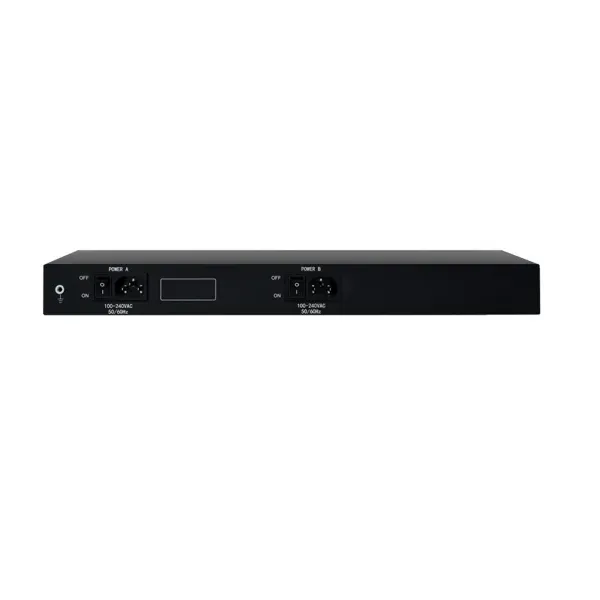
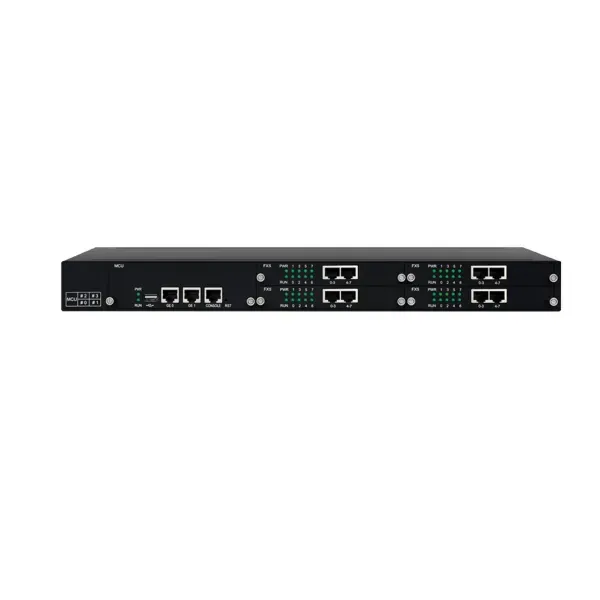
Dinstar DAG3000-32S/O Hybrid VoIP Gateway
The Dinstar DAG3000-32S/O is a high-end analog VoIP gateway for organizations that need to bridge traditional analog telephony with SIP-based IP communications. Its modular architecture supports up to 32 FXS/FXO ports, using 8-port boards, so a deployment can be planned around the analog-side requirement rather than forcing a complete replacement of existing telephones, fax devices or PBX interfaces. For businesses modernizing telephony in Tanzania, the product is relevant where legacy analog assets must continue operating while the core call platform moves toward SIP, an IP PBX, a softswitch or an IMS/NGN environment.
FourTeck can help customers evaluate port mix, SIP compatibility, network readiness, routing requirements, fax behavior, security settings and the practical migration path before procurement. The objective is not simply to insert a gateway into a rack; it is to make sure the gateway sits correctly between analog endpoints or trunks, the IP voice platform, the LAN, VLANs, security policy and any business-continuity design.
Up to 32 FXS/FXO Ports
Dinstar specifies modular 8-port boards with support for a maximum of 32 FXS/FXO ports, allowing the analog interface requirement to be planned around the intended deployment.
SIP / IMS Integration
The gateway supports standard SIP and is positioned for interoperability with SIP-based IP telephony systems, softswitches and IMS/NGN environments.
Fax and Legacy Migration
T.38 fax and pass-through options help organizations retain fax workflows while transitioning their voice infrastructure toward IP.
Failover and Security
Vendor-listed functions include power failover, IP/SIP failover, main/secondary SIP server failover and TLS/SRTP support for protected signaling and media.
What the Dinstar DAG3000-32S/O solves
Many organizations have useful analog telephones, fax machines, PBX trunks or building systems that cannot be replaced in a single project. At the same time, new communications platforms increasingly use SIP and IP networking. The DAG3000-32S/O provides the conversion layer between those environments. It can be used where analog interfaces must connect to an IP PBX, SIP server or softswitch, where PSTN-facing FXO connectivity is still required, or where a phased migration is more practical than a full rip-and-replace project.
That bridge becomes especially important in multi-site businesses. A head office may already run an IP PBX while a branch still has analog phones or an older PBX. A call center may need to preserve selected analog interfaces while standardizing signaling and call routing around SIP. A hospitality, healthcare, education or industrial site may have analog endpoints distributed through buildings where recabling or endpoint replacement must be staged over time. In each case, the gateway helps separate the telephony modernization decision from the immediate need to replace every analog device.
Verified Dinstar DAG3000-32S/O capabilities
| Area | Verified capability | Why it matters |
|---|---|---|
| Analog capacity | Up to 32 FXS/FXO ports; modular 8-port boards | Supports phased, requirement-led analog integration. |
| Signaling | SIP v2.0 over UDP/TCP/TLS; SIP/IMS | Suitable for modern SIP telephony platforms when interoperability is validated. |
| Fax | T.38 and pass-through | Supports migration of fax-dependent workflows. |
| Resilience | Power failover, IP/SIP failover, main/secondary SIP server failover | Helps build continuity into voice designs. |
| Network | IPv4/IPv6, L3 DiffServ, 802.1P/Q VLAN tagging | Allows voice traffic to be integrated with managed LAN and QoS policies. |
| Security | TLS/SRTP | Supports protected SIP signaling and voice media where the surrounding platform is configured compatibly. |
| Management | Web interface, SNMP, TR-069, automated provisioning, backup/restore, system logs and CDR | Provides several options for deployment, monitoring and support workflows. |
Compatibility and integration planning
Although Dinstar states interoperability with leading softswitches, IP-PBX systems and SIP servers, a production design should still validate the exact call platform, authentication method, codecs, DTMF behavior, caller ID format, fax requirements and routing rules. SIP is a standard, but real deployments can differ in registration behavior, trunk configuration, header handling and failover logic. A controlled interoperability test is preferable when the gateway is being introduced into a business-critical voice environment.
For broader voice-system planning, review FourTeck Tanzania’s integrated IT and telephony solution overview, which explains how IP PBX, phones, switching, firewalls and other systems should be planned together rather than as isolated devices.
Network readiness for voice
A gateway can only perform as well as the network and SIP services around it. Voice traffic benefits from predictable latency, controlled congestion, appropriate VLAN design and clear firewall policy. Dinstar lists L3 DiffServ and 802.1P/Q VLAN tagging, which can be integrated into a managed network design. Administrators should document IP addressing, DNS, NTP, SIP server addresses, failover targets and firewall rules before cutover.
If the project also includes switches, routers, IP phones or an IP PBX, the FourTeck Tanzania technology shop provides a useful starting point for adjacent business technology categories and procurement planning.
Common deployment scenarios
The DAG3000-32S/O is relevant when an organization needs many analog interfaces but wants the call-control layer to use SIP. Examples include connecting analog phones to an IP PBX, bringing analog PSTN lines into a SIP environment through FXO interfaces, retaining fax equipment during a VoIP migration, integrating a legacy PBX with a newer SIP platform, or maintaining analog services at a branch while the head office centralizes telephony.
It can also make sense as part of a migration strategy where analog endpoints are replaced gradually. Rather than making the gateway the permanent center of the architecture without review, procurement teams should decide which analog devices must remain, how long they are expected to remain, what port growth is realistic, and whether future phases will reduce or increase the required FXS/FXO capacity. This planning protects the project from buying too little capacity today or maintaining unnecessary analog complexity later.
Dinstar DAG3000-32S/O Tanzania
For organizations in Tanzania, the Dinstar DAG3000-32S/O is best considered as part of a structured voice-modernization project rather than as a standalone converter. Tanzanian businesses may operate a mixture of analog lines, legacy PBX hardware, IP phones, SIP trunks and branch connectivity. The gateway can help bridge those layers, but the correct design starts by identifying whether each required analog port will be used for an endpoint or for an outside line. FXS and FXO perform different roles, so the port plan must be explicit before procurement. The modular 8-port board architecture is useful because it allows the design to match the expected analog requirement up to the platform’s maximum 32 FXS/FXO ports.
A Tanzania deployment should also account for the network environment. SIP voice depends on stable IP connectivity, predictable routing and correctly configured security policy. If the gateway communicates with an on-premises IP PBX, the LAN must handle voice traffic cleanly. If it communicates with a hosted or remote SIP platform, the internet path, NAT behavior, firewall policy and failover arrangement become more important. Dinstar supports VLAN tagging, DiffServ QoS, SIP over UDP/TCP/TLS and SRTP, giving administrators options to align the gateway with an enterprise network architecture. These functions still require deliberate configuration; enabling every feature without a clear design does not improve call quality by itself.
Procurement teams in Tanzania should provide the exact number of analog devices or lines, desired FXS/FXO mix, existing PBX or SIP server, fax requirements, call routing expectations, location count and continuity requirements when asking for a quotation. If the project includes broader telephony, switching, cabling or firewall work, FourTeck’s Tanzania IT and telecom services overview explains how design, installation, configuration and lifecycle support can be coordinated. The goal is to make the gateway part of a documented telephony system with known dependencies, not a black box that becomes difficult to troubleshoot later.
Dinstar DAG3000-32S/O Dar es Salaam
Businesses in Dar es Salaam often need telephony that can support head offices, customer-facing teams, warehouses, hospitality operations, professional services and multi-branch administration. The Dinstar DAG3000-32S/O can be relevant when these environments still depend on analog extensions, fax devices, PSTN interfaces or a legacy PBX but are introducing a SIP-based platform. A sensible Dar es Salaam project begins by mapping current call flows: which lines are inbound, which endpoints must stay analog, whether a receptionist or call queue is involved, and which functions must continue if an IP connection or SIP server becomes unavailable.
The gateway’s routing and dial-plan capabilities can support controlled call handling, while vendor-listed power and IP/SIP failover features allow continuity to be considered in the architecture. These features should be tested against the actual upstream network and call platform. If a business has dual internet links or redundant SIP servers, the failover sequence should be documented and tested rather than assumed. Dar es Salaam sites with many networked services should also separate voice from heavy data traffic where appropriate, using VLAN and QoS design that aligns with the gateway’s 802.1P/Q and DiffServ support. Network switches, firewall policies and DHCP or static addressing should all be part of the same design worksheet.
For procurement, organizations should avoid asking only for “32 ports” without describing the port type and intended use. An FXS interface serves analog telephones or similar endpoint devices; an FXO interface connects toward analog lines or PBX-facing analog trunks. The DAG3000-32S/O modular approach can accommodate mixed requirements, but the exact board configuration must match the project. A Dar es Salaam quotation request is therefore stronger when it includes the required quantity, current PBX or SIP platform, number of analog lines, number of analog phones or fax devices, expected concurrent calls, rack availability, network details and desired migration timeline. This reduces the risk of ordering a gateway whose physical capacity is correct but whose actual interface mix does not fit the site.
Dinstar DAG3000-32S/O Mwanza
For companies operating in Mwanza, the DAG3000-32S/O can provide a practical bridge where analog telephony remains valuable but the organization wants centralized SIP-based call control. Branch offices, distribution operations, hospitality properties, clinics, schools and service businesses may have existing analog cabling or endpoint equipment that would be costly or disruptive to replace all at once. The gateway allows that analog layer to remain connected while the core voice architecture adopts SIP, provided the FXS/FXO design is correctly mapped to the equipment already in place.
A Mwanza deployment should put particular emphasis on resilience and remote manageability if local IT resources are limited. Dinstar lists a web interface, SNMP, TR-069, automated provisioning, configuration backup and restore, debugging tools, system logs and CDR. These functions can support a more disciplined support model because administrators can standardize configuration, retain backups and review call or system information during troubleshooting. For multi-site organizations, it is useful to create the same naming convention, SIP account structure, VLAN approach and backup process at every site. Consistency reduces the time required to understand a branch when a voice issue occurs.
Before procurement, Mwanza customers should also evaluate the analog cable plant. The presence of existing telephone cabling does not automatically mean every circuit is suitable. Identify where each analog pair terminates, verify labeling, confirm whether the endpoint is a phone, fax device, PBX port or carrier line, and plan rack-side patching. If a gateway is being installed in a central communications rack, power protection and ventilation should be reviewed with the rest of the voice and network equipment. A clear site diagram showing the gateway, switch, router or firewall, SIP server and analog distribution can turn future troubleshooting from guesswork into a repeatable process.
Dinstar DAG3000-32S/O Arusha
In Arusha, businesses across tourism, hospitality, professional services, education, NGOs and regional administration may need to connect established analog voice infrastructure with newer IP communications. The Dinstar DAG3000-32S/O fits projects where up to 32 analog interfaces are required and a modular 8-port board design is useful for matching current requirements. For a hotel or campus-style site, for example, the gateway may help retain analog room, service or utility phones while an IP PBX provides centralized routing and management. In an office environment, it may preserve selected analog devices during a staged migration to SIP.
The technical design should start with an inventory of endpoints and trunks. Teams should distinguish FXS requirements from FXO requirements, because mixing the terms can cause costly procurement errors. They should also document fax lines separately, since fax traffic can behave differently from voice. Dinstar supports T.38 and fax pass-through, giving the project more than one method to test. The selected method should be validated with the actual SIP platform and remote fax destination behavior. For voice, codec policy, DTMF settings, caller ID presentation, hunt groups and dial-plan rules should be aligned with the PBX design before users are moved.
Arusha customers planning branch connectivity should include failover behavior in acceptance testing. Dinstar specifies main/secondary SIP server failover and IP/SIP failover capabilities, but operational success depends on the surrounding architecture and configuration. Test how quickly registrations recover, how outbound and inbound calls behave during a failure, and whether analog lifeline expectations are met. A written cutover plan should include configuration backup, labeling, test numbers, responsible contacts and a rollback path. This level of preparation is especially useful in hospitality or service environments where telephone availability directly affects guest, customer or operational communication.
Dinstar DAG3000-32S/O Dodoma
Organizations in Dodoma evaluating the Dinstar DAG3000-32S/O may include government-related offices, professional firms, education, healthcare, contractors and businesses with a mixture of older analog telephony and newer data networks. The gateway supports a phased path toward SIP by providing up to 32 FXS/FXO interfaces through modular 8-port boards. That can be valuable where the existing telephone wiring, fax devices or PBX interfaces still meet operational needs, yet the organization wants a more modern call-control platform or centralized connectivity between sites.
For a Dodoma project, requirements gathering should go beyond counting extensions. Identify which services are business critical, which calls must work during an IP or server failure, whether analog PSTN lines are part of the continuity design, and whether any departments use fax. The vendor lists flexible routing and dial-plan support, failover functions, TLS/SRTP, VLAN tagging, SNMP/TR-069 and web administration. These capabilities create useful design options, but they should be translated into concrete operational rules: which SIP server is primary, which is secondary, what traffic belongs in the voice VLAN, which administrator accounts are permitted, and how configuration changes are backed up.
Procurement documents should state the desired FXS/FXO composition, expected call paths, current PBX or SIP server, number of sites, analog cabling conditions and any installation services required. If a tender or internal approval process is involved, it is useful to separate mandatory interoperability requirements from optional features. That makes technical evaluation clearer and prevents decisions from being driven solely by the total port count. Organizations can also include a commissioning checklist covering registration, inbound calling, outbound calling, transfer, caller ID, fax, failover, logging and configuration backup so the gateway is accepted against observable behavior rather than assumptions.
Dinstar DAG3000-32S/O UAE
For UAE businesses operating mixed analog and IP telephony environments, the Dinstar DAG3000-32S/O offers a modular route for connecting analog phones, fax devices, PBX interfaces and PSTN-facing circuits to SIP-based systems. Enterprises with offices, warehouses, hospitality properties, contact centers or regional branches may prefer a phased migration rather than immediate replacement of all analog assets. The gateway’s maximum 32 FXS/FXO capacity and modular 8-port boards allow the analog side of the design to be built around the actual requirement, while SIP connectivity integrates the gateway with an IP PBX, softswitch or compatible service platform.
UAE deployments often place strong emphasis on structured racks, managed networks and centralized administration. The DAG3000-32S/O supports IPv4/IPv6, VLAN tagging, DiffServ, web management, SNMP, TR-069, configuration backup and automated provisioning. These functions can fit a standardized regional architecture where network teams already manage voice VLANs, firewall policies and monitoring platforms. Security should be designed end to end: Dinstar supports SIP over TLS and SRTP, but the PBX or service provider and the organization’s certificate, firewall and policy framework must also support the intended configuration.
For organizations that manage projects across Tanzania and the Gulf, it can be useful to align configuration standards and purchasing criteria across countries. FourTeck’s UAE technology solutions site provides regional context for related infrastructure requirements. A cross-border standard might define how gateways are named, which VLAN IDs are used, how SIP servers are prioritized, how backups are stored, and how analog circuits are labeled. Standardization improves support without forcing every site to have the same port count or provider. The practical objective is a repeatable design that local teams can understand and central teams can support.
Dinstar DAG3000-32S/O Uganda
In Uganda, the DAG3000-32S/O can support organizations that need to preserve analog telephony while moving call control to SIP. This is relevant to businesses with legacy PBX systems, analog phones, fax lines or PSTN connections that still serve operational needs. Rather than replacing every device in one step, a gateway can provide the conversion layer between analog circuits and an IP PBX or SIP server. The 32-port maximum and modular board format make the product more suitable for larger analog requirements than small desktop gateways designed for only a few lines.
The most important design task is deciding what each analog port is meant to do. FXS and FXO ports are not interchangeable from a deployment perspective. A procurement team should prepare an interface schedule showing every analog phone, fax device, PBX connection or carrier line, the required port type, and the destination call flow. The SIP side should include the server address, registration method, codec policy, DTMF behavior, dial plan and failover requirements. Dinstar’s routing, SIP/IMS, T.38, TLS/SRTP, VLAN and management features then become part of a defined architecture rather than a list of specifications.
Organizations with operations in both Tanzania and Uganda can benefit from a common telephony template covering network segmentation, gateway backups, administrator credentials, monitoring and labeling. The FourTeck Uganda site can support regional procurement discussions for adjacent voice and network requirements. A shared template is useful when sites differ in size: one branch may use only a portion of the gateway’s capacity while another approaches the full 32-port design. The standard should define method and documentation, not force identical hardware usage where the operational requirements are different.
Dinstar DAG3000-32S/O Kampala
Kampala organizations evaluating a hybrid analog VoIP gateway may be looking to connect an established PBX or analog line estate with a new SIP platform. The Dinstar DAG3000-32S/O is intended for larger analog requirements, supporting up to 32 FXS/FXO ports with modular 8-port boards. In a head office, call center or service operation, this can make it possible to retain selected analog phones and lines while introducing IP-based routing, centralized management or a modern PBX. It can also support a transition period where old and new telephony operate in parallel while users and departments are migrated in stages.
Network design in Kampala should consider how SIP traffic crosses switches, routers and firewalls. Voice quality problems are often blamed on the gateway even when congestion, packet loss, NAT behavior or poorly defined QoS is the actual cause. Dinstar supports VLAN tagging and L3 DiffServ, which can be incorporated into a managed LAN. Administrators should avoid creating a voice VLAN without confirming that switches, DHCP options, routing and firewall rules are aligned. If the SIP server is remote, the internet path and failover circuit should also be tested under realistic call load.
Commissioning should verify analog and IP functions together. Test inbound and outbound calls, transfer, call forwarding, hunt groups if used, DTMF-driven IVR access, caller ID, fax, failover and configuration recovery. Keep a configuration backup after acceptance, and record the firmware version, network addresses, SIP accounts and board allocation. For organizations with compliance or audit requirements, the availability of system logs and CDR can support operational review, although retention and access policy should be defined by the customer. The gateway is most valuable when it is delivered with this documentation and test discipline, not simply powered on and left with undocumented defaults.
Dinstar DAG3000-32S/O Arua
For businesses and institutions in Arua, a gateway such as the Dinstar DAG3000-32S/O can be useful when analog telephone infrastructure remains in service but new communications are increasingly IP based. The ability to support up to 32 FXS/FXO ports gives the platform enough scale for sites with many analog endpoints or trunks, while the modular 8-port board structure allows the configuration to be aligned with the project rather than chosen only by the chassis maximum. This is relevant to branch offices, education, healthcare, hospitality, logistics and other environments where a complete endpoint replacement may not be practical at once.
Remote-site support should be a major consideration. Dinstar provides web management along with SNMP, TR-069, automated provisioning, backup/restore and diagnostic functions. These features can reduce dependence on physical access when configuration or troubleshooting is required. However, remote management must be secured carefully. Management access should be limited to trusted networks or protected administrative paths, default credentials should not remain in service, and backups should be stored securely. If TLS/SRTP is used for SIP and media protection, the surrounding SIP infrastructure must be configured consistently so security does not introduce interoperability failures.
Arua procurement teams should also distinguish between product capacity and service capacity. A gateway may have enough ports, but successful voice operation still depends on the SIP platform, network bandwidth, upstream provider and call routing design. For branch deployments, document who owns each dependency. The telecom provider may own the PSTN circuit, the IT team may own the LAN and firewall, and a separate team may administer the PBX. A clear responsibility matrix and escalation path can significantly shorten troubleshooting. Including these operational details in the project scope is especially useful where specialist technicians are not permanently present at the site.
Dinstar DAG3000-32S/O Mbarara
Mbarara businesses considering the DAG3000-32S/O may be modernizing a branch, hotel, campus, clinic, factory or office that still uses analog telephones or PSTN connectivity. The gateway can bridge those analog interfaces to SIP, allowing an IP PBX or centralized softswitch to control calls while existing endpoints remain usable. This is often more practical than replacing cabling and devices simultaneously, particularly when the current analog phones or fax systems still meet operational needs. The project should nevertheless have a migration plan so the gateway is integrated intentionally rather than becoming an undocumented permanent workaround.
Port planning is central. Dinstar’s modular hardware uses 8-port boards and supports up to 32 FXS/FXO interfaces. The procurement request should specify the actual mix, because FXS and FXO support different sides of the analog connection. Engineers should produce a simple matrix listing port number, endpoint or line name, port type, destination number and purpose. That matrix can later become part of the as-built documentation. It also helps technicians identify a failed line without tracing unlabeled analog cables through the rack or building.
Mbarara sites should plan power protection and network resilience according to business impact. The gateway itself includes vendor-listed failover capabilities, but a voice service can still be interrupted if the switch, router, PBX or internet circuit fails. UPS coverage for the complete voice path may therefore be more important than protecting only the gateway. Where dual SIP servers or multiple paths are used, failover should be tested during commissioning. The acceptance test should record how calls behave before, during and after the failure, whether registrations recover automatically, and whether any manual intervention is required. This turns resilience from a brochure feature into an operationally understood process.
Dinstar DAG3000-32S/O Gulu
In Gulu, the Dinstar DAG3000-32S/O can serve organizations that need a larger analog-to-SIP bridge without abandoning existing telephony infrastructure. The unit’s modular design and up-to-32-port FXS/FXO capacity make it appropriate for projects beyond the scale of simple analog telephone adapters. A branch can use it to keep analog office phones, fax devices or legacy PBX links while centralizing telephony on an IP PBX. A service organization can use it to connect traditional lines into a SIP call flow. The suitability depends on the required interface mix and the behavior of the surrounding voice platform.
For a Gulu deployment, configuration simplicity and documentation should be priorities. The gateway supports web administration, configuration backup and restore, logs and CDR, as well as SNMP/TR-069. Administrators can use these features to create a repeatable support process. Before go-live, capture a known-good backup and store it with the project documentation. Record the management IP address, VLAN, SIP server details, port allocations and dial-plan logic. If the site later changes provider, PBX or numbering plan, this documentation becomes the baseline for controlled modifications.
Voice troubleshooting should also be layered. If a phone cannot call, first determine whether the analog port has service, whether the gateway is registered, whether the SIP route exists, whether the network path is healthy and whether the destination is reachable. Fax troubleshooting adds another layer because T.38 negotiation or pass-through behavior may differ across providers. By documenting this troubleshooting sequence and the expected status indicators, the organization can resolve basic issues remotely before arranging on-site intervention. That is particularly valuable for regional sites where travel time can be more significant than the configuration change itself.
Dinstar DAG3000-32S/O Kenya
Kenyan businesses with existing analog voice infrastructure can use the Dinstar DAG3000-32S/O as part of a transition to SIP-based communications. Up to 32 FXS/FXO ports and modular 8-port boards provide flexibility for larger office, call center, hospitality, education, healthcare or branch-network requirements. The gateway is particularly relevant when a project must preserve analog phones, fax machines or PSTN connections while introducing an IP PBX, SIP server or softswitch. This can reduce migration disruption, but the decision should be based on the expected lifetime of the analog environment and the organization’s broader communications roadmap.
For Kenya deployments, interoperability testing should include the exact SIP platform and telecom services to be used. Standard SIP support is important, but successful deployment also depends on authentication, number formatting, codecs, DTMF, caller ID, fax and firewall behavior. Dinstar’s support for SIP over UDP/TCP/TLS and SRTP provides options for secure integration. The customer should decide whether encryption is mandatory, whether certificates are centrally managed, and whether the selected SIP service supports the same methods. A consistent security policy is better than selectively enabling features that the upstream system cannot use.
Organizations operating across East Africa can also benefit from aligned procurement standards. The FourTeck Kenya site provides regional context for related technology requirements. A multi-country voice standard might define gateway configuration templates, numbering conventions, VLAN policy, backup locations and commissioning tests. Each site can then use the port quantity and mix appropriate to its needs while still following the same operational method. This approach simplifies support for IT teams responsible for Tanzania, Kenya, Uganda and other markets, because documentation and troubleshooting procedures remain familiar even when local telecom services differ.
Dinstar DAG3000-32S/O Kuwait
In Kuwait, the DAG3000-32S/O can be considered for enterprise, hospitality, retail, logistics, service and multi-site environments where analog telephony remains part of the operational landscape. The gateway supports a maximum of 32 FXS/FXO ports and uses modular 8-port boards, allowing a deployment to be designed around analog endpoint and trunk needs. It can connect those analog interfaces with SIP-based call control, helping organizations modernize the core telephony architecture while keeping selected legacy devices or circuits in service during the transition.
A Kuwait project should pay careful attention to the rack and network environment. Document the gateway’s network addressing, VLAN placement, SIP server relationship and firewall requirements before installation. Dinstar supports IPv4/IPv6, VLAN tagging, DiffServ, TLS/SRTP and multiple management approaches. These features can align with enterprise standards, but only when they are configured as part of a coordinated network design. If voice and data share switching infrastructure, QoS policy should be consistent end to end rather than applied only on the gateway. Similarly, security controls should protect management access as well as SIP signaling.
Procurement should include more than the chassis. Confirm the required board configuration, rack placement, analog patching, cables, network ports, power protection and any installation or commissioning scope. If existing analog wiring is being reused, label both ends and test the circuits. If the gateway is replacing another analog gateway, plan a port-by-port migration so users can be moved in controlled groups. The commissioning record should state which ports were tested, which numbers were used, how fax was validated, and how failover behaves. This information is valuable when the system is later expanded or handed to another support team.
Dinstar DAG3000-32S/O Ghana
Ghanaian organizations moving toward SIP communications may still depend on analog phones, fax machines, PSTN circuits or legacy PBX connectivity. The Dinstar DAG3000-32S/O provides a modular conversion platform for those situations, supporting up to 32 FXS/FXO ports. Rather than replacing every analog asset immediately, a business can connect selected analog services to an IP PBX or SIP server and modernize in phases. This can be useful for distributed offices, service businesses, hotels, schools, healthcare sites, call-handling environments and organizations with established telephone cabling.
The technical plan should separate current-state inventory from future-state architecture. First list the analog endpoints and trunks in service today. Then define which will remain after the migration and which are temporary. This helps determine whether the 32-port capacity is appropriate and what FXS/FXO mix should be ordered. Next define the SIP environment, including server addresses, authentication, number plan, codecs, fax method and failover. Dinstar’s flexible routing and dial-plan functions can support the transition, but they should be configured to a documented call-flow design.
Support planning matters as much as initial installation. Use the gateway’s backup/restore function to preserve known-good configuration, and define who is authorized to make changes. SNMP or TR-069 can be considered where centralized monitoring or provisioning is part of the organization’s management model. Logs and CDR can help diagnose failures or understand call behavior, but operational policy should define how long records are kept and who can access them. When the gateway is part of a multi-country standard, the organization should retain a common template while allowing local carrier and numbering differences to be documented separately.
Dinstar DAG3000-32S/O Nigeria
For Nigerian enterprises and multi-site businesses, the Dinstar DAG3000-32S/O can provide a scalable analog gateway layer when legacy voice equipment must coexist with SIP. The gateway’s up-to-32-port capacity and modular 8-port boards allow deployments to support a substantial number of analog interfaces without relying on many small adapters. This can simplify rack organization and administration for offices, call centers, hospitality sites, campuses, healthcare facilities and service operations that need to retain analog phones, fax devices or PSTN connectivity while moving the call-control layer to IP.
Nigeria deployments should be designed around the full voice path. That includes analog cabling, the gateway, Ethernet switching, IP addressing, firewall policy, internet connectivity where relevant, SIP servers and upstream carriers. Dinstar provides VLAN and QoS capabilities, TLS/SRTP, routing controls and failover features, but those functions cannot compensate for an undocumented network. A site with multiple internet links should define which path carries SIP traffic and how failover occurs. A site with redundant SIP servers should test registration and call recovery. A site with heavy data traffic should verify that voice remains stable during periods of congestion.
The business case should also include lifecycle management. Ask whether the analog environment will grow, remain stable or shrink. If growth is expected, reserve board capacity and rack/cable space. If analog usage will decline, define a migration schedule so unused ports do not become permanent technical debt. Maintain configuration backups and an as-built port schedule. During procurement, request the exact model and intended board composition, but avoid assuming availability, delivery date or pricing until a quotation is prepared. Technical fit should be confirmed first; commercial terms can then be evaluated against the final scope.
Dinstar DAG3000-32S/O Seychelles
In Seychelles, hospitality, tourism, professional services, government, education and multi-site organizations may maintain analog telephony even as their core IT systems become increasingly IP based. The Dinstar DAG3000-32S/O can connect these two generations of infrastructure by presenting up to 32 FXS/FXO analog interfaces to a SIP-based call platform. Its modular 8-port board design makes it possible to size the analog interface mix around the site requirement while keeping future expansion in view. This can be especially useful for properties or campuses where analog cabling is already distributed through buildings and replacement would be disruptive.
Remote administration and recovery planning can be particularly important for island environments where specialist resources may not always be immediately on site. Dinstar supports web management, SNMP, TR-069, provisioning, configuration backup and restore, logs and CDR. A good deployment should create a known-good backup after commissioning and document the exact restoration process. Administrators should also record which physical analog ports correspond to rooms, departments, lines or devices. Accurate labeling reduces support time and makes it easier for non-specialist staff to assist with basic checks under remote guidance.
Resilience should be reviewed as a complete system. Power protection for the gateway is useful, but switches, routers, PBX servers and internet equipment may also need UPS coverage if voice continuity is important. Dinstar lists power and IP/SIP failover features; the project should define how those functions interact with the actual carrier and network arrangement. For hospitality or guest-service use, test critical call flows under both normal and failure conditions. For fax, test T.38 or pass-through with real destinations. The goal is a gateway deployment whose behavior is understood before an outage or busy operational period reveals an untested dependency.
Selection and sizing guidance
Choose the DAG3000-32S/O when the project genuinely needs a high-density analog gateway with a modular FXS/FXO design and SIP integration. Start with an analog port schedule, not with the maximum port number. Count every analog endpoint, fax device, PSTN line or PBX-facing circuit and identify whether it needs FXS or FXO. Add realistic expansion, then compare the requirement to the 8-port module structure and 32-port maximum. If the site needs only a small number of analog ports, a smaller gateway may be operationally simpler. If it needs substantially more, evaluate whether another high-density model or a different architecture is more appropriate.
Also decide whether the gateway is part of a temporary migration or a long-term architecture. A temporary bridge should have a clear retirement or reduction plan. A long-term gateway should have documented monitoring, backup, security and spare-capacity strategy. The design should account for SIP server redundancy, LAN resiliency, firewall policy, power protection and the support model. This broader evaluation helps prevent a technically compatible gateway from being deployed into an operational environment that cannot support it reliably.
Quotation checklist for Dinstar DAG3000-32S/O
State the number of FXS and FXO ports required today and expected growth.
Identify the IP PBX, softswitch, SIP server, IMS platform or legacy PBX that must interoperate.
List fax devices and whether T.38 or pass-through has been validated with the surrounding environment.
Document inbound, outbound, emergency, branch and failover call paths.
Provide VLAN, IP addressing, firewall, internet and QoS information relevant to SIP traffic.
Clarify whether supply only, configuration, installation, testing, migration or documentation is required.
Frequently asked questions
What is the Dinstar DAG3000-32S/O used for?
It is an analog VoIP gateway used to connect analog telephony interfaces with SIP-based IP voice systems. Typical projects involve legacy telephones, fax devices, PBX connections or PSTN circuits that need to communicate with an IP PBX, softswitch or compatible SIP platform.
How many ports does the DAG3000-32S/O support?
Dinstar specifies up to 32 FXS/FXO ports. The design is modular, with 8-port boards, so the exact FXS/FXO composition should be selected for the intended project.
Does it support fax?
Yes. Dinstar lists fax over T.38 and fax pass-through. Successful fax operation still depends on end-to-end compatibility with the SIP platform, network and remote fax destination, so testing is recommended.
Can the gateway work with an IP PBX?
Dinstar positions the product for interoperability with leading IP-PBX systems, SIP servers and softswitches. The exact platform and configuration should be validated for registration, call routing, codecs, DTMF, caller ID and fax requirements.
What security features are available?
Vendor-listed security functions include SIP over TLS and SRTP. Administrators should also secure management access, change default credentials, restrict administrative networks and align firewall policy with the organization’s voice architecture.
Does it support centralized management?
Dinstar lists web management, SNMP, TR-069, automated provisioning, configuration backup and restore, system logs, CDR and cloud management options. The selected management method should fit the organization’s security and operational standards.
What should I provide when requesting a quotation?
Provide the required quantity, exact FXS/FXO port mix, current PBX or SIP server, analog phone and line counts, fax needs, site location, migration scope, network details and whether configuration or installation services are required. Commercial availability and pricing should then be confirmed in the quotation.
Decision recap
The Dinstar DAG3000-32S/O is a strong fit when a project needs a modular, higher-density analog gateway that can connect up to 32 FXS/FXO interfaces with a SIP-based voice environment. Its value is highest when the port mix is defined correctly, the SIP platform is validated, the network is voice-ready and failover behavior is tested. Buyers should focus on interface requirements, interoperability, routing, fax, security and lifecycle planning rather than selecting the product only by maximum port count.
FourTeck can help structure the requirement around the current analog environment and intended SIP architecture. This is particularly useful for phased migrations, multi-site telephony, legacy PBX integration and projects where fax or PSTN connectivity must remain operational during the move to IP.
Consultation panel
For a useful product discussion, send the exact number of analog phones, fax devices, PSTN lines and PBX interfaces, plus the name of the SIP platform or IP PBX you intend to use. Include your site location, branch count, current call-routing issues, network constraints and any continuity requirements. This information allows the discussion to focus on the correct FXS/FXO board mix, integration method and deployment scope instead of producing a generic quotation.
If you are building a broader IP telephony environment, consider the gateway together with switching, VLAN design, firewall policy, IP PBX capacity, SIP provider behavior and power protection. A coordinated design reduces the chance of call-quality or interoperability problems appearing after procurement.




Reviews
There are no reviews yet.