
SIP Video Door Entry • Access Control • Tanzania
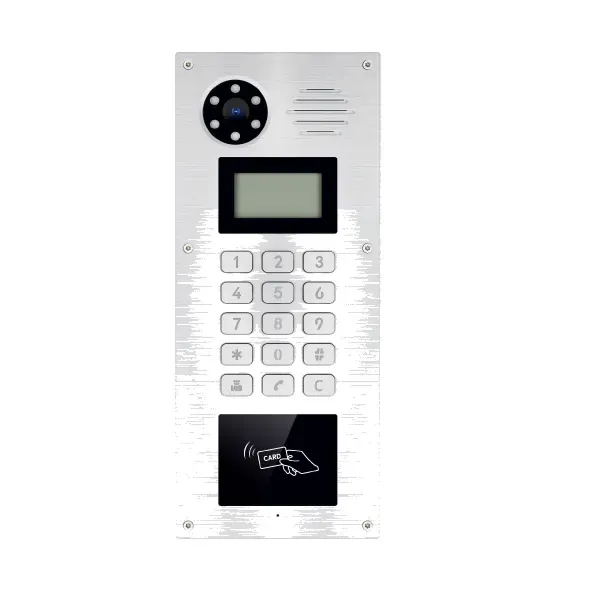
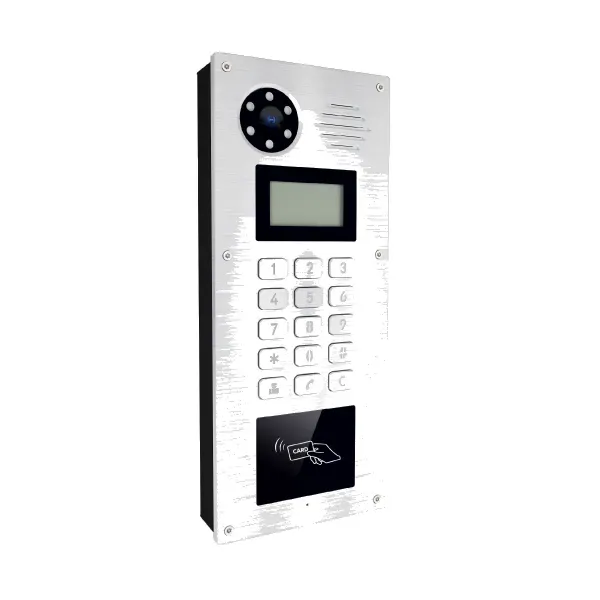
Dinstar DP88 SIP Video Intercom
The Dinstar DP88 is a multi-button SIP video intercom designed to combine visitor communication, IP-based door control and practical access methods in a single wall-mounted terminal. It is suited to offices, gated compounds, institutions, apartment entrances, reception points and controlled facilities that want door communication to integrate with a SIP communications environment rather than operate as a completely separate analogue system.
DP88 at a glance
Dinstar lists HD voice, a 2.3-inch graphic LCD, H.264 video, a 2-megapixel colour CMOS camera, a wide 80° horizontal by 60° vertical viewing angle, SIP signaling, secure SIP over TLS, SRTP, Ethernet networking, web management, auto-provisioning and door access by DTMF tones, password or RFID card. The platform also supports PoE-capable Ethernet and is presented for IP65 / IK10 installation environments.
What the Dinstar DP88 solves
A modern entrance point often needs more than a bell. Security and facilities teams may need visitors to reach reception, a security desk, a department or a tenant; users may need to see and speak with the visitor; and authorized staff may need several ways to release an electric lock. The DP88 brings those requirements into a SIP-oriented platform. Because SIP is widely used by IP PBX and unified-communications systems, the intercom can be planned as another network endpoint within a broader voice and access-control architecture. That approach can simplify call routing, allow controlled remote door release, and make the entrance part of an organization’s communications plan.
Visitor communication
Two-way audio, HD voice features and an integrated camera let the entrance become a practical communication point rather than a simple lock-control keypad.
Keyless access
Door access can be designed around DTMF remote release, local password entry and supported RFID card operation where the electric locking system is correctly engineered.
Network management
Web management, provisioning options, syslog, configuration backup and restore, SNMP/TR069 support and standard IP services help administrators plan deployment and lifecycle management.
Outdoor-oriented construction
Dinstar presents the DP88 with IP65 and IK10 protection ratings and a metal construction, making environmental and physical placement an important part of installation planning.
Verified DP88 technical highlights
| Communications | SIP v1/v2, SIP over TLS, SRTP, RTP/RTCP and standard IP networking services |
| Audio | HD voice, two-way audio, G.722 wideband codec plus common narrowband codecs and echo-cancellation functions |
| Video | Integrated colour CMOS camera, H.264 video support and 80° horizontal / 60° vertical viewing angle |
| Display | 2.3-inch graphic LCD with backlight |
| Access methods | DTMF, local password and RFID card options when integrated with a suitable door-lock system |
| Network / power | 10/100 Ethernet and 802.3af PoE capability; DC 12V input is also documented by Dinstar |
| Management | HTTP/HTTPS management, auto provisioning, firmware upgrade, syslog, SNMP/TR069 and configuration backup/restore |
| Protection | IP65 and IK10 are listed by Dinstar for the DP88 product family |
Technical procurement should always match the exact hardware revision and current vendor datasheet supplied with the quotation. Published Dinstar material from different dates contains some differences in camera and video detail, so a project should validate the current unit specification before final design approval.
SIP, access-control and network integration
The strongest reason to consider the DP88 is not a single feature in isolation, but the ability to combine an entrance intercom with a SIP communications design. A typical deployment can register the device to a SIP server or IP PBX, route call-button activity to reception or security, carry voice over the organization’s IP network, present video to compatible endpoints, and use a controlled DTMF action to trigger door release. The exact call flow depends on the PBX, endpoint capability, access-control design and security policy.
Network planning should cover a dedicated switch port, IP addressing, VLAN policy where required, PoE power budget, firewall rules, DNS/NTP availability and quality-of-service design. Because the unit supports SIP over TLS and SRTP, security teams can evaluate encrypted signaling and media as part of the wider communications standard. Management traffic should be restricted to trusted administrator networks, default credentials should be changed during commissioning, and firmware should be reviewed before production handover.
Door hardware needs equal attention. An intercom is only one part of an access-control chain. The electric strike or magnetic lock, request-to-exit device, door sensor, power supply, fail-safe or fail-secure requirement, fire-alarm release behavior and local building rules all need coordinated design. For sites that already use SIP telephony, FourTeck can help scope the communication side alongside IP phones, PBX systems and network switching. See the FourTeck Tanzania technology portfolio for related infrastructure planning.
How to specify the DP88 before requesting a quote
A useful quotation request should explain the entrance, not just name the intercom. State whether the unit will be installed at a reception door, perimeter gate, office lobby, warehouse, apartment entrance or institutional access point. Note how many call destinations are required, whether visitors need video reception, how the door is released today, whether RFID credentials are already in use, and which SIP platform or IP PBX will receive the call.
Also identify the network environment: available Ethernet cabling, PoE switch capacity, preferred VLAN, static or DHCP addressing, and the location of the network cabinet. If the entrance is outdoors, confirm shading, rain exposure, mounting surface and cable protection. For procurement teams, include expected quantity, project location, target deployment window and any requirement for compatible indoor screens, IP phones or PBX integration. This creates a quotation that is easier to compare and reduces the risk of buying a door terminal without the supporting lock, network or communications components.
Quotation checklist
Quantity, location, call destinations, SIP/PBX platform, lock type, exit button, door sensor, RFID requirement, cabling, PoE requirement, mounting environment and commissioning scope.
Compatibility checklist
Confirm SIP registration, video presentation, DTMF behavior, codec policy, encryption settings, network addressing, relay logic and any indoor monitor or security-desk endpoint.
Security checklist
Change default credentials, restrict management access, review firmware, segment devices where appropriate, protect cabling, validate relay behavior and document emergency egress requirements.
Regional procurement and deployment guidance
Dinstar DP88 SIP Video Intercom Tanzania
For organizations evaluating the Dinstar DP88 SIP Video Intercom in Tanzania, the buying decision should begin with how the entrance needs to operate during a normal working day. A corporate office may want a visitor to select a department and call a receptionist; a warehouse may route calls to a security desk; an apartment or mixed-use property may need controlled visitor communication before an electric lock is released. The DP88 suits these scenarios because it combines SIP calling, video, a keypad and RFID/password/DTMF access options in one networked endpoint. Rather than treating the intercom as an isolated security device, Tanzanian IT teams can plan it alongside switching, IP telephony, structured cabling and access-control hardware.
For Tanzania projects, infrastructure quality matters. Confirm that copper Ethernet is available at the entrance and that the network switch can provide the required PoE class or that a suitable local DC supply is planned. Where the building uses VLANs, decide whether the intercom belongs in a voice, security or dedicated IoT/access segment, then allow only the required PBX, DNS, NTP and management traffic. If the site uses an IP PBX, test registration, audio codecs, DTMF delivery and video behavior before mass deployment. Outdoor entrances should be reviewed for mounting height, camera angle, direct sunlight, rain path, drainage and physical cable protection even though Dinstar lists IP65 and IK10 protection.
Procurement teams should request the exact current DP88 hardware specification with the quote, because published Dinstar documents from different dates contain some variation in camera and video details. The safest process is to match the quoted revision to the datasheet provided for that unit. Include the lock type, exit button, door contact, required call destinations, number of sites and whether installation or configuration assistance is needed. FourTeck can help prepare a solution-oriented quotation rather than a standalone device-only request. For broader regional technology sourcing, buyers can also review FourTeck Africa solutions while keeping Tanzania-specific project requirements central.
Dinstar DP88 SIP Video Intercom Dar es Salaam
Dar es Salaam businesses often have busy entrances where visitor flow, security screening and reception responsiveness need to work together. For an office tower, logistics company, clinic, school, data-oriented workplace or managed compound, the DP88 can serve as the networked point at which a visitor initiates a SIP call before access is granted. Multi-button operation can support differentiated call destinations, while the camera and two-way audio help the receiving party identify and speak with the visitor. The keypad and RFID capability provide additional access methods when the door hardware is engineered to support them.
A Dar es Salaam deployment should be designed for the actual doorway environment. At a street-facing entrance, planners should consider sunlight on the camera, shade, dust, rain direction and the possibility of tampering. At a lobby entrance, the emphasis may shift to clean cabling, reliable PoE, integration with reception phones and predictable call routing during office hours. Facilities teams should decide what happens after hours: whether calls route to security, whether unauthorized keypad access is disabled, and which credentials remain active. The SIP platform should also be configured so that missed calls, unreachable endpoints or network outages do not create unsafe door behavior.
When asking for a Dar es Salaam quotation, include the number of entrances, cable distances, switch locations, lock type and current PBX platform. If a new PBX or IP phone environment is part of the same project, evaluate the intercom within that system rather than separately. Test DTMF release from the chosen receiving endpoint, confirm codec compatibility, and establish who will hold administrative credentials. A small pilot at one doorway can be valuable before replicating the design across branches or multiple buildings. Buyers looking at related communications infrastructure can review FourTeck IP phone solutions for the endpoint side of a SIP deployment.
Dinstar DP88 SIP Video Intercom Mwanza
In Mwanza, the DP88 can be considered for organizations that want to modernize visitor access without separating the entrance system from the IP communications network. Examples include administrative offices, educational facilities, hospitality back-of-house entrances, gated business properties and warehouse or industrial sites. The main design question is where an entrance call should terminate. A receptionist may answer on a compatible SIP endpoint, a security team may handle calls from several entrances, or different buttons may route to defined departments. Mapping that call flow first makes the product selection and configuration more purposeful.
For Mwanza sites, installers should verify stable network reach to the doorway. PoE can simplify installation because data and power can share the Ethernet run, but the switch budget and cable distance still need checking. If surge exposure is a concern on outdoor cable routes, use appropriate network protection and grounding practices. The DP88’s web management and provisioning features can help administrators manage configuration, but management access should not be left open across user networks. Password policies, firmware control, configuration backups and restricted administrator access should become part of handover documentation.
The access-control side should also be engineered carefully. Door release through the intercom depends on the lock, relay logic, power supply and life-safety requirements. A magnetic lock on an emergency exit has different design implications from an electric strike on an office door. Buyers should tell FourTeck whether they already have a lock and access controller or are starting from a blank design. For multi-site organizations connecting Mwanza with other Tanzanian offices, standardizing SIP settings, VLAN policy and credential management can reduce future support effort. Request a bill of materials that separates the DP88, switching or power needs, door hardware and any configuration services so procurement can understand the full system cost.
Dinstar DP88 SIP Video Intercom Arusha
Arusha deployments may range from offices and institutions to hospitality properties and gated compounds where controlled visitor communication is important. The Dinstar DP88 is useful when the organization wants an entrance to behave like part of the IP communications system. A guest or visitor can initiate a call, staff can speak before granting access, and the system can support video and several door-opening methods depending on the connected lock design. This can be preferable to a simple doorbell when there is a need for audit-friendly procedures, defined call destinations and centralized IT management.
Hospitality and campus-style environments in Arusha should pay particular attention to user experience. Buttons need clear labeling, the camera should be positioned for a natural visitor face height, and audio levels should be tested in noisy entrance areas. If reception staff answer on IP phones or an indoor panel, confirm that video display and DTMF door release work on the exact endpoint. If several teams could receive a call, configure sensible hunting or fallback logic so a visitor is not stranded when one person is unavailable. The DP88’s SIP design allows this call routing to be handled by the communications platform rather than by fixed analogue wiring alone.
Procurement should also confirm environmental and installation conditions. Dinstar lists IP65 and IK10 for the model, but project quality still depends on appropriate wall fixing, sealed cable entry, network protection and correct lock power. Outdoor exposure, lightning risk and long cable paths should be considered in the wider network design. For properties with multiple buildings, document each intercom’s IP address, SIP account, button mapping and relay configuration. This makes later maintenance easier and reduces dependence on informal knowledge. A quotation request should state whether the requirement is device supply only, pre-configuration, on-site commissioning, or a complete integrated solution.
Dinstar DP88 SIP Video Intercom Dodoma
In Dodoma, government-related facilities, professional offices, institutions, campuses and secure commercial properties may need a visitor-entry system that can communicate over existing IP infrastructure. The DP88 offers a practical path where SIP is already used for internal telephony or where a new unified communications environment is being planned. Instead of running a dedicated voice circuit from each entrance to a fixed desk, the intercom can register to a SIP service and route calls according to operational policy. This makes it easier to align door communication with reception, security and after-hours workflows.
Before deployment, define the security model. Decide who is allowed to remotely release the door, whether keypad passwords are appropriate, how RFID credentials will be issued and revoked, and what happens if the IP network is unavailable. The intercom should not become a single uncontrolled path into the building. Access permissions, lock behavior and emergency exit rules remain separate design responsibilities even when the communications endpoint is feature-rich. Administrators should change default credentials, use encrypted SIP where supported by the PBX, restrict web management to trusted networks and retain configuration backups.
Dodoma buyers should also factor in maintainability. A consistent naming scheme for SIP extensions, switch ports and door locations makes future troubleshooting much easier. If several facilities are involved, use a standard configuration template but adjust call destinations, network addressing and lock parameters per site. Ask for documentation covering registration settings, codecs, DTMF mode, relay actions and administrator access. When requesting pricing, include quantity, project phase and whether the design must integrate with an existing PBX, IP phones or access-control system. This helps suppliers quote the correct supporting components and avoids comparing only the headline intercom price while ignoring installation dependencies.
Dinstar DP88 SIP Video Intercom UAE
For UAE projects, the DP88 fits organizations seeking a SIP-enabled entrance station that can connect with IP telephony and controlled door-access workflows. Commercial offices, residential buildings, warehouses and institutional sites can use the device as a visitor communication point, with calls routed to reception, security or another authorized SIP endpoint. The combination of camera, keypad, RFID/password options and remote DTMF release is particularly relevant where a project wants multiple access methods but also requires a live human verification step.
UAE installations should be assessed for heat exposure, direct sun, dust and sheltered mounting. Although Dinstar specifies a wide operating-temperature range and IP65 / IK10 protection, mounting design still needs to keep the camera usable and cable entries protected. Outdoor metal surfaces can become hot in direct sunlight, so positioning and shade are practical considerations. On the network side, PoE budgeting, VLAN separation and QoS are important for predictable communication. Larger properties may want the intercom on a dedicated security or voice segment with limited access to the PBX and management stations.
Integrators should verify the exact IP PBX or SIP platform, especially if video is expected on desk phones, mobile clients or control-room software. Confirm H.264 support, DTMF method, TLS/SRTP policy and how the receiving endpoint triggers door release. For a project that spans UAE and East African branches, standard device templates can help, but local cabling, power and lock design should remain site-specific. Procurement teams can review FourTeck UAE technology solutions for regional project context while using the exact DP88 revision and datasheet supplied with the quote as the technical baseline.
Dinstar DP88 SIP Video Intercom Uganda
Ugandan organizations considering the Dinstar DP88 can use it as part of an IP-based entry communication system for offices, institutions, gated facilities, warehouses and multi-tenant sites. The practical benefit is the ability to send an entrance call through SIP rather than depend on a proprietary point-to-point door phone. This supports flexible routing to reception or security and can make multi-site communication easier when the PBX is already centralized. The integrated camera and access methods add visibility and controlled convenience, but the overall system still depends on good network and door-hardware design.
A Uganda deployment should start by confirming connectivity at the doorway and the PBX location. If the SIP server is in another branch, cloud platform or data center, test latency, firewall traversal and DTMF behavior before commissioning. Where bandwidth is constrained, codec and video policies need to be tuned so voice remains reliable. PoE can reduce local power complexity, while a UPS-backed PoE switch can improve resilience if power interruptions are a concern. Administrators should document the device IP, SIP credentials and relay configuration and should avoid exposing the management interface directly to the public internet.
For procurement, clarify whether RFID is required, how many users need cards, whether a separate access controller already exists, and whether the DP88 relay will operate the lock directly or through another system. Test emergency release and request-to-exit behavior independently of the SIP call flow. Organizations with branches in Kampala, Gulu, Mbarara or Arua can benefit from a common design standard, but they should still survey each doorway. Regional buyers can consult FourTeck Uganda solutions for related technology planning and use the Tanzania contact process when the procurement is managed through FourTeck Tanzania.
Dinstar DP88 SIP Video Intercom Kampala
Kampala offices and commercial buildings often have entrances where reception, security and staff availability change through the day. A SIP video intercom such as the DP88 can make routing more flexible because the call destination is defined in the communications platform rather than by a fixed analogue handset alone. During working hours, a button can route to reception; after hours, the same entrance can be directed to a security desk or another approved endpoint. That flexibility becomes valuable in shared offices, campuses and facilities with several departments.
For reliable deployment, survey the route from the entrance to the nearest network switch. Check cable length, PoE availability and UPS coverage. In a busy urban property, the intercom may be exposed to noise, vibration or frequent use, so audio level, camera angle and mounting rigidity should be tested in the real environment. Dinstar’s listed IP65 and IK10 protection helps with suitability, but environmental ratings do not replace correct installation. Protect cable entries, avoid water paths and keep the camera field clear of glare or obstruction.
Kampala IT teams should also coordinate with physical-security teams. The SIP administrator can configure registration and call routing, but the lock relay, egress requirements and credential policy belong in the access-control design. If RFID is used, decide whether cards are managed only for the DP88 or need to align with a wider access-control database. For larger offices, define a commissioning test that includes normal calls, failed calls, DTMF release, keypad access, RFID access, network outage and power recovery. This test-oriented approach produces a more dependable system than simply mounting the unit and confirming that it powers on.
Dinstar DP88 SIP Video Intercom Arua
For Arua, the DP88 can be attractive to organizations that want a capable door communication device but also need a design that is practical to support remotely. SIP registration, web management and configuration backup mean the intercom can fit structured IT processes rather than remain an isolated appliance. This can matter for institutions, development organizations, branch offices and managed compounds where central IT staff may support a site from another city. A properly documented deployment can allow first-line troubleshooting to check network reachability, SIP registration and call routing before a technician visits the entrance.
Connectivity and power resilience should be discussed early. If the site uses a UPS-backed PoE switch, the intercom may remain operational through short power events without a separate local adapter. If the WAN link carries SIP traffic to a remote PBX, the project should define what happens during WAN failure. Some organizations may prefer a local PBX or survivability design; others may accept temporary loss of remote call functionality as long as authorized local access remains safe. These choices are architectural, not merely product settings.
Arua buyers should request clear handover information: IP address, SIP account, button mapping, DTMF mode, relay timing, administrator credential procedure and backup file location. The physical installation should include appropriate lock power, exit-button wiring, door sensors where required and protected outdoor cabling. If a contractor supplies the intercom and another contractor supplies the electric lock, assign responsibility for final end-to-end testing so gaps do not remain between trades. For quotations, describe whether the requirement is for one entrance or a standardized branch rollout, and include any remote configuration or support expectations.
Dinstar DP88 SIP Video Intercom Mbarara
Mbarara businesses, institutions and compounds can use the DP88 where there is a need to connect visitor access with an IP communications environment. A branch office, clinic, school or warehouse may already have SIP phones; adding a networked intercom can allow the same communications infrastructure to handle entrance calls. This can simplify user training because authorized staff answer a familiar endpoint, speak with the visitor and use a defined DTMF action for controlled door release. The keypad and RFID functions can provide separate access paths for staff where required.
The design should consider traffic flow. At a small office, one call destination may be enough. At a larger facility, multiple buttons can correspond to departments, security or reception. Labeling should be clear and the PBX should provide fallback if a destination does not answer. Video can improve verification, but it should be tested on the actual receiving endpoint. Not every SIP phone or client handles intercom video in the same way, so compatibility should be demonstrated before the system is accepted.
Network and physical security are equally important. Use a managed switch where possible, document the intercom port, and consider VLAN segmentation. Limit web management to administrators and use strong credentials. At the door, ensure that a tampered network cable cannot provide easy access to internal systems; switch port security and network segmentation can reduce that risk. The electric lock power supply should be chosen independently of the intercom’s network power. Request a quotation that includes any PoE switch, PBX configuration, door-lock relay work and testing needed for a complete solution, rather than assuming these items are bundled with the terminal.
Dinstar DP88 SIP Video Intercom Gulu
Gulu deployments can benefit from the DP88’s combination of SIP communication and local access-control features where organizations want a modern entrance without creating a standalone communications island. Schools, health facilities, offices, NGOs, warehouses and compounds may use the device to connect a gate or doorway to a central security or reception function. The call path can be based on existing SIP infrastructure, allowing user extensions and call rules to determine who receives the visitor communication.
For sites where IT support is centralized, repeatability is valuable. Build a standard configuration template covering network settings, SIP server address, codecs, DTMF method, time settings, management policy and firmware level. Then create a site-specific section for each Gulu entrance with the local IP address, extension, button mapping and relay timing. Configuration backup and clear labeling can make replacement or recovery easier. Administrators should also test NTP, because correct device time can support troubleshooting and log interpretation even when the intercom itself is not the primary audit system.
Physical design should not be overlooked. Determine whether the unit is installed on a wall, gate post or custom pedestal, and protect the cable path from moisture and tampering. The camera should be angled for typical visitor position and should not face strong backlight where possible. Check audio at both quiet and busy times. If the lock is on a perimeter gate, cable length and separate lock power may be more demanding than at an office door. Include those factors in the bill of materials and test plan. A good procurement request states the environment and desired operating workflow, enabling the supplier to confirm whether the DP88 and supporting equipment match the project.
Dinstar DP88 SIP Video Intercom Kenya
Kenyan organizations looking at the Dinstar DP88 may be comparing traditional video door phones, IP intercoms and access-control readers. The DP88 is strongest where SIP integration is a priority. It can become a network endpoint that calls reception, security or another SIP destination while also supporting video and multiple door-opening methods. This architecture is useful for businesses with existing IP telephony because the entrance can follow similar provisioning and call-routing practices to other communications devices.
In Kenya, multi-branch organizations should decide whether SIP registration is local or centralized. A centralized PBX can simplify administration, but WAN dependency must be understood. Test calls between the door station and receiving endpoints under real network conditions and verify how the system behaves during link failure. For video, check endpoint support and available bandwidth. For door release, confirm whether the chosen DTMF transport method is reliable through the entire SIP path, especially when traversing SBCs, hosted PBX services or remote networks.
Installation quality determines long-term reliability. Use appropriate outdoor-rated cabling methods, PoE switching, surge protection where required and a correctly engineered lock power supply. Do not treat the intercom relay as a substitute for life-safety design. Fire release, fail-safe behavior and emergency egress should follow local requirements and the project engineer’s design. Buyers sourcing for Kenya can review FourTeck Kenya technology solutions and should request the exact current DP88 datasheet with the quote. This is particularly important because older published product documents may list different camera or video details from the current product page.
Dinstar DP88 SIP Video Intercom Kuwait
For Kuwait projects, the Dinstar DP88 can be evaluated as a SIP-based entrance terminal for offices, compounds, warehouses and institutional buildings. Its value comes from combining visitor calling with visual verification and controlled door-release options on an IP network. When connected to a compatible SIP platform, entrance calls can be routed to defined users, groups or security positions. This allows organizations to change call handling through software rather than rewiring a proprietary door-phone circuit.
Environmental planning is particularly important in Kuwait. Outdoor equipment may face high ambient temperatures, direct sun and dust, so the installation location, shade, sealing and airflow around surrounding power or network equipment should be considered. Dinstar lists a wide operating range and IP65 / IK10 protection for the DP88, but the project should still avoid placing the camera where glare destroys visibility. Cable and connector protection should be appropriate for the site, and the PoE switch should be installed in a controlled cabinet where possible.
The network architecture should define VLAN placement, SIP server reachability, encrypted signaling policy and management access. If the security team answers calls on a video-capable SIP endpoint, test the exact endpoint and codec profile. If calls are answered on audio-only phones, verify that the operational procedure still gives enough confidence before remote release. For RFID and password use, establish credential lifecycle procedures rather than leaving permanent shared codes unmanaged. Kuwait procurement teams should ask for device supply, configuration and door-hardware scope to be itemized separately. That makes it easier to compare offers and ensures the quotation addresses the full entrance workflow rather than only the intercom terminal.
Dinstar DP88 SIP Video Intercom Ghana
In Ghana, the DP88 is relevant for businesses and institutions that are moving entrance communication onto the same IP infrastructure used for telephony and data. A SIP video intercom can be particularly useful where security staff need to screen visitors at a gate while reception or office staff remain in another part of the site. By routing calls through a SIP platform, organizations can create defined escalation and fallback paths instead of relying on a single fixed indoor handset.
Before purchase, confirm what the receiving user will see and hear. Audio interoperability is usually straightforward when standard SIP codecs are aligned, but video requires compatible endpoint support and careful testing. DTMF door release also needs end-to-end validation because PBX and SBC settings can affect how tones or signaling events are transported. If RFID cards will be used, define who issues cards, how lost cards are revoked and whether the card population must integrate with a separate access-control system.
For Ghanaian facilities with outdoor entrances, specify protected cable routes, a suitable mounting surface and surge protection where required. PoE can simplify the door station, but backup power should be considered for both the switch and lock system if continuity is important. The intercom, lock and network may have separate power requirements and failure modes. Procurement teams should ask for a full functional test at handover: call each configured destination, verify audio and video, test permitted door-release methods, confirm behavior when a call is unanswered, and document administrator access. A clear acceptance test is more valuable than relying on a generic feature list because it proves the design works in the site’s real SIP and security environment.
Dinstar DP88 SIP Video Intercom Nigeria
Nigerian organizations may consider the DP88 for corporate offices, estates, institutions, industrial premises and controlled business entrances where visitor communication and door release need to be coordinated. SIP allows the intercom to operate within an IP communications environment, making it possible to route entrance calls to reception, security or another authorized group. For multi-site organizations, this can support a more consistent communications architecture, provided WAN resilience and site-level safety are considered.
Power design deserves particular attention. A PoE intercom connected to a UPS-backed switch can remain active through short power disturbances, but the electric lock and access-control power supply may be on a different circuit. The project should define expected behavior during mains loss: whether the lock is fail-safe or fail-secure, how emergency egress works, and whether the SIP system remains reachable. These decisions should be agreed by security, facilities and IT teams rather than left to the installer at the doorway.
Network hardening is also important. Place the intercom in an appropriate VLAN, disable unnecessary exposure, restrict management access and protect credentials. Where the entrance cable might be physically reachable, switch-port controls can help reduce the risk of unauthorized network access. For centralized PBX designs, test latency, jitter, codec negotiation and DTMF across the WAN. Buyers should request the current hardware revision and datasheet, as Dinstar’s public materials have changed over time. The quotation should identify the DP88, PoE/network requirements, lock-interface components, configuration services and acceptance testing so the full cost and responsibility are visible before purchase.
Dinstar DP88 SIP Video Intercom Seychelles
For Seychelles properties, the DP88 may be useful in hotels, offices, residences and controlled service entrances where staff need a SIP-based visitor communication point. The network architecture can allow the door station to call a front desk, security position or another SIP endpoint while video provides additional visitor context. In hospitality, call routing can be designed around staffed positions so the entrance remains responsive even when one desk is temporarily unattended.
Coastal and island environments require thoughtful installation. Dinstar’s IP65 and IK10 ratings are useful indicators, but salt air, wind-driven rain and strong sunlight can still influence mounting, enclosure choice for supporting hardware and maintenance schedules. Keep cable entries sealed and protected, avoid direct glare into the camera, and use corrosion-resistant fixings appropriate to the building environment. If the intercom is positioned at an external gate, consider the distance to the nearest network cabinet and whether fibre plus a local protected switch is more appropriate than a very long copper route.
Network and power resilience should be designed around the property’s operational priorities. A hotel may require continuous reception reachability, while a small office may accept a simpler arrangement. PoE simplifies endpoint power, but UPS support and lock power should be reviewed separately. For remote management across islands or sites, retain configuration backups and document each device clearly. Before final purchase, validate SIP registration, H.264 video compatibility, DTMF release and the exact RFID/password requirements. Ask for a complete bill of materials and a written functional scope so that the intercom, PBX, lock and network responsibilities are understood by all contractors.
Related communications and infrastructure planning
A SIP intercom normally touches several technology areas. The door station needs Ethernet switching and IP addressing; the call path needs a SIP platform; the user needs a compatible endpoint; and the door itself needs an appropriately engineered lock and egress design. For a new site, it can be more efficient to plan these elements together. FourTeck can discuss the DP88 in the context of IP phones, PBX services, network switching and structured communications infrastructure rather than treating the device as a standalone accessory.
For projects where the wider communications platform is also being reviewed, the FourTeck IP PBX solutions resource provides related context on SIP-based business calling. For East African projects, the regional FourTeck sites linked above can help buyers frame multi-country procurement while keeping local site conditions separate. Product selection should remain based on the exact required call flow, access method, network design and current manufacturer specification.
Dinstar DP88 frequently asked questions
Is the Dinstar DP88 a SIP intercom?
Yes. Dinstar lists SIP v1 and SIP v2 support for the DP88, along with SIP over TLS and SRTP. It can be planned as an IP communications endpoint that registers to a compatible SIP server or IP PBX.
How can the DP88 unlock a door?
Dinstar documents door access by DTMF tones, local password and RFID card. The real door behavior depends on the connected electric lock, relay wiring, power supply and access-control design. Emergency egress and fail-safe or fail-secure behavior must be designed separately.
Does the DP88 support PoE?
Yes. Dinstar documents 802.3af PoE support along with 10/100 Ethernet. A project should still confirm the available PoE budget, cable length and switch capacity before installation.
Can the DP88 be installed outdoors?
Dinstar lists IP65 and IK10 protection for the product. Outdoor suitability still depends on correct mounting, sealed cable entry, environmental exposure, sun angle, lightning/surge considerations and appropriate building practices.
Will it work with any IP PBX?
The DP88 uses standard SIP, but interoperability should be tested with the exact PBX, codecs, video handling and DTMF configuration. Features such as video display and remote release can depend on the receiving endpoint and PBX behavior.
Why do some DP88 documents show different camera specifications?
Dinstar has published product materials at different dates with differing camera and video details. Buyers should use the datasheet associated with the exact hardware revision offered in the quotation and should confirm any critical camera-resolution requirement before purchase.
What information should I provide for a Tanzania quotation?
Provide quantity, city, entrance type, SIP/PBX platform, preferred call destinations, lock type, RFID requirement, network and PoE availability, installation environment and whether you need supply only, configuration or a broader integrated solution.
Decision recap
Choose the DP88 when you need a rugged SIP-based video entrance terminal with keypad and RFID-oriented access options, PoE-capable Ethernet and integration into a managed IP communications environment. The best results come from designing the PBX, network, door hardware and security policy together. If the requirement is only a basic standalone doorbell, a simpler product may be more appropriate; if SIP integration and flexible call routing matter, the DP88 becomes much more compelling.
Consultation panel
Prepare the entrance location, quantity, PBX model, lock type, network details and preferred access methods before contacting FourTeck. This lets the sales and technical teams focus on compatibility, deployment scope and the correct bill of materials. For Tanzania enquiries, use the FourTeck Tanzania contact page to request current availability and a project quotation.




Reviews
There are no reviews yet.