
Fanvil A233 Horn Speaker Tanzania
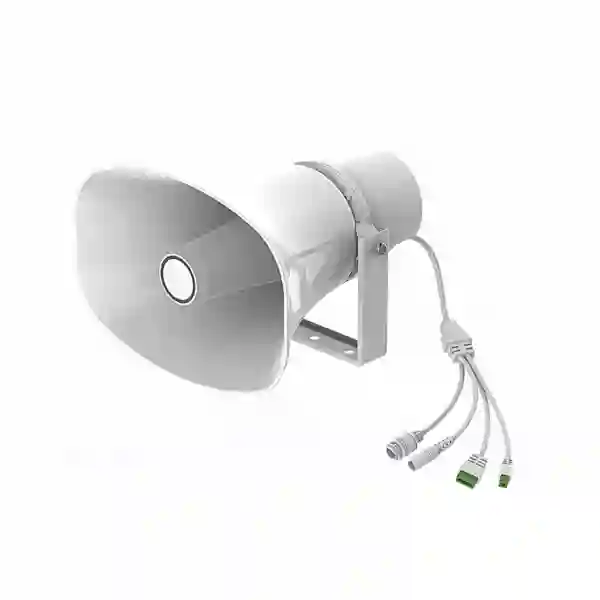
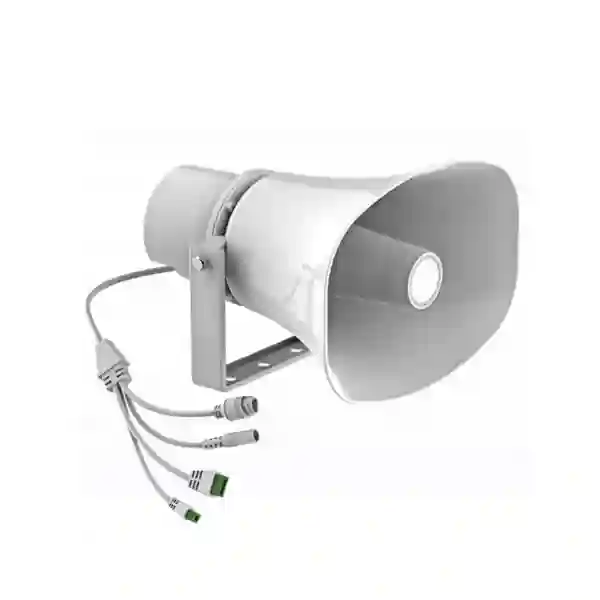
The Fanvil A233 Horn Speaker is a commercial-grade SIP horn speaker for organisations that need clear IP-based announcements, paging and intercom coverage in outdoor or demanding operational areas. Fanvil positions the A233 as an IP audio terminal that can work independently or integrate with compatible unified communications, video surveillance, Fanvil broadcast and intercom, access control, digital billboard and fire-alarm environments. Its IP66-rated enclosure is designed to resist dust and water ingress in suitable outdoor deployments, while SIP 2.0 compatibility gives network teams a familiar standards-based path for connecting the device to an appropriate voice or paging platform.
For Tanzanian buyers, the important question is not simply whether a horn speaker is loud enough. A dependable deployment also needs the correct PoE budget or 24V DC supply, network addressing, VLAN design where required, SIP registration details, multicast planning, mounting location, acoustic coverage and a documented method for testing alerts. FourTeck Tanzania can help customers prepare these requirements as part of an IP telephony, paging, security or integrated infrastructure project.
Quick answer
The Fanvil A233 is suitable when a business needs a network-connected horn speaker for SIP paging, broadcasting or intercom, especially where outdoor environmental protection and integration with wider IP systems are important.
What the Fanvil A233 is designed to do
The A233 is built around the idea that public-address audio can become part of the IP network rather than remain an isolated analogue system. In practical terms, that means the speaker can participate in SIP-based communication and paging workflows, receive audio over the network and fit into centrally managed communication or security architectures. Fanvil documentation describes the A233 as supporting standard SIP 2.0 and related RFC protocols. The platform also supports multicast functionality, allowing organisations to design zoned broadcasting scenarios where the network and application design support that approach.
Fanvil specifies speaker power of 15W when powered through PoE+ and 30W when supplied by 24V DC. That distinction matters during project planning because power source can affect how the unit is deployed and how the wider network power budget is calculated. A PoE+ deployment can simplify cabling by carrying power and data on Ethernet, while a 24V DC design may suit locations where dedicated power is already available or where the higher rated speaker output is desired. The final choice should be made after checking cable distance, switch capability, UPS requirements, network resilience and expected acoustic coverage.
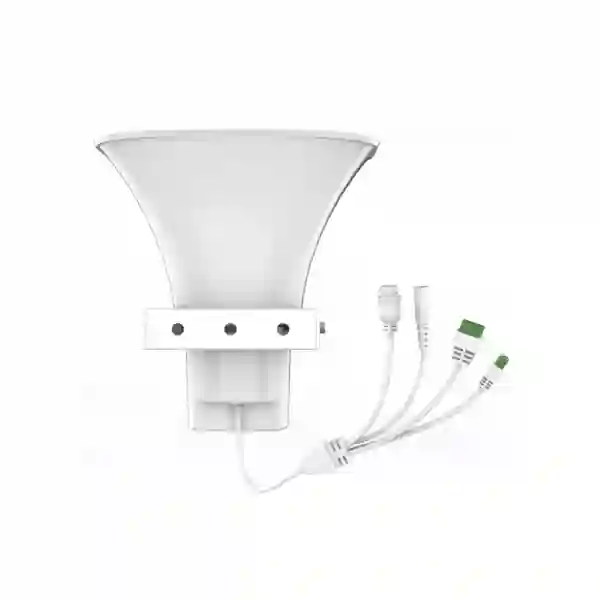
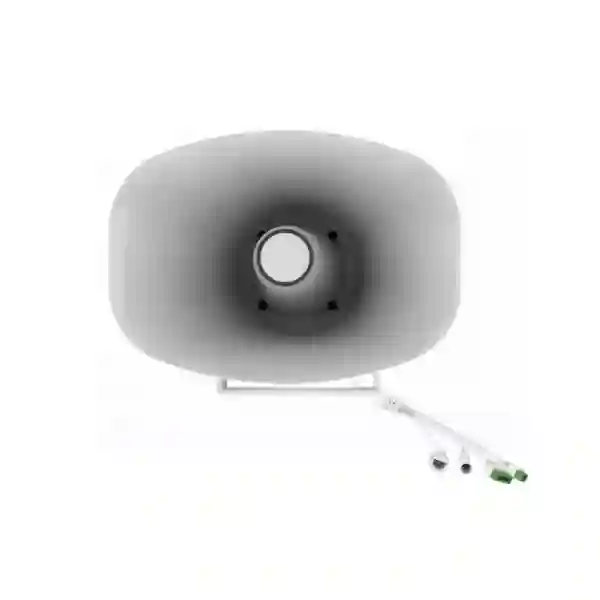
The A233 uses a U-shaped bracket for installation, which supports practical wall or structure mounting. Fanvil lists physical dimensions of approximately 285 × 205 × 285 mm in its quick installation documentation. Because horn speakers are directional, placement and aiming matter. A technically correct installation should therefore consider the listener area, mounting height, likely ambient noise, reflection from hard surfaces, weather exposure and whether multiple speakers need to be coordinated rather than simply maximizing volume at one point.
SIP paging
Use the speaker as part of a compatible SIP-based announcement or intercom design, subject to PBX and platform compatibility.
Outdoor protection
IP66 protection supports deployment in many outdoor environments when mounting, cabling and sealing are completed correctly.
Network integration
Integrate paging with suitable UC, surveillance, access-control, broadcasting, signage or alarm workflows where system interfaces support it.
Flexible power
Choose PoE+ or 24V DC according to the approved design, required speaker power, infrastructure and resilience plan.
Verified Fanvil A233 technical highlights
| Area | Verified detail | Why it matters |
|---|---|---|
| Product type | Commercial-grade IP horn speaker | Designed for networked paging, broadcasting and intercom scenarios. |
| Protocol | SIP 2.0 support | Helps integration with compatible SIP platforms and call-control environments. |
| Environmental rating | IP66 | Supports many outdoor and dusty deployment conditions when installed correctly. |
| Power | PoE+ or 24V DC | Enables different power architectures according to site requirements. |
| Speaker power | 15W with PoE+; 30W with 24V DC | Important for switch sizing, power design and expected audio coverage. |
| Frequency response | 350 Hz–7.5 kHz | Aligned with voice-oriented paging and announcement use. |
| Sensitivity | 107 dB ±3 dB at 1m/1W | Relevant when estimating sound coverage and placement. |
| Mounting | U-shaped bracket | Supports directional installation on suitable structures. |
Integration and deployment planning
A successful A233 deployment begins with the communication workflow. Define who can make announcements, whether paging is live or prerecorded, whether individual zones need different permissions, whether emergency messaging is part of the design, and which system triggers the audio. If SIP registration is used, the PBX or paging server needs an extension or endpoint configuration appropriate to the deployment. If multicast is used, the network must be designed so multicast traffic reaches the required segments without creating unnecessary flooding.
Network planning should cover IP addressing, VLANs, DHCP or static assignments, switch-port configuration, PoE class and available PoE budget, uplink capacity, firewall policy and management access. Paging audio usually consumes far less bandwidth than video, but reliability is often more important than raw throughput. If announcements are operationally important, consider switch and UPS resilience, documented configuration backups and a maintenance procedure for firmware and credentials.
For businesses combining paging with surveillance or access control, integration can be valuable because events can become more actionable. A security team may use live paging while viewing an incident on CCTV, a reception or operations team may make announcements to loading areas, or access-control events may form part of a broader response workflow. Integration should always be validated against the exact versions, APIs, SIP behavior and features of the connected systems rather than assumed from category-level compatibility claims.
Related FourTeck Tanzania planning resources
The A233 often sits inside a wider solution. Review FourTeck Tanzania integrated technology solutions for the broader project context, installation and support services for deployment planning, and the Tanzania technology shop when coordinating compatible business infrastructure.
For regional requirements, FourTeck also maintains specialist resources for Uganda technology projects and Kenya technology projects. These links are useful for organisations planning related infrastructure across more than one East African market.
Fanvil A233 Horn Speaker Tanzania
For organisations searching for the Fanvil A233 Horn Speaker in Tanzania, the buying decision usually combines product selection with site planning. Businesses may need paging across offices, warehouses, factories, schools, logistics yards, parking areas, hospitality compounds, security posts or other spaces where a conventional desk phone or ceiling speaker does not provide the required coverage. The A233 is particularly relevant when the project already uses Ethernet and SIP communications because the device can be incorporated into the IP environment rather than requiring a separate standalone analogue paging chain.
Tanzanian deployments should be specified around the actual site. Outdoor exposure varies greatly between coastal, inland, industrial and covered locations. IP66 is an important product characteristic, but installers still need to protect cable terminations, maintain appropriate drip loops and avoid mounting practices that compromise the environmental sealing. Network distance also matters. Standard Ethernet design limits, switch location, surge protection practices and the availability of protected power should be reviewed before deciding where the speaker will be mounted.
Procurement teams should provide enough information for an accurate quotation. Useful details include the number of speakers, proposed mounting areas, approximate distances, whether PoE+ switching already exists, whether 24V DC is preferred, the PBX or SIP platform in use, whether multicast zones are required and whether the system will integrate with CCTV or access control. This reduces the risk of ordering the correct speaker but missing switches, cabling, power, mounting work or configuration effort.
FourTeck Tanzania can help evaluate the A233 as part of a wider voice, security or infrastructure design. The goal should be a solution that remains understandable after installation: clear device names, documented IP addresses, known paging groups, recorded admin credentials, tested announcement paths and an agreed maintenance process. That approach is more valuable than treating the horn speaker as an isolated endpoint.
Fanvil A233 Horn Speaker Dar es Salaam
Dar es Salaam organisations often need communications equipment that works across busy commercial premises, warehouses, logistics areas, offices, schools, hospitality locations and mixed indoor-outdoor sites. A networked horn speaker can be useful where messages need to reach staff beyond the range of a desk phone or small indoor loudspeaker. For the Fanvil A233, the strongest use case is typically a structured IP environment where announcements can be linked to a SIP communication platform and managed alongside other networked systems.
Coastal conditions make mounting and cabling discipline especially important. The A233 carries an IP66 rating, but the complete installation includes brackets, cable routes, connectors, junction points, network equipment and power components. These elements should be selected and protected according to the actual exposure. The mounting position should also avoid creating excessive echo or directing audio into neighbouring areas unnecessarily. A site survey that considers background noise, wall surfaces, loading activity and expected listener positions can help determine whether one speaker is enough or whether several lower-level zones will provide clearer announcements.
For PoE+ deployment in Dar es Salaam, confirm that the chosen switch can provide enough power per port and enough total budget for all powered devices. This is especially important if the same switch also powers IP phones, cameras or wireless access points. Where 24V DC is used, plan the power source, protection and cable routing carefully. If uptime matters, assess how the speaker, access switch and core network are backed by UPS power.
When requesting a quotation, businesses should describe the facility, required zones, existing PBX, switch model, preferred power method and any intended CCTV or access-control integration. FourTeck can then help frame the A233 within the whole communication path rather than quoting a speaker without the supporting infrastructure required to make it useful.
Fanvil A233 Horn Speaker Mwanza
In Mwanza, the Fanvil A233 can suit facilities that require announcements across operational areas such as schools, commercial compounds, workshops, stores, yards, transport-related premises or distributed buildings. The practical advantage of an IP horn speaker is that it can share the organisation’s data network and work with compatible SIP platforms, which can simplify central control compared with an entirely separate paging system.
A good Mwanza deployment starts with acoustic objectives. Determine whether the purpose is routine announcements, staff paging, visitor guidance, security communication or a combination of these. Routine paging may prioritize intelligibility at moderate volume, while security announcements may require wider coverage and carefully tested priority handling. The A233 supports high-quality voice codecs including G.722 and Opus according to Fanvil documentation, but perceived clarity still depends heavily on mounting direction, ambient noise and the audio source.
Network architecture should be reviewed before installation. If the A233 is placed in a remote building or yard, the Ethernet run may require intermediate switching or fiber rather than an over-length copper cable. If multicast zones are used, switches and routers must be configured intentionally so the traffic reaches the correct recipients. Security teams should also restrict management access, use appropriate credentials and keep device firmware under an organised update process.
For procurement, provide a simple zone map, estimated cable distances, current switch details and the SIP platform in use. That information helps determine whether the purchase should include only A233 units or additional PoE switching, fiber links, UPS protection, structured cabling and configuration. FourTeck Tanzania can support this broader planning so the speaker deployment is built around the site rather than around assumptions.
Fanvil A233 Horn Speaker Arusha
Arusha buyers may consider the Fanvil A233 for hospitality properties, educational sites, business compounds, logistics operations, workshops, institutional facilities and other environments where clear announcements are required over an IP network. Its SIP orientation is useful for organisations that want paging to connect with an existing telephone or unified communication environment, while its horn format is appropriate for directed voice coverage across larger or noisier spaces.
The design should separate product capability from project assumptions. The A233 can provide IP66 environmental protection and supports PoE+ or 24V DC, but every installation still depends on mounting structure, cable protection, network reach and site-specific weather exposure. In a hospitality or campus environment, volume and direction should also respect guest or neighbouring areas. In a workshop or loading environment, the main concern may be overcoming machinery or vehicle noise without creating distortion. Placement trials or commissioning tests can help validate the chosen position.
If the organisation uses VLANs for voice, cameras or building systems, decide whether the A233 belongs on the voice network, a dedicated paging VLAN or another controlled segment. The answer depends on the SIP platform, security policy and how multicast is handled. Access between the speaker and call-control system should be restricted to required services. Where remote management is needed, use secure network paths rather than exposing the device unnecessarily to the public internet.
A quotation request for Arusha should therefore include more than quantity. Provide installation areas, expected audience, existing network layout, switch PoE capability, PBX brand or SIP server, desired paging groups and whether the system needs integration with CCTV or access control. This gives FourTeck enough context to help structure a workable solution.
Fanvil A233 Horn Speaker Dodoma
For offices, institutions, campuses, government-related facilities, commercial properties and operational compounds in Dodoma, the Fanvil A233 offers a standards-based route to IP paging and announcements. The speaker can be useful when organisations want to connect public-address functions with SIP communication rather than maintain a separate analogue-only system. Its outdoor-oriented enclosure also makes it relevant for courtyards, access points, loading areas and other exposed zones when installation conditions are appropriate.
Hot, dusty environments place extra importance on equipment placement and maintenance. IP66 is a strong enclosure rating, yet the installation should still avoid unnecessary heat exposure, mechanical damage and poorly sealed cable entry. Mounting hardware should be secured to a suitable structure and aimed for the intended audience. Because horn speakers project sound directionally, correct aiming can improve intelligibility and reduce the temptation to run at unnecessarily high volume.
From a network perspective, decide how the A233 will be addressed and managed before technicians arrive on site. Assign a naming convention, reserve or document IP addresses, determine SIP credentials, prepare VLAN and QoS settings if used, and decide whether multicast paging is required. If the system connects with an IP PBX, test standard call paging as well as any scheduled or emergency announcement workflow. If the deployment integrates with security platforms, validate each event path separately.
Dodoma procurement teams can simplify quotation and implementation by preparing a basic bill-of-requirements rather than only asking for a unit price. Include the number of zones, speaker quantity, switch and PBX information, mounting height, cable distances and any requirement for UPS-backed operation. FourTeck can then recommend supporting infrastructure where it is genuinely required.
Fanvil A233 Horn Speaker UAE
In the UAE, the Fanvil A233 is relevant to warehouses, logistics facilities, schools, industrial compounds, parking structures, commercial properties and other locations that require IP-based voice announcements. The product’s SIP compatibility is particularly useful in projects where voice, security and building systems already share structured Ethernet infrastructure. Organisations can evaluate whether paging should originate from an IP PBX, dedicated broadcast platform, security workstation or another approved application.
Environmental planning is important in UAE outdoor deployments because high heat, dust and exposed mounting locations can place stress on every part of an installation. The A233 has IP66 protection, but installers should still assess shade, bracket anchoring, cable gland quality, surge protection and the operating limits of related switches or power supplies. If the speaker is mounted in a large yard or parking area, fiber-fed remote switching may be preferable to pushing copper Ethernet beyond standard distance limits.
The power choice should align with the project. PoE+ can reduce local electrical work and simplify centralized UPS protection, while 24V DC supports the A233’s higher rated speaker power. Before selecting either option, confirm total PoE budget, cable route, target sound level and maintenance access. Projects with many speakers should document port numbers and physical locations so technicians can quickly identify the correct endpoint during testing or service.
For wider UAE infrastructure requirements, organisations can review FourTeck UAE technology solutions while coordinating cross-border deployments with the Tanzania team. Multi-site customers should standardize configuration templates where practical, but still adjust acoustic coverage and network design for each physical location.
Fanvil A233 Horn Speaker Uganda
Ugandan organisations considering the Fanvil A233 may be looking for an IP horn speaker that can support announcements across offices, schools, warehouses, compounds, healthcare support areas, retail operations or security zones. The A233’s use of SIP helps it fit into many IP telephony environments, while multicast capability can support zoned audio designs when the network is configured correctly.
Before procurement, determine whether the speaker will be used only for live paging or also for scheduled messages, alert tones, music or event-triggered announcements. Different workflows place different demands on software, call control and user permissions. If staff will page from desk phones, test dialing behaviour and group access. If security personnel will trigger messages from another system, confirm integration mechanisms and operational procedures. A technically possible integration still needs a clear human workflow so users know what to do during an event.
Power reliability can also influence system design. A PoE+ speaker may remain operational during a short outage if the access switch and upstream network are protected by UPS. Conversely, a local 24V DC design may require separate backup arrangements. The best choice depends on the site’s existing infrastructure and the business importance of paging. For remote areas, consider how technicians will reach and troubleshoot the device if connectivity fails.
FourTeck’s Uganda technology site can support regional coordination. For multi-country buyers, use consistent model references, configuration records and test criteria while keeping local installation details separate.
Fanvil A233 Horn Speaker Kampala
In Kampala, the A233 can be considered for business campuses, education, retail, warehousing, hospitality back-of-house areas, parking environments and operational facilities where staff need to hear announcements beyond normal office spaces. The product is most useful when the network can support dependable SIP communication and when the organisation wants paging to be managed as part of its wider communications infrastructure.
Urban buildings can present acoustic challenges. Hard walls, covered parking areas and long corridors may produce strong reflections, while machinery and vehicle noise can reduce speech intelligibility. A horn speaker should therefore be aimed toward the intended audience, not simply mounted at the highest available point. Multiple well-positioned speakers can sometimes produce more understandable audio than one unit driven loudly across a complex space. Commissioning should include real spoken announcements under realistic background-noise conditions.
Kampala IT teams should also consider network segmentation and endpoint security. Treat the speaker as a managed network device: give it a documented address, limit access to administrators, avoid exposing management services to the public internet, keep firmware under review and back up important configuration details. If the A233 shares switches with phones and cameras, calculate the full PoE budget rather than checking only the port count.
Procurement requests should specify quantity, zone layout, existing PBX, current switches and whether structured cabling work is included. These details make it easier to compare quotations fairly because one proposal may include only hardware while another includes installation, configuration, testing and documentation.
Fanvil A233 Horn Speaker Arua
Arua organisations may use an IP horn speaker for schools, warehouses, community facilities, commercial compounds, transport-related sites or distributed operations where central announcements need to reach outdoor or semi-outdoor areas. The Fanvil A233 provides a network-oriented approach that can reduce the need for a separate analogue audio backbone when suitable Ethernet infrastructure is already available.
For sites with longer distances between buildings, cabling design deserves particular attention. Standard Ethernet copper has practical distance limits, so remote speaker locations may need a closer network switch connected back by fiber or another appropriate uplink. Power then becomes part of the same decision: PoE+ is convenient when the remote switch supports it, while 24V DC may fit other layouts. Avoid improvising with unsupported extenders where a proper structured network design would be more reliable.
The A233’s IP66 rating supports many exposed locations, but all installation accessories should be chosen for the same environment. Mounting fasteners, junction enclosures and cable protection should be appropriate to the structure and weather conditions. The horn should be oriented so announcements reach users without sending unnecessary sound outside the operational area.
When requesting a quotation in Arua, include photographs or a simple drawing of proposed mounting points if available, as well as the current network topology and desired paging workflow. This helps separate speaker quantity from actual coverage requirements and allows the wider bill of materials to include switches, UPS, fiber, cable and configuration only where required.
Fanvil A233 Horn Speaker Mbarara
For Mbarara businesses and institutions, the Fanvil A233 can provide SIP-based paging for compounds, educational environments, retail operations, logistics areas and facilities where staff communication needs to extend beyond normal desk-phone coverage. Its horn design focuses sound toward a defined area, while the IP platform allows the device to participate in networked communication and potentially coordinate with other building or security systems.
The first design question should be coverage, not quantity. Identify where listeners are likely to be located, what background noise is present and whether announcements are needed during normal activity or only for occasional alerts. That information helps determine placement and whether additional zones are necessary. If a site has several buildings, consider independent paging groups so announcements can be directed only to the relevant area rather than broadcasting everywhere.
From an IT standpoint, document how the A233 reaches the SIP server. If routing occurs between VLANs, define the required traffic and avoid overly broad access rules. If multicast is used, confirm that network equipment is configured to carry it appropriately. For PoE+, verify switch capacity under full load. If the network cabinet already powers cameras and access points, spare wattage may be more important than spare ports.
A complete Mbarara quotation should distinguish hardware, cabling, switch upgrades, mounting, configuration, integration and commissioning. This lets decision makers understand which elements are necessary and which are optional. It also reduces surprises during installation because the network and power dependencies were considered before equipment reaches site.
Fanvil A233 Horn Speaker Gulu
Gulu customers may evaluate the Fanvil A233 when a facility needs reliable voice announcements across outdoor areas, compounds, campuses, warehouses or other locations where ordinary indoor speakers are not suitable. The value of an IP horn speaker is strongest when it becomes part of a planned communications environment: users know how to trigger pages, administrators know how to manage the endpoint, and the network has enough power and reach to support the device consistently.
A resilient deployment should be simple to troubleshoot. Label switch ports, record speaker IP addresses, use clear device names and maintain a diagram showing which physical area corresponds to each paging zone. If a user reports that one area cannot hear announcements, technicians can then check the correct speaker and network path quickly rather than searching through an undocumented system.
For sites where power interruptions occur, decide whether paging must continue during outages. If it is business-critical, UPS-backed PoE switching can be part of the design, but the upstream router, PBX or paging server must also remain operational. Protecting only the speaker switch will not help if the call-control platform is offline. The same end-to-end reasoning applies to network links between buildings.
Gulu buyers should compare proposals based on complete functionality rather than the A233 unit price alone. Ask what is included for mounting, cabling, PoE, SIP setup, zone configuration and final testing. A properly commissioned system should demonstrate each required paging path and leave enough documentation for future support.
Fanvil A233 Horn Speaker Kenya
Kenyan businesses can use the Fanvil A233 in IP paging and announcement projects for warehouses, education, logistics, commercial buildings, manufacturing, parking areas and security-sensitive facilities. The unit’s SIP 2.0 support makes it suitable for evaluation alongside compatible IP PBX and unified communication platforms, while its IP66 enclosure broadens the range of possible outdoor locations.
A multi-site Kenyan rollout benefits from standardization. Define one configuration template covering firmware baseline, administrator access, SIP account format, naming, VLAN assignment, paging groups and logging. Then adjust acoustic placement and power design for each site. This reduces support complexity without pretending that every building has the same physical conditions.
PoE+ can be particularly attractive in structured enterprise networks because it centralizes power at the switch. Before relying on it, calculate total budget and consider whether the access switch has redundant power or UPS support. If higher speaker power is required, the 24V DC option may be evaluated according to the final design. The rated capability alone should not replace acoustic testing, because intelligibility depends on distance, direction, noise and reflection.
FourTeck’s Kenya technology platform is relevant for organisations coordinating local procurement or regional rollouts. Cross-border IT teams can use common technical standards while keeping quotations and installation requirements specific to each country and facility.
Fanvil A233 Horn Speaker Kuwait
In Kuwait, the Fanvil A233 can support networked paging for logistics facilities, compounds, educational sites, parking areas, warehouses and commercial properties. The device’s IP66 enclosure is useful for demanding environments, but high temperature, dust and sun exposure should still be considered in the installation design. Protection ratings do not remove the need for correct mounting and environmental planning.
For outdoor deployment, choose a position that provides useful sound coverage while reducing direct exposure where practical. Cable entries, conduit, junction points and network equipment should be suitable for the location. If the A233 is connected by PoE+, confirm that the switch is installed in a controlled environment and has sufficient power capacity. If 24V DC is selected, verify the power source and route as part of the same design package.
SIP paging should be tested from the actual endpoints that staff will use. A design may allow calls from desk phones, a control application or a broadcast platform, but the day-to-day workflow should remain simple. Users responsible for announcements need clear instructions, and permissions should prevent accidental or unauthorized paging. Where emergency messaging is involved, align technical operation with the organisation’s approved safety procedures.
For regional coordination, organisations can refer to FourTeck Kuwait technology solutions. When comparing suppliers, ask for confirmation of the exact A233 model, included accessories, power design, network scope and configuration services rather than relying on a generic horn-speaker quotation.
Fanvil A233 Horn Speaker Ghana
Ghanaian organisations can consider the Fanvil A233 for IP paging in education, logistics, warehouses, commercial compounds, hospitality support areas and security operations. Because the A233 is a network endpoint rather than a passive loudspeaker, deployment requires coordination between audio, IT and communications teams. That coordination is often a benefit: paging can be integrated with existing SIP workflows and centrally documented, but it also means network readiness matters.
For a new site, identify speaker zones during the network-design stage so switch ports, PoE capacity and cable pathways are planned from the beginning. For an existing site, audit available ports and power before adding devices. Avoid assuming that an unused switch port automatically has enough PoE budget. Where cable routes are long, use appropriate network architecture instead of exceeding Ethernet distance limits.
Operational procedures deserve equal attention. Decide which departments can broadcast, whether announcements need zone selection, and how the system should behave during maintenance. If the device is integrated with CCTV or access control, test normal operations and failure cases. For example, teams should understand what happens if the SIP server, network link or switch is unavailable, rather than discovering the dependency during an urgent event.
FourTeck’s Ghana technology presence can help regional buyers coordinate requirements. A good quotation should list the endpoint, supporting power and network items, configuration and testing so the customer can evaluate the full solution scope.
Fanvil A233 Horn Speaker Nigeria
In Nigeria, the Fanvil A233 can be evaluated for industrial compounds, warehouses, education, logistics, estates, offices, parking areas and security-conscious sites where networked voice announcements are useful. Its standards-based SIP support can help organisations connect paging to compatible IP communication systems, while multicast capability provides another architecture option for group broadcasting.
Large Nigerian sites should treat paging coverage as an engineering question. Different areas may require different numbers of speakers because a quiet office courtyard is not acoustically comparable with a loading bay or generator area. Speaker location should prioritize intelligibility, not simply maximum measured volume. If multiple horns are used, coordinate direction and delay behavior through the chosen platform where applicable so listeners do not hear confusing overlapping announcements.
Power resilience is another key design consideration. PoE+ can centralize power and make UPS protection easier, but only if the switches and upstream network are also protected. A 24V DC deployment may require local power backup. Businesses should define whether paging is convenience-level or operationally critical and invest in resilience accordingly. Network documentation and spare capacity are especially useful for growing sites that expect more endpoints later.
For regional procurement, FourTeck Nigeria provides a relevant point of reference. Buyers should specify the A233 model clearly, confirm the required power method and include installation environment, PBX and network details in the quotation request.
Fanvil A233 Horn Speaker Seychelles
Seychelles deployments can place particular emphasis on environmental conditions because many facilities are close to the coast or exposed to humid outdoor air. The Fanvil A233’s IP66 enclosure is therefore relevant, but a complete installation must still consider corrosion-resistant mounting practices, protected cable routing, suitable junction hardware and sheltered network equipment. Environmental protection should be treated as an end-to-end property of the installation, not only a specification printed on the speaker.
Hotels, resorts, campuses, logistics areas and commercial properties may use an IP horn speaker for staff paging, operational announcements or security communication. The A233’s SIP support means it can potentially share call-control infrastructure with other IP voice endpoints. For hospitality environments, audio zoning and volume discipline are especially important so operational announcements reach staff areas without unnecessarily disturbing guests.
Distributed island or multi-building operations should also plan network links carefully. Where speakers are far from the main communication room, local PoE switching with fiber or another suitable uplink may be more reliable than long copper runs. If connectivity between sites depends on WAN links, decide whether paging must continue locally if the central connection is unavailable and choose the architecture accordingly.
A Seychelles quotation request should include the deployment environment, number of zones, switch and PBX information, preferred power method and whether corrosion-resistant ancillary materials are required. FourTeck can use that information to distinguish the speaker requirement from the broader installation package and avoid under-scoping the project.
Typical industries and use cases
Warehouses and logistics
Page loading bays, dispatch areas, yards and operational zones from a compatible SIP or broadcast system.
Education
Support campus announcements, class-change communication and controlled paging across selected outdoor areas.
Security operations
Combine live voice announcements with compatible CCTV or access-control workflows where the chosen platforms support integration.
Commercial sites
Extend announcements beyond office interiors to parking, entrances, service yards and other operational spaces.
How to size and select a Fanvil A233 deployment
Speaker selection should begin with the message and audience. Determine whether the system is primarily for speech announcements, security paging, scheduled audio or a mix of functions. Identify the furthest listener positions and estimate background noise at normal operating times. The A233’s published speaker power and sensitivity provide useful product data, but actual intelligibility is affected by direction, distance, obstacles and reverberation. A project with several controlled zones can be more effective than trying to cover a complex facility from one point.
Next evaluate infrastructure. Count available switch ports, check PoE+ support, calculate the switch’s total PoE budget and confirm cable distance. Decide whether VLAN segmentation is needed and verify that the PBX or paging system supports the intended SIP behavior. If multicast is part of the design, confirm switching and routing behavior. Where 24V DC is preferred, include power supplies, protection and cable routes in the bill of materials.
Finally plan operations. Define who administers the devices, who can initiate pages, how zones are named, how firmware is maintained and how failures are reported. These decisions make the system sustainable after installation and should be included in handover documentation.
Quotation checklist
To receive a more accurate Fanvil A233 quotation, provide:
- Number of A233 speakers required or number of areas to cover.
- Indoor, covered outdoor or fully exposed mounting environment.
- Approximate mounting height and cable distance.
- Existing network-switch model and available PoE+ budget.
- Preference for PoE+ or 24V DC where known.
- IP PBX, SIP server or paging platform in use.
- Required paging zones and multicast requirements.
- Any CCTV, access-control, digital-signage or alarm integration objective.
- Need for cabling, fiber, UPS, installation, configuration and commissioning.
Frequently asked questions
Is the Fanvil A233 suitable for outdoor use?
Fanvil rates the A233 to IP66, which provides dust and water-ingress protection suitable for many outdoor environments. The installation should still use appropriate cabling, seals, mounting and protection for the actual site.
Can the A233 work with an IP PBX?
The A233 supports SIP 2.0, so it is designed for SIP-based communication. Exact feature behavior should be verified with the particular PBX, firmware and paging workflow being deployed.
Does the A233 support PoE?
Yes. Fanvil specifies PoE+ support with 15W speaker power. The product also supports 24V DC, with Fanvil listing 30W speaker power in that power mode.
Can one A233 cover an entire warehouse?
Coverage depends on building dimensions, mounting position, background noise, obstacles and required intelligibility. Large or complex warehouses may need multiple speakers and zones. A site survey is preferable to assuming one unit will cover the complete facility.
Can the A233 integrate with CCTV or access control?
Fanvil positions the A233 for integration with external systems including video surveillance and access control. The exact integration method and available automation depend on the other platforms, software versions and interfaces, so project-specific validation is required.
What should be checked before ordering?
Check speaker quantity and zones, mounting areas, PoE+ availability, total switch power budget, cable distances, SIP platform compatibility, IP addressing, multicast requirements and whether installation or integration services are required.
Decision recap
Choose the Fanvil A233 when you need a commercial-grade network horn speaker for SIP paging, intercom or broadcasting and your deployment benefits from IP66 environmental protection, PoE+/24V DC power options and integration with a wider IP communication or security environment. The A233 is not simply a loudspeaker; it is a managed network endpoint. Its value therefore depends on correct network, power, mounting, SIP and operational design.
For Tanzania deployments, include the infrastructure discussion in the buying process from the beginning. A correct quotation may need PoE switches, UPS, structured cabling, fiber uplinks, VLAN configuration, PBX integration or commissioning alongside the horn speaker itself. FourTeck Tanzania can help coordinate these dependencies so the deployment is planned as a complete communication path.
Plan your Fanvil A233 deployment
Share your site, number of paging zones, network switch details and SIP platform. FourTeck Tanzania can help you define the speaker, power, network and integration requirements before procurement.



Reviews
There are no reviews yet.